mermaidcamp
Keeping current in wellness, in and out of the water
You can scroll the shelf using ← and → keys
You can scroll the shelf using ← and → keys
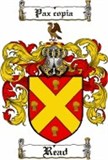
Read Coat of Arms
My 13th great grandfather was
Lord Chief Justice of the Common Pleas from 1506-1519
Originally, the three high common law courts, the Court of Common Pleas, the Court of the King’s (or Queen’s) Bench, and the Court of the Exchequer, each had their own Chief Justice. That of the Exchequer Court was styled as the Lord Chief Baron of the Exchequer, and that of the Common Pleas was Chief Justice of the Common Pleas, leaving the head of the King’s (or Queen’s) Bench to be known simply as the Lord Chief Justice. The courts, however, were combined in 1873, leaving a single Chief Justice.
Robert Read (1440 – 1519)
is my 13th great grandfather
Dorothy Reade (1489 – 1529)
daughter of Robert Read
Sir Knight THOMAS Wooton (1521 – 1587)
son of Dorothy Reade
Thomas Wooton (1585 – 1668)
son of Sir Knight THOMAS Wooton
Elizabeth Wooton (1610 – 1690)
daughter of Thomas Wooton
Sarah Perkins (1657 – 1745)
daughter of Elizabeth Wooton
Mercy Bradstreet (1689 – 1725)
daughter of Sarah Perkins
Caleb Hazen (1720 – 1777)
son of Mercy Bradstreet
Mercy Hazen (1747 – 1819)
daughter of Caleb Hazen
Martha Mead (1784 – 1860)
daughter of Mercy Hazen
Abner Morse (1808 – 1838)
son of Martha Mead
Daniel Rowland Morse (1838 – 1910)
son of Abner Morse
Jason A Morse (1862 – 1932)
son of Daniel Rowland Morse
Ernest Abner Morse (1890 – 1965)
son of Jason A Morse
Richard Arden Morse (1920 – 2004)
son of Ernest Abner Morse
Pamela Morse
I am the daughter of Richard Arden Morse
The History and Topographical Survey of the County of Kent: Volume 3
by Edward Hasted, published 1797
Pages 210-227
British History Online
About the 43d year of king Edward III. he conveyed this manor, with much other land in this county and in Warwickshire, to Sir Walter de Paveley, knight of the Garter, in whose family it remained until the latter end of the reign of king Richard II. when it was conveyed to Vaux, of the county of Northampton, in which name it staid till the reign of king Henry VI. when it was alienated to John Alphegh, or Alphew, of Bore-place, in this parish, who bore for his arms, Argent, a fess between three boars heads couped, sable. He died in 1489, and lies buried in this church, leaving by Isabel, his wife, daughter of Richard Petit, esq. two daughters and coheirs; Elizabeth, who was twice married, first to George Gainsford, esq. a younger son of Sir John Gainsford, of Crowhurst, in Surry; (fn. 8) and secondly to William Brograve, esq. of Beckenham; and Margaret, who married Sir Robert Read, who had this manor allotted to him on the division of their inheritance. He was descended from an antient family in the county of Northumberland, and being bred to the law, was, in 1507, made chief justice of the common-pleas, (fn. 9) and was so highly esteemed by king Henry VII. that he had made him one of his executors. Sir Robert Read bore for his arms, Gules, on a fess wavy, three pheasant cocks sable; which coat, impaling Alphew, is still remaining in a window, in Sergeant’s-inn.
By Margaret, his wife, Sir Robert had one son, Edmund, who was one of the justices of the King’s bench, and dying before him, without issue, in 1501, lies buried in this church, and four daughters; Bridget, wife of Sir Thomas Willoughby; Jane, of John Caryll, esq. sergeant at law; Mary, of Sir William Barringtyne; and Dorothy, of Sir Edward Wotton. He died about the 10th year of the reign of Henry VIII. without issue male; so that his four daughters became his coheirs, and on the partition of their inheritance, this manor, with other estates in this parish, was allotted to the share of Sir Thomas Willoughby and Bridget his wife.
Sir Thomas Willoughby was the fifth and youngest son of Sir Christopher Willoughby, and younger brother of William Lord Willougby, ancestor of the present baroness Willoughby of Eresby, and of Christopher, ancestor of the lords Willoughby of Parham, now extinct; the origin of the family in this kingdom being Sir John de Willoughby, a Norman knight, who had the lordship of Willoughby, in Lincolnshire, by the gift of the Conqueror.
Sir Thomas Willoughby being bred to the law, was knighted in the 29th year of king Henry VIII. was made a chief justice of the common pleas, (fn. 10) and by his wife Bridget, as above mentioned, became entitled to this manor of Chidingstone Burghersh, with his seat called Bore-place, and other estates in this parish. (fn. 11) In the 31st year of that reign he, among others, by an act then passed, procured his lands to be disgavelled.
He died in the 37th year of king Henry VIII. and lies buried with Bridget, his wife, in this church. His arms, being Gules, on a bend wavy argent, three birds sable, impaling argent, a fess between three boars heads couped sable, are still remaining in one of the windows of Sergeant’s inn, in Fleet-street.
His grandson, Sir Thomas Willoughby, was sheriff of this county in the 15th and 32d years of queen Elizabeth, and bore for his arms, Or, fretty azure. He marriedCatharine, daughter of Sir Percival Hart, of Lullingstone, by whom he left several sons and daughters; of whom Percival, the eldest, succeeded to these estates, and was, on the accession of King James I. knighted by that prince. He married Bridget, eldest daughter and coheir of Sir Francis Willoughby of Wollaton-hall, in Nottinghamshire, by which means he not only possessed that mansion, but a large estate in that county, for which he was elected to serve in the first parliament of King James, and was ancestor of the present Henry Willoughby lord Middleton. Being desirous of increasing his interest in Nottinghamshire, he alienated the manor of Chidingstone Burghersh to Mr. John and Robert Seyliard, of Delaware, from whom it descended to John Seyliard, esq. of Delaware, who was created a baronet in 1661, and from him to Sir Thomas Seyliard, bart. who, about the year 1700, conveyed it, with Delaware, above mentioned, to Henry Streatfeild, esq. and he, at his death, bequeathed it to his youngest son, Thomas Streatfeild, esq. of Sevenoke, who devised it to his nephew, Henry Streatfeild, esq. of High-street house, in this parish; since whose death, in 1762, the inheritance of it is become vested in his eldest son, Henry Streatfeild, esq. of High-street house.
BORE-PLACE is a seat here, which, with the MANOR OF MILBROKE, was antiently, as high as the reign of King Henry III. the estate of a family, which assumed its surname from hence, and was called Bore, and assumed a boar for its arms. In the name of Bore this seat and manor continued till John Bore; in the reign of king Henry VI. conveyed them by sale to John Alphew, who rebuilt Bore-place, and died possessed of them both in 1489, leaving two daughters and coheirs; one of whom, Margaret, became the wife of Sir Robert Read, lord chief justice of the common pleas, of whom a full account has already been given; and on a division of their inheritance entitled him to this seat and manor, as well as the rest of her father’s estate in this parish. He resided at Bore-place, which he much enlarged, and dying without male issue surviving, his four daughters became his coheirs; of whom Bridget, the eldest, was married to Sir Thomas Willoughby, chief justice of the common pleas, and on the partition of his estates, had this seat, Milbroke, and his other possessions in this parish, allotted for her share.
Sir Thomas Willoughby likewise resided at Boreplace, and added much to the buildings of it. His grandson, Sir Percival Willoughby, in the beginning of the reign of King James I. alienated Bore-place and Milbroke, to Mr. Bernard Hyde, of London, after wards one of the commissioners of the customs to king Charles I. who was a charitable benefactor, by his will, to several parishes in London, as well as others, in trust to the Skinners company. (fn. 12) His descendant, Bernard Hyde, esq. alienated them about fifty years ago to Henry Streatfeild, esq. of Highstreet house, in this parish; since whose death, in 1762, the inheritance of both Bore-place and Milbroke are become vested in his eldest son, Henry Streatfeild, of High-street house, esq.
There is a court baron held for the manor of Milbroke.
Bowzell, antiently called Boresell, is a manor, the greatest part of which lies in the adjoining parish of Chevening, under which indeed it ought more properly to have been described. It was antiently part of the possessions of that branch of the Cobhams settled at Sterborough castle, in Surry.
Reginald de Cobham died possessed of this manor in the 35th year of Edward III. as did Joane his wife in the 43d year of that reign; from them it descended down to Sir Thomas Cobham, who died possessed of it in the 11th year of king Edward IV. whose only daughter and heir carried it in marriage to Sir Edward Borough, of Gainsborough, in Lincolnshire; she survived her husband, and died anno 20 king Henry VIII. being then possessed, as appears by the inquisition taken after her death, of this manor, among others, held of William, archbishop of Canterbury, as of his honour of Otford, by knights service. (fn. 13) Their descendant, Sir Thomas Borough, lord Burgh, and knight of the Garter, died possessed of it in the 40th year of queen Elizabeth, leaving four daughters his coheirs; Elizabeth, married to George Brooke, esq. brother of Henry lord Cobham; Frances to Francis Coppinger, esq. whose direct descendant, Fysh Coppinger, esq. of West Drayton, in the year 1790, had a licence, under the king’s sign manual, to assume the name of Burgh; Anne, to Sir Drew Drury; and Catharine, afterwards the wife of Thomas Knyvett, esq. by which, though the heir male of this family endeavoured to succeed to the barony, yet he failed in it, and it still continues in abeyance. They some years afterwards, to defray debts and other uses, joined in the sale of it to Thomas of Whitley, near Sevenoke, from which name it again passed by sale to Waterson; from whom, by a female, it was carried in marriage to Bonnell, whose descendant, James Bonnell, esq. of London, about the year 1784, alienated it to the Rev. Richard Rycrost, D.D. rector of Penshurst, in this county; who, on Dec. 10, 1783, was created a baronet. He died possessed of this manor, in 1786; and his son, Sir Nelson Rycrost, bart. is the present owner of it.
Ranesley, formerly spelt Rendesley, is a manor in this parish, lying near the boundaries of Penshurst, the owners of which were in antient deeds, written both Rendesley and Rennesley, but before the end of king Henry VI.’s reign, this family was extinct here, and the possession of it was alienated to Alphew of this parish, whose descendant, John Alphew of Bore-place, dying in 1489, without male issue, one of his daughters and coheirs, Margaret, carried it in marriage toSir Robert Read, chief justice of the common pleas, on the partition of the inheritance, of whose daughters and coheirs this manor fell to the share ofBridget, married to Sir Thomas Willoughby, chief justice likewise of the common-pleas, whose descendant, Robert Willoughby, esq. alienated it to Bond, and Mrs. Anne Bond possessed it in the 1st year of Edward VI. (fn. 14) Her heirs conveyed it to Nathaniel Studley, esq. the son of John Studley of Emborne Minster, in Yorkshire, who bore for his arms, Argent, on a fess vert three stags beads caboshed or. His only son and heir, Nathaniel, succeeded his father in this manor, and in the time of the civil wars of king Charles I. alienated it to Mr. Christopher Knight of Cowdham, (fn. 15) on whose death it came into the possession of his son, Mr. Michael Knight of Westerham; to whom Sir Edward Byshe, clarencieux, in 1662, granted these arms, Party per chevron engrailed sable and argent, three griffins passant, counterchanged, armed, and langued gules. From this family this manor passed, by sale, to Robert Sidney earl of Leicester; after which it continued in his descendants, in like manner as the rest of his estates in this parish, till with them it came into the possession of two female coheirs, Mary and Elizabeth, daughters of colonel Thomas Sidney, and heirs general of Robert earl of Leicester, who was the grandson of Robert, who purchased this manor, and they carried it, by marriage, to Sir Brownlow Sherard, bart. and William Perry, esq. who possessed it in undivided moieties. (fn. 16) The former died in 1748, without issue, and his widow possessed one moiety of this manor till her death, in 1758, when she, by her will, gave it to Anne, widow of Sir William Yonge, bart. with remainder to her son, Sir George Yonge, bart. of Escot, in Devonshire. William Perry, esq. died possessed of the other moiety of this manor in 1757, leaving his wife surviving, who in 1770, purchased of lady Yonge, and her son Sir George, their moiety of it, and thus became owner of the whole of this manor, which she gave by her will, at her death in 1783, to her eldest grandson, John Shelley Sidney, esq. who is the present owner of it.
Footnotes:
10 Coll. Peer. vol. v. p. 559, et seq. Dugd. Bar. vol. ii. p. 33, 83. Hist. Grevile, 70, et seq.
12 Strype’s Stow’s Survey, book ii. p. 36, 46, 48, 64, 81, 170; book iii. p. 62, 100; book v. p. 67.
13 Inquis. post Mort. Harris’s Hist. Kent, p. 75.
14 See particulars of chantries, Aug. Off. title Penshurst chapel.
15 Philipott, p. 114. Visit. Co. Kent, p. 1619. Guillim, 394.
16 See more particular account of the Sidneys, and the descent of their estates, under Penshurst.
are you going to put all of this in a book? it’s very worthy of it! and might help those of us who can’t quite keep up with your wonderful family history
LikeLike

Holy smokes Pam.. you went back to 1440!!! ? that’s amazing– and to have him that high up in the court. Cool!
LikeLike

 mermaidcamp