mermaidcamp
Keeping current in wellness, in and out of the water
You can scroll the shelf using ← and → keys
You can scroll the shelf using ← and → keys

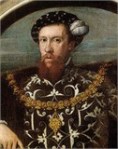
This week in #ROW80 I found a world of information and poetry in apps and podcasts. This vast free library of poems and poets would keep me occupied forever, but I have started a new ritual that is intended to create an atmosphere conducive to creating poetry. I now listen to my daily podcast poems while I draw my first art piece of the day. I am also, for an unrelated reason, soaking my feet in hot water with epsom salts for about an hour while I drink tea and coffee. I am not sure which element is most important, but I am enjoying the soaking in both hot water and poetic streams first thing in the morning. The Poetry Foundation features information about poets’ lives. I was curious to find Frances DeVere, wife of Henry Howard, in the data base. She is missing, but he is a very big figure in the history of poetry. I started to read his work and study the details of his life. His maternal grandfather was beheaded before him in the Tower. His father narrowly escaped death because the king died the day before his scheduled execution. This non-fiction story is full of twists. There is shocking drama in this real history of my DNA.
In the court of Henry VIII life could be very opulent, but all that could turn in the blink of an eye. Henry was capricious to say the least. The most famous of all the English monarchs wielded power with great vigor. In the year 1547 my was charged with treason. He was beheaded on Tower Hill after a one day trial. When he was under house arrest he wrote poetry. When he was sentenced to die, he wrote poetry and translated the Bible. He was a real troubadour in Tudor England. Some scholars believe he created the sonnet and was first to use free verse in English. His wife Frances was also a poet, but I have not found any of her work. I think the double whammy of dualing poets in the Tudor court should be a big advantage to me. I should be able to make some poems about them, or somehow inspired by their lives. During the next week I plan to make some stabs at this idea. The anniversary of his beheading is in 5 days. Maybe I can come up with a tribute of sorts.
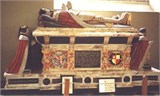
St Michael’s at Framlingham
Henry Howard (1517 – 1547)
is my 15th great grandfather
Thomas Howard (1536 – 1572)
son of Henry Howard
Margaret Howard (1561 – 1591)
daughter of Thomas Howard
Lady Ann Dorset (1552 – 1680)
daughter of Margaret Howard
Robert Lewis (1574 – 1645)
son of Lady Ann Dorset
Robert Lewis (1607 – 1644)
son of Robert Lewis
Ann Lewis (1633 – 1686)
daughter of Robert Lewis
Joshua Morse (1669 – 1753)
son of Ann Lewis
Joseph Morse (1692 – 1759)
son of Joshua Morse
Joseph Morse (1721 – 1776)
son of Joseph Morse
Joseph Morse III (1752 – 1835)
son of Joseph Morse
John Henry Morse (1775 – 1864)
son of Joseph Morse III
Abner Morse (1808 – 1838)
son of John Henry Morse
Daniel Rowland Morse (1838 – 1910)
son of Abner Morse
Jason A Morse (1862 – 1932)
son of Daniel Rowland Morse
Ernest Abner Morse (1890 – 1965)
son of Jason A Morse
Richard Arden Morse (1920 – 2004)
son of Ernest Abner Morse
Pamela Morse
I am the daughter of Richard Arden Morse
On this day in history, the 19th January 1547, the poet, courtier and soldier Henry Howard, Earl of Surrey and son of Thomas Howard, 3rd Duke of Norfolk, was executed by beheading on Tower Hill. He was laid to rest at All Hallows-by-the-Tower (All Hallows Barking) but was moved in 1614 by his son Henry, Earl of Northampton, to a beautiful tomb in the family church, St Michael’s at Framlingham.
He had been found guilty of treason on the 13th January 1547 at a common inquest at Guildhall, where evidence was given “which concerned overt conspiracy as well as the usurpation of the royal arms”1. It was alleged that “he had on 7 October 1546 at Kenninghall displayed in his own heraldry the royal arms and insignia, with three labels silver, thereby threatening the king’s title to the throne and the prince’s inheritance”2, yet when he had been arrested in December the questions had focused on “his determination for the rule of the prince; his procuring his sister to be the royal mistress; his slandering of the royal council; and his plans to flee the realm”3, not his use of the royal arms and insignia. His trial lasted a day and he gave a spirited defence but it was no good, he was found guilty and sentenced to death.
Historian Susan Brigden writes of how Surrey spent his last days in the Tower writing, paraphrasing Psalms 55, 73 and 88, “the prayers of the psalmist abandoned and betrayed, thinking upon death and judgment”4. His work showed not only his sense of betrayal but also his evangelical religious beliefs.
He was executed on Tower Hill on the 19th January 1547 but his father, the Duke of Norfolk, who had also been setenced to death for treason, escaped execution because Henry VIII died before his scheduled execution. Norfolk was released and pardoned by Mary I in 1553 and died naturally on 25th August 1554.
Susan Brigden writes of how Surrey was “the first poet in English to explore what might be said without rhyme” and he is viewed as one of the founders of English Renaissance poetry and “Father of the English Sonnet”, along with Thomas Wyatt and, I believe, George Boleyn. You can find Surrey’s poetry and also his paraphrases of Psalms 55 and 88 at Luminarium: Anthology of English Literature5. I’ll leave you with one if his poems:-
Set me whereas the sun doth parch the green…
Set me whereas the sun doth parch the greenOr where his beams do not dissolve the ice,
In temperate heat where he is felt and seen;
In presence prest of people, mad or wise;
Set me in high or yet in low degree,
In longest night or in the shortest day,
In clearest sky or where clouds thickest be,
In lusty youth or when my hairs are gray.
Set me in heaven, in earth, or else in hell;
In hill, or dale, or in the foaming flood;
Thrall or at large, alive whereso I dwell,
Sick or in health, in evil fame or good:
Hers will I be, and only with this thought Content myself although my chance be nought.
Notes and Sources
Susan Brigden, ‘Howard, Henry, earl of Surrey (1516/17–1547)’, Oxford Dictionary of National Biography, Oxford University Press, 2004
Luminarium: Anthology of English Literature
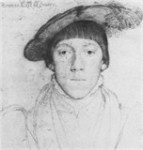


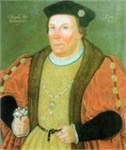
My 16th great-grandfather was beheaded for listening to prophecies of Henry VIII’s death. The king was personally involved in convicting him.
Edward Richard Buckingham Stafford (1479 – 1521)
is my 16th great grandfather
Elizabeth Dutchess Norfolk Stafford Howard (1497 – 1558)
daughter of Edward Richard Buckingham Stafford
Lady Katherine Howard Duchess Bridgewater (1495 – 1554)
daughter of Elizabeth Dutchess Norfolk Stafford Howard
William ApRhys (1522 – 1588)
son of Lady Katherine Howard Duchess Bridgewater
Henry Rice (1555 – 1621)
son of William ApRhys
Edmund Rice (1594 – 1663)
son of Henry Rice
Edward Rice (1622 – 1712)
son of Edmund Rice
Lydia Rice (1649 – 1723)
daughter of Edward Rice
Lydia Woods (1672 – 1738)
daughter of Lydia Rice
Lydia Eager (1696 – 1735)
daughter of Lydia Woods
Mary Thomas (1729 – 1801)
daughter of Lydia Eager
Joseph Morse III (1752 – 1835)
son of Mary Thomas
John Henry Morse (1775 – 1864)
son of Joseph Morse III
Abner Morse (1808 – 1838)
son of John Henry Morse
Daniel Rowland Morse (1838 – 1910)
son of Abner Morse
Jason A Morse (1862 – 1932)
son of Daniel Rowland Morse
Ernest Abner Morse (1890 – 1965)
son of Jason A Morse
Richard Arden Morse (1920 – 2004)
son of Ernest Abner Morse
Pamela Morse
I am the daughter of Richard Arden Morse
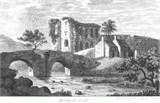
Born
3 February 1478
Brecon Castle, Wales
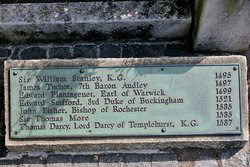
Died
17 May 1521 (aged 43)
Tower Hill
Edward Stafford, 3rd Duke of Buckingham, KG (3 February 1478 – 17 May 1521) was an English nobleman. He was the son of Henry Stafford, 2nd Duke of Buckingham, and Katherine Woodville, whose sister, Queen Elizabeth Woodville, was the wife of King Edward IV. He was convicted of treason, and executed on 17 May 1521.
Edward Stafford, born 3 February 1478 at Brecon Castle in Wales, was the eldest son of Henry Stafford, 2nd Duke of Buckingham, and Katherine Woodville, the daughter of Richard Woodville, 1st Earl Rivers, by Jacquetta of Luxembourg, daughter of Pierre de Luxembourg, Count of St. Pol, and was thus a nephew of Elizabeth Woodville, queen consort of King Edward IV.
By his father’s marriage to Katherine Woodville, Stafford had a younger brother, Henry Stafford, 1st Earl of Wiltshire, and two sisters, Elizabeth, who married Robert Radcliffe, 1st Earl of Sussex, and Anne, who married firstly, Sir Walter Herbert (d. 16 September 1507), an illegitimate son of William Herbert, 1st Earl of Pembroke, and secondly, George Hastings, 1st Earl of Huntingdon.
After the execution of the 2nd Duke of Buckingham, his widow, Katherine Woodville, married Jasper Tudor, second son of Owen Tudor and King Henry V’s widow, Catherine of Valois. After Jasper Tudor’s death on 21 December 1495, Katherine Woodville married Sir Richard Wingfield (d. 22 July 1525). Katherine Woodville died 18 May 1497. After her death, Sir Richard Wingfield married Bridget Wiltshire, daughter and heiress of Sir John Wiltshire of Stone, Kent.
In October 1483 Stafford’s father participated in a rebellion against King Richard III. He was beheaded without trial on 2 November 1483, whereby all his honours were forfeited. Stafford is said to have been hidden in various houses in Herefordshire at the time of the rebellion, and perhaps for the remainder of Richard III’s reign. However after Richard III’s defeat at Bosworth on 22 August 1485, and King Henry VII’s accession to the crown, Stafford was made a Knight of the Order of the Bath on 29 October 1485 as Duke of Buckingham, and attended Henry VII’s coronation the following day, although his father’s attainder was not formally reversed by Parliament until November. The young Duke’s wardship and lands were granted, on 3 August 1486, along with the wardship of his younger brother, Henry Stafford, to the King’s mother, Margaret Beaufort, and according to Davies it is likely Buckingham was educated in her various households.
Buckingham was in attendance at court at the creation of Henry VII’s second son, the future King Henry VIII, as Duke of York, on 9 November 1494, and was made a Knight of the Order of the Garter in 1495. In September 1497 he was a captain in the forces sent to quell a rebellion in Cornwall.
According to Davies, as a young man Buckingham played a conspicuous part in royal weddings and the reception of ambassadors and foreign princes, ‘dazzling observers by his sartorial splendour’. At the wedding of Henry VII’s then eldest son and heir Arthur, Prince of Wales, and Catherine of Aragon in 1501, he is said to have worn a gown worth £1500. He was the chief challenger at the tournament held the following day.
At the accession of King Henry VIII, Buckingham was appointed on 23 June 1509, for the day of the coronation only, Lord High Constable, an office which he claimed by hereditary right. He also served as Lord High Steward at the coronation, and bearer of the crown. In 1509 he was made a member of the King’s Privy Council. On 9 July 1510 he had licence to crenellate his manor of Thornbury, Gloucestershire, and according to Davies rebuilt the manor house as ‘an impressively towered castle’ with ‘huge oriel windows in the living-quarters in the inner court’.
In 1510 Buckingham was involved in a scandal concerning his sister, Anne. After hearing rumours concerning Anne and Sir William Compton, Buckingham found Compton in Anne’s room. Compton was forced to take the sacrament to prove that he and Anne had not committed adultery, and Anne’s husband, George Hastings, 1st Earl of Huntingdon, sent Anne away to a convent 60 miles distant from the court. There is no extant evidence establishing that Anne and Sir William Compton were guilty of adultery. However in 1523 Compton took the unusual step of bequeathing land to Anne in his will, and directing his executors to include her in the prayers for his kin for which he had made provision in his will.
From June to October 1513 Buckingham served as a captain during Henry VIII’s invasion of France, commanding 500 men in the ‘middle ward’. About 1517 he was one of twelve challengers chosen to tilt against the King and his companions, but excused himself on the ground that he feared to run against the King’s person. He and his wife, Eleanor, attended the Field of the Cloth of Gold in 1520.
Although Buckingham was appointed to commissions of the peace in 1514 and charged, together with other marcher lords, with responsibility for keeping order in south Wales, he was rebuked by the King in 1518 for failing to achieve the desired results. According to Davies, in general Buckingham exercised little direct political influence, and was never a member of the King’s inner circle.
Buckingham fell out dramatically with the King in 1510, when he discovered that the King was having an affair with the Countess of Huntingdon, the Duke’s sister and wife of the 1st Earl of Huntingdon. She was taken to a convent sixty miles away. There are some suggestions that the affair continued until 1513. However, he returned to the King’s graces, being present at the marriage of Henry’s sister, served in Parliament and being present at negotiations with Francis I of France and Charles V, Holy Roman Emperor.
Buckingham was one of few peers with substantial Plantagenet blood and maintained numerous connections, often among his extended family, with the rest of the upper aristocracy, which activities attracted Henry’s suspicion. During 1520, Buckingham became suspected of potentially treasonous actions and Henry VIII authorised an investigation. The King personally examined witnesses against him, gathering enough evidence for a trial. The Duke was finally summoned to Court in April 1521 and arrested and placed in the Tower. He was tried before a panel of 17 peers, being accused of listening to prophecies of the King’s death and intending to kill the King. He was executed on Tower Hill on 17 May. Buckingham was posthumously attainted by Act of Parliament on 31 July 1523, disinheriting most of his wealth from his children.
Guy (1988) concludes this was one of the few executions of high personages under Henry VIII in which the accused was “almost certainly guilty”. However Sir Thomas More complained that the key evidence from servants was hearsay.
Buckingham’s literary patronage included two translations, a printed translation of Helyas, Knyghte of the Swanne, which he commissioned in 1512, and A Lytell Cronicle, a translation of an account of the Middle East which he may have commissioned in 1520 in connection with his proposed pilgrimage to Jerusalem.
In 1488 Henry VII had suggested a marriage between Buckingham and Anne of Brittany, but in December 1489 the executors of Henry Percy, 4th Earl of Northumberland, paid the King £4000 for Buckingham’s marriage to Percy’s eldest daughter Eleanor (d. 1530). They had a son and three daughters:
Lord Henry Stafford, 1st Baron Stafford (18 September 1501 – 30 April 1563), who married Ursula Pole, daughter of Sir Richard Pole by his second wife, Margaret, Countess of Salisbury, daughter of George, Duke of Clarence.
Lady Elizabeth Stafford, Duchess of Norfolk (c. 1497 – 30 November 1558), who married, as his second wife, before 8 January 1513, Thomas Howard, 3rd Duke of Norfolk.
Lady Katherine Stafford (c. 1499 – 14 May 1555), who married Ralph Neville, 4th Earl of Westmorland.
Lady Mary Stafford, the youngest daughter, who married, about June 1519, as his third wife, George Neville, 5th Baron Bergavenny.
Buckingham is also said to have had three illegitimate children: George Stafford, Henry Stafford, Margaret Stafford (c. 1511 – 25 May 1537), whom Buckingham married to his ward, Thomas Fitzgerald of Leixlip, half-brother to the Earl of Kildare.
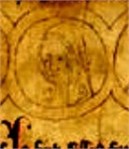
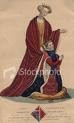
My 22nd great grandmother was born in Syria while her parents were on a crusade.
Joan Plantagenet (1272 – 1307)
is my 22nd great grandmother
Lady Margaret De Clare Baroness Audley (1292 – 1342)
daughter of Joan Plantagenet
Lady Alice De Audley Baroness Neville (1315 – 1373)
daughter of Lady Margaret De Clare Baroness Audley
Sir John ‘3rd Baron de Raby’ Neville, Admiral of the Kings Fleet (1341 – 1388)
son of Lady Alice De Audley Baroness Neville
Thomas De Neville (1362 – 1406)
son of Sir John ‘3rd Baron de Raby’ Neville, Admiral of the Kings Fleet
Maude de Neville (1392 – 1421)
daughter of Thomas De Neville
John Talbot (1413 – 1460)
son of Maude de Neville
Isabel Talbot (1444 – 1531)
daughter of John Talbot
Sir Richard Ashton (1460 – 1549)
son of Isabel Talbot
Sir Christopher Ashton (1493 – 1519)
son of Sir Richard Ashton
Lady Elizabeth Ashton (1524 – 1588)
daughter of Sir Christopher Ashton
Capt Roger Dudley (1535 – 1585)
son of Lady Elizabeth Ashton
Gov Thomas Dudley (1576 – 1653)
son of Capt Roger Dudley
Anne Dudley (1612 – 1672)
daughter of Gov Thomas Dudley
John Bradstreet (1652 – 1718)
son of Anne Dudley
Mercy Bradstreet (1689 – 1725)
daughter of John Bradstreet
Caleb Hazen (1720 – 1777)
son of Mercy Bradstreet
Mercy Hazen (1747 – 1819)
daughter of Caleb Hazen
Martha Mead (1784 – 1860)
daughter of Mercy Hazen
Abner Morse (1808 – 1838)
son of Martha Mead
Daniel Rowland Morse (1838 – 1910)
son of Abner Morse
Jason A Morse (1862 – 1932)
son of Daniel Rowland Morse
Ernest Abner Morse (1890 – 1965)
son of Jason A Morse
Richard Arden Morse (1920 – 2004)
son of Ernest Abner Morse
Pamela Morse
I am the daughter of Richard Arden Morse
Joan of Acre (April 1272 – 23 April 1307) was an English princess, a daughter of King Edward I of England and Queen Eleanor of Castile. The name “Acre” derives from her birthplace in the Holy Land while her parents were on a crusade.
She was married twice; her first husband was Gilbert de Clare, 7th Earl of Gloucester, one of the most powerful nobles in her father’s kingdom; her second husband was Ralph de Monthermer, a squire in her household whom she married in secret.
Joan is most notable for the claim that miracles have allegedly taken place at her grave, and for the multiple references to her in literature.
Birth and childhood
Joan (or Joanna, as she is sometimes called) of Acre was born in the spring of 1272 in Syria, while her parents, Edward I and Eleanor of Castile, were on crusade. At the time of Joan’s birth, her grandfather, Henry III, was still alive and thus her father was not yet king of England. Her parents departed from Acre shortly after her birth, traveling to Sicily and Spain before leaving Joan with Eleanor’s mother, Joan, Countess of Ponthieu, in France. Joan lived for several years in France where she spent her time being educated by a bishop and “being thoroughly spoiled by an indulgent grandmother.” Joan was free to play among the “vine clad hills and sunny vales” surrounding her grandmother’s home, although she required “judicious surveillance.”
As Joan was growing up with her grandmother, her father was back in England, already arranging marriages for his daughter. He hoped to gain both political power and more wealth with his daughter’s marriage, so he conducted the arrangement in a very “business like style”. He finally found a man suitable to marry Joan (aged 5 at the time), Hartman, son of King Rudoph I, of Germany. Edward then brought her home from France for the first time to meet him. As she had spent her entire life away from Edward and Eleanor, when she returned she “stood in no awe of her parents” and had a fairly distanced relationship with them.
Unfortunately for King Edward, his daughter’s suitor died before he was able to meet or marry Joan. The news reported that Hartman had fallen through a patch of shallow ice while “amusing himself in skating” while a letter sent to the King himself stated that Hartman had set out on a boat to visit his father amidst a terrible fog and the boat had smashed into a rock, drowning him.
First marriage
Edward arranged a second marriage almost immediately after the death of Hartman.[12] Gilbert de Clare, Earl of Gloucester, who was almost thirty years older than Joan and newly divorced, was his first choice. The earl resigned his lands to Edward upon agreeing to get them back when he married Joan, as well as agreed on a dower of two thousand silver marks.[14] By the time all of these negotiations were finished, Joan was twelve years old. Gilbert de Clare became very enamored with Joan, and even though she had to marry him regardless of how she felt, he still tried to woo her. He bought her expensive gifts and clothing to try to win favor with her. The couple were married on 30 April 1290 at Westminster Abbey, and had four children together. They were:
Gilbert de Clare, 7th Earl of Hertford
Eleanor de Clare
Margaret de Clare
Elizabeth de Clare
Joan’s first husband, Gilbert de Clare died on 7 December 1295.[18]
Secret second marriage
Joan had been a widow for only a little over a year when she caught the eye of Ralph de Monthermer, a squire in Joan’s father’s household. Joan fell in love and convinced her father to have Monthermer knighted. It was unheard of in European royalty for a noble lady to even converse with a man who had not won or acquired importance in the household. However, in January 1297 Joan secretly married Ralph. Joan’s father was already planning another marriage for Joan to Amadeus V, Count of Savoy, to occur 16 March 1297. Joan was in a dangerous predicament, as she was already married, unbeknownst to her father.
Joan sent her four young children to their grandfather, in hopes that their sweetness would win Edward’s favor, but her plan did not work. The king soon discovered his daughter’s intentions, but not yet aware that she had already committed to them, he seized Joan’s lands and continued to arrange her marriage to Amadeus of Savoy. Soon after the seizure of her lands, Joan told her father of that she had married Ralph. The king was enraged and retaliated by immediately imprisoning Monthermer at Bristol Castle. The people of the land had differing opinions on the princess’ matter. It has been argued that the ones who were most upset were those who wanted Joan’s hand in marriage.
With regard to the matter, Joan famously said, “It is not considered ignominious, nor disgraceful for a great earl to take a poor and mean woman to wife; neither, on the other hand, is it worthy of blame, or too difficult a thing for a countess to promote to honor a gallant youth.” Joan’s statement in addition to a possibly obvious pregnancy seemed to soften Edward’s attitude towards the situation. Joan’s first child by Monthermer was born in October 1297; by the summer of 1297, when the marriage was revealed to Edward I, Joan’s condition would certainly have been apparent, and would have convinced Edward that he had no choice but to recognize his daughter’s marriage. Edward I eventually relented for the sake of his daughter and released Monthermer from prison in August 1297.[17] Monthermer paid homage 2 August, and being granted the titles of Earl of Gloucester and Earl of Hertford, he rose to favour with the King during Joan’s lifetime.
Monthermer and Joan had four children:
Mary de Monthermer, born October 1297. In 1306 her grandfather King Edward I arranged for her to wed Duncan Macduff, 8th Earl of Fife. (Ancestor of Harry S Truman, 33rd President of the USA).
Joan de Monthermer, born 1299, became a nun at Amesbury.
Thomas de Monthermer, 2nd Baron Monthermer, born 1301.
Edward de Monthermer, born 1304 and died 1339.
Relationship with family
Joan of Acre was the seventh of Edward I and Eleanor’s fourteen children. Most of her older siblings died before the age of seven, and many of her younger siblings died before adulthood. Those who survived to adulthood were Joan, her younger brother, Edward of Caernarfon (later Edward II), and four of her sisters: Eleanor, Margaret, Mary, and Elizabeth.
Joan, like her siblings, was raised outside her parents’ household. She lived with her grandmother in Ponthieu for four years, and was then entrusted to the same caregivers who looked after her siblings. Edward I did not have a close relationship with most of his children while they were growing up, yet “he seemed fonder of his daughters than his sons.”
However, Joan of Acre’s independent nature caused numerous conflicts with her father. Her father disapproved of her leaving court after her marriage to the Earl of Gloucester, and in turn “seized seven robes that had been made for her.” He also strongly disapproved of her second marriage to Ralph de Monthermer, a squire in her household, even to the point of attempting to force her to marry someone else. While Edward ultimately developed a cordial relationship with Monthermer, even giving him the title of Earl, there appears to have been a notable difference in the Edward’s treatment of Joan as compared to the treatment of the rest of her siblings. For instance, her father famously paid messengers substantially when they brought news of the birth of grandchildren, but did not do this upon birth of Joan’s daughter.
In terms of her siblings, Joan kept a fairly tight bond. She and Monthermer both maintained a close relationship with her brother, Edward II, which was maintained through letters. After Edward II became estranged from his parents and lost his royal seal, “Joan offered to lend him her seal” .
Death
Joan of Acre died on 23 April 1307, at the manor of Clare in Suffolk. The cause of her death remains unclear, though one popular theory is that she died during childbirth, a common cause of death at the time. While Joan’s age in 1307 (about 35) and the chronology of her earlier pregnancies with Ralph de Monthermer suggest that this could well be the case, historians have not confirmed the cause of her death.
Less than four months after her death, Joan’s father, Edward I died. Joan’s widower, Ralph de Monthermer, lost the title of Earl of Gloucester soon after the deaths of his wife and father-in-law. The earldom of Gloucester was given to Joan’s son from her first marriage, Gilbert, who was its rightful holder. Monthermer continued to hold a nominal earldom in Scotland, which had been conferred on him by Edward I, until his death.
Joan’s burial place has been the cause of some interest and debate. She is interred in the Augustinian priory at Clare, which had been founded by her first husband’s ancestors and where many of them were also buried. Allegedly, in 1357, Joan’s daughter, Elizabeth De Burgh, claimed to have “inspected her mother’s body and found the corpse to be intact which in the eyes of the Roman Catholic Church is an indication of sanctity. This claim was only recorded in a fifteenth-century chronicle, however, and its details are uncertain, especially the statement that her corpse was in such a state of preservation that “when her paps [breasts] were pressed with hands, they rose up again.” Some sources further claim that miracles took place at Joan’s tomb, but no cause for her beatification or canonization has ever been introduced.
Joan in fiction
Joan of Acre makes an appearance in Virginia Henley’s historical romance, entitled Infamous. In the book, Joan, known as Joanna, is described as a promiscuous young princess, vain, shallow and spoiled. In the novel she is only given one daughter, when she historically has eight children. There is no evidence that supports this picture of Joan.
In The Love Knot by Vanessa Alexander, Edward the II’s sister, Joan of Acre is an important heroine. The author portrays a completely different view of the princess than the one in Henley’s novel. The Love Knot tells the story of the love affair between Ralph de Monthermer and Joan of Acre through the discovery of a series of letters the two had written to each other.
Between historians and novelists, Joan has appeared in various texts as either an independent and spirited woman or a spoiled brat. In Lives of the Princesses of England by Mary Anne Everett Green, Joan is portrayed as a “giddy princess” and neglectful mother. Many have agreed to this characterization; however, some authors think there is little evidence to support the assumption that Joan of Acre was a neglectful or uncaring mother.

Dorset Coat of Arms
Robert Sackville, 2nd Earl of Dorset, served in the House of Commons. Like the Downton Abbey family, the Sackvilles have two last names..Dorset is the name for the Earldom and Sackville is the family name. It is confusing, but the entire peer business is hard to understand. This family was heavily entwined with royalty at a dangerous time to be so. His wife was suspected of being crypto-Catholic, a very highly punishable offense in Tudor times. She survived by hiding her religion.
Robert Dorset (1525 – 1609)
is my 13th great grandfather
Lady Ann Dorset (1552 – 1680)
daughter of Robert Dorset
Robert Lewis (1574 – 1645)
son of Lady Ann Dorset
Robert Lewis (1607 – 1644)
son of Robert Lewis
Ann Lewis (1633 – 1686)
daughter of Robert Lewis
Joshua Morse (1669 – 1753)
son of Ann Lewis
Joseph Morse (1692 – 1759)
son of Joshua Morse
Joseph Morse (1721 – 1776)
son of Joseph Morse
Joseph Morse III (1752 – 1835)
son of Joseph Morse
John Henry Morse (1775 – 1864)
son of Joseph Morse III
Abner Morse (1808 – 1838)
son of John Henry Morse
Daniel Rowland Morse (1838 – 1910)
son of Abner Morse
Jason A Morse (1862 – 1932)
son of Daniel Rowland Morse
Ernest Abner Morse (1890 – 1965)
son of Jason A Morse
Richard Arden Morse (1920 – 2004)
son of Ernest Abner Morse
Pamela Morse
I am the daughter of Richard Arden Morse
Robert Sackville, 2nd Earl of Dorset (1561–1609) was an English aristocrat and politician, with humanist and commercial interests.
Life
He was the eldest son of Thomas Sackville, 1st Earl of Dorset, by Cecily, daughter of Sir John Baker. His grandfather, Sir Richard Sackville, invited Roger Ascham to educate Robert with his own son, an incident inn 1563 that Ascham introduced into his pedagogic work The Scholemaster (1570) as prompting the book. He matriculated from Hart Hall, Oxford, 17 December 1576, and graduated B.A. and M.A. on 3 June 1579; it appears from his father’s will that he was also at New College.
He was admitted to the Inner Temple in 1580 but not called to the bar, and was elected to the House of Commons in 1585 as member for Sussex, aged 23, by his father’s influence. In 1588 he sat for Lewes, but represented the county again in 1592–3, 1597–8, 1601, and 1604–8. He was a prominent member of the Commons, serving as a chairman of several committees. At the same time he engaged in trading ventures, and held a patent for the supply of ordnance.
He succeeded to the earldom of Dorset on the death of his father on 19 April 1608. He inherited from his father manors in Sussex, Essex, Kent, and Middlesex, the principal seats being Knole and Buckhurst. Dorset survived his father less than a year, dying on 27 February 1609 at Dorset House, Fleet Street, London. He was buried in the Sackville Chapel at Withyham, Sussex, and left money for the building and endowment of Sackville College.
Family
Dorset married first, in February 1580, Lady Margaret, only daughter of Thomas Howard, 4th Duke of Norfolk, then suspected as a crypto-Catholic. By her he had six children, including:
Richard who became third earl;
Edward, fourth earl;
Anne, married Sir Edward Seymour, eldest son of Edward Seymour, Viscount Beauchamp,
Cecily, married Sir Henry Compton, K.B.
Lady Margaret, in fact a devout Catholic, died on 19 August 1591; Robert Southwell, who never met her, published in her honour, in 1596, Triumphs over Death, with dedicatory verses to her surviving children.
Dorset married, secondly, on 4 December 1592, Anne (d. 22 September 1618), daughter of Sir John Spencer of Althorp, and widow of, first, William Stanley, 3rd Baron Monteagle, and, secondly, Henry Compton, 1st Baron Compton. In 1608–9 Dorset found reason to complain of his second wife’s misconduct, and was negotiating with Archbishop Richard Bancroft and Lord Ellesmere for a separation from her when he died.
Notes
^ Lawrence V. Ryan, Roger Ascham (1963), pp. 252–3.
^ J. E. Neale, The Elizabethan House of Commons (1963), p. 63 and p. 293.
^ Scott R. Pilarz, Robert Southwell and the Mission of Literature, 1561-1595 (2004), p. 204.
Attribution
This article incorporates text from the entry Sackville, Robert in the Dictionary of National Biography (1885–1900), a publication now in the public domain.
Political officesPreceded by
The Earl of NottinghamThe Earl of NorthumberlandLord Lieutenant of Sussex
1608–1609Vacant
Title next held by
The 3rd Earl of DorsetPeerage of EnglandPreceded by
Thomas Sackville Earl of Dorset
1608–1609Succeeded by
Richard Sackville


My 7th great-grandfather had an inherited gift for bone setting. Both he and my 6th great-grandfather relieved suffering by using manipulative medicine. They had no degree in medicine but believed in their natural ability to pass this gift down to generations of Sweets.
“November 8th, 1724, Captain Benoni Sweet was baptised at St. Paul’s, in Narragasett, by the Rev. Mr. McSparran; and at the succeeding Easter, Captain Sweet was elected one of the Vestry.” [History of the Episcopal Church in Narragansett, Rhode Island, page 94.]
“James Sweet, the father of Benoni, emigrated from Wales [England] to this country, and purchased an estate at the foot of Ridge Hill, so called, in North Kingstown… Benoni had been a Captain in the British service–was well informed, and of polished manners. He was a natural bonesetter and the progenitor of the race in Rhode Island. He was styled Doctor Sweet, but he practised in restoring dislocations only. He was a regular communicant of the church, and officiated as a vestryman, until his death. ‘July 19th, 1751,’ says the record, ‘died Captain Benoni Sweet, of North Kingstown, in the ninetieth year of his age; Dr. McSparran preached his funeral sermon, and buried him in the cemetery of his ancestors.'” [History of the Episcopal Church in Narragansett, Rhode Island, page 94.]
“SWEET, Capt. Benoni, in 90th year, buried in his own family yard.” [Vital Record of Rhode Island, 1636-1850, v.10, page 384]
Benoni Sweet (1663 – 1751)
is my 7th great grandfather
Dr. James Sweet (1686 – 1751)
son of Benoni Sweet
Thomas Sweet (1732 – 1813)
son of Dr. James Sweet
Thomas Sweet (1759 – 1844)
son of Thomas Sweet
Valentine Sweet (1791 – 1858)
son of Thomas Sweet
Sarah LaVina Sweet (1840 – 1923)
daughter of Valentine Sweet
Jason A Morse (1862 – 1932)
son of Sarah LaVina Sweet
Ernest Abner Morse (1890 – 1965)
son of Jason A Morse
Richard Arden Morse (1920 – 2004)
son of Ernest Abner Morse
Pamela Morse
I am the daughter of Richard Arden Morse
The Bonesetter Sweets
Of South County, Rhode Island
By Martha R. McPartland
In colonial America, graduates of medical schools were few and far between. In Rhode Island there were only five medical school graduates practicing in 1800 and the first medical degree awarded in the state was a Brown University in 1814. Prior to that period, from its founding in 1636, Rhode Island had many men called “Doctor” with
little or no qualifications to back up their title. Some were the seventh son of a seventh son, and so believed to be endowed with special healing power; some were charlatans with a smattering of education and glib tongues, who took advantage of misfortune and ignorance; still others had a natural flair for caring for the sick and were able to relieve much suffering. In the last category was a remarkable family from the southern part of Rhode Island called, and still recalled, as the “Bonesetter Sweets.”
The Sweets were an old Rhode Island family whose progenitor, John Sweet, came to the state from Salem, Massachusetts in 1637. Of Welsh extraction, family tradition has it that their forbears in Wales had this innate facility for helping the sick. James Sweet , son of the immigrant, John, was the first of the American “Bonesetter Sweets.” He was born in 1622, came to Rhode Island with his parents, married Mary Greene and settled in what is commonly called South County, and more correctly named Washington County. Of the nine children of James and Mary Sweet, only Benoni , born in 1663, became a bonesetter. Traditionally, Benoni is said to have had a flowery and polished
manner—perhaps a forerunner of the bedside manner possessed by some of today’s medical men! He was called “Doctor” Sweet and his practice consisted of setting bones. He was a respected member of the community and a communicant of the historic Narragansett Church. When he died in 1751, Dr. James McSarren, rector of the
church, delivered a glowing eulogy. The inherited ability to set bones was not regarded by the Sweets as a vocation, but rather as an avocation. They were artisans by calling—stonemasons, blacksmiths, wheel-wrights, and carpenters. Bone setting was a sideline, as is demonstrated by an advertisement in the Providence Journal of February 16, 1830 and printed at the top or the first page of this article.
The remarkable part of this family was the fact that they never exploited their natural ability. Not one of them sought fame or fortune through this medium. The father usually selected one or two of his sons, probably those who showed a tendency in that direction, and instructed them in bonesetting. The Sweets did not deem this a magical thing, but more of an inherited knowledge acquired from their elders. They handled fractures, sprains, and dislocations with a skill to be envied by an orthopedic physician. Their skill was in the manipulation of bones but they were known to use herbs, ointments, and skunk grease in massaging too. Their knack was thought uncanny, as they so often succeeded where others, more learned and “better trained,” had failed. Instances naming local doctors who failed to relieve suffering that was later relieved by one of the Sweets have become a part of South County folklore.
Dr. Benoni Sweet selected his son, James , to carry on the family art. James was born in 1688 and not too much is known of his successes, but it was Job Sweet, son of James, who gained national recognition and established their bonesetting reputation. Job was born in 1724 and married Jemima Sherman in 1750. He lived all his life in the South County section of Rhode Island.

John Vowell Hooker
John Hooker, John Hoker or John Vowell (c. 1527–1601) was an English writer, solicitor, antiquary, civic administrator and advocate of republican government. He wrote an eye-witness account of the siege of Exeter that took place during the Prayer Book Rebellion in 1549. From 1555 to his death he was chamberlain of that city, though he spent several years in Ireland as legal adviser to Sir Peter Carew during his claim to lands there. He was, for short periods, a member of both the Irish and English parliaments and wrote an influential treatise on parliamentary procedure. He was one of the editors of the second edition of Raphael Holinshed’s Chronicles, published in 1587. His last, unpublished and probably uncompleted work was the first topographical description of the county of Devon.
John Vowell Hooker (1526 – 1601)
is my 11th great grandfather
Mary Hooker (1567 – 1617)
daughter of John Vowell Hooker
John (Dr) Greene (1597 – 1659)
son of Mary Hooker
Mary Greene (1633 – 1686)
daughter of John (Dr) Greene
Benoni Sweet (1663 – 1751)
son of Mary Greene
Dr. James Sweet (1686 – 1751)
son of Benoni Sweet
Thomas Sweet (1732 – 1813)
son of Dr. James Sweet
Thomas Sweet (1759 – 1844)
son of Thomas Sweet
Valentine Sweet (1791 – 1858)
son of Thomas Sweet
Sarah LaVina Sweet (1840 – 1923)
daughter of Valentine Sweet
Jason A Morse (1862 – 1932)
son of Sarah LaVina Sweet
Ernest Abner Morse (1890 – 1965)
son of Jason A Morse
Richard Arden Morse (1920 – 2004)
son of Ernest Abner Morse
Pamela Morse
I am the daughter of Richard Arden Morse
Hooker was born at Bourbridge Hall in Exeter, Devon, England. He was the second son of Robert Vowell or Hooker and Agnes Doble, his third wife. The Vowell family had acquired the name Hooker in the 15th century, but usually retained the earlier name; in fact John Hooker was known as John Vowell for much of his life. By the time he was born the family had been prominent in Exeter for several generations. Hooker received an excellent classical education, reading Roman law at Oxford followed by a period in Europe studying with leading Protestant divines, notably Pietro Martire Vermigli.
In the 1540s he married Martha, daughter of Robert Tucker of Exeter and they had three sons and two daughters. By 1586, Martha had died and he had married Anastryce (c. 1540–1599), daughter of Edward Bridgeman of Exeter. They had seven sons and five daughters. In later life his health failed and he died in Exeter some time between 26 January and 15 September in 1601 and was probably buried in the cathedral. He was the uncle of Richard Hooker, the influential Anglican theologian.
“
[I denounce those who chose] to supporte the authoritie of the Idoll of Rome whome they never sawe in contempte of their trewe & lawfull kinge, whom they knewe and oughte to obeye.
”
— Hooker, on the siege of Exeter, in The description of the citie of Excester, 1.67
During the Prayer Book Rebellion in 1549 he experienced at first hand the siege of Exeter, leaving a vivid account of its events in which he made no effort to conceal his religious sympathies. From 1551 to 1553 he was employed by Myles Coverdale during his short incumbency as Bishop of Exeter; and then in 1555 he became the first chamberlain of Exeter, a post that he held until his death.
As chamberlain he was responsible for the city’s finances, he dealt with disputes between guilds and merchants, oversaw the rebuilding of the high school, planted many trees in the city, and collected and put in order the city’s archives. He used these archives to compile his “Annals” of the City in which he details the characteristics of every Tudor mayor of Exeter, and in 1578 he also wrote and published The Lives of the Bishops of Exeter. In 1570/71 he was the MP for Exeter.
At a time when it was deemed essential for cities and nations to have ancient lineage, Hooker described the foundation of Exeter by Corinaeus, nephew of Brutus of Britain, son of Aeneas. He advocated emulating the governmental institutions of the Roman Republic which, in his opinion, brought Rome to greatness, and held the municipal government of Exeter up as a model republican commonwealth worthy of emulation.
Ireland
In 1568, possibly because he regarded himself as underpaid for the work he was doing for the city, Hooker was persuaded by Sir Peter Carew to go with him to Ireland to be his legal adviser. He also organised Carew’s papers in support of his claim for the barony of Idrone, a task to which he committed himself so deeply that in 1569 he was returned to the Irish parliament as member for Athenry. Hooker later wrote a biography of Carew, The dyscourse and dyscoverye of the lyffe of Sir Peter Carew, in which he almost certainly understated the deceit and aggression behind Carew’s Irish venture.
Until Carew’s death in 1575, Hooker spent much time in Ireland, but he had also been returned to the English parliament in 1571 as one of the burgessesof Exeter. The session had only lasted a few weeks, but he kept a journal in which he accurately recorded the proceedings. His experiences in the Irish and English parliaments led him to write a treatise on parliamentary practice, The Order and Usage how to Keepe a Parlement in England, which was published in two editions in 1572. One edition had a preface addressed to William FitzWilliam, the Lord Deputy of Ireland and was clearly intended to bring order to the Irish assembly; the other was addressed to the Exeter city authorities, presumably to aid his successor burgesses. In writing his treatise Hooker took much inspiration from the Modus Tenendi Parliamentum, a treatise from the early 14th century.
In 1586 Hooker again represented Exeter in parliament. At this time he was one of the editors of the second edition of Raphael Holinshed’s Chronicles, which was published in 1587. Hooker’s Order and Usage was included and he contributed an updated history of Ireland, including parts of his Life of Carew and a translation of Expugnatio Hibernica (“Conquest of Ireland”) by Gerald of Wales. In his Irish section he again made his religious and political sympathies very clear, repeatedly denouncing the Catholicism of the native Irish, seeing it as the cause both of their poverty and rebelliousness. Rome, he wrote, is “the pestilent hydra” and the pope “the sonne of sathan, and the manne of sinne, and the enimie unto the crosse of Christ, whose bloodthirstiness will never be quenched”.
Later life
“
a verye ancient towne … and maye be equall with some cities for it is the cheffe emporium of that countrie and most inhabited with merchantes whose cheffest trade in tyme of peace was with Spayne … it is a clene and sweete towne, very well paved…
”
— Hooker, on Barnstaple, in Synopsis Corographical, 261-262
Hooker continued to serve Exeter in his later years, becoming coroner in 1583 and recorder in 1590. He was also appointed as steward of Bradninch by Sir Walter Raleigh in 1587.[1] By this time he was involved in the long task of organising and writing his historically-based description of his home county that he called Synopsis Corographical of the county of Devon. He probably started work on this before his friend Richard Carew began writing his similar Survey of Cornwall.[2]In writing his Synopsis, Hooker was influenced by the style and structure of William Harrison’sDescription of England, which had been published in 1577 as part of the first edition of Holinshed’sChronicles.[1]
Although Hooker revised Synopsis many times, he probably never completed it to his satisfaction. The work exists today as two almost identical manuscripts which were used as source material for many later topographical descriptions of the county: Thomas Westcote’s Survey of Devon of 1630, and Tristram Risdon’s Chorographical Description or Survey of the County of Devon (c. 1632) are examples.
Works
Orders Enacted for Orphans and for their Portions within the Citie of Exeter, London, 1575
The Antique Description and Account of the City of Exeter: In Three Parts, All Written Purely by John Vowell, Alias Hoker
The order and usage of the keepingng of a parlement in England, 1572
A pamphlet of the offices and duties of everie particular sworned officer of the citie of Excester (sic) 1584
The Life and Times of Sir Peter Carew

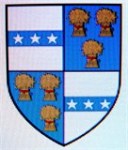
My 20th great grandmother was born in Scotland and married Sir Adam Mure. She gave birth to her daughter, Elizabeth, who became queen of Scotland, at Rowallan Castle.
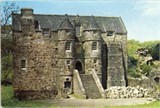
Rowallan Castle
The surname of MURE was derived from the Old French word ‘more’ – a nickname given to one with a swarthy complexion. The name was brought into England in the wake of the Norman Conquest of 1066. There are also places of the name in Cheshire, from which the name may have been derived. Early records of the name mention Johannes filius More, 1185 County Kent. More Kalendrer was documented in County Surrey in 1332, and Thomas Mor was recorded in the year 1340
Elizabeth Mure, daughter of Sir Adam Mure of Rowallan, became Queen of King Robert 11 in 1347. Alicia del More of Yorkshire was listed in the Yorkshire Poll Tax of 1379. Henry More married Alice Simpson in London in the year of 1578. Francis Moore (1656-1715) was an Astrolger and quack physician. He advertised his pills by publishing an almanac, forecasting the weather. George Moore (1852-1933) was the Irish novelist, the author of Esther Water, The Brook of Kerith, Heloise and Abelard. The name was taken to Ireland at an early date, and is one of the twenty most popular names in Ireland. Of the several thousand Moore families, some are of settler descent, their forebears being immigrants from England, who have come to Ireland in considerable numbers over the centuries since the Anglo-Norman invasion.
Lady Joanna Danzielstour, Baroness More of Rowallan (1275 – 1330)
is my 20th great grandmother
Elizabeth Mure (1320 – 1355)
daughter of Lady Joanna Danzielstour, Baroness More of Rowallan
Robert Scotland Stewart (1337 – 1406)
son of Elizabeth Mure
James I Scotland Stewart (1394 – 1434)
son of Robert Scotland Stewart
Joan Stewart (1428 – 1486)
daughter of James I Scotland Stewart
John Gordon (1450 – 1517)
son of Joan Stewart
Robert Lord Gordon (1475 – 1525)
son of John Gordon
Catherine Gordon (1497 – 1537)
daughter of Robert Lord Gordon
Lady Elizabeth Ashton (1524 – 1588)
daughter of Catherine Gordon
Capt Roger Dudley (1535 – 1585)
son of Lady Elizabeth Ashton
Gov Thomas Dudley (1576 – 1653)
son of Capt Roger Dudley
Anne Dudley (1612 – 1672)
daughter of Gov Thomas Dudley
John Bradstreet (1652 – 1718)
son of Anne Dudley
Mercy Bradstreet (1689 – 1725)
daughter of John Bradstreet
Caleb Hazen (1720 – 1777)
son of Mercy Bradstreet
Mercy Hazen (1747 – 1819)
daughter of Caleb Hazen
Martha Mead (1784 – 1860)
daughter of Mercy Hazen
Abner Morse (1808 – 1838)
son of Martha Mead
Daniel Rowland Morse (1838 – 1910)
son of Abner Morse
Jason A Morse (1862 – 1932)
son of Daniel Rowland Morse
Ernest Abner Morse (1890 – 1965)
son of Jason A Morse
Richard Arden Morse (1920 – 2004)
son of Ernest Abner Morse
Pamela Morse
I am the daughter of Richard Arden Morse

My 16th great-grandmother was deaf, and used sign language. Joan died after 16 October 1486, she was buried at Dalkeith Church, Midlothian. Joan’s effigy on the Morton Monument is said to be the world’s oldest image of a known deaf person
Joan Stewart (1428 – 1486)
is my 16th great grandmother
John Gordon (1450 – 1517)
son of Joan Stewart
Robert Lord Gordon (1475 – 1525)
son of John Gordon
Catherine Gordon (1497 – 1537)
daughter of Robert Lord Gordon
Lady Elizabeth Ashton (1524 – 1588)
daughter of Catherine Gordon
Capt Roger Dudley (1535 – 1585)
son of Lady Elizabeth Ashton
Gov Thomas Dudley (1576 – 1653)
son of Capt Roger Dudley
Anne Dudley (1612 – 1672)
daughter of Gov Thomas Dudley
John Bradstreet (1652 – 1718)
son of Anne Dudley
Mercy Bradstreet (1689 – 1725)
daughter of John Bradstreet
Caleb Hazen (1720 – 1777)
son of Mercy Bradstreet
Mercy Hazen (1747 – 1819)
daughter of Caleb Hazen
Martha Mead (1784 – 1860)
daughter of Mercy Hazen
Abner Morse (1808 – 1838)
son of Martha Mead
Daniel Rowland Morse (1838 – 1910)
son of Abner Morse
Jason A Morse (1862 – 1932)
son of Daniel Rowland Morse
Ernest Abner Morse (1890 – 1965)
son of Jason A Morse
Richard Arden Morse (1920 – 2004)
son of Ernest Abner Morse
Pamela Morse
I am the daughter of Richard Arden Morse
Born in Scotland c.1428, she was the third daughter of James I of Scotland and Joan Beaufort. Joan had two older brothers, including the future King of Scotland, James II, and five sisters. She had “the misfortune to be deaf and dumb”, and was known as muta domina or “the mute lady”. Joan was reported to have used sign language to communicate, even in public (although it was considered at that time to be impolite).
Joan was originally contracted to marry James Douglas, 3rd Earl of Angus on 18 October 1440, but he died (without issue) in 1446 before the marriage could take place. In 1445 she was sent to France and did not return home to Scotland until 1457. She had been promised in marriage to the Dauphin of France but the marriage did not take place, probably due to her inability to articulate. Joan married James Douglas, 4th Baron Dalkeith before 15 May 1459, who at the time of their marriage was raised to the peerage as the first Earl of Morton. They were granted a dispensation on 7 January 1463-4 for being consanguineous in the second and third degrees. Joan and her husband James were both aware of their close relationships but were persuaded to marry by her brother King James II of Scotland and applied for the dispensation to legitimize their marriage. The Countess Joanna died in 1493, predeceasing her husband, James, by several months.

Constance VonHohenstaufen
My 21st great-grandmother was born in Sicily and died in Barcelona. Her grandfather was Holy Roman Emperor. Her husband died so she became a nun, as many of the queen consorts did. I think it was the only safe place to be. She is buried in Barcelona Cathedral, with some of my other ancestors, in a royal urn.

urns Barcelona Cathedral
After her original interment Constance was moved to Urns containing the bodies of multiple nobles. Urns Barcelona Cathedral with the remains of: In the other box: – Alphonse Franc, Count of Barcelona and King of Aragon – Jaume d’Urgell, Count of Urgell and Frederick of Aragon, both sons of en: Alphonse Benign In the other: – Constance of Sicily, wife of en: Peter the Great – Cyprus Maria, wife of en: James the Just – Sybil Fort, fourth wife of en: Peter of Aragon – Eleanor of Aragon (+1416), second wife of en: Peter I of Cyprus, King of Cyprus and Jerusalem. The sculptures are by Frederic Seas
Constance of Sicily Queen consort of Aragon, Sicily, and Valencia; Countess consort of Barcelona Tenure 1276–1285 Spouse Peter III of Aragon
Issue Alfonso III of Aragon
James II of Aragon
Elisabeth, Queen of Portugal
Frederick III of Sicily
Yolanda, Duchess of Calabria
Pedro of Aragon House Hohenstaufen Dynasty (by birth)
House of Aragon (by marriage) Father Manfred of Sicily Mother Beatrice of Savoy Born 1249
Sicily Died 9 April 1302 (aged 52 or 53)
Barcelona, Spain Burial Cathedral of Santa Eulalia, Barcelona
Constance (or Constantia) (1249 – 9 April 1302) was the Queen consort of Peter III of Aragon.
Family
She was the only daughter of Manfred of Sicily and his first wife Beatrice of Savoy. Her paternal grandparents were Frederick II, Holy Roman Emperor and his mistress Bianca Lancia. Her maternal grandparents were Amadeus IV of Savoy and his first wife Anne of Burgundy.
Marriage
On 13 June 1262, Constantia married Prince Peter of Aragon, eldest son of James I of Aragon and his second wife Violant of Hungary.
Manfred was killed in the Battle of Benevento (26 February 1266) while fighting against his rival Charles of Anjou, son of Louis VIII of France and Blanche of Castile. As his eldest daughter she could be considered his heiress but did not pursue her claim at this time.
James I died on 27 July 1276 and Peter succeeded to the throne. Constance became his Queen consort. With the War of the Sicilian Vespers (1282–1302), at first Peter and then their sons claimed the throne of Sicily in her right. The War resulted in the partition of the Kingdom of Sicily to the “Kingdom of Trinacria” (the island of Sicily) under her descendants and the Kingdom of Naples under the descendants of Charles of Anjou.
Peter III died on 2 November 1285 and Constantia remained a widow. She ended her days as a nun in Barcelona.
Children
Constantia and Peter III of Aragon had six children:
Alfonso III of Aragon (1265 – 18 June 1291).
James II of Aragon (10 August 1267 – 2 November 1327).
Elizabeth of Aragon (1271 – 4 July 1336). Married Denis of Portugal.
Frederick III of Sicily (13 December 1272 – 25 June 1337).
Yolanda of Aragon (1273 – August, 1302). Married Robert of Naples.
Infante Pedro of Aragon (1275 – 25 August 1296). Married Guillemette of Béarn, daughter of Gaston VII of Montcada, Viscount of Béarn.
Constantia’s ancestors in three generations Constantia of Sicily Father:
Manfred of Sicily Paternal Grandfather:
Frederick II, Holy Roman Emperor Paternal Great-grandfather:
Henry VI, Holy Roman Emperor Paternal Great-grandmother:
Constance of Sicily Paternal Grandmother:
Bianca Lancia Paternal Great-grandfather:
Unknown Paternal Great-grandmother:
Unknown Mother:
Beatrice of Savoy Maternal Grandfather:
Amadeus IV of Savoy Maternal Great-grandfather:
Thomas I of Savoy Maternal Great-grandmother:
Marguerite of Geneva Maternal Grandmother:
Anne of Burgundy Maternal Great-grandfather:
Hugh III, Duke of Burgundy Maternal Great-grandmother:
Béatrice of Albon
Constance of Sicily, Queen of Aragon
House of Hohenstaufen
Born: circa 1249 Died: 9 April 1302 Royal titles Preceded by
Teresa Gil de Vidaure Queen consort of Aragon
1276–1285 Succeeded by
Isabella of Castile Countess consort of Barcelona, Girona, Osona and Besalú
1276–1285 Queen consort of Valencia
1276–1285 Preceded by
Margaret of Burgundy Queen consort of Sicily
1282–1285 Succeeded by
Isabella of Castile [edit] External links
A listing of descendants of the Hohenstaufen Dynasty
Constance VonHohenstaufen (1249 – 1302)
is my 21st great grandmother
Isabella Pedra Aragon (1271 – 1336)
daughter of Constance VonHohenstaufen
Alphonso Dinisez Portugal (1290 – 1357)
son of Isabella Pedra Aragon
Peter I Portugal Cruel Algarve (1320 – 1367)
son of Alphonso Dinisez Portugal
John I DePinto (1358 – 1433)
son of Peter I Portugal Cruel Algarve
Beatrix DePinto (1403 – 1447)
daughter of John I DePinto
John Fettiplace (1427 – 1464)
son of Beatrix DePinto
Richard Fettiplace (1460 – 1511)
son of John Fettiplace
Anne Fettiplace (1496 – 1567)
daughter of Richard Fettiplace
Mary Purefoy (1533 – 1579)
daughter of Anne Fettiplace
Susanna Thorne (1559 – 1586)
daughter of Mary Purefoy
Gov Thomas Dudley (1576 – 1653)
son of Susanna Thorne
Anne Dudley (1612 – 1672)
daughter of Gov Thomas Dudley
John Bradstreet (1652 – 1718)
son of Anne Dudley
Mercy Bradstreet (1689 – 1725)
daughter of John Bradstreet
Caleb Hazen (1720 – 1777)
son of Mercy Bradstreet
Mercy Hazen (1747 – 1819)
daughter of Caleb Hazen
Martha Mead (1784 – 1860)
daughter of Mercy Hazen
Abner Morse (1808 – 1838)
son of Martha Mead
Daniel Rowland Morse (1838 – 1910)
son of Abner Morse
Jason A Morse (1862 – 1932)
son of Daniel Rowland Morse
Ernest Abner Morse (1890 – 1965)
son of Jason A Morse
Richard Arden Morse (1920 – 2004)
son of Ernest Abner Morse
Pamela Morse
I am the daughter of Richard Arden Morse

Constance of Sicily Queen consort of Aragon

Howland home in Plymouth
Mayflower passengers John Howland and Elizabeth Tilley were married in 1623/4. John was about thirty-one and Elizabeth was about sixteen. They spent their entire lives in Plymouth, and between them participated in every aspect of the Pilgrim experience from its beginning in Leiden up to the merger of the Bay and Plymouth colonies. This article is a retrospective summary of their lives and their contribution to Plymouth.
John was born about 1592 to Henry and Margaret Howland of Fenstanton, nine miles northeast of Cambridge, England. Elizabeth Tilley was the youngest of several children born to John and Joan (Hurst) Tilley. She was baptized in 1607 in Henlow, Huntingdonshire, England. John Tilley and his family, and the family of his brother Edward Tilley and wife Ann (Cooper), were members of John Robinson’s congregation in Leiden.
John Howland, John and Joan and Elizabeth Tilley, and Edward and Ann Tilley were passengers on the Mayflower. John Howland had at least five siblings. Arthur (d. 1675), his older brother, arrived in Plymouth after 1627 while Henry (d. 1671), his younger brother, arrived as early as 1633. Arthur Howland soon moved to Marshfield where he became a major landholder. Henry Howland was one of the original settlers of Duxbury and was chosen constable in 1635.
At age twenty-eight John Howland was recruited in England by John Carver to join his household and be his assistant in moving the Leiden congregation to America. Also included in Carver’s household were a servant-girl Desire Minter (age fifteen), a servant-lad, William Lantham, and several other servants. During a storm in the crossing, John Howland was pitched overboard, but luckily was able to catch hold of a halliard and was hauled back aboard the Mayflower. John was the thirteenth signer of the Mayflower Compact. While in Cape Cod Harbor, John Howland, John and Edward Tilley and others explored the New England coast for several days and chose Plymouth to begin a settlement.
Elizabeth Tilley’s parents and aunt and uncle died in the winter of 1621. John Carver took Elizabeth in as one of his household. After John and Katherine Carver died in the spring of 1621, John Howland became the head of the household containing Elizabeth Tilley, Desire Minter, and William Lantham. The living arrangements for this household are unknown. After John married Elizabeth, he received four acres of land as the head of household in the 1623 Division of Land.
Desire Minter was the daughter of William and Sarah Minter, members of the Leiden congregation. Desire’s father died in 1618, and she joined John Carver’s family. Her mother remarried in 1622, and her new parents established an endowment that Desire would inherit at the age of twenty-one. After a few years in Plymouth, Desire returned to England to assume her inheritance. John and Elizabeth Howland were very fond of Desire and named their first child Desire in her honor. They had ten children: Desire, John, Hope, Elizabeth, Lydia, Hannah, Joseph, Jabez, Ruth and Isaac.
In 1625 John Howland accompanied Edward Winslow on an expedition of the Kennebec River in Maine to explore trading opportunities with the Indians. In 1626 John was asked to be one of the “Undertakers” to buy out the colony’s debt to the “Merchant Adventurers” who had invested in the venture to establish Plymouth Colony.
In the 1627 division of Cattle agreement, John Howland acquired twenty acres for each member of his household. In addition, the colonists were organized in “companies” of thirteen members each. The livestock of the colony was divided equally among the companies. Listed in John’s “company” were John and Elizabeth and their two children, John and Priscilla Alden and their two children, and five unattached men.
Isaac Allerton (1586-1658/9) negotiated a patent that granted Plymouth the exclusive right to trade with the Indians and to establish a trading station on the Kennebec River. In 1627 Governor Bradford placed John Howland in charge. In 1628 a trading station was built at Cushnoc (now called Augusta) on the east side of the Kennebec River. A year later, a permanent log-house was built, and Howland, then Assistant Governor, was asked to manage the trading station. For approximately seven years John Howland was in charge of the station. It is not known if Elizabeth and their family of three children lived at the station permanently or for short periods of time. During the time that John operated the station Elizabeth gave birth to three more children, but it is not known whether she gave birth while she was living at the trading station or in Plymouth.
The trading station in Cushnoc was very successful. The Pilgrims traded corn and manufactured goods with the Indians for beaver, otter and other furs. The proceeds of this trade enabled the Undertakers to settle their debts with the Merchant Adventurers. In 1643 a colony in Piscataqua at the mouth of the Kennebec River under the control of London investors attempted to trade with Indians on the Kennebec River. Howland and men from Plymouth told the Piscataqua men under the command of John Hocking to leave since they were trespassing and the patent granted Plymouth exclusive trading rights. The Piscataqua men refused to pull up anchor and leave, and John Hocking shot and killed one of Howland’s men. One of Howland’s men returned fire and killed John Hocking. A meeting called by the General Courts of Plymouth and Bay Colony established that the Piscataqua men were trespassers and that Hocking’s killing was justified. Following this, the two colonies agreed to honor each other’s patents and to curtail the activities of settlements poaching on these patents. It was feared that if the issue was not resolved satisfactorily, Parliament might appoint a single governor of all New England, which none of the colonies wanted.
In 1633 John (age forty-one) was admitted a freeman in Plymouth. John and Elizabeth acquired land and in time became major landholders in Plymouth and the surrounding towns. For nearly forty years, John Howland was actively involved in the governance of Plymouth through elected or appointed positions, viz. one of the seven Plymouth Assistant Governors—1632-35, 1638-39; one of the four Plymouth Deputies to the General Court for nearly thirty years—1641, 1645, 1647-56, 1658, 1659, 1661-68, 1670; one of the five selectmen of Plymouth—1665-66; one of the Plymouth Assessors—1641, 1644, 1647-51; committee on fur trading—1659; surveyor of highways—1650.
In 1637 John received forty acres of land, and in 1639 he was given a choice of additional land for himself or his heirs around Yarmouth, Dartmouth and Rehoboth. Part of the land he chose was in Yarmouth, which he gave to his son John and daughters Desire and hope and their respective families. In 1639 John purchased land and a house in Rocky Nook, where he spent the rest of his life. Also living in Rocky Nook were Thomas and Mary (Allerton) Cushman and their family.
Quaker missionaries arrived in Plymouth between 1655 and 1662 and attracted a considerable number of converts. Quakers opposed Puritan authority and religious beliefs and practices. They refused to attend church services, would not recognize ministers and magistrates or fidelity oaths, and would not support the church financially. They criticized Puritan beliefs and practices publicly and in such scathing terms as to anger the General Court. Governor Bradford had died in 1657 and was succeeded by Thomas Prence (1600-73), who would not tolerate Quaker criticism and took unusually strong measures to suppress Quaker activities, through fines, whipping, excommunication and expulsion from the colony. In the Bay Colony punishment was more severe, and included hangings.
Quakers wished to separate themselves from the prevailing religious beliefs and practices, just as the Pilgrims had done some fifty years earlier in England. Thus, the Quakers were to Plymouth what the Separatists were to England, except that now the Pilgrims were on the receiving end. Governor Prence and the General Court punished Plymouth residents who attended Quaker services or gave them support and protection.
The families of John Howland’s brothers, Arthur and Henry, were two Plymouth families most identified as practicing Quakers. The families ceased attending Plymouth religious services and allowed their homes for the conduct of Quaker meetings. Arthur, Henry and Henry’s son Zoeth were called before the General Court in 1657 and fined for using their homes for Quaker meetings. In 1660 Henry was again fined. In 1659 Arthur Jr.’s freeman status was revoked and in 1684 he was imprisoned in Plymouth. Throughout his life, John Howland remained faithful to Separatist belief and practice, but his compassion for Quakers is not known.
John and Elizabeth were highly respected citizens of Plymouth. In 1657 and again in 1664, serious issues concerning members of John Howland’s family came before the Court of Governor’s Assistants that resulted in judicial sanctions. John Howland was only a deputy for Plymouth to the General Court, and while he did not have to act on these cases personally, there is not way his standing in Plymouth could avoid being affected.
Governor Prence’s actions toward Quakers took an ironic twist that can be appreciated by parents today. In 1657 Arthur Howland Jr., an ardent Quaker, was brought before the court. Thomas Prince’s daughter and Arthur Howland Jr., fell in love. The relationship blossomed and matrimony seemed inevitable. However, it was illegal and punishable by court sanction for couples to marry without parental consent. Thomas Prence urged Elizabeth to break off the relationship, but to no avail. He then used powers available to him as Governor. Arthur Howland, Jr., was brought before the General Court and fined five pounds for “inveigling of Mistris Elizabeth Prence and making motion of marriage to her, and prosecuting the same contrary to her parents likeing, and without theire mind and will…[and] in speciall that hee desist from the use of any meanes to obtaine or retaine her affections as aforesaid.” On July 2, 1667 Arthur Howland, Jr., was brought before the General Court again where he “did sollemly and seriously engage before the Court, that he will wholly desist and never apply himself for the future as formerly he hath done, to Mistris Elizabeth Prence in reference unto marriage.” Guess what happened! They were married on December 9, 1667 and in time had a daughter and four sons. Thus a reluctant Thomas Prence acquired a Quaker son-in-law, Quaker grandchildren and innumerable Quaker in-laws of Henry Howland.
The second case involving John Howland’s family occurred in 1664 when Ruth Howland (b. 1646), his youngest daughter, was the subject of a morals case brought before the Court of Governor’s Assistants. Sexual mores, including chastity before marriage, were issues about which were strict codes of conduct. Ruth Howland fell in love with Thomas Cushman, Jr. (1637-1726), the first son of Plymouth’s Ruling Elder Thomas Cushman (1607-91), and Mary (Allerton) Cushman (1616-1699), a Mayflower passenger. In 1664/5 Thomas Jr. was fined five ponds by the Court for carnal behavior “before marriage, but after contract.” Once again John Howland was Deputy to the General Court for Plymouth and not involved personally in sentencing. Twenty-five years earlier punishment could have been severe, e.g. excommunication, fines, stocks for women and whipping for men. However, in 1664 harsh physical sentencing had been relaxed, and the social meeting of the parties became a factor in sentencing. In 1664 Thomas Jr. and Ruth were married. In addition to John Howland’s embarrassment, Thomas Cushman, Jr. squandered the opportunity to be considered to succeed his father as Ruling Elder. In 1694, Thomas’ younger brother Isaac was chosen to succeed his father as Ruling Elder. Thomas Jr. and Ruth remained in Plymouth. Ruth died as a young woman sometime after 1672, and Thomas Jr. married Abigail Fuller in 1679.
John Howland died either in his home at Rocky Nook or at his son Jabez’ house on February 23, 1672/3 at the age of eighty. He was buried in an unmarked grave in Burial Hill. In 1897, a headstone was erected on Burial Hill by the Howland Society. Elizabeth Howland spent her declining years and died on December 21, 1687 at the age of eighty in the home of her daughter Lydia Brown, in Swansea. Elizabeth is buried in East Providence, Rhode Island, with a memorial marker.
While not political leaders of Plymouth, John and Elizabeth were pillars of the community and played a major part in the colony’s governance and development. They lived through every aspect of the Pilgrim experience beginning in Leiden—the Mayflower, the harsh first winter, the Undertakers, the trading station in Maine, the Quakers, King Philip’s War—up to the merger of the Bay and Plymouth colonies. Descendants of John, Henry and Arthur Howland multiplied in number and influence to become one of New England’s famous pioneer families.–by Robert Jennings Heinsohn, PhD
John Howland (1601 – 1673)
is my 10th great grandfather
Joseph Howland (1640 – 1703)
son of John Howland
Elizabeth Howland (1673 – 1724)
daughter of Joseph Howland
Eleazer Hamblin (1699 – 1771)
son of Elizabeth Howland
Sarah Hamblin (1721 – 1814)
daughter of Eleazer Hamblin
Mercy Hazen (1747 – 1819)
daughter of Sarah Hamblin
Martha Mead (1784 – 1860)
daughter of Mercy Hazen
Abner Morse (1808 – 1838)
son of Martha Mead
Daniel Rowland Morse (1838 – 1910)
son of Abner Morse
Jason A Morse (1862 – 1932)
son of Daniel Rowland Morse
Ernest Abner Morse (1890 – 1965)
son of Jason A Morse
Richard Arden Morse (1920 – 2004)
son of Ernest Abner Morse
Pamela Morse
I am the daughter of Richard Arden Morse
Because John and Elizabeth were so well known they are also well documented. We have a copy of his last will and testament:
Last Will & Testament of John Howland, 1672
The Last Will and Testament of mr John howland of Plymouth late Deceased, exhibited to the Court held att Plymouth the fift Day of March Anno Dom 1672 on the oathes of mr Samuell ffuller and mr William Crow as followeth
Know all men to whom these prsents shall Come That I John howland senir of the Towne of New Plymouth in the Collonie of New Plymouth in New England in America, this twenty ninth Day of May one thousand six hundred seaventy and two being of whole mind, and in Good and prfect memory and Remembrance praised be God; being now Grown aged; haveing many Infeirmities of body upon mee; and not Knowing how soon God will call mee out of this world, Doe make and ordaine these prsents to be my Testament Containing herein my last Will in manor and forme following;
Imp I Will and bequeath my body to the Dust and my soule to God that Gave it in hopes of a Joyfull Resurrection unto Glory; and as Concerning my temporall estate, I Dispose thereof as followeth;
Item I Doe give and bequeath unto John howland my eldest sonne besides what lands I have alreddy given him, all my Right and Interest To that one hundred acres of land graunted mee by the Court lying on the eastern side of Tauton River; between Teticutt and Taunton bounds and all the appurtenances and privilidges Therunto belonging, T belonge to him and his heirs and assignes for ever; and if that Tract should faile, then to have all my Right title and Interest by and in that Last Court graunt to mee in any other place, To belonge to him his heires and assignes for ever;
Item I give and bequeath unto my son Jabez howland all those my upland and Meadow That I now posesse at Satuckett and Paomett, and places adjacent, with all the appurtenances and privilidges, belonging therunto, and all my right title and Interest therin, To belonge to him his heires and assignes for ever,
Item I Give and bequeath unto my son Jabez howland all that my one peece of land that I have lying on the southsyde of the Mill brooke, in the Towne of Plymouth aforsaid; be it more or lesse; and is on the Northsyde of a feild that is now Gyles Rickards senir To belonge to the said Jabez his heirs and assignes for ever;
Item I give and bequeath unto Isacke howland my youngest sonne all those my uplands and meddows Devided and undivided with all the appurtenances and priviliges unto them belonging, lying and being in the Towne of Middlebery, and in a tract of Land Called the Majors Purchase near Namassakett Ponds; which I have bought and purchased of William White of Marshfeild in the Collonie of New Plymouth; which may or shall appeer by any Deed or writinges Together with the aformentioned prticulares To belonge to the said Isacke his heirs and assignes for ever;
Item I give and bequeath unto my said son Isacke howland the one halfe of my twelve acree lott of Meddow That I now have att Winnatucsett River within the Towne of Plymouth aforsaid To belonge to him and said Isacke howland his heires and assignes for ever,
Item I Will and bequeath unto my Deare and loveing wife Elizabeth howland the use and benifitt of my now Dwelling house in Rockey nooke in the Township of Plymouth aforsaid, with the outhousing lands, That is uplands uplands [sic] and meddow lands and all appurtenances and privilidges therunto belonging in the Towne of Plymouth and all other Lands housing and meddowes that I have in the said Towne of Plymouth excepting what meddow and upland I have before given To my sonnes Jabez and Isacke howland During her naturall life to Injoy make use of and Improve for her benifitt and Comfort;
Item I give and bequeath unto my son Joseph howland after the Decease of my loveing wife Elizabeth howland my aforsaid Dwelling house att Rockey nooke together with all the outhousing uplands and Medowes appurtenances and privilidges belonging therunto; and all other housing uplands and meddowes appurtenances and privilidges That I have within the aforsaid Towne of New Plymouth excepting what lands and meadowes I have before Given To my two sonnes Jabez and Isacke; To belong to him the said Joseph howland To him and his heires and assignes for ever;
Item I give and bequeath unto my Daughter Desire Gorum twenty shillings
Item I give and bequeath To my Daughter hope Chipman twenty shillings
Item I give and bequeath unto my Daughter Elizabeth Dickenson twenty shillings
Item I give and bequeath unto my Daughter Lydia Browne twenty shillings
Item I give & bequeath to my Daughter hannah Bosworth twenty shillings
Item I give and bequeath unto my Daughter Ruth Cushman twenty shillings
Item I give to my Grandchild Elizabeth howland The Daughter of my son John howland twenty shillings
Item my will is That these legacyes Given to my Daughters, be payed by my exequitrix in such species as shee thinketh meet;
Item I will and bequeath unto my loveing wife Elizabeth howland, my Debts and legacyes being first payed my whole estate: vis: lands houses goods Chattles; or any thing else that belongeth or appertaineth unto mee, undisposed of be it either in Plymouth Duxburrow or Middlbery or any other place whatsoever; I Doe freely and absolutly give and bequeath it all to my Deare and loveing wife Elizabeth howland whom I Doe by these prsents, make ordaine and Constitute to be the sole exequitrix of this my Last will and Testament to see the same truely and faithfully prformed according to the tenour therof; In witness whereof I the said John howland senir have heerunto sett my hand and seale the aforsaid twenty ninth Day of May, one thousand six hundred seaventy and two 1672
Signed and sealed in the
prsence of Samuel ffuller John Howland
William Crow And a seale
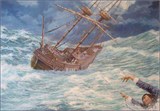
man overboard
John Howland survived falling off the Mayflower, and all the perils of colonial life to be the last of the Mayflower Pilgrim fathers to die. His headstone in Plymouth reads:
“Here was a godly man and an ancient professor in the ways of Christ. Hee was one of the first comers into this land and was the last man that was left of those that came over in the Shipp called the Mayflower that lived in Plymouth.”

headstone
 mermaidcamp