mermaidcamp
Keeping current in wellness, in and out of the water
You can scroll the shelf using ← and → keys
You can scroll the shelf using ← and → keys
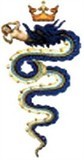
Visconti Coat of Arms
Coat of Arms of the Visconti of Milan depicting the biscione, a serpent who appears to be swallowing a human.
The effectual founder of the Visconti of Milan, Ottone, wrested control of the city from the rival Della Torre family in 1277.
The family, once risen to power, loved to claim legendary versions about its origins. Fancy genealogies were en vogue at the time, while established facts reflect quite sober and almost humble beginnings in the lesser nobility. The branch of the Visconti family that came to rule Milan was originally entrusted with the lordship of Massino (nowadays Massino Visconti), a hamlet in lovely position over Lago Maggiore, where they were in charge since the twelfth century as archiepiscopal vassals.
It is thought that the Milanese Visconti had their origins in a family of capitanei (cfr. the modern surname Cattaneo) whom archbishop Landulf of Milan (978-998) had granted certain feudal holdings known as caput plebis (at the head, likely in geographical and not hierarchical sense, of the pieve, an ecclesiastical lesser subdivision). A document from the year 1157 says the Visconti were holders of the captaincy of Marliano (today Mariano Comense); late chronicler Galvano Fiamma confirms this version. Decades before that, surely before 1070, they had gained the public office of viscount, to be later inherited down the male line (Biscaro, ASL, “I maggiori dei Visconti di Milano”). Soon the family dispersed into several branches, some of which were entrusted fiefs far off from the Lombard metropolis; the one which gave the Medieval lords of Milan is said to be descended from Umberto (d. in the first half of the 12th century).
The Visconti ruled Milan until the early Renaissance, first as Lords, then, from 1395, with the mighty Gian Galeazzo who almost managed to unify Northern Italy and Tuscany, as Dukes. Visconti rule in Milan ended with the death of Filippo Maria Visconti in 1447. He was succeeded, after a short-lived republic, by his son-in-law Francesco I Sforza, who established the reign of the House of Sforza.
Visconti rulers of Milan
Ottone Visconti, Archbishop of Milan (1277 – 1294)
Matteo I Visconti (1294 – 1302; 1311 – 1322)
Galeazzo I Visconti (1322 – 1327)
Azzone Visconti (1329 – 1339)
Luchino I Visconti (1339 – 1349)
Bernabò Visconti (1349 – 1385)
Galeazzo II Visconti (1349 – 1378)
Matteo II Visconti (1349 – 1355)
Gian Galeazzo Visconti (1378 – 1402) {1st Duke of Milan & nephew of Bernabò Visconti}
Giovanni Maria Visconti (1402 – 1412)
Giacomo Visconti (1412 – 1447)

Obizzo Visconti
Obizzo Visconti (1198 – 1266)
is my 22nd great grandfather
Theobald Visconti (1220 – 1276)
son of Obizzo Visconti
Matteo I Visconti (1250 – 1322)
son of Theobald Visconti
Stefan Visconti (1289 – 1327)
son of Matteo I Visconti
Bernabo Lord Milan di Visconti (1319 – 1385)
son of Stefan Visconti
Veridis Duchess Austria Visconti (1352 – 1414)
daughter of Bernabo Lord Milan di Visconti
Ernst I “Ironside” Archduke of Austria Habsburg (1377 – 1424)
son of Veridis Duchess Austria Visconti
Katharina Archduchess Austria Von Habsburg (1420 – 1493)
daughter of Ernst I “Ironside” Archduke of Austria Habsburg
Christof I VanBaden (1453 – 1527)
son of Katharina Archduchess Austria Von Habsburg
Beatrix Zahringen (1492 – 1535)
daughter of Christof I VanBaden
Sabine Grafin VonSimmern (1528 – 1578)
daughter of Beatrix Zahringen
Marie L Egmond (1564 – 1584)
daughter of Sabine Grafin VonSimmern
Richard Sears (1590 – 1676)
son of Marie L Egmond
Silas Sears (1638 – 1697)
son of Richard Sears
Silas Sears (1661 – 1732)
son of Silas Sears
Sarah Sears (1697 – 1785)
daughter of Silas Sears
Sarah Hamblin (1721 – 1814)
daughter of Sarah Sears
Mercy Hazen (1747 – 1819)
daughter of Sarah Hamblin
Martha Mead (1784 – 1860)
daughter of Mercy Hazen
Abner Morse (1808 – 1838)
son of Martha Mead
Daniel Rowland Morse (1838 – 1910)
son of Abner Morse
Jason A Morse (1862 – 1932)
son of Daniel Rowland Morse
Ernest Abner Morse (1890 – 1965)
son of Jason A Morse
Richard Arden Morse (1920 – 2004)
son of Ernest Abner Morse
Pamela Morse
I am the daughter of Richard Arden Morse
OBIZZO Visconti (-after 1258). m FIORINA Mandelli, daughter of RUFFINO Mandelli & his wife Aldesia Pietrasanta. Obizzo & his wife had two children:
a) TIBALDO Visconti (-beheaded Gallarate 1276). The Annales Mediolanenses record that “Archiepiscopum Ottonem…Tibaldi nepotis sui” was beheaded “in Galerate” in 1276 . m ANASTASIA Pirovano, niece of Cardinal Uberto Pirovano Archbishop of Milan, daughter of — (-1276, bur [Milan San Eustorgio]). The primary source which confirms her parentage and marriage has not yet been identified. Tibaldo & his wife had [four] children:
i) MATTEO [I] Visconti (Invorio 15 Jul 1250-Crescenzago 28 Jun 1322). Giovanni di Musso´s Chronicon Placentinum records that “Dominus Mafæus Vicecomes nepos Domini Ottonis Vicecomitis Archiepiscopi Mediolani” was installed as “Populi Mediolani Capitaneus” in 1287 and shortly after as “Dominus Generalis civitatis Mediolani” . Lord of Milan.
– see below.
ii) UBERTO Visconti (-22 Apr 1315, bur Milan Dominican Church). The Annales Mediolanenses record the death in 1315 of “Nobilis Miles Ubertus Vicecomes frater magni Matthæi Vicecomitis” and his burial “in conventu Fratrum Prædicatorum”.
iii) [STEFANO Visconti (-1327, bur Milan San Eustorgio). The Annales Mediolanenses record the death in 1327 of “nobilis Miles Stephanus Vicecomes” and his burial “apud Sanctum Eustorgium cum matre sua” . The source does not specify Stefano´s parentage but it is possible that he was another otherwise unrecorded brother of Matteo [I] Visconti Lord of Milan.]
iv) [OTTORINO Visconti ([12/14] Oct 1336, bur Milan San Eustorgio). The Annales Mediolanenses record the death in 1336 of “nobilis Miles Ottorinus Vicecomes” and his burial “in ecclesia Sancti Eustorgii” 15 Oct. His place of burial suggests that Ottorino may have been the brother of Stefano Visconti.]
b) PIETRO Visconti (-after 1301). The Annales Mediolanenses record that “Petrus Vicecomes Dominus Seprii et frater patris Matthæi” rebelled against “Matthæum Vicecomitem Dominum civitatis Mediolani” in 1301 but was captured and held “in castro de Serezano” . m —. The name of Pietro´s wife is not known. Pietro & his wife had one child:
i) daughter . Her parentage and marriage are confirmed by the Annales Mediolanenses which record that “Petrus Vicecomes Dominus Seprii et frater patris Matthæi” incited “Ruscam Dominum civitatis Cumanæ generum suum” to rebel against Matteo [I] Visconti Lord of Milan in 1301, the succeeding passage recording “Conradus Rusca Dominus civitatis Cumanæ” among the rebels . m CORRADO “Rusca” Signore di Cuma, son of — (-after 1301).

Bringham coat of arms

headstone
My 10th great-grandmother came to America on the ship Suzan and Ellen in 1635. She was born in Spaulding Moor, Yorkshire, England. Her profession on the ship’s log is listed as vixor (a word for which I find no definition) , her husband’s as a husbandman, and my 9th great-grandfather, Thomas Crosby, was 8 weeks old. He was lucky to survive the crossing at such a tender age. Ann’s husband died young, and she married a minister who went broke and died of melancholia. This was a huge drag for Ann. Lucky for me they survived.
Ann Brigham (1606 – 1675)
is my 10th great grandmother
Thomas Crosby (1635 – 1702)
son of Ann Brigham
Sarah Crosby (1667 – 1706)
daughter of Thomas Crosby
Sarah Sears (1697 – 1785)
daughter of Sarah Crosby
Sarah Hamblin (1721 – 1814)
daughter of Sarah Sears
Mercy Hazen (1747 – 1819)
daughter of Sarah Hamblin
Martha Mead (1784 – 1860)
daughter of Mercy Hazen
Abner Morse (1808 – 1838)
son of Martha Mead
Daniel Rowland Morse (1838 – 1910)
son of Abner Morse
Jason A Morse (1862 – 1932)
son of Daniel Rowland Morse
Ernest Abner Morse (1890 – 1965)
son of Jason A Morse
Richard Arden Morse (1920 – 2004)
son of Ernest Abner Morse
Pamela Morse
I am the daughter of Richard Arden Morse
Ernest Howard Crosby, In the portion of the family history taken from the October New York Genealogical and Biograpical Record, Surmises that Simon Crosby ‘may have come to America as one of the company of the Rev. Thomas Shepard, who crossed the ocean in that year (1635) and settled at Newtown, now Cambridge, Massachusetts. This Mr. Shepard was preceeded or accompanied by a large number of his freinds and acquaintances. He had taken orders in the Church of England, and had held livings in Yorkshire and Northumberland, but he enertained conscientious scruples regarding the ceremonies of his church, and was consequently so harassed by those in authority that he left England, and became one of the most eminent clergymen in New England. The Cheif reason for establishing Harvard College at Cambridge is that he lived there.’
This record goes on to state that before the end of 1635 we find Simon Crosby living at Newtown (Cambridge). He was admitted as a freeman on March 3, 1636 and chosen as a selectman in the fall of that year. In September of 1637 he was elected surveyor of highways; was selectman again in 1638, and in October of that year was elected constable.
On Dec. 5, 1636 land was granted to him and six others for pasture. He died in Cambridge in September 1639, at only 31 years of age. The cause of his death is not known, but we can surmise that his death may have been fairly sudden, since he died intestate. An addendum to Ernest Howard Crosby’s record quoted above says that the orginal inventory of the estate of Simon Crosby, signed by his widow Anne, is on file in the archives of Massachuetts at Boston. It places the value of his property at 433 pounds.
Holme-on-Spaulding-Moor, in York Co., England is an extensive Parrish located 15 miles SE of the city of York.
Simon and his wife came over in the ship “Susan and Ellen.”
Notes for ANNE BRIGHAM:
It is from Thomas 7, the firstborn, that our line descends, but before proceeding to his generation, it may be of interest to record some of the facts of the later life of the widowed Anne Crosby. In 1646 or l647, she married the Rev. William Tompson, aa distinguished clergyman in Braintree (now Quincy), Mass., who apparentlly pursued his religious duties with zeal but with little regard for financial gain. Ernest Howard Crosby’s record says that in Aug. of 1652 she sold the Crosby house4 with six acres adjoining, and also 147 acres of land in the neighborhood. Mr. Tompson’s health was finally undermined ‘by melancholia’, and he retired from preaching in 1659. He died in 1666, leaving his family in straitened circumstances. In 1668 Anne petitioned the General Court, complaining that moneys due her for his services were witheld. She died in 1675 and was buried in the Quincy churchyard. We have no record of what became of her daughter Ann, her only child by Mr. Tompkins.
At this point, it may be as well to record what is known of two other brothers, both younger than Thomas:
Simon Jr., born 1637, moved early in life to Billerica, Mass. and was the first innkeeper in that town. He was Representative in the General Court in 1691, 1697, and 1698. (Indications are that it is from him that the Alonzo Crosby descent is traced.)
Joseph, the third son, is the ancestor from which Ernest Howard Crosby descends. Born in 1639, he was just 7 months old when his father, Simon the Emigrant, died. When his mother remarried, he was taken by her to live with his stepfather’s family. He passed his life there as a farmer, but was always prominent in town affairs, frequently serving on committees.
Children of SIMON CROSBY and ANNE BRIGHAM are:
ii. SIMON CROSBY, b. Aug 1637, CAMBRIDGE, MA.; d. Unknown.
iii. JOSEPH CROSBY, b. Abt. 1639, CAMBRIDGE, MA.; d. Unknown.
Here are the notes from the ship on which they arrived in Salem:
In the Ship Suzan And Ellen EDWARD PAYNE Mr for New-England Theis pties herevnder
expressed have brought Certificates from the Minister of Justices of their Conformitie and that they
are no Subsidy Men.
Columns represent: name, occupation, and age of each passenger.
1 Procter, John Husbandman 40
2 Proctor, Martha 28
3 Proctor, John 3
4 Proctor, Marie 1
5 Street, Alice 28
6 Thorton, Walter Husbandman 36
7 Thorton , Johanna 44
8 North, John 20
9 Pynder, Mary 53
10 Pynder, Francis 20
11 Pynder, Marie 17
12* Pinder, Katherine 10
13 Pynder, Jo: 8
14 Skofield, Richard 22
15 Weeden, Edward 22
16 Wilby, George 16
17 Hawkins, Richard 15
18 Parker, Tho: 30
19 Burd, Symon 20
20 Mansfield, Jo: 34
21 Cole, Clement 30
22 Jones, Jo: 20
23 Burrow, Wm 19
24 Atwood, Phillip 13
25 Snowe, Wm 18
26 Lumus, Edward 24
27 Saltonstall, Richard Husbandman 23
28 Saltonstall, Merriall 22
29 Saltonstall, Merriall 9 mos.
30 Wells, Tho: 30
31* Coop, Peter 28
32 Lambart, Wm 26
33 Podd, Samvel 25
34 Belcher, Jeremy 22
35 Clifford, Marie 25
36 Coe, Jane 30
37 Riddlesden, Marie 17
38 Pellam, Jo: 20
39 Hitchcock, Matthew 25
40 Nicholls, Elizabeth 25
41 Carpenter, Tomazin 35
42 Fowle, Ann 25
43 Gordon, Edmond 18
44 Sydlie, Tho: 22
45 Leach, Margaret 22
46 Smith, Marie 21
47 Swayne, Elizabeth 16
48 Wells, Ann 20
49 Bewile, Grace 30
50 Taylor, Dvonis 48
51 Smith, Hanna 30
52 Backley, Jo: 15
53 Battrick, Wm 18
Theis vnder written names are to be transported to New-England imbarqued in the
Suzen And Ellen
EDWARD PAYNE Mr:
the pties have brought Certificates from ye Ministers of Justices of the peace
yt they are no Subsidy Men: and are conformable to ye orders and discipline of
the Church of England.
54 Hudson, Ralph A Drap 42
55 Hudson, Marie vixor 42
56 Hudson, Hanna children 14
57 Hudson, Eliz: children 5
58 Briggham, Tho: 32
59 Thwing, Ben: servant 16
60 Gibson, Ann servant 34
61 Kirk, Judith servant 18
62 Moore, Jo: servant 41
63 Knowles, Henry servant 25
64 Richardson, Geo 30
65 Thomlins, Ben: 18
66 Thomlins, Edward 30
67 Ford, Barbara 16
68 Broomer, Joan 13
69 Brooke, Richard 24
70 Brooke, Tho: 18
71 Crosby, Symon husbandman 26
72 Crosby, Ann vixor 25
73 Crosby, Tho: child 8 weeks
74 Rowton, Ric: husbandman 36
75 Roswton, Ann vixor 36
76 Rowton, Edmond child 6
77 Greene, Percivall husbandman 32
78 Greene, Ellin vixor 32
79 Trane, Jo: servant 25
80 Dix, Margaret servant 18
81 Atherson, Jo: 24
82 Blason, Ann 27
83 Buckley, Ben: 11
84 Buckley, Daniell 9
85 Corrington, Jo: 33
86 Corrington, Mary 33


In our dreams characters, including ourselves, play grand archetypes. Last night as I dreamed military factions were fighting it out in a prolonged battle. The warrior rarely appears in my dream life so I have considered it as a signal of some kind of change. The dream did not really upset or frighten me. In fact, after a while awake I fell back into sleep and dreamed about the same theme for a while again, which is very rare in my life. I normally do not go back to sleep, but I felt there was a story I needed to finish. Nobody won the war and I believe there were more than two fighting factions, sort of like Syria today. The warrior is an important archetype without which we would all be too vulnerable. Protection is something everyone needs, from within as well as from others.
In yoga the warrior pose is a wonderful strengthening posture. When one masters it one truly does feel like a warrior and a hero. To be a warrior archetype does not always mean to be a soldier or professional in the business of protection. The best attributes of this archetype are skill, strength, discipline and self sacrifice in the conquest over ego. The best warrior is stoic and possesses a tough will to conquer. The worst warrior is indifferent to the suffering of others. The shadow practice of this soldier in the dark is trading ethics for victory at any cost. The hero as well as the heel are contained within the warrior archetype. Loyalty and invincibility are identified with this character. Mercenaries and gunslingers are also part of the tribe.
I wondered today if thinking about my ancestors and the Civil War in the United States might be part of this dream’s arrival. I have been studying and considering how my family moved from Selma, Alabama to East Texas after the war and bought property with gold. They traveled by oxcart to get there. Both my 2nd great grandfather and his father-in-law were in the war, the older man conscripted to make steel in Birmingham Alabama to provide munitions to the Confederacy. The Confederate money was worthless after the war, so I wonder how they managed to have enough gold to buy property in Texas. Many southern cotton farmers had moved to the area, so the majority of the population was black, as a remnant of slavery and cotton. My people were religious and donated land for a church in the area. I have been thinking about what it is like to fight in a war like that and be on the loosing side, then move to a new place. They had to handle a lot of change and hardship during one lifetime, and the period after the war may have been as difficult as the war itself.
My relationship with this dream is asking me to be stronger and more disciplined. I have done very little self-sacrifice or tough willed commitment during my time on earth. I know few soldiers in my real life, and have no contact with war and the risk of loosing a loved one. As war explodes around the globe I stay relatively insulated until someone new invades Tucson. We all depend on cops, soldiers, and sailors to keep us safe from harm, but I normally give them little thought. War is hell, and most of us defer that hell to warriors and prefer not to know much about the details. Historical wars seem to me to be linked to spiritual warfare. How do you relate to the warrior archetype? Do you take the role of protector in your life? Who protects you?
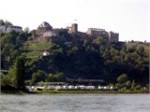
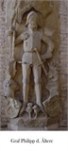

My 16th great-grandfather had an extremely lavish wedding when he wed my 16th great-grandmother. They had three children together and then the Pope gave Count Philipp a divorce. This divorce by Pope thing was popular at the time for nobility. His father, Johann IV, the Count of Katzenelnbogen, gave the world riesling grapes and wine. His sons died before he did, so the male line ended with his death. One of the castles the family owned, Rheinfels, is the largest on the Rhine. Today there is still a ruin that can be visited.
Rheinfels Castle (German: Burg Rheinfels) is a castle ruin located above the left (West) bank of the Rhein in Sankt Goar, Germany. It was started in 1245 by Count Diether V of Katzenelnbogen. After expansions, it was the largest fortress in the Middle Rhein Valley between Koblenz and Mainz. It was slighted by French Revolutionary Army troops in 1797. It is the largest castle overlooking the Rhine,and historically covered five times its current area.
In the year 1435 the Rüsselsheim castle administrator Klaus Kleinfisch began a new wineyard. His annual account shows the purchase of riesling Setzreben for 22 shilling. This kind of wine had a higher quality than the other french wines, was more aromatic but also frost-resistant. His new choice was – wineyards can exist more than onehundred years – the turningpoint in winehistory. Up to this point the old documents only reported red, white or black wine according to their colour. Even in the year 1402 the electoral prince of mainz ordered to grow no other wines than his french wines. After the rüsselsheim vintage Riesling quickly showed up all the way down the river rhine. Up to the year 1600 riesling became top wine. In the castle of Darmstadt count Johann IV united the two most powerful counties of the “holy roman empire of the german nation” in one of the most beautiful medieval marriages of his son Philipp d. Ältere of Katzenelnbogen with countess Anna of Württemberg. Even his son-in-law landgrave Heinrich III of Hessen was enthusiastic about this amount of gold , silver and wine. In 1427 the 10 most important katzenelnbogen castles were consuming about 200 000 liters of wine a year and in 1436 storing 1.5 million l wine in mainz . The counts were remarkably rich supporting arts and could afford rewarding medieval singers like Walther von der Vogelweide with a diamond. They created the most powerful castle, the first undefeatable german “bollwerk” Auerbach, defended themselves on the largest german castle with the largest german wine-cellar the Rheinfels castle. They loved the power but were sophisticated. Thanks to their correct book-keeping we can read about their live, family affaires and trading. One vase of china and one tankard is all they left. But the writings tell us and still want to be searched.
They gave us the riesling wine, one symbol of pride worth to be honoured.
The successors may have formed a modern top wine out of the riesling plant, but the documented first grower of the most important german and one of the most important international wines was Johann IV, the Count of Katzenelnbogen.
Additional the county customs writer noticed the first bratwurst export to cologne in 1410, the records listed bratwurst for 1gulden on a boat loaded with wine. This is the first proof of the traditional german bratwurst. The size is defined by pork casings. The transport itself tells us katzenelnbogen bratwurst must have been widely known.
Philip I of Katzenelnbogen (1402 – 1479), also known “Philip the Elder” was Count of Katzenelnbogen from 1444 to 1479 and was the last male descendant of the Counts of Katzenelnbogen (his two sons died before him). His parents were John IV, Count of Katzenelnbogen (younger line) and Anne of Katzenelnbogen (older line), who merged the two lines of the family back together in 1402.
Marriage and issue
Philip married on 24 February 1422 in Darmstadt with Anna of Württemberg (1408–1471), daughter of Eberhard IV “the Younger” of Württemberg. In 1456, he obtained from the Pope a divorce from bed-and-board. In 1474 Philip married Anna of Nassau-Dillenburg.
Philip had three children with his first wife:
Philip the Younger (* 1427; † 27 February 1453), married in 1450 Ottilie of Nassau. In 1453 they had a daughter Ottilie of Katzenelnbogen.
Eberhard († 1456), canon of Cologne, was stabbed in Bruges (Flanders).
Anna (* 5 September 1443; † 16 February 1494), married in 1458 margrave Henry III of Hesse (15 October 1441 — 13 January 1483). In 1471, they had a son William III, who was the last male descendant of this line of the House of Hesse.
Legacy
In 1444 Philip initiated a major renovation of the collegiate church of Sankt Goar.
In 1449 he bought off the rights on St. Goar held by abbot John of the Abbey at Prüm.
In 1470 he handed Upper Katzenelnbogen and its seat Darmstadt to his son-in-law Henry III of Hesse.
Philip’s sons Eberhard and Philip the younger died before his death, so when Philip died in 1479, the Katzenelnbogen died out in the male line. The County of Katzenelnbogen fell to the Landgraviate of Hesse, which was ruled at the time by Philip’s son-in-law Henry III of Hesse in Marburg.
This article incorporates information from the German Wikipedia.
Philipp l Count of Katzenelnbogen (1402 – 1479)
is my 16th great grandfather
Philipp VonKatzenelnbogen (1427 – 1453)
son of Philipp l Count of Katzenelnbogen
Ottilie Countess Katzenelnbogen vonKatzenelnbogen (1453 – 1517)
daughter of Philipp VonKatzenelnbogen
Beatrix Zahringen (1492 – 1535)
daughter of Ottilie Countess Katzenelnbogen vonKatzenelnbogen
Sabine Grafin VonSimmern (1528 – 1578)
daughter of Beatrix Zahringen
Marie L Egmond (1564 – 1584)
daughter of Sabine Grafin VonSimmern
Richard Sears (1590 – 1676)
son of Marie L Egmond
Silas Sears (1638 – 1697)
son of Richard Sears
Silas Sears (1661 – 1732)
son of Silas Sears
Sarah Sears (1697 – 1785)
daughter of Silas Sears
Sarah Hamblin (1721 – 1814)
daughter of Sarah Sears
Mercy Hazen (1747 – 1819)
daughter of Sarah Hamblin
Martha Mead (1784 – 1860)
daughter of Mercy Hazen
Abner Morse (1808 – 1838)
son of Martha Mead
Daniel Rowland Morse (1838 – 1910)
son of Abner Morse
Jason A Morse (1862 – 1932)
son of Daniel Rowland Morse
Ernest Abner Morse (1890 – 1965)
son of Jason A Morse
Richard Arden Morse (1920 – 2004)
son of Ernest Abner Morse
Pamela Morse
I am the daughter of Richard Arden Morse
Katzenelnbogen originated as a castle built on a promontory over the river Lahn around 1095. The lords of the castle became important local magnates, acquiring during the centuries some key and highly lucrative customs rights on the Rhine. The Counts of Katzenelnbogen also built Burg Neukatzenelnbogen and Burg Rheinfels on the Rhine. The German family died out in 1479, while the Austrian lineage continued, and the county became disputed between Hesse and Nassau. In 1557, the former finally won, but when Hesse was split due to the testament of Philipp the Magnanimous, Katzenelnbogen was split as well, between Hesse-Darmstadt and the small new secondary principality of Hesse-Rheinfels. When the latter line expired in 1583, its property went to Hesse-Kassel (or Hesse-Cassel), which added the inherited part of Katzenelnbogen to its side-line principality of Hesse-Rotenburg. After the Congress of Vienna, this part of Katzenelnbogen was given to Nassau in exchange for property that had been taken away from it; after the War of 1866, with all Nassau, it became part of Prussia.
In 1945, Hesse-Darmstadt was united with most of the Prussian province of Hesse-Nassau, which included the former Hesse-Kassel along with Nassau and the formerly Free City of Frankfurt, to form the federal state of Hesse. Thus, Hesse now includes the larger part of former county of Katzenelnbogen. A smaller part of Nassau, including the old castle and village bearing the name of Katzenelnbogen, ended up as part of Rhineland-Palatinate (part of the Rhein-Lahn and Westerwaldkreis districts). One of the titles of the Queen of the Netherlands (the House of Orange-Nassau) is that of Countess of Katzenelnbogen.
Etymology
The name Katzenelnbogen derives from the old Cattimelibocus. It consists of the ancient Germanic tribal name of the Chatti and Melibokus, the Roman name of any mountains, like the Harz or the Teutoburg Forest. Over the centuries the name changed to Katzenelnbogen: “cat’s elbow”.
History of wine
In the history of wine, Katzenelnbogen is famous for the first documentation of Riesling grapes in the world: this was in 1435, when the storage inventory of Count John IV of Katzenelnbogen, a member of the Holy Roman high nobility, lists the purchase of vines of “Rieslingen”.


My 10th great-grandmother was born near Venice and died in London. Her husband was a musician from a musical family hired by Henry VIII to play and compose music in court. She and her husband were probably Jewish in origin. She is buried in All Hallows Barking, a very old church in London.
Elena DeNazzi (1515 – 1571)
is my 10th great grandmother
Lucreece Lucretia Bassano (1556 – 1632)
daughter of Elena DeNazzi
John Thomas Lanier (1631 – 1719)
son of Lucreece Lucretia Bassano
Sampson Lanier (1682 – 1743)
son of John Thomas Lanier
Elizabeth Lanier (1719 – 1795)
daughter of Sampson Lanier
Martha Burch (1743 – 1803)
daughter of Elizabeth Lanier
David Darden (1770 – 1820)
son of Martha Burch
Minerva Truly Darden (1806 – 1837)
daughter of David Darden
Sarah E Hughes (1829 – 1911)
daughter of Minerva Truly Darden
Lucinda Jane Armer (1847 – 1939)
daughter of Sarah E Hughes
George Harvey Taylor (1884 – 1941)
son of Lucinda Jane Armer
Ruby Lee Taylor (1922 – 2008)
daughter of George Harvey Taylor
Pamela Morse
I am the daughter of Ruby Lee Taylor
Elina DE NAZZI died on 23 Sep 1571 in All Hallows By The Tower, London, England. She was born in Bassano Del Grappa, Italy
BIOGRAPHY: Elina (Ellen) was the daughter of Beneditto de Nazzi. She was born in Venice, Italy, probably as that is where she married Anthony Bassano on Aug. 10, 1536. He stayed there until their daughter, Angelica was born In Nov. of 1537. One can not help but wonder about the name of their daughter. At least three of the brothers named daughters, Angelica, Angell and Angela, possibly indicating that could be the name of their mother. BIOGRAPHY: Beneditto de Nazzi is considered to possibly be a Jewish name because Nasi or Nasis means ‘leader’ or ‘prince’ in Hebrew. So this makes both families Bassano and de Nazzi probably Jewish.
Richenza of Berg (c. 1095 – 27 September 1125) was the wife of Vladislav I of Bohemia and the Duchess of Bohemia. She was the daughter of count Henry I of Berg and his wife Adelheid of Mochental.
Richenza married Vladislav before 1111; her sister Sophie of Berg married another Přemyslid, Otto II the Black, in 1114. The third sister, Salomea of Berg, married the Duke of Poland Bolesław III Wrymouth in 1115.
In 1125 the dying Vladislav I chose his relative Otto II the Black as his successor, which was also the wish of Vladislav’s wife Richenza. Only the intervention of his mother Świętosława changed his mind, and Vladislav reconciled with his brother Soběslav.
After Vladislav’s death the disappointed Richenza wanted to move to Zwiefalten monastery, but died on the way on 27 September 1125. She is buried in Reichenbach.
Issue
Svatava
Vladislav II of Bohemia (c.1110 – January 18, 1174), King of Bohemia
Děpolt (- August 1167)
Jindřich
[edit] Literature
KAREŠOVÁ, Z.; PRAŽÁK, J. Královny a kněžny české. Prague : X-Egem, 1996.
[edit] References
^ KAREŠOVÁ, Z.; PRAŽÁK, J. Královny a kněžny české. Prague : X-Egem, 1996.
Richza vonBerg Schelklingen (1080 – 1125)
is my 25th great grandmother
Vladislav Bohemia (1117 – 1175)
son of Richza vonBerg Schelklingen
Fredrich Bohemia (1141 – 1189)
son of Vladislav Bohemia
Lidmila Bohemia (1170 – 1240)
daughter of Fredrich Bohemia
OTTO II Wittelsbach of Bavaria (1206 – 1253)
son of Lidmila Bohemia
Elisabeth Wittelsbach Duchess Bavaria (1227 – 1273)
daughter of OTTO II Wittelsbach of Bavaria
Consort Elisabeth the Romans Carinthia (1263 – 1313)
daughter of Elisabeth Wittelsbach Duchess Bavaria
Albrecht Albert II ‘The Wise’ Duke of Austria Habsburg (1298 – 1358)
son of Consort Elisabeth the Romans Carinthia
Leopold III “Duke of Austria” Habsburg (1351 – 1386)
son of Albrecht Albert II ‘The Wise’ Duke of Austria Habsburg
Ernst I “Ironside” Archduke of Austria Habsburg (1377 – 1424)
son of Leopold III “Duke of Austria” Habsburg
Katharina Archduchess Austria Von Habsburg (1420 – 1493)
daughter of Ernst I “Ironside” Archduke of Austria Habsburg
Christof I VanBaden (1453 – 1527)
son of Katharina Archduchess Austria Von Habsburg
Beatrix Zahringen (1492 – 1535)
daughter of Christof I VanBaden
Sabine Grafin VonSimmern (1528 – 1578)
daughter of Beatrix Zahringen
Marie L Egmond (1564 – 1584)
daughter of Sabine Grafin VonSimmern
Richard Sears (1590 – 1676)
son of Marie L Egmond
Silas Sears (1638 – 1697)
son of Richard Sears
Silas Sears (1661 – 1732)
son of Silas Sears
Sarah Sears (1697 – 1785)
daughter of Silas Sears
Sarah Hamblin (1721 – 1814)
daughter of Sarah Sears
Mercy Hazen (1747 – 1819)
daughter of Sarah Hamblin
Martha Mead (1784 – 1860)
daughter of Mercy Hazen
Abner Morse (1808 – 1838)
son of Martha Mead
Daniel Rowland Morse (1838 – 1910)
son of Abner Morse
Jason A Morse (1862 – 1932)
son of Daniel Rowland Morse
Ernest Abner Morse (1890 – 1965)
son of Jason A Morse
Richard Arden Morse (1920 – 2004)
son of Ernest Abner Morse
Pamela Morse
I am the daughter of Richard Arden Morse
RICHINZA (-27 Sep 1125). Berthold’s Chronicon of Zwiefalten names (in order) “Richinza ductrix Boemiæ, Sophia ductrix Moraviæ, Salome ductrix Poloniæ” as sisters of “Heinricus comes [et] Rapot”, specifying in the subsequent paragraph that Richinza was “uxor Vlatizlaus qui et Lauzlan dux Boemiæ” [942]. The necrology of Zwiefalten records the death “V Kal Oct” of “Richinza ductrix Boemie filie Heinrici comitis senioris” [943]. m ([1110]) VLADISLAV I Duke of the Bohemians, son of VRATISLAV II Duke of the Bohemians & his third wifeSwiętoslawa [Svatana] of Poland (-12 Apr 1125, bur Prague St Maria).

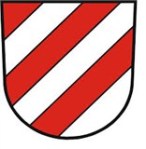
coat of arms
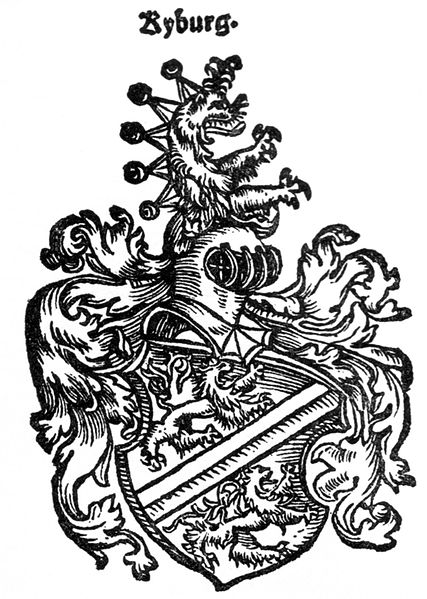
Grafen von Kyburg
Ulrich X von Kyburg* (1162 – 1227)
is my 22nd great grandfather
Hedwige VonKyburg (1192 – 1260)
daughter of Ulrich X von Kyburg*
Rudolf IV King of Germans, Holy Roman Emperor Habsburg (1218 – 1291)
son of Hedwige VonKyburg
Albert I King of Germany Habsburg (1248 – 1308)
son of Rudolf IV King of Germans, Holy Roman Emperor Habsburg
Albrecht Albert II ‘The Wise’ Duke of Austria Habsburg (1298 – 1358)
son of Albert I King of Germany Habsburg
Leopold III “Duke of Austria” Habsburg (1351 – 1386)
son of Albrecht Albert II ‘The Wise’ Duke of Austria Habsburg
Ernst I “Ironside” Archduke of Austria Habsburg (1377 – 1424)
son of Leopold III “Duke of Austria” Habsburg
Katharina Archduchess Austria Von Habsburg (1420 – 1493)
daughter of Ernst I “Ironside” Archduke of Austria Habsburg
Christof I VanBaden (1453 – 1527)
son of Katharina Archduchess Austria Von Habsburg
Beatrix Zahringen (1492 – 1535)
daughter of Christof I VanBaden
Sabine Grafin VonSimmern (1528 – 1578)
daughter of Beatrix Zahringen
Marie L Egmond (1564 – 1584)
daughter of Sabine Grafin VonSimmern
Richard Sears (1590 – 1676)
son of Marie L Egmond
Silas Sears (1638 – 1697)
son of Richard Sears
Silas Sears (1661 – 1732)
son of Silas Sears
Sarah Sears (1697 – 1785)
daughter of Silas Sears
Sarah Hamblin (1721 – 1814)
daughter of Sarah Sears
Mercy Hazen (1747 – 1819)
daughter of Sarah Hamblin
Martha Mead (1784 – 1860)
daughter of Mercy Hazen
Abner Morse (1808 – 1838)
son of Martha Mead
Daniel Rowland Morse (1838 – 1910)
son of Abner Morse
Jason A Morse (1862 – 1932)
son of Daniel Rowland Morse
Ernest Abner Morse (1890 – 1965)
son of Jason A Morse
Richard Arden Morse (1920 – 2004)
son of Ernest Abner Morse
Pamela Morse
I am the daughter of Richard Arden Morse
ULRICH von Dillingen und Kiburg, son of HARTMANN [III] Graf von Dillingen und Kiburg & his wife Richenza von Lenzburg (-1227, bur Schänis). Graf von Kiburg. Crusader 1190. Vogt von Schänis, Beromünster und Glarus 1212. “…Ulricus comes de Kiburc et filii eius Wernerus et Hardemannu…” witnessed a charter of Friedrich II King of Germany dated 31 Mar 1213 [393].
m ANNA von Zähringen, daughter of BERTHOLD IV Herzog von Zähringen & his first wife Heilwig [von Froburg] (-after 1226). The Chronicle of Alberic de Trois-Fontaines names “ducem Bertoldum…et duas sorores” as children of “ducem Bertoldum” & his wife, specifying that the younger daughter was “comitissa Kiburgensis” and had many children [394]. This is confirmed by the charter dated 1226 under which “Haimonem dominum de Fucignie” reached an agreement with the bishop of Lausanne concerning the advocacy of the church of Lausanne, which Aimon claimed had been granted by “comitibus de Ciburc”, which names “comitibus de Kibor Vuernerio et Armanno…quia filii erant sororis Bertoldi ducis Faringie” [395].
Graf Ulrich & his wife had six children:
1. WERNER [I] (-Acre 1228). “…Ulricus comes de Kiburc et filii eius Wernerus et Hardemannu…” witnessed a charter of Friedrich II King of Germany dated 31 Mar 1213 [396]. The contract of marriage between “Thomas comes Savoyæ…filiam suam Margaritham…infra nubiles annos” and “comiti Hartmanno filio comitis Ulrici de Kyburg” is dated 1 Jun 1218, stating that “Dni Bertholdi comitis de Novocastro et Dni Wilhelmi de Stavayé” acted as guarantors, and with the consent of “Ulricus comes de Kyburg et comes Garnerius frater eius et comitissa uxor comitis de Kyburg” [397]. His parentage is confirmed by the charter dated 1226 under which “Haimonem dominum de Fucignie” reached an agreement with the bishop of Lausanne concerning the advocacy of the church of Lausanne, which Aimon claimed had been granted by “comitibus de Ciburc”, which names “comitibus de Kibor Vuernerio et Armanno…quia filii erant sororis Bertoldi ducis Faringie” [398]. Graf von Kiburg. m as her first husband, ALIX [Bertha] de Lorraine, daughter of FERRY II Duke of Lorraine & his wife Agnes de Bar (-[Apr/29 Sep 1242], bur Clairlieu). The Chronicle of Alberic de Trois-Fontaines names “Aaliz relictam comitis Kyburgensis sororem ducis Lotharingie Mathei” when recording her second marriage to “Galtherus de Vangionis Rivo…filius Galtherius” [399]. She married secondly (before Nov 1229) Gautier [II] Sire de Vignory. Graf Werner [I] & his wife had three children:
a) HARTMANN [V] (-3 Sep 1263, bur Wettingen). Graf von Kiburg. Seigneur de Fribourg. The Community of “Uriburt” promised to observe the donation by “Conte Hartmano di Kibourg” with the consent of “Conte Hartmano Giuniore” to “Dama Margarita Moglie del detto Conte H. Seniore” by charter dated 1241 [400]. The necrology of Wettingen records the death “III Non Sep 1263” of “Hermannus com iunior de Kiburg et Anna uxor eius” [401]. The index of benefactors of Wettingen records the death in 1263 of “Hartmannus com de Kiburg iunior…benefactor” and his burial “apud sacellum beatæ Mariæ Virginis” [402]. The necrology of Fraubrunnen records the death “IV Non Sep” of “Graf Hartman der jünger” [403]. m firstly (before 9 Feb 1248) ANNA von Rapperswil, daughter of RUDOLF II [VIII] Graf von Rapperswil (-30 May 1253). The necrology of Wettingen records the death “III Kal Jun” of “domina Anna de Kiburg”, recalled in the later entry “III Non Sep 1263” of “Hermannus com iunior de Kiburg et Anna uxor eius” [404]. m secondly (contract 27 Jan 1254) ELISABETH de Chalon, daughter of HUGUES de Chalons Sire de Salins Comte Palatin de Bourgogne & his wife Alix von Andechs-Merano Ctss Palatine de Bourgogne (-9 Jul 1275). The primary source which confirms her parentage and marriage has not yet been identified. She became a Clarissan nun at Freiburg. Graf Hartmann [V] & his first wife had one child:
i) WERNER (-after 4 Jun 1253).
Graf Hartmann [V] & his second wife had two children:
ii) ANNA . The charter dated 1263, under which the town of Fribourg placed itself under the protection of “Dominum Comitem Rudolfum de Habisburg Landgravium Alsatie” also names “Anna ipsius domini neptis, domina nostra, quondam filia…domini nostri comitis Hartmanni junioris de Kyburgo” [405]. Dame de Fribourg. “Anna quondam filia comitis…Hartmanni de Kiburgo junioris et…Eberhardus comes de Habisburg maritus eiusdem domine” confirmed the privileges of the town of Fribourg by charter dated Mar 1275 [406]. “Domini…Eberhardi comitis de Habsburch et…dominæ…Annæ uxoris suæ” confirmed the donation to the abbey of Frienisberg by “Petrus de Viviers” by charter dated Oct 1275 [407]. The necrology of Fraubrunnen records the death “XII Kal Dec” of “Frow Anna gräfin von Kiburg” [408]. m ([30 Oct/12 Dec] 1271) EBERHARD Graf von Habsburg-Laufenburg, son of RUDOLF I “der Schweigsame” Graf von Habsburg-Laufenburg & his wife Gertrud von Regensberg (-1284, before 2 Jun). Graf von Kiburg.
iii) son (posthumously 1264-before 7 Feb 1265).
b) CLEMENTIA . 1248/49. m firstly RUDOLF [I] Graf von Montfort (-[Oct 1244/1247]). m secondly — Graf von Hohenberg .
c) ADELHEID . 1258. m (before 29 Sep 1242) FRIEDRICH [III] Graf von Leiningen in Dagsburg und Hardenburg, son of FRIEDRICH [II] Graf von Leiningen & his wife Agnes von Eberstein (-1287).
2. HARTMANN [III] (-27 Nov 1264, bur Wettingen). “…Ulricus comes de Kiburc et filii eius Wernerus et Hardemannu…” witnessed a charter of Friedrich II King of Germany dated 31 Mar 1213 [409]. His parentage is confirmed by the charter dated 1226 under which “Haimonem dominum de Fucignie” reached an agreement with the bishop of Lausanne concerning the advocacy of the church of Lausanne, which Aimon claimed had been granted by “comitibus de Ciburc”, which names “comitibus de Kibor Vuernerio et Armanno…quia filii erant sororis Bertoldi ducis Faringie” [410]. Graf von Kiburg. The necrology of Wettingen records the death “V Kal Dec 1262” of “com Hartmannus senior de Kiburg” [411]. m (contract Mouden 1 Jun 1218) MARGUERITE de Savoie, daughter of THOMAS I Comte de Savoie & his wife Marguerite [Beatrix] de Genève (1212-1/2 Sep 1270 or 1273 [412]). The contract of marriage between “Thomas comes Savoyæ…filiam suam Margaritham…infra nubiles annos” and “comiti Hartmanno filio comitis Ulrici de Kyburg” is dated 1 Jun 1218, stating that “Dni Bertholdi comitis de Novocastro et Dni Wilhelmi de Stavayé” acted as guarantors, and with the consent of “Ulricus comes de Kyburg et comes Garnerius frater eius et comitissa uxor comitis de Kyburg” [413]. Her marriage date is confirmed by the charter dated 1230 under which her husband “H. comes de Kiburch” confirmed donations “propter nuptias uxori sue filie comitis Sabaudie”, with the consent of “fratris sui Ul. Constantiensis canonici et H. filii fratris sui beate memorie Wer. quondam comitis de Kiburch” [414]. The Chronicon Colmarense records that “comes…[Kiburc]” married “filiam comitis de Sabaudia” [415]. “Amedeus comes Sabaudie et marchio Italie” granted “castrum…Monteys” {Montheys} to “sorori mee Margarete comitisse de Kiborch” by charter dated 16 Oct 1239 [416]. “Amedeus comes Sabaudie et in Italie marchio…cum…genetrice sua et fratribus suis B. Bellicensi Electo et Philippo Metensi Primicerio” granted “villam S. Mauritii de Chablaisio” {Saint-Maurice de Chablais} to “soror illorum Margareta comitissa de Kiborch” by charter dated 24 Feb 1240 [417]. “H. comes de Kyburch” granted “castra Windegge, Oltingen…advocatiam et predium in Shennis, Wizennanc et Kemanatvn” to “uxori mee” by way of dower, with the consent of “fratruelis mei H”, by charter dated 28 May 1241 [418]. The same collection includes several other charters relating to this grant, dated between 9 Jul 1241 and 1243 [419]. Her parentage is confirmed by the 1264 testament of her brother Boniface [420]. According to Europäische Stammtafeln [421], Marguerite de Savoie married secondly Eberhard von Habsburg-Laufenburg, son of Rudolf III Graf von Habsburg-Laufenburg & his wife Gertrud von Regensberg. Apart from the unlikelihood of Graf Eberhard (who at the time must have been at least 40 years old) marrying as his first wife a lady over 50 years old, his marriage to Anna heiress of Kiburg is recorded [422] as having taken place in [30 Oct/12 Dec] 1271 when Marguerite was still alive. In addition, the Chronicle of Hautecombe refers to Marguerite as ‘Margarita comitissa de Quiborch in Alemania’ when she died, with no mention of Habsburg-Laufenburg. The necrology of Waldens records the death “Kal Sep” of “Margareta com de Kuberg” [423]. The necrology of Fraubrunnen records the death “1 Kal Sep” of “Her Hartman graf von Kyburg und frow Margreta sin gemachel” [424], the date apparently referring to the death of Marguerite. The necrology of Wettingen records the death “IV Non Sep” of “Margareta com de Kiburch” [425].
3. ULRICH (-17 Jun 1237). His parentage is confirmed by the charter dated 1230 under which her husband “H. comes de Kiburch” confirmed donations “propter nuptias uxori sue filie comitis Sabaudie”, with the consent of “fratris sui Ul. Constantiensis canonici et H. filii fratris sui beate memorie Wer. quondam comitis de Kiburch” . Canon at Basel Cathedral 1223. Canon at Konstanz Cathedral 1229. Provost of Beromünster and Imperial chaplain 1231/34. Bishop of Chur 1233.
4. HEILWIG ([1192]-30 Apr 1260, bur Muri). The Ellenhardi Chronicon refers to the wife of “Alberti comitis in Habichburg…lantgravius Alsatie superioris” as “filia comitis in Kiburch” [427]. A Habsburg genealogy names “Heilwigam filiam Uolrici comitis de Chiburg” as the wife of “Alberctus” [428]. m ([1217]) ALBRECHT [IV] “der Weise” von Habsburg, son of RUDOLF II “der Alte” Graf von Habsburg, Herr zu Laufenburg & his wife Agnes von Staufen (-Ascalon, Palestine 22 Nov 1240). He succeeded his father in 1232 as Graf von Habsburg.
5. MECHTILD . 1232. m RUDOLF [I] Graf von Rapperswil (-1250). The index of benefactors of Wettingen records the death in 1250 of “Rudolphus com de Raperschwyl, patruus fundatoris” and his burial at Wettingen .
6. ADELHEID (-1231 or after). The primary source which confirms her parentage and marriage has not yet been identified. m GERHARD [IV] Graf von Dollnstein und Hirschberg, son of GERHARD [II] Graf von Dollnstein & his wife — (-1225).
he House of Kyburg was family of Grafen or counts from Zürich in Switzerland. The family was one of the three most powerful noble families in the Swiss plateau beside the Habsburg and the House of Savoy during the 11th and 12th Centuries. With the extinction of the male line in 1263, Rudolph of Habsburg laid claim to the Kyburg lands and annexed them to the Habsburg holdings, which marked the beginning of the Habsburg rise to power.
The first line of counts of Kyburg were influential in local politics during the 1020s but the male line died out in 1078. Kyburg castle, southeast of Winterthur (in the modern canton of Zürich), passed on to the Swabian counts of Dillingen.[1] Through the marriage of Hartmann von Dillingen († 1121) with a certain Adelheid the House of Dillingen acquired the old Kyburg possessions as well as territorial claims in the Thurgau. The exact origin of Adelheid is unclear. She is either the granddaughter of the Count of Grüningen-Winterthur or from a cadet branch of the Winterthur family, the Counts of Nellenburg. She might also be the daughter of Adalbert II von Winterthur, the last knight from Winterthur, who died in 1053 at the Battle of Civitate against the Normans.
Expansion of the Kyburg lands
The Kyburg land continued to be part of the possessions of the House of Dillingen until the grandson of Hartmann von Dillingen, Hartmann III († 1180), split the Dillingen lands.[2] Adalbert received the Swabian territories, while Hartmann III von Dillingen got the Swiss lands and became Hartmann I of Kyburg. The House of Kyburg were vassals of the Duke of Swabia, who was of the House of Hohenstaufen and would become the Kings of Germany from 1138-1254. When the House of Lenzburgdied out in 1172/73, the Kyburgs together with the Hohenstaufen and Zähringen split the Lenzburg possessions between them. The Kyburg family acquired the allodial title to the Vogtei of Windegg or Gaster (today 7 municipalities in the See-Gaster Wahlkreis of St. Gallen) and land around Baden. Later additional Lenzburg territories, the Schänis Abbey and Beromünster, were also acquired by the House of Kyburg.
In 1180 the family began to consolidate their power. They founded the cities of Diessenhofen and Winterthur to help spread their power. They also appointed many of the Lenzburg, and later Zähringen, vassals to be unfree knights or Ministerialis for the Kyburg family.
When the Zähringen family died out in 1218, the Kyburgs grabbed another chance to expand. Anna von Zähringen, the sister of the last Duke of Zähringen, Berthold V, was the wife of Ulrich III von Kyburg (†1227). From the Zähringen line the Kyburgs acquired land west of the Rhine and in Burgundy including the cities of Fribourg,Thun and Burgdorf as well as estates in the canton of Zurich. However, the House of Hohenstaufen, the family of the Holy Roman Emperors, refused to support the Kyburg claims on the city of Zurich and in 1226 on the Abbey of St. Gall. As a result, they turned increasingly away from the Hohenstaufens and in 1243 and were one of the mainstays of the pro-Pope and anti-Holy Roman Emperor Party.
Around 1220 they started to make claims on property and rights that had unclear ownership and was near property that they already owned. In 1225 they founded a burial site for the Chorherrenstift Heiligberg in the center of the property of the former Freiherr von Weisslingen at Winterthur, and in 1233 founded Töss Abbey west of Winterthur. Both sites were endowed with property that they had taken from the Weisslingen and Rossberg families. These two properties served to define the borders between the Kyburg and Rapperswil families.[3]
At the same time the Kyburg family attempted to strengthen themselves through marriage. Hartmann V, a grandson of Ulrich III was engaged to Anna of Rapperswil in 1227. His uncle, Hartmann IV, called the Elder, married Margaret of Savoy while his sister Heilwig, the future mother of King Rudolf I von Habsburg, married Albert IV of Habsburg
Even though the family continued to found cities and expand, they were declining in power. In 1230 they founded Zug and Baden, then Frauenfeld, Aarau, Lenzburg, and Mellingen. In 1250 they founded Sursee, Weesen and the fortified towns of Kyburg and Laupen. The last two were Richensee and Huttwil which they lost shortly thereafter.
Suffix Graf von Kyburg Birth of, Kyburg, Zürich, Switzerland Gender Male AFN WRQG-ST Ecclesiastic 1212 [ 4] Vogt von Schänis Beromünster u Glarus Name AKA Ulrich Count of Kyburg [ 5] Name AKA Ulrich III [ 6] Died 1227 [ 6, 7] Buried Schäntis Beromünster, Luzern, Switzerland [ 4] Person ID I50509 Europe: Royal and Noble Houses with Colonial American Connections Last Modified 24 Jul 2011
Father Hartmann III, Graf von Kyburg-Dillingen, d. Aft 22 Aug 1180 Mother Richenza von Lenzburg, d. Abt 24 Apr 1172 Family ID F185946 Group Sheet
Family Anna von Zähringen, d. Yes, date unknown Married Y [ 6] Children
1. Werner, Graf von Kyburg, d. 1228, Acre, Palestine
2. Heilwig von Kyburg, b. Abt 1192, of, Kyburg, Zürich, Switzerland , d. 30 Apr 1260, of, Kyburg, Zurich, Switzerland
3. Hartmann III “der Ältere”, Graf von Kyburg, d. 27 Nov 1264
4. Ulrich von Kyburg, Bischof von Chur, d. 17 Jun 1237
5. Mechtilde von Kyburg, d. Aft 1232
6. Adelheid von Kyburg-Dillingen, d. Aft 1231
Last Modified 15 Jul 2011 Family ID F148606 Group Sheet
Notes
MILITARY: In the Crusades in 1190. NOTE: Was the count of Kyburg, Leutzburgh and Baden. A descendant from the Dukes of Zahringen.


My 15th great-grandmother was lady in waiting to Anne Boleyn when she was married at the age of 15. She managed to stay alive during the shaky royal shake downs that caused her husband to be beheaded. To be in court with Henry VIII was a treacherous position. She wrote poetry like her more well educated husband.
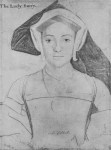
Frances de Vere was the daughter of John de Vere, 15th earl of Oxford (1490-March 21,1540) and Elizabeth Trussell (1496-c.1527). She had no fortune, but in April 1532, she married Henry Howard, earl of Surrey (1517-x.January 19,1547). They lived apart until 1535 because of their youth. Alison Weir in Henry VIII: The King and his Court, states that Anne Boleyn arranged the match over the objections of the duchess of Norfolk and that Frances was at court as one of Anne’s ladies from 1533. She was also at court when Catherine Howard was queen, but not, apparently, afterward. Catherine gave her a brooch set with tiny diamonds and rubies. According to one of her grandson’s biographers, Frances, in common with her more famous husband, wrote poetry. Her children were clever and well educated, although Frances did not have charge of their education. They were Jane (1537?-1593), Thomas (March 10, 1538-June 2,1572), Catherine (1539?-April 7,1596), Henry (February 1540-1614), and Margaret (January 1543-March 17,1592). Frances miscarried in 1547, the year her husband was executed for treason. She was ill for some time afterward. Alternatively, Robert Hutchinson in House of Treason states that Frances gave birth to daughter Jane three weeks after Surrey was executed and names Catherine as the eldest daughter. W. A. Sessions in Henry Howard The Poet Earl of Surrey gives the birth order as Thomas (March 12, 1536), Henry (February 25, 1538), Jane, Catherine, and Margaret (1547). By 1553, Frances had married Thomas Steyning of Woodbridge, Suffolk (d. October 20, 1575+), where she owned the manor of East Soham near Framlingham Castle. She was granted nine manors in all by the duke of Norfolk, her father-in-law, after his restoration in 1553. In July 1554, Frances represented Queen Mary at the christening of the French ambassador’s son and in December 1557 she was chief mourner at the funeral of her sister-in-law, Mary Howard. She was also chief mourner for her daughter-in-law, Margaret Audley, on January 17, 1563. Frances had two children by her second husband, Henry and Mary. She died at East Soham. Portrait: sketch by Hans Holbein, 1535.
source: http://www.kateemersonhistoricals.com
Frances DeVere (1517 – 1577)
is my 15th great grandmother
Thomas Howard (1536 – 1572)
son of Frances DeVere
Margaret Howard (1561 – 1591)
daughter of Thomas Howard
Lady Ann Dorset (1552 – 1680)
daughter of Margaret Howard
Robert Lewis (1574 – 1645)
son of Lady Ann Dorset
Robert Lewis (1607 – 1644)
son of Robert Lewis
Ann Lewis (1633 – 1686)
daughter of Robert Lewis
Joshua Morse (1669 – 1753)
son of Ann Lewis
Joseph Morse (1692 – 1759)
son of Joshua Morse
Joseph Morse (1721 – 1776)
son of Joseph Morse
Joseph Morse III (1752 – 1835)
son of Joseph Morse
John Henry Morse (1775 – 1864)
son of Joseph Morse III
Abner Morse (1808 – 1838)
son of John Henry Morse
Daniel Rowland Morse (1838 – 1910)
son of Abner Morse
Jason A Morse (1862 – 1932)
son of Daniel Rowland Morse
Ernest Abner Morse (1890 – 1965)
son of Jason A Morse
Richard Arden Morse (1920 – 2004)
son of Ernest Abner Morse
Pamela Morse
I am the daughter of Richard Arden Morse
Frances deVere was from a prestigious family, but one without great wealth. She was one of Anne Boleyn’s ladies-in-waiting and Anne probably arranged the match between Frances and Henry Howard, Earl of Surrey, whose mother would not have approved the choice of a bride with no dowry otherwise. Because of her young age (they married in 1532, when she was only 15), Frances continued her role as lady-in-waiting before joining her husband at his home – which is why she was at court to be sketched by Holbein in 1535. Frances shared her husband’s love of the arts, and also wrote poetry. She was traumatized by the 1547 execution of her husband, suffering a miscarriage and spending the next few years in delicate health.
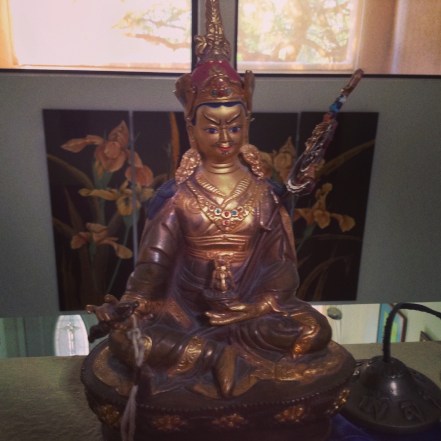
Padmasambhava
The following quote from the famous Dr Carl Jung explains the unconscious inheritance of unsolved and unanswered mysteries from our ancestors. My intense study of all the branches of my family tree that still bear data leads me to conclude that Dr. Jung was onto something. There are certainly themes that run in families, if not a shared fate. We have more than our immediate family to thank for the belief system we have been handed. The religious, cultural, and sociological forces that inspired our ancestors to take action and undertake dangerous missions and travels have not evaporated into thin air. They are passed on as attitudes if not as law.
“I feel very strongly that I am under the influence of things or
questions which were left incomplete and unanswered by my
parents and grandparents and more distant ancestors. It often seems
as if there were an impersonal karma within a family which is
passed on from parents to children. It has always seemed to me
that I had to answer questions which fate had posed to my
forefathers, and which had not yet been answered, or as if I had to
complete, or perhaps continue, things which previous ages had left
unfinished.”~ Dr. Carl Jung , Memories, Dreams, Reflections
I wonder why my addition to my family fortune and mindset will be. History changes the perception of everything, but when we learn about our ancestors we are instantly on their side, no matter what they were doing. With few very crazy exceptions I find I am sympathetic with all of my relations in history because I would not be alive if it had not for their ability to survive. I admire their adventurous natures, and am embarrassed by slaveholding, war mongering, and some elite royal behaviors of my people as they managed to survive. I identify with them and their struggles, trying to imagine myself alive in much more primitive conditions. I wonder how I would have managed in heavily religious times, or times of extreme violence and conflict. Trauma as well as enlightenment is inherited. Distrust as well as confidence is passed down to the next generation. Self image as well as ethics are part of the ethical will we are given. Our national identity contains within it preferences and prejudices that last for many generations. Can you think of belief systems you have that you never questioned? Have you ever wondered if the thoughts in the minds of your family members before your birth have influenced your thinking? How do you explain the collective consciousness?

effigy at Church of St Nicholas, Castle Hedingham, Essex
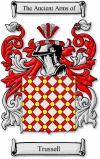
Trussel coat of arms
I have yet another buried in the church ancestor to seek and find when I go to Britain on the dead people tour. My 16th great-grandmother was sold into marriage at age 13, but she became a countess and has an effigy in a church.
Elizabeth de Vere (née Trussel), Countess of Oxford (1496 – before July 1527) was an English noblewoman. Through her daughter Frances, she was the mother-in-law of celebrated poet Henry Howard, Earl of Surrey.
Elizabeth was born in Kibblestone, Staffordshire, England on an unknown date in 1496 to Sir Edward Trussel and Margaret Dun. On 10 April 1509 at the age of about thirteen, she became the second wife of John de Vere, 15th Earl of Oxford. His first wife, Christian Foderingey had died about ten years earlier without having produced children. Together John and Elizabeth had seven children.
Elizabeth Trussell, born in 1496,was the daughter of Edward Trussell (c.1478 – 16 June 1499) of Elmesthorpe, Leicestershire, only son of Sir William Trussell (d. before 24 June 1480) of Elmesthorpe, Knight of the Body for King Edward IV, by Margaret Kene. The Trussells were a “very ancient Warwickshire family”;Elizabeth’s ancestor, Sir Warin Trussell, was of Billesley, Warwickshire.
Elizabeth Trussell’s mother was Margaret Donne, the daughter of Sir John Donne (1450–1503) of Kidwelly, Carmarthenshire, and Elizabeth Hastings (c.1450 – 1508), daughter of Sir Leonard Hastings and Alice Camoys, and sister of William Hastings, 1st Baron Hastings.[6] Sir John Donne’s mother, Joan Scudamore, was the granddaughter of the Welsh rebel, Owain Glyndŵr.
Elizabeth had a brother, John Trussell (d.1499), to whom she was heir.
Through her father’s family, Elizabeth was a descendant of King Henry II by his mistress, Ida de Tony.
Elizabeth Trussell’s grandfather, Sir John Donne, from the Don triptych by Hans Memling.
Elizabeth’s father, Edward Trussell, had been a ward of William Hastings, 1st Baron Hastings, and at Hastings’ death in 1483 was still a minor. In his will, Hastings expressed the wish that Trussell’s wardship be purchased by Hastings’ brother-in-law, Sir John Donne:
Also I will that mine executors give to my sister Dame Elizabeth Don 100 marks . . . Also where I have the ward and marriage of Edward Trussell, I will that it be sold and the money employed to the performing of this my will and for the weal of my soul; and if my brother Sir John Don will buy the said ward, I will that he be preferred therein before any other by £10.
After her father’s death on 16 June 1499 and the death of her brother, John, in the same year, Elizabeth Trussell became a royal ward. Her wardship and marriage were initially purchased from King Henry VII by George Grey, 2nd Earl of Kent (d. 21 December 1503), who intended her as a bride for Sir Henry Grey (d. 24 September 1562), the 2nd Earl’s son by his second marriage to Katherine Herbert, daughter of William Herbert, 1st Earl of Pembroke, by Anne Devereux, the daughter of Sir Walter Devereux. However after the 2nd Earl’s death, Richard Grey, 3rd Earl of Kent, the 2nd Earl’s eldest son and heir by his first marriage to Anne Woodville, abducted Elizabeth Trussell, a crime for which the King levied a heavy fine against him:
Aged at least twenty-five when he succeeded his father in 1503, [the 3rd Earl] wasted his family’s fortunes — possibly, as Dugdale says, he was a gambler. In a striking series of alienations he gave away or sold most of the lands, principally in Bedfordshire, that he had inherited . . . The earl also fell quickly into debt to the king: he failed to pay livery for his father’s lands, and he was fined 2500 marks for abducting Elizabeth Trussell, whose wardship the second earl had left to Richard’s half-brother Henry; he then failed to keep up the instalments laid down for the payment of the fine.
As a result of these events Elizabeth Trussell’s wardship and marriage again came into the hands of the King, who sold it on 29 April 1507 to John de Vere, 13th Earl of Oxford, and his cousin John de Vere, later 15th Earl of Oxford, for an initial payment of 1000 marks and an additional £387 18s to be paid yearly, less £20 a year for Elizabeth’s maintenance. The annual value of Elizabeth’s lands had been estimated in the inquisition post mortem taken after her brother John’s death at £271 12s 8d a year.
Marriage and issue
Between 29 April 1507 and 4 July 1509 Elizabeth became the second wife of John de Vere, 15th Earl of Oxford, whose first wife was Christian Foderingey (born c. 1481, died before 4 November 1498), the daughter and co-heiress of Thomas Foderingey (c. 1446 – 1491) of Brockley, Suffolk, by Elizabeth Doreward (c. 1473 – 1491), daughter of William Doreward of Bocking, Essex, by whom the 15th Earl had no issue.
By her marriage to the 15th Earl of Oxford, Elizabeth had four sons and three daughters:
John de Vere, 16th Earl of Oxford (1516 – 3 August 1562), who married firstly, Dorothy Neville (died c. 6 January 1548),[16] second daughter of Ralph Neville, 4th Earl of Westmorland, by whom he had a daughter, Katherine de Vere, who married Edward Windsor, 3rd Baron Windsor. The Earl married secondly, Margery Golding (d. 2 December 1568),[17] by whom he had a son, Edward de Vere, 17th Earl of Oxford, and a daughter, Mary de Vere.
Aubrey de Vere (d. 1580), who married firstly Margaret Spring, the daughter of John Spring of Lavenham, by whom he had a daughter, Jane, who married Henry Hunt of Gosfield,Essex, and a son, Hugh Vere,[18] who married Eleanor Walsh, the daughter of William Walsh. Hugh Vere and Eleanor Walsh had a son, Robert, who inherited the title as 19th Earl of Oxford. Aubrey de Vere married secondly, Bridget Gibbon, the daughter of Sir Anthony Gibbon of Lynn, Norfolk.[19]
Robert de Vere (died c. 1598), who married firstly, Barbara Berners, by whom he had a son, John Vere,[20] and a daughter, Mary Vere, and secondly, Joan Hubberd, sister of Edward Hubberd (d. 1602), by whom he had no issue.
Geoffrey Vere (d. 1572), who in 1556 married Elizabeth Hardekyn (d. December 1615), daughter of Richard Hardekyn (d. 1558) of Wotton House near Castle Hedingham, by whom he had four sons, John Vere (c. 1558 – 1624) of Kirby Hall near Castle Hedingham, Sir Francis Vere (born c. 1560), Robert Vere (b. 1562), and Sir Horatio Vere (b. 1565), and a daughter, Frances Vere (born 1567), who married, as his second wife, the colonial adventurer and author, Sir Robert Harcourt (1574/5–1631), of Nuneham on 20 March 1598.
Elizabeth de Vere (born c. 1512), who married, as his second wife, Thomas Darcy, 1st Baron Darcy of Chiche (d. 28 June 1558), by whom she had three sons, John Darcy, 2nd Baron Darcy of Chiche (d. 3 March 1581), Aubrey (d. 1558–68) and Robert (died c. 1568), and two daughters, Thomasine and Constance, of whom the latter married Edmund Pyrton (died c. 1609).
Anne de Vere, (born c. 1522, died c. 14 February 1572), who married firstly, Edmund Sheffield, 1st Baron Sheffield of Butterwick, Lincolnshire, second but eldest surviving son of Sir Robert Sheffield by Margaret Zouche, by whom she had a son and three daughters. Edmund Sheffield was slain 31 July 1549 during the suppression of Kett’s rebellion. Anne de Vere married secondly, John Brock, esquire, of Colchester, Essex, son and heir of John Brock of Little Leighs, Essex, by Agnes Wiseman, by whom she had no issue.
Frances de Vere (c. 1517 – 30 June 1577), who married firstly, Henry Howard, Earl of Surrey, by whom she was the mother of Jane Howard, Thomas Howard, 4th Duke of Norfolk, Margaret Howard, Henry Howard, 1st Earl of Northampton, and Katherine Howard. Frances de Vere married secondly, Thomas Steynings, by whom she had no issue.
Elizabeth died before July 1527, and was buried in the Church of St Nicholas, Castle Hedingham, Essex, where her effigy can be seen on the black marble tomb erected for Elizabeth and her husband, the 15th Earl.
Footnotes
Jump up^ She is usually said to have been born at the Trussell manor of Cubleston or Kibblestone near Barlaston and Stone, Staffordshire.
Elizabeth Trussel (1494 – 1527)
is my 16th great grandmother
Frances DeVere (1517 – 1577)
daughter of Elizabeth Trussel
Thomas Howard (1536 – 1572)
son of Frances DeVere
Margaret Howard (1561 – 1591)
daughter of Thomas Howard
Lady Ann Dorset (1552 – 1680)
daughter of Margaret Howard
Robert Lewis (1574 – 1645)
son of Lady Ann Dorset
Robert Lewis (1607 – 1644)
son of Robert Lewis
Ann Lewis (1633 – 1686)
daughter of Robert Lewis
Joshua Morse (1669 – 1753)
son of Ann Lewis
Joseph Morse (1692 – 1759)
son of Joshua Morse
Joseph Morse (1721 – 1776)
son of Joseph Morse
Joseph Morse III (1752 – 1835)
son of Joseph Morse
John Henry Morse (1775 – 1864)
son of Joseph Morse III
Abner Morse (1808 – 1838)
son of John Henry Morse
Daniel Rowland Morse (1838 – 1910)
son of Abner Morse
Jason A Morse (1862 – 1932)
son of Daniel Rowland Morse
Ernest Abner Morse (1890 – 1965)
son of Jason A Morse
Richard Arden Morse (1920 – 2004)
son of Ernest Abner Morse
Pamela Morse
I am the daughter of Richard Arden Morse
 mermaidcamp