mermaidcamp
Keeping current in wellness, in and out of the water
You can scroll the shelf using ← and → keys
You can scroll the shelf using ← and → keys
My single Wampanoag ancestor, Quadequina is the only true American in my tribe. My DNA tests out at 96% from the British Isles. My pedigree is what is known in the US as blue blooded. My ancestors almost all left Europe in the early 1600’s to colonize America. They had a religious problem with the locals who were freaking out all over Europe in different religious ways. Suffice it to say the move to Plymouth or Jamestown was done with more than a little religious arrogance. The locals here had a perfectly adequate religious practice, but the Pilgrims and Virginians were bound to convert and enslave them in an exciting new monotheistic way. The God who sailed over with the Pilgrims was that angry, vengeful ,all by himself God who just had no patience or tolerance for the beliefs of others. This God provided for the English on American soil by making sure the king back home had power to scare the beJesus out of any non-believer.
Imagine the dismay of the locals in Massachusetts when they learned that the colonists not only sucked down their erstwhile property and hunting rights, but planned to take more of the same. King Philip , AKA my great uncle, planned and executed a revolution against the colonists, which is when things got ugly quickly and forever. When I visited Mashpee, the land that was given by the English to the tribe, by arrangement with the King in 1655, I thought I would see the graves of the elders who started Thanksgiving. I was mighty upset with my Pilgrim ancestors, even though one of them married into the tribe, the group in general was highly rude and creepy. I saw the graves of the Mayflower passengers, and their church….but not a clue as to the location of Quadequina’s resting place. Bury my heart at Mashpee.
I learned much about the way American history has been reconstructed, but I also got to meet some young Wampanoag people who have great pride and are reviving the language. I became very angry again when I found out the wampum belts that document this history are in England…and the tribe asked them to return the property to Mashpee. Wampum is a shell currency used to create agreements and make purchases. The belt was a form of contract used to define, for instance, real estate deals made with Brits. The state of Rhode Island was purchased with wampum. I have no power to get the wampum artifacts returned, or change the facts of history. I just wear the wampum I got on Cape Cod as a reminder of by beloved American tribe. On behalf of 96% of my blood, I apologize.

Disbrow Coat of Arms
Peter Disbrow was instrumental in founding the town of Rye, New York. He and his brother ,Henry, operated a ferry to Oyster Bay.
Among these westward drifting settlers was a groupled by a Peter Disbrow who, after settling temporarily at Greenwich, led a small party still further west and settled on Manussing Island just off what was soon to be the site of the village of Rye. Just when he arrived on the island we do not know but in 1659 we find him associ-ated with his brother Henry operating a ferry between the island and Oyster Bay. And here, while it is Henry who founded our Disbrow line, let us spare a word for this Peter for he was an interesting lad. He was born in 1631 and died May 2nd, 1688 at Rye. “The successors of the Dutch West India Company in1660 were Peter Disbrow, John Coe, and Thomas Studwell.These were all residents of Greenwich at the time whenthe first Indian treaty was signed. Their leader wasPeter Disbrow, a young, intelligent, self-reliant youngman who seems to have enjoyed the thorough confidence ofhis associates; his name invariably heads the lists of the proprietors; and it is on all the treaties and declar-ations.” On January 3rd, 1660 he made a treaty with theIndians of Poningoe Neck for the purchase of that tractof land described as follows – “Lyeing on the Maine between a certain place called Rahonaness to the East and the Westchester Path to the 20 North and Southe to the Sea or Sound.” This includes the lower part of the present town of Rye on the east side of Blind Brook. On June 20th of that same year they concluded another treaty which gave them Manussing Island. With-in the next two and a half years they had acquired title to pieces of real estate that included, besides the area now covered by the towns of Rye and Harrison, much of the towns of North Castle and Bedford in New York, and Green-wich in Connecticut.
Peter Disbrow (1631 – 1688)
From The Rye Record
Rye’s Founders
– By Paul Rheingold –
Every history of Rye, including mine, starts with three Greenwich men, Thomas Studwell, John Coe and Peter Disbrow, buying Manursing Island from the Indians in 1660 and starting to farm. A fourth, John Budd, joined them a year later, buying other sections of what was to become Rye. Thanks to Bolton’s and Baird’s histories and genealogy on the Web, we know quite about the four founders.
They were not just farmers looking for new fields, but land buyers — proprietors or speculators, styling themselves “successors of the Dutch West India Company.” As their stories unfold, they emerge as three-dimensional people with families.Thomas Studwell (1600-1670), sometimes spelled Stedwell, was born in England at the family seat near Kent. Lord Say and Seal (one man, a British lord, who was sympathetic to the colonist) along with Lord Brook obtained a grant from the King to found a colony in the Connecticut area now named Saybrook. Lord Say and Seal sponsored Studwell for the grant in about 1635. In the 1650s, Studwell bought land in Greenwich and is in their town records.
He was about 60 when he bought the land on Manursing Island, signing with an “X” on the purchase from the Indians. Rye records show that he built a rude house on the island and later a more substantial home in the Mill Town area. With Coe and Disbrow, he acquired more land from the Indians on the mainland and west into what is now Harrison. By 1663, he and others began to sell land to later settlers. One deed shows the sale of a home on Mill Brook, as Blind Brook was then known.
Problems with the other Connecticut colonies arose soon after for Hastings (Rye’s original name), as reflected in documents signed by Studwell and the other two first settlers. In July 1662 they sent a declaration to the General Court in Hartford of their allegiance to that government (so long there were “holsom laws that are just and Righteous according to God and our capableness to receive”).
Baird in his usual comprehensive fashion traces the Studwell genealogy. His wife was Elizabeth, and there appear to have been three sons, one of whom, Joseph, was living in Rye in the early 1700s. In 1667, Studwell went with one son to Stamford and then to Greenwich, where he died. Much more information and the family line can be found in Marion J. Stedwell, “Steadwell, Stedwell, Studwell,” Heritage Books, 1996.
John Coe (1622-1702) was born in Suffolk, England. The family moved to America, first settling in Watertown, Mass., then Wethersfield, Conn., and finally Greenwich. In 1650, he married Hannah Jenner, and they had two children, Andrew in 1654 and Hannah in 1656.
Coe and his family lived in Stamford and sold property there in 1651, moving to Greenwich. Then, in 1659, he sold his home in Cos Cob in preparation for his new enterprise, as one genealogist put it. His name on the 1660 purchase from the Native American Shenowell and others is spelled Coo.
His original lot on Manursing Island was described as 2-3 acres on the north end of the island (now protected by a gate house). Later he is recorded as owning 14 salt meadow lots, a valuable commodity for feeding livestock. In 1663, the first three settlers, plus John Budd, now organized as a syndicate, sold the land on Manursing Island to a new syndicate, in which Coe remained as a member. Later, Coe sold land on the mainland to Hachaliah Brown, who became the progenitor of a significant Rye family. In 1672 Coe and Budd were listed as two of the 12 town proprietors.
In 1683 Coe, with others, is mentioned in an expired writ of error in the Court of Sessions, Kings County. This probably related to the litigation involving whether Rye was in New York or Connecticut. Around 1689 he is listed as living in Byram Neck. Baird reports he moved to Long Island, then under the jurisdiction of Connecticut.
Baird’s genealogy lists five sons. The eldest, also John, took over the homestead on North Manursing Island (which was then separated from the southern end by “Coe’s Ditch”). This he sold in 1668 to Stephen Sherwood and lived for a while on Grace Church Street where present-day Kirby Lane is. Baird traces the Coe family down seven generations to descendants living in and around Rye at the time of his writing, 1871.
You can learn more by reading “Robert Coe, Puritan”, John G. Bartlett, 1911.Peter Disbrow (1631-1688) (also spelled Disborough and Disbro) was born at the family seat in Essex. One ancestor was Major General Disborough. Peter came to America and in 1638 he married Sarah Knapp, who hailed from Watertown, Mass. They had six children, four of them daughters.
Although only about 30, he appears to be have been the leader of the families coming south to Rye, as his name is usually first in legal papers. Apparently he was in land negotiations with the Indians as early as January of 1660, six months before the purchase of Manursing Island. Several biographers describe Peter as an “intelligent, self-reliant young man who seems to have enjoyed the thorough confidence of his associates.”
Disbrow, along with the other three founders, sold some of the land holdings he had in Rye. In 1676 he divided up property south of the Byram River into 10-acre lots which he sold to planters. Further land sales were recorded in 1681. After the early years, Peter had a house in what was called “the Plains” area of Rye, which Baird describes as the area between Milton Road and Blind Brook, probably around Rectory Street.
It is recorded in Connecticut public records for 1681 that Peter had a disastrous fire and the General Court “doe remitt unto him his country rate for the year ensuing.”
A Disbrow genealogy is presented in Bolton, which showed many descendants, some living in Mamaroneck, as of 1848.
John Budd (1600 to 1669) has been credited with being a founder of New Haven and Southhold on Long Island as well as Rye. His house on Long Island, a National Historic Landmark and the oldest English-style building in New York State, was built in 1649 and moved 50 years ago to Cutchogue, where it is now a public museum.
Southold records for 1657 list his profession as judge. He may have moved across the Sound to Rye due to religious problems with his neighbors — Budd was a Quaker.
Born in England, Budd married Katherine Brown and came to America aboard the “Hector” in June 1637 with his wife and three children, the oldest about 20. The ship came to Boston, and then Budd and others in the party moved on to New Haven.
Budd appears in Rye in 1661 with a purchase of a large amount of land from the Indians, known thereafter as Budd’s Neck, running from the west side of Blind Brook to Mamaroneck. The deed of purchase from the Indians was later confirmed by a patent. In 1665 he became a seller of lands west of Blind Brook, which led to objections by the town proprietors. One of the later purchases was to the progenitor of the Jay family.
In Oct. 15, 1669, Budd wrote a document called a will but which today might better be described as a trust, in which he left all of his property in Rye to his son, John Budd Jr. This included the mill on the Blind Brook, where Oakland Beach Avenue crosses today. His son was obligated to pay 30 pounds a year to John and Katherine, or the survivor of the two. The payment was to be in wheat, pork and peas.
His two sons, John and Joseph, stayed in Rye. Joseph, known as Captain Budd, was prominent in town affairs, according to Baird. Their descendants were living in Rye when Baird wrote his book in 1871. For more, see Robert Bolton, Jr., “ A History of the County of Westchester,” 184 and Charles W. Baird, “History of Rye”, 1871.
Any descendants of these founders living in the Rye area are asked to come forward and participate in the programs being arranged to honor Rye’s 350th anniversary.


In 1635 My 10th great-grandfather participated in a political act in the Virginia Colony that landed him in trouble:
A Principal in the Overthrow of a Capricious Ruler
York History Series #A-5, April 1997by (the late) Dick Ivy, Honorary NMDA Member
Hearing of secret and unlawful meetings since January by some of his councilors concerning decisions of his rulership of Virginia, Governor Sir John Harvey apprehended and committed their “chief actors” William English, Nicolas Martiau and Francis Pott. On Apr. 28, 1635, the Governor’s Councilors Samuel Matthews, John Utie, Thomas Harwood, William Perry, William Farrer, William Peirce, George Menefie and Dr. John Pott came to the governor-called council meeting at his house. John Utie of Yorke’s Chiskiak Parish hit the governor hard on his shoulder and declared he was under arrest for treason. The others held him secure and told him to go back to England to answer the complaints against him. They set Martiau and others free and called for their force of 50 musketmen waiting at a short distance. On May 7, 1635, the councilors met at James Town, opened the floor to complaints, and elected Capt. John West as governor. The complaint included the giveaway to please the King of the Isle of Kent to Maryland by a willing Harvey for persecuted Catholics from England, ignoring the ownership claim by William Claiborne who was trading with the Indians here. A war ensued between forces from Maryland and Claiborne when the latter refused to become a Catholic, it is said. Martiau was granted 1,600 acres of land that year. The King reinstated Harvey and the rebels were ordered to appear at the King’s Star Court, but were never tried for an unknown reason. Finally, Harvey was recalled over another incident of poor judgment.
Capt Nicolas Martiau (1591, France-1657) & Jane Page Berkeley
Capt. Martiau [also recorded as Marlier, Martue, Martin, Martian] was a French Huguenot (in church of Threadneedle St.) from the Island of Ré. He was in the service of Henry Hastings, Earl of Huntingdon and member of the Virginia Company, and educated as a military engineer. He was naturalized as an Englishman by royal decree. He came to Jamestown aboard the “Francis Bona Venture” in 1620, legally representing the Earl to plan fortifications. He led a foray against the Indians at Falling Creek after the 1622 massacre. He joined the liberal party committed to the Virginia outlook, pleading for continuance of the House of Burgesses in 1623/4. He, with Captain George Utie and Captain Samuel Mathews, was responsible for sending the tyrant governor Harvey back to England.
There is some question about his wives. His first wife was Elizabeth, last name and date of death unknown. She was most likely the mother of Elizabeth (born 1625). Jane was the widow of Lt. Edward Berkeley, who died in 1625; they had a child named Jane. . After her death, Nicholas married Isabella, widow of Robert Felgete & George Beech, in 1646.
Martiau’s defense of the French king in an argument with Capt. Thomas Mayhew forced him to take a loyalty oath in Jamestown in 1627. He was granted 600 acres as Chiskiack, which became Yorktown (in 1644, the Cheskiack Indians were moved to the Pianketank, where they would be forced out by Augustine Warner; the tribe seems to have vanished at that point.) He served as Burgess 1632-33, and Justice for York Co. 1633-57. “He, with George Utie and Captain Samuel Matthews, sent the tyrant governor, Harvey, close prisoner back to England.” Harvey returned, bringing George Reade–Martiau’s future son-in-law–with him, but he was forced back to England again, leaving Reade as Acting Governor. Martiau moved to the present Yorktown site in 1630 on 600 acres, plus 700 for headrights, where he grew tobacco. On this land Cornwallis surrendered his troops to Martiau’s great-great-great-grandson, General George Washington in 1781. Martiau later was granted 2000 acres on the south side of the Potomac River, which he gave to Col. George Reade in 1657. (See John Baer Stoudt, Nicolas Martiau, The Adventurous Huguenot, The Military Engineers, and the Earliest American Ancestor of George Washington.)
Nicholas French Huguenot Martiau (1591 – 1657)
Martin, Marten, Martens, Martyn (French, Spanish, English) Descendant of Martinus [belonging to the god Mars, the god of war]; one who came from Martin, the name of places in Spain and France. The popularity of the name in Western Europe is due to St. Martin of Tours, the fourth century French saint.
Source: New Dictionary of American Family Names by Elsdon C. Smith, Gramercy Publishing Company, New York, 1988.
Nicolas Martiau – The Immigrant
This portion of the Family Roots and Branches is dedicated to the study of Nicolas Martiau (pronounced Mar-ti-o) and his descendants.
“The Adventurous Huguenot” and the father of Yorktown, Virginia, was born in France 1591, came to Virginia in 1620 and died in 1657 at Yorktown, Virginia. He was a Captain in the Jamestown militia during the Indian uprisings, a member of the Colonial Virginia House of Burgesses, and Justice of the County of York. In 1635 he was a leader in the thrusting out of Governor Harvey which was the first opposition to British Colonial Policy. He is the original patentee for Yorktown. He is buried at the Grace Church in Yorktown, Virginia.
Descendants of Nicolas are through his daughters, Mary (married Lt. Colonel John Scarsbrook), Sarah (married Captain William Fuller, Puritian governor of Maryland), and Elizabeth (married Lt. Col. George Reade). Nicolas is the earliest American ancestor of our first President George Washington.
Among the descendants of Nicolas Martiau we find – in addition to Washington – one Vice President of the United States, two Justices of the Supreme Court, three ministers to foreign countries, three cabinet officers, six governors of states, eight senators, eleven generals involved in the War Between the States, fifteen congressman, forty commissioned officers who served in the American Revolution,
2 of 3
2/6/13 12:24 PM
and a veritable host of men and women prominent in national life. Such names as General Thomas Nelson, a signer of the Declaration of Independance; Meriwether Lewis, explorer of Lewis and Clark fame; Duff Green; Thomas Nelson Page and Amelia Rives are of special interest.
In the early 20th century the registrar of the Colonial Dames of America in the state of Virginia contains the names of more than four hundred women who could trace their lineage to Nicolas Martiau.
Nicolas Martiau is my 15th great grandfather and one of two of my earliest American ancestors. Here is my line of descendent from that adventurous Hugenout – Nicolas Martiau:
Larry Van Horn, NMDA Member #174 (Scar(s)brook-Condon-Wills)
1. Nicolas Martiau & Jane ? (Berkley)
2. John Scar(s)brook & Mary Martiau
3. David Condon & Elizabeth Scar(s)brook
4. Elias Wills & Mary Condon
5. John Wills & Susanna Robertson
6. James Cole & Mary Wills
7. James Cole & Fanny Chisman Wills
8. Ware Oglesby & Elizabeth Dancy Cole
9. Aaron Redus & Lucy Ann Oglesby
10. James Ware Redus Jr & Leah Magee
11. Alexander Hamilton David Hurt & Mary Susan Redus 12. James Ira Hurt & Johanna Himena Schneider
13. Witt Lange Van Horn and Jeanette Iris Hurt
Nicolas Martiau Descendants – The First Six Generations
The link below is to an Adobe Acrobat PDF Descendants Chart that shows six generations of Nicolas Martiau Descendants. If you are a descendant of any of the below listed in this chart you are eligible for membership in the Nicolas Martiau Descendant Association (see below). The lines represented on this chart are lines that are accepted for membership in the NMDA. As more information is entered into our genealogy database, new charts will be placed on this website and the NMDA website. Be sure to check for these pages for future updates.
Nicolas Martiau Six Generation Descendants Chart (Adobe Acrobat format) The NMDA Lineage SocietyNicolas Martiau Descendant Association
Genealogist who can prove descend from Nicolas Martiau are eligible for membership in the Nicolas Martiau Descendant Association (NMDA). The NMDA was started in 1991. Two first cousins from California went to Yorktown to meet Dick Ivy (recently deceased), the Towne Crier and Historian, for a tour of the Martiau Family sites. One cousin fell and injured a knee, was propped up by the wall of the Grace Church cemetery. A lone man was in the mist, reading inscriptions. He paused at theColonel George Reade/Elizabeth Martiau stone, not aware of the Martiau Family buried there without a marker. This one act prompted the chain of events culminating in the first Tribute to Martiau held in 1993 and the 1997 grave marker dedication. A second Tribute was held in the Spring of 2000 and the third was held Spring 2004 in Yorktown. The cousins were Lee Yandell and Marty Dale. (Reade- Reade-Wattington).
The NMDA had over 182 members nationwide. I have the honor of serving as the National Registrar for this proud and prestigous lineage based organization. You can get more information on the NMDA by contacting me, Larry Van Horn, via email (link at bottom of this webpage) or visiting the official NMDA website at:
Nicolas Martiau Descendant Association
At this website you can download lineage and application formsin pdf format to aid you in the application process. On the website you will find selected members lineages, news, events, history and much more.
In each tree there are challenging branches. My own difficult ancestor to whom I have dedicated untold number of hours in research is Thomas Peterson. He is special because he is mentioned in the handwritten notes I had to begin my whole search. His granddaughter, Sarah Helena Byrne, wrote facts and her own opinions about family members, said he is Pennsylvania Dutch. She also mentions that his nephew, James Peterson, married my grandmother Scott after her first husband died. This seems simple enough, but I am stumped because I can’t find a record of Thomas’ birth in Indiana in 1825. His parents are alleged to be born in Pennsylvania, but I know facts were sometimes recorded incorrectly in the census. What were his parents doing way out west before the Civil War? Who were they, and where in Pennsylvania were they born? This all remains unanswered. It makes me crazy…
Thomas Peterson (1825 – ?)
My 11th great-grandfather, John Taylor was one of the ten chaplains present at the Field of the Cloth of Gold. As I look at history through the perspective of my ancestors I learn details that blow my mind. Henry VIII is known even to American history students for his wives, divorces, and church business. Henry was a music fan, and imported some of my ancestors from Italy to be musicians in his court. I had never heard of this Field of Cloth of Gold, sort of a party Henry had with lavish tents and chaplains. The king of France really tripped him in the fight Henry arranged. I love this story, and am highly amused that my ancestor can be placed at the crazy Anglo-Franco party. I say let’s invite Vlad over for a topless wrestling match in DC. What do you think? Has any of you ever heard of this Field party? Those royals were just so kinky.

Passengers on the Bevis
Thomas Reeves is not the only one of my ancestors who arrived in America on the ship Bevis, nor is he the only one who came as an indentured servant. He landed after becoming a freeman in the colony, in Springfield, MA (a city I drove right past in May) where he was a blacksmith and the town drummer. How cute, the official drummer!! I wonder who the official town fife player was. His son Thomas, who moved to Long Island after his father’s death, seems to have continued the family trade of blacksmithing.
Thomas Sr (generation #1 in America) came from Southampton, England in 1638 on the “Bevis” and arrived in Boston. He was an indentured servant to Henry Byley, but became the servant of John Gore and lived in Roxbury, MA until 1644 when he became a freeman. He married Hannah Rowe on Apr 15, 1645 at Roxbury. They moved to Springfield, MA where he was a blacksmith and the town drummer. He died at Springfield on Nov 5, 1650 in his late twenties after fathering three children, two of which survived to adulthood (Thomas, Mary, John). His wife later remarried Richard Excell (or Exile) of Springfield on June 4, 1651, by whom she had four children (Mary, John, Lydia, Abigail). She died in 1660 in Spreingfield. He was still in the Springfield are in 1681. Mr. Excell presumably then moved to Southampton, LI with his step-son Thomas Jr and died there Feb 24, 1714, after suffering financial problems, according to his will. He also suffered from wounds received in King Phillip’s War.
There was another Thomas Reeves in MA who was born earlier and married a Mary Purrier.
Thomas Sr may have had an aunt Mary who immigrated with him and married William Webster, or the story about her is inaccurate in her age at death. Her husband was a the son of Gov. John Webster of Conn. She was accuased of being a witch in Hadley 1n 1673 by the county court in Northampton, but was acquitted at her trial in Boston in 1683. She died in 1696, her husband dying in 1688.

Archibald Campbell

Archibald Campbell tomb
My 14th great-gandfather was a powerful Marquess in Scotland who was beheaded by Charles I of England:
Archibald Campbell (1606 – 1661)
is my 14th great grandfather
Lord Neil Campbell (1610 – 1692)
son of Archibald Campbell
John Campbell (1633 – 1689)
son of Lord Neil Campbell
John Campbell (1662 – 1731)
son of John Campbell
Dugal Campbell (1699 – 1734)
son of John Campbell
Neil Campbell (1734 – 1777)
son of Dugal Campbell
Henry Campbell (1769 – 1863)
son of Neil Campbell
Elizabeth Campbell (1784 – 1861)
daughter of Henry Campbell
Mary McGill (1804 – 1898)
daughter of Elizabeth Campbell
John Wright (1800 – 1870)
son of Mary McGill
Mary Wright (1814 – 1873)
daughter of John Wright
Emiline P Nicholls (1837 – )
daughter of Mary Wright
Harriet Peterson (1856 – 1933)
daughter of Emiline P Nicholls
Sarah Helena Byrne (1878 – 1962)
daughter of Harriet Peterson
Olga Fern Scott (1897 – 1968)
daughter of Sarah Helena Byrne
Richard Arden Morse (1920 – 2004)
son of Olga Fern Scott
Pamela Morse
I am the daughter of Richard Arden Morse
Archibald Campbell, 1st Marquess of Argyll, 8th Earl of Argyll, chief of Clan Campbell, (1607 – 27 May 1661) was the de facto head of government in Scotland during most of the conflict known as the Wars of the Three Kingdoms. He was the most influential figure in the Covenanter movement that fought for the Presbyterian religion and what they saw as Scottish interests during the English Civil War of the 1640s and 1650s.
Family and early lifeHe was eldest son of Archibald Campbell, 7th Earl of Argyll, by his first wife Agnes Douglas daughter of William Douglas, 6th Earl of Morton, and was educated at St Andrews University, where he matriculated on 15 January 1622. He had early in life, as Lord Lorne, been entrusted with the possession of the Argyll estates when his father renounced Protestantism and took arms for Philip III of Spain; and he exercised over his clan an authority almost absolute, disposing of a force of 20,000 retainers, being, according to Baillie, by far the most powerful subject in the kingdom.
In the Covenanter movementOn the outbreak of the religious dispute between the king and Scotland in 1637, his support was eagerly sought by Charles I. He was made a privy councillor in 1628. In 1638, the king summoned him, together with Traquair and Roxburgh, to London, but he refused to be won over, warned Charles against his despotic ecclesiastical policy, and showed great hostility towards William Laud. In consequence, a secret commission was given to the Earl of Antrim to invade Argyll and stir up the MacDonalds against him. Argyll, who inherited the title at the death of his father in 1638, originally had no preference for Presbyterianism, but now definitely took the side of the Covenanters in defence of national religion and liberties. He continued to attend the meetings of the General Assembly of the Church of Scotland after its dissolution by the Marquess of Hamilton, when Episcopacy was abolished. In 1639, he sent a statement to Laud, and subsequently to the king, defending the General Assembly’s action. He raised a body of troops and seized Hamilton’s castle of Brodick in Arran. After the pacification of Berwick-upon-Tweed, he carried a motion, in opposition to James Graham, 1st Marquess of Montrose, by which the estates secured to themselves the election of the lords of the articles, who had formerly been nominated by the king. This was a fundamental change to the Scottish constitution, whereby the management of public affairs was entrusted to a representative body and withdrawn from the control of the crown. An attempt by the king to deprive him of his office as justiciary of Argyll failed, and on the prorogation of the parliament by Charles, in May 1640, Argyll moved that it should continue its sittings and that the government and safety of the kingdom should be secured by a committee of the estates, of which he was the guiding spirit. In June, he was trusted with a Commission of fire and sword against the royalists in Atholl and Angus, which, after succeeding in entrapping the Earl of Atholl, he carried out with completeness and cruelty.
It was on this occasion that the Bonnie Hoose o’ Airlie was burned. By this time, the personal dislike and difference in opinion between Montrose and Argyll led to an open breach. The former arranged that on the occasion of Charles’s approaching visit to Scotland, Argyll would be accused of high treason in the parliament. The plot, however, was disclosed, and Montrose, among others, was imprisoned. Accordingly, when the king arrived, he found himself deprived of every remnant of influence and authority. It only remained for Charles to make a series of concessions. He transferred control over judicial and political appointments to the parliament, created Argyll a marquess in 1641, and returned home, having, in Clarendon’s words, made a perfect deed of gift of that kingdom. Meanwhile, there was an unsuccessful attempt to kidnap Argyll, Hamilton, and Lanark, known as The Incident. Argyll was mainly instrumental in this crisis in keeping the national party faithful to what was to him evidently the common cause, and in accomplishing the alliance with the Long Parliament in 1643.
[edit] English and Scottish Civil WarIn January 1644, he accompanied the Scottish army into England as a member of the committee of both kingdoms and in command of a troop of horse, but was soon compelled, in March, to return to suppress royalists in the Scottish Civil War and to defend his own territories. He forced Huntly to retreat in April. In July, he advanced to abet the Irish troops now landed in Argyll, which were fighting in conjunction with Montrose, who had put himself at the head of the royalist forces in Scotland. Neither general succeeded in obtaining an advantage over the other, or even in engaging in battle. Argyll then returned to Edinburgh, threw up his commission, and retired to Inveraray Castle. Montrose unexpectedly followed him in December, compelling him to flee to Roseneath, and devastating his territories. On 2 February 1645, while following Montrose northwards, Argyll was surprised by him at Inverlochy. He witnessed, from his barge on the lake to which he had retired after falling from his horse, a fearful slaughter of his troops, which included 1500 of the Campbells.[1] He arrived at Edinburgh on 12 February and was again present at Montrose’s further great victory on 15 August at Kilsyth, whence he escaped to Newcastle. Argyll was at last delivered from his formidable antagonist by Montrose’s final defeat at Philiphaugh on 12 September. In 1646, he was sent to negotiate with the king at Newcastle after his surrender to the Scottish army, when he endeavoured to moderate the demands of the parliament and at the same time to persuade the king to accept them. On 7 July 1646, he was appointed a member of the Assembly of Divines.
Up to this point, Argyll’s statesmanship had been highly successful. The national liberties and religion of Scotland had been defended and guaranteed, and the power of the king in Scotland reduced to a mere shadow. In addition, these privileges had been still further secured by the alliance with the English opposition, and by the subsequent triumph of the parliament and Presbyterianism in the neighboring kingdom. The king himself was a prisoner in their midst. But Argyll’s influence could not survive the rupture of the alliance between the two nations on which his whole policy was founded. He opposed in vain the secret treaty concluded between the king and the Scots against the parliament. Hamilton marched into England and was defeated by Cromwell at Preston. Argyll, after a narrow escape from a surprise attack at the Battle of Stirling (1648), joined the Whiggamores, a body of Covenanters at Edinburgh; and, supported by John Campbell, 1st Earl of Loudoun and Alexander Leslie, 1st Earl of Leven, he established a new government, which welcomed Oliver Cromwell on his arrival there on 4 October.
War with the English Parliament and personal ruinThis alliance, however, was at once destroyed by the execution of Charles I on 30 January 1649, which excited universal horror in Scotland. In the series of tangled incidents which followed, Argyll lost control of the national policy. He describes himself at this period as “a distracted man…in a distracted time” whose ” remedies…had the quite contrary operation.”
He supported the invitation from the Covenanters to Charles II to land in Scotland, and gazed upon the captured Montrose, bound on a cart to execution at Edinburgh. When Charles II came to Scotland, having signed the Covenant and repudiated Montrose, Argyll remained at the head of the administration. After the defeat of Dunbar, Charles retained his support by the promise of a dukedom and the Garter, and an attempt was made by Argyll to marry the king to his daughter. On 1 January 1651, he placed the crown on Charles’s head at Scone. But his power had now passed to the Hamiltonian party.
He strongly opposed, but was unable to prevent, the expedition into England. In the subsequent reduction of Scotland, after holding out in Inveraray Castle for nearly a year, he was at last surprised in August 1652 and submitted to the Commonwealth. His ruin was then complete. His policy had failed, his power had vanished. He was hopelessly in debt, and on terms of such violent hostility with his eldest son as to be obliged to demand a garrison in his house for his protection.
Later life and writings
Archibald Campbell During his visit to Monck at Dalkeith in 1654 to complain of this, he was subjected to much personal insult from his creditors, and on visiting London in September 1655 to obtain money due to him from the Scottish parliament, he was arrested for debt, though soon liberated. In Richard Cromwell’s parliament of 1659 Argyll sat as member for Aberdeenshire.
At the Restoration, he presented himself at Whitehall, but was at once arrested by order of Charles and placed in the Tower (1660), being sent to Edinburgh to stand trial for high treason. He was acquitted of complicity in the death of Charles I, and his escape from the whole charge seemed imminent, but the arrival of a packet of letters written by Argyll to Monck showed conclusively his collaboration with Cromwell’s government, particularly in the suppression of Glencairn’s royalist rising in 1652. He was immediately sentenced to death, his execution by beheading taking place on 27 May 1661, before the death warrant had even been signed by the king. His head was placed on the same spike upon the west end of the Tolbooth as that of Montrose had previously been exposed, and his body was buried at the Holy Loch, where the head was also deposited in 1664. A monument was erected to his memory in St Giles’s church in Edinburgh in 1895.
While imprisoned in the Tower he wrote Instructions to a Son (1661). Some of his speeches, including the one delivered on the scaffold, were published and are printed in the Harleian Miscellany.
He married Lady Margaret Douglas, daughter of William Douglas, 7th Earl of Morton, and had two sons and four daughters

Sears family graveyard
My 10th great grandmother married a Mayflower Pilgrim, Richard Sears. Dorothy Jones was born about 1603, daughter of George and Agnes (_____) Jones of Dinder, Somerset. She married Richard Sears of Plymouth Colony by 1637. “Cady [i.e., Goody] Seares was buried the 19th of March [16]78[/9]” at Yarmouth.Their 3 children: i PAUL, b. about 1637 (d. Yarmouth 20 February 1707/8 in 70th year [gravestone]); m. by 1659 Deborah (eldest child aged thirteen on 3 July 1672, said to be daughter of George Willard. ii DEBORAH, b. about 1639 (d. Yarmouth 17 August 1732 “within about one month of 93 years of age;” m. by 1661 Zachariah Paddock (eldest child aged seventeen on 2 February 1678. iii SILAS, b. say 1641; m. by about 1665 Anna, probably daughter of James Bursell of Yarmouth
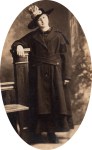
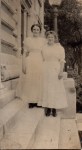

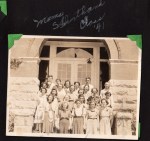


My grandmother, Olga Scott Morse, was a teacher of business skills. She graduated with her masters in education after she had four kids. She left them at home on the oil lease with their dad during the week to attend classes at Oklahoma State University. I believe that in the 1930s this was a bold feminist move. After graduation from OSU she taught typing and shorthand at a junior college near their home in Tonkawa,OK. Learning to type was a bold femenist move, believe it or not. Her students learned shorthand and typing and other current secretarial skills. The school to day is called Northern Oklahoma College. I stopped at the campus when I went to Oklahoma on an ancestry hunt a few years ago. I found her name in an old yearbook in the library, which was fun. I also looked through a lot of photos from the history of the school, where my dad and his brothers were students, but I did not find them. I walked around on campus, taking a break in my drive. Later, I found a picture of her with her students in the 1930’s in front of the central building at my uncle’s house in Wichita. I easily recognized the building since I had just been there.
Her mother, Sarah Helena Byrne, was a teacher and her great-grandfather , Amos Nichols,was also. My father was a university professor. The teacher archetype is all over my father’s family. I wonder if this is a DNA situation or all the reading and discipline that teachers represent. She was a farmer when I met her, having long since retired, but I remember her typewriter on the farm that had black keys..no letters. She could wail on that thing, but she had little reason to to so. I asked her to because I liked to watch her do it. She was a woman of many skills and talents, including flower and vegetable gardening. Most of the fruits and vegetables we ate in the winter in Pittsburgh were grown on my grandparents’ farm in Arkansas and frozen. I picture her in a sun bonnet, like all her friends wore, on the farm. Visiting the college where she taught before I was born was a really cool experience that showed me a part of her I never knew. For her day and place she was super highly educated and accomplished.
Olga Fern Scott (1897 – 1968)
British flag
Hannah Mead was widowed in England before she sailed to America. She arrived in Boston in 1637 with her son Isaac:
John BEECHER was born on 28 Mar 1594 in Kent, England. He died in 1637/38 in New Haven, Connecticut. He immigrated on 26 Jun 1637 to Boston Harbor. Arrived April 26, 1637 from Steldhurst County, Kent, England. In Governor Eaton’s Company. The first Beecher to reach New England was John Beecher, who came from Kent, England in 1637. He was in the company led by Rev. John Davenport and Theophilus Eaton who had been the Ambassador to Denmark and Deputy-Governor of India. The company crossed the ocean on the “Hector” and another sister-ship. These two ships, after a two month voyage, dropped anchor in Boston harbor. The company consisted of 50 men and 200 women and children and was the most prosperous that ever arrived in New England. Unfortunately, they landed in the midst of a quarrel about Anne Hutchinson who had set herself up as a preacher, irregardless of her sex. Not wishing to become involved, they sent out a scouting party to find another location to settle. They decided upon Quinnipiack on the Long Island Sound, the site of present day New Haven, Conn. The party built a hut and left seven of their men to hold the post for the winter and to prepare for the arrival of the rest of the company in the spring. John Beecher was one of the seven and he failed to survive the winter. Hannah arrived in the spring with her son Isaac and found her husband in an unmarked grave. Since she was the only midwife among them, and thus relied upon by the others in the company, she was given her husband’s allotment of land for herself and her son Isaac. One hundred and twelve years later, in 1750, when David Beecher was a boy of twelve, workmen who were digging a cellar for a house at the corner of George and Meadow Streets in New Haven came upon human bones, believed to be those of John Beecher.
(43) Hannah Beecher sailed from England with her son Isaac and was a widow at the time she left England. Husband John Beecher, one of the seven whom Eaton sent to New Haven in advance of the colony ,died before the colony arrived. He did not survive the first winter. It is established that this ship load of people was rather wealthy landowners from Steldhurst County, Kent, England. Since the company was rather young, it was felt that Hannah’s services of midwife would be greatly needed. She therefore was offered her husband’s land right in the new world if she would agree to go and fulfill this need, which she did. ——————————————————————————The will of Hannah Beecher was proved April 5, 1659 and is recorded in first part, vol i., p 80 of New Haven Probate Records as follows: “I Hannah Beecher of New Haven, expectying my great change do make this my last will and testament, I bequeath my soul unto the hands of my Lord Jesus Christ by whose meritt I hope to be saved and my body to be burried at the discretion of my Son William Potter my Executor. And for my worldly goods I give unto John Potter my Grand child twenty shillings and to Hannah Blackly, my Grand child twenty shillings to be paid to them within three months after my decease. And for the rest of my estate I give one third part to my son Isaac Beecher and two thirds to my eldest son William Potter, making him my Executor, desiring him to be as a father to his younger brother and his children. And in dividing my goods my will is that my son William should have my feather bed with that belongeth to it, unto his part and that the rest be divided at the discretion of my Overseers with the assistance of Sister Wakeman and sister Rutherford and I desire my loving friends Mr Mathew Gilbert and Job Wakeman to be overseers of this my last will whereunto I have set my hand this 13th day of June, Anno 1657. Witnesses, the mark of Mathew Gilbert, Hannah Becher John Wakeman, Sarah Rutherford. This source also indicates that the inventory of Hannah’s estate following her death in 1659 amounted to 55 pounds, 5 shillings, and 6d. ——————————Hannah (Potter) Beecher appears in early New Haven as a widow with sons: John Potter, William Potter, and Isaac Beecher. She has been considered to be the mother of Isaac Beecher, for she calls him her son in her will and gave him one third of her property, but recent investigations (source unproven ) suggest that Isaac was a step son, the son of her second husband by a former wife. SEE NOTE ON ISAAC BEECHER ENTRY. ————————————————– Note: There was in New Haven, says G.F. Tuttle, as early as 1641, a widow Hannah Potter, known as widow Potter the midwife. In 1643 she had two persons in the family, thirty pounds estate and twenty and one quarter acres of land. She is called “sister Potter the midwife,” in seating the meeting house in 1646. She is supposed to have been akin to the other Potters, but there is no record to show it. She has often been confounded with the widow Hannah Beecher, but the records clearly show that they were two different persons. ————————————————— Per “Families of Ancient New Haven”
Hannah Mead (1584 – 1659)
is my 10th great grandmother
William Potter (1608 – 1684)
son of Hannah Mead
Hannah Potter (1636 – 1700)
daughter of William Potter
Benjamin Mead (1666 – 1746)
son of Hannah Potter
Mary Mead (1724 – 1787)
daughter of Benjamin Mead
Abner Mead (1749 – 1810)
son of Mary Mead
Martha Mead (1784 – 1860)
daughter of Abner Mead
Abner Morse (1808 – 1838)
son of Martha Mead
Daniel Rowland Morse (1838 – 1910)
son of Abner Morse
Jason A Morse (1862 – 1932)
son of Daniel Rowland Morse
Ernest Abner Morse (1890 – 1965)
son of Jason A Morse
Richard Arden Morse (1920 – 2004)
son of Ernest Abner Morse
Pamela Morse
I am the daughter of Richard Arden Morse
The question of Hannah’s parents is not fully resolved:
Mrs. BEECHER was voted a portion of land by the New Haven colony for her services as physician and midwife. The land remained in the BEECHER family until 1879. The New Haven Hospital, built in the late 1800s stood on part of it, about a half mile west of the old Green.
SURNAME CONFUSION
One researcher has Hannah’s surname as BEECHER. But it is clear that she married a BEECHER, and I think someone confused BEECHER as her surname. I believe that Hannah was a MEAD who married a POTTER before BEECHER.
But another source claims she was Ann/Hannah LANGFORD. This Hannah was also born in Kent, ENG. But she died FEB 1658 in New Haven, New Haven, Connecticut, USA. (I need to determine which was the right Hannah. They were both listed as midwives.
Hannah was widowed in England and married a second time there. She is believed to have married John Beecher who was a member of the advance party which was sent to prepare for the settling of New Haven, CT. John died in New Haven before the arrival of the colony. The well known Beecher family (Henry Ward Beecher and Harriet Beecher Stowe, being two of the clan) descend from Hannah’s son Isaac Beecher.
 mermaidcamp