mermaidcamp
Keeping current in wellness, in and out of the water
You can scroll the shelf using ← and → keys
You can scroll the shelf using ← and → keys
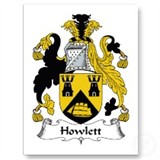
Howlett Coat of Arms
Thomas Howlett arrived in America on the ship Hopewell in 1630 to live in Boston. He was a carpenter, and had skills as a surveyor. He was active in church and military matters.
Thomas Howlett (1605 – 1678)
is my 10th great grandfather
Thomas Howlett (1638 – 1667)
son of Thomas Howlett
Mary HOWLETT (1664 – 1727)
daughter of Thomas Howlett
John Hazen (1687 – 1772)
son of Mary HOWLETT
Caleb Hazen (1720 – 1777)
son of John Hazen
Mercy Hazen (1747 – 1819)
daughter of Caleb Hazen
Martha Mead (1784 – 1860)
daughter of Mercy Hazen
Abner Morse (1808 – 1838)
son of Martha Mead
Daniel Rowland Morse (1838 – 1910)
son of Abner Morse
Jason A Morse (1862 – 1932)
son of Daniel Rowland Morse
Ernest Abner Morse (1890 – 1965)
son of Jason A Morse
Richard Arden Morse (1920 – 2004)
son of Ernest Abner Morse
Pamela Morse
I am the daughter of Richard Arden Morse
| Name | Thomas HOWLETT Sergeant, Ensign |
| Birth | 1605, Assington, Suffolk, England |
| Death | 24 Sep 1677, Topsfield, Essex, Massachusetts |
| Occupation | Carpenter |
| Father | William HOWLETT (1579-) |
Misc. NotesFrom co. Suffolk, England. Removed Ipswich 1633. Deposed 1658, aged 52. Church member 1630.29One of the first settlers in Agawam (Ipswich) 1632/33. Deputy from Ipswich 1635 and Topsfield 1665 and often employed in running lines and locating towns and farms.Ipswich, Massachusetts Deputy in 1635. Ensign of Ipswich Company under Captain Daniel Dennison, 3rd Regiment, Colonel John Endicott 1636.102Thomas Howlett was twenty-five years old when he came to New England in 1630 aboard the ship “Hopewell” as part of Governor Winthrop’s Fleet. He was a carpenter by trade, with origins in South Elmham Parish of Suffolk County, East Anglia in England. He first settled in Boston, as did a majority of Winthrop colonists, and became a member of the First Church on August 27, 1630. In the spring of 1633 he married Alice French, daughter of Thomas and Susan (Riddlesdale) French, who apparently had emigrated to New England prior to her parents. She was a member of the First Church and was eventually dismissed on September 10, 1643 to the church in Ipswich as “Our sister Alice French ye wife of Thomas Howlet of Ipswich.”Although Howlett later settled in Topsfield where he spent the latter years of his life, he was one of the nine originals of John Winthrop Jr’s 1633 party settling the Indian village Agawam, which the next year became the town of Ipswich. He was sworn a freeman at Ipswich on March 4, 1633.In 1634 Ipswich granted Howlett, in partnership with John Manning and others, on the neck of land on which the town stood, two acres of meadow and two and a half acres of marsh between the town riger and the lands of William Sergient (probably Sargent) and John Newman. Added to this in 1635 was a house lot in the town, thirty acres of upland and ten of meadow at the head of Chebacco Creek and ten acres north of the town toward the Reedy marsh. In 1637 he purchased forty acres from John Perkins, Sr. His later acquired Topsfield holdings are described in his will.Thomas Howlett’s highest political office came to him as a young man, when, in 1635, he represented Ipswich in the General Court. he served on the Essex County Jury of Trials in 1654, 1657, and 1665 and on the Grand Jury in 1650, 1659, 1666, and 1667 and served as Selectman of Topsfield in 1661.In 1640 he was sergeant of the Ipswich military defense company and later became its ensign. In 1643 he, as Sergeant, and ten other militiamen were voted compensation by the town for their three days acting in defense of the Agawam Indians against their tribal enemies. In 1672 he became a Deacon of the Topsfield Church and his contribution of five pounds to the salary of Rev. Jeremiah Hubbard was the largest of those made.There were eight children of Howlett’s marriage with Alice — Sarah (1633/34-1700), John (1633/34-1674/75), alice (1636-1696), Thomas, Jr. (1637/34-1667), Mary (1641/42-1718), Nathaniel (1646-1658), William (1649/50-1718), and Samuel (1654/55-1719/20). On June 6, 1666, after the death of Alice he married Rebecca Smith, widow of Thomas Smith if Ipswich and Newbury, with his step-son, Thomas Smith, in 1671, choosing him as his guardian.Thomas Howlett died in Topsfield, Essex County on September 24, 1677.Military Was in Pequot War32, No. 74, pg. 120, 1920Spouses
| 1 | Alice FRENCH |
| Birth | 9 Oct 1609 |
| Death | 26 Jun 1666, Topsfield, Essex, Massachusetts |
| Christen | 9 Apr 1610, Assington (St. Edmund’s), Suffolk, England |
| Father | Thomas FRENCH (<1584-<1639) |
| Mother | Susan RIDDLESDALE (<1584-1658) |
Misc. NotesProbably emigrated to America with her brother Thomas. Alice was dismissed from the Boston Church to Ipswich 16 Jun 1644.
| Marriage | 1 Jan 1633/34, Ipswich, Essex, Massachusetts |
| Children | Sarah (1633-1700) |
| Alice (ca1636-<1696) | |
| Thomas (1637-1667) | |
| Mary (1641-1718) | |
| John (1643-1675) | |
| Samuel (1645-1719) | |
| Nathaniel (ca1646-1658) | |
| William (1649-1718) |
| 2 | Rebecca SMITH |
| Death | before 1 Jan 1634/35 |
| Father | Thomas SMITH |
| Mother | Alice |
I was born in Tulsa in 1951, and although I moved to Pennsylvania when I was 4, I visited Oklahoma many times in my childhood. When the musical Oklahoma came out in 1955 I was thrilled and learned the words and music to sing ad infinitum. I was the soundtrack of some of my best years. I identified with my Oklahoma birthplace which was reinforced by frequent visits, and visiting Tulsans at our home in Pittsburgh. My parents hung out and had musical hootenannies with other petroleum engineer friends from Tulsa who had come to PA like my dad, to specialize in fracking for Gulf Oil. They brought much of their Okie lifestyle with them including Woody Guthrie, hickory chips and barbecue.
I went to Tulsa and drove all over the state a few years ago on my first ancestry discovery trip. I did feel very at home, although perhaps not in political alignment with the population. I particularly loved the grapes at the farmers market that reminded me of the grapes my grandpa grew when I was very young. While driving with my uncle to Bartlesville I asked as a joke what we do in case of a twister. He said we jump out of the car and hide in a drainage culvert. I started noticing how infrequently these culverts were there on the side of the road, and started having thoughts of vulnerability. I imagined hustling my fairly nimble but old uncle out of the car and into the ditch to save our lives and I just did not like that idea at all. I made it back and forth across Kansas and Oklahoma without incident, but did find graves and documents from my ancestors who lived through the dust bowl. I respect and admire those Boomer Sooners and pioneer petro peeps who formed the history of the Cherokee Strip and my family tree. I am sad that my fellow Okies are suffering so much natural disaster and destruction in their lives. Although I still feel the pride of being from Oklahoma, I know I could not handle living with the terror of tornadoes in my territory. I have adjusted to wildfires and floods here in Arizona as my natural disasters of choice. I wish the state of my birth a full and speedy recovery.

Perkins coat of arms
William Perkins was born in England, educated at Cambridge, and moved to New England in 1632. He served in the military and taught school after arrival. He was a very well educated man.
1. Rev.-Capt. William Perkins, son of William Perkins Merchant Taylor and Catharine Unknown, was
born on 25 Aug 1607, was christened in All Hallows, Bread Street, London, Eng., and died on 21 May 1682 in
Topsfield, MA at age 74.
General Notes: Robert Charles Anderson, The Great Migration Begins: immigrants to New England
1620-1633, New England Historic Genealogical Society, Boston, 1995, Three volumes.
From George Walter Chamberlain, History of Weymouth, Boston, 1923.
“Capt. William Perkins, the first schoolmaster of which there is any record, was voted ?10 for six months
schoohng, 10 Mar. 1651 (Weymouth Town Records.) He entered Emmanuel College, Cambridge, as a
pensioner at Michaelmas Term, 1625; afterwards immigrated to Christ’s College from which he
graduated, A.B., at lent term, 1627-28.
“He was son of William Perkins, a merchant tailor, of London, and was born 25 Aug. 1607, and came
in the ship William and Francis, leaving London, 7 Mar. 1631-32. This ship arrived at Boston, 5 June,
1632. (Drake’s, The Foumders of New England, 11.) He was made a freeman of the Massachusetts Bay
Colony, 3 Sept. 1634. He married at Roxbury, 30 Aug. 1636, Elizabeth Wootton, and removed to
Weymouth in 1643, where he resided till 1652, when he removed to Gloucester, and in 1655 to
Topsfield. He became the first munister of the latter place. He was deputy from Weymout in 1644 and
Captain there in 1645. He died at Topsfield, 21 May, 1682, aged 75 years.
“The General Court entered the following record on 7 Oct. 1641: ‘Mr. Willi Perkins, for his fathers
50, is granted 400 acres of land.’ (Massachusetts Bay Colony Records, 1:338.) He was to ‘have power to
end small causes at Waymoth,’ 29 May, 1644, and again, 14 May, 1645. (Ibid. 2: 73, 97.) He was a
deputy at the General Court, 29 May, 1644, and was called ‘Lieut. Wm. Perkms’ (Ibid. 66) and ‘Capt.,’ 4
Nov. 1746 (Ibid. 184.).”
——————–
William Perkins, 1607-82, A Study, The Essex Genealogist, vol 3, pp 65-76, May 1983, iss.2
We know from the Cambridge Alumni association that he was a preacher and a teacher:
Adm. at EMMANUEL, 1624. S. of William, merchant tailor, of London. B. there, Aug. 25, 1607. Schools, London and Colchester (Mr Danes). Matric. Michs. 1625. Migrated to Christ’s, Nov. 15, 1626. B.A. 1627-8. Went to New England, 1632. Resided at Roxbury, Mass., adm. a freeman of the Massachusetts Colony, 1634. Moved to Weymouth, Mass., 1643. Sent as deputy to the General Court, 1644; lieutenant, 1644, and captain, 1645, of the local military company; served as schoolmaster and preached occasionally. Removed to Gloucester, Mass., and taught school there, 1651-5. Retired to Topsfield, Mass., 1655. Died there, May 21, 1682. (Peile, I. 378; J. G. Bartlett.)




The 40th anniversary of the Watergate investigation is a national watershed moment. Credibility has been destroyed in all American political and religious institutions during those 40 years. The population forced to pay for the corrupt system has lost the belief that government works in their best interests. Religious institutions have been exposed and now have lower status and less respect. When I voted to end the war in Viet Nam the situation was known as “The Generation Gap”, as if this was the first, last ,and only generation so violently opposed to the politics and lifestyle of the previous. I suspect that each generation has a gap of various depth and breadth to be digested by the course of history. After my parents were dead I became interested in my ancestry. This study has shown me the drastic, religious and political beliefs of their ancestors. My father’s side is full of teachers, and my mother’s is full of preachers.
Tracing a spiritual and political timeline of my ancestors has shown me that rebellion was frequent and sometimes drastic. My ancestors rebelled against religious and political institutions by moving to America in the 1600’s. The entire protestant reformation was an act of rejecting an overly powerful Catholic church to become more pure. After crossing the Atlantic for religious freedom my ancestors founded and preserved institutions in the colonies. Other members of my family firmly rejected the Puritan way of life, setting out to live free in new territories rather than submit to the religious fascism of the Pilgrim fathers. The Wampanoag branch of my family tried hard to wipe out the British presence for good during King Philip’s War. I had family members in the military on both sides of the Civil War, when that happened. There may have been a few settled, stationary generations, but when I look at the ethical will of my ancestors they were generally busy rebelling and rejecting institutions as much as they were preserving them. A dynamic historical tension can be found in the cultural traditions of my ancestors. This explains why my parents were so crazy. It was imperative to reject the beliefs they embodied. It probably also explains why my own generation’s traditions and habits need a vigorous review. Generation gaps are forever. Barry Goldwater is fully dead, and only a faint glimmer of the military industrial complex as our worst internal nightmare has been superseded by the much freakier medical pharmaceutical complex. We have a new fall of civilization to manage now.
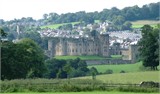
Alnwick Castle
My 16th great grandfather was born into a fancy Scottish family. Politics, diplomacy and treason were part of life in Scotland under King James III:
Robert Boyd (d.c.1470) Lord Boyd, was a Scottish Statesman.
A son of Sir Thomas Boyd (d. 1439), Robert Boyd belonged to an old distinguished family, of which one earlier Sir Robert Boyd, had fought with Sir William Wallace and Robert the Bruce.
Created Lord Boyd in 1454, he was one of the Regents during the minority of King James III, in 1460. He conspired with his brother, Sir Alexander Boyd, and obtained possession of the King’s person in 1466 and was made by Act of Parliament sole Governor of the Realm.
He negotiated the marraige between James and Margaret of Norway in 1469 and secured with it the cession of the Orkney Islands by Norway. He was appointed Great Chamberlain for life, and Lord Justice General in 1467.
Conflict broke out between the King and Boyd family. Robert, and his son Thomas Boyd, 1st Earl of Arran (who was married to Princess Mary), were out of the country involved in diplomatic activities when their regime was overthrown. Robert, 1st Lord Boyd was pronounced guilty of treason and fled firstly to Alnwick, Northumberland. His brother and assistant, Sir Alexander Boyd, was captured and beheaded on November 22, 1469.
Robert 1st Lord Boyd fought in the English service in the French wars, and died in exile.
He married Mariotta, daughter of Sir John Maxwell of Calderwood, and had numerous issue. One of his daughters, Elizabeth, married Archibald Douglas, 5th Earl of Angus.
Robert Boyd (1425 – 1470)
Lord Boyd conspired with his brother, Sir Alexander Boyd, and obtained possession of the young King’s person in 1466 and was made by Act of Parliament sole Governor of the Realm; and Great Chamberlain for life, and Lord Justice General in 1467.[4] Early in that year he procured the marriage of his eldest son, Thomas, (created Earl of Arran for that occasion) with Mary, elder sister of James III, which aroused the jealousy of the other nobles[1] and made his eventual downfall inevitable since the King regarded the marriage as an unforgivable insult.
Lord Boyd obtained the cession of the Orkney Islands to Scotland, 8 September 1468, from Christian I, King of Norway, for whose daughter Margaret, he negotiated a marriage with James III. While absent for that purpose he and his son Thomas (the Earl of Arran) and his brother (and coadjutor) Sir Alexander Boyd, were attainted for high treason, whereby his peerage became forfeited. He was living Easter 1480/1, and died before October 1482, it is said, at Alnwick in Northumberland where he had fled in 1469.[1]
James III’s biographer sums Boyd up as an unscrupulous political gambler and an inveterate optimist. To forcibly assume guardianship of an underage King was, indeed, a familiar path to power in mediaeval Scotland, but it was also a dangerous path. Boyd underestimated the dangers, overestimated his support, and made the fatal mistake of marrying his son to the King’s sister, an insult the King would not forgive.[5]
FamilyRobert Boyd belonged to an old and distinguished family, of which one earlier Sir Robert Boyd, had fought with Sir William Wallace and Robert The Bruce.[4] He was the son and heir of Sir Thomas Boyd of Kilmarnock (died 9 July 1439).[1] Robert married Mariot (or Janet), daughter of Sir Robert Maxwell of Calderwood. She died after 25 June 1472, apparently early in 1473.[1] They had three sons:[6]
[ edit] References
Attribution
 This article incorporates text from a publication now in the public domain: Chisholm, Hugh, ed. (1911). “Boyd, Robert Boyd”. Encyclopædia Britannica. 4 (11th ed.). Cambridge University Press. pp. 353,354. http://www.archive.org/stream/encyclopaediabri04chisrich#page/353/mode/1up. This article incorporates text from a publication now in the public domain: Cokayne, George Edward, ed. (1912). Complete peerage of England, Scotland, Ireland, Great Britain and the United Kingdom, extant, extinct or dormant (Bass to Canning). 2. London: The St. Catherine Press, ltd.. pp. 260,261. http://www.archive.org/details/completepeerageo02coka. This article incorporates text from a publication now in the public domain: Balfour, Paul, James (1904). The Scots peerage; founded on Wood’s edition of Sir Robert Douglas’s peerage of Scotland; containing an historical and genealogical account of the nobility of that kingdom. 5. Edinburgh: D. Douglas. pp. 145,146.
Peerage of ScotlandPre ceded byNew Creation Lord Boyd1454–1482Succeeded byJames Boyd


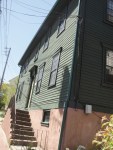


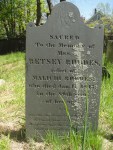

Since I study history through my ancestors’ perspective when I can, my dreams have become full of the characters from whom I descend. The way war and conflict are taught in school ,winners and the vanquished divide spoils and define conquest as history progressed. Places, however, record, digest, and reflect history on a different level. Environment and social structure result from human use of land and resources. If ownership and preservation of historical culture is valued and given high priority, the place is subject to less wasteful development. Pawtuxet, RI preserves history by keeping homes from the past in tact. Seeing places my ancestors have lived and died brings history to life for me, and fills my dreams with the struggles and joys they experienced.
The village of Pawtuxet is a place where local residents function as the tourist board. I was directed by local ladies at the cafe to drive up Post Road and start to look for Malachi Rhode’s home. I found it right away and saw the current resident in his back yard. I resisted the temptation to ask him if I could go into his back yard since my family had owned the home in the 1700’s. I had visited the larger new cemetery with graves that included Rhodes in great number. The small ancient graveyard on the Post Road was even more peaceful and special. I found Malachi there, within walking distance of his house. His life is honored and his place in history kept as a treasure that belongs to the place. Seeing and feeling the place put me in touch with the spirit of all my relations.
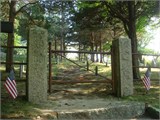
Anna Bursell at rest
Anna was born in Barnstable, Ma in 1640. She died a widow in Barnstable in 1724, living through some heavy times. She married Silas Sears:
Lieut. SILAS SEARS, son of Richard, died Yarmouth, Mass., 13 Jan, 1697/8; married ANNA ??(Bursell??) who died a widow in yarmouth, 4 Mar 1725/6. They had children:
SILAS, born Yarmouth c. 1661; RICHARD, born in Yarmouth; HANNAH, born Eastham(?) Dec 1672, m. 8 Feb 1692/3 Thomas SNOW(son of Mark and Jane(Prence)Snow) she died prior to 30 Sep 1706; JOSEPH, born Yarmouth, c. 1675; JOSIAH, born Yarmouth c. 1677; ELIZABETH, born Yarmouth, m. there 22 Nov 1705, John COOKE; DORRITY, born yarmouth c. 1687; m. there 8 Feb 1715/6 Joseph STAPLES she died 28 Feb 1753
Lt. Silas Sears lived in that part of Yarmouth known as the East precinct, now East Dennis; was “propounded to take up Freedom,” June 6, 1682; commissioned Ensign, 28 Oct 1681; Liet. 7 July 1682; chosen Representataive to the General Court at Plymouth, 1685-91; Selectman, 1680-94; Juryman, 1680-82.
25 Dec, 1689; “Silace Sears and other fined 20 shillings for not appearing and attending at Court, or disorderly departing therefrom;”–fines remitted latar, “it being first offense of the kind.”
1694; “Lt Silas Sears on Com. to seat men, women and others in the meetinghouse;” an onerous duty in those days.
1 Nov 1676, Emott Bursell and Silas Sears appointed administrators of the Estate of James Bursell of Yarmouth. It has been suggested that his wife may have been a daughter of James Bursell, based on the supposition of his being chosen one of the administrators.
Silas Sears left no will, and letters of administration were granted to his widow Anna, 1 May 1698. The “settlement” of his estate was made 5 May 1698 and mentions sons Silas, Richard, joseph and Josiah; and daughters, Hannah, Elizabeth and Dorrity
Anna Bursell (1640 – 1724)
is my 9th great grandmother
Silas Sears (1661 – 1732)
son of Anna Bursell
Sarah Sears (1697 – 1785)
daughter of Silas Sears
Sarah Hamblin (1721 – 1814)
daughter of Sarah Sears
Mercy Hazen (1747 – 1819)
daughter of Sarah Hamblin
Martha Mead (1784 – 1860)
daughter of Mercy Hazen
Abner Morse (1808 – 1838)
son of Martha Mead
Daniel Rowland Morse (1838 – 1910)
son of Abner Morse
Jason A Morse (1862 – 1932)
son of Daniel Rowland Morse
Ernest Abner Morse (1890 – 1965)
son of Jason A Morse
Richard Arden Morse (1920 – 2004)
son of Ernest Abner Morse
Pamela Morse
I am the daughter of Richard Arden Morse

William Kirkcaldy
My 13th great grandfather lived in Scotland when religion was making life very difficult for all involved. Mary Stuart reigned as a Catholic. Life was uneasy and brutal:
Biography from Wikipedia:
“Sir William Kirkcaldy of Grange (c. 1520 – 3 August 1573), Scottish politician and general, was the eldest son of Sir James Kirkcaldy of Grange (d. 1556), a member of an old Fife family. The house of the Grange lands was Halyards Palace.
Sir James was lord high treasurer of Scotland from 1537 to 1543 and was a determined opponent of Cardinal Beaton, for whose murder in 1546 he was partly responsible. William Kirkcaldy assisted to compass this murder, and when the castle of St Andrew’s surrendered to the French in July 1547 he was sent as a prisoner to Normandy, whence he escaped in 1550.
He was then employed in France as a secret agent by the advisers of Edward VI, being known in the cyphers as Corax; and later he served in the French army, where he gained a lasting reputation for skill and bravery. The sentence passed on Kirkcaldy for his share in Beaton’s murder was removed in 1556, and returning to Scotland in 1557 he came quickly to the front; as a Protestant he was one of the leaders of the lords of the congregation in their struggle with the regent, Mary of Guise, and he assisted to harass the French troops in Fife. He opposed Queen Mary’s marriage with Darnley, being associated at this time with Moray, and was forced for a short time to seek refuge in England.
Returning to Scotland, he was an accessory to the murder of Rizzio, but he had no share in that of Darnley, and he was one of the lords who banded themselves together to rescue Mary after her marriage with Bothwell. After the fight at Carberry Hill the queen surrendered herself to Kirkcaldy, and his generalship was mainly responsible for her defeat at the Battle of Langside. Kirkcaldy sailed to Orkney as Lord High Admiral of Scotland in pursuit of Bothwell, but his ship, the Lion, ran aground.[1] He seems, however, to have believed that an arrangement with Mary was possible, and coming under the influence of William Maitland of Lethington, whom in September 1569 he released by a stratagem from his confinement in Edinburgh, he was soon vehemently suspected by his fellows.
After the murder of Moray, Kirkcaldy ranged himself definitely among the friends of the imprisoned queen. About this time he forcibly released one of his supporters from imprisonment, a step which led to an altercation with his former friend John Knox, who called him a murderer and throat-cutter. Defying the regent Lennox, Kirkcaldy began to strengthen the fortifications of Edinburgh castle, of which he was governor, and which he held for Mary, and early in 1573 he refused to come to an agreement with the regent Morton because the terms of peace did not include a section of his friends.
After this some English troops arrived to help the Scots, and in May 1573 the castle surrendered. Strenuous efforts were made to save Kirkcaldy from the vengeance of his foes, but they were unavailing; Knox had prophesied that he would be hanged, and he was hanged on the 3rd of August 1573.”
William Kirkcaldy (1520 – 1573)
is my 13th great grandfather
Janet Kirkcaldy (1520 – 1572)
daughter of William Kirkcaldy
William Carr (1542 – 1655)
son of Janet Kirkcaldy
Benjamin Carr (1592 – 1635)
son of William Carr
Caleb Carr (1623 – 1695)
son of Benjamin Carr
Sarah Carr (1682 – 1765)
daughter of Caleb Carr
John Hammett (1705 – 1752)
son of Sarah Carr
MARGARET HAMMETT (1721 – 1753)
daughter of John Hammett
Benjamin Sweet (1722 – 1789)
son of MARGARET HAMMETT
Paul Sweet (1762 – 1836)
son of Benjamin Sweet
Valentine Sweet (1791 – 1858)
son of Paul Sweet
Sarah LaVina Sweet (1840 – 1923)
daughter of Valentine Sweet
Jason A Morse (1862 – 1932)
son of Sarah LaVina Sweet
Ernest Abner Morse (1890 – 1965)
son of Jason A Morse
Richard Arden Morse (1920 – 2004)
son of Ernest Abner Morse
Pamela Morse
I am the daughter of Richard Arden Morse












I had the super fine opportunity to extend the season of spring this year in the most pleasant way. By visiting New England I had the chance to study my ancestors in the places they lived and died. One of the strongest impressions I have of my visit is of the flowering trees. The botany of the ancestors reminded them of spring and hope in a way that was dramatic every year. To witness the return of color, warmth and spring fashion unfold before my eyes was a treat that stays in my memory. Hope is the motto of Rhode Island. I have a dreamy set of images that express hope through blossoms. I will not forget how happy all the flowers made me feel. I am comfortable and at home with all the people I met in Rhode Island. I love the way Jamestown, an island where my ancestors had dairy farming business in the 1600’s, is still a place for dairy and produce farming. They are completely rural and close to town at the same time. Hope springs eternal.
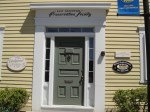
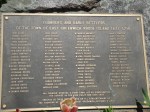


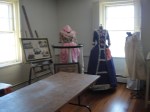
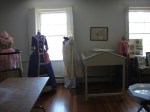
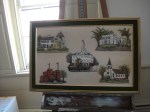
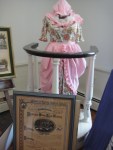
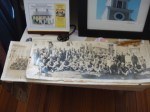

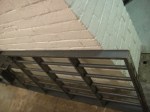

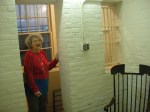


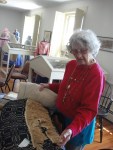
Marion Helwig is president and probably the hardest worker at the Preservation Society. I went to learn about my ancestors, and she was loaded with data. She has the old graves collected in a book with maps. She goes around asking for donations that are documented with dates and some information from anyone who will give. She is a busy bee. I was so lucky to find her on the job and ready to take me on a tour of the jail. I really appreciate Marion, preserving the history of the town. I want to return to East Greenwich to do some more exploring and research. Now I now exactly where to start. She knows all there is to know, and if not, can direct me.
 mermaidcamp