mermaidcamp
Keeping current in wellness, in and out of the water
You can scroll the shelf using ← and → keys
You can scroll the shelf using ← and → keys
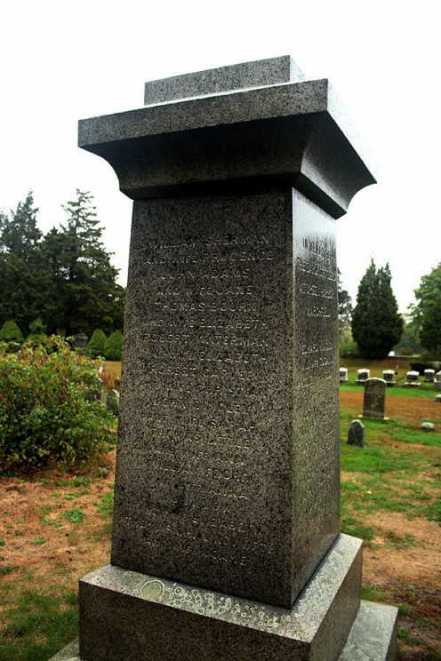
His name is on the monument dedicated to the early settlers of Green Harbor at the Winslow Cenetery in Marshfield, Mass.
The first record of Thomas Little in the new world was on the tax list of March 25, 1633. It is not known on which ship he had arrived. He moved to Marshfield, which is 14 miles from Plymouth. In the 1600’s 14 miles was a very long distance to travel. He was the constable in Marshfield, MA, in June of 1662.
Thomas married Anna Warren on April 19, 1633, in Plymouth Colony. They were the parents of about nine children.

Thomas Little, lawyer
Thomas Little was born in England before 1608 based on his marriage (Anderson, Great Migration). The Ancestral file, without documentation, lists his origin as Devon which is also known as Devonshire with Exeter as the county seat. According to many writers, he arrived at Plymouth, Massachusetts in 1630, but it is not positively known when, or on what ship he came. The earliest date in the Plymouth records is January 2nd, 1632/3, when he was taxed. He married, April 19th, 1633, Ann, born in England about 1612, daughter of Richard and Elizabeth Warren, who were Mayflower passengers (Avery 127, 129; NEHGR XIII, 279). Avery writes that Thomas Little came from England to Plymouth in 1630. He was a lawyer, and his coat of arms is still preserved at the old homestead in the house of Luther Little at Sea View, Massachusetts known as Littletown (Avery 126-127).
Thomas Little and Ann Warren had nine children as listed by Avery, Anderson in the “Great Migration,” and various others. Abigail married Josiah Keene; Patience married Joseph Jones; Ruth apparently unmarried; Hannah married Stephen Tilden; Mercy married John Sawyer; Isaac married Bethia Thomas; Ephraim married at Scituate Mary Sturtevant; Thomas died in King Phillips War; and Samuel married Sarah Gray (Anderson, Great Migration).
Thomas Little bought a shallop in 1633, and was enrolled for military service in August, 1643, at Plymouth, as was every other male in the Colony between 16 and 60 on that date (Avery 129-130).
His first residence was at Plymouth where he was a “Keeper of the Colony of New Plymouth books.” He was assessed 18 shillings in Plymouth tax lists of 1633 and 1634. In 1647, he had five acres of upland meadow on “Indian Brook,” listed as within the limits of the township of Plymouth, retaining that land in 1655. But in 1664, Jonathan Morey expressed an interest in the land that was “sometimes Thomas Little’s. Prior to that, in 1652, Thomas Little and his wife Ann sold a house and land on the Eel river in the township of Plymouth (a former residence). On 3 June 1662, Thomas Little had rights confirmed to a farm at Marshfield, and on 3 October 1665 was granted a hundred acres on which he settled title by 1 May 1666. Back in June 1662, he was a Marshfield Constable (Anderson, Great Migration, quoting Plymouth Records).
In his will, dated 17 May 1671, Thomas Little, Sr. bequeathed to “my loving wife all my housing and all of my land, upland and meadow on that side of the brook I now dwell, except only the meadow I purchased of Thomas Tildin and Morris Trewant.” He left land to sons Isacke and Ephraim land on the other side of the brook; all his land at Namassakett upland and meadow to his younger sons Thomas and Samuel, excepting an identified upland to grandson John Jones; a featherbed and furniture to Ephraim; the whole stock of cattle to be equally divided amongst all his children; and other dispositions. Administration of the estate was granted to Anna Little, his wife, on 14 August, 1662.(Anderson, Great Migration listing sources).
Thomas Little was buried at Marshfield, March 12, 1671. His widow died after February 19, 1675 (Avery 129-130).
There is some confusion from 28 October 1633 when a grant of land to Richard Warren was returned to court for failure to erect a building; the land was to be regranted to a Mr. Ralph Fogg upon his satisfactory payment to Widow Warren for her fence remaining there (PCR 1:18). But on 7 March 1636, “it is agreed upon, by the consent of the whole court, that Elizabeth Warren, widow, the relict of Mr. Richard Warren, deceased, shall be entered, and stand, and be purchaser instead of her said husband, as well because that (he dying before he had performed the said bargain) the said Elizabeth performed the same after his decease, and also for the establishing of the lots of lands givern formerly by her unto her sons-in-law Richard Church, Robert Bartlett, and Thomas Little, in marriage with their wives, her daughters” [PCR 1:54; 2:177]. On 5 May 1640, “Richard Church, Rob(er)te Bartlett, Thomas Little, and Mrs. Elizabeth Warren are granted enlargements at the heads of their lots to the foot of the Pyne Hills, leaving a way betwixt them and the Pyne Hills, for cattle and carts to pass” (PCR: 1:52). Ann Warren born est 1613, m. Thomas Little at Plymouth 19 April 1633 (PCR 1:13)
Thomas Little (1609 – 1675)
10th great-grandfather
William Little (1640 – 1731)
son of Thomas Little
William Little (1660 – 1740)
son of William Little
William Little Jr (1685 – 1756)
son of William Little
Jeanette Little (1713 – 1764)
daughter of William Little Jr
Andrew Armour (1740 – 1801)
son of Jeanette Little
William Armor (1775 – 1852)
son of Andrew Armour
William Armer (1790 – 1837)
son of William Armor
Thomas Armer (1825 – 1900)
son of William Armer
Lucinda Jane Armer (1847 – 1939)
daughter of Thomas Armer
George Harvey Taylor (1884 – 1941)
son of Lucinda Jane Armer
Ruby Lee Taylor (1922 – 2008)
daughter of George Harvey Taylor
Pamela Morse
I am the daughter of Ruby Lee Taylor
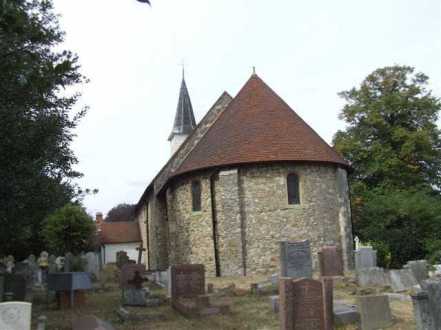
St James the Less Churchyard
Photo submitted by geoffrey gillon on findagrave.com
This is the final resting place of Sir Aubrey. I would love to visit Haleigh someday to take in the sights and visit my dead ancestors, in romantic ruin.
Located on High Street in Hadleigh, Essex, England – Cemetery notes and/or description from findagrave.com: Hadleigh is a town in southeast Essex, England, on the A13 between Benfleet and Leigh-on-Sea. Although a historic settlement with its castle, it has become intertwined with Benfleet to the West and Leigh-on-Sea to the East. This has led to the Hadleigh in Suffolk becoming more well known. Hadleigh is probably best known for its castle, and the country park that surrounds it. The castle has been a romantic ruin for a few hundred years, but parts of two towers are still standing. John Constable painted Hadleigh Castle in 1829, and the painting now resides at the Yale Center for British Art in USA.. Set at the top of a hill overlooking the Thames Estuary, it is possible to see as far as the Canary Wharf development to the west. Since the Local Government Act 1972, Hadleigh, along with Canvey Island, South Benfleet, and Thundersley has formed the parliamentary constituency and local government district and borough of Castle Point. General Booth, founder of the Salvation Army, established the Farm Colony in 1891 in Hadleigh. Today the colony operates an employment training centre for people who have special training needs, and accepts referrals from Social Services and the Employment Service. A reminder of the Salvation Army’s work in the area is a special section at the east end of the churchyard for the graves of Colony officers and workers. St. James the Less Church, like the castle, is a Norman building, with a typical Norman round east end, but the church is still in use today. It is built of Kentish ragstone with 3 feet thick walls. It remains picturesque despite the fact that it effectively stands in the central reservation or island, of the A13.(text by Geoffrey Gillon)

Hedingham Castle in Essex, John de Vere’s main residence
My 20th great-grandfather was tight with the Black Prince, who took good care of his people. Sir Aubrey was knighted and accompanied the Black Prince to Aquitaine in battle. His father, John de Vere, is both my 21st and my 20th great-grandfather. This is because I descend from two of his children, Aubrey and Margaret. I am pretty sure I also descend from the Edward Black Prince himself, but more about that later. When sorting out various branches of a tree it is really important to look carefully for errors.
Sir Aubrey 10th Earl of Oxford DeVere (1338 – 1400)
20th great-grandfather
Sir Richard, 11th Earl of Oxford DeVere KG (1385 – 1417)
son of Sir Aubrey 10th Earl of Oxford DeVere
Sir John 12th Earl of Oxford DeVere (1408 – 1462)
son of Sir Richard, 11th Earl of Oxford DeVere KG
John DeVere (1447 – 1509)
son of Sir John 12th Earl of Oxford DeVere
John DeVere (1490 – 1540)
son of John DeVere
Frances DeVere (1517 – 1577)
daughter of John DeVere
Thomas Howard (1536 – 1572)
son of Frances DeVere
Margaret Howard (1561 – 1591)
daughter of Thomas Howard
Lady Ann Dorset (1552 – 1680)
daughter of Margaret Howard
Robert Lewis (1574 – 1656)
son of Lady Ann Dorset
Robert Lewis (1607 – 1644)
son of Robert Lewis
Ann Lewis (1631 – 1686)
daughter of Robert Lewis
Joshua Morse (1669 – 1753)
son of Ann Lewis
Joseph Morse (1692 – 1756)
son of Joshua Morse
Joseph Morse (1721 – 1776)
son of Joseph Morse
Joseph Morse III (1756 – 1835)
son of Joseph Morse
John Henry Morse (1775 – 1864)
son of Joseph Morse III
Abner Morse (1808 – 1838)
son of John Henry Morse
Daniel Rowland Morse (1838 – 1910)
son of Abner Morse
Jason A Morse (1862 – 1932)
son of Daniel Rowland Morse
Ernest Abner Morse (1890 – 1965)
son of Jason A Morse
Richard Arden Morse (1920 – 2004)
son of Ernest Abner Morse
Pamela Morse
I am the daughter of Richard Arden Morse
Aubrey de Vere, 10th Earl of Oxford (c. 1338 – 15 February 1400) was the second son of John de Vere, 7th Earl of Oxford and Maud de Badlesmere, daughter of Bartholomew de Badlesmere, 1st Lord Badlesmere.
In 1360 he was made steward of the royal forest of Havering in Essex. In 1367 was retained to ‘abide for life’ with the Black Prince, with a substantial allowance. He was knighted, made constable of Wallingford Castle in 1375 and also given the honours of Wallingford and St. Valery, though he gave up Wallingford in 1378 for Hadleigh Castle. Edward III used him as an ambassador in seeking peace with France. In 1381, de Vere became a Chamberlain of the Royal Household and member of the privy council. In 1388 his nephew, Robert de Vere, Duke of Ireland and 9th Earl of Oxford was deemed a traitor, causing Aubrey to lose his post of chamberlain. However, after Robert’s death in 1392, the king gave Aubrey the title of Earl of Oxford allowing him to take a seat in parliament. Aubrey’s son, Richard became the 11th Earl of Oxford on his death.
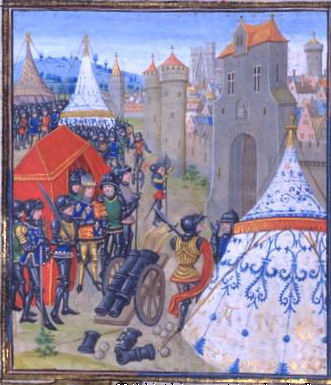
Siege of Rheims
My 20th great-grandfather was the 7th Earl of Oxford, hereditary Chamberlain of England. He was son and heir to Sir Alphonese de Vere and Joan Foliot, grandson of Sir Robert de Vere and Alice de Sanford, Sir Jordan Foliot and Margery Newmarch. He was husband of Maud de Badlesmere, daughter of Bartholomew Badlesmere and Margaret de Clare, widow of Robert FitzPayne. They were married before 27 March 1336 and had four sons and three daughters. John was a captain in King Edward III’s army, and as such participated in the Battle of Crécy and the Battle of Poitiers.
John de Vere, 7th Earl of Oxford (c. 12 March 1312 – 24 January 1360) was the nephew and heir of Robert de Vere, 6th Earl of Oxford. He succeeded as Earl of Oxford in 1331, after his uncle died without issue. John de Vere was a trusted captain of Edward III in the king’s wars in Scotland and France, and took part in both the Battle of Crécy and the Battle of Poitiers. He died campaigning in France in 1360. Throughout his career he was closely associated with William de Bohun, 1st Earl of Northampton, who was his brother-in-law.
Hedingham Castle in Essex, John de Vere’s main residence
John de Vere was the only son of Alfonso de Vere, and Jane, daughter of Sir Richard Foliot. Alfonso was a younger son of Robert de Vere, 5th Earl of Oxford, and brother of Robert de Vere, 6th Earl of Oxford. When the younger Earl Robert’s son died without issue in 1329, the earl obtained licence from the king to entail his estates on his nephew, John. It was in this way that John de Vere, when his uncle died 17 April 1331, became Earl of Oxford. He had made homage and received livery by 17 May.
In 1336 he married Maud, who was the second of the four daughters of Bartholomew de Badlesmere, 1st Baron Badlesmere, of Badlesmere in Kent and Margaret de Clare. Maud was a co-heiress of her brother Giles de Badlesmere, 2nd Baron Badlesmere. When Giles died in 1338, this brought a significant part of the Badlesmere inheritance into de Vere’s hands. The marriage also forged a strong bond with William Bohun, Earl of Northampton, who had married Badlesmere’s third daughter, Elizabeth de Badlesmere and thus became Oxford’s brother-in-law.The two campaigned together, sat on the same commissions and died the same year.
De Vere’s military career began with service on Edward III’s Scottish campaigns, in the 1330s Second War of Scottish Independence. He took part in the Roxburgh campaign of 1334–5, and in the summer campaign of 1335. Later in the decade, England’s military efforts turned towards France, with the beginning of the Hundred Years’ War. In March 1340, de Vere served in Flanders, and was therefore out of the country during Edward’s disputes with Archbishop John de Stratford. Oxford was not forced to take sides in the conflict, and has been described as a “political neutral”.
After a period in England, de Vere returned to the Continent in 1342, where he served with Northampton, who had been made lieutenant of Brittany. They both took part in the Battle of Morlaix that year. The next year the two earls were sent to Scotland to relieve Lochmaben Castle, and in 1345 they were again campaigning in Brittany. Tradition has it that, returning to England, their ships were forced ashore by bad weather, and the party was robbed of their possessions by the locals. In the summer of 1346 de Vere was campaigning with the king in Normandy, and took part in the Battle of Crécy. According to the chronicler Froissart, de Vere was fighting with the Black Prince, and was among the captains who sent a request to Edward III for reinforcements when the king famously answered ‘Let the boy win his spurs’. Oxford was also at the Siege of Calais, but reportedly fell ill in 1348, and did not take part in any major campaigning until 1355.
In 1355 he was again in the company of the Black Prince, and took part in the prince’s great raid in Languedoc. 19 September 1356, at the Battle of Poitiers, Oxford was in command of the vanguard together with the earl of Warwick. de Vere’s attack on the flank of the French cavalry, with a group of archers, did much to secure the English victory. His last campaign was Edward III’s Rheims campaign in 1359–60. Here he died, probably during the raid into Burgundy, on 23 or 24 January 1360. He was buried in the de Vere family’s burial place Colne Priory in Essex.
Maud de Vere died in 1366. The couple had four sons and two daughters. The eldest son, John, married the daughter of Hugh Courtenay, Earl of Devon, but died before his father, in 1350. Also another son, Robert, died in his father’s lifetime. The oldest remaining son was then Thomas, born around 1336–7, who succeeded his father in 1360. Thomas’s son Robert succeeded at his father’s death, but with Robert’s forfeiture in 1392, the earldom was given to Robert’s uncle Aubrey – the seventh earl’s fourth son. The eldest daughter, Margaret, married three times, while of the second, Matilda, little is known.
John de Vere, in the family tradition of the “fighting de Veres”, was active in almost all major military engagements in the years from 1340 to 1360. On the Roxburgh campaign he brought a retinue of twenty-eight men-at-arms and twelve mounted archers. In Brittany in 1342, the retinue had grown to forty men-at-arms, one banneret, nine knights, twenty-nine esquires, and thirty mounted archers. His retinue was of a diverse composition, and also included foreign mercenaries.[10] At one point, in the Battle of Poitiers, John Hawkwood, who was later to make his fortune as a condottiero in Italy, also served with de Vere. Yet in spite of this, de Vere never distinguished himself particularly as a military commander. Neither did he receive a great amount of royal patronage, and was never made a member of the Order of the Garter. This was largely a consequence of the de Vere family’s relatively modest resources among the English peerage. As an example can be mentioned that in the late 1340, £349 were owed to Oxford in arrears for his services, yet at the same time the king owed Northampton two debts of £782 and £1237. This obstacle of resources and status John de Vere was unable to overcome either by marriage or warfare.
from John de Vere, 7th Earl of Oxford
From Wikipedia, the free encyclopedia
John de Vere (1311 – 1359)
20th great-grandfather
Margaret De Vere (1340 – 1398)
daughter of John de Vere
Margaret De Lovaine (1372 – 1408)
daughter of Margaret De Vere
Thomas St Clair (1394 – 1434)
son of Margaret De Lovaine
Edith StClair (1425 – 1472)
daughter of Thomas St Clair
Alice Harcourt (1450 – 1526)
daughter of Edith StClair
Elizabeth Bessiles (1465 – 1511)
daughter of Alice Harcourt
Anne Fettiplace (1496 – 1567)
daughter of Elizabeth Bessiles
Mary Purefoy (1533 – 1579)
daughter of Anne Fettiplace
Susanna Thorne (1559 – 1586)
daughter of Mary Purefoy
Gov Thomas Dudley (1576 – 1653)
son of Susanna Thorne
Anne Dudley (1612 – 1672)
daughter of Gov Thomas Dudley
John Bradstreet (1652 – 1718)
son of Anne Dudley
Mercy Bradstreet (1689 – 1725)
daughter of John Bradstreet
Caleb Hazen (1720 – 1777)
son of Mercy Bradstreet
Mercy Hazen (1747 – 1819)
daughter of Caleb Hazen
Martha Mead (1784 – 1860)
daughter of Mercy Hazen
Abner Morse (1808 – 1838)
son of Martha Mead
Daniel Rowland Morse (1838 – 1910)
son of Abner Morse
Jason A Morse (1862 – 1932)
son of Daniel Rowland Morse
Ernest Abner Morse (1890 – 1965)
son of Jason A Morse
Richard Arden Morse (1920 – 2004)
son of Ernest Abner Morse
Pamela Morse
You are the daughter of Richard Arden Morse
John de Vere, 7th Earl of Oxford and 8th Great Chamberlain, born in 1313, became one of the most famous “Fighting Earls of Oxford,” renowned for bravery, gallantry, and chivalry as one of Edward III’s greatest generals, serving in Scotland, France, Flanders, Brittany and Gascony.
John was the son and heir of Sir Alfonso de Vere (d. 1328) [younger brother of Robert de Vere, EO6] by his wife Jane, daughter of Sir Richard Foliot. John succeeded his uncle, who left no issue, in April 1331. John EO7 actively participated in the wars of King Edward III’s, fighting in the Scottish campaigns of 1333 and 1335, in support of Edward Baliol. When war broke out with France in 1339, EO7 accompanied King Edward III to Flanders, and, in 1342 joined the first Breton campaign of William de Bohun, earl of Northampton. EO7 had, in his war party, 40 men-at-arms, one banneret, nine knights, 29 esquires, and 30 mounted archers, with an allowance of 56 sacks of wool as wages. On one occasion, when EO7 was returning from fighting on the continent, his ship was driven off course and wrecked on the shores of Connaught where some ‘barbarous people’ robbed the party of all of their possessions. [A similar encounter with pirates happened 200+ years later to the 17th Earl of Oxford upon his return from Italy and France in 1576). John de Vere, EO7, was a commander at the battles of Crecy, where he fought with a contingent of 160 men, including three bannerets and 27 knights. In October 1355, EO7 returned to France, joining the Black Prince in his famous raid into the Languedoc. EO7 shared the command of the first division at Poitiers with the Earl of Warwick, where he organized a crucial maneuver that saved the English archers from being downtrodden by the enemy’s cavalry.
“Yet all courage had been thrown away to no purpose, had it not been seconded by the extraordinary Gallantry of the English Archers, under the earl of Oxford, who behaved themselves that day with wonderful Constancy, Alacrity and Resolution ”
John de Vere, EO7, was killed during the siege of Rheims on January 24, 1360, during the British invasion of Burgundy. His corpse was brought back to England and interred in the family crypts at Colne Priory.
John’s will, dated November 1, 1359, contained bequests to Colne church and to the chapel (called the New Abbey) at Hedingham. EO7 also left instructions to his executors to pay out 400 marks sterling that had been accumulated by his ancestors in aid of the Holy Land.
John EO7 had married, in 1336, Maud Badlesmere [b. 1310, widow of Robert Fitzpayne], second sister and coheir of Giles, lord Badlesmere (d. 1338) of Badlesmere in Kent. The couple had had four sons and one daughter, Margaret or Maud. The sons were Thomas (1337-1371), the 8th Earl of Oxford, Aubrey, who became 10th EO in 1393, and John and Robert, who predeceased their father.
By EO7’s marriage, the title of Lord Badlesmere was added to the honorific employed by all later Earls of Oxford. His son Thomas succeeded him.
By Robert Brazil © copyright 2003
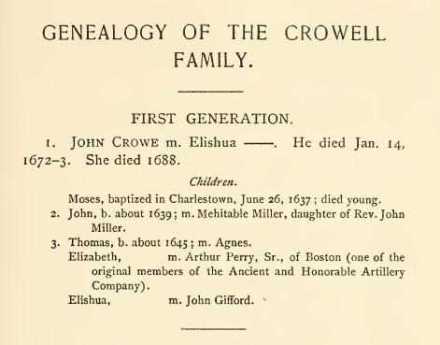
family history
My tenth great-grandfather was part of the Great Migration. He moved to Cape Cod in January of 1639. Many Pilgrims who moved out to Cape Cod got in trouble with the Plymouth church. In those days reaching villages on Cape Cod was a long hard journey from Plymouth. Some of my ancestors who lived on Cape Cod became (or already were) Quakers, and some moved to Rhode Island to escape the oppressive Pilgrim Fathers.
On January 7, 1639 the court record refers to the land grant to the first settlers John Crow, Thomas Howes, and Anthony Thacher as “the lands of Mattacheeset, now called Yarmouth”. This is considered the first usage of the name.
“Yarmouth” to represent the new township to the east of Barnstable.
Plymouth Colony: Its History and People 1620-1691 Part One: Chronological Histories Chapter 3: The Founding of Towns (1633-1643) Yarmouth On 7 January 1638/39, the Court of Assistants granted lands at “Mattacheeset, now called Yarmouth” to Mr. Anthony Thatcher, Mr. Thomas Howes, Mr. John Crow, and John Coite “to be enquired of.” Coite might have been the man of that name of Marblehead, but apparently he did not move to Plymouth Colony. Thatcher, Howes, and Crow were proposed [p.66] as freemen of Yarmouth, along with Mr. Marmaduke Mathews, Philip Tabor, William Palmer, Samuel Rider, William Lumpkin, and Thomas Hatch. It was also specifically noted that “Old Worden (dead),” Burnell, Wright, and Wat Deville were “Psons there excepted against,” probably meaning they were not eligible to be given freemen status, and showing that some form of settlement had already been in existence. In fact, on 4 September 1638 the General Court ordered the inhabitants of Sandwich and “Mattacheese or Yarmouth” to build a bridge over the Eel River (which was just a bit south of Plymouth town, and had to be crossed for travel between Plymouth and the Cape). On 5 March 1638/39 William Palmer was authorized by the General Court to be the one at Yarmouth who would exercise inhabitants in arms, and William Chase was elected constable there. It is apparent that earlier the Plymouth Court had granted land at Yarmouth to others also, for on 1 April 1639 it noted that lands at Mattacheese (another confusion of the names, for it should have been Mattacheeset) were granted to persons who should have inhabited there long ago, but did not, and the grantees “are not likely to come to inhabite there in their owne persons, and lest such as are there should receive in unto them unworthy persons, whereof the Court hath lamentable experience …, the Court doth order that onely such of them wch at present are there shall remayne & make use of some lands for their present necessity, but shall not divide any portions of lands there either to themselves or any others
American Genealogical-Biographical Index (AGBI)
John Sr Crowell (1590 – 1673)
10th great-grandfather
Yelverton Crowell (1621 – 1683)
son of John Sr Crowell
Elishua Crowell (1643 – 1708)
daughter of Yelverton Crowell
Yelverton Gifford (1676 – 1772)
son of Elishua Crowell
Ann Gifford (1715 – 1795)
daughter of Yelverton Gifford
Frances Congdon (1738 – 1755)
daughter of Ann Gifford
Samuel Thomas Sweet (1765 – 1844)
son of Frances Congdon
Valentine Sweet (1791 – 1858)
son of Samuel Thomas Sweet
Sarah LaVina Sweet (1840 – 1923)
daughter of Valentine Sweet
Jason A Morse (1862 – 1932)
son of Sarah LaVina Sweet
Ernest Abner Morse (1890 – 1965)
son of Jason A Morse
Richard Arden Morse (1920 – 2004)
son of Ernest Abner Morse
Pamela Morse
I am the daughter of Richard Arden Morse
The Crowell family in North Dennis is descended from John Crow, who came, it is said, from Wales in 1635, to Charlestown, where he and his wife, Elishua, joined the church. It is probable that they sojourned there until 1639, when Mr. Crow came with Anthony Thacher and Thomas Howes to Yarmouth, with a grant from the court, having previously taken the oath of allegiance. All the first settlers
selected spots for their homes adjacent to good springs of water. The brook that flows through the village of North Dennis had numerous fine flowing springs to supply the need of the first comers. John Crow built his home north of the center of the present village, near the spot where the late Philip Vincent lived. His land, much of which is still owned by his descendants, was east of Indian Fields, and extended from the shore to the top of the hills back of the settlement. John Crow was a man of character and influence in the infant town of Yarmouth, filling many important offices. He died in 1673. His sons were: John, Samuel and Thomas. John married Mehitable. daughter of Rev. John Miller of Yarmouth. A grandson of John Crow, sr., whose name was John, was the first person buried in the North Dennis cemetery. He died in 1727. The name about that time had developed into Crowell. The offspring of John Crow are now to be found in all parts of the country, occupying important positions, with honor and credit to the name. Those who have remained upon the hereditary acres have produced in every generation men of ability and distinction. The late Hon. Seth Crowell and his cousin, Capt. Prince S. Crowell, and Mr. William Crowell, the well-known cranberry grower and seller, are illustrations of the character of the Crowells in the seventh generation. The family has never been large in North Dennis. Two pews in the old church sufficed to accommodate their needs for sitting room. Many of the family, before the old meeting house was torn down in 1838, had become desciples of John Wesley and left the church of their fathers.
Mr. Jeremiah Crowell, a descendant in the fourth generation from the grantee, John Crow, was for two generations a village celebrity. He lived in what was called “Crow Town,” just outside the western limits of Indian Field. The public highway went no farther east than his house in his day. The county road went through the woods south of Scargo hill. Mr. Crowell constructed a globe with the four quarters of the earth marked upon it. This was received by the Nobscusset children with open-eyed wonder. It was to be seen only, however, upon payment of one cent per head. He had besides a mammoth kite with a string a mile long, with a tail of wondrous length. He kept a daily journal of passing events, such as the capture of a whale, the arrival home of the Cod fishermen, the state of the weather, and the direction of the wind. But his great effort was the building of a pair of wings and attempting to fly. This was an achievement beyond his power to accomplish. The flying he regarded as practical and easy, but the alighting was difficult. He died at an advanced age, about the close of the last century.

My Ethnicity Map
REGIONAPPROXIMATE AMOUNT
Europe 99%
Great Britain 85%
Europe West 6%
Trace Regions 8%
West Asia < 1%
Trace Regions < 1%
I have studied my ancestry since 2008, and have made much progress. There are several dead ends that seem kind of hopeless. My maternal grandmother was an orphan who was adopted right after the Civil War in Mississippi in a county where the courthouse burned to the ground with all the records. I know who her adopted parents were, and that she had a brother named Fidel who was adopted by the same family. My paternal 2nd great-grandfather was part of a Swiss/Pennsylvania Dutch family. I know who his nephew was because I have written notes form my own great-grandmother. I can trace his nephew back to Virginia, and then to Switzerland, but I can find no record of his birth. I have not found his parents out of all the Petersons scattered all over the Midwest. I hold a grudge against the state of Indiana for this oversight/problem, because that was the state of his birth. I desperately want to hook up the data, but can’t find the hard evidence to do so.
The big problem with records of all kinds is that they were created by human beings. There are errors for all kinds of reasons. Since all these cases are extremely cold I have no way to verify anything I might find in writing beyond a shadow of a doubt. I have made errors because of common names like Taylor, Smith and Morse in my tree that can easily be mistaken for another person with the same last name. Still, I do learn a lot about the history of the times even when I am proceeding along an erroneous lead. When I find errors sometimes I can rebuild with accurate data easily, but often I am back to square one without a clue.
I sent my DNA sample to Ancestry.com when the service was first available. With few folks in the study my DNA was described as 99.9% from the British Isles. Now the a few years have passed and more comparison DNA has been added I am only 85% from Britain. I have not paid too much attention to this data, only checking in infrequently. The impressive part of this data is that I now have 540 4th cousins or closer in the site’s database. I have started looking at this as a new way to trace the connections because I was recently contacted by an adopted man looking for his birth parents. His closest DNA match is a 2nd cousin of mine. He and I do not show any match, but male DNA, containing the y chromosome, has more detailed information, as I have recently discovered. I began to research more about how these tests work and what we can discern from them. My relative in search of his roots informed me that a match can go back for up to 12 generations. Finally all my research may be useful to solve this adopted man’s mystery. He has turned my attention to this fascinating element of genealogy research that I had not really used. I don’t think I will solve my brick walls (as we call the dead ends in family trees), but it does give me a new way to discover my connections to all my relations. I am grateful all these 540 people felt curious enough to send in DNA samples for our mutual benefit. Have you examined your DNA, gentle reader? Any surprises?

Lower Surry Church
Lawnes Creek Parish Church was the first church erected on Hogg Island in 1628 for the citizens of James City County who lived on the south side of the James River. Surry formed from James City County and the first parish for the area now encompassed by Surry County was known as “Lawnes Creek.”
The parish church members would have been buried at their place of worship as was the custom in those days.
This site is now occupied by the Surry Nuclear Plant.
No access permitted.
LAWNES CREEK PLANTATION, Rts 650 & 628
The peninsula of land about 2 miles in width and 8 in length between Lower Chippoakes Creek and Lawnes Creek and south of Hog Island, was, together with the lands adjoining upper Chippoakes Creek and opposite Jamestown, the first to be settled in Surry away from the James River. Virtually all this land had been patented before 1635, mainly by William Spencer, Captain William Pierce, Roger Delke, and Captain Lawrence Baker.
My 8th great-grandfather, John Holt was born in 1664 in Surry County, Virginia, a British colony. He died in 1705 Surry County, Virginia, hung by his own hand. His 8th great-grandson, George Harvey Taylor, committed the same “Felonious homicide of a man’s self” by drinking carbolic acid in 1941. George Harvey was my maternal grandfather. It is said that suicide reoccurs in families.
He was listed in the 1687 Cavalry of Surrey County, Virginia. John M. Holt was born in 1664 in Lawnes Creek Parish, Hog Island, Surry County, VA. John died 1705 at the age of 41 in Surry County, VA. John Holt committed suicide.
On Feb 24, 1685 Mr. John Holt and his wife were fined for not going to church by the Surry County Court. (This may have been rather harsh as she most probably was pregnant.)
In 1703 he petitioned the Legislature to be Keeper of the Ferry settled on James River to Archer’s Hope Creek on the north side. Appears on the 1704 Rent Roll for Surry County, VA On November of 1706 the Surry County Court Records state that “John Holt upon his petition is admitted to keep a ferry in Hog Island pursuant to a Law made to that purpose and for his better compliance therewith ordered that he forthwith provide and maintain one substantial flat bottom boat of at least fifteen feet by the keel for carrying over of horses as also one other boat of at least twelve or thirteen feet by keel for passengers with three able men constantly to attend the said service ant that he enter into a bond with good and sufficient security duly to perform the same. In May of 1710 John Holt petitioned the Court and they “exempted him from payment from his bond for keeping a ferry at Hog Island. (Surry County, Virginia Court Records, 1707-1711, Book VI
By 1704 the Holt family would own 2,768 acres in Surry County. Of this, 1,450 acres were controlled by Elizabeth Holt, wife of Randall Holt, Jr.. The remainder was owned by the sons of Randall and Elizabeth..
John Holt (1664 – 1705)
8th great-grandfather
David Holt (1685 – 1749)
son of John Holt
Sarah Holt (1740 – 1792)
daughter of David Holt
James Truly (1755 – 1816)
son of Sarah Holt
Elizabeth Betsy Truly (1782 – 1851)
daughter of James Truly
Minerva Truly Darden (1806 – 1837)
daughter of Elizabeth Betsy Truly
Sarah E Hughes (1829 – 1911)
daughter of Minerva Truly Darden
Lucinda Jane Armer (1847 – 1939)
daughter of Sarah E Hughes
George Harvey Taylor (1884 – 1941)
son of Lucinda Jane Armer
Ruby Lee Taylor (1922 – 2008)
daughter of George Harvey Taylor
Pamela Morse
I am the daughter of Ruby Lee Taylor
By 22 September 1705 John Holt “laid violent hands upon himself”
Suicide was against the law. Without regard to the rights of the heirs, the estate and property of the perpetrator reverted back to the crown. Govenor of Virginia Colony was Edward Nott decribes John as a man “who being under some indisposition of mind lately hanged himself…troubled with lunacy and distraction of mind.”
John’s eldest son David, had already received a substantial land grant from his grandfather David Crafford prior to David’s twenty-first birthday. John’s sons John Jr., Charles, Benjamin, and Joseph attended the hearing. The deposition of the court read in part: “Having labor’ d long under a very great Indisposition of Mind, and at last layd violent hands upon himself”, a coroner’s jury found that his estate was forfeited as “Felo de Se.” {Latin for “Felonious homicide of a man’s self”}
Governor Edward Nott appealed to the Crown for the family. He inventoried the estate at: 159I, 16s, 6d, and “his Five Surviving Children are fit Objects of Our Mercy and Compassion.”.
Queen Anne commanded the restoration of his estate to them on 7 Jan. 1706. “the said estate consisting chiefly in cattle proper for plantations and other perishable good is hereby to be restored to his five children John, David, Charles, Joseph and Benjamin. ibid, p.512.”
Source: I want to Especially THANK Charles Lindley Holt for sending me his research on this Virginia Colony HOLT family. THANK YOU. I used his dates and many of his ” ” ‘s.
Also:: Familysearch had some of this “(taken from the book “Adventurers of Purse and Person”.}” .

Beatrice de Savoy Countess de Provence (1205 – 1267)
23rd great-grandmother
She was born as the second child of Thomas I and Beatrice de Geneve. She married Raimond Berenger de Provence in 1219. After two miscarriages she bore him a son and four daughters. Her son died young. The two elder daughters were married to reigning kings while the husbands of the younger two later rose to that rank. She was buried at the chapel in the Chateau de Menuet near Les Échelles. Her mausoleum was desecrated during the revolution and only her skull could be saved. It was deposited in her brother Bonifaces grave.
Beatrice of Savoy was Countess of Provence from December 1220 – 19 August 1245
Her spouse was Ramon Berenguer IV, Count of Provence. Their children were:
Margaret, Queen of France
Eleanor, Queen of England
Sanchia, Queen of Germany
Beatrice, Queen of Sicily
Raymond of Provence
She was from the House of Savoy (by birth) and House of Aragon (by marriage)
Beatrice of Savoy was the daughter of Thomas I of Savoy and Margaret of Geneva. She was Countess consort of Provence by her marriage to Ramon Berenguer IV, Count of Provence.
Her paternal grandparents were Humbert III, Count of Savoy, and Beatrice of Viennois. Her maternal grandparents were William I, Count of Geneva and Beatrice de Faucigny. Beatrice of Savoy’s mother, Margaret was betrothed to Philip II of France. While Margaret was travelling to France for her wedding, she was captured by Beatrice’s father, Thomas. He took her back to Savoy and married her himself. Thomas’ excuse was that Philip II was already married, which was true.
Beatrice was the tenth of fourteen children born to her parents. Her siblings included: Amadeus IV, Count of Savoy; Thomas II of Piedmont; Peter II, Count of Savoy; Philip I, Count of Savoy; Boniface of Savoy, Archbishop of Canterbury; Avita the Countess of Devon; and Margherita of Savoy wife of Hartmann I of Kyburg.
Beatrice betrothed on 5 June 1219 to Ramon Berenguer IV, Count of Provence; they married in December 1220. She was a shrewd and politically astute woman, whose beauty was likened to that of a second Niobe by Matthew Paris. Ramon and Beatrice of Savoy had four daughters, who all lived to adulthood, and married kings. Their only son, Raymond died in early infancy.[2]
Margaret, Queen of France (1221–1295), wife of Louis IX of France
Eleanor, Queen of England (1223–1291), wife of Henry III of England
Sanchia, Queen of Germany (1228–1261), wife of Richard, Earl of Cornwall
Beatrice, Queen of Sicily (1231–1267), wife of Charles I of Sicily
Raymond of Provence, died young
At the English court[edit]
In 1242, Beatrice’s brother Peter was sent to Provence by Henry III to negotiate the marriage of Sanchia to Richard. Another brother, Philip, escorted Beatrice and Sanchia to the English court in Gascony, arriving in May 1243. There they joined Henry, Eleanor, and their baby, Beatrice of England. Henry was very happy at this occasion and gave many gifts to the various relatives.
In November 1243, Beatrice and Sanchia travelled to England for the wedding. This wedding did much to strengthen the bond between Richard and Henry III. She further strengthened the unity of the English royal family by convincing Henry III to help pay the debts of his sister Eleanor and her husband Simon de Montfort, who had often been at odds with Henry.[5] In January 1244, Beatrice negotiated a loan for her husband from Henry of four thousand marks, offering the king five Provençal castles as collateral.
When Ramon Berenguer died on 19 August 1245, he left Provence to his youngest daughter, and his widow was granted the usufruct of the county of Provence for her lifetime. Beatrice’s daughter and namesake then became one of the most attractive heiresses in medieval Europe. Frederick II, Holy Roman Emperor sent a fleet and James I of Aragonsent an army to seize her, so Beatrice placed herself and her daughter in a safe fortress in Aix, secured the trust of its people then sent to the Pope for his protection. The Pope was also a target for Frederick’s military incursions in France. In Cluny during December 1245, a secret discussion, between Pope Innocent IV, Louis IX of France, his mother Blanche of Castile, and his brother Charles of Anjou, took place. It was decided that in return for Louis IX supporting the Pope militarily, the Pope would allow Charles of Anjou, youngest brother to the French King, to marry Beatrice of Provence. Mother and daughter were satisfied with this selection.[7] But Provence was to never go to France outright through Charles. It was agreed that if Charles and Beatrice had children, the county would go to them; if there was no issue, then the county would go to Sanchia of Provence. If Sanchia died without an heir, Provence would go to the King of Aragon.
Henry protested the selection, arguing that he had not yet received the full dowry for Eleanor nor his brother for Sanchia. He also still had the castles in Provence against the loan he had made to the former count.
When Charles took over the administration of Provence in 1246, he did not respect Beatrice’s rights within the county. She sought the aid of Barral of Baux and the Pope in protecting her rights within the area. The citizens of Marseille,Avignon, and Arles joined this resistance to Capetian control. In 1248, Charles began to seek peace with her so that he could join his brother’s crusade. A temporary truce was reached to allow this.
In 1248, she travelled back to England with her brother Thomas, to see their family there.
In 1254, as Louis was returning from his crusade by way of Provence, Beatrice petitioned him for a more permanent resolution of the dispute with Charles. The French queen Margaret joined the petition, noting that Charles had not respected her dowry either. Beatrice travelled with them back to Paris. As the year progressed, Henry and his wife were invited to travel to Paris, and eventually all four daughters joined their mother there for Christmas.[11]
The generally good relationship among the four sisters did much to improve the relationship of the French and English kings. It brought about the Treaty of Paris in 1259, where differences were resolved.[12] Beatrice and all her four daughters participated in the talks.[13] While the family was still gathered, Louis IX finally persuaded Beatrice to surrender her claims and control in Provence in exchange for a sizable pension to be paid to her. Charles also paid back the loan henry had made to the previous count, clearing his claims in the county.[14]
In 1262, Beatrice was part of the family discussion to try again to bring peace between Henry and Simon de Montfort. When Henry was captured in 1264, Beatrice’s brother Peter II, Count of Savoy took his army to join the efforts to free the king. He left Beatrice in charge of Savoy while he was gone.
Beatrice outlived her third daughter Sanchia and came close to outliving her youngest daughter Beatrice, who died months after her mother (Beatrice the elder died in January, Beatrice the younger died in September). Beatrice of Savoy died on 4 January 1267.
Beatrice de Savoy Countess de Provence (1205 – 1267)
23rd great-grandmother
Eleanor Berenger (1223 – 1291)
daughter of Beatrice 1205 de SavoyCountess de Provence
Edward I “the Longshanks” Plantagenet (1239 – 1307)
son of Eleanor Berenger
Elizabeth of Rhuddlan Princess of England Plantagenet (1282 – 1316)
daughter of Edward I “the Longshanks” Plantagenet
William Earl of Northampton De Bohun (1312 – 1360)
son of Elizabeth of Rhuddlan Princess of England Plantagenet
Lady Elizabeth Countess Arundel Countess DeBohun (1350 – 1385)
daughter of William Earl of Northampton De Bohun
Elizabeth Duchess Norfolk Fitzalan (1366 – 1425)
daughter of Lady Elizabeth Countess Arundel Countess DeBohun
Lady Joan De Goushill Baroness Stanley (1402 – 1459)
daughter of Elizabeth Duchess Norfolk Fitzalan
Countess Elizabeth Sefton Stanley (1429 – 1459)
daughter of Lady Joan De Goushill Baroness Stanley
Thomas Sir 8th Earl of Sefton Molyneux (1445 – 1483)
son of Countess Elizabeth Sefton Stanley
Lawrence Castellan of Liverpool Mollenaux (1490 – 1550)
son of Thomas Sir 8th Earl of Sefton Molyneux
John Mollenax (1542 – 1583)
son of Lawrence Castellan of Liverpool Mollenaux
Mary Mollenax (1559 – 1598)
daughter of John Mollenax
Gabriell Francis Holland (1596 – 1660)
son of Mary Mollenax
John Holland (1628 – 1710)
son of Gabriell Francis Holland
Mary Elizabeth Holland (1620 – 1681)
daughter of John Holland
Richard Dearden (1645 – 1747)
son of Mary Elizabeth Holland
George Dearden (1705 – 1749)
son of Richard Dearden
George Darden (1734 – 1807)
son of George Dearden
David Darden (1770 – 1820)
son of George Darden
Minerva Truly Darden (1806 – 1837)
daughter of David Darden
Sarah E Hughes (1829 – 1911)
daughter of Minerva Truly Darden
Lucinda Jane Armer (1847 – 1939)
daughter of Sarah E Hughes
George Harvey Taylor (1884 – 1941)
son of Lucinda Jane Armer
Ruby Lee Taylor (1922 – 2008)
daughter of George Harvey Taylor
Pamela Morse
I am the daughter of Ruby Lee Taylor

Burial:
St Mary Churchyard
Warwick
Warwick District
Warwickshire, England

Sir Thomas in his grave

Sir Thomas and Lady Katherine
My 19th great-grandfather was born in Warwick Castle in Warwickshire, England Feb. 14, 1313. He was the 11th Earl of Warwick. He died of the plague on Nov. 13, 1369 in Calais, Departement du Pas-de-Calais, Nord-Pas-de-Calais, France
He was English nobility. He was one of the Founder Knights of the Order of the Garter in 1348. He was related to the Kings of England and held many offices under them including: Hereditary Chamberlain of the Exchequer, Hereditary Sheriff of Worcestershire, Warden of the Scottish Marches, Marshall of England, and Sheriff of Warwick and Leicester counties. He was known for his military prowess and fought in many battles: in Scotland, in France in command at Valenciennes, and with the King at Tournai, at the Battles of Crecy and seige of Calais, and in Lithuania as a crusader from 1362 to 1365. He married Katherine de Mortimer after a dispensation was granted for being related in the 3rd degree ,after February 22 1324. They had fifteen children, including Thomas, Knight, Knight of the Garter and his successor as Earl of Warwick. He died testate of the plague at Calais, France. (bio by: Michael Schwing) from Find a Grave
Thomas DeBeauchamp (1314 – 1369)
19th great-grandfather
WILLIAM BEAUCHAMP (1358 – 1411)
son of Thomas DeBeauchamp
Joan Elizabeth Beauchamp (1396 – 1430)
daughter of WILLIAM BEAUCHAMP
Elizabeth Butler (1420 – 1473)
daughter of Joan Elizabeth Beauchamp
Isabel Talbot (1444 – 1531)
daughter of Elizabeth Butler
Sir Richard Ashton (1460 – 1549)
son of Isabel Talbot
Sir Christopher Ashton (1493 – 1519)
son of Sir Richard Ashton
Lady Elizabeth Ashton (1524 – 1588)
daughter of Sir Christopher Ashton
Capt Roger Dudley (1535 – 1585)
son of Lady Elizabeth Ashton
Gov Thomas Dudley (1576 – 1653)
son of Capt Roger Dudley
Anne Dudley (1612 – 1672)
daughter of Gov Thomas Dudley
John Bradstreet (1652 – 1718)
son of Anne Dudley
Mercy Bradstreet (1689 – 1725)
daughter of John Bradstreet
Caleb Hazen (1720 – 1777)
son of Mercy Bradstreet
Mercy Hazen (1747 – 1819)
daughter of Caleb Hazen
Martha Mead (1784 – 1860)
daughter of Mercy Hazen
Abner Morse (1808 – 1838)
son of Martha Mead
Daniel Rowland Morse (1838 – 1910)
son of Abner Morse
Jason A Morse (1862 – 1932)
son of Daniel Rowland Morse
Ernest Abner Morse (1890 – 1965)
son of Jason A Morse
Richard Arden Morse (1920 – 2004)
son of Ernest Abner Morse
Pamela Morse
I am the daughter of Richard Arden Morse

Warwick Castle

Tattershall Coat of Arms
My tenth great-grandfather was born 1572 in Wininick, Lancashire, England, and died 1597 in Wininick, Lancashire, England. He married Ann Hyde on 11 Sep 1593 in Winewick, England, daughter of Robert Hyde and Beatrice Cleverly. His father was in the muster of soldiers in the County of Lancaster August 16, 1574, required to serve the Queen.
Richard Tattershall (1572 – 1597)
10th great-grandfather
Joanne Tattershall (1598 – 1635)
daughter of Richard Tattershall
Mary Greene (1633 – 1686)
daughter of Joanne Tattershall
Benoni Sweet (1663 – 1751)
son of Mary Greene
Dr. James Sweet (1686 – 1751)
son of Benoni Sweet
Thomas Sweet (1732 – 1813)
son of Dr. James Sweet
Samuel Thomas Sweet (1765 – 1844)
son of Thomas Sweet
Valentine Sweet (1791 – 1858)
son of Samuel Thomas Sweet
Sarah LaVina Sweet (1840 – 1923)
daughter of Valentine Sweet
Jason A Morse (1862 – 1932)
son of Sarah LaVina Sweet
Ernest Abner Morse (1890 – 1965)
son of Jason A Morse
Richard Arden Morse (1920 – 2004)
son of Ernest Abner Morse
Pamela Morse
I am the daughter of Richard Arden Morse
This family resided in Lancashire for several centuries before Richard was born. His daughter Joanne sailed to America with her husband and family but died either at sea or shortly after arrival in Boston.
The Lancashire Tattershalls
According to ‘Memories of Hurstwood’ the earliest records of Tattersalls in Lancashire begin with in the year 1380. In the year 1402 that is about 22 years after the death of Robert Tattersall of the Holme Extwistle, and Briercliff, we find the names of Richard and Edmund Tattersall as signatories to the costumale which is called the magna carta of Blackburnshire. Richard and John Tattersall who we find from this charter held an important position in the district in the year 1402 held their lands according to the custom and manner and honour of Lincoln. This fact links the Lincolnshire and Lancashire Tattersalls.
A list of all persons assessed to the Royal Subsidy in the township of Burnley in 1522, included Richard Tattersall 20s 12d. Richard Tattersall died in 1524 on 20th December. When he died he had 4 messuages, 80 acres of land, 16 acres of meadow, 40 acres of pasture, 10 acres of wood, 20 acres of moor and turbary, with their appurtenances in the towns of Brereclif and Burnley in the County of Lancaster. His son Christopher aged 36 inherited. His son Richard Tattersall died a very old man in 1587. He married a Barcroft of Barcroft Hall. He had three sons, Edmund, Richard and John and several daughters.
In the muster of soldiers in the County of Lancaster August 16, 1574 (Harl.MSS.1926) Richard Tattersall along with other local yeoman had each to furnish 1 longbowe, one sheffe of arrowes, one skull (or steel cap) and one bill for the use of Her Majesty. His youngest son John was a poor scholar at Oxford.
A copy of Richard Tattersall’s Will is preserved in the Probate Court of Chester dated 6th December, 1587 in which he is described as Richard Tattersall of Brearcliffe.

Masterson Coat of Arms
My 10th great-grandfather was a deacon of the church in Leiden, Holland. He arrived in Plymouth in 1629 and died four years later.
Richard Masterson lived in Sandwich, Kent. He and several others were brought before church courts for criticizing the Church of England and the Book of Common Prayer, as well as for non-attendance at services. He was excommunicated several times. Richard Masterson was in Leiden by 7 Oct 1611. He was a wool comber by occupation. He bought a house on the Uiterstegracht on 2 Jan 1614, the sale of which was the subject of years of negotiation by his wife’s second husband. With four others, he wrote a letter from Leiden to William Bradford in 1625 about their hopes of emigrating to New England. From Michael Paulick’s research, it would seem that Masterson traveled between Leiden and Sandwich. Richard Masterson arrived in New England in 1629 from Leiden. Nathaniel Morton in his history of the Plymouth church described Masterson as a “holy man” and “experienced saint,” “the said Richard Masterson having bin officious with parte of his estate for publick Good; and a man of Abillitie as a second steven to defend the truth by sound argument Grounded on the scriptures of truth…” He died in 1633 in the epidemic of infectious fever and Mary Masterson married Rev. Ralph Smith, the minister for Plymouth until 1636. They moved to Manchester by 1645, and Ipswich by 1652.
Richard Masterson (1590 – 1633)
10th great-grandfather
Sarah Masterson (1612 – 1714)
daughter of Richard Masterson
Margaret Wood (1635 – 1693)
daughter of Sarah Masterson
Elizabeth Manchester (1667 – 1727)
daughter of Margaret Wood
Dr. James Sweet (1686 – 1751)
son of Elizabeth Manchester
Thomas Sweet (1732 – 1813)
son of Dr. James Sweet
Samuel Thomas Sweet (1765 – 1844)
son of Thomas Sweet
Valentine Sweet (1791 – 1858)
son of Samuel Thomas Sweet
Sarah LaVina Sweet (1840 – 1923)
daughter of Valentine Sweet
Jason A Morse (1862 – 1932)
son of Sarah LaVina Sweet
Ernest Abner Morse (1890 – 1965)
son of Jason A Morse
Richard Arden Morse (1920 – 2004)
son of Ernest Abner Morse
Pamela Morse
I am the daughter of Richard Arden Morse
Richard and Mary were among the Puritans in Leyden, Holland, but did not immigrate until 1629 on the second “Mayflower.” Their nephew John Ellis also made the voyage.
!Initial source: Family group sheet in the FGRA collection of the Family History Library, Salt Lake City, Utah, submitted by Edith Haddon
Littleford, 330 E 19th St, Idaho Falls, Idaho. Her source: Rec of Jewell David, Rt1 Box 822, Kent, Washington.
In “NEHGR” vol. 119 pg 162 is the extracted record of the marriage, “Archives of Leyden – Banns: the 1st; Nov. 9, 1619 – Richard
Masterson,woolcomber from Sandwich in England, accompanied by Wiliam Talbot and John Ellis, his brother-in-law with Mary Goodall, spinster, from Leiston , in England acc. by Elisabeth Keble and Mary Wing her acquaintnces.” The second banns were published Nov. 16th, the third banns Nov. 23rd and the marriage was performed “before Alpphen and Tetrolde, bailiffs this XXiii November 1619.” There is an article in “NEHGR” vol 144 (1990) pg 24, titled “The Mary Atwood Sampler”. It has an account of Richard and Mary (Goodall) Masterson which says “Richard Masterson, who was in Leyden, Holland, as early as 1611, was a woolcomber from Sandwich, England, according to the record of his marriage in Leyden 23 November 1619 to Mary Goodall, a spinster from ‘Leessen,’ England [perhaps Leiston in Suffolk?] (D. Plooij and J. Rendel Harris, “Leyden Documents Relating to the Pilgrim Fathers” [Leyden, 1920], IX, XL).
Richard died in 1633 when an ‘infectious fever of which many fell very sick and upwards of 20 persons died’ struck the Plymouth settlement (Samuel Eliot Morison, “Of Plymouth Plantation: 1620-1647 by William Bradford” [New York, 1975], 160). Mary (Goodall) Masterson married, second, before 1 July 1633 Rev. Ralph Smith of Plymouth. Mary, who ‘in 1650, according to a note of [Ralph] Smith, was sixty years old, died in 1659’ (D. Plooij, “The Pilgrim Fathers from the Dutch Point of View” [New York, 1932], 116.
An article, “The Sandwich Separatists”, by Michael R. Paulick, published in”NEHGR” vol 154 pg 353-369, names, on page 355, the wife of John Ellis, who was called brother-in-law in the Leiden marriage record of Richard Masterson. It quotes the parish register of St. Peter’s, Sandwich, Kent, England, giving the marriage of John Ellys and Blandyna Maistersonne. However, it says no baptismal record has been found for either of them but the baptisms of six of their children were listed. This article gives more detail about the separatist” movement in Sandwich and some of the activities of Richard Masterson. It quotes a 1977 history of Kent by Peter Clark that “by 1600 there was a signigicant group of vociferous left-wing radicals and separatists standing outside the mainstream of Kentish Puritanism.”
On page 358 is a quote from the records of the Sandwich Deanery: “To the 2 and 3 article wee presente Thomas Allen and Thomas Baker and
Richard Masterson for affirming that the forme of gods worshipp in the Churche of England established by lawe and contained in the booke of Common Prayer and administracion of the sacraments is a corrupt & unlawfull worshipp and repugnant to the scriptures and that the rites and ceremonyes in the Churche of England by lawe established are wicked anechristin & superstitious and suche as religiows godlie menn cannott neather maye with good conscience use or approve of. To the 65 article wee presente the saide Thomas Allen Thomas Baker
Richard Masterson & Abigaell Atkins for not frequenting there parishe churche one sondayes to heere divine service.
To the 66 (article) wee presente the saide Thomas Allen Thomas Baker & Richard Masterson & Abigaell Atkins for recusants which forebears to come to churche to common prayer & to heere gods word preached.” The article goes on to say “Richard Masterson was summoned but failed
to appear on 2 and 26 July, 22 October, 3 and 13 December 1613, and was excommunicated 17 January 1613/14 along with Allen, Baker, and
Atkins, the sentence delivered 13 February 1613[/14] by Harimus White, minister. [“Comperta and Detecta Book,” Sandwich Deanery, f59v,
ff59v-60r, f60v, f61r.]”
“The Book of Common Prayer established the form of Protestant worship and was enforced by the 1559 Act for the Uniformity of Common Prayer and Divine Service. This Act required ‘strict church attendance and rigid adherence to the Book of Common Prayer.’ All ministers of any parish were required to follow the written order of service for matins (morning service), evensong, and the administration of the sacraments. Substantial fines were imposed on any citizen who declared or spoke ‘anything in the derogation, depraving, or despising of the same book…’ or who refused to attend church services. [David Cressy and Lori Anne Ferrell, “Religion & Society in Early Modern England” (…1996), 56-59.] Separatists held the view that only services that were contained in the scriptures should be followed and all other forms of worship of man’s invention were ‘antechristin’.”
It quotes a letter written by the rector of St. Peter’s and other Sandwich ministers in 1613 to the Privy Council of James I, which said “many notablesectes and heresies” were being spread among the people “by such as have recourse unto the towns of Amsterdam, and other partes beyond the seaes” and among the “chiefest sowers” were “Richard Masterson the ellder and Richard Masterson the younger, Thomas Allen and John Ellis”
The article says “The reference to two Richard Mastersons is puzzling; so far, examination of the parish registers of Sandwich shows no trace of a Richard Masterson elder or younger. These terms were commonly – but by no means always – used for father and son or uncle and Nephew. Richard Masterson of St. Peter’s appears only in the ecclesiatical court records. Richard of Leiden was unmarried until 1619 so he had no children to baptize.[36] The note indicated by this number says “It should be noted that the St. Peter’s and St. Mary’s registers are particularly difficult to read, illegible in some areas. A John Maisterson is named in St. Peter’s parish register but his will of 1620 does not indicate any connection with Richard or Blandyna …” “It is possible that the Privy Council confused a Richard Marston with Richard Masterson. The pronunciation of both names with an English long ‘a’ might have sounded similar and perhaps led to a mix-up. Marston apparently had a Separatist reputation….”
The article went on to quote a warning letter to the mayor and stated that the law prohibited these activities and that those accused were fortunate in receiving only an “admonishon and reprehension”. However, “Richard Masterson was summoned 4 and 14 November 1614, and
excommunicated on 28 November 1614.” Still he continued and “had soon returned from Leiden as a professed Brownist or Separatist.” He
was summoned again 10 June 1616 with the following: “To the 2 article wee have one Richard Masterson whoe refuseth to come to our church
traduceth our service and ceremonyes ys a professed Brownest or Separest and hathe formerlye ben often presented and stubbornelye hath stood longe excommunicated and continuallye endeavoreth to infecte others with the same leavin soe that we are greived that the
performaunce of our duetyes herein hat noe better effecte.” He was excommunicated again on the 28th, and yet again on 20 December.
Further in the article it says “When Richard Masterson died in 1633 he was described by Bradford as one of the ‘ancient friends which have lived in Holland.’ If there was a single Richard Masterson, there is evidence that he might have been moving between Leiden and Sandwich. He is recorded in both locations at various times as follows:
7 Oct. 1611 betrothat in Leiden; called acquaintance of Isaac Allerton
2 July 1613 excommunicated in Sandwich with Allen, Baker, and Atkins
4 Nov. 1614 At Sandwich, ‘Lyeinge at Mr. Varall’s,’ excommunicated
22 Jan 1614/15 Leiden, various lawsuits 1612-1615 [Register 143:206]
Jan. 1615 Leiden, purchased house from Roger Wilson 10 Jun 1616 Sandwich, excommunicated as ‘Brownist or Separatist’ Dec. 1616 Sandwich, excommunicated with Mary Plofer for slander 4 Sept. 1618 Letter from Sabin Staresmore in London to John Carver March 1619 Leiden, certificate of good behavior includes Roger Wilson Perhaps his master, Christopher Verrall, who was wealthy and had powerful connections in Sandwich, had actually ‘underhand may[n]teyned and protected the offendors,’ as the Privy Council had accused him of doing. If Richard Masterson was not working with Verrall’s permission it is difficult to understand how he could maintain employment as a servant and travel back and forth between Sandwich and Leiden before Verral’s death in 1615. It is unlikely that any of those who had ‘recourse’ to Leiden made the trip between the two countries without the full knowledge of the other Leiden Separatists.”
The will of Christopher Verral is included in “Appendix” at the end of the article. It is long and difficult to understand but one sentence says “I do forgive my man Richard Masterson all the money which he oweth me and I give him 20s. to make him a ring in token of my good will.”
Letter sent to William Bradford and William Brewster by Richard Masterson and others
To our most dear, and entirely beloved bretheren, Mr. William Bradford and Mr. William Brewster, grace mercy and true peace be multiplied, from God our Father, through our Lord Jesus Christ. Amen.
Most dear christian friends and brethren, as it is no small grief Unto you, so is it no less unto us, that we are constrained to live thus disunited each from other, especially considering our affections each unto other, for the mutual edifying and comfort of both, in these evil days wherein we live: if it pleased the Lord to bring us again together, than which as no outward thing could be more comfortable unto us, or is more desired of us, if the Lord see it good; so see we no hope of means of accomplishing the same, except it come from you, and therefore, must with patience rest in the work and will of God, performing our duties to him and you assunder; whom we are not any way able to help, but by our continual prayers to him for you, and sympathy of affections with you, for the troubles which befal you; till it please the Lord to reunite us again. But our dearly beloved brethren, concerning your kind and respective letter, howsoever written by one of you, yet as we continue with the consent (at least in afection) of you both, although we cannot answer your desire and expectation, by reason it hath pleased the Lord to take to himself out of this miserable world our dearly beloved pastor, yet for ourselves we are minded as formerly, to come unto you, when and as the Lord affordeth means, though we see little hope thereof at present, as being unable of ourselves, and that our friends will help us we see little hope. And now, brethren, what shall we say further unto you; our desires and prayers to God, is (if such were his good will and pleasure) we might be reunited for the edifying and mutual comfort of both, which, when he sees fit, he will accomplish. In the mean time, we commit you unto him and to the word of his grace; whom we beseech to guide and direct both you and us, in all his ways, according to that, his word, and to bless all our lawful endeavours, for the glory of his name and good of his people. Salute, we pray you, all the church and brethren with you to whom we would have sent this letter. If we knew it could not be prejudicial unto you, as we hope it cannot; yet fearing the worst, we thought fit either to direct it to you, our two beloved brethen, leaving it to your goodly wisdom and discretion, to manifest our mind to the rest of our loving friends and brethren, as you see most convenient. And thus intreating you to remember us in your prayers, as we also do you; we for this time command you and all your affairs to the direction and protection of the Almighty, and rest,
Your assured loving friends
And brethren in the Lord,
FRANCIS JESSOPP,
THOMAS NASH,
THOMAS BLOSSOM,
ROGER WHITE,
RICHARD MAISTERSON.
 mermaidcamp