mermaidcamp
Keeping current in wellness, in and out of the water
You can scroll the shelf using ← and → keys
You can scroll the shelf using ← and → keys

ROW80
The Round of Words in 80 Days challenge is a wonderful new experience for me. I joined last week by setting goals I intend to accomplish during the following 80 days. By joining this group I am entering a zone designed to support and entertain writers looking to learn new skills as well as improve on old ones. In the few and far between workshops I have taken in creative writing I did learn from my fellow students in many ways. First, it is comforting to see that many share the exact same creative obstacles and follies. Once we see that writing has certain difficult passages we feel less isolated. It cheers us up to find out others get stuck around the same places that we do. Many of the participants have much more experience and education, which does reflect in the way they put their words together to express themselves. It matters little how large your vocabulary is, or how much you know about crafting dialog for a story if you are out of ideas. We all have to go to the well of creativity and draw water to keep our writing alive. In #ROW80 we share this mutual idea of renewing our source of inspiration. The group is much more powerful than the sum of its parts.
My new devotion to write, read and immerse myself in poetry stems from my ancestry. I have some famous poets in my family tree. This, more than any other accomplishment of my ancestors, has made me think about my own creative legacy. I don’t care to be famous, but think it is very cool to read the handwritten poems of my famous 9th great-grandmother. They are the work of a religious Pilgrim in America, not exactly my cup of tea. I still treasure the poems because they have a life of their own, staying in publication for hundreds of years. I can hear her “voice” because she recorded it (as best she could in the 1600s). She inspires me to refine, discover, and expand my own poetic voice.
I have done the ground work I agreed to do by publishing a poem daily. This is starting to be natural. Usually I do the drawing and poem first thing in the morning, which makes me feel good. I don’t get too critical of the work, I just make an attempt to prime the pump and get a constant flow of words. I will be happy when I become more fluent and need to edit with more thought and specificity. For the present I am pleased just to keep that daily beat. I stay with the images as well as the words while I do my daily routine. I think pondering the colors and the words I have used works to inspire the next day’s creation.
My goal to expose myself to the work of poets with whom I am not familiar is made incredibly easy by the fabulous podcasts and poetry apps available at little or no cost. I have also downloaded a couple of apps that help you create poems, and even record your work. There are many good options to read and to hear. These are a just a few of the new resources for poets and poetry fans:
I am using these and a few other mobile apps to make it easy to find and lean about poets. I particularly like the translated work because the reading is done first in English, followed by the poem in the language in which it was written. I like to hear the sounds and the cadence of the original language after I know what it means. I have been pleasantly surprised by how easy and fun it is to discover poets and enjoy a variety of styles. I like the funny subjects the best.
I skipped the reading last week at the U of A Poetry Center. The schedule arrived in the mail for all the readings, events, classes and workshops to be presented in the spring semester. There is a series called the Poetics and Politics of Water which is very interesting to me. I have marked my calendar to be ready to attend all four parts of this collaboration with the American Indian Studies Program. I am also looking forward to an exhibition of photos from Afghanistan to accompany a presentation on oral folk poetry of the women of the Pashtun tribe, living on the border of Pakistan and Afghanistan. There is tremendous technical excellence built into all the work done at the Poetry Center. I cherish to the academic and aesthetic rewards of living very close to this special institution. It is my hope that with the inspiration of my dead poet ancestors and the living poets right around the corner I will be staking a claim to an identity as a writer. A lot can happen in 80 days!!
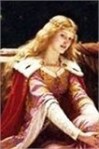
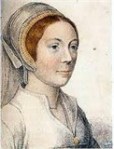
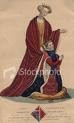
My 22nd great grandmother was born in Syria while her parents were on a crusade.
Joan Plantagenet (1272 – 1307)
is my 22nd great grandmother
Lady Margaret De Clare Baroness Audley (1292 – 1342)
daughter of Joan Plantagenet
Lady Alice De Audley Baroness Neville (1315 – 1373)
daughter of Lady Margaret De Clare Baroness Audley
Sir John ‘3rd Baron de Raby’ Neville, Admiral of the Kings Fleet (1341 – 1388)
son of Lady Alice De Audley Baroness Neville
Thomas De Neville (1362 – 1406)
son of Sir John ‘3rd Baron de Raby’ Neville, Admiral of the Kings Fleet
Maude de Neville (1392 – 1421)
daughter of Thomas De Neville
John Talbot (1413 – 1460)
son of Maude de Neville
Isabel Talbot (1444 – 1531)
daughter of John Talbot
Sir Richard Ashton (1460 – 1549)
son of Isabel Talbot
Sir Christopher Ashton (1493 – 1519)
son of Sir Richard Ashton
Lady Elizabeth Ashton (1524 – 1588)
daughter of Sir Christopher Ashton
Capt Roger Dudley (1535 – 1585)
son of Lady Elizabeth Ashton
Gov Thomas Dudley (1576 – 1653)
son of Capt Roger Dudley
Anne Dudley (1612 – 1672)
daughter of Gov Thomas Dudley
John Bradstreet (1652 – 1718)
son of Anne Dudley
Mercy Bradstreet (1689 – 1725)
daughter of John Bradstreet
Caleb Hazen (1720 – 1777)
son of Mercy Bradstreet
Mercy Hazen (1747 – 1819)
daughter of Caleb Hazen
Martha Mead (1784 – 1860)
daughter of Mercy Hazen
Abner Morse (1808 – 1838)
son of Martha Mead
Daniel Rowland Morse (1838 – 1910)
son of Abner Morse
Jason A Morse (1862 – 1932)
son of Daniel Rowland Morse
Ernest Abner Morse (1890 – 1965)
son of Jason A Morse
Richard Arden Morse (1920 – 2004)
son of Ernest Abner Morse
Pamela Morse
I am the daughter of Richard Arden Morse
Joan of Acre (April 1272 – 23 April 1307) was an English princess, a daughter of King Edward I of England and Queen Eleanor of Castile. The name “Acre” derives from her birthplace in the Holy Land while her parents were on a crusade.
She was married twice; her first husband was Gilbert de Clare, 7th Earl of Gloucester, one of the most powerful nobles in her father’s kingdom; her second husband was Ralph de Monthermer, a squire in her household whom she married in secret.
Joan is most notable for the claim that miracles have allegedly taken place at her grave, and for the multiple references to her in literature.
Birth and childhood
Joan (or Joanna, as she is sometimes called) of Acre was born in the spring of 1272 in Syria, while her parents, Edward I and Eleanor of Castile, were on crusade. At the time of Joan’s birth, her grandfather, Henry III, was still alive and thus her father was not yet king of England. Her parents departed from Acre shortly after her birth, traveling to Sicily and Spain before leaving Joan with Eleanor’s mother, Joan, Countess of Ponthieu, in France. Joan lived for several years in France where she spent her time being educated by a bishop and “being thoroughly spoiled by an indulgent grandmother.” Joan was free to play among the “vine clad hills and sunny vales” surrounding her grandmother’s home, although she required “judicious surveillance.”
As Joan was growing up with her grandmother, her father was back in England, already arranging marriages for his daughter. He hoped to gain both political power and more wealth with his daughter’s marriage, so he conducted the arrangement in a very “business like style”. He finally found a man suitable to marry Joan (aged 5 at the time), Hartman, son of King Rudoph I, of Germany. Edward then brought her home from France for the first time to meet him. As she had spent her entire life away from Edward and Eleanor, when she returned she “stood in no awe of her parents” and had a fairly distanced relationship with them.
Unfortunately for King Edward, his daughter’s suitor died before he was able to meet or marry Joan. The news reported that Hartman had fallen through a patch of shallow ice while “amusing himself in skating” while a letter sent to the King himself stated that Hartman had set out on a boat to visit his father amidst a terrible fog and the boat had smashed into a rock, drowning him.
First marriage
Edward arranged a second marriage almost immediately after the death of Hartman.[12] Gilbert de Clare, Earl of Gloucester, who was almost thirty years older than Joan and newly divorced, was his first choice. The earl resigned his lands to Edward upon agreeing to get them back when he married Joan, as well as agreed on a dower of two thousand silver marks.[14] By the time all of these negotiations were finished, Joan was twelve years old. Gilbert de Clare became very enamored with Joan, and even though she had to marry him regardless of how she felt, he still tried to woo her. He bought her expensive gifts and clothing to try to win favor with her. The couple were married on 30 April 1290 at Westminster Abbey, and had four children together. They were:
Gilbert de Clare, 7th Earl of Hertford
Eleanor de Clare
Margaret de Clare
Elizabeth de Clare
Joan’s first husband, Gilbert de Clare died on 7 December 1295.[18]
Secret second marriage
Joan had been a widow for only a little over a year when she caught the eye of Ralph de Monthermer, a squire in Joan’s father’s household. Joan fell in love and convinced her father to have Monthermer knighted. It was unheard of in European royalty for a noble lady to even converse with a man who had not won or acquired importance in the household. However, in January 1297 Joan secretly married Ralph. Joan’s father was already planning another marriage for Joan to Amadeus V, Count of Savoy, to occur 16 March 1297. Joan was in a dangerous predicament, as she was already married, unbeknownst to her father.
Joan sent her four young children to their grandfather, in hopes that their sweetness would win Edward’s favor, but her plan did not work. The king soon discovered his daughter’s intentions, but not yet aware that she had already committed to them, he seized Joan’s lands and continued to arrange her marriage to Amadeus of Savoy. Soon after the seizure of her lands, Joan told her father of that she had married Ralph. The king was enraged and retaliated by immediately imprisoning Monthermer at Bristol Castle. The people of the land had differing opinions on the princess’ matter. It has been argued that the ones who were most upset were those who wanted Joan’s hand in marriage.
With regard to the matter, Joan famously said, “It is not considered ignominious, nor disgraceful for a great earl to take a poor and mean woman to wife; neither, on the other hand, is it worthy of blame, or too difficult a thing for a countess to promote to honor a gallant youth.” Joan’s statement in addition to a possibly obvious pregnancy seemed to soften Edward’s attitude towards the situation. Joan’s first child by Monthermer was born in October 1297; by the summer of 1297, when the marriage was revealed to Edward I, Joan’s condition would certainly have been apparent, and would have convinced Edward that he had no choice but to recognize his daughter’s marriage. Edward I eventually relented for the sake of his daughter and released Monthermer from prison in August 1297.[17] Monthermer paid homage 2 August, and being granted the titles of Earl of Gloucester and Earl of Hertford, he rose to favour with the King during Joan’s lifetime.
Monthermer and Joan had four children:
Mary de Monthermer, born October 1297. In 1306 her grandfather King Edward I arranged for her to wed Duncan Macduff, 8th Earl of Fife. (Ancestor of Harry S Truman, 33rd President of the USA).
Joan de Monthermer, born 1299, became a nun at Amesbury.
Thomas de Monthermer, 2nd Baron Monthermer, born 1301.
Edward de Monthermer, born 1304 and died 1339.
Relationship with family
Joan of Acre was the seventh of Edward I and Eleanor’s fourteen children. Most of her older siblings died before the age of seven, and many of her younger siblings died before adulthood. Those who survived to adulthood were Joan, her younger brother, Edward of Caernarfon (later Edward II), and four of her sisters: Eleanor, Margaret, Mary, and Elizabeth.
Joan, like her siblings, was raised outside her parents’ household. She lived with her grandmother in Ponthieu for four years, and was then entrusted to the same caregivers who looked after her siblings. Edward I did not have a close relationship with most of his children while they were growing up, yet “he seemed fonder of his daughters than his sons.”
However, Joan of Acre’s independent nature caused numerous conflicts with her father. Her father disapproved of her leaving court after her marriage to the Earl of Gloucester, and in turn “seized seven robes that had been made for her.” He also strongly disapproved of her second marriage to Ralph de Monthermer, a squire in her household, even to the point of attempting to force her to marry someone else. While Edward ultimately developed a cordial relationship with Monthermer, even giving him the title of Earl, there appears to have been a notable difference in the Edward’s treatment of Joan as compared to the treatment of the rest of her siblings. For instance, her father famously paid messengers substantially when they brought news of the birth of grandchildren, but did not do this upon birth of Joan’s daughter.
In terms of her siblings, Joan kept a fairly tight bond. She and Monthermer both maintained a close relationship with her brother, Edward II, which was maintained through letters. After Edward II became estranged from his parents and lost his royal seal, “Joan offered to lend him her seal” .
Death
Joan of Acre died on 23 April 1307, at the manor of Clare in Suffolk. The cause of her death remains unclear, though one popular theory is that she died during childbirth, a common cause of death at the time. While Joan’s age in 1307 (about 35) and the chronology of her earlier pregnancies with Ralph de Monthermer suggest that this could well be the case, historians have not confirmed the cause of her death.
Less than four months after her death, Joan’s father, Edward I died. Joan’s widower, Ralph de Monthermer, lost the title of Earl of Gloucester soon after the deaths of his wife and father-in-law. The earldom of Gloucester was given to Joan’s son from her first marriage, Gilbert, who was its rightful holder. Monthermer continued to hold a nominal earldom in Scotland, which had been conferred on him by Edward I, until his death.
Joan’s burial place has been the cause of some interest and debate. She is interred in the Augustinian priory at Clare, which had been founded by her first husband’s ancestors and where many of them were also buried. Allegedly, in 1357, Joan’s daughter, Elizabeth De Burgh, claimed to have “inspected her mother’s body and found the corpse to be intact which in the eyes of the Roman Catholic Church is an indication of sanctity. This claim was only recorded in a fifteenth-century chronicle, however, and its details are uncertain, especially the statement that her corpse was in such a state of preservation that “when her paps [breasts] were pressed with hands, they rose up again.” Some sources further claim that miracles took place at Joan’s tomb, but no cause for her beatification or canonization has ever been introduced.
Joan in fiction
Joan of Acre makes an appearance in Virginia Henley’s historical romance, entitled Infamous. In the book, Joan, known as Joanna, is described as a promiscuous young princess, vain, shallow and spoiled. In the novel she is only given one daughter, when she historically has eight children. There is no evidence that supports this picture of Joan.
In The Love Knot by Vanessa Alexander, Edward the II’s sister, Joan of Acre is an important heroine. The author portrays a completely different view of the princess than the one in Henley’s novel. The Love Knot tells the story of the love affair between Ralph de Monthermer and Joan of Acre through the discovery of a series of letters the two had written to each other.
Between historians and novelists, Joan has appeared in various texts as either an independent and spirited woman or a spoiled brat. In Lives of the Princesses of England by Mary Anne Everett Green, Joan is portrayed as a “giddy princess” and neglectful mother. Many have agreed to this characterization; however, some authors think there is little evidence to support the assumption that Joan of Acre was a neglectful or uncaring mother.

Dorset Coat of Arms
Robert Sackville, 2nd Earl of Dorset, served in the House of Commons. Like the Downton Abbey family, the Sackvilles have two last names..Dorset is the name for the Earldom and Sackville is the family name. It is confusing, but the entire peer business is hard to understand. This family was heavily entwined with royalty at a dangerous time to be so. His wife was suspected of being crypto-Catholic, a very highly punishable offense in Tudor times. She survived by hiding her religion.
Robert Dorset (1525 – 1609)
is my 13th great grandfather
Lady Ann Dorset (1552 – 1680)
daughter of Robert Dorset
Robert Lewis (1574 – 1645)
son of Lady Ann Dorset
Robert Lewis (1607 – 1644)
son of Robert Lewis
Ann Lewis (1633 – 1686)
daughter of Robert Lewis
Joshua Morse (1669 – 1753)
son of Ann Lewis
Joseph Morse (1692 – 1759)
son of Joshua Morse
Joseph Morse (1721 – 1776)
son of Joseph Morse
Joseph Morse III (1752 – 1835)
son of Joseph Morse
John Henry Morse (1775 – 1864)
son of Joseph Morse III
Abner Morse (1808 – 1838)
son of John Henry Morse
Daniel Rowland Morse (1838 – 1910)
son of Abner Morse
Jason A Morse (1862 – 1932)
son of Daniel Rowland Morse
Ernest Abner Morse (1890 – 1965)
son of Jason A Morse
Richard Arden Morse (1920 – 2004)
son of Ernest Abner Morse
Pamela Morse
I am the daughter of Richard Arden Morse
Robert Sackville, 2nd Earl of Dorset (1561–1609) was an English aristocrat and politician, with humanist and commercial interests.
Life
He was the eldest son of Thomas Sackville, 1st Earl of Dorset, by Cecily, daughter of Sir John Baker. His grandfather, Sir Richard Sackville, invited Roger Ascham to educate Robert with his own son, an incident inn 1563 that Ascham introduced into his pedagogic work The Scholemaster (1570) as prompting the book. He matriculated from Hart Hall, Oxford, 17 December 1576, and graduated B.A. and M.A. on 3 June 1579; it appears from his father’s will that he was also at New College.
He was admitted to the Inner Temple in 1580 but not called to the bar, and was elected to the House of Commons in 1585 as member for Sussex, aged 23, by his father’s influence. In 1588 he sat for Lewes, but represented the county again in 1592–3, 1597–8, 1601, and 1604–8. He was a prominent member of the Commons, serving as a chairman of several committees. At the same time he engaged in trading ventures, and held a patent for the supply of ordnance.
He succeeded to the earldom of Dorset on the death of his father on 19 April 1608. He inherited from his father manors in Sussex, Essex, Kent, and Middlesex, the principal seats being Knole and Buckhurst. Dorset survived his father less than a year, dying on 27 February 1609 at Dorset House, Fleet Street, London. He was buried in the Sackville Chapel at Withyham, Sussex, and left money for the building and endowment of Sackville College.
Family
Dorset married first, in February 1580, Lady Margaret, only daughter of Thomas Howard, 4th Duke of Norfolk, then suspected as a crypto-Catholic. By her he had six children, including:
Richard who became third earl;
Edward, fourth earl;
Anne, married Sir Edward Seymour, eldest son of Edward Seymour, Viscount Beauchamp,
Cecily, married Sir Henry Compton, K.B.
Lady Margaret, in fact a devout Catholic, died on 19 August 1591; Robert Southwell, who never met her, published in her honour, in 1596, Triumphs over Death, with dedicatory verses to her surviving children.
Dorset married, secondly, on 4 December 1592, Anne (d. 22 September 1618), daughter of Sir John Spencer of Althorp, and widow of, first, William Stanley, 3rd Baron Monteagle, and, secondly, Henry Compton, 1st Baron Compton. In 1608–9 Dorset found reason to complain of his second wife’s misconduct, and was negotiating with Archbishop Richard Bancroft and Lord Ellesmere for a separation from her when he died.
Notes
^ Lawrence V. Ryan, Roger Ascham (1963), pp. 252–3.
^ J. E. Neale, The Elizabethan House of Commons (1963), p. 63 and p. 293.
^ Scott R. Pilarz, Robert Southwell and the Mission of Literature, 1561-1595 (2004), p. 204.
Attribution
This article incorporates text from the entry Sackville, Robert in the Dictionary of National Biography (1885–1900), a publication now in the public domain.
Political officesPreceded by
The Earl of NottinghamThe Earl of NorthumberlandLord Lieutenant of Sussex
1608–1609Vacant
Title next held by
The 3rd Earl of DorsetPeerage of EnglandPreceded by
Thomas Sackville Earl of Dorset
1608–1609Succeeded by
Richard Sackville


My 7th great-grandfather had an inherited gift for bone setting. Both he and my 6th great-grandfather relieved suffering by using manipulative medicine. They had no degree in medicine but believed in their natural ability to pass this gift down to generations of Sweets.
“November 8th, 1724, Captain Benoni Sweet was baptised at St. Paul’s, in Narragasett, by the Rev. Mr. McSparran; and at the succeeding Easter, Captain Sweet was elected one of the Vestry.” [History of the Episcopal Church in Narragansett, Rhode Island, page 94.]
“James Sweet, the father of Benoni, emigrated from Wales [England] to this country, and purchased an estate at the foot of Ridge Hill, so called, in North Kingstown… Benoni had been a Captain in the British service–was well informed, and of polished manners. He was a natural bonesetter and the progenitor of the race in Rhode Island. He was styled Doctor Sweet, but he practised in restoring dislocations only. He was a regular communicant of the church, and officiated as a vestryman, until his death. ‘July 19th, 1751,’ says the record, ‘died Captain Benoni Sweet, of North Kingstown, in the ninetieth year of his age; Dr. McSparran preached his funeral sermon, and buried him in the cemetery of his ancestors.'” [History of the Episcopal Church in Narragansett, Rhode Island, page 94.]
“SWEET, Capt. Benoni, in 90th year, buried in his own family yard.” [Vital Record of Rhode Island, 1636-1850, v.10, page 384]
Benoni Sweet (1663 – 1751)
is my 7th great grandfather
Dr. James Sweet (1686 – 1751)
son of Benoni Sweet
Thomas Sweet (1732 – 1813)
son of Dr. James Sweet
Thomas Sweet (1759 – 1844)
son of Thomas Sweet
Valentine Sweet (1791 – 1858)
son of Thomas Sweet
Sarah LaVina Sweet (1840 – 1923)
daughter of Valentine Sweet
Jason A Morse (1862 – 1932)
son of Sarah LaVina Sweet
Ernest Abner Morse (1890 – 1965)
son of Jason A Morse
Richard Arden Morse (1920 – 2004)
son of Ernest Abner Morse
Pamela Morse
I am the daughter of Richard Arden Morse
The Bonesetter Sweets
Of South County, Rhode Island
By Martha R. McPartland
In colonial America, graduates of medical schools were few and far between. In Rhode Island there were only five medical school graduates practicing in 1800 and the first medical degree awarded in the state was a Brown University in 1814. Prior to that period, from its founding in 1636, Rhode Island had many men called “Doctor” with
little or no qualifications to back up their title. Some were the seventh son of a seventh son, and so believed to be endowed with special healing power; some were charlatans with a smattering of education and glib tongues, who took advantage of misfortune and ignorance; still others had a natural flair for caring for the sick and were able to relieve much suffering. In the last category was a remarkable family from the southern part of Rhode Island called, and still recalled, as the “Bonesetter Sweets.”
The Sweets were an old Rhode Island family whose progenitor, John Sweet, came to the state from Salem, Massachusetts in 1637. Of Welsh extraction, family tradition has it that their forbears in Wales had this innate facility for helping the sick. James Sweet , son of the immigrant, John, was the first of the American “Bonesetter Sweets.” He was born in 1622, came to Rhode Island with his parents, married Mary Greene and settled in what is commonly called South County, and more correctly named Washington County. Of the nine children of James and Mary Sweet, only Benoni , born in 1663, became a bonesetter. Traditionally, Benoni is said to have had a flowery and polished
manner—perhaps a forerunner of the bedside manner possessed by some of today’s medical men! He was called “Doctor” Sweet and his practice consisted of setting bones. He was a respected member of the community and a communicant of the historic Narragansett Church. When he died in 1751, Dr. James McSarren, rector of the
church, delivered a glowing eulogy. The inherited ability to set bones was not regarded by the Sweets as a vocation, but rather as an avocation. They were artisans by calling—stonemasons, blacksmiths, wheel-wrights, and carpenters. Bone setting was a sideline, as is demonstrated by an advertisement in the Providence Journal of February 16, 1830 and printed at the top or the first page of this article.
The remarkable part of this family was the fact that they never exploited their natural ability. Not one of them sought fame or fortune through this medium. The father usually selected one or two of his sons, probably those who showed a tendency in that direction, and instructed them in bonesetting. The Sweets did not deem this a magical thing, but more of an inherited knowledge acquired from their elders. They handled fractures, sprains, and dislocations with a skill to be envied by an orthopedic physician. Their skill was in the manipulation of bones but they were known to use herbs, ointments, and skunk grease in massaging too. Their knack was thought uncanny, as they so often succeeded where others, more learned and “better trained,” had failed. Instances naming local doctors who failed to relieve suffering that was later relieved by one of the Sweets have become a part of South County folklore.
Dr. Benoni Sweet selected his son, James , to carry on the family art. James was born in 1688 and not too much is known of his successes, but it was Job Sweet, son of James, who gained national recognition and established their bonesetting reputation. Job was born in 1724 and married Jemima Sherman in 1750. He lived all his life in the South County section of Rhode Island.

John Vowell Hooker
John Hooker, John Hoker or John Vowell (c. 1527–1601) was an English writer, solicitor, antiquary, civic administrator and advocate of republican government. He wrote an eye-witness account of the siege of Exeter that took place during the Prayer Book Rebellion in 1549. From 1555 to his death he was chamberlain of that city, though he spent several years in Ireland as legal adviser to Sir Peter Carew during his claim to lands there. He was, for short periods, a member of both the Irish and English parliaments and wrote an influential treatise on parliamentary procedure. He was one of the editors of the second edition of Raphael Holinshed’s Chronicles, published in 1587. His last, unpublished and probably uncompleted work was the first topographical description of the county of Devon.
John Vowell Hooker (1526 – 1601)
is my 11th great grandfather
Mary Hooker (1567 – 1617)
daughter of John Vowell Hooker
John (Dr) Greene (1597 – 1659)
son of Mary Hooker
Mary Greene (1633 – 1686)
daughter of John (Dr) Greene
Benoni Sweet (1663 – 1751)
son of Mary Greene
Dr. James Sweet (1686 – 1751)
son of Benoni Sweet
Thomas Sweet (1732 – 1813)
son of Dr. James Sweet
Thomas Sweet (1759 – 1844)
son of Thomas Sweet
Valentine Sweet (1791 – 1858)
son of Thomas Sweet
Sarah LaVina Sweet (1840 – 1923)
daughter of Valentine Sweet
Jason A Morse (1862 – 1932)
son of Sarah LaVina Sweet
Ernest Abner Morse (1890 – 1965)
son of Jason A Morse
Richard Arden Morse (1920 – 2004)
son of Ernest Abner Morse
Pamela Morse
I am the daughter of Richard Arden Morse
Hooker was born at Bourbridge Hall in Exeter, Devon, England. He was the second son of Robert Vowell or Hooker and Agnes Doble, his third wife. The Vowell family had acquired the name Hooker in the 15th century, but usually retained the earlier name; in fact John Hooker was known as John Vowell for much of his life. By the time he was born the family had been prominent in Exeter for several generations. Hooker received an excellent classical education, reading Roman law at Oxford followed by a period in Europe studying with leading Protestant divines, notably Pietro Martire Vermigli.
In the 1540s he married Martha, daughter of Robert Tucker of Exeter and they had three sons and two daughters. By 1586, Martha had died and he had married Anastryce (c. 1540–1599), daughter of Edward Bridgeman of Exeter. They had seven sons and five daughters. In later life his health failed and he died in Exeter some time between 26 January and 15 September in 1601 and was probably buried in the cathedral. He was the uncle of Richard Hooker, the influential Anglican theologian.
“
[I denounce those who chose] to supporte the authoritie of the Idoll of Rome whome they never sawe in contempte of their trewe & lawfull kinge, whom they knewe and oughte to obeye.
”
— Hooker, on the siege of Exeter, in The description of the citie of Excester, 1.67
During the Prayer Book Rebellion in 1549 he experienced at first hand the siege of Exeter, leaving a vivid account of its events in which he made no effort to conceal his religious sympathies. From 1551 to 1553 he was employed by Myles Coverdale during his short incumbency as Bishop of Exeter; and then in 1555 he became the first chamberlain of Exeter, a post that he held until his death.
As chamberlain he was responsible for the city’s finances, he dealt with disputes between guilds and merchants, oversaw the rebuilding of the high school, planted many trees in the city, and collected and put in order the city’s archives. He used these archives to compile his “Annals” of the City in which he details the characteristics of every Tudor mayor of Exeter, and in 1578 he also wrote and published The Lives of the Bishops of Exeter. In 1570/71 he was the MP for Exeter.
At a time when it was deemed essential for cities and nations to have ancient lineage, Hooker described the foundation of Exeter by Corinaeus, nephew of Brutus of Britain, son of Aeneas. He advocated emulating the governmental institutions of the Roman Republic which, in his opinion, brought Rome to greatness, and held the municipal government of Exeter up as a model republican commonwealth worthy of emulation.
Ireland
In 1568, possibly because he regarded himself as underpaid for the work he was doing for the city, Hooker was persuaded by Sir Peter Carew to go with him to Ireland to be his legal adviser. He also organised Carew’s papers in support of his claim for the barony of Idrone, a task to which he committed himself so deeply that in 1569 he was returned to the Irish parliament as member for Athenry. Hooker later wrote a biography of Carew, The dyscourse and dyscoverye of the lyffe of Sir Peter Carew, in which he almost certainly understated the deceit and aggression behind Carew’s Irish venture.
Until Carew’s death in 1575, Hooker spent much time in Ireland, but he had also been returned to the English parliament in 1571 as one of the burgessesof Exeter. The session had only lasted a few weeks, but he kept a journal in which he accurately recorded the proceedings. His experiences in the Irish and English parliaments led him to write a treatise on parliamentary practice, The Order and Usage how to Keepe a Parlement in England, which was published in two editions in 1572. One edition had a preface addressed to William FitzWilliam, the Lord Deputy of Ireland and was clearly intended to bring order to the Irish assembly; the other was addressed to the Exeter city authorities, presumably to aid his successor burgesses. In writing his treatise Hooker took much inspiration from the Modus Tenendi Parliamentum, a treatise from the early 14th century.
In 1586 Hooker again represented Exeter in parliament. At this time he was one of the editors of the second edition of Raphael Holinshed’s Chronicles, which was published in 1587. Hooker’s Order and Usage was included and he contributed an updated history of Ireland, including parts of his Life of Carew and a translation of Expugnatio Hibernica (“Conquest of Ireland”) by Gerald of Wales. In his Irish section he again made his religious and political sympathies very clear, repeatedly denouncing the Catholicism of the native Irish, seeing it as the cause both of their poverty and rebelliousness. Rome, he wrote, is “the pestilent hydra” and the pope “the sonne of sathan, and the manne of sinne, and the enimie unto the crosse of Christ, whose bloodthirstiness will never be quenched”.
Later life
“
a verye ancient towne … and maye be equall with some cities for it is the cheffe emporium of that countrie and most inhabited with merchantes whose cheffest trade in tyme of peace was with Spayne … it is a clene and sweete towne, very well paved…
”
— Hooker, on Barnstaple, in Synopsis Corographical, 261-262
Hooker continued to serve Exeter in his later years, becoming coroner in 1583 and recorder in 1590. He was also appointed as steward of Bradninch by Sir Walter Raleigh in 1587.[1] By this time he was involved in the long task of organising and writing his historically-based description of his home county that he called Synopsis Corographical of the county of Devon. He probably started work on this before his friend Richard Carew began writing his similar Survey of Cornwall.[2]In writing his Synopsis, Hooker was influenced by the style and structure of William Harrison’sDescription of England, which had been published in 1577 as part of the first edition of Holinshed’sChronicles.[1]
Although Hooker revised Synopsis many times, he probably never completed it to his satisfaction. The work exists today as two almost identical manuscripts which were used as source material for many later topographical descriptions of the county: Thomas Westcote’s Survey of Devon of 1630, and Tristram Risdon’s Chorographical Description or Survey of the County of Devon (c. 1632) are examples.
Works
Orders Enacted for Orphans and for their Portions within the Citie of Exeter, London, 1575
The Antique Description and Account of the City of Exeter: In Three Parts, All Written Purely by John Vowell, Alias Hoker
The order and usage of the keepingng of a parlement in England, 1572
A pamphlet of the offices and duties of everie particular sworned officer of the citie of Excester (sic) 1584
The Life and Times of Sir Peter Carew

unique bloom
The way you do one thing is the way you do everything. This is the theory that detectives use when they construct a modus operandi for criminals they want to catch and crimes that may be linked. In business it is helpful to know the M.O. of your customers or clients in order to better serve them. This way of observing things applies to politics and daily life just as much as it does to business and law enforcement. In our world today it is often necessary to construct a modus vivendi between individuals or groups just to survive. The U.S Congress is engaged in just such a desperate way of doing business. We look at big institutions and see these conflicts but rarely do we bring it down to a personal scale. How do I know what my own M.O. is? How do others perceive my communication? Do I poison the conversation with preconceived notions?
Normally we start be assuming we are right and entitled to our opinion. In conflict, however, both sides usually reveal some irrational thinking that arises from prejudice. If we bring some reflection to the subject beliefs often cloud all evidence to the contrary. We may not be able to start from the position that we might be wrong, but by asking some simple questions we may discover our own ulterior motives and intellectual weakness.
Each of us has a unique way of doing business, and patterns are engrained in all of us. We could all do with less mendacity and obstruction in our lives. To do that we have to identify the ways we create that obstruction through our thoughts words and deeds. Look within, Gentle Readers. You are your own answer.

unique bloom

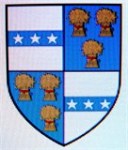
My 20th great grandmother was born in Scotland and married Sir Adam Mure. She gave birth to her daughter, Elizabeth, who became queen of Scotland, at Rowallan Castle.
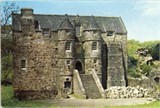
Rowallan Castle
The surname of MURE was derived from the Old French word ‘more’ – a nickname given to one with a swarthy complexion. The name was brought into England in the wake of the Norman Conquest of 1066. There are also places of the name in Cheshire, from which the name may have been derived. Early records of the name mention Johannes filius More, 1185 County Kent. More Kalendrer was documented in County Surrey in 1332, and Thomas Mor was recorded in the year 1340
Elizabeth Mure, daughter of Sir Adam Mure of Rowallan, became Queen of King Robert 11 in 1347. Alicia del More of Yorkshire was listed in the Yorkshire Poll Tax of 1379. Henry More married Alice Simpson in London in the year of 1578. Francis Moore (1656-1715) was an Astrolger and quack physician. He advertised his pills by publishing an almanac, forecasting the weather. George Moore (1852-1933) was the Irish novelist, the author of Esther Water, The Brook of Kerith, Heloise and Abelard. The name was taken to Ireland at an early date, and is one of the twenty most popular names in Ireland. Of the several thousand Moore families, some are of settler descent, their forebears being immigrants from England, who have come to Ireland in considerable numbers over the centuries since the Anglo-Norman invasion.
Lady Joanna Danzielstour, Baroness More of Rowallan (1275 – 1330)
is my 20th great grandmother
Elizabeth Mure (1320 – 1355)
daughter of Lady Joanna Danzielstour, Baroness More of Rowallan
Robert Scotland Stewart (1337 – 1406)
son of Elizabeth Mure
James I Scotland Stewart (1394 – 1434)
son of Robert Scotland Stewart
Joan Stewart (1428 – 1486)
daughter of James I Scotland Stewart
John Gordon (1450 – 1517)
son of Joan Stewart
Robert Lord Gordon (1475 – 1525)
son of John Gordon
Catherine Gordon (1497 – 1537)
daughter of Robert Lord Gordon
Lady Elizabeth Ashton (1524 – 1588)
daughter of Catherine Gordon
Capt Roger Dudley (1535 – 1585)
son of Lady Elizabeth Ashton
Gov Thomas Dudley (1576 – 1653)
son of Capt Roger Dudley
Anne Dudley (1612 – 1672)
daughter of Gov Thomas Dudley
John Bradstreet (1652 – 1718)
son of Anne Dudley
Mercy Bradstreet (1689 – 1725)
daughter of John Bradstreet
Caleb Hazen (1720 – 1777)
son of Mercy Bradstreet
Mercy Hazen (1747 – 1819)
daughter of Caleb Hazen
Martha Mead (1784 – 1860)
daughter of Mercy Hazen
Abner Morse (1808 – 1838)
son of Martha Mead
Daniel Rowland Morse (1838 – 1910)
son of Abner Morse
Jason A Morse (1862 – 1932)
son of Daniel Rowland Morse
Ernest Abner Morse (1890 – 1965)
son of Jason A Morse
Richard Arden Morse (1920 – 2004)
son of Ernest Abner Morse
Pamela Morse
I am the daughter of Richard Arden Morse

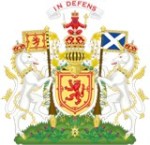
My 16th great-grandmother was deaf, and used sign language. Joan died after 16 October 1486, she was buried at Dalkeith Church, Midlothian. Joan’s effigy on the Morton Monument is said to be the world’s oldest image of a known deaf person
Joan Stewart (1428 – 1486)
is my 16th great grandmother
John Gordon (1450 – 1517)
son of Joan Stewart
Robert Lord Gordon (1475 – 1525)
son of John Gordon
Catherine Gordon (1497 – 1537)
daughter of Robert Lord Gordon
Lady Elizabeth Ashton (1524 – 1588)
daughter of Catherine Gordon
Capt Roger Dudley (1535 – 1585)
son of Lady Elizabeth Ashton
Gov Thomas Dudley (1576 – 1653)
son of Capt Roger Dudley
Anne Dudley (1612 – 1672)
daughter of Gov Thomas Dudley
John Bradstreet (1652 – 1718)
son of Anne Dudley
Mercy Bradstreet (1689 – 1725)
daughter of John Bradstreet
Caleb Hazen (1720 – 1777)
son of Mercy Bradstreet
Mercy Hazen (1747 – 1819)
daughter of Caleb Hazen
Martha Mead (1784 – 1860)
daughter of Mercy Hazen
Abner Morse (1808 – 1838)
son of Martha Mead
Daniel Rowland Morse (1838 – 1910)
son of Abner Morse
Jason A Morse (1862 – 1932)
son of Daniel Rowland Morse
Ernest Abner Morse (1890 – 1965)
son of Jason A Morse
Richard Arden Morse (1920 – 2004)
son of Ernest Abner Morse
Pamela Morse
I am the daughter of Richard Arden Morse
Born in Scotland c.1428, she was the third daughter of James I of Scotland and Joan Beaufort. Joan had two older brothers, including the future King of Scotland, James II, and five sisters. She had “the misfortune to be deaf and dumb”, and was known as muta domina or “the mute lady”. Joan was reported to have used sign language to communicate, even in public (although it was considered at that time to be impolite).
Joan was originally contracted to marry James Douglas, 3rd Earl of Angus on 18 October 1440, but he died (without issue) in 1446 before the marriage could take place. In 1445 she was sent to France and did not return home to Scotland until 1457. She had been promised in marriage to the Dauphin of France but the marriage did not take place, probably due to her inability to articulate. Joan married James Douglas, 4th Baron Dalkeith before 15 May 1459, who at the time of their marriage was raised to the peerage as the first Earl of Morton. They were granted a dispensation on 7 January 1463-4 for being consanguineous in the second and third degrees. Joan and her husband James were both aware of their close relationships but were persuaded to marry by her brother King James II of Scotland and applied for the dispensation to legitimize their marriage. The Countess Joanna died in 1493, predeceasing her husband, James, by several months.

Constance VonHohenstaufen
My 21st great-grandmother was born in Sicily and died in Barcelona. Her grandfather was Holy Roman Emperor. Her husband died so she became a nun, as many of the queen consorts did. I think it was the only safe place to be. She is buried in Barcelona Cathedral, with some of my other ancestors, in a royal urn.

urns Barcelona Cathedral
After her original interment Constance was moved to Urns containing the bodies of multiple nobles. Urns Barcelona Cathedral with the remains of: In the other box: – Alphonse Franc, Count of Barcelona and King of Aragon – Jaume d’Urgell, Count of Urgell and Frederick of Aragon, both sons of en: Alphonse Benign In the other: – Constance of Sicily, wife of en: Peter the Great – Cyprus Maria, wife of en: James the Just – Sybil Fort, fourth wife of en: Peter of Aragon – Eleanor of Aragon (+1416), second wife of en: Peter I of Cyprus, King of Cyprus and Jerusalem. The sculptures are by Frederic Seas
Constance of Sicily Queen consort of Aragon, Sicily, and Valencia; Countess consort of Barcelona Tenure 1276–1285 Spouse Peter III of Aragon
Issue Alfonso III of Aragon
James II of Aragon
Elisabeth, Queen of Portugal
Frederick III of Sicily
Yolanda, Duchess of Calabria
Pedro of Aragon House Hohenstaufen Dynasty (by birth)
House of Aragon (by marriage) Father Manfred of Sicily Mother Beatrice of Savoy Born 1249
Sicily Died 9 April 1302 (aged 52 or 53)
Barcelona, Spain Burial Cathedral of Santa Eulalia, Barcelona
Constance (or Constantia) (1249 – 9 April 1302) was the Queen consort of Peter III of Aragon.
Family
She was the only daughter of Manfred of Sicily and his first wife Beatrice of Savoy. Her paternal grandparents were Frederick II, Holy Roman Emperor and his mistress Bianca Lancia. Her maternal grandparents were Amadeus IV of Savoy and his first wife Anne of Burgundy.
Marriage
On 13 June 1262, Constantia married Prince Peter of Aragon, eldest son of James I of Aragon and his second wife Violant of Hungary.
Manfred was killed in the Battle of Benevento (26 February 1266) while fighting against his rival Charles of Anjou, son of Louis VIII of France and Blanche of Castile. As his eldest daughter she could be considered his heiress but did not pursue her claim at this time.
James I died on 27 July 1276 and Peter succeeded to the throne. Constance became his Queen consort. With the War of the Sicilian Vespers (1282–1302), at first Peter and then their sons claimed the throne of Sicily in her right. The War resulted in the partition of the Kingdom of Sicily to the “Kingdom of Trinacria” (the island of Sicily) under her descendants and the Kingdom of Naples under the descendants of Charles of Anjou.
Peter III died on 2 November 1285 and Constantia remained a widow. She ended her days as a nun in Barcelona.
Children
Constantia and Peter III of Aragon had six children:
Alfonso III of Aragon (1265 – 18 June 1291).
James II of Aragon (10 August 1267 – 2 November 1327).
Elizabeth of Aragon (1271 – 4 July 1336). Married Denis of Portugal.
Frederick III of Sicily (13 December 1272 – 25 June 1337).
Yolanda of Aragon (1273 – August, 1302). Married Robert of Naples.
Infante Pedro of Aragon (1275 – 25 August 1296). Married Guillemette of Béarn, daughter of Gaston VII of Montcada, Viscount of Béarn.
Constantia’s ancestors in three generations Constantia of Sicily Father:
Manfred of Sicily Paternal Grandfather:
Frederick II, Holy Roman Emperor Paternal Great-grandfather:
Henry VI, Holy Roman Emperor Paternal Great-grandmother:
Constance of Sicily Paternal Grandmother:
Bianca Lancia Paternal Great-grandfather:
Unknown Paternal Great-grandmother:
Unknown Mother:
Beatrice of Savoy Maternal Grandfather:
Amadeus IV of Savoy Maternal Great-grandfather:
Thomas I of Savoy Maternal Great-grandmother:
Marguerite of Geneva Maternal Grandmother:
Anne of Burgundy Maternal Great-grandfather:
Hugh III, Duke of Burgundy Maternal Great-grandmother:
Béatrice of Albon
Constance of Sicily, Queen of Aragon
House of Hohenstaufen
Born: circa 1249 Died: 9 April 1302 Royal titles Preceded by
Teresa Gil de Vidaure Queen consort of Aragon
1276–1285 Succeeded by
Isabella of Castile Countess consort of Barcelona, Girona, Osona and Besalú
1276–1285 Queen consort of Valencia
1276–1285 Preceded by
Margaret of Burgundy Queen consort of Sicily
1282–1285 Succeeded by
Isabella of Castile [edit] External links
A listing of descendants of the Hohenstaufen Dynasty
Constance VonHohenstaufen (1249 – 1302)
is my 21st great grandmother
Isabella Pedra Aragon (1271 – 1336)
daughter of Constance VonHohenstaufen
Alphonso Dinisez Portugal (1290 – 1357)
son of Isabella Pedra Aragon
Peter I Portugal Cruel Algarve (1320 – 1367)
son of Alphonso Dinisez Portugal
John I DePinto (1358 – 1433)
son of Peter I Portugal Cruel Algarve
Beatrix DePinto (1403 – 1447)
daughter of John I DePinto
John Fettiplace (1427 – 1464)
son of Beatrix DePinto
Richard Fettiplace (1460 – 1511)
son of John Fettiplace
Anne Fettiplace (1496 – 1567)
daughter of Richard Fettiplace
Mary Purefoy (1533 – 1579)
daughter of Anne Fettiplace
Susanna Thorne (1559 – 1586)
daughter of Mary Purefoy
Gov Thomas Dudley (1576 – 1653)
son of Susanna Thorne
Anne Dudley (1612 – 1672)
daughter of Gov Thomas Dudley
John Bradstreet (1652 – 1718)
son of Anne Dudley
Mercy Bradstreet (1689 – 1725)
daughter of John Bradstreet
Caleb Hazen (1720 – 1777)
son of Mercy Bradstreet
Mercy Hazen (1747 – 1819)
daughter of Caleb Hazen
Martha Mead (1784 – 1860)
daughter of Mercy Hazen
Abner Morse (1808 – 1838)
son of Martha Mead
Daniel Rowland Morse (1838 – 1910)
son of Abner Morse
Jason A Morse (1862 – 1932)
son of Daniel Rowland Morse
Ernest Abner Morse (1890 – 1965)
son of Jason A Morse
Richard Arden Morse (1920 – 2004)
son of Ernest Abner Morse
Pamela Morse
I am the daughter of Richard Arden Morse

Constance of Sicily Queen consort of Aragon
https://twitter.com/jasonjross/status/540250505256005632
While protests on American streets continue a new protest movement is taking place on twitter. White people are discussing white privilege as experienced by them. It captures the other side of the policing story from the point of view of the beneficiaries of a highly prejudiced system. I think most of us know being white is an advantage, but we are not aware of how much of a boon it is to white criminals. Equal protection under the law, if it were to be equal, would extend all the way from safe, secure protected living environments for all to criminal justice that deals out fair and equal sentencing. If you take a look at this trending hashtag you will see some shocking examples of system failure.
I am white to the WASPiest extreme. See my super Brit ancestors to validate my whiteness. I live my life in such a way as to avoid all contact with doctors, lawyers, and police. I have been highly successful with this plan, in part because I am white. I have no crimes to report, pre se, except that I was an undocumented worker in Tecate, Baja California, Mexico, off and on for many years. As a wetback gringa all privilege and courtesy was bestowed on me by the migra on both sides of the border. There was never any problem. I have not crossed the border since 2003 because things just became too complicated after 2001. The era of the #WetbackGringa, wild and free, became a thing of the past.
I think the #CrimingWhileWhite phenomena comes from unconscious prejudice embedded in our culture. I don’t think there is willful or criminal intent by police to treat citizens by different standards. That is why the grand jury is able to rule that there is no probable cause to try the cops who ended lives while on duty. These preferences, or assumptions that white people are not threatening society, are not consciously accepted by the individuals dealing out the uneven justice and protection. Systemic privilege as well as systemic prejudice exist in the collective beliefs of a culture. Just as people have shadow qualities of which they are unaware, so do institutions. Institutional shadow qualities are even harder to nail because there is no institutional Jungian shrink to assist the patient in seeing its whole being. The very nature of shadow prejudice is to hide and stay hidden because nobody wants to believe we are acting from such base instincts. I have been a petroleum princess in Venezuela and a wetback gringa in Mexico. I can tell you from experience the only thing better than being a white woman is being a bilingual blonde white woman. We are automatically above suspicion and nobody ever suspects we understand Spanish, so they say anything in front of us, assuming we will not know what they are saying. Have you ever had an experience of white supremacy or privilege, gentle reader?
 mermaidcamp