mermaidcamp
Keeping current in wellness, in and out of the water
You can scroll the shelf using ← and → keys
You can scroll the shelf using ← and → keys

Battle of Castellon
My 17th great grandfather was a general in the 100 Years’ War. He died in battle.
SIR J0HN13 TALBOT, K. G., first Earl of Shrewsbury born about 1385, married in 1406, Maud Nevill, eldest daugh- ter and co-heir of Thomas Nevill, Lord Furnivall, by whom heacquired vast estates in Hallamshire (including the Castle of Sheffield), in consequence of which he was summoned to Parlia- ment from 1409 to 1420 as John Talbot, Lord Furnival. On the death in childhood of his niece, Ankaret Talbot, in 1421, he succeeded also to the ancient Talbot estates in Linton and to the Baronies of Talbot and Strange of Blackmere. From 1412 to 1420 he served as Lord Lieutenant of Ireland; but in 1422 he entered into military pursuits and became one of the most renowned warriors of the martial age in which he lived. He gloriously sustained the cause of King Henry VL throughout his French realm in battle after battle, until the very name of Talbot became a terror to his foes. Once his forces were defeated by the army of the Maid of Orleans at the Battle of Patay in 1429, and he himself was taken prisoner; but four years later he was exchanged, and soon again in com- mand of an English army. For his brilliant achievements he was created in 1442 Earl of Shrewsbury and in 1446 Earl of Waterford. Later he was commander of the Castle of Falaise in Normandy (the birthplace of William the Conqueror), to which he added a massive keep, still known as the Talbot Tower. In 1453 he was again in command of an English army in France and was killed by a cannon shot at the Battle of Chastillon, 17 July 1453. He had been victorious in forty battles, and his death proved fatal to English dominion on the Continent. From this great Earl, the present Earl of Shrews- bury, the Premier Earl of England, is directly descended, (See Burke’s “Peerage” for 1904, pp. 1411-12; and G. E. Cock- ayne’s “Complete Peerage”, vol. 7, pp. 359-61, and 136-7.)
General John Talbot (1384 – 1453)
The Earl of Shrewsbury
The Death of Shrewsbury at the Battle of Castillon. Born1384 or 1387 Died July 17, 1453 Castillon-la-Battaile, Gascony Title Earl of Shrewsbury The Earl of Shrewsbury Earl ShrewsburyNationalityKingdom of EnglandWars and battlesHundred Years’ WarSiege of Orleans Battle of PatayBattle of Castillon †PredecessorNoneSuccessor John Talbot, 2nd Earl of ShrewsburySpouse(s)Maud Nevill Margaret Beauchamp Issue Parents Richard, 4th Baron Talbot and Ankaret, heiress of Richard John Talbot, 1st Earl of Shrewsbury, 1st Earl of Waterford, 10th Baron Strange of Blackmere, 7th Baron Talbot, 6th Baron Furnivall (1384/1387 – 17 July 1453) , known as “Old Talbot” was an important English military commander during the Hundred Years’ War, as well as the only Lancastrian Constable of France.
[edit] FamilyHe was second son of Richard, 4th Baron Talbot, by Ankaret, heiress of Richard, Baron Lestrange of Blackmere.
[edit] First marriageTalbot was married before 12 March 1407 to Maud Nevill, daughter and heiress of Thomas Nevill, 5th Baron Furnivall, the son of John Neville, 3rd Baron Neville de Raby. He was summoned to Parliament in her right from 1409.
The couple had four children:
In 1421 by the death of his niece he acquired the Baronies of Talbot and Strange. His first wife died on 31 May 1422
[edit] Second marriageOn 6 September 1425, he married Lady Margaret Beauchamp, daughter of Richard de Beauchamp, 13th Earl of Warwick and Elizabeth de Berkeley. They had six children:
Early career From 1404 to 1413 he served with his elder brother Gilbert in the Welsh war or the rebellion of Owain Glyndŵr. Then for five years from February 1414 he was Lord Lieutenant of Ireland, where he held the honour of Wexford. He did some fighting, and had a sharp quarrel with the Earl of Ormonde. Complaints were made against him both for harsh government in Ireland and for violence in Herefordshire. From 1420 to 1424 he served inFrance. In 1425, he was lieutenant again for a short time in Ireland.
Service in France So far his career was that of a turbulent Marcher Lord, employed in posts where a rough hand was useful. In 1427 he went again to France, where he fought with distinction in Maine and at the Siege of Orléans. He fought at the Battle of Patay where he was captured and held prisoner for four years.
He was released in exchange for the French leader Jean Poton de Xaintrailles. Talbot was a daring and aggressive soldier, perhaps the most audacious Captain of the Age. He and his forces acted as a kind of fire brigade ever ready to retake a town and to meet a French advance. His trademark was rapid aggressive attacks. In January 1436, he led a small force including Kyriell and routed La Hire and Xaintrailles at Ry near Rouen. The following year at Crotoy, after a daring passage of the Somme, he put a numerous Burgundian force to flight. In December 1439, following a surprise flank attack on their camp, he dispersed the 6000 strong army of the Constable Richemont, and the following year he retookHarfleur. In 1441, he pursued the French army four times over the Seine and Oise rivers in an unavailing attempt to bring it to battle.
[edit] The English AchillesHe was appointed in 1445 by Henry VI (as king of France) as Constable of France. Taken hostage at Rouen in 1449 he promised never to wear armour against the French King again, and he was true to his word. He was defeated and killed in 1453 at the Battle of Castillonnear Bordeaux, which effectively ended English rule in the duchy of Gascony, a principal cause of the Hundred Years’ War. His heart was buried in the doorway of St Alkmund’s Church, Whitchurch, Shropshire.[1]
The victorious French generals raised a monument to Talbot on the field called Notre Dame de Talbot. And the French Chroniclers paid him handsome tribute:
“Such was the end of this famous and renowned English leader who for so long had been one of the most formidable thorns in the side of the French, who regarded him with terror and dismay” – Matthew d’Escourcy
Although Talbot is generally remembered as a great soldier, some have raised doubts as to his generalship. In particular, charges of rashness have been raised against him. Speed and aggression were key elements in granting success in medieval war, and Talbot’s numerical inferiority necessitated surprise. Furthermore, he was often in the position of trying to force battle on unwilling opponents. At his defeat at Patay in 1429 he was advised not to fight there by Sir John Fastolf, who was subsequently blamed for the debacle, but the French, inspired by Joan of Arc, showed unprecedented fighting spirit – usually they approached an English position with great circumspection. The charge of rashness is perhaps more justifiable at Castillon where Talbot, misled by false reports of a French retreat, attacked their entrenched camp frontally – facing wheel to wheel artillery and a 6 to 1 inferiority in numbers.
He is portrayed heroically in William Shakespeare‘s Henry VI, Part I: “Valiant Lord Talbot, Earl of Shrewsbury, Created, for his rare success in arms”.
[edit] Cultural influenceJohn Talbot is shown as a featured character in Koei‘s video game known as ‘Bladestorm: The Hundred Years’ War‘, appearing as the left-arm of Edward, the Black Prince, in which he assists the former and the respective flag of England throughout his many portrayals.
Talbot appears as one of the primary antagonists in the PSP game Jeanne d’Arc.
See also
References
Political officesNew officeLord High Steward of Ireland1446–1453Succeeded by The 2nd Earl of ShrewsburyPeerage of EnglandNew creationEarl of Shrewsbury1442–1453Succeeded by John TalbotPreceded byAnkare t TalbotBaron Strange of Blackmere1421–1453Baron Talbot1421–1453Baron Furnivall1421–1453Peerage of IrelandNew creationEarl of Waterford1446–1453Succeeded by John Talbot

If war is declared responsible parties will do the utmost to declare a truce. Since Viet Nam the United Stares has felt the need to wage war without any declaration. Since I was a teen I have worked to influence my peers and the government to stop violent political action, no matter what it is called. I have traveled and watched the reputation of Americans enter a downward spiral that can make it uncomfortable for us to be in other countries. Most people from outside our borders do understand that the people here do not have the same democratic power that we did it he distant past. They may not know the details, but they have heard about the corporate lobbyist and commercial contributions to our lawmakers that have turned democracy into a joke.
I vote and pay taxes, lots of taxes. I have marched on Washington for peace, where I paid for the tear gas that was hurled at me. My position has not changed:
War is not healthy for children and other living things. I don’t know how healthy we might be if we had not engaged in all these undeclared wars, but I feel pretty sure we would be wealthier. We are not the most powerful country in the world if we resort to force and violence without the dignity to declare the reasons, and the goals of the use of armed violence. We are viewed as mortally bankrupt by many around the world. How can we manage to control our resources for the benefit of our citizens? How can we stop the military from invading or bombing other countries without a declared war? They have established a precident, but this is a very good time to take a U turn. If we sacrifice young lives and national security, we need to announce to the world and to the ones who are about to be killed in the conflict what our agenda is. I do not believe our agenda is coherent; and declaration of war would at least reveal what the terms are.

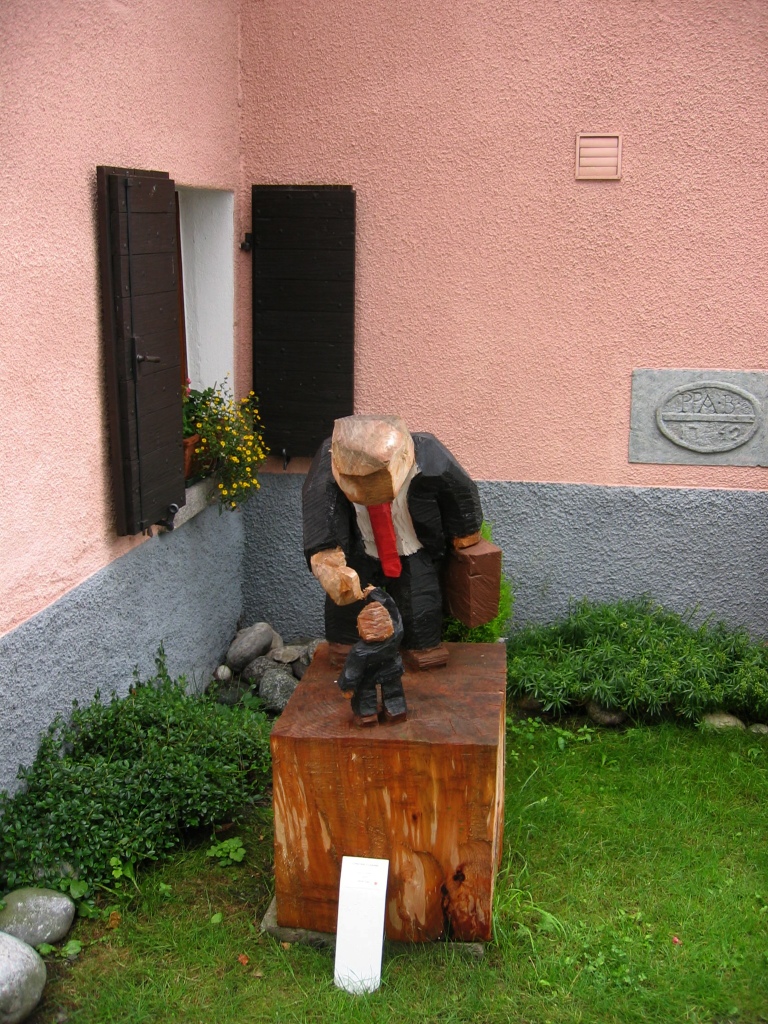
Big man Little man
I grew up in heavily industrialized Pittsburgh in the 1950s. Coal Mines, steel mills, and other factories were staffed by union labor. The cruel and unusual history of Andrew Carnegie vs. the labor unions was close to the surface and burned into the memory of the workers. They had decent wages and retirement benefits won through very tough negotiation, but they would not guess how the tables would turn on both the workers and the owners of steel mills. Today the city has a strong economy based in part on the petroleum industry boom, but the mills went under, stripping the retirement benefits from the workers as they went into bankruptcy. The old way of creating and defining value no longer exists.
Today the new magazine from Chris Brogan, my first and favorite SoMe teacher has launched. The free publication is called Owner, and I subscribed instantly since Chris has never let me down in the past. His good friend and fellow entrepreneur, S Anthony Innarino, has written an excellent article for the first issue which takes a good look at value and expectations. Welcome to the Disruptive Age tells it like it is and invites the reader to take ownership of his or her own time and energy. We have entered a time in which it is not only extremely important to define and create value, but also to find ways to harvest more value for ourselves. This will involve knowing both what is most valuable to your customers and what you value most. Time is not money; It never has been, but the contracts of the past created a structure in which labor, time and money seemed hard to disentangle. In today’s economy disruption is the key to value.
business

business pigs
Jefferson College
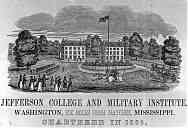
Felix Hughes was born in Northern Ireland and died in Mississippi. He was a founder of Jefferson College in Washington, Mississippi, and became the first secretary of the institution. He served in the upper house of the first territorial legislature in Mississippi. His father-in-law was a Presbyterian minister, bad ass Revolutionary War hero. They did mix politics and Presbyterianism, for sure.
Felix Hughes (1751 – 1824)
is my 4th great grandfather
Philip Oscar Hughes (1798 – 1845)
son of Felix Hughes
Sarah E Hughes (1829 – 1911)
daughter of Philip Oscar Hughes
Lucinda Jane Armer (1847 – 1939)
daughter of Sarah E Hughes
George Harvey Taylor (1884 – 1941)
son of Lucinda Jane Armer
Ruby Lee Taylor (1922 – 2008)
daughter of George Harvey Taylor
Pamela Morse
I am the daughter of Ruby Lee Taylor
He also was involved in another local school:
Jefferson County, Mississippi
FRANKLIN ACADEMY. “This institution was founded by the Franklin society, named in honor of Doctor Benjamin Franklin, which had its first meeting at Greenville, after the adoption of a constitution, Jan. 4, 1806. Cato West was president, Thomas Fitzpatrick, vice-president; Daniel Beasley, secretary; Thomas M. Green, treasurer. Other original members were Thomas Hinds, Henry D. Downs, Robert Cox, John Shaw, John Hopkins, James S. Rollins, Charles B. Howell, David Snodgrass, Thomas and Joseph Calvit, William Thomas.”
“At a meeting June 14, Henry Green and Edward Turner were proposed as new members. Mr. Hinds, chairman of the committee, reported that Edward Turner offered a house and lot in Greenville as a house of instruction for the Franklin Academy, at a rent of $100 a year if paid in advance, and the Rev. David Snodgrass offered to take charge of the academy for six months at $50 a month, “finding myself.” At the next meeting, in August, Armstrong Ellis, Robert McCray, William Snodgrass and Feliz Hughes were made members. The Turner proposition was accepted, Felix Hughes was chosen principal of the academy, and tuition was fixed as follows: reading, writing and common arithmetic, $20 a year; higher branches, $30.”
From: Mississippi Vol. 1 A-K by Dunbar Rowland, 1907, page 742-743.
~~~~~~~~~~~~~~~~~~~~~~~~~~~~~~~~~~~~~~~~~~~~~~~~~~~~~~~~~~~~~~~
From: ACTS OF THE LEGISLATURE The Historical Records Survey, Works Progress Administration, Abstrated for Genealogical Purposes page 19 by Ella McCaleb Young.
“Academis
(52) Founding members of the “Franklin Society”:
Cato West, Thomas M. Green, Thomas Fitzpatrick, John Shaw, Daniel Beasley, Charles Howell, William Snodgrass, David Snodgrass, Edward Turner, John Hopkins, Henry D. Downs, James Rollins, Thomas Calvit, Robert Cox, Henry Green, Felix Hughes, Armstrong Ellis, Jacob Stampley, John Brooks, Thomas Hinds, Wm. Thomas & Robert McCray, January 8, 1807.”
The grandmothers
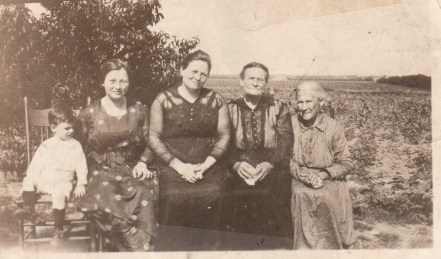
My 3rd great-grandmother was born in Somerset, PA in 1837. She became the second wife of Thomas Peterson, a widower, in Ohio in 1855. Her parents had moved from Pennsylvania to Ohio before 1850. I know her father, Amos, was a teacher, but have no records of the schools, or the times. After the Civil War she moved with her husband and children to Kansas to homestead. She survived Thomas by many years, and in 1920 was living at the home of her daughter, Harriet. She is the short one on the right side of this photo. The age of my Uncle Ernest on the left side tells us this was taken in Ladore, Kansas about 1918.
Emiline P Nicholls (1837 – )
is my 3rd great grandmother
Harriet Peterson (1856 – 1933)
daughter of Emiline P Nicholls
Sarah Helena Byrne (1878 – 1962)
daughter of Harriet Peterson
Olga Fern Scott (1897 – 1968)
daughter of Sarah Helena Byrne
Richard Arden Morse (1920 – 2004)
son of Olga Fern Scott
Pamela Morse
I am the daughter of Richard Arden Morse
Since both Emiline and her mother were born in Somerset I have joined the Somerset Historical Society and have engaged the services of the professional genealogists on the staff. Next week I will have the chance to visit not only the place, but also have the fun of doing some fully professional investigation. I expect to learn a lot about the history of the area and what was happening when my family lived there. If I am lucky I will also find some information on Emiline’s husband, Thomas. Since I have been doing this research for so long I am excited to learn how the pros approach it.
What kind of power does an exorcist have? Technically Catholic priests are in the business of exorcism, but in day to day life some people play the role of the exorcist to friends or family. I personally do not have much experience with this archetype, but we all recently witnessed a bookkeeper in a school in Georgia display extraordinary ability to drain the evil out of a situation. Antoinette Tuff found the strength to talk down a deranged gunman with 500 rounds of ammunition. Later in an interview she told the 911 dispatcher with whom she had been on the phone that she had been terrified. She called the courage to act the grace of God. I imagine that priest or not, it is always the grace of God that provides the purging of evil. Do you have any experience with exorcist archetypes?

George Harvey Taylor
I have found a true treasure today as I prepared to write this post about my grandfather, George Harvey Taylor. Somebody has placed his photo on Ancestry.com. I instantly knew it was he because he strongly resembles his children, one of my uncles in particular. This is the first time I have seen his image. He committed suicide ten years before I was born, and for at least the first ten years of my life he was never mentioned. I am not sure how old I was when I learned from a cousin that he had killed himself at home at night, his youngest son discovering the body in the morning. It shocked me out of my wits. It still does. The tightly held secret probably had some initial seed of the suicide of one of my cousins in about 1970.
George Harvey Taylor (1884 – 1941)
is my maternal grandfather
Ruby Lee Taylor (1922 – 2008)
daughter of George Harvey Taylor
Pamela Morse
I am the daughter of Ruby Lee Taylor
George Harvey was born in Texas in 1884 to parents who had moved there from Selma, Taledega to be precise, Alabama, after the Civil War. He met his wife, Hattie May Long, who had been adopted in Mississippi during or shortly after the war. Her adopted parents, the Longs, brought Hattie May with them to Texas, but seem to have left her brother, Fidel, back in Mississippi. After George and Hattie married they moved to Humble, TX, where George was a meter reader for Texaco on a very large oil lease. He rode a black horse around the lease and read various meters to document production. They had ten living children;Hattie lost a couple of pregnancies; then Hattie May died in childbirth, along with the baby….at home, in 1932. George Harvey was left to raise ten kids, the youngest being only two years of age.

grave in Waller TX
When my mother was near death and demented I asked about her father’s suicide and how she felt. She was not in the house that morning, but had gone to Houston to visit her sister. She said she was very angry at him; the reason given was that the lady next door turned down his proposal of marriage. He had carried on as a single father for 9 years and was severely depressed, I suppose. Suicide often leaves the family ashamed like my mother’s religious family. The taboo subject has strange and subtle effects on those who are left on earth. I know that it shaped my mother’s view of life.
Please join me in raising awareness and hopefully some funding for IAMalive.org. during suicide prevention week, Sept8-14, 2013. This 24 hour hot line is created to help people like my grandpa make it through an irrational moment of fear and loathing. This issue belongs to all of us. You can find the easy donation bottom here, along with a list of thank you gifts. My grandpa George and I thank you as well.

Seal of Virginia
Sara Rebecca Lewis, my 7th great grandmother, was born in colonial Virginia. She married James Jones in 1665.
Sarah Rebecca Lewis (1643 – 1725)
When her husband died she was given 4 human beings and the right to live on the plantation for life. Reading her husband’s will I notice how all the slaves, even the unborn ones, are willed as chattel to the members of the Jones family. The document starts with Almighty God and then moves directly into slavery. This is how Virginia was colonized:
Will of James Jones (I) (Chappell, Dickie & Other Kindred Families, p.63-4)
In the name of God. Amen. I James Jones (I) being weake and sick but of sound and perfect mind and memory, praise be therefore given to God, doe make and ordain this my present Last Will and Testament in the manner and form following, that is to say. First and principally I commend my soul into the hands of Almighty God, hoping through the merritts, Death and passion of my savior Jesus Christ to have full and free pardon of all my sins and to inherit everlasting life; and my body I commit to the earth to be decently buried at the discretion of my Executor, hereinafter named, and as touching the Disposition of all such temporal estate as it hath pleased Almighty God to bestow on me I give and dispose thereof as follows:
First. I will that all my debts and funeral expenses shall be paid and discharged.
Item. I will that my loving wife have the Labour of four negroes during her natural life, they are named Will, Robin, Maria and Betty. Provided they are not removed off the plantation I now live upon, if they are, then Immediately to return to my executor, which plantation I will my wife shall live Upon during her life.
Item. I give my wifes two sons two Negro children, one named James, the other unborn, the first child that either Betty or Maria shall bring to be the other, which two negro children to be Disposed of to my wifes two sons as she shall think fit, the unborn and the born child James to be and remain with their mothers till they come to the age of two years and a half year. My will is likewise that my wife have during her life what household stuff my executor shall see fit and that she have a reasonable yearly maintenance out of my stock.
Item. I give to my daughter Mary Dardin my negro man Jo –during her life.
Item. I give to my daughter Elizabeth a negro named Hanna to be at her disposal to do as she sees fit.
Item. I give to my daughter Hanna one negro named Jack to be at her disposal at her death or before as she sees fit.
Item. I give to my daughter Rebecca two hundred acres of land, lying in Surrey county, beginning from the Swamp up by the Spring, South, to the outline, that to be the headline, to her and her heirs forever.
Item. I give to my Granddaughter Eliza Glover, one hundred acres of land on the south side of Pond Runn, to be her and her heirs forever.
Item. I give to my grandson James Jones, this my plantation I live upon after my wifes Decease and all my land in Prince George county, after his father and mothers Decease, to him and his heirs forever.
Item. I give to my Grandson Thomas Chappell (Thomas Chappell Sr. (III)) one hundred acres of land lying in Surrey county from the Swamp South, joining upon William Cocke above the outline, to him and his heirs forever.
Item. I give to my Granddaughter Jane Cocke, daughter of John Cocke, one negro named Amy to her and her heirs forever as also one feather bed and bolster, one rug and one blanket, and if the ticke be bad Lett a new ticke be bought, as also two young cows, one young mair, One Iron Pot, two Pewter Dishes and one Doz.of Spoons.
All the rest and Residue of my personal Estate, goods and chattel whatsoever, I do give and bequeath to my Loving son James Jones, full and sole Executor of this my last Will and testament and I do hereby revoke, disannul and make void all former wills and Testaments by me heretofore made.
In Witness whereof I, the said James Jones (I) to this my last will and testament do set my hand and seal this the 6th day of April A.D.1719.
James Jones Seal (Sealed with wafer)
Signed and sealed in the presence of: Gilbert Hay Edward Prince Thomas Temple
At a Court held at Merchant’s Hope for Prince George County on the second Tuesday, in May, being the twelfth day of said month, A.D.1719, the above written last will of James Jones, deceased, was exhibited in Court by James Jones, his Executor, who made oath thereto and it being proven by the oaths of the witnesses thereto a certificate was granted to the said James Jones for obtaining a Probate in due form. Teste: Wm. Hamlin, Clerk
Wife’s letter to the Court:
Worthy Sirs: Having seen and heard read the Last Will of my late husband, James Jones, deceased, I therefore think fit to acquaint your W.p.T. that I think myself justly dealt by therein and to prevent further disputes I desire the will probated, I being willing to rely on the Legacy left me in said will. Given under my hand and seale this 20th April 1719.
Her Sarah X Jones Mark Seal (Sealed with red wafer)
Teste: E. Goodrich Mary Loyd
To the Worshipfull: His Majesty’s Justice of the Peace for Prince George County
In archetypal roles we have potential to play out a positive aspect of a well-known character, such as the king, or play the shadow aspect. The king is such an essential male character in myth and culture that most men see themselves in some way to be a king. King of the home castle may be the only one, but there is a royal male at some point that will be portrayed by a man. The inner king and queen relationship, the balance between understanding and wisdom vs discipline and justice is at the heart of any society. When power is in the hands of weak or corrupt leadership, even within one’s own personality, balance must be restored for the good of society. When we see the strife in Syria and Egypt today it looks like the end of civilization.
The war and economic destruction still rampant in the world is the collective consciousness struggling with this ruling authority. I wonder, when I watch my neighbors as well as rioting middle easterners, if the earth will perish in flames sometime soon. Radioactivity is spewing out of Japan and sewage rolling into rivers all over the globe. When post apocalyptic themes are portrayed in fiction they seem too close to reality today. I love the movie Tank Girl which is a parody about authority, power, and the use of resources. Tank Girl is part of a severely abused underclass, dominated by the all-powerful utility company. They control all resources, except the resourcefulness of Tank Girl herself.
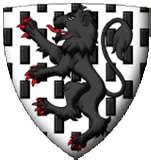
Coat of Arms Inchmartin
My 20th great-grandmother, Isabel Inchmartin, was an heiress in Perthshire, Scotland. She inherited lands that were known to be rich in salmon fishing. She was born in Perth and died in Fife. Times were tough in those days, so her survival for 59 years was impressive. She was able to pass her lands down through her daughters, which is also impressive, considering the times.
Isabel Inchmartin (1340 – 1399)
is my 20th great grandmother
Margaret Erskine (1357 – 1419)
daughter of Isabel Inchmartin
Isabel Glen (1380 – 1421)
daughter of Margaret Erskine
Isabel Ogilvie (1406 – 1484)
daughter of Isabel Glen
Elizabeth Kennedy (1434 – 1475)
daughter of Isabel Ogilvie
Isabella Vaus (1451 – 1510)
daughter of Elizabeth Kennedy
Marion Accarson (1478 – 1538)
daughter of Isabella Vaus
CATHERINE GORDON (1497 – 1537)
daughter of Marion Accarson
Lady Elizabeth Ashton (1524 – 1588)
daughter of CATHERINE GORDON
Capt Roger Dudley (1535 – 1585)
son of Lady Elizabeth Ashton
Gov Thomas Dudley (1576 – 1653)
son of Capt Roger Dudley
Anne Dudley (1612 – 1672)
daughter of Gov Thomas Dudley
John Bradstreet (1652 – 1718)
son of Anne Dudley
Mercy Bradstreet (1689 – 1725)
daughter of John Bradstreet
Caleb Hazen (1720 – 1777)
son of Mercy Bradstreet
Mercy Hazen (1747 – 1819)
daughter of Caleb Hazen
Martha Mead (1784 – 1860)
daughter of Mercy Hazen
Abner Morse (1808 – 1838)
son of Martha Mead
Daniel Rowland Morse (1838 – 1910)
son of Abner Morse
Jason A Morse (1862 – 1932)
son of Daniel Rowland Morse
Ernest Abner Morse (1890 – 1965)
son of Jason A Morse
Richard Arden Morse (1920 – 2004)
son of Ernest Abner Morse
Pamela Morse
I am the daughter of Richard Arden Morse
 mermaidcamp