mermaidcamp
Keeping current in wellness, in and out of the water
You can scroll the shelf using ← and → keys
You can scroll the shelf using ← and → keys

farm
While the millstone grinds the grain
The farmer is planting another field
Taking gamble that he will gain
When the harvest reveals his yield
His land is full of rocks and clay
He plowed by hand the garden soil
His seeds are saved for the day
The moon phase will bless his toil
He follows old traditions learned from the past
Then he hopes for survival, prays his work will last

Join poets all month for #NaPoWriMo. Read, write, recite, and discover new poems by following the hashtags, and checking the official site, here. Many contests and special events are planned during this special month.
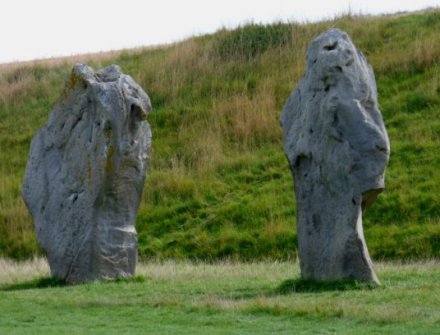
enigma
Druid stoners on equinox standing out in a field
Worshiped the earth and stars in mystic trances
A circle of magical intensity designed to conceal
The secrets of the forefathers who designed the dances
Bringing forth life, then harvesting it defined the seasons
Survival depended on the inherited wisdom and reason
The ancients passed down in ceremony, song, and fable
These figures stand to represent all of our history we know
Our ancestors who haunt this hill held ceremonies long ago


This enigmatic photo comes from Sue Vincent’s Echo, where each Thursday she holds a #writephoto party for anyone who wants to interpret the picture of the week. It is also #NaPoWriMo all month in April. You may find some mighty fine poets at the National Poetry Writing Month site. Enjoy following these hashtags all month and see where it leads you.
I have a special treat for my gentle readers today. My good digital friend Marjorie Clayman is my guest today. We probably met on twitter, being a little silly, but over the years I have come to really appreciate Margie’s attitude. She spends a great deal of her time crafting hand made items of the useable sort, which she donates to those who need it the most at the time. She is not only a powerhouse of crafty artful blankets and hats, but also is pretty crafty as a wordsmith. She works in public relations, so words are her stock in trade. Margie adds her own personal commitment to a better world to all her communications. She brings us a story about war and the way it leaves lasting impressions. Without further ado, I bring you Ms Clayman:

Marjorie Clayman, guest author
The other day, in honor of the 100th anniversary of the US entering World War I, I attended a commemorative event filled with speakers and musicians. One of the singers sang a song called “Pack Up Your Troubles in Your Old Kit Bag and Smile, Smile, Smile.” The singer, in a laid back tone of voice common to folk singers, talked about how the song had been written by two brothers. One of the brothers, Felix Powell, performed the song for soldiers all along the WWI front. The song became popular again during the Second World War and resurfaced once more during the Vietnam War.
You are thinking that this is a feel-good story at this point. You might think that even more so when you learn, as I did via this article (http://www.independent.co.uk/arts-entertainment/music/features/chapter-and-verse-the-surprising-story-of-the-song-pack-up-your-troubles-in-your-old-kit-bag-2124620.html) that the brothers submitted the song to a contest as a joke. They thought it was a dud. When they won first price they thought it was hilarious, and Felix decided to take that opportunity to win some fame. What are the chances?
Sadly, however, the story did not end happily for Felix Powell. This is not a story of rags to riches, per se. Rather, this is a story about the humbling and very real impact of gruesome warfare.
When Powell first got to the front lines, he felt really good about himself, as anyone would. His song was hopeful. Cheerful.
“Pack up your troubles in your old kit bag, And smile, smile, smile, While you’ve a lucifer to light your fag, Smile, boys, that’s the style. What’s the use of worrying? It never was worthwhile, so Pack up your troubles in your old kit bag, And smile, smile, smile.”
Powell was giving these boys a happy message while they tried to survive, far from home.
As the war dragged on, however, Powell began to see just how tragic trench warfare was. He visited battlefield after battlefield, and it dawned on him that these boys were dying. Thousands of them were dying. They were undertaking the ultimate sacrifice, in fact, and he was strumming away at them asking them to smile smile smile. According to the singer at my concert, as well as the article posted above, Powell began to see the contradiction between his light-hearted message and the world he and these boys were actually living in. He became filled with regret, and he never really was the same.
Powell pursued some other writing opportunities after WWI, but he had a rough time of it. When the Second World War broke out and the song gained popularity with a new generation of fighters, you can imagine him grimacing. Now his song was going to be used to make light of more young men marching towards death.
In 1942, Powell, who had entered his town’s Home Guard, dressed himself in his uniform, took his assigned rifle, and aimed at his heart. It is a shocking mark of how much his experiences had impacted him, and perhaps how much regret had come to overshadow any level of success he had ever enjoyed.
I found this story to be deeply moving. Many entertainers, of course, have gone overseas to try to cheer up the troops. You never really think how that impacts those celebrities, though. How can you perform with joy and verve and cheer when you know that you are trying to raise peoples’ spirits who could be killed on the field? It puts war itself, as well as entertainment tied to war, into a very real, and oft overlooked, perspective.
Wall
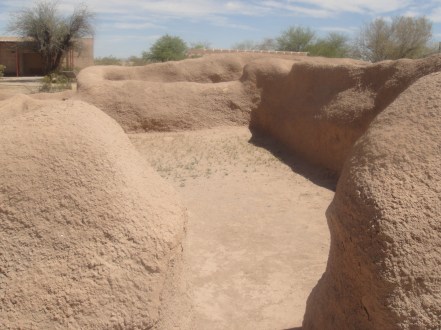
My dystopian dream is all coming true
They are building a wall around the suburbs
And making them pay for it

Join the world for National as well as Global Poetry Writing month by following the above hashtags, reading, writing, reciting, or listening to poetry in April. This celebration of all poets, accomplished or not happens each year and goes on all month. You still have time to bust a rhyme. Check it out here.

stone arch
When we find the arch of stones standing alone
In the ruins of a once grand castle of a once grand duke
We can feel the hours spent preening to make an entrance
Through the elegant opening that framed the costume
The servants scurried to please His Lordship and his guests
With musical serenades, crumpets, and a silver tea service
No expense nor effort was spared to create the illusion
Of grandeur and pomp, great excess and special privilege
Nothing remains of the era they thought would never end
This pile of stones can’t tell us now if history is foe or friend
#writephoto
Please join a talented group of writers who are inspired each week by Sue Vincent’s photo prompts. Visit Sue’s Daily Echo to read, write, or comment on the posts. It is fun to read all the variation on the same photo inspiration.

#NaPoWriMo2017
April is National Poetry Writing Month. Please bust a rhyme yourself, or enjoy reading some poetry at the #NaPoWriMo site here. There are poets contributing for all over the globe, so this year this had been acknowledged by using the #GloPoWriMo hashtag. Both can be followed on twitter or Facebook for more poetic material.

#GloPoWriMo


Power to the heavily armed, confusion for the rest
Our resources have been confiscated to feed the hungry pest
Who dominates our life and times with injustice and pain
It is hard to say how many will survive this corrupt reign
Sitting it out is impossible because it runs right up to your door
Knocking down all that is holy in the name of an eternal war
#NaPoWriMo2017
Please ride the poetry train all month in April to find new poets, or find the poet in you. All are welcome all month.
#GloPoWriMo
#NaPoWriMo2017
Dear Gentle Readers,
In April I write 30 poems in 30 days to honor my famous ancestor who was an exceptional poet and a special kind of historian. Today I join folks from around the world to participate in this year’s #NaPoWriMo. Since it is a global initiative it is also known as #GloPoWriMo to make it clear that everyone is invited. You can follow both these hashtags on twitter or Facebook for more information. I invite you to partake as a fan or a poet. You my be surprised at the poet you find inside of yourself. There are many wonderful styles of writing to discover in this treasure trove of artistic expression. Don’t be shy. Write a poem.
#GloPoWriMo
Please sit down, relax, take a load off your feet
While I tell you the story of Ann Dudley Bradstreet
She published her poetry in the Puritan times
Her English is old school, her well crafted rhymes
Were concerned with religion and current events
She made poignant requests to her progeny to stay
On the right side of God’s will, never sit on the fence
She begged us to be ethical, honest, virtuous and bold
Her legacy is eloquent, the details of our family were told
In real time as America took unexpected turns toward liberty
Finding her voice as a woman was a rare privilege, an anomaly
As her descendant I call on her esteemed presence in April every year
I ask for her assistance to drop a few decent beats, to be pertinent and clear
And so, dear ancestor, now scattered into stardust and moonbeams
Visit me with your discipline, your wisdom, and all of your ancient dreams
To follow in your footsteps I am going to require a great deal of your love
Look down on your daughter here on earth, send inspiration from above
in bloom
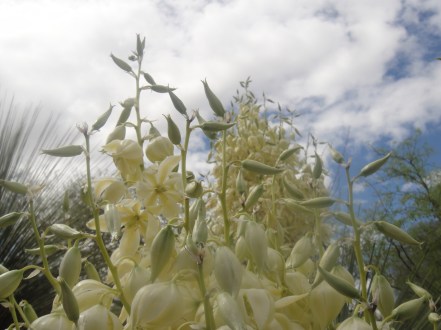
looking up
If we were having coffee this month I would ask my coffee friends around the table to ride the poetry train if you are able. I know it is corny and may turn perverse. I assure you than in May I will return to verse. The coffee share and the poetry train go well as a duo, in my opinion. Help yourself to coffee, tea, and poetry. For more digital beverages and prose, please visit Nerd in the Brain. The weekly party is always interesting and stimulating.

#WeekendCoffeeShare

horseshoes

horseshoes
If we were having coffee this weekend I would invite you to relax and take in the jasmine scent, still going strong in my front yard. I have ordered more tea (not that I was in need), so the selection has grown to epic proportion. The lazy Susan pantry literally groans under the weight of all the tea. I am digging a new blend called Hugs and Kisses, with a rose/caramel aftertaste that drives me wild. I also ordered a black passion fruit flavored tea that tastes delicious iced. We drink iced tea all year, but in summer I brew in the sun daily and we consume mass quantities. If you like, I can brew you a hot cup of roiboos jasmine to go with the flowers in the yard. It is one of my favorites, and there is a little chill this morning that will make a hot beverage feel just right. Please, make yourself at home while I fetch your drink of choice, and tell me how your life is. I want to hear what you have been doing, and how your writing is proceeding.
I have been trying to finish a non-fiction story that has unfolded over many years by creating a happy ending in real life. This is the nature of non-fiction, being just the truth. It limits one to facts. As I struggle to make my real life ending happen I am writing some fiction and poetry as a relief. I am a neophyte at both genres, and, if I do say so myself, pretty shitty at both. I like to practice to improve because I do find it liberating to just make up stories rather than try to influence hard reality in favor of a heroic outcome. It is so much easier to imagine an alternative vision than it is to bring one into being on the earth.
I spend a lot of time investigating my genealogy, discovering facts about my family tree. I have attempted some short historical fiction based on some factual data I know about my ancestors. I think this is a direction in which I could take my writing that would not only make use of the years of research I have done, but also allow me to create stories based on facts, but not limited strictly to them. All that has happened already, so there will be no changing the historical facts. Embellishing the truth, imagining the dialog and the settings, then bringing them to life seems like something I could really enjoy. I have a very famous poet ancestor, in whose honor I write 30 poems in 30 days in April as part of #NaPoWriMo. It is a challenge, but I think I owe it to her to give it a whirl for one month a year. She provided her DNA and poetry about her life and children (of which I am one). She was religious and wrote in olde English, so there is that. There are a couple other poets in the tree who lived in Tudor England. One was beheaded by Henry VIII. I tried to write a comedic ditty about his death a couple of years ago..it was one of my worst poems ever…but I published it. When I become an accomplished poet I will edit and spend much more time finishing each piece. Reaching a conclusion for a poem should be creative journey that has a universal ring. Someday I aspire to do that. My poetic muse has a short attention span that needs to be expanded. The fiction one is in the same boat. They are lazy, so they like to jump to conclusions rather than work it.
This year I am gearing up by writing some warm up poems and collecting some interesting images to use for illustration and inspiration. All I do is publish a poem each day. I only hope to improve over time and stir my genetic muse to awaken and say something profound and poetic. I keep the bar very low for quality, but do find lots of great ideas by reading the work of the other participants. I have finally finished my tax preparation and have returned to some written correspondence with a my new pen pals from February. I loaded up on stamps and plan to hand write and mail some of my shitty poems to my pen pals as a fusion of #NaPoWriMo and #InCoWriMo. They will be on great post cards, so even if the poems suck the presentation will be artful. This is the major lesson learned from the #InCoWriMo peeps, who tend to also be bullet journal, #BuJo, peeps…presentation counts, so don’t slack in that department.
Please join us on the weekend to sip and savor digital beverages with kindred spirits around the globe. Nerd in the Brain hosts this jolly group of writers. Please visit the party here to read, comment or submit your own post.
#WeekendCoffeeShare
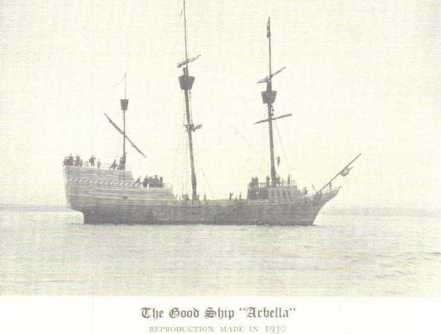
The Arabella
My eleventh great-grandfather was an early settler in Cambridge, Massachusetts. The records of the Massachusetts Bay Colony are extensive, so we know quite a bit about his life in America.
MIGRATION: 1630
FIRST RESIDENCE: Cambridge
FREEMAN: Requested 19 October 1630 (as “Mr. Edmond Lockwood”) and admitted 18 May 1631 (as “Mr. Edmond Lockewood”) [MBCR 1:79, 366].
OFFICES: Trial jury in case of Walter Palmer (as “Mr. Edmond Lockwood”), 9 November 1630 [MBCR 1:81]; “Mr. Lockwood” deputy to General Court for Cambridge, 9 May 1632 [MBCR 1:95]; “Mr. Edmond Lockwood” constable for Cambridge, 9 May 1632
ESTATE: 3 March 1634/5: “It is ordered, that Ruth Lockwood, widow, shall bring all the writings that her husband left in her hands to John Haynes, Esq., & Simon Bradstreete, on the third day of the next week, who shall detain the same in their hands till the next Court, when they shall be disposed of to those to whom they belong”
7 April 1635: “It is referred to the church of Waterton, with the consent of Rob[er]te Lockwood, executor of Edmond Lockwood, deceased, to dispose of the children & estate of the said Edmond Lockwood, given to them, to such persons as they think meet, which if they perform not within fourteen days, it shall be lawful for the Governor, John Hayne, Esq., & Simon Bradstreete, to dispose of the said children & estates as in their discretion, they shall think meet, as also to take an account of the said Rob[er]te Lockwood, & give him a full discharge”
2 June 1635: “In the cause of the children & widow of Edward Lockwood, (the elders & other of the church of Waterton being present,) and upon consideration of the order of Court in April last made in the case, which was found not to have been observed, because the estate was not computed & apportioned, it is now ordered, with consent of all parties, viz:, the church of Waterton, the widow of the said Edmond living, & the executor having consented to the former order, that the present Governor & the Secretary shall have power to call parties & witnesses for finding out the true estate, having consideration of the uncertainty of the will, & the debts, & other circumstances, to apportion the remainder of the estate to the wife & children, according to their best discretion; & then the church of Waterton is to dispose of the elder children & their portions as shall be best for their Christian education & the preservation of their estate” [MBCR 1:151].
BIRTH: By about 1600 based on estimated date of marriage (but see COMMENTS below).
DEATH: Cambridge between 9 May 1632 [MBCR 1:95, 96] and 3 March 1634/5 [MBCR1:134] (and probably closer to the earlier date, since Edmund Lockwood does not appear in any of the recorded Cambridge land grants beginning in August 1633).
MARRIAGE: (1) By about 1625 _____ _____; she may have died in England before 1630.
(2) By 1632 Elizabeth Masters, daughter of JOHN MASTERS; she married (2) Cary Latham of Cambridge.
CHILDREN:
With first wife
i EDMUND, b. England say 1625; m. Stamford 7 January 1655[/6] Hannah Scott, daughter of Thomas Scott [FOOF 1:381].
ii Child (one or more additional children by first wife implied by court order to the Watertown church “to dispose of the elder children” [MBCR 1:151]); no further record.
With second wife
iii JOHN, b. Cambridge November 1632 (“son of Edward Lockwood & Elisabeth his wife”) [NEHGR 4:181]; d. at New London in 1683, unmarried [Lockwood Gen 10].
ASSOCIATIONS: Although no record states the relationship explicitly, Edmund and Robert Lockwood were almost certainly brothers.
COMMENTS: The oft-stated origin of the Lockwood brothers in Combs, Suffolk, seems to be based on nothing more than finding the right names at about the right time. Further research is needed before this origin can be accepted.
In a discussion of financial transactions, John Winthrop wrote to his son John in Groton 23 July 1630 saying “If money be brought to you or your Uncle Downinge for Goodman Lockwood, let Mr. Peirce be paid his bill of provisions for him, and bring the rest with you” [WP 2:306].
“Mr. Edmond Lockwood” was the third in the list of eight “Newtowne Inhabitants” which is found at the beginning of the Cambridge town records, and probably dates from 1632 [CaTR2].
After NICHOLAS KNAPP was fined for quackery on 1 March 1630/1, “Mr. Will[ia]m Pelham and Mr. Edmond Lockewood hath promised to pay to the Court the sum of £5” [MBCR 1:83].
BIBLIOGRAPHIC NOTE: The 1889 Lockwood genealogy (Frederic A. Holden and E. Dunbar Lockwood, Descendants of Robert Lockwood, History of the Lockwood Family in America[Philadelphia 1889]) was deservedly described by Jacobus as “a genealogical atrocity” [TAG31:222]. By lumping all the descendants of the first Edmund under his brother Robert, the posterity of this family through eldest son Edmund was misplaced.
Donald Lines Jacobus began to sort the family out properly in 1930, with further contributions made in 1955 [FOOF 1:380-81; TAG 31:222-24]. In 1978 Harriet Woodbury Hodge published detailed arguments for a rearrangement of the Lockwood families that would restore to Edmund Lockwood his children [Some Descendants of Edmund Lockwood (1594-1635) of Cambridge, Massachusetts, and his son Edmund Lockwood (c. 1625-1693) of Stamford, Connecticut (New York 1978), cited above as Lockwood Gen].
Edmund Lockwood (1574 – 1634)
11th great-grandfather
Eliner Lockwood (1592 – 1658)
daughter of Edmund Lockwood
Caleb Knapp (1637 – 1684)
son of Eliner Lockwood
Sarah Knapp (1669 – 1750)
daughter of Caleb Knapp
Ebenezer Mead (1692 – 1775)
son of Sarah Knapp
Deacon Silas Meade (1730 – 1807)
son of Ebenezer Mead
Abner Mead (1749 – 1810)
son of Deacon Silas Meade
Martha Mead (1784 – 1860)
daughter of Abner Mead
Abner Morse (1808 – 1838)
son of Martha Mead
Daniel Rowland Morse (1838 – 1910)
son of Abner Morse
Jason A Morse (1862 – 1932)
son of Daniel Rowland Morse
Ernest Abner Morse (1890 – 1965)
son of Jason A Morse
Richard Arden Morse (1920 – 2004)
son of Ernest Abner Morse
Pamela Morse
I am the daughter of Richard Arden Morse
 mermaidcamp