mermaidcamp
Keeping current in wellness, in and out of the water
You can scroll the shelf using ← and → keys
You can scroll the shelf using ← and → keys

Beatrice de Savoy Countess de Provence (1205 – 1267)
23rd great-grandmother
She was born as the second child of Thomas I and Beatrice de Geneve. She married Raimond Berenger de Provence in 1219. After two miscarriages she bore him a son and four daughters. Her son died young. The two elder daughters were married to reigning kings while the husbands of the younger two later rose to that rank. She was buried at the chapel in the Chateau de Menuet near Les Échelles. Her mausoleum was desecrated during the revolution and only her skull could be saved. It was deposited in her brother Bonifaces grave.
Beatrice of Savoy was Countess of Provence from December 1220 – 19 August 1245
Her spouse was Ramon Berenguer IV, Count of Provence. Their children were:
Margaret, Queen of France
Eleanor, Queen of England
Sanchia, Queen of Germany
Beatrice, Queen of Sicily
Raymond of Provence
She was from the House of Savoy (by birth) and House of Aragon (by marriage)
Beatrice of Savoy was the daughter of Thomas I of Savoy and Margaret of Geneva. She was Countess consort of Provence by her marriage to Ramon Berenguer IV, Count of Provence.
Her paternal grandparents were Humbert III, Count of Savoy, and Beatrice of Viennois. Her maternal grandparents were William I, Count of Geneva and Beatrice de Faucigny. Beatrice of Savoy’s mother, Margaret was betrothed to Philip II of France. While Margaret was travelling to France for her wedding, she was captured by Beatrice’s father, Thomas. He took her back to Savoy and married her himself. Thomas’ excuse was that Philip II was already married, which was true.
Beatrice was the tenth of fourteen children born to her parents. Her siblings included: Amadeus IV, Count of Savoy; Thomas II of Piedmont; Peter II, Count of Savoy; Philip I, Count of Savoy; Boniface of Savoy, Archbishop of Canterbury; Avita the Countess of Devon; and Margherita of Savoy wife of Hartmann I of Kyburg.
Beatrice betrothed on 5 June 1219 to Ramon Berenguer IV, Count of Provence; they married in December 1220. She was a shrewd and politically astute woman, whose beauty was likened to that of a second Niobe by Matthew Paris. Ramon and Beatrice of Savoy had four daughters, who all lived to adulthood, and married kings. Their only son, Raymond died in early infancy.[2]
Margaret, Queen of France (1221–1295), wife of Louis IX of France
Eleanor, Queen of England (1223–1291), wife of Henry III of England
Sanchia, Queen of Germany (1228–1261), wife of Richard, Earl of Cornwall
Beatrice, Queen of Sicily (1231–1267), wife of Charles I of Sicily
Raymond of Provence, died young
At the English court[edit]
In 1242, Beatrice’s brother Peter was sent to Provence by Henry III to negotiate the marriage of Sanchia to Richard. Another brother, Philip, escorted Beatrice and Sanchia to the English court in Gascony, arriving in May 1243. There they joined Henry, Eleanor, and their baby, Beatrice of England. Henry was very happy at this occasion and gave many gifts to the various relatives.
In November 1243, Beatrice and Sanchia travelled to England for the wedding. This wedding did much to strengthen the bond between Richard and Henry III. She further strengthened the unity of the English royal family by convincing Henry III to help pay the debts of his sister Eleanor and her husband Simon de Montfort, who had often been at odds with Henry.[5] In January 1244, Beatrice negotiated a loan for her husband from Henry of four thousand marks, offering the king five Provençal castles as collateral.
When Ramon Berenguer died on 19 August 1245, he left Provence to his youngest daughter, and his widow was granted the usufruct of the county of Provence for her lifetime. Beatrice’s daughter and namesake then became one of the most attractive heiresses in medieval Europe. Frederick II, Holy Roman Emperor sent a fleet and James I of Aragonsent an army to seize her, so Beatrice placed herself and her daughter in a safe fortress in Aix, secured the trust of its people then sent to the Pope for his protection. The Pope was also a target for Frederick’s military incursions in France. In Cluny during December 1245, a secret discussion, between Pope Innocent IV, Louis IX of France, his mother Blanche of Castile, and his brother Charles of Anjou, took place. It was decided that in return for Louis IX supporting the Pope militarily, the Pope would allow Charles of Anjou, youngest brother to the French King, to marry Beatrice of Provence. Mother and daughter were satisfied with this selection.[7] But Provence was to never go to France outright through Charles. It was agreed that if Charles and Beatrice had children, the county would go to them; if there was no issue, then the county would go to Sanchia of Provence. If Sanchia died without an heir, Provence would go to the King of Aragon.
Henry protested the selection, arguing that he had not yet received the full dowry for Eleanor nor his brother for Sanchia. He also still had the castles in Provence against the loan he had made to the former count.
When Charles took over the administration of Provence in 1246, he did not respect Beatrice’s rights within the county. She sought the aid of Barral of Baux and the Pope in protecting her rights within the area. The citizens of Marseille,Avignon, and Arles joined this resistance to Capetian control. In 1248, Charles began to seek peace with her so that he could join his brother’s crusade. A temporary truce was reached to allow this.
In 1248, she travelled back to England with her brother Thomas, to see their family there.
In 1254, as Louis was returning from his crusade by way of Provence, Beatrice petitioned him for a more permanent resolution of the dispute with Charles. The French queen Margaret joined the petition, noting that Charles had not respected her dowry either. Beatrice travelled with them back to Paris. As the year progressed, Henry and his wife were invited to travel to Paris, and eventually all four daughters joined their mother there for Christmas.[11]
The generally good relationship among the four sisters did much to improve the relationship of the French and English kings. It brought about the Treaty of Paris in 1259, where differences were resolved.[12] Beatrice and all her four daughters participated in the talks.[13] While the family was still gathered, Louis IX finally persuaded Beatrice to surrender her claims and control in Provence in exchange for a sizable pension to be paid to her. Charles also paid back the loan henry had made to the previous count, clearing his claims in the county.[14]
In 1262, Beatrice was part of the family discussion to try again to bring peace between Henry and Simon de Montfort. When Henry was captured in 1264, Beatrice’s brother Peter II, Count of Savoy took his army to join the efforts to free the king. He left Beatrice in charge of Savoy while he was gone.
Beatrice outlived her third daughter Sanchia and came close to outliving her youngest daughter Beatrice, who died months after her mother (Beatrice the elder died in January, Beatrice the younger died in September). Beatrice of Savoy died on 4 January 1267.
Beatrice de Savoy Countess de Provence (1205 – 1267)
23rd great-grandmother
Eleanor Berenger (1223 – 1291)
daughter of Beatrice 1205 de SavoyCountess de Provence
Edward I “the Longshanks” Plantagenet (1239 – 1307)
son of Eleanor Berenger
Elizabeth of Rhuddlan Princess of England Plantagenet (1282 – 1316)
daughter of Edward I “the Longshanks” Plantagenet
William Earl of Northampton De Bohun (1312 – 1360)
son of Elizabeth of Rhuddlan Princess of England Plantagenet
Lady Elizabeth Countess Arundel Countess DeBohun (1350 – 1385)
daughter of William Earl of Northampton De Bohun
Elizabeth Duchess Norfolk Fitzalan (1366 – 1425)
daughter of Lady Elizabeth Countess Arundel Countess DeBohun
Lady Joan De Goushill Baroness Stanley (1402 – 1459)
daughter of Elizabeth Duchess Norfolk Fitzalan
Countess Elizabeth Sefton Stanley (1429 – 1459)
daughter of Lady Joan De Goushill Baroness Stanley
Thomas Sir 8th Earl of Sefton Molyneux (1445 – 1483)
son of Countess Elizabeth Sefton Stanley
Lawrence Castellan of Liverpool Mollenaux (1490 – 1550)
son of Thomas Sir 8th Earl of Sefton Molyneux
John Mollenax (1542 – 1583)
son of Lawrence Castellan of Liverpool Mollenaux
Mary Mollenax (1559 – 1598)
daughter of John Mollenax
Gabriell Francis Holland (1596 – 1660)
son of Mary Mollenax
John Holland (1628 – 1710)
son of Gabriell Francis Holland
Mary Elizabeth Holland (1620 – 1681)
daughter of John Holland
Richard Dearden (1645 – 1747)
son of Mary Elizabeth Holland
George Dearden (1705 – 1749)
son of Richard Dearden
George Darden (1734 – 1807)
son of George Dearden
David Darden (1770 – 1820)
son of George Darden
Minerva Truly Darden (1806 – 1837)
daughter of David Darden
Sarah E Hughes (1829 – 1911)
daughter of Minerva Truly Darden
Lucinda Jane Armer (1847 – 1939)
daughter of Sarah E Hughes
George Harvey Taylor (1884 – 1941)
son of Lucinda Jane Armer
Ruby Lee Taylor (1922 – 2008)
daughter of George Harvey Taylor
Pamela Morse
I am the daughter of Ruby Lee Taylor
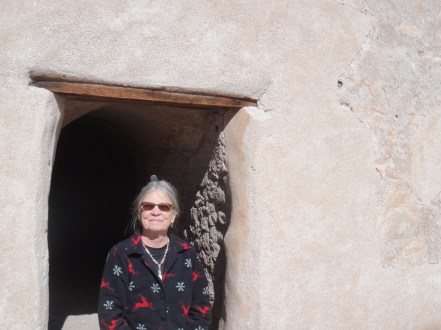
Dangerous
I was born in the year of the tiger. I did not discover this until I was middle aged. I only knew what I had read on the Chinese restaurant place mats. The problem with those place mats is the use of western years to measure Chinese years. Chinese new year falls any time between January and February, so it does not coincide with our calendar. I thought I was a rabbit based on this misinformation. I never really felt like a rabbit, so when I discovered the error I was somewhat relieved. If your birthday falls in December, January, or February you might want to check your animal sign for accuracy.
The reason it is pertinent is that a very large number of people on earth use this system to make decisions. You might not personally put any stock into Feng Shui or Daoist anything, but since such a large part of the world’s population does, I find it interesting. Big bucks are invested in Feng Shui for commercial buildings in Hong Kong, one of our big financial centers. There is a grand tradition and belief in this system. I don’t really make decisions with it, but do like to study the details. I feel the same way about western astrology. It is more than superstition because it has a long history and a following. I like learning about the way the ancients thought. They thought a lot about the stars, the moon and the sun. Farmers’ Almanac confirms that there is still some thought devoted to the positions of the astral bodies. I take note of special events in the sky, like today’s eclipse, as a matter of curiosity.
Curiosity may have killed some cats, but I feel I still have a few lives left to devote to everything that sets off my curious streak. In western astrology I am an Aquarius, a sign known for being aloof. Tigers are naturally aloof except when we need to kill and eat. Both of these signs are known as free (perhaps rebellious) spirits. Both are territorial and will defend the group that surrounds them. Both can act very swiftly without warning in order to protect the homeland. Both are perfectly happy being solitary, and don’t really care what others think. Both appear calm and reserved while being perfectly capable of pouncing on dishonorable players. Neither is motivated by power or money. Bravery and unpredictability is our stock in trade.
I am a metal tiger, highly conductive and sharp. I am a walking razor. Don’t you watch my size. I am dangerous!!!!!!!!! Don’t pull my tail.
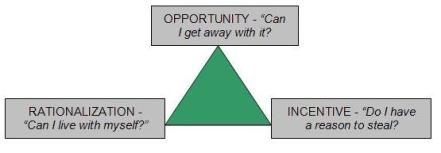
Fraud Triangle
There is an ethical ladder that ascends to the highest moral code. As children we should be taught how to climb that ladder by example. Unfortunately many children are witnesses to adult misbehavior that leads them to cling to a low rung on the ladder. As we go through life we respond to situations according to our ethical code. There is a sliding scale for moral fortitude, depending on the difficulty of the stand, or the popular opposition to the truth. It is obviously easier to go along with the crowd no matter what they do. People who stay down at that level just want to not make waves. They do not consider how they contribute to the morality of the entire world.
At the bottom of the ethical stairway is only one consideration:
If we mature we start to realize there could be more:
As educated adults participating in a community we may start to notice:
On which rung do you live most of your life, gentle reader? I encourage you to take the highest ground possible, not just for yourself, but for the entire world.

Compromise Triangle
Deal with the negative people you encounter
 “You cannot have a positive life and a negative mind.” ~Joyce Meyer
1. Recognize and accept their toxicity
First and foremost, it is important to identify and accept that someone we know is a negative person. This can be difficult, especially when the person is someone we care about. Either way, we must be careful not to allow their negativity to transfer onto us. We need to accept that negativity is toxic and will only breed more negativity. It is especially important to avoid complainers. People who complain have given up hope that their actions can make any difference. We must be careful not to enable complainers by always listening to their woes.
2. Stop playing savior and/or problem solver
As human beings, we are wired to connect. For most of us, it is in our nature to lend a compassionate ear to someone who is in need. We must be careful not to let ourselves fall into the…
View original post 319 more words
As I go through my possessions in order to eliminate the items no longer useful to my life, I have discovered the “art supply” hoarder in me. I knew that I was a jacket and costume freak, and own way too many pieces of dress up clothing. I have discovered that I am equally attached to a whole bunch of stuff I can’t bring myself to eliminate. The largest category, other than books, is art supplies. In each and every room and cranny of my home I find items I have stashed because I believe I will someday make art with them. Some of this stuff has been here for a decade without being moved. The list is ridiculous and much longer than I imagined.
I own:
That is not even taking into consideration all the crazy fancy exotic groceries I collect because I believe I am a culinary artist all the time. I own some spices and tea I hauled home from Europe years ago…this is not something to hoard..it is intended to be consumed. My big issue is just to go ahead and use it. It must be done.
I can tell this as gotten completely out of hand and I must take some action. I need to discard some stuff, but more to the point, I need to use it. I have found a class that is offered at the Tucson JCC, where I enjoy my Silver Sneakers membership, in drawing and painting. It is held twice a week on a drop in basis. One buys a punch card and uses it at one’s own pace. The best part of this class is that you bring your own supplies. Hallelujah!!! I will take supplies for my own work, and perhaps be able to share (read unload) some of my excess with my fellow art students. I think this will help me come to terms with my artist archetype. Am I an artist or a hoarder with artistic illusions? We soon shall see, gentle readers. Do you have attachments to things you keep for making art?

a rose is a rose
The phrase quid pro quo literally means something for something in Latin. When it was first used in the English language it referred to substitution of one medicine for another. The apothecary who switched the patient’s remedy for another one may have acted out of ignorance, or may have done so intentionally. Fraud may be involved in a quid pro quo arrangement, but it is not necessarily mendacious or premeditated. It merely suggests an exchange. There are plenty of beneficial exchanges and trades, so why does this term sound so creepy and illicit?
The usage extended from the pharmacy into legal matters. In this case the exchange of one thing for another may be used for favors, appropriate or inappropriate. Now it is common to use this phrase when we suspect some kind of financial hanky panky that smells like an illegal deal. Ponzi schemes and predatory lending might fall into this category. The Clinton Foundation has been in the news recently for possibly giving favors for donations. The issue is in the intent of both givers. If they both intend to evade the law through the trade, they may be acting criminally. I am sure this is hard to prove in court, but it is done all the time, nonetheless.
In personal business we have quid pro quo understandings with bosses, landlords, colleagues, and clients. It is good to examine them carefully to be sure that you have not entered an agreement that you can’t or don’t want to fulfill. There are both written and unwritten contracts that bind people. Healthy happy something for something trades are good for the community. Can you think of both good and bad examples from your past? If you are a good judge of character (caveat emptor) and value you can make sure you get a fair deal. Pay attention to the deals you make, gentle reader, and what you accept in trade.

a rose is a rose

Virgo constellation
The sun has just moved into Virgo for the transitional month between summer and fall. In just a month’s time it will be equinox. This month is perfect for cleaning and clearing space, time, and clutter of any kind. Virgo month is also the ideal time to upgrade daily health and fitness regimes. I have returned to a study that requires intense reading, meditation, and writing. I had fallen out of the discipline needed to finish the course, but now I am enjoying the material and looking forward to doing my homework. Virgo is all about discipline, order, and maybe a little bit of fussiness over details. This is the right time to take up journaling and daily meditation in order to ground body and mind. This is the month to put everything neatly in order, and keep it that way.
I believe that habits require 40 days to become a part of life. After the equinox I need to be vigilant and orderly with my newly established practices in order to secure them. Before the equinox I plan to do a major purge and tidy program in my home and garden. By cleaning and clearing space I will also clear some time for myself. Less stuff requires less maintenance. I am convinced that I will be happier owning far fewer books, pieces of clothing, papers, and personal mementos. I am going to listen to the joy of tidy book again because I still have a month of audible for free, and I think I need to hear it all one more time. I know the author is right about junk representing unresolved issues form the past. Physical space has a direct impact on physical as well as mental health. Clearing closets has the effect of clearing cobwebs from the mind.
To honor the virgin of the harvest in my own way I will use her energy to:
This will be an excellent jump start to the fall season. Establishing healthy habits and clean clear space is a gift that will go on giving through the end of the year.

State of the Moon is a semi-regular, bimonthly check in with the universe. This is my first post that focuses on the moon, on astrology, on how what’s happening in the heavens impacts us on earth. I am still learning about astrology, but I process information through writing. I will also include links to blog […]
via State of the Moon: Full Moon in Aquarius — Northern Lights Witch
LBJ
I have been watching the HBO John Adams series about the American Revolution and the first American continental congress in Philly. It helps me see that our politicians are not in the worst situation in our history. Neither are they less favorably aligned than in the nation’s past. This congress we have today is about the same as all ruling bodies have always been, since the Roman Senate. The use of power by humans on earth has been punctuated with misery and cruelty. Conquest, political or military, has been imposed on nations, colonies, and entire continents. War and Peace have hung in the balance more times than we know, but always for the same reasons. War is an archetypal situation that repeats itself.
When we say history repeats itself we mean that archetypal events continue to occur. In the arch of recorded history we have seen the pendulum of power swing from feudalism to anarchy. Leaders have been both born and created in the struggle to survive. We think of those leaders as the representatives of the entire culture, but they may merely be the most famous. We know less about how the common person lived than we do about the fancy and well born. I know this very well from my study of my own ancestry. I learn more all the time about America by studying my ancestors’ lives. None of my forefathers was famous during the American Revolution, but many did fight in it. Power does flow through the events of man, but my religious ancestors would all say that fate is sealed by divine providence. Man is just a player on the eternal stage.
I am hearing the same message from all the books and posts I read these days. In a world that conforms all too easily it is essential to be particularly true to one’s self. My teacher Chris Brogan just hit me this morning with some excellent thoughts on what is lost when one fits in with the crowd these days. Popularity and authenticity are not the same thing, and sometimes are completely opposed to each other. Our politics reflect a chaos and lack of discipline that runs through society. Mob mentality seems to be taking over our thinking in America.
I wonder if we can step back and take individual action to change the crazy status quo in our country. I wonder if we can stand up for law and order and for justice at the same time. We have reached a tipping point that demands we be awake and aware of the reality we are creating. What do you think, gentle reader? Obviously vote. What else can we do?

 mermaidcamp