mermaidcamp
Keeping current in wellness, in and out of the water
You can scroll the shelf using ← and → keys
You can scroll the shelf using ← and → keys

Chadbourne coat of arms
We are lucky to have the will of my 11th great-grandfather. He was a sawyer who lived in Lancashire and was brought up during the reign of Henry VIII. When Elizabeth I demanded that everyone attend church on Sunday Robert responded that he had not been to church for ages. Despite being married in the Anglican church and allowing his children to be baptized there, it is clear from the deposition in John Fisher’s book that Robert Chadbourne was a Roman Catholic. He clearly states that he was raised in the time of Henry VIII when there was a “different order” (officially-sanctioned Roman Catholicism). His words in the original Olde English thrill me.
Robert Chadbourne (1530 – 1622)
is my 11th great grandfather
William CHADBOURNE (1582 – 1652)
son of Robert Chadbourne
Patience Chadbourne (1612 – 1683)
daughter of William CHADBOURNE
Margaret SPENCER (1633 – 1670)
daughter of Patience Chadbourne
Moses Goodwin (1660 – 1726)
son of Margaret SPENCER
Martha Goodwin (1693 – 1769)
daughter of Moses Goodwin
Grace Raiford (1725 – 1778)
daughter of Martha Goodwin
Sarah Hirons (1751 – 1817)
daughter of Grace Raiford
John Nimrod Taylor (1770 – 1816)
son of Sarah Hirons
John Samuel Taylor (1798 – 1873)
son of John Nimrod Taylor
William Ellison Taylor (1839 – 1918)
son of John Samuel Taylor
George Harvey Taylor (1884 – 1941)
son of William Ellison Taylor
Ruby Lee Taylor (1922 – 2008)
daughter of George Harvey Taylor
Pamela Morse
I am the daughter of Ruby Lee Taylor
y have a descriptive meaning, such as “Chad’s brook,” or “Chad’s ford,” but it is generally thought to denote a person from the village of Chatburn in the parish of Whalley, near Clitheroe, about twenty miles northeast of Preston, Lancashire. At least one other place name in the area bears the prefix “Chad,” i.e., Chadswell.
A false clue has long obscured the true ancestry of immigrant William Chadbourne of Kittery, Maine (Sybil Noyes, Charles Thornton Libby, and Walter Goodwin Davis, Genealogical Dictionary of Maine and New Hampshire [Portland, Me.: The Anthoensen Press, 1928-1939 (reprinted Baltimore, 1972)], 134, 651-2). Libby, Noyes, and Davis repeated a speculation that William was from Winchcombe, Gloucestershire, and indeed, a William does appear in the baptismal register for that parish. An exhaustive search of the Winchcombe registers produced nearly one hundred Chadbourne entries between 1595 and 1635 and nineteen distinct Chadbourne families, but failed to reveal a William with children Humphrey and Patience, as seen in the Kittery family. Probably influenced by the Banks manuscripts at the Library of Congress, Libby, Noyes, and Davis went on to mention Tamworth, Staffordshire, a parish about 90 miles north of Winchcombe, in their Chadbourne entry.
That Tamworth was the true origin of the American Chadbournes was communicated sometime before April, 1959, by R.O. Wilson, then living in Richmond, Surrey, England, to the late Fred Babson Chadbourne of New York, New York, who hired Noel Currer-Briggs to look into the matter. Here we find the names Patience, Humprey, and William as children of a William Chadbourne, the exact combination which appears in the records of Maine, and this family disappears from English records at precisely the time we would expect the immigrants to Maine to do so. A short manuscript synopsis of Currer-Briggs’ work was compiled by Fred B. Chadbourne in May of 1959 and circulated privately to interested family members.
In 1972 the will of Robert Chadbourne of Tamworth, father of the immigrant William, was abstracted and published by Noel Currer-Briggs on page 80 in his English Wills of Colonial Families, (Cottonport, La.: Polyanthos, 1972). Since that time, several people have published sketchy outlines of the correct Chadbourne pedigree, most notably Helen and Evelyn Stager of Luverne, Minnesota (A Family Odyssey, The Ancestors and Descendants of Joseph Harrison and Ada Belle (Marsh) Stager [Pipestone, Minn.: The Authors, 1983]).
Tamworth straddles the border between Staffordshire and Warwickshire, but since the parish church of St Editha, where William Chadbourne’s family was recorded, is in the Staffordshire part of the city, references to Tamworth here will use Staffordshire for consistency. It is noted, however, that Robert Chadbourne, in his will, states his residence as Tamworth in Warwickshire, and it may be that the family resided in that portion of the parish.
The following are abstracts of all Chadbourne entries from the parish registers of the Church of St Editha, Tamworth (Percy W.L. Adams, ed., Staffordshire Parish Registers Society. “Deanery of Tamworth. Tamworth Parish Register. Part I – 1558-1614 [n.p.: all printed, 1917], and from the original parish register thereafter, as noted below.
Tamworth, StaffordshireBook I – 4 March 1556/7 to 19 July 1614 (all entries mixed)
1575, Aug 21 Thomas, s. of Thomas Chadburne, bpt1575, Aug 30 Thomas s. of Thomas Chadburne, bur.
1576, Sep 14 Robert, s. of Thomas Chadburne, bur.
1576/7, Jan 28 Robert Chadburn & Margaret Dooley, m
1578, Apr 9 Robert, s. of Robert Chadburne, bpt
1579/80, Feb 15 Margery, d. of Robert Chadburne, bpt
1582, Mar 30 Willm, s. of Robert Chadburne, bpt
1584, June 3 John, s. of Robert Chadburne, bpt
1586/7, Mar 17 Walter Chadborne, Tamworth, bur.
1587, Apr 9 Randall, s. of Robert Chadborne, bpt
1589, Aug 15 Willm Bawdwyn, Chadbornes servant, bur.
1590, May 11 Thomas, s. of Robert Chadborne, bpt
1604, Oct 9 Richard Hewer & Margery Chadburne, m
1609, Oct 8 William Chadburne & Elizabeth Sparry, m
1610, Sep 30 Willm, s. of Willm. Chadburne, bpt1612, Nov 8 Patience, d. of William Chadburne, bpt
Book I, and others – 19 July 1614 to 31 December 1675 searched
Baptisms
1615, Apr 23 Humfrey, s. of Wm Chadburne1617/8, Feb 22 Susanna, d. of Wm Chadburne
1619, Sep 6 Edward, s. of Thomas Chadburne
1619, Oct 29 Judeth, d. of John Chadburne
1620, Oct 15 Willm, s. of Wm Chadburne
1622, Sep 25 Anne, d. of Thomas Chadburne
1623, June 1 Robert, s. of Willm Chadburne
1623, Sep 28 Alice, d. of Randall Chadburne
1624/5, Feb 8 Robert, s. of John Chadburne
1625, Mar 29 Walter, s. of Randall Chadburne
1625/6, Jan 1 Eliz & Margarett, ds. of Thomas Chadburne of Wigginton
1627, 9 Dec John, s. of Randell Chadburne of Tamworth
1629, May 24 Margrait, d. of John Chadburne
1629, Aug 9 John & Isabell, children of Thomas Chadburn of Wiginton
1630, June 13 Mary, d. of Randle Chadburne of Tamworth
1632/3, Feb 17 Eliz, d. of Randle Chadburne of Tamworth
1633, July 28 Edward, s. of John Chadburne of Tamworth
1634, Dec 14 Thomas, s. of Tho Chadburn
1635, Apr 19 Sara, d. of Randle Chadburn: Tamworth
1635/6, Mar 20 Alice, d. of John & Jone Chadburne
1636/7, Mar 19 Barbra, d. of Thomas & Ann Chadburn
1638, May 20 Susanah, d. of Randle Chadburn
1642, May 1 Wm, s. of Thom Chadburne
1645, July 27 Sarah, d. of Edward Chadburne Tamw: sould
1646/7, Jan 24 Elizabeth, d. of Edward Chadburne Tamw
1648/9, Mar 7 Samuel, s. of Edward Chadburne
1650, Apr 10 Samuel, s. of Edward Chadborne
1651/2, Jan 24 Ann, d. of Edward Chadburne
1653, Dec 24 Joana, d. of Edward Chadborne was borne
1659/60, Feb 20 Robert, s. of Edward Chadburn was borne
1665, Apr 25 Ester, d. of Walter Chadburne of Tamworth & Margret ux
1669, Sep 12 Frances, d. of Walter Chadburne of Tamworth & Margret ux1670, Nov 20 Willm, s. of Tho Chadburne of Hoppas & Alice ux
Marriages
1618, Nov 10 Thomas Chadburne & Anne Mare1618/9, Jan 21 John Chadburne & Jone Owres
1632, Oct 1 Thomas Chadburne & Anne Bull
1648, Apr 15 Joseph Reignolds & Anne Chadburne
1653, June 1 Randl Fernsworth & Mary Chadbn
1655, June 14 William Smart & Isabell Chadburne both of Wiginton by banns
1656/7, Jan 26 James Jackson of the psh of Dronfield & Susana Chadburn of Tamworth by banns
1662, Apr 8 John Garnet & Alice Chadburne both of Tamworth
1665/6, Feb 27 William Burcher & Barbara Chadburne1671/2, Feb 8 John Ling & Johanna Chadburne
Marriage Banns
1654, Sep 24 William Battman sherman & Margret Chadboorneboth of Tameworth 3rd and last time
Burials
1616, Apr 18 William, s. of William Chadburne1618, Apr 26 Susanna Chadburne infant
1622, Dec 16 Robert Chadburne of Tamworth
1625/6, Jan 18 Margarett, d. of Thos Chadborn
1626, Sep 23 Margery Chadburne widdow Tamworth
1626/7, Jan 19 Robt, s. of Willm Chadburne of Tamworth
1629, June 9 Elizabeth, d. of Tho Chadburn
1630, June 26 Alice, d. of Randle Chadburne: Tamworth
1632, June 10 Anne, w. of Thomas Chadburne of Wigenton
1633, July 11 D. of Thomas Chadburne of Wiginton
1638/9, Mar 20 Sara, d. of Randle Chadburn of Tam
1647, May 3 The body of John s. of Randle Chadburn of Tam
1649, Apr 18 The body of Samuel s. of Ed Chadburn
1649, Apr 24 The body of a child of Edeth Chadburn – a bastard
1649, Sep 19 The body of Ann wife of Tho Chadburn
1650, May 30 The body of Elizah wife of Edward Chadburn
1650, Dec 5 Samuel, s. of Edward Chadbon
1652, Aug 31 The body of Mary the wife of Randle Chadbourne of Tamworth
1653, Aug 23 The body of Randle Chadborne
1653, Sep 17 Eedeth, d. of widow Chadburne
1660, May 4 Ann, d. of Edward Chadburne of Tamworth
1660/1, Feb 2 Edward Chadburne of Tamworth weaver
1644, May 17 Mary d. of widdow Chadburne of Tamw
1664/5, Jan 1 Sarah, d. of Walter Chadburne of Tamworth
1664/5, Jan 14 A female child of Edward Chadburne
1667, Oct 28 Joane Chadburne of Tamworth widdow
1672, Sep 19 Thomas Chadburne of Hoppa1673, Apr 29 Mary, d. of Thomas Chadburne of Hoppas
My search has turned up a most extraordinary account which gives us a rare insight into the background of the Chadbourne family. In The Book of John Fisher, Town Clerk and Deputy Recorder of Warwick 1580-1588, transcribed and edited by Thomas Kemp, Deputy-Mayor of Warwick, 1900, we find a very informative deposition by Robert Chadbourne, father of the immigrant, which survives in this day-to-day diary of a judicial officer. This rare manuscript shows the range of cases seen in the late 1500s before the justices of the peace, everything from horse stealing and complaints about beggars to the imposition of sanctions against Catholic recusants (report of John S. Griffiths to the writer, then the date 3 Sep 1985).
By the Act of Uniformity, Elizabeth I decreed that all persons were to attend church on Sundays and Holy Days or pay 12d per offense. Persons over 16 who defied this Act were fined £20 for every month of absence (The Book of John Fisher, 115). The deposition reads as follows:
primo die novembris Anno xxiiijo of Rne Elizabethe [1582] coram humfrid Crane Johni Fisher et Thome Powell
Robart Chadborne borne in Lancashire in Preston in Andens a Sawer being examyned when he was at the church to heare dyvyne servise saiith, That he was in the church at Tonworth within this half yere or there about in the company of one Richard dolphyn & many more only to goo through the church But he saith that he was not in any church to hear dyvyn servyce the space of foure or fyve yeres or there about as he remembreth.
And being askid whie he wold not come to the church he saith yt was bycause his father and mother brought him up in the tyme of King henry the eight and then there was other order And he myndith to observe that order and to serve the lord god above all things.
Being askid what is in the church that he mislikith, or thinkith is not wth the service of god he answreth that he praith the hearers to pardon him for he will say no more.
Being demaundid whither he thinks that the Quenes maty Q. Elizabeth is supreme governor over all causes as well ecclesiasticall or tmpall within this Realme of England he answeereth that he thinkiith so.
Being damaundid whither the quenes mats ought to be obeyed in those lawes that she makith and that those lawes which be made by her ought to be obsved and kept as well in matters ecclesiasticall as tempall, he aunswereth That first he is afrayd to displease god above all things. And then afraide to displease his mighty prynce.
Being demaundid whither the order set downe and agreed uppon & comaundid by the quenes maty to be & that is now comonly used in the Church of Englond is acording to gods institutyon or as it ought to be. he aunswerith that it is against his conscyens.
Being offred to be set at libtye upon condycion that he will this night goo to the church and resort to the church in the tyme of dyvyne sruice & sermons uppon Saboath and holy dayes he utterly refusith it & will not doo yt
(The Book of John Fisher…, pp. 114-115).
From his deposition, we learn that Robert Chadbourne was born in Preston, Lancashire, and brought up in the reign of Henry VIII. There are virtually no Lancashire wills prior to 1550, and although many were indexed in the 19th century, some have gone missing since that date. Many were transported to Richmond in open carts in 1748 and more than 10,000 were lost, large numbers disappearing when at least one cart overturned in Wensleydale. Almost all from the deanery of Amounderness were lost (Anthony J. Camp, Wills and Their Whereabouts [Bridge Place, near Canterbury: The Society of Genealogists, 1963], 35). Eight wills and administrations for Chadbournes between 1550-1650 were indexed, and those extant have been examined. The most promising was that of Thomas Chatburne of Elswick in the parish of St Michael on Wyre. Not only was it near Preston and in the Deanery of Amounderness, it also named a son Robert. No further supporting information has been found and it has been impossible to reliably connect this Thomas with our Robert from existing records.
This will is badly damaged and a large part of the right side of the sheet has been torn away. It is dated 7 July (possibly 1560), but the year is missing (presumably torn away); it was proved that year, but the probate clause is absent. A short abstract of the names found in the surviving fragment of this will was made by Dr. Alan G. Crosby of Preston, Lancashire, as follows:
1560 Thomas Chatburne of Elswick, parish of St Michael on Wyre, Deanery of Amounderness, Lancashire
Rowland…Henry…
…Brown
Robert Ballard
son Robert Chatburne to be sole executor
witnesses: …Kyrkby, Robert Ballard, Thomas Brown
a list of debts owed to the deceased names the following:
Edward Turner of Crossbrake (?)
William Swartbrecke of Risicar
Robert Horneby
Robert Ballard
Richard Bond
Thomas Browne
Henry KyrkebyeJohn Cotton
The will of Katherine Chatburne of Elswick, probated in 1561, might be that of Thomas’ widow, but this will has been missing for many years and not even an abstract survives. There are no manorial court records for Elswick at the Lancashire Record Office.
Some of the papers of the Earls of Derby are deposited there, but no mention of Chadbournes is to be found among them.
The absence of Preston parish registers for the 16th century made it impossible to follow the family of Robert Chadbourne there. The registers of St John, Preston, the only church there in the 16th century, do not begin until 1611, and the Bishop’s Transcripts only date from 1616. The parish registers of St Michael on Wyre do not start until 1659. Parishes adjacent to the latter were checked for Chadbournes, and although a few were found, none seemed relevant.
A thorough search of the Tamworth parish registers shows very few people named Chadbourne, but all appear to have been related. The repetition of the names Thomas, Walter, and Robert among each group supports this conclusion.
A. ROBERTA CHADBOURNE, born Preston, Lancashire, probably 1530s or later; buried Tamworth, Staffordshire, 16 December 1622; married there 28 January 1576/7, MARGARET DOOLEY who, as “Margery Chadburne widdow” was buried there on 23 September 1626. Her parentage has not been discovered.
Despite being married in the Anglican church and allowing his children to be baptized there, it is clear from the deposition in John Fisher’s book that Robert Chadbourne was a Roman Catholic. He clearly states that he was raised in the time of Henry VIII when there was a “different order” (officially-sanctioned Roman Catholicism). Henry reigned from 1509 to 1547 and declared the new order in 1537. There was considerable religious confusion at this time, and the subsequent reigns of Edward VI and his sister Mary did little to settle the matter. It was not until Elizabeth I succeeded to the throne in 1558 that things began to stabilize and the “new order” was identifiable. Robert Chadbourne may well have been referring to the “time of Henry VIII” in a very broad sense since, if he was truly brought up in that reign, he was unusually old at the time of his marriage.
We get few clues about the status of Robert’s family. From his deposition we know that he was a sawyer. The Preston Guild Merchant kept reliable records, updated every twenty years. These records were published and edited by W.A. Abram in 1882, but neither Robert nor anyone of the surname Chadbourne appears on the rolls.
The burial on 15 August 1589 of William Bawdwyn, “Chadbornes servant,” indicates that the household was at least of a size to support one servant.
Will of Robert Chadburne
Consistory Court of the Bishop of Lichfield and Coventry, 14 Dec 1622
In the name of God Amen In the yeare of or Lord god 1622 in the xxth yeare of the Raigne of or Sovraigne Lord king James the xiiijth day of December &c. I Robert Chadburne of Tamworth in the County of Warwicke Carpenter beinge sicke in bodie yet thanks be to god in good and parfit Remembrance remembringe the uncrtayne hower of Death Doe ordayne and make this to be my Last will & Testamt in manner and forme Followinge First I give & bequeath my soule to Almightie god and my bodie to be buried in Tamworth church yarde Item I give & bequeath unto Margret my wyfe all my worldlie goods wch I possesse moveable & unmoveable payinge unto evry one of my chilldren xijd apeece And alsoe that my sonne Randulphe and his wife shall have hold & quietlie enioye the one halfe of the house and Backeside Wt my aforesaid wife duringe the tearme of my Lease wthout any let or molestation And yf it happen that my wiffe duringe this tyme wch I have in my house shoulde be so mynded to sett or assigne over hir tyme wch is yet to come that then it shall be Lawfull for my Sonne Randulphe to have the refuse of the same givinge as another should give Alsoe I do ordayne & make to be my overseers of this my will to be Pformed Christopher Wilcox & my sonne William Chadburne Wittnesse unto the same
/s/ Christopher Wilcox/s/ William Rutter
fuit administrato scdum tenorum testamenti suprascripti Margarete Chadborne Relici & c.
Commissio mro Johanni Oldacre Clico Currato de Tamworth. Ob: dca Margareta Chadborne de Tamworth in Com Warw vide et Ranulphus Chadborne de ead Carpenter.
Ro. Master.
Entry from the Administration Act Book
Apud 31 dei decembris Ao Dni 1622. Comissa fuit administraco bonorum Robti Chadburni dum vixit paroch Tamworth defuncti Margarete eius Relict iurat curam mro Johanne Oldacres Jurat ibm &c Ad administrand ead iuxa tenorem testamti dci def lris administrator annex &c.
Inventory
The Imventtory of the goods and Cattaile of Roberte Chadburne of Tamworth Latte decessed preseid by Thomas Righte Copper Thomas Egginton day laborer as Followithe
First his parrell
0 -10s-0
Itm his linnene
2£ -3s-4d
Itm his beadinge
1£ -0 -0
Itm all hiss wooden Stuffe
1£ -3s-4d
Itm his Tulls and all yorne [iron] stuffe
0 -16s-8d
Itm peutter & brasse
1£ -10s-0
Itm a smalle lease of a house
1£ -10s-0
Itm Cowe
1£ -10s-0
Itm part of a pigge
0 -4s-0
Some-10£ -7s-4d
Thomas Righthis marke
Thomas Eggintonhis marke
Children, all baptized in Tamworth, Staffordshire, surname CHADBOURNE:
i. ROBERT1, bpt 9 Apr 1578; no further record.
ii. MARGERY, bpt 15 Feb 1579/80; m Tamworth 9 Oct 1604 RICHARD HEWER. Children, all bpt Tamworth, surname Hewer: 1. Alice, bpt 1 May 1605. 2. Margaret, bpt 11 Nov 1606; bur there 27 Dec 1606. 3. Richard, bpt 27 Dec 1607. 4. Robert, bpt 26 Nov 1609. 5. Elizabeth, bpt 29 June 1611. 6. Thomas, bpt 23 Apr 1613. 7. John, bpt 14 Aug 1618.
1. iii. WILLIAM, bpt 30 Mar 1582, became the emigrant to North America (q.v.).
iv. JOHN, bpt 3 June 1584; m Tamworth, 21 Jan 1618/9 JONE OWRES, bur Tamworth 28 Oct. 1667. If Jone is the widow Chadbourne mentioned in the burial of Edith Chadbourne, then John was deceased before 17 Sep 1653. Children, all bpt Tamworth, surname Chadbourne: 1. Judeth, bpt 29 Oct 1619. 2. Robert, bpt 8 Feb 1624/5. 3. (perhaps) Edith, bur there 17 Sep 1653. 4. Margaret, bpt 24 May 1629. 5. Edward, bpt 28 July 1633. 6. Alice, bpt 20 Mar 1635/6.
v. RANDALL/RANDULPHE, bpt 9 Apr 1587; bur Tamworth 23 Aug 1653; m MARY _____, who was bur. in Tamworth 31 Aug 1652. Children, all bpt Tamworth, surname Chadbourne: 1. Alice, bpt 28 Sep 1623, bur. there 26 June 1630. 2. Walter, bpt 29 Mar 1625. 3. John, bpt 9 Dec 1627, bur there 3 May 1647. 4. Mary, bpt 13 June 1630. 5. Elizabeth, bpt 17 Feb 1632/3. 6. Sara, bpt 19 Apr 1635, bur. there 20 Mar 1638/9. 7.Susanah, bpt 20 May 1638.
vi. THOMAS, bpt 11 May 1590; m1 Tamworth 10 Nov 1618 ANN MARE, who was bur. there 10 June 1632; m2 there 1 Oct 1632 ANNE BULL, who was bur Tamworth 19 Sep 1649. By the burial of his first wife in 1632, he was of Wigginton, a chapelry of Tamworth, one mile and three quarters north of the town. Children by his first wife, all bpt Tamworth, surname Chadbourne: 1. Edward, bpt 6 Sep 1619. 2. Anne, bpt 25 Sep 1622. 3. Elizabeth [twin], bpt 1 Jan 1625/6, bur there 9 June 1629. 4. Margaret [twin], bpt 1 Jan 1625/6, bur there 18 Jan 1625/6. 5. John (twin), bpt 9 Aug 1629. 6. Isabel (twin), bpt 9 Aug 1629. Children by his second wife, all bpt Tamworth, surname Chadbourne: 7. daughter, bur there 11 July 1633. 8. Thomas, bpt 14 Dec 1634. 9. Barbra, bpt 19 Mar 1636/7. 10. William, bpt 1 May 1642.
THOMASA CHADBOURNE, his marriage and further career are unknown. He is a contemporary and possibly a sibling of Robert. Two of his children are seen in the Tamworth parish register.
Children, surname CHADBOURNE:
i. THOMAS, bpt 21 Aug 1575; bur 30 Aug 1575.
ii. ROBERT, bur. 14 Sep 1576.
WALTERA CHADBOURNE, buried Tamworth 17 Mar 1586/7, was possibly a sibling of Robert, or some other adult relative. The first-born son of Robert’s son, Randall, was named Walter, as well (q.v.).
Research in England was funded through contributions by John Carleton Chadbourne, George Freeman Sanborn Jr., Theodore Saunders Chadbourne, Mrs Jack T Bennett, and the English Research Fund of the Chadbourne Family Association, to which many members generously donated. Searches were conducted in English records by John S Griffiths and Dr Alan G Crosby. Records in Salt Lake City, Utah, were searched by Gordon L Remington. Useful conversations with Jerome E Anderson, Melinde Lutz Sanborn, George Freeman Sanborn Jr, and Robert Charles Anderson are acknowledged. By prior agreement of the Chadbourne Family Association, a similar presentation of the English ancestry of William Chadbourne may be found in the July/October 1993 issue of The New Hampshire Genealogical Record.
Contributed by George Freeman Sanborn, Jr, F.A.S.G. of New England Historic and Genealogical Society, 101 Newbury St, Boston, MA.
GO TO 1ST GENERATION
Return to Home Page
http://www.chadbourne.org/English.html


Henry the Fat was my 20th great-grandfather on my mother’s side. He is also found on my father’s side of the tree. He was in the obesity vanguard..actually suffocated on his own fat long before it was fashionable. It was notable that he was the Count of Champagne and Brie. He sounds like a human foie gras experiment.
Henry I the Fat (French: Henri le Gros, Spanish: Enrique el Gordo) (c. 1244 – 22 July 1274) was the Count of Champagne and Brie (as Henry III) and King of Navarre from 1270. After a brief reign, characterised, it is said, by dignity and talent, he died in July 1274, suffocated, according to the generally received accounts, by his own fat.
Henry was the youngest son of Theobald I of Navarre and Margaret of Bourbon. During the reign of his older brother Theobald II he held the regency during many of Theobald’s numerous absences and was declared heir by his childless brother, whom he succeeded in December 1270. His proclamation at Pamplona, however, did not take place till March of the following year (1271), and his coronation was delayed until May 1273. His first act was the swear to uphold the Fueros of Navarre and then go to perform homage to Philip III of France for Champagne.
In 1269 Henry had married Blanche of Artois, daughter of Robert I of Artois and niece of Louis IX of France. He was thus in the “Angevin” circle in international politics. He came to the throne at the height of an economic boom in Navarre that was not happening elsewhere in Spain at as great a rate. But by the Treaty of Paris (1259), the English had been ceded rights in Gascony that effectively cut off Navarrese access to the ocean (since France, Navarre’s ally, was at odds with England).
Henry allowed the Pamplonese burg of Navarrería to disentangle itself from the union of San Cernin and San Nicolás, effected in 1266. He also granted privileges to the towns of Estella, Arcos, and Viana, fostering urban growth. His relations with the nobility were, on the whole, friendly, though he was prepared to maintain the peace of his realm at nearly any cost.
Henry initially sought to recover territory lost to Castile by assisting the revolt ofPhilip, brother of Alfonso X of Castile, in 1270, but eventually declined, preferring to establish an alliance with Castile through the marriage of his son Theobald to a daughter of Alfonso X. This failed with the death of the young Theobald in after he fell from a battlement at the castle of Estella in 1273.
Henry did not long outlive his son. He died with no male heir; the male line of the house of Champagne became extinct. He was thus succeeded by his only legitimate child, a one-year-old daughter named Joan, under the regency of her mother Blanche. Joan’s 1284 marriage to Philip the Fair, the future King of France, in the same year united the crown of Navarre to that of France and saw Champagne devolve to the French royal domain.
In the Divine Comedy, Dante Alighieri, a younger contemporary, sees Henry’s spirit outside the gates of Purgatory, where he is grouped with a number of other European monarchs of the 13th century. Henry is not named directly, but is referred to as “the kindly-faced” and “the father-in-law of the Pest of France”.
References
Henry I Enrique I LeGros Navarre (1244 – 1274)
is your 20th great grandfather
JOANNA NAVARRE (1273 – 1305)
daughter of Henry I Enrique I LeGros Navarre
Isabella France DeFrance House Capet (1292 – 1358)
daughter of JOANNA NAVARRE
Edward III – King of England – Plantagenet (1312 – 1377)
son of Isabella France DeFrance House Capet
John of Gaunt – Duke of Lancaster – Plantagenet (1340 – 1399)
son of Edward III – King of England – Plantagenet
Joan DeBeaufort (1375 – 1440)
daughter of John of Gaunt – Duke of Lancaster – Plantagenet
Duchess of York Lady Cecily DeNeville (1415 – 1495)
daughter of Joan DeBeaufort
Henry Holland (1485 – 1561)
son of Duchess of York Lady Cecily DeNeville
Henry Holland (1527 – 1561)
son of Henry Holland
John Holland (1556 – 1628)
son of Henry Holland
Francis Gabriell Holland (1596 – 1660)
son of John Holland
John Holland (1628 – 1710)
son of Francis Gabriell Holland
Mary Elizabeth Holland (1620 – 1681)
daughter of John Holland
Richard Dearden (1645 – 1747)
son of Mary Elizabeth Holland
George Dearden (1705 – 1749)
son of Richard Dearden
George Darden (1734 – 1807)
son of George Dearden
David Darden (1770 – 1820)
son of George Darden
Minerva Truly Darden (1806 – 1837)
daughter of David Darden
Sarah E Hughes (1829 – 1911)
daughter of Minerva Truly Darden
Lucinda Jane Armer (1847 – 1939)
daughter of Sarah E Hughes
George Harvey Taylor (1884 – 1941)
son of Lucinda Jane Armer
Ruby Lee Taylor (1922 – 2008)
daughter of George Harvey Taylor
Pamela Morse
I am the daughter of Ruby Lee Taylor


Jeanne I Navarre married the king of France when she was 13 years old. She founded a college and died either in childbirth or was killed by her husband.
In 1274, upon the death of her father, she became Countess of Champagne and Queen regnant of Navarre. Her mother Queen Blanche was her guardian and regent in Navarre. Various powers, both foreign and Navarrese, sought to take advantage of the minority of the heiress and the “weakness” of the female regent, which caused Joan and her mother to seek protection at the court of Philip III of France.
At the age of 13, Joan married the future Philip IV of France on August 16, 1284, becoming Queen of France a year later. Their three surviving sons would all become Kings of France, in turn, and their only surviving daughter Queen consort of England. Queen Joan founded the famous College of Navarre in Paris.
Joan led an army against the Count de Bar when he rebelled against her.
Joan died in 1305 either in childbirth or one chronicler even accused her husband of having killed her. Her personal physician was the inventor Guido da Vigevano. Following her death the crowns of Navarre and France were united for almost half a century.
Family Name:de Blois Given Names:Joan
Titles: Countess of Champagne (1274 – 1305)
Queen of Navarre (1274 – 1305)
Born:14 Jan 1273
Bar-sur-Seine, France Died:2 Apr 1305
Vincennes, Paris, France
(Age 32)
English/Scottish Royal Blood: 11.71875%
Father:Henry I, King of Navarre (Henry III of Champagne) About 1210
– 1274
Mother:Blanche d’Artois (daughter of Robert I, Count of Artois)
About 1247 – 2 May 1302
Marriage: Philip IV, King of France (The Fair) About 1268 – 29 Oct
1314
Date: 16 Aug 1284His Age: 17Her Age: 12
Place: Unknown place
Offspring:
+2 Louis X, King of France 1289 – May 1316
+4 Isabel of France (wife of King Edward II) 1292 – 22 Aug 1358
+2 Philip V, King of France (The Tall) 1294 – 3 Jan 1322
+3 Charles IV, King of France (The Fair) 1294 – 1 Feb 1328
Notes:
Joan was a patron of the arts and founded the college of Navarre.
Joan died in childbirth.
Jeanne Joan I Navarre (1273 – 1305)
is my 22nd great grandmother
Lady Isabella England D Capet (1292 – 1358)
daughter of Jeanne Joan I NAVARRE
Edward Plantagenet (1312 – 1377)
son of Lady Isabella England D Capet
John Gaunt Plantagenet (1340 – 1399)
son of Edward Plantagenet
John Marquis Somerset BEAUFORT (1374 – 1410)
son of John Gaunt Plantagenet
Joan Beaufort (1407 – 1445)
daughter of John Marquis Somerset BEAUFORT
Joan Stewart (1428 – 1486)
daughter of Joan Beaufort
John Gordon (1450 – 1517)
son of Joan Stewart
Robert Lord Gordon (1475 – 1525)
son of John Gordon
Catherine Gordon (1497 – 1537)
daughter of Robert Lord Gordon
Lady Elizabeth Ashton (1524 – 1588)
daughter of Catherine Gordon
Capt Roger Dudley (1535 – 1585)
son of Lady Elizabeth Ashton
Gov Thomas Dudley (1576 – 1653)
son of Capt Roger Dudley
Anne Dudley (1612 – 1672)
daughter of Gov Thomas Dudley
John Bradstreet (1652 – 1718)
son of Anne Dudley
Mercy Bradstreet (1689 – 1725)
daughter of John Bradstreet
Caleb Hazen (1720 – 1777)
son of Mercy Bradstreet
Mercy Hazen (1747 – 1819)
daughter of Caleb Hazen
Martha Mead (1784 – 1860)
daughter of Mercy Hazen
Abner Morse (1808 – 1838)
son of Martha Mead
Daniel Rowland Morse (1838 – 1910)
son of Abner Morse
Jason A Morse (1862 – 1932)
son of Daniel Rowland Morse
Ernest Abner Morse (1890 – 1965)
son of Jason A Morse
Richard Arden Morse (1920 – 2004)
son of Ernest Abner Morse
Pamela Morse
I am the daughter of Richard Arden Morse

Elizabeth Queen Consort
Elizabeth Wydeville Grey Plantagenet (1437 – 1492)
is my 18th great grandmother
Thomas Grey (1451 – 1501)
son of Elizabeth Wydeville Grey Plantagenet
Thomas Marquess Dorset Knight Grey (1477 – 1530)
son of Thomas Grey
Elizabeth Grey (1505 – 1561)
daughter of Thomas Marquess Dorset Knight Grey
Margaret Audley (1545 – 1564)
daughter of Elizabeth Grey
Margaret Howard (1561 – 1591)
daughter of Margaret Audley
Lady Ann Dorset (1552 – 1680)
daughter of Margaret Howard
Robert Lewis (1574 – 1645)
son of Lady Ann Dorset
Robert Lewis (1607 – 1644)
son of Robert Lewis
Ann Lewis (1633 – 1686)
daughter of Robert Lewis
Joshua Morse (1669 – 1753)
son of Ann Lewis
Joseph Morse (1692 – 1759)
son of Joshua Morse
Joseph Morse (1721 – 1776)
son of Joseph Morse
Joseph Morse III (1752 – 1835)
son of Joseph Morse
John Henry Morse (1775 – 1864)
son of Joseph Morse III
Abner Morse (1808 – 1838)
son of John Henry Morse
Daniel Rowland Morse (1838 – 1910)
son of Abner Morse
Jason A Morse (1862 – 1932)
son of Daniel Rowland Morse
Ernest Abner Morse (1890 – 1965)
son of Jason A Morse
Richard Arden Morse (1920 – 2004)
son of Ernest Abner Morse
Pamela Morse
I am the daughter of Richard Arden Morse
QUEEN ELIZABETH WOODVILLE or WYDVILLE (1437-1492)
Jacquetta of Luxemburg, the fair young widow of the old warlike Duke of Bedford, took for her second spouse his favourite knight, the brave and handsome Sir Richard Woodville, when she came to England in 1435 to claim her dower. The time of the birth of her eldest child Elizabeth, the issue of marriage kept secret for fear of parliament, probably occurred in 1436. The matter burst out with great scandal the year after. Sir Richard was arrested and imprisoned in 1437; but as the king’s mother had married in lower degree to Owen Tudor, the young king was glad to pardon the second lady in his realm, as an excuse for showing mercy to his dying queen-mother. Jacquetta’s knight was therefore pardoned and sent home. They settled very happily at Grafton Castle, where they became the parents of a large family of handsome sons and beautiful daughters, among whom Elizabeth was fairest of the fair.
The Duchess of Bedford kept the rank of the King’s aunt. His royal mother had died miserably in 1437, as shown in her life. Duchess Jacquetta, on occasions of ceremony, was the first lady in the land until the marriage of the king. Her daughter Elizabeth, took high rank among the maids of honour of Margaret of Anjou, and was the belle of her court, as two letters extant from Richard Duke of York and his friend the Earl of Warwick prove, recommending a Welsh hero, one of their knights-marshal, sir Hugh Johns, as a husband, they dwell on his great love inspired by her beauty and sweet manners; the letters show familiar acquaintance with Elizabeth, but they were of no avail. The court beauty had no fortune but her face, the Welsh champion none but his sword. She made a better match the same year with the heir of lord Ferrers of Groby, John Gray, rich, valiant, and years younger than the rejected Sir Hugh. Lord Ferrers was possessor of the ancient domain of Bradgate, which was afterwards to derive lustre as the birthplace of his descendant, lady Jane Grey. Elizabeth was appointed one of the fourt ladies of the bedchamber to Margaret of Anjou. John Gray held military command in the queen’s army. His death left Elizabeth with two infant sons, in 1460.
Rancour so deep pursued the memory of John lord Gray, that his harmless infants, Thomas and Richard, were deprived of their inheritance of Bradgate. Elizabeth herself remained mourning and destitute at Grafton the two first years of Edward IV’s reign. Hearing that the young king was hunting in the neighbourhood of her mother’s dower castle at Grafton, Elizabeth waited for him beneath a noble tree known in the traditions of Northamptonshire, as “the queen’s oak,” hold a fatherless boy in either hand; and when Edward, who must have been well acquainted with her previously at the English court, paused to listen to her, she threw herself at his feet, and pleaded for the restoration of her children’s lands. Her downcast looks and mournful beauty not only gained her suit, but the heart of the conqueror. He was unwilling to make her his queen, but she left him to settle the question; knowing that he had betrayed others, her affections still clave to the memory of the husband of her youth. Her indifference increased the love of the young king. The struggle ended in his offering her marriage, which took place May 1, 1464. The marriage gave great offence to the mother of Edward IV. This lady, who, before the fall of her husband, Richard duke of York, at Wakefield, had assumed the state of a queen, had to give place to the daughter of a knight. It was on Michaelmas day, 1464, that Edward IV finally declared to Elizabeth to be his wedded wife, at Reading palace.
The queen’s eldest daughter, Elizabeth, was born at Westminster palace about five months afterwards. The royal physicians, by means of their foolish studies of astrology, had assured king Edward that his expected child by his queen would prove a prince. The king, who was deep in the same kind of lore, had persuaded himself that his expected infant would wear the crown of England. One of these physicians, Dr. Dominic, obtained leave to station himself in the queen’s withdrawing-room, leading to her bed-chamber, in order that he might be the first to carry the tidings of the heir to Edward IV. Hearing the child cry, he called to one of the queen’s ladies, asking, “What her grace had?” The ladies were not in the best humour, being unwilling to answer “only a girl.” So one of them replied, “Whatsoever the queen’s grace hath here within, sure ’tis a fool that standeth there without.” Poor Dr. Dominic, being much confounded by this sharp answer, dared not enter the king’s presence.
Elizabeth was crowned May 16, 1465, with great solemnity, in Westminster abbey, the young duke of Clarence officiating as high-steward. Elizabeth and Warwick were on friendly terms, as he stood godfather to her eldest daughter. The baptism of this princess for a while conciliated her two grandmothers, Cicely duchess of York, and Jacquetta duchess of Bedford, who were likewise her sponsors. The christening was performend with royal pomp, and the babe received her mother’s name of Elizabeth,—a proof that Edward was more inclined to pay a compliment to his wife than to his haughty mother. As prime-minister, relative, and general of Edward IV, the earl of Warwick had, from 1460 to 1465, borne absolute sway in England; yet Edward at that time so far forgot gratitude and propriety as to offer some personal insult to Isabel, his eldest daughter, who had grown up a beauty. Warwick had certainly been in hopes that, as soon as Isabel was old enough, he would have made her his queen, a speculation for ever disappointed by the exaltation of Elizabeth; so he gave his daughter Isabel in marriage to the duke of Clarence, and England was soon after in a state of insurrection. As popular fury was especially directed against the queen’s family, the Woodvilles were advised to retire for a time.
The first outbreak of the muttering storm was a rebellion in 1468, in Yorkshire, under a freebooter called Robin of Redesdale, declared by some to have been a noble, outlawed for the cause of the Red rose. The murder of the queen’s father and brother followed in 1469. When the king advanced to suppress these outrages, he was seized by Warwick and his brother Montague, and kept at Warwick castle, where an experiment was tried to shake his affection to Elizabeth by the insinuation that her whole indluence over him proceeded from her mother’s skill in witchcraft. The Yorkist king escaped speedily to Windsor, and was soon once more in his metropolis, which was perfectly devoted to him, and where, it appears, his queen had remained in security during these alarming events. Again England was his own; for Warwick and Clarence, in alarm at his escape, betook themselves to their fleet, and fled. Then the queen’s brother, Anthony Woodville, intercepted and captured the rebel ships, but not that in which Warwick and Clarence, with their families, were embarked, which escaped with difficulty to the coast of France. The queen was placed by the king in safety in the Tower, before he marched to give battle to the insurgents. She was the mother of three girls but had not borne heirs-male to the house of York. Edward IV narrowly escaped being once more thrown into the power of Warwick, who had returned to England; but being warned by his faithful sergeant of minstrels. Alexander Carlile, he fled half-dressed from his revolting troops in the dead of night, and embarked at Lynn with a few faithful friends. Elizabeth was thus left alone, with her mother, to bide the storm. She was resident at the Tower, where her party still held Henry VI prisoner. While danger was yet at a distance, the queen’s resolutions were remarkably valiant; yet the very day that Warwick and Clarence entered London, she betook herself to her barge, and fled up the Thames to Westminster,—not to her own palace, but to a strong, gloomy building called the Sanctuary, which occupied a space at the end of St. Margaret’s churchyard. Here she registered herself, her mother, her three little daughters,—Elizabeth, Mary, and Cicely, with the faithful lady Scrope, her attendant, as sanctuary-women; and in this dismal place, November 1, 1470, the long-hoped-for heir of York was born. The queen was most destitute; but Thomas Milling, abbot of Westminster, sent various conveniences from the abbey close by. Mother Cobb, resident in the Sanctuary, charitably assisted the distressed queen, and acted as nurse to the little prince. Nor did Elizabeth, in this fearful crisis, want friends; for master Serigo, her physician, attended herself and her son; while a faithful butcher, John Gould, prevented the whole Sanctuary party from being starved into surrender. The little prince was baptized, soon after his birth, in the abbey, with no more ceremony than if he had been a poor man’s son.
Early in March the queen was cheered by the news that her husband had landed, and soon after, that his brother Clarence had forsaken Warwick. The metropolis opened its gates to Edward IV, who hurried to the Sanctuary to embrace his wife and new-born son. The very morning of this joyful meeting, Elizabeth, accompanied by her royal lord, left Westminster palace, but soon after retired to the Tower of London, while her husband gained the battles of Barnet and Tewkesbury. The news of his success had scarcely reached her, before the Tower was threatened with storm by Falconbridge; but her valiant brother, Anthony Woodville being there, she, relying on his aid, stood the danger this time without running away.
After Edward IV had crushed rebellion by almost exterminating his opponents, he turned his attention to rewarding the friends to whom he owed his restoration, and bestowed princely gratuities on those humble friends who had aided “his Elizabeth,” as he calls her, in that fearful crisis.
When Edward IV fled in the preceding year from England, he landed with a few friends at Sluys, the most distressed company of creatures ever seen; for he pawned his military cloak, lined with marten fur, to pay the master of his ship, and was put on shore in his waistcoat. The lord of Grauthuse received, fed, and clothed him, lending him besides money and ships, without which he would never have been restored to his country and queen. Edward invited his benefactor to England. Lord Hastings received him, and led him to the far side of the quadrangle of Windsor castle, to three chambers. These apartments were very richly hung with cloth of gold arras; and when Grauthuse had spoken with the king in the royal suite, he presented him to the queen’s grace, they then ordered the lord chamberlain Hastings to conduct him to his chamber, where supper was ready for him. After refreshment, the king had him brought immediately to the queen’s own withdrawing-room, where she and her ladies were playing with little balls like marbles, and some of her ladies were playing with ninepins. Also king Edward danced with Elizabeth, his eldest daughter. In the morning the king came into the quadrant, the prince also, borne by his chamberlain, called master Vaughan, bade the lord Grauthuse welcome. The innocent little prince, afterwards the unfortunate Edward V, was then only eighteen months old. Then the queen ordered a grand banquet in her own apartments, at which her mother, her eldest daughter, the duchess of Exeter, the king, and the lord of Grauthuse all sat with her at one table.
Elizabeth, in January, 1477, presided over the espousals of her second son, Richard duke of York, with Anne Mowbray, the infant heiress of the duchy of Norfolk. St. Stephen’s chapel, Westminster, where the ceremony was performed, was splendidly hung with arras of gold on this occasion. The queen led the little bridegroom, who was not five, and her brother, Earl Rivers, led the baby bride, scarcely three years old. They afterwards all partook of a rich banquet, laid out in the Painted-chamber. Soon after this infant marriage, all England was startled by the strange circumstances attending the death of the duke of Clarence. The queen had been cruelly injured by Clarence. Her father and her brother had been put to death in his name; her brother Anthony, the pride of English chivalry, had narrowly escaped a similar fate: moreover, her mother had been accused of sorcery by his party. She did not soothe her husband’s mind when Clarence gave him provocation. In fact, on the first quarrel, his arrest, arraignment, and sentence followed. He was condemned to death, and sent to the Tower. In his dismal prison a butt of malmsey was introduced one night, where he could have access to it. The duke was found dead, with his head hanging over the butt. Gloucester was certainly absent from the scene of action, residing in the north. On St. George’s day succeeding this grotesque but horrible tragedy, the festival of the Garter was celebrated with more than usual pomp; the queen took a decided part in it, and wore the robes as chief lady of the order. Her vanity was inflated excessively by the engagement which the king of France had made for his son with her eldest daughter.
In the last years of king Edward’s life he gave the queen’s place in his affections to the beautiful Jane Shore, a goldsmith’s wife in the city, whom he had seduced from her duty. His death was hastened by the pain of mind he felt at the conduct of Louis XI, who broke the engagement he had made to marry the dauphin to the princess Elizabeth of York, but an intermittent fever was the cause. When expiring, he made his favourites, lords Stanley and Hastings, vow reconciliation with the queen and her family. He died with great professions of penitence, at the early age of forty-two, April 9, 1483. Excepting the control of the marriages of his daughters, his will gave no authority to the queen. She was left, in reality, more unprotected in her second than in her first widowhood.
The Duke of Gloucester had been very little at court since the restoration. He was now absent in the north, and caused Edward V to be proclaimed at York, writing letters of condolence so full of kindness and submission, that Elizabeth thought she should have a most complying friend in him. Astounding tidings were brought to the queen at midnight, May 3, that the duke of Gloucester had intercepted the young king with an armed force on his progress to London, had seized his person, and arrested her brother, Earl Rivers, and her son, lord Richard Gray. In that moment of agony she, however, remembered, that while she could keep her second son in safety the life of the young king was secure. With the duke of York and her daughters she left Westminster palace for the Sanctuary; and she, and all her children and company, were registered as Sanctuary persons. Dorset, the queen’s eldest son, directly he heard of the arrest of his brother, weakly forsook his trust as constable of the Tower, and came into sanctuary to his mother. The archbishop of York brought her a cheering message, sent him by lord Hastings in the night. “Ah!” replied Elizabeth, “it is he that goeth about to destroy us.” — “Madam,” said the archbishop, “be of good comfort; if they crown any other king than your eldest son, whom they have with them, we will on the morrow crown his brother, whom you have with you here. And here is the great seal, which in like wise as your noble husband gave it to me, so I deliver it to you for the use of your son.” And therewith he handed to the queen the great seal, and departed from her in the dawning of the day.
With the exception of the two beautiful and womanly maidens, Elizabeth and Cicely, the royal family were young children. The queen took with her into sanctuary Elizabeth, seventeen years old at this time, afterwards married to Henry VII. Cicely was in her fifteenth year. These princesses had been the companions of their mother in 1470, when she had formerly sought sanctuary. Richard duke of York, born at Shrewsbury in 1472, was at this time eleven years old. Katherine, born at Eltham about August 1479, then between three and four years old. Bridget, born at Eltham 1480, Nov. 20th, then only in her third year; she was afterwards professed a nun at Dartford.
Gloucester’s chief object was to get possession of the duke of York, then safe with the queen. As the archbishop of Canterbury was fearful lest force should be used, he went, with a deputation of temporal peers, to persuade Elizabeth to surrender her son, urging “that the young king required the company of his brother, being melancholy without a playfellow.” To this Elizabeth replied, “Troweth the protector—ah! pray God he may prove a protector!—that the king doth lack a playfellow? Can none be found to play with the king but only his brother, which hath no wish to play because of sickness? as though princes, so young as they be, could not play without their peers—or children could not play without their kindred, with whom (for the most part) they agree worse than with strangers!” According to the natural weakness of her character, she nevertheless yielded to importunity, and taking young Richard by the hand, said, “I here deliver him, and his brother’s life with him, and of you I shall require them before God and man. Farewell! mine own sweet son. God send you good keeping! God knoweth when we shall kiss together again!” And therewith she kissed and blessed him, then turned her back and went, leaving the poor innocent child weeping as fast as herself. When the archbishop and the lords had received the young duke, they led him to his uncle, who received him in his arms with these words: “Now welcome, my lord, with all my very heart!” He then took him honourably through the city to the young king, then at Ely house, and the same evening to the Tower out of which they were never seen alive, though preparations went on night and day in the abbey for the coronation of Edward V.
It is possible that Hasting’s death had some influence in the imprudent surrender of young York. If Elizabeth had any secret joy in the illegal execution of her brother’s rival and enemy, very soon she had to lament a similar fate for that dear brother, and for her son, lord Richard Gray, who were beheaded by sir Richard Radcliffe, June 24th, when the northern army, commanded by that general, commenced its march to London.
When the massacre of every friend to the rights of his brother’s children was completed, and the approach of 9000 dreaded northern borderers intimidated the Londoners, the false protector entirely took off the mask. Buckingham induced Edward IV’s confessor, Dr. Shaw, who was brother to Gloucester’s partizan, the lord mayor, to preach a sermon against Edward V’s title, on pretence that Edward IV’s betrothment with lady Eleanor Butler had never been dissolved by the church. Shaw likewise urged the immediate recognition of the duke of Gloucester as sovereign, putting aside the children of Clarence on pretence of his attainder by parliament. Faint acclamations of “Long life Richard III” were raised by hired partizans, but the London citizens angrily and sullenly dispersed. Ratcliffe’s forces approached Bishopsgate on the 26th, and Richard III was proclaimed king. The unhappy queen Elizabeth Woodville and her daughters witnessed the proclamation of the usurper from the abbot’s house in the abbey. Richard then made his state visit to the Tower and city. Elizabeth and her daughters must perforce have been witnesses of his coronation, July 6, 1483.
Soon after, the usurper, his wife, and son, now called Edward prince of Wales, made a grand progress to Warwick castle. The unfortunate sons of Elizabeth meantime were closely imprisoned under the care of sir Robert Brakenbury, one of Richard III’s northern commanders, who had been given the lieutenancy, under the notion that he would obey implicitly the usurper’s orders. Accordingly, Richard sent one of this gentlemen of the bedchamber, John Greene, ordering him to kill Edward IV’s sons forthwith. Brakenbury returned for answer “he would die first.” A midnight consultation took place between Richard III and his master of the horse, Sir James Tyrell, who left Warwick castle August 2, with commands to Brakenbury from king Richard that he was to surrender the keys of the Tower to sir James Tyrell for one night. On his ride from Warwickshire the master of the horse was attended by two retainers, one his squire, Miles Forrest, a northern champion of immense strength, the other his horsebreaker, John Dighton, a big, broad, square knave. Sir James had requested his own brother, Tom Tyrell, a brave gentleman, to aid him, but met with positive refusal, by which, if he lost the usurper’s favour, he gained from his country the appellation of “honest Tom Tyrell.”
The three murderers reached the Tower of London after dark, August 3. Sir James Tyrell demanded the Tower keys; and in the very dead of the night when sleep weighs heaviest on young eyelids, one of the Tower wardens who waited on the hapless princes, Will Slaughter by name, guided the assassins through the secret passages, which still may be traced, from the lieutenant’s house to the portcullis gateway. There is a little dismal bedchamber hidden in the space between that tower and the Wakefield tower, approached with winding stone stairs, and which has leads on the top and an ugly recess in the walls, reaching to the ground and even beneath it. The leads communicated by a door to the Wakefield tower leaded roof, and thence to the water-stairs by a bricked-up doorway, still plainly to be seen. No spot could be more convenient for secret murder. Tradition has pertinaciously clung to it and called this fatal prison lodging the Bloody tower.
Sir James Tyrell did not enter the chamber where the poor victims were sleeping, but his strong ruffians crept silently in, and oppressing the princes with their great strength and weight, stifled them with the bed-clothes and pillows. When the murders were completed Forrest and Dighton laid out the royal corpses on the bed, and invited sir James Tyrell to view their work. Tyrell ordered them to thrust them down the hole in the leads, which they did, and threw heavy stones upon them. Edward IV had lately strengthened that part of the Tower, little thinking the use to be made of it, as a poet born in his time makes him say—
“I made the Tower strong; I wist not why—Knew not for whom.”
When Tyrell returned the keys to the lieutenant Brakenbury, the latter found his young prisoners had vanished. The murderous trio rode back to Warwick castle to report their doings to the head assassing. Richard III approved of everything his unscrupulous favorite and master of horse had done, excepting the disposal of his nephews’ corpses. He insisted that they should be raised from that niche and buried in consecrated ground with burial service. The averseness of sir Robert Brakenbury to have aught to do with the murders, threw great difficulty in the way of the usurper’s commands, prompted by the first twinge of conscience. It is from the confession of sir James Tyrell, put to death twenty years after for conspiring with the de la Poles, that these particulars are gathered, but he could not say where the poor children were ultimately buried: all he heard was that Richard III’s orders had been issued to the priest of the Tower, who had in the dead of night taken the bodies whither no one knew, as the old man died two or three days after.
The secret was not guessed for two centuries; but when in 1674 King Charles II altered the White tower into a record office, under the flight of stairs leading up to the beautiful Norman chapel, was discovered a chest containing the bones of two children of the age of the murdered heirs of York. The orders of the usurper being fulfilled to the letter, the ground was consecrated as pertaining to the sacred place above; and deeply secret the interment was. Charles II had the poor remains of the heirs of York buried among their ancestors in Westminster abbey, where our young readers may remark the monument and inscription near Henry VII’s chapel.
We must now return to the life of their unfortunate mother, Elizabeth Woodville, who being in sanctuary, early heard when and where her sons were murdered, which, says sir Thomas More, struck to her heart like the sharp dart of death: she swooned, and fell to the ground, where she lay long insensible. After she was revived and came to her memory again, with pitiful cries she filled the whole mansion. Her breast she beat, her fair hair she tore, and calling by name her sweet babes, accounted herself mad when she delivered her younger son out of sanctuary, for his uncle to put him to death. She kneeled down and cried to God to take vengeance; and when Richard unexpectedly lost his only son, for whose advancement he had steeped his soul in crime, Englishmen declared that the agonized mother’s prayer had been heard. The wretched queen’s health sank under the anguish inflicted by these murders, which had been preceded by the illegal execution of her son, lord Richard Gray, and of her brother, at Pontefract. She was visited in sanctuary by a priest-physician, Dr. Lewis, who likewise attended Margaret Beaufort, mother to Henry Tudor, Earl of Richmond, then an exile in Bretagne. The plan of uniting the princess Elizabeth with this last scion of the house of Lancaster, was first suggested to the desolate queen by Dr. Lewis. She eagerly embraced the proposition. The duke of Buckingham, having been disgusted by Richard, his partner in crime, rose in arms; but after the utter failure of his insurrection, Elizabeth was reduced to despair, and finally was forced to leave sanctuary, and surrender herself and daughters into the hands of the usurper, in March. She was then closely confined, with her daughters, in obscure apartments in the palace of Westminster. From thence she wrote to her son Dorset at Paris to put an end immediately to the treaty of marriage between Richmond and the princess Elizabeth. The friends who had projected the marriage were greatly incensed; but these steps were the evident result of the personal restraing the queen was then enduring.
The successful termination of the expedition undertaken by the earl of Richmond, to obtain his promised bride and the crown of England, at once avenged the widowed queen and her family on the usurper, and restored her to liberty after the battle of Bosworth. Instead of the despotic control of Richard III’s swuire Nesfield, the queen, restored to royal rank, joyfully welcomed her eldest daughter, who was brought to her at Westminster from Sheriff-Hutton, remaining with her till the January following the battle of Bosworth, when she saw her united in marriage to Henry of Richmond, the acknowledged king of England.
One of Henry VII’s first acts was to invest the mother of his queen with the privileges befitting the widow of an English sovereign. Unfortunately Elizabeth had not been dowered on the lands anciently appropriated to the queens of England, but on those of the duchy of Lancaster. However, a month after the marriage of her daughter to Henry VII she received possession of some of the dower-palaces, among which Farnham, of 102l. per annum, was by her son-in-law added to help her income. The Parliamentary Act, whereby she was deprived of her dower in the preceding reign, was ordered by the judges to be burnt. Much is said of her ill-treatment by Henry VII. However, at the very time she is declared to be in disgrace for patronizing the impostor who personated the young earl of Warwick, she was chosen by the king, in preference to his own beloved mother, as sponsor to his dearly-prized heir, prince Arthur. The last time the queen-dowager appeared in public was in a situation of the highest dignity. At the close of the year 1489 she received the French ambassador in great state; the next year Henry VII presented her with an annuity of 400l. Soon after she retired to the royal apartments at Bermondsey abbey.
Elizabeth Woodville expired the Friday before Whitsuntide, 1492. Her will shows that she died destitute of personal property; but no wonder, for the great possessions of the house of York were chiefly in the grasp of the old avaricious duchess Cicely of York, who survived her hated daughter-in-law several years. Edward IV had endowed his proud mother as if she were a queen-dowager; while his wife was dowered on property to which he possessed no real title. On Whit Sunday the queen dowager’s corpse was conveyed by water to Windsor, and thence privately, as she requested, through the little part, conducted unto the castle. Her three daughters, the lady Anne, the lady Katharine, and the lady Bridget [the nun-princess] from Dartford, came by way of the Thames, with many ladies. And her son lord Dorset, who kneeled at the head of the hearse, paid the cost of the funeral.
In St. George’s chapel, north aisle, is the tomb of Edward IV. On a flat stone at the foot of this monument are engraven, in old English characters, the words—
King Edward and his Queen, Elizabeth Widville.
James Stewart
James Stewart (d 1309), high steward of Scotland, was the son of Alexander, high steward, by Jean, daughter and heiress of James, son of Angus Macrory or Roderick, lord of Bute. He succeeded his father in 1283, and the same year was present in the assembly which acknowledged the maid of Norway as heir to the throne. After the death of Alexander III on 9 March 1286, he was on 11 April chose one of the six guardians of the kingdom under Queen Margaret. The same year he signed the band of Robert Bruce and other nobles for mutual defence. In the war which followed between Balliol and Bruce he took part on the side of Bruce. He attended in 1290 the parliament at Brigham at which a marriage was arranged between Prince Edward of England and the Maid of Norway; but her death in Orkney in October of the same year completely altered the political outlook. Being continued one of the guardians of the kingdom after her death, he agreed with the other guardians to submit the rival claimes of the competitors for the Scottish throne to the arbitration of Edward I of England; but he afterwards joined with the party who resolved at all hazards to break with Edward, and his seal as a baron is appended to the ratification of the treaty with France in 1295. On 7 July 1297 he, however, came to terms with Edward, and, having on 9 July confessd his rebellion and placed himself at Edward’s disposal, he became a guarantor for the loyalty of the Earl of Carrick, until he delivered up his daughter Marjory as hostage. The service he had rendered Edward, in inducing many barons to submit, caused Edward to place considerable confidence in his loyalty; but this confidence was soon belied. On the outbreak shortly afterwards of the rebelion under Wallace, he pretended to side with the English, and before the battle of Stirling was, along with the Earl Of Lennox, sent by Surrey, the English commander, to treat with Wallace; but probably his main purpose was rather to supply Wallace with information than induce him to make submission. At any rate the negotiations failed, and as soon as the tide of battle turned in favour of the Scots he joined in the pursuit. Consequently, on 31 Aug 1298, he was deprived of his lands, which were granted by Edward to Alexander De Lindsay. In 1302 he was, with six other commissioners, sent to Paris to endeavour to secure that the interests of Scotland would be respected in the proposed treaty between England and France, but the mission was unsuccessful. On 17 Feb 1303-4 he had a safe-conduct to go to England to treat of peace; and having submitted himself absolutely to the king’s will in November 1305, he on 23 Oct 1306 subscribed an oath of submission and fealty. Nevertheless he was one of the Scots barons who on 16 March 1309 wrote to Philip, king of France, recognising Bruce’s right to the Scottish throne. He died on 16 July 1309, and was buried at Paisley.
Source: Dictionary of National Biography (XVIII:1181-1182).
James 5th high steward Stewart (1243 – 1309)
is my 21st great grandfather
Walter the High Steward Stewart (1293 – 1326)
son of James 5th high steward Stewart
Robert II, King of Scotland, Stewart (1316 – 1390)
son of Walter the High Steward Stewart
Robert Scotland Stewart (1337 – 1406)
son of Robert II, King of Scotland, Stewart
James I Scotland Stewart (1394 – 1434)
son of Robert Scotland Stewart
Joan Stewart (1428 – 1486)
daughter of James I Scotland Stewart
John Gordon (1450 – 1517)
son of Joan Stewart
Robert Lord Gordon (1475 – 1525)
son of John Gordon
Catherine Gordon (1497 – 1537)
daughter of Robert Lord Gordon
Lady Elizabeth Ashton (1524 – 1588)
daughter of Catherine Gordon
Capt Roger Dudley (1535 – 1585)
son of Lady Elizabeth Ashton
Gov Thomas Dudley (1576 – 1653)
son of Capt Roger Dudley
Anne Dudley (1612 – 1672)
daughter of Gov Thomas Dudley
John Bradstreet (1652 – 1718)
son of Anne Dudley
Mercy Bradstreet (1689 – 1725)
daughter of John Bradstreet
Caleb Hazen (1720 – 1777)
son of Mercy Bradstreet
Mercy Hazen (1747 – 1819)
daughter of Caleb Hazen
Martha Mead (1784 – 1860)
daughter of Mercy Hazen
Abner Morse (1808 – 1838)
son of Martha Mead
Daniel Rowland Morse (1838 – 1910)
son of Abner Morse
Jason A Morse (1862 – 1932)
son of Daniel Rowland Morse
Ernest Abner Morse (1890 – 1965)
son of Jason A Morse
Richard Arden Morse (1920 – 2004)
son of Ernest Abner Morse
Pamela Morse
I am the daughter of Richard Arden Morse

headstone
My 12th great-grandfather was born in London and died in the Massachusetts Colony. He arrived under dire circumstances and established himself as a joiner, or furniture maker. He was famous for an act of courage walking 25 miles in the snow to tell Miles Standish his village was in peril of being attacked.
May, 1622 The Sparrow, at Maine from England, sent passengers in a boat to Plymouth, New England.
Fishing vessel, Master Rogers
A boat arrived at the Plymouth Plantation from the Sparrow
(fishing vessel at Maine, hired and sent out by Thomas Weston and
John Beauchamp, salter of London, for their personal profit) with
7 men passengers sent by Weston to work for him in New England.
They remained at Plymouth until the Charity and the Swan
moved them to “Wessagusset” (Weymouth, Massachusetts) where they were
to establish a settlement.
Weston’s settlers, May, 1622 – June 1622
In 1622 Thomas Weston sent a fishing vessel, the Sparrow, to Massachusetts Bay, with a small party of seven men to find the most suitable place for a colony. They were to prepare for the arrival of a large group of single men whom he proposed to send out. Weston was one of the leaders of the London merchant adventurers who sponsored the establishment of Plymouth Colony, but who was now independently setting up his own. The site eventually chosen was at Wessagusset (modern Weymouth, some thirty miles north of Plymouth). The ship anchored at the Damaris Cove Islands off the coast of Maine, and a group of ten, including some crew from the Sparrow, sailed down to Plymouth in a shallop, arriving there on May 31, 1622, just as Massasoit’s men were demanding that Squanto be handed over to them for execution. They brought letters to the Governor from Weston, but no provisions for which the settlement was in desperate need. Phineas Pratt was one of Weston’s settlers, and he and his six companions were given hospitality in Plymouth until the Charity and the Swan arrived with the main party of Weston’s settlers at the end of July or early August 1622.
The two ships, the Charity and the Swan, temporarily added sixty more “lusty men” to the eighty-odd colonists living in Plymouth village. They stayed for the months of July and August. The settlement at Weymouth was a failure, and the men had to be rescued by Capt. Standish and some of his men. Phineas Pratt, on the breakup of the settlement moved to Plymouth, and later married Mary Priest, niece of Isaac Allerton.
Weymouth Settlement Edit
In July 1622, two ships, (Swan and Charitie) arrive at Plymouth with a different group of adventures. They stay a couple of months before moving to establish a nearby at Weymouth (or Wessagusset). This groups is financed by Mr Wesson. They are joined by a 3rd ship (Sparrow). This groups fares badly with the Indians and is forced to abandon their settlement after a rescue by Plymouth militia.
In Sept 1623, the ship Katherine arrives with a group of settlers financed by Sir Ferdinando Gorges. They stop shortly at Plymouth before continuing onwards to the Weymouth Settlment.
One settler from the Sparrow, Phineas Pratt (1590-1680), after the breakup of the first Weymouth settlment, joins the group at Plymouth and marries Mary Priest, a niece of Isaac Allerton (1586-1658).
Phineas Pratt was a member of a company of men sent from England by Thomas Weston. They arrived in New England in 1622 on three ships : the Sparrow, Charity and Swan (Pratt was a passenger on the Sparrow, the first to arrive). The approximately 67 men, many of them ailing, arrived with no provisions. The Pilgrims supported them throughout the summer of 1622.
In the fall of 1622, the Weston men left to colonize an area north of Plymouth called Wessagusset. They soon fell into difficulties through behaving, generally, in a very foolish and improvident fashion. They also severely angered the local Native Americans by stealing their corn.
Massasoit, sachem of the Wampanoags, informed the Plymouth colonists that there was a conspiracy among the Natives of the Wessagusset area to massacre the Weston men. Myles Standish prepared to head north with a small company of Plymouth men to rescue Weston’s men.
The same message was also delivered by one of Weston’s men, who came to Plymouth in March of 1623 “from the Massachusetts with a small pack at his back.”
Phineas Pratt was the man with the backpack. He had secretly snuck out of the Wessagusset settlement, traveling for several days without food through a snowy landscape on his 25-mile journey.
Myles Standish and a small contingent (minus Phineas, who was still recovering from his arduous journey) headed to Wessagusset to recognize Weston’s men. The Plymouth contingent killed several Native Americans in the process (for which, they were roundly scolded by their pastor, John Robinson). Soon afterwards, Weston’s group abandoned Wessagusset. Sometime in late 1623, Phineas joined the Plymouth settlement.
Sometime before May of 1648, when he purchased a house and garden in Charlestown (now a part of Boston), Pratt left Plymouth. In 1662, Pratt presented to the General Court of Massachusetts a narrative entitled “A declaration of the affairs of the English people that first inhabited New England” to support his request for financial assistance. The extraordinary document is Phineas Pratt’s own account of the Wessagusset settlement and its downfall.
Phineas Pratt was by profession a “joiner.” “Joining” was the principle method of furniture construction during the 17th century. “Joiners” were highly skilled craftsmen who specialized in this work; their skills were valued more highly than those of a carpenter.
Phineas Pratt married Mary Priest, daughter of Degory and Sarah Allerton Vincent Priest (the sister of Mayflower passenger Isaac Allerton, Sarah had been married to Jan Vincent and widowed before she married Degory Priest). Degory Priest journeyed to Plymouth on the Mayflower, his wife and two daughters intended to join him later. Priest died during the first winter. Before sailing for America, the widowed Sarah Allerton Vincent Priest married Godbert Godbertson, who became Mary Priest’s stepfather. The family (mother, stepfather and two daughters) were among the passengers of theAnne and Little James, arriving in Plymouth in 1623.
Phineas was probably born about 1593, Mary was probably born about 1612. It seems likely, given the probably age of their oldest child at the time of her death, that they married about 1631 or 1632. Phineas and Mary Pratt had 8 children.
According to his gravestone in the old Phipps Street Cemetery, in the Charlestown area of Boston, “Phinehas Pratt, agd about 90 yrs, decd April ye 19, 1680 & was one of ye first English inhabitants of ye Massachusetts Colony.” (Mayflower Descendant, Vol. 6, p. 1-2).
Mary Pratt outlived her husband; the date of her death is not certain but she did receive stipends from the Town of Charlestown in 1683/4 and 1686/7 (Robert Charles Anderson, The Great Migration Begins, Vol. 3, p. 1516
Phineas PRATT (1590 – 1680)
is my 12th great grandfather
Daniel Pratt (1640 – 1680)
son of Phineas PRATT
Henry Pratt (1658 – 1745)
son of Daniel Pratt
Esther Pratt (1680 – 1740)
daughter of Henry Pratt
Deborah Baynard (1720 – 1791)
daughter of Esther Pratt
Mary Horney (1741 – 1775)
daughter of Deborah Baynard
Esther Harris (1764 – 1838)
daughter of Mary Horney
John H Wright (1803 – 1850)
son of Esther Harris
Mary Wright (1816 – 1873)
daughter of John H Wright
Emiline P Nicholls (1837 – )
daughter of Mary Wright
Harriet Peterson (1856 – 1933)
daughter of Emiline P Nicholls
Sarah Helena Byrne (1878 – 1962)
daughter of Harriet Peterson
Olga Fern Scott (1897 – 1968)
daughter of Sarah Helena Byrne
Richard Arden Morse (1920 – 2004)
son of Olga Fern Scott
Pamela Morse
I am the daughter of Richard Arden Morse

Seal of Sandwich
My 12th great-grandfather was born in Sandwich, MA, on Cape Cod, in 1623. He served as a constable in Sandwich. There is some confusion about Myles Black/Michael Blackwell records in Sandwich, which seem to indicate they are one in the same man:
Title: MICHAEL BLACKWELL OF SANDWICH, MASS. (c. 1620-1710)
URL: http://members.dencity.com/ccblack/genealogy/micheal.html
Author: LYDIA B. (PHINNEY) BROWNSON, Of Duxbury, Mass. and MACLEAN W. MCLEAN, Of Pittsburgh, Pa
No attempt has been made by the present writers to investigate possible connections between Michael Blackwell and others of the name in England or America. It certainly would be interesting to know whether the Sandwich family was in any way related to the Rulling Elder Francis Blackwell of the Separatist Church whose recantation William Bradford criticized. Actually it is by no means certain that the family name was originally Blackwell. The Sandwich list of men between 16 and 60 able to bear arms in 1643 includes one Myles Black. James Savage in his Genealogical Dictionary of The First Settlers in New England, 1860, vol. 1, p. 191, says “hardly can I doubt that this man called by Savage
“Michael or Myles Blackwell” is he designated in the Col. list of those able to bear arms 1643, as Miles Black” (THE REGISTER, vol. 4, p. 257,
July 1850). This Question puzzled also Thomas Spooner, the compiler of the Memorial of William Spooner, 1871, who corresponded with the Rev. Frederick Freeman author of The History of Cape Cod, 1858. Spooner quotes Freeman as saying: “The Blackwells of Sandwich were generally called Black. Even since my remembrance the latter name was used for those who wrote the name Blackwell and in some early instances of recorthe same Liberty was taken. The progenitor himself is in one instance at least on record as Black” (p: 60:61 footnotes.It seems to us that the evidence, while not conclusive, strongly suggesthat Miles Black and Michael Blackwell were one and the same person. The reader may speculate for himself from the data available. Conclusive proof of identity doubtless would have been found in the Barnstable County land records, but these were destroyed in the 1827 fire. Fortunately Michael Blackwell and his son, and grandsons left wills and probate records which are unusually complete. The earliest reference we find has to do with Miles Blacke who was a creditor in the amount of 7 shillings due from the estate of William Swift, Sr., 29 Jan. 1642 (Plymouth Colony Probate, Liber 1, p. 44, in May. Des., 8:170, December 1900). This first reference, by the way, poses a second problem of confusion of identities, namely.the fact that there was in New England early date a gentleman of some wealth and influence called “Mr. John Blackwell.” This complication will be discussed under the account of John Blackwell. For the moment it is enough to point out the really extraordinary co-incidence that the Swift estate should have been indebted to both Miles Black of Sandwich and to “Mr. Blackwell,” since so far as we can find the latter was of Boston and co. Middlesex, England, and had no interest in Sandwich.In 1643 Miles Black’s name appears on the list of Sandwich men aged between 16 and 60, able to bear arms (The Register, Op. Cit.), but
Michael Blackwell’s name does not appear. Yet 7 June 1648 “Mycaell Blackwell” served on the grand inquest; and the following October “Micaell Blackwell” served as grand juror in the infanticide case of
Alice Bishop (Nathaniel B. Shurtleff, ed., Records of the Colony of New Plymouth . . . , 2:134, cf. p. 124, where his name appears as Mycaell Blackwell). An agreement was made 17 Jan. 1652 by the town of Sandwich “with Daniel Wing & Michael Blackwell for the taking of fish in Herring River” (Frederick Freeman, “Annals of Sandwich” in his History of Cape Cod, 1858, 2:50).
Note:
“Myles Blacke” was appointed, 3 June 1656, constable of Sandwich (Shurtleff, op. cit., 3: 100). On the 1658 list of Sandwich land holders the name of Michaell Blackwell appears, but not that of Miles Black
(Freeman, op. cit., 2:59). Yet it would seem unlikely that the town’s constable was not a land owner. It is interesting to note here that this Miles Black or Blackwell held the post of Constable in Sandwich
immediately preceding the inauguration in 1657 of what Amos Otis called “a system of terrorism” there, under the enthusiastic leadership of the notorious Sandwich Marshall George Barlow, to whom the Colony Court gave “full power to act as constable in all things in the town of Sandwich” (C.- F. Swift, Genealogical Notes of Barnstable Families, 1888, p. 258-259). No reference is made anywhere that we have seen which would indicate that Black or Blackwell was involved in persecution of the Quakers in this period, though the Blackwell family seems to have been active members of the Sandwich Congregational Church, and not to have had family connections with the Quaker element.
Note:
On 13 June 1660 “A parcell of meadow was granted to Myles BIacke att Mannomett.” And in the following March he and Thomas Burges, Sr., were brought to court for fraudulently obtaining meadow land there (Shurtlefop. cit., 3:194, 208). These entries are perhaps significant in view of the fact that Michael Blackwell’s will refers to land adjoyning Jacob Burges, principal heir to Thomas Burges, Sr.
Note:
We come now to two entries which refer to “Myles Blackwell.” The first shows that “Myles Blackwell” served on the Grand jury 4 Oct. 1664 (Shurtleff, op. cit., 7: 1 19). The second shows that Myls Blackwell was chosen surveyor of highways in Sandwich 3 June 1668. Oddly enough the same source shows that Miacaell Blackwell served on the Grand Jury 5 Ju 1667 (ibid., 4:148, 181). Micacll Blackwell served 5 June 1671 on a committee “to view damage done to the Indians by the horses and hoggs of the English” (ibid.-, 5:62).
Note:
In 1672 “Mr. Edmund Freeman Senr., William Swift, Thomas Wing Senr., Thomas Dexter Senr., Michaell Blackwell & William Newland were constituted a committee to go forward in settling & confirming the bounof the township with the Sachem of Mannomet . . .” (Freeman, op. cit., 2:67). Joseph Burges petitioned the Court, 5 June 1673, regarding “a way that goes through lands of Myles Blackwell … att Sandwich” (Shurtleff, op. cit., 5:116). The list of “all those who have just rights to the priviledges of the Town” in 1675 shows Michaell Blackwell and his son John Blackwell, and does -not show a Miles Black (Freeman, op. cit., 2:68) In 1680 Michaell Blackwell served once more on the Grand Inquest
and in 1672 he took the inventory of the estate of Edmund Freeman. His will shows that he deeded land in 1705 to his son Joshua and it is to be inferred that he had done the same for his elder son.
Note:
His will is of considerable genealogical value. Firstly, it proves that Michael Blackwell’s wife had predeceased him. It seems strange that there is not the slightest reference to the wife of either Miles Black or Michael Blackwell. Secondly, the testator in his intense desire to be the founder of a dynasty patterned upon the model of the landed gentold England gives proof of one or two relationships which otherwise would
have remained obscure, as will be seen. The Sandwich vital records in the town hall are copies of the originals. The entry of Michael Blackwell’s death reads 6 January, the date of the year having been torn away, but the careful copy made by the late George E. Bowman of the Massachusetts Society of Mayflower Descendants notes that 1710 was added – in pencil, and as we now see, this notation is correct (May. Des., 29: 22 footnote, January 1931). With the exception of the son Michael, no dates of the births or baptisms of Michael Blackwell’s children have been found. The order of birth of the sons is clear from the father’s will, although the daughter Jane (whose husband was born in 1644) may have be older than Michael.
Michael Blackwell (1623 – 1709)
is my 12th great grandfather
John Blackwell (1645 – 1688)
son of Michael Blackwell
Elizabeth Blackwell (1662 – 1691)
daughter of John Blackwell
Thomas Baynard (1678 – 1732)
son of Elizabeth Blackwell
Deborah Baynard (1720 – 1791)
daughter of Thomas Baynard
Mary Horney (1741 – 1775)
daughter of Deborah Baynard
Esther Harris (1764 – 1838)
daughter of Mary Horney
John H Wright (1803 – 1850)
son of Esther Harris
Mary Wright (1816 – 1873)
daughter of John H Wright
Emiline P Nicholls (1837 – )
daughter of Mary Wright
Harriet Peterson (1856 – 1933)
daughter of Emiline P Nicholls
Sarah Helena Byrne (1878 – 1962)
daughter of Harriet Peterson
Olga Fern Scott (1897 – 1968)
daughter of Sarah Helena Byrne
Richard Arden Morse (1920 – 2004)
son of Olga Fern Scott
Pamela Morse
I am the daughter of Richard Arden Morse
When he died he owned quite a bit of land around Sandwich:
Michael Blackwell’s will, dated 29 Nov 1709 of “Michael Blackwell of Sandwich” gives “… unto my grand son John Blackwell, the eldest son of my son John Blackwell, deceased, all those lands, marsh and meadow ground . . . in the town of Sandwich, lying on the Northeasterly side of Skussett River . . . on part of which upland ye dwelling house of my sd. Grand son now standeth . . . adjoyning in part upon the messuage in ye tenour or occupation of Jacob Burges . . . as well as one parcell of meadow lying adjoyning Jireh Swift . . . and by the land of Irish Swift . . . on condition that my said grand son John Blackwell dye leaveing a male heire surviving, lawfully begotton of his own bodie. And that he do also pay unto Caleb Blackwell his naturall brother, the sum of 5 pounds . . . And if it shall so happen” (that said John dies without a male heir, then the testator directs the youngest brother Nathaniel, shall inherit). The will then provides that if John Blackwell survives his brothers, Caleb and Nathaniel, and finally die without male issue, the then male children of my son Joshua Blackwell shall inherit all. “Item: . . . unton my grand son Benjamin Gibbs, on half part of all upland at Waynonsett . . . lands in Sandwich adjoying land formerly belonging to John Gibbs and other lands in Sandwich and lands I formerly bought of Robert Bartlett in Plymouth township. Item: . . . unto my grand son Samuel Blackwell, son on my son Joshua Blackwell, the other half of my lands before given to Benjamin Gibbs. Item: . . . unto my daughter Jane Gibbs, that nine pounds which her husband formerly borrowed and me and which he yet oweth to me. Item: . . . unto the three sons and six daughters of my son Joshua Blackwell or to so many of them as shall survive mee, all that shall remain of my personal estate . . . to be equally divided between them. Item: . . . to my said son Joshua Blackwell the other half of my land that I bought of Robert Bartlett . . . and I do confirm unto him and unto his son Michael Blackwell all those lands, swamp & meadow ground to which I have given by deed of gift, dated 3 Aug 1705, only that he pay to my grandson Nathaniel Blackwell 10 pounds & to each of the sisters of ye said Nathaniel Blackwell, being the daughters of my said son John Blackwell, deceased, the sum of 40s in current passable pay within one year after my decease.”
Michael’s son Joshua Blackwell was named sole executor. The will was signed by a mark and was witnessed by William Bassett, Sr., William Bassett, Jr., and Nathan Bassett. The witnesses were sworn 26 Jan and administration ordered 29 Jan. 1709/10. The date of Michael Blackwell’s death is 6 Jan 1710.
~New England Historic and Genelogical Register, July, 1963, pages 180-183
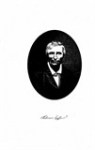
My 9th great-grandfather was one of the Quakers of Sandwich plantation who were heavily persecuted by the Pilgrims of Plymouth. He owned property when he died in New Jersey, which was controlled by the Dutch.
William Gifford arrived in New England after 1643, as he does not appear among those able to bear arms in that year. The first record of him is in the list of debts due on the inventory of Joseph Holiway of Sandwich dated 4 December 1647: “dew from Willi Gifford” 3s. 4d. On 4 June 1650 he served on the Grand Enquest. The original deed for the Sandwich plantation was executed by Governor William Bradford 22 May 1651. It ordered that Goodman (Thomas) Tupper, Goodman (Thomas) Burges, Sr., Nathaniel Willis, and William Gifford have the power to call a town meeting.Both Brown, and Daniels & McLean say that by 1651 he was married and had a family; that he probably married in England, and children John, Patience and Hannaniah were probably born in England. Birth records are available for only the last four of his nine children; the birth dates of the older children are estimated based upon the birth dates of their first children. There is a sizeable gap in these estimated dates between Hannaniah and William, suggesting William, Robert, Christopher and Mary may have been by a second wife. Only the last wife, Mary Mills, is of record; she is the mother of the last two children, Jonathan and James.
There is a record in England of a “Guilielm Gifford” (i.e., William Gifford) who married Elizabeth Grant on 11 February 1635 in St. Martin-in-the-Fields, London. Also, the London Merchant Taylors’ Guild shows a record: “William Gifford, son of Anthi (sic) Gifford of Dublin in the kingdom of Ireland, gentleman, apprenticed to Thomas Southerne of New Exchange, London, for a period of seven years from 7 December 1628.” Apprentices were forbidden to marry, so this would mean the apprenticed William Gifford would have been given his freedom 7 December 1635, in perfect time to be the one who married 11 February 1635/1636. Also, the records of St. Martin-in-the-Fields show that an Ananias Gifford married Maria Read on 18 November 1621. Ananias (also spelled Hananias, Hannaniah and Annaniah) is a relatively rare name. William named one of his sons Hannaniah, and the name has been carried down in the family. Also, the name occurs in the Giffords of Dry Drayton, county Cambridge, England. But it cannot be proven that these English records apply to the family of William Gifford of Sandwich.
Nor can the English ancestry of William Gifford of Sandwich be proven, according to Daniels & McLean. “English Giffords can be traced back to Normandy at the time of William the Conqueror when most branches usually spelled the name Giffard. Inevitably the temptation to connect the Sandwich Giffords with these celebrated families has produced a rash of printed accounts in which the connection is stated as fact but without solid references. (Cutter’s “Genealogical History of Western New York,” 2:901; “History of Bristol County, Mass.;” “Vineland (N.J.) Historical Magazine,” 3:32; “Seabury-Gifford Families,” Hartford (Conn.) 1941) In view of the fact that highly skilled professional genealogists have found no proof as yet of such connections, it can only be said that evidence has yet to be found to confirm these wishful thoughts.”
William Gifford of Sandwich was a Quaker, and as such, suffered persecution for his faith. “Little Compton Families” says “It is supposed that he was the William Gifford who in 1647 or earlier was ordered by the court at Stanford to be whipped and banished.” On 1 June 1658, he was one of a dozen men who “all of Sandwich were summoned, appeared to give a reason for theire refusing to take the Oath of Fidelitie to this government and unto the State of England, which again being tendered them in open court, they refused, saying they held it unlawful to take any oath att all.” At the court held 2 October 1658, they were fined L5 each. At the court held 1 March 1658/1659 George Barlow, Marshall for Sandwich, Barnstable and Yarmouth, complained against William Gifford and Edward Perry in an action of defamation, asking damages of L100, in saying he took a false oath. The defendants were ordered to pay 50s and make their acknowledgement publically, or else be fined L5 plus costs. As Quakers, they could not accept the verdict, and at the 2 October court William Gifford and 11 other Friends were fined L5 for refusing to take the Oath of Fidelitie. At the June 1660 court Gifford was again summoned to take the oath, again refused, and was again fined L5. In October 1660, for persisting in his refusal and for attending Quaker meeting, he was fined L57 — an enormous sum for those times. At this point he disappears from the records, and may have left Plymouth colony, but where he went is unknown. It has been suggested that he went to New Jersey which, like New Amsterdam, was then under the control of the Dutch. On 8 April 1665 William Gifford was one of the signers of the Monmouth (NJ) Patent, but there is no evidence he actually settled there; his sons Christopher and Hannaniah did, however. In a deed by his son Christopher William was described as a tailor.
On 10 November 1670 Mr. Gifford bought from mistress Sarah Warren of Plymouth, widow of Richard Warren, one half her share in the land at Dartmouth, which he gave equally to his sons Christopher and Robert by deed dated 6 May 1683. In 1673 William Gifford purchased land in Suckanesset (Falmouth) from the Indian Sachem, Job Noantico. Gifford continued to appear in Sandwich town records and in records of the Sandwich Friends meeting, and he married Mary Mills, also of Sandwich, at the Friends Meeting of 16 day 5 mo: 1683. Thirty witnesses signed the certificate, but none of William Gifford’s children signed the document, nor did James Mills, Mary’s brother.
William Gifford (1615 – 1687)
is your 9th great grandfather
John Gifford (1640 – 1708)
son of William Gifford
Yelverton Gifford (1676 – 1772)
son of John Gifford
Ann Gifford (1715 – 1795)
daughter of Yelverton Gifford
Frances Congdon (1738 – 1755)
daughter of Ann Gifford
Thomas Sweet (1759 – 1844)
son of Frances Congdon
Valentine Sweet (1791 – 1858)
son of Thomas Sweet
Sarah LaVina Sweet (1840 – 1923)
daughter of Valentine Sweet
Jason A Morse (1862 – 1932)
son of Sarah LaVina Sweet
Ernest Abner Morse (1890 – 1965)
son of Jason A Morse
Richard Arden Morse (1920 – 2004)
son of Ernest Abner Morse
Pamela Morse
I am the daughter of Richard Arden Morse

Ewer Coat of Arms
Henry Ewer moved his family from Plymouth to Sandwich, MA on Cape Cod to settle. The Pilgrims of Plymouth, right up the road, were religious nuts who banished and harassed those with whom they differed. The London contract that governor Brewster undertook allowed him to sell and or release lands to new settlers. He allowed the settlements on Cape Cod, but the church in Plymouth was in charge. The new towns on Cape Cod were subject to laws of the colony, and were treated harshly because of religious differences. The Cape Cod colonists, for instance, were to enforce observance of the Sabbath on the local native population, and make sure all the pigs had rings in their noses. They could be called up to Plymouth for infractions, and frequently were. In 1638 Henry and his wife were deemed unfit and told to leave the town, but their infractions were settled in an unknown way. Generations of Ewers continued to live in Sandwich and the surrounding area.

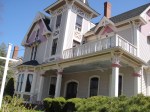




My 8th great-grandmother was born in Salisbury, Witlshire in 1633. She was baptized in St Thomas church in Salisbury. She was sailing on the ship James through a hurricane when she landed in America in 1635, as an infant traveling with her parents:
1635 voyage
The ship James of London sailed from Southhampton on April 5, 1635 and arrived in Massachusetts Bay on June 3,[5] 1635 with master William Cooper[disambiguation needed] at the helm.
The ship James left King’s Road in Bristol on May 23, 1635 with master John Taylor[disambiguation needed] at the helm. From England to Massachusetts in a fleet of five ships, the Angel Gabriel, the Elizabeth (Bess), the Mary and the Diligence.
On June 3, 1635, the James joined four other ships, and set sail for the New World with just over 100 passengers as part of a fleet of five ships, including the families of Richard Mather, Captain John Evered and John Ayer. As they approached New England, a hurricane struck and they were forced to ride it out just off the coast of modern-day Hampton, New Hampshire. According to the ship’s log and the journal of Increase Mather, whose father Richard Mather and family were passengers, the following was recorded;
“At this moment,… their lives were given up for lost; but then, in an instant of time, God turned the wind about, which carried them from the rocks of death before their eyes. …her sails rent in sunder, and split in pieces, as if they had been rotten ragges…”
They tried to stand down during the storm just outside the Isles of Shoals, but lost all three anchors, as no canvas or rope would hold, but on Aug 13, 1635, torn to pieces, and not one death, all one hundred plus passengers the James manages to make it to Boston Harbor two days later.
The Angel Gabriel was wrecked off the coast of Maine, but the smaller, faster ships, the Mary, the Bess, and the Diligence outran the storm, and landed in Newfoundland on August 15, 1635.
Mary Greene (1633 – 1686)
is my 8th great grandmother
Benoni Sweet (1663 – 1751)
son of Mary Greene
Dr. James Sweet (1686 – 1751)
son of Benoni Sweet
Thomas Sweet (1732 – 1813)
son of Dr. James Sweet
Thomas Sweet (1759 – 1844)
son of Thomas Sweet
Valentine Sweet (1791 – 1858)
son of Thomas Sweet
Sarah LaVina Sweet (1840 – 1923)
daughter of Valentine Sweet
Jason A Morse (1862 – 1932)
son of Sarah LaVina Sweet
Ernest Abner Morse (1890 – 1965)
son of Jason A Morse
Richard Arden Morse (1920 – 2004)
son of Ernest Abner Morse
Pamela Morse
I am the daughter of Richard Arden Morse
Her father was a physician and surgeon in Rhode Island. She married James Sweet when she was 17 and began a healing practice:
“This Sweet family is known as the Bone-Setting Sweets. This gift is said to be inherited from Mary Greene, wife of James Sweet 1622-1698, who was the daughter of Surgeon John Greene. They also had another gift, the faculty of compounding linaments and washes from the roots and barks found in almost every neighborhood, and are very efficacious in reducing inflammation and swellings and in preventing mortification.”
Her husband James had also arrived as a child with his parents, and was an early settler of Rhode Island.
Birth: 1622 Death: Jun. 18, 1698South Kingstown
Washington County
Rhode Island, USA
The second son of JOHN & MARY SWEET, James Sweet came with his parents to America in 1632. He worked at a grist mill with his step-father, Ezekiel Holliman. He was an inhabitant of Warwick in 1648, Commissioner in 1653/1658/1659, freeman in 1655, juryman in 1656 and lived at the estate of the late William Congdon at the foot of Ridge Hill. He married MARY GREENE, daughter of JOHN GREENE & JOANE (TATTERSOL) GREENE, about 1654 in Providence, RI. On Sept. 30, 1660, he sold to Thomas Greene, the lot he had received from the town of Warwick along with meadow land. Later, the family moved to Prudence Island in Portsmouth Twp. about four miles soutwest of Bristol in 1664 being one of the first families to live on the island from 1664 to about 1685. Several family members are buried in the old family burying ground in the center of the island.
On November 8, 1686, he deeded his land in Providence that he had inherited from his father to eldlest son, Philip of Prudence Island. On the same date, he deeded to son, Benoni, certain land in Mashiantatack, and to son, James of Prudence Island, Valentine of Kingstown, and Samuel & Mary Sweet living with their parents, land in Mashiantatack. In 1695, James deposed and gave his age as 73. He died at age 93 years.
All the “bone-setter” family lines originate with James Sweet and his wife, Mary, who learned the art of bone-setting from her surgeon father, JOHN GREENE. James Sweet & his brother, John Sweet were interpreters to the Indians for first settlers and their names can be found on early Indian deeds. James Sweet signed with his mark.
Family links:
Parents:
John Sweet (1603 – 1637)
Mary Periam Sweet (1600 – 1681)
Spouse:
Mary Greene Sweet (1633 – 1686)
Children:
Benoni Sweet (1663 – 1751)*
Valentine Sweet (1664 – 1725)*
Samuel Sweet (1667 – 1728)*
Burial:
Sweet – Austin Lot
North Kingstown
Washington CountyRhode Island, USA
 mermaidcamp