mermaidcamp
Keeping current in wellness, in and out of the water
You can scroll the shelf using ← and → keys
You can scroll the shelf using ← and → keys
I am afraid of the mix of media and social media consumed by the population in 2013. There are distractions of all shapes and sizes. Being over busy overbooked and overly self centered is a modern sign of success. Emotional wellbeing of average people has been sinking while stability slips out of sight. The youth will use technology in ways that are modeled by the adults they see. When parents and other adults lead the way to digital detox younger people may also consider life outside the smartphone.
I think the point Louis C.K. makes in this video about emotional range of motion is key. His claim that smartphone distraction is avoidance of fully feeling sadness or happiness in favor of a phone buzz strikes me as a valid observation. It is impossible to be engaged in meditation and smart phone love at the same time. Some feel the attachment to the full time companion, Phoney, is destroying social skills. I agree, but the strongest argument for limiting time and energy with Phoney is productivity. Phoney is there to procrastinate with you, to deny reality and to take you away from all the pending doom. It can never make you feel truly happy, but it does kill time.
Digital detox has entered the dictionary and folks are in treatment for FOMO ( fear of missing out). This is perhaps the most ironic of all conditions…to abandon real life with no fear of missing reality in favor of never missing out on the ability to respond to a phone. Do you know anyone who is in need of intervention for this tragic ailment? I do, but would not know where or how to begin.






We are lucky to have a tradition of sand mandala making at the U of Arizona Bookstore. Monks have been visiting to draw them on the floor in the basement for years. This is the third one I have been lucky enough to witness. This time they are making the Buddha of Compassion. After they create the image the sweep up the sand and dispose of some of it in water, in a ritual representing the cosmos. This demonstration of attachment and enlightenment is illustrated clearly when the sand is swept and the American viewers rush in to get a bag of the magical sand to take home and keep. The monks don’t need to do that; they are off to draw and destroy many more mandalas all over the world. They do it to show the futility of attachment. It is a beautiful way to illustrate the point.
On September 21 the ancient Greek feast celebrating life, beauty, death, and rebirth began. The Rites of Eleusis resembled All Saints/Thanksgiving/Christmas is some obvious ways. Harvest celebrations started on the equinox and continued until the end of September, with ritual and a secret sacred mystery school. The drama of Demeter and Persephone was reenacted to symbolize the descent of the queen of the underworld every fall, and her rebirth every spring. These celebrations were well attended by people from all over Europe who came to participate in a secret initiation. Rituals celebrating goddess power continued day and night until September 30 when the last of the initiations were performed, deep in caves of the temple.
The British occultist Aleister Crowley produced his own version in 1910 in London, which later seems to have become a rock opera:
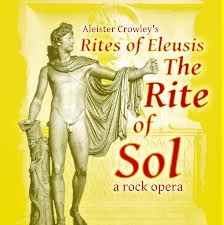
Rites of Eleusis
How do you celebrate the end of summer and the return of darkness? Octoberfest?

oldest Veteran’s memorial in the US
My 9th great grandfather was killed by my 11th great uncle. King Philip’s War was fought between the Wampanoag people and the colonists of Plymouth. This is the first, but not the last, war on American soil in which I had ancestors on both sides of the conflict. The memorial that commemorates this event is in preset day Providence, RI. It is the oldest Veterans memorial in the US. The vanquished native people were sent to the West Indies and sold into slavery. Nobody knows where the graves of my Wampanoag ancestors are.
Captain Michael Pierce was born in 1615 and died in1676. He and his descendants form the first American generation of Pierces in our family tree. Michael Pierce immigrated to the New World in the early 1640s from Higham, Kent, England to Scituate, in what later became Massachusetts. The ten year period from 1630 to 1640 is know as The Great Migration. During this period, 16,000 people, immigrated to the East Coast of North America.
Brother of famous Colonial Sea Captain, William Pierce. Captain Michael Pierce was the brother of the famous Colonial sea captain, William Pierce, who helped settle Plymouth Colony. Captain Michael Pierce played a significant role in the Great Migration. Historical records show that this one sea captain crossed the Atlantic, bringing settlers and provisions to the New World more frequently than any other. He had homes in London, the Bahamas and Rhode Island. He played a central role in the government of the early colonies. He was killed at Providence, one of the Bahama Islands, in 1641.
There were actually four Pierce brothers who made their mark on the New World: John Pierce (the Patentee), Robert Pierce, Captain William Pierce, and Captain Michael Pierce. All were grandsons of Anteress Pierce, and sons of Azrika Pierce and his wife Martha.
Marries Persis Eames. In 1643, Michael Pierce married Persis Eames of Charleston Massachusetts. His wife was born in Fordington, Dorsetshire England 28 October 1621. She was the daughter of Anthony Eames and Margery Pierce.
Pierce Family Moves to Scituate. Michael and Persis Pierce’s first child, a daughter, was born in 1645 and named Persis in honor of her mother. Unfortunately, their first child died in 1646 at one year of age. The new family settled first in Higham, but moved in 1676 to Scituate, where the Pierce family continued to reside for most of the next century. Scituate is located some 10 miles north of the original Plymouth colony. It was settled as early as 1628 by a group of men from Kent, England.
In 1646, Benjamin Pierce, their second child, a son and heir, was born. This son, Benjamin Pierce, fathered the second Pierce generation in this family tree. Twelve other children were born over the coming years: Ephraim, Elizabeth, Deborah, Sarah, Mary, Abigail, Anna, Abiah, John, Ruth and Peirsis.
Erected First Saw-Mill. Michael Pierce resided on a beautiful plain near the north river and not far form Herring brook. He assisted in erecting the first saw-mill. The mill was the first one erected in the colony. It is believed that Samuel Woodworth (1784-1842) wrote the song, “The Old Oaken Bucket,” concerning this river and mill in Scituate. Samuel Woodworth’s grandfather, Benjamine Woodworth, witnessed the signing of Captain Michael Pierce’s will, on January 1675. The lyrics to this classic American folk tune are given below:
How dear to this heart are the scenes of my childhood, When fond recollection presents them to view, The orchard, the meadow, the deep tangled wildwood, And ev’ry lov’d spot which my infancy knew. The wide spreading stream, the mill that stood near it, The bridge and the rock where the cataract fell. The cot of my father, the dairy house by it, And e’en the rude bucket that hung in the well. The old oaken bucket, the ironbound bucket, The moss-covered bucket that hung in the well. The moss-covered bucket I hail as a treasure, For often at noon when returned from the field, I found it the source of an exquisite pleasure, The purest and sweetest that nature can yield. How ardent I seized it with hands that were glowing, And quick to the white pebbled bottom it fell. Then soon with the emblem of truth overflowing, And dripping with coolness it rose from the well. The old oaken bucket, the ironbound bucket, The moss-covered bucket that hung in the well. How soon from the green mossy rim to receive it, As poised on the curb it reclined to my lips, Not a full flowing goblet could tempt me to leave it, Tho’ filled with the nectar that Jupiter sips. And now far removed from the loved situation, The tear of regret will intrusively swell. As fancy reverts to my father’s plantation, And sighs for the bucket that hung in the well. The old oaken bucket, the ironbound bucket, The moss-covered bucket that hung in the well.
Captain in the Local Militia Fighting the Indians. Unlike his famous brother, Captain William Pierce, Michael Pierce was not a sea captain. He attained the title, Captain, from the Colony court in 1669. Historical records show that he was first given the rank of Ensign under Captain Miles Standish, then later, in 1669, he was made Captain. These titles reflects his role as a leader in the local militia formed to protect the colony from the Indians.
Honored for Heroism in King Phillip’s War. Captain Michael Pierce’s memory is well-documented in American history. He is honored for the brave manner in which he died in defense of his country. The exact manner in which he died is repeated in more than 20 books and letters detailing the military history of the King Phillip’s War. This war took place between 1675 and 1676, and remains one of the bloodiest conflicts in American history. It was also a pivotal point in early American history. Although the English colonists were ultimately victorious over the Indians, it took the colonies over 100 years to recover from the economic and political catastrophy brought about by this conflict.
The battle in which Captain Michael Pierce lost his life is detailed in Drakes Indian Chronicles (pp. 220-222) as follows:
“Sunday the 26th of March, 1676, was sadly remarkable to us for the tidings of a very deplorable disaster brought into Boston about five o’clock that afternoon, by a post from Dedham, viz., that Captain Pierce of Scituate in Plymouth Colony, having intelligence in his garrison at Seaconicke, that a party of the enemy lay near Mr. Blackstorne’s, went forth with sixty-three English and twenty of the Cape Indians (who had all along continued faithful, and joyned with them), and upon their march discovered rambling in an obscure woody place, four or five Indians, who, in getting away from us halted as if they had been lame or wounded. But our men had pursued them but a little way into the woods before they found them to be only decoys to draw them into their ambuscade; for on a sudden, they discovered about five hundred Indians, who in very good order, furiously attacked them, being as readily received by ours; so that the fight began to be very fierce and dubious, and our men had made the enemy begin to retreat, but so slowly that it scarce deserved the name, when a fresh company of about four hundred Indians came in; so that the English and their few Indian friends were quite surrounded and beset on every side. Yet they made a brave resistance for about two hours; during which time they did great execution upon their enemy, who they kept at a distance and themselves in order. For Captain Pierce cast his sixty-three English and twenty Indians into a ring, and six fought back to back, and were double – double distance all in one ring, whilst the Indians were as thick as they could stand, thirty deep. Overpowered with whose numbers, the said Captain and fifty-five of his English and ten of their Indian friends were slain upon the place, which in such a cause and upon such disadvantages may certainly be titled “The Bed of Honor.” However, they sold their worthy lives at a gallant rate, it being affirmed by those few that not without wonderful difficulty and many wounds made their escape, that the Indians lost as many fighting men in this engagement as were killed in the battle in the swamp near Narragansett, mentioned in our last letter, which were generally computed to be above three hundred.”
Today, in Scituate, there is a Captain Pierce Road.
In Cumberland, Rhode Island, there is a monument called Nine Men’s Misery. A tablet near the monument reads:
NINE MEN’S MISERYON THIS SPOT WHERE
THEY WERE SLAIN
BY THE INDIANS
WERE BURIED
THE NINE SOLDIERS
CAPTURED IN
PIERCE’S FIGHT
MARCH 26, 1676
The monument is located in a dark, place in the woods, near a former monastery. The monastery is now a public library. The monument consists of little more than a pile of stones cemented together by a monk and marked with a plaque. However, this site is of major historical significance because it is concidered to be the oldest monument to veterans in the United States.
1. Captain Michael Pierce born 1615; died 3/26/1676.
married Persis Eames, 1643 (born. Oct. 28, 1621; died Dec. 31,1662). Micheal Pierce and Persis Eames had these 13 children:
2. Persis Pierce, born 1645. Persis died 1646 at 1 year of age. 3. >>>Benjamin Pierce, born 1646. 4. Ephraim Pierce, born 1647. Ephraim died 1719 at 72 years of age. 5. Elizabeth Pierce, born 1649. She married a Holbrook and gave birth to Captain Michael Pierce’s only two grandchildren at the time of his death who are mentioned in his will: Elizabeth Holbrook and Abigail Holbrook. 6. Deborah Pierce, born 1650. 7. Sarah Pierce, born 1652. 8. Mary Pierce, born 1654. She married Samuel Holbrook, 23 June 1675. Samuel was born in Weymouth, Mass 1650. Samuel was the son of William Holbrook and Elizabeth Pitts. Samuel died 29 October 1712 at 62 years of age. Mary Pierce and Samuel Holbrook had the following six children: Persis, Elizabeth, Bethiah, Samuel, Elizabeth, and Mary. 9.Abigail Pierce, born 1656. Abigail died 1723 at 67 years of age. 10. Anna Pierce, born 1657. 11. Abiah Pierce, born 1659. She married Andrew Ford. 12. John Pierce, born 1660. John died 28 June 1738 at 77 years of age. He married Patience Dodson 12 December 1683. 13. Ruth Pierce, born 1661. 14. Peirsis Pierce, born 1662. Persis 3 December 1695. She married Richard Garrett, 3rd, who was born in 1659. They lived in Scituate, Mass. and had three children: John (born 1706), Anna, and Deborah.
married Mrs. Annah James sometime soon after 1662. They had no children. Captain Michael Pierce remained married to Annah Pierce until his death. Annah Pierce is well provided for in his will.
Michael Pierce (1615 – 1676)
is my 9th great grandfather
Ann Pierce (1640 – 1655)
daughter of Michael Captain Pierce
Sarah Kinchen (1655 – 1724)
daughter of Ann Pierce
Philip Raiford (1689 – 1752)
son of Sarah Kinchen
Grace Raiford (1725 – 1778)
daughter of Philip Raiford
Sarah Hirons (1751 – 1817)
daughter of Grace Raiford
John Nimrod Taylor (1770 – 1816)
son of Sarah Hirons
John Samuel Taylor (1798 – 1873)
son of John Nimrod Taylor
William Ellison Taylor (1839 – 1918)
son of John Samuel Taylor
George Harvey Taylor (1884 – 1941)
son of William Ellison Taylor
Ruby Lee Taylor (1922 – 2008)
daughter of George Harvey Taylor
Pamela Morse
I am the daughter of Ruby Lee Taylor
When I read that he’d died during the Great Swamp Fight, it peaked my interest so I bought a book called King Philip’s War The History and Legacy of America’s Forgotten Conflict, by Eric B. Schultz and Michael J. Tougias. The following is an excerpt from the book describing Michael Pierce’s involvement in the conflict.
KING PHILIP’S WAR
PIERCE’S FIGHT, CENTRAL FALLS, RHODE ISLAND
The ambush of Captain Michael Pierce and his Plymouth Colony soldiers
occurred on Sunday, March 26, 1676, in the present-day city of Central
Falls, Rhode Island. Sometimes attributed to the Narragansett sachem
Canonchet, this ambush was in many respects a textbook military operation.
Several friendly natives escaped the engagement, but only nine English
survived, and these nine men were later discovered dead several miles
north of Central Falls in present-day Cumbedand, Rhode Island, a site now
known as Nine Men’s Misery. Not only was the ambush deadly for Pierce
and his men, but it was devastating to the morale of the colonies which, on
the very same day, witnessed the murder of settlers in Longmeadow, Massachusetts,
the burning of Marlboro, Massachusetts, and the destruction of
Simsbury, Connecticut.
Pierce, a resident of Scituate, Massachusetts, had gathered in Plymouth
a force of Englishmen from Scituate, Marshfield, Duxbury, Eastham, and
Yarmouth, supported by twenty friendly natives from Cape Cod. Together,
this band marched to Taunton, then along the Old Seacuncke Road
(Tremont Street) to Rehoboth (now East Providence, Rhode Island).
There, they were joined by several men from Rehoboth, expanding their total
number to sixty-three English and twenty friendly natives.
Reports indicated that a large group of the enemy had gathered in the
area of Pawtucket Falls, an ideal location from which to catch alewives,
salmon, and shad, and a natural fording spot in the river.149Pierce and his
men set out in pursuit. On Saturday, March 25, they skirmished with the
Narragansett, perhaps north of the falls, where, historian Leonard Bliss
concludes, Pierce “met with no loss, but judged he had occasioned considerable
to the enemy.”
It is not unreasonable to think that Pierce had skirmished with a small
patrol sent intentionally to meet and test the English-an exercise broken
off by the natives once they had gathered information on the size and”
strength of their opponent. In any event, Pierce met no other natives and returned
for the night to the garrison at Old Rehoboth. Meanwhile, armed
with information from the skirmish, native leaders undoubtedly set to work
devising a trap for the English troops.
On Sunday, March 26, Pierce and his troops returned to the field, probably
marching from present-day East Providence, north along the Seekonk
River (which becomes the Blackstone River), back toward Pawtucket Falls.
It is said that as they marched, they were watched by Narragansett from
Dexter’s Ledge, now the site of Cogswell Tower in Jenks Park, Central Falls
(rough distance and heavily wooded terrain made this questionable).
Somewhere close to the Blackstone, perhaps near a fording spot where
Roosevelt Avenue now crosses the river, in what Bliss describes as an
“obscure woody place,” they spotted four or five Narragansett fleeing as
if wounded or hurt. Had a more experienced commander witnessed this
show, he might have immediately fallen back. However, Pierce and his
troops charged after the bait, suddenly finding themselves surrounded by
“about 500 Indians, who, in very good order, furiously attacked them.”
Pierce apparently met the ambush on the eastern side of the Blackstone,
but crossed to the western side, where the natives were engaged in force. A
contemporary account of the battle by an anonymous Boston merchant,
paraphrased by Bliss, made the English out to be as heroic as possible, but
the devastation was complete:
Our men had made the enemy retreat, but so slowly, that it scarce deserved
the name; when a fresh company of about 400 Indians came in,
so that the English and their few Indian friends, were quite surrounded
and beset on every side. Yet they made a brave resistance for above two
hours, during all which time they did great execution upon the enemy,
whom they kept at a distance, and themselves in order. For Captain
Pierce cast his 63 English and 20 Indians into a ring and fought back to
back, and were double-double distance all in one ring, whilst the Indians
were as thick as they could stand thirty deep: overpowered with
whose numbers, the said captain, and 55 of his English, and 10 of their
Indian friends were slain upon the place; which, in such cause, and
upon such disadvantages, may certainly be styled the bed of honour.
It is unlikely, of course, that nine hundred natives participated in the ambush.
Nor does it seem logical that eighty-three men, disadvantaged by surprise,
terrain, and numbers, would have much chance of forcing even four
hundred warriors to retreat. (Contemporary writers reported that Pierce
and his men killed 140 of their enemy, a figure undoubtedly inflated.)
However, if Pierce and his troops crossed the Blackstone near present-day
Roosevelt Avenue, the battle may have moved northward along the river to
a spot near present-day Macomber Field on High Street, where a commemorative
marker was placed in 1907. The marker reads:
PIERCE’S FIGHT
NEAR THIS SPOT
CAPTAIN MICHAEL PIERCE
AND HIS COMPANY OF
PLYMOUTH COLONISTS
AMBUSHED AND OUTNUMBERED WERE
ALMOST ANNIHILATED
By THE INDIANS
MARCH 26 1676
ERECTED By THE STATE OF RHODE ISLAND
IN 1907
A visit to this site today places the traveler in a heavily industrialized area
surrounded by factories and baseball fields. It is worth remembering, however,
that Central Falls was once the “North Woods” of Providence and
remained only sparsely settled throughout the eighteenth century.
Marching along, Pierce would have seen a wooded land of oak, walnut,
chestnut, and birch trees with three falls (Pawtucket to the south, Valley to
the north, and Central near the crossing at Roosevelt Avenue) supplying the
Narragansett with rich fishing grounds. ’59Bycontrast, present-day Central
Falls is so densely built that the Blackstone River is all but invisible from
nearby Cogswell Tower.
Not all of Pierce’s troops died in the ambush. Several of the friendly natives
devised ingenious means of escape. One blackened his face with powder
like the enemy and passed through their lines without incident.16oAnother
pretended to chase his comrade with a tomahawk, the two running past
their enemies and on to safety.161It appears also that nine English soldiers
escaped death during the ambush, though the details of their story are conjecture
only. One tradition holds that they had gone ahead of the main body
of troops and were chased into present-day Cumberland, where they made
their stand against a large rock and all perished.161
A more plausible explanation is that these nine survived the ambush,
were taken prisoner, and were marched northward about three miles to a
piece of upland surrounded by swamp known as Camp Swamp. Here, upon
a large rock, they were executed. It was several weeks before their bodies
were found, scalped and uncovered, on this rock. The men were buried
some seventy yards northeast of the rock in a common grave. Above this
grave a heap of small stones was used to construct a fourteen-foot-Iong
stone wall, some three feet high and one foot wide at the base. To this
day, residents know this place as Nine Men’s Misery.
In the early twentieth century a cairn of stones (since damaged) was
placed over the spot, and in 1928 a granite marker was set by the Rhode Island
Historical Society. The marker reads:
NINE MEN’S MISERY
ON THIS SPOT
WHERE THEY WERE SLAIN BY
THE INDIANS
WERE BURIED THE NINE SOLDIERS
CAPTURED IN PIERCE’S FIGHT
MARCH 26, 1676
The cairn and marker can be found near the former Cistercian Monastery
on Diamond Hill Road, about six-tenths of a mile south of Route 295 in
Cumberland. (These grounds are now home to the Hayden Library, the
Northern Rhode Island Collaborative School, the Cumberland Senior Citizens
Department, and other city services.) A dirt road, heading northnortheast
from the northeast corner of the grounds, leads directly to the
site, which requires about a quarter-mile walk. (Many residents walk and
jog in this area and are able to point a visitor in the right direction.)
Around the time of the American Revolution a physician dug up remains
from the grave, identifying one skeleton as that of Benjamin Buckland
of Rehoboth by its large frame and double set of teeth.r65 When the
Catholic Order of Monks purchased the land, remains of the men killed at
Nine Men’s Misery were dug up and given to the Rhode Island Historical
Society. During the 1976 bicentennial celebration, after the land had been
turned over to the town of Cumberland for its use, the bones were reburied
at their original site.

squash blossom
Although this well produced story is actually an ad for Chipotle Mexican Grill I believe it is worth sharing with everyone who buys and eats food. I believe cruelty and waste are built into the American economy and fed to all of us; this is not inevitable or even reasonable. Cruelty and waste are the root cause of our environmental problems, including the human obesity epidemic. While I would love to see more whole foods produced and eaten locally, just stepping away from heavily processed and transported foods is the first baby step to liberate the energy we spend freezing, storing and shipping our nutrients. American kids are not familiar with the sources of food, other than the drive up window. The entire society pays for the ignorance in the form of what is known as health care. It is time to put self-care and prehabilitaion on the menu in the United States. It is easy, clean, and leads to tastier dining. Stop feeding the industrialized food monster and start nourishing your home and family. Eat something raw and local today, Gentle Reader. Sorry it is so hard for most of you Americans to find.
In the United States we have post and future traumatic stress over the date September 11. We have built memorials, and have sacrificed lives around the world in reaction to September 11, 2001. Each year the date returns to mark our progress or our immersion in maya. The Yom Kippur War between Syria, Egypt and Israel is celebrating a 40th anniversary this year. This date represents heavy issues and memories to all players in that region. If we continue on the current path we should expect the future September 11th’s and Yom Kippurs to have a very creepy ring of dejá vu. This week in the Jewish calendar is set aside for paying debts and clearing the slate with confession and repentance. Each year there is a chance to forgive and be forgiven in a formal and conscious way in order to start the new year at peace. Each year we have used the dates to strengthen our resolve to take matters into our own hands and fix the universe. This is not our job. Our job is to be still and know that the same scene is being replayed in our lives for a liberating and educational reason. Our job is to shut up and get it.

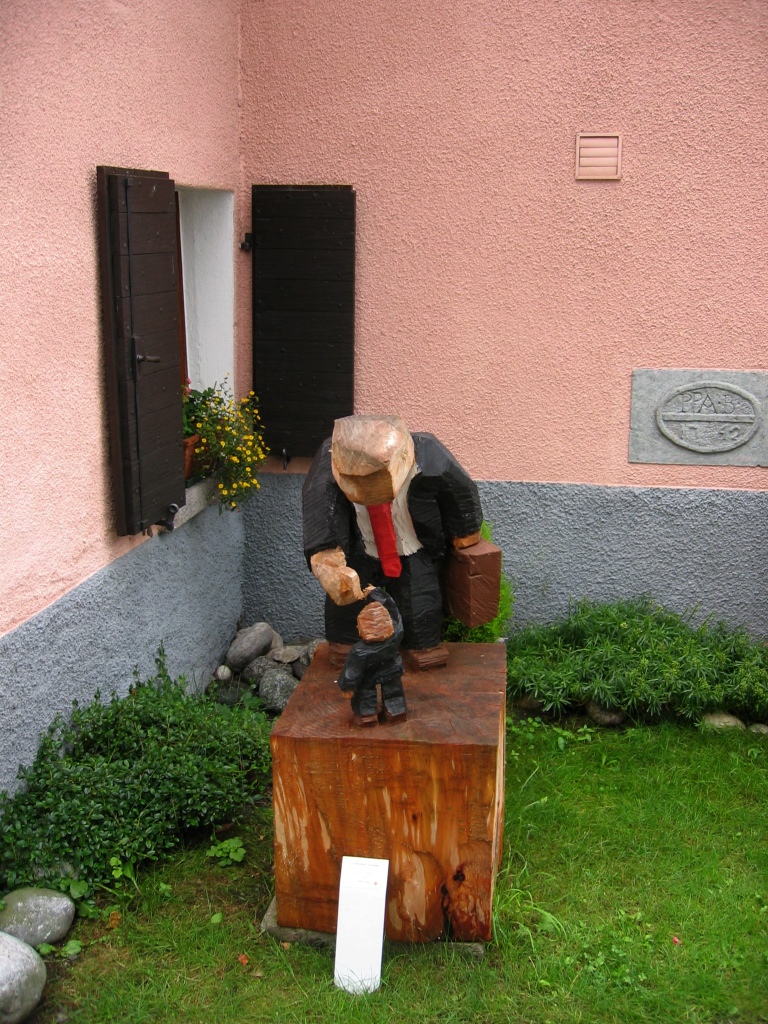
Big man Little man
I grew up in heavily industrialized Pittsburgh in the 1950s. Coal Mines, steel mills, and other factories were staffed by union labor. The cruel and unusual history of Andrew Carnegie vs. the labor unions was close to the surface and burned into the memory of the workers. They had decent wages and retirement benefits won through very tough negotiation, but they would not guess how the tables would turn on both the workers and the owners of steel mills. Today the city has a strong economy based in part on the petroleum industry boom, but the mills went under, stripping the retirement benefits from the workers as they went into bankruptcy. The old way of creating and defining value no longer exists.
Today the new magazine from Chris Brogan, my first and favorite SoMe teacher has launched. The free publication is called Owner, and I subscribed instantly since Chris has never let me down in the past. His good friend and fellow entrepreneur, S Anthony Innarino, has written an excellent article for the first issue which takes a good look at value and expectations. Welcome to the Disruptive Age tells it like it is and invites the reader to take ownership of his or her own time and energy. We have entered a time in which it is not only extremely important to define and create value, but also to find ways to harvest more value for ourselves. This will involve knowing both what is most valuable to your customers and what you value most. Time is not money; It never has been, but the contracts of the past created a structure in which labor, time and money seemed hard to disentangle. In today’s economy disruption is the key to value.
business

business pigs

Seal of Virginia
Sara Rebecca Lewis, my 7th great grandmother, was born in colonial Virginia. She married James Jones in 1665.
Sarah Rebecca Lewis (1643 – 1725)
When her husband died she was given 4 human beings and the right to live on the plantation for life. Reading her husband’s will I notice how all the slaves, even the unborn ones, are willed as chattel to the members of the Jones family. The document starts with Almighty God and then moves directly into slavery. This is how Virginia was colonized:
Will of James Jones (I) (Chappell, Dickie & Other Kindred Families, p.63-4)
In the name of God. Amen. I James Jones (I) being weake and sick but of sound and perfect mind and memory, praise be therefore given to God, doe make and ordain this my present Last Will and Testament in the manner and form following, that is to say. First and principally I commend my soul into the hands of Almighty God, hoping through the merritts, Death and passion of my savior Jesus Christ to have full and free pardon of all my sins and to inherit everlasting life; and my body I commit to the earth to be decently buried at the discretion of my Executor, hereinafter named, and as touching the Disposition of all such temporal estate as it hath pleased Almighty God to bestow on me I give and dispose thereof as follows:
First. I will that all my debts and funeral expenses shall be paid and discharged.
Item. I will that my loving wife have the Labour of four negroes during her natural life, they are named Will, Robin, Maria and Betty. Provided they are not removed off the plantation I now live upon, if they are, then Immediately to return to my executor, which plantation I will my wife shall live Upon during her life.
Item. I give my wifes two sons two Negro children, one named James, the other unborn, the first child that either Betty or Maria shall bring to be the other, which two negro children to be Disposed of to my wifes two sons as she shall think fit, the unborn and the born child James to be and remain with their mothers till they come to the age of two years and a half year. My will is likewise that my wife have during her life what household stuff my executor shall see fit and that she have a reasonable yearly maintenance out of my stock.
Item. I give to my daughter Mary Dardin my negro man Jo –during her life.
Item. I give to my daughter Elizabeth a negro named Hanna to be at her disposal to do as she sees fit.
Item. I give to my daughter Hanna one negro named Jack to be at her disposal at her death or before as she sees fit.
Item. I give to my daughter Rebecca two hundred acres of land, lying in Surrey county, beginning from the Swamp up by the Spring, South, to the outline, that to be the headline, to her and her heirs forever.
Item. I give to my Granddaughter Eliza Glover, one hundred acres of land on the south side of Pond Runn, to be her and her heirs forever.
Item. I give to my grandson James Jones, this my plantation I live upon after my wifes Decease and all my land in Prince George county, after his father and mothers Decease, to him and his heirs forever.
Item. I give to my Grandson Thomas Chappell (Thomas Chappell Sr. (III)) one hundred acres of land lying in Surrey county from the Swamp South, joining upon William Cocke above the outline, to him and his heirs forever.
Item. I give to my Granddaughter Jane Cocke, daughter of John Cocke, one negro named Amy to her and her heirs forever as also one feather bed and bolster, one rug and one blanket, and if the ticke be bad Lett a new ticke be bought, as also two young cows, one young mair, One Iron Pot, two Pewter Dishes and one Doz.of Spoons.
All the rest and Residue of my personal Estate, goods and chattel whatsoever, I do give and bequeath to my Loving son James Jones, full and sole Executor of this my last Will and testament and I do hereby revoke, disannul and make void all former wills and Testaments by me heretofore made.
In Witness whereof I, the said James Jones (I) to this my last will and testament do set my hand and seal this the 6th day of April A.D.1719.
James Jones Seal (Sealed with wafer)
Signed and sealed in the presence of: Gilbert Hay Edward Prince Thomas Temple
At a Court held at Merchant’s Hope for Prince George County on the second Tuesday, in May, being the twelfth day of said month, A.D.1719, the above written last will of James Jones, deceased, was exhibited in Court by James Jones, his Executor, who made oath thereto and it being proven by the oaths of the witnesses thereto a certificate was granted to the said James Jones for obtaining a Probate in due form. Teste: Wm. Hamlin, Clerk
Wife’s letter to the Court:
Worthy Sirs: Having seen and heard read the Last Will of my late husband, James Jones, deceased, I therefore think fit to acquaint your W.p.T. that I think myself justly dealt by therein and to prevent further disputes I desire the will probated, I being willing to rely on the Legacy left me in said will. Given under my hand and seale this 20th April 1719.
Her Sarah X Jones Mark Seal (Sealed with red wafer)
Teste: E. Goodrich Mary Loyd
To the Worshipfull: His Majesty’s Justice of the Peace for Prince George County
I attended the services of the Sikh gurdwara to see and hear my friend Nirviar Kaur Khalsa play her instrument, the taus. She showed me the beautifully carved string instrument a few weeks ago after the services had concluded. She practices on the taus about two hours daily to create the background ragas for the shabads she chants for the ceremony. Her voice is very well practiced to paint these musical pictures of the one, the friend, the eternal guru. The message reminded me of the Sufis, but the service reminded me a lot of Jews and Catholics. The music is all in minor keys (like Jewish music) , and there is no written vocal music. This technique is passed down in person in the same way the Torah is taught in person. The music itself is the prayer and the meditation for the congregation, not unlike chanting in Latin or Hebrew. Her vocation to study and revive some of the most ancient shabads is now her passion. She shares this talent and hard work because she wants to embody inner peace in the Sikh tradition. Although I am not a Sikh I can appreciate her historical preservation efforts as well as the ideas she promotes in her practice.
I asked some of the congregation how they feel about her dedication to master this ancient art and religious practice from India. She is very highly praised by everyone. One lady I had met on my previous visit told Nirvair as she left she wished she could leave a tip for the music, which is a common practice in India. It is remarkable that she is so committed to her vocation to preserve this tradition here in the United States. I learned that professional ragis from Phoenix charge $500 a visit to come to your gurdwara and do the music. Since the entire service is sung the importance of the musical accompaniment is central to the experience.
My tribal sister Rayshay has attended a training offered by the Justice department to teach individuals how to have a conversation about race. I admire her courage and conviction in stepping up to the plate on this issue. She lives in Philly, and I live near the Mexican border in Tucson, so we have different perceptions of where we are today. I am also older, and lived in Texas in 1967-70, when civil rights were a really big deal, not in a good way. I would not take up this subject on my own. This is the first time I have responded to a prompt, but I think this discussion is important, so I hope some of my readers will decide to write a piece this week also.
In response to Rayshay’s next question: Where are we now? Where I live the strong elements of denial and us vs them mentality are damaging our quality of life. Racism is unfortunately integrated into politics and business. If you think national politics looks magnetized to the extreme, just take a walk on the wild side down here at the Mexican border of Arizona.
Here in Tucson racism is very likely to be emotionally bound to the border and immigration. The race/language/culture issues we have are about being Mexican and or Native American in a land once exclusively owned by your ancestors. Arizona became a state in 1912, so very different from Pennsylvania, one of the 13 colonies. The border itself is an unnatural place to stop anything or anyone. A long stretch of the Arizona border is on tribal land, which is a sovereign nation belonging to the people who were undoubtably here first, the Tohono O’odam. Arizona was part of Mexico; some land ownership in Arizona is documented by Spanish land grant. Rich mines belonged to the Apache tribes, and there were resources to create a thriving economy. Now we suffer from a water shortage that is unsustainable. Golf, cows, and general waste of our water has left the southwest in a pickle…literally. The salty groundwater leaves minerals in the ground that eventually make plant growth impossible. It is late in the game to decide who took what from whom; the resource of water has been depleted for everyone.
Politics in Arizona are tied to race, language, and Mexico. The school district in Tucson has been ordered to stop teaching a curriculum in ethnic studies. This complex and emotional issue brought out the worst in everyone. Some of the books from the program were apparently banned from all the libraries after the closure. There is bitterness on both sides of this issue. If public education becomes a reason to bicker, all students loose. Where we are in Arizona is nowhere near the place we need to be for a thriving and honest economy that serves the best interest of society.