mermaidcamp
Keeping current in wellness, in and out of the water
You can scroll the shelf using ← and → keys
You can scroll the shelf using ← and → keys

Perkins COA
My 10th great-grandmother was born in England and died in Massachusetts. She sailed to the new world with her parents and settled in Ipswich. She probably met her husband there. They moved to Newbury and then to Amesbury, MA, where they laid down some very litigious history in the records of the courts of that town. It seems her husband was the more litigious of the two, but I am grateful for the records, so we know something about them today.
Elizabeth came to America with her family aboard the Lyon, William Pierce, master on 1 December 1630 for its first trip to the New World. They embarked in Bristol, England and arrived in Nantasket, Suffolk co., MA on 5 February 1631.
The Sargent family were some of the original settlers of the Agawam section of Ipswich, Essex co., MA, with William receiving 12 acres in the 1634 Ipswich Land Grant. The family later moved to Newbury, Essex co., MA; Hampton, Rockingham co., NH; Salisbury, Essex co., MA and finally Amesbury, Essex co., MA. Remember that NH & ME were all part of MA at the time. The family moved from Newbury to Hampton because “…’Willli[am] Sergant’ was amongst the list of petitioners mostly Newbury men who were headed by Stephen Bachiler, who were on 6 September 1638 granted ‘liberty to begin a plantation at Winnacunnet [what is now Hampton, Rockingham co., NH]..” And “Will[iam] Sargent” is listed as one of the married men in the list of first comers to Hampton.
The Sargents found themselves in court over disputes with their neighbors on many occasions. Given the fact that this pattern of contentiousness continued after Eliabeth’s death, I contend that William was the fractious party in the area. On 26 December 1643, William “Sargeant” sued Mr. William Hook of Salisbury for 56s. in corn[67,68]. William acknowledged the court’s judgment in favor of Mr. Jonathan Wade on 26 September 1648. Michael Spencer sued him for detaining corn and other goods on 2 January 1650.
But the biggest battles were reserved for their near neighbors, the Martins. Either William or his namesake son was sued for slander on 13 April 1669, because the Sargent in question had called Martin’s wife “a witch”. The bad blood transcended generations, for Martin later sued William’s son Thomas Sargent “…for saying that his son George Martin was a bastard and that Richard Martin was Goodwife Martin’s imp…”
In 1672, William Sargent and Joanna his second wife sued Christopher Osgood for debt due part of the estate of Joanna’s late husband, Valentine Rowell. However, Joanna was curiously not mentioned in his will, although she had married him a few months earlier. To contemporary credible researchers, this strongly suggests that there was a pre-nuptial agreement between them which left Joanna nothing.
Elizabeth Judith Perkins (1611 – 1670)
is my 10th great-grandmother
Mary Sargent (1634 – 1716)
daughter of Elizabeth Judith Perkins
John Challis (1655 – 1741)
son of Mary Sargent
Mary Challis (1699 – 1739)
daughter of John Challis
Amos Nicholls (1740 – )
son of Mary Challis
Amos Nicholls (1780 – )
son of Amos Nicholls
Amos Nicholls (1808 – 1868)
son of Amos Nicholls
Emiline P Nicholls (1837 – )
daughter of Amos Nicholls
Harriet Peterson (1856 – 1933)
daughter of Emiline P Nicholls
Sarah Helena Byrne (1878 – 1962)
daughter of Harriet Peterson
Olga Fern Scott (1897 – 1968)
daughter of Sarah Helena Byrne
Richard Arden Morse (1920 – 2004)
son of Olga Fern Scott
Pamela Morse
I am the daughter of Richard Arden Morse
Elizabeth PERKINS was christened/baptized on 3 MAR 1611 in Hillmorton, Warwickshire, England. She immigrated on 1 DEC 1630 from England to America. She died on 18 SEP 1670 at Amesbury, Essex County, Massachusetts. She has Ancestral File Number 7TTF-7J. Elizabeth’s father came from England in the ship “Lyon” with Roger Williams, in 1631; lived in Boston two years; settled in Ipswich in 1633;
Sailed on the “LYON”, William Peirce, Master, from Bristol December 1, 1630, and arrived February 5, 1631, with about twenty passengers and two hundred tons of goods.
SOURCE: 1. Ancestral File (TM), data as of 2 January 1996, Family History Library, 35 North West Temple, Salt Lake City, Utah 84150
2. Perkins Family in Ye Olden Times. p 78-79 (B11C27)
3. Old Families of Salisbury & Amesbury, Mass by Hoyt, p 281 (Mass S&)
4. Dawes & Allied Families by Mary Walton Ferre, p 484-85 (B12F12)
5. Planters of the Commonwealth, Charles E. Banks 1930
6. Hoyt’s “Old Families of Salisbury and Amesbury” page 281/282 (John Perkins #12)

questions answered

paleo snacks

bone broth explained

kraut fans

kraut fans
My latest craze is making sauerkraut. I discovered Garden Goddess Ferments products at a farmer’s market in Scottsdale a couple of weeks ago. We returned to Phoenix the following weekend to buy more sauerkraut and attend a workshop about making fermented foods. Suzette Smith of Garden Goddess Ferments organized an expo with break out learning sessions at the Office Pile. The space was perfect for the event, and many interested patrons turned out to learn more about eating healthy food. Healthy snacks, bone broth, personal chef services, and health coaching tables greeted guests, and classes were held both upstairs and in a conference room.
The fermented food class Suzette taught was so basic, simple, and informative that anyone could leave and go make kraut after attending. She told us about the benefits of the natural probiotic cultures and how she created her own delicious line of small batch artisanal krauts which she sells to the public. She also has for sale hand made crocks and cabbage shredders for the home fermenter. She forgot to bring the tool with which she had planned to mash the cabbage, so while she gave her informative lecture she pounded the cabbage with her fist until it yielded enough liquid to submerge itself. It really drove home the primitive, and as Suzette stressed in the class, forgiving nature of this process. If you have a glass or stainless steel vessel, a cabbage, a small amount of salt and a fist you can preserve food like our ancient ancestors. The mixture was rubbing up immediately, demonstrating the basic chemistry involved. This is the most natural way to preserve food and keep it alive.
It is so simple I can’t believe we are not all doing it all the time. I am hooked. I had both succeeded and failed in the past with large batch kraut in a ceramic crock. After seeing the class I understood that I had used too much salt and left it in the crock too long. Other students reported the same thing. This is what we got for following directions. This is one of those hands on experiences, like bread baking, that can be best learned by personal observation. Suzette is enthusiastic about the healthy possibilities and has developed a range of zesty flavorful krauts containing very healthy ingredients such as ginger, garlic and turmeric. The difference between her products and commercial krauts is the living probiotic culture present in the home made version. Bubbbie’s is the only live sauerkraut I know on the market, but she does not have anything like the range of flavors Garden Goddess offers. Suzette also creates seasonal varietals. Right now at home I have Kowboy Kraut, finished with cumin, Kristmas Kraut with some apple and my favorite, Power Kraut, made with red cabbage, garlic, ginger, and turmeric. She is constantly creating new and exciting combinations. If you live in the Phoenix area I urge you to run right out and buy some Garden Goddess kraut. Your digestion will thank you for it.
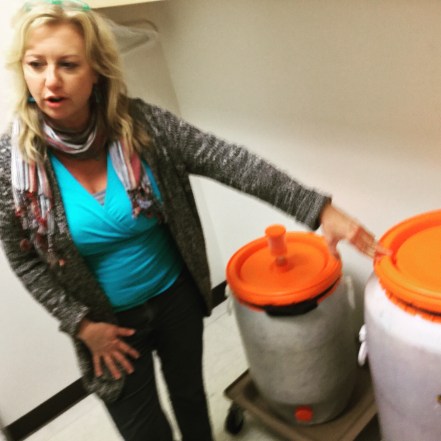
Suzette in her kitchen
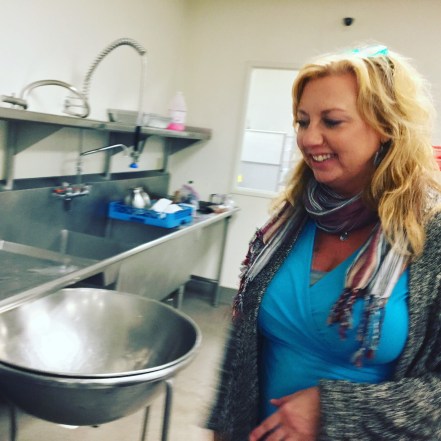
Suzette in her kitchen

The Garden Goddess
The “meaning of the holidays” is a phrase that has been diluted. Although this commercial venture of the company was done for public relations purposes, there could be no better public relations. I wish all the gentle readers comfort and joy for the season and beyond.

Retro Toy Theme

family fun on the street
As part of the Tempe Festival of the Arts everyone was invited to draw on the street downtown. Participants in the professional art show covered large spaces and stuck to the theme “Retro Toys”. The creativity as well as the stunning artistry was very impressive. Watching the work evolve each day is a major part of the fun for us. The artists don’t mind a little visiting while they work. We left before the end to drive back to Tucson, but think I will stay until the end next year. All of the work is amazing considering the medium and the way they have to work. Many of the artists we met were from Tempe, but they came from all over to compete and make the street look extra special for the holiday.



The community participation was the best part. I purchased my chalk and joined the youngsters on the street. I had a very good time meeting my fellow artists on kneepads. I paid $5 to support the festival, and got to keep my chalk to take home and practice on my own driveway. I was pleased with the way my piece turned out, but after I packed up and left it occurred to me that I could have done more than one square..nobody would have stopped me. The way the community mosaic mural looked on Sunday morning was superb. All the styles went together very well to show a patchwork of visitor talent right next to the sidewalk. I am proud to leave my mark on Tempe, and thank that very artsy city for the opportunity to do so.


chalk mural artists


chalk mural artists

retro toy

chalk mural artists

artist on kneepad
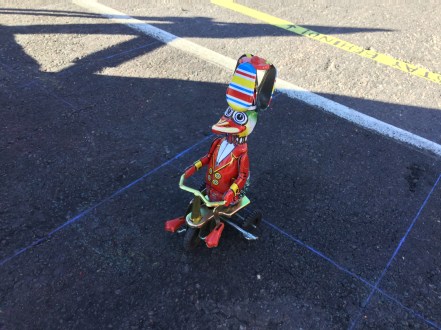
retro toy

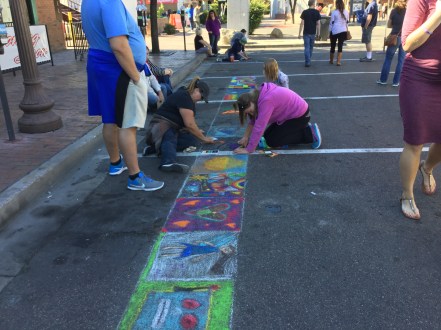
family fun on the street
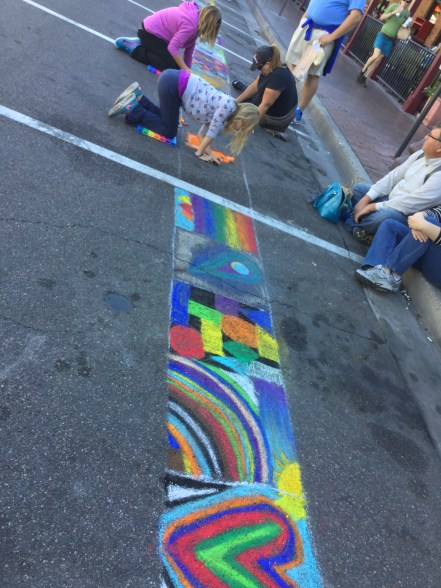
artists on kneepads
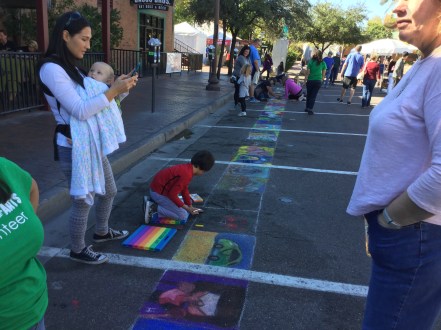
family fun on the street
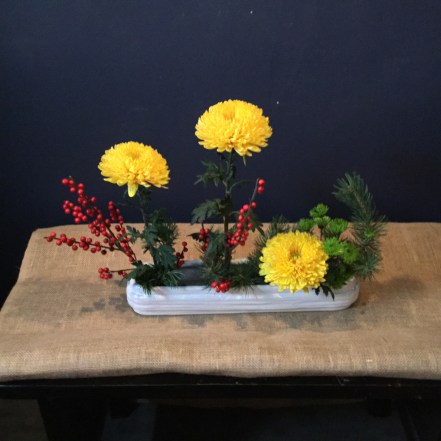
Ohara School

outdoor exhibit

outdoor exhibit

outdoor exhibit
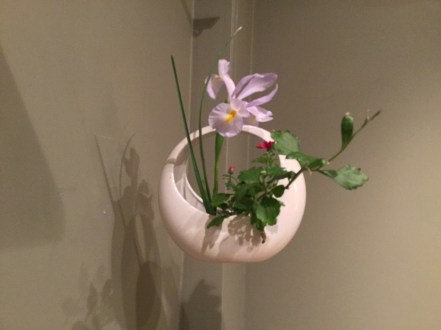
indoor exhibit
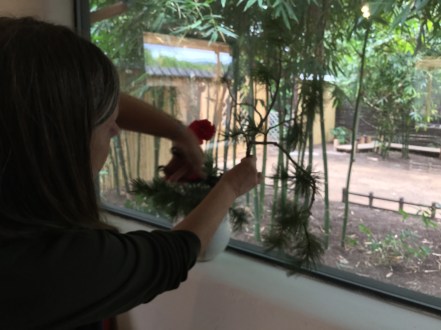
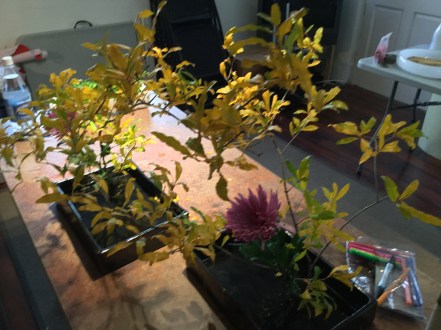
Tomorrow is the last day of the annual Ikebana event at Yume Japanese Gardens of Tucson. This delightful addition to the garden’s peaceful atmosphere is wonderfully worth a visit. The works are displayed in all parts of the gardens as well as in two interior galleries. There are well defined spaces that allow contemplation or mindfulness practice at Yume any time you visit. To see these adorned with Ikebana is a real invitation to deep meditation. The work itself is done as a meditative practice, finding the best way to use the plant materials to express art. The relatively short life of the materials is an element of the contemplative experience for me. Like sand mandala they will be discarded in the future, with less ceremony.
I was very lucky to be invited to the arranging pre party where I met artists and teachers working on the show. The universe of Ikebana was unknown to me, but it took a very enjoyable guided tour. It was clear to me that in the group situation some found it more difficult than others to be immersed in the creative process. I asked questions but did not want to get carried away and become a big distraction. Once I tuned in to what was happening it reminded me of yoga. The teacher comes around and gives assistance and guidance to to student while the work is in progress. There is a reverent attitude toward the plant materials, and quiet concentration. When I saw all the finished pieces in the show I was impressed with the work in all of them. They caught a seasonal natural harvest in whimsical harmony with the moment in which it was created. The curation of the show is done so that every piece looks natural and harmonious with the surroundings. For this Thanksgiving weekend Yume, which means dream, is one big flower arrangement containing many arrangements. It is the perfect place to be one with nature right in the center of the city of Tucson.
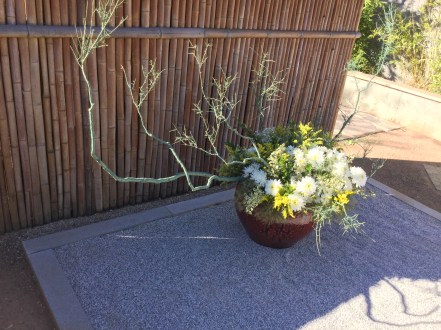
Ikebana in the garden
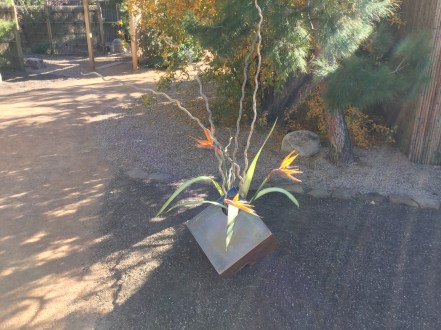

Ikebana in the garden
Make sure you take a look around all the corners because there are arrangements tucked into the gardens like a treasure hunt. The indoor galleries are also very well curated to show a range of styles. I am a happy newcomer to this exciting form of art and meditation.

indoor gallery
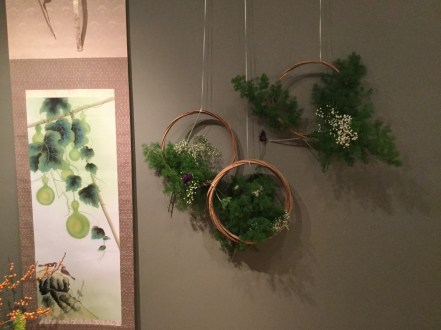
indoor gallery

indoor gallery
I was lucky to catch up with Patricia Deridder at the Yume Japanese Gardens of Tucson as she prepares for this weekend’s big Ikebana exhibit. She is the founder of the gardens, a teacher, and still a student, of Ikebana. She has organized a group of masters who will show their work over the weekend in the gardens. This very special treat will give the public an idea of the different schools of Ikebana and the individuals who live here and practice these special arts. There are monks in Japan who do this practice as meditation. Anyone involved in this way of looking at flower arranging will discover elements of mediation or merging with nature.
I am thrilled to have this artful peaceful alternative to Black Friday shopping offered in my neighborhood. If you happen to be in Tucson this event is offered with the regular entry fee, or to members as part of our membership. This is a wonderful opportunity to be immersed in nature carefully and beautifully crafted by artists. I am excited to learn more and enjoy the show. The three pieces I watched in progress all came out beautifully.
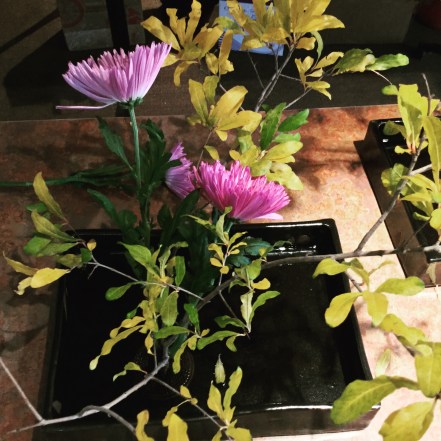
flower show in progress

freestyle
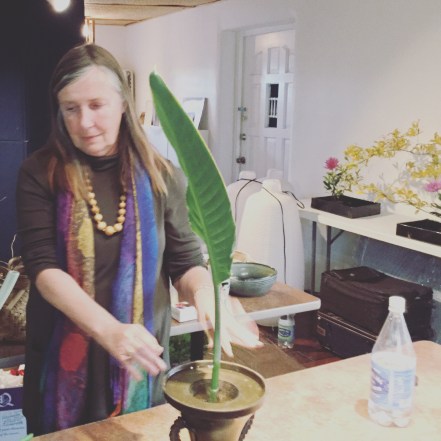
formal arrangement
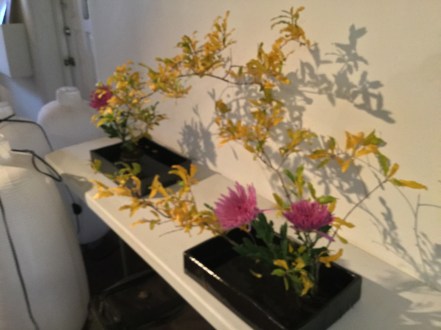
flower show in progress
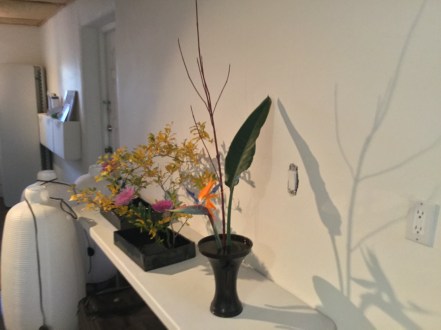
flower show in progress
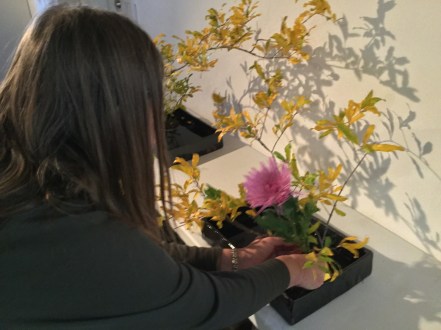
Patricia does a final edit
freestyle
flower show in progress

St. David’s Church, Radnor, Pa.
My 8th great grandfather was born in Wales and died in Maryland. He came to Pennsylvania on a mission for the Anglican church. He wrote his own epitaph in Latin which is telling about his beliefs. He was harsh on himself.
Rev. Henry Nicholls, B.A., 1703 & M.A., 1715, Jesus College, Oxford, Wales. He was sent to Pennsylvania, 1702-1708, during the reign of King James II. He ministered at Chester, Pennsylvania. The Chester Church is described as of good brick fabric, one of the neatest on the continent, furnished with handsome furniture and pews. He also served St. David’s Church, Radnor, Pa. and at Concord and Montgomery, Pa. Later, he was transferred to St. Michael’s Parish, Talbot Co., Maryland where he served, 1708-1749, (41 years).
From William King and Virginia Watkins – Their Ancestors and Descendents compiled by Maellen King Ford
Henry Nichols was the first residential missionary to Pennsylvania for the “Society for Propagation of the Gospel in Foreign Parts“, arriving in 1703. His churches were located in Chester, Concord, Radnor, and Montgomery. The members were regular and constant in divine worship, and they contributed 60 pounds a year toward their pastor’s support. The Radnor Church is still in excellent preservation, known as St. David’s Church and has been in use since 1708. Rev Nichols requested a transfer in 1708 and became rector at St. Michael’s Parish Church. Talbot Co., MD – a post he occupied until his death. For years, all records of his life were lost. The early church books had disappeared! Until June 1878 when workmen, employed to demolish the old church building, found his tomb under the Chancel in good preservation.
The following is a translation of the Latin inscription found on the slab over his tomb: “Here lies the remains of Henry Nicols, M. A., formerly a Fellow of Jesus College, Oxford, England, and a pastor of this church for 41 years – most unworthy. Born April 1st, 1678; died Feb. 12, 1748. Save his soul, O Christ for Thy own merits. Tread upon salt without savor.” (Henry has ordered these works to be inscribed before his death.) A number of his descendents still worship at St. Michael’s Church. They placed a tablet there to his memory where he ministered for so long. (From the Historical Magazine of the Protestant Episcopal Church, 1943, by Mary Clement, M. A., Principal of the Girls County School Board, Bridgend, Glamorganshire, Wales.)
Rev. Henry Nichols (1678 – 1748)
is my 8th great grandfather
William Nicholls (1709 – 1776)
son of Rev. Henry Nichols
Amos Nicholls (1740 – )
son of William Nicholls
Amos Nicholls (1780 – )
son of Amos Nicholls
Amos Nicholls (1808 – 1868)
son of Amos Nicholls
Emiline P Nicholls (1837 – )
daughter of Amos Nicholls
Harriet Peterson (1856 – 1933)
daughter of Emiline P Nicholls
Sarah Helena Byrne (1878 – 1962)
daughter of Harriet Peterson
Olga Fern Scott (1897 – 1968)
daughter of Sarah Helena Byrne
Richard Arden Morse (1920 – 2004)
son of Olga Fern Scott
Pamela Morse
I am the daughter of Richard Arden Morse
“That until the philosophy which holds one race superior and another inferior is finally and permanently discredited and abandoned: That until there are no longer first-class and second class citizens of any nation; That until the color of a man’s skin is of no more significance than the color of his eyes; That until the basic human rights are equally guaranteed to all without regard to race; That until that day, the dream of lasting peace and world citizenship and the rule of international morality will remain but a fleeting illusion, to be pursued but never attained; And until the ignoble and unhappy regimes that hold our brothers in Angola, in Mozambique and in South Africa in subhuman bondage have been toppled and destroyed; Until bigotry and prejudice and malicious and inhuman self-interest have been replaced by understanding and tolerance and good-will; Until all Africans stand and speak as free beings, equal in the eyes of all men, as they are in the eyes of Heaven; Until that day, the African continent will not know peace. We Africans will fight, if necessary, and we know that we shall win, as we are confident in the victory of good over evil.”
Haile Selassie address to United Nations Oct 6, 1963
Many music fans may think that Bob Marley wrote the lyrics to the popular song War. The song was created to immortalize a speech given at the UN in 1963. We are farther from the dream of lasting peace around the world than we were in 1963 because technology has served good and evil with equal measure. Now war moves faster and can potentially do much more damage quickly. I always loved this song and the idea that a tiny man from Africa delivered this truth, eloquence, and enlightenment to the United Nations. It was prophetic.
It has always made me feel uplifted because as I sing along I get louder and more committed as we arrive at the part about the victory of good over evil…right over wrong, yeah. I am one of those who fiercely believes in that victory in the long run. At this time I am having problems envisioning how the good is going to mange this conquest. Most people in history were dragged into war, forced to fight, because it is insane to take these violent risks. The ease with which the youth now is being convinced to start and end a private suicide war shows how far out of control this war/peace balance is. We must find ways to support compassion and fairness on earth because our futures depend on it. Jah, Ras Tafari, gentle reader. Keep the faith, baby.
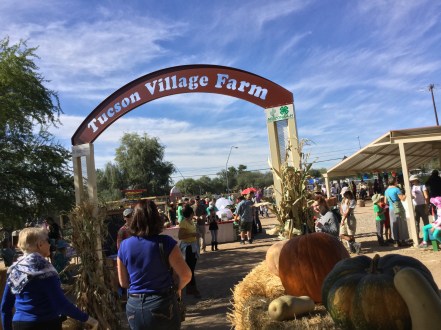
Today we enjoyed the beautiful weather for family fun at the Tucson Village Farm Harvest Festival. This wonderful working and teaching farm regularly hosts kids on field trips and in special camps. Kids as young as toddlers come with parents to learn about gardening through educational programs designed for them. Food to eat from the site is always included and is often a hands on part of the kids’ experience. I have been to the garden when kids were in a class. The reaction of the students was unanimously delighted. The environment is perfectly created to make the educational impact young students need to improve diets and maybe even the health practices of the entire family. Today many families came out to be part of the festivities which were delightfully focused on farming fun.
University of Arizona students on the farm staff were on hand today selling produce, directing traffic, and being helpful and informative. They were clearly enjoying this day of celebration with the public. The ratio of very young children to adults was high, and the youngsters were all having a real blast. Special activities such as popcorn shucking were ongoing during the day to give families a chance to do some farming/playing with the kids. I believe the farm always does a good job of fulfilling the important educational mission they undertake. This party went above and beyond the everyday excellence. Staff and volunteers did an excellent job of planning and executing a wonderful public event.
entrance

pomegranate
queen’s wreath

teaching garden

rose with bee

student volunteer
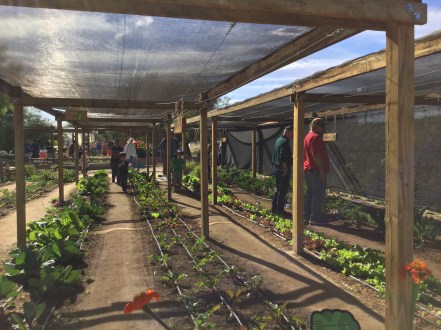
garden

student volunteers
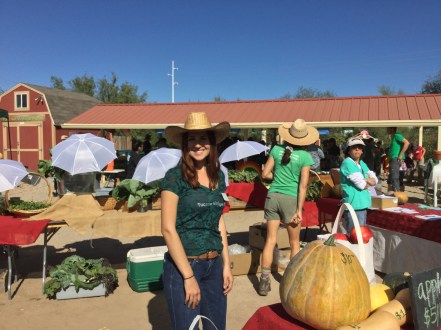
student farmers

garden
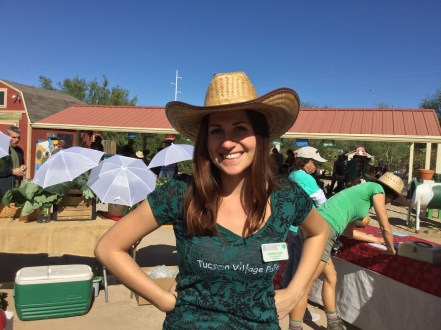
student farmer
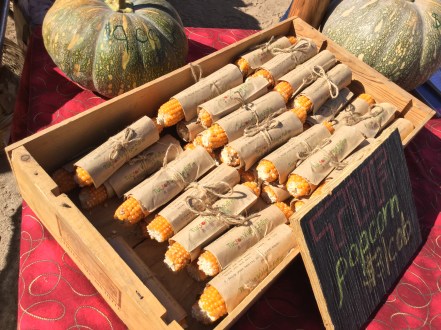
popcorn

garden activities

Maximum Migramobile
The Tucson Police Foundation holds a giant car show every November that is very popular with the public. I enjoy seeing all the well cared for vehicles as well as the cops of various kinds on display. The Border Patrol was on hand with a truly amazing vehicle they souped up as a hyper dune buggy. It has a Corvette engine and looks like Road Warrior. I am sure it scares those it chases. I am scared by the latest intelligence the Border Patrol agent laid on me. The farmers in Sonora are all switching to growing poppies because the weed market is no longer profitable. This is terrible news for the US, now trending heavily into heroin as our current drug darling. He said only two thirds of the drugs that enter the US travel through here. When I asked how he knew that without busting them all he replied that they have their ways of knowing. This is all pretty creepy, but the vehicle is impressive. Tempe Police Department entered for the first time this year with a confiscated very hot car they took form a drug dealer who used it for work. This special police car in use for “crime prevention”. This makes me laugh. Tempe police are saying we will drive your car after we bust you. I bet it does do some crime prevention.

Tempe’s crime prevention car

Tempe’s crime prevention car
It is fun to talk to the helicopter pilots who hover over our neighborhood so often in the night. They land the helicopter at the park so they can show it off to the citizens all day. There are many great examples of antique law enforcement vehicles every year too. The show brings together love for cars and history creating a time the public interact with the cops in an informal (not enforcement) atmosphere. It is my favorite thing the cops do in my city. My favorite cop in the city, canine Officer Evo was present, hamming it up for the cameras and winning hearts and minds.
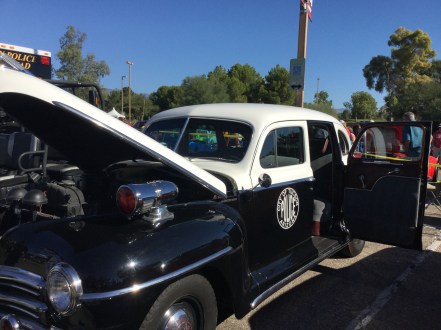
antique cop car

TPD helicopter
The next post here will be devoted to Officer Evo and a new canine officer on the scene this year, Officer Cookie of the bomb squad, a lab who loves to party. The canine cops both fascinate and thrill me. They are very professional, but underneath it all they are dogs. Stay tuned to learn more about dogs in law enforcement and the cops who love them.

Officer Evo, TPD

