mermaidcamp
Keeping current in wellness, in and out of the water
You can scroll the shelf using ← and → keys
You can scroll the shelf using ← and → keys

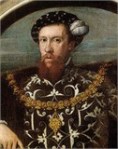
This week in #ROW80 I found a world of information and poetry in apps and podcasts. This vast free library of poems and poets would keep me occupied forever, but I have started a new ritual that is intended to create an atmosphere conducive to creating poetry. I now listen to my daily podcast poems while I draw my first art piece of the day. I am also, for an unrelated reason, soaking my feet in hot water with epsom salts for about an hour while I drink tea and coffee. I am not sure which element is most important, but I am enjoying the soaking in both hot water and poetic streams first thing in the morning. The Poetry Foundation features information about poets’ lives. I was curious to find Frances DeVere, wife of Henry Howard, in the data base. She is missing, but he is a very big figure in the history of poetry. I started to read his work and study the details of his life. His maternal grandfather was beheaded before him in the Tower. His father narrowly escaped death because the king died the day before his scheduled execution. This non-fiction story is full of twists. There is shocking drama in this real history of my DNA.
In the court of Henry VIII life could be very opulent, but all that could turn in the blink of an eye. Henry was capricious to say the least. The most famous of all the English monarchs wielded power with great vigor. In the year 1547 my was charged with treason. He was beheaded on Tower Hill after a one day trial. When he was under house arrest he wrote poetry. When he was sentenced to die, he wrote poetry and translated the Bible. He was a real troubadour in Tudor England. Some scholars believe he created the sonnet and was first to use free verse in English. His wife Frances was also a poet, but I have not found any of her work. I think the double whammy of dualing poets in the Tudor court should be a big advantage to me. I should be able to make some poems about them, or somehow inspired by their lives. During the next week I plan to make some stabs at this idea. The anniversary of his beheading is in 5 days. Maybe I can come up with a tribute of sorts.
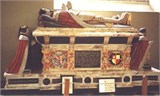
St Michael’s at Framlingham
Henry Howard (1517 – 1547)
is my 15th great grandfather
Thomas Howard (1536 – 1572)
son of Henry Howard
Margaret Howard (1561 – 1591)
daughter of Thomas Howard
Lady Ann Dorset (1552 – 1680)
daughter of Margaret Howard
Robert Lewis (1574 – 1645)
son of Lady Ann Dorset
Robert Lewis (1607 – 1644)
son of Robert Lewis
Ann Lewis (1633 – 1686)
daughter of Robert Lewis
Joshua Morse (1669 – 1753)
son of Ann Lewis
Joseph Morse (1692 – 1759)
son of Joshua Morse
Joseph Morse (1721 – 1776)
son of Joseph Morse
Joseph Morse III (1752 – 1835)
son of Joseph Morse
John Henry Morse (1775 – 1864)
son of Joseph Morse III
Abner Morse (1808 – 1838)
son of John Henry Morse
Daniel Rowland Morse (1838 – 1910)
son of Abner Morse
Jason A Morse (1862 – 1932)
son of Daniel Rowland Morse
Ernest Abner Morse (1890 – 1965)
son of Jason A Morse
Richard Arden Morse (1920 – 2004)
son of Ernest Abner Morse
Pamela Morse
I am the daughter of Richard Arden Morse
On this day in history, the 19th January 1547, the poet, courtier and soldier Henry Howard, Earl of Surrey and son of Thomas Howard, 3rd Duke of Norfolk, was executed by beheading on Tower Hill. He was laid to rest at All Hallows-by-the-Tower (All Hallows Barking) but was moved in 1614 by his son Henry, Earl of Northampton, to a beautiful tomb in the family church, St Michael’s at Framlingham.
He had been found guilty of treason on the 13th January 1547 at a common inquest at Guildhall, where evidence was given “which concerned overt conspiracy as well as the usurpation of the royal arms”1. It was alleged that “he had on 7 October 1546 at Kenninghall displayed in his own heraldry the royal arms and insignia, with three labels silver, thereby threatening the king’s title to the throne and the prince’s inheritance”2, yet when he had been arrested in December the questions had focused on “his determination for the rule of the prince; his procuring his sister to be the royal mistress; his slandering of the royal council; and his plans to flee the realm”3, not his use of the royal arms and insignia. His trial lasted a day and he gave a spirited defence but it was no good, he was found guilty and sentenced to death.
Historian Susan Brigden writes of how Surrey spent his last days in the Tower writing, paraphrasing Psalms 55, 73 and 88, “the prayers of the psalmist abandoned and betrayed, thinking upon death and judgment”4. His work showed not only his sense of betrayal but also his evangelical religious beliefs.
He was executed on Tower Hill on the 19th January 1547 but his father, the Duke of Norfolk, who had also been setenced to death for treason, escaped execution because Henry VIII died before his scheduled execution. Norfolk was released and pardoned by Mary I in 1553 and died naturally on 25th August 1554.
Susan Brigden writes of how Surrey was “the first poet in English to explore what might be said without rhyme” and he is viewed as one of the founders of English Renaissance poetry and “Father of the English Sonnet”, along with Thomas Wyatt and, I believe, George Boleyn. You can find Surrey’s poetry and also his paraphrases of Psalms 55 and 88 at Luminarium: Anthology of English Literature5. I’ll leave you with one if his poems:-
Set me whereas the sun doth parch the green…
Set me whereas the sun doth parch the greenOr where his beams do not dissolve the ice,
In temperate heat where he is felt and seen;
In presence prest of people, mad or wise;
Set me in high or yet in low degree,
In longest night or in the shortest day,
In clearest sky or where clouds thickest be,
In lusty youth or when my hairs are gray.
Set me in heaven, in earth, or else in hell;
In hill, or dale, or in the foaming flood;
Thrall or at large, alive whereso I dwell,
Sick or in health, in evil fame or good:
Hers will I be, and only with this thought Content myself although my chance be nought.
Notes and Sources
Susan Brigden, ‘Howard, Henry, earl of Surrey (1516/17–1547)’, Oxford Dictionary of National Biography, Oxford University Press, 2004
Luminarium: Anthology of English Literature
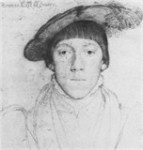


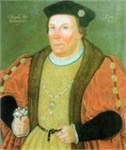
My 16th great-grandfather was beheaded for listening to prophecies of Henry VIII’s death. The king was personally involved in convicting him.
Edward Richard Buckingham Stafford (1479 – 1521)
is my 16th great grandfather
Elizabeth Dutchess Norfolk Stafford Howard (1497 – 1558)
daughter of Edward Richard Buckingham Stafford
Lady Katherine Howard Duchess Bridgewater (1495 – 1554)
daughter of Elizabeth Dutchess Norfolk Stafford Howard
William ApRhys (1522 – 1588)
son of Lady Katherine Howard Duchess Bridgewater
Henry Rice (1555 – 1621)
son of William ApRhys
Edmund Rice (1594 – 1663)
son of Henry Rice
Edward Rice (1622 – 1712)
son of Edmund Rice
Lydia Rice (1649 – 1723)
daughter of Edward Rice
Lydia Woods (1672 – 1738)
daughter of Lydia Rice
Lydia Eager (1696 – 1735)
daughter of Lydia Woods
Mary Thomas (1729 – 1801)
daughter of Lydia Eager
Joseph Morse III (1752 – 1835)
son of Mary Thomas
John Henry Morse (1775 – 1864)
son of Joseph Morse III
Abner Morse (1808 – 1838)
son of John Henry Morse
Daniel Rowland Morse (1838 – 1910)
son of Abner Morse
Jason A Morse (1862 – 1932)
son of Daniel Rowland Morse
Ernest Abner Morse (1890 – 1965)
son of Jason A Morse
Richard Arden Morse (1920 – 2004)
son of Ernest Abner Morse
Pamela Morse
I am the daughter of Richard Arden Morse
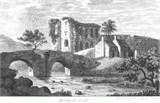
Born
3 February 1478
Brecon Castle, Wales
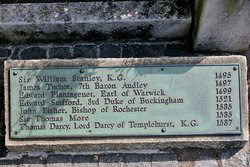
Died
17 May 1521 (aged 43)
Tower Hill
Edward Stafford, 3rd Duke of Buckingham, KG (3 February 1478 – 17 May 1521) was an English nobleman. He was the son of Henry Stafford, 2nd Duke of Buckingham, and Katherine Woodville, whose sister, Queen Elizabeth Woodville, was the wife of King Edward IV. He was convicted of treason, and executed on 17 May 1521.
Edward Stafford, born 3 February 1478 at Brecon Castle in Wales, was the eldest son of Henry Stafford, 2nd Duke of Buckingham, and Katherine Woodville, the daughter of Richard Woodville, 1st Earl Rivers, by Jacquetta of Luxembourg, daughter of Pierre de Luxembourg, Count of St. Pol, and was thus a nephew of Elizabeth Woodville, queen consort of King Edward IV.
By his father’s marriage to Katherine Woodville, Stafford had a younger brother, Henry Stafford, 1st Earl of Wiltshire, and two sisters, Elizabeth, who married Robert Radcliffe, 1st Earl of Sussex, and Anne, who married firstly, Sir Walter Herbert (d. 16 September 1507), an illegitimate son of William Herbert, 1st Earl of Pembroke, and secondly, George Hastings, 1st Earl of Huntingdon.
After the execution of the 2nd Duke of Buckingham, his widow, Katherine Woodville, married Jasper Tudor, second son of Owen Tudor and King Henry V’s widow, Catherine of Valois. After Jasper Tudor’s death on 21 December 1495, Katherine Woodville married Sir Richard Wingfield (d. 22 July 1525). Katherine Woodville died 18 May 1497. After her death, Sir Richard Wingfield married Bridget Wiltshire, daughter and heiress of Sir John Wiltshire of Stone, Kent.
In October 1483 Stafford’s father participated in a rebellion against King Richard III. He was beheaded without trial on 2 November 1483, whereby all his honours were forfeited. Stafford is said to have been hidden in various houses in Herefordshire at the time of the rebellion, and perhaps for the remainder of Richard III’s reign. However after Richard III’s defeat at Bosworth on 22 August 1485, and King Henry VII’s accession to the crown, Stafford was made a Knight of the Order of the Bath on 29 October 1485 as Duke of Buckingham, and attended Henry VII’s coronation the following day, although his father’s attainder was not formally reversed by Parliament until November. The young Duke’s wardship and lands were granted, on 3 August 1486, along with the wardship of his younger brother, Henry Stafford, to the King’s mother, Margaret Beaufort, and according to Davies it is likely Buckingham was educated in her various households.
Buckingham was in attendance at court at the creation of Henry VII’s second son, the future King Henry VIII, as Duke of York, on 9 November 1494, and was made a Knight of the Order of the Garter in 1495. In September 1497 he was a captain in the forces sent to quell a rebellion in Cornwall.
According to Davies, as a young man Buckingham played a conspicuous part in royal weddings and the reception of ambassadors and foreign princes, ‘dazzling observers by his sartorial splendour’. At the wedding of Henry VII’s then eldest son and heir Arthur, Prince of Wales, and Catherine of Aragon in 1501, he is said to have worn a gown worth £1500. He was the chief challenger at the tournament held the following day.
At the accession of King Henry VIII, Buckingham was appointed on 23 June 1509, for the day of the coronation only, Lord High Constable, an office which he claimed by hereditary right. He also served as Lord High Steward at the coronation, and bearer of the crown. In 1509 he was made a member of the King’s Privy Council. On 9 July 1510 he had licence to crenellate his manor of Thornbury, Gloucestershire, and according to Davies rebuilt the manor house as ‘an impressively towered castle’ with ‘huge oriel windows in the living-quarters in the inner court’.
In 1510 Buckingham was involved in a scandal concerning his sister, Anne. After hearing rumours concerning Anne and Sir William Compton, Buckingham found Compton in Anne’s room. Compton was forced to take the sacrament to prove that he and Anne had not committed adultery, and Anne’s husband, George Hastings, 1st Earl of Huntingdon, sent Anne away to a convent 60 miles distant from the court. There is no extant evidence establishing that Anne and Sir William Compton were guilty of adultery. However in 1523 Compton took the unusual step of bequeathing land to Anne in his will, and directing his executors to include her in the prayers for his kin for which he had made provision in his will.
From June to October 1513 Buckingham served as a captain during Henry VIII’s invasion of France, commanding 500 men in the ‘middle ward’. About 1517 he was one of twelve challengers chosen to tilt against the King and his companions, but excused himself on the ground that he feared to run against the King’s person. He and his wife, Eleanor, attended the Field of the Cloth of Gold in 1520.
Although Buckingham was appointed to commissions of the peace in 1514 and charged, together with other marcher lords, with responsibility for keeping order in south Wales, he was rebuked by the King in 1518 for failing to achieve the desired results. According to Davies, in general Buckingham exercised little direct political influence, and was never a member of the King’s inner circle.
Buckingham fell out dramatically with the King in 1510, when he discovered that the King was having an affair with the Countess of Huntingdon, the Duke’s sister and wife of the 1st Earl of Huntingdon. She was taken to a convent sixty miles away. There are some suggestions that the affair continued until 1513. However, he returned to the King’s graces, being present at the marriage of Henry’s sister, served in Parliament and being present at negotiations with Francis I of France and Charles V, Holy Roman Emperor.
Buckingham was one of few peers with substantial Plantagenet blood and maintained numerous connections, often among his extended family, with the rest of the upper aristocracy, which activities attracted Henry’s suspicion. During 1520, Buckingham became suspected of potentially treasonous actions and Henry VIII authorised an investigation. The King personally examined witnesses against him, gathering enough evidence for a trial. The Duke was finally summoned to Court in April 1521 and arrested and placed in the Tower. He was tried before a panel of 17 peers, being accused of listening to prophecies of the King’s death and intending to kill the King. He was executed on Tower Hill on 17 May. Buckingham was posthumously attainted by Act of Parliament on 31 July 1523, disinheriting most of his wealth from his children.
Guy (1988) concludes this was one of the few executions of high personages under Henry VIII in which the accused was “almost certainly guilty”. However Sir Thomas More complained that the key evidence from servants was hearsay.
Buckingham’s literary patronage included two translations, a printed translation of Helyas, Knyghte of the Swanne, which he commissioned in 1512, and A Lytell Cronicle, a translation of an account of the Middle East which he may have commissioned in 1520 in connection with his proposed pilgrimage to Jerusalem.
In 1488 Henry VII had suggested a marriage between Buckingham and Anne of Brittany, but in December 1489 the executors of Henry Percy, 4th Earl of Northumberland, paid the King £4000 for Buckingham’s marriage to Percy’s eldest daughter Eleanor (d. 1530). They had a son and three daughters:
Lord Henry Stafford, 1st Baron Stafford (18 September 1501 – 30 April 1563), who married Ursula Pole, daughter of Sir Richard Pole by his second wife, Margaret, Countess of Salisbury, daughter of George, Duke of Clarence.
Lady Elizabeth Stafford, Duchess of Norfolk (c. 1497 – 30 November 1558), who married, as his second wife, before 8 January 1513, Thomas Howard, 3rd Duke of Norfolk.
Lady Katherine Stafford (c. 1499 – 14 May 1555), who married Ralph Neville, 4th Earl of Westmorland.
Lady Mary Stafford, the youngest daughter, who married, about June 1519, as his third wife, George Neville, 5th Baron Bergavenny.
Buckingham is also said to have had three illegitimate children: George Stafford, Henry Stafford, Margaret Stafford (c. 1511 – 25 May 1537), whom Buckingham married to his ward, Thomas Fitzgerald of Leixlip, half-brother to the Earl of Kildare.

PA and Penn State Teach Fracking
My grandfathers both worked in the oil business, so my parents were very much in favor of petroleum as the way of the future. My father went to Oklahoma University and Penn State to study petroleum engineering. He later got his PHD at Texas A&M in computers (industrial engineering). He was a big deal in the oil business before and after his professional career. After serving as president of the World Petroleum Congress in the 60’s he went on a lecture tour he referred to as the extinguished (distinguished) lecture circuit. He was speculative and relied too much on his own beliefs when investing. This worked out well for them in the glory days of petroleum. They rode the wave of high dividends and capital gains. Their investments did very well.
At the end of his life my dad was seriously demented as well as invested in some wild speculative oil fields in Texas and New Mexico. I had always considered my parents’ finances to be a private matter, but I started to be concerned that they could be left broke as a result of my father’s wildcat mentality. Indeed, when I discovered how far he had gone into these non liquid investments I saw they could brake the bank any day. The first thing I tried was to legally sell all my father’s holdings in these oil fields for $10 to my erstwhile husband, who had persuaded my dad to go deeper into this stuff. When he refused to buy them I knew there was big trouble. I actually left the unmentionable one when I discovered how awful my parents position was in terms of risk. He was willing to financially abuse my parents, which was not a huge surprise, but it was the very last surprise I was willing to have. I went about getting my parents’ assets in trust, which required that my father own the oil folly on his own so none of us could inherit it. It was a legal hassle and expense, but it was accomplished. The week before my father died his lawyer had convinced the partners in Texas to let him off the legal hook. They signed documents to free him, and he instantly died. The documents had not yet been recorded in Texas when he expired. The drama was heavy, but the ending was the best I could have desired. My mom still had plenty of money to live and none of us had an obligation to spend big, risk everything in the oil business. Whew!!
My mom had a happy and easy end to her life. She died at home on Jan. 4, 2008. On that day oil hit $100 a barrel. We figured this was the sign for which she had waited because my parents had always wanted $100 oil. They believed that the price might fluctuate, but it would always go up, no matter what. They invested their lives, careers, and life savings into the big petroleum idea. We just celebrated my mother’s death day, and noticed that on Jan 4, 2015 oil had reached $50 a barrel. During the last 7 years the US has developed the ability to produce oil at around $50 a barrel. It costs the Saudis around $12 to produce a barrel. All price wars are intended to eliminate competition for the market. The Saudis say they can go $30 if they feel like it, and the whole world will have to follow. The benefits of this global price war go chiefly to the Chinese government. Hold back on those selfies with the low gas prices. There are consequences not yet discovered, and they are not all good.
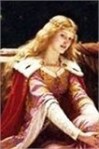
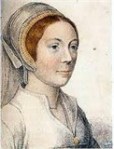
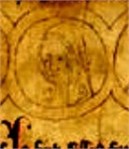
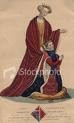
My 22nd great grandmother was born in Syria while her parents were on a crusade.
Joan Plantagenet (1272 – 1307)
is my 22nd great grandmother
Lady Margaret De Clare Baroness Audley (1292 – 1342)
daughter of Joan Plantagenet
Lady Alice De Audley Baroness Neville (1315 – 1373)
daughter of Lady Margaret De Clare Baroness Audley
Sir John ‘3rd Baron de Raby’ Neville, Admiral of the Kings Fleet (1341 – 1388)
son of Lady Alice De Audley Baroness Neville
Thomas De Neville (1362 – 1406)
son of Sir John ‘3rd Baron de Raby’ Neville, Admiral of the Kings Fleet
Maude de Neville (1392 – 1421)
daughter of Thomas De Neville
John Talbot (1413 – 1460)
son of Maude de Neville
Isabel Talbot (1444 – 1531)
daughter of John Talbot
Sir Richard Ashton (1460 – 1549)
son of Isabel Talbot
Sir Christopher Ashton (1493 – 1519)
son of Sir Richard Ashton
Lady Elizabeth Ashton (1524 – 1588)
daughter of Sir Christopher Ashton
Capt Roger Dudley (1535 – 1585)
son of Lady Elizabeth Ashton
Gov Thomas Dudley (1576 – 1653)
son of Capt Roger Dudley
Anne Dudley (1612 – 1672)
daughter of Gov Thomas Dudley
John Bradstreet (1652 – 1718)
son of Anne Dudley
Mercy Bradstreet (1689 – 1725)
daughter of John Bradstreet
Caleb Hazen (1720 – 1777)
son of Mercy Bradstreet
Mercy Hazen (1747 – 1819)
daughter of Caleb Hazen
Martha Mead (1784 – 1860)
daughter of Mercy Hazen
Abner Morse (1808 – 1838)
son of Martha Mead
Daniel Rowland Morse (1838 – 1910)
son of Abner Morse
Jason A Morse (1862 – 1932)
son of Daniel Rowland Morse
Ernest Abner Morse (1890 – 1965)
son of Jason A Morse
Richard Arden Morse (1920 – 2004)
son of Ernest Abner Morse
Pamela Morse
I am the daughter of Richard Arden Morse
Joan of Acre (April 1272 – 23 April 1307) was an English princess, a daughter of King Edward I of England and Queen Eleanor of Castile. The name “Acre” derives from her birthplace in the Holy Land while her parents were on a crusade.
She was married twice; her first husband was Gilbert de Clare, 7th Earl of Gloucester, one of the most powerful nobles in her father’s kingdom; her second husband was Ralph de Monthermer, a squire in her household whom she married in secret.
Joan is most notable for the claim that miracles have allegedly taken place at her grave, and for the multiple references to her in literature.
Birth and childhood
Joan (or Joanna, as she is sometimes called) of Acre was born in the spring of 1272 in Syria, while her parents, Edward I and Eleanor of Castile, were on crusade. At the time of Joan’s birth, her grandfather, Henry III, was still alive and thus her father was not yet king of England. Her parents departed from Acre shortly after her birth, traveling to Sicily and Spain before leaving Joan with Eleanor’s mother, Joan, Countess of Ponthieu, in France. Joan lived for several years in France where she spent her time being educated by a bishop and “being thoroughly spoiled by an indulgent grandmother.” Joan was free to play among the “vine clad hills and sunny vales” surrounding her grandmother’s home, although she required “judicious surveillance.”
As Joan was growing up with her grandmother, her father was back in England, already arranging marriages for his daughter. He hoped to gain both political power and more wealth with his daughter’s marriage, so he conducted the arrangement in a very “business like style”. He finally found a man suitable to marry Joan (aged 5 at the time), Hartman, son of King Rudoph I, of Germany. Edward then brought her home from France for the first time to meet him. As she had spent her entire life away from Edward and Eleanor, when she returned she “stood in no awe of her parents” and had a fairly distanced relationship with them.
Unfortunately for King Edward, his daughter’s suitor died before he was able to meet or marry Joan. The news reported that Hartman had fallen through a patch of shallow ice while “amusing himself in skating” while a letter sent to the King himself stated that Hartman had set out on a boat to visit his father amidst a terrible fog and the boat had smashed into a rock, drowning him.
First marriage
Edward arranged a second marriage almost immediately after the death of Hartman.[12] Gilbert de Clare, Earl of Gloucester, who was almost thirty years older than Joan and newly divorced, was his first choice. The earl resigned his lands to Edward upon agreeing to get them back when he married Joan, as well as agreed on a dower of two thousand silver marks.[14] By the time all of these negotiations were finished, Joan was twelve years old. Gilbert de Clare became very enamored with Joan, and even though she had to marry him regardless of how she felt, he still tried to woo her. He bought her expensive gifts and clothing to try to win favor with her. The couple were married on 30 April 1290 at Westminster Abbey, and had four children together. They were:
Gilbert de Clare, 7th Earl of Hertford
Eleanor de Clare
Margaret de Clare
Elizabeth de Clare
Joan’s first husband, Gilbert de Clare died on 7 December 1295.[18]
Secret second marriage
Joan had been a widow for only a little over a year when she caught the eye of Ralph de Monthermer, a squire in Joan’s father’s household. Joan fell in love and convinced her father to have Monthermer knighted. It was unheard of in European royalty for a noble lady to even converse with a man who had not won or acquired importance in the household. However, in January 1297 Joan secretly married Ralph. Joan’s father was already planning another marriage for Joan to Amadeus V, Count of Savoy, to occur 16 March 1297. Joan was in a dangerous predicament, as she was already married, unbeknownst to her father.
Joan sent her four young children to their grandfather, in hopes that their sweetness would win Edward’s favor, but her plan did not work. The king soon discovered his daughter’s intentions, but not yet aware that she had already committed to them, he seized Joan’s lands and continued to arrange her marriage to Amadeus of Savoy. Soon after the seizure of her lands, Joan told her father of that she had married Ralph. The king was enraged and retaliated by immediately imprisoning Monthermer at Bristol Castle. The people of the land had differing opinions on the princess’ matter. It has been argued that the ones who were most upset were those who wanted Joan’s hand in marriage.
With regard to the matter, Joan famously said, “It is not considered ignominious, nor disgraceful for a great earl to take a poor and mean woman to wife; neither, on the other hand, is it worthy of blame, or too difficult a thing for a countess to promote to honor a gallant youth.” Joan’s statement in addition to a possibly obvious pregnancy seemed to soften Edward’s attitude towards the situation. Joan’s first child by Monthermer was born in October 1297; by the summer of 1297, when the marriage was revealed to Edward I, Joan’s condition would certainly have been apparent, and would have convinced Edward that he had no choice but to recognize his daughter’s marriage. Edward I eventually relented for the sake of his daughter and released Monthermer from prison in August 1297.[17] Monthermer paid homage 2 August, and being granted the titles of Earl of Gloucester and Earl of Hertford, he rose to favour with the King during Joan’s lifetime.
Monthermer and Joan had four children:
Mary de Monthermer, born October 1297. In 1306 her grandfather King Edward I arranged for her to wed Duncan Macduff, 8th Earl of Fife. (Ancestor of Harry S Truman, 33rd President of the USA).
Joan de Monthermer, born 1299, became a nun at Amesbury.
Thomas de Monthermer, 2nd Baron Monthermer, born 1301.
Edward de Monthermer, born 1304 and died 1339.
Relationship with family
Joan of Acre was the seventh of Edward I and Eleanor’s fourteen children. Most of her older siblings died before the age of seven, and many of her younger siblings died before adulthood. Those who survived to adulthood were Joan, her younger brother, Edward of Caernarfon (later Edward II), and four of her sisters: Eleanor, Margaret, Mary, and Elizabeth.
Joan, like her siblings, was raised outside her parents’ household. She lived with her grandmother in Ponthieu for four years, and was then entrusted to the same caregivers who looked after her siblings. Edward I did not have a close relationship with most of his children while they were growing up, yet “he seemed fonder of his daughters than his sons.”
However, Joan of Acre’s independent nature caused numerous conflicts with her father. Her father disapproved of her leaving court after her marriage to the Earl of Gloucester, and in turn “seized seven robes that had been made for her.” He also strongly disapproved of her second marriage to Ralph de Monthermer, a squire in her household, even to the point of attempting to force her to marry someone else. While Edward ultimately developed a cordial relationship with Monthermer, even giving him the title of Earl, there appears to have been a notable difference in the Edward’s treatment of Joan as compared to the treatment of the rest of her siblings. For instance, her father famously paid messengers substantially when they brought news of the birth of grandchildren, but did not do this upon birth of Joan’s daughter.
In terms of her siblings, Joan kept a fairly tight bond. She and Monthermer both maintained a close relationship with her brother, Edward II, which was maintained through letters. After Edward II became estranged from his parents and lost his royal seal, “Joan offered to lend him her seal” .
Death
Joan of Acre died on 23 April 1307, at the manor of Clare in Suffolk. The cause of her death remains unclear, though one popular theory is that she died during childbirth, a common cause of death at the time. While Joan’s age in 1307 (about 35) and the chronology of her earlier pregnancies with Ralph de Monthermer suggest that this could well be the case, historians have not confirmed the cause of her death.
Less than four months after her death, Joan’s father, Edward I died. Joan’s widower, Ralph de Monthermer, lost the title of Earl of Gloucester soon after the deaths of his wife and father-in-law. The earldom of Gloucester was given to Joan’s son from her first marriage, Gilbert, who was its rightful holder. Monthermer continued to hold a nominal earldom in Scotland, which had been conferred on him by Edward I, until his death.
Joan’s burial place has been the cause of some interest and debate. She is interred in the Augustinian priory at Clare, which had been founded by her first husband’s ancestors and where many of them were also buried. Allegedly, in 1357, Joan’s daughter, Elizabeth De Burgh, claimed to have “inspected her mother’s body and found the corpse to be intact which in the eyes of the Roman Catholic Church is an indication of sanctity. This claim was only recorded in a fifteenth-century chronicle, however, and its details are uncertain, especially the statement that her corpse was in such a state of preservation that “when her paps [breasts] were pressed with hands, they rose up again.” Some sources further claim that miracles took place at Joan’s tomb, but no cause for her beatification or canonization has ever been introduced.
Joan in fiction
Joan of Acre makes an appearance in Virginia Henley’s historical romance, entitled Infamous. In the book, Joan, known as Joanna, is described as a promiscuous young princess, vain, shallow and spoiled. In the novel she is only given one daughter, when she historically has eight children. There is no evidence that supports this picture of Joan.
In The Love Knot by Vanessa Alexander, Edward the II’s sister, Joan of Acre is an important heroine. The author portrays a completely different view of the princess than the one in Henley’s novel. The Love Knot tells the story of the love affair between Ralph de Monthermer and Joan of Acre through the discovery of a series of letters the two had written to each other.
Between historians and novelists, Joan has appeared in various texts as either an independent and spirited woman or a spoiled brat. In Lives of the Princesses of England by Mary Anne Everett Green, Joan is portrayed as a “giddy princess” and neglectful mother. Many have agreed to this characterization; however, some authors think there is little evidence to support the assumption that Joan of Acre was a neglectful or uncaring mother.

Dorset Coat of Arms
Robert Sackville, 2nd Earl of Dorset, served in the House of Commons. Like the Downton Abbey family, the Sackvilles have two last names..Dorset is the name for the Earldom and Sackville is the family name. It is confusing, but the entire peer business is hard to understand. This family was heavily entwined with royalty at a dangerous time to be so. His wife was suspected of being crypto-Catholic, a very highly punishable offense in Tudor times. She survived by hiding her religion.
Robert Dorset (1525 – 1609)
is my 13th great grandfather
Lady Ann Dorset (1552 – 1680)
daughter of Robert Dorset
Robert Lewis (1574 – 1645)
son of Lady Ann Dorset
Robert Lewis (1607 – 1644)
son of Robert Lewis
Ann Lewis (1633 – 1686)
daughter of Robert Lewis
Joshua Morse (1669 – 1753)
son of Ann Lewis
Joseph Morse (1692 – 1759)
son of Joshua Morse
Joseph Morse (1721 – 1776)
son of Joseph Morse
Joseph Morse III (1752 – 1835)
son of Joseph Morse
John Henry Morse (1775 – 1864)
son of Joseph Morse III
Abner Morse (1808 – 1838)
son of John Henry Morse
Daniel Rowland Morse (1838 – 1910)
son of Abner Morse
Jason A Morse (1862 – 1932)
son of Daniel Rowland Morse
Ernest Abner Morse (1890 – 1965)
son of Jason A Morse
Richard Arden Morse (1920 – 2004)
son of Ernest Abner Morse
Pamela Morse
I am the daughter of Richard Arden Morse
Robert Sackville, 2nd Earl of Dorset (1561–1609) was an English aristocrat and politician, with humanist and commercial interests.
Life
He was the eldest son of Thomas Sackville, 1st Earl of Dorset, by Cecily, daughter of Sir John Baker. His grandfather, Sir Richard Sackville, invited Roger Ascham to educate Robert with his own son, an incident inn 1563 that Ascham introduced into his pedagogic work The Scholemaster (1570) as prompting the book. He matriculated from Hart Hall, Oxford, 17 December 1576, and graduated B.A. and M.A. on 3 June 1579; it appears from his father’s will that he was also at New College.
He was admitted to the Inner Temple in 1580 but not called to the bar, and was elected to the House of Commons in 1585 as member for Sussex, aged 23, by his father’s influence. In 1588 he sat for Lewes, but represented the county again in 1592–3, 1597–8, 1601, and 1604–8. He was a prominent member of the Commons, serving as a chairman of several committees. At the same time he engaged in trading ventures, and held a patent for the supply of ordnance.
He succeeded to the earldom of Dorset on the death of his father on 19 April 1608. He inherited from his father manors in Sussex, Essex, Kent, and Middlesex, the principal seats being Knole and Buckhurst. Dorset survived his father less than a year, dying on 27 February 1609 at Dorset House, Fleet Street, London. He was buried in the Sackville Chapel at Withyham, Sussex, and left money for the building and endowment of Sackville College.
Family
Dorset married first, in February 1580, Lady Margaret, only daughter of Thomas Howard, 4th Duke of Norfolk, then suspected as a crypto-Catholic. By her he had six children, including:
Richard who became third earl;
Edward, fourth earl;
Anne, married Sir Edward Seymour, eldest son of Edward Seymour, Viscount Beauchamp,
Cecily, married Sir Henry Compton, K.B.
Lady Margaret, in fact a devout Catholic, died on 19 August 1591; Robert Southwell, who never met her, published in her honour, in 1596, Triumphs over Death, with dedicatory verses to her surviving children.
Dorset married, secondly, on 4 December 1592, Anne (d. 22 September 1618), daughter of Sir John Spencer of Althorp, and widow of, first, William Stanley, 3rd Baron Monteagle, and, secondly, Henry Compton, 1st Baron Compton. In 1608–9 Dorset found reason to complain of his second wife’s misconduct, and was negotiating with Archbishop Richard Bancroft and Lord Ellesmere for a separation from her when he died.
Notes
^ Lawrence V. Ryan, Roger Ascham (1963), pp. 252–3.
^ J. E. Neale, The Elizabethan House of Commons (1963), p. 63 and p. 293.
^ Scott R. Pilarz, Robert Southwell and the Mission of Literature, 1561-1595 (2004), p. 204.
Attribution
This article incorporates text from the entry Sackville, Robert in the Dictionary of National Biography (1885–1900), a publication now in the public domain.
Political officesPreceded by
The Earl of NottinghamThe Earl of NorthumberlandLord Lieutenant of Sussex
1608–1609Vacant
Title next held by
The 3rd Earl of DorsetPeerage of EnglandPreceded by
Thomas Sackville Earl of Dorset
1608–1609Succeeded by
Richard Sackville


My 7th great-grandfather had an inherited gift for bone setting. Both he and my 6th great-grandfather relieved suffering by using manipulative medicine. They had no degree in medicine but believed in their natural ability to pass this gift down to generations of Sweets.
“November 8th, 1724, Captain Benoni Sweet was baptised at St. Paul’s, in Narragasett, by the Rev. Mr. McSparran; and at the succeeding Easter, Captain Sweet was elected one of the Vestry.” [History of the Episcopal Church in Narragansett, Rhode Island, page 94.]
“James Sweet, the father of Benoni, emigrated from Wales [England] to this country, and purchased an estate at the foot of Ridge Hill, so called, in North Kingstown… Benoni had been a Captain in the British service–was well informed, and of polished manners. He was a natural bonesetter and the progenitor of the race in Rhode Island. He was styled Doctor Sweet, but he practised in restoring dislocations only. He was a regular communicant of the church, and officiated as a vestryman, until his death. ‘July 19th, 1751,’ says the record, ‘died Captain Benoni Sweet, of North Kingstown, in the ninetieth year of his age; Dr. McSparran preached his funeral sermon, and buried him in the cemetery of his ancestors.'” [History of the Episcopal Church in Narragansett, Rhode Island, page 94.]
“SWEET, Capt. Benoni, in 90th year, buried in his own family yard.” [Vital Record of Rhode Island, 1636-1850, v.10, page 384]
Benoni Sweet (1663 – 1751)
is my 7th great grandfather
Dr. James Sweet (1686 – 1751)
son of Benoni Sweet
Thomas Sweet (1732 – 1813)
son of Dr. James Sweet
Thomas Sweet (1759 – 1844)
son of Thomas Sweet
Valentine Sweet (1791 – 1858)
son of Thomas Sweet
Sarah LaVina Sweet (1840 – 1923)
daughter of Valentine Sweet
Jason A Morse (1862 – 1932)
son of Sarah LaVina Sweet
Ernest Abner Morse (1890 – 1965)
son of Jason A Morse
Richard Arden Morse (1920 – 2004)
son of Ernest Abner Morse
Pamela Morse
I am the daughter of Richard Arden Morse
The Bonesetter Sweets
Of South County, Rhode Island
By Martha R. McPartland
In colonial America, graduates of medical schools were few and far between. In Rhode Island there were only five medical school graduates practicing in 1800 and the first medical degree awarded in the state was a Brown University in 1814. Prior to that period, from its founding in 1636, Rhode Island had many men called “Doctor” with
little or no qualifications to back up their title. Some were the seventh son of a seventh son, and so believed to be endowed with special healing power; some were charlatans with a smattering of education and glib tongues, who took advantage of misfortune and ignorance; still others had a natural flair for caring for the sick and were able to relieve much suffering. In the last category was a remarkable family from the southern part of Rhode Island called, and still recalled, as the “Bonesetter Sweets.”
The Sweets were an old Rhode Island family whose progenitor, John Sweet, came to the state from Salem, Massachusetts in 1637. Of Welsh extraction, family tradition has it that their forbears in Wales had this innate facility for helping the sick. James Sweet , son of the immigrant, John, was the first of the American “Bonesetter Sweets.” He was born in 1622, came to Rhode Island with his parents, married Mary Greene and settled in what is commonly called South County, and more correctly named Washington County. Of the nine children of James and Mary Sweet, only Benoni , born in 1663, became a bonesetter. Traditionally, Benoni is said to have had a flowery and polished
manner—perhaps a forerunner of the bedside manner possessed by some of today’s medical men! He was called “Doctor” Sweet and his practice consisted of setting bones. He was a respected member of the community and a communicant of the historic Narragansett Church. When he died in 1751, Dr. James McSarren, rector of the
church, delivered a glowing eulogy. The inherited ability to set bones was not regarded by the Sweets as a vocation, but rather as an avocation. They were artisans by calling—stonemasons, blacksmiths, wheel-wrights, and carpenters. Bone setting was a sideline, as is demonstrated by an advertisement in the Providence Journal of February 16, 1830 and printed at the top or the first page of this article.
The remarkable part of this family was the fact that they never exploited their natural ability. Not one of them sought fame or fortune through this medium. The father usually selected one or two of his sons, probably those who showed a tendency in that direction, and instructed them in bonesetting. The Sweets did not deem this a magical thing, but more of an inherited knowledge acquired from their elders. They handled fractures, sprains, and dislocations with a skill to be envied by an orthopedic physician. Their skill was in the manipulation of bones but they were known to use herbs, ointments, and skunk grease in massaging too. Their knack was thought uncanny, as they so often succeeded where others, more learned and “better trained,” had failed. Instances naming local doctors who failed to relieve suffering that was later relieved by one of the Sweets have become a part of South County folklore.
Dr. Benoni Sweet selected his son, James , to carry on the family art. James was born in 1688 and not too much is known of his successes, but it was Job Sweet, son of James, who gained national recognition and established their bonesetting reputation. Job was born in 1724 and married Jemima Sherman in 1750. He lived all his life in the South County section of Rhode Island.

John Vowell Hooker
John Hooker, John Hoker or John Vowell (c. 1527–1601) was an English writer, solicitor, antiquary, civic administrator and advocate of republican government. He wrote an eye-witness account of the siege of Exeter that took place during the Prayer Book Rebellion in 1549. From 1555 to his death he was chamberlain of that city, though he spent several years in Ireland as legal adviser to Sir Peter Carew during his claim to lands there. He was, for short periods, a member of both the Irish and English parliaments and wrote an influential treatise on parliamentary procedure. He was one of the editors of the second edition of Raphael Holinshed’s Chronicles, published in 1587. His last, unpublished and probably uncompleted work was the first topographical description of the county of Devon.
John Vowell Hooker (1526 – 1601)
is my 11th great grandfather
Mary Hooker (1567 – 1617)
daughter of John Vowell Hooker
John (Dr) Greene (1597 – 1659)
son of Mary Hooker
Mary Greene (1633 – 1686)
daughter of John (Dr) Greene
Benoni Sweet (1663 – 1751)
son of Mary Greene
Dr. James Sweet (1686 – 1751)
son of Benoni Sweet
Thomas Sweet (1732 – 1813)
son of Dr. James Sweet
Thomas Sweet (1759 – 1844)
son of Thomas Sweet
Valentine Sweet (1791 – 1858)
son of Thomas Sweet
Sarah LaVina Sweet (1840 – 1923)
daughter of Valentine Sweet
Jason A Morse (1862 – 1932)
son of Sarah LaVina Sweet
Ernest Abner Morse (1890 – 1965)
son of Jason A Morse
Richard Arden Morse (1920 – 2004)
son of Ernest Abner Morse
Pamela Morse
I am the daughter of Richard Arden Morse
Hooker was born at Bourbridge Hall in Exeter, Devon, England. He was the second son of Robert Vowell or Hooker and Agnes Doble, his third wife. The Vowell family had acquired the name Hooker in the 15th century, but usually retained the earlier name; in fact John Hooker was known as John Vowell for much of his life. By the time he was born the family had been prominent in Exeter for several generations. Hooker received an excellent classical education, reading Roman law at Oxford followed by a period in Europe studying with leading Protestant divines, notably Pietro Martire Vermigli.
In the 1540s he married Martha, daughter of Robert Tucker of Exeter and they had three sons and two daughters. By 1586, Martha had died and he had married Anastryce (c. 1540–1599), daughter of Edward Bridgeman of Exeter. They had seven sons and five daughters. In later life his health failed and he died in Exeter some time between 26 January and 15 September in 1601 and was probably buried in the cathedral. He was the uncle of Richard Hooker, the influential Anglican theologian.
“
[I denounce those who chose] to supporte the authoritie of the Idoll of Rome whome they never sawe in contempte of their trewe & lawfull kinge, whom they knewe and oughte to obeye.
”
— Hooker, on the siege of Exeter, in The description of the citie of Excester, 1.67
During the Prayer Book Rebellion in 1549 he experienced at first hand the siege of Exeter, leaving a vivid account of its events in which he made no effort to conceal his religious sympathies. From 1551 to 1553 he was employed by Myles Coverdale during his short incumbency as Bishop of Exeter; and then in 1555 he became the first chamberlain of Exeter, a post that he held until his death.
As chamberlain he was responsible for the city’s finances, he dealt with disputes between guilds and merchants, oversaw the rebuilding of the high school, planted many trees in the city, and collected and put in order the city’s archives. He used these archives to compile his “Annals” of the City in which he details the characteristics of every Tudor mayor of Exeter, and in 1578 he also wrote and published The Lives of the Bishops of Exeter. In 1570/71 he was the MP for Exeter.
At a time when it was deemed essential for cities and nations to have ancient lineage, Hooker described the foundation of Exeter by Corinaeus, nephew of Brutus of Britain, son of Aeneas. He advocated emulating the governmental institutions of the Roman Republic which, in his opinion, brought Rome to greatness, and held the municipal government of Exeter up as a model republican commonwealth worthy of emulation.
Ireland
In 1568, possibly because he regarded himself as underpaid for the work he was doing for the city, Hooker was persuaded by Sir Peter Carew to go with him to Ireland to be his legal adviser. He also organised Carew’s papers in support of his claim for the barony of Idrone, a task to which he committed himself so deeply that in 1569 he was returned to the Irish parliament as member for Athenry. Hooker later wrote a biography of Carew, The dyscourse and dyscoverye of the lyffe of Sir Peter Carew, in which he almost certainly understated the deceit and aggression behind Carew’s Irish venture.
Until Carew’s death in 1575, Hooker spent much time in Ireland, but he had also been returned to the English parliament in 1571 as one of the burgessesof Exeter. The session had only lasted a few weeks, but he kept a journal in which he accurately recorded the proceedings. His experiences in the Irish and English parliaments led him to write a treatise on parliamentary practice, The Order and Usage how to Keepe a Parlement in England, which was published in two editions in 1572. One edition had a preface addressed to William FitzWilliam, the Lord Deputy of Ireland and was clearly intended to bring order to the Irish assembly; the other was addressed to the Exeter city authorities, presumably to aid his successor burgesses. In writing his treatise Hooker took much inspiration from the Modus Tenendi Parliamentum, a treatise from the early 14th century.
In 1586 Hooker again represented Exeter in parliament. At this time he was one of the editors of the second edition of Raphael Holinshed’s Chronicles, which was published in 1587. Hooker’s Order and Usage was included and he contributed an updated history of Ireland, including parts of his Life of Carew and a translation of Expugnatio Hibernica (“Conquest of Ireland”) by Gerald of Wales. In his Irish section he again made his religious and political sympathies very clear, repeatedly denouncing the Catholicism of the native Irish, seeing it as the cause both of their poverty and rebelliousness. Rome, he wrote, is “the pestilent hydra” and the pope “the sonne of sathan, and the manne of sinne, and the enimie unto the crosse of Christ, whose bloodthirstiness will never be quenched”.
Later life
“
a verye ancient towne … and maye be equall with some cities for it is the cheffe emporium of that countrie and most inhabited with merchantes whose cheffest trade in tyme of peace was with Spayne … it is a clene and sweete towne, very well paved…
”
— Hooker, on Barnstaple, in Synopsis Corographical, 261-262
Hooker continued to serve Exeter in his later years, becoming coroner in 1583 and recorder in 1590. He was also appointed as steward of Bradninch by Sir Walter Raleigh in 1587.[1] By this time he was involved in the long task of organising and writing his historically-based description of his home county that he called Synopsis Corographical of the county of Devon. He probably started work on this before his friend Richard Carew began writing his similar Survey of Cornwall.[2]In writing his Synopsis, Hooker was influenced by the style and structure of William Harrison’sDescription of England, which had been published in 1577 as part of the first edition of Holinshed’sChronicles.[1]
Although Hooker revised Synopsis many times, he probably never completed it to his satisfaction. The work exists today as two almost identical manuscripts which were used as source material for many later topographical descriptions of the county: Thomas Westcote’s Survey of Devon of 1630, and Tristram Risdon’s Chorographical Description or Survey of the County of Devon (c. 1632) are examples.
Works
Orders Enacted for Orphans and for their Portions within the Citie of Exeter, London, 1575
The Antique Description and Account of the City of Exeter: In Three Parts, All Written Purely by John Vowell, Alias Hoker
The order and usage of the keepingng of a parlement in England, 1572
A pamphlet of the offices and duties of everie particular sworned officer of the citie of Excester (sic) 1584
The Life and Times of Sir Peter Carew
We all have shadow elements in our personalities. The attributes that reside in our blind side are clear to others but never to ourselves. Nations have not only espionage in the dark, but also shadow aspects of culture, hidden from the national personality. This explains why nationalism often leads to irrational pride as well as prejudice against people we do not know. We learned about torture by the CIA and without examination of the facts most Americans decided it was okay under the circumstances. What is so odd about that is they knew nothing about the circumstances. When the news broke that Cuba and the US would begin to talk about resuming relations, many Americans recoiled in horror because they don’t understand what the status quo entails. Nobody else in the world has an embargo against Cuba, and the US dollar is the official currency of the island. They make lots of money from tourism, including from plenty of Americans who travel on flights through Mexico, or on their big fat yachts. There is nothing to loose by resuming a diplomatic relationship, and much to gain.
I went to Havana through Miami in about 1995. I bought my package through a tour agency but did not apply for a special visa. I went to the airport and was allowed to board the plane with the Cubans from Miami who had permission in those days to visit a couple of times a year. There was a grand inquisition at the Miami airport and the CIA busted some people in the holding room who had money..more cash than was permitted. Dogs were brought in and detected the extra currency. I had a ticket but no specific study agenda in Cuba. The immigration officer at Miami international asked me what I was going to do in Cuba. I responded that I planned to study dance. I produced a tiny slip of note paper with my teacher’s address in Havana. He asked where I had met her. I told him in a dance workshop in Tucson. He turned to the dozen or so CIA dudes there and said, “If you believe her, she can go”. I went!! The Cubans on the flight were quite amazed that I made it on the flight. I was the last one out of the Havana airport because I was not carrying a “gusano”, a giant duffle bag full of goods, which are taxed by Cuba. They were puzzled when I told them I did not know anyone in Cuba and would not give away my things. I flew back to Miami with nothing at all. I gave away all my clothes, toothpaste, pens, and the suitcase itself.
I spent 4 days, and visited both my dance teacher and the family of a Cuban friend of mine. She gave me cash and asked me to take them out to a fancy dinner. It was all arranged at the buffet in my hotel. Only foreign tourists are allowed in the hotels. Since I had invited them, they had the rare privilege to experience the tourist facilities in their own city. They dressed up heavily and came at all hours of the day to see me. Since we were sitting in the lobby or in the dining room I had no problems with the staff. When I asked about bringing my dance teacher to the pool for a swimming lesson, that was quite another matter. The pool staff and the housekeeper in my room told me I would NEVER get a Cuban into that pool. This housekeeper had been invited by her own aunt, who was a hotel guest visiting from Spain, but was not permitted to sit poolside. I took this as a challenge, and convinced the concierge that it would be too embarrassing for me to retract the swim invitation I had already made to my friend. I whipped out the Spanish word pena, and wallowed in it. The argument took a while, but eventually I wore her down and was given a special permission to borrow a kick board for the use of a Cuban in the hotel pool. We had our lesson with many hotel staff members looking on in both shock and admiration. I won my personal little social revolution in the pool, and felt very satisfied.
I learned a lot while I was there. Since that time much has changed, and is obviously soon will change more rapidly. What struck me about the Cuban people was their resourcefulness and affection for life. They are the kings cariño, and the soul musicians and dancers of the Caribbean. They cook, they laugh, they party, they dance, in seriously limited circumstances. They accept the fact that their revolution has resulted in repression and dictatorship, and yet they still have pride in that revolution. They suffer from economic problems we do not imagine, and respond with creativity. I thought when I went that the relations between our countries would be resolved soon. Then Elian Gonzalez came to Miami in 2003, and was deported back to Cuba. Laws changed, visiting rights were withdrawn, and we slipped into another decade of the same separatist policy. I am not sure I will go to Cuba again, but do recommend it for anyone interested in music, architecture or tropical culture. There is no need for us to remain clueless about Cuba. There is much to learn about the rise and fall of communism. While we were busy being excessive about capitalism, they were busy with their communist revolution. The results vary, gentle readers. Neither communism nor capitalism has yielded such fabulous peace on earth. Let’s get over our ancient political categories to examine the potential for good. This deal was brokered by the cutest Pope in the Vatican, my man Francis. I am pleased that higher logic is being used to resolve this issue.
Jupiter is by far the most massive planet in our solar system. The Roman god Jupiter was worshiped as the purveyor of the universe. He was the ruler of the daytime sky, the god of lightning and thunder, and the political deity of the Roman state. As king of the gods he administered the cosmos. He is the son of Saturn, known for his jovial nature. Jove, as in by Jove the English expression, refers to the god Jupiter. Thursday is his day and protection of the state is his mission. He was the main man in the pantheon when Jesus was born in a Roman colony. He was revered for his reputation for abundance and good fortune, as well as very fine organizational and judicial skills. He was known for bringing chaos to order.
The fifth planet from the sun is now retrograde from the point of view of the earth. This means that due to our orbits around the sun, Jupiter appears from the earth to travel in reverse. This phenomena has significance in astrology, representing a chance to go over events in the past and make improvements. The Jupiter retrograde period will last until April, ending just as US taxes will be due. It represents a chance to review our organization and abundance issues. This time is a portal to edit and remake your own movie that has been running since last September. You do not have to believe in the power of Jupiter to know that good fortune regularly follows good organization. There is no need to worship the god of the daytime sky to use this time to significantly improve your own judgement and organization. Americans need to review the year for the IRS, if not for Jupiter. Take your habits through an honest evaluation aimed at creating more joviality and order. We all have room for improvement, Gentle Readers. What did you start last September that is not properly organized? Imagine jolly Jupiter guiding you through tax preparation and New Year’s resolutions. Redirect your attention to all that brings you joy. Rigorously remove disorder and chaos that clutter your life. Finish what you started, either by discarding it or completing it.
Angels were common before Jesus was born. There were happy spirits protecting humans all over the pre-Christian world. Some people today debate the powers and presence attributed to angels because we know them through story and legend. Their existence is a rhetorical belief, but there has been no empirical evidence that proves they are here with us. December is a very popular time to display angels and even dress up and portray them in live nativity scenes. In the darkest month of the Northern Hemisphere’s year, angels usher in the light. They often wear white, have white wings and a bright body halo. They are messengers, beings of light, that assist humans on both sides of the grave. They intercede for the benefit of humans.
December is the right time to settle into a hot herbal bath, light a candle, and put out the do not disturb sign for the human element. Around the winter solstice have a conversation with angels. If this is easy and natural for you, pray and get in touch with the angelic realm. If you need some help getting used to the idea of being surrounded by beings of light, do some meditating. Soak in the aromas of your scented tub, breathing deeply and leave thought behind. Have a conversation, out loud or in your mind, with the spirit guardians of your life. Imagining the presence of another dimension, allow yourself to say what is in your heart and ask for help that you know you need. You can do it with eyes open our closed. Using this method is a formula to make wishes come true. Belief in our angels is belief in supernatural powers at work on our behalf. Speaking to angels has been done by all kinds of people without shame or embarrassment for a very long time. The time is right to tell your deepest wishes to the angels, Gentle Readers.
 mermaidcamp