mermaidcamp
Keeping current in wellness, in and out of the water
You can scroll the shelf using ← and → keys
You can scroll the shelf using ← and → keys
Leonardo da Vinci said, “Study the science of art and the art of science.” Today his advice to find balance between creative imagination and logical discovery is sage, indeed. We are swayed by evidence and data, which is appropriate. Adding the equal amount of pure artistry is the tricky part for most people. Leonardo lived Arte/Scienza as one of his core values. He worked to become ambidextrous because he thought it added to his whole brain thinking. I am sure it did.
He used mind mapping in his notebooks. One of his mottos was ostinate rigore which was important to his sense of detail. To be both detail driven and expansive in creativity was his goal. The free association and creative style thinking he used had never been promoted before Leonardo. He not only taught and believed in an infinity of ideas, his notebooks show us that he recorded a good number of them while he was alive. Notebooks with records of nightly dreams are a wonderful way to add to your own right brain training and attention. It is not as important to go into detail as it is to begin a practice of writing them down directly after awakening. If you follow a daily routine the dream memory will become stronger as you practice. Your own dreams contain both art and science that you need to create balance.
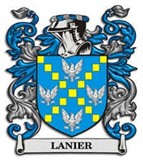
Lanier coat of arms
My eighth great-grandfather came to Virginia with John Washington, and once owned Richmond:
John Thomas Lanier, son of Nicholas and grandson of Jerome was from
Bordeaux in 1603 to America with John Washington. He brought much of the
family furniture with him. He was given a grant of 10 miles or 1400 acres
of land on the South of James River and it included what is now Richmond,
located in what is now counties of Prince George, Brunswick, etc. He
subsequently moved to North Carolina (North border) and was very
prominent.
John Thomas Lanier (1631 – 1719)
is my 8th great grandfather
Sampson Lanier (1682 – 1743)
son of John Thomas Lanier
Elizabeth Lanier (1719 – 1795)
daughter of Sampson Lanier
Martha Burch (1743 – 1803)
daughter of Elizabeth Lanier
David Darden (1770 – 1820)
son of Martha Burch
Minerva Truly Darden (1806 – 1837)
daughter of David Darden
Sarah E Hughes (1829 – 1911)
daughter of Minerva Truly Darden
Lucinda Jane Armer (1847 – 1939)
daughter of Sarah E Hughes
George Harvey Taylor (1884 – 1941)
son of Lucinda Jane Armer
Ruby Lee Taylor (1922 – 2008)
daughter of George Harvey Taylor
Pamela Morse
I am the daughter of Ruby Lee Taylor
State-Wide, NC – Lanier Family Genealogical Tree
The following bible record is found on the LAGenWeb Archives at the
following http://files.usgwarchives.org/la/state/bible/lghsbible/
This record is “bible4-4.txt” in the list of records
Bible Records Published by Louisiana Genealogical and Historical Society.
Be it Known And Remembered: Vol. II, Bible Records 1961: Pages 1 – 60
Submitted to the USGenWeb Archives by LGHS, Jun. 1998
LANIER FAMILY GENEALOGICAL TREE
Taken from the Family Records of Mr. Lee Lanier of Amite, La. Submitted to
the Society by Mrs. Kathryne Watkins, Hammond, La., State Librarian of
Louisiana Daughters of the American Revolution.
Jerome Lanier of Brodeaux, France in 1558 emigrated with his family to
England, in the latter part of the reign of Queen Elizabeth. Jerome was a
Huguenot who fled from execution or persecution and finding himself
without means in a foreign land availed himself of his accomplishments and
secured a position in Queen Elizabeth’s household as Court musician. He
found great favor at the court and for about one hundred years – 1558 to
1666 – the Laniers flourished in England, distinguished themselves in
music, art and military genius. They were a family of means and culture in
France. Jerome Lanier had three sons: Nicholas, Clement and Jerome.
Nicholas Lanier was born in 1568, he was the most prominent of Jerome’s
sons. He enjoyed high favor under James the 7th reign and especially so
under Charles the 7th’s reign. English history says of him that he was one
of those artists whose various talents were so noticeable as to suit the
taste of Charles the 7th. He gathered Charles the 7th’s collection of
paintings. He was a skilled musician, artist and courier. Five of his
famous paintings are distributed as follows: one owned by Van Dyke, one in
the collection of Charles the 7th, one now in the music hall of Oxford.
Two owned by the Prince of Wales. He died in 1648 leaving two sons:
Nicholas, Jr. and John Thomas Lanier.
Nicholas Lanier, Jr., brother of John Thomas Lanier who migrated to
America in 1683; was also a noted musician and artist. He was frequently
seen at the court of England. He was made president of the English Society
of Musicians
Page 133
and Artists for life. He enjoyed many favors from the King. Other members
of the Society were Clement, Andreu, and Jerome. These appear to be of
another branch of Laniers.
(Comment of J. B. Lanier Plooard – 1947 – Apparently history closes out
all branches of the family who may have remained in England and the
Laniers in America seem to be descendants of John Thomas Lanier and
Elizabeth Washington, the aunt of George Washington.)
Jerome Lanier lives in a palatial house in Greenwich, was a great and
famous musician. Owned the greatest collection of paintings than in
existence. He had only one son.
Sir John Lanier in 1690 comes again in history of being knighted “Knight
of his valor, in the capture of Castle of Edinboro. He was Major General
of the “Horse & Dragon.” In the Irish war made himself prominent in Battle
of Boyne and fell at Battle of Steinkiek fighting gloriously along with
the brave Douglas. This closes his story as far as we know of Clement and
Jerome Lanier, so the family name was apparently perpetuated by the
descendants of the son Nicholas Lanier. They may have had daughters.
John Thomas Lanier, son of Nicholas and grandson of Jerome was from
Bordeaux in 1603 to America with John Washington. He brought much of the
family furniture with him. He was given a grant of 10 miles or 1400 acres
of land on the South of James River and it included what is now Richmond,
located in what is now counties of Prince George, Brunswick, etc. He
subsequently moved to North Carolina (North border) and was very
prominent. In 1688 he married Elizabeth Washington, daughter of John
Washington, aunt of George Washington. His will is on record in Prince
George County, Virginia. He was prosperous and left sons Sampson, Robert,
Nicholas, John Thomas and Buckner.
Nicholas Lanier, son of John Thomas Lanier, died 1779 and left two
daughters.
Sampson Lanier was the only surviving son of John Thomas Lanier and
Elizabeth Washington Lanier. He died in 1743 also rather young, but lived
a life of great usefulness as a plantation teacher and physician. His will
in Brunswick County, Va. left large estate to Thomas Dannell Lanier;
Sampson Lanier, Jr., James, Richard and Elizabeth.
Thomas Dannell Lanier died in 1745 and left two daughters.
Elizabeth married a Burch and second a Smith.
Richard Lanier had sons Lewis, Burwell, Buckner and daughter Winnifred.
Lewis, son of Richard Lanier, had a son Alexander Lanier that settled in
New York City. Alexander had a son James D. F. Lanier.
Burwell Lanier had one son David. David moved from Brunswick Co. to
Pittsylvania Co., Va. in 1772. The land is in what is now Henry Co., Va.
Va. records show that David Lanier was a Capt of a Co. in the revolution
distinguished himself as a brave military genius. He married Miss Mollie
Hicks.
Page 134
David Lanier, Jr. had son James Monroe Lanier, grandson Charles and
grandson James who named a son James Monroe Lanier, who was a Capt. in War
of 1812. Was of fine personal appearance and was a large land owner in
Virginia. Daughters of James Monroe Lanier, son of David, were Sally and
Judith.
John Hicks Lanier, Lucy and Nancy and Eliza were other children of David
Lanier.
John Hicks Lanier married a Miss Carter. She was the mother of his
children and when he married a second time the children could not get
along with the new wife and they moved to Missouri. Daughter Mary married
and moved to Lincoln Co., Mo. She married John Lovell__ Children: John,
Jr., Wilie and Allie. Son David had a daughter Mary. Mary first married
James Jones and then a Ferguson. John Hicks, Jr. married Sallie Robinson
and had children: David, Demarous, Mollie. Edward, son of John Hicks
Lanier, Sr. married Jane and had two sons. Robert, son of John H. Lanier,
Sr. married twice. His descendants live around St. Louis.
Sampson Lanier, Jr. – Sampson died 1757, Brunswick Co., Va. and it named
children:
Buckner Lanier, son of Sampson, Jr. was famous for ability to settle
disputes. Well educated – physician and planter. Had one son Sterling
Robert Lanier, son of Sterling, married Mary Anderson of Macon, Georgia.
Sterling Lanier had sons Sidney, the poet, who died of TB contracted
during the Civil War and son Clifford Lanier who went to Montgomery,
Alabama and settled. Sidney Lanier was born 1841.
These are old family records and are not documented; however, they are a
good finding list. There has recently been published a book regarding this
family that will bear out this information. Hillery and his brother
Benjamin were in the Florida Parishes section of Louisiana as early as
1873 but the court records do not show estate papers.
I recently joined instagram when I learned the 15 second videos became truly instant. I enjoy the challenge of making a real statement in that period of time. I haven’t done it yet, but have seen others who do. It will be challenging to story board and shoot some funny, informative, or entertaining 15 second shows. I have just entered the zone, but can see the potential. I do do see some feet and selfies, but there are also cool things and places I want to see. However, after hearing this song, I feel pressure to stop posting grams of my food and be purposeful and creative with the new toy. We shall see how that goes. It seems like the wave of the future. Careful preproduction has never meant so much.
My friend Nirvair Kaur Khalsa has had a long career as director of the Montessori schools she founded in Tucson. I met her yesterday at Khalsa Montessori ,where the Sikh community meets for gurdwara. Nirvair plays and sings the ancient ragas for the congregation on an instrument that has been revived by her teacher, the taus. This beautiful stringed instrument was played by the guru’s traveling teaching band during a time when peace flourished between Sufis, Sikhs, HIndus and Moslems. She explains some history of her religion here:
Her interest in religion made her curious about the origins of the teachings she follows. She has studied with Bhai Baldeep Singh, who is bringing back the instrument his ancestors made and played. These religious poems were sung by the Sikh gurus who used them for worship and teaching. The musical tradition was passed from person to person, so today Nirvair is one of a few people practicing and preserving the lovely peacock shaped stringed taus. She gave me a sample in her office:
I plan to return when she is singing during the ceremony. The instrument is a work of art in itself; it produces the sound of ancient India. Her vocation to learn and play these poems of traditional significance in the original way is impressive. I believe the gentle readers would like to see this peacock cello in full glory.

My 4th great-grandfather was born in Virginia and died in the Revolutionary War in South Carolina.
His father, John TAYLOR, b. ca. 1723, migrated from Virginia in 1754 to the east bank of the Congaree River, 10 miles south of Columbia, South Carolina.
Captain John TAYLOR (b. 1746 m. Sarah HIRONS d. 1 Feb 1781) was wounded twice, at Fort Moultrie and Sullivan’s Island, and captured with Colonel Thomas TAYLOR (b. 10 Sept 1743 & John’s brother) at Fishing Creek, but escaped while being carried to Camden, South Carolina. He was one of three brothers who fought in the American Revolution for the SC Militia.The 3rd brother, James TAYLOR, married both Sarah’s sister, Mary HIRONS, & Sarah DANIELL. (Taylor info: http://www.geocities.com/bcvsmith/ 19 April 2002)
Captain John Taylor died of smallpox during the war.
John Taylor (1747 – 1781)
is my 4th great grandfather
John Nimrod Taylor (1770 – 1816)
son of John Taylor
John Samuel Taylor (1798 – 1873)
son of John Nimrod Taylor
William Ellison Taylor (1839 – 1918)
son of John Samuel Taylor
George Harvey Taylor (1884 – 1941)
son of William Ellison Taylor
Ruby Lee Taylor (1922 – 2008)
daughter of George Harvey Taylor
Pamela Morse
I am the daughter of Ruby Lee Taylor

coat of arms Davis
My 7th great-grandfather was born in Northern Ireland and came to South Carolina with Presbyterians. He first settled in Virginia, then traveled south.
Tradition states that Robert Davis was born in North Ireland, where he was married to Anne Pickens. Some of their children were born in Ireland, and they are said to have come to America about 1735 or a bit earlier. The know facts in America about them from Kegley’S Virginia Frontier records are as follows: Robert Davis first received 400 acres in 1735 in South Garden, among the mountains of the Branches of Hardware River in Virginia. At that time all this territory was in Goochland County, and is located in what became the extreme southern end of Augusta county. The same year he received an additional 400 agres in the same location. This section is actually in the Branches of James and Roanoke Rivers. Kegley shows that in 1746 Robert Davis received a grant of 300 acres on the west side of the Blue Ridge. On Nov. 22, 1746, one James Davis, received a grant of 626 acres part of a larger grant of 8,100 acres on Catawaba river. Kegley shows that in 1748 the Clerk’s fee book in Augusta County,Va. shows that Robert Davis, along with many others, is “not found”. This,says Kegley, is an indication of how restless the pioneers were on the frontier, moving from place to place and the county officials unable, or unwilling to keep up with them. Robert Davis seems to have lived a fairly quiet life while in Augusta as there are relatively few records of him. Hedid not trade lands, but witnessed a good many deeds for other eople showing who his friedds and neighbors were. Most other records of Robert Davis in Augusta are in connection with the settlement of the estate of Robert Crockett. North Carolina list of applications for land grants, show that on 1 October 1751, the following applied for land: Robert Davis-for 600 acres, William Davis-for 300 acres Robert Caldwell-for 600 acres, Andrew Pickens-for 800 acres. North Carolina had a law granting land only to people who came into the colony to live on the land. Applicatons,howerever were received in advance of actual removal. In 1753 Robert Davis made the statement in Augusta county that he planned to leave the colony. It was about this date or the next year at the latest that he arrived in the Waxhaw Section, along with others from the same ara in Augusta County. The land when granted was in the then constituted county of Anson which included most of western North Carolina. Source: THE DAVIS FAMILY ** With Crockett and Pickens connections. ** compiled by E. M. Sharp From research done by Mr. D. L. McWhorter of Bethel, North Carolina, in the Archives of the State of North Carolina, and in Mecklenburg Co. North Carolina. and Researched on the Pickens family by E. M. Sharp of Memphis, Tenn.
He served in the militia with his father-in law and brother:
Early Anson county records show the follow ANSON COUNTY, MILITIA COMPANY: Year 1755. Had 61 officers and men. Among those listed were: Captain – Andrew PickensLieutenant – Robert Ramsey Ensin – John Crockett Sgt. – Thomas Wright, Sgt. – William Geard, Sgt. – William King. Corporal – Alexander Crockett. Archibald Crockett, Andrew Nutt, George Davis, John Davis, Joh Pickens, John Linn, Joseph Pickens, Moses Davis, Robert Davis, Robert Crockett, Robert McClelland, Robert Caldwell, Robert Montgomery, William Davis, William Pickens and others.




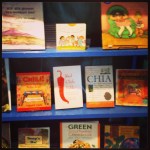

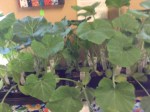

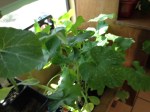

I am a member of a very special organization in Tucson. Native Seed S.E.A.R.C.H is a source for beans, garden seeds, education, and many local products. I support the mission and benefit from the close proximity of the store. We eat a wide variety of beans and chilies. The store carries the basic ingredients we use all the time in our diet. The seed preservation is the most important aspect of the mission. Today I planted 5 new plants I bought at the monsoon plant sale: 3 new watermelon varieties, a bell pepper and a special cucumber. They are all vigorous and healthy. I expect them to thrive in the rainy season, which was the point of the sale. We can grow many vegetables and fruits until frost, and if we protect them even longer. I have harvested giant crops of green tomatoes in December. These plant varieties are from Arizona and New Mexico, so they are adapted to our climate. I look forward to my Navaho red watermelon. You don’t need to live here to join. If you live in other parts of the country you can enjoy the benefits of membership which will keep your garden interesting.

O’Byrne COA
Recorded as O’ Byrne but more usually as Byrne, this is an Irish surname of great antiquity. Claiming descent from Bran, the king of Leinster, who died in 1052, this great clan originated in County Kildare where they held extensive territory until the Anglo-Norman invasion of Ireland in 1169 – 1170, when they migrated to Wicklow where they occupied the country between Rathdrum and Shillelagh. Their name in Irish is properly O’ Broin, meaning the male descendant of Bron, the raven. The O’ Broins, like their neighbours the O’ Tooles, were particularly noteworthy for their resistance to foreign aggression, and they continued to inaugurate native chiefs up to the end of the 16th Century. The seat of their chiefs was at Ballinacor, County Wicklow, and the territory over which they held sway was known as Crioch Branach. The celebrated “Leabhar Branach” or “Book of the O’ Byrnes” deals with the exploits of the clan in these times. Alderman Alfred Byrne (1882 – 1956), a distinguished recent member of the clan, was ten times Lord Mayor of Dublin. The Byrne coat of arms has the blazon of a red shield charged with a chevron between three silver dexter hands couped at the wrist, the Crest being a mermaid with comb and mirror proper. The first recorded spelling of the family name may be that of Fiacha Mac Hugh O’Byrne, the military leader. This was dated 1544 – 1595, in the Historical Records of Dublin, during the reign of Queen Elizabeth 1st of England, 1558 – 1603.
Patrick O’Byrne (1817 – 1890)

Thomas Taylor at rest
My 9th great grandfather was left an orphan when his father, Rowland Taylor, was burned at the stake as a martyr. His last words to Thomas were recorded:
Rev. Dr. Rowland Taylor’s final words, before being burned at the stake, to his son Thomas as reported by Foxe:
“Almighty God bless thee, and give you his Holy Spirit, to be a true servant of Christ, to learn his word, and constantly to stand by his truth all the life long. And my son, see that thou fear God always. Fly from all sin and wicked living. Be virtuous, serve God daily with prayer, and apply thy boke. In anywise see thou be obedient to thy mother, love her, and serve her. Be ruled by her now in thy youth, and follow her good counsel in all things. Beware of lewd company of young men, that fear not God, but followeth their lewd lusts and vain appetites. Flee from whoredom, and hate all filthy lying, remembering that I they father do die in the defense of holy marriage. And another day when God shall bless thee, love and cherish the poor people, and count that thy chief riches to be rich in alms. And when thy mother is waxed old, forsake her not, but provide for her to thy power, and see that she lacks nothing. For so will God bless thee, give thee long life upon earth, and prosperity, which I pray God to grant thee.”
Thomas Taylor (1548 – 1588)
is my 9th great grandfather
Thomas Taylor (1574 – 1618)
son of Thomas Taylor
James Taylor (1608 – 1698)
son of Thomas Taylor
John Taylor (1685 – 1776)
son of James Taylor
John Taylor (1727 – 1787)
son of John Taylor
John Taylor (1747 – 1781)
son of John Taylor
John Nimrod Taylor (1770 – 1816)
son of John Taylor
John Samuel Taylor (1798 – 1873)
son of John Nimrod Taylor
William Ellison Taylor (1839 – 1918)
son of John Samuel Taylor
George Harvey Taylor (1884 – 1941)
son of William Ellison Taylor
Ruby Lee Taylor (1922 – 2008)
daughter of George Harvey Taylor
Pamela Morse
I am the daughter of Ruby Lee Taylor
He was all about the defense of holy ( not Catholic) marriage and was dying for it, in his estimation. Fleeing from whoredom is a theme here, but at least he does tell Thomas to take care of his mother when she is old. These Taylors are ancestors of a few American presidents and Elizabeth Taylor: John (1685-1776), the immigrant, Taylor sailed to America.
Capt. Thomas J. TAYLOR, II (1572/73 England-1618 England) and Margaret SWINDERBY (1578 Denmark-1672 England) were the direct ancestors of 5 US presidents (Abraham LINCOLN, James MADISON, Zachary TAYLOR, William Henry HARRISON, Benjamin HARRISON) and 1 actress (Elizabeth TAYLOR)7G grandfather of the 16th President of the United States, Abraham LINCOLN. Abraham LINCOLN (1809-1865) son of Thomas LINCOLN and Nancy HANKS (1784-1818). Nancy HANKS daughter of James HANKS (1760-1793) and Mary SHIPLEY. James HANKS was the son of Joseph HANKS and Nancy Anna LEE (1728-1808). Nancy Anna LEE was the daughter of William LEE, Jr (1704-1764) and Anne. William LEE, Jr. was the son of William LEE, Sr. and Dorothy TAYLOR (1681-1754). Dorothy TAYLOR was the daughter of Thomas TAYLOR (1657-1712) and Elizabeth HARDWOOD. Thomas TAYLOR was the son of Thomas TAYLOR (1628-1687 and Mary. Thomas TAYLOR was the son of John “Immigrant” Taylor (1607-1652) and Elizabeth Jones. John TAYLOR was the son of Capt. Thomas J. TAYLOR and Margaret SWINDERBY. 4G grandfather of the 4th President of the United States James MADISON. James Madison (1751-1836) was the son of James MADISON (1723-1801) and Eleanor Rose CONWAY. James MADISON was the son of Ambrose MADISON (1700-) and Francis TAYLOR (1700-1761). Francis TAYLOR was the daughter of James TAYLOR, II (1675-1730) and Martha THOMPSON. James TAYLOR, II was the son of James TAYLOR, I (1608-) and Francis WALKER (-1680). James TAYLOR, I was the son of Capt. Thomas J. TAYLOR and Margaret SWINDRBY. 3G grandfather of the 12th President of the United States, Zachary Taylor. Zachary TAYLOR (1784-1850) was the son of Richard Lee TAYLOR (1742/3-1829) and Sarah Dabney STROTHER. Richard Lee TAYLOR was the son of Zachary TAYLOR, Sr. (1707-1768) and Elizabeth LEE. Zachary TAYLOR, Sr. was the son of James TAYLOR (1675-1730) and Martha THOMPSON. James Taylor was the son of James TAYLOR (1608-1698) and Francis WALKER. James Taylor was the son of Capt. Thomas J. TAYLOR and Margaret SWINDERBY. 4G grandfather of the 9th President of the United States, William Henry HARRISON. William Henry HARRISON (1773-1841) was the son of Benjamin HARRISON, V and Elizabeth BASSETT (1730-1792). Elizabeth BASSETT was the daughter of William BASSETT, IV (1709-1792) and Elizabeth CHURCHILL. William BASSETT, IV was the son of William BASSETT, III (1671-1723) and Joanna BURWELL. William BASSETT III was the son of William BASSETT and Bridgett CARY (1652-1670). Bridgett CARY was the daughter of Miles CARY (1621-) and ANNA TAYLOR (1611-1657). Anna TAYLOR was the daughter of Capt. Thomas TAYLOR and Margaret SWINDERBY. 6G grandfather of the 23rd President of the United States, Benjamin HARRISON. Benjamin HARRISON (1833-1901) was the son of John Scott HARRISON (1804-1878) and Elizabeth RAMSEY. John Scott HARRISON was the son of President William Henry HARRISON and Anna Tuthill SYMMES. (Of note, actress Elizabeth TAYLOR (1932-)) Elizabeth TAYLOR, daughter of Francis Lenn TAYLOR (1897-1968) and Sarah Viola WARMBRODT. Francis TAYLOR was the son of Francis Marion TAYLOR and Elizabeth ROSEMOND. Francis Marion TAYLOR was the son of Peter TAYLOR (1829-1921) and Margaret Jane PERIGO. Peter TAYLOR was the son of Lewis TAYLOR (1780-1874) and Rachel BAKER. Lewis TAYLOR was the son of Joseph TAYLOR (1741/2-1815) and Francis ANDERSON. Joseph TAYLOR was the son of John Powell TAYLOR (1696-1780) and Catherine PENDLETON. John Powell TAYLOR was the son of Sheriff James TAYLOR (1635-1698) and Mary GREGORY. Sheriff James TAYLOR was the son of John “Immigrant” TAYLOR (1607-1652). John “Immigrant” TAYLOR was the son of Capt. Thomas J. TAYLOR and Margaret SWINDERBY.
SOURCE: http://genforum.genealogy.com/taylor/messages/32876.html
Leonardo, the maestro, was guided by core principals. Cultivation of grace ambidexterity, fitness, and poise were central to Da Vincian thought. He viewed healing as “restoration of discordant elements” in a person. His copious notes on personal responsibility for our own health and well being were left for history. Many think of the Mona Lisa smile as his signature work, but probably the best known of all his art work is the anatomical range of motion dude in a circle and square known as Vitruvian Man. His study of anatomy was accompanied by observation of his own body in relation to his wellness and fitness routine. His self portraits are studies in facial anatomy as well as in painting technique.
He advised people to dine, not eat. One of his many specialities was preparing vast feasts and party catering for wealthy Florentines. He collected knowledge about food and nutrition, recording recipes. He was known about town as having “more than infinite grace in every action”. His cultivation of effortless poise and ambidexterity in his own body made him famous in a rock star way. Florentines would come out on the street for the thrill of seeing Leonardo walking. His notebooks reflect a focus on balance, posture, and centering.
His favorite metaphor was the human body. It is also my own. If you consider any entity it will have a head, a heart, a circulatory system, consumption, and processing of waste. It will have dynamic balance and movement. It will present itself as open or closed, happy or sad. It will have chronic maladies and moods, a backbone, and sharp or weak senses. Often the right hand will not know what the left hand is doing. Next time you need to analyze an institution or business use this metaphor to create a picture in your mind. Ponder one of the maestro’s most famous observations, “every part is disposed to unite with the whole, that it may thereby escape from its own incompleteness.” At this moment, gentle reader, can you see how this applies to you?

Vitruvian Man
 mermaidcamp