mermaidcamp
Keeping current in wellness, in and out of the water
You can scroll the shelf using ← and → keys
You can scroll the shelf using ← and → keys

Food handling

food charity scam in action

charity scam

donation drop off

food handling

truck of used bread

food handling

unload and load


holiday traffic
The current uproar at the IRS highlights the much misunderstood function of granting tax exempt status and enforcing it. I have gone through the process of obtaining a 501C3 permit to run a non-profit corporation, and can tell you it is exhaustive and thorough. Like Medicare fraud, there must be pros who go about cheating and defrauding the system from within. Tax exempt status is given to legitimate corporations willing to go through strict accounting documentation to prove that they are satisfying the mission they stated in the original application. By submitting in good faith to this non-profit status scrutiny they are subject to a review of their activities constantly. Applying for the status is technical and rigorous, as it should be. Keeping it is equally serious in nature.
Going completely commando, soliciting donations from the public without any IRS permit or reporting of the donations whatsoever is the highly lucrative method that has been used in my neighborhood for many years. They have begged openly for donations of food, money, items, and labor. They ask for public support to store prepare food in a residential condo to be served randomly to presumably homeless people they find in parks. No laws are obeyed, from zoning, to health code, to revenue laws. They openly ask for donations on the internet, although multiple law enforcement agencies have been informed for many years of the crimes. This self-appointed charity does not feel the need to obey any laws because no laws are enforced. The lack of interest of the government agencies could be seen as negligence. You might believe, if you love conspiracy theory, that since these charity folks presumably vote liberal democratic tickets, they are allowed with the collusion of our local government, to break all these laws. That is too silly.
I don’t believe there is a conscious effort by government to allow crime to take over the neighborhood. My impression is that public servants feel resentful about serving the public. When opportunity arises to feel powerful through corruption, the loyalty of any public servant to act for the benefit of all concerned is questionable. This is where mental illness diagnosis is important. If only insane and or incompetent people are left to run the government, the government will continue to act against the citizens’ best interests. I do not think we have good or effective governance. I do not trust that the money collected by the IRS is well spent. I have always paid taxes, and benefit from no loopholes. I pay taxes knowing it must be done. Waste and corruption are not what I want to buy with my tax dollars, but they are all I see on the menu at the moment.

William Kirkcaldy
My 13th great grandfather lived in Scotland when religion was making life very difficult for all involved. Mary Stuart reigned as a Catholic. Life was uneasy and brutal:
Biography from Wikipedia:
“Sir William Kirkcaldy of Grange (c. 1520 – 3 August 1573), Scottish politician and general, was the eldest son of Sir James Kirkcaldy of Grange (d. 1556), a member of an old Fife family. The house of the Grange lands was Halyards Palace.
Sir James was lord high treasurer of Scotland from 1537 to 1543 and was a determined opponent of Cardinal Beaton, for whose murder in 1546 he was partly responsible. William Kirkcaldy assisted to compass this murder, and when the castle of St Andrew’s surrendered to the French in July 1547 he was sent as a prisoner to Normandy, whence he escaped in 1550.
He was then employed in France as a secret agent by the advisers of Edward VI, being known in the cyphers as Corax; and later he served in the French army, where he gained a lasting reputation for skill and bravery. The sentence passed on Kirkcaldy for his share in Beaton’s murder was removed in 1556, and returning to Scotland in 1557 he came quickly to the front; as a Protestant he was one of the leaders of the lords of the congregation in their struggle with the regent, Mary of Guise, and he assisted to harass the French troops in Fife. He opposed Queen Mary’s marriage with Darnley, being associated at this time with Moray, and was forced for a short time to seek refuge in England.
Returning to Scotland, he was an accessory to the murder of Rizzio, but he had no share in that of Darnley, and he was one of the lords who banded themselves together to rescue Mary after her marriage with Bothwell. After the fight at Carberry Hill the queen surrendered herself to Kirkcaldy, and his generalship was mainly responsible for her defeat at the Battle of Langside. Kirkcaldy sailed to Orkney as Lord High Admiral of Scotland in pursuit of Bothwell, but his ship, the Lion, ran aground.[1] He seems, however, to have believed that an arrangement with Mary was possible, and coming under the influence of William Maitland of Lethington, whom in September 1569 he released by a stratagem from his confinement in Edinburgh, he was soon vehemently suspected by his fellows.
After the murder of Moray, Kirkcaldy ranged himself definitely among the friends of the imprisoned queen. About this time he forcibly released one of his supporters from imprisonment, a step which led to an altercation with his former friend John Knox, who called him a murderer and throat-cutter. Defying the regent Lennox, Kirkcaldy began to strengthen the fortifications of Edinburgh castle, of which he was governor, and which he held for Mary, and early in 1573 he refused to come to an agreement with the regent Morton because the terms of peace did not include a section of his friends.
After this some English troops arrived to help the Scots, and in May 1573 the castle surrendered. Strenuous efforts were made to save Kirkcaldy from the vengeance of his foes, but they were unavailing; Knox had prophesied that he would be hanged, and he was hanged on the 3rd of August 1573.”
William Kirkcaldy (1520 – 1573)
is my 13th great grandfather
Janet Kirkcaldy (1520 – 1572)
daughter of William Kirkcaldy
William Carr (1542 – 1655)
son of Janet Kirkcaldy
Benjamin Carr (1592 – 1635)
son of William Carr
Caleb Carr (1623 – 1695)
son of Benjamin Carr
Sarah Carr (1682 – 1765)
daughter of Caleb Carr
John Hammett (1705 – 1752)
son of Sarah Carr
MARGARET HAMMETT (1721 – 1753)
daughter of John Hammett
Benjamin Sweet (1722 – 1789)
son of MARGARET HAMMETT
Paul Sweet (1762 – 1836)
son of Benjamin Sweet
Valentine Sweet (1791 – 1858)
son of Paul Sweet
Sarah LaVina Sweet (1840 – 1923)
daughter of Valentine Sweet
Jason A Morse (1862 – 1932)
son of Sarah LaVina Sweet
Ernest Abner Morse (1890 – 1965)
son of Jason A Morse
Richard Arden Morse (1920 – 2004)
son of Ernest Abner Morse
Pamela Morse
I am the daughter of Richard Arden Morse
If I learned one thing on my ancestry quest in Massachusetts it is that the record keeper is the author of history. I have realized this by finding census and other documents that conflict with each other while studying my ancestors. Never has it been so clear. I believed that the tribe would have the information on the tribe in Mashpee, so I went straight to the museum to inquire. Because they rely on records kept by the Europeans the family trees are reconstructed using English last names. They use what they have. The records looked like they started in the 1800’s.






I was unhappy about the state of affairs. The tiny tribal museum has little funding, and can open only a few hours, a couple of days a week. I then traveled to the big well funded museum at Plimouth Plantation. Wow, what a difference!!!

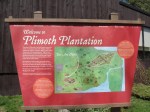


















The museum at Plimouth Plantation is doing some revisionist history in order to correct many of the assumptions and erroneous stories that exist about the Mayflower and the native people. The Pilgrims play characters in period costume, expressing the beliefs of the time and place. The Pilgrims were religious prudes who considered themselves religiously superior to all other religions. They also felt entitled to take anything they wanted from the native people because they had permission from the King of England. Their church was fortified on top with cannons in all directions. I guess they felt that God and the King needed some back up. Although I had a few Pilgrims and only one ( I think) Wampanoag ancestor, I distinctly disliked the pretend Pilgrims when I met them. I am, however, glad they kept some records at the time.
Today (April 16) in 1881 In Dodge City, Kansas, Bat Masterson fights his last gun battle. He is fined $8:00.
Guns and power are the entire subject of the cowboy and Indian movie genre. In my youth the entertainment was all about John Wayne and his ilk being in WWII with explosives, guns, and drama, or being in the Wild Wild West with the same scenario. My dad grew up in rural Kansas and Oklahoma, where guns were used for hunting, but he did not hunt because he had poor eyesight. He developed a love for fishing, which did not require keen sight. I personally learned to shoot a rifle when I was about 4 and my parents left me for a stay in Arkansas at my grandparents’ farm. I remember being very fond of it and liking it when my grandpa called me Annie Oakley. I thought target pracice was romantic and cool.
There were no guns in my house, so after my early youth I rarely saw anyone use guns anywhere. The first night I slept in Caracas when I was 13 I saw a murder from my hotel room on about the 10th floor of the Tamanaco. I freaked out entirely because there was lots of blood on the white shirt of the victim. The following day we learned that two hotel guards had shot each other, and that was the whole thing. Armed guards patrolled the petroleum company compound where I lived in rural Venezuela, which kind of resembled a military base. I thought nothing of it. Although I lived in Texas during high school, I still knew nobody who owned or shot guns.
The gun violence debate in the country is alien to my thinking. I am not comforted by the presence of guns. I don’t care to own or shoot one. The citizens who feel so strongly one way or the other about guns are starting to go haywire. The debate itself is getting scary.




I have lived in my condo for 11 years in central Tucson. My location next door to a full time charity scam in operation for many years has ruined quality of life, safety, and property value while giving the neighbors a dim view of law enforcement. I can think of few crimes ethically and morally lower than taking advantage of the public’s ignorance and sympathy to make a living by claiming falsely to be doing charity. I have learned that most of the public does not write off tax deductible donations, and therefore may be completely unaware of the laws governing charity and donations. Sandra Day O’Connor has her work cut out for her in her attempt to teach Americans how government works.
Ignorance is not all bliss for the folks supporting charity scamming over real non profits. Giving an unreported income to a scam hurts legitimate charities by diverting donations, money and volunteer time to private, criminal (unreported) purposes. These days when the Food Bank and Salvation Army are scraping to get by, it is especially insulting to compete with community resources by scamming for donations that are never reported. The laws are in place to protect the public, but there is not much sophistication about the law. The IRS grants non-profit status to those who prove they are serving the community. Once the status of 501C3 non profit corporation is obtained strict accounting must be submitted to the IRS to keep the status. Deciding that you are entitled to collect donations from the public without following any laws that legal charities have to follow is a lot like stealing resources from the victims you claim to help. If you cash in on sympathy for the homeless without really helping the homeless find shelter or improve their lives your crimes are deeply immoral. Shelters that are there all the time for them need the donations that are diverted by scammers who decide they are above the law. One of the typical ways scammers approach the public is to donate for holidays. This one is no different, collecting donations full time to supposedly help someone eat outside in a park on a holiday. If you give support to anyone, please check to know that your “charity” reports donations to the IRS and has some oversight.
In Tucson it is easy to live above the law. We have the 20th worst run city in America, according to some Wall Street Journal poll. I think the listing was overly flattering to Tucson. You can openly beg for donations, collect them in a residential condo, then solicit help from the public to prepare food in a residential kitchen to be served outdoors in a park to homeless people. You can break the revenue laws of the US and Arizona, the health code of Pima County, the zoning laws of the city of Tucson for as many years as you like. Your neighbors can report your crime to the cops, the city councilwoman, the mayor, the city manger and the IRS. No response or help will come from the vast numbers of folks who are paid to enforce the law. They do not see any problem with breaking all these laws to run a charity scam in a residential condo. Law enforcement is the least of their concern.

Anne Devereux
Anne’s father Walter was a big Yorkist knight in the War of the Roses. She married a knight who was mixed up in this royal Lancaster/York mess as well. Her husband, William Herbert, was lord of a giant castle, Raglan. She had nice digs in Wales at this castle while the Brits were embroiled in their Rose thing. I am still having trouble sorting out the royal roses and why the people of Wales would care, but they got into it too.
Anne Devereux is the daughter of Sir Walter Devereux and Elizabeth Merbury. 2 She married William Herbert, 1st Earl of Pembroke, son of Sir William ap Thomas. Her married name became Herbert.
Children of Anne Devereux and William Herbert , 1st Earl of Pembroke
Lady Catherine Herbert + 3 d. b 8 May 1504
Lady Maud Herbert + 1 b. 1448, d. a 1485
Citations
[1] Richard Glanville-Brown, online , Richard Glanville-Brown (RR 2, Milton, Ontario, Canada), downloaded 17 August 2005.
[2] Tim Boyle, “re: Boyle Family,” e-mail message to Darryl Roger Lundy, 16 September 2006. Hereinafter cited as “re: Boyle Family.”
[3] G.E. Cokayne; with Vicary Gibbs, H.A. Doubleday, Geoffrey H. White, Duncan Warrand and Lord Howard de Walden, editors, The Complete Peerage of England, Scotland, Ireland, Great Britain and the United Kingdom, Extant, Extinct or Dormant, new ed., 13 volumes in 14 (1910-1959; reprint in 6 volumes, Gloucester, U.K.: Alan Sutton Publishing, 2000), volume VII, page 167. Hereinafter cited as The Complete Peerage.
Known far and wide for her ability to upstage or even handbag opposition, Margaret Thatcher was nobody’s feminist. She was a power broker who knew where and how to use her influence to the greatest potential. While the feminist movement was bootstrapping Mrs. Thatcher was where she had always been, right in the middle of the good old Tory boys. Her breaking not only of the glass ceiling but of the snooty Tory party preference for aristocratic leaders showed command of political power matched by very few others in history.
She went from a grocery store apartment to Oxford on scholarship. Initiative was her middle name. She created the science of spin doctoring, but not as it is used now. She refined her image to make sure her clear core values were expressed with precision. She was a political Amazon with a mission to reform her chaotic nation. There was no stopping Mrs. Thatcher.
As time passes feminism will have to give Margaret Thatcher her due for proactively advancing the possibilities for women. Like QE II, she had that purse on her arm wherever she went. She was known for being over prepared at all times. The handbag frequently contained notes and political updates that might be on a twitter stream today. Everyone feared what might be contained in it at any given time. The Brits also have a verb handbagging, which is exactly what you think it is…..some old lady beating you into submission with that square hard-sided, short handled purse used as nunchucks. She did not think of herself as man or woman, but as a ninja of politics. After her retirement she was working on striking matches with her nunchuck purse, but it was never the same after Henry Kissinger stopped holding the matches. She will be remembered as a Brick House, as we say in America, with a very strong handbag.
Andrew Carnegie wrote an essay he called The Gospel of Wealth. This idea came to him after Carnegie had become the wealthiest man in the world. As we check the biblical Gospel for Easter, we should check the reality gospel that is practiced in our nations and neighborhoods. The most disgraceful have been hogging the assets of society, and ultimately of the planet. Symbols of power and politics today are all about over consumption. It does not matter which one— fraud, health care scandals, or useless government busy work are the source of the waste. The point is that our wealth is being used to destroy the general good of the entire society. Our assets are spent to promote shameless partisan destruction of our best interests. We are going morally broke. In 1889 Carnegie wrote:
Thus is the problem of Rich and Poor to be solved. The laws of accumulation will be left free ; the laws of distribution free. Individualism will continue, but the millionaire will be but a trustee for the poor; intrusted for a season with a great part of the increased wealth of the community, but administering it for the community far better than it could or would have done for itself. The best minds will thus have reached a stage in the development of the race in which it is clearly seen that there is no mode of disposing of surplus wealth creditable to thoughtful and earnest men into whose hands it flows save by using it year by year for the general good. This day already dawns. But a little while, and although, without incurring the pity of their fellows, men may die sharers in great business enterprises from which their capital cannot be or has not been withdrawn, and is left chiefly at death for public uses, yet the man who dies leaving behind many millions of available wealth, which was his to administer during life, will pass away ” unwept, unhonored, and unsung,” no matter to what uses he leaves the dross which he cannot take with him. Of such as these the public verdict will then be : “The man who dies thus rich dies disgraced.” ~Andrew Carnegie
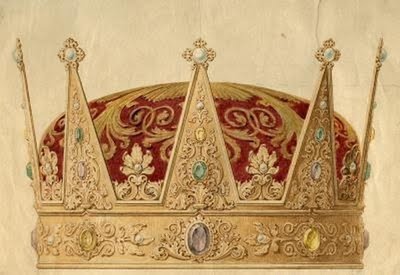
crown
My 26th great-grandmother was born in Wales and died in France. Her mother was a princess of Wales, who also died in France. Her son married a princess of England. Wales in those days was in dispute since the Romans had withdrawn. The various royals were military rivals. The language and ,most of all, the names make the ancient people of Wales funny to research. These are the most confusing names in my tree. As usual, they have various spellings and titles that are used for the same person, so scrutiny is important.
Margred Verch Madog (1150 – 1198)
is my 26th great grandmother
Llewelyn Ap Iorwerth (1173 – 1240)
son of Margred Verch Madog
Elen Verch Llewelyn (1206 – 1253)
daughter of Llewelyn Ap Iorwerth
Isabell Mar (1278 – 1296)
daughter of Elen Verch Llewelyn
Marjorie Bruce (1297 – 1316)
daughter of Isabell Mar
Scotland Stewart Robert (1316 – 1390)
son of Marjorie Bruce
Katherine Stewart (1366 – 1446)
daughter of Scotland Stewart Robert
Margaret Maxwell (1368 – 1443)
daughter of Katherine Stewart
Joanna Montgomery (1390 – 1469)
daughter of Margaret Maxwell
Thomas Boyd (1405 – 1439)
son of Joanna Montgomery
Robert Boyd (1425 – 1470)
son of Thomas Boyd
Annabella Boyd (1449 – 1476)
daughter of Robert Boyd
Robert Lord Gordon (1475 – 1525)
son of Annabella Boyd
CATHERINE GORDON (1497 – 1537)
daughter of Robert Lord Gordon
Lady Elizabeth Ashton (1524 – 1588)
daughter of CATHERINE GORDON
Capt Roger Dudley (1535 – 1585)
son of Lady Elizabeth Ashton
Gov Thomas Dudley (1576 – 1653)
son of Capt Roger Dudley
Anne Dudley (1612 – 1672)
daughter of Gov Thomas Dudley
John Bradstreet (1652 – 1718)
son of Anne Dudley
Mercy Bradstreet (1689 – 1725)
daughter of John Bradstreet
Caleb Hazen (1720 – 1777)
son of Mercy Bradstreet
Mercy Hazen (1747 – 1819)
daughter of Caleb Hazen
Martha Mead (1784 – 1860)
daughter of Mercy Hazen
Abner Morse (1808 – 1838)
son of Martha Mead
Daniel Rowland Morse (1838 – 1910)
son of Abner Morse
Jason A Morse (1862 – 1932)
son of Daniel Rowland Morse
Ernest Abner Morse (1890 – 1965)
son of Jason A Morse
Richard Arden Morse (1920 – 2004)
son of Ernest Abner Morse
Pamela Morse
I am the daughter of Richard Arden Morse
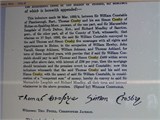
Simon Crosby signature on indenture
Simon Crosby, perhaps a brother of Thomas of Cambridge and Rowley, embarked from England in the ship “Susan and Ellen,” April 13, 1635, being then twenty-six years old, with his wife Ann, aged twenty-five, and infant son Thomas, eight weeks old. He settled in Cambridge, Mass., where he was a husbandman and was a proprietor as early as February 8, 1636. He was admitted a freeman in that year, and served as selectman in 1636 and 1638. He had several grants of land, and his estate, later known as the “Brattle place,” passed into the hands of Rev. William Brattle, his residence being at what is now the corner of Brattle street and Brattle square. He died in September, 1639, at the early age of thirty-one years, leaving sons Thomas, born in England; Simon, born in 1637, in Cambridge; and Joseph, 1639, at the same place. The widow married, in 1646, Rev. William Thompson, minister at Braintree, and became the second time a widow at his death, Dec. 10, 1666. She died Oct 8, 1676.
Simon Crosby (1608 – 1639)
is my 10th great-grandfather
Thomas Crosby (1635 – 1702)
son of Simon Crosby
Sarah Crosby (1667 – 1706)
daughter of Thomas Crosby
Sarah Sears (1697 – 1785)
daughter of Sarah Crosby
Sarah Hamblin (1721 – 1814)
daughter of Sarah Sears
Mercy Hazen (1747 – 1819)
daughter of Sarah Hamblin
Martha Mead (1784 – 1860)
daughter of Mercy Hazen
Abner Morse (1808 – 1838)
son of Martha Mead
Daniel Rowland Morse (1838 – 1910)
son of Abner Morse
Jason A Morse (1862 – 1932)
son of Daniel Rowland Morse
Ernest Abner Morse (1890 – 1965)
son of Jason A Morse
Richard Arden Morse (1920 – 2004)
son of Ernest Abner Morse
Pamela Morse
I am the daughter of Richard Arden Morse
Ernest Howard Crosby, In the portion of the family history taken from the October New York Genealogical and Biograpical Record, Surmises that Simon Crosby ‘may have come to America as one of the company of the Rev. Thomas Shepard, who crossed the ocean in that year (1635) and settled at Newtown, now Cambridge, Massachusetts. This Mr. Shepard was preceeded or accompanied by a large number of his freinds and acquaintances. He had taken orders in the Church of England, and had held livings in Yorkshire and Northumberland, but he enertained conscientious scruples regarding the ceremonies of his church, and was consequently so harassed by those in authority that he left England, and became one of the most eminent clergymen in New England. The Chief reason for establishing Harvard College at Cambridge is that he lived there.’
This record goes on to state that before the end of 1635 we find Simon Crosby living at Newtown (Cambridge). He was admitted as a freeman on March 3, 1636 and chosen as a selectman in the fall of that year. In September of 1637 he was elected surveyor of highways; was selectman again in 1638, and in October of that year was elected constable.
On Dec. 5, 1636 land was granted to him and six others for pasture. He died in Cambridge in September 1639, at only 31 years of age. The cause of his death is not known, but we can surmise that his death may have been fairly sudden, since he died intestate. An addendum to Ernest Howard Crosby’s record quoted above says that the original inventory of the estate of Simon Crosby, signed by his widow Anne, is on file in the archives of Massachusetts.

