mermaidcamp
Keeping current in wellness, in and out of the water
You can scroll the shelf using ← and → keys
You can scroll the shelf using ← and → keys

winter writing challenge
I just read in a fellow blogger’s post about the ROW80 challenge. I have just started a practice to improve my writing by creating poetry and art. I had not planed to commit to a daily routine, but I am finding that starting the creative day by drawing, editing photos, and making visual art I am more likely to be observant for the day. Observant includes in this case a full attention to detail as I go through my life, and easy flawless observance of boundaries I have set. Since the group is making personal goals a shared conversation, observant will also mean that I pay attention to my fellow writers and the way they express themselves. This idea arrived at a most propitious time, since 80 days of tracking my goal of a more poetic life will give me a good jump start to a full time practice. I look forward to learning how other people contribute to this exercise.
Observe and Grow are the key words for my goal. I hope to grow my vocabulary, my skills, and my creativity by publishing art and poetry. By observing the world, as well as my dreams, I will find richer, more vibrant subjects. I tend to be a scribe, writing just the facts, and supporting the facts with some photo documentation. I still enjoy that, but feel I could do some story telling, humor, and abstract sound pieces if I develop my poetic sense. I want to see where poetry leads me. I am not seeking approval for the work as much as I am wondering what will happen when I apply myself.
For the next 80 days I will observe what happens when I write a poem each day. This is an adventure I will share. It will include:
It is my desire to explore a different way of using the written word. I think it will open new doors for my self expression. I also believe my daily life will be enriched by looking for poetic subject matter. I publish my art and poetry on my Tumblr blog, The Flow.

winter writing challenge
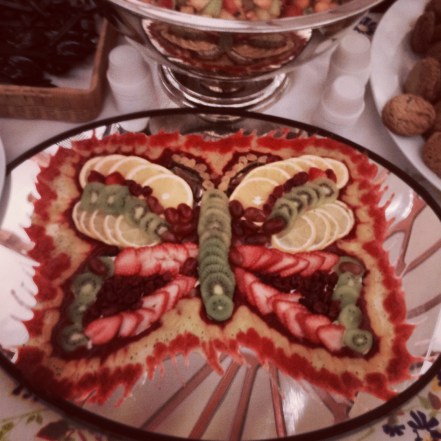
fruit salad
Chris Brogan has announced his 3 words for 2015. This annual challenge is an alternative to the classic resolution style. I have done it with success, and also done it when I forgot my words entirely. Like anything else, persistence is needed for results too occur. I am pleased with my own choices this year, patience, persistence, and poetry. They have meaning across the board to upgrades I aspire to make. I plan to use them liberally throughout the year. I also plan to use Brother Brogan’s words to apply to a specific change I am making in my household. There is no rule that says you can’t admire and swipe other people’s words if they suit you. His words work for my new world of menu planning. I have become convinced that improvisation is not the best way forward with nutrition. It has served me well, and I am healthy. I want to develop the skills and the results of managing our home kitchen like a chef with a restaurant. I know that planning and balance will bring lower costs and higher quality nutrition to our diet. We will waste less produce and use the freezer to make the most of what we buy. This new discipline fits perfectly with the words I am appropriating from Brother Brogan for this project.
His words are:
Thanks, as always, for your guidance, Chris. I am happily applying your words to my advantage this year. I have loved your teaching since Trust Agents. I hope your words will be fabulous for you as well. All the best in 2015.

psyche

psyche
Each night our psyche brings us images in dreams. We connect with them and live within the dream during our sleep. Upon awakening we sometimes lose the dream images as we file that dream somewhere within our unconscious and decide it is not part of our true reality. Notice that we are within the dream while asleep, and then the images are considered to be unreal when we are awake. We live within a gallery of art and image, dramas with set and costume, in our sleeping world. Our awakened ego is concerned with gathering information and meaning rather than absorbing art for art’s sake. We wake up and enter the world with an explanation for everything. By dismissing the power of the imagination we loose the opportunity to individuate. We diminish our own imagination by interpreting our dream images rather than interacting with them.
We run two systems in our awakened world, an economic system and a therapeutic system. All of our activities are divided into economic obligations and challenges or curing our ills. We are concerned with “growth” of our personal economy or “healing” our wounds. It is easy to see the connections that contribute to the cyclical nature of this limited spiral. What is not so simple is to break these cycles. If our addictions are fed by information, image is converted by the mind into interpretation. The ego prides itself on its ability to interpret everything. Since the ego determines that it alone is conscious, all the rest of reality can be fit into the unconscious basket. The ego explains the image and then its importance is belittled. We cease to interact with it once it has an explanation. Imagery has no explanation. Art and image are animate and inherently charged with insight.
I intend to respect the imagery inside of me by embracing a more poetic view of life. By bringing focus to imagination and imagery I want to contribute to my own creativity. I will investigate how I can interact with my psychic and artistic life through practice. This intention can only be controlled to a certain extent, and it is not my hope to contain my psyche, but to explore it. It has a lot to say.

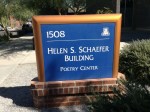

April is Poetry month, with many activities and projects running around the country. I have taken the challenge to write a poem every day in April for the last two years. I push my way through the writing, with a fully punched card in participation, but have not really put my full attention into the whole process. We are lucky in Tucson to have a world-famous Poetry Center at the U of A, open to the public. Each time I visit the place I tell myself I will make a regular habit of spending time there. It is an inspiring place to read, write, meditate, or take part in one of the workshops or readings. The only resolution I need to make for 2015 is to honor the poet within me all year. There is a haunting feeling in my memory and in my dreams of a productive and expressive poet I believe is within my spirit. This artist/alchemist/poet has not been nurtured as well as it needs to be. I work with words daily but am not arching to new heights or even developing a larger vocabulary. When I do push myself to write poetry daily I can feel a response in my dream world toward more color and rich dramatic story lines. It is as if there are stories, poems, maybe even novels, deeply stored in my writing practice, but I do very little to develop my ability in these realms. The poetry is essentially trapped within my lazy writing practice. I plan to liberate this struggling poetic artist next year and allow her to explore and create in new ways.
As 2015 approaches I contemplate the 3 words I will use to ground my meditation, my health, and my creativity next year. This is a practice started and promoted by Chris Brogan. I have done it before and always find the quest for the right words to be very helpful. This year I want to make some kind of significant progress as a poet and creative writer. By using these key words all year I believe I can be a better poet in April and beyond. Moreover, I think these words fit perfectly with my goals to clear out excess clutter in my home and my life. I am working on this now, cleaning out my closet before the end of the year. I can honestly say that the results I see and feel in my closet after patiently and persistently ridding myself of extraneous clothing and accessories are nothing short of poetic. Poetry has more to do with what is edited than with what remains. The fewer words used to convey an idea, the more powerful each word becomes. Now my closet is more like a haiku than an epic drama. I am feeling much better when I walk into it now.
These words fit perfectly with my health and fitness goals. Movement and variety of enjoyable physical activities create strong healthy bodies. It does not matter if time is spent playing an active sport, hiking, swimming, or yoga, the key to success is always persistence. I like to cross train, in other words, do different physical activities, to keep things interesting. This is good for the body as well as the mind. I like doing some activities outdoors, but the gym makes me very happy too. In 2015 I plan to create a fitness regime that offers me a chance to improve my levels of grace, balance, and coordination. I plan to end 2015 as poetry in motion, retaining all my flexibility and enthusiasm for fitness and health. Too much of any one thing can cause burn out or injury, so there is no need to fixate on any one aspect of health or fitness. Balance is an important element of health.
My words have meaning for me in many aspects of living. They are good universal guiding principals that are easy to remember:
Do you do the 3 word challenge, Gentle Reader? Have you found it to be helpful?


My 7th great-grandfather had an inherited gift for bone setting. Both he and my 6th great-grandfather relieved suffering by using manipulative medicine. They had no degree in medicine but believed in their natural ability to pass this gift down to generations of Sweets.
“November 8th, 1724, Captain Benoni Sweet was baptised at St. Paul’s, in Narragasett, by the Rev. Mr. McSparran; and at the succeeding Easter, Captain Sweet was elected one of the Vestry.” [History of the Episcopal Church in Narragansett, Rhode Island, page 94.]
“James Sweet, the father of Benoni, emigrated from Wales [England] to this country, and purchased an estate at the foot of Ridge Hill, so called, in North Kingstown… Benoni had been a Captain in the British service–was well informed, and of polished manners. He was a natural bonesetter and the progenitor of the race in Rhode Island. He was styled Doctor Sweet, but he practised in restoring dislocations only. He was a regular communicant of the church, and officiated as a vestryman, until his death. ‘July 19th, 1751,’ says the record, ‘died Captain Benoni Sweet, of North Kingstown, in the ninetieth year of his age; Dr. McSparran preached his funeral sermon, and buried him in the cemetery of his ancestors.'” [History of the Episcopal Church in Narragansett, Rhode Island, page 94.]
“SWEET, Capt. Benoni, in 90th year, buried in his own family yard.” [Vital Record of Rhode Island, 1636-1850, v.10, page 384]
Benoni Sweet (1663 – 1751)
is my 7th great grandfather
Dr. James Sweet (1686 – 1751)
son of Benoni Sweet
Thomas Sweet (1732 – 1813)
son of Dr. James Sweet
Thomas Sweet (1759 – 1844)
son of Thomas Sweet
Valentine Sweet (1791 – 1858)
son of Thomas Sweet
Sarah LaVina Sweet (1840 – 1923)
daughter of Valentine Sweet
Jason A Morse (1862 – 1932)
son of Sarah LaVina Sweet
Ernest Abner Morse (1890 – 1965)
son of Jason A Morse
Richard Arden Morse (1920 – 2004)
son of Ernest Abner Morse
Pamela Morse
I am the daughter of Richard Arden Morse
The Bonesetter Sweets
Of South County, Rhode Island
By Martha R. McPartland
In colonial America, graduates of medical schools were few and far between. In Rhode Island there were only five medical school graduates practicing in 1800 and the first medical degree awarded in the state was a Brown University in 1814. Prior to that period, from its founding in 1636, Rhode Island had many men called “Doctor” with
little or no qualifications to back up their title. Some were the seventh son of a seventh son, and so believed to be endowed with special healing power; some were charlatans with a smattering of education and glib tongues, who took advantage of misfortune and ignorance; still others had a natural flair for caring for the sick and were able to relieve much suffering. In the last category was a remarkable family from the southern part of Rhode Island called, and still recalled, as the “Bonesetter Sweets.”
The Sweets were an old Rhode Island family whose progenitor, John Sweet, came to the state from Salem, Massachusetts in 1637. Of Welsh extraction, family tradition has it that their forbears in Wales had this innate facility for helping the sick. James Sweet , son of the immigrant, John, was the first of the American “Bonesetter Sweets.” He was born in 1622, came to Rhode Island with his parents, married Mary Greene and settled in what is commonly called South County, and more correctly named Washington County. Of the nine children of James and Mary Sweet, only Benoni , born in 1663, became a bonesetter. Traditionally, Benoni is said to have had a flowery and polished
manner—perhaps a forerunner of the bedside manner possessed by some of today’s medical men! He was called “Doctor” Sweet and his practice consisted of setting bones. He was a respected member of the community and a communicant of the historic Narragansett Church. When he died in 1751, Dr. James McSarren, rector of the
church, delivered a glowing eulogy. The inherited ability to set bones was not regarded by the Sweets as a vocation, but rather as an avocation. They were artisans by calling—stonemasons, blacksmiths, wheel-wrights, and carpenters. Bone setting was a sideline, as is demonstrated by an advertisement in the Providence Journal of February 16, 1830 and printed at the top or the first page of this article.
The remarkable part of this family was the fact that they never exploited their natural ability. Not one of them sought fame or fortune through this medium. The father usually selected one or two of his sons, probably those who showed a tendency in that direction, and instructed them in bonesetting. The Sweets did not deem this a magical thing, but more of an inherited knowledge acquired from their elders. They handled fractures, sprains, and dislocations with a skill to be envied by an orthopedic physician. Their skill was in the manipulation of bones but they were known to use herbs, ointments, and skunk grease in massaging too. Their knack was thought uncanny, as they so often succeeded where others, more learned and “better trained,” had failed. Instances naming local doctors who failed to relieve suffering that was later relieved by one of the Sweets have become a part of South County folklore.
Dr. Benoni Sweet selected his son, James , to carry on the family art. James was born in 1688 and not too much is known of his successes, but it was Job Sweet, son of James, who gained national recognition and established their bonesetting reputation. Job was born in 1724 and married Jemima Sherman in 1750. He lived all his life in the South County section of Rhode Island.

John Vowell Hooker
John Hooker, John Hoker or John Vowell (c. 1527–1601) was an English writer, solicitor, antiquary, civic administrator and advocate of republican government. He wrote an eye-witness account of the siege of Exeter that took place during the Prayer Book Rebellion in 1549. From 1555 to his death he was chamberlain of that city, though he spent several years in Ireland as legal adviser to Sir Peter Carew during his claim to lands there. He was, for short periods, a member of both the Irish and English parliaments and wrote an influential treatise on parliamentary procedure. He was one of the editors of the second edition of Raphael Holinshed’s Chronicles, published in 1587. His last, unpublished and probably uncompleted work was the first topographical description of the county of Devon.
John Vowell Hooker (1526 – 1601)
is my 11th great grandfather
Mary Hooker (1567 – 1617)
daughter of John Vowell Hooker
John (Dr) Greene (1597 – 1659)
son of Mary Hooker
Mary Greene (1633 – 1686)
daughter of John (Dr) Greene
Benoni Sweet (1663 – 1751)
son of Mary Greene
Dr. James Sweet (1686 – 1751)
son of Benoni Sweet
Thomas Sweet (1732 – 1813)
son of Dr. James Sweet
Thomas Sweet (1759 – 1844)
son of Thomas Sweet
Valentine Sweet (1791 – 1858)
son of Thomas Sweet
Sarah LaVina Sweet (1840 – 1923)
daughter of Valentine Sweet
Jason A Morse (1862 – 1932)
son of Sarah LaVina Sweet
Ernest Abner Morse (1890 – 1965)
son of Jason A Morse
Richard Arden Morse (1920 – 2004)
son of Ernest Abner Morse
Pamela Morse
I am the daughter of Richard Arden Morse
Hooker was born at Bourbridge Hall in Exeter, Devon, England. He was the second son of Robert Vowell or Hooker and Agnes Doble, his third wife. The Vowell family had acquired the name Hooker in the 15th century, but usually retained the earlier name; in fact John Hooker was known as John Vowell for much of his life. By the time he was born the family had been prominent in Exeter for several generations. Hooker received an excellent classical education, reading Roman law at Oxford followed by a period in Europe studying with leading Protestant divines, notably Pietro Martire Vermigli.
In the 1540s he married Martha, daughter of Robert Tucker of Exeter and they had three sons and two daughters. By 1586, Martha had died and he had married Anastryce (c. 1540–1599), daughter of Edward Bridgeman of Exeter. They had seven sons and five daughters. In later life his health failed and he died in Exeter some time between 26 January and 15 September in 1601 and was probably buried in the cathedral. He was the uncle of Richard Hooker, the influential Anglican theologian.
“
[I denounce those who chose] to supporte the authoritie of the Idoll of Rome whome they never sawe in contempte of their trewe & lawfull kinge, whom they knewe and oughte to obeye.
”
— Hooker, on the siege of Exeter, in The description of the citie of Excester, 1.67
During the Prayer Book Rebellion in 1549 he experienced at first hand the siege of Exeter, leaving a vivid account of its events in which he made no effort to conceal his religious sympathies. From 1551 to 1553 he was employed by Myles Coverdale during his short incumbency as Bishop of Exeter; and then in 1555 he became the first chamberlain of Exeter, a post that he held until his death.
As chamberlain he was responsible for the city’s finances, he dealt with disputes between guilds and merchants, oversaw the rebuilding of the high school, planted many trees in the city, and collected and put in order the city’s archives. He used these archives to compile his “Annals” of the City in which he details the characteristics of every Tudor mayor of Exeter, and in 1578 he also wrote and published The Lives of the Bishops of Exeter. In 1570/71 he was the MP for Exeter.
At a time when it was deemed essential for cities and nations to have ancient lineage, Hooker described the foundation of Exeter by Corinaeus, nephew of Brutus of Britain, son of Aeneas. He advocated emulating the governmental institutions of the Roman Republic which, in his opinion, brought Rome to greatness, and held the municipal government of Exeter up as a model republican commonwealth worthy of emulation.
Ireland
In 1568, possibly because he regarded himself as underpaid for the work he was doing for the city, Hooker was persuaded by Sir Peter Carew to go with him to Ireland to be his legal adviser. He also organised Carew’s papers in support of his claim for the barony of Idrone, a task to which he committed himself so deeply that in 1569 he was returned to the Irish parliament as member for Athenry. Hooker later wrote a biography of Carew, The dyscourse and dyscoverye of the lyffe of Sir Peter Carew, in which he almost certainly understated the deceit and aggression behind Carew’s Irish venture.
Until Carew’s death in 1575, Hooker spent much time in Ireland, but he had also been returned to the English parliament in 1571 as one of the burgessesof Exeter. The session had only lasted a few weeks, but he kept a journal in which he accurately recorded the proceedings. His experiences in the Irish and English parliaments led him to write a treatise on parliamentary practice, The Order and Usage how to Keepe a Parlement in England, which was published in two editions in 1572. One edition had a preface addressed to William FitzWilliam, the Lord Deputy of Ireland and was clearly intended to bring order to the Irish assembly; the other was addressed to the Exeter city authorities, presumably to aid his successor burgesses. In writing his treatise Hooker took much inspiration from the Modus Tenendi Parliamentum, a treatise from the early 14th century.
In 1586 Hooker again represented Exeter in parliament. At this time he was one of the editors of the second edition of Raphael Holinshed’s Chronicles, which was published in 1587. Hooker’s Order and Usage was included and he contributed an updated history of Ireland, including parts of his Life of Carew and a translation of Expugnatio Hibernica (“Conquest of Ireland”) by Gerald of Wales. In his Irish section he again made his religious and political sympathies very clear, repeatedly denouncing the Catholicism of the native Irish, seeing it as the cause both of their poverty and rebelliousness. Rome, he wrote, is “the pestilent hydra” and the pope “the sonne of sathan, and the manne of sinne, and the enimie unto the crosse of Christ, whose bloodthirstiness will never be quenched”.
Later life
“
a verye ancient towne … and maye be equall with some cities for it is the cheffe emporium of that countrie and most inhabited with merchantes whose cheffest trade in tyme of peace was with Spayne … it is a clene and sweete towne, very well paved…
”
— Hooker, on Barnstaple, in Synopsis Corographical, 261-262
Hooker continued to serve Exeter in his later years, becoming coroner in 1583 and recorder in 1590. He was also appointed as steward of Bradninch by Sir Walter Raleigh in 1587.[1] By this time he was involved in the long task of organising and writing his historically-based description of his home county that he called Synopsis Corographical of the county of Devon. He probably started work on this before his friend Richard Carew began writing his similar Survey of Cornwall.[2]In writing his Synopsis, Hooker was influenced by the style and structure of William Harrison’sDescription of England, which had been published in 1577 as part of the first edition of Holinshed’sChronicles.[1]
Although Hooker revised Synopsis many times, he probably never completed it to his satisfaction. The work exists today as two almost identical manuscripts which were used as source material for many later topographical descriptions of the county: Thomas Westcote’s Survey of Devon of 1630, and Tristram Risdon’s Chorographical Description or Survey of the County of Devon (c. 1632) are examples.
Works
Orders Enacted for Orphans and for their Portions within the Citie of Exeter, London, 1575
The Antique Description and Account of the City of Exeter: In Three Parts, All Written Purely by John Vowell, Alias Hoker
The order and usage of the keepingng of a parlement in England, 1572
A pamphlet of the offices and duties of everie particular sworned officer of the citie of Excester (sic) 1584
The Life and Times of Sir Peter Carew
Jupiter is by far the most massive planet in our solar system. The Roman god Jupiter was worshiped as the purveyor of the universe. He was the ruler of the daytime sky, the god of lightning and thunder, and the political deity of the Roman state. As king of the gods he administered the cosmos. He is the son of Saturn, known for his jovial nature. Jove, as in by Jove the English expression, refers to the god Jupiter. Thursday is his day and protection of the state is his mission. He was the main man in the pantheon when Jesus was born in a Roman colony. He was revered for his reputation for abundance and good fortune, as well as very fine organizational and judicial skills. He was known for bringing chaos to order.
The fifth planet from the sun is now retrograde from the point of view of the earth. This means that due to our orbits around the sun, Jupiter appears from the earth to travel in reverse. This phenomena has significance in astrology, representing a chance to go over events in the past and make improvements. The Jupiter retrograde period will last until April, ending just as US taxes will be due. It represents a chance to review our organization and abundance issues. This time is a portal to edit and remake your own movie that has been running since last September. You do not have to believe in the power of Jupiter to know that good fortune regularly follows good organization. There is no need to worship the god of the daytime sky to use this time to significantly improve your own judgement and organization. Americans need to review the year for the IRS, if not for Jupiter. Take your habits through an honest evaluation aimed at creating more joviality and order. We all have room for improvement, Gentle Readers. What did you start last September that is not properly organized? Imagine jolly Jupiter guiding you through tax preparation and New Year’s resolutions. Redirect your attention to all that brings you joy. Rigorously remove disorder and chaos that clutter your life. Finish what you started, either by discarding it or completing it.

Constance VonHohenstaufen
My 21st great-grandmother was born in Sicily and died in Barcelona. Her grandfather was Holy Roman Emperor. Her husband died so she became a nun, as many of the queen consorts did. I think it was the only safe place to be. She is buried in Barcelona Cathedral, with some of my other ancestors, in a royal urn.

urns Barcelona Cathedral
After her original interment Constance was moved to Urns containing the bodies of multiple nobles. Urns Barcelona Cathedral with the remains of: In the other box: – Alphonse Franc, Count of Barcelona and King of Aragon – Jaume d’Urgell, Count of Urgell and Frederick of Aragon, both sons of en: Alphonse Benign In the other: – Constance of Sicily, wife of en: Peter the Great – Cyprus Maria, wife of en: James the Just – Sybil Fort, fourth wife of en: Peter of Aragon – Eleanor of Aragon (+1416), second wife of en: Peter I of Cyprus, King of Cyprus and Jerusalem. The sculptures are by Frederic Seas
Constance of Sicily Queen consort of Aragon, Sicily, and Valencia; Countess consort of Barcelona Tenure 1276–1285 Spouse Peter III of Aragon
Issue Alfonso III of Aragon
James II of Aragon
Elisabeth, Queen of Portugal
Frederick III of Sicily
Yolanda, Duchess of Calabria
Pedro of Aragon House Hohenstaufen Dynasty (by birth)
House of Aragon (by marriage) Father Manfred of Sicily Mother Beatrice of Savoy Born 1249
Sicily Died 9 April 1302 (aged 52 or 53)
Barcelona, Spain Burial Cathedral of Santa Eulalia, Barcelona
Constance (or Constantia) (1249 – 9 April 1302) was the Queen consort of Peter III of Aragon.
Family
She was the only daughter of Manfred of Sicily and his first wife Beatrice of Savoy. Her paternal grandparents were Frederick II, Holy Roman Emperor and his mistress Bianca Lancia. Her maternal grandparents were Amadeus IV of Savoy and his first wife Anne of Burgundy.
Marriage
On 13 June 1262, Constantia married Prince Peter of Aragon, eldest son of James I of Aragon and his second wife Violant of Hungary.
Manfred was killed in the Battle of Benevento (26 February 1266) while fighting against his rival Charles of Anjou, son of Louis VIII of France and Blanche of Castile. As his eldest daughter she could be considered his heiress but did not pursue her claim at this time.
James I died on 27 July 1276 and Peter succeeded to the throne. Constance became his Queen consort. With the War of the Sicilian Vespers (1282–1302), at first Peter and then their sons claimed the throne of Sicily in her right. The War resulted in the partition of the Kingdom of Sicily to the “Kingdom of Trinacria” (the island of Sicily) under her descendants and the Kingdom of Naples under the descendants of Charles of Anjou.
Peter III died on 2 November 1285 and Constantia remained a widow. She ended her days as a nun in Barcelona.
Children
Constantia and Peter III of Aragon had six children:
Alfonso III of Aragon (1265 – 18 June 1291).
James II of Aragon (10 August 1267 – 2 November 1327).
Elizabeth of Aragon (1271 – 4 July 1336). Married Denis of Portugal.
Frederick III of Sicily (13 December 1272 – 25 June 1337).
Yolanda of Aragon (1273 – August, 1302). Married Robert of Naples.
Infante Pedro of Aragon (1275 – 25 August 1296). Married Guillemette of Béarn, daughter of Gaston VII of Montcada, Viscount of Béarn.
Constantia’s ancestors in three generations Constantia of Sicily Father:
Manfred of Sicily Paternal Grandfather:
Frederick II, Holy Roman Emperor Paternal Great-grandfather:
Henry VI, Holy Roman Emperor Paternal Great-grandmother:
Constance of Sicily Paternal Grandmother:
Bianca Lancia Paternal Great-grandfather:
Unknown Paternal Great-grandmother:
Unknown Mother:
Beatrice of Savoy Maternal Grandfather:
Amadeus IV of Savoy Maternal Great-grandfather:
Thomas I of Savoy Maternal Great-grandmother:
Marguerite of Geneva Maternal Grandmother:
Anne of Burgundy Maternal Great-grandfather:
Hugh III, Duke of Burgundy Maternal Great-grandmother:
Béatrice of Albon
Constance of Sicily, Queen of Aragon
House of Hohenstaufen
Born: circa 1249 Died: 9 April 1302 Royal titles Preceded by
Teresa Gil de Vidaure Queen consort of Aragon
1276–1285 Succeeded by
Isabella of Castile Countess consort of Barcelona, Girona, Osona and Besalú
1276–1285 Queen consort of Valencia
1276–1285 Preceded by
Margaret of Burgundy Queen consort of Sicily
1282–1285 Succeeded by
Isabella of Castile [edit] External links
A listing of descendants of the Hohenstaufen Dynasty
Constance VonHohenstaufen (1249 – 1302)
is my 21st great grandmother
Isabella Pedra Aragon (1271 – 1336)
daughter of Constance VonHohenstaufen
Alphonso Dinisez Portugal (1290 – 1357)
son of Isabella Pedra Aragon
Peter I Portugal Cruel Algarve (1320 – 1367)
son of Alphonso Dinisez Portugal
John I DePinto (1358 – 1433)
son of Peter I Portugal Cruel Algarve
Beatrix DePinto (1403 – 1447)
daughter of John I DePinto
John Fettiplace (1427 – 1464)
son of Beatrix DePinto
Richard Fettiplace (1460 – 1511)
son of John Fettiplace
Anne Fettiplace (1496 – 1567)
daughter of Richard Fettiplace
Mary Purefoy (1533 – 1579)
daughter of Anne Fettiplace
Susanna Thorne (1559 – 1586)
daughter of Mary Purefoy
Gov Thomas Dudley (1576 – 1653)
son of Susanna Thorne
Anne Dudley (1612 – 1672)
daughter of Gov Thomas Dudley
John Bradstreet (1652 – 1718)
son of Anne Dudley
Mercy Bradstreet (1689 – 1725)
daughter of John Bradstreet
Caleb Hazen (1720 – 1777)
son of Mercy Bradstreet
Mercy Hazen (1747 – 1819)
daughter of Caleb Hazen
Martha Mead (1784 – 1860)
daughter of Mercy Hazen
Abner Morse (1808 – 1838)
son of Martha Mead
Daniel Rowland Morse (1838 – 1910)
son of Abner Morse
Jason A Morse (1862 – 1932)
son of Daniel Rowland Morse
Ernest Abner Morse (1890 – 1965)
son of Jason A Morse
Richard Arden Morse (1920 – 2004)
son of Ernest Abner Morse
Pamela Morse
I am the daughter of Richard Arden Morse

Constance of Sicily Queen consort of Aragon
https://twitter.com/jasonjross/status/540250505256005632
While protests on American streets continue a new protest movement is taking place on twitter. White people are discussing white privilege as experienced by them. It captures the other side of the policing story from the point of view of the beneficiaries of a highly prejudiced system. I think most of us know being white is an advantage, but we are not aware of how much of a boon it is to white criminals. Equal protection under the law, if it were to be equal, would extend all the way from safe, secure protected living environments for all to criminal justice that deals out fair and equal sentencing. If you take a look at this trending hashtag you will see some shocking examples of system failure.
I am white to the WASPiest extreme. See my super Brit ancestors to validate my whiteness. I live my life in such a way as to avoid all contact with doctors, lawyers, and police. I have been highly successful with this plan, in part because I am white. I have no crimes to report, pre se, except that I was an undocumented worker in Tecate, Baja California, Mexico, off and on for many years. As a wetback gringa all privilege and courtesy was bestowed on me by the migra on both sides of the border. There was never any problem. I have not crossed the border since 2003 because things just became too complicated after 2001. The era of the #WetbackGringa, wild and free, became a thing of the past.
I think the #CrimingWhileWhite phenomena comes from unconscious prejudice embedded in our culture. I don’t think there is willful or criminal intent by police to treat citizens by different standards. That is why the grand jury is able to rule that there is no probable cause to try the cops who ended lives while on duty. These preferences, or assumptions that white people are not threatening society, are not consciously accepted by the individuals dealing out the uneven justice and protection. Systemic privilege as well as systemic prejudice exist in the collective beliefs of a culture. Just as people have shadow qualities of which they are unaware, so do institutions. Institutional shadow qualities are even harder to nail because there is no institutional Jungian shrink to assist the patient in seeing its whole being. The very nature of shadow prejudice is to hide and stay hidden because nobody wants to believe we are acting from such base instincts. I have been a petroleum princess in Venezuela and a wetback gringa in Mexico. I can tell you from experience the only thing better than being a white woman is being a bilingual blonde white woman. We are automatically above suspicion and nobody ever suspects we understand Spanish, so they say anything in front of us, assuming we will not know what they are saying. Have you ever had an experience of white supremacy or privilege, gentle reader?
“Little do ye know your own blessedness; for to travel hopefully is a better thing than to arrive.”
Robert Louis Stevenson
“El Dorado” (essay)
Thanksgiving is a celebration of the travel, arrival, and survival of the Pilgrims. The Mayflower voyage in 1620 set the precedent for many more European travelers to venture across the Atlantic to the New World. Desire and curiosity are the two eyes, Robert Louis Stevenson says in this essay, of human nature. It took a great deal of both to decide to sail to America to practice religion. They had aspirations to convert the locals to their way of worship in the same way the Crusaders thought they needed to conquer the Holy Land. They were invaders who, like the Spanish Conquistadores, saw themselves as saviors rather than brutal destroyers of culture. The believed in the superiority of their own orthopraxy, and set about building a hierarchy to enforce religious orthodoxy as they saw fit.
All of us have built rigid obstacles into our lives without intending to do so. For many people nationalism contains beliefs that our own superior country is infallible. This creates national enemies of whom we know little, but are encouraged to conquer for the good of mankind. These beliefs enflame emotions and distract us from contentment. They also overshadow our own mortality and our individual mission and talent. We must follow our desire and curiosity to develop our skills while we are alive because our time as humans is limited. Our journey is individual because each of us creates our own version of El Dorado, the mythical place of great abundance. We also actively create our own hellish conditions, both real and imaginary. If you have traveled or had visitors from out of town during the holiday week you joined in a mutual vision of never-ending abundance. Some of you endured hardship on the journey, perhaps not like the Mayflower Pilgrims, but unpleasant nonetheless.
“There is only one wish realisable on the earth; only one thing that can be perfectly attained: Death. And from a variety of circumstances we have no one to tell us whether it be worth attaining.” Mr Stevenson concludes in his essay praising the pursuit of ultimate land of plenty.
A wishlist for travelers:
Bon Voyage, gentle readers. May your trip be merry and bright.

