mermaidcamp
Keeping current in wellness, in and out of the water
You can scroll the shelf using ← and → keys
You can scroll the shelf using ← and → keys

ROW80
As a public speaker or teacher I specialize in improvisation. I like to joke on my feet and consider myself to be a bit of a wit. Now as I attempt to transfer my in person energy into the written word, I notice the same tendency. I want to wing it, then do it again if that did not work well. My urge to edit and refine has been absent from this process. I told you I want to be like all of these highly productive and impressive writers in #ROW80 by adding more editing and revision to each piece of poetry I write. I still am not attracted to the revision part of the deal, but am at least thinking more about structure up front.
I have a curiosity about trying to match a piece of poetry with a prose short story about a character (or characters) in my family tree. I am thinking hard about my Confederate family history as it relates to the Civil Rights movement, and our political situation today. I grew up in Pennsylvania but my cousins in Texas were taught to racially discriminate at the same time they were given strict religious rules. I didn’t know how lucky I was to escape early racist brainwashing until I moved to Texas as a 15-year-old. I was never confused by religious bigotry because it was not presented to me, but my classmates seemed very afflicted with some ancient hatred issues I just did not understand. I moved to the Brazos Valley, a place where cotton had been king and the population had once been around 90% enslaved Africans. I now know that this place was close to the homestead my ancestors settled after the Civil War. I am dreaming and obsessing about this time and what happened to my family, so I might as well use this to attempt my first twin set of prose/poetry. I will also use this occasion to debut a first draft!!!! I am doing this in an attempt to follow it with both a prose story and more refined and interesting drafts of this work in progress. Mind you, this is the first time I am using this phrase (WIP) because I never allowed much progress before moving on to another piece. I have no working title..unless it is maybe “Civil”:

DNA a wheel
The pendulum of social equality swings back and forth without fail
Generations carry the scars of hatred inherited without question
Blindly absorbing the sins of the past, each individual has been primed
To live in a time of upheaval and grief, suspecting it has been created by others
Dark secretive layers of cultural denial manage to influence consciousness
Seeping up from beneath the floor supporting our structure is a sticky tar
It reeks of rancid promotions and snake oil promises recorded in history
If we only knew the source of this gunk, this oozing mendacity of pride,
We might confront it and uncover the essence of the buried truth inside
If you, gentle readers, have any revisions you want to send my way, please feel free. You are probably much better at that than I am. Not to worry about my pride as a poet…I can honestly say I have none..because you need some progress to make you proud, and this is my first jaunt into this territory. I plan to start the prose story in the next week, but do not expect that to be published before much ado. Thanks for all the insight into what writers really do. It is extremely helpful.
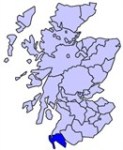
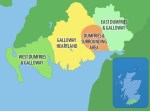

My 21st great-grandfather was the last of the independent Lords of Galloway, in Scotland. He married three or four times and is buried at Dundrennan Abbey in Galloway. He was mentioned in the Magna Carta, which is a big deal in English history. I like his outrageously long name.
Alan MacDonal FitzRoland MacFergus, Constable of Scotland, Lord Galloway (1186 – 1234)
is my 21st great grandfather
Helen Elena McDonald of Worcester Countess Galloway (1207 – 1245)
daughter of Alan MacDonal FitzRoland MacFergus, Constable of Scotland, Lord Galloway
Lady Helen Elena La Zouche Quincy (1222 – 1296)
daughter of Helen Elena McDonald of Worcester Countess Galloway
Eudo LaZouche (1245 – 1279)
son of Lady Helen Elena La Zouche Quincy
Elizabeth La Zouche (1274 – 1297)
daughter of Eudo LaZouche
Nicholas Poyntz (1303 – 1376)
son of Elizabeth La Zouche
Nicholas Poyntz (1355 – 1372)
son of Nicholas Poyntz
Pontius Poyntz (1372 – 1393)
son of Nicholas Poyntz
John Poyntz (1412 – 1447)
son of Pontius Poyntz
William Poyntz (1455 – 1494)
son of John Poyntz
Thomas Poyntz (1480 – 1562)
son of William Poyntz
Lady Susanna Elizabeth Poyntz (1528 – 1613)
daughter of Thomas Poyntz
Elizabeth Saltonstall (1557 – 1621)
daughter of Lady Susanna Elizabeth Poyntz
Henry Wyche (1604 – 1678)
son of Elizabeth Saltonstall
Henry Wyche (1648 – 1714)
son of Henry Wyche
George Wyche (1685 – 1757)
son of Henry Wyche
Peter Wyche (1712 – 1757)
son of George Wyche
Drury Wyche (1741 – 1784)
son of Peter Wyche
Mary Polly Wyche (1774 – 1852)
daughter of Drury Wyche
John Samuel Taylor (1798 – 1873)
son of Mary Polly Wyche
William Ellison Taylor (1839 – 1918)
son of John Samuel Taylor
George Harvey Taylor (1884 – 1941)
son of William Ellison Taylor
Ruby Lee Taylor (1922 – 2008)
daughter of George Harvey Taylor
Pamela Morse
I am the daughter of Ruby Lee Taylor
Alan, lord of Galloway (b. before 1199, d. 1234), magnate, was the eldest son of Roland, lord of Galloway (d. 1200), and Helen de Morville (d. 1217), sister and heir of William de Morville, lord of Lauderdale and Cunningham and royal constable. He had two brothers and two sisters, of whom Thomas (d. 1231) became earl of Atholl in right of his wife, Ada married Walter Bisset of Aboyne, and Dervorguilla married Nicholas de Stuteville of Liddel in Cumbria.
Alan contracted three marriages: to a daughter of Roger de Lacy, constable of Chester; to Margaret (d. before 1228), eldest daughter of David, earl of Huntingdon, in 1209; and, c.1229, to Rose, daughter of Hugh de Lacy, earl of Ulster. The first two marriages produced children, but only daughters attained adulthood. Helen, his daughter by his first marriage, married Roger de Quincy, while Christina (or Christiana) and Dervorguilla [see Balliol, Dervorguilla de], the children of Alan and Margaret, married William de Forz and John de Balliol respectively. Alan had one bastard son, Thomas.
Cross-border landholding and kinship with King John of England made Alan a man of consequence in both realms. His relationship with the king of Scots, based on loose overlordship rather than feudal subordination, allowed freedom of manoeuvre where his actions did not conflict with Scottish interests. Galloway’s military resources and substantial fleet gave added influence; Alan’s aid was courted unsuccessfully by John for his 1210 campaign against the Ulster Lacys, but he agreed to send one thousand men for the abortive Welsh campaign of 1212. A grant of estates in Antrim in 1212 was designed to draw him actively into the defence of Angevin Ulster against the native Irish. Despite such favours from John, when Alexander II entered the civil war in England in 1215, aligning himself with John’s baronial opponents, Alan joined the Scottish king and was his chief lieutenant in the occupation of Cumberland and Westmorland from 1215 to 1217.
From 1225 Alan used the freedom afforded by the loose overlordship of the Scottish crown to interfere in the feud between King Ragnvald of Man and his half-brother, Olaf. His private interest, arising from efforts to secure Antrim with Ragnvald’s support against the threat of a Lacy restoration, coincided at first with Anglo-Scottish policy towards the region and received the tacit support of his Scottish overlord. The prospect of a pro-Scottish client in Man led Alexander II to acquiesce to the marriage in 1226 of Alan’s bastard son, Thomas, to Ragnvald’s daughter, but the marriage provoked revolt against Ragnvald. Despite the support of Galwegian galleys and warriors, Ragnvald was overthrown and slain in 1229 by Olaf. Alan’s ensuing attempts to conquer Man for Thomas destabilized the Hebrides and western highlands, thereby threatening Scottish territorial interests, and in 1230–31 prompted active Norwegian support for Olaf. Joint action by Alan and Alexander averted catastrophe, but Scottish and Galwegian interests had diverged and the 1231 campaign marked the end of further Galwegian involvement in the Manx succession; Alan’s dynastic ambitions had caused an undesirable war with a major foreign power.
Uncertainty over the succession to Galloway shadowed Alan’s later years. His nearest legitimate male heir was Patrick of Atholl [see under Thomas, earl of Atholl], son of his younger brother, Thomas, who had died in 1231, but, although Celtic practice did not debar his bastard son, Thomas, Alan’s closest heirs by feudal law were his three daughters, all married to important Anglo-Scottish noblemen. To King Alexander, the crisis precipitated by Alan’s Manx ventures made partition, and the attendant opportunity to replace the loose overlordship enjoyed by Alan with a more tightly defined relationship, an attractive proposition, for succession by Thomas threatened a revival of Galwegian interests in Man and so of risks to Scottish security. Alan died about 2 February 1234 and was buried in Dundrennan Abbey, where his mutilated tomb effigy survives. Partition of the lordship followed and, despite a rebellion in 1235 in favour of Thomas, was successfully enforced.
OXFO RD DNB
Alan FitzRoland (c. 1175 – 1234) was the last of the MacFergus dynasty of quasi-independent Lords of Galloway. He was also hereditary Constable of Scotland.
He was the son of Roland, or Lochlann, Lord of Galloway and Helen de Morville. His date of birth is uncertain, but he was considered an adult in 1196.
In right of his mother he inherited the de Morville Lordship of Lauderdale. as well as others in that vicinity: West of Blainslie, in Lauderdale, but in the Lordship of Melrose, are the lands of Threepwood, which were granted by Alan, Constable of Scotland, to the monks of Melrose between 1177 and 1204.
In 1212 Alan responded to a summons from King John I of England by sending 1,000 troops to join the war against the Welsh. In this year he also sent one of his daughters to England as a hostage. She died in 1213 in the custody of her maternal uncle. Alan is listed as one of the 16 men who counseled King John regarding the Magna Carta.
Alan, like his forebears, maintained a carefully ambiguous relationship with both the English and Scottish states, acting as a vassal when it suited his purpose and as an independent monarch when he could get away with it. His considerable sea power allowed him to supply fleets and armies to aid the English King John in campaigns both in France and Ireland.
In 1228 he invaded the Isle of Man and fought a sea-war against Norway in support of Reginald, Prince of Man, who was engaged in a fratricidal struggle with his brother Olaf for possession of the island.
Alan died in 1234 and is buried at Dundrennan Abbey in Galloway.
He married three or four times: ?? an unnamed daughter of John, Baron of Pontefract and Constable of Chester, who had died by 1209. They had one daughter:
Female, (d. 1213).
He married Hilda (Helen) de L’Isle (b.abt1174 d.after 11/0/1245) m.1205 Carrick, Ayrshire, Scotland. She was the daughter of Rognvald Sumarlidasson, Lord of the Isles and Fonia of Moray.
Child of Alan of Galloway and Helen de l’Isle:
Helen of Galloway (b.c1208) Carrick, Ayrshire, Scotland, who married Roger de Quincy, 2nd Earl of Winchester.
He remarried Margaret of Huntingdon, daughter of David I of Scotland. By this marriage he had:
Dervorguilla of Galloway, who married John de Balliol, 5th feudal baron of Barnard Castle and founder of Balliol College, Oxford. Their son became King John of Scotland.
Christina of Galloway (d. 1246), who married William de Fortibus, Earl of Albemarle, but had no issue.
Thomas, possibly alive in 1220, but certainly dead by 1234
Alan married his last wife, (3) Rohese de Lacy, in 1229, the daughter of Hugh de Lacy, 1st Earl of Ulster.
Alan also had an illegitimate son, who was also named Thomas.
With Alan’s death his holdings were divided between his three daughters and their husbands. A popular attempt was made within Galloway to establish his illegitimate son, Thomas, as ruler, but this failed, and Galloway’s period as an independent political entity came to an end.
Wikipedia, The Free Encyclopedia @en.wikipedia.org
Additional Royal Descents; “A Line of Descent from Malcolm II, King of Scots, to the Rev. George Burroughs of Danvers, Mass. by Frederick Lewis Weis, Th. D., of Dublin, NH., NEHGR, 1954. Vol. 108, pg 174
ALAN of Galloway, son of ROLAND Lord of Galloway & his wife Helen de Moreville (-[2] Feb 1234, bur Dundraynan). He succeeded his father in 1200 as Lord of Galloway. “Alanus filius Rollandi de Galwythia” donated “partem terre in territorio de Gillebeccokestun…de Widhope” to Melrose abbey, for the souls of “Ricardi de Morevill avi mei et Willemi avunculi mei, Rollandi patris mei et…mea et Helene matris mee”, by undated charter. “Thomas de Colevilla cognomento Scot” donated “quartam partam de Almelidum…Keresban” to Melrose abbey by undated charter witnessed by “…Alano filio Rolandi de Galewai, Fergus filio Uctredi, Edgaro filio Douenad, Dunkano filio Gilbti comite de Carric…”. “Alanus fili Rolandi de Galweia constabularius dni regis Scottorum” donated property “in Ulkelyston” to Kelso monastery, for the souls of “patris mei Rolandi, avi mei Huhtredi”, by charter dated to [1206]. The Annals of Dunstable record that “dominus Galwinæ” died in 1235. The Liber Pluscardensis records the death in [1234] of “Alanus de Galway filius Rotholandi de Galway…qui…fuit constabilarius Scociæ” and his burial “apud Dundranan”. The Chronicle of Lanercost records the death “circa purificacionem beatæ Virginis” [2 Feb] in 1233 of “Alanus dominus Galwydiæ”. On his death Galway was divided between his daughters, but the people of Galway invited Alexander II King of Scotland to become their sole lord but he refused. The king finally defeated the insurgents after Jul 1235.
[m firstly (before [19 Dec 1200/1206]) — de Lacy, daughter of ROGER de Lacy Constable of Chester & his wife Maud de Clare (-[1201/06]). Keith Stringer says that “one of the daughters of Roger de Lacy was evidently Alan´s first wife” and that “the manor of Kippax” was her dowry, quoting a charter, dated to [19 Dec 1200/1206], under which “Alanus filius Rollandi, dominus Galuuaith Scotie constabularius…et heredibus meis” gave quitclaim to “Rogero de Lascy Cestrie constabularius et heredibus suis” for “advocationem ecclesie de Kipeis”.]
m [secondly] — [of the Isles, daughter of REGINALD Lord of the Isles & his wife Fonie —] (-before 1209). Balfour Paul says that Alan Lord of Galloway married first “a lady unknown, said to be a daughter of Reginald Lord of the Isles by whom he had two daughters”. The primary source which confirms her parentage and marriage has not yet been identified.
m [thirdly] (Dundee 1209) MARGARET of Huntingdon, daughter of DAVID of Scotland Earl of Huntingdon & his wife Matilda of Chester ([1194]-[after 6 Jan 1233]). The Chronicle of Melrose records the marriage in 1209 of “Alan FitzRoland” and “the daughter of earl David, the brother of the king of Scotland”. The Annales Londonienses name “Margaretam, Isabellam, Matildam, et Aldam” as the four daughters of “comiti David”, recording the marriage of “la primere fille Davi” and “Aleyn de Gavei”. John of Fordun´s Scotichronicon (Continuator) records the marriage in 1208 “apud Dunde” of “Alanus magnus de Galweyia, filius Rotholandi” and “Margaretam filiam David comitis de Huntingtona”. The primary source which confirms her appearance in Jan 1233 has not been identified. The date is inconsistent with Alan´s subsequent marital history, unless his marriage to Margaret was dissolved.
m [fourthly] (before 30 Mar 1222, annulled for consanguinity [1225/29]) JULIANA, daughter of —. Anderson records that Pope Honorius III wrote to the archbishop of Canterbury and others 30 Mar 1222 informing them that Alan constable of Scotland and his wife were related in a prohibited degree of affinity, and wrote again 28 Feb 1225 reported the hearing before the abbot of Bruern of the marriage of “Alan knight and Juliana”. Anderson states that Alan continued to litigate and that Juliana appeared in Rome before the Pope who “bade the archbishop examine the original acts and decide the case if Alan would not accept the woman as his wife”, and adds that “Juliana seems to have lost the case”.
m [fifthly] ([1228/29]) ROSE de Lacy, daughter of HUGH de Lacy & [his first wife Lesceline de Verdun] (-after 1237). According to Matthew of Paris, the wife of Alan of Galloway “iam defunctus” was the (unnamed) daughter of “Hugonem de Lasey”. The Chronicle of Lanercost records in 1229 that “Alan the lord of Galloway…set out for Ireland and there married the daughter of Hugh de Lacy”. John of Fordun´s Scotichronicon (Continuator) records that “Alanus de Galweia profectus in Hiberniam” married “filiam Hugonis de Lacy” in 1228. If her parentage and marriage is correctly stated in the two sources quoted, the chronology suggests that this daughter must have been born from Hugh´s first marriage, assuming that she was legitimate. She is named “Rose de Lacy” by Keith Stringer, who cites a charter of St Bees which indicates that she was still alive in 1237.
Lord Alan & his [first/second] wife had two children
http://fmg.a c/Projects/MedLands/SCOTTISH%20NOBILITY.htm#HelenGallowaydiedafter21Nov1245
Excert from The Magna Charta Sureties, 1215 by Frederick Lewis Weis
Excert from: Ancestral Roots of Certain American Colonists Who Came to America Before 1700. Author: Weis, Frederick Lewis Date of Publication: 2004
Offord Manor
An inquiry was held in 1199 on behalf of Roland de Galloway, whose wife Ellen was daughter of Richard de Moreville, whether Richard had forfeited for his adherence to ‘the young king’Henry, son of Henry II. Alan, son of Roland and Ellen, was pardoned a debt regarding this inquiry in 1213.
A History of the County of Huntingdon: Volume 2

let your light shine
My friend and neighbor asked me recently about my views on aging and dementia. She asked me if I would want to continue to live if I knew I would become demented like both of parents before me. I told her that not only would I want to live, but am actively taking steps to prepare for a care free and easy loss of memory. I am not even a tiny bit attached to most of the things that I know (or think I know). I can easily do without many of the facts I have collected in life. After all, today we can ask the internet to file all of our important information, freeing us to do more creative work. I embrace all the minutia that is now stored safely in the cloud, and the apps that give us access to it. I don’t need all this in the hard drive of my computer, and I certainly have no use for major data storage in my precious brain’s memory. My parents struggled with memory loss and confusion that made the end of life difficult for them. They had big control issues about being infallible and accurate long after they had the ability to understand what was happening around them. I believe their problems were exacerbated by trying too hard to appear to be competent when it became impossible.
My neighbor says she plans to write a list of facts about herself and hide the list in her house. When she is unable to recognize the facts she said she will know she has lost her mind. The irony in the plan is that the list itself would be lost as the first sign of trouble. I have no such thoughts. I think I will be able to adapt to memory loss because I have planned carefully to shift responsibility to reliable parties I already trust. I have a professional accountant who advises me on tax issues and helps me navigate them intelligently. Most of my investments are handled by my fiduciary who has a proven track record as well as a legal obligation to serve my financial best interests. I have placed my assets in trust to simplify and secure the management of them. We can’t foresee the future, but we can do our best to establish systems that will function well even when we may not be. We need to face the fact that our bodily health and mental skills are not eternal. We too will pass. While I am still able I am investing in the only true wealth, my health. My deposits into the health bank include:
Have you ever considered how you will stay secure if you loose some of your mental agility? Have you taken steps to make sure your own best interests are served if you can no longer make good decisions for yourself? I believe that we can be happy and productive in new creative ways if we embrace rather than struggle against aging. I fully expect to become a prolific poet, and I already don’t care who likes my poetry. I think with the right attitude forgetting can be gloriously liberating.
ROW80
My poetic week was full of images of the deep south and history. I studied ancestors from Alabama who moved to Texas after the Civil War, which conjured up all kinds of images. There are descriptive written accounts of the places and events, especially the battles. The river flood plain where my people settled was deadly with cholera and disease. This may be the reason the father of the family died so young, but there is no evidence. I become very wrapped up in the general as well as the specific information I find about my ancestors. I imagine daily life as well as how the big events must have taken place. After their town became a ghost town my mother’s family loaded up ox carts and moved to Texas. There is a lot of water and low land on their route, and roads were not established everywhere. Elizabeth Langley must have been full of stories by the time she died at age 96. I have no pictures of her, but her image is forming in my imagination. She was no stranger to mosquitos, and she must have had a strong constitution. She is one of these people in my family tree who perfectly represents a certain time in history. She has the makings of a very interesting character in a story. I have decided to follow my fellow writers and make a draft of a story. I am not ready to outline, but for once I plan to draft, edit, edit, and add, rather than finish and publish whatever this will be. It may be a short story, or I might be able to make it rhyme…like Evangeline. I thank you all for showing me that I could use some extra steps to create better written works. I have faith that this will work.
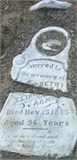
Elizabeth Langley, Texas
Scarlet O’Hara she clearly was not,
Her life was difficult, tragic, and hot
My range of subjects has been narrow but evolving, which is all I expect of my budding poetic voice. I have a new feeling about the poems, which is kind of a documentation of my progress as a writer. The worse they sound now, the more potential there is to see them improve over time. Sometimes I think of truly terrible rhymes, and hope to start using them instead of the trite kind of thing I do at this moment. I play around with bad rhymes in the pool, and later when I am dry they have gone to the place where bad rhymes hide. I need to work on this. I plan to write the daily poetry to keep the practice going while I write scenes or descriptions of Elizabeth Langley’s life. It was so long I may need to pick a short period to cover in the story. I might choose reaction to the end of the Civil War, which was a big deal for all involved.
I believe the best thing I have discovered through this challenge is poetry written by others. I listen and read poetry daily now, and think that alone is a wonderful upgrade to my life. Some work makes me laugh, and some brings out curiosity. I am thrilled to see so many different forms used to express poetic thoughts. It is liberating to find so many free style as well as highly formatted ways to go about painting with words. There is no right or wrong, but some have more impact than others. This week the UA Poetry Center will offer two readings I plan to attend, one in house and another next Saturday at the Tucson Botanical Gardens. The Valentine reading at the gardens is on birds. We will receive a packet of poems about birds, and they will be read and discussed. They have designed the perfect valentine for me!!!
These Italians have perfected the art of making containers from citrus peels. They use bergamot, but I have seen this kind of box made out of an orange peel. The scent remains for a few years after the box is created, making it perfect for tea, or other aromatic products. The specialty here is a tobacco pouch, which is light and fragrant. I am crazy about this idea, and am the producer of hundreds of grapefruit peels each year. I have so many that my compost gets full of citrus and hard to digest. I hate to waste them, but really do not eat candy. The candied peels are a treat to some, but require as much work as these containers. I have looked for a way to use these byproducts of my juicy winter crop, and I think I have found one to try. Martha Stewart does hers in the oven and keeps them right side out. I like the whole process the Italians use, but do not want a tobacco pouch as a result. I tried Martha’s oven method with some lemon peels, but they warped after I thought they were done. Her method is tedious and it requires the use of the oven. I live in Arizona where ample sunshine should be able to do this job. I will try a simple shape with a lid, and skip the sand step and building of presses. If they go free form, like my first attempt, I will need to deal with the fit of top to bottom. My lemon bowls are all wonky because I took them from the oven after 40 minutes. If I were in survival mode and had to use them, they might hold something, but they are a failure at a design level. I plan to try some grapefruit peels this week inside out to see if I can be a peel artist. These Italian ladies are obvious professionals, shaping it around the form like a pice of clay. I admire their skill, and aspire someday to make a swanky shape. Like clay, I need to start with a good cylinder and move on from that. I have at least 100 grapefruit still on the tree, so there will be plenty with which to experiment. Have you ever seen this done, Gentle Reader?

failed lemon box

as tiny bowls


My study of poetry and the lives of poets has enlightened as well as encouraged me to continue my poetic practice. I also loved hearing the news about the secret manuscript discovered that was written by Harper Lee, famous reclusive author. The story of her one big hit, To Kill a Mockingbird, followed by a life out of the public eye entirely is compelling. She never spoke to press people, but her sister did. Now that her sister has died this old copy of a typewritten story was found in the safe deposit box attached to the original of the published novel. It is super romantic because her fans have hoped to make her write again, but she had done it even before they knew her work. Truly a blast from the past for all involved, the publication with cause all manner of excitement. It has captured my imagination about finding the writing of my ancestors in the safe deposit box of history.
I found a poem about writing that has a deeply funny sense of humor. Anne Bradstreet, my 9th great-grandmother, wrote a poem to her published book in which she describes the work as a child of hers. Although her work is usually pretty serious, this one strikes me as not only funny, but also prescient. The book of which she speaks made her a famous person in the history of poetry, but she is both humble and comical in her description of the work:
Thou ill-formed offspring of my feeble brain,
Who after birth did’st by my side remain,
Till snatcht from thence by friends, less wise than true,
Who thee abroad exposed to public view,
Made thee in rags, halting to th’ press to trudge,
Where errors were not lessened (all may judge).
At thy return my blushing was not small,
My rambling brat (in print) should mother call.
I cast thee by as one unfit for light,
The visage was so irksome in my sight,
Yet being mine own, at length affection would
Thy blemishes amend, if so I could.
I washed thy face, but more defects I saw,
And rubbing off a spot, still made a flaw.
I stretcht thy joints to make thee even feet,
Yet still thou run’st more hobbling than is meet.
In better dress to trim thee was my mind,
But nought save home-spun cloth, i’ th’ house I find.
In this array, ‘mongst vulgars may’st thou roam.
In critic’s hands, beware thou dost not come,
And take thy way where yet thou art not known.
If for thy father askt, say, thou hadst none;
And for thy mother, she alas is poor,
Which caused her thus to send thee out of door.

Anne Bradstreet’s poems
I really get the way she edits and finds more fault. She calls her book a bastard and herself poverty stricken, which I think she knows is a joke. She warns it to stay away from critics, then lets it go. By animating the book to human stature she paints a picture of an underprivileged child, some awkward and unpolished brat. At the publication (return) her blushing was not small. She was proud to be published, and yet as a Pilgrim could take no personal credit for the art. This has become my favorite work by Mistress Bradstreet because I clearly relate to her sense of comedy. In 1678 some of her work was published posthumously. She was, in a certain sense, a feminist. Now we learn she was also something of a comic, concerned about the cosmic.
Birth: 1612 Death: Sep. 16, 1672 Poet.
Born Anne Dudley to nonconformist parents Thomas Dudley and Dorothy Yorke Dudley in Northampton, England. Her father was the steward for the Earl of Lincoln and afforded his daughter an unusually complete education. About 1620 she married Simon Bradstreet, her father’s assistant. On March 29, 1630, Bradstreet and her family sailed for the New World. After several years, they finally settled on a farm in North Andover, Massachusetts in 1644. Simon Bradstreet became a judge, royal councilor, and twice a governor of the colony. Anne Bradstreet became mother to eight children and wrote only privately. She was frequently ill and apparently developed a vaguely morbid mind set and was continually distressed by the culturally ingrained condescension toward women. Her first public work may well have been the epitaph she penned for her mother in 1643. Four years later, her brother-in-law carried a collection of her poems with him to England where he had them published. They appeared as ‘The Tenth Muse Lately Sprung Up in America, By a Gentlewoman of Those Parts’ in the New World in 1650. While it did sell in England, the volume was not well received in Massachusetts. Although she continued to write for herself and her family, no more of her work was published in her lifetime. She was purportedly buried in the Old Burying Point in Salem, Massachusetts beside her husband, though other locations for her grave have also been proposed. In 1678 her ‘Several Poems Compiled with Great Variety of Wit and Learning’ was posthumously published followed by ‘The Works of Anne Bradstreet in Prose and Verse.’ She is now considered the earliest of American poets and among the finest of her age. (bio by: Iola)
Now that Anne is a little bit funny she is a better poetry muse to me. Dorothy Parker, as my muse, as nixed the whole #Trwurse and #Twessings concept. She did wonderful intricate play on words before twitter and is not at all amused by the substitution of tw to indicate twitter being witty. She is right, of course. Nursing mothers are already occupying the #Twursing hashtag, as is the PGA. Back to the word board, sans #tw. I still like the blessings and curses for twitter, but am now inclined to call them just that. I have also realized that February is the perfect time to write short and funny rhymes..on Valentines. I feel okay about breaking out of my impersonal poetic rut because I have written a food poem and one Valentine that are in new territory. I have not said anything very funny yet, but think I will sometime soon. I aspire to write jokes that would be understood hundreds of years into the future, in case they are discovered, but still be funny now. Contrived twitter words will not be funny enough to last hundreds of years, but will seem like Olde English does to us now. Best to go for eternal when crafting a joke or a pun….
ROW80
ROW80
By joining the Round of Words in 80 Days writers I have been given the opportunity to peek into the process used by different people. Initially revealing goals, and now following the theme for 80 days of pursuit of those goals, we let each other know how our lives are proceeding. Some have chosen more personal ideals, and others are achieving astonishing numbers of words/outlines/rewrites and characters developed. I am impressed with all of the participants, and have started to think more about character development. I have not done this, but am now seeing the merit of telling stories of well-developed characters. From fairy tales to murder mysteries the characters hold our attention, and in some cases can bring about new stories or a series of tales. I live tweeted Downton Abbey last week and find it highly amusing to see how emotional the audience is about the characters. I also noticed that my own poetry is void of any characters. I make it all about the cosmos, memory, psyche, all very general and without personality. I need to work on this aspect of my poems.
There are three levels of character development I can identify in this challenge:
These three have all been at work in my life this week. I have been reading about Dorothy Parker, her life and times. Her character has been made larger than life since the internet. It dawned on me that Mrs Parker was a feminist in the early 20th century. She was a contemporary of my grandmother Olga, who got a masters in education and taught shorthand and typing. I was thinking about how odd it must have been to have no vote and be better educated than your husband. I wondered if Olga read Dorothy in Vanity Fair. I still prefer Mrs. Parker as my muse in poetry, but I must admit my grandmother was a feminist in a different part of the country. They were both strong characters, but I have real memories of Olga. I did write a poem about my grandmother, although it is short and sweet. This whole process has brought me to think it is very wise for me to use these characters in my family tree about whom I know so much. They inhabit my dreams and imagination, so I might as well use them as characters in my poems. I have written plenty about the facts in their lives, but I could focus on a more essential theme.
I gave myself two poetry days off this week, which I regret. I took a birthday holiday. This aspect goes back to number one on the list above, discipline and character. It is actually pleasurable to write a poem each day. The mindset that tells me I deserve a day off from this grueling task is quite bogus. I don’t plan to make up in penance for the lapse, or enhance guilt over this. I do notice that some silly side of my psyche wants to claim that poetry is hard and working on it is, oh my, such a burden on my important schedule. This is obviously rubbish made by some shadow character. I reject the claims of this looser. That character will not be developed. I will write about this poetic couple on the left in the photo below:

My grandparents on a double date
We will teleport in or specialty cloaks to Port of Spain, Trinidad today for our chat. We will have coffee at the inverted Hilton in Port of Spain. Trinidad is the southernmost Caribbean island, sitting right next to South America. There is no other place on earth like Trinidad because of the ethnic background and the history of the population. The Hilton is an old hotel built in a unique style right on the edge of the Savannah. It represents the upper crust, old wealth, and the oil business, a place to dress up and be formal. We are having coffee next to the window with a grand view across the Savannah. We can see the cricket players dressed in white, and those who understand the game know what they are doing. For the rest of us they are lovely white figures moving around on the super green grass. This is the perfect place to discuss imperialism, while still surrounded by a remnant of it. Thanks for meeting me here this morning. It is a beautiful setting with attentive service, quiet and refined. It is a relaxed and private atmosphere where we will not be disturbed. Do tell your stories to us here. You can be assured of our discretion. We might stay until tea time to listen to all the news we have to exchange.
This time of year the whole population of Port of Spain is involved in preparation for Carnival. Other countries have Mardi Gras traditions, and they evolve specifically to the region. When Carnival started as a celebration there were still African slaves, and later the newly liberated, invited to the masquerade. This was the one day of the year they had license to poke fun of their masters. They dressed in mock elegance and portrayed the master class..with humor. The significance of the humor carried over into calypso music. The lyrics in early calypso were hidden messages of political meaning. I remember hearing Philip My Dear by the Mighty Sparrow (sung above) when I was a kid and grasping right away that he was making fun of the queen. Now there are still soca and pan contests, and the deeper significance of political defiance through humor might be diluted, but will never be gone. The dazzling sparklers and the nearly naked parade for more hedonistic purposes now. They may know history and thank their forefathers for starting this party, but Trinis have oil now, so the past fades quickly into the present.
If this is your first visit to Trinidad I hope you will take time to look around the island before you cloak home. Fly over a coffee plant and inhale the aroma of the delicate white blossoms. It will blow your aromatic mind. I also recommend you walk around town and taste some street food when we part company. My own favorite is hot tasty doubles, a home made chick pea delight which you can request with plenty peppa for a spicy edge. Most of all enjoy these people and their outrageous sense of humor and performance. At least half of the population, and most of the farmers, are of Indian descent, so the cuisine is fabulously influenced by them. Between the African roots and the Indian farmers, the English influence is hard to find in the food…well they drink tea, but they don’t eat like Brits. Neither do most of them dress like Brits. They do speak like them, in a way, but much cuter and with more play on words. This place has managed to find a kind of peace between Hindus and Africans, Muslims and the Church of England. I think their key to success is humor. We should look into this.

#Weekendcoffeeshare

Bed Shopping
In December we decided to purchase a new bed. It became obvious that our old one was drooping and giving us less that the perfect night’s sleep. The large purchase was our holiday shopping splurge for the whole family and for the whole season. We stretched a little beyond our comfort zone on price because we found a mattress we both agreed was dreamy. Our sales associate was a perfect mixture of helpful and laid back. She handed us both pillows and directed us to the part of the store with the products we wanted to try. Mattress Firm represents several different brands, including Sealy and Tempurpedic. We both settled on a Sealy wanna be Tempurpedic, and to be honest the lower price point did factor into our decision. A delivery date was set for before New Year’s Eve, and we left the store very happy and satisfied that we had made a purchase that would enhance our sleep and therefore our whole lives. We feel great about the product now that we finally have it.
After waiting for my delivery, promised in a 3 hour window, I called to learn that not only my bed was missing from that day’s delivery schedule, but my mattress was not even in stock. I flipped my lid, verbally and otherwise. My sales associate, Tamara Flores, called my home on her day off to explain that the bed we ordered was not available although the warehouse had confirmed the delivery just the previous day. They had made a mistake and now could not bring us a bed for another 10 days. When that date approached Tamara had already talked her manager into offering us a higher quality mattress to make up for the unprofessional mistakes. Again she was forced to tell me all of the inventory was not in the warehouse, but she sent the upgraded Tempurpedic mattress with two temporary bases. The bases were back ordered, but the company agreed to replace the loaner bases when ours arrived. This new bed arrived, but did not fit the frame at all. We started sleeping on it and knew it was worth the wait, but we still needed to deal with the frame fit. A home visit from the delivery team confirmed that I needed a different frame. That change was made quickly and easily by ordering the correct size from Amazon and moving the bolts in the headboard ourselves. This was inexpensive as well as pretty easy to do. We started sleeping like babies.
Mattress Firm called me with a customer service survey. I let them know the individual employees are working hard and doing a professional job. The problems we encountered were the result of systems within the company that don’t seem to be working well. The sales staff that takes care of a customer can turn the nightmare unsatisfied buyer that I was into a happy return consumer. I threatened to disrespect Mattress Firm publicly in no uncertain terms, and now I am inclined to send my friends to Tamara for the best customer service ever. Her diligence as well as the professionalism of the delivery crew saved the day in my case. A good sales associate might represent the company for whom they work, but their loyal service honestly belongs to the people who buy the products. The sales person who goes the extra mile and follows up to find out if the buyer is happy will build a reputation for pleasing customers. I enthusiastically endorse Ms. Flores as one such exceptional employee. If you are listening, Mattress Firm, give this woman a big fat bonus for avoiding what I had planned to say about your company. She averted a potentially nasty problem….my anger. Now when I lay me down to sleep I trust Tamara my sale to keep. She did a great job, and I am sleeping very well.

Tamara Flores at work
I have told a few people in the last week that I am a poet. I believe I am trying it out to see if I like the title because I don’t think of myself as a poet. First I explained to my fiduciary who handles my investments and gives me advice for retirement that my most important interest at the moment is poetry. He knows, since we do split the money he makes in the market, that I am interested in his best performance with little or no chit-chat. He has incentive to do that since his own profit is tied directly to mine. He is not a stock broker, but has a fiduciary responsibility to me for which I pay him a percentage of the profits. I switched to this arrangement before the last presidential election because it all felt too volatile and risky. Since he has done a bang up job I feel secure to trust his future work on my (our) behalf. My debt free, secure financial position is one reason I can dabble with being a poet. I have arrived at a time in my life during which I can reflect and use my talents in any way I choose. Now that I have told the fiduciary I am a poet he is convinced I will not be producing any more income during my lifetime. I am fine with that because it puts the pressure on him to make sure I never become a staving artist.
Last night I told a friend I have known for many years who came over for a drink and conversation. He is visiting from out-of-town, so we had news about our lives to share since our last reunion. After he left I was kind of surprised that I had told him about the poetry writing at all, let alone describe myself to him as a poet. I did make it clear that although I publish it daily I am not promoting it per se because it is not very well-developed. I am not ashamed of it, but I have no pride in it either. It is a practice and a new persona. I told him I admire and want to emulate Dorothy Parker. He recited a couple of her witty lines. I am not sure how sincere he was, but he told me that I am like Dorothy Parker. We were laughing and joking together all evening, so this was part of the fun. In retrospect I am giddy about being compared to her, and this little exchange has given me new hope about my poetic prospects. With some work I do believe I can be witty, satirical, and poetic all at the same time. I have loaded up two books by Dorothy into my Kindle and pre-ordered another about her life, Dorothy Parker Drank Here, by Ellen Meister. Now I am carrying with me two poetic muses, both ghosts. Henry Howard represents Tudor England and Mrs. Parker post WWII New York City. That should cover everything.
It is in the spirit of Mrs. Parker that I am working on curses and blessings suitable for twitter. They must be short and pithy. I am calling them #Twurses and #Twessings. Join me if you like. I think there is a market. It is a bit of haiku in 130 characters, ideal length. I think rhyming makes it memorable. #Twurse the snow and howling wind, Super Bowl parties must begin. I am sure I can warm up and do better than that. Thanks to all the #ROW80 writers who have taught me to have a good time and just do it, as they say at Nike.
ROW80
 mermaidcamp