mermaidcamp
Keeping current in wellness, in and out of the water
You can scroll the shelf using ← and → keys
You can scroll the shelf using ← and → keys
Tethys was a titan, which means an original goddess, before Zeus and the Olympians took over the pantheon. Her sisters were Nyx and Gaia, who ruled darkness and the earth. She was Mother of the Sea, ruling clouds, springs, rivers, and streams. Her children were called Oceanids. Water is the emotional element; Tides, currents and undertows closely resemble human emotional forces. The energy or wave of an emotion passes through the body as well as the life of the person involved. Tethys is known as the goddess of nursing, and if you think of feeding the earth with clean water, her services are needed more than ever today. To get in touch with Tethys realize that flow and currents can be ridden, but it is folly to fight against them. Emotional problems are the same; Denial or repression will not end them, but can make the ride much rougher. You can not change the waves, but you can learn to surf.










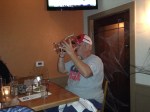





Last night I took Bob on a dining date featuring his favorite beverage, beer. I used to drink beer, but have all but given it up these days. I still like the taste, so the beer and food pairing was very appealing to me. I drove, so after the taste, I generally gave the rest of the glass to Bob. There was one exception, the Imperial stout. It was my favorite of the evening so I wanted to drink all of it. They poured 4 ounces for each course because the beers were very high in alcohol content.
The chef worked with Mission Brewery of San Diego to create tastes that paired with these strong beer flavors. I did write on my reservation request a few weeks ago that I am vegetarian, but to make sure I mentioned it to our server when we arrived at the dinner. It became obvious that they did not have the information. I am not sure if the server did not mention it, or they do not read the reservations that people write down on paper. I give them points for thinking on their feet and kicking out very good samples for me. The favorite of all the people at our table was the corn and ricotta fritter, which was a veg. item anyhow. My plates were visually as good as Bob’s real street food with meat. The ruben sandwich was superb; Mine had kale instead of corned beef. The meal ended with a very light beer that I delivered straight to Bob. We thought the meal and the company, as well as the education we got from the chef and beermeister were well worth the price and the short drive from our home. This is our second theme dinner at Zona. Our new beer drinking buddies at the table had been to dinners there featuring other craft brewers, which they enjoyed. The reasons we will return to Zona 78 for special dinners in the future:
I must interrupt the regularly scheduled program to tell you how much I love this Saudi guy. Humor is by far the best way to make a point, and he does so with brilliant technical quality. Help this song go viral because it is both funny and meaningful right now.
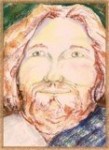
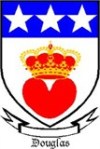
My 19th great grandfather died in battle defending Scotland against the English..Think bloody brutal….think crusaders…think crazy people…..

Battle of Halidon Hill
Although Robert the Bruce’s reign in Scotland resulted in recognition of Scotland as a separate nation by Edward III in 1328, further wars with England were soon to follow. The deep animosity between England and Scotland that hardened after the wars of Independence, led to intermittent warfare for much of the next three hundred years. Scotland was handicapped in that, sometimes when a strong king was needed, they ended up have a weak king or a minor on the throne. This power vacuum at the top, helped to create an environment where the more noble families of Scotland vied for the power. The Earls of Douglas (the Black Douglases), the Earls of Angus (the Red Douglases), the Hamiltons and the Lennox Stewarts, were all related to the Scottish crown by marriage and battled for the power behind the throne. On Bruce’s death in 1329, he was succeeded by his 5 year old son, David II. England lost little time in taking advantage of the presence of a minor on the Scottish throne. Edward III provided encouragement and active support to Edward Balliol, the son of John Balliol, for claiming the throne. In 1332, Edward Balliol invaded Scotland with a mainly English force and was crowned King at Scone, after routing a much larger Scots army under Donald, Earl of Mar as Guardian, at Dupplin Moor near Perth. The disastrous defeat was due to incompetency of Mar, the use of long bows and their devastating effect by the English, and a guide with local knowledge, provided by a Murray of Tullibardine. The following year, 1333, saw the Scots suffer an even more disastrous defeat at Halidon Hill, near Berwick. In an effort to end the siege of the town of Berwick by the English, Sir Archibald Douglas, who had succeeded Mar as Guardian, ignored reasonable battle tactics. They advanced across a bog, against a strongly held position on Halidon Hill, under heavy fire from the English archers with their deadly longbows. They suffered enormous casualties and failed to even reach the English. Douglas, and most of the other leading Scots nobles and fighting men were left dead on the field. In 1334, Balliol acknowledged Edward III’s overlordship and ceded the southern half of Scotland, from East Lothian to Dumfries, to England, an act which was to mean over a hundred years of warfare before they were recovered. This resulted in the Lochmaben Castle being given to the English. It also affected Thomas Carruthers, 1st Laird of Mouswald. For his earlier support of Robert the Bruce, Thomas Carruthers had received in about 1320, a charter for all the lands of “Musfald et de Appiltretwayt cum pertinenciis”. This Thomas also received in the same year, a charter of half of all the lands, with pertinents, which belonged to “Robert de Applingdene in valle Anandie”, due to his marriage to one of Robert de Applynden’s daughters, Joan. These lands formed the kernel of what was to become just 4 generations later, the 1st Carruthers Barony – Mouswald, which is located just a few miles south of Dumfries. With Edward Balliol ceding the land of Dumfries to Edward III, Thomas Carruthers accepted an office under Edward III of England and relocated there, leaving his Mouswald land to his next oldest brother, William, now 2nd Lord Mouswald. Thomas is assumed to be the founder of the Carruthers family in England, where the family appeared at an early date in Cumberland, Northumberland, Durham, and Yorkshire.
Sir Archibald Tyneman Regent Douglas:
The younger son of Sir William “le Hardi” Douglas, the Governor of the castle at Berwick-upon-Tweed, and his wife, Eleanor de Lovaine. Douglas was also half-brother of “the Good” Sir James Douglas, King Robert the Bruce’s deputy.
Douglas is first heard of in 1320 when he received a charter of land at Morebattle in Roxburghshire and Kirkandrews in Dumfriesshire from King Robert. In 1324, he was recorded as being granted the lands of Rattray and Crimond in Buchan and the lands of Conveth, Kincardineshire, already being possession of Cavers in Roxburghshire, Drumlanrig and Terregles in Dumfriesshire, and the lands of West Calder in Midlothian. By the time of his death, he was also in possession of Liddesdale.
History then keeps quiet about Douglas except whilst serving under his older brother, James, in the 1327 campaign in Weardale, where his foragers “auoint curry apoi tot levesche de Doresme”– overran nearly all the Bishopric of Durham. (Scalacronica)
Following the death of King Robert I and his brother’s crusade with the dead king’s heart, Douglas once again becomes of note. He was made guardian of the kingdom since he was “the principal adviser in…the confounding of the king” as much as he was heir to his brothers influence after Murray’s capture. Archibald’s success in local raids though, did not prepare him for full scale conflict.
During the Second War of Scottish Independence, Edward Baliol, son of King John of Scotland, had invaded Scotland with the backing of Edward III of England, inflicting a defeat on the Scots at the Battle of Dupplin Moor. Douglas served under the dubious leadership of Patrick V, Earl of Dunbar leader of the second army that aimed to crush the smaller Balliol force. Following the rout of the Earl of Mar’s force Dunbar did not engage the disinherited but retreated allowing Edward Balliol to be crowned at Scone. Following this battle, and as a sweetener to the English, Edward Baliol agreed to cede the county, town and castle of Berwick to England in perpetuity. However Douglas led a Bruce loyalist defeat on Balliol at theBattle of Annan, forcing him to flee back to England.
Battle of Halidon Hill
Edward III himself came north to command his army, and laid siege to Berwick. However, a temporary truce was declared with the stipulation that if not relieved within a set time, Sir Alexander Seton, the governor, would deliver the castle to the English. Douglas raised an army to relieve the beleaguered defenders of Berwick. As a feint to draw the English away he invaded Northumberland, but was forced to return to Berwick when the English refused to be lured. On 19 July, Edward’s army took positions at the summit of Halidon Hill, a summit some mile and a half north of the town with commanding views of the surrounding country. Douglas’ numerically superior force was compelled to attack up the slope and were slaughtered by the English archers, a prelude, perhaps, to the battles of Crécy and Agincourt. The English won the field with little loss of life, however by the close of the fight, countless Scots common soldiery, five Scots Earls and the Guardian Douglas lay dead. The following day Berwick capitulated.
Archibald was succeeded by his son, William Douglas, 1st Earl of Douglas.
Sir Archibald Douglas married Beatrice Lindsay, daughter of Sir Alexander Lindsay of Crawford, an ancestor of the Earls of Crawford. They had three children.
Sir Archibald Tyneman Regent Douglas (1289 – 1333)
is my 19th great grandfather
Baroness Catherine Douglas (1320 – 1360)
daughter of Sir Archibald Tyneman Regent Douglas
John de Vaux Barnbarroch (1365 – 1384)
son of Baroness Catherine Douglas
John De Vaux (1402 – 1456)
son of John de Vaux Barnbarroch
Isabella Vaus (1451 – 1510)
daughter of John De Vaux
Marion Accarson (1478 – 1538)
daughter of Isabella Vaus
Catherine Gordon (1497 – 1537)
daughter of Marion Accarson
Lady Elizabeth Ashton (1524 – 1588)
daughter of Catherine Gordon
Capt Roger Dudley (1535 – 1585)
son of Lady Elizabeth Ashton
Gov Thomas Dudley (1576 – 1653)
son of Capt Roger Dudley
Anne Dudley (1612 – 1672)
daughter of Gov Thomas Dudley
John Bradstreet (1652 – 1718)
son of Anne Dudley
Mercy Bradstreet (1689 – 1725)
daughter of John Bradstreet
Caleb Hazen (1720 – 1777)
son of Mercy Bradstreet
Mercy Hazen (1747 – 1819)
daughter of Caleb Hazen
Martha Mead (1784 – 1860)
daughter of Mercy Hazen
Abner Morse (1808 – 1838)
son of Martha Mead
Daniel Rowland Morse (1838 – 1910)
son of Abner Morse
Jason A Morse (1862 – 1932)
son of Daniel Rowland Morse
Ernest Abner Morse (1890 – 1965)
son of Jason A Morse
Richard Arden Morse (1920 – 2004)
son of Ernest Abner Morse
Pamela Morse
I am the daughter of Richard Arden Morse





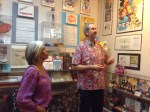








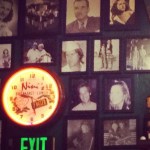
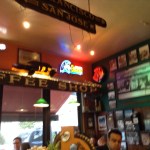

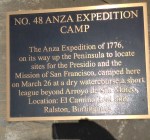

I stayed recently in the town of Burlingame, CA for a 5 day visit to the Bay Area. I chose the spot for the convenience to the airport and the great little guest cottage I had found on air bnb. The dueña is a designer, of both the interior and the landscape kinds. The space and garden are so secluded and private that I enjoyed the instant retreat when I stepped into my yard. I had planned to spend time in San Francisco and the East Bay during my 5 day stay. The CalTrain 6 blocks from my cottage made the transport into town simple and fast. I spent two days without leaving the town of Burlingame because the first was exploration, and the second was enjoying the town with my friend from Berkeley. I was pleased to introduce locals to the fabulous La Corneta Taqueria downtown, where the salsa bar is second to none anywhere. When my friend Donna came to visit she gave me an intuitive reading, which was excellent. After that we just did not feel like going out to town, so we took the advice of the landlady and tried GrubHub for food delivery. While we drank the wine my landlady had provided a nearby Indian restaurant prepared a feast and delivered it to the cottage. We dined in my lovely backyard dining area, savoring the food and the private setting.
The downtown shopping area of Burlingame is full of cute individual businesses and a few key chains like Starbucks. The two extreme star businesses are the PEZ museum, near the train station down town, and Nini’s Cafe, which was only a couple of blocks from my house. Nini’s is the only place in California where you can look around and see absolutely nobody looking at a cell phone. The atmosphere is maintained by three generations of family proprietors who run the business in person, taking very good care of loyal customers. After my giant Popeye omelet, I am now a loyal customer myself. I found the town of Burlingame to have everything I like and nothing that I don’t like. I would recommend the garden cottage to anyone for a layover or a retreat in the San Francisco area. It is charming, extra comfortable, and designed for serene privacy. The neighborhood is just lovely.

Richard landing with Pilgrims
Oct. 1665, John Cooke and his Brother-In-Law Nathaniel Warren, were appointed by Plymouth Colony to “treat with Philip the Sagamore about the sale of such lands as are to be sold by him, and to purchase them in the behalf of the country.” Philip the Sagamore, sometimes called Metacom, was the son or grandson of Massasoit, and leader of the Wampanoag Indians. He would later be dubbed “King Philip” during the Wampanoag’s war he led against the English in 1676.
His prepared his will in 1661 to resolve disputes over his father’s estate.
From the book “Mayflower Families Through Five Generations” Richard Warren, Volume Eighteen Part 1 – Third Edition by the General Society of Mayflower Descendants 2004
On June 11 1653 Jane Collyare (Collier) on behalf of her grandchild Sara, the wife of Nathaniel Warren. Elizabeth Warren and Nathaniel Warren agreed to let the court resolve their differences over certain lands of Mr. richard Warren deceased.
Nathaniel Warren became a Freeman 3 June 1657. On 1 June 1658 he was a Deputy from Plymouth, a position he frequently held.
On 15 oct 1661 Nathaniell Warren “aged thirty seaven yeares or thereabouts” made a deposition. NOTE: spelling in the ( )’s are exactly the way it was written back in 1661.
The will of Nathaniel Warren Sr. of Plymouth, dated 29 June 1667, codicil dated 16 July 1667, names wife Sarah; dau. Hope who is lame; other children (not named); the codicil mentions mother Elizabeth Warren; brother Joseph Warren; sisters Mary Bartlett, Sr., Ann Little, Sarah Cooke, Elizabeth Church and Abigail Snow. The inventory was taken 21 Oct 1667, sworn by widow Sarah Warren who was granted administration 30 Oct 1667.
On 9 Jan. 1689/90, Sarah Warren sold land in Plymouth to her son James Warren. On 9 Jan. 1689/90, the other heirs of Nathaniel Warren consented to the sale, they were: Richard Warren; Nathaniel Warren; Jabiz Warren; Elizabeth Green; Sarah Blackwell; Thomas Gibbs and wife Alice; Jonathan Delano and wife Mercy Delano.
On 19 Sept. 1694 Jabiz Warren of Plymouth, yeoman, sold to John Gibbs land in Middleboro which was bought by his father Nathaniel Warren.
felt rugs

clean design

felt rugs
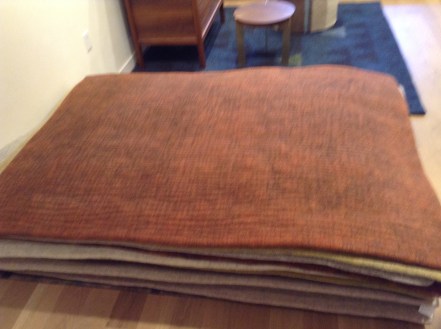
stack of rugs

felt with pattern

wall hanging

wall hanging
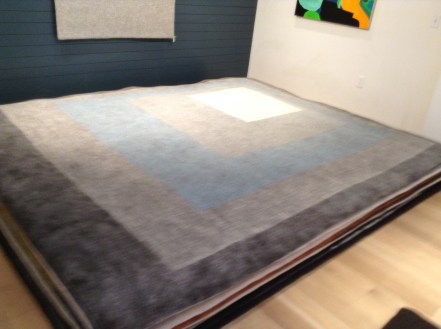
natural colors
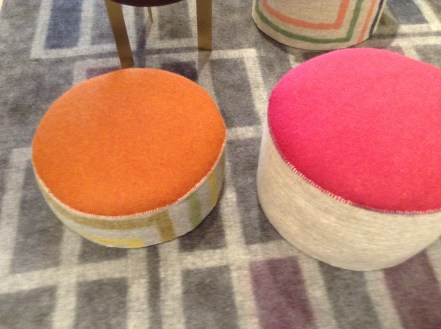
foot stools

contemporary design

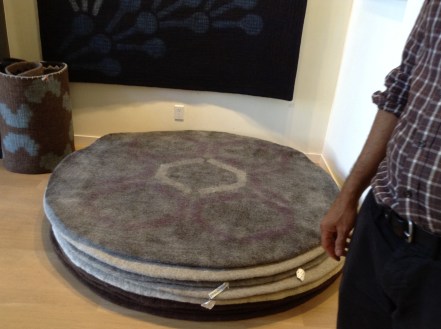
round

warm


On Monday in the Mission District in San Francisco traffic is relatively slow. My friend and I arrived early for a lunch date in order to shop and look around in the area. It turned out to be the perfect off peak time to be there. We found metered street parking right outside the restaurant, set it up for 4 hours, and set off in search of whatever there was to find. We had been told that the area is becoming so hip and gallery filled that regular folks are being priced out of the commercial space. This is kind of true. Upscale art and restaurants, clubs and clothing dot the landscape of the Hispanic neighborhood of the city.
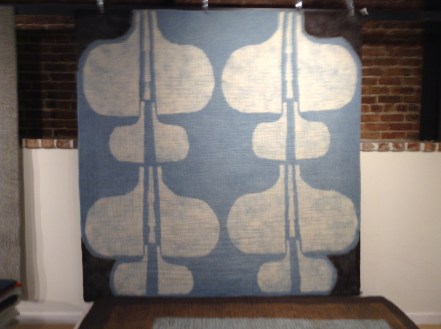
The first stop on our tour was an amazing felt gallery with modern designs and very special material. Peace Industry felt rugs are produced in Turkey. The texture is sturdy but also really soft. I enjoyed feeling the felt under my feet. All sizes are made with designs created especially for this purpose. Fair trade is practiced and the result is amazing merchandise at very fair pricing. I want one still, and have remembered what Dodd Raissnia, the proprietor, told us while we were looking at the pieces in the gallery. The sales tax in San Francisco is about the same as shipping to most US locations, so many of the customers do purchase from home. I still recall how wonderful it feels, and I know it would last for the rest of my life. I may start with one of the small baskets constructed out of pieces of felt just as a warm up. I thought all the pieces were delightfully designed and very well crafted. The stools would be super cozy by the wood stove in winter.
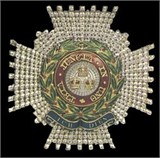
Order of the Bath
SIR JOHN TYNDALL KT., the only son of Sir ‘William by Mary Mondeford, was ten years old when his father died, and was then already contracted to marry one of the daughters of Humphrey Coningsby, Serjeant-at-Law (afterwards a Knight and a Judge of the King’s Bench), to whom his wardship and marriage had been sold by his father.
He married accordingly Amphillis Coningsby, who died before him on 18th Jan. 1532-3, leaving nine children. A gray marble slab in the chancel of Hockwold Church bears the effigies in brass of a lady and nine children, with this inscription:
Qui~quis ens qin transieris sta. perlege, plora,
Sum quod ens, fuciainque quod es, pro me piecor ora
Obitus Amfelicie Tendall decimo octavo die Mensis Januar. A I). MccccoXXXi j”
Sir John Tyndall was one of the Knights of the Bath created on 31st May 1533 at the coronation of Queen Anne Boleyn, (30) and married secondly in 1534 Lady Winifred Fermor, the widow of Sir Henry Fermor Kt., of’ East Barsham in Norfolk. Their marriage settlement is dated 14th Dec. 26l ien. VII I. (1534), whereby Sir John charged the manor of Scales hail in Hockwold with the payment. of 421. per annum by way of jointure to Dame Winifred) She was the daughter of Thomas Cawse, an Alderman of Norwich,and was thrice married, for her first husband was Henry- Dynne Esq. of Heydon in Norfolk. She had no issue by her third husband, whom she outlived.
Sir John Tyndall died on 1st Oct. 1539 at the age of 53, seised of the following manors and estates, which were valued at 223l 10s. per annum beyond all reprises (32)
Norfolk, The manor of Hickling, value per annum
The manor and advowson of Pudding-Norton
The manor of Redenhall in Harlston . The manors of Ilsington and Clenchwarton with the advowson of Clenchwarton .
Cambridgeshire, The manor of Haslingfield
Northants, The manor of Helpston ~
Norfolk Lands called Bainys, Lands lying in Colston . The manor of Mondeford, Scale, and Stewkeys, with East Lexham and
the advowson of Hockwold
(Research of Mark W Gardner, “Gardner’s Roots, RootsWeb.com)
In the Middle Ages, knighthood was often conferred with elaborate ceremonies. These usually involved the knight-to-be taking a bath (possibly symbolic of spiritual purification), during which he was instructed in the duties of knighthood by more senior knights. He was then put to bed to dry. Clothed in a special robe, he was led with music to the chapel where he spent the night in a vigil. At dawn, he made confession and attended Mass, then retired to his bed to sleep until it was fully daylight. He was then brought before the King, who, after instructing two senior knights to buckle the spurs to the knight-elect’s heels, fastened a belt around his waist, then struck him on the neck (with either a hand or a sword), thus making him a knight. It was this “accolade” which was the essential act in creating a knight, and a simpler ceremony developed, conferring knighthood merely by striking or touching the knight-to-be on the shoulder with a sword, or “dubbing” him, as is still done today. In the early medieval period, the difference seems to have been that the full ceremonies were used for men from more prominent families.
From the coronation of Henry IV in 1399, the full ceremonies were restricted to major royal occasions such as coronations, investitures of the Prince of Wales or royal Dukes, and royal weddings. Knights so created became known as Knights of the Bath. Knights Bachelor continued to be created with the simpler form of ceremony. The last occasion on which Knights of the Bath were created was the coronation of Charles II in 1661.
From at least 1625, and possibly from the reign of James I, Knights of the Bath were using the motto Tria iuncta in uno (Latin for “Three joined in one”), and wearing as a badge three crowns within a plain gold oval. These were both subsequently adopted by the Order of the Bath; a similar design of badge is still worn by members of the Civil Division. Their symbolism, however, is not entirely clear. The ‘three joined in one’ may be a reference to the kingdoms of England, Scotland and either France or Ireland, which were held (or claimed in the case of France) by British monarchs. This would correspond to the three crowns in the badge. Another explanation of the motto is that it refers to the Holy Trinity. Nicolas quotes a source (although he is sceptical of it) who claims prior to James I, the motto was Tria numina iuncta in uno, (three powers/gods joined in one), but from the reign of James I the word numina was dropped and the motto understood to mean Tria [regna] iuncta in uno (three kingdoms joined in one).

coat of arms Tyndale
While visiting in California I had an osteopathic adjustment at Celina’s office. I am accustomed to all the best in body work all the time, so I appreciate the careful and professional way she addressed my issues. The only doctor I ever trusted was Dr. Robert Fulford. He practiced only manipulative medicine, as Celina does. Today in the US most DOs (osteopathic physicians) do not use manipulative medicine, but have followed the MDs into pimping for big pharma. I asked Dr. Fulford when he was my doctor what is wrong with most medical practices that they make patients wait and treat them with no respect. I always remember his answer. He said “It is their training.” This is true more than ever.
I experienced loads of negligence while taking care of my parents’ medical issues in their last years. I was shocked by heavier abuse when I volunteered for the VA and saw how the Vets are treated. I have stayed away from all drugs because I think they are the cause and not the cure for most of the folks who are on them. I don’t want to have to go to a doctor who believes drugs are the answer. After the treatment I was inspired to find a real osteopath in Tucson. Lucky for me Teresa Cisler, DO is still in practice here and was trained by Dr. Fulford himself. The goddess of healing provided a cancellation in her schedule so that I may go next Monday to enroll as her patient. Normally she is in such high demand that it takes months to get on the books for time with her. I am so pleased to follow up here at home on the work that Celina began. The treatment and analysis she did with me was pleasurable at the time, but most important is the healing that continues. She was trained in Canada where the osteopaths are still doing osteopathy. In California her work is classified as body work. The reason she stands out as more knowledgeable and professional than most body workers? Is is her training. Sensitivity is developed in the hand to feel pulses, heat, and the tiniest differences in tissues under the skin. By looking at your alignment and gait, then feeling the systems at work she is able to determine what your body needs the most. The focus is on the client, 100%, a rare and very effective strategy for a healer. It worked very well for me.
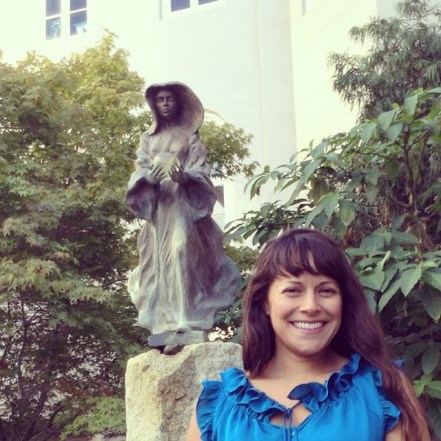
Celina Trevino
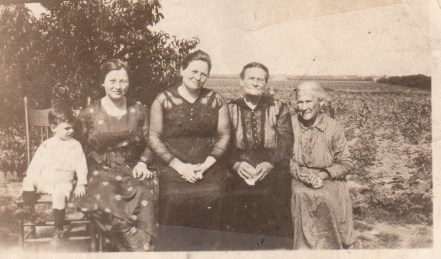
My Grandmothers
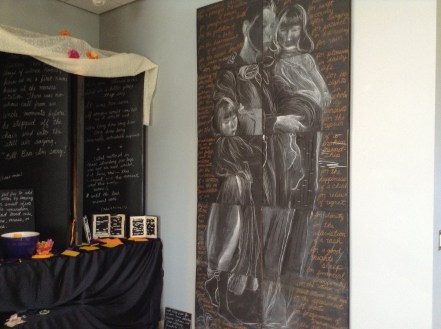
UA Poetry Center
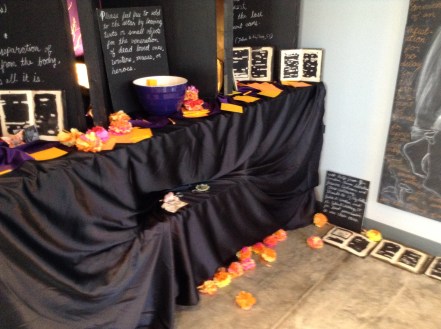
altar to honor the dead

art in chalk
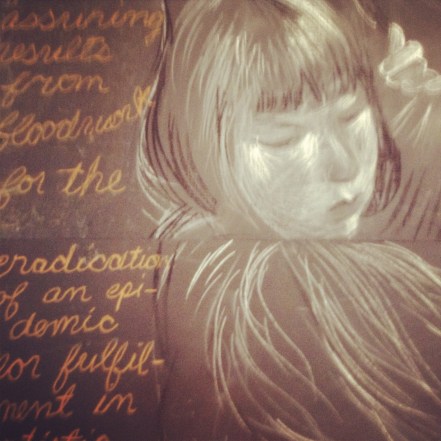
images and words
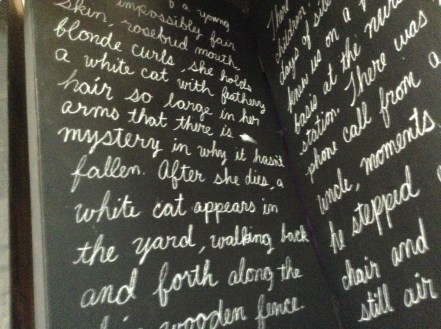
poem in chalk
I went to the U of A Poetry Center to leave an offering I made for my mom at the altar. While I was there I found my paternal ancestor’s book of poems and read for a while. Mistress Bradstreet had a style that showed her knowledge of history, astrology, and nature. She offered meditations to her son to guide him in the future when she was no longer alive. I truly had to wonder if she had ever thought her 9th great granddaughter might read her work and try to imagine her living presence. Knowing facts about the lives of my ancestors is fun, but the creative writing of my grandmother is more personal. I wrote an ode to all of the people who survived in order for me to exist today.
Ancestry Garden
Rows of ancestors spread out in the garden of research
Roots reveal; Some conceal, the same deal
What do they leave for us?
What do we keep as our own?
They still offer, they still have wisdom
Connected by birth/death/recognition.
They tell us the secrets of mortality.
 mermaidcamp