mermaidcamp
Keeping current in wellness, in and out of the water
You can scroll the shelf using ← and → keys
You can scroll the shelf using ← and → keys
Flaunta was the second cousin of the goddess Aphrodite. She became the goddess of confidence. Her journey to her vocation to inspire and represent confidence was a story of self discovery. Aphrodite needed no outside assurance to know she was a great beauty. She exuded it. The young Flaunta was not convinced of her own powers, but passed through a jealousy of earth women who enjoyed and were confident in their own good looks. She studied the powerful and confident women, learning their secrets. Eventually her cousin would bestow the title and the powers of confidence goddess on Flaunta. She is active today in the complicated self image issues women face about appearance and competence. Being authentic and unique leads to the highest kind of confidence, as Tank Girl can attest. Confident women know:
Get to know Flaunta, and take her with you next time you need to look something or somebody right in the eye. Nothing says “I got this” like control of your gaze. Bluffing or not, the first impression you give will remain strong when you show self assurance.
I am a recovering reading addict. I will probably be an over-reader for the rest of my days, so the question is where why and how to read. I received my Kindle Paperwhite yesterday and am very pleased with it. It has a very adjustable screen that allows you to fine tune the font and the backlight to suit all situations. It is light and I find it is much easier to hold than an iPad, where my first Kindle books resided. There has been much thought and design work put into this creation. It is for reading, without distraction. It is a noticeable upgrade from paper.
People used to hold newspapers up to read, and some still do. This is a kind of space divider that lets others know (or think) that we are busy reading, learning and becoming more informed. I used to read the Wall Street Journal almost every day with the small print and big ads. If you hold that paper up to read at the Starbucks you are making a statement about your interests. I used to read Architectural Digest and Yoga Journal all the time. I still have subscription to The Week magazine which I am much more likely to read in the digital version, while the paper one sits around unopened. I just cleared out years of them from my magazine rack, most with almost no pages read. I bought a 5 year subscription, and I do love the reporting/curation because it features articles from journalists around the world rather than an American only perspective. While Newsweek is returning to print for subscribers only, my involvement with paper publications is dwindling. If I have a burning news question I ask twitter what is happening. My conversion to digital makes my life easier and better because:
In the kitchen or on the go, the Paperwhite is the tiny portable but unlimited library I always wanted. I am sure I will return some day to the Pima County Library, but for now I am perfectly happy to have my library in the cloud.
The ancient world was more highly aware of the seasons than we are today because they had to make fire to stay warm or see at night. Religion, tradition, and regional provincialism are woven together at the winter solstice time. We have a food and drink festival that imitates Saturnalia and a birthday the resembles the birth of Mithra. I believe I have inherited some feelings for Christmas from the way my ancestors behaved. I have had the good fortune to be in other countries to celebrate the season, which opened my eyes to the wide variety and regional roots of the holiday practices. I choose the part I like and feel no pressure to perform now that my ancestors are all dead. I see the end of the year as a fun break before tax organization season, and a good excuse to party with friends. We give few gifts, but like to share extra food and drink with friends. I like to embrace it as an upside down time, a season for preparation and clearing. Spring will be right around the corner, when the harvest cycle can begin once more. For now, God Rest Ye Merry Gentlemen; it is time to party.
Since I joined Amazon Prime I admit to having gone on a free delivery shopping spree. I have also been streaming more television than we normally watch in order to compare and conclude if we want to keep Hulu Plus and or Amazon Prime. They are both good deals if you have time to use them fully. Although Hulu Plus has some very good content not available anywhere else, there are still commercials in the Hulu shows. I have been enjoying watching several episodes in a row of the shows I like on both venues. There are great advantages to using these services:
Since I love reading and other activities I can’t imagine making good use of two streaming video services. After this month of samples I am going to give up the membership at Hulu Plus. I had also, years ago, resigned from Netflix because we did not watch it. All you can watch is like all you can eat; It is probably not a good idea to do it very often. I like the all you can read option in which you can leave home with a zillion books in your Kindle and have a long battery life and fabulous screen on which to read. After a year on the Three Book Diet, I would rather go on a reading binge than a television marathon. If you are paying for cable and wonder if you can lower your entertainment bill, now is a good time to try the 30 day free Amazon Prime membership. The only down side I can think of is that I am not shopping local when I get my items delivered. I am supporting Amazon instead of a local merchant. For now, we still support our local cable company. We may be able to cut the cord once we learn to use our streaming situation to the best advantage.
During this December of deletion it has become abundantly clear to me that waste of all kinds can be nipped in the bud by simply defining it. I, for instance, have not been willing to admit that owning 5 times more clothing than can be worn in a year is wasteful. Hoarding and waste are the exactly same thing, but hoarding is waste without boundaries . This shocking realization has deep meaning in my closet, in my office, in my kitchen, my garden, my barn, and even in my social life. The most notable waste that can be eliminated is time spent seeking more acquisitions. If you don’t need anything, is it not a waste of your time to go around trying to mindlessly acquire something, just to be consuming? Even more devastating to my health and happiness is allotting my space to extra junk. I pay taxes, insurance, and utility bills to basically own the space in which I keep all my gear. Although I am not approaching the level of the hoarding crazy people on reality television, I see no reason to continue owning extra stuff I never use. I now define that as a waste of my time, energy, and space. As the hoarder in the video explains, the junk is like a barrier or a wall created to hide himself from the world. All possessions can be treated as self-limiting boundaries, from your Mercedes to your expensive signature haircut. Marketing is the process of changing the desires of the people to match what is available in the marketplace. In itself, it is not evil. Something has changed our attitudes about consuming to the detriment of our society and economy. We are building a landfill to heaven.
When I was a child we never thought of wasting energy, or carbon footprints, or even about world peace. I grew up in an industrial era during which producing goods and shipping them around the world was exciting and considered to be the highest and best use of time and resources. Owning things was very important to my parents. Pride of ownership was a distinct value they impressed upon me. They were both very seriously into wardrobe, theirs and mine. They had super high standards for tidiness and order that would not allow them to acquire more stuff than they could store. The material world was in balance because they did not mistake quantity for quality. I rejected their materialistic version of reality, but ended up with plenty of material goods anyhow. It is time to examine, eliminate, and most importantly be vigilant about portions. Time, interest, talent, and resources need to be spent in the right proportion. As we head into the darkest time of the year it is my goal to emerge with a highly organized and clear space. There is much to do.
The poet archetype is insightful and artistic. Symbolic language captures the spirit of a person, place or time to place it in the timeline of history. Painters paint and dancers dance to express wonder. Joy, sorrow, and the deepest amazement can be brought to the surface through art. The audience, the reader, or the viewer is symbolically imprinted by the artists’ insight and ability. Poetic styles change with language as it evolves over time. Essence is the poet’s product. Language is capable of painting subtle watercolors, and leaving haunting images with the reader. Poetic language does not always need to appear in published poems. Poetry and motion have similar qualities. There is style, strength, and expression in everything we do. If we were to become conscious of a story that is ours to tell, and begin to tell it, we will be poetic.
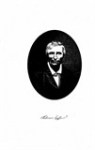
My 9th great-grandfather was one of the Quakers of Sandwich plantation who were heavily persecuted by the Pilgrims of Plymouth. He owned property when he died in New Jersey, which was controlled by the Dutch.
William Gifford arrived in New England after 1643, as he does not appear among those able to bear arms in that year. The first record of him is in the list of debts due on the inventory of Joseph Holiway of Sandwich dated 4 December 1647: “dew from Willi Gifford” 3s. 4d. On 4 June 1650 he served on the Grand Enquest. The original deed for the Sandwich plantation was executed by Governor William Bradford 22 May 1651. It ordered that Goodman (Thomas) Tupper, Goodman (Thomas) Burges, Sr., Nathaniel Willis, and William Gifford have the power to call a town meeting.Both Brown, and Daniels & McLean say that by 1651 he was married and had a family; that he probably married in England, and children John, Patience and Hannaniah were probably born in England. Birth records are available for only the last four of his nine children; the birth dates of the older children are estimated based upon the birth dates of their first children. There is a sizeable gap in these estimated dates between Hannaniah and William, suggesting William, Robert, Christopher and Mary may have been by a second wife. Only the last wife, Mary Mills, is of record; she is the mother of the last two children, Jonathan and James.
There is a record in England of a “Guilielm Gifford” (i.e., William Gifford) who married Elizabeth Grant on 11 February 1635 in St. Martin-in-the-Fields, London. Also, the London Merchant Taylors’ Guild shows a record: “William Gifford, son of Anthi (sic) Gifford of Dublin in the kingdom of Ireland, gentleman, apprenticed to Thomas Southerne of New Exchange, London, for a period of seven years from 7 December 1628.” Apprentices were forbidden to marry, so this would mean the apprenticed William Gifford would have been given his freedom 7 December 1635, in perfect time to be the one who married 11 February 1635/1636. Also, the records of St. Martin-in-the-Fields show that an Ananias Gifford married Maria Read on 18 November 1621. Ananias (also spelled Hananias, Hannaniah and Annaniah) is a relatively rare name. William named one of his sons Hannaniah, and the name has been carried down in the family. Also, the name occurs in the Giffords of Dry Drayton, county Cambridge, England. But it cannot be proven that these English records apply to the family of William Gifford of Sandwich.
Nor can the English ancestry of William Gifford of Sandwich be proven, according to Daniels & McLean. “English Giffords can be traced back to Normandy at the time of William the Conqueror when most branches usually spelled the name Giffard. Inevitably the temptation to connect the Sandwich Giffords with these celebrated families has produced a rash of printed accounts in which the connection is stated as fact but without solid references. (Cutter’s “Genealogical History of Western New York,” 2:901; “History of Bristol County, Mass.;” “Vineland (N.J.) Historical Magazine,” 3:32; “Seabury-Gifford Families,” Hartford (Conn.) 1941) In view of the fact that highly skilled professional genealogists have found no proof as yet of such connections, it can only be said that evidence has yet to be found to confirm these wishful thoughts.”
William Gifford of Sandwich was a Quaker, and as such, suffered persecution for his faith. “Little Compton Families” says “It is supposed that he was the William Gifford who in 1647 or earlier was ordered by the court at Stanford to be whipped and banished.” On 1 June 1658, he was one of a dozen men who “all of Sandwich were summoned, appeared to give a reason for theire refusing to take the Oath of Fidelitie to this government and unto the State of England, which again being tendered them in open court, they refused, saying they held it unlawful to take any oath att all.” At the court held 2 October 1658, they were fined L5 each. At the court held 1 March 1658/1659 George Barlow, Marshall for Sandwich, Barnstable and Yarmouth, complained against William Gifford and Edward Perry in an action of defamation, asking damages of L100, in saying he took a false oath. The defendants were ordered to pay 50s and make their acknowledgement publically, or else be fined L5 plus costs. As Quakers, they could not accept the verdict, and at the 2 October court William Gifford and 11 other Friends were fined L5 for refusing to take the Oath of Fidelitie. At the June 1660 court Gifford was again summoned to take the oath, again refused, and was again fined L5. In October 1660, for persisting in his refusal and for attending Quaker meeting, he was fined L57 — an enormous sum for those times. At this point he disappears from the records, and may have left Plymouth colony, but where he went is unknown. It has been suggested that he went to New Jersey which, like New Amsterdam, was then under the control of the Dutch. On 8 April 1665 William Gifford was one of the signers of the Monmouth (NJ) Patent, but there is no evidence he actually settled there; his sons Christopher and Hannaniah did, however. In a deed by his son Christopher William was described as a tailor.
On 10 November 1670 Mr. Gifford bought from mistress Sarah Warren of Plymouth, widow of Richard Warren, one half her share in the land at Dartmouth, which he gave equally to his sons Christopher and Robert by deed dated 6 May 1683. In 1673 William Gifford purchased land in Suckanesset (Falmouth) from the Indian Sachem, Job Noantico. Gifford continued to appear in Sandwich town records and in records of the Sandwich Friends meeting, and he married Mary Mills, also of Sandwich, at the Friends Meeting of 16 day 5 mo: 1683. Thirty witnesses signed the certificate, but none of William Gifford’s children signed the document, nor did James Mills, Mary’s brother.
William Gifford (1615 – 1687)
is your 9th great grandfather
John Gifford (1640 – 1708)
son of William Gifford
Yelverton Gifford (1676 – 1772)
son of John Gifford
Ann Gifford (1715 – 1795)
daughter of Yelverton Gifford
Frances Congdon (1738 – 1755)
daughter of Ann Gifford
Thomas Sweet (1759 – 1844)
son of Frances Congdon
Valentine Sweet (1791 – 1858)
son of Thomas Sweet
Sarah LaVina Sweet (1840 – 1923)
daughter of Valentine Sweet
Jason A Morse (1862 – 1932)
son of Sarah LaVina Sweet
Ernest Abner Morse (1890 – 1965)
son of Jason A Morse
Richard Arden Morse (1920 – 2004)
son of Ernest Abner Morse
Pamela Morse
I am the daughter of Richard Arden Morse
I have been hearing a lot about the Maker House downtown, so today I dropped off some of my old Christmas decorations and took a tour of the space with Lisa. What a fabulous space!!!! I plan to go back over the weekend for the tree trimming party. I want to learn how to use the programmed sewing machines and the 3D printers. This is exactly the kind of development that will make downtown vibrant and economically sustainable. I enjoyed a very tasty cappuccino before I left, then came right home and joined on line. I think this is just what the fun doctor ordered. I always like old and well designed buildings. It is great that this one has opened to the public.
Dancing in our heads in December are sugar plums, even if we don’t know what they are. I started making them years ago after I looked them up in a cookbook. I mix and match any dried fruits and nuts for the desired texture. I am not a fan of fennel or anise, so I never use those spices. You can choose the ones you prefer. I like the drunk ladies’ addition of the orange peel, and I plan to incorporate it this year. I am also stalking an exotic date found only in Scottsdale, the Black Sphinx. I am going up soon on a visit and will bring these delicate beauties home for an extra special batch of sugar plums. Dates are extra sticky and sweet, and lend themselves well to this treat. If you have not tried to make this, it is almost impossible to fail, so give it a whirl. They are universally liked by all ages.
In the tropical part of the world Christmas is celebrated differently. Aguinaldos are songs that people sing during the season. The man above is playing an instrument I have not seen, the Puerto Rican cuatro ( which seems to have 8 strings and be pretty big). The traditions differ, but where I lived in Venezuela, the parranda, or band of musical merry makers, went from house to house singing, drinking and then taking the family with them along to the next house. Unlike Christmas caroling, this parranda gets bigger and more spirited as the night continues. They usually came to my house last because my dad was their boss (everyone who lived in the petroleum camp) and it was fitting that he supply the alcohol for the majority of the evening. They came with harps and cuatros, guitars and furucos, cramming into our large central courtyard and rushing the bar. They made up improvisational songs about our house and our family, a la calypso (which comes from neighbor Trinidad). Many of the songs were funny and had nothing to do with Jesus. Some people think of Christmas and snow, and that is fine, but there is more to December than sleighs and gluttony. Here are some religious Venezuelan aguinaldos. I do like to hear the Mormans ripping a Hallelujah Chorus or two, but I am also very nostalgic about the memory of my tropical Christmas fun. Feliz Navidad!
 mermaidcamp