mermaidcamp
Keeping current in wellness, in and out of the water
You can scroll the shelf using ← and → keys
You can scroll the shelf using ← and → keys
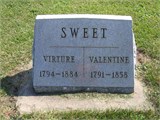
Virtue and Valentine Sweet
Valentine Sweet was born on 14 Feb, 1791 in New York. The Sweet family had come from Rhode Island. Virtue Kelly, an Irish woman no doubt, married Valentine in New York in 1811. They moved to Polo, Ogle, Illinois between 1850 and 1859. Polo had a tunnel for the underground railroad. Their daughter Sarah married her husband Daniel Morse in Illinois in 1858. Daniel and his young bride and first born son returned to New York in 1860 because he thought he might be drafted to fight in the Civil War. After the war Sarah and Daniel moved to Kansas to farm.
The limits to your love are set by you. Finding fault is the opposite of finding love.
Brother David Steindl Rast is Catholic Zen teacher. His organization, gratefulness.org is a teaching site. An exercise he recommends is to find one thing for which to be grateful each day. The twist is that you need to find one brand new thing every day. Before going to sleep you will make note of one thing you have never noticed and have found during the day for which you are grateful. This simple practice turns on mindfulness and opens your heart to that which you normally take for granted. To love life and belong fully to it you need to be grateful beyond the typical things like roof over the head, food on the table, healthy family, good dog. Grateful living is love.
“Everything is a gift. The degree to which we are awake to this truth is a measure of our gratefullness, and gratefullness is a measure of our aliveness.”
― David Steindl-Rast, Jesus and Lao Tzu: The Parallel Sayings
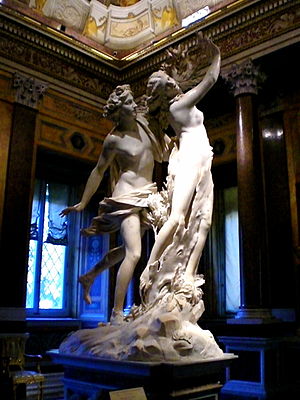
Apollo and Daphne
The myth of Daphne is an illustration of fate and revenge of the gods. She was part of cruel power play between two archers, Apollo and Eros. The proud Apollo bullied Eros who shot two arrows, one tipped in gold and the other in lead to find revenge. Eros, the son of Aphrodite enchanted his arrows to cause total lust and desire in the golden arrow victim, and total hatred in the recipient of the lead tipped arrow. Apollo was hit with the golden arrow, and the object of his desire, Daphne, was struck by the lead one. The struggle between lust and chastity is ended when Daphne turns into a laurel tree. She begged her father to transform her body forever in order to escape Apollo’s desire for her.
Eros is the god of sexual desire. He marries Psyche, a goddess/human representing the human soul. They have one daughter Hedone. Hedone is the quest for pleasure with only good consequences. The English word hedonism is derived from this word, but has a meaning far from the original. Eros is also known in Rome as Cupid. We know this god as a logo for Valentine’s Day, a time when we honor a Christian martyr by consuming mass quantities of cheap chocolate. Neither Valentine nor Cupid will be impressed nor honored with a mindless mandatory purchase of tacky gifts. That is neither pleasurable nor sexy. Eros, Apollo, Daphne, and Aphrodite are archetypes that exist in the human pantheon of possibility. Which one will you play on Valentine’s Day?

tatted doilie
My grandmother did tatting, a lace work done with a tiny plastic shuttle which produced doilies. I have a large variegated doilie that she made but it is in the closet. In my house it would be a big dust collector. When I was young I did crochet, embroidery and some knitting. I taught myself to sew at boarding school when I was 14. When I was 17 I learned to weave on a loom. I like the art and enjoyment of crafting things for my own fashion purposes. My mother was an advanced self styler creating matching hats, shoes and belts to go with her dresses. All of these activities are so satisfying until…..you make a mistake. Then you find there is only one way out of your predicament..rip it out and start again. The entire time you are ripping it out you must take care not to damage the materials, which requires that you not enter rip out rage too deeply. This was agony to me, so I became a potter. If you blow your creation before firing you simply quickly turn it back into mud. If my pots were ugly and I did not want them to live I put them in a bush in the desert and shot them with a 22 pistol. There was no ripping and remorse. A different kind of patience is required to make pots. You just accept that a certain percentage will fail and that is fine.
Last week I opened a message on Ancestry.com from a common descendant of Swain Smith. I am always happy to hear from my fam on Ancestry because they bring extra data and sometimes have documents and pictures to share. This cousin pointed out to me that I had an obvious error in my tree. Swain’s father married twice, and I had listed his mother as the second wife. Since he had been born before the second marriage my mistake was easy to spot. I have revised my tree, and now have no clue about the pedigree of Swain’s real mother. I can only rip out the branches of the tree that I built on a specious assumption and start again. I am so totally back in crochet world. I have to go back to the place where I skipped the loop of my 4th great-grandmother, Sarah Archer, born in New Jersey in 1787. She is my new mystery woman.
To tweet as the holy father of the Catholics was a much dirtier job than Benedict could ever have imagined. His twitter stream is full of everything that life contains, much of it funny and irreverent. Since he longhand wrote his tweets (in Latin?) and was assisted in the typing of 140 characters, we can only assume he did not read all his tweeps remarks to him. He kept a certain distance from his own stream, since this was the first papal twitter stream and had to be approached with caution. Ironically he is the oldest pontiff elected in 300 years, so his decision to enter social media was a little off beat. The Vatican social media experts will now need to make some decisions.
Does the handle stay with the office or will Benedict be tweeting as @Pontifex in his retirement? Will he start to type his own and read those of his tweeps? Is he finished with twitter? Will the tweeps be more kind to him now that he has end of life issues in public? Will the new Pope have a fan page and G+ account for hanging out? Will the Vatican social media presence develop customer service that wows Catholics back to church? Will prayers be launched to protect the church and the Pope from trolls? These and many other questions will face the new Pope. #Paxvobiscum.
Typically people want more of everything. Your ability to estimate is very closely related to your ability to execute. Risk has many faces. In the quest to be fit and healthy the biggest risk is burn out. I can say that with assurance because I have observed people in the earnest pursuit of better health for decades. Over this time the offers to remove symptoms have become overwhelming. Drugs, frozen prepaid meal plans, personal coaching, and one of the oldest, but still happening trends, the weight loss shake, are everywhere to assist the starving, overweight population.
In an effort to bypass the moment all systems are switched into deprivation mode. Suffering and tofu must follow as punishment for wild times at the Dairy Queen on the weekend. The disconnect between self image and soul is now almost complete. Confession and penance are the rituals that surround food and eating now. Joy, creativity and community are not in the food pyramid for many people because diet is presented as obsession, and denial of pleasure. The ancestors had to grow, gather, kill, render, store, dry, milk, and otherwise do something very basic in order to eat. They did not concern themselves with the calories contained in the food as much as they did with starvation. They were all constantly involved with the original exercise known as work. They did not drive to a gym or change outfits to do it. They picked up the tools of their various trades and worked physically. If they had a treadmill it was to run something, not to be run by it.

Crown of Hungary
Stephen V (Hungarian: V. István, Croatian: Stjepan VI., Slovak: Štefan V) (before 18 October 1239, Buda, Hungary – 6 August 1272, Csepel Island, Hungary), was King of Hungary [1] from 1270[1] to 1272.
Early years
He was the elder son of King Béla IV of Hungary and his queen, Maria Laskarina, a daughter of the Emperor Theodore I Lascaris of Nicaea.
In the second year following his birth, on 11 April 1241, the Mongolian troops defeated his father’s army in the Battle of Mohi. After the disastrous battle, the royal family had to escape to Trau, a well-fortified city in Dalmatia. They could only return to Hungary after the unexpected withdrawal of the Mongol forces from Europe.
Junior King of Hungary
In 1246 Stephen was crowned as junior King and his father entrusted him with the government of Croatia, Slavonia and Dalmatia, but the three provinces were de facto governed by the Ban Stephen Gut-Keled. Stephen’s father, attempting to bind the powerful but pagan Cuman tribes more closely to the dynasty, arranged for Stephen’s marriage, as a youth (about 1253), to Elizabeth, the daughter of a Cuman chieftain Köten.
In 1257, Stephen demanded that his father divide the kingdom between themselves and recruited an army against the senior king. Finally, in 1258, King Béla IV was obliged to cede to him the government of Transylvania.
Duke of Styria
Stephen took part in his father’s military campaign against the Styrians, who had rebelled against the rule of the King of Hungary, in 1258. After the successful campaign, King Béla IV appointed him to Duke of Styria.
His government, however, was unpopular among his new subjects, who rebelled against him with the support of King Ottokar II of Bohemia. Stephen and his father started an attack against Ottokar’s lands, but their troops were defeated on 12 July 1260 in the Battle of Kroissenbrunn. Following the battle, the two Kings of Hungary ceded the Duchy of Styria to the King of Bohemia in the Peace of Pressburg.
Struggles with his father
Shortly after the peace, Stephen took over the government of Transylvania again. In 1261, Stephen and his father conducted a joint military campaign against Bulgaria, but their relationship became more and more tense, because the senior king had been favouring his younger son, Duke Béla of Slavonia and his daughter, Anna, the mother-in-law of the King of Bohemia.
Finally, with the mediation of Archbishops Fülöp of Esztergom and Smaragd of Kalocsa, Stephen and his father signed an agreement in the summer of 1262 in Pozsony. Based on their agreement, Stephen took over the government of the parts of the kingdom East of the Danube. However, the two kings’ reconciliation was only temporary, because their partisans were continuously inciting them against each other. In 1264, Stephen seized his mother’s and sister’s estates in his domains, but his father sent troops against him. Stephen’s wife and son were captured by his father’s partisans, and he had to retreat to the castle of Feketehalom. However, he managed to repel the siege and to commence a counter-attack.
In March 1265, he gained a strategic victory over his father’s army in the Battle of Isaszeg. After his victory, he concluded a peace with King Béla IV. Based on the provisions of the peace, he received back the government of the Eastern parts of the kingdom. On 23 March 1266, father and son confirmed the peace in the Convent of the Blessed Virgin on the Nyulak szigete (‘Rabbits’ Island’). Shortly afterwards, Stephen V led his army to Bulgaria and forced Despot Jakob Svetoslav of Vidin to accept his overlordship.
In 1267, the “prelates and nobles” of the Kingdom of Hungary held a joint assembly in Esztergom, and their decisions were confirmed by both Stephen and his father.
To secure foreign support, he formed a double matrimonial alliance with the Angevins, chief partisans of the pope. The first of these was the marriage, in 1270, of his daughter Maria to the future King Charles II of Naples[2] The second alliance was the marriage of Stephen’s infant son, Ladislaus to Charles II’s sister Elisabeth.
King of Hungary
After his father’s death (3 May 1270), Stephen inherited the whole Kingdom of Hungary, although the deceased senior king had entrusted his daughter, Anna and his followers to King Ottokar II of Bohemia in his last will, and they had escaped to Prague before Stephen arrived to Esztergom.
Before his (second) coronation, Stephen granted the County of Esztergom to the Archbishop. In August 1270, Stephen had a meeting with his brother-in-law, Prince Bolesław V of Poland in Kraków where they concluded an alliance against the King of Bohemia. In September 1270 he visited the village Miholjanec, where was discovered an unknown ancient castle and a sword, this sword he got as a gift, in which he and his priests acknowledged the “Holy War Sword of the Scythians” and he saw that he was determined to master the world. He attended the place of the find, where he met a hermit who told him: “Scourge of God”. Stephen also had a meeting with Ottokar on 16th October on an island of the Danube near Pozsony where they concluded a truce for two years.
However, following smaller skirmishes on the border, the war broke out soon after and the King of Bohemia lead his armies against Hungary. Stephen was defeated in two smaller battles, but finally won a decisive victory on 21 May 1271 over the Czech and Austrian troops of Ottokar II of Bohemia. In the subsequent peace the King of Bohemia handed back the fortresses occupied during his campaign, while Stephen renounced his claim to the Hungarian royal treasury that his sister, Anna had taken to Prague after their father’s death.
In the summer of 1272, Stephen left for Dalmatia, where he wanted to meet King Charles I of Sicily, when he was informed that Joachim Gut-Keled had kidnapped his infant son, Ladislaus, and hid in Koprivnica. Stephen was planning to raise an army to rescue his infant son when he died suddenly.
Marriage and children
In about 1253, he married Elisabeth (1240 – after 1290), daughter of a chieftain of the Cuman tribes, they settled in Hungary and had the following children:
Elisabeth (1255 – 1313/1326), wife firstly of Záviš of Falkenštejn and secondly of King Stefan Uroš II Milutin of Serbia
Catherine (1255/1257 – after 1314), wife of King Stefan Dragutin of Serbia
Maria (c. 1257 – 25 March 1325), wife of King Charles II of Naples
Anna (c. 1260 – c. 1281), wife of the Emperor Andronikos II Palaiologos
King Ladislaus IV (August 1262 – 10 July 1290)
Andrew, Duke of Slavonia (1268 – 1278)
Ancestry [show]A ncestors of Stephen V of Hungary [ edit] Titles
King of Hungary, Dalmatia, Croatia, Rama, Serbia, Galicia, Lodomeria, Cumania and Bulgaria; Duke of Styria (1258–1260)
I have always loved paprika and the Danube.
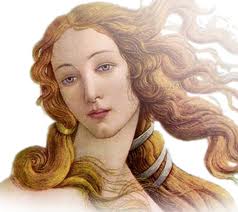
Aphrodite
The Greek goddess Aphrodite was born from the sea near Cyprus. Some claim she had parents (Zeus and Dione), others say she sprouted up in the vicinity of the severed genitals of the Titan sky god Uranus. She walked ashore where she encountered the seasons who were beautiful, but had nothing to compare with the loveliness of Aphrodite. She was taken to meet Zeus at Mt Olympus who recognized her striking beauty and the power she wielded with it. He insisted that she marry immediately, and arranged a marriage to his son Hephaestus, blacksmith of the gods. He made her jewelry and even a fabulous girdle that made her even more desirable. She was pure attraction and her husband was busy making all the weapons for the gods, so she had several affairs with gods and mortals.
The Olympian gods took power from the Titan gods. Kronos, the son of Gaia and Uranus (Titans) removed his father’s genitals at his mother’s request and threw them into the sea. The ambiguity about the birth circumstances ( Did she spring up on the scallop shell as an (un?)intended consequence of the disposal of Uranus’ genitals ?) cloud her relationship to the gods of Mt. Olympus. Her full-time job is love, desire, and the attraction that draws people together. This naturally lead her to attract Ares, the god of war, to her bed. She had many children, but none with Hephaestus. Her most well-known child is Eros, also known as Cupid. He too has parentage issues, but some say he is the son of Ares. It reminds me of all those WWII movies in which they are at war, so they fall in love.
Get your red dress out for Valentine’s Day , but give a nod to the mother of all desire. Consider wearing some very sexy sea foam green panties as your foundation.
The official political message this year of the Communist leaders of China is curb waste and conserve air quality this lunar new year. Banquets and fireworks are under fire for waste and pollution. The ancestors are featured heavily in celebrations of this holiday in China. The festival begins on the new moon, this year 10 Feb, 2013, and lasts for 15 days. Many Chinese people travel great distances to be at home for this time of year. Fireworks are central to the family party. I am a huge fan of pyrotechnics. I am not attracted to witness displays in China because frequent fires and accidents are the result of unregulated manufacture and distribution.
The practice of making noise to scare away evil spirits is ancient. China produces 90% of the fireworks in the world after inventing them. The original firecrackers were chunks of wet bamboo thrown into a fire. The invention of gunpowder in China around 600-900 AD changed everything. The public and private parties to welcome the Year of the Snake will last for a month. If you want to party with the Snake, clean your house, wrap even numbered dollar amounts in red paper and give them to your family, and do not wash your hair or sweep your house on the first day. You may be able follow up with Lion dancers in your community, and if you are lucky, some fireworks to scare away the evil forces in your life. Good to go.

