mermaidcamp
Keeping current in wellness, in and out of the water
You can scroll the shelf using ← and → keys
You can scroll the shelf using ← and → keys

Orion the Hunter returns before dawn By Deborah Byrd Around early August, if you’re up early and have an unobstructed view to the east, be sure to look in that direction in the hour before dawn. You might find a familiar figure – a constellation that always returns to the sky around this time of year. It’s the […]
via Your Earth Sky News for August 1: Orion the Hunter returns before dawn — Witches Of The Craft®

Henry Stafford, Duke of Buckingham
Henry Stafford, Second Duke of Buckingham, (1454-1483), was the son of Humphrey Stafford, killed at the first battle of St. Albans in 1455, and grandson of Humphrey the 1st Duke (cr. 1444), killed at Northampton in 1460, both fighting for Lancaster. The first duke, who bore the title of Earl of Buckingham in right of his mother, was the son of Edmund, 5th Earl of Stafford, and of Anne, daughter of Thomas, Duke of Gloucester, youngest son of Edward III; Henry’s mother was Margaret Beaufort, daughter of Edmund Beaufort, 2nd Duke of Somerset,* grandson of John of Gaunt. Thus he came on both sides of the Blood Royal, and this, coupled with the vastness of his inheritance, made the young duke’s future of importance to Edward IV.
He was recognized as duke in 1465, and next year was married to Catherine Woodville, the queen’s [Elizabeth Woodville] sister. On reaching manhood he was made a Knight of the Garter in 1474, and in 1478 was high steward at the trial of George, Duke of Clarence. He had not otherwise filled any position of importance, but his fidelity might seem to have been secured by his marriage. However, after Edward’s death; Buckingham was one of the first persons worked upon by Richard, Duke of Gloucester. It was through his help that Richard obtained possession of the young king [Edward V], and he was at once rewarded with the offices of Justiciar and Chamberlain of North and South Wales, and Constable of all the royal castles in the principality and Welsh Marches. In the proceedings which led to the deposition of Edward V he took a prominent part, and on the 24th of June 1483 he urged the citizens at the Guildhall to take Richard as king, in a speech of much eloquence, “for he was neither unlearned and of nature marvellously well spoken” (Sir Thomas More).
At Richard’s coronation he served as chamberlain, and immediately afterwards was made Constable of England and confirmed in his powers in Wales. Richard might well have believed that the duke’s support was secured. But early in August Buckingham withdrew from the court to Brecon. He may have thought that he deserved an even greater reward, or possibly had dreams of establishing his own claims to the crown. At all events, at Brecon he fell somewhat easily under the influence of his prisoner, John Morton, who induced him to give his support to his cousin Henry Tudor, Earl of Richmond. A widespread plot was soon formed, but Richard had early warning, and on the 15th of October, issued a proclamation against Buckingham. Buckingham, as arranged, prepared to enter England with a large force of Welshmen. His advance was stopped by an extraordinary flood on the Severn, his army melted away without striking a blow, and he himself took refuge with a follower, Ralph Bannister, at Lacon Hall, near Wem. The man betrayed him for a large reward, and on the 1st of November, Buckingham was brought to the king at Salisbury. Richard refused to see him, and after a summary trial had him executed next day (2nd of November 1483), though it was a Sunday.
Buckingham’s eldest son, Edward Stafford (1478-1521), eventually succeeded him as 3rd Duke, the attainder being removed in 1485; the second son, Henry, was afterwards Earl of Wiltshire. The 3rd Duke played an important part as Lord High Constable at the opening of the reign of Henry VIII, and is introduced into Shakespeare’s play of that king, but he fell through his opposition to Wolsey, and in 1521 was condemned for treason and executed (17th of May); the title was then forfeited with his attainder, his only son Henry (1501-1563), who in his father’s lifetime was styled Earl of Stafford, being, however, given back his estates in 1522, and in 1547 restored in blood by parliament with the title of Baron Stafford, which became extinct in this line with Roger, 5th Baron, in 1640. In that year the barony of Stafford was granted to William Howard (1614-1680), who after two months was created Viscount Stafford; he was beheaded in 1680, and his son was created Earl of Stafford in 1688, a title which became extinct in 1762; but in 1825 the descent to the barony of 1640 was established, to the satisfaction of the House of Lords, in the person of Sir G. W. Jerningham, in whose family it then continued
Henry Stafford, 2nd Duke of Buckingham, KG (4 September 1455 – 2 November 1483) played a major role in King Richard III’s rise and fall. He is also one of the primary suspects in the disappearance (and presumed murder) of the Princes in the Tower. Buckingham was related to the royal family of England in many different ways, but his connections were all through daughters of younger sons. His chances of inheriting the throne would have seemed remote, but he played the role of a ‘kingmaker’ for Richard III and, unsuccessfully, for Henry VII
Buckingham was the son of Humphrey Stafford, Earl of Stafford, and Margaret Beaufort, Countess of Stafford. Three of his four grandparents were descended from Edward III of England:
Buckingham’s paternal grandfather was Humphrey Stafford, 1st Duke of Buckingham, who was the son of Anne of Gloucester, daughter of Thomas of Woodstock, 1st Duke of Gloucester, the youngest son of Edward III.
Buckingham’s paternal grandmother was Lady Anne Neville, a daughter of Joan Beaufort, Countess of Westmorland, while Buckingham’s maternal grandfather was Edmund Beaufort, 2nd Duke of Somerset, the youngest son of John Beaufort, 1st Earl of Somerset. John and Joan Beaufort were illegitimate children of John of Gaunt, 1st Duke of Lancaster, (the third son of Edward III) and Katherine Swynford. (They were later legitimized by John of Gaunt but were not in the direct line and could not claim the throne).
Thus, Buckingham was closely related to the royal families of England and Scotland. Five of his near relations became King of England – his (Lancaster) second cousin, once removed Henry VI, his (Beaufort/Neville) first cousins, once removed Edward IV and Richard III, his second cousin Edward V, and his (Beaufort/Holland) second cousin, once removed Henry VII – while two relations became Queen consorts of England: his (Beauchamp) first cousin, once removed (and Beaufort/Neville second cousin) Lady Anne Neville and his (Beaufort/Neville) second cousin, Elizabeth of York. His (Beaufort/Holland) first cousin, once removed was James II of Scotland.
His father, Humphrey Stafford, Earl of Stafford, supported the House of Lancaster in the initial phase of the Wars of the Roses. He died in 1458 of wounds after First Battle of St Albans, and his paternal grandfather, Humphrey Stafford, 1st Duke of Buckingham, another leading Lancastrian, was killed at the Battle of Northampton (10 July 1460). After his grandfather’s death, Henry was recognized as Duke of Buckingham. The new Duke eventually became a ward of Queen Elizabeth Woodville, consort of Edward IV of England.
Sometime before the Queen’s coronation in May 1465 he was married to her sister Catherine Woodville, Duchess of Buckingham and Bedford (b.1458). Both parties were children at the time; they were carried on squires’ shoulders at the coronation ceremony and were reared in the queen’s household together. According to Dominic Mancini, Buckingham resented his wife and the other Woodvilles because of his marriage to a woman of a lower status.
In 1483, a conspiracy arose among a number of disaffected gentry, supporters of Edward IV. They originally planned to depose Richard III and place Edward V back on the throne. When rumours arose that Edward and his brother (the Princes in the Tower) were dead, Buckingham intervened, proposing instead that Henry Tudor return from exile, take the throne and marry Elizabeth of York. For his part, Buckingham would raise a substantial force from his estates in Wales and the Marches.
Richard eventually put down the rebellion; Henry’s ships ran into a storm and had to go back to Brittany, and Buckingham’s army was greatly troubled by the same storm and deserted when Richard’s forces came against them. Buckingham tried to escape in disguise but was turned in for the bounty Richard had put on his head, and he was convicted of treason and beheaded in Salisbury on 2 November. A monument in nearby Britford Church has been identified as his. Following Buckingham’s execution, his widow, Catherine, married Jasper Tudor.

the kook
In summer when the days are long and sweet
There is nothing like the sand under one’s feet
The saltwater is the remedy that lightens our load
We swim away from our sorrows, pleasures to decode
The surf is a mighty playmate, requiring skill and respect
When you learn to ride waves, your body reconnects
With eternal movements of planets, moons, and stars
Granting wisdom and confidence wherever you are

the beachest beer
deluge
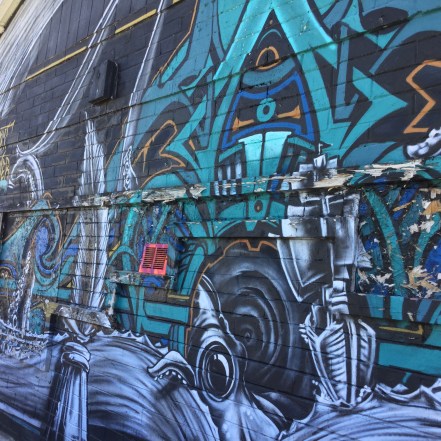
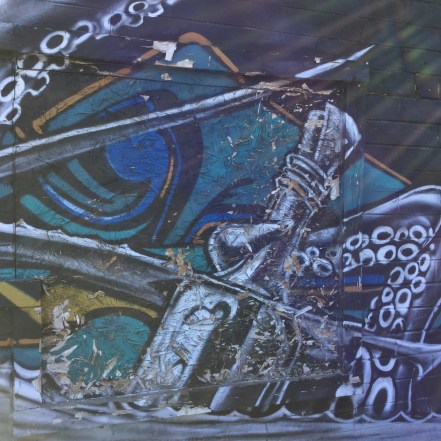
The boat rocked and rolled on stormy seas through the night
Ominous clouds blew across dawn’s glowing horizon to signal
That stronger, harder rains were quickly heading our way
Waves crashed over the deck, sending sailors overboard
We were in the middle of the ocean, in the eye of the storm
There was very little chance that any of us would survive
We boarded the ricketty lifeboats in an attempt to save our lives
deluge

water
With a sinking feeling they trudged across the desert on thirsty horses
Weeks of deprivation and harsh conditions had diminished the group
Some fell behind, and finding no sustenance, succumbed to dehydration
This band of pioneers had left behind comfort and ease to travel west
They believed there would be a paradise waiting at the end of the trail
Along the way they had to keep the vision alive of a fertile, peaceful place
That they imagined but had never seen, that waited for them over the ridge
When they finally spotted a small lake where the horses could be watered
They adjusted their expectations, looked for shelter, and mourned their losses

wheel

fearless leader
The first hint of hidden treasure attracted the worst element
Stray con artists from everywhere gathered to make a kill
Rumors flowed like water, while jealously and dishonesty fought
Over the loyalty of pirates and thieves, all skilled at robbery
In truth there was nothing of value to steal, dig up, or find
The illusion of wealth had poisoned their collective mind

ghosts of thieves

IS JULY’S TOTAL LUNAR ECLIPSE THE REAL INDEPENDENCE DAY RACHEL CELESTE HANSEN On Friday, July 27, 2018, at 4:20pm PST, the full moon will be in Aquarius. This full moon (known as the Thunder Moon or the Full Buck Moon) also coincides with a total lunar eclipse – which, at one hour and 43 minutes, […]
via IS JULY’S TOTAL LUNAR ECLIPSE THE REAL INDEPENDENCE DAY — Witches Of The Craft®
dreamscape
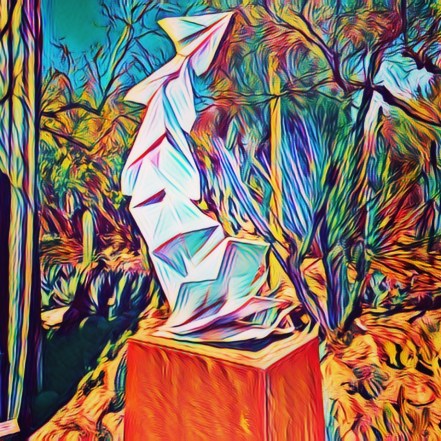
The mind’s eye dreams up wondrous scenes of escape
Dream paths lined with outrageously bright colors and lights
Bring us into realms in which our movements are vivid, clear
Uncluttered by doubts, our steps are taken in grace, no fear
We only find these secret places by stepping outside the rule
That mindlessly stays in the ignorant ways practiced by the fool

dreamscape

bee
Inventive little creatures stumble across the picnic lawn
Dancing with the birthday cake we worked on since the dawn
The ants and caterpillars enjoy the sugar roses, icing sweet
They scamper merrily down the path with butter on their feet
They have made a regular sport out of devouring our repast
Nature knows no bounds when people picnic on the grass
We can think ourselves lucky for feeding the cake to the ants
Now we will all have a better chance of fitting into our pants

We might feel denied our fantasies, and though in most instances that’s a productive thing, this time it may feel like we’re being punished. In this case, the mechanism of denial has the purpose of waking us up. If we don’t awaken and approach events with eyes open, we end up acting foolishly, undermining health, losing Love or […]
via 21-23 July 2018 No Fantasies Allowed — Julie Demboski’s ASTROLOGY
 mermaidcamp