mermaidcamp
Keeping current in wellness, in and out of the water
You can scroll the shelf using ← and → keys
You can scroll the shelf using ← and → keys
My 22nd great grandmother was born in Syria while her parents were on a crusade.
Joan Plantagenet (1272 – 1307)
is my 22nd great grandmother
Lady Margaret De Clare Baroness Audley (1292 – 1342)
daughter of Joan Plantagenet
Lady Alice De Audley Baroness Neville (1315 – 1373)
daughter of Lady Margaret De Clare Baroness Audley
Sir John ‘3rd Baron de Raby’ Neville, Admiral of the Kings Fleet (1341 – 1388)
son of Lady Alice De Audley Baroness Neville
Thomas De Neville (1362 – 1406)
son of Sir John ‘3rd Baron de Raby’ Neville, Admiral of the Kings Fleet
Maude de Neville (1392 – 1421)
daughter of Thomas De Neville
John Talbot (1413 – 1460)
son of Maude de Neville
Isabel Talbot (1444 – 1531)
daughter of John Talbot
Sir Richard Ashton (1460 – 1549)
son of Isabel Talbot
Sir Christopher Ashton (1493 – 1519)
son of Sir Richard Ashton
Lady Elizabeth Ashton (1524 – 1588)
daughter of Sir Christopher Ashton
Capt Roger Dudley (1535 – 1585)
son of Lady Elizabeth Ashton
Gov Thomas Dudley (1576 – 1653)
son of Capt Roger Dudley
Anne Dudley (1612 – 1672)
daughter of Gov Thomas Dudley
John Bradstreet (1652 – 1718)
son of Anne Dudley
Mercy Bradstreet (1689 – 1725)
daughter of John Bradstreet
Caleb Hazen (1720 – 1777)
son of Mercy Bradstreet
Mercy Hazen (1747 – 1819)
daughter of Caleb Hazen
Martha Mead (1784 – 1860)
daughter of Mercy Hazen
Abner Morse (1808 – 1838)
son of Martha Mead
Daniel Rowland Morse (1838 – 1910)
son of Abner Morse
Jason A Morse (1862 – 1932)
son of Daniel Rowland Morse
Ernest Abner Morse (1890 – 1965)
son of Jason A Morse
Richard Arden Morse (1920 – 2004)
son of Ernest Abner Morse
Pamela Morse
I am the daughter of Richard Arden Morse
Joan of Acre (April 1272 – 23 April 1307) was an English princess, a daughter of King Edward I of England and Queen Eleanor of Castile. The name “Acre” derives from her birthplace in the Holy Land while her parents were on a crusade.
She was married twice; her first husband was Gilbert de Clare, 7th Earl of Gloucester, one of the most powerful nobles in her father’s kingdom; her second husband was Ralph de Monthermer, a squire in her household whom she married in secret.
Joan is most notable for the claim that miracles have allegedly taken place at her grave, and for the multiple references to her in literature.
Birth and childhood
Joan (or Joanna, as she is sometimes called) of Acre was born in the spring of 1272 in Syria, while her parents, Edward I and Eleanor of Castile, were on crusade. At the time of Joan’s birth, her grandfather, Henry III, was still alive and thus her father was not yet king of England. Her parents departed from Acre shortly after her birth, traveling to Sicily and Spain before leaving Joan with Eleanor’s mother, Joan, Countess of Ponthieu, in France. Joan lived for several years in France where she spent her time being educated by a bishop and “being thoroughly spoiled by an indulgent grandmother.” Joan was free to play among the “vine clad hills and sunny vales” surrounding her grandmother’s home, although she required “judicious surveillance.”
As Joan was growing up with her grandmother, her father was back in England, already arranging marriages for his daughter. He hoped to gain both political power and more wealth with his daughter’s marriage, so he conducted the arrangement in a very “business like style”. He finally found a man suitable to marry Joan (aged 5 at the time), Hartman, son of King Rudoph I, of Germany. Edward then brought her home from France for the first time to meet him. As she had spent her entire life away from Edward and Eleanor, when she returned she “stood in no awe of her parents” and had a fairly distanced relationship with them.
Unfortunately for King Edward, his daughter’s suitor died before he was able to meet or marry Joan. The news reported that Hartman had fallen through a patch of shallow ice while “amusing himself in skating” while a letter sent to the King himself stated that Hartman had set out on a boat to visit his father amidst a terrible fog and the boat had smashed into a rock, drowning him.
First marriage
Edward arranged a second marriage almost immediately after the death of Hartman.[12] Gilbert de Clare, Earl of Gloucester, who was almost thirty years older than Joan and newly divorced, was his first choice. The earl resigned his lands to Edward upon agreeing to get them back when he married Joan, as well as agreed on a dower of two thousand silver marks.[14] By the time all of these negotiations were finished, Joan was twelve years old. Gilbert de Clare became very enamored with Joan, and even though she had to marry him regardless of how she felt, he still tried to woo her. He bought her expensive gifts and clothing to try to win favor with her. The couple were married on 30 April 1290 at Westminster Abbey, and had four children together. They were:
Gilbert de Clare, 7th Earl of Hertford
Eleanor de Clare
Margaret de Clare
Elizabeth de Clare
Joan’s first husband, Gilbert de Clare died on 7 December 1295.[18]
Secret second marriage
Joan had been a widow for only a little over a year when she caught the eye of Ralph de Monthermer, a squire in Joan’s father’s household. Joan fell in love and convinced her father to have Monthermer knighted. It was unheard of in European royalty for a noble lady to even converse with a man who had not won or acquired importance in the household. However, in January 1297 Joan secretly married Ralph. Joan’s father was already planning another marriage for Joan to Amadeus V, Count of Savoy, to occur 16 March 1297. Joan was in a dangerous predicament, as she was already married, unbeknownst to her father.
Joan sent her four young children to their grandfather, in hopes that their sweetness would win Edward’s favor, but her plan did not work. The king soon discovered his daughter’s intentions, but not yet aware that she had already committed to them, he seized Joan’s lands and continued to arrange her marriage to Amadeus of Savoy. Soon after the seizure of her lands, Joan told her father of that she had married Ralph. The king was enraged and retaliated by immediately imprisoning Monthermer at Bristol Castle. The people of the land had differing opinions on the princess’ matter. It has been argued that the ones who were most upset were those who wanted Joan’s hand in marriage.
With regard to the matter, Joan famously said, “It is not considered ignominious, nor disgraceful for a great earl to take a poor and mean woman to wife; neither, on the other hand, is it worthy of blame, or too difficult a thing for a countess to promote to honor a gallant youth.” Joan’s statement in addition to a possibly obvious pregnancy seemed to soften Edward’s attitude towards the situation. Joan’s first child by Monthermer was born in October 1297; by the summer of 1297, when the marriage was revealed to Edward I, Joan’s condition would certainly have been apparent, and would have convinced Edward that he had no choice but to recognize his daughter’s marriage. Edward I eventually relented for the sake of his daughter and released Monthermer from prison in August 1297.[17] Monthermer paid homage 2 August, and being granted the titles of Earl of Gloucester and Earl of Hertford, he rose to favour with the King during Joan’s lifetime.
Monthermer and Joan had four children:
Mary de Monthermer, born October 1297. In 1306 her grandfather King Edward I arranged for her to wed Duncan Macduff, 8th Earl of Fife. (Ancestor of Harry S Truman, 33rd President of the USA).
Joan de Monthermer, born 1299, became a nun at Amesbury.
Thomas de Monthermer, 2nd Baron Monthermer, born 1301.
Edward de Monthermer, born 1304 and died 1339.
Relationship with family
Joan of Acre was the seventh of Edward I and Eleanor’s fourteen children. Most of her older siblings died before the age of seven, and many of her younger siblings died before adulthood. Those who survived to adulthood were Joan, her younger brother, Edward of Caernarfon (later Edward II), and four of her sisters: Eleanor, Margaret, Mary, and Elizabeth.
Joan, like her siblings, was raised outside her parents’ household. She lived with her grandmother in Ponthieu for four years, and was then entrusted to the same caregivers who looked after her siblings. Edward I did not have a close relationship with most of his children while they were growing up, yet “he seemed fonder of his daughters than his sons.”
However, Joan of Acre’s independent nature caused numerous conflicts with her father. Her father disapproved of her leaving court after her marriage to the Earl of Gloucester, and in turn “seized seven robes that had been made for her.” He also strongly disapproved of her second marriage to Ralph de Monthermer, a squire in her household, even to the point of attempting to force her to marry someone else. While Edward ultimately developed a cordial relationship with Monthermer, even giving him the title of Earl, there appears to have been a notable difference in the Edward’s treatment of Joan as compared to the treatment of the rest of her siblings. For instance, her father famously paid messengers substantially when they brought news of the birth of grandchildren, but did not do this upon birth of Joan’s daughter.
In terms of her siblings, Joan kept a fairly tight bond. She and Monthermer both maintained a close relationship with her brother, Edward II, which was maintained through letters. After Edward II became estranged from his parents and lost his royal seal, “Joan offered to lend him her seal” .
Death
Joan of Acre died on 23 April 1307, at the manor of Clare in Suffolk. The cause of her death remains unclear, though one popular theory is that she died during childbirth, a common cause of death at the time. While Joan’s age in 1307 (about 35) and the chronology of her earlier pregnancies with Ralph de Monthermer suggest that this could well be the case, historians have not confirmed the cause of her death.
Less than four months after her death, Joan’s father, Edward I died. Joan’s widower, Ralph de Monthermer, lost the title of Earl of Gloucester soon after the deaths of his wife and father-in-law. The earldom of Gloucester was given to Joan’s son from her first marriage, Gilbert, who was its rightful holder. Monthermer continued to hold a nominal earldom in Scotland, which had been conferred on him by Edward I, until his death.
Joan’s burial place has been the cause of some interest and debate. She is interred in the Augustinian priory at Clare, which had been founded by her first husband’s ancestors and where many of them were also buried. Allegedly, in 1357, Joan’s daughter, Elizabeth De Burgh, claimed to have “inspected her mother’s body and found the corpse to be intact which in the eyes of the Roman Catholic Church is an indication of sanctity. This claim was only recorded in a fifteenth-century chronicle, however, and its details are uncertain, especially the statement that her corpse was in such a state of preservation that “when her paps [breasts] were pressed with hands, they rose up again.” Some sources further claim that miracles took place at Joan’s tomb, but no cause for her beatification or canonization has ever been introduced.
Joan in fiction
Joan of Acre makes an appearance in Virginia Henley’s historical romance, entitled Infamous. In the book, Joan, known as Joanna, is described as a promiscuous young princess, vain, shallow and spoiled. In the novel she is only given one daughter, when she historically has eight children. There is no evidence that supports this picture of Joan.
In The Love Knot by Vanessa Alexander, Edward the II’s sister, Joan of Acre is an important heroine. The author portrays a completely different view of the princess than the one in Henley’s novel. The Love Knot tells the story of the love affair between Ralph de Monthermer and Joan of Acre through the discovery of a series of letters the two had written to each other.
Between historians and novelists, Joan has appeared in various texts as either an independent and spirited woman or a spoiled brat. In Lives of the Princesses of England by Mary Anne Everett Green, Joan is portrayed as a “giddy princess” and neglectful mother. Many have agreed to this characterization; however, some authors think there is little evidence to support the assumption that Joan of Acre was a neglectful or uncaring mother.

descendants of Massasoit
The Thanksgiving story is told in November to commemorate the precarious situation in which the Pilgrims of Plymouth Colony found themselves. By the good graces of the local tribe these English people managed to survive very far from home. They were not ready for the harsh winter and new surroundings. They were able to negotiate a treaty for mutual protection with Massasoit, the leader in the area. The meal shared to celebrate the treaty has been told for centuries, but there are a few written words from the time documenting this meeting. Most of us have an image from our school days of happy well dressed Pilgrims entertaining Native Americans at an extensive potluck supper. There is some mention that the Wampanoags supplied all the vittles, but we tend to gloss that over while we celebrate our highly revised impression of history and the Pilgrims.
These Pilgrim heroes soon broke down into all kinds of crazy religious infighting and banished each other for infractions. My own ancestors were banished to Sandwich and other little settlements on Cape Cod. Some had to leave because they had been secret Quakers, and one was banished to Barnstable for marrying a Native woman. We imagine Plymouth as some pure attempt at religious freedom because we have not looked very closely at what happened. Many of my ancestors went to Rhode Island to look for religious freedom and fair dealings with the Native Americans. I had several ancestors who fought on both sides of King Philip’s War, which I am sure we did not study in school. We just move on quickly to Boston and tea party and America without stopping to think what became of those people who gave the Pilgrims dinner and protection.
The big news that has been edited is all about that treaty. The pact worked for a while, but as time passed the English population grew and the agreements became strained. The English proved to be less than honorable when it came to keeping their word. The Wampanoags who survived King Philip’s War were shown no mercy. I have extra interest in the Native version of this event because I went to Cape Cod expecting to find traces of my Wampanoag family tree. I found that records do not exist to trace it although my Mayflower ancestors are very well documented. Intermarriage was very common so I am not the only one with a mystery branch in my tree. There is a very small group of people who are members of the Wampanoag tribe today, and their last names came from England. Survival for them meant adapting. This year, for a change, imagine the entire Thanksgiving story from the perspective of the original people.
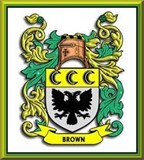
Brown Coat of Arms
Deliverance Brown was born in 1656 in Stamford, Fairfield, Connecticut. His father, Peter Brown, came to America in 1638 and settled in New Haven. In 1647 Peter moved the family to Stamford, Ct, where his wife died in 1657. Young Deliverance was a baby when his mother died. We don’t know much about him, but his brother is also my ancestor.
He owned land in Rye, NY (1678) and in Greenwich.
– In 1691 Deliverance was elected a vestryman in Rye.
– In 1697 Deliverance Brown and Thomas Merrit where sent to Hartford to convince the General Court of CT to take Rye back into it’s juristiction and in 1707 the two men were selected to settle a boundary question between Rye and Greenwich.
Deliverance Brown (1656 – 1727)
is my 8th great grandfather
Rachel Brown (1700 – 1716)
daughter of Deliverance Brown
Mary Mead (1724 – 1787)
daughter of Rachel Brown
Abner Mead (1749 – 1810)
son of Mary Mead
Martha Mead (1784 – 1860)
daughter of Abner Mead
Abner Morse (1808 – 1838)
son of Martha Mead
Daniel Rowland Morse (1838 – 1910)
son of Abner Morse
Jason A Morse (1862 – 1932)
son of Daniel Rowland Morse
Ernest Abner Morse (1890 – 1965)
son of Jason A Morse
Richard Arden Morse (1920 – 2004)
son of Ernest Abner Morse
Pamela Morse
I am the daughter of Richard Arden Morse


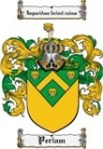
My 13th great-grandfather was an English judge who, in 1593, rose to the top position of Lord Chief Baron of the Exchequer and was knighted by Queen Elizabeth I. He was one of the judges who tried Mary Queen of Scots in 1586, and was involved in several other big treason trials of the age and was given the office of Chief Baron of the Exchequer in 1593. He was a Governor of Crediton Church and twice church warden. educated in Exeter and then at Exeter College, Oxford where on 25 April 1551 he was elected fellow. He resigned his fellowship some months later and went to London where he eventually studied law at the Middle Temple, being called to the bar in 1565. A slight wobble in his career occurred in 1568 when, after being summoned to Ireland by Sir Peter Carew to help him prosecute an ultimately successful claim to an Irish barony, he received an unexpected appointment as judge under the prospective President of Munster, Sir John Pollard. By writing to Sir William Cecil and earnestly petitioning the Privy Council, mentioning his wife and children and delicate state of health, he seems to have been able to avoid the transfer to Ireland altogether. Thereafter his rise through the legal ranks was steady—in 1575 he became serjeant-at-law for the Michaelmas term, and on 13 February 1581, a Judge of the Common Pleas. The ultimate honor came in January 1593, when he was promoted to Lord Chief Baron of the Exchequer, and knighted.
William Periam (1534 – 1604)
is my 13th great grandfather
John Periam (1510 – 1573)
son of William Periam
Mary Periam (1531 – 1552)
daughter of John Periam
Robert Sweet (1552 – 1578)
son of Mary Periam
John Issac Sweet (1579 – 1637)
son of Robert Sweet
James Sweet (1622 – 1695)
son of John Issac Sweet
Benoni Sweet (1663 – 1751)
son of James Sweet
Dr. James Sweet (1686 – 1751)
son of Benoni Sweet
Thomas Sweet (1732 – 1813)
son of Dr. James Sweet
Thomas Sweet (1759 – 1844)
son of Thomas Sweet
Valentine Sweet (1791 – 1858)
son of Thomas Sweet
Sarah LaVina Sweet (1840 – 1923)
daughter of Valentine Sweet
Jason A Morse (1862 – 1932)
son of Sarah LaVina Sweet
Ernest Abner Morse (1890 – 1965)
son of Jason A Morse
Richard Arden Morse (1920 – 2004)
son of Ernest Abner Morse
Pamela Morse
I am the daughter of Richard Arden Morse
Crediton Parish Church
Sir William Peryam
1534 – 1604Introduction
On the north side of the chancel of the church (on the left-hand side, looking towards the altar), is the big tomb of Sir William Peryam, an important individual both in local and national terms in the last years of the reign of Elizabeth I. Peryam was one of the judges who tried Mary Queen of Scots in 1586, was involved in several other big treason trials of the age and was given the office of Chief Baron of the Exchequer in 1593. He was a Governor of Crediton Church and twice church warden; he bought the estate of Little Fulford, east of Crediton in the 1580′s and built a manor house there, the estate being renamed Shobroke Park in the early eighteen-hundreds.
The Tomb
The tomb shows the judge reclining, his head arms propped up with his right hand, beneath him the seven ladies of his life – his three wives and four daughters (he had no sons); above him are the Peryam arms.
Family
William Peryam was born in Exeter in 1534, second son of John and Elizabeth Peryam. His family was a well-connected one, he was a cousin of Sir Thomas Bodley, founder of the famous Bodlean Library in Oxford. His father was a man of means and was twice mayor of Exeter (he died during his second term of office in 1572).William’s brother, John, was also twice mayor of the city and was in office when the Spanish Armada appeared off Devon in 1588.
Education & Career
William Peryam was educated at Exeter College, Oxford, where he was elected fellow in 1551 at the age of 17.
A Lawyer Still Quoted Today
In 1553 he was admitted to the Middle Temple and was one of Plymouth’s MP’s from 1562 until 1567, being called to the bar whilst at Westminster – the duties the average backbencher weren’t particularly arduous in Tudor times! His arms, which can be seen at the top of the tomb, are still to be found in the hall of the Middle Temple. There are records of his involvement in some mid-Devon cases around the time of he became a QC; in one (1566) he became a trustee of the locally important Dowrish estate in Sandford. In 1568 he was appointed as a justice in Ireland, serving Sir John Pollard, President of Munster. Quite a lot of correspondence from his time in Ireland survives in State Papers. An amusing letter tells of his reluctance to return to Ireland without Sir John, who was suffering from gout. Also on record from this time is the successful attempt he made (with the help of John Hooker, the Exeter antiquary) in 1569, to reclaim the Barony of Odrone on behalf of Sir Peter Carew – from whose family he was to buy his land in Crediton ten years later. He was made a serjeant-at-law in Michaelmas term of 1579 and in February 1581 was appointed a Judge of the Court of Common Pleas. In 1586 he was one of the judges at the trial of Mary Queen of Scots . When Sir Christopher Hatton retired from office in 1591, Peryam was named as one of the Judges of the Chancery Court and during the last two decades of the sixteenth century and the first years of the seventeenth was involved in a number of “show” trials of State offenders including, among others, those of the Earl of Arundel (originally imprisoned in 1585 for helping Mary, then accused of having a mass said in support of the Armada in the Chapel of the Tower of London in 1588 and tried for, and found guilty of, treason – although the death sentence was never carried out, in 1589), Sir John Perrot (tried and found guilty for what could be described as “mild” treason in 1592, but not executed) and that of the Earl of Essex (found guilty of treason for organising an attempted coup; he was tried and executed in 1601). The precedents Peryam set and legal decisions made in these and other cases are still quoted in the legal textbooks. In 1593 Peryam was appointed Chief Baron of the Exchequer, where he presided for twelve years. He received the knighthood which was usual with that office.
Peryam’s Death
He died at Fulford Park on 9th October, 1604. The date of his death is shown on his tomb inscription as 1605. It seems likely that the tomb was erected as many as fifteen years after his death (ie during the lifetime of his widow), by which time her memory may have been fading a little because, although the Parish Registers for 1603 – 7 are missing from the Devon Record Office, papers in the National Archive clearly show that the grant of his office of Chief Baron of the Exchequer was made void on October 9th, 1604, so the earlier date of death should be taken as the valid one.
Wives
Peryam married three times. His first wife was Margery, daughter of John Holcot of Berkshire; there were no children of this marriage.
His second wife was Anne, daughter of John Parker of North Molton by whom he had four daughters, Mary, Elizabeth, Jane and Anne who all married “well”.
His last wife was Elizabeth, a daughter of Sir Nicholas Bacon (a fellow government law officer) – who outlived William by twenty years. She was related by marriage to William Cecil, Lord Burghley – in fact, Peryam was related either directly, or by marriage, to many court figures of Elizabeth’s reign.
Shobroke & Holy Cross
Peryam had bought Little Fulford, or Fulford Park (which became Shobroke Park) from Sir Richard Carew in the early 1580′s and had constructed “a fayre dwelling house” there – a predecessor of the Georgian house which was burnt down in the 1940′s. He left the house and the estate to his daughters who sold it to his brother, Sir John Peryam. He in turn sold it to the Tuckfields, whose descendants, the Shelleys, still own the estate. Peryam was a churchwarden of Holy Cross in 1589 and 1600 and was also a Governor. In 1578 he leased a manor in Sidmouth from Sir Walter Raleigh and his two sons, Carew and Walter The document still survives in the Devon Record Office. It is carefully preserved because the signatures of the Raleighs are on it! That house is now the Woodlands Hotel in Sidmouth, which, although it was substantially altered in the early nineteenth century, preserves much of the Elizabethan fabric. His widow, Elizabeth, endowed a fellowship and two scholarships in his name in Balliol College, Oxford in 1620. William Peryam’s only sibling, his brother, John, also had a very distinguished career. He was mayor of Exeter in 1587/8 and in 1598/9. Also knighted, he was a liberal benefactor to the city and to Exeter College, Oxford – and his widow endowed fellowships and scholarships to that college A panel portrait of an enrobed Sir William hangs in the National Portrait Gallery.
He can be found buried with his family. The inscription on his elaborate tomb says:
Heere lyeth the body of Sr. William Peryam, knight, who in AD 1579 was made one of the justices of the Court of Comon Pleas & from thence in AD 1592 was called to bee Lord Cheefe Baron of the Exchequer. He married first Margery daughter & heir of Jo(hn) Holcott of Berk(shire) Esqr. widow of Richadr(sic) Hutchenson of Yorksheire Esqr.; secondly Anne daughter of John Parker of Devon Esqr.; lastly Elizabeth daughter of Sr. Nic(holas) Bacon knig. Lord Keeper of the Great Seale. Hee hadd only yssue by his second wife, 4 daughters & heires, viz, Mary theldest (sic) married to Sr. Will(iam) Pole of Devon knig.; Elizabeth the 2 married to Sr. Ro(bert) Bassett of Devon knig.; Jane the 3 first married to Thomas Poyntz Esqr. son & heir of Sr. Gabriell Poyntz of Ess(ex) knig.; afterward to Tho(mas) Docwra of Hertf(ordshire) Esqr.; Anne the youngest married to Will(iam) Williams Esq. son & heir of Sr. Jo(hn) Williams of Dorsett knig. All wch. his daughters & heirs have yssu now lyvinge by their severall husbands. He dyed 9 octo(ber) Ao.Do. 1605 (sic) in the 70the yeere of his age much & worthely reverenced for his religeous zeale, integrity & profound knowledge in the lawes of the realme. Dormit non est mortuus (he sleeps, he is not dead).
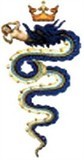
Visconti Coat of Arms
Coat of Arms of the Visconti of Milan depicting the biscione, a serpent who appears to be swallowing a human.
The effectual founder of the Visconti of Milan, Ottone, wrested control of the city from the rival Della Torre family in 1277.
The family, once risen to power, loved to claim legendary versions about its origins. Fancy genealogies were en vogue at the time, while established facts reflect quite sober and almost humble beginnings in the lesser nobility. The branch of the Visconti family that came to rule Milan was originally entrusted with the lordship of Massino (nowadays Massino Visconti), a hamlet in lovely position over Lago Maggiore, where they were in charge since the twelfth century as archiepiscopal vassals.
It is thought that the Milanese Visconti had their origins in a family of capitanei (cfr. the modern surname Cattaneo) whom archbishop Landulf of Milan (978-998) had granted certain feudal holdings known as caput plebis (at the head, likely in geographical and not hierarchical sense, of the pieve, an ecclesiastical lesser subdivision). A document from the year 1157 says the Visconti were holders of the captaincy of Marliano (today Mariano Comense); late chronicler Galvano Fiamma confirms this version. Decades before that, surely before 1070, they had gained the public office of viscount, to be later inherited down the male line (Biscaro, ASL, “I maggiori dei Visconti di Milano”). Soon the family dispersed into several branches, some of which were entrusted fiefs far off from the Lombard metropolis; the one which gave the Medieval lords of Milan is said to be descended from Umberto (d. in the first half of the 12th century).
The Visconti ruled Milan until the early Renaissance, first as Lords, then, from 1395, with the mighty Gian Galeazzo who almost managed to unify Northern Italy and Tuscany, as Dukes. Visconti rule in Milan ended with the death of Filippo Maria Visconti in 1447. He was succeeded, after a short-lived republic, by his son-in-law Francesco I Sforza, who established the reign of the House of Sforza.
Visconti rulers of Milan
Ottone Visconti, Archbishop of Milan (1277 – 1294)
Matteo I Visconti (1294 – 1302; 1311 – 1322)
Galeazzo I Visconti (1322 – 1327)
Azzone Visconti (1329 – 1339)
Luchino I Visconti (1339 – 1349)
Bernabò Visconti (1349 – 1385)
Galeazzo II Visconti (1349 – 1378)
Matteo II Visconti (1349 – 1355)
Gian Galeazzo Visconti (1378 – 1402) {1st Duke of Milan & nephew of Bernabò Visconti}
Giovanni Maria Visconti (1402 – 1412)
Giacomo Visconti (1412 – 1447)

Obizzo Visconti
Obizzo Visconti (1198 – 1266)
is my 22nd great grandfather
Theobald Visconti (1220 – 1276)
son of Obizzo Visconti
Matteo I Visconti (1250 – 1322)
son of Theobald Visconti
Stefan Visconti (1289 – 1327)
son of Matteo I Visconti
Bernabo Lord Milan di Visconti (1319 – 1385)
son of Stefan Visconti
Veridis Duchess Austria Visconti (1352 – 1414)
daughter of Bernabo Lord Milan di Visconti
Ernst I “Ironside” Archduke of Austria Habsburg (1377 – 1424)
son of Veridis Duchess Austria Visconti
Katharina Archduchess Austria Von Habsburg (1420 – 1493)
daughter of Ernst I “Ironside” Archduke of Austria Habsburg
Christof I VanBaden (1453 – 1527)
son of Katharina Archduchess Austria Von Habsburg
Beatrix Zahringen (1492 – 1535)
daughter of Christof I VanBaden
Sabine Grafin VonSimmern (1528 – 1578)
daughter of Beatrix Zahringen
Marie L Egmond (1564 – 1584)
daughter of Sabine Grafin VonSimmern
Richard Sears (1590 – 1676)
son of Marie L Egmond
Silas Sears (1638 – 1697)
son of Richard Sears
Silas Sears (1661 – 1732)
son of Silas Sears
Sarah Sears (1697 – 1785)
daughter of Silas Sears
Sarah Hamblin (1721 – 1814)
daughter of Sarah Sears
Mercy Hazen (1747 – 1819)
daughter of Sarah Hamblin
Martha Mead (1784 – 1860)
daughter of Mercy Hazen
Abner Morse (1808 – 1838)
son of Martha Mead
Daniel Rowland Morse (1838 – 1910)
son of Abner Morse
Jason A Morse (1862 – 1932)
son of Daniel Rowland Morse
Ernest Abner Morse (1890 – 1965)
son of Jason A Morse
Richard Arden Morse (1920 – 2004)
son of Ernest Abner Morse
Pamela Morse
I am the daughter of Richard Arden Morse
OBIZZO Visconti (-after 1258). m FIORINA Mandelli, daughter of RUFFINO Mandelli & his wife Aldesia Pietrasanta. Obizzo & his wife had two children:
a) TIBALDO Visconti (-beheaded Gallarate 1276). The Annales Mediolanenses record that “Archiepiscopum Ottonem…Tibaldi nepotis sui” was beheaded “in Galerate” in 1276 . m ANASTASIA Pirovano, niece of Cardinal Uberto Pirovano Archbishop of Milan, daughter of — (-1276, bur [Milan San Eustorgio]). The primary source which confirms her parentage and marriage has not yet been identified. Tibaldo & his wife had [four] children:
i) MATTEO [I] Visconti (Invorio 15 Jul 1250-Crescenzago 28 Jun 1322). Giovanni di Musso´s Chronicon Placentinum records that “Dominus Mafæus Vicecomes nepos Domini Ottonis Vicecomitis Archiepiscopi Mediolani” was installed as “Populi Mediolani Capitaneus” in 1287 and shortly after as “Dominus Generalis civitatis Mediolani” . Lord of Milan.
– see below.
ii) UBERTO Visconti (-22 Apr 1315, bur Milan Dominican Church). The Annales Mediolanenses record the death in 1315 of “Nobilis Miles Ubertus Vicecomes frater magni Matthæi Vicecomitis” and his burial “in conventu Fratrum Prædicatorum”.
iii) [STEFANO Visconti (-1327, bur Milan San Eustorgio). The Annales Mediolanenses record the death in 1327 of “nobilis Miles Stephanus Vicecomes” and his burial “apud Sanctum Eustorgium cum matre sua” . The source does not specify Stefano´s parentage but it is possible that he was another otherwise unrecorded brother of Matteo [I] Visconti Lord of Milan.]
iv) [OTTORINO Visconti ([12/14] Oct 1336, bur Milan San Eustorgio). The Annales Mediolanenses record the death in 1336 of “nobilis Miles Ottorinus Vicecomes” and his burial “in ecclesia Sancti Eustorgii” 15 Oct. His place of burial suggests that Ottorino may have been the brother of Stefano Visconti.]
b) PIETRO Visconti (-after 1301). The Annales Mediolanenses record that “Petrus Vicecomes Dominus Seprii et frater patris Matthæi” rebelled against “Matthæum Vicecomitem Dominum civitatis Mediolani” in 1301 but was captured and held “in castro de Serezano” . m —. The name of Pietro´s wife is not known. Pietro & his wife had one child:
i) daughter . Her parentage and marriage are confirmed by the Annales Mediolanenses which record that “Petrus Vicecomes Dominus Seprii et frater patris Matthæi” incited “Ruscam Dominum civitatis Cumanæ generum suum” to rebel against Matteo [I] Visconti Lord of Milan in 1301, the succeeding passage recording “Conradus Rusca Dominus civitatis Cumanæ” among the rebels . m CORRADO “Rusca” Signore di Cuma, son of — (-after 1301).

My 16th great-grandfather had an extremely lavish wedding when he wed my 16th great-grandmother. They had three children together and then the Pope gave Count Philipp a divorce. This divorce by Pope thing was popular at the time for nobility. His father, Johann IV, the Count of Katzenelnbogen, gave the world riesling grapes and wine. His sons died before he did, so the male line ended with his death. One of the castles the family owned, Rheinfels, is the largest on the Rhine. Today there is still a ruin that can be visited.
Rheinfels Castle (German: Burg Rheinfels) is a castle ruin located above the left (West) bank of the Rhein in Sankt Goar, Germany. It was started in 1245 by Count Diether V of Katzenelnbogen. After expansions, it was the largest fortress in the Middle Rhein Valley between Koblenz and Mainz. It was slighted by French Revolutionary Army troops in 1797. It is the largest castle overlooking the Rhine,and historically covered five times its current area.
In the year 1435 the Rüsselsheim castle administrator Klaus Kleinfisch began a new wineyard. His annual account shows the purchase of riesling Setzreben for 22 shilling. This kind of wine had a higher quality than the other french wines, was more aromatic but also frost-resistant. His new choice was – wineyards can exist more than onehundred years – the turningpoint in winehistory. Up to this point the old documents only reported red, white or black wine according to their colour. Even in the year 1402 the electoral prince of mainz ordered to grow no other wines than his french wines. After the rüsselsheim vintage Riesling quickly showed up all the way down the river rhine. Up to the year 1600 riesling became top wine. In the castle of Darmstadt count Johann IV united the two most powerful counties of the “holy roman empire of the german nation” in one of the most beautiful medieval marriages of his son Philipp d. Ältere of Katzenelnbogen with countess Anna of Württemberg. Even his son-in-law landgrave Heinrich III of Hessen was enthusiastic about this amount of gold , silver and wine. In 1427 the 10 most important katzenelnbogen castles were consuming about 200 000 liters of wine a year and in 1436 storing 1.5 million l wine in mainz . The counts were remarkably rich supporting arts and could afford rewarding medieval singers like Walther von der Vogelweide with a diamond. They created the most powerful castle, the first undefeatable german “bollwerk” Auerbach, defended themselves on the largest german castle with the largest german wine-cellar the Rheinfels castle. They loved the power but were sophisticated. Thanks to their correct book-keeping we can read about their live, family affaires and trading. One vase of china and one tankard is all they left. But the writings tell us and still want to be searched.
They gave us the riesling wine, one symbol of pride worth to be honoured.
The successors may have formed a modern top wine out of the riesling plant, but the documented first grower of the most important german and one of the most important international wines was Johann IV, the Count of Katzenelnbogen.
Additional the county customs writer noticed the first bratwurst export to cologne in 1410, the records listed bratwurst for 1gulden on a boat loaded with wine. This is the first proof of the traditional german bratwurst. The size is defined by pork casings. The transport itself tells us katzenelnbogen bratwurst must have been widely known.
Philip I of Katzenelnbogen (1402 – 1479), also known “Philip the Elder” was Count of Katzenelnbogen from 1444 to 1479 and was the last male descendant of the Counts of Katzenelnbogen (his two sons died before him). His parents were John IV, Count of Katzenelnbogen (younger line) and Anne of Katzenelnbogen (older line), who merged the two lines of the family back together in 1402.
Marriage and issue
Philip married on 24 February 1422 in Darmstadt with Anna of Württemberg (1408–1471), daughter of Eberhard IV “the Younger” of Württemberg. In 1456, he obtained from the Pope a divorce from bed-and-board. In 1474 Philip married Anna of Nassau-Dillenburg.
Philip had three children with his first wife:
Philip the Younger (* 1427; † 27 February 1453), married in 1450 Ottilie of Nassau. In 1453 they had a daughter Ottilie of Katzenelnbogen.
Eberhard († 1456), canon of Cologne, was stabbed in Bruges (Flanders).
Anna (* 5 September 1443; † 16 February 1494), married in 1458 margrave Henry III of Hesse (15 October 1441 — 13 January 1483). In 1471, they had a son William III, who was the last male descendant of this line of the House of Hesse.
Legacy
In 1444 Philip initiated a major renovation of the collegiate church of Sankt Goar.
In 1449 he bought off the rights on St. Goar held by abbot John of the Abbey at Prüm.
In 1470 he handed Upper Katzenelnbogen and its seat Darmstadt to his son-in-law Henry III of Hesse.
Philip’s sons Eberhard and Philip the younger died before his death, so when Philip died in 1479, the Katzenelnbogen died out in the male line. The County of Katzenelnbogen fell to the Landgraviate of Hesse, which was ruled at the time by Philip’s son-in-law Henry III of Hesse in Marburg.
This article incorporates information from the German Wikipedia.
Philipp l Count of Katzenelnbogen (1402 – 1479)
is my 16th great grandfather
Philipp VonKatzenelnbogen (1427 – 1453)
son of Philipp l Count of Katzenelnbogen
Ottilie Countess Katzenelnbogen vonKatzenelnbogen (1453 – 1517)
daughter of Philipp VonKatzenelnbogen
Beatrix Zahringen (1492 – 1535)
daughter of Ottilie Countess Katzenelnbogen vonKatzenelnbogen
Sabine Grafin VonSimmern (1528 – 1578)
daughter of Beatrix Zahringen
Marie L Egmond (1564 – 1584)
daughter of Sabine Grafin VonSimmern
Richard Sears (1590 – 1676)
son of Marie L Egmond
Silas Sears (1638 – 1697)
son of Richard Sears
Silas Sears (1661 – 1732)
son of Silas Sears
Sarah Sears (1697 – 1785)
daughter of Silas Sears
Sarah Hamblin (1721 – 1814)
daughter of Sarah Sears
Mercy Hazen (1747 – 1819)
daughter of Sarah Hamblin
Martha Mead (1784 – 1860)
daughter of Mercy Hazen
Abner Morse (1808 – 1838)
son of Martha Mead
Daniel Rowland Morse (1838 – 1910)
son of Abner Morse
Jason A Morse (1862 – 1932)
son of Daniel Rowland Morse
Ernest Abner Morse (1890 – 1965)
son of Jason A Morse
Richard Arden Morse (1920 – 2004)
son of Ernest Abner Morse
Pamela Morse
I am the daughter of Richard Arden Morse
Katzenelnbogen originated as a castle built on a promontory over the river Lahn around 1095. The lords of the castle became important local magnates, acquiring during the centuries some key and highly lucrative customs rights on the Rhine. The Counts of Katzenelnbogen also built Burg Neukatzenelnbogen and Burg Rheinfels on the Rhine. The German family died out in 1479, while the Austrian lineage continued, and the county became disputed between Hesse and Nassau. In 1557, the former finally won, but when Hesse was split due to the testament of Philipp the Magnanimous, Katzenelnbogen was split as well, between Hesse-Darmstadt and the small new secondary principality of Hesse-Rheinfels. When the latter line expired in 1583, its property went to Hesse-Kassel (or Hesse-Cassel), which added the inherited part of Katzenelnbogen to its side-line principality of Hesse-Rotenburg. After the Congress of Vienna, this part of Katzenelnbogen was given to Nassau in exchange for property that had been taken away from it; after the War of 1866, with all Nassau, it became part of Prussia.
In 1945, Hesse-Darmstadt was united with most of the Prussian province of Hesse-Nassau, which included the former Hesse-Kassel along with Nassau and the formerly Free City of Frankfurt, to form the federal state of Hesse. Thus, Hesse now includes the larger part of former county of Katzenelnbogen. A smaller part of Nassau, including the old castle and village bearing the name of Katzenelnbogen, ended up as part of Rhineland-Palatinate (part of the Rhein-Lahn and Westerwaldkreis districts). One of the titles of the Queen of the Netherlands (the House of Orange-Nassau) is that of Countess of Katzenelnbogen.
Etymology
The name Katzenelnbogen derives from the old Cattimelibocus. It consists of the ancient Germanic tribal name of the Chatti and Melibokus, the Roman name of any mountains, like the Harz or the Teutoburg Forest. Over the centuries the name changed to Katzenelnbogen: “cat’s elbow”.
History of wine
In the history of wine, Katzenelnbogen is famous for the first documentation of Riesling grapes in the world: this was in 1435, when the storage inventory of Count John IV of Katzenelnbogen, a member of the Holy Roman high nobility, lists the purchase of vines of “Rieslingen”.


My 10th great-grandmother was born near Venice and died in London. Her husband was a musician from a musical family hired by Henry VIII to play and compose music in court. She and her husband were probably Jewish in origin. She is buried in All Hallows Barking, a very old church in London.
Elena DeNazzi (1515 – 1571)
is my 10th great grandmother
Lucreece Lucretia Bassano (1556 – 1632)
daughter of Elena DeNazzi
John Thomas Lanier (1631 – 1719)
son of Lucreece Lucretia Bassano
Sampson Lanier (1682 – 1743)
son of John Thomas Lanier
Elizabeth Lanier (1719 – 1795)
daughter of Sampson Lanier
Martha Burch (1743 – 1803)
daughter of Elizabeth Lanier
David Darden (1770 – 1820)
son of Martha Burch
Minerva Truly Darden (1806 – 1837)
daughter of David Darden
Sarah E Hughes (1829 – 1911)
daughter of Minerva Truly Darden
Lucinda Jane Armer (1847 – 1939)
daughter of Sarah E Hughes
George Harvey Taylor (1884 – 1941)
son of Lucinda Jane Armer
Ruby Lee Taylor (1922 – 2008)
daughter of George Harvey Taylor
Pamela Morse
I am the daughter of Ruby Lee Taylor
Elina DE NAZZI died on 23 Sep 1571 in All Hallows By The Tower, London, England. She was born in Bassano Del Grappa, Italy
BIOGRAPHY: Elina (Ellen) was the daughter of Beneditto de Nazzi. She was born in Venice, Italy, probably as that is where she married Anthony Bassano on Aug. 10, 1536. He stayed there until their daughter, Angelica was born In Nov. of 1537. One can not help but wonder about the name of their daughter. At least three of the brothers named daughters, Angelica, Angell and Angela, possibly indicating that could be the name of their mother. BIOGRAPHY: Beneditto de Nazzi is considered to possibly be a Jewish name because Nasi or Nasis means ‘leader’ or ‘prince’ in Hebrew. So this makes both families Bassano and de Nazzi probably Jewish.

coat of arms
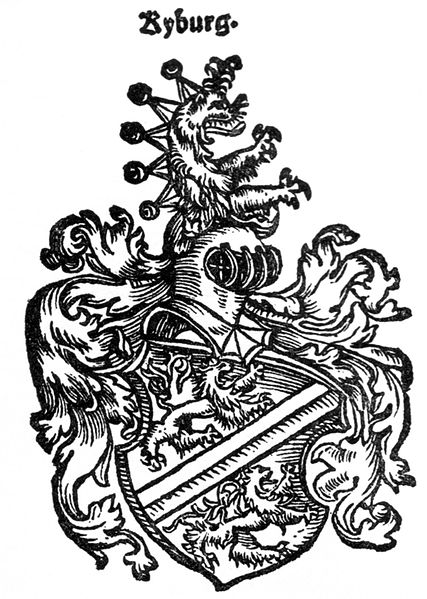
Grafen von Kyburg
Ulrich X von Kyburg* (1162 – 1227)
is my 22nd great grandfather
Hedwige VonKyburg (1192 – 1260)
daughter of Ulrich X von Kyburg*
Rudolf IV King of Germans, Holy Roman Emperor Habsburg (1218 – 1291)
son of Hedwige VonKyburg
Albert I King of Germany Habsburg (1248 – 1308)
son of Rudolf IV King of Germans, Holy Roman Emperor Habsburg
Albrecht Albert II ‘The Wise’ Duke of Austria Habsburg (1298 – 1358)
son of Albert I King of Germany Habsburg
Leopold III “Duke of Austria” Habsburg (1351 – 1386)
son of Albrecht Albert II ‘The Wise’ Duke of Austria Habsburg
Ernst I “Ironside” Archduke of Austria Habsburg (1377 – 1424)
son of Leopold III “Duke of Austria” Habsburg
Katharina Archduchess Austria Von Habsburg (1420 – 1493)
daughter of Ernst I “Ironside” Archduke of Austria Habsburg
Christof I VanBaden (1453 – 1527)
son of Katharina Archduchess Austria Von Habsburg
Beatrix Zahringen (1492 – 1535)
daughter of Christof I VanBaden
Sabine Grafin VonSimmern (1528 – 1578)
daughter of Beatrix Zahringen
Marie L Egmond (1564 – 1584)
daughter of Sabine Grafin VonSimmern
Richard Sears (1590 – 1676)
son of Marie L Egmond
Silas Sears (1638 – 1697)
son of Richard Sears
Silas Sears (1661 – 1732)
son of Silas Sears
Sarah Sears (1697 – 1785)
daughter of Silas Sears
Sarah Hamblin (1721 – 1814)
daughter of Sarah Sears
Mercy Hazen (1747 – 1819)
daughter of Sarah Hamblin
Martha Mead (1784 – 1860)
daughter of Mercy Hazen
Abner Morse (1808 – 1838)
son of Martha Mead
Daniel Rowland Morse (1838 – 1910)
son of Abner Morse
Jason A Morse (1862 – 1932)
son of Daniel Rowland Morse
Ernest Abner Morse (1890 – 1965)
son of Jason A Morse
Richard Arden Morse (1920 – 2004)
son of Ernest Abner Morse
Pamela Morse
I am the daughter of Richard Arden Morse
ULRICH von Dillingen und Kiburg, son of HARTMANN [III] Graf von Dillingen und Kiburg & his wife Richenza von Lenzburg (-1227, bur Schänis). Graf von Kiburg. Crusader 1190. Vogt von Schänis, Beromünster und Glarus 1212. “…Ulricus comes de Kiburc et filii eius Wernerus et Hardemannu…” witnessed a charter of Friedrich II King of Germany dated 31 Mar 1213 [393].
m ANNA von Zähringen, daughter of BERTHOLD IV Herzog von Zähringen & his first wife Heilwig [von Froburg] (-after 1226). The Chronicle of Alberic de Trois-Fontaines names “ducem Bertoldum…et duas sorores” as children of “ducem Bertoldum” & his wife, specifying that the younger daughter was “comitissa Kiburgensis” and had many children [394]. This is confirmed by the charter dated 1226 under which “Haimonem dominum de Fucignie” reached an agreement with the bishop of Lausanne concerning the advocacy of the church of Lausanne, which Aimon claimed had been granted by “comitibus de Ciburc”, which names “comitibus de Kibor Vuernerio et Armanno…quia filii erant sororis Bertoldi ducis Faringie” [395].
Graf Ulrich & his wife had six children:
1. WERNER [I] (-Acre 1228). “…Ulricus comes de Kiburc et filii eius Wernerus et Hardemannu…” witnessed a charter of Friedrich II King of Germany dated 31 Mar 1213 [396]. The contract of marriage between “Thomas comes Savoyæ…filiam suam Margaritham…infra nubiles annos” and “comiti Hartmanno filio comitis Ulrici de Kyburg” is dated 1 Jun 1218, stating that “Dni Bertholdi comitis de Novocastro et Dni Wilhelmi de Stavayé” acted as guarantors, and with the consent of “Ulricus comes de Kyburg et comes Garnerius frater eius et comitissa uxor comitis de Kyburg” [397]. His parentage is confirmed by the charter dated 1226 under which “Haimonem dominum de Fucignie” reached an agreement with the bishop of Lausanne concerning the advocacy of the church of Lausanne, which Aimon claimed had been granted by “comitibus de Ciburc”, which names “comitibus de Kibor Vuernerio et Armanno…quia filii erant sororis Bertoldi ducis Faringie” [398]. Graf von Kiburg. m as her first husband, ALIX [Bertha] de Lorraine, daughter of FERRY II Duke of Lorraine & his wife Agnes de Bar (-[Apr/29 Sep 1242], bur Clairlieu). The Chronicle of Alberic de Trois-Fontaines names “Aaliz relictam comitis Kyburgensis sororem ducis Lotharingie Mathei” when recording her second marriage to “Galtherus de Vangionis Rivo…filius Galtherius” [399]. She married secondly (before Nov 1229) Gautier [II] Sire de Vignory. Graf Werner [I] & his wife had three children:
a) HARTMANN [V] (-3 Sep 1263, bur Wettingen). Graf von Kiburg. Seigneur de Fribourg. The Community of “Uriburt” promised to observe the donation by “Conte Hartmano di Kibourg” with the consent of “Conte Hartmano Giuniore” to “Dama Margarita Moglie del detto Conte H. Seniore” by charter dated 1241 [400]. The necrology of Wettingen records the death “III Non Sep 1263” of “Hermannus com iunior de Kiburg et Anna uxor eius” [401]. The index of benefactors of Wettingen records the death in 1263 of “Hartmannus com de Kiburg iunior…benefactor” and his burial “apud sacellum beatæ Mariæ Virginis” [402]. The necrology of Fraubrunnen records the death “IV Non Sep” of “Graf Hartman der jünger” [403]. m firstly (before 9 Feb 1248) ANNA von Rapperswil, daughter of RUDOLF II [VIII] Graf von Rapperswil (-30 May 1253). The necrology of Wettingen records the death “III Kal Jun” of “domina Anna de Kiburg”, recalled in the later entry “III Non Sep 1263” of “Hermannus com iunior de Kiburg et Anna uxor eius” [404]. m secondly (contract 27 Jan 1254) ELISABETH de Chalon, daughter of HUGUES de Chalons Sire de Salins Comte Palatin de Bourgogne & his wife Alix von Andechs-Merano Ctss Palatine de Bourgogne (-9 Jul 1275). The primary source which confirms her parentage and marriage has not yet been identified. She became a Clarissan nun at Freiburg. Graf Hartmann [V] & his first wife had one child:
i) WERNER (-after 4 Jun 1253).
Graf Hartmann [V] & his second wife had two children:
ii) ANNA . The charter dated 1263, under which the town of Fribourg placed itself under the protection of “Dominum Comitem Rudolfum de Habisburg Landgravium Alsatie” also names “Anna ipsius domini neptis, domina nostra, quondam filia…domini nostri comitis Hartmanni junioris de Kyburgo” [405]. Dame de Fribourg. “Anna quondam filia comitis…Hartmanni de Kiburgo junioris et…Eberhardus comes de Habisburg maritus eiusdem domine” confirmed the privileges of the town of Fribourg by charter dated Mar 1275 [406]. “Domini…Eberhardi comitis de Habsburch et…dominæ…Annæ uxoris suæ” confirmed the donation to the abbey of Frienisberg by “Petrus de Viviers” by charter dated Oct 1275 [407]. The necrology of Fraubrunnen records the death “XII Kal Dec” of “Frow Anna gräfin von Kiburg” [408]. m ([30 Oct/12 Dec] 1271) EBERHARD Graf von Habsburg-Laufenburg, son of RUDOLF I “der Schweigsame” Graf von Habsburg-Laufenburg & his wife Gertrud von Regensberg (-1284, before 2 Jun). Graf von Kiburg.
iii) son (posthumously 1264-before 7 Feb 1265).
b) CLEMENTIA . 1248/49. m firstly RUDOLF [I] Graf von Montfort (-[Oct 1244/1247]). m secondly — Graf von Hohenberg .
c) ADELHEID . 1258. m (before 29 Sep 1242) FRIEDRICH [III] Graf von Leiningen in Dagsburg und Hardenburg, son of FRIEDRICH [II] Graf von Leiningen & his wife Agnes von Eberstein (-1287).
2. HARTMANN [III] (-27 Nov 1264, bur Wettingen). “…Ulricus comes de Kiburc et filii eius Wernerus et Hardemannu…” witnessed a charter of Friedrich II King of Germany dated 31 Mar 1213 [409]. His parentage is confirmed by the charter dated 1226 under which “Haimonem dominum de Fucignie” reached an agreement with the bishop of Lausanne concerning the advocacy of the church of Lausanne, which Aimon claimed had been granted by “comitibus de Ciburc”, which names “comitibus de Kibor Vuernerio et Armanno…quia filii erant sororis Bertoldi ducis Faringie” [410]. Graf von Kiburg. The necrology of Wettingen records the death “V Kal Dec 1262” of “com Hartmannus senior de Kiburg” [411]. m (contract Mouden 1 Jun 1218) MARGUERITE de Savoie, daughter of THOMAS I Comte de Savoie & his wife Marguerite [Beatrix] de Genève (1212-1/2 Sep 1270 or 1273 [412]). The contract of marriage between “Thomas comes Savoyæ…filiam suam Margaritham…infra nubiles annos” and “comiti Hartmanno filio comitis Ulrici de Kyburg” is dated 1 Jun 1218, stating that “Dni Bertholdi comitis de Novocastro et Dni Wilhelmi de Stavayé” acted as guarantors, and with the consent of “Ulricus comes de Kyburg et comes Garnerius frater eius et comitissa uxor comitis de Kyburg” [413]. Her marriage date is confirmed by the charter dated 1230 under which her husband “H. comes de Kiburch” confirmed donations “propter nuptias uxori sue filie comitis Sabaudie”, with the consent of “fratris sui Ul. Constantiensis canonici et H. filii fratris sui beate memorie Wer. quondam comitis de Kiburch” [414]. The Chronicon Colmarense records that “comes…[Kiburc]” married “filiam comitis de Sabaudia” [415]. “Amedeus comes Sabaudie et marchio Italie” granted “castrum…Monteys” {Montheys} to “sorori mee Margarete comitisse de Kiborch” by charter dated 16 Oct 1239 [416]. “Amedeus comes Sabaudie et in Italie marchio…cum…genetrice sua et fratribus suis B. Bellicensi Electo et Philippo Metensi Primicerio” granted “villam S. Mauritii de Chablaisio” {Saint-Maurice de Chablais} to “soror illorum Margareta comitissa de Kiborch” by charter dated 24 Feb 1240 [417]. “H. comes de Kyburch” granted “castra Windegge, Oltingen…advocatiam et predium in Shennis, Wizennanc et Kemanatvn” to “uxori mee” by way of dower, with the consent of “fratruelis mei H”, by charter dated 28 May 1241 [418]. The same collection includes several other charters relating to this grant, dated between 9 Jul 1241 and 1243 [419]. Her parentage is confirmed by the 1264 testament of her brother Boniface [420]. According to Europäische Stammtafeln [421], Marguerite de Savoie married secondly Eberhard von Habsburg-Laufenburg, son of Rudolf III Graf von Habsburg-Laufenburg & his wife Gertrud von Regensberg. Apart from the unlikelihood of Graf Eberhard (who at the time must have been at least 40 years old) marrying as his first wife a lady over 50 years old, his marriage to Anna heiress of Kiburg is recorded [422] as having taken place in [30 Oct/12 Dec] 1271 when Marguerite was still alive. In addition, the Chronicle of Hautecombe refers to Marguerite as ‘Margarita comitissa de Quiborch in Alemania’ when she died, with no mention of Habsburg-Laufenburg. The necrology of Waldens records the death “Kal Sep” of “Margareta com de Kuberg” [423]. The necrology of Fraubrunnen records the death “1 Kal Sep” of “Her Hartman graf von Kyburg und frow Margreta sin gemachel” [424], the date apparently referring to the death of Marguerite. The necrology of Wettingen records the death “IV Non Sep” of “Margareta com de Kiburch” [425].
3. ULRICH (-17 Jun 1237). His parentage is confirmed by the charter dated 1230 under which her husband “H. comes de Kiburch” confirmed donations “propter nuptias uxori sue filie comitis Sabaudie”, with the consent of “fratris sui Ul. Constantiensis canonici et H. filii fratris sui beate memorie Wer. quondam comitis de Kiburch” . Canon at Basel Cathedral 1223. Canon at Konstanz Cathedral 1229. Provost of Beromünster and Imperial chaplain 1231/34. Bishop of Chur 1233.
4. HEILWIG ([1192]-30 Apr 1260, bur Muri). The Ellenhardi Chronicon refers to the wife of “Alberti comitis in Habichburg…lantgravius Alsatie superioris” as “filia comitis in Kiburch” [427]. A Habsburg genealogy names “Heilwigam filiam Uolrici comitis de Chiburg” as the wife of “Alberctus” [428]. m ([1217]) ALBRECHT [IV] “der Weise” von Habsburg, son of RUDOLF II “der Alte” Graf von Habsburg, Herr zu Laufenburg & his wife Agnes von Staufen (-Ascalon, Palestine 22 Nov 1240). He succeeded his father in 1232 as Graf von Habsburg.
5. MECHTILD . 1232. m RUDOLF [I] Graf von Rapperswil (-1250). The index of benefactors of Wettingen records the death in 1250 of “Rudolphus com de Raperschwyl, patruus fundatoris” and his burial at Wettingen .
6. ADELHEID (-1231 or after). The primary source which confirms her parentage and marriage has not yet been identified. m GERHARD [IV] Graf von Dollnstein und Hirschberg, son of GERHARD [II] Graf von Dollnstein & his wife — (-1225).
he House of Kyburg was family of Grafen or counts from Zürich in Switzerland. The family was one of the three most powerful noble families in the Swiss plateau beside the Habsburg and the House of Savoy during the 11th and 12th Centuries. With the extinction of the male line in 1263, Rudolph of Habsburg laid claim to the Kyburg lands and annexed them to the Habsburg holdings, which marked the beginning of the Habsburg rise to power.
The first line of counts of Kyburg were influential in local politics during the 1020s but the male line died out in 1078. Kyburg castle, southeast of Winterthur (in the modern canton of Zürich), passed on to the Swabian counts of Dillingen.[1] Through the marriage of Hartmann von Dillingen († 1121) with a certain Adelheid the House of Dillingen acquired the old Kyburg possessions as well as territorial claims in the Thurgau. The exact origin of Adelheid is unclear. She is either the granddaughter of the Count of Grüningen-Winterthur or from a cadet branch of the Winterthur family, the Counts of Nellenburg. She might also be the daughter of Adalbert II von Winterthur, the last knight from Winterthur, who died in 1053 at the Battle of Civitate against the Normans.
Expansion of the Kyburg lands
The Kyburg land continued to be part of the possessions of the House of Dillingen until the grandson of Hartmann von Dillingen, Hartmann III († 1180), split the Dillingen lands.[2] Adalbert received the Swabian territories, while Hartmann III von Dillingen got the Swiss lands and became Hartmann I of Kyburg. The House of Kyburg were vassals of the Duke of Swabia, who was of the House of Hohenstaufen and would become the Kings of Germany from 1138-1254. When the House of Lenzburgdied out in 1172/73, the Kyburgs together with the Hohenstaufen and Zähringen split the Lenzburg possessions between them. The Kyburg family acquired the allodial title to the Vogtei of Windegg or Gaster (today 7 municipalities in the See-Gaster Wahlkreis of St. Gallen) and land around Baden. Later additional Lenzburg territories, the Schänis Abbey and Beromünster, were also acquired by the House of Kyburg.
In 1180 the family began to consolidate their power. They founded the cities of Diessenhofen and Winterthur to help spread their power. They also appointed many of the Lenzburg, and later Zähringen, vassals to be unfree knights or Ministerialis for the Kyburg family.
When the Zähringen family died out in 1218, the Kyburgs grabbed another chance to expand. Anna von Zähringen, the sister of the last Duke of Zähringen, Berthold V, was the wife of Ulrich III von Kyburg (†1227). From the Zähringen line the Kyburgs acquired land west of the Rhine and in Burgundy including the cities of Fribourg,Thun and Burgdorf as well as estates in the canton of Zurich. However, the House of Hohenstaufen, the family of the Holy Roman Emperors, refused to support the Kyburg claims on the city of Zurich and in 1226 on the Abbey of St. Gall. As a result, they turned increasingly away from the Hohenstaufens and in 1243 and were one of the mainstays of the pro-Pope and anti-Holy Roman Emperor Party.
Around 1220 they started to make claims on property and rights that had unclear ownership and was near property that they already owned. In 1225 they founded a burial site for the Chorherrenstift Heiligberg in the center of the property of the former Freiherr von Weisslingen at Winterthur, and in 1233 founded Töss Abbey west of Winterthur. Both sites were endowed with property that they had taken from the Weisslingen and Rossberg families. These two properties served to define the borders between the Kyburg and Rapperswil families.[3]
At the same time the Kyburg family attempted to strengthen themselves through marriage. Hartmann V, a grandson of Ulrich III was engaged to Anna of Rapperswil in 1227. His uncle, Hartmann IV, called the Elder, married Margaret of Savoy while his sister Heilwig, the future mother of King Rudolf I von Habsburg, married Albert IV of Habsburg
Even though the family continued to found cities and expand, they were declining in power. In 1230 they founded Zug and Baden, then Frauenfeld, Aarau, Lenzburg, and Mellingen. In 1250 they founded Sursee, Weesen and the fortified towns of Kyburg and Laupen. The last two were Richensee and Huttwil which they lost shortly thereafter.
Suffix Graf von Kyburg Birth of, Kyburg, Zürich, Switzerland Gender Male AFN WRQG-ST Ecclesiastic 1212 [ 4] Vogt von Schänis Beromünster u Glarus Name AKA Ulrich Count of Kyburg [ 5] Name AKA Ulrich III [ 6] Died 1227 [ 6, 7] Buried Schäntis Beromünster, Luzern, Switzerland [ 4] Person ID I50509 Europe: Royal and Noble Houses with Colonial American Connections Last Modified 24 Jul 2011
Father Hartmann III, Graf von Kyburg-Dillingen, d. Aft 22 Aug 1180 Mother Richenza von Lenzburg, d. Abt 24 Apr 1172 Family ID F185946 Group Sheet
Family Anna von Zähringen, d. Yes, date unknown Married Y [ 6] Children
1. Werner, Graf von Kyburg, d. 1228, Acre, Palestine
2. Heilwig von Kyburg, b. Abt 1192, of, Kyburg, Zürich, Switzerland , d. 30 Apr 1260, of, Kyburg, Zurich, Switzerland
3. Hartmann III “der Ältere”, Graf von Kyburg, d. 27 Nov 1264
4. Ulrich von Kyburg, Bischof von Chur, d. 17 Jun 1237
5. Mechtilde von Kyburg, d. Aft 1232
6. Adelheid von Kyburg-Dillingen, d. Aft 1231
Last Modified 15 Jul 2011 Family ID F148606 Group Sheet
Notes
MILITARY: In the Crusades in 1190. NOTE: Was the count of Kyburg, Leutzburgh and Baden. A descendant from the Dukes of Zahringen.

effigy at Church of St Nicholas, Castle Hedingham, Essex
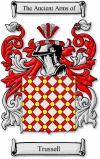
Trussel coat of arms
I have yet another buried in the church ancestor to seek and find when I go to Britain on the dead people tour. My 16th great-grandmother was sold into marriage at age 13, but she became a countess and has an effigy in a church.
Elizabeth de Vere (née Trussel), Countess of Oxford (1496 – before July 1527) was an English noblewoman. Through her daughter Frances, she was the mother-in-law of celebrated poet Henry Howard, Earl of Surrey.
Elizabeth was born in Kibblestone, Staffordshire, England on an unknown date in 1496 to Sir Edward Trussel and Margaret Dun. On 10 April 1509 at the age of about thirteen, she became the second wife of John de Vere, 15th Earl of Oxford. His first wife, Christian Foderingey had died about ten years earlier without having produced children. Together John and Elizabeth had seven children.
Elizabeth Trussell, born in 1496,was the daughter of Edward Trussell (c.1478 – 16 June 1499) of Elmesthorpe, Leicestershire, only son of Sir William Trussell (d. before 24 June 1480) of Elmesthorpe, Knight of the Body for King Edward IV, by Margaret Kene. The Trussells were a “very ancient Warwickshire family”;Elizabeth’s ancestor, Sir Warin Trussell, was of Billesley, Warwickshire.
Elizabeth Trussell’s mother was Margaret Donne, the daughter of Sir John Donne (1450–1503) of Kidwelly, Carmarthenshire, and Elizabeth Hastings (c.1450 – 1508), daughter of Sir Leonard Hastings and Alice Camoys, and sister of William Hastings, 1st Baron Hastings.[6] Sir John Donne’s mother, Joan Scudamore, was the granddaughter of the Welsh rebel, Owain Glyndŵr.
Elizabeth had a brother, John Trussell (d.1499), to whom she was heir.
Through her father’s family, Elizabeth was a descendant of King Henry II by his mistress, Ida de Tony.
Elizabeth Trussell’s grandfather, Sir John Donne, from the Don triptych by Hans Memling.
Elizabeth’s father, Edward Trussell, had been a ward of William Hastings, 1st Baron Hastings, and at Hastings’ death in 1483 was still a minor. In his will, Hastings expressed the wish that Trussell’s wardship be purchased by Hastings’ brother-in-law, Sir John Donne:
Also I will that mine executors give to my sister Dame Elizabeth Don 100 marks . . . Also where I have the ward and marriage of Edward Trussell, I will that it be sold and the money employed to the performing of this my will and for the weal of my soul; and if my brother Sir John Don will buy the said ward, I will that he be preferred therein before any other by £10.
After her father’s death on 16 June 1499 and the death of her brother, John, in the same year, Elizabeth Trussell became a royal ward. Her wardship and marriage were initially purchased from King Henry VII by George Grey, 2nd Earl of Kent (d. 21 December 1503), who intended her as a bride for Sir Henry Grey (d. 24 September 1562), the 2nd Earl’s son by his second marriage to Katherine Herbert, daughter of William Herbert, 1st Earl of Pembroke, by Anne Devereux, the daughter of Sir Walter Devereux. However after the 2nd Earl’s death, Richard Grey, 3rd Earl of Kent, the 2nd Earl’s eldest son and heir by his first marriage to Anne Woodville, abducted Elizabeth Trussell, a crime for which the King levied a heavy fine against him:
Aged at least twenty-five when he succeeded his father in 1503, [the 3rd Earl] wasted his family’s fortunes — possibly, as Dugdale says, he was a gambler. In a striking series of alienations he gave away or sold most of the lands, principally in Bedfordshire, that he had inherited . . . The earl also fell quickly into debt to the king: he failed to pay livery for his father’s lands, and he was fined 2500 marks for abducting Elizabeth Trussell, whose wardship the second earl had left to Richard’s half-brother Henry; he then failed to keep up the instalments laid down for the payment of the fine.
As a result of these events Elizabeth Trussell’s wardship and marriage again came into the hands of the King, who sold it on 29 April 1507 to John de Vere, 13th Earl of Oxford, and his cousin John de Vere, later 15th Earl of Oxford, for an initial payment of 1000 marks and an additional £387 18s to be paid yearly, less £20 a year for Elizabeth’s maintenance. The annual value of Elizabeth’s lands had been estimated in the inquisition post mortem taken after her brother John’s death at £271 12s 8d a year.
Marriage and issue
Between 29 April 1507 and 4 July 1509 Elizabeth became the second wife of John de Vere, 15th Earl of Oxford, whose first wife was Christian Foderingey (born c. 1481, died before 4 November 1498), the daughter and co-heiress of Thomas Foderingey (c. 1446 – 1491) of Brockley, Suffolk, by Elizabeth Doreward (c. 1473 – 1491), daughter of William Doreward of Bocking, Essex, by whom the 15th Earl had no issue.
By her marriage to the 15th Earl of Oxford, Elizabeth had four sons and three daughters:
John de Vere, 16th Earl of Oxford (1516 – 3 August 1562), who married firstly, Dorothy Neville (died c. 6 January 1548),[16] second daughter of Ralph Neville, 4th Earl of Westmorland, by whom he had a daughter, Katherine de Vere, who married Edward Windsor, 3rd Baron Windsor. The Earl married secondly, Margery Golding (d. 2 December 1568),[17] by whom he had a son, Edward de Vere, 17th Earl of Oxford, and a daughter, Mary de Vere.
Aubrey de Vere (d. 1580), who married firstly Margaret Spring, the daughter of John Spring of Lavenham, by whom he had a daughter, Jane, who married Henry Hunt of Gosfield,Essex, and a son, Hugh Vere,[18] who married Eleanor Walsh, the daughter of William Walsh. Hugh Vere and Eleanor Walsh had a son, Robert, who inherited the title as 19th Earl of Oxford. Aubrey de Vere married secondly, Bridget Gibbon, the daughter of Sir Anthony Gibbon of Lynn, Norfolk.[19]
Robert de Vere (died c. 1598), who married firstly, Barbara Berners, by whom he had a son, John Vere,[20] and a daughter, Mary Vere, and secondly, Joan Hubberd, sister of Edward Hubberd (d. 1602), by whom he had no issue.
Geoffrey Vere (d. 1572), who in 1556 married Elizabeth Hardekyn (d. December 1615), daughter of Richard Hardekyn (d. 1558) of Wotton House near Castle Hedingham, by whom he had four sons, John Vere (c. 1558 – 1624) of Kirby Hall near Castle Hedingham, Sir Francis Vere (born c. 1560), Robert Vere (b. 1562), and Sir Horatio Vere (b. 1565), and a daughter, Frances Vere (born 1567), who married, as his second wife, the colonial adventurer and author, Sir Robert Harcourt (1574/5–1631), of Nuneham on 20 March 1598.
Elizabeth de Vere (born c. 1512), who married, as his second wife, Thomas Darcy, 1st Baron Darcy of Chiche (d. 28 June 1558), by whom she had three sons, John Darcy, 2nd Baron Darcy of Chiche (d. 3 March 1581), Aubrey (d. 1558–68) and Robert (died c. 1568), and two daughters, Thomasine and Constance, of whom the latter married Edmund Pyrton (died c. 1609).
Anne de Vere, (born c. 1522, died c. 14 February 1572), who married firstly, Edmund Sheffield, 1st Baron Sheffield of Butterwick, Lincolnshire, second but eldest surviving son of Sir Robert Sheffield by Margaret Zouche, by whom she had a son and three daughters. Edmund Sheffield was slain 31 July 1549 during the suppression of Kett’s rebellion. Anne de Vere married secondly, John Brock, esquire, of Colchester, Essex, son and heir of John Brock of Little Leighs, Essex, by Agnes Wiseman, by whom she had no issue.
Frances de Vere (c. 1517 – 30 June 1577), who married firstly, Henry Howard, Earl of Surrey, by whom she was the mother of Jane Howard, Thomas Howard, 4th Duke of Norfolk, Margaret Howard, Henry Howard, 1st Earl of Northampton, and Katherine Howard. Frances de Vere married secondly, Thomas Steynings, by whom she had no issue.
Elizabeth died before July 1527, and was buried in the Church of St Nicholas, Castle Hedingham, Essex, where her effigy can be seen on the black marble tomb erected for Elizabeth and her husband, the 15th Earl.
Footnotes
Jump up^ She is usually said to have been born at the Trussell manor of Cubleston or Kibblestone near Barlaston and Stone, Staffordshire.
Elizabeth Trussel (1494 – 1527)
is my 16th great grandmother
Frances DeVere (1517 – 1577)
daughter of Elizabeth Trussel
Thomas Howard (1536 – 1572)
son of Frances DeVere
Margaret Howard (1561 – 1591)
daughter of Thomas Howard
Lady Ann Dorset (1552 – 1680)
daughter of Margaret Howard
Robert Lewis (1574 – 1645)
son of Lady Ann Dorset
Robert Lewis (1607 – 1644)
son of Robert Lewis
Ann Lewis (1633 – 1686)
daughter of Robert Lewis
Joshua Morse (1669 – 1753)
son of Ann Lewis
Joseph Morse (1692 – 1759)
son of Joshua Morse
Joseph Morse (1721 – 1776)
son of Joseph Morse
Joseph Morse III (1752 – 1835)
son of Joseph Morse
John Henry Morse (1775 – 1864)
son of Joseph Morse III
Abner Morse (1808 – 1838)
son of John Henry Morse
Daniel Rowland Morse (1838 – 1910)
son of Abner Morse
Jason A Morse (1862 – 1932)
son of Daniel Rowland Morse
Ernest Abner Morse (1890 – 1965)
son of Jason A Morse
Richard Arden Morse (1920 – 2004)
son of Ernest Abner Morse
Pamela Morse
I am the daughter of Richard Arden Morse
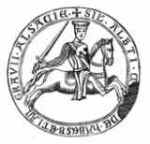


Albert IV Habsburg married an heiress from Zurich. He died on a crusade in a place near Tel Aviv. How wise was it for him to be on a crusade? This guy Theobald from Navarre that was leading the Crusade sounds like one of my ancestors too. How crazy for them to trot off to the Holy Land as if they had some business there. This is what it took to be called wise at the time.
Albrecht IV Count Of HABSBURG was born about 1188 in Of Schloss Limburg, A.d. Rh., Freiburg, Baden. He died on 22 Nov 1240. He married Hedwige Countess Of KYBURG.
Hedwige Countess Of KYBURG was born about 1192 in Of, Kyburg, Zurich, Switzerland. She died on 30 Apr 1260. She married Albrecht IV Count Of HABSBURG.
They had the following children: F i Kunigunde Von HABSBURG was born about 1208 in Of Schloss Limburg, A.d. Rh., Freiburg, Baden. She died in 1228 in Kl. Adelhausen, Freiburg, , Baden.
M ii Hartmann Von HABSBURG was born about 1222 in Of Schloss Limburg, A.d. Rh., Freiburg, Baden. He died in 1252.
M iii Albrecht V Count Of HABSBURG was born about 1220 in Of Schloss Limburg, A.d. Rh., Freiburg, Baden. He died on 1 Jan 1256.
F iv Kunigunde Countess Of HABSBURG was born about 1226 in Of Schloss Limburg, A.d. Rh., Freiburg, Baden.
M v Rudolf I King Of The GERMANS was born on 1 May 1218. He died on 15 Jul 1291.
Albert IV “The Wise” Count of Habsburg (1188 – 1240)
is my 21st great grandfather
Rudolf IV King of Germans, Holy Roman Emperor Habsburg (1218 – 1291)
son of Albert IV “The Wise” Count of Habsburg
Albert I King of Germany Habsburg (1248 – 1308)
son of Rudolf IV King of Germans, Holy Roman Emperor Habsburg
Albrecht Albert II ‘The Wise’ Duke of Austria Habsburg (1298 – 1358)
son of Albert I King of Germany Habsburg
Leopold III “Duke of Austria” Habsburg (1351 – 1386)
son of Albrecht Albert II ‘The Wise’ Duke of Austria Habsburg
Ernst I “Ironside” Archduke of Austria Habsburg (1377 – 1424)
son of Leopold III “Duke of Austria” Habsburg
Katharina Archduchess Austria Von Habsburg (1420 – 1493)
daughter of Ernst I “Ironside” Archduke of Austria Habsburg
Christof I VanBaden (1453 – 1527)
son of Katharina Archduchess Austria Von Habsburg
Beatrix Zahringen (1492 – 1535)
daughter of Christof I VanBaden
Sabine Grafin VonSimmern (1528 – 1578)
daughter of Beatrix Zahringen
Marie L Egmond (1564 – 1584)
daughter of Sabine Grafin VonSimmern
Richard Sears (1590 – 1676)
son of Marie L Egmond
Silas Sears (1638 – 1697)
son of Richard Sears
Silas Sears (1661 – 1732)
son of Silas Sears
Sarah Sears (1697 – 1785)
daughter of Silas Sears
Sarah Hamblin (1721 – 1814)
daughter of Sarah Sears
Mercy Hazen (1747 – 1819)
daughter of Sarah Hamblin
Martha Mead (1784 – 1860)
daughter of Mercy Hazen
Abner Morse (1808 – 1838)
son of Martha Mead
Daniel Rowland Morse (1838 – 1910)
son of Abner Morse
Jason A Morse (1862 – 1932)
son of Daniel Rowland Morse
Ernest Abner Morse (1890 – 1965)
son of Jason A Morse
Richard Arden Morse (1920 – 2004)
son of Ernest Abner Morse
Pamela Morse
I am the daughter of Richard Arden Morse
Albert IV (or Albert the Wise) (ca. 1188 – December 13, 1239) was Count of Habsburg in the Aargau and a progenitor of the royal House of Habsburg.
He was the son of Count Rudolph II of Habsburg and Agnes of Staufen. About 1217 Albert married Hedwig (Heilwig), daughter of Count Ulrich of Kyburg (died 1237) and Anna of Zähringen. Upon the death of his father in 1232 he divided his family’s estates with his brother Rudolph III, whereby he retained the ancestral seat at Habsburg Castle. A follower of Emperor Frederick II of Hohenstaufen, he died on the 1239 crusade of King Theobald I of Navarre near Ashkelon.
Albert was the father of King Rudolph I of Germany, and a mutual ancestor of Archduke Franz Ferdinand of Austria and of his wife Sophie, Duchess of Hohenberg. He is also an ancestor of Queen Elizabeth II of the United Kingdom.
Notes
^ Ferdinand was descended from Rudolph I and Sophie was descended from Rudolph’s sister Elisabeth.
Albert IV, Count of Habsburg
Spouse
Hedwig of Kyburg
Father
Rudolph II, Count of Habsburg
Mother
Agnes of Staufen
Born
c. 1188
Died
13 December 1239
Ashkelon
 mermaidcamp