mermaidcamp
Keeping current in wellness, in and out of the water
You can scroll the shelf using ← and → keys
You can scroll the shelf using ← and → keys

Coat of Arms
My 14th great grandfather was knighted by the first Duke of Suffolk. He is one of several Knights of the Bath in my family. He was involved with Henry VIII’s divorce, which is called his Great Matter:
Knighted by 1st Duke of Suffolk
Sir Edmund Bedingfield or Bedingfeld (1479/1480 – 1553), Knight of the Bath.
In 1523 Bedingfield was knighted by Charles Brandon, 1st Duke of Suffolk for demonstrating bravery in the French Wars. In 1539 he inherited from his brother Robert the great estate of Oxburgh Hall, King’s Lynn, Norfolk.
He married Grace Marney (d. in or after 1553), the daughter of Henry Marney, 1st Baron Marney.
Sir Edmund Bedingfield was entrusted with the care of Katherine of Aragon, at Kimbolton Castle, following the proceedings of 18 June 1529, concerning King Henry VIII’s Great Matter (divorce).
His first son Sir Henry Bedingfield (1510-1583), succeeded to his estate.
Edmund Bedingfield (1483 – 1552)
We can tell from his probate papers that Sir Edmund had worldly wealth.
In the name of God, Amen. The ninth day of August in the reign of our most dreadSovereign Lord Edward the Sixth by the grace of God of England, France and Ireland King, Defender of the Faith, and in earth of the Church of England and also of Ireland the Supreme Head, the fifth, I, Sir Edmund Bedingfield of Oxburgh in the county of Norfolk, knight, whole and perfect of mind and remembrance, thanked be God, fearing nevertheless the unstableness of this present world, do make my testament and last will in form as hereafter ensueth, that is to say:
I commend my soul to Almighty God, trusting by the merits of the passion of Christ, my Saviour and Redeemer, to have remission of my sins;
My body I will to be buried after the most laudable manner and custom of Christ’s church in such place and after such form as shall seem most convenient to mine executors;
And I give to the high altar of Oxburgh Church for my tithes negligently forgotten ten shillings;
Item, I bequeath to the reparation of the said church forty shillings;
And I bequeath to the like reparations of the churches of Redlingfield and Denham, to
each of them 20s;
Item, I bequeath unto my wife, Dame Grace Bedingfield, all such jewels as she hath beenused to wear upon her body, together with all my jewels and plate except a piece of silver parcel gilt engraven in the boton [sic] with ‘God’s blessing’ and the Bedingfields’ arms;
And also I give unto her all my right, interest and title which I have in and to the farm and lease of Skaleshoo in the parts of marshland in the county of Norfolk;
And I give also unto her all such sheep cattle as I shall have going there and depastured at the time of my death, and all my milch kine and other cattle being not above one year ofage the which at the same time of my death shall be remaining at Redlingfield & Denham in the county of Suffolk;
And I give and bequeath unto my son, Sir Henry Bedingfield, knight, all my harness, weapons and habiliments of war which shall remain at Oxburgh in the armoury there at the time of my said death, to th’ intent he may serve the King’s Majesty therewith at all times when he shall be commanded; And where by the last will and testament of Sir Henry Marney, knight, Lord Marney, it
was assigned, willed and bequeathed unto the said Sir Henry Bedingfield by the name of ‘Henry Bedingfield, son and heir apparent’ to me, the said Sir Edmund Bedingfield, one hundred pounds of plate then belonging to the said Lord Marney, to be delivered and disposed in such wise as in the same testament and last will is expressed & declared, considering now that I, the said Sir Edmund, before this time have divers and sundry ways issued and paid divers great and notable sums of money as well for th’ attaining of the inheritance of Sir Thomas Bedingfield, knight, mine eldest brother, lately departed, as also in obtaining of the King’s Majesty the manor of Bedlingfield [=Bedingfield] in the county of Suffolk, which both by the sufferance of Almighty God shall descend and come unto the said Sir Henry and his heirs, and also considering that at divers other times I have been beneficial unto him, as amongst other upon my departure from my late farm at Massingham the said Sir Henry had of my gift as well part of my plate and utensils of household as also divers cattle, as horses and kine, besides other necessaries and
implements of husbandry, I think myself by good reason and all conscience to bedischarged against the said Sir Henry and for the said sum of one hundred pounds;
Also I will that all such stuff of household remaining at Oxburgh which was agreed upon between Dame Alice Burgh, late wife of my said brother, Sir Thomas Bedingfield, knight, and me, the said Sir Edmund, by mediation of Sir John Spelman, Sir Roger
Townshend, knights, and Humphrey Carwell, esquire, shall be delivered by mineexecutors unto my said son, Sir Henry Bedingfield, knight, within one month nextensuing after my decease, that is to say:
First, in the chamber called the great chamber, a featherbed with a bolster; item, acovering of verdures with arms, and a tester of the same with curtains of green sarsenet; also a hanging of arras, two cushions with arms, a cupboard with a carpet thereon, a
coffer and a chair;
Item, in the chamber called the King’s chamber, a featherbed with a bolster, a mattress, a pair of fustians, a covering of red and green sarsenet twilted, a tester of tawny and black satin embroidered with unicorns and scallop shells, two cushions with arms, a cupboard with a green cloth thereon, two chairs, a carpet in the window, two cob-irons in the chimney;
I tem, in the chamber next the said King’s chamber, a featherbed with a bolster, a pair of blankets, a covering of tapestry, the hangings in the chamber of red and yellow canvas, and a form;
Item, in the inward chamber next unto the chamber called the Queen’s chamber, afeatherbed with a bolster, a blanket, a covering of russet cloth, a tester of stained cloth, and a form;
Item, in the said chamber called the Queen’s Chamber, a featherbed with a bolster, a pair of blankets, a covering of red say with arms and a tester of the same, the curtains of white linen cloth, a trundle-bed with a featherbed and a bolster, a blanket, a covering, a cupboard with the cloth thereupon, a cloth of red say in the window, a long chair with a cloth therein, another chair, and three cushions without arms;
Item, in the parlour, a hanging of red say stained, a cupboard, the long table, and a trussing bed in the chamber of the said parlour;
Item, in the chapel, a pair of chalice with the paten, the altar-cloths, the hangings of white sarsenet, and 4 cushions; item, a pall cloth of black velvet with a white cross; And I give unto the said Sir Henry one piece of silver parcel gilt where is engraven
‘God’s blessing’ and the Bedingfields’ arms, to remain to him as an heirloom in such wise as I received the same piece of my said brother, Sir Thomas Bedingfield;
And I bequeath unto the said Sir Henry my two stoned horses which be both ridden;
And over that, I do likewise assign, will and bequeath unto the said Sir Henry all and all manner of utensils belonging to my bakehouse at Oxburgh, together with other necessaries occupied and used for the purpose and intent of baking and brewing which at the time of my death shall remain at and within my said bakehouse there, and also all such utensils belonging to the kitchen there as was agreed upon by the said Dame Alice Burgh and me, the said Sir Edmund, by mediation of the said Sir John Spelman, Sir Roger Townshend, knights, and Humphrey Carvell, esquire;
And I give unto the said Sir Henry all mine eyries of swans called(?) swan-marks, except one couple of old eyries remaining at Redlingfield;
Item, I give and bequeath unto my said son, Sir Henry, all such coals, timber, boards and stone or other thing appertaining to reparations of the house of Oxburgh that shall remain at Oxburgh at the time of my death, all which said bequests and legacies I will shall enure and remain unto the said Sir Henry only upon condition that the same Sir Henry nor his executors shall not at any time hereafter claim of mine executors or th’ executors of them any parcel of the said sum of one hundred pounds before assigned, willed and bequeathed unto him by the testament and last will of the said Henry, Lord Marney;
And I give and bequeath unto my grandchild, Frances Sulyard, daughter of John Sulyard, Esquire, one hundred marks of good and lawful English money, to be paid to her at the day of her marriage or else at th’ age of 21 years, foreseen always that if the said Frances do die before marriage had and before she shall attain unto the age of 21 years, that then the said hundred marks to be divided by even portions between my youngest sons then living;
An d I give and bequeath unto my said wife, Dame Grace, all and all manner myhousehold stuff and other necessary implements together with my utensils of husbandry now remaining as well at Oxburgh as at Redlingfield not before assigned, willed or bequeathed to my said son, Sir Henry Bedingfield, to do therewith her will and pleasure;
And I heartily desire and require my said wife to give unto my servant, John Turner, forty shillings by year during his life, and if it shall happen my said wife to die, the said John then living, then I will mine executors shall from thenceforth yearly content and pay unto the said John Turner forty shillings during his natural life;
Also I will and bequeath to the children of my said son, Sir Henry Bedingfield, nowliving, one hundred pounds of good and lawful English money, to be equally divided amongst them, and to be paid to them at their several ages of 21 years or else at such days
as they and every of them shall happen to be married;
And I give to the children of my son, Francis Bedingfield, fourscore pounds of good and lawful English money, to be equally divided among them and to be paid to them in such sort and at such times as in the article last before-mentioned is declared and specified;
Also, I give and bequeath to the children of my son, Anthony Bedingfield, threescore pounds of good and lawful English money equally to be divided among them, and to be paid to them in like manner and time;
Provided always and my will is that if it shall happen any of the children of my said sons, Sir Henry, Francis and Anthony, to die before marriage had and before their several ages of 21 years, then I will that the portion and portions of such and as many of their said children as shall so happen to die shall be equally divided and given unto my children Anthony, Humphrey and Edmund, if they then do live, or else to as many of them as then shall be living, to their further advancement and relief;
And further I give and bequeath unto my said wife, Dame Grace, all my pullery and swine, together with all my corn and hay remaining as well at Redlingfield as at Oxburgh at the time of my death, and also all mine interest and term of years which I have in the parsonage and tithe corn of Hoxne in the said county of Suffolk;
Also I give unto my sons, Anthony, Humphrey & Edmund, to each of them forty pounds of good and lawful English money (my debts being first paid), provided always that if the said Anthony, Humphrey or Edmund do die within six years next after my decease, then I will that the portion or portions of such of them so dying shall be equally divided between my said younger sons then living;
And I give and bequeath to Margaret, the wife of Thomas Parke, otherwise calledThomas Tailor, my servant, to be delivered unto her within six weeks after my death, twenty ewe sheep going in Westhall flock in Cley;
And I give unto Adam Roberts, my servant, £6 13s 4d besides his quarter’s wages and livery;
An d I give and bequeath unto Edmund Grymston, William Shuldham, John Brooke, William Dey, Robert Nollothe, Robert Cooke, John Hewar, Thomas Spicer, Simon Bedall, Robert Clarke and Robert Barwicke, to every of them besides their quarter’s
wages and liveries forty shillings of good and lawful English money;
And in like manner I give and bequeath unto Edmund Grene, Robert Jerves, Thomas Caton, Thomas Parke, John Turnor, Henry Raydon, Thomas Stocke, Henry Jubye, Edmu{n}d Roberd{es}, Daniel Elstigoode(?), Thomas Laycocke, John Eyslingh{a}m,
William Skoldinge, Edward Hosteler, Robert Turnepenny, Humphrey Shulderham, Henry Spencer, John Cooke and Thomas Hewar, my servants, to every of them besides their quarter’s wages and their liveries, twenty shillings;
Item, I give to every one of mine other servants besides their quarter’s wages and their liveries, ten shillings;
And I give to Margaret Popper, forty shillings;
And I give unto the right worshipful and right so mine assured good brother and friend, Sir Roger Townshend, knight, (blank);
The residue of my goods, chattels and debts not before assigned, willed or bequeathed, I freely give them and every of them to mine executors, whom I ordain, constitute and make my well-beloved wife, Dame Grace Bedingfield, my son, Anthony Bedingfield, and Thomas Caton, my servant, to every of which I give, for their pains to be taken in and about th’ execution and performance of this my testament, ten pounds and their reasonable costs;
And furthermore I, the said Sir Edmund Bedingfield, do revoke, annul and annihilate all other wills and testaments by me made, devised or ordained before the day of the date of this my present last will and testament, these witnesses. Per Edmund Bedingfield.

Order of the Bath
My 17th great grandfather, Sir Thomas Corbet, was a knight. His father was a sheriff in Shropshire, a job that would be passed down through the family. His roots could be traced to Normandy before the Doomesday survey, but I have not yet followed my branches back to that date. Shropshire was near Wales, where they had quite a bit of trouble with the Welch who did some nasty castle destruction.
01. Hugo Le Corbet, Cevalier of Pays de Caux, Normandy, flourished from 1040 and 1076, and was dead before the Domesday survey of 1086.
02. Roger Fitz Corbet, Domesday Baron of Cause, formerly Alretone, Shropshire, England, as it was called in Domesday, was born about 1050 to 1056, and died about 1134 as Pagan Fitz John, sheriff and governor of Shropshire, having succeeded Richard de Belmeis, held Cause in 1134, and would not have dared to take it during Roger’s lifetime; the castle was destroyed by the Welsh attacking Pagan Fitz John. It had been one of the strongholds along the Welsh border between the rivers Dee and Wye. He married the heiress of Talsey.
03. William Corbet, second Baron of Caus, lived in Wattlesborough as the Castle of Cause was destroyed by the Welsh attack on Pagan Fitz John.
04. Simon Corbet, of Pontesburie, close to the Welsh frontier, and probably died before his father, William.
05. Thomas Corbet, called the Pilgrim.
06. Sir Richard Corbet, of Wattlesborough flourished in 1217 and 1222. May be the same person as #7, Richard Corbet below.
07. Sir Richard Corbet of Wattlesborough died before 1255. He married probably by 1196 to Joanna Toret, coheir of Bartholomew Toret of Moreton Toret, Salop, who flourished in 1196-1229 and also had lands in Yorkshire.
08. Sir Richard Corbet, son of Richard, knight of Wattesborough, flourished 1225-1248, and was Lord of Morton at the Inquest of Bradfort Hundred taken in 1255. He married Petronilla, lady of Edge Baldenham and Booley, who was living in 1272, made a grant to Buildwas Abbey in 1223, succeeded his grandfather Bartholomew Toret, and was Jusiciar of Shropshire.
09. Sir Robert Corbet, son of Richard and Petronilla was born abt 1234 in Morton Corbet, Shropshire, England. He married 2nd, Mathilda De Arundel in about 1280. He was of full age in 1255, and apparently served as the Sheriff of Shropshire (1288-1289). He died in 1300 and was buried in the chapal at Alberbury which he had built.
10. Thomas Corbet, son of Robert and Matilda was born abt 1281. He married Amice, possibly Hussey, daughter of Ralph Hussey. Thomas died in 1310 at age 29.
11. Sir Robert Corbet, son of Thomas and Amice was born on Decmeber 25, 1304. He married Elizabeth Le Strange, daughter of Fulk le Strange and Eleanor Giffard before March 1323. He was noted as lord of the Vill of Moreton Corbet in 1316, but had not been granted knighthood by 1326. He purchased Shawbury from Giles de Erdington, which property was conveyed to Thomas Gery, vicar of Morton, and Thomas de Lee of Southbache. He went to some lengths to pass his lands to Roger Corbet’s heirs. Robert died on Decmeber 3, 1375.
12. Sir Thomas Corbet, son of Robert and and Elizabeth died about 1359. He married Elizabeth (Amice).
13. Sir Roger Corbet, son of Thomas and Elizabeth was born abt 1330 in Moreton Corbet. He married Margaret De Erdington, daughter of Giles De Erdington abt 1363. He died abt. 1394.
14. Sir Robert Corbet, son of Roger and Margaret was born on December 8, 1383. He married Margaret abt 1400 whose last name is not known. As his parents were both dead when he was eleven, his wardship and marriage were granted by King Richard II to Thomas Percy, Earl of Worcester, who was obliged at the beginning of the reign of Henry IV to hand over the wardship to John Burley I of Broncroft. Robert proved his age in 1405. He served as Justice of Shropshire from March 14, 1410 to February 1416, and served the county in Parliament in 1413 and 1419. In May 1413 he and Richard Lacon (who held office on the Fitz Alan estates) joined David Holbache and Urian St. Pierre (both of whom represented Shrewsbury) in acting sureties for a Matthew ap Maredudd. In 1413 problems with tax collections were blamed on the dislike of Robert Corbet and Richard Lacon for their nominees as tax collectors. As a result indictments were brought agains Robert and Roger Corbet, Richard Lacon, John Burley II and other esquires of the Earl of Arundel. In 1415 Robert and Roger Corbet served in King Henry V’s first expedition to France. Robert was Sheriff of Shropshire in from November 23, 1419 until he died.
15. Sir Roger Corbet, son of Robert and Margaret was born about 1415. He married Elizabeth Hopton in 1450, the daughter of Thomas Hopton and Eleanor Lucy. Roger died on June 8, 1467.
16. Sir Richard Corbet, son of Roger and Elizabeth was born in 1451 in Moreton Corbet. He married Elizabeth Devereux before 1478. Elizabeth is the daughter of Sir Walter Devereux and Agnes Ferrers. Richard died on Decmeber 6, 1493.
17. Sir Robert Corbet, son of Richard and Elizabeth was born in 1477. Robert married Elizabeth Vernon, daughter of Sir Henry Vernon and Anne Talbot. He died on April 11, 1513 and was buried in Moreton Corbet. His wife Elizabeth survived him by fifty years and was called the “old Lady Corbet of Shawbury.”
18. Dorothy Corbet, daughter of Robert and Elizabeth was born abt. 1511. She married Sir Richard Mainwaring of Ightfield.
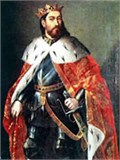
Jaime I Aragon and Mallorc
James I of Aragon was known as the conqueror because he defeated the Moors at Valencia.
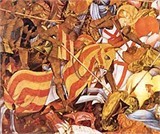
James the Conqueror
Jaime I Pedrez of Aragon and Mallorc (1207 – 1276)
James I the Conqueror (Catalan: Jaume el Conqueridor, Aragonese: Chaime lo Conqueridor, Spanish: Jaime el Conquistador, Occitan: Jacme lo Conquistaire; 2 February 1208 – 27 July 1276) was the King of Aragon, Count of Barcelona, and Lord of Montpellier from 1213 to 1276. His long reign saw the expansion of the Crown of Aragon on all sides: into Valencia to the south, Languedoc to the north, and the Balearic Islands to the east. By a treaty with Louis IX of France, he wrested the county of Barcelona from nominal French suzerainty and integrated it into his crown. His part in the Reconquista was similar in Mediterranean Spain to that of his contemporary Ferdinand III of Castile in Andalusia.
As a legislator and organiser, he occupies a significant place among the Spanish kings. James compiled the Libre del Consulat de Mar,[1] which governed maritime trade and helped establish Aragonese supremacy in the western Mediterranean. He was an important figure in the development of Catalan, sponsoring Catalan literature and writing a quasi-autobiographical chronicle of his reign: the Llibre dels fets.
Contents
1 Early life and reign until majority
2 Acquisition of Urgell
3 Relations with France and Navarre
4 Reconquest
5 Crusade of 1269
6 Patronage of art, learning, and literature
7 Succession
8 Marriages and children
9 Ancestry
10 Notes
11 References
12 External links
Early life and reign until majority
James was born at Montpellier as the only son of Peter II and Mary, heiress of William VIII of Montpellier and Eudokia Komnene. As a child, James was a pawn in the power politics of Provence, where his father was engaged in struggles helping the Cathar heretics of Albi against the Albigensian Crusaders led by Simon IV de Montfort, Earl of Leicester, who were trying to exterminate them. Peter endeavoured to placate the northern crusaders by arranging a marriage between his son James and Simon’s daughter. He entrusted the boy to be educated in Montfort’s care in 1211, but was soon forced to take up arms against him, dying at the Battle of Muret on 12 September 1213. Montfort would willingly have used James as a means of extending his own power had not the Aragonese and Catalans appealed to Pope Innocent III, who insisted that Montfort surrender him. James was handed over, at Carcassonne, in May or June 1214, to the papal legate Peter of Benevento.
James was then sent to Monzón, where he was entrusted to the care of William of Montredon, the head of the Knights Templar in Spain and Provence; the regency meanwhile fell to his great uncle Sancho, Count of Roussillon, and his son, the king’s cousin, Nuño. The kingdom was given over to confusion until, in 1217, the Templars and some of the more loyal nobles brought the young king to Zaragoza.[2]
In 1221, he was married to Eleanor, daughter of Alfonso VIII of Castile and Leonora of England. The next six years of his reign were full of rebellions on the part of the nobles. By the Peace of Alcalá of 31 March 1227, the nobles and the king came to terms.[3]
Acquisition of Urgell
In 1228, James faced the sternest opposition from a vassal yet. Guerau IV de Cabrera had occupied the County of Urgell in opposition to Aurembiax, the heiress of Ermengol VIII, who had died without sons in 1208. While Aurembiax’s mother, Elvira, had made herself a protegée of James’s father, on her death (1220), Guerao had occupied the county and displaced Aurembiax, claiming that a woman could not inherit.
James intervened on behalf of Aurembiax, whom he owed protection. He bought Guerau off and allowed Aurembiax to reclaim her territory, which she did at Lleida, probably also becoming one of James’ earliest mistresses.[4] She surrendered Lleida to James and agreed to hold Urgell in fief from him. On her death in 1231, James exchanged the Balearic Islands for Urgell with her widower, Peter of Portugal.
Relations with France and Navarre
From 1230 to 1232, James negotiated with Sancho VII of Navarre, who desired his help against his nephew and closest living male relative, Theobald IV of Champagne. James and Sancho negotiated a treaty whereby James would inherit Navarre on the old Sancho’s death, but when this did occur, the Navarrese nobless instead elevated Theobald to the throne (1234), and James disputed it. Pope Gregory IX was required to intervene.[5] In the end, James accepted Theobald’s succession.
James endeavoured to form a state straddling the Pyrenees, to counterbalance the power of France north of the Loire. As with the much earlier Visigothic attempt, this policy was victim to physical, cultural, and political obstacles. As in the case of Navarre, he was too wise to launch into perilous adventures. By the Treaty of Corbeil, signed in May 1258, he frankly withdrew from conflict with Louis IX of France and was content with the recognition of his position, and the surrender of antiquated and illusory French claims to the overlordship of Catalonia.
Reconquest
After his false start at uniting Aragon with the Kingdom of Navarre through a scheme of mutual adoption, James turned to the south and the Mediterranean Sea, where he conquered Majorca on 10 September in 1229 and the rest of the Balearic Islands; Minorca 1232; Ibiza 1235) and where Valencia capitulated 28 September 1238. Chroniclers say he used gunpowder in the siege of Museros castle.
During his remaining two decades after Corbeil, James warred with the Moors in Murcia, on behalf of his son-in-law Alfonso X of Castile. On 26 March 1244, the two monarchs signed the Treaty of Almizra to determine the zones of their expansion into Andalusia so as to prevent squabbling between them. Specifically, it defined the borders of the newly-created Kingdom of Valencia. James signed it on that date, but Alfonso did not affirm it until much later. According to the treaty, all lands south of a line from Biar to Villajoyosa through Busot were reserved for Castile.
[edit] Crusade of 1269
The “khan of Tartary” (actually the Ilkhan) Abaqa corresponded with James in early 1267, inviting him to join forces with the Mongols and go on Crusade.[6] James sent an ambassador to Abaqa in the person of Jayme Alaric de Perpignan, who returned with a Mongol embassy in 1269.[7] Pope Clement IV tried to dissuade James from Crusading, regarding his moral character as sub-par, and Alfonso X did the same. Nonetheless, James, who was then campaigning in Murcia, made peace with Mohammed I ibn Nasr, the Sultan of Granada, and set about collecting funds for a Crusade. After organising the government for his absence and assembling a fleet at Barcelona in September 1269, he was ready to sail east. The troubadour Olivier lo Templier composed a song praising the voyage and hoping for its success. A storm, however, drove him off course and he landed at Aigues-Mortes. According to the continuator of William of Tyre, he returned via Montpellier por l’amor de sa dame Berenguiere (“for the love his lady Berengaria”) and abandoned any further effort at a Crusade.
James’ bastard sons Pedro Fernández and Fernán Sánchez, who had been given command of part of the fleet, did continue on their way to Acre, where they arrived in December. They found that Baibars, the Mameluke sultan of Egypt, had broken his truce with the Kingdom of Jerusalem and was making a demonstration of his military power in front of Acre. During the demonstration, Egyptian troops hidden in the bushes ambushed a returning Frankish force which had been in Galilee. James’ sons, initially eager for a fight, changed their minds after this spectacle and returned home via Sicily, where Fernán Sánchez was knighted by Charles of Anjou.
Statue of James I at the Sabatini Gardens in Madrid (J. León, 1753).
Patronage of art, learning, and literature
James built and consecrated the Cathedral of Lleida, which was constructed in a style transitional between Romanesque and Gothic with little influence from Moorish styles.[8]
James was a patron of the University of Montpellier, which owed much of its development to his impetus.[9] He also founded a studium at Valencia in 1245 and received privileges for it from Pope Innocent IV, but it did not develop as splendidly.[10] In 1263, James presided over a debate in Barcelona between the Jewish rabbi Nahmanides and Pablo Christiani, a prominent converso.
James was the first great sponsor and patron of vernacular Catalan literature. Indeed, he may himself be called “the first of the Catalan prose writers.”[11] James wrote or dictated at various stages a chronicle of his own life, Llibre dels fets in Catalan, which is the first self-chronicle of a Christian king. As well as a fine example of autobiography the “Book of Deeds” expresses concepts of the power and purpose of monarchy; examples of loyalty and treachery in the feudal order; and medieval military tactics. More controversially, some historians have looked at these writings as a source of Catalan identity, separate from that of Occitania and Rome.
James also wrote the Libre de la Saviesa or “Book of Wisdom”. The book contains proverbs from various authors going back as far as King Solomon and as close to his own time, such as Albert the Great. It even contains maxims from the medieval Arab philosophers and from the Apophthegmata Philosophorum of Honein ben Ishak, which was probably translated at Barcelona during his reign. A Hebrew translator by the name of Jehuda was employed at James’s court during this period.[12]
Though James was himself a prose writer and sponsored mostly prose works, he had an appreciation of verse.[13] In consequence of the Albigensian Crusade, many troubadours were forced to flee southern France and many found refuge in Aragon. Notwithstanding his early patronage of poetry, by the influence of his confessor Ramon de Penyafort, James brought the Inquisition into his realm in 1233 to prevent any vernacular translation of the Bible.[14]
[edit] Succession
The favour James showed his illegitimate offspring led to protest from the nobles, and to conflicts between his sons legitimate and illegitimate. When one of the latter, Fernán Sánchez, who had behaved with gross ingratitude and treason to his father, was slain by the legitimate son Peter, the old king recorded his grim satisfaction.
In his Will James divided his states between his sons by Yolanda of Hungary: the aforementioned Peter received the Hispanic possessions on the mainland and James, the Kingdom of Majorca (including the Balearic Islands and the counties of Roussillon and Cerdanya) and the Lordship of Montpellier. The division inevitably produced fratricidal conflicts. Always the home de fembres (“lady’s man”), he eloped with the wife of one of his vassals in his final years and was excommunicated for his efforts by Pope Gregory X. In 1276, the king fell very ill at Alzira and resigned his crown, intending to retire to the monastery of Poblet, but he died at Valencia on 27 July.
Mummified head of James, exhumed in 1856
Marriages and childrenAragonese and Valencian Royalty
House of Barcelona
Alfonso IIChildren include Peter (future Peter II of Aragon) Alfonso II, Count of ProvencePeter IIChildren include James (future James I of Aragon, Valencia and Majorca)James I Peter (future Peter III of Aragon and I of Valencia and Sicily) James II of Majorca Violant, Queen of Castile Constance, Infanta of Castile Isabella, Queen of FrancePeter III (I of Valencia and Sicily)Children include Alfonso (future Alfonso III of Aragon and I of Valencia) James (future James I of Sicily and II of Aragon and Valencia) Frederick II of Sicily Elizabeth, Queen of Portugal Yolanda, Duchess of CalabriaAlfonso III (I of Valencia)James II (I of Sicily)Children include Alfonso (future Alfonso IV of Aragon and II of Valencia)Alfonso IV (II of Valencia)Children include Peter (future Peter IV of Aragon and II of Valencia)Peter IV (II of Valencia)Children include Constance, Queen of Sicily John (future John I of Aragon and Valencia) Martin (future Martin II of Sicily and I of Aragon and Valencia) Eleanor, Queen of Castile Isabella, Countess of UrgelGrandchildren include Ferdinand (future Ferdinand I of Aragon, Valencia and Sicily) Isabella, Countess of Urgel and CoimbraJohn I Yolande, Queen of FranceMartin I (II of Sicily)
James first married, in 1221, Eleanor, daughter of Alfonso VIII of Castile and Leonora of England. Though he later had the marriage annulled, his one son by her was declared legitimate:
Alfonso (1229–1260), married Constance of Montcada, Countess of Bigorre
In 1235, James remarried to Yolanda, daughter of Andrew II of Hungary by his second wife Yolande de Courtenay. She bore him numerous children:
Yolanda, also known as Violant, (1236–1301), married Alfonso X of Castile
Constance (1239–1269), married Juan Manuel, Lord of Villena, son of Ferdinand III
Peter (1240–1285), successor in Aragon, Catalonia, and Valencia
James (1243–1311), successor in Balearics and Languedoc
Ferdinand (1245–1250)
Sancha (1246–1251)
Isabella (1247–1271), married Philip III of France
Mary (1248–1267), nun
Sancho, Archbishop of Toledo (1250–1279)
Eleanor (born 1251, died young)
James married thirdly Teresa Gil de Vidaure, but only by a private document, and left her when she developed leprosy.
James (c.1255–1285), lord of Xèrica
Peter (1259–1318), lord of Ayerbe
The children in the third marriage were recognised in his last Will as being in the line of Successon to the Throne, should the senior lines fail.
James also had several lovers, both during and after his marriages, and a few bore him illegitimate sons.
By Blanca d’Antillón:
Ferran Sanchis (or Fernando Sánchez; 1240–1275), baron of Castro
By Berenguela Fernández:
Pedro Fernández, baron of Híjar
By Elvira Sarroca:

Humphrey and Isabella
My 14th great grandfather met his future bride in a very romantic return of her glove on his lance. They married and gave the queen their first born daughter. I find the gifting of the daughter to be a bit bizarre, but that is what they did.
In the chancel of the old parish church of Elstow, near Bedford–so famous for its associations with the childhood of John Bunyan*— a monument recording Sir Humphry Radcliffe of that place, and his wife, Dame Isabella Radcliffe. As the name of the latter is not even mentioned in the extinct peerage of fir Bernard Burke, perhaps a short account of a little episode in the history of this worthy pair may not be without interest to my readers. It is hardly needful to say more about the Radcliffes or Ratcliffes–for the word was spelt both ways indifferently when writing was rare and printing was almost unknown–than that they are of undoubted Saxon origin, and that they took their name from the village of Radcliffe, near Bury, in Lancashire. We read that one, Richard de Radcliffe, of Radcliffe Tower, seneschal and minister of the royal forests in the neighborhood of Blackburn, accompanied Edward I. to Scotland, and received from that sovereign, towards the end of his reign, ‘a grant of free warren and free phase in all his demesne lands of Radcliffe.’From him were descended a variety of noble houses–as the Radclyffes, Lords Fitzwalter, and Earls of Sussex; those of Foxdenton, and of Hitchin; and the unfortunate Earls of Derwentwater, who forfeited their Northumbrian castle of Dilston, as well as their lives, in the cause of the ‘young Chevalier,’ and the luckless house of the Stuarts.
One of his descendants, Sir John Radcliffe, was summoned to Parliament by Henry VII., in right of his mother, as Baron Fitzwalter; he was also steward of the Royal Household, and acted jointly with Jasper Tudor, Duke of Bedford, as High Steward of England at the coronation of Henry’s queen, Elizabeth Plantagenet. But afterwards, being involved in the wild conspiracy of Perkin Warbeck, he was attainted, and lost his head on the scaffold at Calais.
His son, however, found so much favor with Henry VIII that he was restored in blood, and, having held the command of the van of the army sent to France under the Earl of Surrey, he was created Viscount Fitzwalter and Earl of Susses. He was a zealous supporter of the king in his quarrel with Wolsey and the Pope, and he found his reward in a life-patent of the office of Lord High Chamberlain, together with a grant of the noble abbey of Cleve, in Somerset, the ruins of which to the present day form one of the most beautiful features of the country near Minehead, and Watchet, and Dunster. He was thrice married, and on each occasion his wife was a noble dame; his first choice being a daughter of Henry Stafford, Duke of Buckingham, his second a Stanley, and his third an Arundell of Lanherne. The earl desired that Humphrey, the youngest son of his first marriage, should marry a wealthy heiress of a county family; but the son took a different view of the matter from that taken by his parents for him. Very naturally and very pardonably he said that he preferred to choose for himself.
King Henry had announced his intention of being present at a tournament in the tilt-yard at Hampton, and great preparations had been made for the occasion. As the king rode along the way from London, the windows and the balconies about Kensington were all hung with colored cloths and silks. Among the crowd of spectators in the balconies was a plain citizen of London, Edmund Harvey, along with his wife and their daughter Isabel. The ladies in the neighboring windows thought the latter nice looking, and even pretty; but no one ‘knew who she could be,’ as the old folks were but commonplace in appearance, and clearly had not been brought up in the regions of courts and cities. The father, as may be imagined, pointed out the nobles as they passed by with their trains and retinues; but Isabel had no ears for her father, and her eyes scanned each new arrival for the face of a youth whom she had met on a chance occasion, and who had professed an attachment to her, in spite of the fact that she was not the daughter of a courtier or a noble.
At length there rode along a body of knights, with their lances borne aloft and their colors flying in the wind; they were headed by the Earl of Sussex, who was attended by his son Humphrey, a fair and well-favored youth, who looked little more than twenty years of age. Isabel, however, had no difficulty in recognizing him and the black steed on which he sat, and which champed the bit and foamed beneath his rein. The truth is that they had met before at another tourney, when Sir Humphrey had incurred the scorn and displeasure of some of the king’s courtiers because of a slight civility and courtesy which he had shown to herself, her father, and her mother, whom none of the gallants knew by sight or by name, their names not having been entered by the Heralds on the rolls of the ‘College of Arms.’ Eagerly did Isabel lean over the balcony in the hope of catching his eye, and grateful did she feel for a sudden halt, which was occasioned by the pressure of the crowd.
The young knight, however, was too deeply engaged in thought to take notice of the gay and smiling occupants of the balconies above his head, for he little imagined that Isabel Harvey would be among the company. But as they moved on a few steps he was roused from his reverie by a start of his horse, caused by the fall of a glove from one of the balconies. Gallantry prompted him to pick up the glove and to return it to its fair owner. Upon looking up, his eyes met those of the fair Isabel; and as he returned to her the glove on the point of his lance, and she bowed her thanks, he felt that she was not insensible to his regard for he. He quietly watched his opportunity to fall back from the gay procession as it moved along, and guided his horse down a narrow side lane, where he remained till the pageant had passed by. His object in so doing was to prevent his father, the earl, from noticing Isabel; for he well knew the haughtiness of his temper, and his zeal for the dignity of his order, and his inflexible ambition to ally his son to the heiress of some noble house or other.
Having emerged from his retreat, the young knight came again beneath the window, and, after bowing in a courtly manner, addressed the father of Isabel, who was just about to leave the balcony. On their descending into the street, the young knight dismounted, and accompanied them back to the city, leading his horse, and entertaining them, as they passed along the Strand and through Fleet Street, by his lively and elegant conversation. On reaching their home near Cheapside, Edmund Harvey pressed the knight to join them at their meal, and he gladly closed with the invitation. So well indeed did be succeed in gaining the confidence of his newly-found friend, that ere they parted the knight confessed to him his love for the fair Isabel, and received her father’s permission to ask her band, if she had no objection.
The rest of this story may be easily imagined. On the morrow the knight accompanied them back into the country, and, representing himself to be only one of the gentlemen of the earl’s retinue, he espoused the fair Isabel a few days afterwards in the priory church of Elstow. For many months-indeed, it may have been years- -he did not disclose the full secret of his rank, nor did the fair Isabel know that she had a claim to be styled ‘My Lady; The secret, however, oozed out at length ; and in due course of time their union was blessed by the birth of sons and daughters, the eldest of whom became one of the special favorites of Queen Elizabeth.
Immediately on the accession of `her highness’ she made Humphrey Radcliffe a knight, and gave him a post at court near her person, and took his eldest daughter, Mary, as her ‘Mayden of Honor and Gentelwoman of the Privie Chamber’–a post which she filled `honorably, virtuously, and faithfully for forty years,’ as her monument tells us.
It was in the year 1566, on the 13th day of August, that Sir Humphrey Radcliffe died at Elstow, and he was buried a week later in the chancel, as stated above, by the side of his affectionate and faithful wife Isabel, and soon afterwards one of his sons erected to their memory the memorial already mentioned.
As for Mary Radcliffe, she suffered less than perhaps any other person about the Court from the whims and caprices of her royal mistress. Being possessed of great penetration and judgment, together with a high sense of honor and unshaken fidelity, she could not fail to command the esteem even of ‘the Maiden Queen.’ Although remarkable for her personal beauty, she was inaccessible to the flatteries of the fops and gallants by whom Elizabeth was surrounded, and many a smart repartee and rebuff was received by the courtiers who tried to turn the head and the heart of Mary Radcliffe. On one occasion, indeed, writes Sir Nicholas Le Strange in an anecdote communicated by Lady Hobart, ‘Mistress Radcliffe, an old courtier in Queen Elizabeth’s time, told a lord whose conversation and discourse she did not like, that his wit was like a custard, having nothing good in it but the soppe, and, when that was eaten, you might throw away the rest.`*
Throughout the long period of her services at Court, Mistress Radcliffe bore a character unblemished by a spot of evil fame or reproach. She looked upon herself, she would say, as a New Year’s gift, for it was on that day in 1561-2 that she was first presented by her father to the Queen’s Majesty, and accepted by her ; and never afterwards, to the end of her days, did she fail to give the Queen–who loved all sorts of presents, and did not think it ‘more blessed to give than to receive’–some kind of annual remembrance of that eventful morning.
As she was still living to make her yearly present on the new year of 1600, Mistress Isabel Radcliffe might very justly be called an old courtier of the jealous Queen, who was not very firm in her friendships, or very scrupulous about discharging those who failed to please her. The actual date of her death is not recorded by ‘the unlettered muse’ of Elstow.
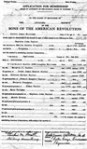

My 4th great-grandfather was born in Virginia and died in the Revolutionary War in South Carolina.
His father, John TAYLOR, b. ca. 1723, migrated from Virginia in 1754 to the east bank of the Congaree River, 10 miles south of Columbia, South Carolina.
Captain John TAYLOR (b. 1746 m. Sarah HIRONS d. 1 Feb 1781) was wounded twice, at Fort Moultrie and Sullivan’s Island, and captured with Colonel Thomas TAYLOR (b. 10 Sept 1743 & John’s brother) at Fishing Creek, but escaped while being carried to Camden, South Carolina. He was one of three brothers who fought in the American Revolution for the SC Militia.The 3rd brother, James TAYLOR, married both Sarah’s sister, Mary HIRONS, & Sarah DANIELL. (Taylor info: http://www.geocities.com/bcvsmith/ 19 April 2002)
Captain John Taylor died of smallpox during the war.
John Taylor (1747 – 1781)
is my 4th great grandfather
John Nimrod Taylor (1770 – 1816)
son of John Taylor
John Samuel Taylor (1798 – 1873)
son of John Nimrod Taylor
William Ellison Taylor (1839 – 1918)
son of John Samuel Taylor
George Harvey Taylor (1884 – 1941)
son of William Ellison Taylor
Ruby Lee Taylor (1922 – 2008)
daughter of George Harvey Taylor
Pamela Morse
I am the daughter of Ruby Lee Taylor
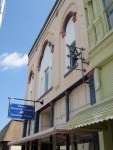

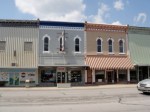
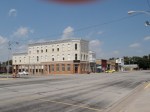
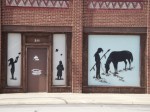


My great-grandfather, Edward Scott, was the telegraph operator in Oswego, KS. His first wife, my great-grandmother, divorced him for having another family. He was born in Ohio, the son of a Civil War veteran. His mother, Maria Pendergrass moved to Kansas with Edward after her husband died. He and Sarah Helena married and had four daughters together, the last daughter born in 1905. By then Edward already had a son who had been born in 1902, with his other woman, Edna. Edna and Edward married in 1909 and lived in Oswego until he died. This must have been a major scandal at that time. Labette, where is daughters lived is very close to Oswego. I can’t imagine how he could keep this situation secret for very long. Somehow my great-grandmother was able to get a teaching job and make ends meet. She managed to get my grandmother through undergraduate school with a teaching degree before she married my grandfather. That seems like a big deal at the turn of the century. I don’t know if he saw his daughters after the divorce or not. He is one of the black sheep never mentioned.
Edward Ewing Scott (1874 – 1941)


In 1635 My 10th great-grandfather participated in a political act in the Virginia Colony that landed him in trouble:
A Principal in the Overthrow of a Capricious Ruler
York History Series #A-5, April 1997by (the late) Dick Ivy, Honorary NMDA Member
Hearing of secret and unlawful meetings since January by some of his councilors concerning decisions of his rulership of Virginia, Governor Sir John Harvey apprehended and committed their “chief actors” William English, Nicolas Martiau and Francis Pott. On Apr. 28, 1635, the Governor’s Councilors Samuel Matthews, John Utie, Thomas Harwood, William Perry, William Farrer, William Peirce, George Menefie and Dr. John Pott came to the governor-called council meeting at his house. John Utie of Yorke’s Chiskiak Parish hit the governor hard on his shoulder and declared he was under arrest for treason. The others held him secure and told him to go back to England to answer the complaints against him. They set Martiau and others free and called for their force of 50 musketmen waiting at a short distance. On May 7, 1635, the councilors met at James Town, opened the floor to complaints, and elected Capt. John West as governor. The complaint included the giveaway to please the King of the Isle of Kent to Maryland by a willing Harvey for persecuted Catholics from England, ignoring the ownership claim by William Claiborne who was trading with the Indians here. A war ensued between forces from Maryland and Claiborne when the latter refused to become a Catholic, it is said. Martiau was granted 1,600 acres of land that year. The King reinstated Harvey and the rebels were ordered to appear at the King’s Star Court, but were never tried for an unknown reason. Finally, Harvey was recalled over another incident of poor judgment.
Capt Nicolas Martiau (1591, France-1657) & Jane Page Berkeley
Capt. Martiau [also recorded as Marlier, Martue, Martin, Martian] was a French Huguenot (in church of Threadneedle St.) from the Island of Ré. He was in the service of Henry Hastings, Earl of Huntingdon and member of the Virginia Company, and educated as a military engineer. He was naturalized as an Englishman by royal decree. He came to Jamestown aboard the “Francis Bona Venture” in 1620, legally representing the Earl to plan fortifications. He led a foray against the Indians at Falling Creek after the 1622 massacre. He joined the liberal party committed to the Virginia outlook, pleading for continuance of the House of Burgesses in 1623/4. He, with Captain George Utie and Captain Samuel Mathews, was responsible for sending the tyrant governor Harvey back to England.
There is some question about his wives. His first wife was Elizabeth, last name and date of death unknown. She was most likely the mother of Elizabeth (born 1625). Jane was the widow of Lt. Edward Berkeley, who died in 1625; they had a child named Jane. . After her death, Nicholas married Isabella, widow of Robert Felgete & George Beech, in 1646.
Martiau’s defense of the French king in an argument with Capt. Thomas Mayhew forced him to take a loyalty oath in Jamestown in 1627. He was granted 600 acres as Chiskiack, which became Yorktown (in 1644, the Cheskiack Indians were moved to the Pianketank, where they would be forced out by Augustine Warner; the tribe seems to have vanished at that point.) He served as Burgess 1632-33, and Justice for York Co. 1633-57. “He, with George Utie and Captain Samuel Matthews, sent the tyrant governor, Harvey, close prisoner back to England.” Harvey returned, bringing George Reade–Martiau’s future son-in-law–with him, but he was forced back to England again, leaving Reade as Acting Governor. Martiau moved to the present Yorktown site in 1630 on 600 acres, plus 700 for headrights, where he grew tobacco. On this land Cornwallis surrendered his troops to Martiau’s great-great-great-grandson, General George Washington in 1781. Martiau later was granted 2000 acres on the south side of the Potomac River, which he gave to Col. George Reade in 1657. (See John Baer Stoudt, Nicolas Martiau, The Adventurous Huguenot, The Military Engineers, and the Earliest American Ancestor of George Washington.)
Nicholas French Huguenot Martiau (1591 – 1657)
Martin, Marten, Martens, Martyn (French, Spanish, English) Descendant of Martinus [belonging to the god Mars, the god of war]; one who came from Martin, the name of places in Spain and France. The popularity of the name in Western Europe is due to St. Martin of Tours, the fourth century French saint.
Source: New Dictionary of American Family Names by Elsdon C. Smith, Gramercy Publishing Company, New York, 1988.
Nicolas Martiau – The Immigrant
This portion of the Family Roots and Branches is dedicated to the study of Nicolas Martiau (pronounced Mar-ti-o) and his descendants.
“The Adventurous Huguenot” and the father of Yorktown, Virginia, was born in France 1591, came to Virginia in 1620 and died in 1657 at Yorktown, Virginia. He was a Captain in the Jamestown militia during the Indian uprisings, a member of the Colonial Virginia House of Burgesses, and Justice of the County of York. In 1635 he was a leader in the thrusting out of Governor Harvey which was the first opposition to British Colonial Policy. He is the original patentee for Yorktown. He is buried at the Grace Church in Yorktown, Virginia.
Descendants of Nicolas are through his daughters, Mary (married Lt. Colonel John Scarsbrook), Sarah (married Captain William Fuller, Puritian governor of Maryland), and Elizabeth (married Lt. Col. George Reade). Nicolas is the earliest American ancestor of our first President George Washington.
Among the descendants of Nicolas Martiau we find – in addition to Washington – one Vice President of the United States, two Justices of the Supreme Court, three ministers to foreign countries, three cabinet officers, six governors of states, eight senators, eleven generals involved in the War Between the States, fifteen congressman, forty commissioned officers who served in the American Revolution,
2 of 3
2/6/13 12:24 PM
and a veritable host of men and women prominent in national life. Such names as General Thomas Nelson, a signer of the Declaration of Independance; Meriwether Lewis, explorer of Lewis and Clark fame; Duff Green; Thomas Nelson Page and Amelia Rives are of special interest.
In the early 20th century the registrar of the Colonial Dames of America in the state of Virginia contains the names of more than four hundred women who could trace their lineage to Nicolas Martiau.
Nicolas Martiau is my 15th great grandfather and one of two of my earliest American ancestors. Here is my line of descendent from that adventurous Hugenout – Nicolas Martiau:
Larry Van Horn, NMDA Member #174 (Scar(s)brook-Condon-Wills)
1. Nicolas Martiau & Jane ? (Berkley)
2. John Scar(s)brook & Mary Martiau
3. David Condon & Elizabeth Scar(s)brook
4. Elias Wills & Mary Condon
5. John Wills & Susanna Robertson
6. James Cole & Mary Wills
7. James Cole & Fanny Chisman Wills
8. Ware Oglesby & Elizabeth Dancy Cole
9. Aaron Redus & Lucy Ann Oglesby
10. James Ware Redus Jr & Leah Magee
11. Alexander Hamilton David Hurt & Mary Susan Redus 12. James Ira Hurt & Johanna Himena Schneider
13. Witt Lange Van Horn and Jeanette Iris Hurt
Nicolas Martiau Descendants – The First Six Generations
The link below is to an Adobe Acrobat PDF Descendants Chart that shows six generations of Nicolas Martiau Descendants. If you are a descendant of any of the below listed in this chart you are eligible for membership in the Nicolas Martiau Descendant Association (see below). The lines represented on this chart are lines that are accepted for membership in the NMDA. As more information is entered into our genealogy database, new charts will be placed on this website and the NMDA website. Be sure to check for these pages for future updates.
Nicolas Martiau Six Generation Descendants Chart (Adobe Acrobat format) The NMDA Lineage SocietyNicolas Martiau Descendant Association
Genealogist who can prove descend from Nicolas Martiau are eligible for membership in the Nicolas Martiau Descendant Association (NMDA). The NMDA was started in 1991. Two first cousins from California went to Yorktown to meet Dick Ivy (recently deceased), the Towne Crier and Historian, for a tour of the Martiau Family sites. One cousin fell and injured a knee, was propped up by the wall of the Grace Church cemetery. A lone man was in the mist, reading inscriptions. He paused at theColonel George Reade/Elizabeth Martiau stone, not aware of the Martiau Family buried there without a marker. This one act prompted the chain of events culminating in the first Tribute to Martiau held in 1993 and the 1997 grave marker dedication. A second Tribute was held in the Spring of 2000 and the third was held Spring 2004 in Yorktown. The cousins were Lee Yandell and Marty Dale. (Reade- Reade-Wattington).
The NMDA had over 182 members nationwide. I have the honor of serving as the National Registrar for this proud and prestigous lineage based organization. You can get more information on the NMDA by contacting me, Larry Van Horn, via email (link at bottom of this webpage) or visiting the official NMDA website at:
Nicolas Martiau Descendant Association
At this website you can download lineage and application formsin pdf format to aid you in the application process. On the website you will find selected members lineages, news, events, history and much more.
British flag
Hannah Mead was widowed in England before she sailed to America. She arrived in Boston in 1637 with her son Isaac:
John BEECHER was born on 28 Mar 1594 in Kent, England. He died in 1637/38 in New Haven, Connecticut. He immigrated on 26 Jun 1637 to Boston Harbor. Arrived April 26, 1637 from Steldhurst County, Kent, England. In Governor Eaton’s Company. The first Beecher to reach New England was John Beecher, who came from Kent, England in 1637. He was in the company led by Rev. John Davenport and Theophilus Eaton who had been the Ambassador to Denmark and Deputy-Governor of India. The company crossed the ocean on the “Hector” and another sister-ship. These two ships, after a two month voyage, dropped anchor in Boston harbor. The company consisted of 50 men and 200 women and children and was the most prosperous that ever arrived in New England. Unfortunately, they landed in the midst of a quarrel about Anne Hutchinson who had set herself up as a preacher, irregardless of her sex. Not wishing to become involved, they sent out a scouting party to find another location to settle. They decided upon Quinnipiack on the Long Island Sound, the site of present day New Haven, Conn. The party built a hut and left seven of their men to hold the post for the winter and to prepare for the arrival of the rest of the company in the spring. John Beecher was one of the seven and he failed to survive the winter. Hannah arrived in the spring with her son Isaac and found her husband in an unmarked grave. Since she was the only midwife among them, and thus relied upon by the others in the company, she was given her husband’s allotment of land for herself and her son Isaac. One hundred and twelve years later, in 1750, when David Beecher was a boy of twelve, workmen who were digging a cellar for a house at the corner of George and Meadow Streets in New Haven came upon human bones, believed to be those of John Beecher.
(43) Hannah Beecher sailed from England with her son Isaac and was a widow at the time she left England. Husband John Beecher, one of the seven whom Eaton sent to New Haven in advance of the colony ,died before the colony arrived. He did not survive the first winter. It is established that this ship load of people was rather wealthy landowners from Steldhurst County, Kent, England. Since the company was rather young, it was felt that Hannah’s services of midwife would be greatly needed. She therefore was offered her husband’s land right in the new world if she would agree to go and fulfill this need, which she did. ——————————————————————————The will of Hannah Beecher was proved April 5, 1659 and is recorded in first part, vol i., p 80 of New Haven Probate Records as follows: “I Hannah Beecher of New Haven, expectying my great change do make this my last will and testament, I bequeath my soul unto the hands of my Lord Jesus Christ by whose meritt I hope to be saved and my body to be burried at the discretion of my Son William Potter my Executor. And for my worldly goods I give unto John Potter my Grand child twenty shillings and to Hannah Blackly, my Grand child twenty shillings to be paid to them within three months after my decease. And for the rest of my estate I give one third part to my son Isaac Beecher and two thirds to my eldest son William Potter, making him my Executor, desiring him to be as a father to his younger brother and his children. And in dividing my goods my will is that my son William should have my feather bed with that belongeth to it, unto his part and that the rest be divided at the discretion of my Overseers with the assistance of Sister Wakeman and sister Rutherford and I desire my loving friends Mr Mathew Gilbert and Job Wakeman to be overseers of this my last will whereunto I have set my hand this 13th day of June, Anno 1657. Witnesses, the mark of Mathew Gilbert, Hannah Becher John Wakeman, Sarah Rutherford. This source also indicates that the inventory of Hannah’s estate following her death in 1659 amounted to 55 pounds, 5 shillings, and 6d. ——————————Hannah (Potter) Beecher appears in early New Haven as a widow with sons: John Potter, William Potter, and Isaac Beecher. She has been considered to be the mother of Isaac Beecher, for she calls him her son in her will and gave him one third of her property, but recent investigations (source unproven ) suggest that Isaac was a step son, the son of her second husband by a former wife. SEE NOTE ON ISAAC BEECHER ENTRY. ————————————————– Note: There was in New Haven, says G.F. Tuttle, as early as 1641, a widow Hannah Potter, known as widow Potter the midwife. In 1643 she had two persons in the family, thirty pounds estate and twenty and one quarter acres of land. She is called “sister Potter the midwife,” in seating the meeting house in 1646. She is supposed to have been akin to the other Potters, but there is no record to show it. She has often been confounded with the widow Hannah Beecher, but the records clearly show that they were two different persons. ————————————————— Per “Families of Ancient New Haven”
Hannah Mead (1584 – 1659)
is my 10th great grandmother
William Potter (1608 – 1684)
son of Hannah Mead
Hannah Potter (1636 – 1700)
daughter of William Potter
Benjamin Mead (1666 – 1746)
son of Hannah Potter
Mary Mead (1724 – 1787)
daughter of Benjamin Mead
Abner Mead (1749 – 1810)
son of Mary Mead
Martha Mead (1784 – 1860)
daughter of Abner Mead
Abner Morse (1808 – 1838)
son of Martha Mead
Daniel Rowland Morse (1838 – 1910)
son of Abner Morse
Jason A Morse (1862 – 1932)
son of Daniel Rowland Morse
Ernest Abner Morse (1890 – 1965)
son of Jason A Morse
Richard Arden Morse (1920 – 2004)
son of Ernest Abner Morse
Pamela Morse
I am the daughter of Richard Arden Morse
The question of Hannah’s parents is not fully resolved:
Mrs. BEECHER was voted a portion of land by the New Haven colony for her services as physician and midwife. The land remained in the BEECHER family until 1879. The New Haven Hospital, built in the late 1800s stood on part of it, about a half mile west of the old Green.
SURNAME CONFUSION
One researcher has Hannah’s surname as BEECHER. But it is clear that she married a BEECHER, and I think someone confused BEECHER as her surname. I believe that Hannah was a MEAD who married a POTTER before BEECHER.
But another source claims she was Ann/Hannah LANGFORD. This Hannah was also born in Kent, ENG. But she died FEB 1658 in New Haven, New Haven, Connecticut, USA. (I need to determine which was the right Hannah. They were both listed as midwives.
Hannah was widowed in England and married a second time there. She is believed to have married John Beecher who was a member of the advance party which was sent to prepare for the settling of New Haven, CT. John died in New Haven before the arrival of the colony. The well known Beecher family (Henry Ward Beecher and Harriet Beecher Stowe, being two of the clan) descend from Hannah’s son Isaac Beecher.
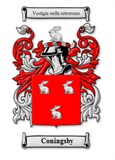
Coningsby COA
My 12th great Grandfather was a lawyer, judge, and a bencher at the Inner Temple. We have his will:
The will Sir Humphrey Coningbsy as reproduced in ‘Genealogical Memoirs of the extinct family – The Chesters of Chichley’ by Robert Edmund Chester Waters; changed the descentant line quite considerably but put in no doubt that she married Sir John Tyndall anmd not Sir Thomas as previous authors had suggested.Sir Humphrey Conyngesby Kt, one of the Kings Justices of the PleasWill dated 15th Nov 1531“To be buried in the Church of the White Friars, London, near the grave of my late wife Isabel , but if I die at Aldenham, or within seven miles thereof, then to be buried there , or if I die at Lock, or within fusty mile’ thereof, then to be buried thereTo the Churches of Aldenham, Elstree, and Rock, 10s each, and to the repairs of the Church of \Teen Sollars, 20sTo my daughter Elizabeth, late wife of Richard Berkeley, and now wife of Sir John Fitz-James Kt , fsU, which was owing to me by the said Richard at the time of his death, for the marriage of the three daughters of the said Richard Berkelev and ElizabethTo Dorothy, daughter• of John Tendall Esq , and of my daughter Amphelice, his wife, £10 towards her preferment in marriage and to each of the daughters of the said John Tendall and Ampheilce 40 marks for their preferment in marriage To Anne, wife of William Thorpe, and daughter of Christopher Hyllyarde, and my daughter Margaret his wife, now deceaaed, £5 To every daughter of my sons William and John Conyngesby, 40 marks each, and to every daughter of George Ralegh and my daughter Jane his wife, 40 marks.My manor of Stottesden in Salop, and my manor of Orleton, with its appurts in 0r1eton, Stoketon, Stanford, and Eastham in Worcestershire, to Humfrey Conyngesby, now under age and my next heir apparent, the son of my son Thomas Covyngesbv, to hold to him and the heirs male of his body, with remainder to the heirs male of my body, remainder to my heirs, My nephew Thomas Solley, My late wives Alice and Anne and IsabelTo Humfrey Tendell my coyin and godson, son of John Tendall, and my daughter Ampheice his wife, five marks a year towards his finding, and the like sums to Maurice Berkeley, son of my daughter ElizabethMy sons Willam and John Conyngesby to be my executors, Sir John Fitz-James Kt , and Sir Anthony Fitz-Herbert,’ Kt , a Kings Justice of Common Pleas, to be overseers of my Will.Will proved 26th Nov. 1535 In C P C.
Humphrey Coningsby (1458 – 1535)
Coningsby [Conyngesby], Sir Humphrey (d. 1535), judge, was born about the end of Henry VI’s reign at Rock, Worcestershire, the son of Thomas Coningsby (d. 1498) and Katherine Waldyff. The family derived its name from Coningsby in Lincolnshire, though Thomas’s father had settled at Neen Sollars in Shropshire. Humphrey Coningsby began practice as an attorney of the common pleas, and is named in warrants of attorney in 1474; in 1476 he was deputy for the sheriff of Worcestershire. From 1480 to 1493 he was third proto honouree, surrendering the office on 24 November 1493 in favour of John Caryl on terms that Caryl would pass it on to Humphrey’s son (which he did). He was also clerk of assize on the western circuit. During the 1480s he became a bencher of the Inner Temple. There was a copy of his reading in Lord Somers’s library, but it has not been discovered. He may already have been nominated as a serjeant when he gave up the proto honouree ship. At any rate he was one of the nine graduates who, after a long delay, were created serjeant in November 1495. His clients included Queen Elizabeth, the duke of Buckingham, and Peterborough Abbey. In 1500 he became one of the king’s serjeants, and on 21 May 1509 the first justice of the king’s bench appointed by Henry VIII. He was knighted by 1509. There survives in Westminster Abbey ‘A remembrance made by Humfrey Conyngesby for the kynges matters at Yorke’, written as an assize judge in preparation for the Lent circuit of 1501. By 1532 he had apparently become incapable of sitting, and an attempt seems to have been made to replace him without discontinuing his salary. However, the salary was discontinued and Walter Luke formally appointed in his place on 28 November 1533, Coningsby being compensated with a lease of the manor of Rock.Coningsby was a justice of the peace for Hertfordshire from 1493, and was perhaps already of Aldenham, where he acquired Penne’s Place as executor of Ralph Penne (d. 1485), a relative of his first wife, Isabel Fereby. Isabel died in the 1490s and was buried in the Whitefriars next to the Temple. In 1513 he was to found a chantry chapel of the Blessed Virgin Mary and St George at Copthorne Hill in Aldenham. About 1499 he married Alice, daughter and heir of Sir John Franceys, widow of John Worsley and William Staveley (d. 1498); she died in 1500. As his third wife, Coningsby in 1504 married Anne, daughter and heir of Sir Christopher Moresby of Cumberland, widow of James Pickering (d. 1498); she died in 1523. Coningsby had come into his patrimony at Rock by 1509 at the latest, and probably by 1504, when he was added to the commission of the peace for Worcestershire. In 1510 he built the south aisle and steeple of Rock church, where a painted window once portrayed him in a scarlet gown with his family; and in 1513 he founded Rock School.Coningsby died on 2 June 1535, having requested burial in the Whitefriars, Rock or Aldenham, depending on the place of his death. He left two surviving sons, both by his first marriage, and five daughters (Elizabeth, Amphelice, Margaret, Jane, and Elizabeth). From his eldest son, Thomas, who predeceased him, was descended the Earl Coningsby (the peerage, created in 1719, was extinct in 1729). His second son, William Coningsby, followed in his footsteps as a bencher of the Inner Temple, proto honouree of the common pleas, and justice of the king’s bench. His daughter Elizabeth married Sir John Fitzjames, chief justice of the same court.
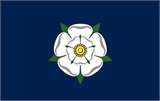
Yorkshire flag
Jane Sotheron was born in England into a wealthy family. She died in Rowley, Massachusetts. Her husband, Thomas Crosby, was a wealthy man as well:
Tradition says that Thomas CROSBY came over in company with the Rev. Ezekiel ROGERS in 1638. That he was a man of wealth for those days is shown by his advancing a considerable sum of money for the first printing press brought and set up in America.
He spent his last years in the home of his grandson Dr. Anthony CROSBY, of Rowley, and d. there 6th May, 1661.
Jane Sotheron Born: 4 MAR 1581/82 in Holme-on-Spalding-Moor, York County, England Death: 2 MAY 1662 in Rowley, Middlesex, Massachusetts Married: 19 OCT 1600 in Holme-on-Spalding-Moor, York County, England
Their Children:Anthony b: 1602 in Holme-on-Spalding-Moor,York County, England Thomas b: 1604 in Holme-on-Spalding-Moor,York County, William b: 1606 in Holme-on-Spalding-Moor,York County, England Simon b: 1608 in Holme-on-Spalding-Moor, York Co. England
18 APR 1638 sailed to America on John Of London with a group of Reverend Ezekiel Rogers’ followers. They may have lived with the widow of their son Simon in Cambridge, Massachusetts until she remarried in 1645 — at about that time, Thomas purchased a house in Cambridge. After a few years, he sold his holdings in Cambridge and the couple relocated, for the last time, to Rowley, Massachusetts.Thomas lived to over 85 years of age and died in Rowley in 1661, buried on May 6.Jane died the following year and was buried in Rowley on May 2, 1662
1609 tax records indicate that William Sotheron (father of Jane) was the wealthiest resident of the parish.Thomas’ father died in 1599 and Thomas inherited a hundred-acre farm in Holme-on-Spalding-Moor.Tax records and other documents suggest that the family led a fairly well-to-do life.
 mermaidcamp