mermaidcamp
Keeping current in wellness, in and out of the water
You can scroll the shelf using ← and → keys
You can scroll the shelf using ← and → keys

My 20th great-grandmother was the ancestor of many famous people:
The PEDIGREE of
Bonacossa (Bonacosta) BORRI
Born: abt. 1249 Died: 1321
HM George I’s 9-Great Grandmother. HRE Ferdinand I’s 6-Great Grandmother. U.S. President’s 18-Great Grandmother. PM Churchill’s 19-Great Grandmother. HM Margrethe II’s 17-Great Grandmother. Gen. Pierpont Hamilton’s 19-Great Grandmother. Otto von Bismarck’s 15-Great Grandmother. Red Baron' Richthofen's 16-Great Grandmother.the Great’ VISCONTI
Husband/Partner: Matteo I
Children: Stefano (di) VISCONTI ; Galeazzo I VISCONTI
She and several members of her family are buried in Milan in a chapel. This would be a very special grave to visit.
Bonacossa Borri (1254 – 1321)
is my 20th great grandmother
Stefan Visconti (1289 – 1327)
son of Bonacossa Borri
Bernabo Lord Milan di Visconti (1319 – 1385)
son of Stefan Visconti
Veridis Duchess Austria Visconti (1352 – 1414)
daughter of Bernabo Lord Milan di Visconti
Ernst I “Ironside” Archduke of Austria Habsburg (1377 – 1424)
son of Veridis Duchess Austria Visconti
Katharina Archduchess Austria Von Habsburg (1420 – 1493)
daughter of Ernst I “Ironside” Archduke of Austria Habsburg
Christof I VanBaden (1453 – 1527)
son of Katharina Archduchess Austria Von Habsburg
Beatrix Zahringen (1492 – 1535)
daughter of Christof I VanBaden
Sabine Grafin VonSimmern (1528 – 1578)
daughter of Beatrix Zahringen
Marie L Egmond (1564 – 1584)
daughter of Sabine Grafin VonSimmern
Richard Sears (1590 – 1676)
son of Marie L Egmond
Silas Sears (1638 – 1697)
son of Richard Sears
Silas Sears (1661 – 1732)
son of Silas Sears
Sarah Sears (1697 – 1785)
daughter of Silas Sears
Sarah Hamblin (1721 – 1814)
daughter of Sarah Sears
Mercy Hazen (1747 – 1819)
daughter of Sarah Hamblin
Martha Mead (1784 – 1860)
daughter of Mercy Hazen
Abner Morse (1808 – 1838)
son of Martha Mead
Daniel Rowland Morse (1838 – 1910)
son of Abner Morse
Jason A Morse (1862 – 1932)
son of Daniel Rowland Morse
Ernest Abner Morse (1890 – 1965)
son of Jason A Morse
Richard Arden Morse (1920 – 2004)
son of Ernest Abner Morse
Pamela Morse
I am the daughter of Richard Arden Morse
Bonacossa Borri, also known as Bonaca, or Bonaccossi Bonacosta (1254–1321), was Lady of Milan by marriage from 1269 to 1321.
Biography
Bonacossa was the daughter of Squarcina Borri (1230–1277, also called Scarsini), captain of exiles from Milan fom the advent of the Torriani family, and a loyal supporter of the Visconti, and Antonia (1236 -?), of unknown lineage, who married in 1254. Borri’s family, originally from the town of Santo Stefano Ticino together with some feudal lands of nearby Corby. The Borri family was one of the most respected of Milan, and counted among its ranks a saint, Monas of Milan, Bishop of Milan.
Once the Visconti had conquered Milan, Squarcina Borri gave his daughter in marriage to Matteo I Visconti, Lord of Milan in 1269 to cement those bonds essential to maintaining the rule of the Visconti.
Bonacossa and her husband co-founded of the chapel of St. Thomas in the Basilica of Sant’Eustorgio of Milan, where they were buried, along with their son Stefano and his two daughters Beatrice and Catherine, and the brother of Matteo, Uberto III Visconti.
She died in Milan on 13 January 1321 .
Descendents
Galeazzo I Lord of Milan. He married Beatrice d’Es
Beatrice (b. 1280)
Caterina (b. 1282)
Luchino (b. 1285) Lord of Milan, married Violante di Saluzzo
Stefano (b. 1287) Count of Arona , married Valentina Doria
Marco (b. 1289)
Giovanni (b. 1291), Archbishop of Milan
Zaccaria (b. 1295)
My 26th great-grandmother had a famous mother who was nicknamed Dangereuse because she was such a tart. This matrilineal danger ran deep. These women were powerful, each in her own way:
Aenor ( aka Eleanor) of Châtellerault, duchess of Aquitaine (Châtellerault, Vienne, France, c. 1103, – March 1130 in Talmont) was the mother of Eleanor of Aquitaine, arguably the most powerful woman in Europe of her generation.
Aenor was a daughter of Viscount Aimery I of Châttellerault and his wife, Dangereuse de L’ Isle Bouchard (d. 1151). Aenor married William X of Aquitaine, the son of her mother’s lover, and had three children with him:
Eleanor of Aquitaine, Duchess of Aquitaine, and wife of both Louis VII of France, and Henry II of England. Petronilla of Aquitaine, wife of Raoul I, Count of Vermandois.
William Aigret (who died at the age of four) The county “Châtelherault” later became a title belonging to the Dukes of Hamilton.


Eleanor DeChatellerault (1105 – 1130)
is my 26th great grandmother
Eleanor of Aquitane (1130 – 1204)
daughter of Eleanor DeChatellerault
Eleanor Spain Plantagenet (1162 – 1214)
daughter of Eleanor of Aquitane
Berenguela CASTILE LEON (1181 – 1244)
daughter of Eleanor Spain Plantagenet
Saint Ferdinand Castile amp Leon (1199 – 1252)
son of Berenguela CASTILE LEON
Alfonso X Wise Castile Leon amp Galicia (1221 – 1284)
son of Saint Ferdinand Castile amp Leon
Sancho Brave Castile Leon (1258 – 1295)
son of Alfonso X Wise Castile Leon amp Galicia
Beatrice Sanchez Infanta Castile (1293 – 1359)
daughter of Sancho Brave Castile Leon
Peter I Portugal Cruel Algarve (1320 – 1367)
son of Beatrice Sanchez Infanta Castile
John I DePinto (1358 – 1433)
son of Peter I Portugal Cruel Algarve
Beatrix DePinto (1403 – 1447)
daughter of John I DePinto
John Fettiplace (1427 – 1464)
son of Beatrix DePinto
Richard Fettiplace (1460 – 1511)
son of John Fettiplace
Anne Fettiplace (1496 – 1567)
daughter of Richard Fettiplace
Mary Purefoy (1533 – 1579)
daughter of Anne Fettiplace
Susanna Thorne (1559 – 1586)
daughter of Mary Purefoy
Gov Thomas Dudley (1576 – 1653)
son of Susanna Thorne
Anne Dudley (1612 – 1672)
daughter of Gov Thomas Dudley
John Bradstreet (1652 – 1718)
son of Anne Dudley
Mercy Bradstreet (1689 – 1725)
daughter of John Bradstreet
Caleb Hazen (1720 – 1777)
son of Mercy Bradstreet
Mercy Hazen (1747 – 1819)
daughter of Caleb Hazen
Martha Mead (1784 – 1860)
daughter of Mercy Hazen
Abner Morse (1808 – 1838)
son of Martha Mead
Daniel Rowland Morse (1838 – 1910)
son of Abner Morse
Jason A Morse (1862 – 1932)
son of Daniel Rowland Morse
Ernest Abner Morse (1890 – 1965)
son of Jason A Morse
Richard Arden Morse (1920 – 2004)
son of Ernest Abner Morse
Pamela Morse
I am the daughter of Richard Arden Morse


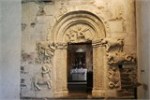
My 21st great-grandfather was born in Venice and is buried at Tirol Castle in Austria. Geography was much different in 1194, when the Holy Romans were still ruling in Europe. Today’s national boundaries have changed in recent times, and in the case of Ukraine, are changing now. Venice was once very powerful as a political as well as economic entity. Meinhard inherited power from his father as well as from his wife’s father. During his political struggles he was forced to leave two of his sons in jail in Salzburg for 6 years. I imagine jail time in Salzburg in 1252 must have been brutal. He survived to become an ancestor of the Habsburgs….and me.
Meinhard I Gorizia Tirol (1194 – 1258)
is my 21st great grandfather
Meinhard II Carinthia Duke of Gorz-Tyrol Tirol (1238 – 1295)
son of Meinhard I Gorizia Tirol
Consort Elisabeth the Romans Carinthia (1263 – 1313)
daughter of Meinhard II Carinthia Duke of Gorz-Tyrol Tirol
Albrecht Albert II ‘The Wise’ Duke of Austria Habsburg (1298 – 1358)
son of Consort Elisabeth the Romans Carinthia
Leopold III “Duke of Austria” Habsburg (1351 – 1386)
son of Albrecht Albert II ‘The Wise’ Duke of Austria Habsburg
Ernst I “Ironside” Archduke of Austria Habsburg (1377 – 1424)
son of Leopold III “Duke of Austria” Habsburg
Katharina Archduchess Austria Von Habsburg (1420 – 1493)
daughter of Ernst I “Ironside” Archduke of Austria Habsburg
Christof I VanBaden (1453 – 1527)
son of Katharina Archduchess Austria Von Habsburg
Beatrix Zahringen (1492 – 1535)
daughter of Christof I VanBaden
Sabine Grafin VonSimmern (1528 – 1578)
daughter of Beatrix Zahringen
Marie L Egmond (1564 – 1584)
daughter of Sabine Grafin VonSimmern
Richard Sears (1590 – 1676)
son of Marie L Egmond
Silas Sears (1638 – 1697)
son of Richard Sears
Silas Sears (1661 – 1732)
son of Silas Sears
Sarah Sears (1697 – 1785)
daughter of Silas Sears
Sarah Hamblin (1721 – 1814)
daughter of Sarah Sears
Mercy Hazen (1747 – 1819)
daughter of Sarah Hamblin
Martha Mead (1784 – 1860)
daughter of Mercy Hazen
Abner Morse (1808 – 1838)
son of Martha Mead
Daniel Rowland Morse (1838 – 1910)
son of Abner Morse
Jason A Morse (1862 – 1932)
son of Daniel Rowland Morse
Ernest Abner Morse (1890 – 1965)
son of Jason A Morse
Richard Arden Morse (1920 – 2004)
son of Ernest Abner Morse
Pamela Morse
I am the daughter of Richard Arden Morse
Meinhard I, Count of Gorizia-Tyrol
Spouse Adelaide of Tyrol
Noble family Meinhardiner
Father Engelbert III, Count of Gorizia
Mother Mathilda of Andechs
Born c. 1200/1205
Died January or February 1258
Meinhard I (c. 1200/1205 – January/February 1258) was Count of Gorizia from the House of Meinhardin was from 1231 and Count of Tyrol from 1253 until his death. He was the son of Count Engelbert III, Count of GoriziaEngelbert III]] of Gorizia (d. 1220) and Mathilda of Andechs, half-sister of Duke Berthold IV of Merania. He came in control over all his family’s Gorizian possessions upon the death of his uncle Meinhard the Old, and of Tyrol as a fief from his father-in-law Count Albert IV of Tyrol.
Meinhard strongly supported Emperor Frederick II of Hohenstaufen in his conflict with Pope Innocent IV and in return was appointed Imperial governor of the Duchy of Styria and the March of Carniola after the last Babenberg Duke Frederick II the Warlike had died without heirs in 1246. From 1250 onwards also governor in the Duchy of Austria, Meinhard facing the fall of the Hohenstaufen dynasty did not prevail: his rule in Carniola was challenged by the Carinthian House of Sponheim and in Austria and Styria he was expelled by Bohemian prince Ottokar II Přemysl in 1251.
Meinhard, backed by Albert IV of Tyrol, then tried to gain control over the Duchy of Carinthia but failed in an unsuccessful campaign against Duke Bernhard von Spanheim and his son Philipp, the elected Archbishop of Salzburg. On September 8, 1252, he was finally defeated and arrested at Greifenburg. According to the rules of the Treaty of Lieserhofen, concluded on December 27, 1252 he had to give his sons Meinhard II and Albert to Phillip as hostages. Both were imprisoned at Burg Hohenwerfen in Salzburg and not released until 1258. Meinhard and Albert IV also had to pay a compensation and to renounce certain possessions including Mittersill, Virgen, Matrei and Oberdrauburg.
After the death of Albert IV of Tyrol in 1253, Meinhard and his brother-in-law, Gebhard of Hirschberg, split Tyrol, of which Meinhard took the southern part with Meran. His son Meinhard II re-acquired the Hirschberg lands from Gebhard’s heirs in 1284 and two years later also received Carinthia from German king Rudolph of Habsburg.
Meinhard I died in 1258 and is buried at Tirol Castle.
Marriage and children
About 1237, Meinhhard married Adelaide, daughter of Albert IV of Tyrol. They had four known children:
Adelheid († 1291), married Count Frederick I of Ortenburg
Meinhard II (1238–1295), Count of Gorizia and Tyrol, Duke of Carinthia
Albert I († 1304), Count of Gorizia
Bertha († 1267), married Conrad, Count of Wullenstetten
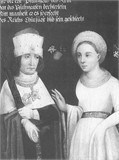
Otto and Agnes
Agnes Countess Of Rhein (1202 – 1267)
is my 21st great grandmother
Elisabeth Wittelsbach Duchess Bavaria (1227 – 1273)
daughter of Agnes Countess Of Rhein
Consort Elisabeth the Romans Carinthia (1263 – 1313)
daughter of Elisabeth Wittelsbach Duchess Bavaria
Albrecht Albert II ‘The Wise’ Duke of Austria Habsburg (1298 – 1358)
son of Consort Elisabeth the Romans Carinthia
Leopold III “Duke of Austria” Habsburg (1351 – 1386)
son of Albrecht Albert II ‘The Wise’ Duke of Austria Habsburg
Ernst I “Ironside” Archduke of Austria Habsburg (1377 – 1424)
son of Leopold III “Duke of Austria” Habsburg
Katharina Archduchess Austria Von Habsburg (1420 – 1493)
daughter of Ernst I “Ironside” Archduke of Austria Habsburg
Christof I VanBaden (1453 – 1527)
son of Katharina Archduchess Austria Von Habsburg
Beatrix Zahringen (1492 – 1535)
daughter of Christof I VanBaden
Sabine Grafin VonSimmern (1528 – 1578)
daughter of Beatrix Zahringen
Marie L Egmond (1564 – 1584)
daughter of Sabine Grafin VonSimmern
Richard Sears (1590 – 1676)
son of Marie L Egmond
Silas Sears (1638 – 1697)
son of Richard Sears
Silas Sears (1661 – 1732)
son of Silas Sears
Sarah Sears (1697 – 1785)
daughter of Silas Sears
Sarah Hamblin (1721 – 1814)
daughter of Sarah Sears
Mercy Hazen (1747 – 1819)
daughter of Sarah Hamblin
Martha Mead (1784 – 1860)
daughter of Mercy Hazen
Abner Morse (1808 – 1838)
son of Martha Mead
Daniel Rowland Morse (1838 – 1910)
son of Abner Morse
Jason A Morse (1862 – 1932)
son of Daniel Rowland Morse
Ernest Abner Morse (1890 – 1965)
son of Jason A Morse
Richard Arden Morse (1920 – 2004)
son of Ernest Abner Morse
Pamela Morse
I am the daughter of Richard Arden Morse
AGNES ([1201]-16 Nov 1267, bur Scheyern). The Notæ Sancti Emeranni record the marriage of “Otto dux Bawarie” and “filiam Heinrici palatine Rheni”. The Altahenses Annales name “Agnes ducissa Bawarie” when recording the birth of her son Ludwig.
m (Worms May 1222) OTTO von Bayern, son of LUDWIG I Duke of Bavaria, Pfalzgraf bei Rhein & his wife Ludmila of Bohemia (Kelheim 1206-Landshut 29 Nov 1253, bur Scheyern). Pfalzgraf bei Rhein 1228. He succeeded his father in 1231 as OTTO II “der Erlauchte” Duke of Bavaria.
I did not start studying genealogy with the expectation of spending years involved with my family tree. I did not expect to find much data, and thought I would be finished in a couple of weeks. In my sixth year of tracing my family back in time I could not imagine life without this research. I have now relearned history by tracing my own DNA through it. Believe me it becomes more interesting when you picture your own ancestors in events. The timeline is an important tool in life to assess progress and enlightenment. The same can be said of a much longer timeline, such as human history. I am starting to understand the mass migrations caused by religions that have shaped the political world. My people were motivated to take great risks and leave their known environments to follow religious convictions. They crossed the Atlantic in rickety boats with nothing but beer to drink. They froze and starved in the early American colonies. They adventured way out west to Ohio and beyond after the Revolutionary War. They fought on both sides of every British and American war, which is most revealing.
Ancestry.com is run by humans and therefore human error is part of it. The site has gathered and continues to gather public records to share as well as trees published by members who make them public. Often an unsubstantiated piece of data will be shared and repeated in the public tree arena. Fortunately there are also wizards who find some errors, and advise the owners of bogus trees to double check the data. I have twice needed to erase several generations of mistaken identity when I was given more information by a fellow family member. Bittersweet, erasing..I had become fond of the ancestors who were not really my own. It was a horrible blow to be wrong about them, but this study is about verification and facts, not just being up in your tree.
I have been asked which are my favorite ancestors, to which I generally reply I like them all for surviving so I could be here now. There are a few that I might love more than the others:
They are either well known or unknown, but all important to me and my existence. If you take the two week trial I bet you will find something remarkable in your own family history.
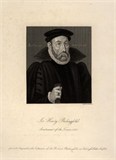
Henry Bedingfield
My 13th great-grandfather was instrumental in placing Mary Tudor on the throne of England.
Son of Edmund Bedingfield and his wife Grace, dau. of Henry Marney, first B. Marney. He was the grandson of Sir Edmund Bedingfield who had served in the Wars of the Roses, and to whom were granted by Edward IV for his faithful service letters patent authorizing him “to build towers, walls, and such other fortifications as he pleased in his manors of Oxburgh, together with a market there weekly and a court of pye-powder”. Henry’s father, other Edmund, had been Catalina of Aragon’s custodian during her last sad years at Kimbolton Castle.
Sir Henry Bedingfield and his fellow-Member Sir William Drury were included in Cecil’s list of gentlemen who were expected to transact ‘affairs for Queen Jane’, but in the event both rallied to Mary. Sir Henry was mainly instrumental, together with Sir Henry Jerningham, in placing Mary Tudor on the throne. In ‘The Chronicle of Queen Jane and of two years of Queen Mary’, the anonimous author said:
‘… The 12. of Jul word was brought to the Councell, being then at the Tower with the lady Jane, that the Lady Mary was at Keninghall castle in Norfolk, and with her the earle of Bath, sir Thomas Wharton sonne to the lord Wharton, sir John Mordaunt sonne to the lord Mordaunt, sir William Drury, sir John Shelton, sir Henry Bedingfield, master Henry Jerningham, master John Sulierde, master Richard Freston, master sergeant Morgan, master Clement Higham of Lincolnes inne, and divers others; and also that the earle of Sussex and master Henry Ratcliffe his sonne were comming towards her…’
He proclaimed her at Norwich, and for his loyalty received an annual pension of £100 out of the forfeited estates of Sir Thomas Wyatt. Ultimately he became Lieutenant of the Tower of London and Captain of the Yeomen of the Guard.
As jailer of Princess Elizabeth, who was suspected of complicity in Wyatt’s rebellion, he has been persistently misrepresented by Foxe and others. On 5 May 1554, Sir John Gage was relieved of his office as Constable of the tower and Sir Henry Bedingfield placed in his room. Bedingfield marched in to take over command of the Tower bringing with him a hundred men in blue liveries, and Elizabeth’s reacción to this ‘sudden mutation’, at least as described by John Foxe, clearly illustrates her state of mind. The arrival of Sir Henry, being ‘a man unknown to her Grace and therefore the more feared’, seems to have induced a fit of panic. She demanded to be told ‘whether the Lady Jane’s scaffold were taken away or no?’ Reassured on this point, but still not entirely satisfied, she went on to ask who Sir Henry Bedingfield was and whether, ‘if her murdering were secretly committed to his charge, he would see the execution thereof?’
On 19 May, at one o’clock in the afternoon he joined Sir John Williams and Sir Leonard Chamberlain to escort Elizabeth from the Tower to Woodstock. Foxe, in his “The myracolous preservation of Lady Elizabeth, nowe Queen” said:
“… In conclusión, on Trinitie Sonday being the 19. day of Maye, she was remooved from the Tower, the Lorde Treasurer being then there for the lading of her Cartes and discharging the place of the same. Where Syr Henry Benifielde (being appoynted her Gailer) did receive her wyth a companie of rakehelles to Garde her, besides the Lorde of Darbies bande, wayting in the Countrey about for the mooneshine on the water. Unto whome at length carne my Lorde of Tame, ioyned in Commission with the sayd Syr Henry, for the guiding of her to prisone: and they together conveied her grace to Woodstock, as hereafter followeth…”
Foxe’ s narrative contains many circumstantial anecdotes of her imprisonment, intended to emphasise her constant danger, and the boorish behaviour of Sir Henry. In fact, he seems to have been nomore than conscientious, and Elizabeth herself understood that. The whole history of his custodianship of Elizabeth is contained in a series of letters addressed to the Queen and the Privy Council, and in their replies. This correspondence, which has been published by the Norfolk and Norwich Archæological Society, completely exonerates Sir Henry from either cruelty or want of courtesy in his treatment of the royal captive.
Thomas Parry, the princess cofferer had to provide for her household but on 26 May, three days after her arrival at Woodstock, the Council told Bedingfield that there was no reason for Parry to stay there. Elizabeth’s guardian communicated this decision to Parry, who baffled him by staying in the town. Parry now proceeded to make Bedingfield’s life a misery. He first objected to the provisioning of his retinue out of Elizabeth’s resources, until Bedingfield was commanded to supply them by a special warrant. This was simply a harassing tactic, for books were being conveyed to Elizabeth, some of which Bedingfield suspected of being seditious, and when Parry sent him two harmless ones he was forced to return them for want of explicit instructions. Bedingfield complained that he was helpless, as ‘daily and hourly the said Parry may have and give intelligence’, and once again the cofferer’s position was referred to the Council. Early in Jul Parry was at the Bull inn, ‘a marvellous colourable place to practise in’, receiving every day as many as 40 men in his own livery, besides Elizabeth’s own servants. At length the Council forbade such large meetings and, from Bedingfield’s subsequent silence on the point, it seems that the order was obeyed.
Sir Henry Bedingfield also informed the Council of a meeting at Woodstock, Oxfordshire, between Francis Verney and a servant of the late Duke of Suffolk and cited Sir Leonard Chamberlain’s judgement that “if there be any practice of ill within all England, this Verney is privy to it”. Bedingfield apologised to the Council for the fact that he was being ‘enforced, by the importunate desires of this great lady, to trouble your lordships with more letters than be contentful to mine own opinion’. In Apr 1555 Henry Bedingfield, escort Elizabeth to Hampton Court, where she met the Queen. A weeks later ended a period of close restraint for the Princess, which had lasted just over fifteen months. It would probably be difficult to say whether prisoner or jailer was the more relieved.
On Elizabeth’s accession he retired to Oxborough and was called upon in a letter, in which the Queen addressed him as “trusty and well-behaved”, to furnish a horse and man armed, as his contribution to the defence of the country against an expected invasion of the French.
When, however, the penal laws against Catholics were enforced with extreme severity, Sir Henry Bedingfield was not spared. He was required to pay heavy monthly fines for non-attendance at the parish church, while his house was searched for priests and church-furniture, and his servants dismissed for refusing to comform to the new state religion. Together with his fellow-Catholics, he was a prisoner within five miles of his own house and might pass that boundary only by a written authorization of the Privy Council.
In his will of 24 Jul 1561 Sir Richard Southwell bequeathed over 10,000 sheep to members of his family and left his personal armour to his ‘cousin and friend’ Sir Henry Bedingfield.
He died 22 Aug 1583, and was buried in the Bedingfeld chantry at Oxborurgh.
Family and Education
b. by 1509, 1st s. of Sir Edmund Bedingfield of Oxborough by Grace, da. of Henry Marney, 1st Baron Marny. educ. L. Inn, adm. 1528. m. by 1535, Catherine, da. of Sir Roger Townshend of Raynham, Norf., 5s. 5da. Kntd. by July 1551; suc. fa. June 1553.1
J.p. Norf. 1538-53, q. 1554-58/59, q. Suff. 1554-58/59; commr. relief, Norf. 1550; other commissions Norf., Suff. 1534-60 PC Aug. 1553-Nov. 1558; lt. Tower Oct. 1555-c.Sept. 1556; v.-chamberlain of the Household and capt. of the guard Dec. 1557-Nov. 1558.2
Henry Bedingfield came from an old Suffolk family with extensive estates in East Anglia. After his marriage to the daughter of one of the most favoured crown officials in the region he was named to the Norfolk bench; however, while his father lived he was not outstanding in either national or county affairs, although in 1544 he led a troop of his tenants to the army at Boulogne. In 1549 he helped the Marquess of Northampton to put down Ket’s rebellion, but was himself captured and only released after its suppression. Bedingfield seems to have supported or at least acquiesced in the Duke of Northumberland’s rise to power, for he was recommended by the Council as knight of the shire for Suffolk to the second Parliament of Edward VI’s reign. Although noted by Cecil on a list of those thought to be sympathetic to Lady Jane Grey he was one of the first to rally to Mary. His decisiveness during the succession crisis earned for him the trust of the Queen and a place on her Council. As one close to her and a major landowner in his own right following his father’s death he was elected one of the knights of the shire for Norfolk to the first Parliament of the new reign and re-elected to its successor early in 1554. When after Wyatt’s rebellion the Queen sought a stricter guardian for her sister, she found in Bedingfield the qualities necessary—honesty, loyalty, obedience and perhaps a certain lack of initiative. Possibly she realized the touch of irony in her setting as guard over Elizabeth the son of the man who had been her own mother’s custodian. Bedingfield remained at Woodstock as guardian of the princess from May 1554 to April 1555. His correspondence with the Council and Queen concerning his duties hardly bears out Foxe’s accusation of cruel treatment of his charge. It shows, rather, a severe and rigid man of limited imagination and lacking in humour, but by no means cruel; it also indicates that he had much to endure from Elizabeth’s temper and her constant importunity.3
In June 1556 Bedingfield surrendered an annuity of £100 (granted to him for his services in July 1553), together with two Yorkshire manors, receiving in return the manor of Uphall and the reversion of numerous other lands in Norfolk. His promotion at court in December 1557 marked a further stage in the growth of his power and influence, and preceded his re-election for a third and final time as a knight of the shire for Norfolk. There seemed no obvious limit to his career when the death of Mary and the accession of his former charge brought his career to an abrupt close. He asked Elizabeth’s forgiveness for his treatment of her at Woodstock; the Queen showed no malice but hinted that she would prefer not to see him at court. In 1569 he refused to subscribe to the Act of Uniformity, and had to enter into a bond for his good behaviour. Nine years later he was accused of refusing to attend services and giving refuge to papists, and bound over in £500 to remain at Norwich: not long afterwards he was summoned to London but excused on account of ill-health. The last years of his life were troubled by similar actions against him, but he was fortunate in having at court a son-in-law, Henry Seckford, who in December 1581 obtained permission to take the old man into his own home ‘until he may pass over the remembrance of the lady his wife, lately deceased’. Bedingfield made his will on 16 Aug. 1583. He had previously settled some of his lands on his younger sons and he divided his goods between them and his daughters, apart from some heirlooms which were to descend with Oxborough manor. Bedingfield died on 22 Aug. and was buried at Oxborough.4
Ref Volumes: 1509-1558Author: Roger Virgoe
Henry Bedingfield (1509 – 1583)
is my 13th great grandfather
Edmund Bedingfield (1534 – 1585)
son of Henry Bedingfield
Nazareth Bedingfeld (1561 – 1622)
daughter of Edmund Bedingfield
Elishua Miller Yelverton (1592 – 1688)
daughter of Nazareth Bedingfeld
Yelverton Crowell (1621 – 1683)
son of Elishua Miller Yelverton
Elishua Crowell (1643 – 1708)
daughter of Yelverton Crowell
Yelverton Gifford (1676 – 1772)
son of Elishua Crowell
Ann Gifford (1715 – 1795)
daughter of Yelverton Gifford
Frances Congdon (1738 – 1755)
daughter of Ann Gifford
Thomas Sweet (1759 – 1844)
son of Frances Congdon
Valentine Sweet (1791 – 1858)
son of Thomas Sweet
Sarah LaVina Sweet (1840 – 1923)
daughter of Valentine Sweet
Jason A Morse (1862 – 1932)
son of Sarah LaVina Sweet
Ernest Abner Morse (1890 – 1965)
son of Jason A Morse
Richard Arden Morse (1920 – 2004)
son of Ernest Abner Morse
Pamela Morse
I am the daughter of Richard Arden Morse
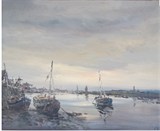
Norfolk, England
My 9th Great Grandfather was probably the earliest Brit settler in Yarmouth, on Cape Cod. He was from Norfolk, England:
On the south side, West Yarmouth became populated with the descendants of the earliest settler Yelverton Crowe(ll). (Crowell remained the most prominent surname in the village well into the 20th century.) Although the Crowells were joined by other families, and married into many of the northside families, the village itself remained small and rural in nature. Homes with large acreage for subsistence farming dotted the county road (now Route 28) which ran from Parker’s River to Hyannis’ Main Street. A fulling mill in the village, established in the late 17th century, was the first known mill in Yarmouth. The Baxters, who operated the mill, also built a gristmill along the shores of Mill Creek in West Yarmouth — a mill which is still in working order and now an historic site owned by the town. Stores, however, were few and tradesmen were fewer. Many villagers transacted business in nearby Hyannis or in Yarmouth Port. Since the village remained rural and undeveloped throughout much of the 18th and 19th century, it presented a blank palette for developers who were to arrive with the turning of the twentieth century.
Yelverton Crowell (1621 – 1683)
is my 9th great grandfather
Elishua Crowell (1643 – 1708)
daughter of Yelverton Crowell
Yelverton Gifford (1676 – 1772)
son of Elishua Crowell
Ann Gifford (1715 – 1795)
daughter of Yelverton Gifford
Frances Congdon (1738 – 1755)
daughter of Ann Gifford
Thomas Sweet (1759 – 1844)
son of Frances Congdon
Valentine Sweet (1791 – 1858)
son of Thomas Sweet
Sarah LaVina Sweet (1840 – 1923)
daughter of Valentine Sweet
Jason A Morse (1862 – 1932)
son of Sarah LaVina Sweet
Ernest Abner Morse (1890 – 1965)
son of Jason A Morse
Richard Arden Morse (1920 – 2004)
son of Ernest Abner Morse
Pamela Morse
I am the daughter of Richard Arden Morse
He fought in King Philip’s War against my Wampanoag ancestors:
According to the book “History of Cape Cod: Annals of Barnstable County, Vol 2 by author Frederick Freeman: Both John Crowell and Yelverton Crowell fought with Distinction in King Phillip’s war at the battle of Mount Hope in the year 1675. John Crowell is listed as having lost one horse.
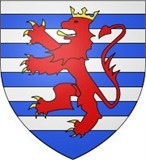
Coat of Arms
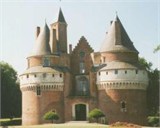
Chateau Rambures
My 18th great grandfather died of the black death at the age of 43. This line shows my relation to Margaret Woodville, but I am also a descendant of her sister, Elizabeth Woodville, Queen consort. It is complicated.
Peter of Luxembourg (1390-31 August 1433) was a son of John, Lord of Beauvoir and his wife Marguerite of Enghien. His inheritance included the counties of Brienne, Conversano and Saint-Pol.
Family
Peter had succeeded his father John, Lord of Beauvoir and mother Marguerite of Enghien. They had co-reigned as Count and Countess of Brienne from 1394 to her death in 1397.
John was a fourth-generation descendant of Waleran I of Luxembourg, Lord of Ligny, second son of Henry V of Luxembourg and Margaret of Bar. This cadet line of the House of Luxembourg reigned in Ligny-en-Barrois. This made Peter a distant cousin to John of Luxembourg, father of Charles IV, Holy Roman Emperor and Bonne, Duchess of Normany and Aquitaine.
Peter was a sixth-generation descendant of John II, Duke of Brittany and his wife Beatrice of England, through their daughter, Mary.[1]
Beatrice was a daughter of Henry III of England and his wife Eleanor of Provence.
Henry was son of John of England and his second wife Isabella of Angoulême.
Life
Peter succeeded his aunt Jeanne of Luxembourg, Countess of Saint-Pol and Ligny, as Count of Saint-Pol in 1430. His younger brother John II of Luxembourg, Count of Ligny, an ally of the English during the Hundred Years War, received Joan of Arc as his prisoner, and subsequently sold her to the English, for 10,000 livres.
On 8 May 1405, Peter married Margaret de Baux, daughter of Francesco del Balzo’s third wife Sueva Orsini, a relation of Clarice Orsini (wife of Lorenzo de’ Medici). Peter and Margaret had nine children , of these are:
L ouis of Luxembourg, Count of Saint-Pol, de Brienne, de Ligny, and Conversano, Constable of France (1418- 19 December 1475), married firstly, in 1435, Jeanne de Bar, Countess of Marle and Soissons (1415 – 14 May 1462), by whom he had issue, and from whom descended King Henry IV of France and Mary, Queen of Scots. He married secondly, Marie of Savoy (20 March 1448- 1475), by whom he had further issue. He was beheaded in Paris in 1475 for treason against King Louis XI.
Jacquetta of Luxembourg (1415/1 416- 30 May 1472), married firstly in 1433, John, Duke of Bedford, moursand secondly, in secret, c.1436, Richard Woodville, 1st Earl Rivers, by whom she had sixteen children, including Elizabeth Woodville, Queen consort of King Edward IV of England. Every English monarch after 1509 descended from her.
Thibaud of Luxembourg, Seigneur de Fiennes, Count of Brienne, Bishop of Le Mans, (died 1 September 1477), married Philippa de Melun, by whom he had issue.
Jacques of Luxembourg, Seigneur de Richebourg (died 1487), married Isabelle de Roubaix, by whom he had issue.
Valeran of Luxembourg, died young.
Jean of Luxembourg, died in Africa.
Catherine of Luxembourg (died 1492), married Arthur III, Duke of Brittany (24 August 1393- 26 December 1438).
Isabelle of Luxembourg, Countess of Guise (died 1472), married in 1443, Charles, Count of Maine (1414- 1472), by whom she had a daughter, Louise (1445- 1477), who in her own turn married Jacques d’Armagnac, Duke of Nemours, by whom she had six children.
The 14th and 15th centuries were well known for the Black Death, a deadly form of bubonic plague spread across the known world. Europe was badly hit by the pestilence, as a result of trading with countries with the plague; it grew to epidemic proportions, killing swiftly without discrimination. The plague hit Luxembourg, France, England and Spain causing the deaths of millions of people. Peter was among the dead. He died in 1433, aged 43 years. His wife died 36 years later.
One of Peter’s daughters, Jacquetta was the mother of Elizabeth Woodville, queen of Edward IV of England.
Elizabeth Woodville was mother of Edward V of England,
Richard of Shrewsbury, 1st Duke of York
Elizabeth of York.
Elizabeth Woodville’s sons are known as the princes of the tower. This comes from when they were locked up by their uncle, Richard III of England and were supposedly murdered.
Elizabeth of York married Henry VII of England, overthrowing Richard II and putting an end to the Wars of the Roses. Elizabeth and Henry were parents to:
Arthur, Prince of Wales,
Margaret, Queen of Scotland,
Mary, Queen of France
and the most famous, Henry VIII of England.
http://en.wikipedia.org/wiki/Peter_of_Luxembourg,_Count_of_Saint-Pol

Elizabeth Queen Consort
Elizabeth Wydeville Grey Plantagenet (1437 – 1492)
is my 18th great grandmother
Thomas Grey (1451 – 1501)
son of Elizabeth Wydeville Grey Plantagenet
Thomas Marquess Dorset Knight Grey (1477 – 1530)
son of Thomas Grey
Elizabeth Grey (1505 – 1561)
daughter of Thomas Marquess Dorset Knight Grey
Margaret Audley (1545 – 1564)
daughter of Elizabeth Grey
Margaret Howard (1561 – 1591)
daughter of Margaret Audley
Lady Ann Dorset (1552 – 1680)
daughter of Margaret Howard
Robert Lewis (1574 – 1645)
son of Lady Ann Dorset
Robert Lewis (1607 – 1644)
son of Robert Lewis
Ann Lewis (1633 – 1686)
daughter of Robert Lewis
Joshua Morse (1669 – 1753)
son of Ann Lewis
Joseph Morse (1692 – 1759)
son of Joshua Morse
Joseph Morse (1721 – 1776)
son of Joseph Morse
Joseph Morse III (1752 – 1835)
son of Joseph Morse
John Henry Morse (1775 – 1864)
son of Joseph Morse III
Abner Morse (1808 – 1838)
son of John Henry Morse
Daniel Rowland Morse (1838 – 1910)
son of Abner Morse
Jason A Morse (1862 – 1932)
son of Daniel Rowland Morse
Ernest Abner Morse (1890 – 1965)
son of Jason A Morse
Richard Arden Morse (1920 – 2004)
son of Ernest Abner Morse
Pamela Morse
I am the daughter of Richard Arden Morse
QUEEN ELIZABETH WOODVILLE or WYDVILLE (1437-1492)
Jacquetta of Luxemburg, the fair young widow of the old warlike Duke of Bedford, took for her second spouse his favourite knight, the brave and handsome Sir Richard Woodville, when she came to England in 1435 to claim her dower. The time of the birth of her eldest child Elizabeth, the issue of marriage kept secret for fear of parliament, probably occurred in 1436. The matter burst out with great scandal the year after. Sir Richard was arrested and imprisoned in 1437; but as the king’s mother had married in lower degree to Owen Tudor, the young king was glad to pardon the second lady in his realm, as an excuse for showing mercy to his dying queen-mother. Jacquetta’s knight was therefore pardoned and sent home. They settled very happily at Grafton Castle, where they became the parents of a large family of handsome sons and beautiful daughters, among whom Elizabeth was fairest of the fair.
The Duchess of Bedford kept the rank of the King’s aunt. His royal mother had died miserably in 1437, as shown in her life. Duchess Jacquetta, on occasions of ceremony, was the first lady in the land until the marriage of the king. Her daughter Elizabeth, took high rank among the maids of honour of Margaret of Anjou, and was the belle of her court, as two letters extant from Richard Duke of York and his friend the Earl of Warwick prove, recommending a Welsh hero, one of their knights-marshal, sir Hugh Johns, as a husband, they dwell on his great love inspired by her beauty and sweet manners; the letters show familiar acquaintance with Elizabeth, but they were of no avail. The court beauty had no fortune but her face, the Welsh champion none but his sword. She made a better match the same year with the heir of lord Ferrers of Groby, John Gray, rich, valiant, and years younger than the rejected Sir Hugh. Lord Ferrers was possessor of the ancient domain of Bradgate, which was afterwards to derive lustre as the birthplace of his descendant, lady Jane Grey. Elizabeth was appointed one of the fourt ladies of the bedchamber to Margaret of Anjou. John Gray held military command in the queen’s army. His death left Elizabeth with two infant sons, in 1460.
Rancour so deep pursued the memory of John lord Gray, that his harmless infants, Thomas and Richard, were deprived of their inheritance of Bradgate. Elizabeth herself remained mourning and destitute at Grafton the two first years of Edward IV’s reign. Hearing that the young king was hunting in the neighbourhood of her mother’s dower castle at Grafton, Elizabeth waited for him beneath a noble tree known in the traditions of Northamptonshire, as “the queen’s oak,” hold a fatherless boy in either hand; and when Edward, who must have been well acquainted with her previously at the English court, paused to listen to her, she threw herself at his feet, and pleaded for the restoration of her children’s lands. Her downcast looks and mournful beauty not only gained her suit, but the heart of the conqueror. He was unwilling to make her his queen, but she left him to settle the question; knowing that he had betrayed others, her affections still clave to the memory of the husband of her youth. Her indifference increased the love of the young king. The struggle ended in his offering her marriage, which took place May 1, 1464. The marriage gave great offence to the mother of Edward IV. This lady, who, before the fall of her husband, Richard duke of York, at Wakefield, had assumed the state of a queen, had to give place to the daughter of a knight. It was on Michaelmas day, 1464, that Edward IV finally declared to Elizabeth to be his wedded wife, at Reading palace.
The queen’s eldest daughter, Elizabeth, was born at Westminster palace about five months afterwards. The royal physicians, by means of their foolish studies of astrology, had assured king Edward that his expected child by his queen would prove a prince. The king, who was deep in the same kind of lore, had persuaded himself that his expected infant would wear the crown of England. One of these physicians, Dr. Dominic, obtained leave to station himself in the queen’s withdrawing-room, leading to her bed-chamber, in order that he might be the first to carry the tidings of the heir to Edward IV. Hearing the child cry, he called to one of the queen’s ladies, asking, “What her grace had?” The ladies were not in the best humour, being unwilling to answer “only a girl.” So one of them replied, “Whatsoever the queen’s grace hath here within, sure ’tis a fool that standeth there without.” Poor Dr. Dominic, being much confounded by this sharp answer, dared not enter the king’s presence.
Elizabeth was crowned May 16, 1465, with great solemnity, in Westminster abbey, the young duke of Clarence officiating as high-steward. Elizabeth and Warwick were on friendly terms, as he stood godfather to her eldest daughter. The baptism of this princess for a while conciliated her two grandmothers, Cicely duchess of York, and Jacquetta duchess of Bedford, who were likewise her sponsors. The christening was performend with royal pomp, and the babe received her mother’s name of Elizabeth,—a proof that Edward was more inclined to pay a compliment to his wife than to his haughty mother. As prime-minister, relative, and general of Edward IV, the earl of Warwick had, from 1460 to 1465, borne absolute sway in England; yet Edward at that time so far forgot gratitude and propriety as to offer some personal insult to Isabel, his eldest daughter, who had grown up a beauty. Warwick had certainly been in hopes that, as soon as Isabel was old enough, he would have made her his queen, a speculation for ever disappointed by the exaltation of Elizabeth; so he gave his daughter Isabel in marriage to the duke of Clarence, and England was soon after in a state of insurrection. As popular fury was especially directed against the queen’s family, the Woodvilles were advised to retire for a time.
The first outbreak of the muttering storm was a rebellion in 1468, in Yorkshire, under a freebooter called Robin of Redesdale, declared by some to have been a noble, outlawed for the cause of the Red rose. The murder of the queen’s father and brother followed in 1469. When the king advanced to suppress these outrages, he was seized by Warwick and his brother Montague, and kept at Warwick castle, where an experiment was tried to shake his affection to Elizabeth by the insinuation that her whole indluence over him proceeded from her mother’s skill in witchcraft. The Yorkist king escaped speedily to Windsor, and was soon once more in his metropolis, which was perfectly devoted to him, and where, it appears, his queen had remained in security during these alarming events. Again England was his own; for Warwick and Clarence, in alarm at his escape, betook themselves to their fleet, and fled. Then the queen’s brother, Anthony Woodville, intercepted and captured the rebel ships, but not that in which Warwick and Clarence, with their families, were embarked, which escaped with difficulty to the coast of France. The queen was placed by the king in safety in the Tower, before he marched to give battle to the insurgents. She was the mother of three girls but had not borne heirs-male to the house of York. Edward IV narrowly escaped being once more thrown into the power of Warwick, who had returned to England; but being warned by his faithful sergeant of minstrels. Alexander Carlile, he fled half-dressed from his revolting troops in the dead of night, and embarked at Lynn with a few faithful friends. Elizabeth was thus left alone, with her mother, to bide the storm. She was resident at the Tower, where her party still held Henry VI prisoner. While danger was yet at a distance, the queen’s resolutions were remarkably valiant; yet the very day that Warwick and Clarence entered London, she betook herself to her barge, and fled up the Thames to Westminster,—not to her own palace, but to a strong, gloomy building called the Sanctuary, which occupied a space at the end of St. Margaret’s churchyard. Here she registered herself, her mother, her three little daughters,—Elizabeth, Mary, and Cicely, with the faithful lady Scrope, her attendant, as sanctuary-women; and in this dismal place, November 1, 1470, the long-hoped-for heir of York was born. The queen was most destitute; but Thomas Milling, abbot of Westminster, sent various conveniences from the abbey close by. Mother Cobb, resident in the Sanctuary, charitably assisted the distressed queen, and acted as nurse to the little prince. Nor did Elizabeth, in this fearful crisis, want friends; for master Serigo, her physician, attended herself and her son; while a faithful butcher, John Gould, prevented the whole Sanctuary party from being starved into surrender. The little prince was baptized, soon after his birth, in the abbey, with no more ceremony than if he had been a poor man’s son.
Early in March the queen was cheered by the news that her husband had landed, and soon after, that his brother Clarence had forsaken Warwick. The metropolis opened its gates to Edward IV, who hurried to the Sanctuary to embrace his wife and new-born son. The very morning of this joyful meeting, Elizabeth, accompanied by her royal lord, left Westminster palace, but soon after retired to the Tower of London, while her husband gained the battles of Barnet and Tewkesbury. The news of his success had scarcely reached her, before the Tower was threatened with storm by Falconbridge; but her valiant brother, Anthony Woodville being there, she, relying on his aid, stood the danger this time without running away.
After Edward IV had crushed rebellion by almost exterminating his opponents, he turned his attention to rewarding the friends to whom he owed his restoration, and bestowed princely gratuities on those humble friends who had aided “his Elizabeth,” as he calls her, in that fearful crisis.
When Edward IV fled in the preceding year from England, he landed with a few friends at Sluys, the most distressed company of creatures ever seen; for he pawned his military cloak, lined with marten fur, to pay the master of his ship, and was put on shore in his waistcoat. The lord of Grauthuse received, fed, and clothed him, lending him besides money and ships, without which he would never have been restored to his country and queen. Edward invited his benefactor to England. Lord Hastings received him, and led him to the far side of the quadrangle of Windsor castle, to three chambers. These apartments were very richly hung with cloth of gold arras; and when Grauthuse had spoken with the king in the royal suite, he presented him to the queen’s grace, they then ordered the lord chamberlain Hastings to conduct him to his chamber, where supper was ready for him. After refreshment, the king had him brought immediately to the queen’s own withdrawing-room, where she and her ladies were playing with little balls like marbles, and some of her ladies were playing with ninepins. Also king Edward danced with Elizabeth, his eldest daughter. In the morning the king came into the quadrant, the prince also, borne by his chamberlain, called master Vaughan, bade the lord Grauthuse welcome. The innocent little prince, afterwards the unfortunate Edward V, was then only eighteen months old. Then the queen ordered a grand banquet in her own apartments, at which her mother, her eldest daughter, the duchess of Exeter, the king, and the lord of Grauthuse all sat with her at one table.
Elizabeth, in January, 1477, presided over the espousals of her second son, Richard duke of York, with Anne Mowbray, the infant heiress of the duchy of Norfolk. St. Stephen’s chapel, Westminster, where the ceremony was performed, was splendidly hung with arras of gold on this occasion. The queen led the little bridegroom, who was not five, and her brother, Earl Rivers, led the baby bride, scarcely three years old. They afterwards all partook of a rich banquet, laid out in the Painted-chamber. Soon after this infant marriage, all England was startled by the strange circumstances attending the death of the duke of Clarence. The queen had been cruelly injured by Clarence. Her father and her brother had been put to death in his name; her brother Anthony, the pride of English chivalry, had narrowly escaped a similar fate: moreover, her mother had been accused of sorcery by his party. She did not soothe her husband’s mind when Clarence gave him provocation. In fact, on the first quarrel, his arrest, arraignment, and sentence followed. He was condemned to death, and sent to the Tower. In his dismal prison a butt of malmsey was introduced one night, where he could have access to it. The duke was found dead, with his head hanging over the butt. Gloucester was certainly absent from the scene of action, residing in the north. On St. George’s day succeeding this grotesque but horrible tragedy, the festival of the Garter was celebrated with more than usual pomp; the queen took a decided part in it, and wore the robes as chief lady of the order. Her vanity was inflated excessively by the engagement which the king of France had made for his son with her eldest daughter.
In the last years of king Edward’s life he gave the queen’s place in his affections to the beautiful Jane Shore, a goldsmith’s wife in the city, whom he had seduced from her duty. His death was hastened by the pain of mind he felt at the conduct of Louis XI, who broke the engagement he had made to marry the dauphin to the princess Elizabeth of York, but an intermittent fever was the cause. When expiring, he made his favourites, lords Stanley and Hastings, vow reconciliation with the queen and her family. He died with great professions of penitence, at the early age of forty-two, April 9, 1483. Excepting the control of the marriages of his daughters, his will gave no authority to the queen. She was left, in reality, more unprotected in her second than in her first widowhood.
The Duke of Gloucester had been very little at court since the restoration. He was now absent in the north, and caused Edward V to be proclaimed at York, writing letters of condolence so full of kindness and submission, that Elizabeth thought she should have a most complying friend in him. Astounding tidings were brought to the queen at midnight, May 3, that the duke of Gloucester had intercepted the young king with an armed force on his progress to London, had seized his person, and arrested her brother, Earl Rivers, and her son, lord Richard Gray. In that moment of agony she, however, remembered, that while she could keep her second son in safety the life of the young king was secure. With the duke of York and her daughters she left Westminster palace for the Sanctuary; and she, and all her children and company, were registered as Sanctuary persons. Dorset, the queen’s eldest son, directly he heard of the arrest of his brother, weakly forsook his trust as constable of the Tower, and came into sanctuary to his mother. The archbishop of York brought her a cheering message, sent him by lord Hastings in the night. “Ah!” replied Elizabeth, “it is he that goeth about to destroy us.” — “Madam,” said the archbishop, “be of good comfort; if they crown any other king than your eldest son, whom they have with them, we will on the morrow crown his brother, whom you have with you here. And here is the great seal, which in like wise as your noble husband gave it to me, so I deliver it to you for the use of your son.” And therewith he handed to the queen the great seal, and departed from her in the dawning of the day.
With the exception of the two beautiful and womanly maidens, Elizabeth and Cicely, the royal family were young children. The queen took with her into sanctuary Elizabeth, seventeen years old at this time, afterwards married to Henry VII. Cicely was in her fifteenth year. These princesses had been the companions of their mother in 1470, when she had formerly sought sanctuary. Richard duke of York, born at Shrewsbury in 1472, was at this time eleven years old. Katherine, born at Eltham about August 1479, then between three and four years old. Bridget, born at Eltham 1480, Nov. 20th, then only in her third year; she was afterwards professed a nun at Dartford.
Gloucester’s chief object was to get possession of the duke of York, then safe with the queen. As the archbishop of Canterbury was fearful lest force should be used, he went, with a deputation of temporal peers, to persuade Elizabeth to surrender her son, urging “that the young king required the company of his brother, being melancholy without a playfellow.” To this Elizabeth replied, “Troweth the protector—ah! pray God he may prove a protector!—that the king doth lack a playfellow? Can none be found to play with the king but only his brother, which hath no wish to play because of sickness? as though princes, so young as they be, could not play without their peers—or children could not play without their kindred, with whom (for the most part) they agree worse than with strangers!” According to the natural weakness of her character, she nevertheless yielded to importunity, and taking young Richard by the hand, said, “I here deliver him, and his brother’s life with him, and of you I shall require them before God and man. Farewell! mine own sweet son. God send you good keeping! God knoweth when we shall kiss together again!” And therewith she kissed and blessed him, then turned her back and went, leaving the poor innocent child weeping as fast as herself. When the archbishop and the lords had received the young duke, they led him to his uncle, who received him in his arms with these words: “Now welcome, my lord, with all my very heart!” He then took him honourably through the city to the young king, then at Ely house, and the same evening to the Tower out of which they were never seen alive, though preparations went on night and day in the abbey for the coronation of Edward V.
It is possible that Hasting’s death had some influence in the imprudent surrender of young York. If Elizabeth had any secret joy in the illegal execution of her brother’s rival and enemy, very soon she had to lament a similar fate for that dear brother, and for her son, lord Richard Gray, who were beheaded by sir Richard Radcliffe, June 24th, when the northern army, commanded by that general, commenced its march to London.
When the massacre of every friend to the rights of his brother’s children was completed, and the approach of 9000 dreaded northern borderers intimidated the Londoners, the false protector entirely took off the mask. Buckingham induced Edward IV’s confessor, Dr. Shaw, who was brother to Gloucester’s partizan, the lord mayor, to preach a sermon against Edward V’s title, on pretence that Edward IV’s betrothment with lady Eleanor Butler had never been dissolved by the church. Shaw likewise urged the immediate recognition of the duke of Gloucester as sovereign, putting aside the children of Clarence on pretence of his attainder by parliament. Faint acclamations of “Long life Richard III” were raised by hired partizans, but the London citizens angrily and sullenly dispersed. Ratcliffe’s forces approached Bishopsgate on the 26th, and Richard III was proclaimed king. The unhappy queen Elizabeth Woodville and her daughters witnessed the proclamation of the usurper from the abbot’s house in the abbey. Richard then made his state visit to the Tower and city. Elizabeth and her daughters must perforce have been witnesses of his coronation, July 6, 1483.
Soon after, the usurper, his wife, and son, now called Edward prince of Wales, made a grand progress to Warwick castle. The unfortunate sons of Elizabeth meantime were closely imprisoned under the care of sir Robert Brakenbury, one of Richard III’s northern commanders, who had been given the lieutenancy, under the notion that he would obey implicitly the usurper’s orders. Accordingly, Richard sent one of this gentlemen of the bedchamber, John Greene, ordering him to kill Edward IV’s sons forthwith. Brakenbury returned for answer “he would die first.” A midnight consultation took place between Richard III and his master of the horse, Sir James Tyrell, who left Warwick castle August 2, with commands to Brakenbury from king Richard that he was to surrender the keys of the Tower to sir James Tyrell for one night. On his ride from Warwickshire the master of the horse was attended by two retainers, one his squire, Miles Forrest, a northern champion of immense strength, the other his horsebreaker, John Dighton, a big, broad, square knave. Sir James had requested his own brother, Tom Tyrell, a brave gentleman, to aid him, but met with positive refusal, by which, if he lost the usurper’s favour, he gained from his country the appellation of “honest Tom Tyrell.”
The three murderers reached the Tower of London after dark, August 3. Sir James Tyrell demanded the Tower keys; and in the very dead of the night when sleep weighs heaviest on young eyelids, one of the Tower wardens who waited on the hapless princes, Will Slaughter by name, guided the assassins through the secret passages, which still may be traced, from the lieutenant’s house to the portcullis gateway. There is a little dismal bedchamber hidden in the space between that tower and the Wakefield tower, approached with winding stone stairs, and which has leads on the top and an ugly recess in the walls, reaching to the ground and even beneath it. The leads communicated by a door to the Wakefield tower leaded roof, and thence to the water-stairs by a bricked-up doorway, still plainly to be seen. No spot could be more convenient for secret murder. Tradition has pertinaciously clung to it and called this fatal prison lodging the Bloody tower.
Sir James Tyrell did not enter the chamber where the poor victims were sleeping, but his strong ruffians crept silently in, and oppressing the princes with their great strength and weight, stifled them with the bed-clothes and pillows. When the murders were completed Forrest and Dighton laid out the royal corpses on the bed, and invited sir James Tyrell to view their work. Tyrell ordered them to thrust them down the hole in the leads, which they did, and threw heavy stones upon them. Edward IV had lately strengthened that part of the Tower, little thinking the use to be made of it, as a poet born in his time makes him say—
“I made the Tower strong; I wist not why—Knew not for whom.”
When Tyrell returned the keys to the lieutenant Brakenbury, the latter found his young prisoners had vanished. The murderous trio rode back to Warwick castle to report their doings to the head assassing. Richard III approved of everything his unscrupulous favorite and master of horse had done, excepting the disposal of his nephews’ corpses. He insisted that they should be raised from that niche and buried in consecrated ground with burial service. The averseness of sir Robert Brakenbury to have aught to do with the murders, threw great difficulty in the way of the usurper’s commands, prompted by the first twinge of conscience. It is from the confession of sir James Tyrell, put to death twenty years after for conspiring with the de la Poles, that these particulars are gathered, but he could not say where the poor children were ultimately buried: all he heard was that Richard III’s orders had been issued to the priest of the Tower, who had in the dead of night taken the bodies whither no one knew, as the old man died two or three days after.
The secret was not guessed for two centuries; but when in 1674 King Charles II altered the White tower into a record office, under the flight of stairs leading up to the beautiful Norman chapel, was discovered a chest containing the bones of two children of the age of the murdered heirs of York. The orders of the usurper being fulfilled to the letter, the ground was consecrated as pertaining to the sacred place above; and deeply secret the interment was. Charles II had the poor remains of the heirs of York buried among their ancestors in Westminster abbey, where our young readers may remark the monument and inscription near Henry VII’s chapel.
We must now return to the life of their unfortunate mother, Elizabeth Woodville, who being in sanctuary, early heard when and where her sons were murdered, which, says sir Thomas More, struck to her heart like the sharp dart of death: she swooned, and fell to the ground, where she lay long insensible. After she was revived and came to her memory again, with pitiful cries she filled the whole mansion. Her breast she beat, her fair hair she tore, and calling by name her sweet babes, accounted herself mad when she delivered her younger son out of sanctuary, for his uncle to put him to death. She kneeled down and cried to God to take vengeance; and when Richard unexpectedly lost his only son, for whose advancement he had steeped his soul in crime, Englishmen declared that the agonized mother’s prayer had been heard. The wretched queen’s health sank under the anguish inflicted by these murders, which had been preceded by the illegal execution of her son, lord Richard Gray, and of her brother, at Pontefract. She was visited in sanctuary by a priest-physician, Dr. Lewis, who likewise attended Margaret Beaufort, mother to Henry Tudor, Earl of Richmond, then an exile in Bretagne. The plan of uniting the princess Elizabeth with this last scion of the house of Lancaster, was first suggested to the desolate queen by Dr. Lewis. She eagerly embraced the proposition. The duke of Buckingham, having been disgusted by Richard, his partner in crime, rose in arms; but after the utter failure of his insurrection, Elizabeth was reduced to despair, and finally was forced to leave sanctuary, and surrender herself and daughters into the hands of the usurper, in March. She was then closely confined, with her daughters, in obscure apartments in the palace of Westminster. From thence she wrote to her son Dorset at Paris to put an end immediately to the treaty of marriage between Richmond and the princess Elizabeth. The friends who had projected the marriage were greatly incensed; but these steps were the evident result of the personal restraing the queen was then enduring.
The successful termination of the expedition undertaken by the earl of Richmond, to obtain his promised bride and the crown of England, at once avenged the widowed queen and her family on the usurper, and restored her to liberty after the battle of Bosworth. Instead of the despotic control of Richard III’s swuire Nesfield, the queen, restored to royal rank, joyfully welcomed her eldest daughter, who was brought to her at Westminster from Sheriff-Hutton, remaining with her till the January following the battle of Bosworth, when she saw her united in marriage to Henry of Richmond, the acknowledged king of England.
One of Henry VII’s first acts was to invest the mother of his queen with the privileges befitting the widow of an English sovereign. Unfortunately Elizabeth had not been dowered on the lands anciently appropriated to the queens of England, but on those of the duchy of Lancaster. However, a month after the marriage of her daughter to Henry VII she received possession of some of the dower-palaces, among which Farnham, of 102l. per annum, was by her son-in-law added to help her income. The Parliamentary Act, whereby she was deprived of her dower in the preceding reign, was ordered by the judges to be burnt. Much is said of her ill-treatment by Henry VII. However, at the very time she is declared to be in disgrace for patronizing the impostor who personated the young earl of Warwick, she was chosen by the king, in preference to his own beloved mother, as sponsor to his dearly-prized heir, prince Arthur. The last time the queen-dowager appeared in public was in a situation of the highest dignity. At the close of the year 1489 she received the French ambassador in great state; the next year Henry VII presented her with an annuity of 400l. Soon after she retired to the royal apartments at Bermondsey abbey.
Elizabeth Woodville expired the Friday before Whitsuntide, 1492. Her will shows that she died destitute of personal property; but no wonder, for the great possessions of the house of York were chiefly in the grasp of the old avaricious duchess Cicely of York, who survived her hated daughter-in-law several years. Edward IV had endowed his proud mother as if she were a queen-dowager; while his wife was dowered on property to which he possessed no real title. On Whit Sunday the queen dowager’s corpse was conveyed by water to Windsor, and thence privately, as she requested, through the little part, conducted unto the castle. Her three daughters, the lady Anne, the lady Katharine, and the lady Bridget [the nun-princess] from Dartford, came by way of the Thames, with many ladies. And her son lord Dorset, who kneeled at the head of the hearse, paid the cost of the funeral.
In St. George’s chapel, north aisle, is the tomb of Edward IV. On a flat stone at the foot of this monument are engraven, in old English characters, the words—
King Edward and his Queen, Elizabeth Widville.

Seal of Sandwich
My 12th great-grandfather was born in Sandwich, MA, on Cape Cod, in 1623. He served as a constable in Sandwich. There is some confusion about Myles Black/Michael Blackwell records in Sandwich, which seem to indicate they are one in the same man:
Title: MICHAEL BLACKWELL OF SANDWICH, MASS. (c. 1620-1710)
URL: http://members.dencity.com/ccblack/genealogy/micheal.html
Author: LYDIA B. (PHINNEY) BROWNSON, Of Duxbury, Mass. and MACLEAN W. MCLEAN, Of Pittsburgh, Pa
No attempt has been made by the present writers to investigate possible connections between Michael Blackwell and others of the name in England or America. It certainly would be interesting to know whether the Sandwich family was in any way related to the Rulling Elder Francis Blackwell of the Separatist Church whose recantation William Bradford criticized. Actually it is by no means certain that the family name was originally Blackwell. The Sandwich list of men between 16 and 60 able to bear arms in 1643 includes one Myles Black. James Savage in his Genealogical Dictionary of The First Settlers in New England, 1860, vol. 1, p. 191, says “hardly can I doubt that this man called by Savage
“Michael or Myles Blackwell” is he designated in the Col. list of those able to bear arms 1643, as Miles Black” (THE REGISTER, vol. 4, p. 257,
July 1850). This Question puzzled also Thomas Spooner, the compiler of the Memorial of William Spooner, 1871, who corresponded with the Rev. Frederick Freeman author of The History of Cape Cod, 1858. Spooner quotes Freeman as saying: “The Blackwells of Sandwich were generally called Black. Even since my remembrance the latter name was used for those who wrote the name Blackwell and in some early instances of recorthe same Liberty was taken. The progenitor himself is in one instance at least on record as Black” (p: 60:61 footnotes.It seems to us that the evidence, while not conclusive, strongly suggesthat Miles Black and Michael Blackwell were one and the same person. The reader may speculate for himself from the data available. Conclusive proof of identity doubtless would have been found in the Barnstable County land records, but these were destroyed in the 1827 fire. Fortunately Michael Blackwell and his son, and grandsons left wills and probate records which are unusually complete. The earliest reference we find has to do with Miles Blacke who was a creditor in the amount of 7 shillings due from the estate of William Swift, Sr., 29 Jan. 1642 (Plymouth Colony Probate, Liber 1, p. 44, in May. Des., 8:170, December 1900). This first reference, by the way, poses a second problem of confusion of identities, namely.the fact that there was in New England early date a gentleman of some wealth and influence called “Mr. John Blackwell.” This complication will be discussed under the account of John Blackwell. For the moment it is enough to point out the really extraordinary co-incidence that the Swift estate should have been indebted to both Miles Black of Sandwich and to “Mr. Blackwell,” since so far as we can find the latter was of Boston and co. Middlesex, England, and had no interest in Sandwich.In 1643 Miles Black’s name appears on the list of Sandwich men aged between 16 and 60, able to bear arms (The Register, Op. Cit.), but
Michael Blackwell’s name does not appear. Yet 7 June 1648 “Mycaell Blackwell” served on the grand inquest; and the following October “Micaell Blackwell” served as grand juror in the infanticide case of
Alice Bishop (Nathaniel B. Shurtleff, ed., Records of the Colony of New Plymouth . . . , 2:134, cf. p. 124, where his name appears as Mycaell Blackwell). An agreement was made 17 Jan. 1652 by the town of Sandwich “with Daniel Wing & Michael Blackwell for the taking of fish in Herring River” (Frederick Freeman, “Annals of Sandwich” in his History of Cape Cod, 1858, 2:50).
Note:
“Myles Blacke” was appointed, 3 June 1656, constable of Sandwich (Shurtleff, op. cit., 3: 100). On the 1658 list of Sandwich land holders the name of Michaell Blackwell appears, but not that of Miles Black
(Freeman, op. cit., 2:59). Yet it would seem unlikely that the town’s constable was not a land owner. It is interesting to note here that this Miles Black or Blackwell held the post of Constable in Sandwich
immediately preceding the inauguration in 1657 of what Amos Otis called “a system of terrorism” there, under the enthusiastic leadership of the notorious Sandwich Marshall George Barlow, to whom the Colony Court gave “full power to act as constable in all things in the town of Sandwich” (C.- F. Swift, Genealogical Notes of Barnstable Families, 1888, p. 258-259). No reference is made anywhere that we have seen which would indicate that Black or Blackwell was involved in persecution of the Quakers in this period, though the Blackwell family seems to have been active members of the Sandwich Congregational Church, and not to have had family connections with the Quaker element.
Note:
On 13 June 1660 “A parcell of meadow was granted to Myles BIacke att Mannomett.” And in the following March he and Thomas Burges, Sr., were brought to court for fraudulently obtaining meadow land there (Shurtlefop. cit., 3:194, 208). These entries are perhaps significant in view of the fact that Michael Blackwell’s will refers to land adjoyning Jacob Burges, principal heir to Thomas Burges, Sr.
Note:
We come now to two entries which refer to “Myles Blackwell.” The first shows that “Myles Blackwell” served on the Grand jury 4 Oct. 1664 (Shurtleff, op. cit., 7: 1 19). The second shows that Myls Blackwell was chosen surveyor of highways in Sandwich 3 June 1668. Oddly enough the same source shows that Miacaell Blackwell served on the Grand Jury 5 Ju 1667 (ibid., 4:148, 181). Micacll Blackwell served 5 June 1671 on a committee “to view damage done to the Indians by the horses and hoggs of the English” (ibid.-, 5:62).
Note:
In 1672 “Mr. Edmund Freeman Senr., William Swift, Thomas Wing Senr., Thomas Dexter Senr., Michaell Blackwell & William Newland were constituted a committee to go forward in settling & confirming the bounof the township with the Sachem of Mannomet . . .” (Freeman, op. cit., 2:67). Joseph Burges petitioned the Court, 5 June 1673, regarding “a way that goes through lands of Myles Blackwell … att Sandwich” (Shurtleff, op. cit., 5:116). The list of “all those who have just rights to the priviledges of the Town” in 1675 shows Michaell Blackwell and his son John Blackwell, and does -not show a Miles Black (Freeman, op. cit., 2:68) In 1680 Michaell Blackwell served once more on the Grand Inquest
and in 1672 he took the inventory of the estate of Edmund Freeman. His will shows that he deeded land in 1705 to his son Joshua and it is to be inferred that he had done the same for his elder son.
Note:
His will is of considerable genealogical value. Firstly, it proves that Michael Blackwell’s wife had predeceased him. It seems strange that there is not the slightest reference to the wife of either Miles Black or Michael Blackwell. Secondly, the testator in his intense desire to be the founder of a dynasty patterned upon the model of the landed gentold England gives proof of one or two relationships which otherwise would
have remained obscure, as will be seen. The Sandwich vital records in the town hall are copies of the originals. The entry of Michael Blackwell’s death reads 6 January, the date of the year having been torn away, but the careful copy made by the late George E. Bowman of the Massachusetts Society of Mayflower Descendants notes that 1710 was added – in pencil, and as we now see, this notation is correct (May. Des., 29: 22 footnote, January 1931). With the exception of the son Michael, no dates of the births or baptisms of Michael Blackwell’s children have been found. The order of birth of the sons is clear from the father’s will, although the daughter Jane (whose husband was born in 1644) may have be older than Michael.
Michael Blackwell (1623 – 1709)
is my 12th great grandfather
John Blackwell (1645 – 1688)
son of Michael Blackwell
Elizabeth Blackwell (1662 – 1691)
daughter of John Blackwell
Thomas Baynard (1678 – 1732)
son of Elizabeth Blackwell
Deborah Baynard (1720 – 1791)
daughter of Thomas Baynard
Mary Horney (1741 – 1775)
daughter of Deborah Baynard
Esther Harris (1764 – 1838)
daughter of Mary Horney
John H Wright (1803 – 1850)
son of Esther Harris
Mary Wright (1816 – 1873)
daughter of John H Wright
Emiline P Nicholls (1837 – )
daughter of Mary Wright
Harriet Peterson (1856 – 1933)
daughter of Emiline P Nicholls
Sarah Helena Byrne (1878 – 1962)
daughter of Harriet Peterson
Olga Fern Scott (1897 – 1968)
daughter of Sarah Helena Byrne
Richard Arden Morse (1920 – 2004)
son of Olga Fern Scott
Pamela Morse
I am the daughter of Richard Arden Morse
When he died he owned quite a bit of land around Sandwich:
Michael Blackwell’s will, dated 29 Nov 1709 of “Michael Blackwell of Sandwich” gives “… unto my grand son John Blackwell, the eldest son of my son John Blackwell, deceased, all those lands, marsh and meadow ground . . . in the town of Sandwich, lying on the Northeasterly side of Skussett River . . . on part of which upland ye dwelling house of my sd. Grand son now standeth . . . adjoyning in part upon the messuage in ye tenour or occupation of Jacob Burges . . . as well as one parcell of meadow lying adjoyning Jireh Swift . . . and by the land of Irish Swift . . . on condition that my said grand son John Blackwell dye leaveing a male heire surviving, lawfully begotton of his own bodie. And that he do also pay unto Caleb Blackwell his naturall brother, the sum of 5 pounds . . . And if it shall so happen” (that said John dies without a male heir, then the testator directs the youngest brother Nathaniel, shall inherit). The will then provides that if John Blackwell survives his brothers, Caleb and Nathaniel, and finally die without male issue, the then male children of my son Joshua Blackwell shall inherit all. “Item: . . . unton my grand son Benjamin Gibbs, on half part of all upland at Waynonsett . . . lands in Sandwich adjoying land formerly belonging to John Gibbs and other lands in Sandwich and lands I formerly bought of Robert Bartlett in Plymouth township. Item: . . . unto my grand son Samuel Blackwell, son on my son Joshua Blackwell, the other half of my lands before given to Benjamin Gibbs. Item: . . . unto my daughter Jane Gibbs, that nine pounds which her husband formerly borrowed and me and which he yet oweth to me. Item: . . . unto the three sons and six daughters of my son Joshua Blackwell or to so many of them as shall survive mee, all that shall remain of my personal estate . . . to be equally divided between them. Item: . . . to my said son Joshua Blackwell the other half of my land that I bought of Robert Bartlett . . . and I do confirm unto him and unto his son Michael Blackwell all those lands, swamp & meadow ground to which I have given by deed of gift, dated 3 Aug 1705, only that he pay to my grandson Nathaniel Blackwell 10 pounds & to each of the sisters of ye said Nathaniel Blackwell, being the daughters of my said son John Blackwell, deceased, the sum of 40s in current passable pay within one year after my decease.”
Michael’s son Joshua Blackwell was named sole executor. The will was signed by a mark and was witnessed by William Bassett, Sr., William Bassett, Jr., and Nathan Bassett. The witnesses were sworn 26 Jan and administration ordered 29 Jan. 1709/10. The date of Michael Blackwell’s death is 6 Jan 1710.
~New England Historic and Genelogical Register, July, 1963, pages 180-183
 mermaidcamp