mermaidcamp
Keeping current in wellness, in and out of the water
You can scroll the shelf using ← and → keys
You can scroll the shelf using ← and → keys
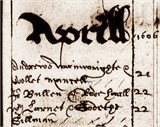
marriage record

coat of arms (with leg)

Goodith’s grave
My 12th great-grandmother arrived in Massachusetts Colony before 1632, and joined the church in Charlestown with her well respected husband. Her unusual first name is often misspelled in records, but it is an old English name.
Note: From “The Great Migration Begins…”: :’Goodith’ was a distinct given name, not to be confused with ‘Judith’, and not to be interpreted as ‘Goodwife,’ as has been done. “The Winthrop Society shows Goodith’s birth as circa 1585 and death as before 1632.
Judith Gillman was also known as Goodith Gillman. She was born in 1594 at Bermondsey, London, England. On 22 April 1606 at St. Olive, Southwork, Surrey, England, Judith married William Learned. Judith Gillman and William Learned were admitted to the church on 6 December 1632 at Woburn, Middlesex County, Massachusetts. Judith Gillman died on Friday, 24 June 1661 at Malden, Middlesex County, Massachusetts, at age 67 years.
[S466] Ancestral File. Family History Library, Salt Lake City, Salt Lake County, Utah, 1994. [S14] Wyman, Thomas Bellows. The Genealogies and Estates of Charlestown, Massachusetts 1629-1818. 1879. Reprint Somersworth, New Hampshire: New England History Press, 1982.
WILLIAM LEARNED d. Woburn, MA 1 Mar 1646, m. GOODITH GILMAN, d. 24 Jan 1661.
William Learned came from Bermondsey, Surrey, England and settled at Charlestown in the Massachusetts Bay in or before 1632, possibly in 1630 with the Winthrop fleet. He and his wife Judith were admitted to the First Church of Charlestown on Dec. 6, 1632, their names being the first two on the list of members. “1632, 10 mo., day 6, William Learned and Goodeth, his wife, were admitted”, being the first admissions after the separation from the Boston Church. He became a freeman on May 14, 1634 and a Selectman on Feb. 13, 1635-6. On March 2, 1637 he was chosen one of four to divide, for stinting, the common land, and on Feb. 12, 1637-8 he and Mr. Greene were appointed to settle the wages of the school-master.[2] On April 26, 1638 William Learned and five others were on a committee “to consider of some things tending toward a body of laws”
William was a subscriber to the town orders for Woburn, drawn up at Charlestown Dec. 18, 1640. In 1641 William moved to Woburn where he was one of the seven original members of the church on August 14, 1642. He was chosen constable April 13, 1643 and Selectman of Woburn in 1643 and 1645. These offices were only given to trusted and respected men.
Goodith Gillman (1592 – 1661)
is my 12th great grandmother
Sarah Learned (1604 – 1652)
daughter of Goodith Gillman
Mary Ewer (1637 – 1693)
daughter of Sarah Learned
Mehitable Jenkins (1655 – 1684)
daughter of Mary Ewer
Isaac Hamblin (1676 – 1710)
son of Mehitable Jenkins
Eleazer Hamblin (1699 – 1771)
son of Isaac Hamblin
Sarah Hamblin (1721 – 1814)
daughter of Eleazer Hamblin
Mercy Hazen (1747 – 1819)
daughter of Sarah Hamblin
Martha Mead (1784 – 1860)
daughter of Mercy Hazen
Abner Morse (1808 – 1838)
son of Martha Mead
Daniel Rowland Morse (1838 – 1910)
son of Abner Morse
Jason A Morse (1862 – 1932)
son of Daniel Rowland Morse
Ernest Abner Morse (1890 – 1965)
son of Jason A Morse
Richard Arden Morse (1920 – 2004)
son of Ernest Abner Morse
Pamela Morse
I am the daughter of Richard Arden Morse

Theobald at rest
My 21st heat-grandfather was the first butler in Ireland. This position granted him the prisage of wines. His father had been the hereditary butler of England before him. He lost his butler position for a couple of years because of irregularities as a sheriff. He seems to be descended from William the Conqueror, which brings us to the Doomsday book, but there is much to investigate to know if that is true conclusively. For one thing Henry II had so many oral bastards that he is the all time champ of British monarchs, I believe.
The ancestry of Theobald FitzWalter, the first Butler of Ireland, has been a fruitful theme for genealogists. No fewer than eight versions have been advanced at various times, including one that his mother was a sister of St. Thomas à Becket. This claim was put forward by the 4th Earl of Ormonde in 1444, when he procured an Act of Parliament declaring his descent from the martyred Archbishop. Despite this legislative authority, doubt has been cast on the claim by irreverent modern genealogists, who have pointed out that if the legend were true, the Butler ancestress would have been a grandmother at the age of eight! But while the descent from Agnes à Becket must be rejected, there is reason to believe that she was closely connected by marriage to Theobald FitzWalter, which may have given rise to the family tradition.
In 1937, the Hon. Patrick Butler (now lord Dunboyne) wrote a monograph in which he summarised the various versions of the early ancestry of the Butler family. This was followed in 1939 by Mr. T. Blake Butler’s Origin of the Butlers of Ireland. In this erudite and well-documented paper, Mr. Butler, showed that Theobald FitzWalter’s father, Hervey Walter (with whom the Ormonde pedigree commences in Burke’s Peerage) was grandson of Walter, who is mentioned in Doomsday Book as holding 27 manors in Norfolk and Suffolk, and who, Mr. Butler surmised, was connected with the Malet family. Further researchers made by him have confirmed this conjecture, and established that the above-mentioned Walter was in fact Walter de Caen, whom genealogists identify as a brother of William Malet, the great East Anglian landowner who fought at Hastings, and is said to have been the only companion of the Conqueror who was half English. It was perhaps for this reason that he was entrusted by William with the task of burying the body of King Harold on the seashore after the battle. As a result of Mr. Blake Butler’s researches, the house takes its place among the very few families in the Peerage who can trace their ancestry in the male line to the Norman Conquest.
L’envoi“The history of the illustrious house of Butler of Ormonde”, wrote Sir Bernard Burke, “is in point of fact, the history of Ireland from the time of the Anglo-Norman invasion. At the head of the great nobility of that country have ever stood the Butlers and the Geraldines, rivals in power and equals in renown.”
The families who are the subject of this memoir were cadet branches of that famous house, and they are not of course comparable in historical importance to the main line of the Ormonde earls. But the story unfolded in these pages shows that they too, played a part in historic events in Ireland which should not be lost in oblivion.
Theobald I FitzWalter, 1st Chief Butler of Eng & Ire, de Butler (Boteler) (1170 – 1206)
Theobald Walter or Theobald Butler or Theobald Walter le Boteler was the first Baron Butler and the first Chief Butler of Ireland. He also held the office of Butler of England and was the High Sheriff of Lancashire for 1194.[1] Theobald was the ancestor of the Butler family of Ireland. He was involved in the Irish campaigns of King Henry II of England and John of England. His eldest brother Hubert Walter became the Archbishop of Canterbury and justiciar and Lord Chancellor of England.
Family
Theobald was the son of Hervey Walter and his wife Maud de Valoignes, who was one of the daughters of Theobald de Valoignes.[2] Their children were Theobald, Hubert – future Chief Justiciar and Archbishop of Canterbury, Walter, Roger and Hamon. Theobald Walter and his brother Hubert were brought up their uncle Ranulf de Glanvill, the great justiciar of Henry II of England who had married his mother’s sister Bertha.
Career
On 25 April 1185, Prince John, in his new capacity as “Lord of Ireland” landed at Waterford and around this time granted the hereditory office of butler of Ireland to Theobald. Theobald’s father had been the hereditary holder of the office of butler of England. Some time after, King Henry II of England granted him the prisage of wines, to enable him, and his heirs, the better to support the dignity of that office. By this grant, he had two tons of wine out of every ship, which broke bulk in any trading port of Ireland, and was loaded with 20 tons of that commodity, and one ton from 9 to 20.[3] Theobald accompanied John on his progress through Munster and Leinster. At this time he was also granted a large section of the north-eastern part of the Kingdom of Limerick. The grant of five and a half cantreds was bounded by:
“…the borough of Killaloe and the half cantred of Trucheked Maleth in which it lay, and the cantreds of Elykarval, Elyochgardi, Euermond, Aros and Wedene, and Woedeneoccadelon and Wodeneoidernan.”
These are the modern baronies of Tullough (in County Clare), Clonlisk and Ballybritt (in County Offaly), Eliogarty, Ormond Upper, Ormond Lower, Owney and Arra (in North Tipperary), Owneybeg, Clanwilliam and Coonagh (in County Limerick).[
Theobald was active in the war that took place when Ruaidrí Ua Conchobair attempted to regain his throne after retiring to the monastery of Cong, as Theobald’s men were involved in the death of Donal Mór na Corra Mac Carthaigh during a parley in 1185 near Cork. In 1194 Theobald supported his brother during Hubert’s actions against Prince John, with Theobald receiving the surrender of John’s supporters in Lancaster. Theobald was rewarded with the office of sheriff of Lancaster, which he held until Christmas of 1198. He was again sheriff after John took the throne in 1199.
In early 1200, however, John deprived Theobald of all his offices and lands because of his irregularities as sheriff. His lands were not restored until January 1202.[9] A manuscript in the National Library of Ireland points to William de Braose, 4th Lord of Bramber as the agent of his restoration:
“Grant by William de Braosa, (senior) to Theobald Walter (le Botiller) the burgh of Kildelon (Killaloe) … the cantred of Elykaruel (the baronies of Clonlisk and Ballybrit, Co. Offaly), Eliogarty, Ormond, Ara and Oioney, etc. 1201.”
“Elykaruel” refers to the Gaelic tuath of “Ely O’Carroll”, which straddled the southern part of County Offaly and the northern part of Tipperary (at Ikerrin). The other cantreds named are probably the modern baronies of Eliogarty, Ormond Upper, Ormond Lower and Owney and Arra in North Tipperary.
Theobald founded the Abbey of Woney,[11] in the townland of Abington (Irish: Mainistir Uaithne, meaning “the monastery of Uaithne”), of which nothing now remains,[12] near the modern village of Murroe in County Limerick Ireland around 1200.[11] He also founded the Cockersand Abbey in Lancaster, Abbey of Nenagh in County Tipperary, and a monastic house at Arklow in County Wicklow.
Issue
Theobald married Maud le Vavasour, heiress of Robert le Vavasour, a baron of Yorkshire,[2] John Lodge in the Peerage of Ireland in 1789 gave the year as 1189, but on no apparent authority, as no other author follows him on this. He died between 4 August 1205 and 14 February 1206, and was buried at Owney abbey. Their children were Theobald le Botiller, 2nd Chief Butler of Ireland and a daughter Maud who married Gerard de Prendergast who had an only daughter who married John de Cogan.
St George Cross
My 23rd great grandmother was the sister of Saint Thomas Becket, Archbishop of Canterbury. She is the ancestor of Margaret Tyndale, whose husband was burned at the stake for reading the bible in English. Although they spend several generations as the official bottlers to the royal Brits (a much more entertaining and lucrative employment), they revert to religion like salmon swimming upstream. They go on crusades and get crazy over the crown and religion. My own great grandfather Taylor was a preacher and a Confederate soldier. You might say it is in the blood.
Lady Gilberta Godiva le Becket (1100 – 1186)
my 23rd great grandmother
Hervey Butler (Boteler) (1130 – 1190)
son of Lady Gilberta Godiva le Becket
Theobald I FitzWalter, 1st Chief Butler of Eng & Ire, de Butler (Boteler) (1170 – 1206)
son of Hervey Butler (Boteler)
Theobald II le Boteler (1200 – 1230)
son of Theobald I FitzWalter, 1st Chief Butler of Eng & Ire, de Butler (Boteler)
Lady Maud Matilda DeVerdun Countess DeBoteler Countess Arundel (1225 – 1283)
daughter of Theobald II le Boteler
Matilda Tideshall FitzAlan Baroness Corbet De Arundel (1244 – 1309)
daughter of Lady Maud Matilda DeVerdun Countess DeBoteler Countess Arundel
Sir Thomas Corbet of Moreton, Knight of The Bath Corbet (1281 – 1310)
son of Matilda Tideshall FitzAlan Baroness Corbet De Arundel
Knight Sir Robert XII Corbet, Lord of Moreton Corbet (1304 – 1375)
son of Sir Thomas Corbet of Moreton, Knight of The Bath Corbet
Sir Roger XIII (Lord of Morton) Corbet (1330 – 1396)
son of Knight Sir Robert XII Corbet, Lord of Moreton Corbet
Robert Corbet (1383 – 1440)
son of Sir Roger XIII (Lord of Morton) Corbet
Blanche Corbet (1423 – 1458)
daughter of Robert Corbet
Humphrey Coningsby (1458 – 1535)
son of Blanche Corbet
Amphyllis Coningsby (1478 – 1533)
daughter of Humphrey Coningsby
Margaret Tyndale (1510 – 1555)
daughter of Amphyllis Coningsby
Thomas Taylor (1548 – 1588)
son of Margaret Tyndale
Thomas Taylor (1574 – 1618)
son of Thomas Taylor
James Taylor (1608 – 1698)
son of Thomas Taylor
John Taylor (1685 – 1776)
son of James Taylor
John Taylor (1727 – 1787)
son of John Taylor
John Taylor (1747 – 1781)
son of John Taylor
John Nimrod Taylor (1770 – 1816)
son of John Taylor
John Samuel Taylor (1798 – 1873)
son of John Nimrod Taylor
William Ellison Taylor (1839 – 1918)
son of John Samuel Taylor
George Harvey Taylor (1884 – 1941)
son of William Ellison Taylor
Ruby Lee Taylor (1922 – 2008)
daughter of George Harvey Taylor
Pamela Morse
I am the daughter of Ruby Lee Taylor

burial place

coat of arms
William Walker received a grant of land in 1639 in Hingham, Massachusetts and was among the first settlers there. He was with Richard, James, and Sarah Walker when they came to New England in the “Elizabeth” in April 1635. He later removed to Eastham where he was admitted to freedom June 3, 1656.
William Walker was born in 1620 at England. He immigrated in 1635. He immigrated in 1643 to Plymouth, MA. He married Sarah Snow, daughter of Nicholas Snow and Constance Hopkins, on 25 February 1654 at Eastham, MA (25 Jan 1655 per #494). William Walker’s name is on the list of those able to bear arms in 1643 and he was admitted as a freeman 8 June 1656 at Eastham, Barnstable, MA. He was in COURT/CIVIL on 3 March 1663 at Plymouth Colony: Ralph Smith of Eastham, fined 3s, 4p for breaking the peace in striking William Walker. He was in COURT/CIVIL on 5 June 1671 at Plymouth: William Walker was charged with stealing cloth from Thomas Clark, “of Boston” and was sentenced to pay double for the cloth and for telling a lie about it, was fined 10 Pounds. He died in 1703.

Richard landing with Pilgrims
Oct. 1665, John Cooke and his Brother-In-Law Nathaniel Warren, were appointed by Plymouth Colony to “treat with Philip the Sagamore about the sale of such lands as are to be sold by him, and to purchase them in the behalf of the country.” Philip the Sagamore, sometimes called Metacom, was the son or grandson of Massasoit, and leader of the Wampanoag Indians. He would later be dubbed “King Philip” during the Wampanoag’s war he led against the English in 1676.
His prepared his will in 1661 to resolve disputes over his father’s estate.
From the book “Mayflower Families Through Five Generations” Richard Warren, Volume Eighteen Part 1 – Third Edition by the General Society of Mayflower Descendants 2004
On June 11 1653 Jane Collyare (Collier) on behalf of her grandchild Sara, the wife of Nathaniel Warren. Elizabeth Warren and Nathaniel Warren agreed to let the court resolve their differences over certain lands of Mr. richard Warren deceased.
Nathaniel Warren became a Freeman 3 June 1657. On 1 June 1658 he was a Deputy from Plymouth, a position he frequently held.
On 15 oct 1661 Nathaniell Warren “aged thirty seaven yeares or thereabouts” made a deposition. NOTE: spelling in the ( )’s are exactly the way it was written back in 1661.
The will of Nathaniel Warren Sr. of Plymouth, dated 29 June 1667, codicil dated 16 July 1667, names wife Sarah; dau. Hope who is lame; other children (not named); the codicil mentions mother Elizabeth Warren; brother Joseph Warren; sisters Mary Bartlett, Sr., Ann Little, Sarah Cooke, Elizabeth Church and Abigail Snow. The inventory was taken 21 Oct 1667, sworn by widow Sarah Warren who was granted administration 30 Oct 1667.
On 9 Jan. 1689/90, Sarah Warren sold land in Plymouth to her son James Warren. On 9 Jan. 1689/90, the other heirs of Nathaniel Warren consented to the sale, they were: Richard Warren; Nathaniel Warren; Jabiz Warren; Elizabeth Green; Sarah Blackwell; Thomas Gibbs and wife Alice; Jonathan Delano and wife Mercy Delano.
On 19 Sept. 1694 Jabiz Warren of Plymouth, yeoman, sold to John Gibbs land in Middleboro which was bought by his father Nathaniel Warren.
My Grandmothers
UA Poetry Center
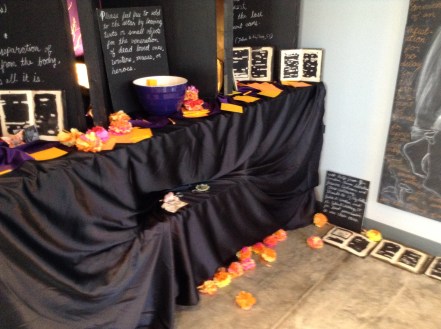
altar to honor the dead

art in chalk
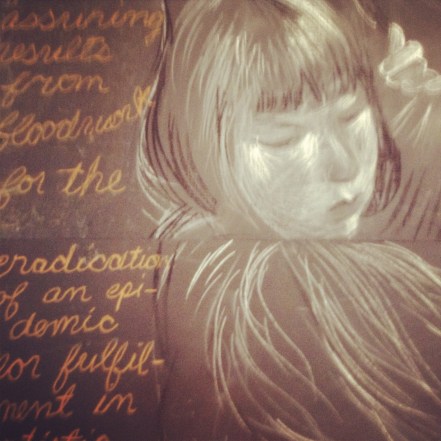
images and words
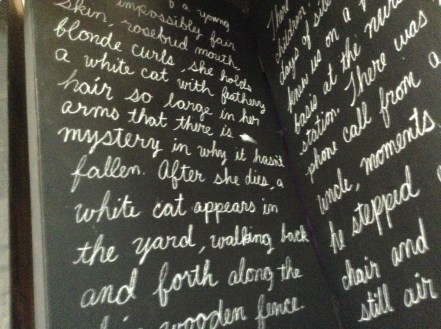
poem in chalk
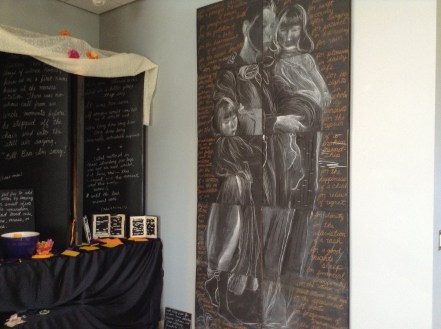
I went to the U of A Poetry Center to leave an offering I made for my mom at the altar. While I was there I found my paternal ancestor’s book of poems and read for a while. Mistress Bradstreet had a style that showed her knowledge of history, astrology, and nature. She offered meditations to her son to guide him in the future when she was no longer alive. I truly had to wonder if she had ever thought her 9th great granddaughter might read her work and try to imagine her living presence. Knowing facts about the lives of my ancestors is fun, but the creative writing of my grandmother is more personal. I wrote an ode to all of the people who survived in order for me to exist today.
Ancestry Garden
Rows of ancestors spread out in the garden of research
Roots reveal; Some conceal, the same deal
What do they leave for us?
What do we keep as our own?
They still offer, they still have wisdom
Connected by birth/death/recognition.
They tell us the secrets of mortality.
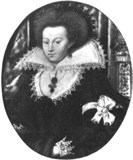
Elizabeth Whitbread
My 11th great-grandmother married into the Spencer family. Her son Gerard went to America.
Gerard Spencer, baptized at Stotfold, co. Bedford, 20 May 1576, died before 1646; married at Upper Gravenhurst, co., Alice Whitbread or Whitbred, who belonged to a family of some prominence. It seems quite possible that Gerard and his family moved from Stotfold some years before the emigration of his sons to New England; perhaps to London, where his brother Richard had become a prosperous haberdasher.
The English surname of “Spencer” derives from the Latin word dispensator, which means a storekeeper or shopkeeper. In medieval times, a feudal lord would employ a dispensator to have charge of his possessions and to oversee distribution and sale of supplies to the serfs, peasants, and tenant farmers who worked his land. In essence, a dispensator was something like a steward. This Latin term gave rise to the occupational family names of “Dispenser,” “Spencer,” “Spenser,” “Spence,” “Spens,” “Spender,” etc. Since there must have been thousands of dispensatori, there are naturally a large number of unrelated Spencer families. Even though he was the servant of a feudal lord or a king, a dispensator often himself would be of noble or knightly rank. The two best known medieval English families bearing a form of this surname were the Dispensers, Earls of Winchester, and the Spencers of Althorp, Northamptonshire, ancestors of the present Earls Spencer, who were the family of the late Diana, Princess of Wales, formerly known as Lady Diana Spencer. The Earls Spencer are also closely related to the Spencer-Churchill family, which includes the famous British Prime Minister Sir Winston Spencer-Churchill. During the Renaissance, an unscrupulous herald manufactured a spurious genealogy tracing the Spencers of Althorp back to the Dispensers of Winchester, but that fictitious genealogy was long ago debunked — there is no proof nor any reason to believe that the Spencers of Althorp had anything to do with the old Earls of Winchester.
Elizabeth Whitbread (1538 – 1599)
is my 11th great grandmother
Thomas Spencer (1571 – 1631)
son of Elizabeth Whitbread
Thomas Spencer (1596 – 1681)
son of Thomas Spencer
Margaret SPENCER (1633 – 1670)
daughter of Thomas Spencer
Moses Goodwin (1660 – 1726)
son of Margaret SPENCER
Martha Goodwin (1693 – 1769)
daughter of Moses Goodwin
Grace Raiford (1725 – 1778)
daughter of Martha Goodwin
Sarah Hirons (1751 – 1817)
daughter of Grace Raiford
John Nimrod Taylor (1770 – 1816)
son of Sarah Hirons
John Samuel Taylor (1798 – 1873)
son of John Nimrod Taylor
William Ellison Taylor (1839 – 1918)
son of John Samuel Taylor
George Harvey Taylor (1884 – 1941)
son of William Ellison Taylor
Ruby Lee Taylor (1922 – 2008)
daughter of George Harvey Taylor
Pamela Morse
I am the daughter of Ruby Lee Taylor
6. Gerald Spencer 3 (Michael S.2, John1) was baptized on 20 Apr 1576 in Stotfold, Bedfordshire, Eng 3 and died before May 1646 in Stotfold, Bedfordshire, Eng 1.
Documented events in his life were:
1. Mention in Will, Inv. or Prob.; 17 Mar 1644/45; London, Eng 3. Cited as the father of Jarrard, Thomas, Michaell Spencer who each received �50 in the will of their uncle Richard Spencer. Also father of William Spencer, deceased, with the legacy going to William’s children.
Gerald married Alice Whitebread 1 5, daughter of John Lawrence Whitebread and Eleanor Radcliffe, in Upper Gravenhurst, Bedford, England 1. (Alice Whitebread was born between 1578-1583 in Bedfordshire, Eng 1 5 and died about 1646 in Stotfold, Bedfordshire, Eng 1.)
Children from this marriage were:
+ 15 M i. Ensign Gerard Spencer 1 2 3 was baptized on 25 Apr 1614 in Stotfold, Bedfordshire, Eng 3 and died on 29 Jun 1685 in East Haddam, Middlesex Co., CT 1.
16 M ii. William Spencer 1 3 was baptized on 11 Oct 1601 in Stotfold, Bedfordshire, Eng 3 and died on 4 May 1640 in Hartford, Hartford Co., CT 1.
Documented events in his life were:
1. Mention in Will, Inv. or Prob.; Bef 20 Nov 1628; Upper Gravenhurst, Bedford, England 5. Received legacy in the will of his grandmother Eleanor (Radcliffe) Whitebread.
2. Residence; Bef 7 Jan 1632/33; Cambridge, Suffolk Co., MA 6. William Spencer is listed as an Inhabitant � no date given. but probably before the 7 Jan 1632 date given to items on p 4
3. Lands Recorded – Granted; 7 Jan 1632/33; Cambridge, Suffolk Co., MA 7. Common Pales devided as ffollo:– William Spencer 12 Rod
4. Lands Recorded – Granted; 2 Mar 1632/33; Cambridge, Suffolk Co., MA 8. Granted William Spencer the fwampe on the other fide the Creeke.
5. Oath of Freemanship/Allegiance; 4 Mar 1632/33; Massachusetts Bay Colony, MA 9.
6. Lands Recorded – Granted; 5 Aug 1633; Cambridge, Suffolk Co., MA 10. Lotts granted for Cowyardes:– William Spencer 3 Roods
7. Town Office; 3 Feb 1633/34; Cambridge, Suffolk Co., MA 11. James Olmfted & William Spencer chosen as two of the five men to order business for the town.
8. Town Service; 1 Sep 1634; Cambridge, Suffolk Co., MA 12. ffurther it is ordered that George St^ [ ] William Spencer fhall measuer out al^ [ ] ^ranted by the Towne and have IIId the Ac^ [ ] [ ] fame.
9. Lands Recorded – Granted; 1 Dec 1634; Cambridge, Suffolk Co., MA 13. Granted William Spencer that Corner of ground by Jofeph Myats between the Swamps to bee fett out by John Haynes Efqr.
10. Town Service; 3 Feb 1634/35; Cambridge, Suffolk Co., MA 14. chosen to survey town lands: James Olmfted & William Spencer [plus 3 others]
11. Town Service; 8 Feb 1634/35; Cambridge, Suffolk Co., MA 15. Townsmen present at the town meeting:– William Spencer.
12. Town Service; 20 Aug 1635; Cambridge, Suffolk Co., MA 16. It was ordered that William Spencer and George Steele fould meafuer all the meaddow ground and undeuided belonging to the Newtowne: and when it is Meafuered and deuided to euery man his proportcion there are to: meafuer every mans feuerally and Caufe ftakes to bee fett at each end and to haue three pence the Acker for the fame and whofoever fhall not pay for the meafueringe within one yeare then the ground to returne to them for meafueringe.
13. Lands Recorded – Granted; 20 Aug 1635; Cambridge, Suffolk Co., MA 16. ffurrther it is ordered that the fame [the meaddow ground and undeuided belonging to the Newtowne] fhalbee deuided acordinge to every mans seuerall proporcion herevnder written vntell it bee all difpoffed of viz:– William Andrews 2�
14. Town Office; 23 Nov 1635; Cambridge, Suffolk Co., MA 17. William Spencer chosen one of the nine men to �order busffiness of the whole Towne for the year following� also ordered that the Towne booke fhalbee at William Spencers house.
15. Town Service; 7 Dec 1635; Cambridge, Suffolk Co., MA 18. Townsmen present at the town meeting:– William Spencer. William Spencer & Mr. Bambrigg to view the fence about the ground between the swamps [to be erected by land holders] and decide if it is sufficient.
16. Town Service; 4 Jan 1635/36; Cambridge, Suffolk Co., MA 19. Townsmen present at the town meeting:– William Spencer. William Spencer & Thomas Hofmer charged with seeing that a foot bridge is built over the Creek at the end of Spring street
17. Lands Recorded; 8 Feb 1635/36; Cambridge, Suffolk Co., MA20. The Names of Thofe men who haue houfes in the Towne at this prefent as onely are to be acconted as houfes of the Towne:– William Spencer – 2; also in the Weftend:– William Spencer – 2
18. Mention in Will, Inv. or Prob.; 17 Mar 1644/45; London, Eng 3. His children received a legacy in the will of his uncle Richard Spencer of London, England.
19. Probate; 24 Jun 1650; Hartford, Hartford Co., CT 21. This Courte taking into Consideracon the estate of William Spencer deceased with the Information of the ourseers In the presence of Thomas Spencer Brother to the said William, iwth the Consent of the wife of William Edwards: the doe Judge that 30� is as much as the estate heere will bare to be sequestred for the use of the Children, wch is to bee paid to them according tot he will of the said William Spencer, provided that suffitient security bee giuen in to the Satisfaction of the ourseers for the payment of the debts of the said William Spencer, and the aforesaid Sum of 30� to the said Children as aforesaid: And prouided allso that whatsoeuer Shall bee paid heere or in England of any Estate due to the wife of the said William Spencer while Shee was the wife of William Spencer, or that Shall Come from Concord: two thirds thereof Shall be and remaine to the propper vse of the Children aforesaid.
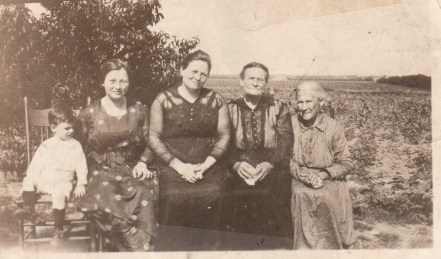
The grandmothers
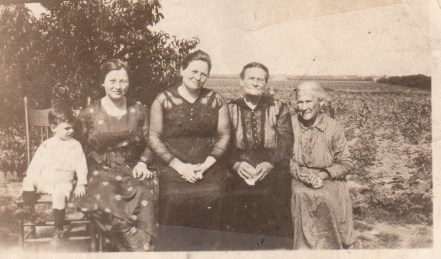
My 3rd great-grandmother was born in Somerset, PA in 1837. She became the second wife of Thomas Peterson, a widower, in Ohio in 1855. Her parents had moved from Pennsylvania to Ohio before 1850. I know her father, Amos, was a teacher, but have no records of the schools, or the times. After the Civil War she moved with her husband and children to Kansas to homestead. She survived Thomas by many years, and in 1920 was living at the home of her daughter, Harriet. She is the short one on the right side of this photo. The age of my Uncle Ernest on the left side tells us this was taken in Ladore, Kansas about 1918.
Emiline P Nicholls (1837 – )
is my 3rd great grandmother
Harriet Peterson (1856 – 1933)
daughter of Emiline P Nicholls
Sarah Helena Byrne (1878 – 1962)
daughter of Harriet Peterson
Olga Fern Scott (1897 – 1968)
daughter of Sarah Helena Byrne
Richard Arden Morse (1920 – 2004)
son of Olga Fern Scott
Pamela Morse
I am the daughter of Richard Arden Morse
Since both Emiline and her mother were born in Somerset I have joined the Somerset Historical Society and have engaged the services of the professional genealogists on the staff. Next week I will have the chance to visit not only the place, but also have the fun of doing some fully professional investigation. I expect to learn a lot about the history of the area and what was happening when my family lived there. If I am lucky I will also find some information on Emiline’s husband, Thomas. Since I have been doing this research for so long I am excited to learn how the pros approach it.
Edict of Nantes
My 9th great-grandmother was born in France and died in Northern Ireland. As usual ,this exodus was inspired by an escape from religious persecution. Her family would later settle in South Carolina as Presbyterian religious and military leaders. She married into a family called Pickens, or Picon:
The Pickens Story. as told by Stuart Clark Pickens.
About 870 a.d. the Viking “Stirgud the Stout” and his men landed in the Orkneys and Northern Scotland. They came from Norway in an effort to expand. The Pickens name comes from this group of Vikings.
Later, under their Earl, Thorfinn Rollo, they invaded France about 910 AD. They held Paris under siege until the French King, Charles the Simple, conceded defeat and granted Northern France to Rollo, who became the first Duke of Normandy.
A descendant of Duke Rollo was Duke William who invaded England in 1066. William had a census taken in England in 1086 and compiled the Domesday Book. This Listing of names has Picken listed and many variations of the spelling as well. Most notably “Pinkeny” which in the 1200’s lived in Picquigny in the Somme in the arrondisement of Amiens in Normandy.
Ghilo Pinkeny was a Domesday book tenant in chief in the county of Northampton and others, and his son Ghilo, founded the Priory of Weedon in Northampton which was a branch of the original Priory at St. Lucien in Beauvais near Picquigny. They branched into Yorkshire and acquired Shrover Hall where they were landed gentry. They also established a seat in Oxfordshire where the name was Pinke.
The Pickens name emerged as a notable English family name in the county of Northampton where they were recorded as “a family of great antiquity seated as Lords of the Manor and Estates in that shire.”
In the late 1200’s many of the Norman families of England moved north to Scotland following Earl David of Huntingdon (who later became the second King of Scotland). They expanded into Scotland where the names were Pinkie, Pickie, and Picken. They settled in Inveresk in Midlothian, Scotland. Peter Pinkie was listed as a follower of Robert the Bruce in 1303. They flourished on these estates for several centuries spreading throughout Scotland.
There were Pickenses at the battle of Bannockburn in 1314 defeating the English who outnumbered them 5 to 1, gaining Scottish Independence. This battle was the first of many major victories giving the Scots a good reputation for winning battles.
In 1328 the Treaty of Northhampton was signed between the English King, Edward III and Robert I (Bruce) officially recognizing Scottish independence and Robert Bruce as it’s king. The following year, Earl David was crowned King upon the death of Robert the Bruce and Scotland was well on its way thanks in part to the efforts of the Pickens family.
In 1521 on May the 26th , Martin Luther was banned by the edict of Worms for his religious beliefs. Any deviation from Catholicism was considered blasphemous. There was a tremendous effort throughout Europe to spread Catholicism and keep these Protestant dissidents from converting the masses.
The Scottish would not be told how to think and so would not stand for any religious persecution. On the English border the Scotch Presbyterians were treated as low life and so the border was a hard place to live. They were forced into guerilla warfare just to survive. These “Border Reevers” became the best frontier fighters in the world. There were many of the Edinburgh Pickenses among this group of fighting farmers. The Border raids were finally quieted when the Scottish king James IV took the English throne as James I in 1603. These fighters were later used by the English to quiet the Irish.
The French huguenots in the mid 1500’s felt the same as the Scottish about religious persecution, and this common belief of religious freedom forged a friendship between the Scots and the French that lasted until 1685.
It was during this time, the late 1500’s, that one Robert Picken/Picon from Scotland went to France during the reign of King Henry IV (1589 – 1610). He held a diplomatic post in the Kings Court until 1610 when Louis XIII took the crown. He then returned to Scotland near the English border and lived there until his death. He had family in Edinburgh, Stewarton, Glasgow, and the Kintyre Peninsula. The border had become a friendly place at the time because a Scottish King sat on the English throne. (James I was also James VI of Scotland and the son of Mary, Queen of Scots). This made for what Robert thought would be an easy retirement.
When his son Andrew was born in 1624, the political climate was getting difficult. Charles I began his reign over England in 1625 and some of the attitudes changed toward the “Wily Border Reevers of Scotland”, so called because of the old hatred between the two countries under Elizabeth I (1558 – 1603). The Covenanters were also uprising against the English crown and England’s religious civil war was reaching into Scotland. The Scottish king James was no longer king and old hatreds built up again atop new hatreds. But it was still a tolerable life for Robert Picken/Picon because of his diplomatic status. Robert Senior died in 1644 and is buried in Lowland Scotland.
There were other Pickenses (Pickan) in Edinburgh who were believed to be Robert Picon’s (Pickens) brothers. A lot of their children moved to Ulster in the 1620’s and 1630’s. This was a colonization effort of the English to make Ireland “civilized”. (See Ulster History).
In 1644 Andrew had a son Robert named after Andrew’s father. Robert was born in Scotland according to LDS records. He went to France with his father at a young age. While in France, Robert met the young widow of a Frenchman named Jean Bonneau. Her name was Esther Jeane Benoit and she was from a Protestant huguenot family. They began a family there. Among Robert’s children were William Henry Pickens, who was born in 1669 (LDS) in France. His other sons were Andrew, John, Robert, Israel, and Thomas, and a daughter who married a Davis.
In 1651 Oliver Cromwell defeated Charles and began the commonwealth. The Irish Catholic rebellion was in full swing in Ireland and the English sent the Presbyterian/Covenanter Scottish armies (who called themselves God’s army) to stop them.
Catholicism was outlawed in Ireland and the Scots (fighting for the English) tried to convert the Irish Catholic Papists to the Presbyterian faith. That failed because the Scots didn’t want to tell people what to believe. So Cromwell’s army took over to enforce the English law.
Andrew Picken/Picon still believed, as most Scots did, in religious freedom and wanted to avoid that war because it seemed to him to be hypocritical. So he took his family to France to the town that his father had previously lived in.
The families enjoyed a peaceful existence in France until 1685 when they revoked the Edict of Nantes. There was no more religious freedom in France unless you were Catholic. This was a good reason for Andrew and his family to return to Scotland and find their relatives. So Robert and Esther, his parents and his children, and a host of French friends all went to Scotland to practice the Presbyterian faith. They became split on the subject of becoming Covenanters. Most believed that everyone should have the freedom to choose their religion. The Covenanters believed only in the right to be Presbyterian. The Catholics believed they were the one true religion.
This is what David Cody, Assistant Professor of English, Hartwick College had to say about the Covenanters.
“The Covenanters were supporters of the Scottish Covenant of 1638, which was a national protest against the ecclesiastical innovations in the Scottish Church imposed at Edinburgh and subscribed to by various nobles, ministers, and burgesses. Those who signed the Covenant, which was initially neither anti-royalist nor anti-Episcopalian, though it became both, declared that they would defend their religious beliefs against any changes not mandated by free assemblies and the Scottish Parliament. The term was also applied to their spiritual heirs who opposed the reintroduction of episcopacy in 1662.
“Some Covenanters were also signatories of the Apologetical Declaration which declared war on all established political officials, soldiers, judges, conformist ministers, and informers. This document, however, provoked a response upon the part of the authorities which became known as the Killing Times: during 1684-85, at least 78 persons were summarily executed for refusing to retract their allegiance to the declaration, and many others were executed after trial. Despite often brutal repression, especially during the period between 1678 and 1685, the excluded ministers, supported by the local aristocracy and independent peasantry, maintained an underground church in the south-western parts of Scotland.”
South Western Scotland is where our ancestors moved to at the time, Kintyre.
But in England the Covenanters were quelled and the Presbyterians were the lowest of second class citizens. Presbyterian marriages were considered not valid and they were labeled as fornicators. Anyone seen with a Presbyterian Covenanter was arrested with him and whole prisons were built to house them. It was a bad time near the border for humble Scottish cattle ranchers who were just trying to make a living.
Their land could no longer support them due to the ravages of war, and the English demanded outrageous taxes and rents. This caused so many people to leave Scotland that whole towns were left deserted. The massive emigration was compared to great swarms of bees rising out of the field.
A lot of the Pickenses went to the faraway tip of the Kintyre Peninsula to escape the strife and farm new land. It was 140 miles to the nearest city (Glasgow) along a thin strip of land, and it was only 14 miles across the water to Ireland (Ulster). Eventually Campbeltown became a busy port for refugees.
Then came the revolution of 1688 and Presbyterianism was restored as the state religion in Scotland.
In 1685, when the Pickenses arrived back in Scotland from France, they found that all their relatives had moved to Ulster, Northern Ireland. In the search for peace and religious freedom most of them followed the rest of their Clan to Ulster by way of Campbeltown, Argyll, Scotland. It seems that on their way through Scotland some members of the family stayed in the towns the went through.
CHILDREN OF ROBERT ANDREW PICKENS AND ESTHER JEAN BENOIT1. WILLIAM Henry born in France in 1669 went to Ireland with his father by way of Campbeltown, married Margaret Pike in 1693 in Ireland and had the following children all in Ireland: Israel born 1693; Margaret born 1695; Andrew born 1699; Robert Pike born 1697; William born 1705; John born 1710; Israel born 1712; Gabriel born 1715; and Lucy born 1718. All were born in Ireland and all moved to America in the spring of 1719. They appear in 1719 in Bensalem Church in Bucks County Pennsylvania as recent Immigrants from Ireland. 2. ANDREW moved to Fenwick and married Jane Mitchall; they had a daughter named Bessie who was christened May 13, 1705. 3. JOHN Stayed at Campbeltown and married Anne Colvine on June 2, 1691. They had at least 2 sons, James born March 20, 1692; and Alexander born July 9, 1693. 4. ROBERT moved to Glasgow and married Janet Corsby; they had at least 2 sons, Robert Christened June 5, 1707; and Alexander Christened August 27, 1721. 5. ISREAL born in France in 1676 went to Ireland with his father by way of Campbeltown, married and had at least 2 sons; William born in 1720, and Thomas born in 1730. 6. THOMAS stayed in Campbeltown and married a ? Clark; they had a daughter named Martha christened June 5 1692. 7. ?? A daughter who married a Davis. In Ulster in the 1690’s, the Irish papists, who were still mad at the Scots for Cromwell’s war 40 years earlier, banned Presbyterian services, and outlawed their ministers. So the Scotch/Irish Presbyterians had to have their services in the woods with guards posted at the corners to keep their ministers from being arrested. Hence the phrase, “They read their bibles with their guns cocked.”
The Irish cities of Derry and Coleraine were supposed to be English cities given to Lord Abercorn as a result of the Nine Years War. The Scots built a 20-foot wall around Derry to defend it from the English siege in the brutal winter of 1688-1689. The Scots lost the siege but were not displaced and so they took over Coleraine. Then came the Battle of the Boyne, on July 1, 1690.Click for a Map of the BattleAfter that the Protestants had no rights anymore. Ulster was so full of Scots that they outnumbered the English by 20 to 1. The Irish were happy that the English were being replaced by Scots, but still didn’t want so many Protestants in their country. Life was becoming just as hard for the Scots in Ireland as it was near the English border. This makes three generations that had to relocate because of religious persecution. They were tired of it.
They had heard of Pennsylvania.
There was a land where no one would tell you what to think or how to live. This land is not only rich farmland, but it is free for the taking! You could preach or worship any religion you want, Right next to someone preaching another religion. No tax, No Tithes, No rents, and No persecution. Imagine, Just walk into the frontier and claim a farm. Run it for only yourself and raise a family. Start a small village of just friends and family. If you’re a criminal – leave it behind. If you’re poor – leave it behind. If you’re afraid of being arrested for an “idea” – leave it behind. There is peace, prosperity and freedom on the frontier in the New World.
And all you have to do is get there.
There had been no harvest for 5 years due to the ravages of war and several severe winters. This recreated the need for emigration in the early days of the 1700’s. Many paid passage by agreeing to 4 years as indentured servants in order to take advantage of the fertile and free land in America.
Passage to America was not cheap, and to move your whole family (which was quite large back then) plus all your livestock, would cost a bundle. One could only go by ship and the voyage was tough enough without kids and livestock, if you could even get passage for livestock which wasn’t likely. If you could not afford passage, the only way was indentured servitude. There were rich American plantation owners who would pay for a man’s passage if he would work for a year. If he brought his family he would have to work four years. Unfortunately, some emigrants would literally jump from the ship to avoid the servitude altogether. They would disappear into the frontier and the plantation owner was out a considerable sum of money.
There were many references to bad ocean voyages, and even in the best of trips, which lasted 2 to 3 weeks; the ships were overloaded with people, the rations were short or just barely enough, the food was vermin ridden, and the water was stagnant and green with life. Many were blown off course northward. The weather would turn very cold and even icebergs were sighted. Hunger and thirst reduced them to shadows. Many killed themselves by drinking salt water or their own urine. Their journey lasted up to 13 weeks or 3 1/2 months. The disembarkation process at their destination was also harsh. First the ones who could pay full price were allowed to pay and get off the boat. Next the healthy ones were sold to their new masters for the full fee. Then unhealthy ones were sold at auction. This process often took several weeks. If one of the family died, the rest of the family members were held accountable for passage fees of the deceased. However, the Ulstermen thought they had found the Promised Land.
The Scots/Irish who had indentured themselves to reach the US, set out for the frontier immediately on fulfilling their Indenture. The “Frontier” was 40-50 miles west of Philadelphia. Across the Susquehanna River was the Alleghenies which marked the frontier. This is where the German Palatines settled. The Scots usually settled as far out as possible to be far enough from society so as to make their own kind of living. Just beyond the Ohio River lay the rich Cumberland Valley. Eventually, a ferry opened the Cumberland Valley to the Scots/Irish and it became their heartland. The French claimed to own the frontier beyond the Ohio River but there was no way to stem the flow of Scots/Irish to the area. Our ancestors settled in what was known as the “Seven Ranges” area, just beyond the Ohio River. They renamed the area “Scotch Ridge”. Scots were famous for being the furthest out on the frontier. They marked their property by cutting their initials in trees on their boundaries. Then cut circles in the bark to kill the tree. They refused to pay for the land, since God owned it. The wives spun flax, milled the corn, worked in the fields and bore 10-15 children. They also educated their own children. Homemade whiskey was important for trade and made a harsh frontier life more tolerable. The Whiskey also made the Indians more friendly to the Scots than the Germans or English. So the Scots made a good barrier between the Indians and the settled areas
Ester Jeanne Bonneau (1644 – 1699)
is my 9th great grandmother
William Pickens (1670 – 1735)
son of Ester Jeanne Bonneau
Anne Pickens (1680 – 1750)
daughter of William Pickens
Nancy Ann Davis (1705 – 1763)
daughter of Anne Pickens
Jean PICKENS (1738 – 1824)
daughter of Nancy Ann Davis
Margaret Miller (1771 – 1853)
daughter of Jean PICKENS
Philip Oscar Hughes (1798 – 1845)
son of Margaret Miller
Sarah E Hughes (1829 – 1911)
daughter of Philip Oscar Hughes
Lucinda Jane Armer (1847 – 1939)
daughter of Sarah E Hughes
George Harvey Taylor (1884 – 1941)
son of Lucinda Jane Armer
Ruby Lee Taylor (1922 – 2008)
daughter of George Harvey Taylor
Pamela Morse
I am the daughter of Ruby Lee Taylor
THE FRENCH TRADITION: General Andrew Pickens in his letter t General Lee in 1811 madethe following statement: “My father and mother came from Ireland. My father’s progenitors emigrated f rom France after the revocation of the Edict of Nantes. (Appendix No. I)” NOTE: Recently, I had someone check the listing of emigree from\ France after the Edict. There is not any listing for a Robert or Andre (Andrew) Pickin, Picken, Picon, Pican. Neither is there any listing for a Lady Ester J BONNEAU. It is my assumption that Robert married and moved to Ireland BEFORE the Edict, probably before 1667. I believe that the Robert showing in the Hearth Tax of 69 is in reality the same as William and Israel’s father. There seems to be some support for the claim that one Robert PICON, a Scotchman or Briton at the court of France was a Protestant who fled from Scotland in 1661 to avoid peresecution of Charles II. He may have gone to France in the days when there was a close alliance between Scotland and France. In France he is said to have married Madam Jean Bonneau, also a protestant. They fled France after the revocationof the Edict of Nantes by Louis XIV in 1685, annulling all privaledges granted to Prostestants by his grandfather Henry IV. Tradition continues that they went to Scotland, later to Northern Ireland, among their religious kinsmen, the Presbyterians

Passengers on the Bevis
Thomas Reeves is not the only one of my ancestors who arrived in America on the ship Bevis, nor is he the only one who came as an indentured servant. He landed after becoming a freeman in the colony, in Springfield, MA (a city I drove right past in May) where he was a blacksmith and the town drummer. How cute, the official drummer!! I wonder who the official town fife player was. His son Thomas, who moved to Long Island after his father’s death, seems to have continued the family trade of blacksmithing.
Thomas Sr (generation #1 in America) came from Southampton, England in 1638 on the “Bevis” and arrived in Boston. He was an indentured servant to Henry Byley, but became the servant of John Gore and lived in Roxbury, MA until 1644 when he became a freeman. He married Hannah Rowe on Apr 15, 1645 at Roxbury. They moved to Springfield, MA where he was a blacksmith and the town drummer. He died at Springfield on Nov 5, 1650 in his late twenties after fathering three children, two of which survived to adulthood (Thomas, Mary, John). His wife later remarried Richard Excell (or Exile) of Springfield on June 4, 1651, by whom she had four children (Mary, John, Lydia, Abigail). She died in 1660 in Spreingfield. He was still in the Springfield are in 1681. Mr. Excell presumably then moved to Southampton, LI with his step-son Thomas Jr and died there Feb 24, 1714, after suffering financial problems, according to his will. He also suffered from wounds received in King Phillip’s War.
There was another Thomas Reeves in MA who was born earlier and married a Mary Purrier.
Thomas Sr may have had an aunt Mary who immigrated with him and married William Webster, or the story about her is inaccurate in her age at death. Her husband was a the son of Gov. John Webster of Conn. She was accuased of being a witch in Hadley 1n 1673 by the county court in Northampton, but was acquitted at her trial in Boston in 1683. She died in 1696, her husband dying in 1688.
 mermaidcamp