mermaidcamp
Keeping current in wellness, in and out of the water
You can scroll the shelf using ← and → keys
You can scroll the shelf using ← and → keys

Chadbourne coat of arms
We are lucky to have the will of my 11th great-grandfather. He was a sawyer who lived in Lancashire and was brought up during the reign of Henry VIII. When Elizabeth I demanded that everyone attend church on Sunday Robert responded that he had not been to church for ages. Despite being married in the Anglican church and allowing his children to be baptized there, it is clear from the deposition in John Fisher’s book that Robert Chadbourne was a Roman Catholic. He clearly states that he was raised in the time of Henry VIII when there was a “different order” (officially-sanctioned Roman Catholicism). His words in the original Olde English thrill me.
Robert Chadbourne (1530 – 1622)
is my 11th great grandfather
William CHADBOURNE (1582 – 1652)
son of Robert Chadbourne
Patience Chadbourne (1612 – 1683)
daughter of William CHADBOURNE
Margaret SPENCER (1633 – 1670)
daughter of Patience Chadbourne
Moses Goodwin (1660 – 1726)
son of Margaret SPENCER
Martha Goodwin (1693 – 1769)
daughter of Moses Goodwin
Grace Raiford (1725 – 1778)
daughter of Martha Goodwin
Sarah Hirons (1751 – 1817)
daughter of Grace Raiford
John Nimrod Taylor (1770 – 1816)
son of Sarah Hirons
John Samuel Taylor (1798 – 1873)
son of John Nimrod Taylor
William Ellison Taylor (1839 – 1918)
son of John Samuel Taylor
George Harvey Taylor (1884 – 1941)
son of William Ellison Taylor
Ruby Lee Taylor (1922 – 2008)
daughter of George Harvey Taylor
Pamela Morse
I am the daughter of Ruby Lee Taylor
y have a descriptive meaning, such as “Chad’s brook,” or “Chad’s ford,” but it is generally thought to denote a person from the village of Chatburn in the parish of Whalley, near Clitheroe, about twenty miles northeast of Preston, Lancashire. At least one other place name in the area bears the prefix “Chad,” i.e., Chadswell.
A false clue has long obscured the true ancestry of immigrant William Chadbourne of Kittery, Maine (Sybil Noyes, Charles Thornton Libby, and Walter Goodwin Davis, Genealogical Dictionary of Maine and New Hampshire [Portland, Me.: The Anthoensen Press, 1928-1939 (reprinted Baltimore, 1972)], 134, 651-2). Libby, Noyes, and Davis repeated a speculation that William was from Winchcombe, Gloucestershire, and indeed, a William does appear in the baptismal register for that parish. An exhaustive search of the Winchcombe registers produced nearly one hundred Chadbourne entries between 1595 and 1635 and nineteen distinct Chadbourne families, but failed to reveal a William with children Humphrey and Patience, as seen in the Kittery family. Probably influenced by the Banks manuscripts at the Library of Congress, Libby, Noyes, and Davis went on to mention Tamworth, Staffordshire, a parish about 90 miles north of Winchcombe, in their Chadbourne entry.
That Tamworth was the true origin of the American Chadbournes was communicated sometime before April, 1959, by R.O. Wilson, then living in Richmond, Surrey, England, to the late Fred Babson Chadbourne of New York, New York, who hired Noel Currer-Briggs to look into the matter. Here we find the names Patience, Humprey, and William as children of a William Chadbourne, the exact combination which appears in the records of Maine, and this family disappears from English records at precisely the time we would expect the immigrants to Maine to do so. A short manuscript synopsis of Currer-Briggs’ work was compiled by Fred B. Chadbourne in May of 1959 and circulated privately to interested family members.
In 1972 the will of Robert Chadbourne of Tamworth, father of the immigrant William, was abstracted and published by Noel Currer-Briggs on page 80 in his English Wills of Colonial Families, (Cottonport, La.: Polyanthos, 1972). Since that time, several people have published sketchy outlines of the correct Chadbourne pedigree, most notably Helen and Evelyn Stager of Luverne, Minnesota (A Family Odyssey, The Ancestors and Descendants of Joseph Harrison and Ada Belle (Marsh) Stager [Pipestone, Minn.: The Authors, 1983]).
Tamworth straddles the border between Staffordshire and Warwickshire, but since the parish church of St Editha, where William Chadbourne’s family was recorded, is in the Staffordshire part of the city, references to Tamworth here will use Staffordshire for consistency. It is noted, however, that Robert Chadbourne, in his will, states his residence as Tamworth in Warwickshire, and it may be that the family resided in that portion of the parish.
The following are abstracts of all Chadbourne entries from the parish registers of the Church of St Editha, Tamworth (Percy W.L. Adams, ed., Staffordshire Parish Registers Society. “Deanery of Tamworth. Tamworth Parish Register. Part I – 1558-1614 [n.p.: all printed, 1917], and from the original parish register thereafter, as noted below.
Tamworth, StaffordshireBook I – 4 March 1556/7 to 19 July 1614 (all entries mixed)
1575, Aug 21 Thomas, s. of Thomas Chadburne, bpt1575, Aug 30 Thomas s. of Thomas Chadburne, bur.
1576, Sep 14 Robert, s. of Thomas Chadburne, bur.
1576/7, Jan 28 Robert Chadburn & Margaret Dooley, m
1578, Apr 9 Robert, s. of Robert Chadburne, bpt
1579/80, Feb 15 Margery, d. of Robert Chadburne, bpt
1582, Mar 30 Willm, s. of Robert Chadburne, bpt
1584, June 3 John, s. of Robert Chadburne, bpt
1586/7, Mar 17 Walter Chadborne, Tamworth, bur.
1587, Apr 9 Randall, s. of Robert Chadborne, bpt
1589, Aug 15 Willm Bawdwyn, Chadbornes servant, bur.
1590, May 11 Thomas, s. of Robert Chadborne, bpt
1604, Oct 9 Richard Hewer & Margery Chadburne, m
1609, Oct 8 William Chadburne & Elizabeth Sparry, m
1610, Sep 30 Willm, s. of Willm. Chadburne, bpt1612, Nov 8 Patience, d. of William Chadburne, bpt
Book I, and others – 19 July 1614 to 31 December 1675 searched
Baptisms
1615, Apr 23 Humfrey, s. of Wm Chadburne1617/8, Feb 22 Susanna, d. of Wm Chadburne
1619, Sep 6 Edward, s. of Thomas Chadburne
1619, Oct 29 Judeth, d. of John Chadburne
1620, Oct 15 Willm, s. of Wm Chadburne
1622, Sep 25 Anne, d. of Thomas Chadburne
1623, June 1 Robert, s. of Willm Chadburne
1623, Sep 28 Alice, d. of Randall Chadburne
1624/5, Feb 8 Robert, s. of John Chadburne
1625, Mar 29 Walter, s. of Randall Chadburne
1625/6, Jan 1 Eliz & Margarett, ds. of Thomas Chadburne of Wigginton
1627, 9 Dec John, s. of Randell Chadburne of Tamworth
1629, May 24 Margrait, d. of John Chadburne
1629, Aug 9 John & Isabell, children of Thomas Chadburn of Wiginton
1630, June 13 Mary, d. of Randle Chadburne of Tamworth
1632/3, Feb 17 Eliz, d. of Randle Chadburne of Tamworth
1633, July 28 Edward, s. of John Chadburne of Tamworth
1634, Dec 14 Thomas, s. of Tho Chadburn
1635, Apr 19 Sara, d. of Randle Chadburn: Tamworth
1635/6, Mar 20 Alice, d. of John & Jone Chadburne
1636/7, Mar 19 Barbra, d. of Thomas & Ann Chadburn
1638, May 20 Susanah, d. of Randle Chadburn
1642, May 1 Wm, s. of Thom Chadburne
1645, July 27 Sarah, d. of Edward Chadburne Tamw: sould
1646/7, Jan 24 Elizabeth, d. of Edward Chadburne Tamw
1648/9, Mar 7 Samuel, s. of Edward Chadburne
1650, Apr 10 Samuel, s. of Edward Chadborne
1651/2, Jan 24 Ann, d. of Edward Chadburne
1653, Dec 24 Joana, d. of Edward Chadborne was borne
1659/60, Feb 20 Robert, s. of Edward Chadburn was borne
1665, Apr 25 Ester, d. of Walter Chadburne of Tamworth & Margret ux
1669, Sep 12 Frances, d. of Walter Chadburne of Tamworth & Margret ux1670, Nov 20 Willm, s. of Tho Chadburne of Hoppas & Alice ux
Marriages
1618, Nov 10 Thomas Chadburne & Anne Mare1618/9, Jan 21 John Chadburne & Jone Owres
1632, Oct 1 Thomas Chadburne & Anne Bull
1648, Apr 15 Joseph Reignolds & Anne Chadburne
1653, June 1 Randl Fernsworth & Mary Chadbn
1655, June 14 William Smart & Isabell Chadburne both of Wiginton by banns
1656/7, Jan 26 James Jackson of the psh of Dronfield & Susana Chadburn of Tamworth by banns
1662, Apr 8 John Garnet & Alice Chadburne both of Tamworth
1665/6, Feb 27 William Burcher & Barbara Chadburne1671/2, Feb 8 John Ling & Johanna Chadburne
Marriage Banns
1654, Sep 24 William Battman sherman & Margret Chadboorneboth of Tameworth 3rd and last time
Burials
1616, Apr 18 William, s. of William Chadburne1618, Apr 26 Susanna Chadburne infant
1622, Dec 16 Robert Chadburne of Tamworth
1625/6, Jan 18 Margarett, d. of Thos Chadborn
1626, Sep 23 Margery Chadburne widdow Tamworth
1626/7, Jan 19 Robt, s. of Willm Chadburne of Tamworth
1629, June 9 Elizabeth, d. of Tho Chadburn
1630, June 26 Alice, d. of Randle Chadburne: Tamworth
1632, June 10 Anne, w. of Thomas Chadburne of Wigenton
1633, July 11 D. of Thomas Chadburne of Wiginton
1638/9, Mar 20 Sara, d. of Randle Chadburn of Tam
1647, May 3 The body of John s. of Randle Chadburn of Tam
1649, Apr 18 The body of Samuel s. of Ed Chadburn
1649, Apr 24 The body of a child of Edeth Chadburn – a bastard
1649, Sep 19 The body of Ann wife of Tho Chadburn
1650, May 30 The body of Elizah wife of Edward Chadburn
1650, Dec 5 Samuel, s. of Edward Chadbon
1652, Aug 31 The body of Mary the wife of Randle Chadbourne of Tamworth
1653, Aug 23 The body of Randle Chadborne
1653, Sep 17 Eedeth, d. of widow Chadburne
1660, May 4 Ann, d. of Edward Chadburne of Tamworth
1660/1, Feb 2 Edward Chadburne of Tamworth weaver
1644, May 17 Mary d. of widdow Chadburne of Tamw
1664/5, Jan 1 Sarah, d. of Walter Chadburne of Tamworth
1664/5, Jan 14 A female child of Edward Chadburne
1667, Oct 28 Joane Chadburne of Tamworth widdow
1672, Sep 19 Thomas Chadburne of Hoppa1673, Apr 29 Mary, d. of Thomas Chadburne of Hoppas
My search has turned up a most extraordinary account which gives us a rare insight into the background of the Chadbourne family. In The Book of John Fisher, Town Clerk and Deputy Recorder of Warwick 1580-1588, transcribed and edited by Thomas Kemp, Deputy-Mayor of Warwick, 1900, we find a very informative deposition by Robert Chadbourne, father of the immigrant, which survives in this day-to-day diary of a judicial officer. This rare manuscript shows the range of cases seen in the late 1500s before the justices of the peace, everything from horse stealing and complaints about beggars to the imposition of sanctions against Catholic recusants (report of John S. Griffiths to the writer, then the date 3 Sep 1985).
By the Act of Uniformity, Elizabeth I decreed that all persons were to attend church on Sundays and Holy Days or pay 12d per offense. Persons over 16 who defied this Act were fined £20 for every month of absence (The Book of John Fisher, 115). The deposition reads as follows:
primo die novembris Anno xxiiijo of Rne Elizabethe [1582] coram humfrid Crane Johni Fisher et Thome Powell
Robart Chadborne borne in Lancashire in Preston in Andens a Sawer being examyned when he was at the church to heare dyvyne servise saiith, That he was in the church at Tonworth within this half yere or there about in the company of one Richard dolphyn & many more only to goo through the church But he saith that he was not in any church to hear dyvyn servyce the space of foure or fyve yeres or there about as he remembreth.
And being askid whie he wold not come to the church he saith yt was bycause his father and mother brought him up in the tyme of King henry the eight and then there was other order And he myndith to observe that order and to serve the lord god above all things.
Being askid what is in the church that he mislikith, or thinkith is not wth the service of god he answreth that he praith the hearers to pardon him for he will say no more.
Being demaundid whither he thinks that the Quenes maty Q. Elizabeth is supreme governor over all causes as well ecclesiasticall or tmpall within this Realme of England he answeereth that he thinkiith so.
Being damaundid whither the quenes mats ought to be obeyed in those lawes that she makith and that those lawes which be made by her ought to be obsved and kept as well in matters ecclesiasticall as tempall, he aunswereth That first he is afrayd to displease god above all things. And then afraide to displease his mighty prynce.
Being demaundid whither the order set downe and agreed uppon & comaundid by the quenes maty to be & that is now comonly used in the Church of Englond is acording to gods institutyon or as it ought to be. he aunswerith that it is against his conscyens.
Being offred to be set at libtye upon condycion that he will this night goo to the church and resort to the church in the tyme of dyvyne sruice & sermons uppon Saboath and holy dayes he utterly refusith it & will not doo yt
(The Book of John Fisher…, pp. 114-115).
From his deposition, we learn that Robert Chadbourne was born in Preston, Lancashire, and brought up in the reign of Henry VIII. There are virtually no Lancashire wills prior to 1550, and although many were indexed in the 19th century, some have gone missing since that date. Many were transported to Richmond in open carts in 1748 and more than 10,000 were lost, large numbers disappearing when at least one cart overturned in Wensleydale. Almost all from the deanery of Amounderness were lost (Anthony J. Camp, Wills and Their Whereabouts [Bridge Place, near Canterbury: The Society of Genealogists, 1963], 35). Eight wills and administrations for Chadbournes between 1550-1650 were indexed, and those extant have been examined. The most promising was that of Thomas Chatburne of Elswick in the parish of St Michael on Wyre. Not only was it near Preston and in the Deanery of Amounderness, it also named a son Robert. No further supporting information has been found and it has been impossible to reliably connect this Thomas with our Robert from existing records.
This will is badly damaged and a large part of the right side of the sheet has been torn away. It is dated 7 July (possibly 1560), but the year is missing (presumably torn away); it was proved that year, but the probate clause is absent. A short abstract of the names found in the surviving fragment of this will was made by Dr. Alan G. Crosby of Preston, Lancashire, as follows:
1560 Thomas Chatburne of Elswick, parish of St Michael on Wyre, Deanery of Amounderness, Lancashire
Rowland…Henry…
…Brown
Robert Ballard
son Robert Chatburne to be sole executor
witnesses: …Kyrkby, Robert Ballard, Thomas Brown
a list of debts owed to the deceased names the following:
Edward Turner of Crossbrake (?)
William Swartbrecke of Risicar
Robert Horneby
Robert Ballard
Richard Bond
Thomas Browne
Henry KyrkebyeJohn Cotton
The will of Katherine Chatburne of Elswick, probated in 1561, might be that of Thomas’ widow, but this will has been missing for many years and not even an abstract survives. There are no manorial court records for Elswick at the Lancashire Record Office.
Some of the papers of the Earls of Derby are deposited there, but no mention of Chadbournes is to be found among them.
The absence of Preston parish registers for the 16th century made it impossible to follow the family of Robert Chadbourne there. The registers of St John, Preston, the only church there in the 16th century, do not begin until 1611, and the Bishop’s Transcripts only date from 1616. The parish registers of St Michael on Wyre do not start until 1659. Parishes adjacent to the latter were checked for Chadbournes, and although a few were found, none seemed relevant.
A thorough search of the Tamworth parish registers shows very few people named Chadbourne, but all appear to have been related. The repetition of the names Thomas, Walter, and Robert among each group supports this conclusion.
A. ROBERTA CHADBOURNE, born Preston, Lancashire, probably 1530s or later; buried Tamworth, Staffordshire, 16 December 1622; married there 28 January 1576/7, MARGARET DOOLEY who, as “Margery Chadburne widdow” was buried there on 23 September 1626. Her parentage has not been discovered.
Despite being married in the Anglican church and allowing his children to be baptized there, it is clear from the deposition in John Fisher’s book that Robert Chadbourne was a Roman Catholic. He clearly states that he was raised in the time of Henry VIII when there was a “different order” (officially-sanctioned Roman Catholicism). Henry reigned from 1509 to 1547 and declared the new order in 1537. There was considerable religious confusion at this time, and the subsequent reigns of Edward VI and his sister Mary did little to settle the matter. It was not until Elizabeth I succeeded to the throne in 1558 that things began to stabilize and the “new order” was identifiable. Robert Chadbourne may well have been referring to the “time of Henry VIII” in a very broad sense since, if he was truly brought up in that reign, he was unusually old at the time of his marriage.
We get few clues about the status of Robert’s family. From his deposition we know that he was a sawyer. The Preston Guild Merchant kept reliable records, updated every twenty years. These records were published and edited by W.A. Abram in 1882, but neither Robert nor anyone of the surname Chadbourne appears on the rolls.
The burial on 15 August 1589 of William Bawdwyn, “Chadbornes servant,” indicates that the household was at least of a size to support one servant.
Will of Robert Chadburne
Consistory Court of the Bishop of Lichfield and Coventry, 14 Dec 1622
In the name of God Amen In the yeare of or Lord god 1622 in the xxth yeare of the Raigne of or Sovraigne Lord king James the xiiijth day of December &c. I Robert Chadburne of Tamworth in the County of Warwicke Carpenter beinge sicke in bodie yet thanks be to god in good and parfit Remembrance remembringe the uncrtayne hower of Death Doe ordayne and make this to be my Last will & Testamt in manner and forme Followinge First I give & bequeath my soule to Almightie god and my bodie to be buried in Tamworth church yarde Item I give & bequeath unto Margret my wyfe all my worldlie goods wch I possesse moveable & unmoveable payinge unto evry one of my chilldren xijd apeece And alsoe that my sonne Randulphe and his wife shall have hold & quietlie enioye the one halfe of the house and Backeside Wt my aforesaid wife duringe the tearme of my Lease wthout any let or molestation And yf it happen that my wiffe duringe this tyme wch I have in my house shoulde be so mynded to sett or assigne over hir tyme wch is yet to come that then it shall be Lawfull for my Sonne Randulphe to have the refuse of the same givinge as another should give Alsoe I do ordayne & make to be my overseers of this my will to be Pformed Christopher Wilcox & my sonne William Chadburne Wittnesse unto the same
/s/ Christopher Wilcox/s/ William Rutter
fuit administrato scdum tenorum testamenti suprascripti Margarete Chadborne Relici & c.
Commissio mro Johanni Oldacre Clico Currato de Tamworth. Ob: dca Margareta Chadborne de Tamworth in Com Warw vide et Ranulphus Chadborne de ead Carpenter.
Ro. Master.
Entry from the Administration Act Book
Apud 31 dei decembris Ao Dni 1622. Comissa fuit administraco bonorum Robti Chadburni dum vixit paroch Tamworth defuncti Margarete eius Relict iurat curam mro Johanne Oldacres Jurat ibm &c Ad administrand ead iuxa tenorem testamti dci def lris administrator annex &c.
Inventory
The Imventtory of the goods and Cattaile of Roberte Chadburne of Tamworth Latte decessed preseid by Thomas Righte Copper Thomas Egginton day laborer as Followithe
First his parrell
0 -10s-0
Itm his linnene
2£ -3s-4d
Itm his beadinge
1£ -0 -0
Itm all hiss wooden Stuffe
1£ -3s-4d
Itm his Tulls and all yorne [iron] stuffe
0 -16s-8d
Itm peutter & brasse
1£ -10s-0
Itm a smalle lease of a house
1£ -10s-0
Itm Cowe
1£ -10s-0
Itm part of a pigge
0 -4s-0
Some-10£ -7s-4d
Thomas Righthis marke
Thomas Eggintonhis marke
Children, all baptized in Tamworth, Staffordshire, surname CHADBOURNE:
i. ROBERT1, bpt 9 Apr 1578; no further record.
ii. MARGERY, bpt 15 Feb 1579/80; m Tamworth 9 Oct 1604 RICHARD HEWER. Children, all bpt Tamworth, surname Hewer: 1. Alice, bpt 1 May 1605. 2. Margaret, bpt 11 Nov 1606; bur there 27 Dec 1606. 3. Richard, bpt 27 Dec 1607. 4. Robert, bpt 26 Nov 1609. 5. Elizabeth, bpt 29 June 1611. 6. Thomas, bpt 23 Apr 1613. 7. John, bpt 14 Aug 1618.
1. iii. WILLIAM, bpt 30 Mar 1582, became the emigrant to North America (q.v.).
iv. JOHN, bpt 3 June 1584; m Tamworth, 21 Jan 1618/9 JONE OWRES, bur Tamworth 28 Oct. 1667. If Jone is the widow Chadbourne mentioned in the burial of Edith Chadbourne, then John was deceased before 17 Sep 1653. Children, all bpt Tamworth, surname Chadbourne: 1. Judeth, bpt 29 Oct 1619. 2. Robert, bpt 8 Feb 1624/5. 3. (perhaps) Edith, bur there 17 Sep 1653. 4. Margaret, bpt 24 May 1629. 5. Edward, bpt 28 July 1633. 6. Alice, bpt 20 Mar 1635/6.
v. RANDALL/RANDULPHE, bpt 9 Apr 1587; bur Tamworth 23 Aug 1653; m MARY _____, who was bur. in Tamworth 31 Aug 1652. Children, all bpt Tamworth, surname Chadbourne: 1. Alice, bpt 28 Sep 1623, bur. there 26 June 1630. 2. Walter, bpt 29 Mar 1625. 3. John, bpt 9 Dec 1627, bur there 3 May 1647. 4. Mary, bpt 13 June 1630. 5. Elizabeth, bpt 17 Feb 1632/3. 6. Sara, bpt 19 Apr 1635, bur. there 20 Mar 1638/9. 7.Susanah, bpt 20 May 1638.
vi. THOMAS, bpt 11 May 1590; m1 Tamworth 10 Nov 1618 ANN MARE, who was bur. there 10 June 1632; m2 there 1 Oct 1632 ANNE BULL, who was bur Tamworth 19 Sep 1649. By the burial of his first wife in 1632, he was of Wigginton, a chapelry of Tamworth, one mile and three quarters north of the town. Children by his first wife, all bpt Tamworth, surname Chadbourne: 1. Edward, bpt 6 Sep 1619. 2. Anne, bpt 25 Sep 1622. 3. Elizabeth [twin], bpt 1 Jan 1625/6, bur there 9 June 1629. 4. Margaret [twin], bpt 1 Jan 1625/6, bur there 18 Jan 1625/6. 5. John (twin), bpt 9 Aug 1629. 6. Isabel (twin), bpt 9 Aug 1629. Children by his second wife, all bpt Tamworth, surname Chadbourne: 7. daughter, bur there 11 July 1633. 8. Thomas, bpt 14 Dec 1634. 9. Barbra, bpt 19 Mar 1636/7. 10. William, bpt 1 May 1642.
THOMASA CHADBOURNE, his marriage and further career are unknown. He is a contemporary and possibly a sibling of Robert. Two of his children are seen in the Tamworth parish register.
Children, surname CHADBOURNE:
i. THOMAS, bpt 21 Aug 1575; bur 30 Aug 1575.
ii. ROBERT, bur. 14 Sep 1576.
WALTERA CHADBOURNE, buried Tamworth 17 Mar 1586/7, was possibly a sibling of Robert, or some other adult relative. The first-born son of Robert’s son, Randall, was named Walter, as well (q.v.).
Research in England was funded through contributions by John Carleton Chadbourne, George Freeman Sanborn Jr., Theodore Saunders Chadbourne, Mrs Jack T Bennett, and the English Research Fund of the Chadbourne Family Association, to which many members generously donated. Searches were conducted in English records by John S Griffiths and Dr Alan G Crosby. Records in Salt Lake City, Utah, were searched by Gordon L Remington. Useful conversations with Jerome E Anderson, Melinde Lutz Sanborn, George Freeman Sanborn Jr, and Robert Charles Anderson are acknowledged. By prior agreement of the Chadbourne Family Association, a similar presentation of the English ancestry of William Chadbourne may be found in the July/October 1993 issue of The New Hampshire Genealogical Record.
Contributed by George Freeman Sanborn, Jr, F.A.S.G. of New England Historic and Genealogical Society, 101 Newbury St, Boston, MA.
GO TO 1ST GENERATION
Return to Home Page
http://www.chadbourne.org/English.html
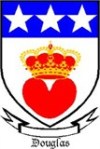
My 19th great grandfather died in battle defending Scotland against the English..Think bloody brutal….think crusaders…think crazy people…..

Battle of Halidon Hill
Although Robert the Bruce’s reign in Scotland resulted in recognition of Scotland as a separate nation by Edward III in 1328, further wars with England were soon to follow. The deep animosity between England and Scotland that hardened after the wars of Independence, led to intermittent warfare for much of the next three hundred years. Scotland was handicapped in that, sometimes when a strong king was needed, they ended up have a weak king or a minor on the throne. This power vacuum at the top, helped to create an environment where the more noble families of Scotland vied for the power. The Earls of Douglas (the Black Douglases), the Earls of Angus (the Red Douglases), the Hamiltons and the Lennox Stewarts, were all related to the Scottish crown by marriage and battled for the power behind the throne. On Bruce’s death in 1329, he was succeeded by his 5 year old son, David II. England lost little time in taking advantage of the presence of a minor on the Scottish throne. Edward III provided encouragement and active support to Edward Balliol, the son of John Balliol, for claiming the throne. In 1332, Edward Balliol invaded Scotland with a mainly English force and was crowned King at Scone, after routing a much larger Scots army under Donald, Earl of Mar as Guardian, at Dupplin Moor near Perth. The disastrous defeat was due to incompetency of Mar, the use of long bows and their devastating effect by the English, and a guide with local knowledge, provided by a Murray of Tullibardine. The following year, 1333, saw the Scots suffer an even more disastrous defeat at Halidon Hill, near Berwick. In an effort to end the siege of the town of Berwick by the English, Sir Archibald Douglas, who had succeeded Mar as Guardian, ignored reasonable battle tactics. They advanced across a bog, against a strongly held position on Halidon Hill, under heavy fire from the English archers with their deadly longbows. They suffered enormous casualties and failed to even reach the English. Douglas, and most of the other leading Scots nobles and fighting men were left dead on the field. In 1334, Balliol acknowledged Edward III’s overlordship and ceded the southern half of Scotland, from East Lothian to Dumfries, to England, an act which was to mean over a hundred years of warfare before they were recovered. This resulted in the Lochmaben Castle being given to the English. It also affected Thomas Carruthers, 1st Laird of Mouswald. For his earlier support of Robert the Bruce, Thomas Carruthers had received in about 1320, a charter for all the lands of “Musfald et de Appiltretwayt cum pertinenciis”. This Thomas also received in the same year, a charter of half of all the lands, with pertinents, which belonged to “Robert de Applingdene in valle Anandie”, due to his marriage to one of Robert de Applynden’s daughters, Joan. These lands formed the kernel of what was to become just 4 generations later, the 1st Carruthers Barony – Mouswald, which is located just a few miles south of Dumfries. With Edward Balliol ceding the land of Dumfries to Edward III, Thomas Carruthers accepted an office under Edward III of England and relocated there, leaving his Mouswald land to his next oldest brother, William, now 2nd Lord Mouswald. Thomas is assumed to be the founder of the Carruthers family in England, where the family appeared at an early date in Cumberland, Northumberland, Durham, and Yorkshire.
Sir Archibald Tyneman Regent Douglas:
The younger son of Sir William “le Hardi” Douglas, the Governor of the castle at Berwick-upon-Tweed, and his wife, Eleanor de Lovaine. Douglas was also half-brother of “the Good” Sir James Douglas, King Robert the Bruce’s deputy.
Douglas is first heard of in 1320 when he received a charter of land at Morebattle in Roxburghshire and Kirkandrews in Dumfriesshire from King Robert. In 1324, he was recorded as being granted the lands of Rattray and Crimond in Buchan and the lands of Conveth, Kincardineshire, already being possession of Cavers in Roxburghshire, Drumlanrig and Terregles in Dumfriesshire, and the lands of West Calder in Midlothian. By the time of his death, he was also in possession of Liddesdale.
History then keeps quiet about Douglas except whilst serving under his older brother, James, in the 1327 campaign in Weardale, where his foragers “auoint curry apoi tot levesche de Doresme”– overran nearly all the Bishopric of Durham. (Scalacronica)
Following the death of King Robert I and his brother’s crusade with the dead king’s heart, Douglas once again becomes of note. He was made guardian of the kingdom since he was “the principal adviser in…the confounding of the king” as much as he was heir to his brothers influence after Murray’s capture. Archibald’s success in local raids though, did not prepare him for full scale conflict.
During the Second War of Scottish Independence, Edward Baliol, son of King John of Scotland, had invaded Scotland with the backing of Edward III of England, inflicting a defeat on the Scots at the Battle of Dupplin Moor. Douglas served under the dubious leadership of Patrick V, Earl of Dunbar leader of the second army that aimed to crush the smaller Balliol force. Following the rout of the Earl of Mar’s force Dunbar did not engage the disinherited but retreated allowing Edward Balliol to be crowned at Scone. Following this battle, and as a sweetener to the English, Edward Baliol agreed to cede the county, town and castle of Berwick to England in perpetuity. However Douglas led a Bruce loyalist defeat on Balliol at theBattle of Annan, forcing him to flee back to England.
Battle of Halidon Hill
Edward III himself came north to command his army, and laid siege to Berwick. However, a temporary truce was declared with the stipulation that if not relieved within a set time, Sir Alexander Seton, the governor, would deliver the castle to the English. Douglas raised an army to relieve the beleaguered defenders of Berwick. As a feint to draw the English away he invaded Northumberland, but was forced to return to Berwick when the English refused to be lured. On 19 July, Edward’s army took positions at the summit of Halidon Hill, a summit some mile and a half north of the town with commanding views of the surrounding country. Douglas’ numerically superior force was compelled to attack up the slope and were slaughtered by the English archers, a prelude, perhaps, to the battles of Crécy and Agincourt. The English won the field with little loss of life, however by the close of the fight, countless Scots common soldiery, five Scots Earls and the Guardian Douglas lay dead. The following day Berwick capitulated.
Archibald was succeeded by his son, William Douglas, 1st Earl of Douglas.
Sir Archibald Douglas married Beatrice Lindsay, daughter of Sir Alexander Lindsay of Crawford, an ancestor of the Earls of Crawford. They had three children.
Sir Archibald Tyneman Regent Douglas (1289 – 1333)
is my 19th great grandfather
Baroness Catherine Douglas (1320 – 1360)
daughter of Sir Archibald Tyneman Regent Douglas
John de Vaux Barnbarroch (1365 – 1384)
son of Baroness Catherine Douglas
John De Vaux (1402 – 1456)
son of John de Vaux Barnbarroch
Isabella Vaus (1451 – 1510)
daughter of John De Vaux
Marion Accarson (1478 – 1538)
daughter of Isabella Vaus
Catherine Gordon (1497 – 1537)
daughter of Marion Accarson
Lady Elizabeth Ashton (1524 – 1588)
daughter of Catherine Gordon
Capt Roger Dudley (1535 – 1585)
son of Lady Elizabeth Ashton
Gov Thomas Dudley (1576 – 1653)
son of Capt Roger Dudley
Anne Dudley (1612 – 1672)
daughter of Gov Thomas Dudley
John Bradstreet (1652 – 1718)
son of Anne Dudley
Mercy Bradstreet (1689 – 1725)
daughter of John Bradstreet
Caleb Hazen (1720 – 1777)
son of Mercy Bradstreet
Mercy Hazen (1747 – 1819)
daughter of Caleb Hazen
Martha Mead (1784 – 1860)
daughter of Mercy Hazen
Abner Morse (1808 – 1838)
son of Martha Mead
Daniel Rowland Morse (1838 – 1910)
son of Abner Morse
Jason A Morse (1862 – 1932)
son of Daniel Rowland Morse
Ernest Abner Morse (1890 – 1965)
son of Jason A Morse
Richard Arden Morse (1920 – 2004)
son of Ernest Abner Morse
Pamela Morse
I am the daughter of Richard Arden Morse
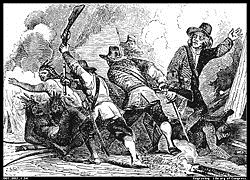
Pequot War 1637-1638
Thomas Redding was an early settler of Maine. He and his wife left a five year old child in the care of another man and never returned for him. The court awarded custody of the boy to the guardian since the promised upkeep for the child was never paid.
RESIDENCE: 1644: Scituate, Ma [BRLp10, quoting Plymouth Colony Court Records relating to their leaving their 5y old son in the care of Mr Gowan White, & failing to return to pay for his keep. The court awarded custody of the child to Mr White, unless the parents returned and paid for arrears in support]
1653: Took oath of allegiance to Massachusettes at Wells, Me as being of Saco, Me. and relocated at Three Islands, Cape Porpoise Harbor, Me (being as “Thomas Redding who hailed from New Plymouth”); he lived on the Great Island (which was known as “Redding Island” into the 1800’s) and managed the fishing Trade there until he returned to Saco about 1653/7. [BRLp11, quoting, Wilbur D. Spencer’s 1930 “Pioneers on Maine Rivers”].
1665: rem. Westcustego (the Indian name for what we call Yarmouth) [BRLp11, quoting, Wilbur D. Spencer’s 1930 “Pioneers on Maine Rivers”].
NOTE: Cape Porpoise River is now [ca.1920] known as Mousam River.
1666: “Living near the Lane family … who were living on the ‘Cousin’s Place'” [by this do we infer what is today known as “Cousin’s Island”?]BIOGRAPHY:
Quoted from: “The Redding Family and Its Relatives” by Billie Redding Lewis, Donated by the author April 1983 to (and on file at) the General Society of Mayflower Descendants Library, Plymouth, Mass.:
“No evidence has been found to connect Thomas Redding, the progenitor of the author’s family to the Thaddeus Riddan with whom Thomas is often confused. Most researchers believe all early Reddings, regardless of spelling, both in New England and the Virginia colonies, to be related.
“Banks [17] has Thomas Redding entering New England about 1635 but unfortunately, has found no ship nor English origin listed.
“One researching descendant states that Thomas came from Barbados to New England as did “John and James Saunders, Thomas Lane, John Spencer, John Manwaring, John and Thomas Hill, and others, who are found as Mr. Redding’s neighbors in what is now the state of Maine.” [18].
“Thomas Redding’s name does appear on a list of those who in 1635-8 [19] owned ten or more acres in Barbados but there is no documented proof that the Thomas Redding of Barbados is the same Thomas Redding of New England. It is quite probable, on the other hand, since Thomas, in 1639, married the sister of William Pennoyer, a wealthy London merchant, who was not only a cloth merchant but also a prosperous sea-merchant owning a number of vessels and some sugar planatations in Barbados.
“In 1637, Thomas Redding is found in “New Plymouth” as a fisherman and a volunteer for service in the Pequot War [20].
“On 20 July, 1639, Thomas Redding married Ellinor Pennoyer, who is recorded in Plymouth Colony records as Elinor “Penny”. Thomas’s name is not found again in Plymouth records until 1644 when he and Ellinor are in Scituate, Mass. where it is thought they lived less than a year & left their five year old son to be cared for by Gowan White. On 4 June, 1 645, the Plymouth Court Records state. [23]” ‘Whereas Thomas Riddings, about ayear since, came to Scituate and depted (departed) thence, leaueing a man child about fiv yeares of age with Gowen White, pmiseing him to pay xviij d p weeke for his keepeing & dyetting of him, but hath hitherto payd him nothing; and the said Gowen White hath since found him meate, drinke, and cloathes at his own charge; the court doth order and appoynt that the said shalbe wth the said Gowen White vntill he shall accomplish the age tweny and foure yeares; but if his father shall come and desire to take him away before the end of the said terme, that then he shall pay he said Gowen White for the keeping of him for such tyme as he shall haue beene wth him; and so also if bee shalbe placed wth another man.’.
“Thomas’s leaving his son is still puzzling to genealogists. The child was probably Thomas and Ellinor’s first-born since he was five years old at the time, making him born in 1640, a year after their marriage. Why was he left? Did the parents go to Barbados but did not want to change the child’s environment, or is this the period of time in which they moved to Maine and possibly did not want to subject their son to the lifestyle that would be rougher than that in Plymouth County? If they moved to Maine, why then was there no contact with Gowen White? True, travelling was not easy in those days, but the pioneers did not seem to allow obstacles to impede them completely.
“This writer could find no record of Thomas between the time he left his son in 1645 and when he took his Oath of Allegiance to Massachusetts Colony in what is now Maine, on 5 July, 1653. [25]”
[17] Charles Edward Banks, “Tophgraphical Dictionary of 2885 Emigrants”, p.234 … Baltimore.
[18] Fred E. Crowell, “Redding -Miller”, Boston “Transcript”, 1929
[19] NHGS Register, Vol. 39, taken from “Memoirs of the First Settlers of the Island of Barbados” …
[20] Winslow’s “Journal”, and Plymouth Colony Records
[23] Plymouth Colony Records; Book 2, Page 86 [25] James Savage, “A Genealogical Dictionary of the First Settlers of New England”, Vol. 4, Boston,
Thomas Redding (1607 – 1673)
is my 9th great grandfather
Martha Redding (1633 – 1702)
daughter of Thomas Redding
Abigail Taylor (1663 – 1730)
daughter of Martha Redding
Martha Goodwin (1693 – 1769)
daughter of Abigail Taylor
Grace Raiford (1725 – 1778)
daughter of Martha Goodwin
Sarah Hirons (1751 – 1817)
daughter of Grace Raiford
John Nimrod Taylor (1770 – 1816)
son of Sarah Hirons
John Samuel Taylor (1798 – 1873)
son of John Nimrod Taylor
William Ellison Taylor (1839 – 1918)
son of John Samuel Taylor
George Harvey Taylor (1884 – 1941)
son of William Ellison Taylor
Ruby Lee Taylor (1922 – 2008)
daughter of George Harvey Taylor
Pamela Morse
I am the daughter of Ruby Lee Taylor

Battle of Castellon
My 17th great grandfather was a general in the 100 Years’ War. He died in battle.
SIR J0HN13 TALBOT, K. G., first Earl of Shrewsbury born about 1385, married in 1406, Maud Nevill, eldest daugh- ter and co-heir of Thomas Nevill, Lord Furnivall, by whom heacquired vast estates in Hallamshire (including the Castle of Sheffield), in consequence of which he was summoned to Parlia- ment from 1409 to 1420 as John Talbot, Lord Furnival. On the death in childhood of his niece, Ankaret Talbot, in 1421, he succeeded also to the ancient Talbot estates in Linton and to the Baronies of Talbot and Strange of Blackmere. From 1412 to 1420 he served as Lord Lieutenant of Ireland; but in 1422 he entered into military pursuits and became one of the most renowned warriors of the martial age in which he lived. He gloriously sustained the cause of King Henry VL throughout his French realm in battle after battle, until the very name of Talbot became a terror to his foes. Once his forces were defeated by the army of the Maid of Orleans at the Battle of Patay in 1429, and he himself was taken prisoner; but four years later he was exchanged, and soon again in com- mand of an English army. For his brilliant achievements he was created in 1442 Earl of Shrewsbury and in 1446 Earl of Waterford. Later he was commander of the Castle of Falaise in Normandy (the birthplace of William the Conqueror), to which he added a massive keep, still known as the Talbot Tower. In 1453 he was again in command of an English army in France and was killed by a cannon shot at the Battle of Chastillon, 17 July 1453. He had been victorious in forty battles, and his death proved fatal to English dominion on the Continent. From this great Earl, the present Earl of Shrews- bury, the Premier Earl of England, is directly descended, (See Burke’s “Peerage” for 1904, pp. 1411-12; and G. E. Cock- ayne’s “Complete Peerage”, vol. 7, pp. 359-61, and 136-7.)
General John Talbot (1384 – 1453)
The Earl of Shrewsbury
The Death of Shrewsbury at the Battle of Castillon. Born1384 or 1387 Died July 17, 1453 Castillon-la-Battaile, Gascony Title Earl of Shrewsbury The Earl of Shrewsbury Earl ShrewsburyNationalityKingdom of EnglandWars and battlesHundred Years’ WarSiege of Orleans Battle of PatayBattle of Castillon †PredecessorNoneSuccessor John Talbot, 2nd Earl of ShrewsburySpouse(s)Maud Nevill Margaret Beauchamp Issue Parents Richard, 4th Baron Talbot and Ankaret, heiress of Richard John Talbot, 1st Earl of Shrewsbury, 1st Earl of Waterford, 10th Baron Strange of Blackmere, 7th Baron Talbot, 6th Baron Furnivall (1384/1387 – 17 July 1453) , known as “Old Talbot” was an important English military commander during the Hundred Years’ War, as well as the only Lancastrian Constable of France.
[edit] FamilyHe was second son of Richard, 4th Baron Talbot, by Ankaret, heiress of Richard, Baron Lestrange of Blackmere.
[edit] First marriageTalbot was married before 12 March 1407 to Maud Nevill, daughter and heiress of Thomas Nevill, 5th Baron Furnivall, the son of John Neville, 3rd Baron Neville de Raby. He was summoned to Parliament in her right from 1409.
The couple had four children:
In 1421 by the death of his niece he acquired the Baronies of Talbot and Strange. His first wife died on 31 May 1422
[edit] Second marriageOn 6 September 1425, he married Lady Margaret Beauchamp, daughter of Richard de Beauchamp, 13th Earl of Warwick and Elizabeth de Berkeley. They had six children:
Early career From 1404 to 1413 he served with his elder brother Gilbert in the Welsh war or the rebellion of Owain Glyndŵr. Then for five years from February 1414 he was Lord Lieutenant of Ireland, where he held the honour of Wexford. He did some fighting, and had a sharp quarrel with the Earl of Ormonde. Complaints were made against him both for harsh government in Ireland and for violence in Herefordshire. From 1420 to 1424 he served inFrance. In 1425, he was lieutenant again for a short time in Ireland.
Service in France So far his career was that of a turbulent Marcher Lord, employed in posts where a rough hand was useful. In 1427 he went again to France, where he fought with distinction in Maine and at the Siege of Orléans. He fought at the Battle of Patay where he was captured and held prisoner for four years.
He was released in exchange for the French leader Jean Poton de Xaintrailles. Talbot was a daring and aggressive soldier, perhaps the most audacious Captain of the Age. He and his forces acted as a kind of fire brigade ever ready to retake a town and to meet a French advance. His trademark was rapid aggressive attacks. In January 1436, he led a small force including Kyriell and routed La Hire and Xaintrailles at Ry near Rouen. The following year at Crotoy, after a daring passage of the Somme, he put a numerous Burgundian force to flight. In December 1439, following a surprise flank attack on their camp, he dispersed the 6000 strong army of the Constable Richemont, and the following year he retookHarfleur. In 1441, he pursued the French army four times over the Seine and Oise rivers in an unavailing attempt to bring it to battle.
[edit] The English AchillesHe was appointed in 1445 by Henry VI (as king of France) as Constable of France. Taken hostage at Rouen in 1449 he promised never to wear armour against the French King again, and he was true to his word. He was defeated and killed in 1453 at the Battle of Castillonnear Bordeaux, which effectively ended English rule in the duchy of Gascony, a principal cause of the Hundred Years’ War. His heart was buried in the doorway of St Alkmund’s Church, Whitchurch, Shropshire.[1]
The victorious French generals raised a monument to Talbot on the field called Notre Dame de Talbot. And the French Chroniclers paid him handsome tribute:
“Such was the end of this famous and renowned English leader who for so long had been one of the most formidable thorns in the side of the French, who regarded him with terror and dismay” – Matthew d’Escourcy
Although Talbot is generally remembered as a great soldier, some have raised doubts as to his generalship. In particular, charges of rashness have been raised against him. Speed and aggression were key elements in granting success in medieval war, and Talbot’s numerical inferiority necessitated surprise. Furthermore, he was often in the position of trying to force battle on unwilling opponents. At his defeat at Patay in 1429 he was advised not to fight there by Sir John Fastolf, who was subsequently blamed for the debacle, but the French, inspired by Joan of Arc, showed unprecedented fighting spirit – usually they approached an English position with great circumspection. The charge of rashness is perhaps more justifiable at Castillon where Talbot, misled by false reports of a French retreat, attacked their entrenched camp frontally – facing wheel to wheel artillery and a 6 to 1 inferiority in numbers.
He is portrayed heroically in William Shakespeare‘s Henry VI, Part I: “Valiant Lord Talbot, Earl of Shrewsbury, Created, for his rare success in arms”.
[edit] Cultural influenceJohn Talbot is shown as a featured character in Koei‘s video game known as ‘Bladestorm: The Hundred Years’ War‘, appearing as the left-arm of Edward, the Black Prince, in which he assists the former and the respective flag of England throughout his many portrayals.
Talbot appears as one of the primary antagonists in the PSP game Jeanne d’Arc.
See also
References
Political officesNew officeLord High Steward of Ireland1446–1453Succeeded by The 2nd Earl of ShrewsburyPeerage of EnglandNew creationEarl of Shrewsbury1442–1453Succeeded by John TalbotPreceded byAnkare t TalbotBaron Strange of Blackmere1421–1453Baron Talbot1421–1453Baron Furnivall1421–1453Peerage of IrelandNew creationEarl of Waterford1446–1453Succeeded by John Talbot
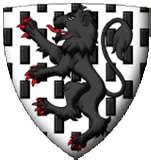
Coat of Arms Inchmartin
My 20th great-grandmother, Isabel Inchmartin, was an heiress in Perthshire, Scotland. She inherited lands that were known to be rich in salmon fishing. She was born in Perth and died in Fife. Times were tough in those days, so her survival for 59 years was impressive. She was able to pass her lands down through her daughters, which is also impressive, considering the times.
Isabel Inchmartin (1340 – 1399)
is my 20th great grandmother
Margaret Erskine (1357 – 1419)
daughter of Isabel Inchmartin
Isabel Glen (1380 – 1421)
daughter of Margaret Erskine
Isabel Ogilvie (1406 – 1484)
daughter of Isabel Glen
Elizabeth Kennedy (1434 – 1475)
daughter of Isabel Ogilvie
Isabella Vaus (1451 – 1510)
daughter of Elizabeth Kennedy
Marion Accarson (1478 – 1538)
daughter of Isabella Vaus
CATHERINE GORDON (1497 – 1537)
daughter of Marion Accarson
Lady Elizabeth Ashton (1524 – 1588)
daughter of CATHERINE GORDON
Capt Roger Dudley (1535 – 1585)
son of Lady Elizabeth Ashton
Gov Thomas Dudley (1576 – 1653)
son of Capt Roger Dudley
Anne Dudley (1612 – 1672)
daughter of Gov Thomas Dudley
John Bradstreet (1652 – 1718)
son of Anne Dudley
Mercy Bradstreet (1689 – 1725)
daughter of John Bradstreet
Caleb Hazen (1720 – 1777)
son of Mercy Bradstreet
Mercy Hazen (1747 – 1819)
daughter of Caleb Hazen
Martha Mead (1784 – 1860)
daughter of Mercy Hazen
Abner Morse (1808 – 1838)
son of Martha Mead
Daniel Rowland Morse (1838 – 1910)
son of Abner Morse
Jason A Morse (1862 – 1932)
son of Daniel Rowland Morse
Ernest Abner Morse (1890 – 1965)
son of Jason A Morse
Richard Arden Morse (1920 – 2004)
son of Ernest Abner Morse
Pamela Morse
I am the daughter of Richard Arden Morse
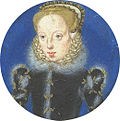
Cecily Bonville
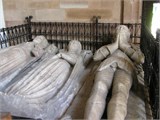
Grave
Cecily Bonville, 7th Baroness Harington and 2nd Baroness Bonville (c. 30 June 1460 – 12 May 1529) was an English peeress, who was also Marchioness of Dorset by her first marriage to Thomas Grey, 1st Marquess of Dorset, and Countess of Wiltshire by her second marriage to Henry Stafford, 1st Earl of Wiltshire.
The Bonvilles were loyal supporters of the House of York during the series of dynastic civil wars that were fought for the English throne, known as the Wars of the Roses (1455 –1485). When she was less than a year old, Cecily became the wealthiest heiress in England after her male relatives were slain in battle, fighting against the House of Lancaster.
Cecily’s life after the death of her first husband in 1501, was marked by an acrimonious dispute with her son and heir, Thomas Grey, 2nd Marquess of Dorset. This was over Cecily’s right to remain sole executor of her late husband’s estate and to control her own inheritance, both of which Thomas challenged following her second marriage to Henry Stafford; a man many years her junior. Their quarrel required the intervention of King Henry VII and the royal council.
Lady Jane Grey, Lady Catherine Grey and Lady Mary Grey were her great-granddaughters. All three were in the Line of Succession to the English throne, with Jane, the eldest, having reigned as queen for nine days in 1553.
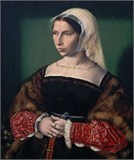
Cecily Bonville
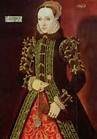
Cecily Bonville
Cecily Marchioness Dorset Bonville (1460 – 1530)
The Bonville-Courtenay Feud was an episode in the War of the Roses in 15th centuryEngland. Often local concerns can dictate choice of side in civil wars. These two rival families lived in south-western England (Devon, Cornwall, Somerset). The Courtenays held the peerage Earldom of Devon and the Bonvilles were titled Lord Harington. Their dispute concerned the Stewardship of the Duchy of Cornwall. This was not a sinecure but rather a prestigious and financially rewarding position. Rival claims to this position triggered the feud. The feud led to considerable local bitterness and even murder. It was ended by government intervention. The War of the Roses was a time of shifting allegiances in British history as the tide of War presented opportunity for advancement to various factions. A similar feud was the Percy-Neville feud also at this time. In Ireland there was strife between the Butler family, Earls of Ormond versus the Fitzgerald line, Earls of Desmondand Kildare. Many senior members of the Bonville and Courtenay families were killed in the battles and skirmishes of the War of the Roses. This feud is relevant to Local History, Family History/Genealogy and the History of England specifically the War of the Roses.
In 1441 Devon was appointed to the lucrative stewardship of the Duchy of Cornwall, an office Henry VI had already conferred on Sir William Bonville [1] in 1437, Bonville was aWest Country gentleman whose growing influence at court threatened Courtenay domination in the region. He was punished after the skirmish at Dartford. Later conflict between Devon and Bonville’s party led to the murder of Nicholas Radford [2]. Imprisoned in the Tower of London as punishment,Devon was released in 1457 by authority of QueenMargaret of Anjou.
Quote
Nor [3]did the nobility act as though dynastic considerations were decisive. Richard Neville, Earl of Warwick, moved his support from the House of York (Edward IV) to theHouse of Lancaster (Henry VI) when it suited his own ambitions. When Lord Bonville shifted his support from Lancaster to York, his local rival the Earl of Devon switched his backing to the Lancastrians

Thomas Taylor at rest
My 9th great grandfather was left an orphan when his father, Rowland Taylor, was burned at the stake as a martyr. His last words to Thomas were recorded:
Rev. Dr. Rowland Taylor’s final words, before being burned at the stake, to his son Thomas as reported by Foxe:
“Almighty God bless thee, and give you his Holy Spirit, to be a true servant of Christ, to learn his word, and constantly to stand by his truth all the life long. And my son, see that thou fear God always. Fly from all sin and wicked living. Be virtuous, serve God daily with prayer, and apply thy boke. In anywise see thou be obedient to thy mother, love her, and serve her. Be ruled by her now in thy youth, and follow her good counsel in all things. Beware of lewd company of young men, that fear not God, but followeth their lewd lusts and vain appetites. Flee from whoredom, and hate all filthy lying, remembering that I they father do die in the defense of holy marriage. And another day when God shall bless thee, love and cherish the poor people, and count that thy chief riches to be rich in alms. And when thy mother is waxed old, forsake her not, but provide for her to thy power, and see that she lacks nothing. For so will God bless thee, give thee long life upon earth, and prosperity, which I pray God to grant thee.”
Thomas Taylor (1548 – 1588)
is my 9th great grandfather
Thomas Taylor (1574 – 1618)
son of Thomas Taylor
James Taylor (1608 – 1698)
son of Thomas Taylor
John Taylor (1685 – 1776)
son of James Taylor
John Taylor (1727 – 1787)
son of John Taylor
John Taylor (1747 – 1781)
son of John Taylor
John Nimrod Taylor (1770 – 1816)
son of John Taylor
John Samuel Taylor (1798 – 1873)
son of John Nimrod Taylor
William Ellison Taylor (1839 – 1918)
son of John Samuel Taylor
George Harvey Taylor (1884 – 1941)
son of William Ellison Taylor
Ruby Lee Taylor (1922 – 2008)
daughter of George Harvey Taylor
Pamela Morse
I am the daughter of Ruby Lee Taylor
He was all about the defense of holy ( not Catholic) marriage and was dying for it, in his estimation. Fleeing from whoredom is a theme here, but at least he does tell Thomas to take care of his mother when she is old. These Taylors are ancestors of a few American presidents and Elizabeth Taylor: John (1685-1776), the immigrant, Taylor sailed to America.
Capt. Thomas J. TAYLOR, II (1572/73 England-1618 England) and Margaret SWINDERBY (1578 Denmark-1672 England) were the direct ancestors of 5 US presidents (Abraham LINCOLN, James MADISON, Zachary TAYLOR, William Henry HARRISON, Benjamin HARRISON) and 1 actress (Elizabeth TAYLOR)7G grandfather of the 16th President of the United States, Abraham LINCOLN. Abraham LINCOLN (1809-1865) son of Thomas LINCOLN and Nancy HANKS (1784-1818). Nancy HANKS daughter of James HANKS (1760-1793) and Mary SHIPLEY. James HANKS was the son of Joseph HANKS and Nancy Anna LEE (1728-1808). Nancy Anna LEE was the daughter of William LEE, Jr (1704-1764) and Anne. William LEE, Jr. was the son of William LEE, Sr. and Dorothy TAYLOR (1681-1754). Dorothy TAYLOR was the daughter of Thomas TAYLOR (1657-1712) and Elizabeth HARDWOOD. Thomas TAYLOR was the son of Thomas TAYLOR (1628-1687 and Mary. Thomas TAYLOR was the son of John “Immigrant” Taylor (1607-1652) and Elizabeth Jones. John TAYLOR was the son of Capt. Thomas J. TAYLOR and Margaret SWINDERBY. 4G grandfather of the 4th President of the United States James MADISON. James Madison (1751-1836) was the son of James MADISON (1723-1801) and Eleanor Rose CONWAY. James MADISON was the son of Ambrose MADISON (1700-) and Francis TAYLOR (1700-1761). Francis TAYLOR was the daughter of James TAYLOR, II (1675-1730) and Martha THOMPSON. James TAYLOR, II was the son of James TAYLOR, I (1608-) and Francis WALKER (-1680). James TAYLOR, I was the son of Capt. Thomas J. TAYLOR and Margaret SWINDRBY. 3G grandfather of the 12th President of the United States, Zachary Taylor. Zachary TAYLOR (1784-1850) was the son of Richard Lee TAYLOR (1742/3-1829) and Sarah Dabney STROTHER. Richard Lee TAYLOR was the son of Zachary TAYLOR, Sr. (1707-1768) and Elizabeth LEE. Zachary TAYLOR, Sr. was the son of James TAYLOR (1675-1730) and Martha THOMPSON. James Taylor was the son of James TAYLOR (1608-1698) and Francis WALKER. James Taylor was the son of Capt. Thomas J. TAYLOR and Margaret SWINDERBY. 4G grandfather of the 9th President of the United States, William Henry HARRISON. William Henry HARRISON (1773-1841) was the son of Benjamin HARRISON, V and Elizabeth BASSETT (1730-1792). Elizabeth BASSETT was the daughter of William BASSETT, IV (1709-1792) and Elizabeth CHURCHILL. William BASSETT, IV was the son of William BASSETT, III (1671-1723) and Joanna BURWELL. William BASSETT III was the son of William BASSETT and Bridgett CARY (1652-1670). Bridgett CARY was the daughter of Miles CARY (1621-) and ANNA TAYLOR (1611-1657). Anna TAYLOR was the daughter of Capt. Thomas TAYLOR and Margaret SWINDERBY. 6G grandfather of the 23rd President of the United States, Benjamin HARRISON. Benjamin HARRISON (1833-1901) was the son of John Scott HARRISON (1804-1878) and Elizabeth RAMSEY. John Scott HARRISON was the son of President William Henry HARRISON and Anna Tuthill SYMMES. (Of note, actress Elizabeth TAYLOR (1932-)) Elizabeth TAYLOR, daughter of Francis Lenn TAYLOR (1897-1968) and Sarah Viola WARMBRODT. Francis TAYLOR was the son of Francis Marion TAYLOR and Elizabeth ROSEMOND. Francis Marion TAYLOR was the son of Peter TAYLOR (1829-1921) and Margaret Jane PERIGO. Peter TAYLOR was the son of Lewis TAYLOR (1780-1874) and Rachel BAKER. Lewis TAYLOR was the son of Joseph TAYLOR (1741/2-1815) and Francis ANDERSON. Joseph TAYLOR was the son of John Powell TAYLOR (1696-1780) and Catherine PENDLETON. John Powell TAYLOR was the son of Sheriff James TAYLOR (1635-1698) and Mary GREGORY. Sheriff James TAYLOR was the son of John “Immigrant” TAYLOR (1607-1652). John “Immigrant” TAYLOR was the son of Capt. Thomas J. TAYLOR and Margaret SWINDERBY.
SOURCE: http://genforum.genealogy.com/taylor/messages/32876.html
Jamestown
My 10th great-grandfather sailed to America in 1610, settling in Virginia. He became the official interpreter for the colony, and served in many other public service capacities.
John Flood (1595 – 1658)
Notes- John Flood alias Fludd sailed from London aboard the ship “SS Swan(n)” in the summer of 1610 and landed at Jamestowne, Virginia, America in the same year. The passenger list describes him as “a gent” (gentleman). He took with him a considerable supply of provisions, including “corn, pease and beanes”, and also firearms and ammunition. He was the son of Nicholas Fludd, who was a younger son of Sir Thomas Fludd, a wealthy land owner living at Millgate, Bearsted, Kent. Nicholas married Elizabeth Davis at St. Andrews Church, Canterbury, Kent in February 1588/9.Initially John would have worked for various employers but he is known to have been employed in 1616 by The Reverend Alexander Whitaker, in Charles City, a settlement just to the west of Jamestowne, who is reputed to have converted Princess Pocahontas to Christianity in c1613. She is said to have been married to John Rolfe by Reverend Bucke at about this time. John was to marry Margaret Finche, widow, in c1624/5. She had arrived in Jamestowne in 1620 aboard the “SS Supply” with her husband William Finche and their daughter Frances. In September 1620 they are recorded as each holding fifty acres of land, but by 1624 William had passed away and John had married the widow Finche and they were living in Jordan’s Journey with their children Frances Finche and William Flood.By 1638 John had accumulated a considerable amount of land including that of his wife by right of marriage, and he was declared an Ancient Planter such that he was entitled to another 100 free acres of land. He was also granted a Patent of 2100 acres of land, where he established his plantation, located on the south side of the James River just opposite the town of Jamestowne. Here their other children were born, John c1627, Thomas c1629, and Mary c1635.His wife Margaret died c1644, leaving John with the young children. A year or so later he married Fortune Jordan, sister of Col. George Jordan, legislator, a member of a well known and influential family of Virginia. Their first daughter Jane, was born soon after and son Walter was born in 1656 when John was aged sixty-four.John served as a Representative in the Virginia House of Burgesses for twenty-two years, representing the areas of Flowerdieu Hundred, Westover and Weyanoke and served at least one term as their Speaker. By 1643 he was one of the representatives of James City County. In 1655 as Colonel John Flood, he was serving as a member of the local militia.At his death in 1658 he was Chairman of the Surry County Commission which held Court and administered the affairs of the County.John survived many hardships including the Indian uprising and massacre of 1644 which caused a break in the Colony’s fur trade. The Indian Treaty of 1646 gave the trade some protection with the erection of 4 forts along the frontier to which the Indians were permitted to come and trade. One of them, Fort Henry, was located on the south side of the James River, on the Appomattox. Across the river from the fort was the home of Captain John Flood, as he was then, who was appointed to the post of official interpreter for the colony.The Grand Assembly held at James City October 5, 1646, enacted the following: “that upon any occasion of a message to the Governor or trade, the said Necotowance and his people the Indians doe repair to fforte Henery, alias Appmattucke fforte, or to the house of Capt. John ffloud, and to no other place or places of the south side of the river, att which places the aforesayd badges of striped stuffe are to be and remaine. Indians found in ceded lands who were not wearing special striped coats picked up at the designated forts were to be killed on sight, and any white illegally entertaining Indians was to be punished severely. Be it also enacted that Capt. John ffloud be interpreter for the collony, and that for his service therin and transporting such Indians as shall be employed from time to tyme to the Gov=r in a message or otherwise, he is to be allowed from the publique the salary of four thousand pounds of tob’o yeerly.”. (The farming of tobacco was so widespread that it was used as a basis for money and trade).FLOOD(from page 301; “VIRGINIA HISTORICAL GENEALOGIES”, by Boddie)Col. John Flood (ca 1595-1658), of James City and Surry Counties, Va., arrived in 1610. In the “Muster Rolls, of Settlers in Virginia, 1624/5” is; “The MUSTER of John Fludd: John Fludd arrived in the ‘Swan’ 1610, Margaret, his wife, in the ‘Supply’ 1620. Frances Finch, her daughter, in the ‘Supply’ 1620, William Fludd, his son, aged 3 weeks”. John Flood was living in Charles City in 1616 and at “Jordan’s Journey” in 1625; in 1638 he patented land and settled in James City County just across the river from Jamestown in the section which in 1652 became Surry County.The above mentioned patent, dated May 12, 1638, was issued to “John Fludd, Gent,” and was for 2100 acres “E. upon land of Capt. Henry Browne, N. upon the maine river, S. into the maine woods & W. upon Benjamine Harrisons marked trees being upon the W. side of Sunken Marsh Cr.”, for transportation of 42 person. On June 7, 1650, “Capt. John Flood, Gent.” surrendered this patent and was given another of 1100 acres “on S. side the river, bounded S.E.S. upon land of Capt. Henry Browne, N.W. by N. upon land of Mr. Charles Foord and Richard Baven.” Among his headrights were listed: John Flood, an Ancient Planter, Margt., his wife, Frances Finch her daughter, John Flood, Junr., Eliza. Browne, John Lawrence, John Wright, Wm. Wood, and others. (“Cavaliers and Pioneers”, pages 86 and 194).On Jan 16, 1643/4, John Flood witnessed the will of Capt. Thomas Pawlett (owner of Westover) who left one silver spoon and one sow shote apiece to his godchildren, Wm. Harris, John Woodson, Tho. Aston, Thomas Fludd, Henry Richley, John Bishop, Tho. Woodward, Tho. Boyse, Tho. Poythers, and William Bayle. (“Title of Westover”, by Dr. Lyon G. Tyler, in Wm & Mary Qrtly, Vol 4, p 151).The Grand Assembly held at James City October 5, 1646, enacted – “That upon any occasion of message to the Gov’r. or trade, the said Necotowance and his people the Indians doe repair to fforte Henery alias Appmattucke fforte, or to the house of Capt. John ffloud, and to no other place or places of the south side of the river, att which places the aforesayd badges of striped stuffe are to be and remaine.” ***”Be it also inacted that Capt. John ffloud be interpreter for the collony, and that for his service therein and transporting such Indians as shall be employed from time to time to the Gov’r. In message or otherwise, he is to be allowed from the publique the salarey of four thousand pounds of tob’o yeerly.”The Grand Assembly held at James City July 5, 1653, ordered – “And the commissioners of York are required that such persons as are seated upon the land of Pamunkey or Chickahominy Indians be removed according to a late act of Assembly made to that purpose, and Coll. John Fludd to go to Tottopottomoy to exam the preceedings of business and to deliver it upon his oath.”John Flood was only a boy when he came to Virginia but he was active and energetic and rose to high honors. He was Burgess for Flowerdieu Hundred in 1630, for Westover, Flowerdewe in September 1632; he was one of the Burgesses for James City County in 1643, 1645, and 1654. He was Captain in 1643 (and probably earlier), Lieutenant-Colonel in 1652, and Colonel in 1653. At his death in 1658, he was Chairman of the Surry County Commission which held Court and administered the affairs of the county; the other commissioners at that time were Lt. Col. Thomas Swann, Capt. George Jordan, Capt. Benjamin Sidway, Mr. George Stephens, Mr. Thomas Warren and Mr. James Mason. He was also Speaker of the House of Burgesses in 1652. (5 V. 185) Spouses1 Margaret Unknown, F Death Date1644Death PlaceVAMarr Dateabt 1624Marr PlaceVAChildrenMary , F (~1635-~1678)2Fortune Jordan, F Birth Date abt 1623 Birth Place England Death Date14 Jul 1668 Age: 45Death Place VA Father Arthur Jordan , MMother? Unknown , F Marr Date 1645 Marr Place VA Children Walter , M (-1722)
In each tree there are challenging branches. My own difficult ancestor to whom I have dedicated untold number of hours in research is Thomas Peterson. He is special because he is mentioned in the handwritten notes I had to begin my whole search. His granddaughter, Sarah Helena Byrne, wrote facts and her own opinions about family members, said he is Pennsylvania Dutch. She also mentions that his nephew, James Peterson, married my grandmother Scott after her first husband died. This seems simple enough, but I am stumped because I can’t find a record of Thomas’ birth in Indiana in 1825. His parents are alleged to be born in Pennsylvania, but I know facts were sometimes recorded incorrectly in the census. What were his parents doing way out west before the Civil War? Who were they, and where in Pennsylvania were they born? This all remains unanswered. It makes me crazy…
Thomas Peterson (1825 – ?)

Archibald Campbell

Archibald Campbell tomb
My 14th great-gandfather was a powerful Marquess in Scotland who was beheaded by Charles I of England:
Archibald Campbell (1606 – 1661)
is my 14th great grandfather
Lord Neil Campbell (1610 – 1692)
son of Archibald Campbell
John Campbell (1633 – 1689)
son of Lord Neil Campbell
John Campbell (1662 – 1731)
son of John Campbell
Dugal Campbell (1699 – 1734)
son of John Campbell
Neil Campbell (1734 – 1777)
son of Dugal Campbell
Henry Campbell (1769 – 1863)
son of Neil Campbell
Elizabeth Campbell (1784 – 1861)
daughter of Henry Campbell
Mary McGill (1804 – 1898)
daughter of Elizabeth Campbell
John Wright (1800 – 1870)
son of Mary McGill
Mary Wright (1814 – 1873)
daughter of John Wright
Emiline P Nicholls (1837 – )
daughter of Mary Wright
Harriet Peterson (1856 – 1933)
daughter of Emiline P Nicholls
Sarah Helena Byrne (1878 – 1962)
daughter of Harriet Peterson
Olga Fern Scott (1897 – 1968)
daughter of Sarah Helena Byrne
Richard Arden Morse (1920 – 2004)
son of Olga Fern Scott
Pamela Morse
I am the daughter of Richard Arden Morse
Archibald Campbell, 1st Marquess of Argyll, 8th Earl of Argyll, chief of Clan Campbell, (1607 – 27 May 1661) was the de facto head of government in Scotland during most of the conflict known as the Wars of the Three Kingdoms. He was the most influential figure in the Covenanter movement that fought for the Presbyterian religion and what they saw as Scottish interests during the English Civil War of the 1640s and 1650s.
Family and early lifeHe was eldest son of Archibald Campbell, 7th Earl of Argyll, by his first wife Agnes Douglas daughter of William Douglas, 6th Earl of Morton, and was educated at St Andrews University, where he matriculated on 15 January 1622. He had early in life, as Lord Lorne, been entrusted with the possession of the Argyll estates when his father renounced Protestantism and took arms for Philip III of Spain; and he exercised over his clan an authority almost absolute, disposing of a force of 20,000 retainers, being, according to Baillie, by far the most powerful subject in the kingdom.
In the Covenanter movementOn the outbreak of the religious dispute between the king and Scotland in 1637, his support was eagerly sought by Charles I. He was made a privy councillor in 1628. In 1638, the king summoned him, together with Traquair and Roxburgh, to London, but he refused to be won over, warned Charles against his despotic ecclesiastical policy, and showed great hostility towards William Laud. In consequence, a secret commission was given to the Earl of Antrim to invade Argyll and stir up the MacDonalds against him. Argyll, who inherited the title at the death of his father in 1638, originally had no preference for Presbyterianism, but now definitely took the side of the Covenanters in defence of national religion and liberties. He continued to attend the meetings of the General Assembly of the Church of Scotland after its dissolution by the Marquess of Hamilton, when Episcopacy was abolished. In 1639, he sent a statement to Laud, and subsequently to the king, defending the General Assembly’s action. He raised a body of troops and seized Hamilton’s castle of Brodick in Arran. After the pacification of Berwick-upon-Tweed, he carried a motion, in opposition to James Graham, 1st Marquess of Montrose, by which the estates secured to themselves the election of the lords of the articles, who had formerly been nominated by the king. This was a fundamental change to the Scottish constitution, whereby the management of public affairs was entrusted to a representative body and withdrawn from the control of the crown. An attempt by the king to deprive him of his office as justiciary of Argyll failed, and on the prorogation of the parliament by Charles, in May 1640, Argyll moved that it should continue its sittings and that the government and safety of the kingdom should be secured by a committee of the estates, of which he was the guiding spirit. In June, he was trusted with a Commission of fire and sword against the royalists in Atholl and Angus, which, after succeeding in entrapping the Earl of Atholl, he carried out with completeness and cruelty.
It was on this occasion that the Bonnie Hoose o’ Airlie was burned. By this time, the personal dislike and difference in opinion between Montrose and Argyll led to an open breach. The former arranged that on the occasion of Charles’s approaching visit to Scotland, Argyll would be accused of high treason in the parliament. The plot, however, was disclosed, and Montrose, among others, was imprisoned. Accordingly, when the king arrived, he found himself deprived of every remnant of influence and authority. It only remained for Charles to make a series of concessions. He transferred control over judicial and political appointments to the parliament, created Argyll a marquess in 1641, and returned home, having, in Clarendon’s words, made a perfect deed of gift of that kingdom. Meanwhile, there was an unsuccessful attempt to kidnap Argyll, Hamilton, and Lanark, known as The Incident. Argyll was mainly instrumental in this crisis in keeping the national party faithful to what was to him evidently the common cause, and in accomplishing the alliance with the Long Parliament in 1643.
[edit] English and Scottish Civil WarIn January 1644, he accompanied the Scottish army into England as a member of the committee of both kingdoms and in command of a troop of horse, but was soon compelled, in March, to return to suppress royalists in the Scottish Civil War and to defend his own territories. He forced Huntly to retreat in April. In July, he advanced to abet the Irish troops now landed in Argyll, which were fighting in conjunction with Montrose, who had put himself at the head of the royalist forces in Scotland. Neither general succeeded in obtaining an advantage over the other, or even in engaging in battle. Argyll then returned to Edinburgh, threw up his commission, and retired to Inveraray Castle. Montrose unexpectedly followed him in December, compelling him to flee to Roseneath, and devastating his territories. On 2 February 1645, while following Montrose northwards, Argyll was surprised by him at Inverlochy. He witnessed, from his barge on the lake to which he had retired after falling from his horse, a fearful slaughter of his troops, which included 1500 of the Campbells.[1] He arrived at Edinburgh on 12 February and was again present at Montrose’s further great victory on 15 August at Kilsyth, whence he escaped to Newcastle. Argyll was at last delivered from his formidable antagonist by Montrose’s final defeat at Philiphaugh on 12 September. In 1646, he was sent to negotiate with the king at Newcastle after his surrender to the Scottish army, when he endeavoured to moderate the demands of the parliament and at the same time to persuade the king to accept them. On 7 July 1646, he was appointed a member of the Assembly of Divines.
Up to this point, Argyll’s statesmanship had been highly successful. The national liberties and religion of Scotland had been defended and guaranteed, and the power of the king in Scotland reduced to a mere shadow. In addition, these privileges had been still further secured by the alliance with the English opposition, and by the subsequent triumph of the parliament and Presbyterianism in the neighboring kingdom. The king himself was a prisoner in their midst. But Argyll’s influence could not survive the rupture of the alliance between the two nations on which his whole policy was founded. He opposed in vain the secret treaty concluded between the king and the Scots against the parliament. Hamilton marched into England and was defeated by Cromwell at Preston. Argyll, after a narrow escape from a surprise attack at the Battle of Stirling (1648), joined the Whiggamores, a body of Covenanters at Edinburgh; and, supported by John Campbell, 1st Earl of Loudoun and Alexander Leslie, 1st Earl of Leven, he established a new government, which welcomed Oliver Cromwell on his arrival there on 4 October.
War with the English Parliament and personal ruinThis alliance, however, was at once destroyed by the execution of Charles I on 30 January 1649, which excited universal horror in Scotland. In the series of tangled incidents which followed, Argyll lost control of the national policy. He describes himself at this period as “a distracted man…in a distracted time” whose ” remedies…had the quite contrary operation.”
He supported the invitation from the Covenanters to Charles II to land in Scotland, and gazed upon the captured Montrose, bound on a cart to execution at Edinburgh. When Charles II came to Scotland, having signed the Covenant and repudiated Montrose, Argyll remained at the head of the administration. After the defeat of Dunbar, Charles retained his support by the promise of a dukedom and the Garter, and an attempt was made by Argyll to marry the king to his daughter. On 1 January 1651, he placed the crown on Charles’s head at Scone. But his power had now passed to the Hamiltonian party.
He strongly opposed, but was unable to prevent, the expedition into England. In the subsequent reduction of Scotland, after holding out in Inveraray Castle for nearly a year, he was at last surprised in August 1652 and submitted to the Commonwealth. His ruin was then complete. His policy had failed, his power had vanished. He was hopelessly in debt, and on terms of such violent hostility with his eldest son as to be obliged to demand a garrison in his house for his protection.
Later life and writings
Archibald Campbell During his visit to Monck at Dalkeith in 1654 to complain of this, he was subjected to much personal insult from his creditors, and on visiting London in September 1655 to obtain money due to him from the Scottish parliament, he was arrested for debt, though soon liberated. In Richard Cromwell’s parliament of 1659 Argyll sat as member for Aberdeenshire.
At the Restoration, he presented himself at Whitehall, but was at once arrested by order of Charles and placed in the Tower (1660), being sent to Edinburgh to stand trial for high treason. He was acquitted of complicity in the death of Charles I, and his escape from the whole charge seemed imminent, but the arrival of a packet of letters written by Argyll to Monck showed conclusively his collaboration with Cromwell’s government, particularly in the suppression of Glencairn’s royalist rising in 1652. He was immediately sentenced to death, his execution by beheading taking place on 27 May 1661, before the death warrant had even been signed by the king. His head was placed on the same spike upon the west end of the Tolbooth as that of Montrose had previously been exposed, and his body was buried at the Holy Loch, where the head was also deposited in 1664. A monument was erected to his memory in St Giles’s church in Edinburgh in 1895.
While imprisoned in the Tower he wrote Instructions to a Son (1661). Some of his speeches, including the one delivered on the scaffold, were published and are printed in the Harleian Miscellany.
He married Lady Margaret Douglas, daughter of William Douglas, 7th Earl of Morton, and had two sons and four daughters
 mermaidcamp