mermaidcamp
Keeping current in wellness, in and out of the water
You can scroll the shelf using ← and → keys
You can scroll the shelf using ← and → keys

palo verde
The options we have for communication now boggle the mind. Some minds seem to be desperately boggled by what it takes to tell a story or get a message out to the world today. It is easier than ever because of all the free platforms we can use. It is harder than ever to reach individuals because the competition has grown to include just about everyone on earth. Our message must be not only short and sweet, but must also strike a universal chord. Leonardo da Vinci, especially toward the end of his life, often wrote about thinking in reverse: “Consider first the end.” and “Think well to the end.” were examples of his frequent statements on this subject. Leonardo left us with designs for flying machines and engineering that had not yet been proven when he died. His legacy is his art, certainly. He also left us a very strong and lasting gift of his philosophy. His practice of connessione refined his sense of mysticism and wholeness. He sought and found deep connection with all creation that inspired his work.
If you feel connected in a big way, or to a power larger than your own, confidence and ease are natural. On the other hand, if you feel disconnected from something greater it is possible to entirely loose touch with a realistic self image. We do not hold onto the same ideas or ideals for our entire life. The concept of connection may replace true connection, or maybe we always felt like we were separate and drifting. Now we can substitute chat/tweet/youtube views for personal relationships. The illusion that these clicks and likes make us part of a clubby group might just be the ruin of true connecting. Take a look at your physical worldly connections (so to speak) and how they relate or substitute for spiritual contact. I don’t think you need to join a religion or go to a certain building to make contemplation and meditation a part of your own practice. I feel connected to spirit whenever I:
This list is only a partial, and ever changing accounting of my own ways to notice connessione, or systems. Once you start to think about it you find that everything does depend on everything else, and we are all connected. If you feel distracted and want to center your thoughts, remember all the ways the universe has collaborated to create you and keep you alive. The systems that create us also sustain us.
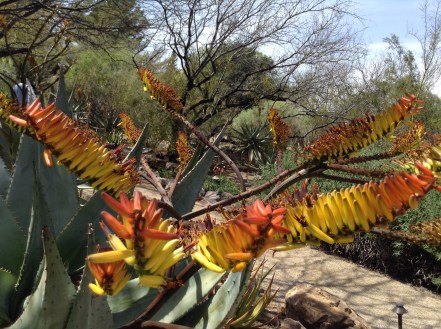
aloe
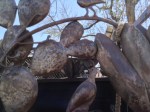
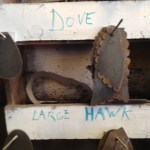
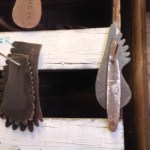
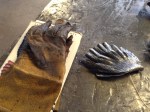
This is how steel is turned into feathers. Jerry W Harris is a sculptor in Tucson Arizona with a special affinity for birds. His realistic aviary is not only anatomically correct, but also portrays action and interrelationship in every piece. He is working on a sculpture in which one quail will be taking off to fly. It is fascinating to see the process of making the heavy metal appear to be as light as feathers. It requires awesome skill, and as he explains, some knowledge of worthy shortcuts. He has perfected his realism by study of bird anatomy. He is serious about details, including realistic behavior. I think it is fun to watch the detail as it takes shape.


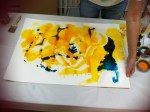
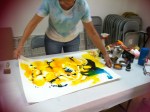
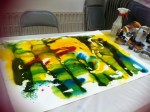

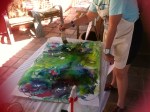
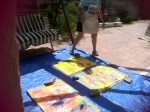
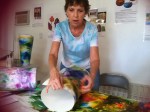


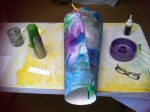
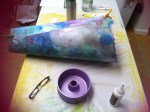
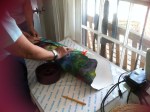


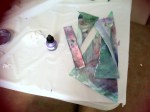


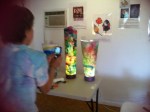

Yesterday I enjoyed making art in a new way with Jeanne Fellow at Blue Raven Art School. I had visited her studio and purchased a couple of her beautiful pieces and learned about the LumenArt class. My classmate Jeannie Gentry had done exactly the same thing. We both were very excited to try our hand at making one of these very special lamps. Our 5 hour class went by very quickly. Everything was set up for us on the shaded patio. Each of us had our own work table and basic tools. After a thorough demonstration of the basic techniques we chose colors and started our own experiment in color mixing. Some of the inks are iridescent, but those also block the light from within when it is a finished LumenArt. The fun of it all is that you don’t know how it will really look until you light it. Jeanne encouraged us to feel free and confident to play around. Both students created three possible candidates for lighting. The class materials include two sheets of incredible paper that allows all kinds of layering and special techniques without tearing. We each bought one extra sheet because we had enough time and were seriously into it. When dry we selected one to become our lamp. Choosing color for the base and tearing the final design we had supervision and plenty of encouragement from our teacher. This project is practically impossible to do badly. The materials guarantee that the finished product will be thrilling. She teaches a class in using these techniques on fabrics that will also be fun. If you are an experienced artist/craftperson you will love this class. If you think you are not creative and have no talent for art you will be blown away by your own amazing abilities when Jeanne shows you how to release them. My LumenArt is now making me very happy and proud in my living room at home. I also have two other fabulous pieces of art that I made. I even love my scraps. I would encourage anyone to investigate creativity and find your own inner light in one of Jeanne’s classes. She rules.







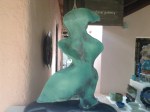

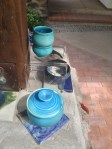


I recently reread the book Centering by Mary C Richards, a potter. In it she waxes very poetic about the subject of pottery. When I was covered with mud I considered Ms Richards to be fluffy and woo woo. About 35 years later I see how centering clay on a wheel is sheer poetry. I also notice my own approach to centering, which has never left me. I now like to center my body from the core in deep water, using tubular units for balance. This month as I attempt to write a poem a day I searched my memory for inspiration. Janet Burner, queen of all alchemists and artist of great skill and talent, popped into my mind. She has awesome technical skills and an alliance with fire like nobody I have ever seen. I like fire myself and enjoyed my time as a kiln queen. Janet has perfected various styles of firing to add variety and excitement to her work. She has always been famous for her raku. Now she has evolved other techniques, both modern and ancient, to bring her work to life.
In the kiln the pot is actually born. Just like an animal at birth, it also has a chance of dying. Potters must accept that some work will crack or be ruined in the firing. They must also accept that pottery is breakable, and glazes can only be controlled to a certain extent. Intimate knowledge and wisdom of the firing process results from practice and experimentation. I think of Janet Burner as the ultimate goddess of the fire. We talked about how ironic it is that her last name is Burner, both because of fire and because one of the oldest techniques used in finished ceramics is called burnishing. Her work today is created in a wonderful studio full of light, love, and art that she built herself. The artful courtyard garden serves as a gallery to display her work. She continues to teach at the Tucson Museum of Art School and grace our community with her participation in the Pima Arts Council Open Studio Tours. Next weekend you can visit artists and see their studios all over Tucson. This is an excellent way to find art and artists.
Today at the Tucson Botanical Gardens docents from the U of A Poetry Center offered a reading and workshop in Ekphrastic Poetry. This style of poem is a response to a piece of art, the Ek being from Greek and referring to echo. The group attending was a mixture of students, visual artists, and poets. By far the most emotional poem of the day was read by a Nam Vet who sat behind me. He chose to read War Photograph by Kate Daniels. His choked up emotions brought tears to his eyes which brought tears to the eyes of the audience. The other poems were discussed and analyzed but we were all very touched and had nothing more to say after he read. At the end of the session participants wrote poems about the photos in the gallery. All were striking. I apologize, gentle reader, for cutting off the very beginning of some of these gentle readings. It was a well produced and very well appreciated poetry experience, and we all have beautiful handouts to finish at home. There is one more session this spring of Poetry in the Gardens, Native poetry on April 26, 2014. These programs are included with garden admission. It is SUCH A DEAL!!


!
Hephaestus was the crafty, cunning metalworker son of Zeus and Hera. His difficult life began when his mother (or possibly his father) threw him off the planet at birth which pissed him off quite a bit and made him lame. His talent at the forge became obvious early in his life, and he was called upon to craft golden thrones for his parents. He used his extensive powers to revenge his rejection by creating a throne for his mother from which she could not escape. A deal was struck to release Hera from the throne by giving Aphrodite to Hephaestus as a wife. His marriage to the goddess of the sea was not blissful because she was unfaithful to him. He is the only god that was imperfect and the only god that worked. His mastery of fire was envied greatly by his father. His archetype as a loner craftsman can be seen in people who focus on great artistry, production and invention. In Rome he was known as Vulcan. In Tucson he is called Jerry Harris. He was an ancestor of Daedalus, who fashioned wings, as does Mr. Harris.





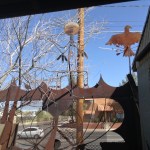

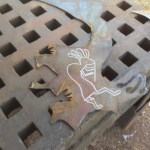


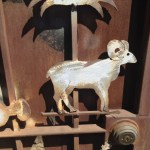

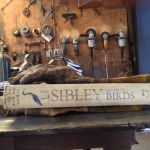


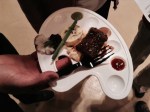
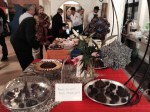
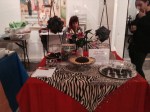

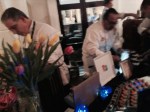
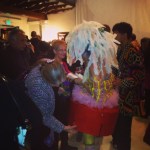


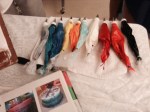



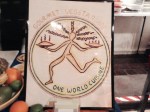
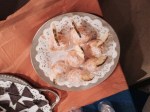


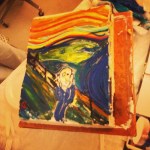
The Edible Art Gala hosted at Maker House last night by the Tucson Arts Brigade was extravagantly well produced. There were musicians in all areas, some dancers and other short acts entertaining all the guests. The food art was set out for tasting and also served by waiters circulating through the crowd. Artists with works in the silent auction were on hand, and everyone was encouraged to come in a costume that represented a work or art or a genre of art. The lively crowd enjoyed the historic setting and the Maker House bar which makes a perfect community gathering place. I tasted almost everything that had no meat, but the sensory excitement abounded, and I found I filled very quickly as I tasted my way around the tables. I am happy to have been introduced to several catering businesses that are new to me and do some seriously high quality original work. Everything I tested was delicious, but I saved myself for the scream cake as the last taste of the night. It was outstanding kiwi flavor with the icing of the dreamiest texture. I savored it with a lovely cappuccino from the bar as we enjoyed the outdoor patio with music under the stars. It was an example of Tucson at it’s best. Old friends, new art, and historic building turned community center…this is what I like to see happening in my city.
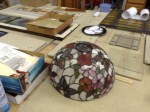
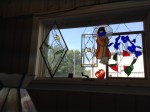
I was surprised to find my old school friend, Marcia Irwin, in her glass studio in Oakmont, PA, the Glass Kaleidoscope. She has become a skilled master of stained glass art. I bought out the earrings an found a nice gift for our hostess of the weekend reunion party. I did not know who the glass artist was when I decided to check out the shop. It was really fun to see her as well as her art. She does custom work and has all kinds of beautiful pieces on hand at her shop for gifting or treating yourself..I enjoyed both.






Science and art collide in the syesthesthetes. Color and odor are so closely related, as are color and taste. Sensory criss crossing is the particular talent of the synesthetes. To know what color or flavor an hour of the dawn is one must identify across the senses. This identification is natural to some, and can be enhanced through practice. Blind tasting is, in a way, a chance to create your own vision by tasting and smelling. Leonardo de Vinci called synesthesia one of his core values. Indian musicians compose ragas to be played at specific times of day and seasons of the year, like liturgy. When you enter a church with an ornate decorative style to hear chanting and smell incense you are being trained to cross your senses. Here is quiz to test your own synesthesia.
This device is used in art and literature to create a sensual background. If I write about cool colors or ice-cold professionalism, I ask you to feel the adjective. If I tell you the characters were swept away emotionally by the full moon and the soft ocean breeze, I want you to feel the set. Music videos evoke a feeling that is produced to add dimension to the songs. Here is one that is straight up color, geometry and sound. Enjoy!
Carl Jung, Leo Swiss shrink and alchemist, invited his patients to record their own visions as he did in his Red Book. He councils patients to record their visions in order to interpret the voice of the soul:
“Think of it in your imagination and try to paint it. Then when these things are in some precious book you can go to the book & turn over the pages & for you it will be your church-your cathedral-the silent places of your spirit where you will find renewal. If anyone tells you that it is morbid or neurotic and you listen to them-then you will
lose your soul-for in that book is your soul. ~Red Book; Page 216.
Today we have digital means of making art which I enjoy as self expression. What Carl is talking about here, however, is hand on paper. He tells the patient to use good paper and art supplies to document all visions. He explains that by drawing the vision the magnetism it contains is neutralized. He suggests that the expression of the detail is an important way to build self understanding. I will continue to enjoy my digital art making, but think it is time to spend more time with hand on paper. I love to draw mandalas and other geometric patterns. I wonder if I begin now if I can produce a Red Book worth saving. Have you started your Red Book?

birth chart Jung
 mermaidcamp