mermaidcamp
Keeping current in wellness, in and out of the water
You can scroll the shelf using ← and → keys
You can scroll the shelf using ← and → keys
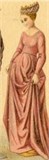
Maud
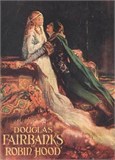
Maud as Maid Marian
My 21st grandmother married two husbands, the second of which (not my grandfather), was Robin Hood:
Maud le Vavasour, Baroness Butler
Following the death of Theobald in early February 1206, Maud returned to England into the custody of her father, who, having bought the right of marrying her at the price of 1200 marks and two palfrys, gave her in marriage, on 1 October 1207, to Fulk FitzWarin.[3] Fulk was the son of Fulk FitzWarin and Hawise de Dinan, who subsequent to a violent quarrel with King John of England, sought refuge in the woods and became an outlaw. Maud accompanied him. The legendary figures of Robin Hood and Maid Marian are said to be based on Fulk and Maud.
By FitzWarin, Maud had a son and a daughter:
DeathMaud le Vavasour died sometime before 1226. She had numerous descendants including the Earls of Ormond, the Earls of Arundel, Anne Boleyn, Mary Boleynand Elizabeth I.In fiction
Maud is the main protagonist in Elizabeth Chadwick’s The White Castle, which relates in highly fictional form, her life and adventures as the wife of Fulk FitzWarin.
References
Maud le Vavasour (1187 – 1282)
is my 21st great grandmother
Theobald II le Boteler (1200 – 1230)
son of Maud le Vavasour
Lady Maud Matilda DeVerdun Countess DeBoteler Countess Arundel (1225 – 1283)
daughter of Theobald II le Boteler
Matilda Tideshall FitzAlan Baroness Corbet De Arundel (1244 – 1309)
daughter of Lady Maud Matilda DeVerdun Countess DeBoteler Countess Arundel
Sir Thomas Corbet of Moreton, Knight of The Bath Corbet (1281 – 1310)
son of Matilda Tideshall FitzAlan Baroness Corbet De Arundel
Knight Sir Robert XII Corbet, Lord of Moreton Corbet (1304 – 1375)
son of Sir Thomas Corbet of Moreton, Knight of The Bath Corbet
Sir Roger XIII (Lord of Morton) Corbet (1330 – 1396)
son of Knight Sir Robert XII Corbet, Lord of Moreton Corbet
Robert Corbet (1383 – 1440)
son of Sir Roger XIII (Lord of Morton) Corbet
Blanche Corbet (1423 – 1458)
daughter of Robert Corbet
Humphrey Coningsby (1458 – 1535)
son of Blanche Corbet
Amphyllis Coningsby (1478 – 1533)
daughter of Humphrey Coningsby
Margaret Tyndale (1510 – 1555)
daughter of Amphyllis Coningsby
Thomas Taylor (1548 – 1588)
son of Margaret Tyndale
Thomas Taylor (1574 – 1618)
son of Thomas Taylor
James Taylor (1608 – 1698)
son of Thomas Taylor
John Taylor (1685 – 1776)
son of James Taylor
John Taylor (1727 – 1787)
son of John Taylor
John Taylor (1747 – 1781)
son of John Taylor
John Nimrod Taylor (1770 – 1816)
son of John Taylor
John Samuel Taylor (1798 – 1873)
son of John Nimrod Taylor
William Ellison Taylor (1839 – 1918)
son of John Samuel Taylor
George Harvey Taylor (1884 – 1941)
son of William Ellison Taylor
Ruby Lee Taylor (1922 – 2008)
daughter of George Harvey Taylor
Pamela Morse
I am the daughter of Ruby Lee Taylor

Humphrey and Isabella
My 14th great grandfather met his future bride in a very romantic return of her glove on his lance. They married and gave the queen their first born daughter. I find the gifting of the daughter to be a bit bizarre, but that is what they did.
In the chancel of the old parish church of Elstow, near Bedford–so famous for its associations with the childhood of John Bunyan*— a monument recording Sir Humphry Radcliffe of that place, and his wife, Dame Isabella Radcliffe. As the name of the latter is not even mentioned in the extinct peerage of fir Bernard Burke, perhaps a short account of a little episode in the history of this worthy pair may not be without interest to my readers. It is hardly needful to say more about the Radcliffes or Ratcliffes–for the word was spelt both ways indifferently when writing was rare and printing was almost unknown–than that they are of undoubted Saxon origin, and that they took their name from the village of Radcliffe, near Bury, in Lancashire. We read that one, Richard de Radcliffe, of Radcliffe Tower, seneschal and minister of the royal forests in the neighborhood of Blackburn, accompanied Edward I. to Scotland, and received from that sovereign, towards the end of his reign, ‘a grant of free warren and free phase in all his demesne lands of Radcliffe.’From him were descended a variety of noble houses–as the Radclyffes, Lords Fitzwalter, and Earls of Sussex; those of Foxdenton, and of Hitchin; and the unfortunate Earls of Derwentwater, who forfeited their Northumbrian castle of Dilston, as well as their lives, in the cause of the ‘young Chevalier,’ and the luckless house of the Stuarts.
One of his descendants, Sir John Radcliffe, was summoned to Parliament by Henry VII., in right of his mother, as Baron Fitzwalter; he was also steward of the Royal Household, and acted jointly with Jasper Tudor, Duke of Bedford, as High Steward of England at the coronation of Henry’s queen, Elizabeth Plantagenet. But afterwards, being involved in the wild conspiracy of Perkin Warbeck, he was attainted, and lost his head on the scaffold at Calais.
His son, however, found so much favor with Henry VIII that he was restored in blood, and, having held the command of the van of the army sent to France under the Earl of Surrey, he was created Viscount Fitzwalter and Earl of Susses. He was a zealous supporter of the king in his quarrel with Wolsey and the Pope, and he found his reward in a life-patent of the office of Lord High Chamberlain, together with a grant of the noble abbey of Cleve, in Somerset, the ruins of which to the present day form one of the most beautiful features of the country near Minehead, and Watchet, and Dunster. He was thrice married, and on each occasion his wife was a noble dame; his first choice being a daughter of Henry Stafford, Duke of Buckingham, his second a Stanley, and his third an Arundell of Lanherne. The earl desired that Humphrey, the youngest son of his first marriage, should marry a wealthy heiress of a county family; but the son took a different view of the matter from that taken by his parents for him. Very naturally and very pardonably he said that he preferred to choose for himself.
King Henry had announced his intention of being present at a tournament in the tilt-yard at Hampton, and great preparations had been made for the occasion. As the king rode along the way from London, the windows and the balconies about Kensington were all hung with colored cloths and silks. Among the crowd of spectators in the balconies was a plain citizen of London, Edmund Harvey, along with his wife and their daughter Isabel. The ladies in the neighboring windows thought the latter nice looking, and even pretty; but no one ‘knew who she could be,’ as the old folks were but commonplace in appearance, and clearly had not been brought up in the regions of courts and cities. The father, as may be imagined, pointed out the nobles as they passed by with their trains and retinues; but Isabel had no ears for her father, and her eyes scanned each new arrival for the face of a youth whom she had met on a chance occasion, and who had professed an attachment to her, in spite of the fact that she was not the daughter of a courtier or a noble.
At length there rode along a body of knights, with their lances borne aloft and their colors flying in the wind; they were headed by the Earl of Sussex, who was attended by his son Humphrey, a fair and well-favored youth, who looked little more than twenty years of age. Isabel, however, had no difficulty in recognizing him and the black steed on which he sat, and which champed the bit and foamed beneath his rein. The truth is that they had met before at another tourney, when Sir Humphrey had incurred the scorn and displeasure of some of the king’s courtiers because of a slight civility and courtesy which he had shown to herself, her father, and her mother, whom none of the gallants knew by sight or by name, their names not having been entered by the Heralds on the rolls of the ‘College of Arms.’ Eagerly did Isabel lean over the balcony in the hope of catching his eye, and grateful did she feel for a sudden halt, which was occasioned by the pressure of the crowd.
The young knight, however, was too deeply engaged in thought to take notice of the gay and smiling occupants of the balconies above his head, for he little imagined that Isabel Harvey would be among the company. But as they moved on a few steps he was roused from his reverie by a start of his horse, caused by the fall of a glove from one of the balconies. Gallantry prompted him to pick up the glove and to return it to its fair owner. Upon looking up, his eyes met those of the fair Isabel; and as he returned to her the glove on the point of his lance, and she bowed her thanks, he felt that she was not insensible to his regard for he. He quietly watched his opportunity to fall back from the gay procession as it moved along, and guided his horse down a narrow side lane, where he remained till the pageant had passed by. His object in so doing was to prevent his father, the earl, from noticing Isabel; for he well knew the haughtiness of his temper, and his zeal for the dignity of his order, and his inflexible ambition to ally his son to the heiress of some noble house or other.
Having emerged from his retreat, the young knight came again beneath the window, and, after bowing in a courtly manner, addressed the father of Isabel, who was just about to leave the balcony. On their descending into the street, the young knight dismounted, and accompanied them back to the city, leading his horse, and entertaining them, as they passed along the Strand and through Fleet Street, by his lively and elegant conversation. On reaching their home near Cheapside, Edmund Harvey pressed the knight to join them at their meal, and he gladly closed with the invitation. So well indeed did be succeed in gaining the confidence of his newly-found friend, that ere they parted the knight confessed to him his love for the fair Isabel, and received her father’s permission to ask her band, if she had no objection.
The rest of this story may be easily imagined. On the morrow the knight accompanied them back into the country, and, representing himself to be only one of the gentlemen of the earl’s retinue, he espoused the fair Isabel a few days afterwards in the priory church of Elstow. For many months-indeed, it may have been years- -he did not disclose the full secret of his rank, nor did the fair Isabel know that she had a claim to be styled ‘My Lady; The secret, however, oozed out at length ; and in due course of time their union was blessed by the birth of sons and daughters, the eldest of whom became one of the special favorites of Queen Elizabeth.
Immediately on the accession of `her highness’ she made Humphrey Radcliffe a knight, and gave him a post at court near her person, and took his eldest daughter, Mary, as her ‘Mayden of Honor and Gentelwoman of the Privie Chamber’–a post which she filled `honorably, virtuously, and faithfully for forty years,’ as her monument tells us.
It was in the year 1566, on the 13th day of August, that Sir Humphrey Radcliffe died at Elstow, and he was buried a week later in the chancel, as stated above, by the side of his affectionate and faithful wife Isabel, and soon afterwards one of his sons erected to their memory the memorial already mentioned.
As for Mary Radcliffe, she suffered less than perhaps any other person about the Court from the whims and caprices of her royal mistress. Being possessed of great penetration and judgment, together with a high sense of honor and unshaken fidelity, she could not fail to command the esteem even of ‘the Maiden Queen.’ Although remarkable for her personal beauty, she was inaccessible to the flatteries of the fops and gallants by whom Elizabeth was surrounded, and many a smart repartee and rebuff was received by the courtiers who tried to turn the head and the heart of Mary Radcliffe. On one occasion, indeed, writes Sir Nicholas Le Strange in an anecdote communicated by Lady Hobart, ‘Mistress Radcliffe, an old courtier in Queen Elizabeth’s time, told a lord whose conversation and discourse she did not like, that his wit was like a custard, having nothing good in it but the soppe, and, when that was eaten, you might throw away the rest.`*
Throughout the long period of her services at Court, Mistress Radcliffe bore a character unblemished by a spot of evil fame or reproach. She looked upon herself, she would say, as a New Year’s gift, for it was on that day in 1561-2 that she was first presented by her father to the Queen’s Majesty, and accepted by her ; and never afterwards, to the end of her days, did she fail to give the Queen–who loved all sorts of presents, and did not think it ‘more blessed to give than to receive’–some kind of annual remembrance of that eventful morning.
As she was still living to make her yearly present on the new year of 1600, Mistress Isabel Radcliffe might very justly be called an old courtier of the jealous Queen, who was not very firm in her friendships, or very scrupulous about discharging those who failed to please her. The actual date of her death is not recorded by ‘the unlettered muse’ of Elstow.
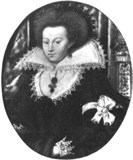
Elizabeth Whitbread
My 11th great-grandmother married into the Spencer family. Her son Gerard went to America.
Gerard Spencer, baptized at Stotfold, co. Bedford, 20 May 1576, died before 1646; married at Upper Gravenhurst, co., Alice Whitbread or Whitbred, who belonged to a family of some prominence. It seems quite possible that Gerard and his family moved from Stotfold some years before the emigration of his sons to New England; perhaps to London, where his brother Richard had become a prosperous haberdasher.
The English surname of “Spencer” derives from the Latin word dispensator, which means a storekeeper or shopkeeper. In medieval times, a feudal lord would employ a dispensator to have charge of his possessions and to oversee distribution and sale of supplies to the serfs, peasants, and tenant farmers who worked his land. In essence, a dispensator was something like a steward. This Latin term gave rise to the occupational family names of “Dispenser,” “Spencer,” “Spenser,” “Spence,” “Spens,” “Spender,” etc. Since there must have been thousands of dispensatori, there are naturally a large number of unrelated Spencer families. Even though he was the servant of a feudal lord or a king, a dispensator often himself would be of noble or knightly rank. The two best known medieval English families bearing a form of this surname were the Dispensers, Earls of Winchester, and the Spencers of Althorp, Northamptonshire, ancestors of the present Earls Spencer, who were the family of the late Diana, Princess of Wales, formerly known as Lady Diana Spencer. The Earls Spencer are also closely related to the Spencer-Churchill family, which includes the famous British Prime Minister Sir Winston Spencer-Churchill. During the Renaissance, an unscrupulous herald manufactured a spurious genealogy tracing the Spencers of Althorp back to the Dispensers of Winchester, but that fictitious genealogy was long ago debunked — there is no proof nor any reason to believe that the Spencers of Althorp had anything to do with the old Earls of Winchester.
Elizabeth Whitbread (1538 – 1599)
is my 11th great grandmother
Thomas Spencer (1571 – 1631)
son of Elizabeth Whitbread
Thomas Spencer (1596 – 1681)
son of Thomas Spencer
Margaret SPENCER (1633 – 1670)
daughter of Thomas Spencer
Moses Goodwin (1660 – 1726)
son of Margaret SPENCER
Martha Goodwin (1693 – 1769)
daughter of Moses Goodwin
Grace Raiford (1725 – 1778)
daughter of Martha Goodwin
Sarah Hirons (1751 – 1817)
daughter of Grace Raiford
John Nimrod Taylor (1770 – 1816)
son of Sarah Hirons
John Samuel Taylor (1798 – 1873)
son of John Nimrod Taylor
William Ellison Taylor (1839 – 1918)
son of John Samuel Taylor
George Harvey Taylor (1884 – 1941)
son of William Ellison Taylor
Ruby Lee Taylor (1922 – 2008)
daughter of George Harvey Taylor
Pamela Morse
I am the daughter of Ruby Lee Taylor
6. Gerald Spencer 3 (Michael S.2, John1) was baptized on 20 Apr 1576 in Stotfold, Bedfordshire, Eng 3 and died before May 1646 in Stotfold, Bedfordshire, Eng 1.
Documented events in his life were:
1. Mention in Will, Inv. or Prob.; 17 Mar 1644/45; London, Eng 3. Cited as the father of Jarrard, Thomas, Michaell Spencer who each received �50 in the will of their uncle Richard Spencer. Also father of William Spencer, deceased, with the legacy going to William’s children.
Gerald married Alice Whitebread 1 5, daughter of John Lawrence Whitebread and Eleanor Radcliffe, in Upper Gravenhurst, Bedford, England 1. (Alice Whitebread was born between 1578-1583 in Bedfordshire, Eng 1 5 and died about 1646 in Stotfold, Bedfordshire, Eng 1.)
Children from this marriage were:
+ 15 M i. Ensign Gerard Spencer 1 2 3 was baptized on 25 Apr 1614 in Stotfold, Bedfordshire, Eng 3 and died on 29 Jun 1685 in East Haddam, Middlesex Co., CT 1.
16 M ii. William Spencer 1 3 was baptized on 11 Oct 1601 in Stotfold, Bedfordshire, Eng 3 and died on 4 May 1640 in Hartford, Hartford Co., CT 1.
Documented events in his life were:
1. Mention in Will, Inv. or Prob.; Bef 20 Nov 1628; Upper Gravenhurst, Bedford, England 5. Received legacy in the will of his grandmother Eleanor (Radcliffe) Whitebread.
2. Residence; Bef 7 Jan 1632/33; Cambridge, Suffolk Co., MA 6. William Spencer is listed as an Inhabitant � no date given. but probably before the 7 Jan 1632 date given to items on p 4
3. Lands Recorded – Granted; 7 Jan 1632/33; Cambridge, Suffolk Co., MA 7. Common Pales devided as ffollo:– William Spencer 12 Rod
4. Lands Recorded – Granted; 2 Mar 1632/33; Cambridge, Suffolk Co., MA 8. Granted William Spencer the fwampe on the other fide the Creeke.
5. Oath of Freemanship/Allegiance; 4 Mar 1632/33; Massachusetts Bay Colony, MA 9.
6. Lands Recorded – Granted; 5 Aug 1633; Cambridge, Suffolk Co., MA 10. Lotts granted for Cowyardes:– William Spencer 3 Roods
7. Town Office; 3 Feb 1633/34; Cambridge, Suffolk Co., MA 11. James Olmfted & William Spencer chosen as two of the five men to order business for the town.
8. Town Service; 1 Sep 1634; Cambridge, Suffolk Co., MA 12. ffurther it is ordered that George St^ [ ] William Spencer fhall measuer out al^ [ ] ^ranted by the Towne and have IIId the Ac^ [ ] [ ] fame.
9. Lands Recorded – Granted; 1 Dec 1634; Cambridge, Suffolk Co., MA 13. Granted William Spencer that Corner of ground by Jofeph Myats between the Swamps to bee fett out by John Haynes Efqr.
10. Town Service; 3 Feb 1634/35; Cambridge, Suffolk Co., MA 14. chosen to survey town lands: James Olmfted & William Spencer [plus 3 others]
11. Town Service; 8 Feb 1634/35; Cambridge, Suffolk Co., MA 15. Townsmen present at the town meeting:– William Spencer.
12. Town Service; 20 Aug 1635; Cambridge, Suffolk Co., MA 16. It was ordered that William Spencer and George Steele fould meafuer all the meaddow ground and undeuided belonging to the Newtowne: and when it is Meafuered and deuided to euery man his proportcion there are to: meafuer every mans feuerally and Caufe ftakes to bee fett at each end and to haue three pence the Acker for the fame and whofoever fhall not pay for the meafueringe within one yeare then the ground to returne to them for meafueringe.
13. Lands Recorded – Granted; 20 Aug 1635; Cambridge, Suffolk Co., MA 16. ffurrther it is ordered that the fame [the meaddow ground and undeuided belonging to the Newtowne] fhalbee deuided acordinge to every mans seuerall proporcion herevnder written vntell it bee all difpoffed of viz:– William Andrews 2�
14. Town Office; 23 Nov 1635; Cambridge, Suffolk Co., MA 17. William Spencer chosen one of the nine men to �order busffiness of the whole Towne for the year following� also ordered that the Towne booke fhalbee at William Spencers house.
15. Town Service; 7 Dec 1635; Cambridge, Suffolk Co., MA 18. Townsmen present at the town meeting:– William Spencer. William Spencer & Mr. Bambrigg to view the fence about the ground between the swamps [to be erected by land holders] and decide if it is sufficient.
16. Town Service; 4 Jan 1635/36; Cambridge, Suffolk Co., MA 19. Townsmen present at the town meeting:– William Spencer. William Spencer & Thomas Hofmer charged with seeing that a foot bridge is built over the Creek at the end of Spring street
17. Lands Recorded; 8 Feb 1635/36; Cambridge, Suffolk Co., MA20. The Names of Thofe men who haue houfes in the Towne at this prefent as onely are to be acconted as houfes of the Towne:– William Spencer – 2; also in the Weftend:– William Spencer – 2
18. Mention in Will, Inv. or Prob.; 17 Mar 1644/45; London, Eng 3. His children received a legacy in the will of his uncle Richard Spencer of London, England.
19. Probate; 24 Jun 1650; Hartford, Hartford Co., CT 21. This Courte taking into Consideracon the estate of William Spencer deceased with the Information of the ourseers In the presence of Thomas Spencer Brother to the said William, iwth the Consent of the wife of William Edwards: the doe Judge that 30� is as much as the estate heere will bare to be sequestred for the use of the Children, wch is to bee paid to them according tot he will of the said William Spencer, provided that suffitient security bee giuen in to the Satisfaction of the ourseers for the payment of the debts of the said William Spencer, and the aforesaid Sum of 30� to the said Children as aforesaid: And prouided allso that whatsoeuer Shall bee paid heere or in England of any Estate due to the wife of the said William Spencer while Shee was the wife of William Spencer, or that Shall Come from Concord: two thirds thereof Shall be and remaine to the propper vse of the Children aforesaid.
My 11th great-grandfather, John Taylor was one of the ten chaplains present at the Field of the Cloth of Gold. As I look at history through the perspective of my ancestors I learn details that blow my mind. Henry VIII is known even to American history students for his wives, divorces, and church business. Henry was a music fan, and imported some of my ancestors from Italy to be musicians in his court. I had never heard of this Field of Cloth of Gold, sort of a party Henry had with lavish tents and chaplains. The king of France really tripped him in the fight Henry arranged. I love this story, and am highly amused that my ancestor can be placed at the crazy Anglo-Franco party. I say let’s invite Vlad over for a topless wrestling match in DC. What do you think? Has any of you ever heard of this Field party? Those royals were just so kinky.

Thomas Kerr
Thomas Kerr was devoted to the interests of Mary, Queen of Scots, who was in turn, devoted to the martyrdom of my maternal 10th great-grandfather, Rowland Taylor. My family has been opposed to itself in history more than once. As a child in suburban Pittsburgh I lived very near a family named Kerr of fabulous, robber baron wealth of some kind. I now wonder if I was a distant relative of the Kerrs in my childhood neighborhood. They had a castle and loads of fine stuff they shared generously with all the kids in the area. I suppose I will never know. We do know quite a bit about Thomas, including his ruffled fashion statement:
Thomas Kerr (Carr) became the 9th Baron of Ferrniehirst Castle. He was also noted for his involvement with Mary Stuart, Queen of Scots. (From notes of David W Carr)The name of Carr, Kerr or Karre is as old as the Norman Conquest by William of Normandy in 1066. One of the followers of William I is recorded in the Roll Of The Gattle Abbey as the name of Karre.The early descendants of this Norman soldier and succeeding generations spread on both sides of the border of England and Scotland.Direct lines can be traced through various peerage books of England and Scotland to Andrew Kerr I, the 6th Baron of Fennehurst, Scotland. He was born in 1450 , created Baron in 1480 and knighted in 1483. He and his son Andrew II, 7th Baron of Fennehurst, were remarkable men for talent and undaunted courage, conspicious in reigns of James IV and James V. Andrew Kerr II, died in 1543. His son Sir John Kerr, 8th Baron of Fennehurst, did great service against the English and rescued Queen Mary from incursions by the English against the Scots. Sir Thomas, 9th Baron and son of Sir John, was also devoted to Queen Mary’s interests. (Quoted from Watson’s “The House of Carr”1926)
Thomas Kerr (1529 – 1586)
is my12th great grandfather
William Carr (1542 – 1655)
son of Thomas Kerr
Benjamin Carr (1592 – 1635)
son of William Carr
Caleb Carr (1623 – 1695)
son of Benjamin Carr
Sarah Carr (1682 – 1765)
daughter of Caleb Carr
John Hammett (1705 – 1752)
son of Sarah Carr
MARGARET HAMMETT (1721 – 1753)
daughter of John Hammett
Benjamin Sweet (1722 – 1789)
son of MARGARET HAMMETT
Paul Sweet (1762 – 1836)
son of Benjamin Sweet
Valentine Sweet (1791 – 1858)
son of Paul Sweet
Sarah LaVina Sweet (1840 – 1923)
daughter of Valentine Sweet
Jason A Morse (1862 – 1932)
son of Sarah LaVina Sweet
Ernest Abner Morse (1890 – 1965)
son of Jason A Morse
Richard Arden Morse (1920 – 2004)
son of Ernest Abner Morse
Pamela Morse
I am the daughter of Richard Arden Morse
Sir John’s son, Sir Thomas Kerr of Ferniehirst, was noted for his loyalty to Mary Queen of Scots, for whom he built a fortified house in the centre of Jedburgh. He raised the Royal Standard for her in Dumfries, helping her and her husband Darnley to put down an insurrection by a group of her nobles (she won at the time but was forced into exile a few years later). Subsequently he sheltered her English supporters after the rising of the Northern Earls (1568) and rescued Lady Northumberland, stranded by illness in a Liddesdale outlaw’s hide-out. He helped his father-in-law, Kirkcaldy of Grange, to defend Edinburgh Castle in the Queen’s name; when it was taken he lost precious family documents which were never seen again, but at least he escaped with his life (Kirkcaldy was beheaded) and fled abroad for some years. He was re-instated in his lands by James VI when the young King came of age and took power into his own hands. The townsmen of Jedburgh supported the Regent Morton (later also beheaded) against Mary; they “debagged” and publicly caned a herald sent out by Ferniehirst to read out a proclamation of loyalty to the Queen, also compelling him to eat his document.
From her English prison, Mary wrote to Sir Thomas, thanking him for his past services and encouraging him to keep up his loyalty. She seems to have taken a particular liking to his young son Andrew, the first Lord Jedburgh, and may have knighted him while still a child, for she asks in particular to be remembered to “Sir Andrew”.
Briefly imprisoned after the fall of Edinburgh Castle, Sir Thomas was in exile and unable to perform his duties as Warden at the time of the last major clash on the Border, the Raid of Redeswire. This incident developed on one of the “days of truce” when the Wardens or their deputes met to resolve various local problems and to exchange or hang wanted criminals. On this occasion the English Warden complained that the Scots had failed to hand over a thief known as “Farnstein” (not a German refugee or mercenary, as one might think, but an Englishman whose real name was Robson). This led to mutual insults, no doubt aggravated by the fact that both sides had been liquidating a great deal of liquid. The argument grew into a scuffle and the scuffle grew into a fight. Eventually the Jedburgh men arrived in strength and dispersed the English, killing a few and capturing others, who were later released without ransom.
Though he missed this particular incident, Sir Thomas was involved in a similar but smaller affray, on almost the same spot, ten years later. By then he was back in office as Warden of the Middle March; Forster, now 84, was still in charge on the other side, and Forster’s son-in-law, who was also a son of the Earl of Bedford, was killed. Elizabeth Tudor was not amused, and insisted on Ferniehirst’s punishment, though the rights and wrongs of the whole affair were by no means clear. Being anxious to succeed to the English throne, James VI sought to ingratiate himself with her, and exiled Sir Thomas to Aberdeen, where he died within a year. The inscription on his memorial in Jedburgh Abbey reads “Sir THOMAS KERR of Fernyherst, Warden of the Marches, Provost of Edinburgh and Jedburgh, Father of Andrew Lord Jedburgh, Sir James Kerr of Creylin (Crailing) and Robert Earl of Somerset. He died at Aberdeen on March 31, 1586 and lies buried before the Communion Table. He was a man of action and perfit loyaltie and constancie to Queen Marie in all her troubles. He suffered 14 years’ banishment besides forfaulter (forfeiture) of his lands. He was restored to his estates and honours by King James the Sext.”
Sir Thomas married twice. His children by his first wife, Janet Kirkcaldy, included Sir Andrew of Ferniehirst, first Lord Jedburgh (see below) and William, who took the name of Kirkcaldy to continue his mother’s line; his children, however, reverted to Kerr, having failed to inherit the Grange property. By his second marriage, to Janet Scott, Sir Thomas was the father of Sir James Kerr of Crailing (father of the second Lord Jedburgh) and of Robert Can, Earl of Somerset (see below). He had several other children by both his wives.
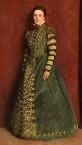
Elizabeth Bessiles
She was the only child and heiress of William Bessiles, whose family had been settled at Besils Leigh, Berks as Leland says in his quaint language, ‘syns the time of Edward the first’. The Bessells cam out of Provence in France and were ‘men of activitye in feates of arms as it appearith in monuments at Legh; how he faught in listes with a straunge knyghte that challengyd hym, at the whitche deade the kynge and quene at that time of England were present’. (source – http://www.tudorplace.com.ar)
She married Sir Richard Fettiplace.
Elizabeth Bessiles (1465 – 1511)
is my 14th great grandmother
Anne Fettiplace (1496 – 1567)
daughter of Elizabeth Bessiles
Mary Purefoy (1533 – 1579)
daughter of Anne Fettiplace
Susanna Thorne (1559 – 1586)
daughter of Mary Purefoy
Gov Thomas Dudley (1576 – 1653)
son of Susanna Thorne
Anne Dudley (1612 – 1672)
daughter of Gov Thomas Dudley
John Bradstreet (1652 – 1718)
son of Anne Dudley
Mercy Bradstreet (1689 – 1725)
daughter of John Bradstreet
Caleb Hazen (1720 – 1777)
son of Mercy Bradstreet
Mercy Hazen (1747 – 1819)
daughter of Caleb Hazen
Martha Mead (1784 – 1860)
daughter of Mercy Hazen
Abner Morse (1808 – 1838)
son of Martha Mead
Daniel Rowland Morse (1838 – 1910)
son of Abner Morse
Jason A Morse (1862 – 1932)
son of Daniel Rowland Morse
Ernest Abner Morse (1890 – 1965)
son of Jason A Morse
Richard Arden Morse (1920 – 2004)
son of Ernest Abner Morse
Pamela Morse
I am the daughter of Richard Arden Morse

Berkshire flag
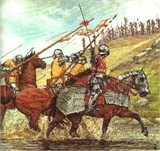
Battle of Blore Heath
My 15th great grandfather was a knight involved with Brit royalty. He lost his life defending it in a battle called Blore Heath. They were fighting about roses (red and white, although I am still not sure what the symbols meant) and the right to the throne. They were royals. They were angry. Things got bloody nasty:
The Battle of Blore Heath
September 23, 1459
After four years of uneasy peace the King presided over a wasting realm. No parliament had been summoned for three years, the country was sadly divided and distressed. The Yorkists were armed, armies were marching across all England. Lord Audley had recently raised a Lancastrian army centered round Market Drayton, and the Queen -through whom the King ruled- sent him orders to intercept Lord Salisbury, who was marching from Yorkshire to join the Duke of York at Ludlow. The two armies met head on two and a half miles east of Market Drayton at a place called Blore Heath. Salisbury, with 3,000 troops, was outnumbered by more than two to one, but could not avoid giving battle.
Audley took up a position just west of a little stream that crossed the Market Drayton-Newcastle-under-Lyme road, and Salisbury’s men were drawn up about 150 yards east of the present Audley Cross, which marks the spot where Lord Audley fell. The Yorkist left rested upon the boggy edge of a wood, but their right was in the air, and Salisbury made a laager of his wagons to protect this flank. Whether Salisbury feigned retreat in order to draw Audley on is not certain, but the Lancastrian commander was definitely the one to attack. Two cavalry charges were repulsed, the first with heavy loss to the Lancastrians, and then they mounted an infantry attack up the hill to the Yorkist position. But this too failed; there was no support from the cavalry, Lord Audley had already fallen and 500 Lancastrians chose this moment to desert to the enemy. Salisbury’s victory was complete and in the pursuit, which continued for two miles, the slaughter was very heavy. Possibly 2,000 Lancastrians perished in this battle, but fewer than 200 Yorkists fell.
For more information on the Battle of Blore Heath, contact Blore Heath 1459 online at http://www.bloreheath.org
YORKISTS LANCASTRIANS
Sir Christopher Conyers of Sokebourne, Durham
Sir Henry Bromflete, Wymington, Bedford
Sir John Conyers of Hornby, Yorkshire
Sir Robert del Booth of Wilmslow, Cheshire (killed in battle)
Sir Walter Devereux of Weobley, Herefordshire (killed in battle)
Sir John Bourchier of West Horsley, Surrey
Sir Richard Grey of Powis, Powis
Sir Hugh Calveley of the Lea, Cheshire (killed in battle)
Sir Richard Hamerton of Hamerton, Yorkshire
Sir William Catesby (Sr.) of Ashby St. Legers, Northamptonshire
Sir Thomas Harrington, Lancashire
Sir John Dawne of Cheshire
Sir Roger Kynaston of Hordley, Shropshire
Sir Jerkin Done of Wickington, Cheshire (killed in battle)
Sir Thomas Lumley of Lumley, Durham
Sir Robert Downes of Shrigley, (killed in battle)
Thomas Meering of Tong
Sir Thomas Dutton of Dutton, Cheshire (killed in battle)
Sir James Metcalfe of Nappa, Yorkshire
Sir John Dwnn of Cheshire, killed in battle
Sir John Middleton of Belsay Castle, Northumberland
Sir John Egerton of Egerton, Cheshire (killed in battle)
Sir Thomas Mountford of Hackforth, Yorkshire
Sir Nicholas of Eyton of Eyton, Shropshire
Sir Richard Neville (Earl of Salisbury) of Middleham, Yorkshire (fled to Calais)
Sir Richard Fitton of Gawsforth, Cheshire
Sir Richard Neville (Earl of Warwick) of Middleham, Yorkshire (fled to Calais)
Thomas Fitton, fate unknown
Sir Thomas Neville of Thornton Bridge, Durham
Sir John Haigh, killed in battle
Sir Robert Ogle of Ogle, Northumberland
Sir Edmund Hampden of Hampden, Buckinghamshire
Sir Thomas Parr of Kendal, Westmoreland
Sir Thomas Hesketh of Rufford, Lancashire
Richard Plantagenet, Duke of York, fled to Ireland
Sir Henry Holland of Darlington, Devon
Sir William Pudsey of Selaby, Durham
Sir John Legh of Booths, Cheshire (killed in battle)
Sir James Strangeways of Whorlton, Yorkshire
Sir Philip Maunsell of Scrurlage, Glamorgan
Sir Walter Strickland of Sizergh, Westmoreland
Sir Richard Molyneux of Sefton, Lancashire (killed in battle)
Sir John Wandesford of Kirklington, Yorkshire
Sir John Neville of Raby, Durham
Sir John Wenlock of Wenlock, Shropshire
Sir Ralph Shirley of Shirley, Sussex
Sir Walter Wrottesley of Wrottesley, Shropshire
Sir John Skidmore of Mochas, Herefordshire
Sir John Stanley of Pipe, Staffordshire
Sir Edmund Sutton of Dudley, Westmoreland
Sir John Sutton of Dudley, Westmoreland
Sir William Troutbeck of Dunham-on-the-Hill, killed in battle
James Touchet (Lord Audley) of Markeaton, Derbyshire (killed in battle)
Sir Hugh Venables of Kinderton (killed in battle)
©The Richard III Foundation, Inc.
Sir Richard Earl Sefton Molyneux (1422 – 1459)
is my 15th great grandfather
Thomas Sir 8th Earl of Sefton Molyneux (1445 – 1483)
Son of Sir Richard Earl Sefton
Lawrence Castellan of Liverpool Mollenaux (1490 – 1550)
Son of Thomas Sir 8th Earl of Sefton
John Mollenax (1542 – 1583)
Son of Lawrence Castellan of Liverpool
Mary Mollenax (1559 – 1575)
Daughter of John
Francis Gabriell Holland (1596 – 1660)
Son of Mary
John Holland (1628 – 1710)
Son of Francis Gabriell
Elizabeth Holland (1652 – 1737)
Daughter of John
Richard Dearden (1645 – 1747)
Son of Elizabeth
George Dearden (1705 – 1749)
Son of Richard
George Darden (1734 – 1807)
Son of George
David Darden (1770 – 1820)
Son of George
Minerva Truly Darden (1806 – )
Daughter of David
Sarah E Hughes (1829 – 1911)
Daughter of Minerva Truly
Lucinda Jane Armer (1847 – 1939)
Daughter of Sarah E
George Harvey Taylor (1884 – 1941)
Son of Lucinda Jane
Ruby Lee Taylor (1922 – 2008)
Daughter of George Harvey
Pamela Morse
I am the daughter of Ruby Lee
 mermaidcamp