mermaidcamp
Keeping current in wellness, in and out of the water
You can scroll the shelf using ← and → keys
You can scroll the shelf using ← and → keys

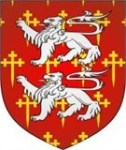
My 19th great-grandfather was Justice of the Peace. He died at the age of 29, perhaps of the black plague, as many of his forefathers had done. The family had very bad luck with the black death.
John Lestrange, 4th Lord Strange (of Blackmere)
b. circa 1332, d. 12 May 1361
John Lestrange, 4th Lord Strange (of Blackmere) was born circa 1332 at Whitchurch, Hampshire, England. He was the son of John Lestrange, 2nd Lord Strange (of Blackmere) and Ankaret Boteler. He married Mary FitzAlan, daughter of Edmund Fitzalan, 9th Earl of Arundel and Alice de Warenne.1 He died on 12 May 1361.4
He was Justice of the Peace (J.P.) Salop 1360.5 He was also known as John le Strange. He gained the title of 4th Lord Strange, of Blackmere.1 He was created 1st Lord Lestrange in 1360. On 3 April 1360 1st LORD (Baron) STRANGE or LESTRANGE of a new created by writ of summons.
Children of John Lestrange, 4th Lord Strange (of Blackmere) and Mary FitzAlan
Joh n Lestrange, 5th Lord Strange (of Blackmere)+4 b. c 1353, d. 3 Aug 1375
Ankaret Lestrange+ b. c 1361, d. 1 Jun 1413
Citations
[S6] G.E. Cokayne; with Vicary Gibbs, H.A. Doubleday, Geoffrey H. White, Duncan Warrand and Lord Howard de Walden, editors, The Complete Peerage of England, Scotland, Ireland, Great Britain and the United Kingdom, Extant, Extinct or Dormant, new ed., 13 volumes in 14 (1910-1959; reprint in 6 volumes, Gloucester, U.K.: Alan Sutton Publishing, 2000), volume I, page 244. Hereinafter cited as The Complete Peerage.
[S6] Cokayne, and others, The Complete Peerage, volume XII/1, page 343.
[S37] Charles Mosley, editor, Burke’s Peerage, Baronetage & Knightage, 107th edition, 3 volumes (Wilmington, Delaware, U.S.A.: Burke’s Peerage (Genealogical Books) Ltd, 2003). Hereinafter cited as Burke’s Peerage and Baronetage, 107th edition.
[S6] Cokayne, and others, The Complete Peerage, volume XII/1, page 344.
[S37] Charles Mosley, Burke’s Peerage and Baronetage, 107th edition, volume 3, page 3473.
John IV Lord Strange 7th Lord Blackmere Le Strange (1332 – 1361)
is my 19th great grandfather
Ankaret Baroness le Strange (1361 – 1413)
daughter of John IV Lord Strange 7th Lord Blackmere Le Strange
General John Talbot * (1384 – 1453)
son of Ankaret Baroness le Strange
John Talbot (1413 – 1460)
son of General John Talbot *
Isabel Talbot (1444 – 1531)
daughter of John Talbot
Sir Richard Ashton (1460 – 1549)
son of Isabel Talbot
Sir Christopher Ashton (1493 – 1519)
son of Sir Richard Ashton
Lady Elizabeth Ashton (1524 – 1588)
daughter of Sir Christopher Ashton
Capt Roger Dudley (1535 – 1585)
son of Lady Elizabeth Ashton
Gov Thomas Dudley (1576 – 1653)
son of Capt Roger Dudley
Anne Dudley (1612 – 1672)
daughter of Gov Thomas Dudley
John Bradstreet (1652 – 1718)
son of Anne Dudley
Mercy Bradstreet (1689 – 1725)
daughter of John Bradstreet
Caleb Hazen (1720 – 1777)
son of Mercy Bradstreet
Mercy Hazen (1747 – 1819)
daughter of Caleb Hazen
Martha Mead (1784 – 1860)
daughter of Mercy Hazen
Abner Morse (1808 – 1838)
son of Martha Mead
Daniel Rowland Morse (1838 – 1910)
son of Abner Morse
Jason A Morse (1862 – 1932)
son of Daniel Rowland Morse
Ernest Abner Morse (1890 – 1965)
son of Jason A Morse
Richard Arden Morse (1920 – 2004)
son of Ernest Abner Morse
Pamela Morse
I am the daughter of Richard Arden Morse
“The case of the le Strange family demonstrates well what the Black Death and the courts could do to an unlucky upper-class family. The le Stranges lived in Whitchurch in Shropshire in the black-earth, high-grain-yielding country intensely competed for by gentry families. The rich le Stranges were ambitious and on the rise, and because of their upward mobility were starting to make marriages in some instances with younger daughters of the nobility.
“But the le Strange family was exceptionally unlucky in losing male family members during three successive outbreaks of the plague—two in 1349, and one each in 1361 and 1375. By 1375 not even the relative fecundity of the family in producing sons for the next generation could help them escape extinction in the male line. The plague had eliminated sons and left ambitious dowagers.
“The le Stranges going back to the 1330s were not originally a great gentry house. They were a family on the make, principally through marriages with rich women, plus good estate management. The enhancement of family fortunes was launched by the marriage of John le Strange the First [a.k.a. John, 2nd Lord Blackmere] to a wealthy gentry heiress, Anakretta [sic] le Botiler. In the next two generations the le Strange heirs married into the nobility. This raised their social and political profile and with luck would have accrued vast landed wealth to the family.
“But the Black Death countered that luck. Fulk le Strange, John I’s eldest son, married Elizabeth, the daughter of Earl Ralph of Stafford. Earl Ralph drove a hard marriage bargain. Fulk’s father, Ralph Stafford insisted, had to settle land worth two hundred marks a year (about a half-million dollars) jointly on the couple. This meant that if both John I and Fulk died close in time to each other and Fulk’s marriage to the heiress Elizabeth Stafford was short, the le Strange estate would be affected severely by loss of income from land held as dower for the widow.
“Fulk le Strange died in the Black Death on August 30, 1349. But Elizabeth Stafford lived to a ripe old age by medieval standards, not dying until 1376. During those three decades Elizabeth not only collected dower from her deceased husband’s estate but remarried twice, taking with her the succulent property that John I le Strange had to settle jointly on his son Fulk and Elizabeth Stafford to get Earl Ralph’s permission for the marriage. The land thus eventually passed to the family of Reginald, Lord Cobham, Elizabeth Stafford’s third husband.
“The story gets worse and more complicated for the pathetic le Stranges. Not only did Fulk le Strange, the elder son and prime heir of John I, die in the Black Death in August 1349, but the old man himself, John I le Strange of Whitchurch, had died of the plague only five weeks earlier. For a rich gentry family this blow was equivalent to a 60 percent crash in the stock market today—if every single asset was held in stock.
“Anakretta le Botiler survived her husband, John I le Strange, until the next visitation of the plague in 1361. This meant that there were now two living dowagers, Anakretta le Botiler le Strange and Elizabeth Stafford le Strange, both women from families powerful enough to get their full dower rights and then some. For the twelve years of her widowhood Anakretta held the family house at Whitchurch in Shropshire (contrary to custom, by which she should have vacated it within forty days of her husband’s death). She held on to one estate that came with her dowry, since it was jointly visited upon her and John I. For another piece of land she paid her son John II le Strange and his estate the modest sum of twenty marks (thirty thousand dollars) a year.
“This medieval soap opera in the age of the Black Death gets worse still for the le Strange gentry. John II le Strange got back some of his father’s lands when his mother, Anakretta, died in 1361, but he himself died of the plague in the same year. This left a third dowager to be taken care of from the le Strange lands, a great lady indeed, Mary, daughter of the earl—later duke—of Arundel [a.k.a. Mary FitzAlan].
“Mary Arundel le Strange had to be taken care of in the lifestyle she had come to expect as a product of the high aristocracy and as a lady dominating local society. She took possession of most of the income or actual real estate of the le Strange inheritance, dying in 1396. After the dowager Mary died, the remaining le Strange lands passed to Richard, Lord Talbot, who was married to Anakretta, the daughter of John II le Strange.
“The le Strange name thus disappeared from gentry history.”
From Cantor, Norman (2001) In the Wake of the Plague: The Black Death and the World it Made, pp. 130-134. New York: HarperCollins.
 mermaidcamp