mermaidcamp
Keeping current in wellness, in and out of the water
You can scroll the shelf using ← and → keys
You can scroll the shelf using ← and → keys
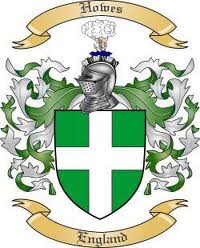
Howes Coat of Arms
My 13th great-grandmother was arrested in London for her religious beliefs. She moved to Barnstable, on Cape Cod with her extended family.
It is claimed that this family descends from one John de Huse who had a large manorial property in Basthorpe, Norfolk, England in 1065.
Penninahs father was a Reverend, Rector of Eastwell, Kent. Penninah and her brother Samuel Howes were arrested in 1632 in London in connection with the prosecution of Rev John Lothrop and his flock of Dissenters who had been meeting in Blackfriars, London. Penninah Howes was called and required to take her oath but she refused. The prosecutor asked “Will you trust Mr Lathropp and believe him rather than the Church of England?” She replied “I referre myself to the Word of God, whether I maie take this oath or now.”
Jemimah Peninah Howse (1589 – 1633)
is my 13th great grandmother
Sarah Linnell (1603 – 1652)
daughter of Jemimah Peninah Howse
Thomas Ewer (1593 – 1638)
son of Sarah Linnell
Mary Ewer (1637 – 1693)
daughter of Thomas Ewer
Mehitable Jenkins (1655 – 1684)
daughter of Mary Ewer
Isaac Hamblin (1676 – 1710)
son of Mehitable Jenkins
Eleazer Hamblin (1699 – 1771)
son of Isaac Hamblin
Sarah Hamblin (1721 – 1814)
daughter of Eleazer Hamblin
Mercy Hazen (1747 – 1819)
daughter of Sarah Hamblin
Martha Mead (1784 – 1860)
daughter of Mercy Hazen
Abner Morse (1808 – 1838)
son of Martha Mead
Daniel Rowland Morse (1838 – 1910)
son of Abner Morse
Jason A Morse (1862 – 1932)
son of Daniel Rowland Morse
Ernest Abner Morse (1890 – 1965)
son of Jason A Morse
Richard Arden Morse (1920 – 2004)
son of Ernest Abner Morse
Pamela Morse
I am the daughter of Richard Arden Morse
The Howes, Lothrops, and Linnells of Kent and London, England, and Scituate
and Barnstable, Massachusetts
By Dan R. McConnell
Published by the Cape Cod Genealogical Society Bulletin, Fall 2007
The family of Reverend John Howes [also House, Howse], whose children, kin, and friends, were brought before the Royal Court of the High Commission in London, England in the 1630’s, were persecuted and imprisoned for their religious beliefs. These beliefs also had political effects, which we will explain. Some fled to America, first to Scituate, then Barnstable, both of which were in Plymouth Colony in that time, a place friendly to their Separatist beliefs. Others remained in England and played a key role in the emergence of non-conformist churches, the disputes in Parliament, and the English Civil War.
In the 17th Century, for ordinary people, a lengthy confinement in London prisons such as Newgate, Clink, Fleet or Bridewell was tantamount to a death sentence due to crowded, filthy, disease-ridden conditions. Such dangerous confinement, for religious non-conformity, under the arbitrary rules of the High Commission, became a driving force for like minded people to flee to America. English resentment to the many breaches of Common Law led to the rise of Parliament in opposition, and ultimately to the abolishment of the High Commission in 1641 and the Civil war in the 1640’s. After the “Glorious Revolution’ in 1688, the English Bill of Rights was enacted to specifically forbid such practices, echoed famously in our own Bill of Rights, the First Ten Amendments to the U.S Constitution.
For the Howes family and their kin, the road to prison and to America began in Kent. The Reverend John Howes matriculated at St. John’s College, Cambridge in 1590. He is listed in the Alumni Cantabrigienes as such with the further note that he was rector at Eastwell, Kent in 1610. In the Bishop’s Transcripts for Canterbury he is also given as Curate for Egerton, 1592-6. From his location at the time of the baptism of his children, he is likely to have also been Curate for Eastwell from 1603 to his death in 1630. He performed the marriage ceremony for his daughter Hannah, in her marriage to Rev. John Lothrop [also Lothropp] in Eastwell, 16 October, 1610. In his will, dated 1630, he is described as Minister, Eastwell. In his will, his wife’s name is given as Alice.
Children of the Reverend John Howes:
Elizabeth Howes, Bapt, unkn. Married, Eastwell to John Champion, of Little Chart, 28 September 1607
Hannah Howes, Bapt. Egerton, 5 May, 1595. Died between 1632 and 1634, London, while her husband, Rev Lothrop, was in prison. Married,Eastwell to Rev. John Lothrop, 16 October 1610.
Peninah Howes, Bapt, Egerton, 11 April, 1596. Died after 1669, Barnstable, Massachusetts.
Married between 1632 and 1638 to Robert Linnell, probably in London.[The will of her brother Thomas Howes, in 1643 gives her name as Peninah Linnell [also Lynell]. In the High Commission proceedings in 1632, she is given as Peninah Howes].
Druscilla Howes. Bapt., unkn. Married, Eastwell, to Simon Player 17 April 1637 John Howes. Bapt. Eastwell 19 June, 1603. Married Eastwell to Mary Osborn of Ashford, 18 September, 1623.
Priscilla Howes. Bapt Eastwell 25 August, 1605. Buried, Eastwell 28 Nov 1618
Thomas Howes. Bapt. Eastwell, 21 August, 1608. Died 1644 London. In his will, dated 18 October 1643, he lists his wife Elizabeth, his brother Samuel [of Scituate and Barnstable, Mass. See Great Migration Series, Vol. III, I634-5, page 424-8], his sister Peninah Lynell, his sister Druscilla Player.
He also lists as administrators, the famous Puritan Praise God Barbon [Speaker of Parliament during the Commonwealth period, known as “Barebones Parlaimant”, and William Granger, who was brought up before the High Commission along with Barbon’s wife Sara. All were members of Rev. Lothrop’s congregation in London]
Samuel Howes. Bapt Eastwell, 10 June, 1610. Died 12 September 1667, Mass. Married about April 1636 to Ann Hammond of Watertown, Mass. He emigrated to America in 1634, joined Rev Lothrop’s church in Scituate then Barnstable, and returned to Scituate.
Henry Howes. Bapt. Eastwell, 28 June, 1612.
Note. There has been great confusion in the American record to the effect that Robert Linnell’s first wife was a Jemimah Howes, presumably another daughter to Rev. John Howes. This has been compounded by an LDS record of the supposed marriage of a Jemimah Howes to Robert Linnell in 1621 in Ashford, Kent. There are no records to support this.
John Lothrop, son of Thomas Lothrop, bapt, Etton, Yorkshire, 20 Dec, 1584, first entered Oxford, then withdrew and matriculated at Queen’s College, Cambridge, graduating with a B.A 1606, M.A. 1609. He was curate at Little Chart 1609, Egerton 1610, serving until his resignation between 1621 and 1624. In 1625, he succeeded Henry Jacob as Minister to the first Independent Church in London, founded in 1616, and one of the five oldest independent [non-conformist]
churches in England. The principles or covenant of the Jacob/Lothrop church were essentially Separatist and were very close to those of the Rev. John Robinson in Leiden [Pilgrims]. During a period of exile before 1616, Henry Jacob resided with the Robinson congregation in Leiden. These
churches were illegal, as the Church of England, under the King and his appointed Archbishop of Canterbury was the only legal church. The Jacob/Lothrop church met in private, in the homes of congregants. These secret meetings for the purpose of praying preching and interpreting the Bible, were called conventicles.
In 1632, Rev. Lothrop was arrested in the house of one of his congregants along with 42 of his congregation, and was brought before the Court of the High Commission. He, and they, were charged with sedition and holding conventicles. The political nature of the charge of sedition [“an insurrection against established authority”], and the antique language of “conventicle’ [ a
private meeting to hear illegal preaching] renders the charges unclear to modern ears. The charges were, however, deadly serious and the court proceedings unimaginable. The accused had none of the rights of modern citizens. The court was an inquisition, where the accused were forced to testify against themselves, with our counsel. The process was so intimidating that many people were driven to flee. It was one of the driving forces in the Great Migration to New England.
It was no dispute over prayer books and vestments. It was about life, death, and salvation. First, what was the Court of the High Commission? It, along with the Court of the Star Chamber, was a Royal Prerogative Court [King’s Rights], originally created in the time of Henry VII [1485-1509]. These courts were separate from the Civil Courts, or Common Law Courts, which
operated on the basis of precedent, and the rights of English people under the Common Law.
Originally, these courts were established under the King’s right to protect individuals from abuse in Common Law Courts. Under the Elizabeth I and the Stuart Kings [James I and Charles I], these courts were used by the Church of England to suppress those who sought to reform the church, or to seek a different path to salvation, using court rules that were in clear violation with the Common Law. They came down, with extreme severity, on Separatists in particular. Because of
their covenant relationship, Separatists believed that every congregation could be a church unto itself, and could elect it’s own Ministers, by vote of it’s elders, based upon the model of the early Christian church [pre-Constantine]. To do so meant they had no need of the Church of England, and did not accept the authority of the Bishops. This was unacceptable to the Crown. As famously said by King James I, “ No Bishop, no King”. Since the King was the head of the Church of England,
and appointed the Archbishop, he wanted one church with order and conformity. To the King, the Separatists position implied anarchy and chaos, and must be stopped. As James I said further, “ I will harry them out of the land”.
Under Charles I and his Archbishop, William Laud, the screws were tightened much more. Laud was the Chief Judge of the High Commission. In his zeal to suppress nonconformists, he scrapped several principles of English Common Law, including [1] protection against selfincrimination, 2] the right to confront one’s accusers, [3] the right to produce witnesses in one’s
own defense, [4] the right to a prompt hearing in court, so one did not languish in a dangerous jail without a trial, and [5] cruel and unusual punishments. All of these rights were suspended for those, such as the members of Rev. Lothrops congregation, who were brought before the Court of the High Commission in May 1632.
The Ministers and there flock faced brutal treatment. For the high crime of publishing tracts critical of the Bishops many ministers had their ears cut off, their faces branded and were confined to prison for life, which meant death within a few months or a few years at most. When one was brought before the court, the requirement was to sign an oath of Allegiance to the
Church of England, to forswear any contrary belief or practice and to answer any question posed by the judges,consisting of Laud and five other Bishops. To do so meant to abandon their right to choose their own Minister, to hear preaching and to attend Bible study with a Minister of their choice. They believed their own souls to be at stake. They were not allowed any of the basics of a fair trial, and certainly faced cruel punishment. So what did they do? They refused to swear the oath and were jailed. Some died in prison, some were released and fled to America, and some fought for Parliament in the English Civil War.
Now, hear the voices of Archbishop Laud, of Rev. John Lothrop and of the Howes and their friends [from the Proceedings of the Court of the High Commission]:
“ 5 May, 1632. This day were brought to the court out of prison diverse persons whixh were taken on Sunday last at a conventicler met at the House of Barnet, a brewer’s clerk, dwelling in the precinct of Black Friars: By name, John Lothrop, their Minister, Humphrey Barnard, Henry Dod, Samuel Eaton, William Granger, Sara Jones, Sara Jacob, Peninah Howes, Sara Barbon, Susan Wilson and diverse others”—
Statement by the Archbishop—“ You show your selves to be unthankful to God, to the King and to the Church of England, that when, God bbe praised, through his Majesties care and ours that you have preaching in every church, and men have liberty to join in prayer and participation in the sacrements and have catechizing to enlighten you, you in an unthankful manner cast off all this yoke, and in private unlawfully assemble yourselves together making rents and divisions in the church.—You are unlearned men that seek to make up a religion of your own heads!”—“you are desperately heretical”
“Then came in Mr. Lothrop, who is asked by what authority he had to preach and keep this conventicler.” Laud,–“How many women sat cross legged upon the bed, while you sat on one side and preached and prayed most devoutly?” Lothrop. “I keep no such evil company” “Will you lay your hand upon the book and take your oath?’ Lothrop. “I refuse the oath.”
Peninah Howes “ I dare not swear this oath till I am better informed of it, for which I desire time”;;;”I will give an answer of my faith, if I be demanded, but not willingly forswear myself”
Sara Barbon “ I dare not swear, I do not understand it. I will tell the truth without swearing”
Then they were then all taken to the New Prison.
“8 May, 1632. Laud to Sara Jones—“ This you are commanded to do of God who says you must obey your superiors.” Sara Jones “That which is of God is according to God’s Word and the Lord will not hold him guiltless that takes His name in vain”
‘Lothrop. I do not know that that I have done anything which might cause me justly to be brought before the judgement seat of man, and for this oath, I do not know the nature of it”
Laud “You are accused of Schism”
To Samuel Howes ‘Will you take your oath?’ Howes I am a young man and do not know what this oath is”
Peninah Howes is then asked to take the oath, but she refused. Laud “Will you trust Mr Lothrop and believe him rather than the Church of England?’
Because women were not able to hold property she had to sue the court in 1669 for her husband’s estate:
Robert, called “my Brother,” by Mr. John Lothrop, adm. chh. scituate with his wife Sept. 16. 1638, “having a letter of dismission from the church in London.: Took oath of allegaince 1 Feb. 1638. Propr. at Barnstable 22 jan 1638-9. ch. Hannah (m. 15 March, 1648, John Davis of Bar.,) Abigail, (m. May 1650, Joshua Lombard,) David, (m. March 9, 1652, Hannah Shelley).
He made will 23 Jan. 1662, prob. 12 March, 1662-3; beq. to wife; to son David; to Abigail and Bethys; to John Davis. The widow Penninnah petitioned the Court 29 Oct. 1669, to recover the house her husband had left her from the hands of David L.
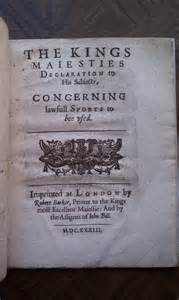
Book of Sports
When James I of England published the Book of Sports in 1617 it caused an uproar from the Puritans. The belief that no work or pleasure should take place on the sabbath was much debated at that time in Britain. The book was published after King James had his very own translation of the Bible released. Trouble was brewing in the British Isles that would eventually lead to the settlement of Plymouth Colony. The Puritans believed that all citizens must be required to attend religious services on Sunday, and they wanted them mandatory morning and evening on that day. Many of my own ancestors left England to live in Holland for a decade about that time, before sailing on the Mayflower to America. All the countries in Europe posed problems to their ideals except the Netherlands. There they could practice their severe brand of religion. There they built up strength to go to the new world.
The concept is taught to American children that these people came to America for religious freedom. That is only partially the case. They wanted to be free to dominate others and force them to follow Puritan rules. The freedom was just for their own religious beliefs, but did not apply to the beliefs of others. They were convinced of the righteousness of their logic. This made life in the new colony very contentious. It was easy to run afoul of the Pilgrim fathers who were all about sabbath and strict adherence.
Charles I reissued the Declaration of Sports in 1633, continuing the tradition of requiring attendance to religious services (in the Church of England) to qualify to dance, leap, or play sports on Sunday. There were a few sports not permitted on the sabbath such as bear and bull baiting and bowling. Charles I expanded the merriment to include local fairs and festivals on the list of sanctioned Sunday activities. England was trending Puritan in the 1630’s. In 1643 the book was publicly burned. When Charles II was restored to the throne after the English Civil War in 1660 the country was liberated from the strict sabbath rules and could once again party on Sunday afternoons.
When we think about sports and religion in America today we observe a very different story. Church attendance and membership are dropping off dramatically, but sports dominate the public attention. It is ironic to think that our initial colony was founded to make sure that Sunday would be sport free for everyone. I wonder what the Pilgrim fathers would think of the NFL and the NBA.
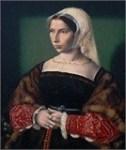

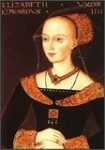
My 17th great-grandmother married well. She is one of the few women in my tree who managed to survive and live a good life after one of her husbands was beheaded for treason at the Tower of London. She married the new king’s uncle to secure her future. She is one of three siblings from her family that are my ancestors on my father’s side.
Katherine Wydeville (1458 – 1525)
is my 17th great grandmother
Edward Richard Buckingham Stafford (1479 – 1521)
son of Katherine Wydeville
Elizabeth Dutchess Norfolk Stafford Howard (1497 – 1558)
daughter of Edward Richard Buckingham Stafford
Lady Katherine Howard Duchess Bridgewater (1495 – 1554)
daughter of Elizabeth Dutchess Norfolk Stafford Howard
William ApRhys (1522 – 1588)
son of Lady Katherine Howard Duchess Bridgewater
Henry Rice (1555 – 1621)
son of William ApRhys
Edmund Rice (1594 – 1663)
son of Henry Rice
Edward Rice (1622 – 1712)
son of Edmund Rice
Lydia Rice (1649 – 1723)
daughter of Edward Rice
Lydia Woods (1672 – 1738)
daughter of Lydia Rice
Lydia Eager (1696 – 1735)
daughter of Lydia Woods
Mary Thomas (1729 – 1801)
daughter of Lydia Eager
Joseph Morse III (1752 – 1835)
son of Mary Thomas
John Henry Morse (1775 – 1864)
son of Joseph Morse III
Abner Morse (1808 – 1838)
son of John Henry Morse
Daniel Rowland Morse (1838 – 1910)
son of Abner Morse
Jason A Morse (1862 – 1932)
son of Daniel Rowland Morse
Ernest Abner Morse (1890 – 1965)
son of Jason A Morse
Richard Arden Morse (1920 – 2004)
son of Ernest Abner Morse
Pamela Morse
I am the daughter of Richard Arden Morse
Catherine Woodville, Duchess of Buckingham
From Wikipedia, the free encyclopedia
Catherine Woodville or Katherine Woodville(c. 1458 – 18 May 1497) was an English medieval noblewoman, best known for her strategic marriages. She was the sister-in-law of King Edward IV of England and gave birth to several illustrious children.
Catherine was the daughter of Richard Woodville, 1st Earl Rivers, and Jacquetta of Luxembourg. When her sister Elizabeth married King Edward IV, the King elevated and promoted many members of the Woodville family. Elizabeth Woodville’s household records for 1466/67 indicate that Catherine was being raised in the queen’s household.
Sometime before the coronation of Elizabeth in May 1465, Catherine was married to Henry Stafford, 2nd Duke of Buckingham; both were still children. A contemporary description of Elizabeth Woodville’s coronation relates that Catherine and her husband were carried on squires’ shoulders. According to Dominic Mancini, Buckingham resented his marriage to a woman of inferior birth. The couple had four children: Her husband Buckingham raised interest for Richard III’s claim to the throne, later they quarreled and hearsay was that it was because of the princes in the tower.
Edward Stafford, 3rd Duke of Buckingham (3 February 1478 – 17 May 1521)
Elizabeth Stafford, Countess of Sussex (ca. 1479 – 11 May 1532)
Henry Stafford, 3rd Earl of Wiltshire (c. 1479 – 6 April 1523)
Anne Stafford, Countess of Huntingdon (c. 1483–1544)
In 1483, Buckingham first allied himself to the Richard, Duke of Gloucester, helping him succeed to the throne as Richard III, and then to Henry Tudor, leading an unsuccessful rebellion in his name. Buckingham was executed for treason on 2 November 1483.
After Richard III was defeated by Henry Tudor at Bosworth in 1485, Catherine married the new king’s uncle Jasper Tudor on 7 November 1485.
After Jasper’s death in 1495 – not later than 24 February 1496, – Catherine married Richard Wingfield, who outlived her.
Depiction in fiction
Catherine is the main protagonist in Susan Higginbotham’s 2010 historical novel The Stolen Crown. She is briefly mentioned in Philippa Gregory’s historical novels The White Queen and The Red Queen.

Katherine Wydeville and Jasper Tudor


My 19th great-grandfather was Speaker of the House of Commons, and asked the king to excuse him from that duty. Richard II refused to excuse him. He is buried on the north side of the parish church St. Mary at Bures in Essex. These Waldegraves must be added to the buried in church tour of Europe I need to make someday.
Sir Richard II Lord Bures De Waldegrave (1335 – 1401)
is my 19th great grandfather
Sir Richard III Lord Bures Silveste DeWALDEGRAVE (1370 – 1434)
son of Sir Richard II Lord Bures De Waldegrave
Sir John William deWaldegrave (1397 – 1454)
son of Sir Richard III Lord Bures Silveste DeWALDEGRAVE
Lady Anne De Waldegrave (1429 – 1454)
daughter of Sir John William deWaldegrave
Knight Edmond Bedingfield (1450 – 1496)
son of Lady Anne De Waldegrave
Edmund Bedingfield (1483 – 1552)
son of Knight Edmond Bedingfield
Henry Bedingfield (1509 – 1583)
son of Edmund Bedingfield
Edmund Bedingfield (1534 – 1585)
son of Henry Bedingfield
Nazareth Bedingfeld (1561 – 1622)
daughter of Edmund Bedingfield
Elishua Miller Yelverton (1592 – 1688)
daughter of Nazareth Bedingfeld
Yelverton Crowell (1621 – 1683)
son of Elishua Miller Yelverton
Elishua Crowell (1643 – 1708)
daughter of Yelverton Crowell
Yelverton Gifford (1676 – 1772)
son of Elishua Crowell
Ann Gifford (1715 – 1795)
daughter of Yelverton Gifford
Frances Congdon (1738 – 1755)
daughter of Ann Gifford
Thomas Sweet (1759 – 1844)
son of Frances Congdon
Valentine Sweet (1791 – 1858)
son of Thomas Sweet
Sarah LaVina Sweet (1840 – 1923)
daughter of Valentine Sweet
Jason A Morse (1862 – 1932)
son of Sarah LaVina Sweet
Ernest Abner Morse (1890 – 1965)
son of Jason A Morse
Richard Arden Morse (1920 – 2004)
son of Ernest Abner Morse
Pamela Morse
I am the daughter of Richard Arden Morse
Sir Richard Waldegrave (died 2 May 1401) was a member of Parliament for Lincolnshire in 1376, and Speaker of the House of Commons from 1381 to 1382, during the reign of King Richard II.
Life
His father Sir Richard Waldegrave was returned to parliament in 1335 for Lincolnshire. Richard the son resided at Smallbridge in Suffolk, and was returned to parliament as a knight of the shire in the parliament of February 1376. He was elected to the first and second parliaments of Richard II and to that of 1381. In 1381 he was elected speaker of the House of Commons, and prayed the king to discharge him from the office; the first instance, according to James Alexander Manning, of a speaker desiring to be excused. The king, however, insisted on his fulfilling his duties.
During his speakership parliament was chiefly occupied with the revocation of the charters granted to the villeins by Richard during Wat Tyler’s rebellion. It was dissolved in February 1382. Waldegrave represented Suffolk in the two parliaments of 1382, in those of 1383, in that of 1386, in those of 1388, and in that of January 1389–90.
He died at Smallbridge on 2 May 1402, and was buried on the north side of the parish church of St. Mary at Bures in Essex. He married Joan Silvester of Bures, by whom he had a son, Sir Richard Waldegrave.
Referenc es
” Waldegrave, Richard”. Dictionary of National Biography, 1885–1900. London: Smith, Elder & Co.
Attribution
This article incorporates text from a publication now in the public domain: “Waldegrave, Richard”. Dictionary of National Biography, 1885–1900. London: Smith, Elder & Co.

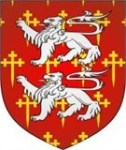
My 19th great-grandfather was Justice of the Peace. He died at the age of 29, perhaps of the black plague, as many of his forefathers had done. The family had very bad luck with the black death.
John Lestrange, 4th Lord Strange (of Blackmere)
b. circa 1332, d. 12 May 1361
John Lestrange, 4th Lord Strange (of Blackmere) was born circa 1332 at Whitchurch, Hampshire, England. He was the son of John Lestrange, 2nd Lord Strange (of Blackmere) and Ankaret Boteler. He married Mary FitzAlan, daughter of Edmund Fitzalan, 9th Earl of Arundel and Alice de Warenne.1 He died on 12 May 1361.4
He was Justice of the Peace (J.P.) Salop 1360.5 He was also known as John le Strange. He gained the title of 4th Lord Strange, of Blackmere.1 He was created 1st Lord Lestrange in 1360. On 3 April 1360 1st LORD (Baron) STRANGE or LESTRANGE of a new created by writ of summons.
Children of John Lestrange, 4th Lord Strange (of Blackmere) and Mary FitzAlan
Joh n Lestrange, 5th Lord Strange (of Blackmere)+4 b. c 1353, d. 3 Aug 1375
Ankaret Lestrange+ b. c 1361, d. 1 Jun 1413
Citations
[S6] G.E. Cokayne; with Vicary Gibbs, H.A. Doubleday, Geoffrey H. White, Duncan Warrand and Lord Howard de Walden, editors, The Complete Peerage of England, Scotland, Ireland, Great Britain and the United Kingdom, Extant, Extinct or Dormant, new ed., 13 volumes in 14 (1910-1959; reprint in 6 volumes, Gloucester, U.K.: Alan Sutton Publishing, 2000), volume I, page 244. Hereinafter cited as The Complete Peerage.
[S6] Cokayne, and others, The Complete Peerage, volume XII/1, page 343.
[S37] Charles Mosley, editor, Burke’s Peerage, Baronetage & Knightage, 107th edition, 3 volumes (Wilmington, Delaware, U.S.A.: Burke’s Peerage (Genealogical Books) Ltd, 2003). Hereinafter cited as Burke’s Peerage and Baronetage, 107th edition.
[S6] Cokayne, and others, The Complete Peerage, volume XII/1, page 344.
[S37] Charles Mosley, Burke’s Peerage and Baronetage, 107th edition, volume 3, page 3473.
John IV Lord Strange 7th Lord Blackmere Le Strange (1332 – 1361)
is my 19th great grandfather
Ankaret Baroness le Strange (1361 – 1413)
daughter of John IV Lord Strange 7th Lord Blackmere Le Strange
General John Talbot * (1384 – 1453)
son of Ankaret Baroness le Strange
John Talbot (1413 – 1460)
son of General John Talbot *
Isabel Talbot (1444 – 1531)
daughter of John Talbot
Sir Richard Ashton (1460 – 1549)
son of Isabel Talbot
Sir Christopher Ashton (1493 – 1519)
son of Sir Richard Ashton
Lady Elizabeth Ashton (1524 – 1588)
daughter of Sir Christopher Ashton
Capt Roger Dudley (1535 – 1585)
son of Lady Elizabeth Ashton
Gov Thomas Dudley (1576 – 1653)
son of Capt Roger Dudley
Anne Dudley (1612 – 1672)
daughter of Gov Thomas Dudley
John Bradstreet (1652 – 1718)
son of Anne Dudley
Mercy Bradstreet (1689 – 1725)
daughter of John Bradstreet
Caleb Hazen (1720 – 1777)
son of Mercy Bradstreet
Mercy Hazen (1747 – 1819)
daughter of Caleb Hazen
Martha Mead (1784 – 1860)
daughter of Mercy Hazen
Abner Morse (1808 – 1838)
son of Martha Mead
Daniel Rowland Morse (1838 – 1910)
son of Abner Morse
Jason A Morse (1862 – 1932)
son of Daniel Rowland Morse
Ernest Abner Morse (1890 – 1965)
son of Jason A Morse
Richard Arden Morse (1920 – 2004)
son of Ernest Abner Morse
Pamela Morse
I am the daughter of Richard Arden Morse
“The case of the le Strange family demonstrates well what the Black Death and the courts could do to an unlucky upper-class family. The le Stranges lived in Whitchurch in Shropshire in the black-earth, high-grain-yielding country intensely competed for by gentry families. The rich le Stranges were ambitious and on the rise, and because of their upward mobility were starting to make marriages in some instances with younger daughters of the nobility.
“But the le Strange family was exceptionally unlucky in losing male family members during three successive outbreaks of the plague—two in 1349, and one each in 1361 and 1375. By 1375 not even the relative fecundity of the family in producing sons for the next generation could help them escape extinction in the male line. The plague had eliminated sons and left ambitious dowagers.
“The le Stranges going back to the 1330s were not originally a great gentry house. They were a family on the make, principally through marriages with rich women, plus good estate management. The enhancement of family fortunes was launched by the marriage of John le Strange the First [a.k.a. John, 2nd Lord Blackmere] to a wealthy gentry heiress, Anakretta [sic] le Botiler. In the next two generations the le Strange heirs married into the nobility. This raised their social and political profile and with luck would have accrued vast landed wealth to the family.
“But the Black Death countered that luck. Fulk le Strange, John I’s eldest son, married Elizabeth, the daughter of Earl Ralph of Stafford. Earl Ralph drove a hard marriage bargain. Fulk’s father, Ralph Stafford insisted, had to settle land worth two hundred marks a year (about a half-million dollars) jointly on the couple. This meant that if both John I and Fulk died close in time to each other and Fulk’s marriage to the heiress Elizabeth Stafford was short, the le Strange estate would be affected severely by loss of income from land held as dower for the widow.
“Fulk le Strange died in the Black Death on August 30, 1349. But Elizabeth Stafford lived to a ripe old age by medieval standards, not dying until 1376. During those three decades Elizabeth not only collected dower from her deceased husband’s estate but remarried twice, taking with her the succulent property that John I le Strange had to settle jointly on his son Fulk and Elizabeth Stafford to get Earl Ralph’s permission for the marriage. The land thus eventually passed to the family of Reginald, Lord Cobham, Elizabeth Stafford’s third husband.
“The story gets worse and more complicated for the pathetic le Stranges. Not only did Fulk le Strange, the elder son and prime heir of John I, die in the Black Death in August 1349, but the old man himself, John I le Strange of Whitchurch, had died of the plague only five weeks earlier. For a rich gentry family this blow was equivalent to a 60 percent crash in the stock market today—if every single asset was held in stock.
“Anakretta le Botiler survived her husband, John I le Strange, until the next visitation of the plague in 1361. This meant that there were now two living dowagers, Anakretta le Botiler le Strange and Elizabeth Stafford le Strange, both women from families powerful enough to get their full dower rights and then some. For the twelve years of her widowhood Anakretta held the family house at Whitchurch in Shropshire (contrary to custom, by which she should have vacated it within forty days of her husband’s death). She held on to one estate that came with her dowry, since it was jointly visited upon her and John I. For another piece of land she paid her son John II le Strange and his estate the modest sum of twenty marks (thirty thousand dollars) a year.
“This medieval soap opera in the age of the Black Death gets worse still for the le Strange gentry. John II le Strange got back some of his father’s lands when his mother, Anakretta, died in 1361, but he himself died of the plague in the same year. This left a third dowager to be taken care of from the le Strange lands, a great lady indeed, Mary, daughter of the earl—later duke—of Arundel [a.k.a. Mary FitzAlan].
“Mary Arundel le Strange had to be taken care of in the lifestyle she had come to expect as a product of the high aristocracy and as a lady dominating local society. She took possession of most of the income or actual real estate of the le Strange inheritance, dying in 1396. After the dowager Mary died, the remaining le Strange lands passed to Richard, Lord Talbot, who was married to Anakretta, the daughter of John II le Strange.
“The le Strange name thus disappeared from gentry history.”
From Cantor, Norman (2001) In the Wake of the Plague: The Black Death and the World it Made, pp. 130-134. New York: HarperCollins.
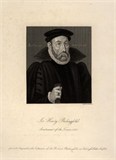
Henry Bedingfield
My 13th great-grandfather was instrumental in placing Mary Tudor on the throne of England.
Son of Edmund Bedingfield and his wife Grace, dau. of Henry Marney, first B. Marney. He was the grandson of Sir Edmund Bedingfield who had served in the Wars of the Roses, and to whom were granted by Edward IV for his faithful service letters patent authorizing him “to build towers, walls, and such other fortifications as he pleased in his manors of Oxburgh, together with a market there weekly and a court of pye-powder”. Henry’s father, other Edmund, had been Catalina of Aragon’s custodian during her last sad years at Kimbolton Castle.
Sir Henry Bedingfield and his fellow-Member Sir William Drury were included in Cecil’s list of gentlemen who were expected to transact ‘affairs for Queen Jane’, but in the event both rallied to Mary. Sir Henry was mainly instrumental, together with Sir Henry Jerningham, in placing Mary Tudor on the throne. In ‘The Chronicle of Queen Jane and of two years of Queen Mary’, the anonimous author said:
‘… The 12. of Jul word was brought to the Councell, being then at the Tower with the lady Jane, that the Lady Mary was at Keninghall castle in Norfolk, and with her the earle of Bath, sir Thomas Wharton sonne to the lord Wharton, sir John Mordaunt sonne to the lord Mordaunt, sir William Drury, sir John Shelton, sir Henry Bedingfield, master Henry Jerningham, master John Sulierde, master Richard Freston, master sergeant Morgan, master Clement Higham of Lincolnes inne, and divers others; and also that the earle of Sussex and master Henry Ratcliffe his sonne were comming towards her…’
He proclaimed her at Norwich, and for his loyalty received an annual pension of £100 out of the forfeited estates of Sir Thomas Wyatt. Ultimately he became Lieutenant of the Tower of London and Captain of the Yeomen of the Guard.
As jailer of Princess Elizabeth, who was suspected of complicity in Wyatt’s rebellion, he has been persistently misrepresented by Foxe and others. On 5 May 1554, Sir John Gage was relieved of his office as Constable of the tower and Sir Henry Bedingfield placed in his room. Bedingfield marched in to take over command of the Tower bringing with him a hundred men in blue liveries, and Elizabeth’s reacción to this ‘sudden mutation’, at least as described by John Foxe, clearly illustrates her state of mind. The arrival of Sir Henry, being ‘a man unknown to her Grace and therefore the more feared’, seems to have induced a fit of panic. She demanded to be told ‘whether the Lady Jane’s scaffold were taken away or no?’ Reassured on this point, but still not entirely satisfied, she went on to ask who Sir Henry Bedingfield was and whether, ‘if her murdering were secretly committed to his charge, he would see the execution thereof?’
On 19 May, at one o’clock in the afternoon he joined Sir John Williams and Sir Leonard Chamberlain to escort Elizabeth from the Tower to Woodstock. Foxe, in his “The myracolous preservation of Lady Elizabeth, nowe Queen” said:
“… In conclusión, on Trinitie Sonday being the 19. day of Maye, she was remooved from the Tower, the Lorde Treasurer being then there for the lading of her Cartes and discharging the place of the same. Where Syr Henry Benifielde (being appoynted her Gailer) did receive her wyth a companie of rakehelles to Garde her, besides the Lorde of Darbies bande, wayting in the Countrey about for the mooneshine on the water. Unto whome at length carne my Lorde of Tame, ioyned in Commission with the sayd Syr Henry, for the guiding of her to prisone: and they together conveied her grace to Woodstock, as hereafter followeth…”
Foxe’ s narrative contains many circumstantial anecdotes of her imprisonment, intended to emphasise her constant danger, and the boorish behaviour of Sir Henry. In fact, he seems to have been nomore than conscientious, and Elizabeth herself understood that. The whole history of his custodianship of Elizabeth is contained in a series of letters addressed to the Queen and the Privy Council, and in their replies. This correspondence, which has been published by the Norfolk and Norwich Archæological Society, completely exonerates Sir Henry from either cruelty or want of courtesy in his treatment of the royal captive.
Thomas Parry, the princess cofferer had to provide for her household but on 26 May, three days after her arrival at Woodstock, the Council told Bedingfield that there was no reason for Parry to stay there. Elizabeth’s guardian communicated this decision to Parry, who baffled him by staying in the town. Parry now proceeded to make Bedingfield’s life a misery. He first objected to the provisioning of his retinue out of Elizabeth’s resources, until Bedingfield was commanded to supply them by a special warrant. This was simply a harassing tactic, for books were being conveyed to Elizabeth, some of which Bedingfield suspected of being seditious, and when Parry sent him two harmless ones he was forced to return them for want of explicit instructions. Bedingfield complained that he was helpless, as ‘daily and hourly the said Parry may have and give intelligence’, and once again the cofferer’s position was referred to the Council. Early in Jul Parry was at the Bull inn, ‘a marvellous colourable place to practise in’, receiving every day as many as 40 men in his own livery, besides Elizabeth’s own servants. At length the Council forbade such large meetings and, from Bedingfield’s subsequent silence on the point, it seems that the order was obeyed.
Sir Henry Bedingfield also informed the Council of a meeting at Woodstock, Oxfordshire, between Francis Verney and a servant of the late Duke of Suffolk and cited Sir Leonard Chamberlain’s judgement that “if there be any practice of ill within all England, this Verney is privy to it”. Bedingfield apologised to the Council for the fact that he was being ‘enforced, by the importunate desires of this great lady, to trouble your lordships with more letters than be contentful to mine own opinion’. In Apr 1555 Henry Bedingfield, escort Elizabeth to Hampton Court, where she met the Queen. A weeks later ended a period of close restraint for the Princess, which had lasted just over fifteen months. It would probably be difficult to say whether prisoner or jailer was the more relieved.
On Elizabeth’s accession he retired to Oxborough and was called upon in a letter, in which the Queen addressed him as “trusty and well-behaved”, to furnish a horse and man armed, as his contribution to the defence of the country against an expected invasion of the French.
When, however, the penal laws against Catholics were enforced with extreme severity, Sir Henry Bedingfield was not spared. He was required to pay heavy monthly fines for non-attendance at the parish church, while his house was searched for priests and church-furniture, and his servants dismissed for refusing to comform to the new state religion. Together with his fellow-Catholics, he was a prisoner within five miles of his own house and might pass that boundary only by a written authorization of the Privy Council.
In his will of 24 Jul 1561 Sir Richard Southwell bequeathed over 10,000 sheep to members of his family and left his personal armour to his ‘cousin and friend’ Sir Henry Bedingfield.
He died 22 Aug 1583, and was buried in the Bedingfeld chantry at Oxborurgh.
Family and Education
b. by 1509, 1st s. of Sir Edmund Bedingfield of Oxborough by Grace, da. of Henry Marney, 1st Baron Marny. educ. L. Inn, adm. 1528. m. by 1535, Catherine, da. of Sir Roger Townshend of Raynham, Norf., 5s. 5da. Kntd. by July 1551; suc. fa. June 1553.1
J.p. Norf. 1538-53, q. 1554-58/59, q. Suff. 1554-58/59; commr. relief, Norf. 1550; other commissions Norf., Suff. 1534-60 PC Aug. 1553-Nov. 1558; lt. Tower Oct. 1555-c.Sept. 1556; v.-chamberlain of the Household and capt. of the guard Dec. 1557-Nov. 1558.2
Henry Bedingfield came from an old Suffolk family with extensive estates in East Anglia. After his marriage to the daughter of one of the most favoured crown officials in the region he was named to the Norfolk bench; however, while his father lived he was not outstanding in either national or county affairs, although in 1544 he led a troop of his tenants to the army at Boulogne. In 1549 he helped the Marquess of Northampton to put down Ket’s rebellion, but was himself captured and only released after its suppression. Bedingfield seems to have supported or at least acquiesced in the Duke of Northumberland’s rise to power, for he was recommended by the Council as knight of the shire for Suffolk to the second Parliament of Edward VI’s reign. Although noted by Cecil on a list of those thought to be sympathetic to Lady Jane Grey he was one of the first to rally to Mary. His decisiveness during the succession crisis earned for him the trust of the Queen and a place on her Council. As one close to her and a major landowner in his own right following his father’s death he was elected one of the knights of the shire for Norfolk to the first Parliament of the new reign and re-elected to its successor early in 1554. When after Wyatt’s rebellion the Queen sought a stricter guardian for her sister, she found in Bedingfield the qualities necessary—honesty, loyalty, obedience and perhaps a certain lack of initiative. Possibly she realized the touch of irony in her setting as guard over Elizabeth the son of the man who had been her own mother’s custodian. Bedingfield remained at Woodstock as guardian of the princess from May 1554 to April 1555. His correspondence with the Council and Queen concerning his duties hardly bears out Foxe’s accusation of cruel treatment of his charge. It shows, rather, a severe and rigid man of limited imagination and lacking in humour, but by no means cruel; it also indicates that he had much to endure from Elizabeth’s temper and her constant importunity.3
In June 1556 Bedingfield surrendered an annuity of £100 (granted to him for his services in July 1553), together with two Yorkshire manors, receiving in return the manor of Uphall and the reversion of numerous other lands in Norfolk. His promotion at court in December 1557 marked a further stage in the growth of his power and influence, and preceded his re-election for a third and final time as a knight of the shire for Norfolk. There seemed no obvious limit to his career when the death of Mary and the accession of his former charge brought his career to an abrupt close. He asked Elizabeth’s forgiveness for his treatment of her at Woodstock; the Queen showed no malice but hinted that she would prefer not to see him at court. In 1569 he refused to subscribe to the Act of Uniformity, and had to enter into a bond for his good behaviour. Nine years later he was accused of refusing to attend services and giving refuge to papists, and bound over in £500 to remain at Norwich: not long afterwards he was summoned to London but excused on account of ill-health. The last years of his life were troubled by similar actions against him, but he was fortunate in having at court a son-in-law, Henry Seckford, who in December 1581 obtained permission to take the old man into his own home ‘until he may pass over the remembrance of the lady his wife, lately deceased’. Bedingfield made his will on 16 Aug. 1583. He had previously settled some of his lands on his younger sons and he divided his goods between them and his daughters, apart from some heirlooms which were to descend with Oxborough manor. Bedingfield died on 22 Aug. and was buried at Oxborough.4
Ref Volumes: 1509-1558Author: Roger Virgoe
Henry Bedingfield (1509 – 1583)
is my 13th great grandfather
Edmund Bedingfield (1534 – 1585)
son of Henry Bedingfield
Nazareth Bedingfeld (1561 – 1622)
daughter of Edmund Bedingfield
Elishua Miller Yelverton (1592 – 1688)
daughter of Nazareth Bedingfeld
Yelverton Crowell (1621 – 1683)
son of Elishua Miller Yelverton
Elishua Crowell (1643 – 1708)
daughter of Yelverton Crowell
Yelverton Gifford (1676 – 1772)
son of Elishua Crowell
Ann Gifford (1715 – 1795)
daughter of Yelverton Gifford
Frances Congdon (1738 – 1755)
daughter of Ann Gifford
Thomas Sweet (1759 – 1844)
son of Frances Congdon
Valentine Sweet (1791 – 1858)
son of Thomas Sweet
Sarah LaVina Sweet (1840 – 1923)
daughter of Valentine Sweet
Jason A Morse (1862 – 1932)
son of Sarah LaVina Sweet
Ernest Abner Morse (1890 – 1965)
son of Jason A Morse
Richard Arden Morse (1920 – 2004)
son of Ernest Abner Morse
Pamela Morse
I am the daughter of Richard Arden Morse
In Shakespeare’s Othello the protagonist Moor is a military commander and the action takes place during a time of war. The twists and turns of the story are typical of a tragedy written by The Bard. There is much misunderstanding and treachery leading to the deeply tragic ending. The play has been performed in all kinds of settings and time frames because it has eternal themes that work well for any time or place in history. Racism, betrayal, jealousy, and war are always in style, sadly enough. It has been adapted into movie and opera in the past, and now it is being presented as a modern fusion of the latest technology possible combined with an ancient story.
The star and creator in this new production is from Salvador do Bahia, Brazil and has deep cultural and artistic roots in that city. He has been fascinated with this play for many years. Elisio Pitta wanted to use his talent and experience as a dancer and artist to produce a sharp protest against domestic violence, a worldwide problem. He created a working collaboration of the most artistically gifted people he knew for this project. Working as a team, they focused on the ideas they wanted to portray. This new version of Othello has been merged with the cultural treasures and foundations of Bahia. Slavery, racism, liberation, and natural magic are strong themes in the artistic backgrounds of these artists. They intentionally explored the similarities and dramatic meaning present in Shakespeare’s drama, and adapted it to their own time and place to send a message and make an emphatic statement. They worked on it for over 3 years, and were ironically interrupted during rehearsal when Mr Pitta was badly injured in an incident of violence last August in his home city. Elisio is a master martial artist in capoeira, but 10 large young angry men were more than he could handle. This attack only strengthened his resolve to present his artistic response to violence, which is too common today. In this show, since it is based on modern issues, Othello kills himself in the end with a gun rather than a sword. It is fortunate for everyone that the young punks who beat him up did not have guns during that fight.
Now the show has opened in Brazil to sold out theaters and will be opening next week in Liverpool, England for an engagement. A giant celebration is planned all year for the 450th anniversary of the birth of the most famous poet of all time. I believe that William Shakespeare will be impressed with all the creative energy honoring his work and keeping it alive. If you want to know more the largest festival ever honoring him, check out The Year of Shakespeare. You can follow it on twitter and like it on Facebook to read and write reviews all year. Enjoy!

Chadbourne coat of arms
We are lucky to have the will of my 11th great-grandfather. He was a sawyer who lived in Lancashire and was brought up during the reign of Henry VIII. When Elizabeth I demanded that everyone attend church on Sunday Robert responded that he had not been to church for ages. Despite being married in the Anglican church and allowing his children to be baptized there, it is clear from the deposition in John Fisher’s book that Robert Chadbourne was a Roman Catholic. He clearly states that he was raised in the time of Henry VIII when there was a “different order” (officially-sanctioned Roman Catholicism). His words in the original Olde English thrill me.
Robert Chadbourne (1530 – 1622)
is my 11th great grandfather
William CHADBOURNE (1582 – 1652)
son of Robert Chadbourne
Patience Chadbourne (1612 – 1683)
daughter of William CHADBOURNE
Margaret SPENCER (1633 – 1670)
daughter of Patience Chadbourne
Moses Goodwin (1660 – 1726)
son of Margaret SPENCER
Martha Goodwin (1693 – 1769)
daughter of Moses Goodwin
Grace Raiford (1725 – 1778)
daughter of Martha Goodwin
Sarah Hirons (1751 – 1817)
daughter of Grace Raiford
John Nimrod Taylor (1770 – 1816)
son of Sarah Hirons
John Samuel Taylor (1798 – 1873)
son of John Nimrod Taylor
William Ellison Taylor (1839 – 1918)
son of John Samuel Taylor
George Harvey Taylor (1884 – 1941)
son of William Ellison Taylor
Ruby Lee Taylor (1922 – 2008)
daughter of George Harvey Taylor
Pamela Morse
I am the daughter of Ruby Lee Taylor
y have a descriptive meaning, such as “Chad’s brook,” or “Chad’s ford,” but it is generally thought to denote a person from the village of Chatburn in the parish of Whalley, near Clitheroe, about twenty miles northeast of Preston, Lancashire. At least one other place name in the area bears the prefix “Chad,” i.e., Chadswell.
A false clue has long obscured the true ancestry of immigrant William Chadbourne of Kittery, Maine (Sybil Noyes, Charles Thornton Libby, and Walter Goodwin Davis, Genealogical Dictionary of Maine and New Hampshire [Portland, Me.: The Anthoensen Press, 1928-1939 (reprinted Baltimore, 1972)], 134, 651-2). Libby, Noyes, and Davis repeated a speculation that William was from Winchcombe, Gloucestershire, and indeed, a William does appear in the baptismal register for that parish. An exhaustive search of the Winchcombe registers produced nearly one hundred Chadbourne entries between 1595 and 1635 and nineteen distinct Chadbourne families, but failed to reveal a William with children Humphrey and Patience, as seen in the Kittery family. Probably influenced by the Banks manuscripts at the Library of Congress, Libby, Noyes, and Davis went on to mention Tamworth, Staffordshire, a parish about 90 miles north of Winchcombe, in their Chadbourne entry.
That Tamworth was the true origin of the American Chadbournes was communicated sometime before April, 1959, by R.O. Wilson, then living in Richmond, Surrey, England, to the late Fred Babson Chadbourne of New York, New York, who hired Noel Currer-Briggs to look into the matter. Here we find the names Patience, Humprey, and William as children of a William Chadbourne, the exact combination which appears in the records of Maine, and this family disappears from English records at precisely the time we would expect the immigrants to Maine to do so. A short manuscript synopsis of Currer-Briggs’ work was compiled by Fred B. Chadbourne in May of 1959 and circulated privately to interested family members.
In 1972 the will of Robert Chadbourne of Tamworth, father of the immigrant William, was abstracted and published by Noel Currer-Briggs on page 80 in his English Wills of Colonial Families, (Cottonport, La.: Polyanthos, 1972). Since that time, several people have published sketchy outlines of the correct Chadbourne pedigree, most notably Helen and Evelyn Stager of Luverne, Minnesota (A Family Odyssey, The Ancestors and Descendants of Joseph Harrison and Ada Belle (Marsh) Stager [Pipestone, Minn.: The Authors, 1983]).
Tamworth straddles the border between Staffordshire and Warwickshire, but since the parish church of St Editha, where William Chadbourne’s family was recorded, is in the Staffordshire part of the city, references to Tamworth here will use Staffordshire for consistency. It is noted, however, that Robert Chadbourne, in his will, states his residence as Tamworth in Warwickshire, and it may be that the family resided in that portion of the parish.
The following are abstracts of all Chadbourne entries from the parish registers of the Church of St Editha, Tamworth (Percy W.L. Adams, ed., Staffordshire Parish Registers Society. “Deanery of Tamworth. Tamworth Parish Register. Part I – 1558-1614 [n.p.: all printed, 1917], and from the original parish register thereafter, as noted below.
Tamworth, StaffordshireBook I – 4 March 1556/7 to 19 July 1614 (all entries mixed)
1575, Aug 21 Thomas, s. of Thomas Chadburne, bpt1575, Aug 30 Thomas s. of Thomas Chadburne, bur.
1576, Sep 14 Robert, s. of Thomas Chadburne, bur.
1576/7, Jan 28 Robert Chadburn & Margaret Dooley, m
1578, Apr 9 Robert, s. of Robert Chadburne, bpt
1579/80, Feb 15 Margery, d. of Robert Chadburne, bpt
1582, Mar 30 Willm, s. of Robert Chadburne, bpt
1584, June 3 John, s. of Robert Chadburne, bpt
1586/7, Mar 17 Walter Chadborne, Tamworth, bur.
1587, Apr 9 Randall, s. of Robert Chadborne, bpt
1589, Aug 15 Willm Bawdwyn, Chadbornes servant, bur.
1590, May 11 Thomas, s. of Robert Chadborne, bpt
1604, Oct 9 Richard Hewer & Margery Chadburne, m
1609, Oct 8 William Chadburne & Elizabeth Sparry, m
1610, Sep 30 Willm, s. of Willm. Chadburne, bpt1612, Nov 8 Patience, d. of William Chadburne, bpt
Book I, and others – 19 July 1614 to 31 December 1675 searched
Baptisms
1615, Apr 23 Humfrey, s. of Wm Chadburne1617/8, Feb 22 Susanna, d. of Wm Chadburne
1619, Sep 6 Edward, s. of Thomas Chadburne
1619, Oct 29 Judeth, d. of John Chadburne
1620, Oct 15 Willm, s. of Wm Chadburne
1622, Sep 25 Anne, d. of Thomas Chadburne
1623, June 1 Robert, s. of Willm Chadburne
1623, Sep 28 Alice, d. of Randall Chadburne
1624/5, Feb 8 Robert, s. of John Chadburne
1625, Mar 29 Walter, s. of Randall Chadburne
1625/6, Jan 1 Eliz & Margarett, ds. of Thomas Chadburne of Wigginton
1627, 9 Dec John, s. of Randell Chadburne of Tamworth
1629, May 24 Margrait, d. of John Chadburne
1629, Aug 9 John & Isabell, children of Thomas Chadburn of Wiginton
1630, June 13 Mary, d. of Randle Chadburne of Tamworth
1632/3, Feb 17 Eliz, d. of Randle Chadburne of Tamworth
1633, July 28 Edward, s. of John Chadburne of Tamworth
1634, Dec 14 Thomas, s. of Tho Chadburn
1635, Apr 19 Sara, d. of Randle Chadburn: Tamworth
1635/6, Mar 20 Alice, d. of John & Jone Chadburne
1636/7, Mar 19 Barbra, d. of Thomas & Ann Chadburn
1638, May 20 Susanah, d. of Randle Chadburn
1642, May 1 Wm, s. of Thom Chadburne
1645, July 27 Sarah, d. of Edward Chadburne Tamw: sould
1646/7, Jan 24 Elizabeth, d. of Edward Chadburne Tamw
1648/9, Mar 7 Samuel, s. of Edward Chadburne
1650, Apr 10 Samuel, s. of Edward Chadborne
1651/2, Jan 24 Ann, d. of Edward Chadburne
1653, Dec 24 Joana, d. of Edward Chadborne was borne
1659/60, Feb 20 Robert, s. of Edward Chadburn was borne
1665, Apr 25 Ester, d. of Walter Chadburne of Tamworth & Margret ux
1669, Sep 12 Frances, d. of Walter Chadburne of Tamworth & Margret ux1670, Nov 20 Willm, s. of Tho Chadburne of Hoppas & Alice ux
Marriages
1618, Nov 10 Thomas Chadburne & Anne Mare1618/9, Jan 21 John Chadburne & Jone Owres
1632, Oct 1 Thomas Chadburne & Anne Bull
1648, Apr 15 Joseph Reignolds & Anne Chadburne
1653, June 1 Randl Fernsworth & Mary Chadbn
1655, June 14 William Smart & Isabell Chadburne both of Wiginton by banns
1656/7, Jan 26 James Jackson of the psh of Dronfield & Susana Chadburn of Tamworth by banns
1662, Apr 8 John Garnet & Alice Chadburne both of Tamworth
1665/6, Feb 27 William Burcher & Barbara Chadburne1671/2, Feb 8 John Ling & Johanna Chadburne
Marriage Banns
1654, Sep 24 William Battman sherman & Margret Chadboorneboth of Tameworth 3rd and last time
Burials
1616, Apr 18 William, s. of William Chadburne1618, Apr 26 Susanna Chadburne infant
1622, Dec 16 Robert Chadburne of Tamworth
1625/6, Jan 18 Margarett, d. of Thos Chadborn
1626, Sep 23 Margery Chadburne widdow Tamworth
1626/7, Jan 19 Robt, s. of Willm Chadburne of Tamworth
1629, June 9 Elizabeth, d. of Tho Chadburn
1630, June 26 Alice, d. of Randle Chadburne: Tamworth
1632, June 10 Anne, w. of Thomas Chadburne of Wigenton
1633, July 11 D. of Thomas Chadburne of Wiginton
1638/9, Mar 20 Sara, d. of Randle Chadburn of Tam
1647, May 3 The body of John s. of Randle Chadburn of Tam
1649, Apr 18 The body of Samuel s. of Ed Chadburn
1649, Apr 24 The body of a child of Edeth Chadburn – a bastard
1649, Sep 19 The body of Ann wife of Tho Chadburn
1650, May 30 The body of Elizah wife of Edward Chadburn
1650, Dec 5 Samuel, s. of Edward Chadbon
1652, Aug 31 The body of Mary the wife of Randle Chadbourne of Tamworth
1653, Aug 23 The body of Randle Chadborne
1653, Sep 17 Eedeth, d. of widow Chadburne
1660, May 4 Ann, d. of Edward Chadburne of Tamworth
1660/1, Feb 2 Edward Chadburne of Tamworth weaver
1644, May 17 Mary d. of widdow Chadburne of Tamw
1664/5, Jan 1 Sarah, d. of Walter Chadburne of Tamworth
1664/5, Jan 14 A female child of Edward Chadburne
1667, Oct 28 Joane Chadburne of Tamworth widdow
1672, Sep 19 Thomas Chadburne of Hoppa1673, Apr 29 Mary, d. of Thomas Chadburne of Hoppas
My search has turned up a most extraordinary account which gives us a rare insight into the background of the Chadbourne family. In The Book of John Fisher, Town Clerk and Deputy Recorder of Warwick 1580-1588, transcribed and edited by Thomas Kemp, Deputy-Mayor of Warwick, 1900, we find a very informative deposition by Robert Chadbourne, father of the immigrant, which survives in this day-to-day diary of a judicial officer. This rare manuscript shows the range of cases seen in the late 1500s before the justices of the peace, everything from horse stealing and complaints about beggars to the imposition of sanctions against Catholic recusants (report of John S. Griffiths to the writer, then the date 3 Sep 1985).
By the Act of Uniformity, Elizabeth I decreed that all persons were to attend church on Sundays and Holy Days or pay 12d per offense. Persons over 16 who defied this Act were fined £20 for every month of absence (The Book of John Fisher, 115). The deposition reads as follows:
primo die novembris Anno xxiiijo of Rne Elizabethe [1582] coram humfrid Crane Johni Fisher et Thome Powell
Robart Chadborne borne in Lancashire in Preston in Andens a Sawer being examyned when he was at the church to heare dyvyne servise saiith, That he was in the church at Tonworth within this half yere or there about in the company of one Richard dolphyn & many more only to goo through the church But he saith that he was not in any church to hear dyvyn servyce the space of foure or fyve yeres or there about as he remembreth.
And being askid whie he wold not come to the church he saith yt was bycause his father and mother brought him up in the tyme of King henry the eight and then there was other order And he myndith to observe that order and to serve the lord god above all things.
Being askid what is in the church that he mislikith, or thinkith is not wth the service of god he answreth that he praith the hearers to pardon him for he will say no more.
Being demaundid whither he thinks that the Quenes maty Q. Elizabeth is supreme governor over all causes as well ecclesiasticall or tmpall within this Realme of England he answeereth that he thinkiith so.
Being damaundid whither the quenes mats ought to be obeyed in those lawes that she makith and that those lawes which be made by her ought to be obsved and kept as well in matters ecclesiasticall as tempall, he aunswereth That first he is afrayd to displease god above all things. And then afraide to displease his mighty prynce.
Being demaundid whither the order set downe and agreed uppon & comaundid by the quenes maty to be & that is now comonly used in the Church of Englond is acording to gods institutyon or as it ought to be. he aunswerith that it is against his conscyens.
Being offred to be set at libtye upon condycion that he will this night goo to the church and resort to the church in the tyme of dyvyne sruice & sermons uppon Saboath and holy dayes he utterly refusith it & will not doo yt
(The Book of John Fisher…, pp. 114-115).
From his deposition, we learn that Robert Chadbourne was born in Preston, Lancashire, and brought up in the reign of Henry VIII. There are virtually no Lancashire wills prior to 1550, and although many were indexed in the 19th century, some have gone missing since that date. Many were transported to Richmond in open carts in 1748 and more than 10,000 were lost, large numbers disappearing when at least one cart overturned in Wensleydale. Almost all from the deanery of Amounderness were lost (Anthony J. Camp, Wills and Their Whereabouts [Bridge Place, near Canterbury: The Society of Genealogists, 1963], 35). Eight wills and administrations for Chadbournes between 1550-1650 were indexed, and those extant have been examined. The most promising was that of Thomas Chatburne of Elswick in the parish of St Michael on Wyre. Not only was it near Preston and in the Deanery of Amounderness, it also named a son Robert. No further supporting information has been found and it has been impossible to reliably connect this Thomas with our Robert from existing records.
This will is badly damaged and a large part of the right side of the sheet has been torn away. It is dated 7 July (possibly 1560), but the year is missing (presumably torn away); it was proved that year, but the probate clause is absent. A short abstract of the names found in the surviving fragment of this will was made by Dr. Alan G. Crosby of Preston, Lancashire, as follows:
1560 Thomas Chatburne of Elswick, parish of St Michael on Wyre, Deanery of Amounderness, Lancashire
Rowland…Henry…
…Brown
Robert Ballard
son Robert Chatburne to be sole executor
witnesses: …Kyrkby, Robert Ballard, Thomas Brown
a list of debts owed to the deceased names the following:
Edward Turner of Crossbrake (?)
William Swartbrecke of Risicar
Robert Horneby
Robert Ballard
Richard Bond
Thomas Browne
Henry KyrkebyeJohn Cotton
The will of Katherine Chatburne of Elswick, probated in 1561, might be that of Thomas’ widow, but this will has been missing for many years and not even an abstract survives. There are no manorial court records for Elswick at the Lancashire Record Office.
Some of the papers of the Earls of Derby are deposited there, but no mention of Chadbournes is to be found among them.
The absence of Preston parish registers for the 16th century made it impossible to follow the family of Robert Chadbourne there. The registers of St John, Preston, the only church there in the 16th century, do not begin until 1611, and the Bishop’s Transcripts only date from 1616. The parish registers of St Michael on Wyre do not start until 1659. Parishes adjacent to the latter were checked for Chadbournes, and although a few were found, none seemed relevant.
A thorough search of the Tamworth parish registers shows very few people named Chadbourne, but all appear to have been related. The repetition of the names Thomas, Walter, and Robert among each group supports this conclusion.
A. ROBERTA CHADBOURNE, born Preston, Lancashire, probably 1530s or later; buried Tamworth, Staffordshire, 16 December 1622; married there 28 January 1576/7, MARGARET DOOLEY who, as “Margery Chadburne widdow” was buried there on 23 September 1626. Her parentage has not been discovered.
Despite being married in the Anglican church and allowing his children to be baptized there, it is clear from the deposition in John Fisher’s book that Robert Chadbourne was a Roman Catholic. He clearly states that he was raised in the time of Henry VIII when there was a “different order” (officially-sanctioned Roman Catholicism). Henry reigned from 1509 to 1547 and declared the new order in 1537. There was considerable religious confusion at this time, and the subsequent reigns of Edward VI and his sister Mary did little to settle the matter. It was not until Elizabeth I succeeded to the throne in 1558 that things began to stabilize and the “new order” was identifiable. Robert Chadbourne may well have been referring to the “time of Henry VIII” in a very broad sense since, if he was truly brought up in that reign, he was unusually old at the time of his marriage.
We get few clues about the status of Robert’s family. From his deposition we know that he was a sawyer. The Preston Guild Merchant kept reliable records, updated every twenty years. These records were published and edited by W.A. Abram in 1882, but neither Robert nor anyone of the surname Chadbourne appears on the rolls.
The burial on 15 August 1589 of William Bawdwyn, “Chadbornes servant,” indicates that the household was at least of a size to support one servant.
Will of Robert Chadburne
Consistory Court of the Bishop of Lichfield and Coventry, 14 Dec 1622
In the name of God Amen In the yeare of or Lord god 1622 in the xxth yeare of the Raigne of or Sovraigne Lord king James the xiiijth day of December &c. I Robert Chadburne of Tamworth in the County of Warwicke Carpenter beinge sicke in bodie yet thanks be to god in good and parfit Remembrance remembringe the uncrtayne hower of Death Doe ordayne and make this to be my Last will & Testamt in manner and forme Followinge First I give & bequeath my soule to Almightie god and my bodie to be buried in Tamworth church yarde Item I give & bequeath unto Margret my wyfe all my worldlie goods wch I possesse moveable & unmoveable payinge unto evry one of my chilldren xijd apeece And alsoe that my sonne Randulphe and his wife shall have hold & quietlie enioye the one halfe of the house and Backeside Wt my aforesaid wife duringe the tearme of my Lease wthout any let or molestation And yf it happen that my wiffe duringe this tyme wch I have in my house shoulde be so mynded to sett or assigne over hir tyme wch is yet to come that then it shall be Lawfull for my Sonne Randulphe to have the refuse of the same givinge as another should give Alsoe I do ordayne & make to be my overseers of this my will to be Pformed Christopher Wilcox & my sonne William Chadburne Wittnesse unto the same
/s/ Christopher Wilcox/s/ William Rutter
fuit administrato scdum tenorum testamenti suprascripti Margarete Chadborne Relici & c.
Commissio mro Johanni Oldacre Clico Currato de Tamworth. Ob: dca Margareta Chadborne de Tamworth in Com Warw vide et Ranulphus Chadborne de ead Carpenter.
Ro. Master.
Entry from the Administration Act Book
Apud 31 dei decembris Ao Dni 1622. Comissa fuit administraco bonorum Robti Chadburni dum vixit paroch Tamworth defuncti Margarete eius Relict iurat curam mro Johanne Oldacres Jurat ibm &c Ad administrand ead iuxa tenorem testamti dci def lris administrator annex &c.
Inventory
The Imventtory of the goods and Cattaile of Roberte Chadburne of Tamworth Latte decessed preseid by Thomas Righte Copper Thomas Egginton day laborer as Followithe
First his parrell
0 -10s-0
Itm his linnene
2£ -3s-4d
Itm his beadinge
1£ -0 -0
Itm all hiss wooden Stuffe
1£ -3s-4d
Itm his Tulls and all yorne [iron] stuffe
0 -16s-8d
Itm peutter & brasse
1£ -10s-0
Itm a smalle lease of a house
1£ -10s-0
Itm Cowe
1£ -10s-0
Itm part of a pigge
0 -4s-0
Some-10£ -7s-4d
Thomas Righthis marke
Thomas Eggintonhis marke
Children, all baptized in Tamworth, Staffordshire, surname CHADBOURNE:
i. ROBERT1, bpt 9 Apr 1578; no further record.
ii. MARGERY, bpt 15 Feb 1579/80; m Tamworth 9 Oct 1604 RICHARD HEWER. Children, all bpt Tamworth, surname Hewer: 1. Alice, bpt 1 May 1605. 2. Margaret, bpt 11 Nov 1606; bur there 27 Dec 1606. 3. Richard, bpt 27 Dec 1607. 4. Robert, bpt 26 Nov 1609. 5. Elizabeth, bpt 29 June 1611. 6. Thomas, bpt 23 Apr 1613. 7. John, bpt 14 Aug 1618.
1. iii. WILLIAM, bpt 30 Mar 1582, became the emigrant to North America (q.v.).
iv. JOHN, bpt 3 June 1584; m Tamworth, 21 Jan 1618/9 JONE OWRES, bur Tamworth 28 Oct. 1667. If Jone is the widow Chadbourne mentioned in the burial of Edith Chadbourne, then John was deceased before 17 Sep 1653. Children, all bpt Tamworth, surname Chadbourne: 1. Judeth, bpt 29 Oct 1619. 2. Robert, bpt 8 Feb 1624/5. 3. (perhaps) Edith, bur there 17 Sep 1653. 4. Margaret, bpt 24 May 1629. 5. Edward, bpt 28 July 1633. 6. Alice, bpt 20 Mar 1635/6.
v. RANDALL/RANDULPHE, bpt 9 Apr 1587; bur Tamworth 23 Aug 1653; m MARY _____, who was bur. in Tamworth 31 Aug 1652. Children, all bpt Tamworth, surname Chadbourne: 1. Alice, bpt 28 Sep 1623, bur. there 26 June 1630. 2. Walter, bpt 29 Mar 1625. 3. John, bpt 9 Dec 1627, bur there 3 May 1647. 4. Mary, bpt 13 June 1630. 5. Elizabeth, bpt 17 Feb 1632/3. 6. Sara, bpt 19 Apr 1635, bur. there 20 Mar 1638/9. 7.Susanah, bpt 20 May 1638.
vi. THOMAS, bpt 11 May 1590; m1 Tamworth 10 Nov 1618 ANN MARE, who was bur. there 10 June 1632; m2 there 1 Oct 1632 ANNE BULL, who was bur Tamworth 19 Sep 1649. By the burial of his first wife in 1632, he was of Wigginton, a chapelry of Tamworth, one mile and three quarters north of the town. Children by his first wife, all bpt Tamworth, surname Chadbourne: 1. Edward, bpt 6 Sep 1619. 2. Anne, bpt 25 Sep 1622. 3. Elizabeth [twin], bpt 1 Jan 1625/6, bur there 9 June 1629. 4. Margaret [twin], bpt 1 Jan 1625/6, bur there 18 Jan 1625/6. 5. John (twin), bpt 9 Aug 1629. 6. Isabel (twin), bpt 9 Aug 1629. Children by his second wife, all bpt Tamworth, surname Chadbourne: 7. daughter, bur there 11 July 1633. 8. Thomas, bpt 14 Dec 1634. 9. Barbra, bpt 19 Mar 1636/7. 10. William, bpt 1 May 1642.
THOMASA CHADBOURNE, his marriage and further career are unknown. He is a contemporary and possibly a sibling of Robert. Two of his children are seen in the Tamworth parish register.
Children, surname CHADBOURNE:
i. THOMAS, bpt 21 Aug 1575; bur 30 Aug 1575.
ii. ROBERT, bur. 14 Sep 1576.
WALTERA CHADBOURNE, buried Tamworth 17 Mar 1586/7, was possibly a sibling of Robert, or some other adult relative. The first-born son of Robert’s son, Randall, was named Walter, as well (q.v.).
Research in England was funded through contributions by John Carleton Chadbourne, George Freeman Sanborn Jr., Theodore Saunders Chadbourne, Mrs Jack T Bennett, and the English Research Fund of the Chadbourne Family Association, to which many members generously donated. Searches were conducted in English records by John S Griffiths and Dr Alan G Crosby. Records in Salt Lake City, Utah, were searched by Gordon L Remington. Useful conversations with Jerome E Anderson, Melinde Lutz Sanborn, George Freeman Sanborn Jr, and Robert Charles Anderson are acknowledged. By prior agreement of the Chadbourne Family Association, a similar presentation of the English ancestry of William Chadbourne may be found in the July/October 1993 issue of The New Hampshire Genealogical Record.
Contributed by George Freeman Sanborn, Jr, F.A.S.G. of New England Historic and Genealogical Society, 101 Newbury St, Boston, MA.
GO TO 1ST GENERATION
Return to Home Page
http://www.chadbourne.org/English.html
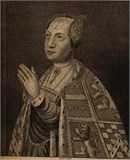
Maude
My 17th great-grandmother is buried in Nottinghamshire, England. She was a baroness. I can tell we are headed for confusion because my mother is also related to these de Nevilles. My mother’s ended up in Jamestown, Virginia, while these Nevilles on my dad’s side are all ancestors of the poet, Anne Dudley Bradstreet.
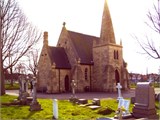
resting place
Maud NEVILLE , 6th Baroness Furnival Sex: F Birth: ABT 1392 in Worksop, Nottinghamshire, England Death: ABT 1423 in Worksop Priory, Nottinghamshire, England
Maud, Baroness Furnivall(e) in her own right according to later doctrine (d. c 1423), daughter and heiress of Thomas Neville, 5th Lord (Baron) Furnivall(e) in right of his 1st wife. [Burke’s Peerage]
Maud de Nevill(e), de jure Baroness Furinvall(e) in her own right; b. c 1392; m. by 12 Mar 1306/7, as his 1st wife, Sir John Talbot, 1st Earl of Shrewsbury and Waterford, who, however, before his creation as Earl in 1442 was called to Parliament as Lord (Baron) De Furnyvall or De Halomshire (sic.) in right of his wife 26 Oct 1409, and d. c 1423. [Burke’s Peerage, p. 2241]
————————-
Maud de Neville, Lady Furnivall, b. c 1392, d. c 1423, daughter of Thomas Nevill, Lord Furnivall, by his wife, Joan Furinvall, Lady Furnivall. [Magna Charta Sureties]
————————-
He [John Talbot] m. 1stly, bef. 12 Mar 1406/7, Maud, according to modern doctrine suo jure Baroness Furnivalle, elder daughter of Thomas (Neville), Lord Furnivalle, and only child and heir of (his 1st wife) Joan, according to modern doctrine suo jure Baroness Furnivalle, only daughter and heir of William (de Furnivalle), Lrod Furnivalle. She, who was b. c 1392 sat at Queen Katherine’s Coronation banquet in Westminster Hall, 21 Feb 1420/1. She d. about 1423 and was buried in Worksop Priory, Notts. [Complete Peerage XI:698-704]
————————-
BARONY of FURNIVALLE (VI)
MAUD NEVILLE, suo jure Baroness FURNIVALLE, elder daughter and heir of Thomas NEVILLE, LORD FURNIVALLE, and only child of her mother Joan, daughter and heir of William, LORD FURNIVALLE. She married, before 12 March 1406/7, as 1st wife, John TALBOT, 2nd son of Sir Richard TALBOT, of Goodrich [LORD TALBOT], by Ankarette, his wife. She was aged 15 and more at her father’s death. On 3 May 1407 the King took the fealty of John Talbot, and John and his wife, the said Maud, had livery of all the lands which her father had held by the courtesy after the death of Joan his wife, and also of Maud’s moiety of the tenements which her father had held in his demesne as of fee. [Complete Peerage V:591, (transcribed by Dave Utzinger)]
From jweber site
Maud Neville , 6th Baroness Furnival
The article on Maud in CP V reads (in full):
FURNIVALLE
BARONY BY WRIT.
VI. 1407. 1. Maude Neville, elder da. and h. of Thomas Neville, Lord Furnivalle, and only child of her mother, Joan, da. and h. of William, Lord Furnivalle, all above named. She m., before 12 Mar. 1406/7, as 1st wife, John Talbot, 2nd son of Sir Richard Talbot, of Goodrich [LORD TALBOT], by Ankarette, his wife, both above named. She was aged 15 and more at her father’s death. On 3 May 1407 the King took the fealty of John Talbot, and John and his wife, the said Maud, had livery of all the lands which her father had held by the courtesy after the death of Joan his wife,(d) and also of Maud’s moiety of the tenements which her father had held in his demesne as of fee.(e) John Talbot was sum. to Parl. from 26 Oct. (1409) 11 Hen. IV to 26 Feb. (1420/1) 8 Hen. V, by writs directed _Johanni Talbot_, with the additions, _domino de Furnyvall’, de Furnyvall’_, or _de Halomshire_. He was heir of his niece, Ankarette, da. of his elder br., Sir Gilbert Talbot, of Goodrich and Whitchurch [Lord Talbot]: she d. 13 Dec. 1421,(f) after which date the writs summoning him to Parl. were directed _Johanni Talbot_, with the addition of _militi_ or _chivaler_, only. His 1st wife, the said Maud, was bur. in Worksop Priory.(g) On 20 May 1442 he was cr. EARL OF SHROPSHIRE, but is commonly known as Earl of Shrewsbury. He was slain in battle at Castillon on the Dordogne, 17 July 1453, and was bur. at Whitchurch, Salop: M.I.* See Shrewsbury, Earldom.
(d) _Fine Roll_, 8 Hen. IV, m. 11.
(e) All Thomas Neville had thus held was three messuages and a virgate of land in Peaton and Diddlebury, in Corve, Dale, Salop. (_Close Roll_, 8 Hen. IV, m. 12).
(f) Ch. _Inq. p. m._ (on Ankarette, da. and h. of Gilbert Talbot chr.), Henry V, file 58, no. 44. See Talbot. [Ref: CP V:591]
(g) _Monasticon_, vol. vi, p. 123.
Maude de Neville (1392 – 1421)
is my 17th great grandmother
John Talbot (1413 – 1460)
son of Maude de Neville
Isabel Talbot (1444 – 1531)
daughter of John Talbot
Sir Richard Ashton (1460 – 1549)
son of Isabel Talbot
Sir Christopher Ashton (1493 – 1519)
son of Sir Richard Ashton
Lady Elizabeth Ashton (1524 – 1588)
daughter of Sir Christopher Ashton
Capt Roger Dudley (1535 – 1585)
son of Lady Elizabeth Ashton
Gov Thomas Dudley (1576 – 1653)
son of Capt Roger Dudley
Anne Dudley (1612 – 1672)
daughter of Gov Thomas Dudley
John Bradstreet (1652 – 1718)
son of Anne Dudley
Mercy Bradstreet (1689 – 1725)
daughter of John Bradstreet
Caleb Hazen (1720 – 1777)
son of Mercy Bradstreet
Mercy Hazen (1747 – 1819)
daughter of Caleb Hazen
Martha Mead (1784 – 1860)
daughter of Mercy Hazen
Abner Morse (1808 – 1838)
son of Martha Mead
Daniel Rowland Morse (1838 – 1910)
son of Abner Morse
Jason A Morse (1862 – 1932)
son of Daniel Rowland Morse
Ernest Abner Morse (1890 – 1965)
son of Jason A Morse
Richard Arden Morse (1920 – 2004)
son of Ernest Abner Morse
Pamela Morse
I am the daughter of Richard Arden Morse
pedigree
St George Cross
My 23rd great grandmother was the sister of Saint Thomas Becket, Archbishop of Canterbury. She is the ancestor of Margaret Tyndale, whose husband was burned at the stake for reading the bible in English. Although they spend several generations as the official bottlers to the royal Brits (a much more entertaining and lucrative employment), they revert to religion like salmon swimming upstream. They go on crusades and get crazy over the crown and religion. My own great grandfather Taylor was a preacher and a Confederate soldier. You might say it is in the blood.
Lady Gilberta Godiva le Becket (1100 – 1186)
my 23rd great grandmother
Hervey Butler (Boteler) (1130 – 1190)
son of Lady Gilberta Godiva le Becket
Theobald I FitzWalter, 1st Chief Butler of Eng & Ire, de Butler (Boteler) (1170 – 1206)
son of Hervey Butler (Boteler)
Theobald II le Boteler (1200 – 1230)
son of Theobald I FitzWalter, 1st Chief Butler of Eng & Ire, de Butler (Boteler)
Lady Maud Matilda DeVerdun Countess DeBoteler Countess Arundel (1225 – 1283)
daughter of Theobald II le Boteler
Matilda Tideshall FitzAlan Baroness Corbet De Arundel (1244 – 1309)
daughter of Lady Maud Matilda DeVerdun Countess DeBoteler Countess Arundel
Sir Thomas Corbet of Moreton, Knight of The Bath Corbet (1281 – 1310)
son of Matilda Tideshall FitzAlan Baroness Corbet De Arundel
Knight Sir Robert XII Corbet, Lord of Moreton Corbet (1304 – 1375)
son of Sir Thomas Corbet of Moreton, Knight of The Bath Corbet
Sir Roger XIII (Lord of Morton) Corbet (1330 – 1396)
son of Knight Sir Robert XII Corbet, Lord of Moreton Corbet
Robert Corbet (1383 – 1440)
son of Sir Roger XIII (Lord of Morton) Corbet
Blanche Corbet (1423 – 1458)
daughter of Robert Corbet
Humphrey Coningsby (1458 – 1535)
son of Blanche Corbet
Amphyllis Coningsby (1478 – 1533)
daughter of Humphrey Coningsby
Margaret Tyndale (1510 – 1555)
daughter of Amphyllis Coningsby
Thomas Taylor (1548 – 1588)
son of Margaret Tyndale
Thomas Taylor (1574 – 1618)
son of Thomas Taylor
James Taylor (1608 – 1698)
son of Thomas Taylor
John Taylor (1685 – 1776)
son of James Taylor
John Taylor (1727 – 1787)
son of John Taylor
John Taylor (1747 – 1781)
son of John Taylor
John Nimrod Taylor (1770 – 1816)
son of John Taylor
John Samuel Taylor (1798 – 1873)
son of John Nimrod Taylor
William Ellison Taylor (1839 – 1918)
son of John Samuel Taylor
George Harvey Taylor (1884 – 1941)
son of William Ellison Taylor
Ruby Lee Taylor (1922 – 2008)
daughter of George Harvey Taylor
Pamela Morse
I am the daughter of Ruby Lee Taylor
 mermaidcamp