mermaidcamp
Keeping current in wellness, in and out of the water
You can scroll the shelf using ← and → keys
You can scroll the shelf using ← and → keys
family history
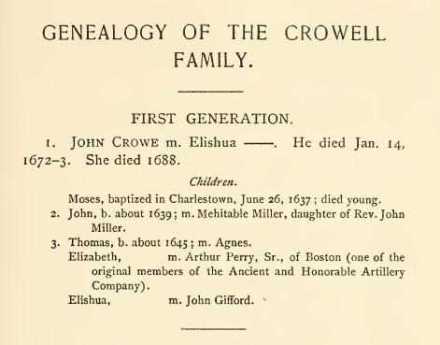
My tenth great-grandfather was part of the Great Migration. He moved to Cape Cod in January of 1639. Many Pilgrims who moved out to Cape Cod got in trouble with the Plymouth church. In those days reaching villages on Cape Cod was a long hard journey from Plymouth. Some of my ancestors who lived on Cape Cod became (or already were) Quakers, and some moved to Rhode Island to escape the oppressive Pilgrim Fathers.
On January 7, 1639 the court record refers to the land grant to the first settlers John Crow, Thomas Howes, and Anthony Thacher as “the lands of Mattacheeset, now called Yarmouth”. This is considered the first usage of the name.
“Yarmouth” to represent the new township to the east of Barnstable.
Plymouth Colony: Its History and People 1620-1691 Part One: Chronological Histories Chapter 3: The Founding of Towns (1633-1643) Yarmouth On 7 January 1638/39, the Court of Assistants granted lands at “Mattacheeset, now called Yarmouth” to Mr. Anthony Thatcher, Mr. Thomas Howes, Mr. John Crow, and John Coite “to be enquired of.” Coite might have been the man of that name of Marblehead, but apparently he did not move to Plymouth Colony. Thatcher, Howes, and Crow were proposed [p.66] as freemen of Yarmouth, along with Mr. Marmaduke Mathews, Philip Tabor, William Palmer, Samuel Rider, William Lumpkin, and Thomas Hatch. It was also specifically noted that “Old Worden (dead),” Burnell, Wright, and Wat Deville were “Psons there excepted against,” probably meaning they were not eligible to be given freemen status, and showing that some form of settlement had already been in existence. In fact, on 4 September 1638 the General Court ordered the inhabitants of Sandwich and “Mattacheese or Yarmouth” to build a bridge over the Eel River (which was just a bit south of Plymouth town, and had to be crossed for travel between Plymouth and the Cape). On 5 March 1638/39 William Palmer was authorized by the General Court to be the one at Yarmouth who would exercise inhabitants in arms, and William Chase was elected constable there. It is apparent that earlier the Plymouth Court had granted land at Yarmouth to others also, for on 1 April 1639 it noted that lands at Mattacheese (another confusion of the names, for it should have been Mattacheeset) were granted to persons who should have inhabited there long ago, but did not, and the grantees “are not likely to come to inhabite there in their owne persons, and lest such as are there should receive in unto them unworthy persons, whereof the Court hath lamentable experience …, the Court doth order that onely such of them wch at present are there shall remayne & make use of some lands for their present necessity, but shall not divide any portions of lands there either to themselves or any others
American Genealogical-Biographical Index (AGBI)
John Sr Crowell (1590 – 1673)
10th great-grandfather
Yelverton Crowell (1621 – 1683)
son of John Sr Crowell
Elishua Crowell (1643 – 1708)
daughter of Yelverton Crowell
Yelverton Gifford (1676 – 1772)
son of Elishua Crowell
Ann Gifford (1715 – 1795)
daughter of Yelverton Gifford
Frances Congdon (1738 – 1755)
daughter of Ann Gifford
Samuel Thomas Sweet (1765 – 1844)
son of Frances Congdon
Valentine Sweet (1791 – 1858)
son of Samuel Thomas Sweet
Sarah LaVina Sweet (1840 – 1923)
daughter of Valentine Sweet
Jason A Morse (1862 – 1932)
son of Sarah LaVina Sweet
Ernest Abner Morse (1890 – 1965)
son of Jason A Morse
Richard Arden Morse (1920 – 2004)
son of Ernest Abner Morse
Pamela Morse
I am the daughter of Richard Arden Morse
The Crowell family in North Dennis is descended from John Crow, who came, it is said, from Wales in 1635, to Charlestown, where he and his wife, Elishua, joined the church. It is probable that they sojourned there until 1639, when Mr. Crow came with Anthony Thacher and Thomas Howes to Yarmouth, with a grant from the court, having previously taken the oath of allegiance. All the first settlers
selected spots for their homes adjacent to good springs of water. The brook that flows through the village of North Dennis had numerous fine flowing springs to supply the need of the first comers. John Crow built his home north of the center of the present village, near the spot where the late Philip Vincent lived. His land, much of which is still owned by his descendants, was east of Indian Fields, and extended from the shore to the top of the hills back of the settlement. John Crow was a man of character and influence in the infant town of Yarmouth, filling many important offices. He died in 1673. His sons were: John, Samuel and Thomas. John married Mehitable. daughter of Rev. John Miller of Yarmouth. A grandson of John Crow, sr., whose name was John, was the first person buried in the North Dennis cemetery. He died in 1727. The name about that time had developed into Crowell. The offspring of John Crow are now to be found in all parts of the country, occupying important positions, with honor and credit to the name. Those who have remained upon the hereditary acres have produced in every generation men of ability and distinction. The late Hon. Seth Crowell and his cousin, Capt. Prince S. Crowell, and Mr. William Crowell, the well-known cranberry grower and seller, are illustrations of the character of the Crowells in the seventh generation. The family has never been large in North Dennis. Two pews in the old church sufficed to accommodate their needs for sitting room. Many of the family, before the old meeting house was torn down in 1838, had become desciples of John Wesley and left the church of their fathers.
Mr. Jeremiah Crowell, a descendant in the fourth generation from the grantee, John Crow, was for two generations a village celebrity. He lived in what was called “Crow Town,” just outside the western limits of Indian Field. The public highway went no farther east than his house in his day. The county road went through the woods south of Scargo hill. Mr. Crowell constructed a globe with the four quarters of the earth marked upon it. This was received by the Nobscusset children with open-eyed wonder. It was to be seen only, however, upon payment of one cent per head. He had besides a mammoth kite with a string a mile long, with a tail of wondrous length. He kept a daily journal of passing events, such as the capture of a whale, the arrival home of the Cod fishermen, the state of the weather, and the direction of the wind. But his great effort was the building of a pair of wings and attempting to fly. This was an achievement beyond his power to accomplish. The flying he regarded as practical and easy, but the alighting was difficult. He died at an advanced age, about the close of the last century.

Lower Surry Church
Lawnes Creek Parish Church was the first church erected on Hogg Island in 1628 for the citizens of James City County who lived on the south side of the James River. Surry formed from James City County and the first parish for the area now encompassed by Surry County was known as “Lawnes Creek.”
The parish church members would have been buried at their place of worship as was the custom in those days.
This site is now occupied by the Surry Nuclear Plant.
No access permitted.
LAWNES CREEK PLANTATION, Rts 650 & 628
The peninsula of land about 2 miles in width and 8 in length between Lower Chippoakes Creek and Lawnes Creek and south of Hog Island, was, together with the lands adjoining upper Chippoakes Creek and opposite Jamestown, the first to be settled in Surry away from the James River. Virtually all this land had been patented before 1635, mainly by William Spencer, Captain William Pierce, Roger Delke, and Captain Lawrence Baker.
My 8th great-grandfather, John Holt was born in 1664 in Surry County, Virginia, a British colony. He died in 1705 Surry County, Virginia, hung by his own hand. His 8th great-grandson, George Harvey Taylor, committed the same “Felonious homicide of a man’s self” by drinking carbolic acid in 1941. George Harvey was my maternal grandfather. It is said that suicide reoccurs in families.
He was listed in the 1687 Cavalry of Surrey County, Virginia. John M. Holt was born in 1664 in Lawnes Creek Parish, Hog Island, Surry County, VA. John died 1705 at the age of 41 in Surry County, VA. John Holt committed suicide.
On Feb 24, 1685 Mr. John Holt and his wife were fined for not going to church by the Surry County Court. (This may have been rather harsh as she most probably was pregnant.)
In 1703 he petitioned the Legislature to be Keeper of the Ferry settled on James River to Archer’s Hope Creek on the north side. Appears on the 1704 Rent Roll for Surry County, VA On November of 1706 the Surry County Court Records state that “John Holt upon his petition is admitted to keep a ferry in Hog Island pursuant to a Law made to that purpose and for his better compliance therewith ordered that he forthwith provide and maintain one substantial flat bottom boat of at least fifteen feet by the keel for carrying over of horses as also one other boat of at least twelve or thirteen feet by keel for passengers with three able men constantly to attend the said service ant that he enter into a bond with good and sufficient security duly to perform the same. In May of 1710 John Holt petitioned the Court and they “exempted him from payment from his bond for keeping a ferry at Hog Island. (Surry County, Virginia Court Records, 1707-1711, Book VI
By 1704 the Holt family would own 2,768 acres in Surry County. Of this, 1,450 acres were controlled by Elizabeth Holt, wife of Randall Holt, Jr.. The remainder was owned by the sons of Randall and Elizabeth..
John Holt (1664 – 1705)
8th great-grandfather
David Holt (1685 – 1749)
son of John Holt
Sarah Holt (1740 – 1792)
daughter of David Holt
James Truly (1755 – 1816)
son of Sarah Holt
Elizabeth Betsy Truly (1782 – 1851)
daughter of James Truly
Minerva Truly Darden (1806 – 1837)
daughter of Elizabeth Betsy Truly
Sarah E Hughes (1829 – 1911)
daughter of Minerva Truly Darden
Lucinda Jane Armer (1847 – 1939)
daughter of Sarah E Hughes
George Harvey Taylor (1884 – 1941)
son of Lucinda Jane Armer
Ruby Lee Taylor (1922 – 2008)
daughter of George Harvey Taylor
Pamela Morse
I am the daughter of Ruby Lee Taylor
By 22 September 1705 John Holt “laid violent hands upon himself”
Suicide was against the law. Without regard to the rights of the heirs, the estate and property of the perpetrator reverted back to the crown. Govenor of Virginia Colony was Edward Nott decribes John as a man “who being under some indisposition of mind lately hanged himself…troubled with lunacy and distraction of mind.”
John’s eldest son David, had already received a substantial land grant from his grandfather David Crafford prior to David’s twenty-first birthday. John’s sons John Jr., Charles, Benjamin, and Joseph attended the hearing. The deposition of the court read in part: “Having labor’ d long under a very great Indisposition of Mind, and at last layd violent hands upon himself”, a coroner’s jury found that his estate was forfeited as “Felo de Se.” {Latin for “Felonious homicide of a man’s self”}
Governor Edward Nott appealed to the Crown for the family. He inventoried the estate at: 159I, 16s, 6d, and “his Five Surviving Children are fit Objects of Our Mercy and Compassion.”.
Queen Anne commanded the restoration of his estate to them on 7 Jan. 1706. “the said estate consisting chiefly in cattle proper for plantations and other perishable good is hereby to be restored to his five children John, David, Charles, Joseph and Benjamin. ibid, p.512.”
Source: I want to Especially THANK Charles Lindley Holt for sending me his research on this Virginia Colony HOLT family. THANK YOU. I used his dates and many of his ” ” ‘s.
Also:: Familysearch had some of this “(taken from the book “Adventurers of Purse and Person”.}” .

Beatrice de Savoy Countess de Provence (1205 – 1267)
23rd great-grandmother
She was born as the second child of Thomas I and Beatrice de Geneve. She married Raimond Berenger de Provence in 1219. After two miscarriages she bore him a son and four daughters. Her son died young. The two elder daughters were married to reigning kings while the husbands of the younger two later rose to that rank. She was buried at the chapel in the Chateau de Menuet near Les Échelles. Her mausoleum was desecrated during the revolution and only her skull could be saved. It was deposited in her brother Bonifaces grave.
Beatrice of Savoy was Countess of Provence from December 1220 – 19 August 1245
Her spouse was Ramon Berenguer IV, Count of Provence. Their children were:
Margaret, Queen of France
Eleanor, Queen of England
Sanchia, Queen of Germany
Beatrice, Queen of Sicily
Raymond of Provence
She was from the House of Savoy (by birth) and House of Aragon (by marriage)
Beatrice of Savoy was the daughter of Thomas I of Savoy and Margaret of Geneva. She was Countess consort of Provence by her marriage to Ramon Berenguer IV, Count of Provence.
Her paternal grandparents were Humbert III, Count of Savoy, and Beatrice of Viennois. Her maternal grandparents were William I, Count of Geneva and Beatrice de Faucigny. Beatrice of Savoy’s mother, Margaret was betrothed to Philip II of France. While Margaret was travelling to France for her wedding, she was captured by Beatrice’s father, Thomas. He took her back to Savoy and married her himself. Thomas’ excuse was that Philip II was already married, which was true.
Beatrice was the tenth of fourteen children born to her parents. Her siblings included: Amadeus IV, Count of Savoy; Thomas II of Piedmont; Peter II, Count of Savoy; Philip I, Count of Savoy; Boniface of Savoy, Archbishop of Canterbury; Avita the Countess of Devon; and Margherita of Savoy wife of Hartmann I of Kyburg.
Beatrice betrothed on 5 June 1219 to Ramon Berenguer IV, Count of Provence; they married in December 1220. She was a shrewd and politically astute woman, whose beauty was likened to that of a second Niobe by Matthew Paris. Ramon and Beatrice of Savoy had four daughters, who all lived to adulthood, and married kings. Their only son, Raymond died in early infancy.[2]
Margaret, Queen of France (1221–1295), wife of Louis IX of France
Eleanor, Queen of England (1223–1291), wife of Henry III of England
Sanchia, Queen of Germany (1228–1261), wife of Richard, Earl of Cornwall
Beatrice, Queen of Sicily (1231–1267), wife of Charles I of Sicily
Raymond of Provence, died young
At the English court[edit]
In 1242, Beatrice’s brother Peter was sent to Provence by Henry III to negotiate the marriage of Sanchia to Richard. Another brother, Philip, escorted Beatrice and Sanchia to the English court in Gascony, arriving in May 1243. There they joined Henry, Eleanor, and their baby, Beatrice of England. Henry was very happy at this occasion and gave many gifts to the various relatives.
In November 1243, Beatrice and Sanchia travelled to England for the wedding. This wedding did much to strengthen the bond between Richard and Henry III. She further strengthened the unity of the English royal family by convincing Henry III to help pay the debts of his sister Eleanor and her husband Simon de Montfort, who had often been at odds with Henry.[5] In January 1244, Beatrice negotiated a loan for her husband from Henry of four thousand marks, offering the king five Provençal castles as collateral.
When Ramon Berenguer died on 19 August 1245, he left Provence to his youngest daughter, and his widow was granted the usufruct of the county of Provence for her lifetime. Beatrice’s daughter and namesake then became one of the most attractive heiresses in medieval Europe. Frederick II, Holy Roman Emperor sent a fleet and James I of Aragonsent an army to seize her, so Beatrice placed herself and her daughter in a safe fortress in Aix, secured the trust of its people then sent to the Pope for his protection. The Pope was also a target for Frederick’s military incursions in France. In Cluny during December 1245, a secret discussion, between Pope Innocent IV, Louis IX of France, his mother Blanche of Castile, and his brother Charles of Anjou, took place. It was decided that in return for Louis IX supporting the Pope militarily, the Pope would allow Charles of Anjou, youngest brother to the French King, to marry Beatrice of Provence. Mother and daughter were satisfied with this selection.[7] But Provence was to never go to France outright through Charles. It was agreed that if Charles and Beatrice had children, the county would go to them; if there was no issue, then the county would go to Sanchia of Provence. If Sanchia died without an heir, Provence would go to the King of Aragon.
Henry protested the selection, arguing that he had not yet received the full dowry for Eleanor nor his brother for Sanchia. He also still had the castles in Provence against the loan he had made to the former count.
When Charles took over the administration of Provence in 1246, he did not respect Beatrice’s rights within the county. She sought the aid of Barral of Baux and the Pope in protecting her rights within the area. The citizens of Marseille,Avignon, and Arles joined this resistance to Capetian control. In 1248, Charles began to seek peace with her so that he could join his brother’s crusade. A temporary truce was reached to allow this.
In 1248, she travelled back to England with her brother Thomas, to see their family there.
In 1254, as Louis was returning from his crusade by way of Provence, Beatrice petitioned him for a more permanent resolution of the dispute with Charles. The French queen Margaret joined the petition, noting that Charles had not respected her dowry either. Beatrice travelled with them back to Paris. As the year progressed, Henry and his wife were invited to travel to Paris, and eventually all four daughters joined their mother there for Christmas.[11]
The generally good relationship among the four sisters did much to improve the relationship of the French and English kings. It brought about the Treaty of Paris in 1259, where differences were resolved.[12] Beatrice and all her four daughters participated in the talks.[13] While the family was still gathered, Louis IX finally persuaded Beatrice to surrender her claims and control in Provence in exchange for a sizable pension to be paid to her. Charles also paid back the loan henry had made to the previous count, clearing his claims in the county.[14]
In 1262, Beatrice was part of the family discussion to try again to bring peace between Henry and Simon de Montfort. When Henry was captured in 1264, Beatrice’s brother Peter II, Count of Savoy took his army to join the efforts to free the king. He left Beatrice in charge of Savoy while he was gone.
Beatrice outlived her third daughter Sanchia and came close to outliving her youngest daughter Beatrice, who died months after her mother (Beatrice the elder died in January, Beatrice the younger died in September). Beatrice of Savoy died on 4 January 1267.
Beatrice de Savoy Countess de Provence (1205 – 1267)
23rd great-grandmother
Eleanor Berenger (1223 – 1291)
daughter of Beatrice 1205 de SavoyCountess de Provence
Edward I “the Longshanks” Plantagenet (1239 – 1307)
son of Eleanor Berenger
Elizabeth of Rhuddlan Princess of England Plantagenet (1282 – 1316)
daughter of Edward I “the Longshanks” Plantagenet
William Earl of Northampton De Bohun (1312 – 1360)
son of Elizabeth of Rhuddlan Princess of England Plantagenet
Lady Elizabeth Countess Arundel Countess DeBohun (1350 – 1385)
daughter of William Earl of Northampton De Bohun
Elizabeth Duchess Norfolk Fitzalan (1366 – 1425)
daughter of Lady Elizabeth Countess Arundel Countess DeBohun
Lady Joan De Goushill Baroness Stanley (1402 – 1459)
daughter of Elizabeth Duchess Norfolk Fitzalan
Countess Elizabeth Sefton Stanley (1429 – 1459)
daughter of Lady Joan De Goushill Baroness Stanley
Thomas Sir 8th Earl of Sefton Molyneux (1445 – 1483)
son of Countess Elizabeth Sefton Stanley
Lawrence Castellan of Liverpool Mollenaux (1490 – 1550)
son of Thomas Sir 8th Earl of Sefton Molyneux
John Mollenax (1542 – 1583)
son of Lawrence Castellan of Liverpool Mollenaux
Mary Mollenax (1559 – 1598)
daughter of John Mollenax
Gabriell Francis Holland (1596 – 1660)
son of Mary Mollenax
John Holland (1628 – 1710)
son of Gabriell Francis Holland
Mary Elizabeth Holland (1620 – 1681)
daughter of John Holland
Richard Dearden (1645 – 1747)
son of Mary Elizabeth Holland
George Dearden (1705 – 1749)
son of Richard Dearden
George Darden (1734 – 1807)
son of George Dearden
David Darden (1770 – 1820)
son of George Darden
Minerva Truly Darden (1806 – 1837)
daughter of David Darden
Sarah E Hughes (1829 – 1911)
daughter of Minerva Truly Darden
Lucinda Jane Armer (1847 – 1939)
daughter of Sarah E Hughes
George Harvey Taylor (1884 – 1941)
son of Lucinda Jane Armer
Ruby Lee Taylor (1922 – 2008)
daughter of George Harvey Taylor
Pamela Morse
I am the daughter of Ruby Lee Taylor

Burial:
St Mary Churchyard
Warwick
Warwick District
Warwickshire, England

Sir Thomas in his grave

Sir Thomas and Lady Katherine
My 19th great-grandfather was born in Warwick Castle in Warwickshire, England Feb. 14, 1313. He was the 11th Earl of Warwick. He died of the plague on Nov. 13, 1369 in Calais, Departement du Pas-de-Calais, Nord-Pas-de-Calais, France
He was English nobility. He was one of the Founder Knights of the Order of the Garter in 1348. He was related to the Kings of England and held many offices under them including: Hereditary Chamberlain of the Exchequer, Hereditary Sheriff of Worcestershire, Warden of the Scottish Marches, Marshall of England, and Sheriff of Warwick and Leicester counties. He was known for his military prowess and fought in many battles: in Scotland, in France in command at Valenciennes, and with the King at Tournai, at the Battles of Crecy and seige of Calais, and in Lithuania as a crusader from 1362 to 1365. He married Katherine de Mortimer after a dispensation was granted for being related in the 3rd degree ,after February 22 1324. They had fifteen children, including Thomas, Knight, Knight of the Garter and his successor as Earl of Warwick. He died testate of the plague at Calais, France. (bio by: Michael Schwing) from Find a Grave
Thomas DeBeauchamp (1314 – 1369)
19th great-grandfather
WILLIAM BEAUCHAMP (1358 – 1411)
son of Thomas DeBeauchamp
Joan Elizabeth Beauchamp (1396 – 1430)
daughter of WILLIAM BEAUCHAMP
Elizabeth Butler (1420 – 1473)
daughter of Joan Elizabeth Beauchamp
Isabel Talbot (1444 – 1531)
daughter of Elizabeth Butler
Sir Richard Ashton (1460 – 1549)
son of Isabel Talbot
Sir Christopher Ashton (1493 – 1519)
son of Sir Richard Ashton
Lady Elizabeth Ashton (1524 – 1588)
daughter of Sir Christopher Ashton
Capt Roger Dudley (1535 – 1585)
son of Lady Elizabeth Ashton
Gov Thomas Dudley (1576 – 1653)
son of Capt Roger Dudley
Anne Dudley (1612 – 1672)
daughter of Gov Thomas Dudley
John Bradstreet (1652 – 1718)
son of Anne Dudley
Mercy Bradstreet (1689 – 1725)
daughter of John Bradstreet
Caleb Hazen (1720 – 1777)
son of Mercy Bradstreet
Mercy Hazen (1747 – 1819)
daughter of Caleb Hazen
Martha Mead (1784 – 1860)
daughter of Mercy Hazen
Abner Morse (1808 – 1838)
son of Martha Mead
Daniel Rowland Morse (1838 – 1910)
son of Abner Morse
Jason A Morse (1862 – 1932)
son of Daniel Rowland Morse
Ernest Abner Morse (1890 – 1965)
son of Jason A Morse
Richard Arden Morse (1920 – 2004)
son of Ernest Abner Morse
Pamela Morse
I am the daughter of Richard Arden Morse

Warwick Castle

Tattershall Coat of Arms
My tenth great-grandfather was born 1572 in Wininick, Lancashire, England, and died 1597 in Wininick, Lancashire, England. He married Ann Hyde on 11 Sep 1593 in Winewick, England, daughter of Robert Hyde and Beatrice Cleverly. His father was in the muster of soldiers in the County of Lancaster August 16, 1574, required to serve the Queen.
Richard Tattershall (1572 – 1597)
10th great-grandfather
Joanne Tattershall (1598 – 1635)
daughter of Richard Tattershall
Mary Greene (1633 – 1686)
daughter of Joanne Tattershall
Benoni Sweet (1663 – 1751)
son of Mary Greene
Dr. James Sweet (1686 – 1751)
son of Benoni Sweet
Thomas Sweet (1732 – 1813)
son of Dr. James Sweet
Samuel Thomas Sweet (1765 – 1844)
son of Thomas Sweet
Valentine Sweet (1791 – 1858)
son of Samuel Thomas Sweet
Sarah LaVina Sweet (1840 – 1923)
daughter of Valentine Sweet
Jason A Morse (1862 – 1932)
son of Sarah LaVina Sweet
Ernest Abner Morse (1890 – 1965)
son of Jason A Morse
Richard Arden Morse (1920 – 2004)
son of Ernest Abner Morse
Pamela Morse
I am the daughter of Richard Arden Morse
This family resided in Lancashire for several centuries before Richard was born. His daughter Joanne sailed to America with her husband and family but died either at sea or shortly after arrival in Boston.
The Lancashire Tattershalls
According to ‘Memories of Hurstwood’ the earliest records of Tattersalls in Lancashire begin with in the year 1380. In the year 1402 that is about 22 years after the death of Robert Tattersall of the Holme Extwistle, and Briercliff, we find the names of Richard and Edmund Tattersall as signatories to the costumale which is called the magna carta of Blackburnshire. Richard and John Tattersall who we find from this charter held an important position in the district in the year 1402 held their lands according to the custom and manner and honour of Lincoln. This fact links the Lincolnshire and Lancashire Tattersalls.
A list of all persons assessed to the Royal Subsidy in the township of Burnley in 1522, included Richard Tattersall 20s 12d. Richard Tattersall died in 1524 on 20th December. When he died he had 4 messuages, 80 acres of land, 16 acres of meadow, 40 acres of pasture, 10 acres of wood, 20 acres of moor and turbary, with their appurtenances in the towns of Brereclif and Burnley in the County of Lancaster. His son Christopher aged 36 inherited. His son Richard Tattersall died a very old man in 1587. He married a Barcroft of Barcroft Hall. He had three sons, Edmund, Richard and John and several daughters.
In the muster of soldiers in the County of Lancaster August 16, 1574 (Harl.MSS.1926) Richard Tattersall along with other local yeoman had each to furnish 1 longbowe, one sheffe of arrowes, one skull (or steel cap) and one bill for the use of Her Majesty. His youngest son John was a poor scholar at Oxford.
A copy of Richard Tattersall’s Will is preserved in the Probate Court of Chester dated 6th December, 1587 in which he is described as Richard Tattersall of Brearcliffe.
LBJ
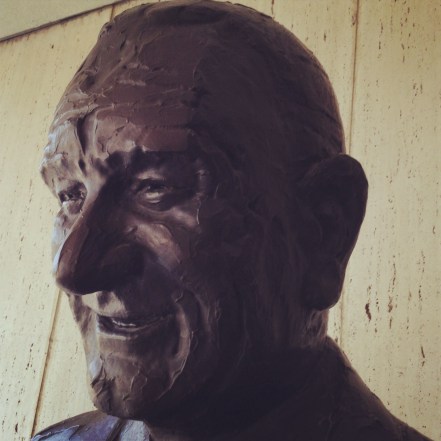
I have been watching the HBO John Adams series about the American Revolution and the first American continental congress in Philly. It helps me see that our politicians are not in the worst situation in our history. Neither are they less favorably aligned than in the nation’s past. This congress we have today is about the same as all ruling bodies have always been, since the Roman Senate. The use of power by humans on earth has been punctuated with misery and cruelty. Conquest, political or military, has been imposed on nations, colonies, and entire continents. War and Peace have hung in the balance more times than we know, but always for the same reasons. War is an archetypal situation that repeats itself.
When we say history repeats itself we mean that archetypal events continue to occur. In the arch of recorded history we have seen the pendulum of power swing from feudalism to anarchy. Leaders have been both born and created in the struggle to survive. We think of those leaders as the representatives of the entire culture, but they may merely be the most famous. We know less about how the common person lived than we do about the fancy and well born. I know this very well from my study of my own ancestry. I learn more all the time about America by studying my ancestors’ lives. None of my forefathers was famous during the American Revolution, but many did fight in it. Power does flow through the events of man, but my religious ancestors would all say that fate is sealed by divine providence. Man is just a player on the eternal stage.
Thomas Coat of Arms
David Thomas is thought to have been born in Wales about 1620, David probably arrived in America about 1640-1 on the ship “Sampson”. It certainly is a fact that a session of the Quarterly Courts at Salem on 8th July 1645 “David Thomas” is a witness in a suit for defamation of character brought by John Bartoll against Alice, wife of John Peach, Jr, for having said that the plaintiffs wife, Parnell Bartoll, had “committed adultery with the Boatswain of the ship “Sampson” in the cabin of Parnell about four years ago.” This is the first record that we know of for David Thomas in America.
David lived in that part of Salem which is about to become the town of Marblehead. David left Marblehead probably early 1661, and removed to the part of Salem which later became Beverly. Two known maps showed the location of the Salem property of David Thomas agree that David owns Lot 16, which seems to have had no dwellings on it while David owned it.
It is significant that his wife Joanna executed her consent to the sale of the Beverly property by an instrument dated at Plymouth 14th July 1669. (Essex County Deeds book 3, pages 57 and 189). It seems this must have been the year David and Joanna Thomas moved to Middleborough. The birth of his son Edward Thomas on 6th February 1669 is the first entry in the Town Records of Middleborough, even though that entry may have been made at a later date, since the Town Records are said to have been destroyed by the Indians during King Philip’s War of 1675.
David is a Farmer at “Middlebury” and his family is one of the 16 families that constituted this Town in 1675. During this year when Indians attacked “Middlebury’s” new white inhabitants, forcing these settlers back into the Old Plymouth Colony Village. After this war ended these early settlers returned and 28th June 1677 those who had owned lands there, numbering 68 persons, met and agreed to re-settle “Middlebury” presently what is now called Middleborough.
David Thomas’s house at Middleborough (not standing anymore) is a little distance southeast of the town proper at the end of what is now Thomas Street at the area that became well known as “Thomastown”.
David Thomas (1620 – 1689)
9th great-grandfather
Mary Thomas (1664 – 1754)
daughter of David Thomas
Ann Northup (1696 – 1772)
daughter of Mary Thomas
Ann Gifford (1715 – 1795)
daughter of Ann Northup
Frances Congdon (1738 – 1755)
daughter of Ann Gifford
Samuel Thomas Sweet (1765 – 1844)
son of Frances Congdon
Valentine Sweet (1791 – 1858)
son of Samuel Thomas Sweet
Sarah LaVina Sweet (1840 – 1923)
daughter of Valentine Sweet
Jason A Morse (1862 – 1932)
son of Sarah LaVina Sweet
Ernest Abner Morse (1890 – 1965)
son of Jason A Morse
Richard Arden Morse (1920 – 2004)
son of Ernest Abner Morse
Pamela Morse
I am the daughter of Richard Arden Morse
David Thomas and his wife came from Salem to Middleboro soon after 1668, the of he selling his land in Salem. They settled in Thomastown, where their descedants are still living. He bought into the Twenty-six Men’s purchase.
He had sveral children, David, Joanna, William, Jeremiah, and Edward, the last born February 6 1669, the first birth in the early records of the town.
Source: History of the Town of Middleboro.

(MUNICH) — The teenager behind Friday’s deadly shooting rampage at a Munich mall had planned his attack for a year and chose his victims at random, investigators said Sunday. Bavarian investigator Robert Heimberger said the shooter, an 18-year-old German-Iranian identified only as David S., visited the site of a previous school shooting in the German…
via Munich Shooter Planned Attack for a Year, Officials Say — TIME

headstone
My 8th great-grandfather came to America as young boy with his parents and became a founder of Hartford, Connecticut.
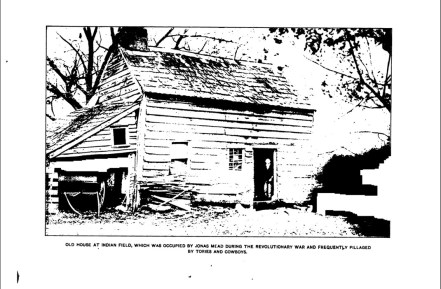
John was born about 1628 in England and came to Connecticut with his parents as a young child. He married Hannah Potter, daughter (or possibly stepdaughter) of William Potter of Stamford. John and his brother Joseph moved from Stamford to Hempstead, Long Island, and returned to Connecticut by 1664. John died 5 Feb 1699, probably in Connecticut. John was one of seven original proprietors of Greenwich, CT, as described at http://www.rootsweb.com/~ctfairfi/pages/greenwich/greenwich_index.htm
“On February 5, 1664, the Seven Proprietors made a formal request to the General Assembly in Hartford to be allowed to separate from Stamford and to support its own minister and lay out its own lands. The Seven Proprietors were John MEAD, Jonathan RENALDS, John HOBBY, Joseph FERRIS, Joshua KNAPP, Angell HUSTED, and Jeffrey FERRIS.
On May 11, 1665, the General Assembly in Hartford declared Greenwich a separate township, and authorized funds for the hiring and support of an orthodox minister. In 1672, the so-called “27 Proprietors” bought land from the few remaining Indians to the west of the “Myanos River.” This land became known as “Horseneck” because of the neck of land now known as Field Point was the common HORSE PASTURE. ”
John signed all documents with a mark, but had several books in his estate inventory, so he could probably read but not write.
John and Hannah had eleven children:
John, b. abt 1658, married Ruth Hardey in 1681.
Joseph, b. 2 May 1660, married Mary.
Hannah, b. abt 1661, married John Scofield 12 Jul 1677.
Ebenezer, b. 1663, married Sarah Knapp in 1691.
JONATHAN, b. abt 1665, married Martha Finch.
David, b. abt 1665, married Abigail Leane 16 Dec 1707.
Benjamin, b. May 1666, married first Sarah Waterbury, second Rachel Brown.
Nathaniel, b. abt 1669, married Rachel.
Samuel, b. abt 1673, married Hannah.
Abigail, b. abt 1675. Fairfield Probate Records cited in The Ancestry of Elizabeth Barret Gillespie, “reveal that she was incompetent to manage her own affairs: ‘Whereas John Mead Sen’r, deceased, of Greenwich, haveing not made Satisfieing provision in his will for his daughter Abegaile Mead, She being not Capable of doing for her Self as may be desired by Reason, whearof Ebeneaz Mead of Greenwich dos hereby, in the presence of ye Prerogative Court, Engage to pay unto ye s’d Abegaile Mead, his sister, ye Sum of therty and five pounds, to be paid unto her According as he Shall Apprehend She Shall stand in Need of it for her Comfortable subsistence.”

Tomac Burying Ground
John Mead’s House
John Mead (1634 – 1699)
8th great-grandfather
Benjamin Daniel Mead (1667 – 1746)
son of John Mead
Mary Mead (1724 – 1787)
daughter of Benjamin Daniel Mead
Abner Mead (1749 – 1810)
son of Mary Mead
Martha Mead (1784 – 1860)
daughter of Abner Mead
Abner Morse (1808 – 1838)
son of Martha Mead
Daniel Rowland Morse (1838 – 1910)
son of Abner Morse
Jason A Morse (1862 – 1932)
son of Daniel Rowland Morse
Ernest Abner Morse (1890 – 1965)
son of Jason A Morse
Richard Arden Morse (1920 – 2004)
son of Ernest Abner Morse
Pamela Morse
I am the daughter of Richard Arden Morse
The following anecdote, which has been preserved by tradition, shows his character: One day when he was quite an old man, as he was going for his grist on horseback to the mill at Dumpling Pond, before he reached the Mianus River he overtook and old Quaker jogging slowly along, loaded with a heavy budget. In a real spirit of kindness he offered to take the Quaker’s load upon his horse, and thus give him a lift on his journey. No,replied the Quaker, thee don’t get my bundle, for I can read men’s thoughts. Thee wants to get my bundle, and then thee’ll run off. Thee don’t get my bundle. Very well, was the simple reply, and so they went slowly on together. At last they came to the brink of the Mianus River. Here the Quaker was really in trouble. How to cross a river, two or three feet deep, dry shod, was quite a puzzle. But he gladly accepted a second offer of assistance from the horseman. The bundle was mounted in front, John in the middle, and the Quaker behind. Arriving at the centre of the river, in pretending to adjust his stirrup John caught the Quaker by the heel and gave him a gratuitous bath. Such treatment was too much, even for Quaker forbearance, and the victim, with his hands full of pebbles, would have taken summary vengeance, had not the other party threatened to put the bundle under a similar course of treatment. This threat, and the lecture following it, gradually cooled off the Quaker’s anger. John informed him that all had been done for his good, to teach him a lesson. And the lecturer said he hoped the stranger would never again profess to read men’s thoughts. For, said he, I asked you to ride, kindly in the first place, when you refused; but at the second time of asking, I really intended to do as I have just done. So saying, and tossing the bundle back, he rose on, leaving his companion to apply the moral as he thought best.

