mermaidcamp
Keeping current in wellness, in and out of the water
You can scroll the shelf using ← and → keys
You can scroll the shelf using ← and → keys
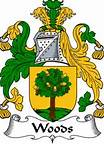
Woods Coat of Arms
My tenth great-grandfather was born Feb. 6, 1610, in England. He died July 10, 1678, Marlborough, MA.
John WOODS, a pin-maker by trade, arrived in America at age 26 in 1635 aboard the ‘Hopewell,’ and first settled at Salem, MA, but removed to Sudbury, MA by 1638, becoming a proprietor there in 1639. He was admitted freeman on May 10, 1642, and received several Sudbury land grants through 1655. After Marlborough was formed in 1660, John sold his property at Sudbury and relocated to Marlborough, where he had been granted land and served in various town offices. On Apr. 4, 1664, he deposed that he was about age 54. His will, dated Nov. 26, 1677 and proved Oct. 1, 1678, names his wife Mary, his three sons, daughter Katherine, son-in-law John BELLOWS, and grandchild Hannah LEVINS. The inventory of his estate, on Jul. 19, 1678 at £303.03.07, mentions son-in-law Joseph NEWTON. Married about 1633.
John Woods (1610 – 1678)
is my 10th great grandfather
John Woods (1641 – 1716)
son of John Woods
Lydia Woods (1672 – 1738)
daughter of John Woods
Lydia Eager (1696 – 1735)
daughter of Lydia Woods
Mary Thomas (1729 – 1801)
daughter of Lydia Eager
Joseph Morse III (1756 – 1835)
son of Mary Thomas
John Henry Morse (1775 – 1864)
son of Joseph Morse III
Abner Morse (1808 – 1838)
son of John Henry Morse
Daniel Rowland Morse (1838 – 1910)
son of Abner Morse
Jason A Morse (1862 – 1932)
son of Daniel Rowland Morse
Ernest Abner Morse (1890 – 1965)
son of Jason A Morse
Richard Arden Morse (1920 – 2004)
son of Ernest Abner Morse
Pamela Morse
I am the daughter of Richard Arden Morse

Padre Kino

Padre Kino
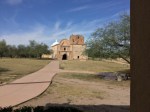
I initiated my new fabulous senior pass for the national parks yesterday at Tumacacori. It was a full moon night and a special program was presented. The park reopens a few times a year to let the public experience the place after dark. The ranger was a wonderfully knowledgeable presenter who showed a lot of pride in her position. This is a unique park because it preserves history of a mission that was abandoned. The original mission was founded by Padre Kino, who visited a couple of times before he died, but had little contact with the locals. He became popular by gifting the natives with seeds, animals and trees. Mission land was granted for the natives to use, but not trade or sell. Success through new agriculture was the main selling point used by the missionaries. By farming within the mission walls the crops were protected from wildlife and livestock grazing in the area. Crops and animals were introduced that provided food in seasons when native plant harvests were scarce.
Kino was a member of the Jesuit order, which would eventually be banished from New Spain by the king. The Franciscans took over the place, but when Mexico won independence the funds no longer flowed from Spain. The missionaries moved north to Mission San Javier del Bac, which is still in use today as a Catholic church. The abandoned site sat empty until the National Park Service took over.



The full moon tour was an exciting and authentic way to honor this historic place by learning about the past. I learned many new facts that make me curious to learn more and return in the future to take in this very special atmosphere. I plan to make the most of my senior pass by checking out all the national parks in Arizona. I will have many happy travels in the future by tuning into programs and events such as the one we enjoyed yesterday as a day trip . If you know a senior (62 or over) who does not yet have a pass, this would make the very best of holiday gifts. It works for a whole car load of visitors. You only need one senior pass per car for free entry for all passengers. Maybe it is time to start traveling with a senior on board.


Arizona is full of scenic places with ancient civilizations. We are privileged to have such a rich cultural and natural tradition surrounding us. Now that I am loaded with my lifetime park pass I will be taking full advantage of it.


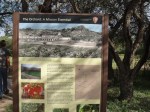

candle lanterns

altar in the church

park ranger and Padre Kino
And all the men and women merely players;
They have their exits and their entrances,
And one man in his time plays many parts,
His acts being seven ages.
William Shakespeare sets out seven ages of man in this monologue from As You Like it. Carl Jung used characters as archetypes to describe the different aspects of one human life. These archetypes are played out in ancient Greek drama and mythology. From biblical proverbs to modern fiction characters based on eternal qualities of humanity are employed to tell stories. We embody different characters during our journey toward the end of life, sometimes joyous and other times somber. We act as students and as guides, as teachers and as pilgrims. Our energies are spent on our greatest passions, and we become known for our most obvious traits. Both our view of the world and the world’s view of us is constantly changing. The way we relate to one group may be different from the way we act toward another one.
Before we die we play parts that we have never considered. The soul is intricate and connected to the past as well as the future. Spirit and soul demand that our basic clay be sculpted into figures that arise from our dreams. The figures are fired in a kiln of experience and discernment. We are asked to step out on a ledge of unknowing in order to satisfy our inner longings. Some of our feelings come from the ancestors and some from our society. By observing our inner lives we can make the acquaintance of our own archetypes at work. By looking into patterns from the past and present we may notice how we fit into the story with other archetypes, the other players on the stage with us.
October is time for costuming and honoring the dead. Let us notice which characters cross our paths, and which ones we are playing. We are the casting directors of our own dramas….scary, isn’t it?

miniature Halloween

Pickens Coat of Arms
My 8th great-grandfather was born in 1644 in France. He died in 1700 in
County Limerick, Ireland. He was a Protestant who fled from religious persecution in France.
Robert Andrew Pickens (1644 – 1699)
is my 8th great grandfather
William Henry Pickens (1670 – 1735)
son of Robert Andrew Pickens
Andrew Sr Pickens (1699 – 1756)
son of William Henry Pickens
Jean Pickens (1738 – 1824)
daughter of Andrew Sr Pickens
Margaret Miller (1771 – 1853)
daughter of Jean Pickens
Philip Oscar Hughes (1798 – 1845)
son of Margaret Miller
Sarah E Hughes (1829 – 1911)
daughter of Philip Oscar Hughes
Lucinda Jane Armer (1847 – 1939)
daughter of Sarah E Hughes
George Harvey Taylor (1884 – 1941)
son of Lucinda Jane Armer
Ruby Lee Taylor (1922 – 2008)
daughter of George Harvey Taylor
Pamela Morse
I am the daughter of Ruby Lee Taylor
The following information was compiled by Mrs. Wendell Pickens, Costa Mesa, California.
The old, old story of Robert Pickens I, handed down to us by tradition, tells us that in the last half of the seventeenth century there was a man in France, probably of Scottish birth, by the name of Robert Pickens, who, it is said, held an official position as Chief Justice of the Court, and who was probably a Protestant of the Presbyterian Church. In this account of the Pickens family, he will be known to us as Robert Pickens I.
The name of his wife has been handed down to us as Esther Jane Bonneau, who, it is said, was a widow, possessing unusual beauty and was of the Huguenot faith.
When the Edict of Nantes was unwisely and unjustly revoked 22 October 1685, the persecution of the Protestants in France became so intense that large numbers of useful, as well as rich inhabitants of France, were forced to leave their native land and seek a place of safety in other countries where their industry, wealth and skill found a hearty reception. Robert Pickens I and his wife, with a large number of other refugees, fled to Scotland leaving France by way of La Rochelle, a fortified city of about eighteen thousand people, on the west coast of France.
We do not know how long Robert Pickens I lived in Scotland; but, after a time, we find his living at Limerick, Ireland, where he was living at the end of the seventeenth century.
We have no record of how many children Robert Pickens I had; but tradition tells us that at least three sons came to America to seek their fortunes in the New World, which at that time was being settled.
The names of the three sons of Robert Pickens I, who, we were told came to America, were: Andrew Pickens, John Pickens, Robert Pickens. We do not know the dates of birth of Andrew and John Pickens, but Robert Pickens was born at Limerick, Ireland, in 1697. It is known that these three brothers came to America; but is believed they did not come at the same time, because they did not settle at the same place in the New World. Robert Pickens I and his wife, it is said, were buried at Limerick, Ireland.
A son of Andrew [aka Andre’ Picon] and Isobell (Matthisone) Picken(s), Robert [aka Rob’ert Andre’ Picon] married widow Lady Ester Jeanne (le Benoit) le Bonneau in 1665 in La Rochelle, Charente-Maritime, France.
Known child:
1) William Henry Picken(s) (1669-1735), m: Margaret Pike.
NOTE: This ancestor is still being researched. Available sources have some conflicting information, but the facts seem to hold up that the Pickens family was originally from Ireland by way of Scotland. At some point, some family members fled to France and records show a French spelling of the name; i.e. Henri’ Picon. Some members were actually born in France during this time period, which most likely caused the confusion of ancestral roots.
Excerpt from General Andrew Pickens (1739-1817) letter to General Lee in 1811:
“There seems to be some support for the claim that one ROBERT PICON, a Scotchman or Briton at the court of France was a Protestant who fled from Scotland in 1661 to avoid persecution of Charles II. In France he is said to have married Madam Jean Bonneau, also a Protestant. They fled France after the revocation of the Edict of Nantes by King Louis XIV in 1685. Tradition continues that they went to Scotland, later to North Ireland.”
Miss Eliza Pickens, a gr-granddaughter of General Andrew Pickens, in a paper prepared for D.A.R., said: “General Andrew Pickens’ first home was in Bucks Co PA. The Pickens were French Huguenots and left France after the revocation of the Edict of Nantes by King Louis XIV in 1685. General Pickens’ gr-grandfather, Robert Pickens held a good position in France and with every inducement to remain, but he refused to live under Roman Catholic rule. He married an accomplished young widow, Madam Bonneau.”

Peabody coat of arms
My 9th great-grandmother was born in New Hampshire and died in Massachusetts. My 9th great-grandfather died young, and Lydia remarried.
Lydia Peabody Howlett: Birth: Aug. 30, 1640 Hampton Rockingham County New Hampshire, USA Death: Apr. 30, 1715 Boxford Essex County Massachusetts, USA d/o Francis Peabody / Lydia Perkins bapt Hampton, Rockingham Co., NH A member of the church at Rowley and by a letter of dismission was admitted to the Boxford church 21 Feb 1702/03 – by her father’s will she received five pounds besides what she had already had. m [1] 1662 Essex Co., MA Thomas Howlett [Jr.] They had 2 children – Mary m Lt. Thomas Hazen, Lydia m
[2] 8 Jul 1667 Essex Co., MA Thomas Perley They had 6 known children – Thomas m Sarah Osgood; Lt. Jacob m 3X; Lydia; Hepzibah [Hephzibah] b/d 1694/1695 Boxford ; Mary; Sarah ca1675 – 1769 ref: MA Boxford VR Topsfield Historical Society Lydia died 30 Apr 1715 Boxford, Essex Co., MA – The Peabody Gen. by Selim Hobart Peabody 1909; Essex Probate Court Record; New England Marriages Prior to 1700 C.A. Torrey Family links: Parents: Lydia Perkins Peabody (1617 – 1649) Spouses: Thomas Howlett (1637 – 1667) Thomas Perley (1641 – 1709) Sibling: Lydia Peabody Perley (1640 – 1715) Isaac Peabody (1648 – 1727) Burial: Mount Vernon Cemetery Boxford Essex County Massachusetts, USA Created by: BluMoKitty Record added: Sep 04, 2013 Find A Grave Memorial# 116523513
Lydia Peabody (1640 – 1715)
is my 9th great grandmother
Mary Howlett (1664 – 1727)
daughter of Lydia Peabody
John Hazen (1687 – 1772)
son of Mary Howlett
Caleb Hazen (1720 – 1777)
son of John Hazen
Mercy Hazen (1747 – 1819)
daughter of Caleb Hazen
Martha Mead (1784 – 1860)
daughter of Mercy Hazen
Abner Morse (1808 – 1838)
son of Martha Mead
Daniel Rowland Morse (1838 – 1910)
son of Abner Morse
Jason A Morse (1862 – 1932)
son of Daniel Rowland Morse
Ernest Abner Morse (1890 – 1965)
son of Jason A Morse
Richard Arden Morse (1920 – 2004)
son of Ernest Abner Morse
Pamela Morse
I am the daughter of Richard Arden Morse
Goody Cole was a local “character” in Hampton who ran afoul Francis’ wife Lydia and another neighbor, Sarah Perkin. She was later apparently tried for witchcraft though she was not convicted.
Nov 4 1645: in the oldest book of records of Ipswich court, entry reads “Eunice Cole to sit in the stocks at Hampton and to make acknowledgement of her slanderous speeches concerning Susan Parkings and Lidia Pebodye and to pay to the witness Isaac perkins 7d and the feas of the court.” [Ref: PeabodySH PEABODY p8] 1645: Eunice Cole publicly acknowledges her slanderous speeches against Susan Perkins and Lydia Peabody. That these two were connected seems possible [Ref: Noyes PEABODY Francis] Mar 4 1649/50: Seating at the Meeting House, assigned Second seat on east end of the south side, as “Goody Pebody” [Ref: Noyes PEABODY Francis] Her surname appears as PERKINS in various Internet sources (most noteably the LDS Ancestral File), daughter of Isaac PERKINS who was their neighbor in Hampton, but no confirmation found
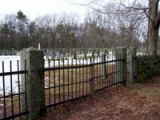
Mount Vernon Cemetery, Boxford, Essex, Massachusetts
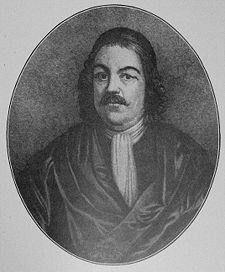
Rev. Simon Bradstreet
My 10th great-grandfather was a well educated and rebellious Puritan vicar in England. His son Simon and daughter-in-law Ann Dudley would carry his Puritan streak all the way to America.
Simon Bradstreet was on of the first Fellows of Emanuel College, Cambridge University, England and Vicar of Horbling Lincolnshire from 1596 to 1621.
Simon Bradstreet (1580 – 1621)
is my 10th great grandfather
Governor Simon Bradstreet (1604 – 1697)
son of Simon Bradstreet
John Bradstreet (1652 – 1718)
son of Governor Simon Bradstreet
Mercy Bradstreet (1689 – 1725)
daughter of John Bradstreet
Caleb Hazen (1720 – 1777)
son of Mercy Bradstreet
Mercy Hazen (1747 – 1819)
daughter of Caleb Hazen
Martha Mead (1784 – 1860)
daughter of Mercy Hazen
Abner Morse (1808 – 1838)
son of Martha Mead
Daniel Rowland Morse (1838 – 1910)
son of Abner Morse
Jason A Morse (1862 – 1932)
son of Daniel Rowland Morse
Ernest Abner Morse (1890 – 1965)
son of Jason A Morse
Richard Arden Morse (1920 – 2004)
son of Ernest Abner Morse
Pamela Morse
I am the daughter of Richard Arden Morse
He may have left England for Holland as the “Great Migration” moved toward America, but this information is unproven:
From “History of Newfield” page 447. He was a non-conformist minister in Lincolnshire, England, and Middelburg, Holland; married and died about 1617.
His death date is probably 1620-21, and some believe he died in England.

Hammond Coat of Arms
My 10th great-grandfather was an early settler of Watertown, Massachusetts. His father died and he was declared bankrupt in England before he emigrated. William brought part of his family to America to settle before sending for his wife and younger children. By April 1634 they had all arrived in the colony. He frequently was fined for religious infractions and may have been a secret Quaker.
William Hammond
Birth: 1575, Lavenham, Suffolk, England.
Baptized: 30 Oct 1575, Lavenham, Suffolk, England.
Death: 8 Oct 1662, Watertown, Massachusetts. “Aged about ninety-four.
Father: Thomas Hammond, born and died in England.
Mother: Rose Trippe, born and died in Lavenham, Suffolk, England.
1629: On 26 Feb 1629/30, William Hammond was declared bankrupt in England.
1629: On “the 20th of November after that date, he departe[d] the land and fleeth into New England. Information from a 1656 law suit against William Hammond, citing this occurance. This would place him on the “Lyon” which sailed from Bristol on 1 Dec 1630/1631, and arriving in New England the following February.
Emigration: 1631. See above.
The Hammond family came to New England in at least three stages. In late 1630 or early 1631, John Winthrop Jr. noted receipt of £7 5s. from “Goody Hammond to send her husband.” This supports the conclusion that William Hammond was a passenger on the “Lyon” when it sailed from Bristol in late 1631.
On 26 Sept 1633, Governor John Winthrop, wrote to Sir Simonds D’Ewes, informing him that “Yours by young Hamond I received,” indicating that William Hammond Jr. probably sailed for New England in one of the ships that arrived in the fall of 1633. His sister Anne and brother Thomas may also have come at this time, because they are not included, a year later, in the passenger list of the “Francis”, which sailed from Ipswich, in the spring of 1634, with Elizabeth Hammond, (aged 47); Elizabeth Hammond, (aged 15); Sarah Hammond, (aged 10); and John Hammond, (aged 7) on board.
First Residence: William’s first residence was Watertown, Massachusetts.
Occupation: Husbandman.
Religion: Admitted to Watertown Church prior to 25 May 1636, (implied by freemanship.)
1636: Admitted as a Freeman, 25 May 1636.
1636: In his record of admissions to Scituate Church, Rev. John Lathrop, entered on 14 Apr 1636, “Elizabeth Hammon, my sister, having a dismission from the church at Watertown.”
1636: On 25 Jul 1636, William Hammond was granted forty acres in the Great Dividend.
1637: Granted eight acres in the Remote Meadows, 26 Jun 1637.
1641: Granted a farm of one hundred fifty-five acres, 10 May 1642.
1645: In the “year 1645 Rose his mother dyeth … but now in the year 1647 his son Thomas come from New England to be admitted to the land.”
1647: On 22 Nov 1647, “W[illia]m Hamond granted a letter of attorney unto Thomas Hamond, his son, to ask demand of the lord of the manor the possession of certain lands in Lavenham, in Suffolk which were the possession of Rose Steward, his mother.”
1647: William was a Watertown Selectman, 8 Nov 1647.
1656: Along with Isaac Stearns, William was an arbiter in a dispute between John Wincoll and Benjamin Crisp.
1656: “Old Goodman Hammond” was appointed to a committee to assign seats in the meeting house, 17 Nov 1656.
1660: On 6 Non 1660, Watertown Selectmen sent the constables to “Old Hamond to let him know, that contrary to order of town, he had entertained into his family such a person as is likely to prove chargeable, do therefore desire him to rid the town of such an encumbrance or otherwise to bear the burden thereof himself.”
In William’s will, dated 1 Jul 1662 and proved 16 Dec 1662:
“William Hammond of Watertowne … now about ninety years of age” bequeathed to “my loving dear wife Elizabeth Hammond my whole estate” for life;
and after her death, to “my son John Hammond all my houses, lands;”
to “Thomas Hammond son of my son Thomas Hammond, deceased,” £40 when twenty-one, but if he dies before that then “the £40 to be equally divided between the children of my daughter House, daughter Barnes, [i.e., Barron’s], children”; to “daughter Barnes” £30;
to “the four children of my daughter Elizabeth House deceased” £5 apiece; to “Adam Smith son of my daughter Sarah … one mare colt”
and to “my daughter Sarah Smith” £5.
The inventory of the estate of William Hammond totalled £467 16s. 9d., including £318 in real estate:
one dwelling house, an orchard £24;
23 acres of pasture land, £69;
11 acres of broken-up land, £48;
15 acres of meadow, £90;
8 acres of meadow remote, £15;
18 acres of land in lieu of township, £6;
1 Great Dividend, 40 acres, £40;
1 farm, 160 acres, £20; and
a part of a barn, £6.
His inventory also included “one great Bible and 3 other books” valued at 13s.
Married: Elizabeth Paine, baptized in Lavenham 22 Sep 1586. She was the daughter of William and Agnes Neves Paine. Elizabeth arrived in New England in 1634 on the “Francis” with her three youngest children. Elizabeth died 27 Sep 1670, in Watertown, Massachusetts, “aged about ninety years .”
Marriage: 9 Jun 1605, in Lavenham, Suffolk, England.
Children of William Hammond and Elizabeth Paine Hammond:
William Hammond (1575 – 1662)
is my 10th great grandfather
Elizabeth Hammond (1620 – 1703)
daughter of William Hammond
Elishua Crowell (1643 – 1708)
daughter of Elizabeth Hammond
Yelverton Gifford (1676 – 1772)
son of Elishua Crowell
Ann Gifford (1715 – 1795)
daughter of Yelverton Gifford
Frances Congdon (1738 – 1755)
daughter of Ann Gifford
Thomas Sweet (1765 – 1844)
son of Frances Congdon
Valentine Sweet (1791 – 1858)
son of Thomas Sweet
Sarah LaVina Sweet (1840 – 1923)
daughter of Valentine Sweet
Jason A Morse (1862 – 1932)
son of Sarah LaVina Sweet
Ernest Abner Morse (1890 – 1965)
son of Jason A Morse
Richard Arden Morse (1920 – 2004)
son of Ernest Abner Morse
Pamela Morse
I am the daughter of Richard Arden Morse
WILLIAM HAMMOND – ELIZABETH PAINE
(1575-1662) (1586-1676)
William, the emigrant ancestor of this branch of the family in America, was born in Lavenham, County of Suffolk, England, where he was baptized October 30, 1575. He was the only surviving son of Thomas Hammond and Rose Trippe, his younger brother, Thomas, having died in infancy. He was left an orphan by the death of his father in 1589. He married Elizabeth there June 9, 1605 and their children were all born in Lavenham. Elizabeth was born 1586, also in Lavenham, daughter of William Paine.
William, along with his older children, came to America before his wife and younger children, though the exact year is not known. Elizabeth, aged 47 years, with children Elizabeth, aged 15, Sarah, aged 10 and John, aged 7 years embarked at Ipswich, England, in the ship, “Francis,” John Cutting, Master, in April, 1634, and joined her husband in New England.
William Hammond was admitted freeman in Watertown, May 25, 1636, and was grantee of seven lots and purchaser of three lots before 1644. His homestead of 40 acres was situated on the west of Common Street. It was bounded on the east and north by lands of his brother-in-law, Dr. Simon Eire, on the west by John Simson, Isaac Sterne and John Warren, and on the south by Thomas Boyden. Bond’s Hist. of Watertown (p. 1088) says, “It is probable that William Hammond settled first on the Cambridge Road, very near the Cambridge line. Whether this was a grant to him the records do not show. He sold it early and settled on his 40-acre homestall, situated east of Pequusset meadow. He also owned three small lots in Pequusset meadow, one of these granted to him and the other two purchased. This homestall passed to his son (grandson) Thomas.” March 10, 1642, in the division of lands, he was granted lot No. 76, in the 4th Division, containing 165 acres, and this, with his other holdings, made him one of the largest land owners in the town.
The records do not show that he was often an office holder in the town and this may have been due to his independence in religious matters, which may have made him unpopular with his more puritanical neighbors, although he does not appear to have been so unpopular as some of his most intimate friends. His near neighbor and most intimate friend appears to have been John Warren, who came from the same locality in Suffolk County, England, and between whose family and his own there appears to have been considerable intimacy for several generations prior to the settlement in America.
On occasion there were fines “for an offense against the laws concerning baptism,” and “for neglect of publick worship” 14 Sabbaths at 5 shillings each. Warnings were given “for not attending publick worship”.
May 27, 1661, the houses of “old Warren and goodman Hammond” were ordered to be searched for Quakers, for whom they were known to have considerable sympathy. Considerable independence in religious matters, great love of liberty and sympathy for all who are persecuted for conscience sake seem to have been inherent family traits for generations past. It is probable that William Hammond and his intimate friend, Warren, were both inclined toward the religious teaching of Roger Williams, but were too conservative to subject themselves to the persecution that his more radical followers were compelled to endure. This view is supported by the fact that many of their descendants were rigid adherents of the Baptist Church. The tendency, however, in this family has been toward great liberty of thought in religious matters and many of the descendants have been connected with the Unitarian and Universalist denominations, while many in the later generations have held membership in no church.
The will of William Hammond is on file at East Cambridge, Mass., (Middlesex Probate No. 7167), dated July 1662; proved Dec. 16, 1672. He leaves to wife Elizabeth his whole estate during her life. To son, John, all lands, & after her death. To Thomas Hamond, “sonne of my sonne, Thomas Hamond, deceased,” œ40 at the age of 21 years. “If said Thomas, or any for him, oppose this will,” then he is not have the œ40. “Unto daughter (Hannah) Barnes, œ30, the same to remain unto her children.” “In case she again become a widow” she to have wood from his lands during her widowhood. To four children of my daughter, Elizabeth House, deceased, various sums of money. “To Adam Smith, son of daughter, Sarah, if he behave obediently to my wife after my decease, one mare, colt and œ20.” To daughter, Sarah Smith, œ5. Appoints widow, Elizabeth and John executors.
Witnesses– Matthew Bridge and Thomas Longhorne.
Inventory by Hugh Mason and Thomas Hastings, Dec. 16, 1662; œ457-16-9. Contains the following list of real estate:
25 acres of fallow land, 15 acres of broken land, 15 acres of meadow, 60 acres of meadow, &c.,
16 acres of land in low of ye town right, 40 acres in great dividend, 160 acres in a farm. Total, 331 acres.
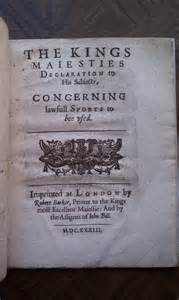
Book of Sports
When James I of England published the Book of Sports in 1617 it caused an uproar from the Puritans. The belief that no work or pleasure should take place on the sabbath was much debated at that time in Britain. The book was published after King James had his very own translation of the Bible released. Trouble was brewing in the British Isles that would eventually lead to the settlement of Plymouth Colony. The Puritans believed that all citizens must be required to attend religious services on Sunday, and they wanted them mandatory morning and evening on that day. Many of my own ancestors left England to live in Holland for a decade about that time, before sailing on the Mayflower to America. All the countries in Europe posed problems to their ideals except the Netherlands. There they could practice their severe brand of religion. There they built up strength to go to the new world.
The concept is taught to American children that these people came to America for religious freedom. That is only partially the case. They wanted to be free to dominate others and force them to follow Puritan rules. The freedom was just for their own religious beliefs, but did not apply to the beliefs of others. They were convinced of the righteousness of their logic. This made life in the new colony very contentious. It was easy to run afoul of the Pilgrim fathers who were all about sabbath and strict adherence.
Charles I reissued the Declaration of Sports in 1633, continuing the tradition of requiring attendance to religious services (in the Church of England) to qualify to dance, leap, or play sports on Sunday. There were a few sports not permitted on the sabbath such as bear and bull baiting and bowling. Charles I expanded the merriment to include local fairs and festivals on the list of sanctioned Sunday activities. England was trending Puritan in the 1630’s. In 1643 the book was publicly burned. When Charles II was restored to the throne after the English Civil War in 1660 the country was liberated from the strict sabbath rules and could once again party on Sunday afternoons.
When we think about sports and religion in America today we observe a very different story. Church attendance and membership are dropping off dramatically, but sports dominate the public attention. It is ironic to think that our initial colony was founded to make sure that Sunday would be sport free for everyone. I wonder what the Pilgrim fathers would think of the NFL and the NBA.
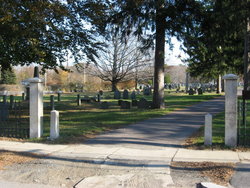
Rowley burial ground
My 9th great-grandfather was a Puritan who came to Rowley, Massachusetts with a religious community. Rowley was one of New England’s earliest settlements, founded in 1639. Like Haverill, it was originally inhabited by a small group of Puritans who emigrated from England. A Puritan minister named Ezekiel Rogers founded Rowley. He gathered together 20 families, including the Grants, from his Yorkshire parish of Rowley in England to establish the American Rowley. Edward arrived with his first wife Elizabeth, who died in 1649. He then married my 9th great-grandmother, Hannah Grant.
Edward Hazen (1614 – 1683)
is my 9th great grandfather
Lt Thomas HAZEN (1658 – 1735)
son of Edward Hazen
John Hazen (1687 – 1772)
son of Lt Thomas HAZEN
Caleb Hazen (1720 – 1777)
son of John Hazen
Mercy Hazen (1747 – 1819)
daughter of Caleb Hazen
Martha Mead (1784 – 1860)
daughter of Mercy Hazen
Abner Morse (1808 – 1838)
son of Martha Mead
Daniel Rowland Morse (1838 – 1910)
son of Abner Morse
Jason A Morse (1862 – 1932)
son of Daniel Rowland Morse
Ernest Abner Morse (1890 – 1965)
son of Jason A Morse
Richard Arden Morse (1920 – 2004)
son of Ernest Abner Morse
Pamela Morse
I am the daughter of Richard Arden Morse
Edward Hazen b:1614
THE IDENTIFICATION OF EDWARD HAZEN
What are the reasons for concluding that Edward Hazen of Rowley, Massachusetts, the founding ancestor of the American family, was the same ‘Edwardus Hasson filius Thomae’ who ‘fuit baptizatur 24 die Decembris 1614’ as entered in the registers of Cadney, Lincolnshire?1. The surname was not a very common one in England, and a great deal of research in Northumberland and Lincolnshire has not disclosed any otherEdward Hazen of suitable age.2. No other history has been found for Edward Hazen (baptized 24 Dec. 1614), who was living in 1628 when his father made his will. No record ofburial has been found in the search of many Parish registers of Lincolnshire. In July 1641, Parliament passed an act that Every clergyman shouldtake a census of males over eighteen in his Parish, presenting tothem for signature a paper upholding the Protestant faith. ; This ‘ProtestationRoll’ is very compete for Lincolnshire. It shows at Cadney, William Hassen, first cousin of Edward; at Great Limber, Richard Hason, Edward’sbrother; and at South Ferraby, a Thomas Hason, servant to William Bromby. Edward does not appear in this Roll, indicating that unlesshe had diedwith record, he had left Lincolnshire before 1641.3. The date of birth is about what we should expect for Edward of Rowley, and makes him in his sixty-nineth year at death.4. The names which Edward of Rowley gave his children are very significant. The first child was Elizabeth named after his mother, and also hisgrandmother who lived until he was fifteen years old. The next child, Hannah, was named for Edward’s wife. Then came John, the eldest son, whichwas the name of Edward’s grandfather and elder brother. The next child, Thomas, was named after both grandfather, Edward’s father andHannah’sfather both bearing the name of Thomas. The next son, Edward, was named for himself, and the youngest, Richard, for Edward’s brother of that name.The names of the other children, who were daughters, are not significant, since Edward had no sisters for whom they could have been named.5. Other settlers in Rowley were from Lincolnshire, and after Edward Hazen married Hannah Grant, her sister Anna married Robert Emerson, who was,like Hazen, a native of Cadney.This from the records of Tracy Elliott Hazen.In the political life of the town also, the Rowley records show that Edward Hazen was a man of influence and importance.On 3 Jan. 1650, at a town meeting, Edward Hazen was chosen as on of the four overseers, and was again chosen to this office, 19 Dec. 1651 and 12 Dec.1654. He was also overseer for the years 1660, 1661, and 1662, and was a selectman for the year 1669. These overseers were not the same asselectmen, as sometimes has been stated, but were always named after and in addition to the select men, or ‘prudentiall men,’ and in 1649aredescribed as ‘ouerseers for the execution of towne orders and Hy wayes.’ On 10 Jan. 1660/70, ‘Thomas Tene’ and ‘Edward Hasne’ werre chosen’ouerseers for vuiin fences and hywayes and vuiin Chimneys.’ Among the ‘Towne Charges for the year past 1651: for John Smith for going to Court0-4-6: alsoe for Edward Hasen the lyke worke 0-3-6.’ ‘Town charges 1665: Edward hasen a Day Jury Man.’ The Ipswich Court Records and Files showthat Ed. Hassen served on Trial Jury 30: 7: 1651 and also 26:7:1654. On 9 Jan. 1665/66, Edward Hazon was chosen one of the four judges ofdelinquents ‘for not comeing to towne meetings’; 9 Jan. 1666/67, ‘Edward hasen Judge for yeare ensuing.’ In a list [of town charges?] 1662: ‘Edhason 0-10-2.’ Towne charges 1667: ‘Edward Hason for ueiwinge fence 0-3-0.’ In an undated record probably referring to King Phillip’s War and toEdward Hazen’s sone: ‘Work done for Samuel person in ye war–James Tenny 1 day: Thomas Hasen and Edward each a day.’ [Early Records of the Town ofRowley (1894), pp 70, 71, 73, 91, 106, 118, 132, 146, 159, 162, 165, 185, 200, 205, 224; Quarterly Courts of Essex County, 1:232, 362.]The follow account of the settlement of Edward Hazen’s estate is taken from the original papers, in two sheets, on file at Salem, and differssomewhat from the clerk’s book copy.Edward Hazen and his wife Hannah appear in the following deeds:Peter Eyers and wife Hannah of Haverhill convey to Edward Hasen of Rowley 6 1/2 acres of puland, Peter Eyers’ 3d division, with land abutting on theMerrimack River, (date not give in copy). Witnesses, Jno. Carlton, Jno. Gryffyn [Old Norfolk Co. Deeds, 3:336, p. 367 in copy.]Edward Hassen and wife Hannah of Rowley convey to John Tennie of Rowley100 acres in the division called ‘Merimake land,’ the northwest end abuttingon the Merrimack River, and 4 acres of meadow called Crane meadow; also a parcel of land granted to John Harris, John Tod, Richard Longhorne,Richard Holmes, and Edward Hassen by the town of Rowley, dated 20 May 1664. Witnesses, Ezekiell Jewit, Thomas Tenny.The name was signed ‘Hasin.’ Edward acknowledged 16 June 1673. [Ipswich Deeds, 4:41.]John Pearly and wife Mary of Newbury convey to Edward Hazen of Rowley 7acres of upland in Rowley Village-land of Thomas Pearly, Daniel Wood, andEzekiel Northen mentioned, (date not given in copy). Witnesses, Benjamin Rolfe, Thomas Hale. John and Mary acknowledged on 19 Feb. 1684 and sheresigned her right of dower to Edward Hazen’s administrators. [Ibid., 5:371.]’Hanah ye Relict and late wife of said Edward Hason deceased & Edward Hason son of ye said Edward Hason Joynt administrators’ confirm to ThomasHason land in Rowley Village where he now lives and which his father Edward before his death settled upon him as his portion-land bought of JohnPearly of Rowley Village and on 19 Feb. 1684 acknowledged by him, dated 14 May 1685. No witnesses. Signed ‘Hannah Hazzen alias Browne.’ Hannah acknowledged 19 May 1685; Edward, 4 Nov. 1685. [Ibid., 5:371.]Hannah Browne of Haverhill, widow and relict of Capt. George Browne, ‘for & in consideration of natural & christian love & afection which I beare unto my loving & beloved sonns Thomas & Edward wch I had by my former Husband Edward Hazen long time deceased at Rowley,’ conveys to them all theinterest in the estate of her brother John Grant of Rowley, dec’d; 1 Mar. 1699 or 1700. Witnesses, Thomas Eaton, Senr., Richard Saltonstall. [EssexCo. Deeds, 14:37.]Capt. George Brown and wife Hannah of Haverhill convey to Thomas Carlton of Bradford 76 acres laid out to her former husband Edward Hazzen ofRowley, dec’d, and her part of the estate of Edward Hazzen in Bradford-widow Smith, widow Hobson mentionsed, 3 Apr. 1697. Witnesses, AbrahamPerkins, Solomon Reves, Senr., Jacob Perkins, 3d. Acknowledged 3 Dec. 1698. [Ibid.,30:44,45.]Richard Hazzen, Thomas Hazzen, Edward Hazzen, Daniel Wicom, Junr., Nathaniel Storey, children of Edward Hazzen and Hannah, now wife of Capt. GeorgeBrowne, quitclaim to Thomas Carlton, 3 Apr. 1697. Witnesses, Edward Carleton, Nath. Walker, Solomon Keyes, Senr., Jacob Perkins, tertius. [Ibid.,30:45.]An agreement concerning some land that was their father Edward Hazen’s and that after his death was laid out to his wife for her thirds, was made by Thomas Hazen of Norwich, John Wood of Bradford, Timothy Perkins of Topsfield, Edward Hazzen of Boxford, Richard Hazzen of Haverhill; first, thatEdward Hazzen is satisfied with 16 pounds already received, one ox gate in east end of ox pasture, and 5 pounds which his brothers promise to pay;secondly, that the others are satisfied with a lpiece of march, call cowbridge marsh, and a piece of land called cowbridge lot, and another piece ofland in Symond’s new field from their mother’s thirds, taking in brother Jeremy Person, brother Harris’ children, brother Gibson’s children, andbrother Wicom’s children, they having their sharewith the others; dated 20 June 1716. Witnesses, Thomas Perley, Junr., Nathaniel Perley.d [Ibid.,34:189]On 4 July a ‘Hanah Hazen’ was a witness to the will of Ann Swan, relictof Richard Swan of Rowley. [Essex Co. probate files, Docket 268976.] It is highly probable that she was the wife of Edward Hazen, as his daughter Hannah was presumably married before that date.From Hazen family in America by Tracy Elliott Hazen[Hazen21404.FTW] SiteMap | Visitors: 772 | TribalPages Forum
Family History
http://www.angelfire.com/journal/pondlilymill/heisende.htmlThe Hazen Family in AmericabyTracy Elloit HazenTHE ORIGIN OF THE ENGLISH HAZENS
There is a township in Northumberland, England, near Alnwick, and Warworth Castle, now called Hazon (or Hazen). In early records it was written Heisende, and philiolgists beleive it was derived from Hegges ende (softened into Heies ende), meaning end of the hedge. To this day there are miles of hedge by the roadside in the township.From this town, the surname was derived. Hugh of Heisende [in the Latin form, Hugo de Heisende] made an agreement 8 Sept. 1202 regarding 100 acres of wood in Heisende [Feet of Fines, John Northumberland, case 180, file 2, no. 8]; a Hugo de Heisende is also found in 1256, in an Assize Roll of Northumberland, and in another Roll in 1277 he appears as “Hugo Heisand [Surtees Society Pub. 88: 64,387].Men removing from the town and settling elsewhere, during the period when surnames were coming into use, would be called “de Heisende” – from Heisende- to identify them by their place of origin, and their offspring would become plain Heisende. The name seems to have worked down through Yorkshire, south into Linconshire, all on the eastern coast of England. Many records have been found, in both printed and documentary sources, of the occurrence of the name. It has been decided not to include full mention of these records, partly because of space limitations, and even more because no descent or generation sequence can be established, so that the sporadic occurrance of the surname, variously spelled, is of importance solely as indicating the continutity of appearance of the surname in the northeast counties. It cannot be proved that all who bore the surname in this region were of the same blood, since more than one family deriving from the town of Heisende may have adopted the name.In Northumberland, more than a century after Hugh de Heisende, we fine Will Haysand mentioned in 1376 [De Banco Roll, Michaelmas Term, 49 Edward III]. In 1455 one Willaim Haysand of Newcastle, Northumberland, claimed part of the manor of Dopmanford, co. Huntingdon, being son of Hugh, son of Thomas (born in Haysand, Northumberland), son of William Haysand, brother and heir of Gilbert Haysnad who married the heiress of Dopmanford and died without issue [De Branco Roll, Easter Term, 33 Henry VI, memb. no. 128]. Before 1399 John of Gaunt granted the leper hospital at Warenford to a hermit named Richard Hayzaund [John Crawford Hodgson, History of Northumberland, 1:251].In Yorkshire is found the will (in Latin) of Willaim Hassand of Watton, dated 11 August 1484, which mentions his father and eldest son, both named Thomas [Reg. Test. Edor., 5:243]. John Hasande late of Watton died 22 October 1515; and John Hassand of Kirkburne died interstate before 13 April 1559 [Act Book for the Deanery of Harhill and Hull with Beverley].In 1535 Richard Hasande was bailiff, paid for collecting the rents, in the Deanery of Ludburghe, Lincolnshire [Valor Ecclesiasticus, 4:59]. He may be the Richard Hassand with whom the proved ancestry of Edward Hazen beginning in the section. The known ancestors of Edward Hazen were husbandmen of the better class, of sufficient substance to make wills. The family was not armigerous, and no Hazen coat of arms is known.NOTE: There are similar sounding names in Dutch (Haas) and German (Haassen) with a Jack-Rabbitt on a family Coat of Arms, there is no family connection. So don’t be fooled by misleading family Coat of Arms. Hazzan is the Hebrew spelling which means a cantor, one who crys out the truth. Hazen is a common first name in Isreal. Jews were not allowed to be armigerous. All the Hazen’s in America and Canada are decended from Edward Hazen who came from Cadney, Lincolnshire, England to Rowley, Massachusetts in 1638,. There is two recent arivals from England who are related to the family back in England. Where the family name is still spelled Hason.
In 2008 on the programme ‘Who do you think you are?’ the story of the model Jodie Kidd’s family history was featured As he sory unfolded it was revealed that Jodie was descendent from Edward. This part of the programme explained how the Hazen family had orginally been one of the founding family of America. Edwrd had moved the family from the nearby settlement Rowley to Haverill. The story of the family’s struggles was told and Jodie was able to work backward thrugh her family history from Rowley and back to England to Rowley in Yorkshire. The programme brought Edward’s family’s story back to life and explained why they had left England.Edward’s wife Hannah (Hannah was Edward’s second wife whom he married after his first wife died in 1649) parents Thomas and Jane Grant were among the original settlers who founded Rowley in 1639. This group of settlers were Puritans and were led by their minister Ezekiel Rogers. He had gathered together 20 families from his parish of Rowley in Yorkshire, England and they had set out to the new world to find religous freedom as Puritans were being persecuted in England when the King, Charles 1, had banned the puritan clergy from preaching.Thomas and Jane Grant were amongst 20,000 British Puritans who travelled to the new world. This new life was extremely hard to begin with and many died making the journey or from stravation, disease or the severe cold winter. The surviours through great sacrifce gradully established themselves in the new world and craved out there settlements.
Sources:
U.S., Sons of the American Revolution Membership Applications, 1889-1970
New England Marriages Prior to 1700
The Hazen family in America : a genealogy
History of Essex County, Massachusetts. : with biographical sketches of many of its pioneers and prominent men
Vital records of Rowley, Massachusetts to the end of the year 1849
Vital records of Rowley, Massachusetts to the end of the year 1849
Massachusetts, Town and Vital Records, 1620-1988
The Granberry family and allied families : including the ancestry of Helen (Woodward) Granberry

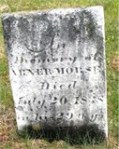
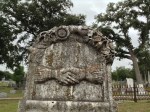
During the exciting and educational April #NaPoWriMo I managed to kick out 30 poems in 30 days. I will follow the poets I met because they make my days richer with only short bursts of time invested. I can read a poem for a minute or two and ponder it forever. I love the community that develops around the special poetry writing month and plan to keep my connection to it. I have learned that the process of writing poems is therapeutic . While engaged in poetic efforts I happened to digitally meet new people who are as interesting to me as the poets. Much to my surprise, my niche geek group, family history freaks, is alive and meeting regularly to share data and support.
This new group found me, or I found it on Facebook. New England Family Genealogy and History is a special interest group for those of us who study these subjects. I am delighted to find people as obsessed with history as I am. Some of them still carry the Mayflower pilgrim family names. There have been wonderful pictures and stories posted in which I have identified members as having common ancestors. This is a full time party of like minded genealogy freaks I can join on line any time. Be still my heart! People who have much more direct information and verification are there to help anyone with inquiries. The first ancestor I found I had in common with other members was my famous poet, Ann Dudley Bradstreet, who may be my favorite ancestor of all. In a few weeks I have met others with whom I share different progenitors. A recent discussion revealed that others share perhaps Native ancestry. Like me, few can definitively prove a connection to a tribe.
Some of the active participants are professional genealogists or family archivists of large collections. Plenty are DAR and Mayflower Society members. Many live in New England now and are connected to local societies for the preservation of everything under the sun. I enjoy learning about some of the old buildings that have stayed in family hands for hundreds of years. I feel a tinge of jealousy when they go off to Providence to a genealogy convention for the weekend. Then I remember that to live in New England one must endure snow and other unpleasantries. I may return to Cape Cod and Rhode Island on a history hunt one day. For now I am very pleased to be in touch with history fans who share interest, passion, and loads of information about New England and the people who have lived there. I can digitally visit every day. You can too if New England History is an interest of yours.
 mermaidcamp