mermaidcamp
Keeping current in wellness, in and out of the water
You can scroll the shelf using ← and → keys
You can scroll the shelf using ← and → keys

#Weekendcoffeeshare
This week people are tired of being cold, so I have thought of a good way to warm up and meet for coffee at the same time. We will use our terry cloth transporter cloaks and magical bathing suits (we all look very good in these) to visit Desert Hot Springs, California. We will sit in warm and hot pools right on top of the San Andreas fault and ask the poolside server to bring our drinks to us in the water. We are going to spa down today, my friends, and feel much better for it. We will soak in the sun and the minerals in the soaking pools at Desert Hot Springs Spa Hotel, possibly the most bizarre place in the universe. Since this is a day trip I think this is the very best place to be in town to meet. I look forward to listening to your stories of the week. Mine has been easy. My dog has taken a positive turn in her health, which makes our family happy. She still has some frailty, but is not suffering. We are feel lucky to spend more time with her in good spirit and decent health. She is in her doghouse resting, so she will not even notice I have flown to California for a while.
If we had an overnight I might consider one of the small mineral water hotels with more privacy, but for coffee and a sun tan this is a funky fabulous world I know you will love. There are Russians and eastern Euros here every time I come, and I expect to hear some Canadian snowbirds in the crowd too. There is such a demand from the Russians that the weekend servers speak Russian and take care of the customers in their own language. For some reason the eastern Euro/Russian spa bunnies prefer this older vintage style hotel. The sister spa next door is very popular with Korean mineral water lovers. Both groups are fun to watch for fashion thrills. You will see some bathing suits that you know for sure have not been purchased in the US. Since we are wearing magic (digital) suits, it is okay to copy one that you like and wear it home. Make sure you fill up your drinking water bottles because the town has sweet, untreated drinking water that wins competitions and comes right out of every tap. It is delicious, and you need to stay hydrated while you soak.
When we are relaxed and warmed to the bone, I hope you will visit the museum up the hill that will show the story of the discovery of the special wells that made this historic spa famous. The other wonderful sight to see before you leave is Joshua Tree National Monument, just a few miles up the road. It is popular with rock climbers for the vertical challenge and spectacular views. Desert wild flowers will be in bloom now at different elevations, flashing intense saturated colors. I wish you a safe and happy flight to your destination. Thanks for dropping in on our spa coffee break.
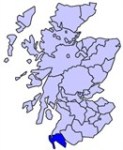
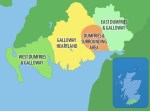
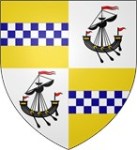
My 21st great-grandfather was the last of the independent Lords of Galloway, in Scotland. He married three or four times and is buried at Dundrennan Abbey in Galloway. He was mentioned in the Magna Carta, which is a big deal in English history. I like his outrageously long name.
Alan MacDonal FitzRoland MacFergus, Constable of Scotland, Lord Galloway (1186 – 1234)
is my 21st great grandfather
Helen Elena McDonald of Worcester Countess Galloway (1207 – 1245)
daughter of Alan MacDonal FitzRoland MacFergus, Constable of Scotland, Lord Galloway
Lady Helen Elena La Zouche Quincy (1222 – 1296)
daughter of Helen Elena McDonald of Worcester Countess Galloway
Eudo LaZouche (1245 – 1279)
son of Lady Helen Elena La Zouche Quincy
Elizabeth La Zouche (1274 – 1297)
daughter of Eudo LaZouche
Nicholas Poyntz (1303 – 1376)
son of Elizabeth La Zouche
Nicholas Poyntz (1355 – 1372)
son of Nicholas Poyntz
Pontius Poyntz (1372 – 1393)
son of Nicholas Poyntz
John Poyntz (1412 – 1447)
son of Pontius Poyntz
William Poyntz (1455 – 1494)
son of John Poyntz
Thomas Poyntz (1480 – 1562)
son of William Poyntz
Lady Susanna Elizabeth Poyntz (1528 – 1613)
daughter of Thomas Poyntz
Elizabeth Saltonstall (1557 – 1621)
daughter of Lady Susanna Elizabeth Poyntz
Henry Wyche (1604 – 1678)
son of Elizabeth Saltonstall
Henry Wyche (1648 – 1714)
son of Henry Wyche
George Wyche (1685 – 1757)
son of Henry Wyche
Peter Wyche (1712 – 1757)
son of George Wyche
Drury Wyche (1741 – 1784)
son of Peter Wyche
Mary Polly Wyche (1774 – 1852)
daughter of Drury Wyche
John Samuel Taylor (1798 – 1873)
son of Mary Polly Wyche
William Ellison Taylor (1839 – 1918)
son of John Samuel Taylor
George Harvey Taylor (1884 – 1941)
son of William Ellison Taylor
Ruby Lee Taylor (1922 – 2008)
daughter of George Harvey Taylor
Pamela Morse
I am the daughter of Ruby Lee Taylor
Alan, lord of Galloway (b. before 1199, d. 1234), magnate, was the eldest son of Roland, lord of Galloway (d. 1200), and Helen de Morville (d. 1217), sister and heir of William de Morville, lord of Lauderdale and Cunningham and royal constable. He had two brothers and two sisters, of whom Thomas (d. 1231) became earl of Atholl in right of his wife, Ada married Walter Bisset of Aboyne, and Dervorguilla married Nicholas de Stuteville of Liddel in Cumbria.
Alan contracted three marriages: to a daughter of Roger de Lacy, constable of Chester; to Margaret (d. before 1228), eldest daughter of David, earl of Huntingdon, in 1209; and, c.1229, to Rose, daughter of Hugh de Lacy, earl of Ulster. The first two marriages produced children, but only daughters attained adulthood. Helen, his daughter by his first marriage, married Roger de Quincy, while Christina (or Christiana) and Dervorguilla [see Balliol, Dervorguilla de], the children of Alan and Margaret, married William de Forz and John de Balliol respectively. Alan had one bastard son, Thomas.
Cross-border landholding and kinship with King John of England made Alan a man of consequence in both realms. His relationship with the king of Scots, based on loose overlordship rather than feudal subordination, allowed freedom of manoeuvre where his actions did not conflict with Scottish interests. Galloway’s military resources and substantial fleet gave added influence; Alan’s aid was courted unsuccessfully by John for his 1210 campaign against the Ulster Lacys, but he agreed to send one thousand men for the abortive Welsh campaign of 1212. A grant of estates in Antrim in 1212 was designed to draw him actively into the defence of Angevin Ulster against the native Irish. Despite such favours from John, when Alexander II entered the civil war in England in 1215, aligning himself with John’s baronial opponents, Alan joined the Scottish king and was his chief lieutenant in the occupation of Cumberland and Westmorland from 1215 to 1217.
From 1225 Alan used the freedom afforded by the loose overlordship of the Scottish crown to interfere in the feud between King Ragnvald of Man and his half-brother, Olaf. His private interest, arising from efforts to secure Antrim with Ragnvald’s support against the threat of a Lacy restoration, coincided at first with Anglo-Scottish policy towards the region and received the tacit support of his Scottish overlord. The prospect of a pro-Scottish client in Man led Alexander II to acquiesce to the marriage in 1226 of Alan’s bastard son, Thomas, to Ragnvald’s daughter, but the marriage provoked revolt against Ragnvald. Despite the support of Galwegian galleys and warriors, Ragnvald was overthrown and slain in 1229 by Olaf. Alan’s ensuing attempts to conquer Man for Thomas destabilized the Hebrides and western highlands, thereby threatening Scottish territorial interests, and in 1230–31 prompted active Norwegian support for Olaf. Joint action by Alan and Alexander averted catastrophe, but Scottish and Galwegian interests had diverged and the 1231 campaign marked the end of further Galwegian involvement in the Manx succession; Alan’s dynastic ambitions had caused an undesirable war with a major foreign power.
Uncertainty over the succession to Galloway shadowed Alan’s later years. His nearest legitimate male heir was Patrick of Atholl [see under Thomas, earl of Atholl], son of his younger brother, Thomas, who had died in 1231, but, although Celtic practice did not debar his bastard son, Thomas, Alan’s closest heirs by feudal law were his three daughters, all married to important Anglo-Scottish noblemen. To King Alexander, the crisis precipitated by Alan’s Manx ventures made partition, and the attendant opportunity to replace the loose overlordship enjoyed by Alan with a more tightly defined relationship, an attractive proposition, for succession by Thomas threatened a revival of Galwegian interests in Man and so of risks to Scottish security. Alan died about 2 February 1234 and was buried in Dundrennan Abbey, where his mutilated tomb effigy survives. Partition of the lordship followed and, despite a rebellion in 1235 in favour of Thomas, was successfully enforced.
OXFO RD DNB
Alan FitzRoland (c. 1175 – 1234) was the last of the MacFergus dynasty of quasi-independent Lords of Galloway. He was also hereditary Constable of Scotland.
He was the son of Roland, or Lochlann, Lord of Galloway and Helen de Morville. His date of birth is uncertain, but he was considered an adult in 1196.
In right of his mother he inherited the de Morville Lordship of Lauderdale. as well as others in that vicinity: West of Blainslie, in Lauderdale, but in the Lordship of Melrose, are the lands of Threepwood, which were granted by Alan, Constable of Scotland, to the monks of Melrose between 1177 and 1204.
In 1212 Alan responded to a summons from King John I of England by sending 1,000 troops to join the war against the Welsh. In this year he also sent one of his daughters to England as a hostage. She died in 1213 in the custody of her maternal uncle. Alan is listed as one of the 16 men who counseled King John regarding the Magna Carta.
Alan, like his forebears, maintained a carefully ambiguous relationship with both the English and Scottish states, acting as a vassal when it suited his purpose and as an independent monarch when he could get away with it. His considerable sea power allowed him to supply fleets and armies to aid the English King John in campaigns both in France and Ireland.
In 1228 he invaded the Isle of Man and fought a sea-war against Norway in support of Reginald, Prince of Man, who was engaged in a fratricidal struggle with his brother Olaf for possession of the island.
Alan died in 1234 and is buried at Dundrennan Abbey in Galloway.
He married three or four times: ?? an unnamed daughter of John, Baron of Pontefract and Constable of Chester, who had died by 1209. They had one daughter:
Female, (d. 1213).
He married Hilda (Helen) de L’Isle (b.abt1174 d.after 11/0/1245) m.1205 Carrick, Ayrshire, Scotland. She was the daughter of Rognvald Sumarlidasson, Lord of the Isles and Fonia of Moray.
Child of Alan of Galloway and Helen de l’Isle:
Helen of Galloway (b.c1208) Carrick, Ayrshire, Scotland, who married Roger de Quincy, 2nd Earl of Winchester.
He remarried Margaret of Huntingdon, daughter of David I of Scotland. By this marriage he had:
Dervorguilla of Galloway, who married John de Balliol, 5th feudal baron of Barnard Castle and founder of Balliol College, Oxford. Their son became King John of Scotland.
Christina of Galloway (d. 1246), who married William de Fortibus, Earl of Albemarle, but had no issue.
Thomas, possibly alive in 1220, but certainly dead by 1234
Alan married his last wife, (3) Rohese de Lacy, in 1229, the daughter of Hugh de Lacy, 1st Earl of Ulster.
Alan also had an illegitimate son, who was also named Thomas.
With Alan’s death his holdings were divided between his three daughters and their husbands. A popular attempt was made within Galloway to establish his illegitimate son, Thomas, as ruler, but this failed, and Galloway’s period as an independent political entity came to an end.
Wikipedia, The Free Encyclopedia @en.wikipedia.org
Additional Royal Descents; “A Line of Descent from Malcolm II, King of Scots, to the Rev. George Burroughs of Danvers, Mass. by Frederick Lewis Weis, Th. D., of Dublin, NH., NEHGR, 1954. Vol. 108, pg 174
ALAN of Galloway, son of ROLAND Lord of Galloway & his wife Helen de Moreville (-[2] Feb 1234, bur Dundraynan). He succeeded his father in 1200 as Lord of Galloway. “Alanus filius Rollandi de Galwythia” donated “partem terre in territorio de Gillebeccokestun…de Widhope” to Melrose abbey, for the souls of “Ricardi de Morevill avi mei et Willemi avunculi mei, Rollandi patris mei et…mea et Helene matris mee”, by undated charter. “Thomas de Colevilla cognomento Scot” donated “quartam partam de Almelidum…Keresban” to Melrose abbey by undated charter witnessed by “…Alano filio Rolandi de Galewai, Fergus filio Uctredi, Edgaro filio Douenad, Dunkano filio Gilbti comite de Carric…”. “Alanus fili Rolandi de Galweia constabularius dni regis Scottorum” donated property “in Ulkelyston” to Kelso monastery, for the souls of “patris mei Rolandi, avi mei Huhtredi”, by charter dated to [1206]. The Annals of Dunstable record that “dominus Galwinæ” died in 1235. The Liber Pluscardensis records the death in [1234] of “Alanus de Galway filius Rotholandi de Galway…qui…fuit constabilarius Scociæ” and his burial “apud Dundranan”. The Chronicle of Lanercost records the death “circa purificacionem beatæ Virginis” [2 Feb] in 1233 of “Alanus dominus Galwydiæ”. On his death Galway was divided between his daughters, but the people of Galway invited Alexander II King of Scotland to become their sole lord but he refused. The king finally defeated the insurgents after Jul 1235.
[m firstly (before [19 Dec 1200/1206]) — de Lacy, daughter of ROGER de Lacy Constable of Chester & his wife Maud de Clare (-[1201/06]). Keith Stringer says that “one of the daughters of Roger de Lacy was evidently Alan´s first wife” and that “the manor of Kippax” was her dowry, quoting a charter, dated to [19 Dec 1200/1206], under which “Alanus filius Rollandi, dominus Galuuaith Scotie constabularius…et heredibus meis” gave quitclaim to “Rogero de Lascy Cestrie constabularius et heredibus suis” for “advocationem ecclesie de Kipeis”.]
m [secondly] — [of the Isles, daughter of REGINALD Lord of the Isles & his wife Fonie —] (-before 1209). Balfour Paul says that Alan Lord of Galloway married first “a lady unknown, said to be a daughter of Reginald Lord of the Isles by whom he had two daughters”. The primary source which confirms her parentage and marriage has not yet been identified.
m [thirdly] (Dundee 1209) MARGARET of Huntingdon, daughter of DAVID of Scotland Earl of Huntingdon & his wife Matilda of Chester ([1194]-[after 6 Jan 1233]). The Chronicle of Melrose records the marriage in 1209 of “Alan FitzRoland” and “the daughter of earl David, the brother of the king of Scotland”. The Annales Londonienses name “Margaretam, Isabellam, Matildam, et Aldam” as the four daughters of “comiti David”, recording the marriage of “la primere fille Davi” and “Aleyn de Gavei”. John of Fordun´s Scotichronicon (Continuator) records the marriage in 1208 “apud Dunde” of “Alanus magnus de Galweyia, filius Rotholandi” and “Margaretam filiam David comitis de Huntingtona”. The primary source which confirms her appearance in Jan 1233 has not been identified. The date is inconsistent with Alan´s subsequent marital history, unless his marriage to Margaret was dissolved.
m [fourthly] (before 30 Mar 1222, annulled for consanguinity [1225/29]) JULIANA, daughter of —. Anderson records that Pope Honorius III wrote to the archbishop of Canterbury and others 30 Mar 1222 informing them that Alan constable of Scotland and his wife were related in a prohibited degree of affinity, and wrote again 28 Feb 1225 reported the hearing before the abbot of Bruern of the marriage of “Alan knight and Juliana”. Anderson states that Alan continued to litigate and that Juliana appeared in Rome before the Pope who “bade the archbishop examine the original acts and decide the case if Alan would not accept the woman as his wife”, and adds that “Juliana seems to have lost the case”.
m [fifthly] ([1228/29]) ROSE de Lacy, daughter of HUGH de Lacy & [his first wife Lesceline de Verdun] (-after 1237). According to Matthew of Paris, the wife of Alan of Galloway “iam defunctus” was the (unnamed) daughter of “Hugonem de Lasey”. The Chronicle of Lanercost records in 1229 that “Alan the lord of Galloway…set out for Ireland and there married the daughter of Hugh de Lacy”. John of Fordun´s Scotichronicon (Continuator) records that “Alanus de Galweia profectus in Hiberniam” married “filiam Hugonis de Lacy” in 1228. If her parentage and marriage is correctly stated in the two sources quoted, the chronology suggests that this daughter must have been born from Hugh´s first marriage, assuming that she was legitimate. She is named “Rose de Lacy” by Keith Stringer, who cites a charter of St Bees which indicates that she was still alive in 1237.
Lord Alan & his [first/second] wife had two children
http://fmg.a c/Projects/MedLands/SCOTTISH%20NOBILITY.htm#HelenGallowaydiedafter21Nov1245
Excert from The Magna Charta Sureties, 1215 by Frederick Lewis Weis
Excert from: Ancestral Roots of Certain American Colonists Who Came to America Before 1700. Author: Weis, Frederick Lewis Date of Publication: 2004
Offord Manor
An inquiry was held in 1199 on behalf of Roland de Galloway, whose wife Ellen was daughter of Richard de Moreville, whether Richard had forfeited for his adherence to ‘the young king’Henry, son of Henry II. Alan, son of Roland and Ellen, was pardoned a debt regarding this inquiry in 1213.
A History of the County of Huntingdon: Volume 2

Lady Elizabeth Fitzalan, Duchess of Norfolk
Elizabeth Fitzalan as well as her sister Joan are both my ancestors, on maternal and paternal sides of my family. Elizabeth is my mother’s ancestor. She had a remarkable life, outliving 4 husbands. She is probably buried in an alabaster tomb in the church in village of Hoveringham, England with my 17th great-grandfather who died in battle. She married him without a license, which angered the king.
I am lucky that Bruce Morrison is her descendant also. He has devoted time and study to give us many details about her life. Here is his research:
FOREWORD: The early 15th century alabaster tomb and effigies of Sir Robert Goushill and his wife Elizabeth Fitz-Alan Duchess of Norfolk are found at the parish church of the village of Hoveringham in Nottinghamshire, England. The tomb is located just to the right as you enter the church. The original medieval St. Michael church at Hoveringham was razed in 1865, and the present plain, small brick church was erected in it’s place. The above copyright photographs were taken during a visit to Hoveringham in 1991 by Bruce Morrison of Lexington, Kentucky, a descendant of Robert Goushill and Elizabeth Fitz-Alan. (I do not have Bruce’s photos)
THE TOMB & EFFIGIES: The effigies show effects of earlier vandalism and mutilation incurred during earlier centuries. The right arms of both effigies are broken and missing–they originally were holding hands. Some damage also occured when the monumemt was relocated when the present church was erected. The figures are of alabaster with Sir Robert Goushill shown wearing a camail and hawberk and plate armor on his arms and legs. His feet rest upon the figure of a dog, and his collar shows the badge of his Lancastrian loyalty. He wears a Bacinet on his head with a wreath which rests on a crowned Saracen’s head. The Saracen’s head was derived from the Goushill family crest. The Goushill of Hoveringham coat of arms was a barry of six or and gules with a canton ermine. The figure of Elizabeth Fitz-Alan is shown wearing a peeress gown with a coronet on her head emblematic of her rank as a duchess. The tomb was created after Sir Robert Goushill’s tragic death in 1403, probably by the design of his widow Elizabeth Fitz-Alan who lived to 1425. It is likely that she was also buried in the tomb, but no definitive proof or evidence exists. Robert Thoroton’s description of the tomb in the 17th century states that about the fair tomb were the arms of Leek, Longford, Babington, Chaworth impaling Caltofts, Remptons, and divers others. These are long lost as well as the tomb of Sir Nicholas Goushill, the son of Sir Thomas Goushill, who died in 1393. This stone was in the south isle of the original St. Michael Church. The lower base portion of the Goushill Fitz-Alan tomb is decorated by a series of shields on all sides which were probably the location of the large number of now lost coats of arms described in Thoroton’s History.
ROBERT GOUSHILL: Sir Robet Goushill was knighted by King Henry IV at the battle of Shrewsbury on July 21,1403. At the Battle of Shrewsbury the loyalist forces of Henry IV were opposed by the rebel army of Henry Percy (Hotspur). The army of King Henry IV won the day with the killing of Hotspur during the conflict. Casulties on both sides were high with estimates of 3000 killed or wounded on each side. Sir Robert Goushill was knighted the day of the battle for his gallantry, but was badly wounded in the side. Found lying wounded by his servant on the eve of the battle, Goushill asked that his armor be removed and a note sent to his wife Elizabeth in case of his death. The servant then stabbed and murdered Sir Robert Goushill and made off with his purse and ring. Another wounded man lying nearby recognized the servant, and he was later caught and hanged for the crime. The arms of Sir Robert Goushill would be placed in the Shrewsbury Battlefield Church by King Henry IV.
Robert Goushill was the son and heir of Sir Nicholas Goushill of Hoveringham. The date of his birth is unknown, but can be estimated to be circa 1360-1365. Likewise, the name of his mother also remains unknown. The Goushill family had held extensive lands in Nottinghamshire and Derbyshire since the 13th century. Walter Goushill, an early ancestor in the direct line, gained a number of these considerable holdings for the Goushills through his marriage to Maud (Matilda) Hathersage, the co-heiress of Mathew Hathersage in Derbyshire. (The early pedigree of the Goushill family of Hoveringham can be found in the History of Nottinghamshire by Dr. Robert Thoroton). In the calendar of patent rolls of Richard II on March 12, 1386, the King orders the arrest of Sir Nicholas Goushill the elder and his son Robert Goushill to answer the suit brought by William Birkes accusing the Goushills of threatning him with the loss of life and limb that he dare go about his business. On July 16, 1385, Sir Nicholas Goushill received the King’s pardon. During 1387, Nicholas Goushill knight of Hoveringham and his son Robert Goushill are found in the chancery records to owe a debt of 22 pounds to Robert Wells of London. The next mention of Robert Goushill occurs in 1390 when he receives the King’s pardon for alleged outlawry and other felonies through the supplication of Thomas Mowbray. Thomas Mowbray was at that time Earl of Nottingham and later would become the Duke of Norfolk. This evidences that Robert Goushill was already a supporter of Thomas Mowbray of whom he would be an employee of for the next decade. Elizabeth Fitz-Alan, the future wife of Robert Goushill, had been the wife of Mowbray since 1384.
During the 1390’s, Robert Goushill would be in the retinue of Thomas Mowbray, Earl of Nottingham, Marshal of England, and Duke of Norfolk, serving as Mowbray’s esquire and attorney. When Thomas Mowbray received his ducal elevation in 1397, he gave to his esquire Robert Goushill a 20 pound annuity for life from his manor at Willington. This grant was confirmed by Henry IV in November of 1399. In 1398, after the Duke of Norfolk was banished by Richard II, Robert Goushill was appointed one of the attorneys for Mowbray. At the coronation of King Edward IV on October 13, 1399, Robert Goushill would make a plea for the return of the banished Duke of Norfolk as Earl Marshall, not knowing Mowbray had already died of the plague in Venice, Italy on September 22, 1399. In the mid 1390’s, Robert Goushill had married as a first wife Joan Bracebrugge, who was the widow of Sir Ralph Bracebrugge of Kingsbury, Warwickshire. Joan (maiden name unknown) had married Ralph Bracebrugge in 1380 and his death occured in August, 1395. The marriage of Robert Goushill and Joan Bracebrugge likely was in 1396, and Joan would die early in the year 1400. (IPM Henry IV, 1-6). In 1397 Richard II appointed Sir William Bagot and Robert Goushill to seize into his hands the goods and chattels of Thomas the late Earl of Warwick. (Goushill served as Warwickshire sheriff in 1396/97). After Richard II was deposed, the new King Henry IV made a grant on Feb. 23, 1400 to his kinswoman Elizabeth, the wife of the late Duke of Norfolk, of the remaining goods of the late Duke as well as clearing the debts that the Duke had owed to the deposed Richard II. Others to share in the remaining goods of the deceased Duke of Norfolk included Robert Goushill.
Robert Goushill would marry the widowed Elizabeth Fitz-Alan, Duchess of Norfolk, in the latter part of 1400 or early 1401 without license. On August 19, 1401, King Henry IV seized the lands of Elizabeth, late widow of Thomas Mowbray, for marrying Robert Goushill without license. On September 28, 1401, Henry IV would pardon Robert Goushill esquire and Elizabeth, late wife of Thomas, duke of Norfolk, for their trespass for inter-marrying without license and that they shall have restitution of all lands assigned to her in dower with the issues from the time of their marriage. Joan Goushill, the 1st daughter of Robert and Elizabeth, would be born in 1401, and a 2nd daughter Elizabeth Goushill would be born in 1402. Many present day descendants of these two daughters trace their ancestry to the Plantagenet Kings of England through Joan Goushill who married Sir Thomas Stanley, 1st Baron Stanley, and Elizabeth Goushill who married Sir Robert Wingfield of Letheringham, Suffolk. (My own descent is through the Goushill-Wingfield marriage). A 3rd daughter named Joyce is now credited to Robert and Elizabeth. She was found in a 1407 lawsuit being named after older daughters Joan and Elizabeth. As she is not named in Robert Goushill’s Inq. Post Mortum of 1403, she would certainly seem to have been born after Robert Goushill’s death. No futher trace of Joyce Goushill has been found. After the tragic death of Sir Robert Goushill at the battle of Shrewsbury on July 21, 1403, his Inquisition Post Mortum was held August 6, 1403. His heirs are given as his daughters Joan and Elizabeth, aged two years and one year respectively. A final thought regarding the pedigree of the Goushill family of Hoveringham as given by Thoroton: the pedigree lists the Sir Nicholas Goushill dying in 1393 as the grandfather of Robert Goushill and Robert’s father as another Nicholas Goushill. This 2nd Nicholas Goushill listed in the pedigree was very likely confused with the Sir Nicholas Goushill of Barlborough, Derbyshire who was also at the battle of Shrewsbury. He was certainly a relative and contemporary of Robert Goushill and either brother or first cousin, but not his father. The first 1380’s records that mention Robert Goushill appear with Sir Nicholas Goushill the ELDER given as the father of Robert Goushill. I believe the evidence stongly suggests that the father of Robert Goushill was the Sir Nicholas Goushill who died in 1393 and was buried at St. Michael’s church Hoveringham.
ELIZABETH FITZ-ALAN: Elizabeth was the eldest daughter of Richard Fitz-Alan the 11th Earl of Arundel and his wife Elizabeth de Bohun. Both the Fitz-Alan and Bohun family lines were among the highest in the peerage of medieval England. Elizabeth Fitz-Alan had a double line of direct descent from the Plantagenet Kings of England. Through her mother’s Bohun line she was a direct descendant of King Edward I and Eleanor of Castile, and through her Fitz-Alan ancestry a direct descendant of King Henry III and Eleanor of Provence. She was also related by cousinship to both King Henry IV and to his first wife Mary Bohun. Elizabeth was born before 1372, (in 1415 she was given as aged 40 or more), and a best estimate would be closer to 1367. By December of 1378 she would be married to her first husband William de Montagu, son of the Earl of Salisbury. This marriage for Elizabeth would certainly have been in her childhood. William de Montagu was killed in a tilting match at Windsor in 1382. Elizabeth Fitz-Alan would marry as her 2nd husband Thomas Mowbray, the Earl of Nottingham and later the Duke of Norfolk, in July of 1384. This marriage would last for 15 years until Thomas Mowbray’s death in Venice on September 22, 1399. Elizabeth would have 2 sons and 2 daughters during her marriage with Thomas Mowbray. The sons were Thomas Mowbray 1385-1405 and John Mowbray 1390-1432, (both of these sons would assume the title Earl of Nottingham), the 2 daughters were Margaret who married Sir Robert Howard, and Isabel who married Henry Ferrers. In 1397 Thomas Mowbray was among those who accused and condemed Elizabeth’s father Richard Fitz-Alan, the Earl of Arundel. Richard Fitz-Alan was found guilty of treason and be-headed at Cheapside on September 21, 1397. One apocryphal rumor even had Thomas Mowbray as the actual executioner of his father-in-law Richard Fitz-Alan. The now twice widowed Duchess of Norfolk would next marry Sir Robert Goushill as previously discussed in length. After the death of Sir Robert Goushill at Shrewsbury in 1403, she would marry Sir Gerald Usflete of Yorkshire as her fourth husband before April 18, 1411. Sir Gerald Usflete was the steward of the Duchy of Lancaster in Lincolnshire. Elizabeth Fitz-Alan would become a co-heiress of her brother Thomas, Earl of Arundel and Surrey, in 1415. (Thomas had died sans progeny on October 13, 1415, and his sisters had become his heirs). Sir Gerald Usflete died by Feb. 1420/21, having written his will on September 13, 1420. No children were born to Elizabeth Fitz-Alan and Gerald Usflete.
Bruce Morrison is a professor emeritus of the University of Kentucky and lives in Lexington, Ky. He and his wife Barbara have been engaged in genealogical research since 1985, and have published a number of genealogy and biographical web sites in recent years. The photographs of the Hoveringham tomb were taken in May of 1991 during one of several genealogy related trips to Europe between 1985 and 2008. It is hoped that this site will be of interest to all of the many Goushill-Fitz-Alan descendants.
•Bruce & Barbara Morrison
•3488 Elmendorf Way
•Lexington, Ky. USA 40517
•859-272-4192
•© 2008
Elizabeth Duchess Norfolk Fitzalan (1366 – 1425)
is my 17th great grandmother
Lady Joan De Goushill Baroness Stanley (1402 – 1459)
daughter of Elizabeth Duchess Norfolk Fitzalan
Countess Elizabeth Sefton Stanley (1429 – 1459)
daughter of Lady Joan De Goushill Baroness Stanley
Thomas Sir 8th Earl of Sefton Molyneux (1445 – 1483)
son of Countess Elizabeth Sefton Stanley
Lawrence Castellan of Liverpool Mollenaux (1490 – 1550)
son of Thomas Sir 8th Earl of Sefton Molyneux
John Mollenax (1542 – 1583)
son of Lawrence Castellan of Liverpool Mollenaux
Mary Mollenax (1559 – 1598)
daughter of John Mollenax
Gabriell Francis Holland (1596 – 1660)
son of Mary Mollenax
John Holland (1628 – 1710)
son of Gabriell Francis Holland
Mary Elizabeth Holland (1620 – 1681)
daughter of John Holland
Richard Dearden (1645 – 1747)
son of Mary Elizabeth Holland
George Dearden (1705 – 1749)
son of Richard Dearden
George Darden (1734 – 1807)
son of George Dearden
David Darden (1770 – 1820)
son of George Darden
Minerva Truly Darden (1806 – 1837)
daughter of David Darden
Sarah E Hughes (1829 – 1911)
daughter of Minerva Truly Darden
Lucinda Jane Armer (1847 – 1939)
daughter of Sarah E Hughes
George Harvey Taylor (1884 – 1941)
son of Lucinda Jane Armer
Ruby Lee Taylor (1922 – 2008)
daughter of George Harvey Taylor
Pamela Morse
I am the daughter of Ruby Lee Taylor
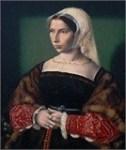

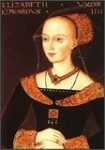
My 17th great-grandmother married well. She is one of the few women in my tree who managed to survive and live a good life after one of her husbands was beheaded for treason at the Tower of London. She married the new king’s uncle to secure her future. She is one of three siblings from her family that are my ancestors on my father’s side.
Katherine Wydeville (1458 – 1525)
is my 17th great grandmother
Edward Richard Buckingham Stafford (1479 – 1521)
son of Katherine Wydeville
Elizabeth Dutchess Norfolk Stafford Howard (1497 – 1558)
daughter of Edward Richard Buckingham Stafford
Lady Katherine Howard Duchess Bridgewater (1495 – 1554)
daughter of Elizabeth Dutchess Norfolk Stafford Howard
William ApRhys (1522 – 1588)
son of Lady Katherine Howard Duchess Bridgewater
Henry Rice (1555 – 1621)
son of William ApRhys
Edmund Rice (1594 – 1663)
son of Henry Rice
Edward Rice (1622 – 1712)
son of Edmund Rice
Lydia Rice (1649 – 1723)
daughter of Edward Rice
Lydia Woods (1672 – 1738)
daughter of Lydia Rice
Lydia Eager (1696 – 1735)
daughter of Lydia Woods
Mary Thomas (1729 – 1801)
daughter of Lydia Eager
Joseph Morse III (1752 – 1835)
son of Mary Thomas
John Henry Morse (1775 – 1864)
son of Joseph Morse III
Abner Morse (1808 – 1838)
son of John Henry Morse
Daniel Rowland Morse (1838 – 1910)
son of Abner Morse
Jason A Morse (1862 – 1932)
son of Daniel Rowland Morse
Ernest Abner Morse (1890 – 1965)
son of Jason A Morse
Richard Arden Morse (1920 – 2004)
son of Ernest Abner Morse
Pamela Morse
I am the daughter of Richard Arden Morse
Catherine Woodville, Duchess of Buckingham
From Wikipedia, the free encyclopedia
Catherine Woodville or Katherine Woodville(c. 1458 – 18 May 1497) was an English medieval noblewoman, best known for her strategic marriages. She was the sister-in-law of King Edward IV of England and gave birth to several illustrious children.
Catherine was the daughter of Richard Woodville, 1st Earl Rivers, and Jacquetta of Luxembourg. When her sister Elizabeth married King Edward IV, the King elevated and promoted many members of the Woodville family. Elizabeth Woodville’s household records for 1466/67 indicate that Catherine was being raised in the queen’s household.
Sometime before the coronation of Elizabeth in May 1465, Catherine was married to Henry Stafford, 2nd Duke of Buckingham; both were still children. A contemporary description of Elizabeth Woodville’s coronation relates that Catherine and her husband were carried on squires’ shoulders. According to Dominic Mancini, Buckingham resented his marriage to a woman of inferior birth. The couple had four children: Her husband Buckingham raised interest for Richard III’s claim to the throne, later they quarreled and hearsay was that it was because of the princes in the tower.
Edward Stafford, 3rd Duke of Buckingham (3 February 1478 – 17 May 1521)
Elizabeth Stafford, Countess of Sussex (ca. 1479 – 11 May 1532)
Henry Stafford, 3rd Earl of Wiltshire (c. 1479 – 6 April 1523)
Anne Stafford, Countess of Huntingdon (c. 1483–1544)
In 1483, Buckingham first allied himself to the Richard, Duke of Gloucester, helping him succeed to the throne as Richard III, and then to Henry Tudor, leading an unsuccessful rebellion in his name. Buckingham was executed for treason on 2 November 1483.
After Richard III was defeated by Henry Tudor at Bosworth in 1485, Catherine married the new king’s uncle Jasper Tudor on 7 November 1485.
After Jasper’s death in 1495 – not later than 24 February 1496, – Catherine married Richard Wingfield, who outlived her.
Depiction in fiction
Catherine is the main protagonist in Susan Higginbotham’s 2010 historical novel The Stolen Crown. She is briefly mentioned in Philippa Gregory’s historical novels The White Queen and The Red Queen.

Katherine Wydeville and Jasper Tudor

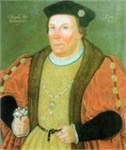
My 16th great-grandfather was beheaded for listening to prophecies of Henry VIII’s death. The king was personally involved in convicting him.
Edward Richard Buckingham Stafford (1479 – 1521)
is my 16th great grandfather
Elizabeth Dutchess Norfolk Stafford Howard (1497 – 1558)
daughter of Edward Richard Buckingham Stafford
Lady Katherine Howard Duchess Bridgewater (1495 – 1554)
daughter of Elizabeth Dutchess Norfolk Stafford Howard
William ApRhys (1522 – 1588)
son of Lady Katherine Howard Duchess Bridgewater
Henry Rice (1555 – 1621)
son of William ApRhys
Edmund Rice (1594 – 1663)
son of Henry Rice
Edward Rice (1622 – 1712)
son of Edmund Rice
Lydia Rice (1649 – 1723)
daughter of Edward Rice
Lydia Woods (1672 – 1738)
daughter of Lydia Rice
Lydia Eager (1696 – 1735)
daughter of Lydia Woods
Mary Thomas (1729 – 1801)
daughter of Lydia Eager
Joseph Morse III (1752 – 1835)
son of Mary Thomas
John Henry Morse (1775 – 1864)
son of Joseph Morse III
Abner Morse (1808 – 1838)
son of John Henry Morse
Daniel Rowland Morse (1838 – 1910)
son of Abner Morse
Jason A Morse (1862 – 1932)
son of Daniel Rowland Morse
Ernest Abner Morse (1890 – 1965)
son of Jason A Morse
Richard Arden Morse (1920 – 2004)
son of Ernest Abner Morse
Pamela Morse
I am the daughter of Richard Arden Morse
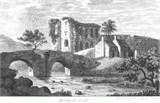
Born
3 February 1478
Brecon Castle, Wales
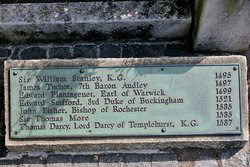
Died
17 May 1521 (aged 43)
Tower Hill
Edward Stafford, 3rd Duke of Buckingham, KG (3 February 1478 – 17 May 1521) was an English nobleman. He was the son of Henry Stafford, 2nd Duke of Buckingham, and Katherine Woodville, whose sister, Queen Elizabeth Woodville, was the wife of King Edward IV. He was convicted of treason, and executed on 17 May 1521.
Edward Stafford, born 3 February 1478 at Brecon Castle in Wales, was the eldest son of Henry Stafford, 2nd Duke of Buckingham, and Katherine Woodville, the daughter of Richard Woodville, 1st Earl Rivers, by Jacquetta of Luxembourg, daughter of Pierre de Luxembourg, Count of St. Pol, and was thus a nephew of Elizabeth Woodville, queen consort of King Edward IV.
By his father’s marriage to Katherine Woodville, Stafford had a younger brother, Henry Stafford, 1st Earl of Wiltshire, and two sisters, Elizabeth, who married Robert Radcliffe, 1st Earl of Sussex, and Anne, who married firstly, Sir Walter Herbert (d. 16 September 1507), an illegitimate son of William Herbert, 1st Earl of Pembroke, and secondly, George Hastings, 1st Earl of Huntingdon.
After the execution of the 2nd Duke of Buckingham, his widow, Katherine Woodville, married Jasper Tudor, second son of Owen Tudor and King Henry V’s widow, Catherine of Valois. After Jasper Tudor’s death on 21 December 1495, Katherine Woodville married Sir Richard Wingfield (d. 22 July 1525). Katherine Woodville died 18 May 1497. After her death, Sir Richard Wingfield married Bridget Wiltshire, daughter and heiress of Sir John Wiltshire of Stone, Kent.
In October 1483 Stafford’s father participated in a rebellion against King Richard III. He was beheaded without trial on 2 November 1483, whereby all his honours were forfeited. Stafford is said to have been hidden in various houses in Herefordshire at the time of the rebellion, and perhaps for the remainder of Richard III’s reign. However after Richard III’s defeat at Bosworth on 22 August 1485, and King Henry VII’s accession to the crown, Stafford was made a Knight of the Order of the Bath on 29 October 1485 as Duke of Buckingham, and attended Henry VII’s coronation the following day, although his father’s attainder was not formally reversed by Parliament until November. The young Duke’s wardship and lands were granted, on 3 August 1486, along with the wardship of his younger brother, Henry Stafford, to the King’s mother, Margaret Beaufort, and according to Davies it is likely Buckingham was educated in her various households.
Buckingham was in attendance at court at the creation of Henry VII’s second son, the future King Henry VIII, as Duke of York, on 9 November 1494, and was made a Knight of the Order of the Garter in 1495. In September 1497 he was a captain in the forces sent to quell a rebellion in Cornwall.
According to Davies, as a young man Buckingham played a conspicuous part in royal weddings and the reception of ambassadors and foreign princes, ‘dazzling observers by his sartorial splendour’. At the wedding of Henry VII’s then eldest son and heir Arthur, Prince of Wales, and Catherine of Aragon in 1501, he is said to have worn a gown worth £1500. He was the chief challenger at the tournament held the following day.
At the accession of King Henry VIII, Buckingham was appointed on 23 June 1509, for the day of the coronation only, Lord High Constable, an office which he claimed by hereditary right. He also served as Lord High Steward at the coronation, and bearer of the crown. In 1509 he was made a member of the King’s Privy Council. On 9 July 1510 he had licence to crenellate his manor of Thornbury, Gloucestershire, and according to Davies rebuilt the manor house as ‘an impressively towered castle’ with ‘huge oriel windows in the living-quarters in the inner court’.
In 1510 Buckingham was involved in a scandal concerning his sister, Anne. After hearing rumours concerning Anne and Sir William Compton, Buckingham found Compton in Anne’s room. Compton was forced to take the sacrament to prove that he and Anne had not committed adultery, and Anne’s husband, George Hastings, 1st Earl of Huntingdon, sent Anne away to a convent 60 miles distant from the court. There is no extant evidence establishing that Anne and Sir William Compton were guilty of adultery. However in 1523 Compton took the unusual step of bequeathing land to Anne in his will, and directing his executors to include her in the prayers for his kin for which he had made provision in his will.
From June to October 1513 Buckingham served as a captain during Henry VIII’s invasion of France, commanding 500 men in the ‘middle ward’. About 1517 he was one of twelve challengers chosen to tilt against the King and his companions, but excused himself on the ground that he feared to run against the King’s person. He and his wife, Eleanor, attended the Field of the Cloth of Gold in 1520.
Although Buckingham was appointed to commissions of the peace in 1514 and charged, together with other marcher lords, with responsibility for keeping order in south Wales, he was rebuked by the King in 1518 for failing to achieve the desired results. According to Davies, in general Buckingham exercised little direct political influence, and was never a member of the King’s inner circle.
Buckingham fell out dramatically with the King in 1510, when he discovered that the King was having an affair with the Countess of Huntingdon, the Duke’s sister and wife of the 1st Earl of Huntingdon. She was taken to a convent sixty miles away. There are some suggestions that the affair continued until 1513. However, he returned to the King’s graces, being present at the marriage of Henry’s sister, served in Parliament and being present at negotiations with Francis I of France and Charles V, Holy Roman Emperor.
Buckingham was one of few peers with substantial Plantagenet blood and maintained numerous connections, often among his extended family, with the rest of the upper aristocracy, which activities attracted Henry’s suspicion. During 1520, Buckingham became suspected of potentially treasonous actions and Henry VIII authorised an investigation. The King personally examined witnesses against him, gathering enough evidence for a trial. The Duke was finally summoned to Court in April 1521 and arrested and placed in the Tower. He was tried before a panel of 17 peers, being accused of listening to prophecies of the King’s death and intending to kill the King. He was executed on Tower Hill on 17 May. Buckingham was posthumously attainted by Act of Parliament on 31 July 1523, disinheriting most of his wealth from his children.
Guy (1988) concludes this was one of the few executions of high personages under Henry VIII in which the accused was “almost certainly guilty”. However Sir Thomas More complained that the key evidence from servants was hearsay.
Buckingham’s literary patronage included two translations, a printed translation of Helyas, Knyghte of the Swanne, which he commissioned in 1512, and A Lytell Cronicle, a translation of an account of the Middle East which he may have commissioned in 1520 in connection with his proposed pilgrimage to Jerusalem.
In 1488 Henry VII had suggested a marriage between Buckingham and Anne of Brittany, but in December 1489 the executors of Henry Percy, 4th Earl of Northumberland, paid the King £4000 for Buckingham’s marriage to Percy’s eldest daughter Eleanor (d. 1530). They had a son and three daughters:
Lord Henry Stafford, 1st Baron Stafford (18 September 1501 – 30 April 1563), who married Ursula Pole, daughter of Sir Richard Pole by his second wife, Margaret, Countess of Salisbury, daughter of George, Duke of Clarence.
Lady Elizabeth Stafford, Duchess of Norfolk (c. 1497 – 30 November 1558), who married, as his second wife, before 8 January 1513, Thomas Howard, 3rd Duke of Norfolk.
Lady Katherine Stafford (c. 1499 – 14 May 1555), who married Ralph Neville, 4th Earl of Westmorland.
Lady Mary Stafford, the youngest daughter, who married, about June 1519, as his third wife, George Neville, 5th Baron Bergavenny.
Buckingham is also said to have had three illegitimate children: George Stafford, Henry Stafford, Margaret Stafford (c. 1511 – 25 May 1537), whom Buckingham married to his ward, Thomas Fitzgerald of Leixlip, half-brother to the Earl of Kildare.

John Vowell Hooker
John Hooker, John Hoker or John Vowell (c. 1527–1601) was an English writer, solicitor, antiquary, civic administrator and advocate of republican government. He wrote an eye-witness account of the siege of Exeter that took place during the Prayer Book Rebellion in 1549. From 1555 to his death he was chamberlain of that city, though he spent several years in Ireland as legal adviser to Sir Peter Carew during his claim to lands there. He was, for short periods, a member of both the Irish and English parliaments and wrote an influential treatise on parliamentary procedure. He was one of the editors of the second edition of Raphael Holinshed’s Chronicles, published in 1587. His last, unpublished and probably uncompleted work was the first topographical description of the county of Devon.
John Vowell Hooker (1526 – 1601)
is my 11th great grandfather
Mary Hooker (1567 – 1617)
daughter of John Vowell Hooker
John (Dr) Greene (1597 – 1659)
son of Mary Hooker
Mary Greene (1633 – 1686)
daughter of John (Dr) Greene
Benoni Sweet (1663 – 1751)
son of Mary Greene
Dr. James Sweet (1686 – 1751)
son of Benoni Sweet
Thomas Sweet (1732 – 1813)
son of Dr. James Sweet
Thomas Sweet (1759 – 1844)
son of Thomas Sweet
Valentine Sweet (1791 – 1858)
son of Thomas Sweet
Sarah LaVina Sweet (1840 – 1923)
daughter of Valentine Sweet
Jason A Morse (1862 – 1932)
son of Sarah LaVina Sweet
Ernest Abner Morse (1890 – 1965)
son of Jason A Morse
Richard Arden Morse (1920 – 2004)
son of Ernest Abner Morse
Pamela Morse
I am the daughter of Richard Arden Morse
Hooker was born at Bourbridge Hall in Exeter, Devon, England. He was the second son of Robert Vowell or Hooker and Agnes Doble, his third wife. The Vowell family had acquired the name Hooker in the 15th century, but usually retained the earlier name; in fact John Hooker was known as John Vowell for much of his life. By the time he was born the family had been prominent in Exeter for several generations. Hooker received an excellent classical education, reading Roman law at Oxford followed by a period in Europe studying with leading Protestant divines, notably Pietro Martire Vermigli.
In the 1540s he married Martha, daughter of Robert Tucker of Exeter and they had three sons and two daughters. By 1586, Martha had died and he had married Anastryce (c. 1540–1599), daughter of Edward Bridgeman of Exeter. They had seven sons and five daughters. In later life his health failed and he died in Exeter some time between 26 January and 15 September in 1601 and was probably buried in the cathedral. He was the uncle of Richard Hooker, the influential Anglican theologian.
“
[I denounce those who chose] to supporte the authoritie of the Idoll of Rome whome they never sawe in contempte of their trewe & lawfull kinge, whom they knewe and oughte to obeye.
”
— Hooker, on the siege of Exeter, in The description of the citie of Excester, 1.67
During the Prayer Book Rebellion in 1549 he experienced at first hand the siege of Exeter, leaving a vivid account of its events in which he made no effort to conceal his religious sympathies. From 1551 to 1553 he was employed by Myles Coverdale during his short incumbency as Bishop of Exeter; and then in 1555 he became the first chamberlain of Exeter, a post that he held until his death.
As chamberlain he was responsible for the city’s finances, he dealt with disputes between guilds and merchants, oversaw the rebuilding of the high school, planted many trees in the city, and collected and put in order the city’s archives. He used these archives to compile his “Annals” of the City in which he details the characteristics of every Tudor mayor of Exeter, and in 1578 he also wrote and published The Lives of the Bishops of Exeter. In 1570/71 he was the MP for Exeter.
At a time when it was deemed essential for cities and nations to have ancient lineage, Hooker described the foundation of Exeter by Corinaeus, nephew of Brutus of Britain, son of Aeneas. He advocated emulating the governmental institutions of the Roman Republic which, in his opinion, brought Rome to greatness, and held the municipal government of Exeter up as a model republican commonwealth worthy of emulation.
Ireland
In 1568, possibly because he regarded himself as underpaid for the work he was doing for the city, Hooker was persuaded by Sir Peter Carew to go with him to Ireland to be his legal adviser. He also organised Carew’s papers in support of his claim for the barony of Idrone, a task to which he committed himself so deeply that in 1569 he was returned to the Irish parliament as member for Athenry. Hooker later wrote a biography of Carew, The dyscourse and dyscoverye of the lyffe of Sir Peter Carew, in which he almost certainly understated the deceit and aggression behind Carew’s Irish venture.
Until Carew’s death in 1575, Hooker spent much time in Ireland, but he had also been returned to the English parliament in 1571 as one of the burgessesof Exeter. The session had only lasted a few weeks, but he kept a journal in which he accurately recorded the proceedings. His experiences in the Irish and English parliaments led him to write a treatise on parliamentary practice, The Order and Usage how to Keepe a Parlement in England, which was published in two editions in 1572. One edition had a preface addressed to William FitzWilliam, the Lord Deputy of Ireland and was clearly intended to bring order to the Irish assembly; the other was addressed to the Exeter city authorities, presumably to aid his successor burgesses. In writing his treatise Hooker took much inspiration from the Modus Tenendi Parliamentum, a treatise from the early 14th century.
In 1586 Hooker again represented Exeter in parliament. At this time he was one of the editors of the second edition of Raphael Holinshed’s Chronicles, which was published in 1587. Hooker’s Order and Usage was included and he contributed an updated history of Ireland, including parts of his Life of Carew and a translation of Expugnatio Hibernica (“Conquest of Ireland”) by Gerald of Wales. In his Irish section he again made his religious and political sympathies very clear, repeatedly denouncing the Catholicism of the native Irish, seeing it as the cause both of their poverty and rebelliousness. Rome, he wrote, is “the pestilent hydra” and the pope “the sonne of sathan, and the manne of sinne, and the enimie unto the crosse of Christ, whose bloodthirstiness will never be quenched”.
Later life
“
a verye ancient towne … and maye be equall with some cities for it is the cheffe emporium of that countrie and most inhabited with merchantes whose cheffest trade in tyme of peace was with Spayne … it is a clene and sweete towne, very well paved…
”
— Hooker, on Barnstaple, in Synopsis Corographical, 261-262
Hooker continued to serve Exeter in his later years, becoming coroner in 1583 and recorder in 1590. He was also appointed as steward of Bradninch by Sir Walter Raleigh in 1587.[1] By this time he was involved in the long task of organising and writing his historically-based description of his home county that he called Synopsis Corographical of the county of Devon. He probably started work on this before his friend Richard Carew began writing his similar Survey of Cornwall.[2]In writing his Synopsis, Hooker was influenced by the style and structure of William Harrison’sDescription of England, which had been published in 1577 as part of the first edition of Holinshed’sChronicles.[1]
Although Hooker revised Synopsis many times, he probably never completed it to his satisfaction. The work exists today as two almost identical manuscripts which were used as source material for many later topographical descriptions of the county: Thomas Westcote’s Survey of Devon of 1630, and Tristram Risdon’s Chorographical Description or Survey of the County of Devon (c. 1632) are examples.
Works
Orders Enacted for Orphans and for their Portions within the Citie of Exeter, London, 1575
The Antique Description and Account of the City of Exeter: In Three Parts, All Written Purely by John Vowell, Alias Hoker
The order and usage of the keepingng of a parlement in England, 1572
A pamphlet of the offices and duties of everie particular sworned officer of the citie of Excester (sic) 1584
The Life and Times of Sir Peter Carew

Constance VonHohenstaufen
My 21st great-grandmother was born in Sicily and died in Barcelona. Her grandfather was Holy Roman Emperor. Her husband died so she became a nun, as many of the queen consorts did. I think it was the only safe place to be. She is buried in Barcelona Cathedral, with some of my other ancestors, in a royal urn.

urns Barcelona Cathedral
After her original interment Constance was moved to Urns containing the bodies of multiple nobles. Urns Barcelona Cathedral with the remains of: In the other box: – Alphonse Franc, Count of Barcelona and King of Aragon – Jaume d’Urgell, Count of Urgell and Frederick of Aragon, both sons of en: Alphonse Benign In the other: – Constance of Sicily, wife of en: Peter the Great – Cyprus Maria, wife of en: James the Just – Sybil Fort, fourth wife of en: Peter of Aragon – Eleanor of Aragon (+1416), second wife of en: Peter I of Cyprus, King of Cyprus and Jerusalem. The sculptures are by Frederic Seas
Constance of Sicily Queen consort of Aragon, Sicily, and Valencia; Countess consort of Barcelona Tenure 1276–1285 Spouse Peter III of Aragon
Issue Alfonso III of Aragon
James II of Aragon
Elisabeth, Queen of Portugal
Frederick III of Sicily
Yolanda, Duchess of Calabria
Pedro of Aragon House Hohenstaufen Dynasty (by birth)
House of Aragon (by marriage) Father Manfred of Sicily Mother Beatrice of Savoy Born 1249
Sicily Died 9 April 1302 (aged 52 or 53)
Barcelona, Spain Burial Cathedral of Santa Eulalia, Barcelona
Constance (or Constantia) (1249 – 9 April 1302) was the Queen consort of Peter III of Aragon.
Family
She was the only daughter of Manfred of Sicily and his first wife Beatrice of Savoy. Her paternal grandparents were Frederick II, Holy Roman Emperor and his mistress Bianca Lancia. Her maternal grandparents were Amadeus IV of Savoy and his first wife Anne of Burgundy.
Marriage
On 13 June 1262, Constantia married Prince Peter of Aragon, eldest son of James I of Aragon and his second wife Violant of Hungary.
Manfred was killed in the Battle of Benevento (26 February 1266) while fighting against his rival Charles of Anjou, son of Louis VIII of France and Blanche of Castile. As his eldest daughter she could be considered his heiress but did not pursue her claim at this time.
James I died on 27 July 1276 and Peter succeeded to the throne. Constance became his Queen consort. With the War of the Sicilian Vespers (1282–1302), at first Peter and then their sons claimed the throne of Sicily in her right. The War resulted in the partition of the Kingdom of Sicily to the “Kingdom of Trinacria” (the island of Sicily) under her descendants and the Kingdom of Naples under the descendants of Charles of Anjou.
Peter III died on 2 November 1285 and Constantia remained a widow. She ended her days as a nun in Barcelona.
Children
Constantia and Peter III of Aragon had six children:
Alfonso III of Aragon (1265 – 18 June 1291).
James II of Aragon (10 August 1267 – 2 November 1327).
Elizabeth of Aragon (1271 – 4 July 1336). Married Denis of Portugal.
Frederick III of Sicily (13 December 1272 – 25 June 1337).
Yolanda of Aragon (1273 – August, 1302). Married Robert of Naples.
Infante Pedro of Aragon (1275 – 25 August 1296). Married Guillemette of Béarn, daughter of Gaston VII of Montcada, Viscount of Béarn.
Constantia’s ancestors in three generations Constantia of Sicily Father:
Manfred of Sicily Paternal Grandfather:
Frederick II, Holy Roman Emperor Paternal Great-grandfather:
Henry VI, Holy Roman Emperor Paternal Great-grandmother:
Constance of Sicily Paternal Grandmother:
Bianca Lancia Paternal Great-grandfather:
Unknown Paternal Great-grandmother:
Unknown Mother:
Beatrice of Savoy Maternal Grandfather:
Amadeus IV of Savoy Maternal Great-grandfather:
Thomas I of Savoy Maternal Great-grandmother:
Marguerite of Geneva Maternal Grandmother:
Anne of Burgundy Maternal Great-grandfather:
Hugh III, Duke of Burgundy Maternal Great-grandmother:
Béatrice of Albon
Constance of Sicily, Queen of Aragon
House of Hohenstaufen
Born: circa 1249 Died: 9 April 1302 Royal titles Preceded by
Teresa Gil de Vidaure Queen consort of Aragon
1276–1285 Succeeded by
Isabella of Castile Countess consort of Barcelona, Girona, Osona and Besalú
1276–1285 Queen consort of Valencia
1276–1285 Preceded by
Margaret of Burgundy Queen consort of Sicily
1282–1285 Succeeded by
Isabella of Castile [edit] External links
A listing of descendants of the Hohenstaufen Dynasty
Constance VonHohenstaufen (1249 – 1302)
is my 21st great grandmother
Isabella Pedra Aragon (1271 – 1336)
daughter of Constance VonHohenstaufen
Alphonso Dinisez Portugal (1290 – 1357)
son of Isabella Pedra Aragon
Peter I Portugal Cruel Algarve (1320 – 1367)
son of Alphonso Dinisez Portugal
John I DePinto (1358 – 1433)
son of Peter I Portugal Cruel Algarve
Beatrix DePinto (1403 – 1447)
daughter of John I DePinto
John Fettiplace (1427 – 1464)
son of Beatrix DePinto
Richard Fettiplace (1460 – 1511)
son of John Fettiplace
Anne Fettiplace (1496 – 1567)
daughter of Richard Fettiplace
Mary Purefoy (1533 – 1579)
daughter of Anne Fettiplace
Susanna Thorne (1559 – 1586)
daughter of Mary Purefoy
Gov Thomas Dudley (1576 – 1653)
son of Susanna Thorne
Anne Dudley (1612 – 1672)
daughter of Gov Thomas Dudley
John Bradstreet (1652 – 1718)
son of Anne Dudley
Mercy Bradstreet (1689 – 1725)
daughter of John Bradstreet
Caleb Hazen (1720 – 1777)
son of Mercy Bradstreet
Mercy Hazen (1747 – 1819)
daughter of Caleb Hazen
Martha Mead (1784 – 1860)
daughter of Mercy Hazen
Abner Morse (1808 – 1838)
son of Martha Mead
Daniel Rowland Morse (1838 – 1910)
son of Abner Morse
Jason A Morse (1862 – 1932)
son of Daniel Rowland Morse
Ernest Abner Morse (1890 – 1965)
son of Jason A Morse
Richard Arden Morse (1920 – 2004)
son of Ernest Abner Morse
Pamela Morse
I am the daughter of Richard Arden Morse

Constance of Sicily Queen consort of Aragon


My 13th great-grandfather was an English judge who, in 1593, rose to the top position of Lord Chief Baron of the Exchequer and was knighted by Queen Elizabeth I. He was one of the judges who tried Mary Queen of Scots in 1586, and was involved in several other big treason trials of the age and was given the office of Chief Baron of the Exchequer in 1593. He was a Governor of Crediton Church and twice church warden. educated in Exeter and then at Exeter College, Oxford where on 25 April 1551 he was elected fellow. He resigned his fellowship some months later and went to London where he eventually studied law at the Middle Temple, being called to the bar in 1565. A slight wobble in his career occurred in 1568 when, after being summoned to Ireland by Sir Peter Carew to help him prosecute an ultimately successful claim to an Irish barony, he received an unexpected appointment as judge under the prospective President of Munster, Sir John Pollard. By writing to Sir William Cecil and earnestly petitioning the Privy Council, mentioning his wife and children and delicate state of health, he seems to have been able to avoid the transfer to Ireland altogether. Thereafter his rise through the legal ranks was steady—in 1575 he became serjeant-at-law for the Michaelmas term, and on 13 February 1581, a Judge of the Common Pleas. The ultimate honor came in January 1593, when he was promoted to Lord Chief Baron of the Exchequer, and knighted.
William Periam (1534 – 1604)
is my 13th great grandfather
John Periam (1510 – 1573)
son of William Periam
Mary Periam (1531 – 1552)
daughter of John Periam
Robert Sweet (1552 – 1578)
son of Mary Periam
John Issac Sweet (1579 – 1637)
son of Robert Sweet
James Sweet (1622 – 1695)
son of John Issac Sweet
Benoni Sweet (1663 – 1751)
son of James Sweet
Dr. James Sweet (1686 – 1751)
son of Benoni Sweet
Thomas Sweet (1732 – 1813)
son of Dr. James Sweet
Thomas Sweet (1759 – 1844)
son of Thomas Sweet
Valentine Sweet (1791 – 1858)
son of Thomas Sweet
Sarah LaVina Sweet (1840 – 1923)
daughter of Valentine Sweet
Jason A Morse (1862 – 1932)
son of Sarah LaVina Sweet
Ernest Abner Morse (1890 – 1965)
son of Jason A Morse
Richard Arden Morse (1920 – 2004)
son of Ernest Abner Morse
Pamela Morse
I am the daughter of Richard Arden Morse
Crediton Parish Church
Sir William Peryam
1534 – 1604Introduction
On the north side of the chancel of the church (on the left-hand side, looking towards the altar), is the big tomb of Sir William Peryam, an important individual both in local and national terms in the last years of the reign of Elizabeth I. Peryam was one of the judges who tried Mary Queen of Scots in 1586, was involved in several other big treason trials of the age and was given the office of Chief Baron of the Exchequer in 1593. He was a Governor of Crediton Church and twice church warden; he bought the estate of Little Fulford, east of Crediton in the 1580′s and built a manor house there, the estate being renamed Shobroke Park in the early eighteen-hundreds.
The Tomb
The tomb shows the judge reclining, his head arms propped up with his right hand, beneath him the seven ladies of his life – his three wives and four daughters (he had no sons); above him are the Peryam arms.
Family
William Peryam was born in Exeter in 1534, second son of John and Elizabeth Peryam. His family was a well-connected one, he was a cousin of Sir Thomas Bodley, founder of the famous Bodlean Library in Oxford. His father was a man of means and was twice mayor of Exeter (he died during his second term of office in 1572).William’s brother, John, was also twice mayor of the city and was in office when the Spanish Armada appeared off Devon in 1588.
Education & Career
William Peryam was educated at Exeter College, Oxford, where he was elected fellow in 1551 at the age of 17.
A Lawyer Still Quoted Today
In 1553 he was admitted to the Middle Temple and was one of Plymouth’s MP’s from 1562 until 1567, being called to the bar whilst at Westminster – the duties the average backbencher weren’t particularly arduous in Tudor times! His arms, which can be seen at the top of the tomb, are still to be found in the hall of the Middle Temple. There are records of his involvement in some mid-Devon cases around the time of he became a QC; in one (1566) he became a trustee of the locally important Dowrish estate in Sandford. In 1568 he was appointed as a justice in Ireland, serving Sir John Pollard, President of Munster. Quite a lot of correspondence from his time in Ireland survives in State Papers. An amusing letter tells of his reluctance to return to Ireland without Sir John, who was suffering from gout. Also on record from this time is the successful attempt he made (with the help of John Hooker, the Exeter antiquary) in 1569, to reclaim the Barony of Odrone on behalf of Sir Peter Carew – from whose family he was to buy his land in Crediton ten years later. He was made a serjeant-at-law in Michaelmas term of 1579 and in February 1581 was appointed a Judge of the Court of Common Pleas. In 1586 he was one of the judges at the trial of Mary Queen of Scots . When Sir Christopher Hatton retired from office in 1591, Peryam was named as one of the Judges of the Chancery Court and during the last two decades of the sixteenth century and the first years of the seventeenth was involved in a number of “show” trials of State offenders including, among others, those of the Earl of Arundel (originally imprisoned in 1585 for helping Mary, then accused of having a mass said in support of the Armada in the Chapel of the Tower of London in 1588 and tried for, and found guilty of, treason – although the death sentence was never carried out, in 1589), Sir John Perrot (tried and found guilty for what could be described as “mild” treason in 1592, but not executed) and that of the Earl of Essex (found guilty of treason for organising an attempted coup; he was tried and executed in 1601). The precedents Peryam set and legal decisions made in these and other cases are still quoted in the legal textbooks. In 1593 Peryam was appointed Chief Baron of the Exchequer, where he presided for twelve years. He received the knighthood which was usual with that office.
Peryam’s Death
He died at Fulford Park on 9th October, 1604. The date of his death is shown on his tomb inscription as 1605. It seems likely that the tomb was erected as many as fifteen years after his death (ie during the lifetime of his widow), by which time her memory may have been fading a little because, although the Parish Registers for 1603 – 7 are missing from the Devon Record Office, papers in the National Archive clearly show that the grant of his office of Chief Baron of the Exchequer was made void on October 9th, 1604, so the earlier date of death should be taken as the valid one.
Wives
Peryam married three times. His first wife was Margery, daughter of John Holcot of Berkshire; there were no children of this marriage.
His second wife was Anne, daughter of John Parker of North Molton by whom he had four daughters, Mary, Elizabeth, Jane and Anne who all married “well”.
His last wife was Elizabeth, a daughter of Sir Nicholas Bacon (a fellow government law officer) – who outlived William by twenty years. She was related by marriage to William Cecil, Lord Burghley – in fact, Peryam was related either directly, or by marriage, to many court figures of Elizabeth’s reign.
Shobroke & Holy Cross
Peryam had bought Little Fulford, or Fulford Park (which became Shobroke Park) from Sir Richard Carew in the early 1580′s and had constructed “a fayre dwelling house” there – a predecessor of the Georgian house which was burnt down in the 1940′s. He left the house and the estate to his daughters who sold it to his brother, Sir John Peryam. He in turn sold it to the Tuckfields, whose descendants, the Shelleys, still own the estate. Peryam was a churchwarden of Holy Cross in 1589 and 1600 and was also a Governor. In 1578 he leased a manor in Sidmouth from Sir Walter Raleigh and his two sons, Carew and Walter The document still survives in the Devon Record Office. It is carefully preserved because the signatures of the Raleighs are on it! That house is now the Woodlands Hotel in Sidmouth, which, although it was substantially altered in the early nineteenth century, preserves much of the Elizabethan fabric. His widow, Elizabeth, endowed a fellowship and two scholarships in his name in Balliol College, Oxford in 1620. William Peryam’s only sibling, his brother, John, also had a very distinguished career. He was mayor of Exeter in 1587/8 and in 1598/9. Also knighted, he was a liberal benefactor to the city and to Exeter College, Oxford – and his widow endowed fellowships and scholarships to that college A panel portrait of an enrobed Sir William hangs in the National Portrait Gallery.
He can be found buried with his family. The inscription on his elaborate tomb says:
Heere lyeth the body of Sr. William Peryam, knight, who in AD 1579 was made one of the justices of the Court of Comon Pleas & from thence in AD 1592 was called to bee Lord Cheefe Baron of the Exchequer. He married first Margery daughter & heir of Jo(hn) Holcott of Berk(shire) Esqr. widow of Richadr(sic) Hutchenson of Yorksheire Esqr.; secondly Anne daughter of John Parker of Devon Esqr.; lastly Elizabeth daughter of Sr. Nic(holas) Bacon knig. Lord Keeper of the Great Seale. Hee hadd only yssue by his second wife, 4 daughters & heires, viz, Mary theldest (sic) married to Sr. Will(iam) Pole of Devon knig.; Elizabeth the 2 married to Sr. Ro(bert) Bassett of Devon knig.; Jane the 3 first married to Thomas Poyntz Esqr. son & heir of Sr. Gabriell Poyntz of Ess(ex) knig.; afterward to Tho(mas) Docwra of Hertf(ordshire) Esqr.; Anne the youngest married to Will(iam) Williams Esq. son & heir of Sr. Jo(hn) Williams of Dorsett knig. All wch. his daughters & heirs have yssu now lyvinge by their severall husbands. He dyed 9 octo(ber) Ao.Do. 1605 (sic) in the 70the yeere of his age much & worthely reverenced for his religeous zeale, integrity & profound knowledge in the lawes of the realme. Dormit non est mortuus (he sleeps, he is not dead).
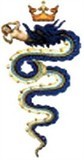
Visconti Coat of Arms
Coat of Arms of the Visconti of Milan depicting the biscione, a serpent who appears to be swallowing a human.
The effectual founder of the Visconti of Milan, Ottone, wrested control of the city from the rival Della Torre family in 1277.
The family, once risen to power, loved to claim legendary versions about its origins. Fancy genealogies were en vogue at the time, while established facts reflect quite sober and almost humble beginnings in the lesser nobility. The branch of the Visconti family that came to rule Milan was originally entrusted with the lordship of Massino (nowadays Massino Visconti), a hamlet in lovely position over Lago Maggiore, where they were in charge since the twelfth century as archiepiscopal vassals.
It is thought that the Milanese Visconti had their origins in a family of capitanei (cfr. the modern surname Cattaneo) whom archbishop Landulf of Milan (978-998) had granted certain feudal holdings known as caput plebis (at the head, likely in geographical and not hierarchical sense, of the pieve, an ecclesiastical lesser subdivision). A document from the year 1157 says the Visconti were holders of the captaincy of Marliano (today Mariano Comense); late chronicler Galvano Fiamma confirms this version. Decades before that, surely before 1070, they had gained the public office of viscount, to be later inherited down the male line (Biscaro, ASL, “I maggiori dei Visconti di Milano”). Soon the family dispersed into several branches, some of which were entrusted fiefs far off from the Lombard metropolis; the one which gave the Medieval lords of Milan is said to be descended from Umberto (d. in the first half of the 12th century).
The Visconti ruled Milan until the early Renaissance, first as Lords, then, from 1395, with the mighty Gian Galeazzo who almost managed to unify Northern Italy and Tuscany, as Dukes. Visconti rule in Milan ended with the death of Filippo Maria Visconti in 1447. He was succeeded, after a short-lived republic, by his son-in-law Francesco I Sforza, who established the reign of the House of Sforza.
Visconti rulers of Milan
Ottone Visconti, Archbishop of Milan (1277 – 1294)
Matteo I Visconti (1294 – 1302; 1311 – 1322)
Galeazzo I Visconti (1322 – 1327)
Azzone Visconti (1329 – 1339)
Luchino I Visconti (1339 – 1349)
Bernabò Visconti (1349 – 1385)
Galeazzo II Visconti (1349 – 1378)
Matteo II Visconti (1349 – 1355)
Gian Galeazzo Visconti (1378 – 1402) {1st Duke of Milan & nephew of Bernabò Visconti}
Giovanni Maria Visconti (1402 – 1412)
Giacomo Visconti (1412 – 1447)

Obizzo Visconti
Obizzo Visconti (1198 – 1266)
is my 22nd great grandfather
Theobald Visconti (1220 – 1276)
son of Obizzo Visconti
Matteo I Visconti (1250 – 1322)
son of Theobald Visconti
Stefan Visconti (1289 – 1327)
son of Matteo I Visconti
Bernabo Lord Milan di Visconti (1319 – 1385)
son of Stefan Visconti
Veridis Duchess Austria Visconti (1352 – 1414)
daughter of Bernabo Lord Milan di Visconti
Ernst I “Ironside” Archduke of Austria Habsburg (1377 – 1424)
son of Veridis Duchess Austria Visconti
Katharina Archduchess Austria Von Habsburg (1420 – 1493)
daughter of Ernst I “Ironside” Archduke of Austria Habsburg
Christof I VanBaden (1453 – 1527)
son of Katharina Archduchess Austria Von Habsburg
Beatrix Zahringen (1492 – 1535)
daughter of Christof I VanBaden
Sabine Grafin VonSimmern (1528 – 1578)
daughter of Beatrix Zahringen
Marie L Egmond (1564 – 1584)
daughter of Sabine Grafin VonSimmern
Richard Sears (1590 – 1676)
son of Marie L Egmond
Silas Sears (1638 – 1697)
son of Richard Sears
Silas Sears (1661 – 1732)
son of Silas Sears
Sarah Sears (1697 – 1785)
daughter of Silas Sears
Sarah Hamblin (1721 – 1814)
daughter of Sarah Sears
Mercy Hazen (1747 – 1819)
daughter of Sarah Hamblin
Martha Mead (1784 – 1860)
daughter of Mercy Hazen
Abner Morse (1808 – 1838)
son of Martha Mead
Daniel Rowland Morse (1838 – 1910)
son of Abner Morse
Jason A Morse (1862 – 1932)
son of Daniel Rowland Morse
Ernest Abner Morse (1890 – 1965)
son of Jason A Morse
Richard Arden Morse (1920 – 2004)
son of Ernest Abner Morse
Pamela Morse
I am the daughter of Richard Arden Morse
OBIZZO Visconti (-after 1258). m FIORINA Mandelli, daughter of RUFFINO Mandelli & his wife Aldesia Pietrasanta. Obizzo & his wife had two children:
a) TIBALDO Visconti (-beheaded Gallarate 1276). The Annales Mediolanenses record that “Archiepiscopum Ottonem…Tibaldi nepotis sui” was beheaded “in Galerate” in 1276 . m ANASTASIA Pirovano, niece of Cardinal Uberto Pirovano Archbishop of Milan, daughter of — (-1276, bur [Milan San Eustorgio]). The primary source which confirms her parentage and marriage has not yet been identified. Tibaldo & his wife had [four] children:
i) MATTEO [I] Visconti (Invorio 15 Jul 1250-Crescenzago 28 Jun 1322). Giovanni di Musso´s Chronicon Placentinum records that “Dominus Mafæus Vicecomes nepos Domini Ottonis Vicecomitis Archiepiscopi Mediolani” was installed as “Populi Mediolani Capitaneus” in 1287 and shortly after as “Dominus Generalis civitatis Mediolani” . Lord of Milan.
– see below.
ii) UBERTO Visconti (-22 Apr 1315, bur Milan Dominican Church). The Annales Mediolanenses record the death in 1315 of “Nobilis Miles Ubertus Vicecomes frater magni Matthæi Vicecomitis” and his burial “in conventu Fratrum Prædicatorum”.
iii) [STEFANO Visconti (-1327, bur Milan San Eustorgio). The Annales Mediolanenses record the death in 1327 of “nobilis Miles Stephanus Vicecomes” and his burial “apud Sanctum Eustorgium cum matre sua” . The source does not specify Stefano´s parentage but it is possible that he was another otherwise unrecorded brother of Matteo [I] Visconti Lord of Milan.]
iv) [OTTORINO Visconti ([12/14] Oct 1336, bur Milan San Eustorgio). The Annales Mediolanenses record the death in 1336 of “nobilis Miles Ottorinus Vicecomes” and his burial “in ecclesia Sancti Eustorgii” 15 Oct. His place of burial suggests that Ottorino may have been the brother of Stefano Visconti.]
b) PIETRO Visconti (-after 1301). The Annales Mediolanenses record that “Petrus Vicecomes Dominus Seprii et frater patris Matthæi” rebelled against “Matthæum Vicecomitem Dominum civitatis Mediolani” in 1301 but was captured and held “in castro de Serezano” . m —. The name of Pietro´s wife is not known. Pietro & his wife had one child:
i) daughter . Her parentage and marriage are confirmed by the Annales Mediolanenses which record that “Petrus Vicecomes Dominus Seprii et frater patris Matthæi” incited “Ruscam Dominum civitatis Cumanæ generum suum” to rebel against Matteo [I] Visconti Lord of Milan in 1301, the succeeding passage recording “Conradus Rusca Dominus civitatis Cumanæ” among the rebels . m CORRADO “Rusca” Signore di Cuma, son of — (-after 1301).

coat of arms
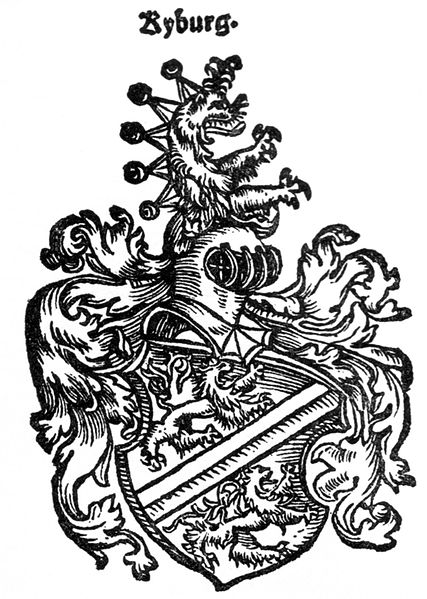
Grafen von Kyburg
Ulrich X von Kyburg* (1162 – 1227)
is my 22nd great grandfather
Hedwige VonKyburg (1192 – 1260)
daughter of Ulrich X von Kyburg*
Rudolf IV King of Germans, Holy Roman Emperor Habsburg (1218 – 1291)
son of Hedwige VonKyburg
Albert I King of Germany Habsburg (1248 – 1308)
son of Rudolf IV King of Germans, Holy Roman Emperor Habsburg
Albrecht Albert II ‘The Wise’ Duke of Austria Habsburg (1298 – 1358)
son of Albert I King of Germany Habsburg
Leopold III “Duke of Austria” Habsburg (1351 – 1386)
son of Albrecht Albert II ‘The Wise’ Duke of Austria Habsburg
Ernst I “Ironside” Archduke of Austria Habsburg (1377 – 1424)
son of Leopold III “Duke of Austria” Habsburg
Katharina Archduchess Austria Von Habsburg (1420 – 1493)
daughter of Ernst I “Ironside” Archduke of Austria Habsburg
Christof I VanBaden (1453 – 1527)
son of Katharina Archduchess Austria Von Habsburg
Beatrix Zahringen (1492 – 1535)
daughter of Christof I VanBaden
Sabine Grafin VonSimmern (1528 – 1578)
daughter of Beatrix Zahringen
Marie L Egmond (1564 – 1584)
daughter of Sabine Grafin VonSimmern
Richard Sears (1590 – 1676)
son of Marie L Egmond
Silas Sears (1638 – 1697)
son of Richard Sears
Silas Sears (1661 – 1732)
son of Silas Sears
Sarah Sears (1697 – 1785)
daughter of Silas Sears
Sarah Hamblin (1721 – 1814)
daughter of Sarah Sears
Mercy Hazen (1747 – 1819)
daughter of Sarah Hamblin
Martha Mead (1784 – 1860)
daughter of Mercy Hazen
Abner Morse (1808 – 1838)
son of Martha Mead
Daniel Rowland Morse (1838 – 1910)
son of Abner Morse
Jason A Morse (1862 – 1932)
son of Daniel Rowland Morse
Ernest Abner Morse (1890 – 1965)
son of Jason A Morse
Richard Arden Morse (1920 – 2004)
son of Ernest Abner Morse
Pamela Morse
I am the daughter of Richard Arden Morse
ULRICH von Dillingen und Kiburg, son of HARTMANN [III] Graf von Dillingen und Kiburg & his wife Richenza von Lenzburg (-1227, bur Schänis). Graf von Kiburg. Crusader 1190. Vogt von Schänis, Beromünster und Glarus 1212. “…Ulricus comes de Kiburc et filii eius Wernerus et Hardemannu…” witnessed a charter of Friedrich II King of Germany dated 31 Mar 1213 [393].
m ANNA von Zähringen, daughter of BERTHOLD IV Herzog von Zähringen & his first wife Heilwig [von Froburg] (-after 1226). The Chronicle of Alberic de Trois-Fontaines names “ducem Bertoldum…et duas sorores” as children of “ducem Bertoldum” & his wife, specifying that the younger daughter was “comitissa Kiburgensis” and had many children [394]. This is confirmed by the charter dated 1226 under which “Haimonem dominum de Fucignie” reached an agreement with the bishop of Lausanne concerning the advocacy of the church of Lausanne, which Aimon claimed had been granted by “comitibus de Ciburc”, which names “comitibus de Kibor Vuernerio et Armanno…quia filii erant sororis Bertoldi ducis Faringie” [395].
Graf Ulrich & his wife had six children:
1. WERNER [I] (-Acre 1228). “…Ulricus comes de Kiburc et filii eius Wernerus et Hardemannu…” witnessed a charter of Friedrich II King of Germany dated 31 Mar 1213 [396]. The contract of marriage between “Thomas comes Savoyæ…filiam suam Margaritham…infra nubiles annos” and “comiti Hartmanno filio comitis Ulrici de Kyburg” is dated 1 Jun 1218, stating that “Dni Bertholdi comitis de Novocastro et Dni Wilhelmi de Stavayé” acted as guarantors, and with the consent of “Ulricus comes de Kyburg et comes Garnerius frater eius et comitissa uxor comitis de Kyburg” [397]. His parentage is confirmed by the charter dated 1226 under which “Haimonem dominum de Fucignie” reached an agreement with the bishop of Lausanne concerning the advocacy of the church of Lausanne, which Aimon claimed had been granted by “comitibus de Ciburc”, which names “comitibus de Kibor Vuernerio et Armanno…quia filii erant sororis Bertoldi ducis Faringie” [398]. Graf von Kiburg. m as her first husband, ALIX [Bertha] de Lorraine, daughter of FERRY II Duke of Lorraine & his wife Agnes de Bar (-[Apr/29 Sep 1242], bur Clairlieu). The Chronicle of Alberic de Trois-Fontaines names “Aaliz relictam comitis Kyburgensis sororem ducis Lotharingie Mathei” when recording her second marriage to “Galtherus de Vangionis Rivo…filius Galtherius” [399]. She married secondly (before Nov 1229) Gautier [II] Sire de Vignory. Graf Werner [I] & his wife had three children:
a) HARTMANN [V] (-3 Sep 1263, bur Wettingen). Graf von Kiburg. Seigneur de Fribourg. The Community of “Uriburt” promised to observe the donation by “Conte Hartmano di Kibourg” with the consent of “Conte Hartmano Giuniore” to “Dama Margarita Moglie del detto Conte H. Seniore” by charter dated 1241 [400]. The necrology of Wettingen records the death “III Non Sep 1263” of “Hermannus com iunior de Kiburg et Anna uxor eius” [401]. The index of benefactors of Wettingen records the death in 1263 of “Hartmannus com de Kiburg iunior…benefactor” and his burial “apud sacellum beatæ Mariæ Virginis” [402]. The necrology of Fraubrunnen records the death “IV Non Sep” of “Graf Hartman der jünger” [403]. m firstly (before 9 Feb 1248) ANNA von Rapperswil, daughter of RUDOLF II [VIII] Graf von Rapperswil (-30 May 1253). The necrology of Wettingen records the death “III Kal Jun” of “domina Anna de Kiburg”, recalled in the later entry “III Non Sep 1263” of “Hermannus com iunior de Kiburg et Anna uxor eius” [404]. m secondly (contract 27 Jan 1254) ELISABETH de Chalon, daughter of HUGUES de Chalons Sire de Salins Comte Palatin de Bourgogne & his wife Alix von Andechs-Merano Ctss Palatine de Bourgogne (-9 Jul 1275). The primary source which confirms her parentage and marriage has not yet been identified. She became a Clarissan nun at Freiburg. Graf Hartmann [V] & his first wife had one child:
i) WERNER (-after 4 Jun 1253).
Graf Hartmann [V] & his second wife had two children:
ii) ANNA . The charter dated 1263, under which the town of Fribourg placed itself under the protection of “Dominum Comitem Rudolfum de Habisburg Landgravium Alsatie” also names “Anna ipsius domini neptis, domina nostra, quondam filia…domini nostri comitis Hartmanni junioris de Kyburgo” [405]. Dame de Fribourg. “Anna quondam filia comitis…Hartmanni de Kiburgo junioris et…Eberhardus comes de Habisburg maritus eiusdem domine” confirmed the privileges of the town of Fribourg by charter dated Mar 1275 [406]. “Domini…Eberhardi comitis de Habsburch et…dominæ…Annæ uxoris suæ” confirmed the donation to the abbey of Frienisberg by “Petrus de Viviers” by charter dated Oct 1275 [407]. The necrology of Fraubrunnen records the death “XII Kal Dec” of “Frow Anna gräfin von Kiburg” [408]. m ([30 Oct/12 Dec] 1271) EBERHARD Graf von Habsburg-Laufenburg, son of RUDOLF I “der Schweigsame” Graf von Habsburg-Laufenburg & his wife Gertrud von Regensberg (-1284, before 2 Jun). Graf von Kiburg.
iii) son (posthumously 1264-before 7 Feb 1265).
b) CLEMENTIA . 1248/49. m firstly RUDOLF [I] Graf von Montfort (-[Oct 1244/1247]). m secondly — Graf von Hohenberg .
c) ADELHEID . 1258. m (before 29 Sep 1242) FRIEDRICH [III] Graf von Leiningen in Dagsburg und Hardenburg, son of FRIEDRICH [II] Graf von Leiningen & his wife Agnes von Eberstein (-1287).
2. HARTMANN [III] (-27 Nov 1264, bur Wettingen). “…Ulricus comes de Kiburc et filii eius Wernerus et Hardemannu…” witnessed a charter of Friedrich II King of Germany dated 31 Mar 1213 [409]. His parentage is confirmed by the charter dated 1226 under which “Haimonem dominum de Fucignie” reached an agreement with the bishop of Lausanne concerning the advocacy of the church of Lausanne, which Aimon claimed had been granted by “comitibus de Ciburc”, which names “comitibus de Kibor Vuernerio et Armanno…quia filii erant sororis Bertoldi ducis Faringie” [410]. Graf von Kiburg. The necrology of Wettingen records the death “V Kal Dec 1262” of “com Hartmannus senior de Kiburg” [411]. m (contract Mouden 1 Jun 1218) MARGUERITE de Savoie, daughter of THOMAS I Comte de Savoie & his wife Marguerite [Beatrix] de Genève (1212-1/2 Sep 1270 or 1273 [412]). The contract of marriage between “Thomas comes Savoyæ…filiam suam Margaritham…infra nubiles annos” and “comiti Hartmanno filio comitis Ulrici de Kyburg” is dated 1 Jun 1218, stating that “Dni Bertholdi comitis de Novocastro et Dni Wilhelmi de Stavayé” acted as guarantors, and with the consent of “Ulricus comes de Kyburg et comes Garnerius frater eius et comitissa uxor comitis de Kyburg” [413]. Her marriage date is confirmed by the charter dated 1230 under which her husband “H. comes de Kiburch” confirmed donations “propter nuptias uxori sue filie comitis Sabaudie”, with the consent of “fratris sui Ul. Constantiensis canonici et H. filii fratris sui beate memorie Wer. quondam comitis de Kiburch” [414]. The Chronicon Colmarense records that “comes…[Kiburc]” married “filiam comitis de Sabaudia” [415]. “Amedeus comes Sabaudie et marchio Italie” granted “castrum…Monteys” {Montheys} to “sorori mee Margarete comitisse de Kiborch” by charter dated 16 Oct 1239 [416]. “Amedeus comes Sabaudie et in Italie marchio…cum…genetrice sua et fratribus suis B. Bellicensi Electo et Philippo Metensi Primicerio” granted “villam S. Mauritii de Chablaisio” {Saint-Maurice de Chablais} to “soror illorum Margareta comitissa de Kiborch” by charter dated 24 Feb 1240 [417]. “H. comes de Kyburch” granted “castra Windegge, Oltingen…advocatiam et predium in Shennis, Wizennanc et Kemanatvn” to “uxori mee” by way of dower, with the consent of “fratruelis mei H”, by charter dated 28 May 1241 [418]. The same collection includes several other charters relating to this grant, dated between 9 Jul 1241 and 1243 [419]. Her parentage is confirmed by the 1264 testament of her brother Boniface [420]. According to Europäische Stammtafeln [421], Marguerite de Savoie married secondly Eberhard von Habsburg-Laufenburg, son of Rudolf III Graf von Habsburg-Laufenburg & his wife Gertrud von Regensberg. Apart from the unlikelihood of Graf Eberhard (who at the time must have been at least 40 years old) marrying as his first wife a lady over 50 years old, his marriage to Anna heiress of Kiburg is recorded [422] as having taken place in [30 Oct/12 Dec] 1271 when Marguerite was still alive. In addition, the Chronicle of Hautecombe refers to Marguerite as ‘Margarita comitissa de Quiborch in Alemania’ when she died, with no mention of Habsburg-Laufenburg. The necrology of Waldens records the death “Kal Sep” of “Margareta com de Kuberg” [423]. The necrology of Fraubrunnen records the death “1 Kal Sep” of “Her Hartman graf von Kyburg und frow Margreta sin gemachel” [424], the date apparently referring to the death of Marguerite. The necrology of Wettingen records the death “IV Non Sep” of “Margareta com de Kiburch” [425].
3. ULRICH (-17 Jun 1237). His parentage is confirmed by the charter dated 1230 under which her husband “H. comes de Kiburch” confirmed donations “propter nuptias uxori sue filie comitis Sabaudie”, with the consent of “fratris sui Ul. Constantiensis canonici et H. filii fratris sui beate memorie Wer. quondam comitis de Kiburch” . Canon at Basel Cathedral 1223. Canon at Konstanz Cathedral 1229. Provost of Beromünster and Imperial chaplain 1231/34. Bishop of Chur 1233.
4. HEILWIG ([1192]-30 Apr 1260, bur Muri). The Ellenhardi Chronicon refers to the wife of “Alberti comitis in Habichburg…lantgravius Alsatie superioris” as “filia comitis in Kiburch” [427]. A Habsburg genealogy names “Heilwigam filiam Uolrici comitis de Chiburg” as the wife of “Alberctus” [428]. m ([1217]) ALBRECHT [IV] “der Weise” von Habsburg, son of RUDOLF II “der Alte” Graf von Habsburg, Herr zu Laufenburg & his wife Agnes von Staufen (-Ascalon, Palestine 22 Nov 1240). He succeeded his father in 1232 as Graf von Habsburg.
5. MECHTILD . 1232. m RUDOLF [I] Graf von Rapperswil (-1250). The index of benefactors of Wettingen records the death in 1250 of “Rudolphus com de Raperschwyl, patruus fundatoris” and his burial at Wettingen .
6. ADELHEID (-1231 or after). The primary source which confirms her parentage and marriage has not yet been identified. m GERHARD [IV] Graf von Dollnstein und Hirschberg, son of GERHARD [II] Graf von Dollnstein & his wife — (-1225).
he House of Kyburg was family of Grafen or counts from Zürich in Switzerland. The family was one of the three most powerful noble families in the Swiss plateau beside the Habsburg and the House of Savoy during the 11th and 12th Centuries. With the extinction of the male line in 1263, Rudolph of Habsburg laid claim to the Kyburg lands and annexed them to the Habsburg holdings, which marked the beginning of the Habsburg rise to power.
The first line of counts of Kyburg were influential in local politics during the 1020s but the male line died out in 1078. Kyburg castle, southeast of Winterthur (in the modern canton of Zürich), passed on to the Swabian counts of Dillingen.[1] Through the marriage of Hartmann von Dillingen († 1121) with a certain Adelheid the House of Dillingen acquired the old Kyburg possessions as well as territorial claims in the Thurgau. The exact origin of Adelheid is unclear. She is either the granddaughter of the Count of Grüningen-Winterthur or from a cadet branch of the Winterthur family, the Counts of Nellenburg. She might also be the daughter of Adalbert II von Winterthur, the last knight from Winterthur, who died in 1053 at the Battle of Civitate against the Normans.
Expansion of the Kyburg lands
The Kyburg land continued to be part of the possessions of the House of Dillingen until the grandson of Hartmann von Dillingen, Hartmann III († 1180), split the Dillingen lands.[2] Adalbert received the Swabian territories, while Hartmann III von Dillingen got the Swiss lands and became Hartmann I of Kyburg. The House of Kyburg were vassals of the Duke of Swabia, who was of the House of Hohenstaufen and would become the Kings of Germany from 1138-1254. When the House of Lenzburgdied out in 1172/73, the Kyburgs together with the Hohenstaufen and Zähringen split the Lenzburg possessions between them. The Kyburg family acquired the allodial title to the Vogtei of Windegg or Gaster (today 7 municipalities in the See-Gaster Wahlkreis of St. Gallen) and land around Baden. Later additional Lenzburg territories, the Schänis Abbey and Beromünster, were also acquired by the House of Kyburg.
In 1180 the family began to consolidate their power. They founded the cities of Diessenhofen and Winterthur to help spread their power. They also appointed many of the Lenzburg, and later Zähringen, vassals to be unfree knights or Ministerialis for the Kyburg family.
When the Zähringen family died out in 1218, the Kyburgs grabbed another chance to expand. Anna von Zähringen, the sister of the last Duke of Zähringen, Berthold V, was the wife of Ulrich III von Kyburg (†1227). From the Zähringen line the Kyburgs acquired land west of the Rhine and in Burgundy including the cities of Fribourg,Thun and Burgdorf as well as estates in the canton of Zurich. However, the House of Hohenstaufen, the family of the Holy Roman Emperors, refused to support the Kyburg claims on the city of Zurich and in 1226 on the Abbey of St. Gall. As a result, they turned increasingly away from the Hohenstaufens and in 1243 and were one of the mainstays of the pro-Pope and anti-Holy Roman Emperor Party.
Around 1220 they started to make claims on property and rights that had unclear ownership and was near property that they already owned. In 1225 they founded a burial site for the Chorherrenstift Heiligberg in the center of the property of the former Freiherr von Weisslingen at Winterthur, and in 1233 founded Töss Abbey west of Winterthur. Both sites were endowed with property that they had taken from the Weisslingen and Rossberg families. These two properties served to define the borders between the Kyburg and Rapperswil families.[3]
At the same time the Kyburg family attempted to strengthen themselves through marriage. Hartmann V, a grandson of Ulrich III was engaged to Anna of Rapperswil in 1227. His uncle, Hartmann IV, called the Elder, married Margaret of Savoy while his sister Heilwig, the future mother of King Rudolf I von Habsburg, married Albert IV of Habsburg
Even though the family continued to found cities and expand, they were declining in power. In 1230 they founded Zug and Baden, then Frauenfeld, Aarau, Lenzburg, and Mellingen. In 1250 they founded Sursee, Weesen and the fortified towns of Kyburg and Laupen. The last two were Richensee and Huttwil which they lost shortly thereafter.
Suffix Graf von Kyburg Birth of, Kyburg, Zürich, Switzerland Gender Male AFN WRQG-ST Ecclesiastic 1212 [ 4] Vogt von Schänis Beromünster u Glarus Name AKA Ulrich Count of Kyburg [ 5] Name AKA Ulrich III [ 6] Died 1227 [ 6, 7] Buried Schäntis Beromünster, Luzern, Switzerland [ 4] Person ID I50509 Europe: Royal and Noble Houses with Colonial American Connections Last Modified 24 Jul 2011
Father Hartmann III, Graf von Kyburg-Dillingen, d. Aft 22 Aug 1180 Mother Richenza von Lenzburg, d. Abt 24 Apr 1172 Family ID F185946 Group Sheet
Family Anna von Zähringen, d. Yes, date unknown Married Y [ 6] Children
1. Werner, Graf von Kyburg, d. 1228, Acre, Palestine
2. Heilwig von Kyburg, b. Abt 1192, of, Kyburg, Zürich, Switzerland , d. 30 Apr 1260, of, Kyburg, Zurich, Switzerland
3. Hartmann III “der Ältere”, Graf von Kyburg, d. 27 Nov 1264
4. Ulrich von Kyburg, Bischof von Chur, d. 17 Jun 1237
5. Mechtilde von Kyburg, d. Aft 1232
6. Adelheid von Kyburg-Dillingen, d. Aft 1231
Last Modified 15 Jul 2011 Family ID F148606 Group Sheet
Notes
MILITARY: In the Crusades in 1190. NOTE: Was the count of Kyburg, Leutzburgh and Baden. A descendant from the Dukes of Zahringen.
 mermaidcamp