mermaidcamp
Keeping current in wellness, in and out of the water
You can scroll the shelf using ← and → keys
You can scroll the shelf using ← and → keys
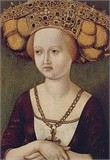
Cymburgis Masovia
My 16th great grandmother was Polish, and was the mother of a Holy Roman Emperor. My ancestor, her daughter, Katharina, was Archduchess of Austria:
Cymburgis Masovia (1391 – 1429)
is my 16th great grandmother
Katharina Archduchess Austria Von Habsburg (1420 – 1493)
daughter of Cymburgis Masovia
Christof I VanBaden (1453 – 1527)
son of Katharina Archduchess Austria Von Habsburg
Beatrix Zahringen (1492 – 1535)
daughter of Christof I VanBaden
Sabine Grafin VonSimmern (1528 – 1578)
daughter of Beatrix Zahringen
Marie L Egmond (1564 – 1584)
daughter of Sabine Grafin VonSimmern
Richard Sears (1590 – 1676)
son of Marie L Egmond
Silas Sears (1638 – 1697)
son of Richard Sears
Silas Sears (1661 – 1732)
son of Silas Sears
Sarah Sears (1697 – 1785)
daughter of Silas Sears
Sarah Hamblin (1721 – 1814)
daughter of Sarah Sears
Mercy Hazen (1747 – 1819)
daughter of Sarah Hamblin
Martha Mead (1784 – 1860)
daughter of Mercy Hazen
Abner Morse (1808 – 1838)
son of Martha Mead
Daniel Rowland Morse (1838 – 1910)
son of Abner Morse
Jason A Morse (1862 – 1932)
son of Daniel Rowland Morse
Ernest Abner Morse (1890 – 1965)
son of Jason A Morse
Richard Arden Morse (1920 – 2004)
son of Ernest Abner Morse
Pamela Morse
I am the daughter of Richard Arden Morse

Cymburgis Masovia
She was born in Warsaw and died in Lower Austria at an Abbey. It is said she contributed the protruding lower lip of the Habsburgs.
Cymburgis (also Cimburgis, Zimburgis or Cimburga) of Masovia (Polish: Cymbarka mazowiecka) (1394 or 1397 – September 28, 1429) in January 1412 became the second wife of the Habsburg Duke Ernest the Iron of Austria (since 1414 Archduke) and thus a Duchess/Archduchess of the Inner Austrian line in Styria, Carinthia and Carniola.
Cimburgis was born at Warsaw in the Duchy of Masovia to Duke Siemovit IV of the Masovian Piast dynasty and his wife Alexandra of Lithuania, daughter of Grand Duke Algirdas, a scion of the Gediminid dynasty, and sister of Władysław II Jagiełło, King of Poland.
Though his elder brother William’s engagement with the Polish princess Jadwiga had mortifyingly failed, Ernest after the death of his first wife Margaret of Pomerania proceeded to Kraków to court Cymburgis. Though not approved by the Habsburg family, the marriage turned out to be a happy one. As the mother of the later Emperor Frederick III, Cymburgis, after Gertrude of Hohenburg, became the second female ancestor of all later Habsburgs, as only his branch of the family survived in the male line. Although controversial, it has been claimed (since at least by Robert Burton in 1621) that she brought the distinctive protruding lower lip (progenism) into the family, a particular physical characteristic of most members of the family for many generations until the 18th century.[2] It can even be recognized in some of her distant descendants today (though not as markedly). Cymburgis’ statue in the Innsbruck Hofkirche church however does not show this feature.
Tradition has it that she was also known for her exceptional strength, which, for example, she showed by driving nails into the wall with her bare hands and cracking nuts between her fingers. Strength also distinguished one of her descendants, Augustus II the Strong, who allegedly broke a horseshoe bare fisted. Cymburgis outlived her husband and died at Türnitz in present-day Lower Austria. She is buried at Lilienfeld Abbey.
Descendants
5 children died at young age
Frederick III, Holy Roman Emperor (1415–1493)
Margaret, wife of Frederick II, Elector of Saxony
Albert VI, Archduke of Austria (1418–1463)
Catherine (1420–1493), wife of Charles I, Margrave of Baden-Baden
Cymburgis Masovia
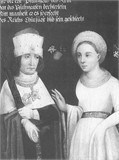
Otto and Agnes
Agnes Countess Of Rhein (1202 – 1267)
is my 21st great grandmother
Elisabeth Wittelsbach Duchess Bavaria (1227 – 1273)
daughter of Agnes Countess Of Rhein
Consort Elisabeth the Romans Carinthia (1263 – 1313)
daughter of Elisabeth Wittelsbach Duchess Bavaria
Albrecht Albert II ‘The Wise’ Duke of Austria Habsburg (1298 – 1358)
son of Consort Elisabeth the Romans Carinthia
Leopold III “Duke of Austria” Habsburg (1351 – 1386)
son of Albrecht Albert II ‘The Wise’ Duke of Austria Habsburg
Ernst I “Ironside” Archduke of Austria Habsburg (1377 – 1424)
son of Leopold III “Duke of Austria” Habsburg
Katharina Archduchess Austria Von Habsburg (1420 – 1493)
daughter of Ernst I “Ironside” Archduke of Austria Habsburg
Christof I VanBaden (1453 – 1527)
son of Katharina Archduchess Austria Von Habsburg
Beatrix Zahringen (1492 – 1535)
daughter of Christof I VanBaden
Sabine Grafin VonSimmern (1528 – 1578)
daughter of Beatrix Zahringen
Marie L Egmond (1564 – 1584)
daughter of Sabine Grafin VonSimmern
Richard Sears (1590 – 1676)
son of Marie L Egmond
Silas Sears (1638 – 1697)
son of Richard Sears
Silas Sears (1661 – 1732)
son of Silas Sears
Sarah Sears (1697 – 1785)
daughter of Silas Sears
Sarah Hamblin (1721 – 1814)
daughter of Sarah Sears
Mercy Hazen (1747 – 1819)
daughter of Sarah Hamblin
Martha Mead (1784 – 1860)
daughter of Mercy Hazen
Abner Morse (1808 – 1838)
son of Martha Mead
Daniel Rowland Morse (1838 – 1910)
son of Abner Morse
Jason A Morse (1862 – 1932)
son of Daniel Rowland Morse
Ernest Abner Morse (1890 – 1965)
son of Jason A Morse
Richard Arden Morse (1920 – 2004)
son of Ernest Abner Morse
Pamela Morse
I am the daughter of Richard Arden Morse
AGNES ([1201]-16 Nov 1267, bur Scheyern). The Notæ Sancti Emeranni record the marriage of “Otto dux Bawarie” and “filiam Heinrici palatine Rheni”. The Altahenses Annales name “Agnes ducissa Bawarie” when recording the birth of her son Ludwig.
m (Worms May 1222) OTTO von Bayern, son of LUDWIG I Duke of Bavaria, Pfalzgraf bei Rhein & his wife Ludmila of Bohemia (Kelheim 1206-Landshut 29 Nov 1253, bur Scheyern). Pfalzgraf bei Rhein 1228. He succeeded his father in 1231 as OTTO II “der Erlauchte” Duke of Bavaria.
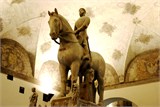
Bernabo
My 18th great-grandfather probably poisoned his brother for territory. He was surely excommunicated, and was the object of the anger of the Holy Roman Emperor, Charles IV. This is exactly when my knowledge of Euro history is fuzzy. Venice was once a giant kingdom that included much of Austria….Bernabo was born in Milan. Holy Roman Empire, Batman, this is confusing!!!!!
Bernabo Lord Milan di Visconti (1319 – 1385)
is my 18th great grandfather
Veridis Duchess Austria Visconti (1352 – 1414)
daughter of Bernabo Lord Milan di Visconti
Ernst I “Ironside” Archduke of Austria Habsburg (1377 – 1424)
son of Veridis Duchess Austria Visconti
Katharina Archduchess Austria Von Habsburg (1420 – 1493)
daughter of Ernst I “Ironside” Archduke of Austria Habsburg
Christof I VanBaden (1453 – 1527)
son of Katharina Archduchess Austria Von Habsburg
Beatrix Zahringen (1492 – 1535)
daughter of Christof I VanBaden
Sabine Grafin VonSimmern (1528 – 1578)
daughter of Beatrix Zahringen
Marie L Egmond (1564 – 1584)
daughter of Sabine Grafin VonSimmern
Richard Sears (1590 – 1676)
son of Marie L Egmond
Silas Sears (1638 – 1697)
son of Richard Sears
Silas Sears (1661 – 1732)
son of Silas Sears
Sarah Sears (1697 – 1785)
daughter of Silas Sears
Sarah Hamblin (1721 – 1814)
daughter of Sarah Sears
Mercy Hazen (1747 – 1819)
daughter of Sarah Hamblin
Martha Mead (1784 – 1860)
daughter of Mercy Hazen
Abner Morse (1808 – 1838)
son of Martha Mead
Daniel Rowland Morse (1838 – 1910)
son of Abner Morse
Jason A Morse (1862 – 1932)
son of Daniel Rowland Morse
Ernest Abner Morse (1890 – 1965)
son of Jason A Morse
Richard Arden Morse (1920 – 2004)
son of Ernest Abner Morse
Pamela Morse
I am the daughter of Richard Arden Morse
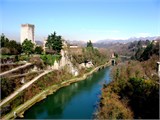
Visconti castle
Bernabò Visconti (also called Barnabò) (1323 – 18 December 1385) was an Italian soldier and statesman, who was Lord of Milan.
Life
He was born in Milan, the son of Stefano Visconti and Valentina Doria. From 1346 to 1349 he lived in exile, until he was called back by his uncle Giovanni Visconti. On 27 September 1350 Bernabò married Beatrice Regina della Scala, daughter of Mastino II, Lord of Verona and Taddea da Carrara, and forged both a political and cultural alliance between the two cities. His intrigues and ambitions kept him at war almost continuously with Pope Urban V, the Florentines, Venice and Savoy. In 1354, at the death of Giovanni, he inherited the power of Milan, together with his brothers Matteo and Galeazzo. Bernabò received the eastern lands (Bergamo, Brescia, Cremona and Crema), that bordered the Veronese territories. Milan itself was to be ruled in turn by the three brothers. The vicious Matteo was murdered in 1355 at the order of his brothers, who divided his inheritance between them.
In 1356, after having offended the emperor, he pushed back a first attack upon Milan by the imperial vicar Markward von Raudeck, imprisoning him. In 1360 he was declared heretic by Innocent VI at Avignon and condemned by Emperor Charles IV. The ensuing conflict ended with a dismaying defeat at San Ruffillo against the imperial troops under Galeotto I Malatesta (29 July 1361). In 1362, after the death of his sister’s husband, Ugolino Gonzaga, caused him to attack also Mantua. Warring on several different fronts, in December of that year he sued for peace with the new pope, Urban V, through the mediation of King John II of France. However, having Barnabò neglected to return the papal city of Bologna and to present himself at Avignon, on 4 March 1363 he was excommunicated once more, together with his children, one of whom, Ambrogio, was captured by the Papal commander Gil de Albornoz. With the peace signed on 13 March 1364, Visconti left the occupied Papal lands, in exchange for the raising of the ban upon a payment of 500,000 florins.
In spring 1368 Visconti allied with Cansignorio della Scala of Verona, and attacked Mantua, still ruled by Ugolino Gonzaga. The situation was settled later in the year through an agreement between him and emperor. Two years later he besieged Reggio, which he managed to acquire from Gonzaga in 1371. The following war against the Este of Modena and Ferrara raised again Papal enmity against the Milanese, now on the part of Gregory XI. In 1370, he ordered the construction of the Trezzo Bridge, then the largest single-arch bridge in the world.
In 1373, the pope sent two papal delegates to serve Bernabò and Galeazzo their excommunication papers (consisting of a parchment bearing a leaden seal rolled in a silken cord). Bernabò, infuriated, placed the two papal delegates under arrest and refused their release until they had eaten the parchment, seal, and silken cord which they had served him. He managed to resist, despite also the outbreak of a plague in Milan, whose consequences he suppressed with frantic energy.[2] In 1378 he allied with the Republic of Venice in its War of Chioggia against Genoa. His troops were however defeated in September 1379 in the Val Bisagno.
Bernabò, whose despotism and taxes had enraged the Milanese — he is featured among the exempla of tyrants as victims of Fortune in Chaucer’s[3] Monk’s Tale as “god of delit and scourge of Lumbardye” — was deposed by his nephew Gian Galeazzo Visconti in 1385. Imprisoned in the castle of Trezzo, he was poisoned in December of that year.
The funerary monument of Bernabò Visconti, with an equestrian statue, together with that of his consort, had been made beforehand, in 1363. The sculptures by Bonino da Campione were intended for the church of San Giovanni in Conca. They now stand in the Castello Sforzesco in Milan.
Children
Bernabò was an ally of Stephen II, Duke of Bavaria: three of his daughters were married with Stephen’s descendants. His issue include:
Viridis (1352- 1414), married Leopold III, Duke of Inner Austria and were the parents of Ernest, Duke of Austria the father of Frederick III, Holy Roman Emperor.
Agnese (1362- executed 1391), married Francesco I Gonzaga
Taddea (1351-28 September 1381), married Stephen III, Duke of Bavaria. She was the mother of Louis VII of Bavaria and Isabeau of Bavaria.
Marco (November 1353- 1382), married Elisabeth of Bavaria.
Ludovico (1358- 7 March 1404), married Violante Visconti (1353- November 1386), daughter of Galeazzo II Visconti, and widow of Lionel of Antwerp.
Rodolfo (d.1388), Lord of Parma
Carlo (September 1359- August 1403), married Beatrice, daughter of John II of Armagnac and sister of John III of Armagnac.
Valentina (d.1393), married Peter II of Cyprus
Caterina (1361- poisoned 17 October 1404,[4]) married her cousin Gian Galeazzo Visconti as his second wife. She was the mother of Gian Maria Visconti and Filippo Maria Visconti, successive dukes of Milan. She acted as regent for her son Gian Maria during his minority.
Lucia Visconti (1372- 14 April 1424), betrothed 1. Louis II of Anjou and married 2. Edmund Holland, 4th Earl of Kent
Maddalena (1366- 17 July 1404), married Frederick, Duke of Bavaria and was mother of Henry XVI of Bavaria.
Mastino (d.1404), married Antonia della Scala (d. 1400), daughter of Cangrande II della Scala.
Anglesia (d.12 October 1439), married Janus of Cyprus
Giammastino (1370- 19 June 1405), married Cleofa (d.1403) daughter of Cangrande II della Scala.
Elisabetta (1374- 2 February 1432), married Ernest, Duke of Bavaria and was the mother of Albert III, Duke of Bavaria.
Antonia (1360-26 March 1405), married Eberhard III, Count of Württemberg
His illegitimate offspring by Donnina del Porri, legitimated in a ceremony after the death of his wife in 1384,[5] were as follows:
Palamede (d. 1402).
Lancelloto.
Sovrana, married Giovanni da Prato.
Ginevra, married Leonardo Malaspina (d. 1441).
Enrica, married Franchino Rusca.
In addition, Bernabò had other illegitimate offspring by other mistresses:[6]
—With Beltramola Grassi:
Ambrogio (1343 – killed in battle Caprino Bergamasco, 17 August 1373), condottiero and Governor of Pavia.
Isotta (d. 1388), married in 1378 to Count Lutz von Landau, condottiero under the name of Lucio Land (d. 1398).
Ettore (d. 1413), who briefly took the Lordship of Milan (16 May – 12 June 1412), married Margherita Infrascati.
Riccarda, married Bernard, Seigneur de La Salle (d. 1391).
—With Montanina de Lazzari:
Sagramoro (d. 1385), Lord of Brignano, married Achiletta Marliani.
Donnina (1360 – 1406), married in 1377 to Sir John Hawkwood.
—With Giovanolla Montebretto:
Bernarda (d. 1376), married Giovanni Suardi.
Valentia, married Antonio Gentile Visconti, Lord of Belgioioso.
Bibliography
Pizzagalli, Daniela (1994). Bernabò Visconti. Milan: Rusconi.
Footnotes
^ Girolamo Porro, engraved title page in Scipion Barbuo, Sommario delle vite de’ duchi di Milano, cosi Visconti, come Sforzeschi (Venice: Girolamo Porro, 1574)
^ For his plague regulations for Milan, see Rosemary Horrox, The Black Death(1994) III.65, p 203.
^ Chaucer had been sent to Lombardy in 1378 on behalf of the young King Richard II to seek the support of Bernabò and Sir John Hawkwood on behalf of the English war effort against France. His epistola metrica III.29 was tacitly addressed to Bernabò (Ernest H. Wilkings, The ‘Epistolae Metricae’ of Petrarch, (Edizioni di Storia e Letteratura), p. 11.
^ Charles Cawley, Medieval Lands, Lords of Milan
^ ” Bernabò Visconti seems to have gone through some sort of marriage ceremony to legitimate his children by Donnina del Porri” (H.S. Ettlinger, “Visibilis et Invisibilis: The Mistress in Italian Renaissance Court Society”, Renaissance Quarterly, 1994.
^ Complete Genealogy of the House of Visconti
Persondata Name Bernabò Visconti Alternative names Short description Lord of Milan Date of birth 1323 Place of birth Date of death Place of death 1385 Preceded by
Cardinal Giovanni Visconti, Archbishop of Milan Lord of Milan
1349–1385 Succeeded by
Gian Galeazzo Viscont
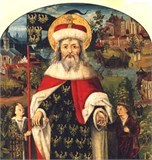
Leopold III
I was trained by Austrian Tourism as an expert in Austria. The training included classroom study for two full days and extensive travel around the country. In the classroom we learned about the Habsburgs who married all the most eligible monarchs in Europe to expand their holdings. I did not suspect at the time that these were my people. However, I specifically noticed that Austrian over-the-top castles and music halls thrilled me, whereas French over-the-top design always made me think of them as wasteful. I did have a certain strong feeling for the architecture, especially in Vienna and Salzburg.
Monarchs of the House of Habsburg
A word about the coats of arms: the Habsburg Empire was never composed of a single unified and unitary state as Bourbon France, Hohenzollern Germany, or Great Britain was. It was made up of an accretion of territories that owed their historic loyalty to the head of the house of Habsburg as hereditary lord. The Habsburgs had mostly married the heiresses of these territories, most famously of Spain and the Netherlands. They used their arms then as a statement of their right to rule all these territories. As there were many territories, so their arms were complex and reflected the waxing and waning position of the Habsburgs within European power politics. It was not until the 19th century (see below Arms of Dominion of the Austro-Hungarian Empire) that the arms began to take on their own life as symbols of a state which may have an existence outside of the Habsburg dynasty.

Leo
Leopold III “Duke of Austria” Habsburg (1351 – 1386)
is my 17th great grandfather
Ernst I “Ironside” Archduke of Austria Habsburg (1377 – 1424)
son of Leopold III “Duke of Austria” Habsburg
Katharina Archduchess Austria Von Habsburg (1420 – 1493)
daughter of Ernst I “Ironside” Archduke of Austria Habsburg
Christof I VanBaden (1453 – 1527)
son of Katharina Archduchess Austria Von Habsburg
Beatrix Zahringen (1492 – 1535)
daughter of Christof I VanBaden
Sabine Grafin VonSimmern (1528 – 1578)
daughter of Beatrix Zahringen
Marie L Egmond (1564 – 1584)
daughter of Sabine Grafin VonSimmern
Richard Sears (1590 – 1676)
son of Marie L Egmond
Silas Sears (1638 – 1697)
son of Richard Sears
Silas Sears (1661 – 1732)
son of Silas Sears
Sarah Sears (1697 – 1785)
daughter of Silas Sears
Sarah Hamblin (1721 – 1814)
daughter of Sarah Sears
Mercy Hazen (1747 – 1819)
daughter of Sarah Hamblin
Martha Mead (1784 – 1860)
daughter of Mercy Hazen
Abner Morse (1808 – 1838)
son of Martha Mead
Daniel Rowland Morse (1838 – 1910)
son of Abner Morse
Jason A Morse (1862 – 1932)
son of Daniel Rowland Morse
Ernest Abner Morse (1890 – 1965)
son of Jason A Morse
Richard Arden Morse (1920 – 2004)
son of Ernest Abner Morse
Pamela Morse
I am the daughter of Richard Arden Morse

Leopold III
Duke Leopold III of Austria (November 1, 1351 – July 9, 1386) from the Habsburg family, was Duke of Austria from 1365 to 1379, and Duke of Styria and Carinthia (Inner Austria) in 1365–1386.
Life
Born in Vienna, Leopold was a younger son of Duke Albert the Wise, and younger brother of the Dukes Rudolf the Founder and Albert the Pigtail. His mother, Joanna of Pfirt, was 51 when she gave birth to him and died shortly after. He was firstly the administrator of Tyrol, and was jointly charged with the rule of the Habsburg lands with Albert after Rudolf’s death. However, by the Treaty of Neuberg of September 9, 1379, he became the exclusive ruler of Styria (including Wiener Neustadt), Carinthia, Carniola, the Windic March, Gorizia, the Habsburgs’ possessions in Friuli, Tyrol and Further Austria. In 1368 he acquired Freiburg im Breisgau, in 1375 Feldkirch and in 1382 Trieste.
However, his attempts to expand his position in Switzerland and Swabia failed, when he died in the Battle of Sempach in 1386.
Family and children
He was married, on 23 February 1365, to Viridis Visconti (1352–1414), second daughter of Barnabò Visconti, Lord of Milan, and Beatrice Regina della Scala, and had the following children:
William the Courteous
Leopold the Fat
Ernest the Iron
Frederick of the Empty Pockets
Elisabeth (1378–1392)
Catherine (1385–?), Abbess of St. Klara in Vienna
He was succeeded by his eldest son William. Other sons included Leopold, future Duke of Further Austria, Ernest the Iron, future Duke of Inner Austria, and Frederick, future Duke of Further Austria.
 mermaidcamp