mermaidcamp
Keeping current in wellness, in and out of the water
You can scroll the shelf using ← and → keys
You can scroll the shelf using ← and → keys
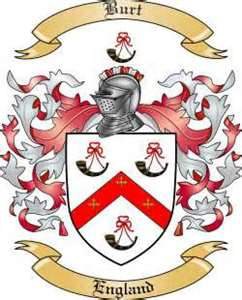
Burt Coat of Arms
Henry Burt (1595 – 1662)
Henry Burt was born about 1595 at Harberton, Devon Co, probably the second son of Henry. He married Ulalia March at Dean Prior, Devon County on December 28, 1619. He came to New England in the Spring or Summer of 1639, and with his wife and seven children settled at Roxbury, MA. Shortly after he settled there, his house was burned, for whatever reason, and, in November of 1639, the General Court made a grant to the town in the amount of 8 Pounds because of the loss . He moved to Springfield in 1640 and was Clerk of the writs (aparently the town recorder). But it is strange that his own childrens’ births are not recorded in the town. He died in Springfield, April 30, 1662.
Henry Burt, Jr
Born: About 1595 in: Harberton, Devon, England Married: December 28, 1619 in: Dean Prior, Devon, England Died: April 30, 1662 in: Springfield, MA
Ulalia March Born: About 1598 in: England Died: August 29, 1690 in: Springfield, MA
We know a lot about his life:
Documented events in his life were:

Gov Thomas Dudley
Birth: Oct. 12, 1576, England,Death: Jul. 31, 1653BostonSuffolk CountyMassachusetts, USA Colonist, Colonial Governor. He was the second Governor of Massachusetts Bay Colony and member of the first Board of Overseers for Harvard “College.” Born in Northahmpton, England he married Dorothy Yorke and came to the colonies in 1626 as many did to follow the teachings of Reverend John Cotton. He and his wife came to the New World on the “Arabella” and after feeling that Plymouth was too vulnerable for attack by sea he and other members, most notably John Winthrop and Simon Bradstreet traveled up the river to higher ground. They traveled up the river and climbed a hill on the North shore. Local legend states that Dudley then thrust his came into the ground and declared “This is the place.” The location is now the corner of John F. Kennedy and Mount Auburn Streets. It is through this story that Thomas Dudley is considered the founder of Cambridge. Thomas’s wife Dorothy died in 1643 and the next year he married Katherine (Dighton) Hackburne, a widow. They moved from Cambridge and settled in nearby Roxbury. Thomas had eight children in all, five by Dorothy Yorke and three by Katherine Dighton. The most notable of his offspring was Joseph Dudley (born 1647) who became the future royal governor of Massachusetts. Joseph was born when Thomas was 70 years of age. In 1650 as one of his first acts as governor, he signed the charter to Harvard College, establishing the guidelines in which the University still uses for operation today. Harvard’s famed Dudley House is named for him as is Dudley Station in Roxbury on the commuter train line. He also established the Roxbury Latin School during the years he lived in that section of the city, the school is still open today and is considered one of the first public schools in America. He was a founder of the First Church at Boston, where a tablet honoring him was place. (bio by: R. Digati)
Gov. Thomas Dudley (1576 – 1653)
is my 10th great grandfather
Anne Dudley (1612 – 1672)
daughter of Gov Thomas Dudley
John Bradstreet (1652 – 1718)
son of Anne Dudley
Mercy Bradstreet (1689 – 1725)
daughter of John Bradstreet
Caleb Hazen (1720 – 1777)
son of Mercy Bradstreet
Mercy Hazen (1747 – 1819)
daughter of Caleb Hazen
Martha Mead (1784 – 1860)
daughter of Mercy Hazen
Abner Morse (1808 – 1838)
son of Martha Mead
Daniel Rowland Morse (1838 – 1910)
son of Abner Morse
Jason A Morse (1862 – 1932)
son of Daniel Rowland Morse
Ernest Abner Morse (1890 – 1965)
son of Jason A Morse
Richard Arden Morse (1920 – 2004)
son of Ernest Abner Morse
Pamela Morse
I am the daughter of Richard Arden Morse
Thomas was taken in as an orphan by by his great uncle, Richard Purefoy, brother of his mother’s mother. He lived with them at the Manor Faxton, about 20 miles from Yardley Hastings. At the age of 21 he was commissioned by Queen Elizabeth as a Captain to go to the aid of Henry IV of France at the seige of Amiens by the Spanish. He raised a company of 80 men, but by the time he reached France, the fighting had ended. He worked as steward (business manager) for the Earl of Lincoln, eventually leaving in 1627 (his soon to be son-in-law Simon Bradstreet took the position). He moved to Boston, Lincolnshire, England, and came under the influence of the Rev. John Cotton. He became a Nonconformist, a zealous Puritan and interested in settling in New England with the Mass. Bay Company. In 1629, he was one of the few who established the Mass. Bay Colony.He returned to manage the Earl of Lincoln’s estate until the Earl was imprisoned. Because of the continued persecution of non-conformists, he joined Winthrop’s expedition and sailed to New England aboard the flagship Arbella as Deputy Governor.The fleet arrived at Salem on 12 June 1630 where Governor Endicott and a group of settlers who had emigrated in 1628 had set up a colony but had few supplies. He moved to Charlestown and was one of the signers of the covenant of the First Church of Charlestown. In 1631 he moved to Newtowne (now Cambridge) and eventually moved to Ipswich. By 1639 he had moved to Roxbury to be nearer to Boston, the capital of the colony.The first general election by Freemen in the colony was held in May 1634 and Thomas Dudley was elected governor (John Winthrop had been governor since the founding of the colony – the people turned against him when it was discovered that he was holding the legislative powers amongst his court of assistants in contradiction to the charter). Dudley was reelected in 1640, 1645 and 1650 and was Deputy Governor for 13 years as well. All offices were for one year terms.
ref:above information copied from Owings Stone Family genealogy site.

Harvard Charter
My 9th great grandfather Richard Taylor, the tailor, of Plymouth Colony was described by an unknown source:
Richard was born in Europe and was three times the age of his wife, Ruth Wheldon. Ruth was ½ blood Wampanoag Indian, born at Yarmouth, daughter of Gaberial Wheldon and his wife Margaret, a full blood Wampanoag Indian. Margaret was the daughter of a Wampanoag Sagamore, a younger brother of Massasoit.
Richard TAYLOR (abt. 1620-1673), “tailor” Early settler of Yarmouth, Plymouth Colony. Not to be confused with his (possibly slightly younger) contemporary, also of Yarmouth: Richard Taylor (abt 1625-1703), farmer or husbandman of “The Rock”. Both were supposedly married to women by the name of Ruth. Vital statistics
Sex: Male
Born: about 1620 at England
Died: about 13 December 1673 at Yarmouth, Plymouth Colony, age at death unknown.
Interment: Probably at Yarmouth, Plymouth Colony
Richard Taylor’s origins and emigration are unknown. (But see below.)
Several histories and genealogies claim that Richard Taylor, tailor, married Ruth Whelden (abt 1625-1673), daughter of Gabriel Whelden, and that she was the “wife of Richard Taylor”, whose body was found in a boat, drowned, off Duxbury, MA about 3 December 1673. HOWEVER, the inquest records concerning the drowning do not provide her given name at all. They simply identify the body as “the wife of Richard Taylor, sometimes of Yarmouth.” This researcher (Jillaine 16:14, 28 July 2007 (UTC)) believes it’s just as likely that Ruth Whelden was married to Richard Taylor of the “Rock”– and that it is just as likely that the “Ruth, wife of Richard Taylor” who died in 1693 was the daughter of Gabriel Whelden. Older genealogies say that Richard “the Rock” Taylor was likely married to Ruth Burgess, but this has never been proven. So we have no proof of the name of Richard Taylor, tailor’s wife; but we do know that Richard Taylor, the “Rock” did have a wife Ruth who died in 1693.
Offspring
Ruth Taylor, b. July 29, 1647; buried in 1648.
Ann Taylor, b. Dec. 2, 1648; buried March 29, 1650, aged about 1-1/2 years.
Mary Taylor (1649-??), m. [Abijah Merchant (1651-?)]].
Martha (1650-1728), b. Dec. 18, 1650; m. Joseph Bearse of Barnstable Dec. 3, 1676; d. Jan. 27, 1727-8, aged 77, leaving issue.
John Taylor (1652-1721), m. 15 December 1674 Sarah Matthews, daughter of James Matthews.
Elizabeth Taylor (1655-1721), m. Dec. 20, 1680, Samuel Cobb (1651-?) of Barnstable; d. May 4, 1721, aged 66, leaving issue.
Hannah Taylor (1658-1743), m. as his 2d wife July 19, 1680, Deacon Job Crocker of Barnstable; d. May 14, 1743, in her 85th year, leaving issue.
Ann Taylor (1659-?), m. Josiah Davis, of Barnstable, June 25, 1679, and had issue.
Joseph Taylor (1660-?)
Sarah Taylor (?-1695); d. unmarried July 31, 1695. The inventory of Sarah Taylor of Barnstable was taken Aug. 16, 1695, and amount to £34 19s. Deacon Job Crocker and Samuel Cobb, brothers-in-law, were made administrators Sept. 23, 1695. The estate was, Sept. 13, 1695, ordered equally divided between the brothers and sisters of the deceased, given in the following order, to wit: John Taylor, Joseph Taylor, Mary Marchant, Martha Bearse, Elizbaeth Cobb, Hannah Crocker and Ann Davis. The inventory consisted of wearing apparel, five pounds of worsted yarn, a Bible, cattle, sheep and lambs, cash moneys due from Samuel Cobb and Joseph Bearse, &c.
Biography
The biographical information listed below could apply just as easily to Richard Taylor, the “Rock” with the exception of the 1674 will.
Early life and education Edit
There was a Richard Taylor, age 16, on the ship Truelove which departed Gravesend, England on 11 Jun 1635. Other Taylors on that ship were: James Taylor, 28; William Taylor, 17; Ann Taylor, 24.
Military service
1643 (August): He is first mentioned in the Colonial records as among those in Yarmouth between 16 and 60 years of age able to bear arms.
Career Edit
1648 (June 7): was a surveyor of highways for Yarmouth.
1651 (June 6): was sworn as a member of the grandjury.
1656 (May 30): with Edmond Hawes, Richard Taylor was witness to a deed of Samuel Mayo to John Phinney of Barnstable.
1656 (June 3): he was constable of Yarmouth.
1657 (June 3): he was one of the surveyors of highways there. That year he took the oath of fidelity.
Family life
1647 (Oct 28): Gabriel Whelden gave his assent for one Richard Taylor (many believe this one, but without documentation) to marry his daughter, Ruth Whelden.
1655 (May 28; July 27): Richard Taylor, tailor, among others suing widow Margaret Whelden, for a share of the estate left by Gabriel Whelden.
1673 (Dec 3): Richard’s wife, not named, was discovered drowned in a boat off Duxbury. Richard died within a couple of weeks.
Will of Richard Taylor Edit
(Source: James W. Hawes, “Richard Taylor, Tailor, and Some of His Descendants” in ‘Library of Cape Cod History & Genealogy’, No. 48, 1914.) (Transcribed with original spelling maintained.)
The Court (March) 4, 1673-4, made the following order:
“Mr. John Gorum and Mr. John Thacher are joyned with John Taylor ( for the disposing of the estate of Richard Tayler to his children, and for the paying and receiving of debts according to order of Court. Concerning the estate of Richard Tayler, late of Yarmouth, deceased, this Court doth order, first, that the eldest son of the said Tayler shall have his fathers housing, and two thirds of the land, both upland and marsh, and the rest of his portion out of what of the estate Mr. Gorum and Mr. John Thacher shall judge most suitable for him, hee being by order of Court to have a dubble portion. 2condly, it is ordered, that the hay, and what provisions was or is upon the invoice of the estate that is now spent, or shalbe judged convenient for the family to spend betweixt this and the first of the next August, shall not be accounted to the estate, as like-wise what woole and flaxe hath bing spon by the daughters sence theire parents death shalbe accompanted theirs that spon it. The rest of the estate to be devided betweixt the second son and the five daughters, everyone an equall proportion, to bee set out to them as maybe most suitable for them, by the discretion of their eldest brother, and Mr. John Gorum, and Mr. John Thacher. The second son to have the other third of his father’s land, besides his portion equall to his sisters. Lastly, that nothing that hat bin already given or betowed by the said Taylor on any of this children, shall not be considered in the devision, but everyone of to have an equall proportion, after the payment of debts due from the estate.”
His inventory taken Dec. 13, 1673, and submitted to the Court under oath March 6, 1673-4, amounted to L199 4s 11d. The debts of the estate were L18 1s. 2d. Included in the inventory were 12 acres of upland, nine of meadow and three of marsh, which together with houses and some grain sown amounted to L60. The children named are John, Joseph, Martha and Mary. The inventory shows that he possessed a considerable many cattle, shep and hogs, one horse, corn, wheat, flax, provisions, 21 yards of cloth, lumber and household articles. There were due to him 38.5 barrels of tar, and John Blake of Boston owed him money. Some things had been given to the children in his life time.
Contributors:
Jillaine
Sources:
Richard Taylor, Tailor and Some of His Descendants, by James W. Hawes; C.W. Swift, publisher, Yarmouthport, Mass.: 1914.
Barnstable Probate Records
Plymouth Colony Records, Volume 5; pp. 122-123
Plymouth Colony Wills
NEHGS Register, Volume 3, 1849, p. 189 citing CR, Volume II, p. 18
NEHGS Register, Volume 4, 1850, p. 258.
NEHGS Register, volume 14, 1860, p. 354
The history of Cape Cod : annals of thirteen towns of Barnstable County, p. 182; p. 193.
History of Barnstable County, Massachusetts, edited by Simeon L. Deyo. 1890. New York: H. W. Blake & Co.; CHAPTER XVII, pages 453-506. Town of Yarmouth, by Hon. Charles F. Swift.
James Savage, Vol. IV, p. 263
Torrey, Clarence Alman, New England Marriages, Genealogical Publishing Co., 1985; p. 730
Court Files of Middlesex County, Mass., 1649-1675 (through NEHGS web site)
Middlesex Court Files Folio 11; HLS #409 and 411.
History of Yarmouth, 1884, p. 88
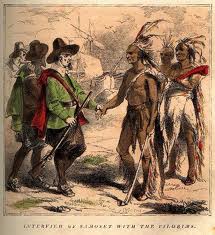
Plymouth
It is enlightening to track my personality archetypes while I track my ancestors. There are similarities, highs and lows, temporary dead ends in both. You can’t change the ancestors and you can’t change your archetypes, in the same way that you can not rearrange the stars in the sky. When I was new in the genealogy game I went to Tulsa to meet a cousin based on only family legend and no facts to discover/confirm our Cherokee bloodline. We had a great time, but came up empty on the Native American theory. We both wanted it to be true, but my cousin’s husband was insanely convinced without any evidence. He really wanted a Cherokee wife. He was the worst detective I have ever seen.
While searching it is important to be open to discovering that for which what you were not looking. When I find a Plymouth Colony ancestor I am generally excited, fill in the blanks with some black britches and some assumptions. Richard Taylor was no regular Pilgrim. He fell in love and married a Wampanoag chief’s daughter. I have a tribe in Massachusetts. I never would have guessed this, but I am thrilled out of my mind. My 12th great-grandfather,Great Sachem, had been exposed to English fishermen, and had learned some language from them. He walked into the Pilgrim camp and said “Welcome Englishmen”, to the great surprise of the Englishmen.
Wasanequin Great Sachem Wampanoag tribe (1554 – 1617)
is my 12th great grandfather
Quadequina Wampanoag (1576 – 1623)
Son of Wasanequin Great Sachem
Margaret Diguina Weeks (1613 – 1651)
Daughter of Quadequina
Ruth Whelden (1625 – 1673)
Daughter of Margaret Diguina
John TAYLOR (1651 – 1690)
Son of Ruth
Abigail Taylor (1663 – 1730)
Daughter of John
Martha Goodwin (1693 – 1769)
Daughter of Abigail
Grace Raiford (1725 – 1778)
Daughter of Martha
Sarah Hirons (1751 – 1817)
Daughter of Grace
John Nimrod Taylor (1770 – 1816)
Son of Sarah
John Samuel Taylor (1798 – 1873)
Son of John Nimrod
William Ellison Taylor (1839 – 1918)
Son of John Samuel
George Harvey Taylor (1884 – 1941)
Son of William Ellison
Ruby Lee Taylor (1922 – 2008)
Daughter of George Harvey
Pamela Morse
I am the daughter of Ruby Lee
I am very interested in my tribe, and have already had contact from a fellow descendant who has some proof of our Nativeness. I am looking forward to his input and learnring more about my roots. Ironically these people helped the Pilgrims survive, but the tribe has no reservation today. This is an overview of my First Nation Family:
Pokanoket is a tribe of Native Americans who trace their their lineage back thousands of years beyond the colonial days of the United States of America. We trace our ancestry through the bloodlines and the written and oral history of our people. We are the people of Massasoit Ousamequin, Massasoit Wamsutta, and Massasoit Metacom. We are Philip’s people, the people of Metacom. We are the people who celebrated the First Thanksgiving with the Pilgrims in 1621. We are the people who have endured much and who have returned, after a long journey through history to the present day and continue to look forward to the future.
Pokanoket is also a Nation. The Nation of Tribes you may have heard of referred to as Wampanoag ( pronounced wahm – peh – noe – ahg ) was known to our ancestors as the Pokanoket Nation. The Pokanoket Nation, also known as the Pokanoket Confederacy or Pokanoket Country, was comprised of a multitude of Tribes.
Each Tribe was comprised of Bands and Villages and the Pokanoket Tribe was the Headship of the Pokanoket Nation.
Pokanoket is also our home. Prior to the time of the pilgrim’s arrival in Plymouth, which used to be Patuxet, the realm of the Pokanoket included portions of Rhode Island and much of southeastern Massachusetts, including the surrounding islands around Cape Cod and Martha’s Vineyard.
The Pokanoket social organization developed in a manner that differed from neighboring Native American Tribes, since Pokanoket was more socially structured and layered, as well as more politically complex.
Unique to the Pokanoket Tribe were the spirtual and military elite, know as the Pineese (Pineese Warrior), who protected and served the Massasoit (Great Leader). They are the spiritual guardians of Pokanoket Nation.
Pokanoket believed seven to be the perfect number of completeness, for we still believe in the Seven Spirits of the Creator.
 mermaidcamp