mermaidcamp
Keeping current in wellness, in and out of the water
You can scroll the shelf using ← and → keys
You can scroll the shelf using ← and → keys

Order of the Bath
My 17th great grandfather, Sir Thomas Corbet, was a knight. His father was a sheriff in Shropshire, a job that would be passed down through the family. His roots could be traced to Normandy before the Doomesday survey, but I have not yet followed my branches back to that date. Shropshire was near Wales, where they had quite a bit of trouble with the Welch who did some nasty castle destruction.
01. Hugo Le Corbet, Cevalier of Pays de Caux, Normandy, flourished from 1040 and 1076, and was dead before the Domesday survey of 1086.
02. Roger Fitz Corbet, Domesday Baron of Cause, formerly Alretone, Shropshire, England, as it was called in Domesday, was born about 1050 to 1056, and died about 1134 as Pagan Fitz John, sheriff and governor of Shropshire, having succeeded Richard de Belmeis, held Cause in 1134, and would not have dared to take it during Roger’s lifetime; the castle was destroyed by the Welsh attacking Pagan Fitz John. It had been one of the strongholds along the Welsh border between the rivers Dee and Wye. He married the heiress of Talsey.
03. William Corbet, second Baron of Caus, lived in Wattlesborough as the Castle of Cause was destroyed by the Welsh attack on Pagan Fitz John.
04. Simon Corbet, of Pontesburie, close to the Welsh frontier, and probably died before his father, William.
05. Thomas Corbet, called the Pilgrim.
06. Sir Richard Corbet, of Wattlesborough flourished in 1217 and 1222. May be the same person as #7, Richard Corbet below.
07. Sir Richard Corbet of Wattlesborough died before 1255. He married probably by 1196 to Joanna Toret, coheir of Bartholomew Toret of Moreton Toret, Salop, who flourished in 1196-1229 and also had lands in Yorkshire.
08. Sir Richard Corbet, son of Richard, knight of Wattesborough, flourished 1225-1248, and was Lord of Morton at the Inquest of Bradfort Hundred taken in 1255. He married Petronilla, lady of Edge Baldenham and Booley, who was living in 1272, made a grant to Buildwas Abbey in 1223, succeeded his grandfather Bartholomew Toret, and was Jusiciar of Shropshire.
09. Sir Robert Corbet, son of Richard and Petronilla was born abt 1234 in Morton Corbet, Shropshire, England. He married 2nd, Mathilda De Arundel in about 1280. He was of full age in 1255, and apparently served as the Sheriff of Shropshire (1288-1289). He died in 1300 and was buried in the chapal at Alberbury which he had built.
10. Thomas Corbet, son of Robert and Matilda was born abt 1281. He married Amice, possibly Hussey, daughter of Ralph Hussey. Thomas died in 1310 at age 29.
11. Sir Robert Corbet, son of Thomas and Amice was born on Decmeber 25, 1304. He married Elizabeth Le Strange, daughter of Fulk le Strange and Eleanor Giffard before March 1323. He was noted as lord of the Vill of Moreton Corbet in 1316, but had not been granted knighthood by 1326. He purchased Shawbury from Giles de Erdington, which property was conveyed to Thomas Gery, vicar of Morton, and Thomas de Lee of Southbache. He went to some lengths to pass his lands to Roger Corbet’s heirs. Robert died on Decmeber 3, 1375.
12. Sir Thomas Corbet, son of Robert and and Elizabeth died about 1359. He married Elizabeth (Amice).
13. Sir Roger Corbet, son of Thomas and Elizabeth was born abt 1330 in Moreton Corbet. He married Margaret De Erdington, daughter of Giles De Erdington abt 1363. He died abt. 1394.
14. Sir Robert Corbet, son of Roger and Margaret was born on December 8, 1383. He married Margaret abt 1400 whose last name is not known. As his parents were both dead when he was eleven, his wardship and marriage were granted by King Richard II to Thomas Percy, Earl of Worcester, who was obliged at the beginning of the reign of Henry IV to hand over the wardship to John Burley I of Broncroft. Robert proved his age in 1405. He served as Justice of Shropshire from March 14, 1410 to February 1416, and served the county in Parliament in 1413 and 1419. In May 1413 he and Richard Lacon (who held office on the Fitz Alan estates) joined David Holbache and Urian St. Pierre (both of whom represented Shrewsbury) in acting sureties for a Matthew ap Maredudd. In 1413 problems with tax collections were blamed on the dislike of Robert Corbet and Richard Lacon for their nominees as tax collectors. As a result indictments were brought agains Robert and Roger Corbet, Richard Lacon, John Burley II and other esquires of the Earl of Arundel. In 1415 Robert and Roger Corbet served in King Henry V’s first expedition to France. Robert was Sheriff of Shropshire in from November 23, 1419 until he died.
15. Sir Roger Corbet, son of Robert and Margaret was born about 1415. He married Elizabeth Hopton in 1450, the daughter of Thomas Hopton and Eleanor Lucy. Roger died on June 8, 1467.
16. Sir Richard Corbet, son of Roger and Elizabeth was born in 1451 in Moreton Corbet. He married Elizabeth Devereux before 1478. Elizabeth is the daughter of Sir Walter Devereux and Agnes Ferrers. Richard died on Decmeber 6, 1493.
17. Sir Robert Corbet, son of Richard and Elizabeth was born in 1477. Robert married Elizabeth Vernon, daughter of Sir Henry Vernon and Anne Talbot. He died on April 11, 1513 and was buried in Moreton Corbet. His wife Elizabeth survived him by fifty years and was called the “old Lady Corbet of Shawbury.”
18. Dorothy Corbet, daughter of Robert and Elizabeth was born abt. 1511. She married Sir Richard Mainwaring of Ightfield.
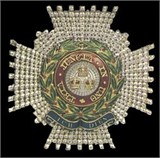
Order of the Bath
SIR JOHN TYNDALL KT., the only son of Sir ‘William by Mary Mondeford, was ten years old when his father died, and was then already contracted to marry one of the daughters of Humphrey Coningsby, Serjeant-at-Law (afterwards a Knight and a Judge of the King’s Bench), to whom his wardship and marriage had been sold by his father.
He married accordingly Amphillis Coningsby, who died before him on 18th Jan. 1532-3, leaving nine children. A gray marble slab in the chancel of Hockwold Church bears the effigies in brass of a lady and nine children, with this inscription:
Qui~quis ens qin transieris sta. perlege, plora,
Sum quod ens, fuciainque quod es, pro me piecor ora
Obitus Amfelicie Tendall decimo octavo die Mensis Januar. A I). MccccoXXXi j”
Sir John Tyndall was one of the Knights of the Bath created on 31st May 1533 at the coronation of Queen Anne Boleyn, (30) and married secondly in 1534 Lady Winifred Fermor, the widow of Sir Henry Fermor Kt., of’ East Barsham in Norfolk. Their marriage settlement is dated 14th Dec. 26l ien. VII I. (1534), whereby Sir John charged the manor of Scales hail in Hockwold with the payment. of 421. per annum by way of jointure to Dame Winifred) She was the daughter of Thomas Cawse, an Alderman of Norwich,and was thrice married, for her first husband was Henry- Dynne Esq. of Heydon in Norfolk. She had no issue by her third husband, whom she outlived.
Sir John Tyndall died on 1st Oct. 1539 at the age of 53, seised of the following manors and estates, which were valued at 223l 10s. per annum beyond all reprises (32)
Norfolk, The manor of Hickling, value per annum
The manor and advowson of Pudding-Norton
The manor of Redenhall in Harlston . The manors of Ilsington and Clenchwarton with the advowson of Clenchwarton .
Cambridgeshire, The manor of Haslingfield
Northants, The manor of Helpston ~
Norfolk Lands called Bainys, Lands lying in Colston . The manor of Mondeford, Scale, and Stewkeys, with East Lexham and
the advowson of Hockwold
(Research of Mark W Gardner, “Gardner’s Roots, RootsWeb.com)
In the Middle Ages, knighthood was often conferred with elaborate ceremonies. These usually involved the knight-to-be taking a bath (possibly symbolic of spiritual purification), during which he was instructed in the duties of knighthood by more senior knights. He was then put to bed to dry. Clothed in a special robe, he was led with music to the chapel where he spent the night in a vigil. At dawn, he made confession and attended Mass, then retired to his bed to sleep until it was fully daylight. He was then brought before the King, who, after instructing two senior knights to buckle the spurs to the knight-elect’s heels, fastened a belt around his waist, then struck him on the neck (with either a hand or a sword), thus making him a knight. It was this “accolade” which was the essential act in creating a knight, and a simpler ceremony developed, conferring knighthood merely by striking or touching the knight-to-be on the shoulder with a sword, or “dubbing” him, as is still done today. In the early medieval period, the difference seems to have been that the full ceremonies were used for men from more prominent families.
From the coronation of Henry IV in 1399, the full ceremonies were restricted to major royal occasions such as coronations, investitures of the Prince of Wales or royal Dukes, and royal weddings. Knights so created became known as Knights of the Bath. Knights Bachelor continued to be created with the simpler form of ceremony. The last occasion on which Knights of the Bath were created was the coronation of Charles II in 1661.
From at least 1625, and possibly from the reign of James I, Knights of the Bath were using the motto Tria iuncta in uno (Latin for “Three joined in one”), and wearing as a badge three crowns within a plain gold oval. These were both subsequently adopted by the Order of the Bath; a similar design of badge is still worn by members of the Civil Division. Their symbolism, however, is not entirely clear. The ‘three joined in one’ may be a reference to the kingdoms of England, Scotland and either France or Ireland, which were held (or claimed in the case of France) by British monarchs. This would correspond to the three crowns in the badge. Another explanation of the motto is that it refers to the Holy Trinity. Nicolas quotes a source (although he is sceptical of it) who claims prior to James I, the motto was Tria numina iuncta in uno, (three powers/gods joined in one), but from the reign of James I the word numina was dropped and the motto understood to mean Tria [regna] iuncta in uno (three kingdoms joined in one).

coat of arms Tyndale
 mermaidcamp