mermaidcamp
Keeping current in wellness, in and out of the water
You can scroll the shelf using ← and → keys
You can scroll the shelf using ← and → keys
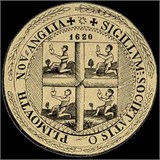
Mayflower seal
My 15th great-grandfather was a big adventurer in the New World. He sailed to Jamestown in 1609, and was on the ill fated voyage to Bermuda that inspired William Shakespeare to write the Tempest. His wife died while he was in Virginia, so he returned to England to care for his three children. He brought his family to Plymouth on the Mayflower. As an experienced colonist he was an important part of the Pilgrim’s diplomatic mission to the Wampanoag tribe. He fell from grace when he opened a shop selling alcohol. He went down a slippery slope from allowing drinking and shuffleboard playing on Sunday to selling beer for twice what it was worth. He managed to stay in town, but did some jail time for defying the court. I am thankful to you, Grandpa Stephen, for attempting so many grand adventures and defying your odds of survival.
Stephen Hopkins was from Hampshire, England. He married his first wife, Mary, and in the parish of Hursley, Hampshire; he and wife Mary had their children Elizabeth, Constance, and Giles all baptized there. It has long been claimed that the Hopkins family was from Wortley, Gloucester, but this was disproven in 1998. Stephen Hopkins went with the ship Sea Venture on a voyage to Jamestown, Virginia in 1609 as a minister’s clerk, but the ship wrecked in the “Isle of Devils” in the Bermudas. Stranded on an island for ten months, the passengers and crew survived on turtles, birds, and wild pigs. Six months into the castaway, Stephen Hopkins and several others organized a mutiny against the current governor. The mutiny was discovered and Stephen was sentenced to death. However, he pleaded with sorrow and tears. “So penitent he was, and made so much moan, alleging the ruin of his wife and children in this his trespass, as it wrought in the hearts of all the better sorts of the company”. He managed to get his sentence commuted. Eventually the castaways built a small ship and sailed themselves to Jamestown. How long Stephen remained in Jamestown is not known. However, while he was gone, his wife Mary died. She was buried in Hursley on 9 May 1613, and left behind a probate estate which mentions her children Elizabeth, Constance and Giles. Stephen was back in England by 1617, when he married Elizabeth Fisher, but apparently had every intention of bringing his family back to Virginia. Their first child, Damaris, was born about 1618. In 1620, Stephen Hopkins brought his wife, and children Constance, Giles, and Damaris on the Mayflower (child Elizabeth apparently had died). Stephen was a fairly active member of the Pilgrims shortly after arrival, perhaps a result of his being one of the few individuals who had been to Virginia previously. He was a part of all the early exploring missions, and was used almost as an “expert” on Native Americans for the first few contacts. While out exploring, Stephen recognized and identified an Indian deer trap. And when Samoset walked into Plymouth and welcomed the English, he was housed in Stephen Hopkins’ house for the night. Stephen was also sent on several of the ambassadorial missions to meet with the various Indian groups in the region. Stephen was an assistant to the governor through 1636, and volunteered for the Pequot War of 1637 but was never called to serve. By the late 1630s, however, Stephen began to occasionally run afoul of the Plymouth authorities, as he apparently opened up a shop and served alcohol. In 1636 he got into a fight with John Tisdale and seriously wounded him. In 1637, he was fined for allowing drinking and shuffleboard playing on Sunday. Early the next year he was fined for allowing people to drink excessively in his house: guest William Reynolds was fined, but the others were acquitted. In 1638 he was twice fined for selling beer at twice the actual value, and in 1639 he was fined for selling a looking glass for twice what it would cost if bought in the Bay Colony. Also in 1638, Stephen Hopkins’ maidservant got pregnant from Arthur Peach, who was subsequently executed for murdering an Indian. The Plymouth Court ruled he was financially responsible for her and her child for the next two years (the amount remaining on her term of service). Stephen, in contempt of court, threw Dorothy out of his household and refused to provide for her, so the court committed him to custody. John Holmes stepped in and purchased Dorothy’s remaining two years of service from him: agreeing to support her and child. Stephen died in 1644, and made out a will, asking to be buried near his wife, and naming his surviving children.
Pilgrim Stephen Hopkins (1581 – 1644)
is my 15th great grandfather
Constance HOPKINS (1600 – 1677)
daughter of Pilgrim Stephen Hopkins
Sarah Snow (1632 – 1704)
daughter of Constance HOPKINS
Sarah Walker (1622 – 1700)
daughter of Sarah Snow
Sarah Warren (1649 – 1692)
daughter of Sarah Walker
Elizabeth Blackwell (1662 – 1691)
daughter of Sarah Warren
Thomas Baynard (1678 – 1732)
son of Elizabeth Blackwell
Deborah Baynard (1720 – 1791)
daughter of Thomas Baynard
Mary Horney (1741 – 1775)
daughter of Deborah Baynard
Esther Harris (1764 – 1838)
daughter of Mary Horney
John H Wright (1803 – 1850)
son of Esther Harris
Mary Wright (1816 – 1873)
daughter of John H Wright
Emiline P Nicholls (1837 – )
daughter of Mary Wright
Harriet Peterson (1856 – 1933)
daughter of Emiline P Nicholls
Sarah Helena Byrne (1878 – 1962)
daughter of Harriet Peterson
Olga Fern Scott (1897 – 1968)
daughter of Sarah Helena Byrne
Richard Arden Morse (1920 – 2004)
son of Olga Fern Scott
Pamela Morse
I am the daughter of Richard Arden Morse
Richard and his second wife had a child born at sea on the Mayflower. They named her Oceanus.
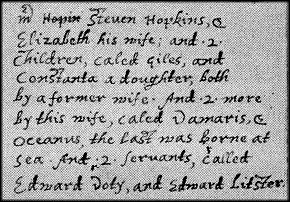
Mayflower record

Netherlands
Mary Priest was born in the Netherlands. Her father Degory was a hatter who sailed to America on the Mayflower, and died in Plymouth Colony shortly after his arrival. His wife and children, including Mary, came later to Plymouth to inherit his allotment:
DEGORY PRIEST
ORIGIN: Leiden, Holland
MIGRATION: 1620 on Mayflower
FIRST RESIDENCE: Plymouth
OCCUPATION: Hatter (when admitted as a citizen of Leiden) [Leiden 216].
ESTATE: In the 1623 Plymouth land division “Cudbart Cudbartsone” received six acres as a passenger on the Anne in 1623 [ PCR 12:6]; four of these six shares would be for the deceased Degory Priest, his widow Sarah and his two daughters. In the 1627 Plymouth cattle division “Marra Priest” and “Sarah Priest” were the tenth and eleventh persons in the second company, just after their mother and stepfather [PCR 12:9].
BIRTH: About 1579 (aged about forty in 1619 [ Dexter 630]).
DEATH: Plymouth 1 January 1620/1 [ Prince 287].
MARRIAGE: Leiden 4 November 1611 [NS] “Sara Vincent, widow of Jan Vincent” [ MD 7:129-30; Leiden 216]; Priest is said to be of London. She was sister of ISAAC ALLERTON and married (3) Leiden November 1621 (betrothed 25 October 1621 [NS]) GODBERT GODBERTSON [Leiden 101].
CHILDREN:
i MARY, b. say 1612; m. by about 1630 PHINEAS PRATT.
ii SARAH, b. say 1614; m. by about 1632 JOHN COOMBS.
COMMENTS: Bradford includes “Digory Priest” in his list of those on the Mayflower, and in his accounting of 1651 says that Priest “died soon after … arrival in the general sickness,” but “had his wife and children sent hither afterwards, she being Mr. Allerton’s sister” [ Bradford 443, 447].
In 1957 John G. Hunt published the 1582 baptism for a “Digorius Prust” in Hartland, Devonshire [ NEHGR 111:320]; although there is nothing to connect this with Degory Priest of London, Leiden and Plymouth, it is a useful clue.
BIBLIOGRAPHIC NOTE: Degory Priest and his descendants have been given full and definitive treatment in the eighth volume of the Five Generations project of the General Society of Mayflower Descendants, compiled by Mrs. Charles Delmar Townsend, Robert S. Wakefield and Margaret Harris Stover, and edited by Robert S. Wakefield (Plymouth 1994). The Great Migration Begins
Sketches
PRESERVED PURITAN View Full Context

Mayflower increase
Mary Priest (1613 – 1689)
is my 12th great grandmother
Daniel Pratt (1640 – 1680)
son of Mary Priest
Henry Pratt (1658 – 1745)
son of Daniel Pratt
Esther Pratt (1680 – 1740)
daughter of Henry Pratt
Deborah Baynard (1720 – 1791)
daughter of Esther Pratt
Mary Horney (1741 – 1775)
daughter of Deborah Baynard
Esther Harris (1764 – 1838)
daughter of Mary Horney
John H Wright (1803 – 1850)
son of Esther Harris
Mary Wright (1816 – 1873)
daughter of John H Wright
Emiline P Nicholls (1837 – )
daughter of Mary Wright
Harriet Peterson (1856 – 1933)
daughter of Emiline P Nicholls
Sarah Helena Byrne (1878 – 1962)
daughter of Harriet Peterson
Olga Fern Scott (1897 – 1968)
daughter of Sarah Helena Byrne
Richard Arden Morse (1920 – 2004)
son of Olga Fern Scott
Pamela Morse
I am the daughter of Richard Arden Morse
She married Phineas Pratt, a joiner, who was part of a group that got into trouble with both Pilgrims and Natives:
Phineas Pratt was a member of a company of men sent from England by Thomas Weston. They arrived in New England in 1622 on three ships : the Sparrow, Charity and Swan (Pratt was a passenger on the Sparrow, the first to arrive). The approximately 67 men, many of them ailing, arrived with no provisions. The Pilgrims supported them throughout the summer of 1622.
In the fall of 1622, the Weston men left to colonize an area north of Plymouth called Wessagusset. They soon fell into difficulties through behaving, generally, in a very foolish and improvident fashion. They also severely angered the local Native Americans by stealing their corn.
Massasoit, sachem of the Wampanoags, informed the Plymouth colonists that there was a conspiracy among the Natives of the Wessagusset area to massacre the Weston men. Myles Standish prepared to head north with a small company of Plymouth men to rescue Weston’s men.
The same message was also delivered by one of Weston’s men, who came to Plymouth in March of 1623 “from the Massachusetts with a small pack at his back.”
Phineas Pratt was the man with the backpack. He had secretly snuck out of the Wessagusset settlement, traveling for several days without food through a snowy landscape on his 25-mile journey.
Myles Standish and a small contingent (minus Phineas, who was still recovering from his arduous journey) headed to Wessagusset to recognize Weston’s men. The Plymouth contingent killed several Native Americans in the process (for which, they were roundly scolded by their pastor, John Robinson). Soon afterwards, Weston’s group abandoned Wessagusset. Sometime in late 1623, Phineas joined the Plymouth settlement.
Sometime before May of 1648, when he purchased a house and garden in Charlestown (now a part of Boston), Pratt left Plymouth. In 1662, Pratt presented to the General Court of Massachusetts a narrative entitled “A declaration of the affairs of the English people that first inhabited New England” to support his request for financial assistance. The extraordinary document is Phineas Pratt’s own account of the Wessagusset settlement and its downfall.
Phineas Pratt was by profession a “joiner.” “Joining” was the principle method of furniture construction during the 17th century. “Joiners” were highly skilled craftsmen who specialized in this work; their skills were valued more highly than those of a carpenter.
Phineas Pratt married Mary Priest, daughter of Degory and Sarah Allerton Vincent Priest (the sister of Mayflower passenger Isaac Allerton, Sarah had been married to Jan Vincent and widowed before she married Degory Priest). Degory Priest journeyed to Plymouth on the Mayflower, his wife and two daughters intended to join him later. Priest died during the first winter. Before sailing for America, the widowed Sarah Allerton Vincent Priest married Godbert Godbertson, who became Mary Priest’s stepfather. The family (mother, stepfather and two daughters) were among the passengers of the Anne and Little James, arriving in Plymouth in 1623.
Phineas was probably born about 1593, Mary was probably born about 1612. It seems likely, given the probably age of their oldest child at the time of her death, that they married about 1631 or 1632. Phineas and Mary Pratt had 8 children.
According to his gravestone in the old Phipps Street Cemetery, in the Charlestown area of Boston, “Phinehas Pratt, agd about 90 yrs, decd April ye 19, 1680 & was one of ye first English inhabitants of ye Massachusetts Colony.” (Mayflower Descendant, Vol. 6, p. 1-2).

Priest and Pratt

Sears family graveyard
My 10th great grandmother married a Mayflower Pilgrim, Richard Sears. Dorothy Jones was born about 1603, daughter of George and Agnes (_____) Jones of Dinder, Somerset. She married Richard Sears of Plymouth Colony by 1637. “Cady [i.e., Goody] Seares was buried the 19th of March [16]78[/9]” at Yarmouth.Their 3 children: i PAUL, b. about 1637 (d. Yarmouth 20 February 1707/8 in 70th year [gravestone]); m. by 1659 Deborah (eldest child aged thirteen on 3 July 1672, said to be daughter of George Willard. ii DEBORAH, b. about 1639 (d. Yarmouth 17 August 1732 “within about one month of 93 years of age;” m. by 1661 Zachariah Paddock (eldest child aged seventeen on 2 February 1678. iii SILAS, b. say 1641; m. by about 1665 Anna, probably daughter of James Bursell of Yarmouth
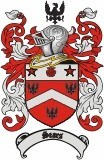
Sears COA
My 11th Great grandfather was so totally kicked out of England:
JOHN BOURCHIER, so named after his father, “he married MARIE L. daughter of PHlLIP VAN EGMONDE, of that city, and acquired with her a large fortune, principally in money. With this he was enabled to purchase property in Essex, adjoining the lands which he hoped soon to recover as his lawful patrimony. Amongst the estates thus bought were Bourchier and Little Fordham Manors, both of which had in former times belonged to his ancestors. But his return to England was resisted by those who were deeply interested in keeping at a distance so formidable a claimant to many of their broad acres. Strenuous and energetic were the efforts JOHN BOURCHIER SEARS made to remove the obstacles which intervened to keep him in exile; but all to no purpose. His opponents were inexorably hostile, and even threatened him with a prosecution, as a participator in the gunpowder plot, if he ventured to set foot in England. The attainder, it must be remembered, which hung over his grandfather, had never been removed, and still impended over the family at the time of his death in 1629.”
He left two sons and two daughter, RICHARD, JOHN, MARIE, and JANE, the three latter settled in Kent; the eldest son
“worn out by his parents’ want of success to recover their English possessions, determined at his father’s death to quit England for ever. He accordingly took passage, with a party of Puritans, for New England in America, and landed at Plymouth in Massachusetts on the 8th of May, 1630. Here he became the founder of a family which has attained wealth and honours in the New World, and died in 1676, leaving behind him three sons, KNYVET, PAUL, and SYLAS. “In the year 1851, a descendant of this family, the Honourable DAVID SEARS, of Boston, visited Colchester in company with a friend, Mr. H. G. SOMERBY, of London, and inspected with much interest the monuments in St. Peter’s Church. With a view to perpetuate the recollection of the ties that attached his family to the town of Colchester, Mr. SEARS caused a brass tablet to be engraved, and obtained the permission of the late Vicar (the Rev. S. CARR), for its erection on the North wall of the Church.”
This brass is divided into three columns, with the copies of the memorials on either side. The central column is headed by a coat of arms bearing the mottoes “EXALTAT HUMILES” and “HONOR ET FIDES”. Beneath is repeated the motto “Exaltat humiles” and the following:
Worth is better than wealth, Goodness better than nobility, Excellence better than distinction. To their Pilgrim Fathers, a grateful posterity. The outer columns transcribe the following memorials: Sacred to the Memory of Richard Sears, son of John Bouchier Sears and Marie L. Van Egmont in lineal descent from Richard Sears of Colchester and Ann Bouchier Knyvet, England. he landed at Plymouth in 1630, Married Dorothy Thacher and died in Yarmouth in 1676. Sacred to the Memory of Knyvet Sears eldest son of Richard Sears of Yarmouth, born in 1635, married Elizabeth Dymoke and died in England in 1686. Sacred to the Memory of Paul Sears, second son of Richard Sears born in 1637, married Deborah Willard and died in Yarmouth in 1707. Sacred to the Memory of Sylas Sears, third son of Richard Sears, born in 1639, married and died in Yarmouth in 1697. Sacred to the Memory of Daniel Sears, son of Knyvet Sears of Yarmouth born in 1682, married Sarah Hawes and died in Chatham in 1756. Sacred to the Memory of Daniel Sears II son of Daniel Sears of Chatham born in 1712, married Fear Freeman and died at Chatham in 1761. Sacred to the Memory of David Sears I son of Daniel Sears II of Chatham born in 1752, married Ann Winthrop and died in Boston in 1816. An explanation for this plate is given along the bottom edge: ON GRANITE MONUMENTS IN THE GRAVEYARDS OF YARMOUTH, AND CHATHAM, IN MASSACHUSETTS, NEW ENGLAND, IN NORTH AMERICA, ARE THE ABOVE INSCRIPTIONS TO THE MEMORY OF THE DESCENDANTS OF THE SAYERS OF ALDHAM, AND COLCHESTER. 1830.
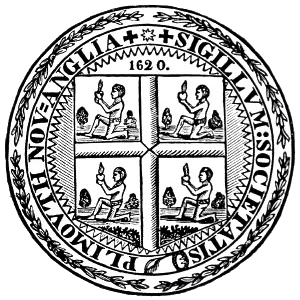
Plymouth Colony Seal
This is the will of my 10th great grandfather who arrived on the Mayflower. It is interesting to note how much they had and did not have. Bless the Plymouth colony for keeping good records:
The Plymouth Colony Archive Project[Go to Biographical Profiles • Wills • Probates • Search • Archive] James Bursell October 11, 1676Plymouth Colony Wills 3(2):61#P281The Inventory of James Bursell
An Inventory of the estate of James Bursell of yarmouth who departed this life on the third of October 1676, and this Inventory taken the 11th of October 1676
L s d
Item in Meate Chattle 25 08 00
Item a Cart & wheeles & yoakes & Chaines 01 09 00
Item in barrells & other wooden ware 02 02 00
Item in pailes and seiues 00 10 00
Item in pewter 01 13 00
Item in 1 morter and pestell 00 02 00
Item 1 pott of butter 00 04 00
Item in earthenware 00 02 00
Item in Iron kettles & 2 potts 01 04 00
Item in brasse kettles & other brasse 01 16 00
Item in one warming pan 00 08 00
Item in seuerall sorts of Iron tooles 01 16 00
Item in old brasse and one spitt 00 03 06
Item in tining ware 00 01 06
Item in Cheires tables and trenchers 00 10 00
Item in armes and amunition 01 00 00
Item in a paire of tonggs and old Iron 00 15 00
Item in Corne and meale sackes 01 00 00
Item 1 feather bed & furniture to it 06 06 00
Item in wheels and Cords 00 12 00
Item in flax and linnine yarne and a baskett 02 00 00
Item 1 feather bed and furniture to it 06 05 00
Item more 1 feather bed and furniture to it 05 15 00
Item in Table linnine 01 03 06
Item in pillow Coates 01 16 00
Item in a remnant of Cloth 01 04 00
Item 17 paire of sheets 18 12 00
Item more in bolster Cases and linnine 01 10 00
Item in Cours linnine Cloth 00 11 00
Item in a parsell of linnie Cloth 00 10 00
Item in wearing apparrell and linine 12 18 00
Item a bible 00 03 00
Item in sickells 00 05 00
Item in Cushens and penistone 2 yards 00 11 06
Item in Glasses and a lanthorne 00 02 06
Item 2 Chests & a Case with bottles 00 16 06
Item 1 bull 02 00 00
Item in Mony 09 04 00
Item in debs due to the estate 16 02 06
Item the estate is debtor about 10 00 00
Item in old lumber 00 06 00
Item in an house and land 25 00 00
Item due to estate for laying 02 10 00
[156 17 06]
Iohn Hiller
Ieremiah houes
This 15 of Nouember 1676 Emett Bursell the relict of Iamos Bursell late deceased made her appeerance and Gaue oath to the truth of this Inventory before Iohn Freeman Assistant
 mermaidcamp