mermaidcamp
Keeping current in wellness, in and out of the water
You can scroll the shelf using ← and → keys
You can scroll the shelf using ← and → keys
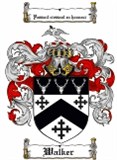
Walker Coat of Arms
My 10th great grandmother was 17 years old when she sailed from London to Salem, MA. She married John Brown soon after arrival in America and moved to New Hampshire. Her husband, who had been a baker, became a ship builder and a very wealthy man. Her sons were all farmers who fought against the Native people in King Philip’s War.
John Brown was born about 1589 in London, England. He emigrated on APR 17 1635 from London, England. *Genealogy of John Brown : “He sailed out of London on the ‘Elizabeth’, 17 April, 1635.” He immigrated in JUN 1635 to Boston, MA. (2646) *Genealogy of John Brown : They arrived in Boston in June 1635 and he remained, as tradition says, in Salem, Massachusetts, until 1638. He died on FEB 28 1687 in Hampton, NH. He is my 9th great grandfather. 9th great grandfather
*Genealogy of John Brown : “John Brown was born in London, England, in 1589 of Scottish parents. For several years he ran a bakery in London and at age fourty-six years decided to go to American Plantations. He sailed out of London on the ‘Elizabeth’, 17 April, 1635. Among his fellow passengers were Sarah Walker, age 17, (later to become his wife) and her brother, James Walker, age 15, who was formerly employed by John in the bakery. John registered at customs as a baker and they registered as servants. Sarah had been in the employ of William Brazey, a linen Draper in Cheapside.
They arrived in Boston in June 1635 and he remained, as tradition says, in Salem, Massachusetts, until 1638. Then John went to Hampton, New Hampshire, where he was one of the first settlers to receive a grant, a tract of four acres, for a house lot, lying near a branch of the river afterwards called Brown’s River. [ Note: This referrs to Browns River, along the Seabrook / Hampton Falls border.]
In 1640 he married Sarah Walker. She was born in 1618, and presumably, left London as a servant to John.” “…the fact that John Brown signed his own name, instead of a mark, shows that his education was not limited, and since he was a single man of fourty-six years when he came to this country, it is presumed that he did not leave London entirely destitute of property but was a man of considerable wealth. This may be one reason why Sarah married a man so much older than herself…”
”John built the first ‘barque’ (small boat) ever built in Hampton in 1641 or 1642 at the river near Perkins Mill.” “… it would seem that this barque was the one that John Green Wittier mentions in his poem, ‘The Wreck of River Mouth’.”
”John was a sober, industrious, hard-working and enterprising man, having made purchases of large additions to his four acres of land in various transactions in the different parts of town. He became one of the largest land owners and the third man of wealth in Hampton, being owner of four farms. He bought of John Sanders in March 1645 house and houselot with 12 acres of upland in the north field next to Morris Hobbs, six acrea of fresh meadow lying by the Great Boar’s Head next to William Fifield’s meadow.
Even though John was a selectman in 1651 and 1656, he never seemed to have taken an active part in town or church affairs. From the records of the court, it appears that John and his sons were engaged considerably in stock, and in 1654 they sued Thomas Swetman for a debt due for two fat oxen, for the want of which money they claimed to have been much damaged.
In 1673 and 1674 he and his eldest son, John, brought suit against the’prudential men’ and also against the Town of Hampton for not causing a road to be built to his farm near the Falls River toward Salisbury, Mass. (now Seabrook, NH). The courts decided in his favor and Landing Raod was built.
All five of John’s sons were farmers and were all engaged in conflict with the Indians in King Philip’s War.”…
*History of Hampton : “John Brown, born in England in 1588 or ’89, emigrated in 1635, and is said to have settled in Hampton as early as 1639. A tract of four acres, for a house-lot, lying near a branch of the river, afterward bearing his own name, was granted to him, though he seems not to have settled there. His residence was on a ten-acre lot bought of John Sanders, on which Zacceus Brown, a lineal descendant of the seventh generation, now resides. He afterward, by purchase, made large additions to this lot, and obtained various other tracts in different parts of the town.”
Note: This refers to Browns River, along the Seabrook/Hampton Falls border.
*E-Mail : “John Browne of Hampton, said to be the son of Sir Angus Browne of Scotland, came to the American colonies from London, England, where he was a baker of considerable means. Embarked on the ship “Elizabeth de London” in April 1635. While on board, he met Sarah Walker, age 17, with her brother, James, age 15, also of London. Reached Salem, Mass. in June 1635. After a few weeks residence there married Sarah and went with the first company of settlers to Hampton, N.H. Was one of richest men in the community. Was a ship builder and made several voyages to England to induce colonists to come to New England.” He was married to * Sarah Walker in 1640.
“In 1669, her brother, John, became violently ill and she cared for him in her home for several years. Sarah died 28 December, 1678 at the age of thirty-five years, being one of the fourty victims of smallpox in Charlestown.”
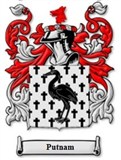
Putnam Coat of Arms
Sarah Putnam was born in England and died in Providence Rhode Island. Her journey included changing religions and fleeing to Rhode Island. The Puritans has this effect on lots of people including Quakers, Baptists, and the very famous Ann Hutchinson. Sarah married her husband, John Hutchinson, in Salem, where her family was entangled in the witch trials. Rhode Island was full of people who were persecuted in Massachusetts for religious reasons. It was not easy to get there, but it was better than being hanged as a witch. Sarah was the aunt of the accuser girls in the Putnam family, so staying would surely mean involvement with the trials. These were scary religious times, especially for women. For women’s history month I am featuring the women who survived in my family. Sarah Putnam narrowly escaped Puritan witch fever, and for that I am glad.
Sarah Putnam (1600 – 1672)
Scottish witches and the cats who were burned with them were pardoned in 2004, which sparked an interest in doing the same for the witches of Salem:
The Salem Witch Trials Written and researched by Margaret Odrowaz-Sypniewska, B.F.A.
PURITANS IN MASSACHUSETTS:
Puritans landed in Massachusetts in December in 1620, during the reign of James I of England, while they were trying to reach the Virginia Colony. A storm at sea directed them north.
Since many people could not afford the price of passage to the American colonies, they indentured themselves to the ship’s captain or another colonist. It usually took five to seven years to pay the money used for passage to the New World. After this time was up, their masters were required to provide their indentured servants with farm tools, seed to grow their own crops, and other essentials they needed to make it on their own.
By 1630 the population of Massachusetts was around 2,000 people. It was then that Governor John Winthrop would begin his first term of office. The Massachusetts Bay Colony would not have a royal standing until May 12, 1686. Most women had as many as twenty-five (25) pregnancies in their life. Families generally consisted of twenty-five people including grandparents, parents, children and their wives. The average life expectancy was forty-five years of age. There were many that lived into their nineties, while children were at the greatest risk during the first years of their lives. Pregnant women were at high risk of dying in childbirth. Most women had to work before and after the birth of their children because the early colonial times were hard and everyone had to work long and difficult hours to survive.
Dying was a regular part of life. Mortality rates were as high as 75% in the early years. Most Puritans were Calvinists. Presbyterians were the model for English Calvinists.
Most Puritans held that:
People were personally responsible for their own actions and beliefs.
People must be educated to read and interpret the Bible.
People should not allow themselves to follow a corrupt minister.
Literacy and education should be highly regarded.
See my Timeline of Events in the Early New England Colonies.
SALEM, MASSACHUSETTS:
The year 2002 marked the 310th anniversary of the witchcraft hysteria in Salem, Massachusetts. In October of 2004, Stanley Usovicz, mayor of Salem, MA. said that he is considering pardoning those persecuted during the seaport town’s infamous 17th century witch trials” (Judith Kane, 19). He said the the 315th anniversary, in 2007, would be a good time to put pardons into effect.
Eighty-one Scottish witches were pardoned, in 2004, in Prestonpans. Most witches were convicted on the basis of spectral evidence [ghosts, apparitions, and other objects of dread) or evil spirits or voices were heard. The Prestonpans, a seaside resort in Scotland, east of Edinburgh, pardoned all “witches” were convicted, including the cats that were burned along with their owners.
Salem, Massachusetts got its name from Jerusalem. Salem was known as Salem Farms, and today is known as Danvers.
Danvers, MA.:
Danvers is located seventeen (17) miles north of Boston, and is bordered by Salem (present) and Beverly. The town of Danvers still has some of the architectural structures from its older days.
Danvers was known as “Salem Village” in the 17th century, and there are still over a dozen houses in Danvers dating from that era, many of which are associated with the witchcraft tragedy of 1692. Danvers became independent from Salem in 1752, because the Salem witch trials were, in part, a result of the the border disputes (as explained in this article and others). Danvers was established to end these hostile feelings.
“The existence of demons and the efficacy [effectiveness] of witchcraft were accepted facts throughout the world in 1692. The Puritans of Salem Village were certain of the devil’s hand in every incident of evil they suffered, from petty misfortune to apalling tragedy. Witches and agents of ‘the ould deluder’ Satan delivered to the people of the commonwealth all manner of torments: deadly epidemics of smallpox; murderous raids by Indians; and ignorant children” (Kenneally, 37).
The Witches of Salem were hanged. This was less painful than the burning of witches in Europe. They thought the burning of a witch was the only way to release the evil, since the Devil would be forced to exit the melting body through the smoke.
Witchcraft in Massachusetts singled out:
spinsters [unmarried beyond the usual age of marriage]
barren women
the ugly
the extremely successful
the independant
the reclusive
the litigious [prone to lawsuits]
the willful.
In New England, no one that confessed was put to death. Those who denied the accusations and fought to clear their names were hanged. The first victim of witchcraft, in New England, was Margaret Jones of Charlestown, Massashusetts. Margaret was hanged, in 1648, for giving herbal cures. Margaret was a physician and some thought she had the “malignant touch” after some of her patients started vomiting or suffered violent seizures. Prison guards testified that they saw a small child run out of the witch’s cell into another room, and then vanished. This was enough to prove that she was under the influence of evil. Anne Hibbons, the sister of the Deputy Governor Bellingham of Massachusetts was hanged, in the words of John Norton for “having more wit that her neighbors” (Buckland, 402-411). Anne’s husband died in 1654. He was a Boston merchant, a Colonial Agent, and an assistant Agent. She was “quarrelsome,” and had “supernatural” knowledge. She was accused in 1655, and was executed in 1656.
New England Colonists – MA Origins Salem, Massachusetts
THE TOWNE FAMILY CONNECTION TO WITCHCRAFT:
My family lines go back to William Towne and Joanna [nee Blessings]. William was born circa 1600 in Braceby, England. He married Joanna on March 25, 1620, in Braceby. William Towne was cited by the Archbishop of Norwich County, England, for failing to appear for communion and was noted as a “Separatist” [not a member of the Church of England]. His family was Puritan. William Towne came to America on the Rose from Great Yarmouth. They left Ipswich and arrived in June 1637. William came to Massachusetts with his wife and children.
1) Rebecca Towne was born on February 21, 1621, in Great Yarmouth, England. Rebecca married Frances Nurse, a tray maker, on August 24, 1644. Rebecca was hanged for witchcraft on June 19, 1692, [at age 61] in Salem, MA.
2) John Towne was born February 16, 1623 in Great Yarmouth, England. John married Phebe Lawson, and he died in 1672 [at age 49], twenty years before his sisters were accused of witchcraft.
3) Suzanna Towne was born October 20, 1625 in Great Yarmouth, England. Suzanna died in 1672 [at age 47], twenty years before her sisters were accused of witchcraft.
4) Edmund Towne was born July 28, 1628, in Great Yarmouth. Edmund married Mary Browning in 1652 [at age 24].
5) Jacob Towne was born on March 11, 1632. Jacob married Catherine Symonds, daughter of Samuel Symonds (1693-1772) and Elizabeth Andrews, on June 26, 1657. He died November 22, 1704, in Topsfield, MA. [at age 72]. His father-in-law and Jacob’s two siblings all died in 1672.
6) Mary Towne was born August 24, 1634. He married Isaac Estey. Mary was hanged on September 22, 1692, during the Salem witch trials [at age 58].
These are the last children born in England.
7) Sarah Towne – born on September 3, 1639, in Salem, MA. He married (1) Edmund Bridges (2) Peter Cloyes. Sarah Cloyes was accused of witchcraft, in 1692 [at age 53], and put into prison, and later released. She pressed charges for her unlawful arrest and the killing of her sisters. She received three gold sovereigns for each of them. The movie, Three Sovereigns For Sister Sarah is about this event.
8) Joseph Towne – born on September 3, 1639, in Salem, MA. Joseph married Phebe Perkins in 1665.
When Joanne [nee Blessing] Towne came to the colonies her sister, Alice [nee Blessing] Firmage, and her brother-in-law, Robert Buffam, husband of her other sister, Margaret [nee Blessing] Buffam(deceased) came together. In the will Robert Moulton, a master shipwright, left twenty shillings to Goodwife Buffum and Joshua Buffam in 1655. Joanne Blessing was known as “Mother Goose.” However, her sister was the real Mother Goose.
William Goose was a mariner, and his wife Mary [nee Blessing] also came to Salem from Great Yarmouth. An article called “The Great Yarmouth Company of Migrant Families” by Barbara MacAllan is featured in The New England Historical and Genealogical Register. Volume 154, April 2000, 215-217. A William Goose, was first living in Salem in 1635, and they were admitted to the church on August 6, 1637 (Farmer, 126). McAllan states that William Goose was the master of the Mary Anne of Yarmouth, and the Sparrow and that his wife Mary ran their trading business from Salem, Massachusetts. William had moved to Charlestown, MA. by 1658. Apparently they traded in the Caribbean Islands and brought passengers from Great Yarmouth to New England. The Goose family was said to be prominent in the Ormesby cluster of villages, north of the port of Great Yarmouth. Gregory Goose, fisherman left his grandsons (?) William and Gregory, Jr. his fishing boat the William, in 1570. Gregory, Sr.’s will was dated 1629.
The Goose:
The Goose was once considered a mystic bird:
The Egyptian god Ra was born to a goose.
The Goose is a symbol of fertility in China.
The Sumerians thought that their god known as Gula used a chariot pulled by four white geese.
In ancient times, the goose was thought to stand for constancy and had immortality like the gods.
The Romans thought the goose was a symbol of fate and vigilance, because a flight of geese warned the Romans that the Gauls were attacking Rome.
There was the goose that laid the golden egg, thus symbolizing plenty.
Today we think of a “silly goose” as a foolish person.
Old Mother Goose When she wanted to wander Would fly through the air On a very fine gander.
Mother Goose had a house; It stood in the wood Where an owl at the door As sentinel stood.
CLICK HERE for the rest of this rhyme.
Mother Goose:
Some trace “Mother Goose” to a French book by Charles Perrault (1697) that had the subtitle Contes de ma mère L’Oye which translates into Tales of Mother Goose.. This name has been associated with Queen Goosefoot, Charlemagne’s mother (see Bertrada), who was a patron of children. Mother Goose was first published, in 1719, in Boston by Thomas Fleet. His mother-in-law was Elizabeth Vergoose.
So it seems unlikely that the Pilgrims thought of the title of Mother Goose in this way. Apparently since Mother Goose rode a goose rather than a broom (a tool of the witch) that the Goose might have been thought of as a Satanist bird?
The “Mother Goose” of book fame, is a watchful nanny, who tells stories and teaches rhymes to her charges. Mother Goose rides on a gander as Gula, the Sumerian god, had used geese to pull his chariot.
Mother Goose is portrayed as a wise old woman, who lives in the woods. Her owl stands as sentinel.
The Owl:
The owl was the symbol of the goddess Athena in Greece. Athena is the goddess of wisdom. Owls used to live in Athens by the tens of thousands. They were revered as Athena’s favorite pet, who spied on her enemies.
Some Native Americans think of the owl as a harbinger of death. “I Heard the Owl Call My Name” refers to the fact that they believe that Owls appear to you before you die. In Denmark the owl is seen on most bookstores as books deliver knowledge.
On March 20, 1647, William Towne and Francis Nurse asked for a grant of land. Francis Nurse married William’s daughter, Rebecca Towne.
By 1651, William Towne bought land in Topsfield, from William Paine of Ipswich, and William Howard. This property bordered Topsfield and Salem and was known as “Salem Farms” and “Salem Village.” The Towne children were all brought up in a house which was located at the intersection of South Main Street and Salem Street. This house was built in 1651.
In 1681, Jacob Towne testified, at age 50, that the house of William Towne, was bought some 30 years previous and William paid for it with wheat. Remember barter was the way most people obtained property at this time. When his father moved to Topsfield, he was said to have sold the twenty acre lot to Nathaniel Felton.
In 1682 Jacob Towne acted as an witness to end the bitter dispute between Salem and Topsfield over the boundary line. This event is considered to have birthed repercussions that resulted in the witchcraft accusations in 1692.
Jacob Towne (b. 1632), the son of William Towne, married Catherine Symonds on June 26, 1657 in Salem. Essex County, MA., and his daughter, Deliverance Towne, was born on August 5, 1665, in Topsfield, Essex, MA. Jacob is listed as paying taxes in 1664-1669 in Salem, Essex, MA.
Joanna Towne filed a series of lawsuits against the Rev. Thomas Gilbert, a Topsfield minister. She thought “People should not allow themselves to follow a corrupt minister.” Gilbert gave testimony that he was not well, which he said was the reason for his erratic behavior. However, all the town knew that he drank too much, and that caused his erratic loud and abusive tongue. The court ruled in favor of Joanna and the other principal parishioners of Topsfield. Mr. and Mrs. Gilbert, Capt. John Gould, Thomas Perkins, and their wives told of the Rev. Gilbert drinking of too much wine on that occasion after giving them all the sacrament.
Joanna’s husband William died June 24, 1673. His estate was NOT immediately proved since he left no will. William was a basketmaker and gardener. Joanna administered his estate, which was not divided between his heirs until her own death in 1682 in Topsfield. Joanna was buried at Pine Hill Cemetary in Topsfield, Essex County, MA. William’s sons were Edmund, Jacob, and Joseph Towne. His daughters were Rebecca [Towne] Nurse, Sarah [Towne] Bridges, and Mary [Towne] Estey. Joanna [Blessing] Towne was accused of witchcraft in Salem, MA., but was never convicted of the crime. Three of Joanna’s daughters were accused of witchcraft. Arthur Miller’s play, The Crucible, was based on this trial.
Rebecca [nee Towne] Nurse, wife of Francis Nurse was 71 years of age when she was accused of witchcraft, on March 23, 1692. She had been bedridden for over a year. Over thirty-nine (39) people signed a petition regarding Rebecca’s good character. Ann Putnam said she saw a Black Man with Rebecca [see below].
The Black Man
In Hereditary Witchcraft, there is mention of “the man in black,” whom the Inquisitors thought was the devil. In witchcraft, the man in black was an emmisary from the Old Religion (witchcraft) to the peasant folk. He was known as Capinera to the Italian Strega (witch). The priesthood/priestesshood of the Old Religion still existed and periodically sent out figures in an attempt to ensure the survival of the Witch Cult. They often approached outcasts who sought solitude in the woods.
My The Towne Family Connection
THE “WITCH BITCHES” AND SAMUEL PARRIS:
Rev. Samuel Parris was the son of Thomas Parris of London, and was born circa 1653. The English-American clergyman was ordained on November 15, 1689. He lived in Barbados for a time, and we can assume that he had knowledge of Voodoo ceremonies there. Voodoo was frightening to whites. Samuel brought two Carib Indian servants back from Barbadoes with him to Salem, MA. They were named Tituba and her husband was called John Indian. Samuel was not a popular man amongst his congregation, and he was fearful that he would lose his job. He did leave his ministry in June 1696 (4 years after the witch trials), and he moved to Concord. Concord records show him still living there in 1705.
Samuel’s slave Tituba told his daughter and their friends stories of witches and other things that went bump in the night. She also filled their heads with supersititions about how to tell a witch.
Rev. Samuel Parris gave a sermon called “One of Them is a Devil,” and Sarah Cloyse, daughter of Joanna [nee Blessing] Towne, remembers well that her own mother was accused just ten years earlier. Even though her mother was acquitted, the memories still remained. Sarah did not want that ordeal to begin anew. Shortly after walking out of the Meeting Hall, during Parris’ sermon, Sarah [nee Towne] Cloyse was herself accused of witchcraft on April 3, 1692.
In 1711 Samuel Parris preached again in Dunstable, but only for about six months. His will was dated in 1720. By this time, Samuel was living in Sudbury, Middlesex County, Massachusetts. Samuel owned a plantation near “Spick Town” called Cotton Boll. Cotton Boll was located near Bridgetown, Barbadoes. Samuel’s uncle, John Parris, Esquire, and his father, Thomas Parris, both had interests in this plantation. In Thomas’s will dated September 4, 1673, this property was left to Samuel. Samuel, in turn, left it to Noyce Parris, a graduate of Harvard College (1721) and Samuel Parris, Jr. of Sudbury, Middlesex County, Massachusetts. Noyce and Samuel Jr. were his sons.
Four months after Sarah Cloyse was accussed, the “Witch Bitches” were identified by John Willard. John was the Deputy Constable of Salem, and he spoke out against the girls thinking that they were using their accusations as a vehicle for attention and to “get even” with people they did not like. John Willard was himself victimized and was hanged on August 19, 1692, for witchcraft:
He named the following girls as perpetrators:
Samuel’s daughter Elizabeth Parris – seven (7) years of age. Lived with Samuel Parris.
“Betty” Parris’ cousin Abigail Williams was nine(9) years of age, and lived with Samuel Parris.
Ann Putnam, Jr. seemed to have done the most accusing and identification of “witches.” (age 12) Her mother always took her daughter’s part and generally was the dangerous gossip that put thoughts into Anne’s head. Anne later confessed, at age 26 [fourteen years later], that she and the others were wrong in their accusations. Ann lived with Thomas Putnam, Jr.
Mary Walcott (age 17) lived with Thomas Putnam, Jr. The aunt of Mary Wolcott turned to “white magic” to break the witch’s spell on her niece.
Elizabeth Hubbard (age 17) lived with Dr. William Griggs.
Elizabeth Booth (age 18)
Susannah Sheldon (age 18) was known as “Widow Shelton.”
Mary Warren (age 20) lived with John Proctor as his maid-servant.
and Sarah Churchill (age 20) lived with George Jacobs, Sr.
Sarah Bibber of Wenham.
Mercy Lewis (age 19) was a servant in the house of Thomas Putnam.
At the time of the witch trials, Mercy Short a New England servant girl of a Boston family, had violent fits and visions of the devil from 1690 until 1693.
At first the girls were taken to doctors to discover why they were having fits and other ailments. A Dr. William Griggs, of Salem, told their parents and guardians that: “The evil is upon them.” He believed them to be victims of the evils of witchcraft.
*****
Criss – Cross, double cross, Tell the monster to get lost! [A Colonial American chant to ward off evil spirits].
*****
By the end of September 1692, at least 150 people (including children) were arrested, and 19 were hanged.
THE AMERICAN WITCH TRIALS OF 1692:
Thirty years before the Salem Witch Trials, Cotton Mather (1663-1728) clergyman, author, and scholar, was born in Boston, MA., on February 12, 1663. He was named after his grandfather John Cotton. He wrote Memorable Providences Relating to Witchcraft and Possessions. Cotton Mather was a member of the Royal Society, England’s scientific association. Cotton graduated from Harvard College in 1678, and got his M.A. in 1681. In 1655 he was ordained as a minister, and succeeded his father as pastor of the Second Church, in 1723. Cotton was the eldest son of Increase Mather (1634-1723).
Prior to the Salem witchcraft trials, only five executions on the charge of witchcraft are known to have occurred in Massachusetts. Such trials were held periodically, but the outcomes generally favored the accused.
Cotton Mather thought Salem was filled with “witches.” The magistrates during these trials were John Hathorne (1641-1717) (ancestor of Nathaniel Hawthorne the author), and Jonathan Corwin (1640-1718).
Cotton married (1) Abigail Philips, daughter of Col. John Philips (2) the widow Hubbard, daughter of John Clark and (3) Widow George, daughter of Samuel Lee. Cotton and his first two wives had 15 children. Mather’s own wife was accused of witchcraft at one point.
Formal charges of witchcraft were brought against 156 people from 24 towns and villages in the county of Essex, Massachusetts. While it is true that the majority of the accused were innocent, it is also true that some were guilty. The accused were:
Sarah Osborne was thought (by Nevins) to have been born in Watertown, Massachusetts, however there are no records to prove this. She was accused of witchcraft on February 29, 1692. She was about forty-nine (49) years old and was a bedridden cripple. She held property, in trust, after the death of her husband Robert Prince. Robert was a tailor, in Salem, and was admitted to the church on January 16, 1642 and became a deacon. Robert died on June 4, 1674 (at age 61). Robert married Sarah [nee Warren], on April 5, 1662. Thirty years after their marriage, Sarah died, in jail, on May 1692. Her husband, Robert Prince had been dead for 18 years by 1692.
The town all thought that Sarah “lived in sin” before marrying her next “husband.” Sarah was known to have enjoyed the company of men, and she did not attend church services regularly, so she was the subject of much gossip. The main scandal regarding Sarah Osborne was that she had been left in charge of her minor son’s estate. In her husband’s (Robert Prince’s) will, James Prince and Joseph Prince were to inherit Robert’s lands and house when they reached adulthood (age 18). James was 18 in 1686 (6 years before his mother’s death) and Joseph was 18 in 1690 (2 years before his mother’s death). Captain John Putnam and Thomas Putnam were both Robert Prince’s neighbors and the executors of his will.
In 1686, they tried to give James his inheritance and Sarah offered resistence. The Putnam’s became even more aggressive about Robert Prince’s will, in 1690, when Joseph was old enough to inherit. After Sarah took up with her Irish manservant, Alexander Osborne, she paid off his indenture. Alexander testified that Sarah was a witch or would be soon. He also said that he saw a “strange tit or wart” on Sarah’s body (Hanson, 32-33). Alexander Osborne remarried shortly after Sarah’s death. Robert Prince’s sister had married into the Putnam clan in 1662, so Anne Putnam, Jr., Sarah’s accuser, was the Prince boy’s second cousin. See the similar background of Sarah Good. Sarah Good had too many husbands for the townspeople’s comfort. Both Sarahs were among the first three to be accused, along with Tituba, the Barbadoes servant of the Putnams. Sarah Osborne was the first to die in jail. All three women had Anne Putnam, Jr. or Abigail Williams, Anne’s cousin, as their main accuser. Both girls lived in the Putnam house.
Martha Corey was accused on March 19, 1692, by Ann Putnam (age 12} Martha Corey was thought to had a half-caste bastard son. It was thought her son’s father was a Native American. Martha was hanged on September 22, 1692. Her husband was Giles Corey and Martha Corey was adamantly against witchcraft.
Giles Corey came to Salem in 1659. Giles who had earlier testified against his own wife, Martha, was lead to a field beside the Salem jail in September 1492. To extract a confession, Giles was pressed to death because he would NOT say if he was “guilty” or “not guilty” – thus making the trial unable to begin. He would not repent his sins. Giles refused to the end and his final words were “More weight, more weight.” Giles died two days before his wife on September 19, 1692 (at age 77). He took two days to die.
Tituba, the Carib Indian slave from Samuel Parris’s plantation in Barbados, confessed and was sent to prison. The basis for trying Tituba seems to be simply the fact that she was from the West Indies. The Puritans also believed the American Indians worshiped the devil. In early Salem, the Devil was often described as a “black man.”
Sarah [nee Solart] Poole Good was the daughter of John Solart of Wenham, Essex and Elizabeth? He father was said to have staged his own drowning on April 29, 1672. So his “death by suicide” was considered “sinful.” Sarah’s brother, John Solart, Jr. inherited twice as much as her and her sisters, Hannah, Martha, Abigail, and Bethia; and her brother Joseph Solart. Sarah married Daniel Poole of Salem. In 1686, Ezekial Woodward, Sarah’s step-father, testified that he gave Sarah and her husband, William Good, her inheritance, as stated in her father’s will. The Thorndike property of William Good (a weaver) and his wife Sarah [nee Solart] was seized in November 1686; after Sarah was said to have given her free consent to its sale on August 30, 1686. William Good wrote a letter to the General Court, after May 1710, regarding his wife. He started that 1)his wife Sarah was in prison for four months before she was executed, and 2)that his family lost both a sucking child and 3)his daughter, Dorcas Good, who spent seven to eight months in chains, and was terrified to such a degree that she had little reason to govern herself. William’s letter was dated May 1710, and was most likely written so that he might get some sort of settlement from the court. The court said that what happened to Dorcas was brutal, but that William himself had testified against his own wife and thus was the one responsible for his own family’s fate.
Before this happened a dispute developed regarding the sale of this land. Sarah was accused of witchcraft by a neighbor, so when she was accused again on February 29, 1692, the townspeople rallied to that thought. Sarah was born in Wenham, and was thirty-one (31) years old at the time of the witch trials.
Sarah was thought to have been a prosperous woman, but she ended up a beggarwoman who smoked a pipe, after two unfortunate marriages. Sarah was left her without an inheritance. She was thought to have gotten in her present state by being slovenly in her work and personal affairs. Sarah’s daughter, Dorcas Good, died in prison (at age 5). Sarah was said to have signed “The Devil’s Book,” as testified to by Tituba, Samuel Parris’ servant. It was thought that Sarah Good’s misfortune might have influenced Sarah Osborne’s decision to keep her husband’s land until her death. I find it very telling that both of these women were accused at the same time. Neither one should have been left penniless. Most wives were allowed to keep their husband’s goods until their own death. Sarah was hanged on September 22, 1692. Before her death she cursed Rev. Nicholas Noyes saying that God would give him blood to drink.
Mary Sibley asked Tituba’s husband, John Indian, to make a “witch cake” of barley and children’s urine for her dog who suffered from ague [a fever like malaria with fits], and to save her niece Mary Walcott from being bewitched.
Ann Pudeator was accused on May 12, 1692, and was hanged on September 22, 1692.
Mary Parker was accused in August 1692, and was hanged on September 22, 1692, along with forty others from Andover.
Mrs. Cary of Charlestown was accused May 28, 1692, was arrested, and later released.
Even Captain John Alden, of Boston, Suffolk County, Massachusetts was accused on May 31, 1692, and thrown into prison. He managed to escape four months later. John was the son of the Pilgrim John Alden and Priscella Mullins who came to Plymouth on 1620 on the Mayflower. John Jr. went from Duxbury to Boston as early as 1659. He died March 14, 1702.
John Willard was born January 15, 1657, to Simon Willard of Concord. John Willard was arrested May 12, 1692. John was a farmer and Deputy Constable in Salem was the first one to recognize that the eight “witch bitches” were to blame for all the frenzy in his village. He was charged by the girls and Mrs. Putnam on seven indictments. He was hanged on August 19, 1692. John Willard’s wife was named Margaret.
John Proctor refused to believe in witchcraft and so he was accused on April 11, 1692, and hanged on August 19, 1692. John Proctor was known to have a violent temper. His will did not include his wife.
Martha Proctor was accused even though she a devout churchgoer.
Elizabeth Proctor was found to be pregnant and was reprived. A pregnant woman would not be executed, on the grounds that her child was an innocent. However, after the child’s birth, the mother could be executed. Elizabeth Proctor’s child was not born until January 1693, when the witchcraft frenzy was over.
Suzanna [nee North] Martin was baptized in Olney, Buckinghamshire, England, on September 30, 1621. Suzanna’s parents were Richard North and Joan Bartram/Bertram. Her mother died when she was young. Suzanna came to Massachusetts with her father, her step-mother, and at least one sister. Suzanna North married George Martin, a blacksmith, on August 11, 1646, in Salisbury, MA. Richard North, her father, was one of the first proprietors of Providence, and he was made a freeman in 1641. Suzanna and George Martin had eight (8) children. In 1669, Suzanna [nee North] Martin was said to be a witch. This all began because William Sargent, Jr. told people that Suzanna had an illegitmate child with Captain Wiggins. Her husband George sued Thomas Sargent for saying that his son, George Martin, Jr. was “a bastard.” Suzanna and three more were hanged on June 19, 1692, twenty-three (23) years after Sargent’s original accusations.
Bridget Bishop was first accused in 1680 for her husband death. It is not known if this was for (1)Goodman Wasslebee’s death or for (2) Edward Bishop’s death, but she was acquitted. She was, this time, accused on April 18, 1692 [12 years later]. Bridget was an inn keeper. She was accused of being a temptress in her red push-up bodice. By this time Bridgett was an elderly woman. Bridget was hanged on June 10, 1692. Bridget was married to husband three (3)Edward Bishop. It was Edward that said she was a witch. They had no children.
Margaret Scott was hanged on September 22, 1692.
George Burroughs was accused on April 30, 1691. George was said to have had a feud with Ann Putnam, Sr. He was a defrocked clergy. He graduated from Harvard College in 1670. He served Salem from 1680 until 1682. In fact, he moved to Wells, Maine and they brought him back to Salem for trial. He was thought to be “The Black Man” in charge of the witches’ coven. Burroughs was about to be set free, when Cotton Mather said the Devil spoke for him when he recited the Lord’s Prayer correctly. Since Burroughs was a minister he would surely have known the Lord’s Prayer as he said it each Sunday. This was a case of “damned if you do, damned if you don’t.” George Burroughs was hanged on August 19, 1692.
Martha Carrier of Andover was accused on May 28, 1692, and hanged on August 19, 1692.
George Jacobs, Sr. was hanged June 19, 1692, despite a withdrawal of charges. He said: “You tax me for a wizard. You may as well tax me for a buzzard, I have done no harm.” His granddaughter, Margaret Jacobs, testified against him. Margaret Jacobs herself was charged when she withdrew her testimony against her grandfather. She had a abcess in her head and was treated before she could stand trial. She outlived the witch hunt.
The Daughters of William Towne, brother to my own line: Suzanna Towne (1605-1664), wife of Deacon Thomas Hayward (1601-1686)
***Rebecca (nee Towne) Nurse, daughter of Rebecca Blessing, was thought to have used witchcraft to kill Benjamin Holton after an argument over his pigs breaking out of their pens and destroying her crops and land. She was accused on May 2, 1692. Ann Putnam, senior reported that Jonathan Putnam’s child was killed because she told Rebecca that it was no wonder her and her sisters were witches, since her mother Joanne [nee Blessing] Towne was a witch. On July 3, 1692, Rebecca Nurse was excommunicated from the First Church of the Town of Salem. Rebecca was the mother of eight children, who all pleaded for her life. Rebecca and five others were hanged on June 19, 1692. Her family was not welcomed to take communion until 1699. In 1711, Nurse’s family was later compensated by the government for her wrongful death.
***Sarah Cloyse was accused on April 3, 1692. She had stormed out of the meeting house when Rev. Parris gave his sermon “One of them is a Devil.” The girls pointed to Sarah as a Devil worshipper. She was jailed the next day and spent four months in chains. Her case was dismissed on January 1693.
***Mary [nee Towne] Esty was accused on April 1, 1692, and hanged on September 22, 1692. Her sister was Rebecca Nurse.
My Other Lines in Salem, Massachusetts
Elizabeth Howe, of Topsfield, was accused on April 21, 1692, and was hanged June 19, 1692.
Alice Parker was accussed on May 12, 1692, and was hanged on September 22, 1692.
Wilmot “Mommy” Redd was known as the town witch of Marblehead. She was accused May 28, 1692, and was hanged on September 22, 1692.
Margaret Scott was accused in September 1692, and hanged on September 22, 1692.
Samuel Wardwell, of Andover, was accused on September 1, 1962 and was reprieved. Sarah was the widow of Samuel.
Sarah Wilds/Wildes was married first (1) to Edward Bishop, the son of Edward Bishop, the founder of the church in Beverly, Massachusetts. Sarah was accused on April 21, 1692, and was hanged on Tuesday, June 19, 1692.
Sarah Bridges was married to Edward Bishop, son of Edward Bishop, Sr. Edward was said to have founded the church in Beverly, MA.
Lydia Dustin died in jail.
“Dr.” Roger Toothaker died in jail. He bragged that he and his daughter killed a witch.
Rebecca Eames/Ames was reprieved.
Dorcas Hoar was reprieved, even though he had been dabbling in the occult for years by telling fortunes in Beverly. She was said to have predicted her husband, William Hoar’s death.
Abigail Hobbs was reprieved
Mary [nee Perkins] Bradbury was born on September 3, 1615, in Hillmorton, Warwickshire, England. She was the daughter of my relatives, JOhn Perkins and Judith Gates. Her husband was Captain Thomas Bradley of MA. Mary’s case was defended by Major Robert Pike, a magistrate of Salisbury. She was released.
The Perkins Family – with more information about Mary’s trial
Mary Lacy
Abigail Faulkner was found to be pregnant and was reprieved.
Ann Foster died in prison.
In 1693, fifty-two (52) people were released. While only three were sentenced to death.
Sir William Phips, Governor of New England gave his own wife a reprieve along with seven others. Phips decided to discount the validity of the spectral evidence and halted further trials. Several others wanted to continue the trials but they were set aside.
January 15, 1697, was designated a day of repentance and the legislature annulled all the the convictions, and in 1711, Massachusetts made restitutions to the victim’s families.
Elizabeth Warren (1629 -1715) was the daughter of John Warren of Nayland, Suffolk, England, and his wife Margaret ?. Elizabeth was accused of witchcraft by Cotton Mather, but was released. Elizabeth married James Knapp (1627-1715) in 1715.
Candy, a Negro slave from Barbadoes was examined on July 4, 1692. She told them she was a witch.
My relative, Joanne Blessings, wife of William Towne died in 1682. She was accused of witchcraft and was reprieved. Later on, three of her daughters would be accused.
Arthur Miller’s play, The Crucible was about the Salem Witch Trials. The Crucible was written in 1953. Miller’s account of the Salem Witch Trials closely paralled political events of 1950’s in the United States.
By the 18th century Witch Trials were beginning to come to a halt all over the world.
In 1727, the last Scottish witch was executed.
By 1735, under George II, the Witchcraft Act was passed. It stated that witchcraft did not exist.
but, in Poland, there were still witch hunts during the 18th century.
In 1775, nine old Polish women were hanged for witchcraft.
After this the witchcraft era, in Europe and America, seemingly ended. However before the nations returned to sanity, many innocent lives were taken and many families were ruined both financially and spiritually.
I see a trend towards this type of thinking emerging once again. Here’s hoping that the new religious right does not make the same mistakes. People who speak out should not be persecuted or threatened. Our nation was built upon the idea that “Freedom of Speech” and “Freedom of Religion” should reign. Let it be a lesson to us all to not let this sort of religious fervor, towards those who do not fit in, develop into some sort of master plan for their death.
For more information about witchcraft in the past and today see: Witches’ League For Public Awareness. Although I may not agree with all they say there, I am of the opinion that we should “live and let live.”
*****
RingSurf: New Ring Join List Previous Next Random Previous 5 Next 5 Skip Previous Skip Next
Powered by RingSurf
SOURCES:
Boyer, Paul and Stephen Nissenbaum. Salem Village Witchcraft: A Documentary Record of Local Conflict in Colonial New England. Boston: Northeastern University Press, 1993.
Buckland, Raymond. The Witch Book: The Encyclopedia of Witchcraft, Wicca, and Neo-paganism. Detroit: Invisible Ink, 2002.
Crow, W.B. A Fascinating History of Witchcraft, Magic, and Occultism. Hollywood: Wiltshire Book Company, 1970.
Eisenkraft-Palazzola, Lori. Witches: A Book of Magic and Wisdom. New York: Smithmark Publishers, 1999.
Farmer, John. A Genealogical Register of the First Settlers of New England. Baltimore: Genealogical Publishing Compnay, Inc., 1998.
Farrington, Karen. Hamlyn History of the Supernatural. London: Hamlyn Limited, 1997.
Fraser, Antonia. The Lives of the Kings and Queens of England. New York: Alfred A. Knopf, 1975.
Glass, Justine. Witchcraft: The Sixth Sense. Hollywood: Wiltshire Book Company, 1965.
Grimassi, Raven. Hereditary Witchcraft: Secrets of the Old Religion. St. Paul: Llewellyn Publications, 1999.
Jung, Erica. Witches. New York: Harry N. Abrams, Inc. Publisher, 1981.
Hanson, Chadwick. Witchcraft at Salem. New York: George Braziller, 1962.
Kerr, Daisy. Keeping Clean: A Very Peculiar History. New York: Franklin Watts, 1995.
Maple, Eric. The Domain of Devils. New York: A.S. Barnes and Company, Ltd., 1966.
Marshall, Richard. Witchcraft: The History and Mythology. New York: Barnes & Noble Books, 1998.
Morrison, Sarah Lyddon. The Modern Witch’s Book of Symbols. Secaucus, N.J.: A Citadel Press Book, 1997.
Larner, Christina. Enemies of God: The Witch Hunt in Scotland. Edinburgh: John Donald, 2000.
Pickering, David. Cassell Dictionary of Witchcraft. London: Cassell, 1996.
Roach, Marilynne K. The Salem Witch Trials. New York: Taylor Trade Publishing, 2002.
“Salem, MA, May Pardon Witches” by Judith Kane. Renaissance Magazine. Volume 10, Issue 44.
Taylor, Dale. The Writer’s Guide to Everyday Life in Colonial America (1607-1783). Cincinnati: Writer’s Digest Books, 1997.
Walsh (editor), Michael J. Lives of Popes. London: Salamander Books Limited, 1998.
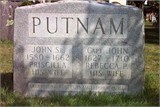
Priscilla Gould Putnam
The family feud between the Goulds and the Putnams (my 12th gg parents) of Salem sparked the famous witch trials. All the living children of my 12th great grandmother, Priscilla Gould, were accused of witchcraft during the hysteria. It is well documented in old English:
Priscilla Gould (1590 – 1662)
is my 12th great grandmother
Salem Witch Trials Notes from the “Topsfield Historical Collection”:
The marriage of John Wild and Sarah Averill within a year of the death of Priscilla (Gould) Wild, seems to have caused trouble between Wild and two relatives of his first wife, Lieut. John Gould, her brother, and Mary, wife of John Reddington, her sister, who lived on an adjoining farm. The first intimation of this state of affairs, appears in the statement John Wild, Jr., made in his will, regarding his Gould inheritance, in order that his father might not be troubled by any claims of his uncle Gould. In 1686 the breach was widened by the testimony of John Wild against John Gould on the charge of treason. Shortly after this episode, Mary Reddington began to spread witchcraft stories about Sarah Wild through the town and it is to her authority that most of the evidence against Sarah Wild may be traced. When John Wild threatened to sue her husband for slander, she denied her previous statements, but evil had already been wrought. Now the Goulds were related to the Putnam family of Salem Village, in whose home the delusion originated and who were the chief accusers in the trials to come and it is probable that the accusations brought against Sarah Wild by their Topsfield connections, were brought to the willing ears of the afflicted girls of the Putnam family and proved the immediate cause of her arrest. On April 21, 1692, the following warrant was issued, casting terrible affliction upon several Topsfield homes, none more so than that of John Wild, for the warrant named not only his wife but his daughter and son-in-law, Edward and Sarah Bishop of Salem Village. “Salem Aprill the 21th 1692. “There being Complaint this day made (before vs) by Thomas Putnam and John Buxton of Salem Village Yeomen, in behalfe of theire Majests, for themselves and also for severall of theire neighbours Against William Hobs husbandman Delive his wife, Nehemiah Abot junior weaver, Mary Easty, the wife of Isaac Easty and Sarah Wilds the wife of John Wilds, all of the Towne of Topsfield or Ipswitch and Edward Bishop husbandman and Sarah his wife of Salem Village and Mary Black A negro of Leut. Nath Putnams of Salem Village also. And Mary English the wife of Philip English Merchant in Salem for high Suspition of Sundry acts of witchcraft donne or Committed by them Lately vpon the Bodys of Anna putnam and Marcy Lewis belonging to the famyly of ye abouesd Thomas Putnam complaint and Mary Walcot ye daughter of Capt Jonathn Walcot of sd Salem Village and others, whereby great hurt and dammage hath beene donne to ye bodys of said persons abouenamed therefore craued Justice. “You are therefore in theire Majestis names here by Comrequired [sic] to Apprehend and bring before vs William Hobs husbandman and (???) his wife Nehemian A bot Junr weaver Mary Easty and all the rest abouenamed tomorrow aboute ten of the clocke in the forenoon at the house of Lieut Nathll Ingersalls in Salem Village in order to theire examination Relaiting to the premises abouesayd and here of you are not to faile. Dated Salem Aprill 21th 1692 John Hatorne Jonathan Corwin Assists. “To George Herrick Marshall of Essex: and or all of ye Constables in Salem or Topsfield or any other Towne.” On the next morning marshal Herrick arrived at the Wild home in Topsfield. By the irony of fate, Ephraim Wild, the only son of John and Sarah, was the constable of Topsfield that year, and the marshal brought the warrant to him. What a tragedy is laid bare in these old and musty records–the young man finding his mother’s name upon the warrant, witnessing her arrest and sad departure from her home and family, never to return and then slowly turning to his duty–the arrest of the remaining victims. His first petition for the release of his mother gives some details of the scene at the house of William Hobbs:–“the woman did show a ueriey bad spirit when I sezed: on might almost se revenge in har face she looked so malishosly on mee.” At her examination, which apparently occurred before that of Sarah Wild, Deliverance Hobbs confessed herself a witch, and “to be revenged of mee” as Ephraim Wild says, accused his mother of tormenting her. She declared that the shape of Mrs. Wild tore her nearly to pieces, and passed her the Devil’s book to sign, bribing her with promises of new clothes. The account of the examination of Sarah Wild is still preserved: The examination of Sarah Wilds at a Court held at Salem village 1692. by the wop = John Hathorn & Jonathan Corwin The Suffers were seized with sou [fits as soon as] the accused came into the Court Hath this woman hurt you Oh she is vpon the beam Goody Bibber that never saw her before says she saw her now vppon the beam & then said Bibber fell into a fit What say you to this are you guilty or not? I am not guilty. Sir. Is this ye woman? speaking to the afflicted. They all or most said yes, and then fell into fits. What do you say are you guilty I thank God, I am free. Here is clear evidence that you have been not only a Tormenter but that you have caused done (some) to signe the book the night before last. What you say to this? I never saw the book in my life and I never saw these persons before. Some of the afflicted fell into fits. Do you deny this thing that is? All fell into fits and confirmed that the accused hurt them. Did you never consent that these should be hurt? Never in my life She was charged by some with hurting John Herrick’s mother. The accused denied it. Capt. How gave in a relation and conformation of the charge made. She was ordered to be taken away and they all cryed out that she was on the beam and fell into fits. The evidence of the witnesses that appeared against her has been lost, but from other papers the names of some of them may be learned. “John Herrick’s mother,” mentioned in the examination, was probably Mary Reddington, whose daughter Mary had married John Herrick. This same Mary Reddington, whose hatred seems to have been insatiable, was responsible for the testimony of the wife of Samuel Simonds of Topsfield, with whose daughter Ephraim Wild had made a marriage engagement which had been broken when the girl’s mother believed the gossip circulated by Mary Redington. “And now she will reward me” the heart-broken son says in a petition. The only other witness, of whom there is any record, is the little daughter of Martha Carrier, one of the accused. She tells the story of a witches’ meeting, held at night in Mr. Parris’s field, at which Sarah Wild and many others were present, pledging the Devil in wine cups filled with blood, a story which received full credit from the most learned and serious men of the time. Mrs. Wild was taken to Boston gaol on May 13. In the interval of over two months which elapsed before her execution, her husband and son did everything in their power to prove the evidence against her false and save her from death. Three of their petitions are preserved and are as follows: “John Wiells testifieth that he did hear yt Mary the wife of Jno Reddington did raise a report yt my wife had bewitched her and I went to ye saide Jno Reddington and told him I would arest him for his wife: defaming of my wife but ye said Reddington desired me not to do it for it would but waste his estate and yt his wife would a done wth it in tyme and yt he knew nothing she had against mye wife–after this I gotmy brother Averill to goe to ye said Sarah Reddington and my sd Bror told me yt he told ye said Sarah Reddington yt if she had anything agst my wife yt he would be a means and would help her to bring my wife out: and yt ye said Sarah Reddington replyed yt she new no harm mye wife had done her. “The testimony of Ephraim Willdes aged about 27 or therabouts testifieth and saith that about fouer yers agoe there was som likly hode of my hauing one of Goody Simonds dafter and as the maid towld me hur mother and father were ueriey willing I should haue her but after some time I had a hint that Goodeey Simonds had formerly said she beleud my mother had done her wrong and I went to hare and toch Marke how that is now dead who dyed at the Eastward: along with me and before both of us she denied that euer she had eneey grounds to think any halme of my mother only from what Goodiey Redington had saide and afterwards I left the house and went no more and euer since she (has) bene ueriey angriey with me and now she will reward mee. Ephraim Willdes” “This may inform this Honered Court That I Ephraim Wildes being constabell for topsfield this yere and the Marshall of Sallem coming to fetch away my mother he then showed me a warrant from authority directed to the constabel of topsfelld wherein was William Hobbs and Deliverence his wife with many others and the Marshall did then require me forthwith to gow and aprehend the bodyes of William hobs and his wife which acordingly I did and I have had sereous thoughts many times sence whether my sezing of them might not be some case of here thus a cusing my mother thereby in some mesure to be revenged of me the woman did show a ueriey bad spirit when I sezed: on might allmost se revenge in har face she looked so malishosly on me as fore my mother I neuer saw any harm by har upon aniey such acout neither in word nor action as she is now acused for she hath awlwais instructed me well in the christian religon and the wais of God euer since I was abell to take instructions and so I leve at all to this honored Cort to consider of it Ephraim Willdes” All the efforts of the family were in vain, however, and Sarah Wildes was executed on July 19, with Sarah Good, Rebecca (Towne) Nurse, Elizabeth How and Susannah (North) Martin. Edward and Sarah Bishop managed to make their escape from prison, and Phoebe (Wild) Day, the other daughter of John Wild, who was imprisoned on the same charge at Ipswich, was apparently never tried.
 mermaidcamp