mermaidcamp
Keeping current in wellness, in and out of the water
You can scroll the shelf using ← and → keys
You can scroll the shelf using ← and → keys
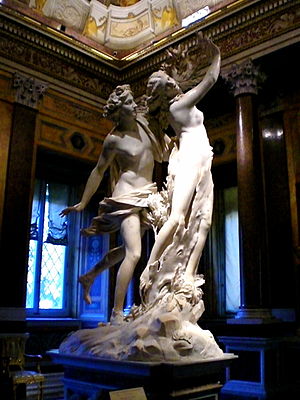
Apollo and Daphne
The myth of Daphne is an illustration of fate and revenge of the gods. She was part of cruel power play between two archers, Apollo and Eros. The proud Apollo bullied Eros who shot two arrows, one tipped in gold and the other in lead to find revenge. Eros, the son of Aphrodite enchanted his arrows to cause total lust and desire in the golden arrow victim, and total hatred in the recipient of the lead tipped arrow. Apollo was hit with the golden arrow, and the object of his desire, Daphne, was struck by the lead one. The struggle between lust and chastity is ended when Daphne turns into a laurel tree. She begged her father to transform her body forever in order to escape Apollo’s desire for her.
Eros is the god of sexual desire. He marries Psyche, a goddess/human representing the human soul. They have one daughter Hedone. Hedone is the quest for pleasure with only good consequences. The English word hedonism is derived from this word, but has a meaning far from the original. Eros is also known in Rome as Cupid. We know this god as a logo for Valentine’s Day, a time when we honor a Christian martyr by consuming mass quantities of cheap chocolate. Neither Valentine nor Cupid will be impressed nor honored with a mindless mandatory purchase of tacky gifts. That is neither pleasurable nor sexy. Eros, Apollo, Daphne, and Aphrodite are archetypes that exist in the human pantheon of possibility. Which one will you play on Valentine’s Day?
Voluptas is her Roman name..and yes there has been a degradation of her pure party essence. I blame the lack of sensitivity of the Roman army for the entire problem…
LikeLike
You are always right about Euro history..but some of the Roman decimation and all was distinctly anti festive.
LikeLike
me, I’m staying home with a nice cup of tea and my cats. Must be getting old!
LikeLike
[…] laurel leaves to award victors in the contests started at the Pythian games, in honor of Apollo who revered the plant. The custom spread and the laurel assumed a meaning of victory or triumph in Rome. A sudden […]
LikeLike


 mermaidcamp