mermaidcamp
Keeping current in wellness, in and out of the water
You can scroll the shelf using ← and → keys
You can scroll the shelf using ← and → keys

effigy and grave
My 20th great grandfather was born c. 1276, at Pleshey Castle, Essex, England
He died on Mar. 16, 1322, in the battle of Boroughbridge, in Yorkshire, England. He is buried at Friars Preachers Church, York, Yorkshire, England.
4th Earl of Hereford. Born the son of Humphrey de Bohun, 3rd Earl of Hereford and Maud de Fiennes at Pleshy Castle in Essex. In November 1302 he married King Edward I’s daughter, Elizabeth Plantagenet, with whom he had at least eleven children. He held the office of Lord High Constable. He took part in the king’s Scottish campaigns in the early 1300s. After the flight of Robert Bruce, de Bohun received many of Bruce’s confiscated properties. At the battle of Bannockburn in 1314, he charged the Bruce, and his nephew Henry de Bohun was killed, but he was taken and held for ransom. He was eventually exchanged for Bruce’s wife and daughter. He numbered among the peers who opposed Edward II’s excesses and banished the royal favorite, Piers Gaveston. In 1316 he successfully led the suppression of the revolt of Llywelyn Bren. By 1322, however, he fell in with Lancaster’s rebellion against Edward II, and as the rebels approached Boroughbridge in Yorkshire, de Bohun led an attempt to storm the bridge held by royal pike men. The Earl, however, was run through by pike men secreted beneath the bridge and died in the field, his gruesome death breaking the advance, and spelling failure for the rebels. (bio by: Iola)
Humphrey VIII Earl Hereford amp DeBohun (1276 – 1322)
20th great-grandfather
William Earl of Northampton De Bohun (1312 – 1360)
son of Humphrey VIII Earl Hereford amp DeBohun
Lady Elizabeth Countess Arundel Countess DeBohun (1350 – 1385)
daughter of William Earl of Northampton De Bohun
Elizabeth Duchess Norfolk Fitzalan (1366 – 1425)
daughter of Lady Elizabeth Countess Arundel Countess DeBohun
Lady Joan De Goushill Baroness Stanley (1402 – 1459)
daughter of Elizabeth Duchess Norfolk Fitzalan
Countess Elizabeth Sefton Stanley (1429 – 1459)
daughter of Lady Joan De Goushill Baroness Stanley
Thomas Sir 8th Earl of Sefton Molyneux (1445 – 1483)
son of Countess Elizabeth Sefton Stanley
Lawrence Castellan of Liverpool Mollenaux (1490 – 1550)
son of Thomas Sir 8th Earl of Sefton Molyneux
John Mollenax (1542 – 1583)
son of Lawrence Castellan of Liverpool Mollenaux
Mary Mollenax (1559 – 1598)
daughter of John Mollenax
Gabriell Francis Holland (1596 – 1660)
son of Mary Mollenax
John Holland (1628 – 1710)
son of Gabriell Francis Holland
Mary Elizabeth Holland (1620 – 1681)
daughter of John Holland
Richard Dearden (1645 – 1747)
son of Mary Elizabeth Holland
George Dearden (1705 – 1749)
son of Richard Dearden
George Darden (1734 – 1807)
son of George Dearden
David Darden (1770 – 1820)
son of George Darden
Minerva Truly Darden (1806 – 1837)
daughter of David Darden
Sarah E Hughes (1829 – 1911)
daughter of Minerva Truly Darden
Lucinda Jane Armer (1847 – 1939)
daughter of Sarah E Hughes
George Harvey Taylor (1884 – 1941)
son of Lucinda Jane Armer
Ruby Lee Taylor (1922 – 2008)
daughter of George Harvey Taylor
Pamela Morse
Name: HUMPHREY VIII de Bohn
Given Name: HUMPHREY VIII de
Surname: Bohn
Suffix: Earl Of Hereford & Essex
Birth: 1275-1276 in Pleshey Castle, Essex, England
Death: 16 Mar 1321-1322 in Boroughbridge, Yorkshire, Eng
Burial: Aft 16 Mar 1321-1322 Friars Preachers Church, York, Yorkshire, England 1 1
Event: Alt. Birth 1275 Pleshey Castle, Essex, England
Event: Alt. Death 16 Mar 1321-1322 Boroughbridge, Yorkshire, England
Event: Killed Try To Force Boroughbridge, Yorkshire Death
Humphrey de Bohun VIII, born c1276, slain at Boroughbridge 16 Mar 1321/2,Earl of Hereford and Essex, Lord High Constable of England; married 14Nov 1302, Elizabeth Plantagenet, born Aug 1282, died 5 May 1316, daughterof King Edward I of England and Eleanor of Castile. [Magna Charta Sureties]
Humphrey de Bohun,Earl of Hereford, Earl of Essex, and Lord HighConstable. In the 30th Edward I[1302-3], this nobleman gave and granted unto the king, by a formal conversance, the inheritances of al his landsand lordships, as also of his earldoms of Hereford and Essex, and the constableship of England, which, upon his marriage with Elizabeth Plantagenet, widow of John, Earl of Holland, and dau. of the king, were regranted to him and entailed upon his issue lawfully begotten by thatlady; in default thereof, and from and after the death of himself and wife, then the lordship of Plessets and certain other lordships in Essexand elsewhere, together with the constableship, should remain wholly tothe king and his heirs forever.
In the 34th of the same reign he had a grant similarly entailed of the whole territory of Annandale, in Scotland. After this his lordship was in the wars of Scotland and was taken prisoner in the 7th Edward II(1313-14), at the disastrous battle (to the English) of Stryvelin. But he was exchanged for the wife of Robert Bruce, who had long been captive in England. From this period we find him constantly engaged in the service of the crown until the14th year of the king’s reign [1321-22], when Edward learning that the earl was raising forces in the marches of Wales against Hugh de Spencer the younger, sent him a peremptory command to forbear, which his lordship not only refused obeying but forthwith joined Thomas,Earl of Lancaster, in the great insurrection then incited by that nobleman for the redress of certain grievances and the banishment of the Spencers.In his proceeding, however, he eventually lost his life, being run through the body by a soldier at the battle of Boroughbridge, in Yorkshire, where his party received so signal a defeat on 16 March, 1321.
The earl had issue five surviving sons and two surviving daus., viz.,John, Humphrey, Edward, William, Humphrey, Alianore, and Margaret. The earl was s. by his eldest son, Sir John de Bohun, K.B. [Sir Bernard Burke, Dormant and Extinct Peerages, Burke’s Peerage, London, 1883, p.57, Bohun, Earls of Hereford, Earls of Essex, Earls of Northampton, and High Constables of England]
21st century
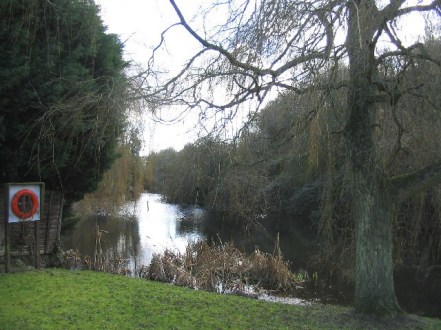
The moat, all that remains of Pleshey Castle
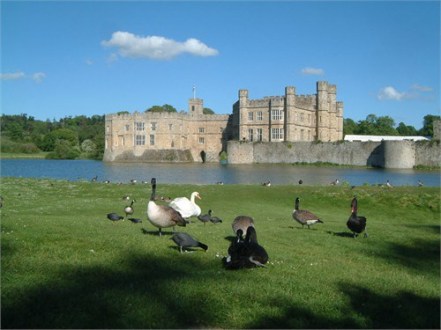
Badlesmere Castle
My 19th great-grandmother was born in the castle above, located in Kent, England, in 1313. She died in London in 1356 and is buried in the Black Friars Churchyard.
Baroness Elizabeth de Badlesmere de Mortimer de Bohun
Wife and widow of Sir Edmund de Mortimer, son of Sir Roger de Mortimer and Joan de Geneville. They were married 27 June 1316 in the chapel at the manor of Ernwood in Kinlet, Shropshire and had two sons; Sir Roger and John. Sir Edmund would die at Stanton Lacy in early 1332.
Secondly, wife of Sir William de Bohun, son of Sir Humphrey de Bohun and Elizabeth of England, the daughter of King Edward I. They were married by papal dispensation dated 13 Nov 1335, being related in the 4th degree, and had one son, Sir Humphrey, Earl of Hereford and Essex, and one daughter, Elizabeth, who married Sir Richard de Arundel.
Elizabeth died testate 08 June 1355, buried at Black Friars, London.
Inscription:
Church destroyed in the Great Fire of London. Graves predating 1660 did not survive. AKA St. Ann’s Black Friars.
Elizabeth Countess of Northampton 3rd Baroness of Badlesmere De Badlesmere (1313 – 1356)
19th great-grandmother
Lady Elizabeth Countess Arundel Countess DeBohun (1350 – 1385)
daughter of Elizabeth Countess of Northampton 3rd Baroness of Badlesmere De Badlesmere
Elizabeth Duchess Norfolk Fitzalan (1366 – 1425)
daughter of Lady Elizabeth Countess Arundel Countess DeBohun
Lady Joan De Goushill Baroness Stanley (1402 – 1459)
daughter of Elizabeth Duchess Norfolk Fitzalan
Countess Elizabeth Sefton Stanley (1429 – 1459)
daughter of Lady Joan De Goushill Baroness Stanley
Thomas Sir 8th Earl of Sefton Molyneux (1445 – 1483)
son of Countess Elizabeth Sefton Stanley
Lawrence Castellan of Liverpool Mollenaux (1490 – 1550)
son of Thomas Sir 8th Earl of Sefton Molyneux
John Mollenax (1542 – 1583)
son of Lawrence Castellan of Liverpool Mollenaux
Mary Mollenax (1559 – 1598)
daughter of John Mollenax
Gabriell Francis Holland (1596 – 1660)
son of Mary Mollenax
John Holland (1628 – 1710)
son of Gabriell Francis Holland
Mary Elizabeth Holland (1620 – 1681)
daughter of John Holland
Richard Dearden (1645 – 1747)
son of Mary Elizabeth Holland
George Dearden (1705 – 1749)
son of Richard Dearden
George Darden (1734 – 1807)
son of George Dearden
David Darden (1770 – 1820)
son of George Darden
Minerva Truly Darden (1806 – 1837)
daughter of David Darden
Sarah E Hughes (1829 – 1911)
daughter of Minerva Truly Darden
Lucinda Jane Armer (1847 – 1939)
daughter of Sarah E Hughes
George Harvey Taylor (1884 – 1941)
son of Lucinda Jane Armer
Ruby Lee Taylor (1922 – 2008)
daughter of George Harvey Taylor
Pamela Morse
I am the daughter of Ruby Lee Taylor

Central Burial Grounds Boston
My 10th great-grandfather was banished from the colony of Massachusetts, and signed the Portsmouth Compact. He did not stay in Rhode Island for very long, but returned to live in Boston, where he was one of the citizens who purchased the Boston Common and donated it to the town. I am not sure how he became un-banished, but his case is not the only un-banishment in our family. He kept his property in Rhode Island and had extensive holdings in Boston as well. He was in the wool business.

Portsmith Compact
Samuel Wilbore and wife Ann, came to America before 1 December, 1633 and lived in Boston. May have come 4 September, 1633 on ship “Griffin” He was a merchant, had a ship, probably sold cloth and lumber and was in the wool business.
He and 6 men under him guarded the gate at Roxbury. He sold his home on what is now Washington St. to Samuel Sherman. In 1634, he and William Blackstene bought “Boston Commons” and gave it to the town. Made “Freeman” 4 March 1633/4 and with John Porter and Philly Sherman bought Aquidneck Island, (Rhode Island). He was banished from Boston 30 August 1637, and disarmed 20 November 1637 and went to Portsmouth, R.I. because of his association with a religious group lead by Anne Hutchinson, Mr. Wheelwright and possibly Roger Williams. Anne Hutchinson was the unauthorized Puritan preacher of a dissident church discussion group.
Rhode Island had become a haven for persecuted religious sects. These people, called Antinomians, believed that the moral laws as taught by the Church of England were of no value and that the only law that should be followed was that of the Gospel. Quakers, who eventually merged with the Antinomians, established a meeting house on Aquidneck in 1657.
11 January 1638/9 he was constable at Portsmouth. He owned land at Nt. Wolliston (now Quincy). With Ralph Earle he built a planing mill at Portsmouth,1640. By 1645 was back in Boston, though he kept his Portsmouth and Taunton land, and lived on Mill Street. He was wealthy and gave to the 1st free school in America. The early spelling was “Welleboro”, a Norman name. In 1626 he was a “juror” in Sible Hedington, Essex, England.
Samuel Wilbore (1595 – 1656)
10th great-grandfather
Dorothy Wilbore (1617 – 1696)
daughter of Samuel Wilbore
Elizabeth Albro (1646 – 1720)
daughter of Dorothy Wilbore
Benjamin Congdon (1676 – 1756)
son of Elizabeth Albro
William Congdon (1711 – 1755)
son of Benjamin Congdon
Frances Congdon (1738 – 1755)
daughter of William Congdon
Thomas Sweet (1765 – 1844)
son of Frances Congdon
Valentine Sweet (1791 – 1858)
son of Thomas Sweet
Sarah LaVina Sweet (1840 – 1923)
daughter of Valentine Sweet
Jason A Morse (1862 – 1932)
son of Sarah LaVina Sweet
Ernest Abner Morse (1890 – 1965)
son of Jason A Morse
Richard Arden Morse (1920 – 2004)
son of Ernest Abner Morse
Pamela Morse
Samuel Wilbore was born in Jan 1595 in Sible Hedingham, Essex, England. He died on 29 Sep 1656 in Boston, Suffolk, Massachusetts. Samuel married Ann Smith on 13 Jan 1619/1620 in Sible, Hedingham, Essex, England.
Samuel Wildbore, said to have been born in 1585, came to Boston not later than 1633, and was admitted to the First Church of Boston on December 1/1633. His house was on the neck of land between the island and the mainland, now called Washington St. and later Milk Street. In 1634 Samuel and others bought the Boston Common for the town, from William Blackstone whose ownership was acknowledged by an entry in the Town Records as early as 1633 by which it was agreed that William Blackstone shall have 50 acres set off to him near his house in Boston. The Town Records have the following statement in reference to Samuel Wildbore’s share in the purchase of the Common. “The 10th day of the 9th month 1654: Item, Edmund Quinsey, Samuel Wildbore, William Baulston, Edward Hutchinson the elder, and William heesborough, constable, shall make and assess all the rates, viz, a rate of œ30 to William Blackstone”. Blackstone sold the whole parcel of land except 6 acres immediately adjoining his house. On August 6/1635, Samuel gave œ10 towards a free school, the first in America. Governor Winthrop gave a like amount, and none other gifts exceeded this amount. Samuel also had a piece of land on Essex St., near where the Touraine Hotel now stands. Samuel married in 1620, at Sibley Hedringham, England, Ann Smith. Most genealogies wrongly give her name as Ann Bradford. Samuel was made freeman on March 4/1634. He bought much property in Taunton and likewise possessed considerable holdings in Boston, evidently dividing his place of residence between the two places. While in Taunton, he with others, embraced the “dangerous doctrines” as they were then called, of Cotton and Wheelwright, for which in 1637 he was banished from the Massachusetts Colony. Acting upon the advice of Roger Williams, he and seventeen others fled to Providence, R.I., where they purchased the island of Aquidnec, (now Rhode Island) from the Naragansett Indians, and early in 1638 moved his family there and formed a colony on March 7/1638. Full details of the purchase and history of this action is contained in the Genealogies quoted, but too long to insert here. He did not remain in Rhode Island for long, and returned to Boston in 1645 and built the first iron furnace in New England at Taunton, now Raynham, on the main road from Tilicut to Taunton. He was clerk of the town board in 1638, Constable in 1639, Sergeant in 1644. He married, 2nd, before November 29/1645, Elizabeth Lechford, widow of Thomas Lechford. Date of his second marriage and date of death of his first wife Ann are not known. Samuel died July 24/1656. After his death Elizabeth married, 2nd, on December 20/1656, Henry Bishop who died in 1664: Elizabeth died in 1665. Samuel was a man of wealth and he was of very respectable standing in society, exerting a wide influence in each of the places he dwelt. His will was dated April 30/1656.
Ann SMITH-8832 was born on 13 Jan 1598 in Sible, Hedingham, Essex, England. She died on 24 Sep 1636 in Taunton, Bristol, Massachusetts. Ann married Samuel WILDBORE-8833 on 13 Jan 1619/1620 in Sible, Hedingham, Essex, England.
They had the following children.
MiSamuel WILBORE-8830 was born on 10 Apr 1622. He died in 1697. MiiWilliam WILBORE-8838 was born on 21 May 1630. He died on 15 Apr 1710.
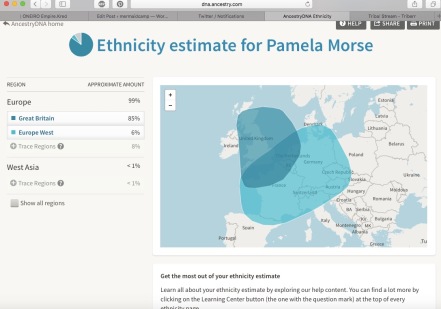
my ethnicity map
My research into family history started after both my parents had died. They each left some written material about their families, but neither parent had been particularly interested in genealogy. My father said he was Scots-Irish, which is in part true. Both parents had ancestors who immigrated to America from the British Isles in the 1600s. The DNA survey on ancestry shows that my DNA is 85% from Great Britain. When the survey was much younger and fewer participants had contributed my ethnicity was estimated at 99% from the British Isles. My “trace region” is the Caucasus area of Asia. The Asian genes may be a fluke, as explained in the accompanying material.
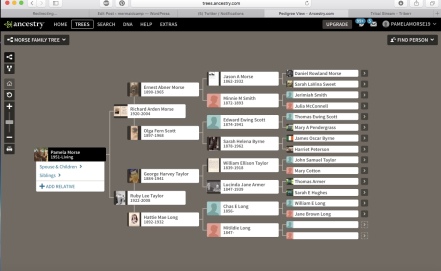
my tree
I am sure about the first three generations I have listed, but my maternal grandmother was an orphan adopted in Mississippi in a county where the courthouse burned to the ground. We have no way to find records of her natural parents. She moved to Texas with her adoptive family. Some of the branches are easy to research and verify. Others have me at dead ends. My most irksome dead end is my third great-grandfather, Thomas Peterson, born in Indiana in 1825. I keep looking for answers about his parentage but have not found any records of his birth. More official historical records are digitally added all the time, so I could still find something new that would break the case for me. It bugs me that I can trace his nephew’s line back in time, but not Thomas’.
Along the way I have discovered my own mistakes, and have also had problems pointed out to me by other ancestry enthusiasts. It is always a drag to find errors because it means you need to remove the phantom family and start again at the point you can verify the data. I have lost a few big limbs this way. I had become fond of many of the members of my unverified people. It is funny to give them up with such great emotion, since they were not really my ancestors, but I can tell you that this feels awful. I still think about them in history too. Sometimes I am angry that I made such mistakes in my research, but usually I am glad I met them (historically) and held them in my memory. When my first cousin gave me the news that I had the wrong John Taylor as my 3rd great-grandfather I was very upset. I had to admit that she had a point. This involved chopping down a limb that I had built back to the middle ages in England, with many illustrious stories along the way. Alas, they were all built on specious data. Now I am back to Jonathan Aaron Taylor, who fought in the Revolutionary War and was discharged in South Carolina..not born there. I suppose I am happy to have him even though he is not who I thought he was.
Jonathan Aaron Taylor (1760 – 1820)
3rd great-grandfather
John Samuel Taylor (1798 – 1873)
son of Jonathan Aaron Taylor
William Ellison Taylor (1839 – 1918)
son of John Samuel Taylor
George Harvey Taylor (1884 – 1941)
son of William Ellison Taylor
Ruby Lee Taylor (1922 – 2008)
daughter of George Harvey Taylor
Pamela Morse
I am the daughter of Ruby Lee Taylor
Have you ever attempted an ancestry study? It is really easy now that Ancestry.com is there to guide you. Just be careful as you roam around in that data. Not all of it can be verified, especially the family trees. Don’t copy another person’s data until you examine it carefully for errors. The ancestors have much to teach us..and one of the lessons is VERIFY your facts before you swallow them whole. Save yourself the heartache of saying good-bye to bogus relatives.
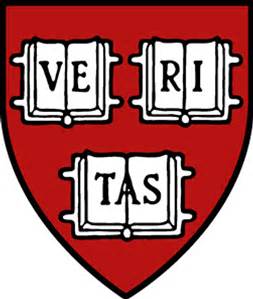
Harvard motto
In ancient Rome the goddess Veritas ruled truth and sincerity. In Greece she was known as Altheia, and is mentioned in Aesops Fables:
Aesop, Fables 531 (from Babrius 126) (trans. Gibbs) (Greek fable C6th B.C.) :
“A man was journeying in the wilderness and he found Veritas [Aletheia, Truth] standing there all alone. He said to her, ‘Ancient lady, why do you dwell here in the wilderness, leaving the city behind?’ From the great depths of her wisdom, Veritas (Truth) replied, ‘Among the people of old, lies were found among only a few, but now they have spread throughout all of human society!’”
[N.B. This fable is preserved only in a Latin text. Aesop’s Aletheia (Truth personified) becomes Veritas in the Latin.]
Her father is Saturn in Rome and Zeus in Greece. One creation story found in Aesop’s Fables tells us how she was created by Prometheus along with her arch enemy Mendacium. She is the mother of virtue. Her name is often included in mottos. Harvard’s motto is simply Veritas. The pursuit of truth was considered to be an essential part of Roman citizens’ duty. To discern and tell the truth is a full time job. Forgery and subterfuge are everywhere and always will be. The difference between Veritas and Mendacium is feet. Mendacity literally has not feet on which to stand. Veracity walks away with conviction.
Aesop, Fables 530 (from Phaedrus Appendix 5) :
“Prometheus, that potter who gave shape to our new generation, decided one day to sculpt the form of Veritas [Aletheia, Truth], using all his skill so that she would be able to regulate people’s behaviour. As he was working, an unexpected summons from mighty Jupiter [Zeus] called him away. Prometheus left cunning Dolus (Trickery) in charge of his workshop, Dolus had recently become one of the god’s apprentices. Fired by ambition, Dolus (Trickery) used the time at his disposal to fashion with his sly fingers a figure of the same size and appearance as Veritas [Aletheia, Truth] with identical features. When he had almost completed the piece, which was truly remarkable, he ran out of clay to use for her feet. The master returned, so Dolus (Trickery) quickly sat down in his seat, quaking with fear. Prometheus was amazed at the similarity of the two statues and wanted it to seem as if all the credit were due to his own skill. Therefore, he put both statues in the kiln and when they had been thoroughly baked, he infused them both with life: sacred Veritas (Truth) walked with measured steps, while her unfinished twin stood stuck in her tracks. That forgery, that product of subterfuge, thus acquired the name of Mendacium [Pseudologos, Falsehood], and I readily agree with people who say that she has no feet: every once in a while something that is false can start off successfully, but with time Veritas (Truth) is sure to prevail.”
[N.B. This fable is preserved only in a Latin text. Aesop’s Aletheia (Truth personified) becomes Veritas in the Latin.]
These fables are useful to us during the campaign season during which a large part of our job is to distinguish truth from rhetorical and cultural beliefs. It has never been more important for us to verify what we believe.

Immigrant
My 7th great-grandfather was a gentleman and a trader in Massachusetts Colony. Another descendant paid a professional genealogist to research his history. The results that follow are fascinating because she takes steps to figure out which of the various William Thomas’s my ancestor was. I have made big mistakes in my own tree on the ancestors with very common names like John Taylor. Record keeping varies from place to place and time to time. I am impressed and pleased with this expert research. I once paid for research to be done by the Somerset PA Historical Society, which I visited in person. They stiffed me and did no investigation for the fee they charged. This experience burned me on the idea of paid experts. This example is very well done. The lady who did the work is:
Diane Rapaport, Historical Consultant/Attorney Quill Pen Historical Consulting, P. O. Box 204, Lexington, MA 02420 Tel.: 781-698-7884 (866-QUILLPEN) – Fax: 781-861-6744 (888-QPFAXES) Email: diane@quillpenhistorical.com Web: http://www.quillpenhistorical.com
She does very thorough work. Thanks to James Crawford for making this public information. We appreciate your contribution, cousin.
William Thomas (1695 – 1733)
7th great-grandfather
Mary Thomas (1729 – 1801)
daughter of William Thomas
Joseph Morse III (1756 – 1835)
son of Mary Thomas
John Henry Morse (1775 – 1864)
son of Joseph Morse III
Abner Morse (1808 – 1838)
son of John Henry Morse
Daniel Rowland Morse (1838 – 1910)
son of Abner Morse
Jason A Morse (1862 – 1932)
son of Daniel Rowland Morse
Ernest Abner Morse (1890 – 1965)
son of Jason A Morse
Richard Arden Morse (1920 – 2004)
son of Ernest Abner Morse
Pamela Morse
RESEARCH REPORT for JAMES CRAWFORD
May 31, 2010
By Diane Rapaport
Research Objective
Documentation of the parents and origins of William Thomas:
b. 1695, Marlborough, MA (or Wales?)
d. 25 July 1733, Marlborough, MA
m. 19 June 1721, to Lydia Eager (b. 03 July 1696, Marlborough, MA, d. 12 Oct 1735, Marlborough, MA)
Their children:
Lovina Thomas, b. 15 Aug 1721, Marlborough, MA, d. Shrewsbury, MA
Sophia Thomas, b. 28 July 1723, Marlborough, MA, d. 24 Aug 1745
William Thomas, b. 19 Mar 1724, Marlborough, MA [Note: Per Marlborough Vital Records, year should be 1725; see below.]
Lydia Thomas, b. 30 Sep 1727, Marlborough, MA
Mary Thomas, b. 16 Feb 1729, Framingham, MA [Note: Marlborough Vital Records suggest that the birthplace was Marlborough; see below.]
Odoardo Thomas, b. 7 May 1731, Marlborough, MA
[Note: The information about William Thomas and his family, which you provided by .ged file, is unsourced. The Ancestry record “hints” in other public trees include only “OneWorldTree” and “Massachusetts Marriages” database, which are not authoritative sources.]
Summary of Research Results
Jim, I searched numerous record sources—vital records, probate records, land records, trial court records, and secondary sources (which I found online and at the Massachusetts Archives, the Middlesex County Registry of Deeds, and the New England Historic Genealogical Society)—for clues to the life and origins of William Thomas. I found much documentation about William (which I am providing to you as PDF and JPG files, posted at the “Files and Messages” page of our project at Ancestry’s Expert Connect – scroll down to the bottom of that page, where you will find the files, which you can read or download to your computer).
The search revealed other men named William Thomas in Middlesex County, Massachusetts, during the relevant time period, including a Native American from the town of Natick, the son of a blacksmith from Newton, and a “husbandman” (the colonial term for a farmer or laborer) from Lambstown in Worcester County (where, as it turns out, your William had connections). But I was able to distinguish these other men from your William Thomas, who was identified consistently in the records as a “gentleman” (and in a few instances as a “trader”), suggesting that he was of a high social rank. I also discovered in the Middlesex County Court records that he was a licensed “retailer” and probably operated a store in Marlborough; the license was transferred to his wife Lydia after his death.
I discovered that William purchased land in Framingham, the town next to Marlborough, in 1720, just before his marriage to Lydia; at the time of that land purchase, he was identified in the deed as being of Framingham, suggesting that he already lived there. I could not find any record of his purchasing property in Marlborough (although the probate records indicate that he owned real estate in the town); it is possible, since Framingham adjoins Marlborough, that the land was actually the same that he purchased in 1720, and that the town boundaries changed. (I found no evidence of other Thomas families in Framingham before that date.) And, I discovered documentation in the Worcester County land records, as well as in the Middlesex County probate records, that William began buying land in Shrewsbury, Worcester County, shortly before his death.
In the 8 hours authorized for this project, I was unable to determine more about William’s origins. I did find evidence, in the guardianship records of his children (after the death of William and his wife), that William’s sons chose an uncle from Shrewsbury, Asa Bouker, to be their guardian. I did not have time to do any research about Asa Bouker or his connections with either William or Lydia. I found evidence in land and probate records of other people with the Thomas surname in early Middlesex County and elsewhere in Massachusetts (see my notes, below), but I did not have time to follow up on those leads. One promising name might be Nathaniel Thomas of Plymouth (identified as “Esquire,” suggesting that he was a “gentleman” like William), who had some connection with a wealthy Elizabeth Thomas who died in Medford, Middlesex County, in 1729. Perhaps William was indeed of Wales, as you suggested. Also intriguing is the name of his son, Odoardo, which my quick Google search indicates is an Italian name, and may suggest some cosmopolitan origins for your William Thomas.
The next step that I would recommend is to search for more information about Asa Bouker of Shrewsbury, Nathaniel Thomas, and other early Thomas families in Massachusetts, as well as resources about early Boston, since William Thomas or his family (like many families of high social rank) may have spent time there upon arriving in New England. I also would recommend a more review of the probate and land records that I have obtained (I provided you with copies, but have not made a thorough study), to see if there are any other clues about family members. I would be happy to continue the search, if you would like to consider authorizing more time!
Sources Consulted
VITAL RECORDS
Massachusetts Vital Records to 1850 (database of the New England Historic Genealogical Society)
Searched Thomas surname in Marlborough, MA:
In published Marlborough Vital Records, earliest entry is marriage of William and “Lidia” Eager in 1721 (see copy, Thomas Wm & Eager Lidia marriage.pdf), followed by their children’s births (see copy, Thomas Wm children births.pdf), and the deaths of William, his wife Lydia, and their daughter Sophia (see copy, Thomas Wm Lydia Sophia deaths.pdf). [Note: According to the vital records, son William was born 1725, not 1724, and daughter Mary was born in Marlborough, not Framingham, but otherwise all the dates match up with the information in your family tree (except there is no record or date for William Sr.’s birth).]
Searched Thomas surname in Middlesex County to 1721:
In published Newton Vital Records, marriage record of:
Thomas, William and Anna Loverin, Aug. 29, 1695, in Watertown (see copy, Newton VRs marriages.pdf). But note that William and Anna had a daughter in 1695. However, it appears that this William Thomas of Newton and a first wife, Elizabeth, had a son William in 1687; see below.
Thomas, Joanna, ch. William and Ann (second w.), Oct. 28, 1695.
Thomas, William, s. William and Elizabeth, Aug. 31, 1687. (See copy, Newton VRs births.pdf.) Probably this is the William Thomas, blacksmith, and his son, and no relation to your William Thomas. See notes re: probate records, below.
Searched Thomas surname in Worcester County to 1721:
Found only a Sarah Thomas who married in Mendon in 1707.
Searched Thomas surname in Framingham:
No early Thomas entries
Note: I have not made an exhaustive search of the available published vital records. Many births were not recorded with the town officials, however, but evidence can be found in collateral records, such as church, land, probate, etc. I did not have time to search church records.
LAND RECORDS
(Reviewed at Middlesex County Registry of Deeds and on microfilm at New England Historic Genealogical Society)
As you will see, I reviewed some deed records for dates afterWilliam Thomas’ death, since sometimes deeds are not recorded until years after the conveyance.
Middlesex County, MA
Grantee Index, 1639-1799 (microfilm)
(and I briefly searched deed book volumes, where indicated)
I searched for early entries with the Thomas surname, before William’s death in 1733, which I noted, since the index did not refer to the town, and reviewing the records might show connection with Marlborough or William Thomas:
1685, July 20, Thomas, Ales & Benjamin, from E. Corlett, 9: 411 – Ales Thomas of Boston & Benjamin his son, purchased land in Cambridge
1686, Oct 20, Thomas, John &al from F. Hinchman, 10: 7 – no Thomas found on this page
1687, March 9, Thomas, Edward, agent, from W. Cutter, 10: 33 – Mentions Edward Thomas of Boston
1697, Nov 23, Thomas Edward, from C. Morton, 12: 106 – no Thomas found on this page
1701, Dec 12, Nathaniel Jr from J. Croade, 13: 89 – Nathaniel Thomas Jr. of Plymouth buys land in Groton
1719, May 11, Thomas, Joshua, from M. Meeds, atty, 20: 333 – Joshua Thomas of Boston
1720, March 30, Thomas, John & Solomon, Samuel’s est., deposition 12: 733 – no Thomas found on this page
1721, Aug 18, Thomas John &al, deposition, 21: 412 – re: John Thomas of Natick, Indian
Entries for William Thomas, all after his death date:
1735, Feb 27, Thomas, William, from Edward Clap, 36: 516 – This seems likely to be your William Thomas, since it refers to him as “gentleman” and the conveyance in Framingham occurred in 1720, before his marriage. (Copy, Thomas Wm deed Mdsx v36p516.jpg and Thomas Wm deed Mdsx v36p517.jpg.)
1739 March 12, Thomas, William, from B. Tray, 39: 642 –William Thomas of Natick, Indian
1742, Dec 11, Thomas, William, from T. Bowman, 44: 51 – William Thomas of Natick
1745, Apr. 2, Thomas, William, from M. Speen, 45: 97
1747, Feb. 10, Thomas, William, from S. Abram, 46: 429
1752, Feb 8, Thomas, William, from M. Tom, 49: 357
Other William Thomas entries after this date, but not until 1782; no entries found for Lydia Thomas
Grantee Index, 1639-1799, A-G
Found several entries for surname Eager (Eagar, Augur, Egar), who might be relatives of Lydia Eager, but no entries for Lydia.
Grantor Index, 1639-1799, S-Z
(and I briefly searched deed book volumes, where indicated)
No entries for a William Thomas until 1738:
1738, Feb 19, Thomas, William, to D. Morse and J. Carver, 39: 542, 547 – William Thomas of Natick, Indian
No other entries for William Thomas until 1749:
1749, July 24, Thomas, William, to J. Loring, 49: 61
Worcester County, MA
Grantee Index, 1731-1839, P-Z (microfilm)
(and briefly searched deed books, where indicated)
1734, Thomas, William, from Gerstrom Keyes, Nahum Ward and Eleaser Rice, 4: 432-437, Shrewsbury deeds (Copies, Thomas Wm deed Worcester v4p433.jpg, Thomas Wm deed Worcester v4p434.jpg, Thomas Wm deed Worcester v4p435a.jpg, Thomas Wm deed Worcester v4p435b.jpg, Thomas Wm deed Worcester v4p436.jpg, Thomas Wm deed Worcester v4p437.jpg) – These land purchases occurred in 1730 and 1733, and refer to William as “of Marlborough,” “Gentleman” and “Trader.” No other people surnamed Thomas are mentioned, and no obvious clues to his origins, although it is possible that he may have been related to some of the people involved.
1734, Thomas, William, from Saml Smith, 5: 161, Hardwick – William Thomas of Lambstown, husbandman, 1734
1736, Thomas, William, from Saml March, 9:25, Hardwick –William Thomas of Lambstown, husbandman, 1736
1737, Thomas, William, from John Jordan, 9: 73, Hardwick –William Thomas of Lambstown, husbandman, 1736
1740, Thomas, William, from Amos Thomas, 13: 141, Hardwick –William Thomas, husbandman, of Lambstown, Worcester County, and Amos Thomas, husbandman of same town. Deed signed 1739, so obviously not your William Thomas.
1746, Thomas, William, from Amos Thomas, 20: 556, Hardwick
1746, Thomas, William, from Amos Thomas, 22: 1, Hardwick
And more William Thomas entries after this date, to 1838
No entries for Lydia Thomas
Grantor Index, 1731-1839, T-Z (microfilm)
1735, Thomas, William, to Stephen Harrington, 7:17
1740, Thomas, William, to Ebenr Foskett, 13: 68
1740, Thomas, William Jr., to Ebenr Foskett, 13: 68
1742, Thomas, William, to Amos Thomas, 16: 207
And more William Thomas entries after this date, to 1836
The only Lydia Thomas entry was:
1787, Thomas, Lydia, to Fos Fayerweather, 102: 20
PROBATE RECORDS
(Reviewed at Massachusetts Archives)
Early Thomas records in Middlesex probate:
William, Newton, 1698, Will, 22416
Will refers to this William Thomas as a blacksmith, and he signs will with mark. Leaves estate to widow for her life, and then to son William. Small estate, about 50 pounds.
William, Newton, 1699, Guardian, 22417
Papers say he is about 12 years old in 1699. Nathaniel Hancock appointed guardian.
William, Marlborough, 1734, Administration, 22418. This is your William Thomas. See copy, Thomas Wm Mdsx probate.pdf. Note: I did not have time to make a thorough study of these records for further clues.
William, Marlborough, 1740, Guardian, 22421. This is the son of your William Thomas. See copy, Thomas Wm Jr Mdsx guardianship.pdf.
Lydia, Marlborough, 1735, Administration, 22406. This is the wife of your William Thomas. See copy, Thomas Lydia Mdsx probate.pdf.
Lydia, Marlborough, 1743, Guardian, 22419. Mary, Marlborough, 1743, Guardian, 22419. Sophia, Marlborough, 1743, Guardian, 22419. These are William and Lydia’s daughters. See copy, Thomas Wm daughters Mdsx guardianship.pdf.
Odoardo, Marlborough, 1743, Guardian, 22420. This is the son of your William Thomas. See copy, Thomas Odoardo Mdsx guardianship.pdf.
Elizabeth, Medford, 1729, Will, 22399
Leaves most of property to nephew Henry Dunster, etc.; gives gold ring to Nathanil Thomas Esqr., but mentions no other Thomas heirs; apparently wealthy [consider copying re: freed slave Tonney]
Paul, Natick, 1746, Administration, 22408
Solomon, Natick, 1736, Administration, 22412
Solomon Jr., Natick, 1737, Administration, 22413
Early Thomas entries in Worcester County probate:
Aaron, Hardwick, 1748, Guardianship, 58837
Amos, Hardwick, 1754, Will, 58844
Israel, Hardwick, 1748, Guardianship, 58869
William, Leominster, 1746, Administration, 58910
William, Hardwick, 1747, Administration, 58911
OTHER COURT RECORDS
Middlesex County Court Folio Collection index
Thomas, Lydia, Concord 1733-127-A-II
Paid excise tax
Thomas, Lydia, Marlborough, 1733-129-A-3
Granted retailer’s license
Thomas, William, 1725-86x-III
Marlboro retailer
Thomas, William & Jonathan How, 1730, 119-A-2
Renewed license
Thomas, William, 1727-252-2
Marlboro licensed retailer
Thomas, William, 1726-107x-4
Marlboro licensed retailer
Thomas, William, 1685-117-6
Bond for administrator of Mark Woods & Strattons’ Est.
TOWN HISTORIES
Mary E. Spalding, for Franklin P. Rice, Colonial Records of Marlborough, Mass. (Boston: NEHGS, 1909) – Early records, only to 1660s
Charles Hudson, History of the Town of Marlborough, Middlesex County, Massachusetts, from its First Settlement in 1657 to 1861, with a Brief Sketch of the Town of Northborough. . . (Boston, Press of T. R. Margin, 1862). Brief entry for William Thomas family on p. 458. (No new information.)
Marlborough, Massachusetts, Burial Ground Inscriptions: Old Common, Spring Hill, and Brigham Cemeteries (Worcester, Mass.: Franklin P. Rice, 1908). No inscriptions for surname Thomas.
Note: Marlborough town records, 1666-1847, are available from FHL on microfilm.

The Judge
I was born with ample bossiness, and raised to rebel. I entered professions in which people paid me to tell them what to do. In travel (in the old days) clients planned trips with the advise of agents. I was an outside sales travel agent, meaning I worked for and found my own clients outside the agency. It was a perfect job for me because I have travelled extensively and don’t mind at all sharing my opinions. Agencies were full of very well-travelled agents because the suppliers used to treat us like royalty. If I had not been to a destination I had only to ask around the office to find someone who knew the place. It was a very cosmopolitan place to work. Everyone was very jolly until the airlines cut commission, signaling the end of supplier/agency relationships. It was very good while it lasted, and I am glad I was there for the gravy train.
I taught fitness and swimming in fancy spa settings. This required a different kind of bossiness, which required very little encouragement to bloom. The guests relinquish entirely too much power and responsibility in the spa atmosphere. The real key is not making them mind you in your presence (which they are paying big bucks to do). Success can only be measured after the student has returned to home/work/family and all the habitual triggers that exist there. When they try to integrate what they learned at the spa into real life, if they whip out the hand out you provided and do something (anything) they learned, you have succeeded in the mission. If they mind you back at home, then you are a boss.
I like the current fad to label things done with confidence “like a boss”. I agree that taking charge and speaking one’s own mind can be the difference between success and failure, and even between happiness and depression. Finding ones voice as a boss is valuable and must be done with respect and caution. Do not surprise unsuspecting members of your family or workforce with your newfound authority. Practice safe bossiness with appropriate subservients. Use your head.
Remember the fall of Rome when Caesar obviously just took on WAY too much dominance over the Romans. Don’t let things get out of hand with your bossy self. Use discretion as you boss your way around this world.

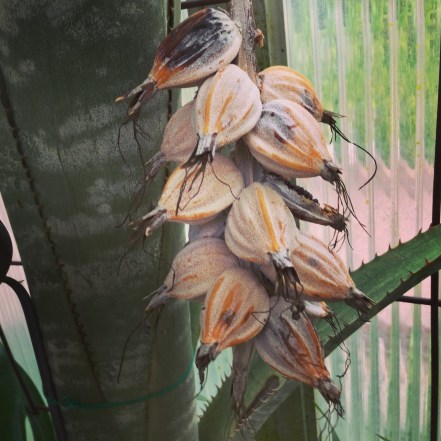
blooming
fruiting
Work is tangled between disordered sheets of paper covering a desk
Trapped in envelopes and receipts the drugery
Takes time to unravel, the benefits illusory
Piles of time seated in one place stuck firmly to slavery grotesque
Punching an invisible time clock, the hours drain slowly as we recheck
The mission we set out to accomplish which has dissolved into tomfoolery
Does each worker, in a separate way, discover workplace dysfunction peculiarly?
Our ancestors toiled in primitive times, without electicity, running water, or tech
What is the goal of work today as we compare it to history?
We live to work, not work to live, and thus rob ourselves of mystery

NaPoWriMo2016
Ride the poetry train all month in April to enjoy the work of poets everywhere. Find #NaPoWriMo participants here. I encourage you to find new work you like.
Today is World Poetry Day, so twitter is all aflutter with haiku. UNESCO is running a thread for pros and amateurs to enter the fun using the hashtag #tweetku.
There are some funny and inspiring poems flying around, and we see coffee houses where they are accepting poems for payment today. This celebration has grown and become more popular since last year. I urge you to join the creative fun, even if you are not feeling very poetic at this moment. Read some of the other tweets for inspiration or just to tickle your funny bone. I know that we are all poets because I write a poem each day for poetry month in April for #NaPoWriMo. I have no particular talent or style, but after 30 days of poetry I feel very accomplished and more creative. I use original art or photography on my April poems to make them a little more interesting. The important part is the practice rather than the poems themselves. I am hoping to expand my subject matter again this year. My first year was way too drippy, all about spirit, dreams, and tinkle tinkle reality..pretty dull and one dimensional. Last year I did some new topics like my ancestor’s beheading at the Tower of London. The art and the poem were infantile, but I did give it a whirl. Practice does not really make perfect in my case, but it does make psychological inroads into my own thinking and ability to write. I am warming up for next month today:
Here is one I love, with a little pun:
https://twitter.com/BarvanderVossen/status/711979640378826753
Let the poet in you loose on the town today..or at least read some.


James Oscar Byrne (1840 – 1879)
2nd great-grandfather
Sarah Helena Byrne (1878 – 1962)
daughter of James Oscar Byrne
Olga Fern Scott (1897 – 1968)
daughter of Sarah Helena Byrne
Richard Arden Morse (1920 – 2004)
son of Olga Fern Scott
Pamela Morse
I am the daughter of Richard Arden Morse
My second great-grandfather was born in County Meathe, Ireland and immigrated to the United States during the potato famine with his family. He arrived in New York at the age of 7 in 1848. His family took up residence in Wilna, Jefferson County, in upstate New York. I know from notes left to me by his daughter, my great-grandmother, that he and his brother Luke operated a saw mill in Michigan before they moved to Kansas. She wrote that they sent all the wood to build homes in Kansas from that mill. On the Kansas census of 1875 he says he moved to Kansas from Wyoming, which was pretty wild at the time. He was married to Hattie Peterson, age 19, and her parents lived next door to them in that census. James owned a large piece of property, much larger than Hattie’s family, and his profession was listed as farmer.
James and Hattie had 2 daughters born in Ladore, Kansas, where James is buried. After all the adventures he endured crossing the ocean (a voyage during which two of his siblings died), lumber speculating in Michigan, making it to Wyoming, and settling on the frontier in Kansas he died in 1879 at the age of 38, when my great-grandmother Sarah Helena was less than a year old. I don’t know the cause of death. He was probably the only Catholic in his wife’s family, and maybe the only Catholic in my entire ancestry. I was Catholic for a year when I went to boarding school because I didn’t like to go to long Moravian church services and being Catholic was the only way to get out of it. My parents did not object. I wonder if that was some kind of calling from clan O’Byrne that lead me to do that. I will never know but on St. Patrick’s Day I feel proud of James Oscar and his adventurous spirit.

Irish Love
 mermaidcamp