mermaidcamp
Keeping current in wellness, in and out of the water
You can scroll the shelf using ← and → keys
You can scroll the shelf using ← and → keys

Flagon and Trencher Society
My 11th great-grandfather was a tailor who sailed to America with his family in 1639. He was a tavern keeper and a deacon in Sudbury, MA. His tavern, licensed in 1653, was operated continuously as the Parmenter Tavern until 1880:
John PARMENTER Dea. was born about 1588 in England. In a publication (ParmenterStory) by Roland A Dahir, at the 400th birthday of Dea. John Parmenter he writes that, according to a Parmenter descendant, Marjorie J Parmenter and George M Parmenter, Dea. John was born in Sible Hedingham County Essex, England on 12 Jan 1588; he m Bridget in Little Yeldham on 12 Jun 1609; she was born at Bures St. Mary, Country Essex on 12 Feb 1589. He was buried on 1 May 1671 in Roxbury, Suffolk, MA.2,15
John and both children are mentioned in his father (William) Will in 1613, but he inherited no lands or tenements from his father. Following his father’s death in 1617 John moved to about eight miles from Little Yeldham into Bures St. Mary. John’s connection to Bures St. Mary can be seen in his association with Philemon Whale and Herbert Pelham, residents of Bures St. Mary who emigrated to Sudbury [The Puritan village, Sumner Chilton Powell, Appendix I, Wesleyan Univ. Press, 1963] A comparison of the signature of John Parminter as a witness in the original will of Henry Loker of Bures St. Mary with an autograph signature of Dea. John Parmenter as a commissioner of Sudbury, MA, 6 Jan 1639/40 shows that the two signatures were made by the same hand. [Suffolk Co. Court files, Boston, NO.162004]
In 1639 John Parmenter emigrated to New England with his wife Bridget and children Mary and John Jr; in his party were the widow Elizabeth Loker and her children. The name of the ship or port of departure is not known. John Parmenter was one of the original proprietors of Sudbury, and was assigned lands May 1640 by the General Court of the Massachusetts Bay colony [Suffolk court files, vol. I, No. 304, microfilm #A360, Univ MA, Amherst]. John was chosen early as a Selectman; then Deacon, and Commissioner; he desired to be made Freeman 13 May 1640 [NEHGS Reg. Vol 13, 261], and made freeman 10 May 1643.
Following the death of his first wife, he married Annis (Bayford)(Chandler) Dane and relocated to Roxbury where he died on 1 May 1671; his will was dated 25 Mar 1671, and proved 25 Jul 1671.
John PARMENTER Dea. and Bridget were married about 1609 in England.2,3 Bridget was born before 1599 in England. 2,3
Found on http://www.parmenter-fam-assn.org/PPA2%20Cln%20090105.PDF
John Parmenter (1588 – 1671)
is my 11th great grandfather
Mary Parmenter (1610 – 1690)
daughter of John Parmenter
John Woods (1641 – 1716)
son of Mary Parmenter
Lydia Woods (1672 – 1738)
daughter of John Woods
Lydia Eager (1696 – 1735)
daughter of Lydia Woods
Mary Thomas (1729 – 1801)
daughter of Lydia Eager
Joseph Morse III (1752 – 1835)
son of Mary Thomas
John Henry Morse (1775 – 1864)
son of Joseph Morse III
Abner Morse (1808 – 1838)
son of John Henry Morse
Daniel Rowland Morse (1838 – 1910)
son of Abner Morse
Jason A Morse (1862 – 1932)
son of Daniel Rowland Morse
Ernest Abner Morse (1890 – 1965)
son of Jason A Morse
Richard Arden Morse (1920 – 2004)
son of Ernest Abner Morse
Pamela Morse
I am the daughter of Richard Arden Morse
John and Bridget Parmenter
John – b. about 1588, probably at Little Yeldham, Essex, England; d. June 1, 1671, Roxbury, MA. Son of William PARMENTER and Margery. John, a tailor by trade, arrived with his family in New England from Great Yarmouth in 1639. He became freeman May 13, 1640 and served as a deacon and selectman of Sudbury, MA. By 1654, John PARMENTER was authorized by the town of Sudbury “to keep a house of common entertainment and that the court shall be moved on his behalf to grant a license to him” (Colonial Tavernrkeepers, Vol. 5, edited by Harriet Stryker-Rodda, 1982, page 19). His will, dated Mar. 25, 1671 and proved Jul. 25, 1671, names his second wife, son-in-law John WOOD, grandson John PARMENTER, and cousins CHEEVERS and John STIBBINS. John married second Aug. 9, 1660 at Roxbury, MA, Annis BAYFORD (d. Mar. 15, 1682/3, Roxbury, MA; bur. there Mar. 17, 1682/3), widow of William CHANDLER and John DANE. John and Bridget were married about 1609, probably at Bures St. Mary, Suffolk, England.
Bridget – b. probably at Bures St. Mary, Suffolk, England; d. Aug. 6, 1660, Sudbury, MA. She was probably the sister of Elizabeth, wife of Henry LOKER. Bridget and Elizabeth may have been daughters of William PERRY or of John SIMPSON, who both had daughters with their names baptized at Bures St. Mary between 1585 and 1593.
Children of John and Bridget Parmenter
Mary – b. about 1610, probably at Bures St. Mary, Suffolk, England; d. Aug. 17, 1690, Marlborough, MA. Married John WOODS.
John – b. about 1611, probably at Bures St. Mary, Suffolk, England; d. Apr. 12, 1666, Sudbury, MA. Married about 1638 in England to Amy. Son: John married Anna CUTLER.
Isis is the mother goddess from Egypt. She rules intuition, magic, and medicine. In our celebration of Mother’s Day let us give thanks for our second sense. Knowing without the reason to know is a gift that can be developed and fine tuned. Notice that certain places, people or objects grab your attention and keep it. Other people and things can come and go without striking up much meaning or memory. The unconscious mind absorbs energy and makes primal instinctive responses. Our emotions are part observation and part deep underground images that are brought to light in various ways. In dreams we only see faces we have seen during our lives. We may not recognize them as we dream, but they represent a symbol, an image, or a story that has meaning for us. The symbols and images we find in dreams and synchronous encounters are encrypted messages from the unconscious.
A centered person has a rich inner sense of spirit, grounded by soul. A balance between rational and intuitive mind is important for emotional wellbeing. As we grow older we may find that more psychic experiences become natural to us. The environment in which we live will determine how freely we can express ourselves on these matters. I think some cases of modern depression result from a tension and polarity between reason and intuition. Our psychic abilities, such as they are, may be a surprise gift. This year for Mother (human or Mother Earth) be grateful for all the gut feelings and saving graces you have had in your life. Be open to more instant insight and enlightenment.
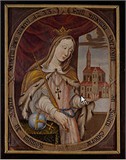
Ludmilla of Bohemia
After a life of royal responsibilities my 22nd great-grandmother became a widow when her husband was murdered. She founded a convent where she lived at the end of her life, and where she is buried.
Lidmila Bohemia (1170 – 1240)
is my 22nd great grandmother
OTTO II Wittelsbach of Bavaria (1206 – 1253)
son of Lidmila Bohemia
Elisabeth Wittelsbach Duchess Bavaria (1227 – 1273)
daughter of OTTO II Wittelsbach of Bavaria
Consort Elisabeth the Romans Carinthia (1263 – 1313)
daughter of Elisabeth Wittelsbach Duchess Bavaria
Albrecht Albert II ‘The Wise’ Duke of Austria Habsburg (1298 – 1358)
son of Consort Elisabeth the Romans Carinthia
Leopold III “Duke of Austria” Habsburg (1351 – 1386)
son of Albrecht Albert II ‘The Wise’ Duke of Austria Habsburg
Ernst I “Ironside” Archduke of Austria Habsburg (1377 – 1424)
son of Leopold III “Duke of Austria” Habsburg
Katharina Archduchess Austria Von Habsburg (1420 – 1493)
daughter of Ernst I “Ironside” Archduke of Austria Habsburg
Christof I VanBaden (1453 – 1527)
son of Katharina Archduchess Austria Von Habsburg
Beatrix Zahringen (1492 – 1535)
daughter of Christof I VanBaden
Sabine Grafin VonSimmern (1528 – 1578)
daughter of Beatrix Zahringen
Marie L Egmond (1564 – 1584)
daughter of Sabine Grafin VonSimmern
Richard Sears (1590 – 1676)
son of Marie L Egmond
Silas Sears (1638 – 1697)
son of Richard Sears
Silas Sears (1661 – 1732)
son of Silas Sears
Sarah Sears (1697 – 1785)
daughter of Silas Sears
Sarah Hamblin (1721 – 1814)
daughter of Sarah Sears
Mercy Hazen (1747 – 1819)
daughter of Sarah Hamblin
Martha Mead (1784 – 1860)
daughter of Mercy Hazen
Abner Morse (1808 – 1838)
son of Martha Mead
Daniel Rowland Morse (1838 – 1910)
son of Abner Morse
Jason A Morse (1862 – 1932)
son of Daniel Rowland Morse
Ernest Abner Morse (1890 – 1965)
son of Jason A Morse
Richard Arden Morse (1920 – 2004)
son of Ernest Abner Morse
Pamela Morse
I am the daughter of Richard Arden Morse
Ludmilla of Bohemia Countess consort of Bogen Duchess consort of Bavaria Spouse Adalbert VI, Count of Bogen
Louis I, Duke of Bavaria Issue Berthold IV, Count of Bogen
Albert IV, Count of Bogen
Diepold of Bogen
Otto II Wittelsbach, Duke of Bavaria
House House of Přemyslid (by birth)
House of Wittelsbach (by second marriage) Father Frederick, Duke of Bohemia Mother Elisabeth of Hungary Born c.1170
Bohemia Died 14 August 1240
Seligenthal convent, Landshut Burial Seligenthal convent, Landshut
Ludmilla of Bohemia (died 14 August 1240) was a daughter of Frederick, Duke of Bohemia and his wife, Elisabeth of Hungary. Ludmilla was a member of the Přemyslid dynasty. She was Duchess consort of Bavaria by her marriage to Louis I, Duke of Bavaria.
Ludmilla was the third of six children born to her parents. Her siblings were Helena of Bohemia, betrothed to Manuel I Komnenos but never married, and Sophia of Bohemia, wife of Albert, Margrave of Meissen. The rest of Ludmilla’s siblings were short-lived or died in early adulthood.
Ludmilla’s paternal grandparents were Vladislaus II of Bohemia and his first wife Gerturde of Babenberg. Her maternal grandparents were Géza II of Hungary and his wife Euphrosyne of Kiev.
Geza was son of Béla II of Hungary and his wife Helena of Raška.
Bela was son of Prince Álmos and his wife Predslava of Kiev, whom was daughter of Sviatopolk II of Kiev and an unknown Bohemian princess.
Marriages
Ludmilla married twice and had issue in both of her marriages. Her first marriage was to Adalbert VI, Count of Bogen, making Ludmilla Countess of Bogen. The couple had three children from their marriage, all sons:
Berthold IV, Count of Bogen (d.1218) married Kunigunda of Hirschberg, no known issue
Albert IV, Count of Bogen (d.1242) married Richeza of Dillingen
Diepold of Bogen (d.1219) a priest in Regensburg
Adalbert died in 1197 and was succeeded by his eldest son with Ludmilla, Berthold.
Ludmilla married Louis I, Duke of Bavaria, a former enemy of her first husband. The marriage was good for Louis because it created an alliance with Ludmilla’s uncle, Ottokar I of Bohemia. The couple had one son:
Otto II Wittelsbach, Duke of Bavaria (7 April 1206 – 29 November 1253), next Duke of Bavaria.
Louis and Ludmilla tried to find a suitable bride for their only child. Otto married Agnes of Palatinate in 1222. Within time, Agnes’ closer relatives died and she became Countess of Palatinate, which became part of the Bavarian inheritance, starting with Ludmilla’s grandson, Louis II, Duke of Bavaria.
Widowhood
Louis was murdered in 1231 on a bridge in Kelheim. The crime was never cleared up since the murderer was immediately lynched. Due to the following aversion of the Wittelsbach family the city of Kelheim lost its status as one of the ducal residences. Louis was buried in the crypt of Scheyern Abbey.
Ludmilla lived to see the birth of four or five grandchildren from Otto and Agnes: Louis II, Henry XIII, Duke of Bavaria, Elisabeth of Bavaria, Queen of Germany, Sophie and Agnes.
Ludmilla founded the Seligenthal convent, near Landshut, in 1232. She remained here for the rest of her days. Ludmilla died there 14 August 1240 and her body was buried there.
Do you have enough stuff? What kind of stuff do you lack? Do you have goals that do not involve material stuff? My parents were heavily into possessions, and at the end of their lives it seemed that those things they loved so much robbed them of any kind of peace. They struggled to keep objects and wealth long after they even knew what any of the objects were. They wanted to keep an image of themselves in society, and other transitory status rather than seeking truth. There was nothing I could do to help them with that.
I am doing a meditative practice about abundance now. I have special feelings about one of the biblical phrases used in this practice. “All things that the Father hath are mine.” John 16:15. This is talking about the Father with a big F, not my dad. If I have all that my dad had I would be filled with greed, alcoholism, and relative anger at all times. If I concentrate on the Father, as in spirit, I can feel the difference. We inherit objects as well as traits from our parents. The kingdom of heaven is ours if we tune into it. How about you, gentle reader? Do you stand to inherit the earth?
My 26th great-grandmother had a famous mother who was nicknamed Dangereuse because she was such a tart. This matrilineal danger ran deep. These women were powerful, each in her own way:
Aenor ( aka Eleanor) of Châtellerault, duchess of Aquitaine (Châtellerault, Vienne, France, c. 1103, – March 1130 in Talmont) was the mother of Eleanor of Aquitaine, arguably the most powerful woman in Europe of her generation.
Aenor was a daughter of Viscount Aimery I of Châttellerault and his wife, Dangereuse de L’ Isle Bouchard (d. 1151). Aenor married William X of Aquitaine, the son of her mother’s lover, and had three children with him:
Eleanor of Aquitaine, Duchess of Aquitaine, and wife of both Louis VII of France, and Henry II of England. Petronilla of Aquitaine, wife of Raoul I, Count of Vermandois.
William Aigret (who died at the age of four) The county “Châtelherault” later became a title belonging to the Dukes of Hamilton.


Eleanor DeChatellerault (1105 – 1130)
is my 26th great grandmother
Eleanor of Aquitane (1130 – 1204)
daughter of Eleanor DeChatellerault
Eleanor Spain Plantagenet (1162 – 1214)
daughter of Eleanor of Aquitane
Berenguela CASTILE LEON (1181 – 1244)
daughter of Eleanor Spain Plantagenet
Saint Ferdinand Castile amp Leon (1199 – 1252)
son of Berenguela CASTILE LEON
Alfonso X Wise Castile Leon amp Galicia (1221 – 1284)
son of Saint Ferdinand Castile amp Leon
Sancho Brave Castile Leon (1258 – 1295)
son of Alfonso X Wise Castile Leon amp Galicia
Beatrice Sanchez Infanta Castile (1293 – 1359)
daughter of Sancho Brave Castile Leon
Peter I Portugal Cruel Algarve (1320 – 1367)
son of Beatrice Sanchez Infanta Castile
John I DePinto (1358 – 1433)
son of Peter I Portugal Cruel Algarve
Beatrix DePinto (1403 – 1447)
daughter of John I DePinto
John Fettiplace (1427 – 1464)
son of Beatrix DePinto
Richard Fettiplace (1460 – 1511)
son of John Fettiplace
Anne Fettiplace (1496 – 1567)
daughter of Richard Fettiplace
Mary Purefoy (1533 – 1579)
daughter of Anne Fettiplace
Susanna Thorne (1559 – 1586)
daughter of Mary Purefoy
Gov Thomas Dudley (1576 – 1653)
son of Susanna Thorne
Anne Dudley (1612 – 1672)
daughter of Gov Thomas Dudley
John Bradstreet (1652 – 1718)
son of Anne Dudley
Mercy Bradstreet (1689 – 1725)
daughter of John Bradstreet
Caleb Hazen (1720 – 1777)
son of Mercy Bradstreet
Mercy Hazen (1747 – 1819)
daughter of Caleb Hazen
Martha Mead (1784 – 1860)
daughter of Mercy Hazen
Abner Morse (1808 – 1838)
son of Martha Mead
Daniel Rowland Morse (1838 – 1910)
son of Abner Morse
Jason A Morse (1862 – 1932)
son of Daniel Rowland Morse
Ernest Abner Morse (1890 – 1965)
son of Jason A Morse
Richard Arden Morse (1920 – 2004)
son of Ernest Abner Morse
Pamela Morse
I am the daughter of Richard Arden Morse
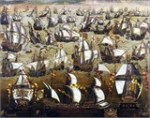
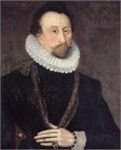
My 13th great-grandfather has the shameful distinction of being a very early English slave trader. Interestingly enough he was an early Puritan, when that title meant you hated Spain and the Pope and little else. To put this in context the Puritans, to whom we attribute belief in religious tolerance, were ruthless and greedy. These were the ancestor privateers who spread slavery to the western hemisphere. He did some expeditions with Sir Francis Drake, his cousin:
Sir John Hawkins
Born: 1532
Birthplace: Plymouth, Devon, England
Died: 12-Nov- 1595
Location of death: Caribbean Sea, near Puerto Rico
Cause of death: unspecified
Gender: Male
Race or Ethnicity: White
Sexual orientation: Straight
Occupation: Military
Nationality: England
Executive summary: British admiral, slave trader
Sir John Hawkins, or Hawkyns, British admiral, was born at Plymouth in 1532, and belonged to a family of Devonshire shipowners and skippers — occupations then more closely connected than is now usual. His father, William Hawkins, was a prosperous freeman of Plymouth, who thrice represented that town in parliament, and is described by Richard Hakluyt as one of the principal sea-captains in the west parts of England; his elder brother, also called William, was closely associated with him in his Spanish expeditions, and took an active part in fitting out ships to meet the Armada; and his nephew, the eldest son of the last named and of the same name, sailed with Sir Francis Drake to the South Sea in 1577, and served as lieutenant under Edward Fenton in the expedition which started for the East Indies and China in 1582. His son, Sir Richard Hawkins, was also a British admiral and explorer.
Sir John Hawkins was bred to the sea in the ships of his family. When the great epoch of Elizabethan maritime adventure began, he took an active part by sailing to the Guinea coast, where he robbed the Portuguese slavers, and then smuggled the negroes he had captured into the Spanish possessions in the New World. After a first successful voyage in 1562-63, two vessels which he had rashly sent to Seville were confiscated by the Spanish government. With the help of friends, and the open approval of the queen, who hired one of her vessels to him, he sailed again in 1564, and repeated his voyage with success, trading with the Creoles by force when the officials of the king endeavored to prevent him. These two voyages brought him reputation, and he was granted a coat of arms with a demi-Moor, or negro, chained, as his crest. The rivalry with Spain was now becoming very acute, and when Hawkins sailed for the third time in 1567, he went in fact, though not technically, on a national venture. Again he kidnapped negroes, and forced his goods on the Spanish colonies. Encouraged by his discovery that these settlements were small and unfortified, he on this occasion ventured to enter Vera Cruz, the port of Mexico, after capturing some Spaniards at sea to be held as hostages. He alleged that he had been driven in by bad weather. The falsity of the story was glaring, but the Spanish officers on the spot were too weak to offer resistance. Hawkins was allowed to enter the harbor, and to refit at the small rocky island of San Juan de Ulloa by which it is formed. Unfortunately for him, and for a French corsair whom he had in his company, a strong Spanish force arrived, bringing the new viceroy. The Spaniards, who were no more scrupulous of the truth than himself, pretended to accept the arrangement made before their arrival, and then when they thought he was off his guard attacked him on the 24th of September. Only two vessels escaped, his own, the “Minion”, and the “Judith”, a small vessel belonging to his cousin Francis Drake. The voyage home was miserable, and the sufferings of all were great.
For some years Hawkins did not return to the sea, though he continued to be interested in privateering voyages as a capitalist. In the course of 1572 he recovered part of his loss by pretending to betray the queen for a bribe to Spain. He acted with the knowledge of Lord Burleigh. In 1573 he became treasurer of the navy in succession to his father-in-law Benjamin Gonson. The office of comptroller was conferred on him soon after, and for the rest of his life he remained the principal administrative officer of the navy. Burleigh noted that he was suspected of fraud in his office, but the queen’s ships were kept by him in good condition. In 1588 he served as rear-admiral against the Spanish Armada and was knighted. In 1590 he was sent to the coast of Portugal to intercept the Spanish treasure fleet, but did not meet it. In giving an account of his failure to the queen he quoted the text “Paul doth plant, Apollo doth water, but God giveth the increase”, which exhibition of piety is said to have provoked the queen into exclaiming, “God’s death! This fool went out a soldier, and has come home a divine.” In 1595 he accompanied Drake on another treasure hunting voyage to the West Indies, which was even less successful, and he died at sea off Puerto Rico on the 12th of November 1595.
Hawkins was twice married, first to Katharine Gonson and then to Margaret Vaughan. He was counted a puritan when puritanism meant little beyond hatred of Spain and popery, and when these principles were an ever-ready excuse for voyages in search of slaves and plunder. In the course of one of his voyages, when he was becalmed and his negroes were dying, he consoled himself by the reflection that God would not suffer His elect to perish. Contemporary evidence can be produced to show that he was greedy, unscrupulous and rude. But if he had been a more delicate man he would not have risked the gallows by making piratical attacks on the Portuguese and by appearing in the West Indies as an armed smuggler; and in that case he would not have played an important part in history by setting the example of breaking down the pretension of the Spaniards to exclude all corners from the New World. His morality was that of the average stirring man of his time, whether in England or elsewhere.
Father: William Hawkins (sea captain, d. 1553)
Brother: William (d. 1589)
Wife: Katharine Gonson
Son: Sir Richard Hawkins
Wife: Margaret Vaughan
Knighthood 1588
Admiral Sir John Hawkins Knight (1520 – 1595)
is my 13th great grandfather
Elizabeth Hawkins (1530 – 1595)
daughter of Admiral Sir John Hawkins Knight
John Bouchier Sears (1561 – 1629)
son of Elizabeth Hawkins
Richard Sears (1590 – 1676)
son of John Bouchier Sears
Silas Sears (1638 – 1697)
son of Richard Sears
Silas Sears (1661 – 1732)
son of Silas Sears
Sarah Sears (1697 – 1785)
daughter of Silas Sears
Sarah Hamblin (1721 – 1814)
daughter of Sarah Sears
Mercy Hazen (1747 – 1819)
daughter of Sarah Hamblin
Martha Mead (1784 – 1860)
daughter of Mercy Hazen
Abner Morse (1808 – 1838)
son of Martha Mead
Daniel Rowland Morse (1838 – 1910)
son of Abner Morse
Jason A Morse (1862 – 1932)
son of Daniel Rowland Morse
Ernest Abner Morse (1890 – 1965)
son of Jason A Morse
Richard Arden Morse (1920 – 2004)
son of Ernest Abner Morse
Pamela Morse
I am the daughter of Richard Arden Morse
Admiral Sir John Hawkins (1532-1595)
John Hawkins was born in Plymouth in 1532, the son of William Hawkins, a wealthy captain, shop-owner and merchant. William also happened to be Mayor of Plymouth that year, too. John’s mother was Joan Trelawney, from an equally rich and well-known Cornish Family. It is therefore no surprise that he should have become a seaman and adventurer in his own right. A suggestion that the trade received Royal sanction.
In 1559 John Hawkins married Katharine Gonson, the daughter of Benjamin Gonson, who was Treasurer of the Navy. Hawkins made his first such voyage in 1562, taking Negroes he had captured in West Africa to barter with the Spaniards in the West Indies for precious metals, pearls and bullion. A second voyage was made in 1564. In 1567 he sailed with his kinsman, Francis Drake, on an attempt to open up legitimate trade with the Spanish and Portuguese. This expedition had the support of Queen Elizabeth.
Naturally, the King of Spain was against that idea. At San Juan de Ulua (now known as Vera Cruz), the English fleet was attacked while at anchor and destroyed. Drake and Hawkins escaped and Drake returned to Plymouth on January 20, 1569 aboard the “Judith.” However, John Hawkins was in a big of a predicament. Having abandoned the “Jesus”, he had a larger than usual crew on board the “Minion” and he was unable to take on fresh victuals or water and he felt that the vessel could not safety sail home across the Atlantic in this situation. He decided the only option was to leave some of the men on the Mexican coast but they would have no provisions and they would be a the mercy of both the natives and the Spaniards. A hundred men volunteered to stay behind and Hawkins promised to return to collect them as soon as possible, if he himself reached England safely. But safely return he did and on January 25, 1569 a farm labourer working in a field above Mount’s Bay in Cornwall saw the ship anchor and send a boat ashore. Upon hearing the situation, the labourer hurried to Plymouth to tell John’s brother, William, and he sent a fresh crew to Mount’s Bay to take the ship to Plymouth.
Hawkins did honour his pledge to get those left in Mexico back home but it took him three years. Some of the men had been handed over to the Spanish Inquisition and slung into prison. In order to get them released, John Hawkins entered into a strange tale of intrigue. He laid a bait for the Spanish ambassador by letting him hear some very seditious remarks about Queen Elizabeth. He gradually expanded upon this by introducing incidents that would suggest he was embittered by her treatment of him. He hinted that he might transfer his allegiance to King Philip of Spain. Fortunately, Hawkins had never made a great play of his support for the Protestants, so he was easily able to convince King Philip that he was a Catholic at heart. He following this up with an offer of his private fleet for the use of the King and he even managed to get a letter from the imprisoned Mary, Queen of Scots, in which she vouched for his honestly and begged the King to release the captured seamen. This was duly achieved and the seamen were even given five Spanish gold crowns and a free passage home to England.
John Hawkins was appointed joint Treasurer of the Navy with his father-in-law in about 1572, but Benjamin Gonson died soon afterwards and Hawkins inherited the post full-time. As the most important figure on the Navy Board, for the next few years he devoted his attentions to building up the fleet and removing inefficiencies and abuses within the service. He changed the design of English warships, building them lower and faster and able to carry more powerful cannons. This turned out to be of great advantage in the forthcoming battle with the Spanish Armada.
In October 1573 Hawkins suffered an assassination attempt. He was riding down the Strand in London with Sir William Wynter when one Peter Burchett, a fanatic, attacked and stabbed him after mistakenly thinking he was Sir Christopher Hatton. For several days his life was in dangerand the Queen even sent her own physicians to attend him but he survived to fight another day.
Hawkins commanded the rear squadron at Plymouth when the approach of the Armada was spotted and for his action against the ill-fated fleet he was knighted by the Lord Admiral, Lord Howard of Effingham, aboard the “Ark Royal”.” After that great victory, Hawkins spent a considerable amount of energy obtaining assistance and pensions for the wounded seamen involved, many of whom were unable to work again.
In 1593 Sir John resigned from the Navy Board and shortly afterwards he set sail on what was to be his last expedition. It was to go in search of his son, Richard, who he believed had been captured by the Spanish off the South American coast. He was appointed as a joint commander with Sir Francis Drake but this proved to be a bad arrangement. They had very different temperaments. Drake was dashing and casual, whereas Sir John was steady, slow and methodical. For example, while Hawkins made careful arrangements for the provisioning of his ships, Sir Francis just sailed off with insufficient stores on board his ships. Drake’s casualactions meant that they were required to stop off at the Canary Islands on their way, whichunfortunately destroyed the element of surprise. But the situation got even worse. Sir JohnHawkins fell seriously ill and when the fleet dropped anchor off Porto Rico on November 12,1595, he died. Sir Francis Drake was to die shortly afterwards


Well, shut my mouth!!!! My 21st great grandfather was the 184th Pope of the Roman Catholic Church. Imagine my surprise when I investigated Theobald Visconti, aka, Pope Blessed Gregory X:
Pope Blessed Gregory X Also known as Teobaldo Visconti
Theobald Visconti Memorial 9 January formerly 10 January
Profile Archdeacon of Liege, Belgium. Assigned the preach the last Crusade. Accompanied the Crusaders to Palestine, and was still there when elected the 184th Pope; elected before he was ordained a priest.
Called the Council of Lyons which briefly reconciled the Orthodox and Latin Churches. Tried to restore peace between the Guelphs and Ghibellines in Tuscany and Lombardy. Crowned Rudolf of Habsburg as emperor.
Born 1210 in Piacenza, Italy as Theobald Visconti
Papal Ascension elected 1 September 1271; ordained and consecrated as pope in 1272
Died 20 January 1276 at Arezzo, Italy
Beatified 8 July 1713 by Pope Clement XI (cultus confirmed)
Writings Protection of the Jews, 7 October 1272
Theobald Visconti (1220 – 1276)
is my 21st great grandfather
Matteo I Visconti (1250 – 1322)
son of Theobald Visconti
Stefan Visconti (1289 – 1327)
son of Matteo I Visconti
Bernabo Lord Milan di Visconti (1319 – 1385)
son of Stefan Visconti
Veridis Duchess Austria Visconti (1352 – 1414)
daughter of Bernabo Lord Milan di Visconti
Ernst I “Ironside” Archduke of Austria Habsburg (1377 – 1424)
son of Veridis Duchess Austria Visconti
Katharina Archduchess Austria Von Habsburg (1420 – 1493)
daughter of Ernst I “Ironside” Archduke of Austria Habsburg
Christof I VanBaden (1453 – 1527)
son of Katharina Archduchess Austria Von Habsburg
Beatrix Zahringen (1492 – 1535)
daughter of Christof I VanBaden
Sabine Grafin VonSimmern (1528 – 1578)
daughter of Beatrix Zahringen
Marie L Egmond (1564 – 1584)
daughter of Sabine Grafin VonSimmern
Richard Sears (1590 – 1676)
son of Marie L Egmond
Silas Sears (1638 – 1697)
son of Richard Sears
Silas Sears (1661 – 1732)
son of Silas Sears
Sarah Sears (1697 – 1785)
daughter of Silas Sears
Sarah Hamblin (1721 – 1814)
daughter of Sarah Sears
Mercy Hazen (1747 – 1819)
daughter of Sarah Hamblin
Martha Mead (1784 – 1860)
daughter of Mercy Hazen
Abner Morse (1808 – 1838)
son of Martha Mead
Daniel Rowland Morse (1838 – 1910)
son of Abner Morse
Jason A Morse (1862 – 1932)
son of Daniel Rowland Morse
Ernest Abner Morse (1890 – 1965)
son of Jason A Morse
Richard Arden Morse (1920 – 2004)
son of Ernest Abner Morse
Pamela Morse
I am the daughter of Richard Arden Morse
Things were much different then. Dude was married and was elected Pope?????
Gregory X
1271-1276
Theobald Visconti
The interval which separates the reign of Clement IV from that of Gregory X was signalized by the death of Louis IX before Tunis.
The king was attacked by plague. On Monday, August 25, 1270, the sun had scarcely glinted on the sea when the lilied flags slowly descended. At this announcement the whole camp shuddered. Knights, men at arms, the sick, the wounded, all rushed from their tents in terror; one side of the royal tent was raised, and Louis, supported by attendants made his appearance, clad in haircloth to his feet; his already livid hands bearing a crucifix, and his eyes fixed upon a bed of ashes spread upon the parched earth. The last breath of the head of the army was to be drawn upon that humble couch; it was his last command, and he had scarcely strength enough left to lie down upon it and to motion for the crucifix to be again placed before him.
Horrible convulsions seemed to rack his frame, and yet no complaint, no regret, no murmur escaped his lips. All that his dying voice was heard to utter was: “Noble Sire, God, have mercy upon this people that has followed me to this shore! Oh, conduct it to its own land, lest it be forced to deny thy holy name.” The very last words of the king “Jerusalem! We will go to Jerusalem!”
The legate who should have attended the king had himself perished of plague; but the love of the cross was so deep in the heart of the monarch and of the French that Rome, not withstanding her widowhood, had not to deplore any misfortune to the faith. The throne of Peter was vacant, but, with the aid of Louis IX, religion had no tears to shed. Yet it were not good that the great moderator should often be wanting to his children. Had Gregory X been sooner elected, the expedition against Tunis would probably have been abandoned, and Louis, upon the road to Syria and in the port of Antipatris, would have preserved his strength to lead the Christians a second time.
Blessed Gregory X, originally called Theobald Visconti, was of the family of that name at Piacenza, supposed to derive its origin from the Flavia family, to which Constantine the Great belonged. Other authors maintain that the Visconti sprang from Desiderius, king of the Lombards.
Theobald, son of Hubert, a brother of Otho Visconti, Archbishop of Milan and lord of that city, was at of Lyons, archdeacon of Liege, and then became legate in Syria. While there he was elected pontiff at Viterbo, on the 1st of September, 1271. The fifteen cardinals who composed the Sacred College could not agree upon a candidate. One of them proposed to authorize six cardinals to name the pope, all promising to recognize the one thus named by compromise. It was necessary to have recourse to such an expedient, for the conclave had lasted three years. Gatti, captain of the city, had already had the roof uncovered so that the inclemency of the weather might dispose the cardinals to make a final choice. In proceeding by compromise, the six cardinals put an end to the longest vacancy of the Holy See that had taken place since the persecutions. At first they thought of Saint Philip Benizi, of the order of Servites, who was then famous for his miracles; but learning the design from Cardinals Ottobuono Fieschi and Ubaldino, who had proposed him, Saint Philip went and hid himself on the top of Mount Tuniato until another was elected.
The six cardinals having agreed upon electing Theobald Visconti on the 1st of September, 1271, a courier was despatched to Saint Jean d’Acre, where he was with Prince Edward, eldest son of the King of England, waiting for a favorable moment to go to Jerusalem. Theobald, having received the news on the 27th of October, took the road for Italy, and disembarked at Brindisi on the 1st of January, 1272.
Accompanied by Charles, King of the Two Sicilies, he went to Benevento, and thence, by way of Capua, to Viterbo, where he found the cardinals. Thence he proceeded to and was crowned at the Vatican by Cardinal John Orsini on the 27th of March, 1272. On the day of the coronation he took possession at Saint John Lateran, preceded by a magnificent cavalcade; the King of the Two Sicilies held the pontiff’s stirrup, and, at the solemn banquet which followed, presented him with water to wash his hands, and served him with the first dish.
In 1273 the German electors, excepting the King of Bohemia, elected as king of the Romans Rudolph, Count of Hapsburg, the head of the house of Austria. The Holy Father approved the election, and induced Alphonso X, King of Castile, to renounce his claims upon the imperial diadem, to which he believed himself entitled, which that prince generously and promptly did, to show himself obedient to the Holy Father.
The same year Visconti, who had taken the name of Gregory X, wrote to Philip the Bold, King of France, to thank him for restoring to the Holy See the Venaissin, situated between Provence and Dauphiny, which was left to the Roman Church by Raymond, Count of Toulouse, who died in 1249, and which the kings of France had since held.
It was a pious, able, and generous thought that led the cardinals to elect a pope whose duties had led him to the Holy Land and who knew the distress of that unfortunate country.
The recovery of the Holy Land almost exclusive engaged the thoughts of Gregory. On the 1st of the preceding April he published a decree convoking at Lyons the fourteenth general council, and the second of Lyons, which was celebrated in that city in 1274. The pope was there even in 1273. On his way he crossed Tuscany, and paused at Florence to endeavor to restore peace between the Guelphs and the Ghibellines of that city.
History cannot ignore the conduct of Gregory X at Florence. At first he was accompanied by Baldwin II, son of Henry, brother of Baldwin I, and afterwards by Charles of Anjou, King of Naples and brother of Saint Louis.
The pope, delighted with the coolness of the water and the purity of the air, proposed to his august companions to pass the summer in that beautiful city. The Guelphs at had exiled the Ghibellines and treated them with undue rigor. On the 2nd of July the pope assembled the people of Florence and vicinity on the banks of the Arno, foot of the Rubaconte bridge. A platform having been erected to afford seats for the two princes, the pope from his throne forbade, on pain of interdict, any distinction to be made in future between Guelph and Ghibelline, and commanded the syndics of the Guelphs to embrace in his presence the syndics of the Ghibellines (the pope was head and protector of the Guelph faction). Gregory in his address to the people said: “He is a Ghibelline—yes; but he is a Christian, he is a citizen, and he is your neighbor. Is so much that we have done to bring about a union to be ineffectual? Is the very name of Ghibelline, empty as it is, to be more powerful for hatred than so many clear and substantial reasons for charity? You declare that you have embraced this party spirit in favor of the popes and against their enemies? We, Roman pontiffs, we have received these men to our heart, although they formerly offended us—these men, your fellow-citizens, who have returned to us; we have pardoned their insults, and now regard them as our children. Will you disobey your pontiff, and in his presence?”
From Florence, which no doubt he secretly blessed, Gregory went to Piacenza, his native city, and arrived there on 3rd of October. He took with him Otho Visconti, made Archbishop of Milan by Pope Urban IV, who had not been able yet to take possession of his see, because the Turriani, a revolted family, desired an archbishop of their own name. Having entered Milan, Gregory could not induce the people accept Otho Visconti, though regularly appointed and the bearer of bulls recently confirmed, and he was obliged to leave Milan in the same grief that had afflicted Florence.
The direction of the General Council of Lyons was intrusted to Saint Bonaventure. This fact is attested by the bull of canonization of that saint, issued by Sixtus IV. In that assemblage there were fifteen cardinals, two Latin patriarchs, seventy archbishops, five hundred bishops, and more than a thousand prelates and abbots. Never had there a more numerous council. The Greeks confessed that Holy Ghost proceeded from both Father and Son, and, for the fourteenth time, were reconciled to the Latin Church.
It was first decreed that considerable succor should be sent to the Holy Land. It must have been an imposing scene when the pontiff said: “We have seen the sufferings of those pilgrims; one by one we have followed all their misfortunes. Their courage never tires, no piety can be more submissive than theirs; they are true children of Jesus Christ, like the companions of Godfrey, but they have not wherewith to support life. Those who had money when they went hence, have been robbed of that money, and even of their clothes. Can our brethren in the desert ask alms of the wild beasts? These give only death. The Turk and the Jew some hearken to a cry of distress; but on that long pilgrimage there are so many cries! It is to the Holy Land that aid must go; there must be no ambition for kingdoms and provinces of Asia; Jerusalem and the Holy Sepulchre must be delivered.”
The Flagellants, wherever they were not suppressed, asserted that baptism by water was useless; that flagellation alone was effectual, which they called baptism by blood; that all religion consisted in flagellation. Baronius, according to Novaes, reproached Saint Peter Damian with having been, if not the founder, at least the propagator of this sect, so censured by the Church, and so wrong in deducing from a simple ordinary penance the consequences of the Flagellants.
This council passed thirty-one canons on ecclesiastical discipline. All except the nineteenth concern the sixth book of the Decretals. It was this council that enjoined every Catholic to bow the head as often as he hears the holy name of Jesus.
The Holy Father, remembering the length of the conclave in which he at last had been elected, passed laws to prevent like delays in future. These laws were frequently suspended and then restored whenever there was too long a conclave.
During this council the great Saint Thomas Aquinas died in the monastery of Fossa Nuova, whence he was about to repair to Lyons.
The council having terminated its sessions, the pontiff set out on the 6th of March, 1275, for Italy. He met Rudolph of Hapsburg, king of the Romans, at Lausanne on the 10th of October, and that prince swore to guarantee to His Holiness the exarchate of Ravenna and other Italian lands belonging to the Roman Church.
Gregory had governed four years, four months, and ten months, reckoning from his election, when he died at Arezzo, aged sixty-six years, on the 10th of January, 1276 (a fatal year, in which four pontiffs died), and he was interred in the cathedral of that city.
Monsignor Benedict Falconcini de Volterra, Bishop of Arezzo in 1704, solicited and obtained, under Pope Clement in 1713, at his own expense, the beatification of this illustrious pontiff.
Gregory had but little learning, but he was endowed with rare prudence. He always was the courageous defender of the faith and of the divine worship, inclined to peace and a conciliatory spirit, and an enemy to all partiality.
Platina gives the following judgment upon Gregory: “He was a man illustrious in life for prudence in affairs; for the strength of soul with which he disdained money and all low considerations; for his humanity, clemency, benevolence to poor Christians, and especially those who took refuge in the bosom of the Apostolic See.”
With reference to Saint Thomas Aquinas, Fleury says:” the life of this saint, who died at forty-nine years of age, seems short in comparison to his writings. The five first volumes are commentaries on most of the writings of Aristotle; then come the commentaries on Peter Lombard, the master of sentences; then a volume of theological questions, Summa against the Gentiles, the Summa Theologiae, many commentaries on the Holy Scripture, and, finally, short treatises to the number of seventy-three, some of which are doubted. In general, the best critics believe that many works are attributed to Saint Thomas which are only notes of his public lectures, called reportata in those days, and that a similarity of name has confounded with him Thomas the Englishman, or Jorzi, a friar of the same order who lived in the same century and at the beginning next.”
This biographical data is from “The Lives and Times of the Popes” by The Chevalier Artaud De Montor. Published by The Catholic Publication Society of New York in ten volumes in 1911. The pictures, included in the volumes, were reproduced from ” Effigies Pontificum Romanorum Dominici Basae.”

Valentina Doria
My 19th great-grandmother was from a noble family that still has branches in parts of Europe carrying titles. The Doria family was influential in northern Italy. She married Stefano Visconti, Duke of Milan, when she was 25:
Stefano Visconti (died 4 July 1327) was a member of the House of Visconti that ruled Milan from the 14th to the 15th century. He was the son of Matteo I Visconti.
In 1318 he married Valentina Doria, with whom he had three children: Matteo, Galeazzo and Bernabò, who shared the rule in Milan after his death.
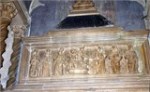
They are buried in a very fancy tomb in the church of Sant’Eustorgio in Milan. Now I have many reasons to return to Milan.
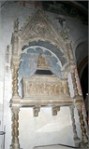
Valentina Doria (1293 – 1359)
is my 19th great grandmother
Bernabo Lord Milan di Visconti (1319 – 1385)
son of Valentina Doria
Veridis Duchess Austria Visconti (1352 – 1414)
daughter of Bernabo Lord Milan di Visconti
Ernst I “Ironside” Archduke of Austria Habsburg (1377 – 1424)
son of Veridis Duchess Austria Visconti
Katharina Archduchess Austria Von Habsburg (1420 – 1493)
daughter of Ernst I “Ironside” Archduke of Austria Habsburg
Christof I VanBaden (1453 – 1527)
son of Katharina Archduchess Austria Von Habsburg
Beatrix Zahringen (1492 – 1535)
daughter of Christof I VanBaden
Sabine Grafin VonSimmern (1528 – 1578)
daughter of Beatrix Zahringen
Marie L Egmond (1564 – 1584)
daughter of Sabine Grafin VonSimmern
Richard Sears (1590 – 1676)
son of Marie L Egmond
Silas Sears (1638 – 1697)
son of Richard Sears
Silas Sears (1661 – 1732)
son of Silas Sears
Sarah Sears (1697 – 1785)
daughter of Silas Sears
Sarah Hamblin (1721 – 1814)
daughter of Sarah Sears
Mercy Hazen (1747 – 1819)
daughter of Sarah Hamblin
Martha Mead (1784 – 1860)
daughter of Mercy Hazen
Abner Morse (1808 – 1838)
son of Martha Mead
Daniel Rowland Morse (1838 – 1910)
son of Abner Morse
Jason A Morse (1862 – 1932)
son of Daniel Rowland Morse
Ernest Abner Morse (1890 – 1965)
son of Jason A Morse
Richard Arden Morse (1920 – 2004)
son of Ernest Abner Morse
Pamela Morse
I am the daughter of Richard Arden Morse

La Scala
My 21st great grandfather was Lord of Verona. His father was a wool dealer with political connections that helped him gain power and wealth. His family became influential. Alberto’s great grand daughter married into the ruling family of Milan, and her descendant married into the Habsburg dynasty. Influence and power followed them all the days of their lives.
Alberto I DeScala (1241 – 1301)
is my 21st great grandfather
Alboino De La Scala Lord (1284 – 1311)
son of Alberto I DeScala
Mastino Della Scala (1300 – 1351)
son of Alboino De La Scala Lord
Regina Beatrice Della Scala (1321 – 1384)
daughter of Mastino Della Scala
Veridis Duchess Austria Visconti (1352 – 1414)
daughter of Regina Beatrice Della Scala
Ernst I “Ironside” Archduke of Austria Habsburg (1377 – 1424)
son of Veridis Duchess Austria Visconti
Katharina Archduchess Austria Von Habsburg (1420 – 1493)
daughter of Ernst I “Ironside” Archduke of Austria Habsburg
Christof I VanBaden (1453 – 1527)
son of Katharina Archduchess Austria Von Habsburg
Beatrix Zahringen (1492 – 1535)
daughter of Christof I VanBaden
Sabine Grafin VonSimmern (1528 – 1578)
daughter of Beatrix Zahringen
Marie L Egmond (1564 – 1584)
daughter of Sabine Grafin VonSimmern
Richard Sears (1590 – 1676)
son of Marie L Egmond
Silas Sears (1638 – 1697)
son of Richard Sears
Silas Sears (1661 – 1732)
son of Silas Sears
Sarah Sears (1697 – 1785)
daughter of Silas Sears
Sarah Hamblin (1721 – 1814)
daughter of Sarah Sears
Mercy Hazen (1747 – 1819)
daughter of Sarah Hamblin
Martha Mead (1784 – 1860)
daughter of Mercy Hazen
Abner Morse (1808 – 1838)
son of Martha Mead
Daniel Rowland Morse (1838 – 1910)
son of Abner Morse
Jason A Morse (1862 – 1932)
son of Daniel Rowland Morse
Ernest Abner Morse (1890 – 1965)
son of Jason A Morse
Richard Arden Morse (1920 – 2004)
son of Ernest Abner Morse
Pamela Morse
I am the daughter of Richard Arden Morse
Alberto I della Scala (died September 3, 1301) was lord of Verona from 1277, a member of the Scaliger family.
The son of Jacopino della Scala, he was podestà of Mantua in 1272 and 1275. In 1277, after the assassination of his brother Mastino, inherited the seigniory of Verona.
Alberto died in Verona in 1301. His son Bartolomeo succeeded him. His other sons Alboino and Francesco (Cangrande) were also lord of Verona from 1304 and 1312, respectively.
Sources
Carrara, M. (1966). Gli Scaligeri. Varese: Dell’Oglio.
Americans have trouble understanding the whole British royalty and fancy person hierarchy. My own British family has been fairly fancy in their time, but I have nothing to show for it except my family tree. In history brutal repression of common people, or peasants, was the way commerce was conducted. The United States is returning to a system of government that separates the elite in a special world of privilege and security while the majority of the population is loosing security of every kind. Our country goes around bullying other nations about lack of democratic systems that protect the population. Who will come to the United States and reprimand us for this recent class and income discrepancy we are growing? Since many around the world are already hardened against the United States for our politics about war and violence, the facts about our upper crust citizens will cause more disgust for our economically bifurcated culture. In an odd twist of fate, Americans who often use Brit accents and royalty to make fun of snooty class struggles, are making big strides creating inequity of our own. What do you think will happen to our reputation abroad, gentle reader?
 mermaidcamp