mermaidcamp
Keeping current in wellness, in and out of the water
You can scroll the shelf using ← and → keys
You can scroll the shelf using ← and → keys
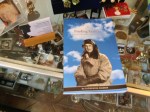
My neighbor, Cathy Harris, has written a fascinating book based on her uncle’s true experiences in as a pilot for the RAF in World War II. I interviewed her today in her shop about the new book, Finding Frances, Love Letters from a Flight Lieutenant. The way she has presented the book gives the reader a really good feel for his life and times. The letters are both historic and emotional because he tells what is happening in the war and pledges his love for Frances. The authentic snippets of his handwriting are a wonderful touch. I study family history so I am extra impressed with all the original documentation she has to show the reader. I was instantly in love with Eric as soon as I saw his pictures. I am sure with his accent and special British slang he must have been very exciting for a high school girl in Phoenix in the 1940s. I am glad she decided to put it all into book form to give us a glimpse into this dramatic part of our history in a personal, first hand account.



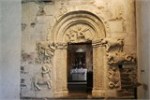
My 21st great-grandfather was born in Venice and is buried at Tirol Castle in Austria. Geography was much different in 1194, when the Holy Romans were still ruling in Europe. Today’s national boundaries have changed in recent times, and in the case of Ukraine, are changing now. Venice was once very powerful as a political as well as economic entity. Meinhard inherited power from his father as well as from his wife’s father. During his political struggles he was forced to leave two of his sons in jail in Salzburg for 6 years. I imagine jail time in Salzburg in 1252 must have been brutal. He survived to become an ancestor of the Habsburgs….and me.
Meinhard I Gorizia Tirol (1194 – 1258)
is my 21st great grandfather
Meinhard II Carinthia Duke of Gorz-Tyrol Tirol (1238 – 1295)
son of Meinhard I Gorizia Tirol
Consort Elisabeth the Romans Carinthia (1263 – 1313)
daughter of Meinhard II Carinthia Duke of Gorz-Tyrol Tirol
Albrecht Albert II ‘The Wise’ Duke of Austria Habsburg (1298 – 1358)
son of Consort Elisabeth the Romans Carinthia
Leopold III “Duke of Austria” Habsburg (1351 – 1386)
son of Albrecht Albert II ‘The Wise’ Duke of Austria Habsburg
Ernst I “Ironside” Archduke of Austria Habsburg (1377 – 1424)
son of Leopold III “Duke of Austria” Habsburg
Katharina Archduchess Austria Von Habsburg (1420 – 1493)
daughter of Ernst I “Ironside” Archduke of Austria Habsburg
Christof I VanBaden (1453 – 1527)
son of Katharina Archduchess Austria Von Habsburg
Beatrix Zahringen (1492 – 1535)
daughter of Christof I VanBaden
Sabine Grafin VonSimmern (1528 – 1578)
daughter of Beatrix Zahringen
Marie L Egmond (1564 – 1584)
daughter of Sabine Grafin VonSimmern
Richard Sears (1590 – 1676)
son of Marie L Egmond
Silas Sears (1638 – 1697)
son of Richard Sears
Silas Sears (1661 – 1732)
son of Silas Sears
Sarah Sears (1697 – 1785)
daughter of Silas Sears
Sarah Hamblin (1721 – 1814)
daughter of Sarah Sears
Mercy Hazen (1747 – 1819)
daughter of Sarah Hamblin
Martha Mead (1784 – 1860)
daughter of Mercy Hazen
Abner Morse (1808 – 1838)
son of Martha Mead
Daniel Rowland Morse (1838 – 1910)
son of Abner Morse
Jason A Morse (1862 – 1932)
son of Daniel Rowland Morse
Ernest Abner Morse (1890 – 1965)
son of Jason A Morse
Richard Arden Morse (1920 – 2004)
son of Ernest Abner Morse
Pamela Morse
I am the daughter of Richard Arden Morse
Meinhard I, Count of Gorizia-Tyrol
Spouse Adelaide of Tyrol
Noble family Meinhardiner
Father Engelbert III, Count of Gorizia
Mother Mathilda of Andechs
Born c. 1200/1205
Died January or February 1258
Meinhard I (c. 1200/1205 – January/February 1258) was Count of Gorizia from the House of Meinhardin was from 1231 and Count of Tyrol from 1253 until his death. He was the son of Count Engelbert III, Count of GoriziaEngelbert III]] of Gorizia (d. 1220) and Mathilda of Andechs, half-sister of Duke Berthold IV of Merania. He came in control over all his family’s Gorizian possessions upon the death of his uncle Meinhard the Old, and of Tyrol as a fief from his father-in-law Count Albert IV of Tyrol.
Meinhard strongly supported Emperor Frederick II of Hohenstaufen in his conflict with Pope Innocent IV and in return was appointed Imperial governor of the Duchy of Styria and the March of Carniola after the last Babenberg Duke Frederick II the Warlike had died without heirs in 1246. From 1250 onwards also governor in the Duchy of Austria, Meinhard facing the fall of the Hohenstaufen dynasty did not prevail: his rule in Carniola was challenged by the Carinthian House of Sponheim and in Austria and Styria he was expelled by Bohemian prince Ottokar II Přemysl in 1251.
Meinhard, backed by Albert IV of Tyrol, then tried to gain control over the Duchy of Carinthia but failed in an unsuccessful campaign against Duke Bernhard von Spanheim and his son Philipp, the elected Archbishop of Salzburg. On September 8, 1252, he was finally defeated and arrested at Greifenburg. According to the rules of the Treaty of Lieserhofen, concluded on December 27, 1252 he had to give his sons Meinhard II and Albert to Phillip as hostages. Both were imprisoned at Burg Hohenwerfen in Salzburg and not released until 1258. Meinhard and Albert IV also had to pay a compensation and to renounce certain possessions including Mittersill, Virgen, Matrei and Oberdrauburg.
After the death of Albert IV of Tyrol in 1253, Meinhard and his brother-in-law, Gebhard of Hirschberg, split Tyrol, of which Meinhard took the southern part with Meran. His son Meinhard II re-acquired the Hirschberg lands from Gebhard’s heirs in 1284 and two years later also received Carinthia from German king Rudolph of Habsburg.
Meinhard I died in 1258 and is buried at Tirol Castle.
Marriage and children
About 1237, Meinhhard married Adelaide, daughter of Albert IV of Tyrol. They had four known children:
Adelheid († 1291), married Count Frederick I of Ortenburg
Meinhard II (1238–1295), Count of Gorizia and Tyrol, Duke of Carinthia
Albert I († 1304), Count of Gorizia
Bertha († 1267), married Conrad, Count of Wullenstetten

Netherlands
Mary Priest was born in the Netherlands. Her father Degory was a hatter who sailed to America on the Mayflower, and died in Plymouth Colony shortly after his arrival. His wife and children, including Mary, came later to Plymouth to inherit his allotment:
DEGORY PRIEST
ORIGIN: Leiden, Holland
MIGRATION: 1620 on Mayflower
FIRST RESIDENCE: Plymouth
OCCUPATION: Hatter (when admitted as a citizen of Leiden) [Leiden 216].
ESTATE: In the 1623 Plymouth land division “Cudbart Cudbartsone” received six acres as a passenger on the Anne in 1623 [ PCR 12:6]; four of these six shares would be for the deceased Degory Priest, his widow Sarah and his two daughters. In the 1627 Plymouth cattle division “Marra Priest” and “Sarah Priest” were the tenth and eleventh persons in the second company, just after their mother and stepfather [PCR 12:9].
BIRTH: About 1579 (aged about forty in 1619 [ Dexter 630]).
DEATH: Plymouth 1 January 1620/1 [ Prince 287].
MARRIAGE: Leiden 4 November 1611 [NS] “Sara Vincent, widow of Jan Vincent” [ MD 7:129-30; Leiden 216]; Priest is said to be of London. She was sister of ISAAC ALLERTON and married (3) Leiden November 1621 (betrothed 25 October 1621 [NS]) GODBERT GODBERTSON [Leiden 101].
CHILDREN:
i MARY, b. say 1612; m. by about 1630 PHINEAS PRATT.
ii SARAH, b. say 1614; m. by about 1632 JOHN COOMBS.
COMMENTS: Bradford includes “Digory Priest” in his list of those on the Mayflower, and in his accounting of 1651 says that Priest “died soon after … arrival in the general sickness,” but “had his wife and children sent hither afterwards, she being Mr. Allerton’s sister” [ Bradford 443, 447].
In 1957 John G. Hunt published the 1582 baptism for a “Digorius Prust” in Hartland, Devonshire [ NEHGR 111:320]; although there is nothing to connect this with Degory Priest of London, Leiden and Plymouth, it is a useful clue.
BIBLIOGRAPHIC NOTE: Degory Priest and his descendants have been given full and definitive treatment in the eighth volume of the Five Generations project of the General Society of Mayflower Descendants, compiled by Mrs. Charles Delmar Townsend, Robert S. Wakefield and Margaret Harris Stover, and edited by Robert S. Wakefield (Plymouth 1994). The Great Migration Begins
Sketches
PRESERVED PURITAN View Full Context

Mayflower increase
Mary Priest (1613 – 1689)
is my 12th great grandmother
Daniel Pratt (1640 – 1680)
son of Mary Priest
Henry Pratt (1658 – 1745)
son of Daniel Pratt
Esther Pratt (1680 – 1740)
daughter of Henry Pratt
Deborah Baynard (1720 – 1791)
daughter of Esther Pratt
Mary Horney (1741 – 1775)
daughter of Deborah Baynard
Esther Harris (1764 – 1838)
daughter of Mary Horney
John H Wright (1803 – 1850)
son of Esther Harris
Mary Wright (1816 – 1873)
daughter of John H Wright
Emiline P Nicholls (1837 – )
daughter of Mary Wright
Harriet Peterson (1856 – 1933)
daughter of Emiline P Nicholls
Sarah Helena Byrne (1878 – 1962)
daughter of Harriet Peterson
Olga Fern Scott (1897 – 1968)
daughter of Sarah Helena Byrne
Richard Arden Morse (1920 – 2004)
son of Olga Fern Scott
Pamela Morse
I am the daughter of Richard Arden Morse
She married Phineas Pratt, a joiner, who was part of a group that got into trouble with both Pilgrims and Natives:
Phineas Pratt was a member of a company of men sent from England by Thomas Weston. They arrived in New England in 1622 on three ships : the Sparrow, Charity and Swan (Pratt was a passenger on the Sparrow, the first to arrive). The approximately 67 men, many of them ailing, arrived with no provisions. The Pilgrims supported them throughout the summer of 1622.
In the fall of 1622, the Weston men left to colonize an area north of Plymouth called Wessagusset. They soon fell into difficulties through behaving, generally, in a very foolish and improvident fashion. They also severely angered the local Native Americans by stealing their corn.
Massasoit, sachem of the Wampanoags, informed the Plymouth colonists that there was a conspiracy among the Natives of the Wessagusset area to massacre the Weston men. Myles Standish prepared to head north with a small company of Plymouth men to rescue Weston’s men.
The same message was also delivered by one of Weston’s men, who came to Plymouth in March of 1623 “from the Massachusetts with a small pack at his back.”
Phineas Pratt was the man with the backpack. He had secretly snuck out of the Wessagusset settlement, traveling for several days without food through a snowy landscape on his 25-mile journey.
Myles Standish and a small contingent (minus Phineas, who was still recovering from his arduous journey) headed to Wessagusset to recognize Weston’s men. The Plymouth contingent killed several Native Americans in the process (for which, they were roundly scolded by their pastor, John Robinson). Soon afterwards, Weston’s group abandoned Wessagusset. Sometime in late 1623, Phineas joined the Plymouth settlement.
Sometime before May of 1648, when he purchased a house and garden in Charlestown (now a part of Boston), Pratt left Plymouth. In 1662, Pratt presented to the General Court of Massachusetts a narrative entitled “A declaration of the affairs of the English people that first inhabited New England” to support his request for financial assistance. The extraordinary document is Phineas Pratt’s own account of the Wessagusset settlement and its downfall.
Phineas Pratt was by profession a “joiner.” “Joining” was the principle method of furniture construction during the 17th century. “Joiners” were highly skilled craftsmen who specialized in this work; their skills were valued more highly than those of a carpenter.
Phineas Pratt married Mary Priest, daughter of Degory and Sarah Allerton Vincent Priest (the sister of Mayflower passenger Isaac Allerton, Sarah had been married to Jan Vincent and widowed before she married Degory Priest). Degory Priest journeyed to Plymouth on the Mayflower, his wife and two daughters intended to join him later. Priest died during the first winter. Before sailing for America, the widowed Sarah Allerton Vincent Priest married Godbert Godbertson, who became Mary Priest’s stepfather. The family (mother, stepfather and two daughters) were among the passengers of the Anne and Little James, arriving in Plymouth in 1623.
Phineas was probably born about 1593, Mary was probably born about 1612. It seems likely, given the probably age of their oldest child at the time of her death, that they married about 1631 or 1632. Phineas and Mary Pratt had 8 children.
According to his gravestone in the old Phipps Street Cemetery, in the Charlestown area of Boston, “Phinehas Pratt, agd about 90 yrs, decd April ye 19, 1680 & was one of ye first English inhabitants of ye Massachusetts Colony.” (Mayflower Descendant, Vol. 6, p. 1-2).

Priest and Pratt
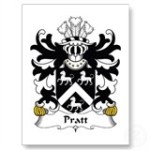
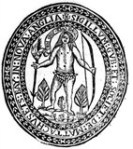
My 11th great-grandfather was born in Plymouth Colony in 1640. His father was a joiner who was well known in the colony. We know little about his life. He died in Providence, Rhode Island the same year his second child, a daughter,was born. It was common for people to move to Rhode Island from Plymouth for religious reasons. Later some members of the family are Quakers, and this may have been Daniel’s persuasion also.
Daniel Pratt (1640 – 1680)
is my 11th great grandfather
Henry Pratt (1658 – 1745)
son of Daniel Pratt
Esther Pratt (1680 – 1740)
daughter of Henry Pratt
Deborah Baynard (1720 – 1791)
daughter of Esther Pratt
Mary Horney (1741 – 1775)
daughter of Deborah Baynard
Esther Harris (1764 – 1838)
daughter of Mary Horney
John H Wright (1803 – 1850)
son of Esther Harris
Mary Wright (1816 – 1873)
daughter of John H Wright
Emiline P Nicholls (1837 – )
daughter of Mary Wright
Harriet Peterson (1856 – 1933)
daughter of Emiline P Nicholls
Sarah Helena Byrne (1878 – 1962)
daughter of Harriet Peterson
Olga Fern Scott (1897 – 1968)
daughter of Sarah Helena Byrne
Richard Arden Morse (1920 – 2004)
son of Olga Fern Scott
Pamela Morse
I am the daughter of Richard Arden Morse

Thomas French
My 11th great-grandfather came to America in 1632 with his sister. He was a taylor by trade. He lived in Ipswich, MA, where he served in the Pequod War.
Thomas French (1584 – 1639)
is my 11th great grandfather
Alice French (1610 – 1666)
daughter of Thomas French
Thomas Howlett (1638 – 1667)
son of Alice French
Mary HOWLETT (1664 – 1727)
daughter of Thomas Howlett
John Hazen (1687 – 1772)
son of Mary HOWLETT
Caleb Hazen (1720 – 1777)
son of John Hazen
Mercy Hazen (1747 – 1819)
daughter of Caleb Hazen
Martha Mead (1784 – 1860)
daughter of Mercy Hazen
Abner Morse (1808 – 1838)
son of Martha Mead
Daniel Rowland Morse (1838 – 1910)
son of Abner Morse
Jason A Morse (1862 – 1932)
son of Daniel Rowland Morse
Ernest Abner Morse (1890 – 1965)
son of Jason A Morse
Richard Arden Morse (1920 – 2004)
son of Ernest Abner Morse
Pamela Morse
I am the daughter of Richard Arden Morse
ORIGIN: Assington, Suffolk
MIGRATION: 1632
FIRST RESIDENCE: Boston
REMOVES: Ipswich 1635
OCCUPATION: Tailor. John Stratton writes from Boston under date of 17 March 1633/4: “I have put my sister a suit of mohair to making at Goodman French’s. She were best get the tailor to take her measure and send per Jno. Gallop” [WP 3:157]. Thomas French’s inventory included eleven yards of homemade cloth.
CHURCH MEMBERSHIP: Admitted to Boston church as member #128, which would be no later than mid-1632 [BChR 14]; on 27 January 1638/9 “our brother Thomas French was with the consent of the congregation dismissed to the church of Ipswich” [BChR 22].
FREEMAN: 6 November 1632 [MBCR 1:367].
EDUCATION: He signed his will.
OFFICES: Essex grand jury, 28 September 1652 [EQC 1:260]. Petit jury, 30 September 1651, 31 March 1657, 28 September 1658, 29 March 1659, 27 March 1660, 25 March 1662, 27 September 1664, 26 September 1665, 28 September 1669, 24 September 1672, 31 March 1674, 30 March 1675, 24 September 1678 [EQC 1:232, 2:11, 111, 138, 195, 347, 3:182, 270, 4:175, 5:79, 269, 6:1, 7:82]. Coroner’s jury on the body of Samuel Adams, Jr., 30 September 1676 [EQC 6:234].
Had service in the Pequod War. Proposed for Lieutenant, 25 March 1639 (but apparently not confirmed; in a letter of that date Daniel Dennison writes to John Winthrop “Our company wanting some officers, have according to their liberty, made choice of some, whom they desired me to propound to the Court or Council. They were willing to express their love and liking to Sergeant French and Sergeant Howlett proposing the former for Lieutenant, the other for Ensign” [WP 4:106]). On 18 May 1664 “Sergt. Thomas French deposed that being ordered by Major Genll. Denison to carry two soldiers who were stubborn off the field to prison, he went to them and persuaded them to submit themselves, promising to mediate for them” [EQC 3:140]. Appointed ensign at Ipswich 18 May 1664 [MBCR 4:2:106].
ESTATE: At a selectman’s meeting 31 January 1660[/1] eight men, including Thomas French, were granted liberty to “clear and break up a parcel of land at Scott’s hill to have two acres each for six years upon condition that they sow four bushels of good hay seed on every acre, to keep up the fence a year so that the English grass should get head, the hay seed to be sown with the last crop” [EQC 3:271].
In his will, dated 3 August 1680 and proved 28 September 1680, “Thomas French Senior of Ipswich … being weak of body” bequeathed to “Mary my beloved wife the bed whereon I used to lie, with all the appurtenances and furniture belonging thereto”; to “my son Thomas French” clothing; to “my son John French” one cow “to make up the full sum of £30 which I formerly promised him for his portion”; to “my daughter Mary Smith” one cow; to “my son Samuel French” a bed and bedding; “my sons Thomas and Samuel French” in consideration of £20 paid to “my son Ephraim French” as the remaining part of his portion, “my two sons Thomas and Samuel” shall receive the Pequod lands and division lot of marsh to be equally divided betwixt them; to “my son Thomas French” my dwelling house and homestead, also my lot in Labour-in-vain fields of twelve acres, also the rest of my cattle, stock, and moveable goods; to “my son Samuel” two acres of upland and two acres of meadow at Reedy marsh; “my son Thomas French” to give free liberty to “Mary my wife his mother” to dwell in the said house and to make use of any room or rooms thereof for her convenient accommodation … likewise … any such moveables as I do now leave in the hands of my son Thomas”; after her [Mary’s] decease, “my son Thomas” shall deliver to “my three children John, Samuel and Mary” three of the biggest pewter dishes; “my two sons Thomas and Samuel” to provide for “their mother’s” comfortable maintenance, and if she is not satisfied, they to allow her £9 paid by Thomas and 20s. paid by Samuel annually; and if she suffers sickness and the aforesaid £10 does not suffice, “my two sons Thomas and Samuel” shall supply her with necessaries and my lot in Labour-in-vain fields and two acres of meadow at Reedy Marsh shall stand bound respectively to my said wife during her natural life as security for the true performance of this my will as respecting her maintenance by my two sons; “my son Thomas French” sole executor [EPR 3:379-81].
The inventory of Ensign Thomas French was taken 25 August 1680 and totalled £217 15s. 6d. including £150 in real estate: “his dwelling house & barn & homestead with the privilege belonging,” £70; “twelve acres of land at Labor in vain,” £60; “two acres of land by Scotes Lane,” £10; and “two acres of marsh in the common field,” £10 [EPR 3:380-81].
BIRTH: Baptized Assington, Suffolk, 27 November 1608, son of Thomas and Susan (Riddlesdale) French [Dudley Wildes Anc 64].
DEATH: Ipswich 8 August 1680.
MARRIAGE: By 1632 Mary _____; she died at Ipswich 6 May 1681.
CHILDREN:
i MARY, bp. Boston 23 September 1632 [BChR 278 (corrected from 1631)]; d. soon.
ii MARY, bp. Boston 2 March 1633/4 [BChR 278]; m. by 1657 Robert Smith (called Mary Smith in father’s will) [Amos Towne Anc 25-27].
iii JOHN, b. about 1635 (deposed aged “about forty-eight” about March 1682 [EQC 8:329] unless this is someone else); m. by 1657 Phebe Keyes (son Thomas born Ipswich 25 May 1657), daughter of ROBERT KEYES.
iv THOMAS, b. about 1636 (deposed aged 22 in 1656 [EQC 2:140], deposed aged “about forty-seven” in March 1683 [EQC 9:16], deposed aged “about forty-eight” about March 1684 [EQC 9:191]); m. Ipswich 29 February 1659/60 Mary Adams.
v SARAH, b. say 1638; on 30 September 1656 “Hackaliah Bridges, accused by Sarah French of his getting her with child, and bound over, being brought by Sergeant French, was discharged” [EQC 2:2]; if she was a daughter of Thomas French, she had apparently died without issue prior to 1680, as she is not named in his will.
vi SAMUEL, b. say 1641; convicted for fornication, 26 March 1667 [EQC 3:398]; d. Ipswich in 1688 (day and month not stated in town vital records), apparently unmarried.
vii EPHRAIM, b. about 1643 (deposed in 1658 aged 15 [EQC 2:139]); d. Enfield, Massachusetts (now Connecticut), in September 1716, unmarried [Amos Towne Anc 50].
ASSOCIATIONS: Thomas French and his sister Alice had arrived in New England by 1632, and their two next younger sisters, Dorcas and Susan, came in 1633. Their parents and younger siblings sailed for New England after 1633, and are not included in this phase of the study. [See Parker-Ruggles 412-29, Dudley Wildes Anc 63-64 and NEHGR 142:250-52, 143:213-20, 363-64 for the ancestry of this group of French siblings.] Alice married THOMAS HOWLETT and Dorcas married first CHRISTOPHER PEAKE and then GRIFFIN CRAFTS (sketches for these families will be found elsewhere in this work). Susan may have been a servant in the household of John Winthrop Jr. for a time, but otherwise left no record in New England.
In a letter dated Groton 14 March 1632/3 John Bluett asked John Winthrop Jr. to remember him to “my schollers Thomas French and John Clarke” [WP 3:108].
COMMENTS: With most of the adult male population of Ipswich, Thomas French signed the petition to keep Mr. John Winthrop Jr. in town, 21 June 1637 [WP 3:433].
Ensign Thomas French and Thomas French Jr. were sureties on the bond of Samuel French when young Samuel was charged with a misdemeanor with Lydia Browne, at court 26 March 1667 [EQC 3:398].
The Great Migration Begins
Sketches
PRESERVED PURITAN

coat of arms
My 9th great grandfather was born in Barnstable in 1648, the son of English immigrants. He fought in King Philip’s was against my Wampanoag ancestors. His parents were Pilgrims who settled in Barnstable. His father left England alone to come to America because of religious problems. He sent for his family to join him after arrival.
Eleazer Hamblen (1648 – 1698)
is my 9th great grandfather
Isaac Hamblin (1676 – 1710)
son of Eleazer Hamblen
Eleazer Hamblin (1699 – 1771)
son of Isaac Hamblin
Sarah Hamblin (1721 – 1814)
daughter of Eleazer Hamblin
Mercy Hazen (1747 – 1819)
daughter of Sarah Hamblin
Martha Mead (1784 – 1860)
daughter of Mercy Hazen
Abner Morse (1808 – 1838)
son of Martha Mead
Daniel Rowland Morse (1838 – 1910)
son of Abner Morse
Jason A Morse (1862 – 1932)
son of Daniel Rowland Morse
Ernest Abner Morse (1890 – 1965)
son of Jason A Morse
Richard Arden Morse (1920 – 2004)
son of Ernest Abner Morse
Pamela Morse
I am the daughter of Richard Arden Morse
Page 526 – Eleazer Hamblin, son of James, was a soldier in Capt. John Gorham’s company in King Philip’s war, and an original proprietor of the town of Gorham, in Maine. I have not carefully examined his record, and know but little of his history. His wife was an early member of the church, and he joined in 1686. I think he resided at Hamblen’s Plain. The Eleazer Hamblins patronized the lawyers more than all others of the name ; but I may be
GENEALOGICAL NOTES OP BAKNSTABLE FAMILIES. 527
doing injustice in making the remark in connection with the elder
Eleazer.
He married 15 Oct. 1675, Mehitabel, daughter of John Jenkins,
and had six children born in Barnstable :
The two last probably died young aud therefore their names do
not appear on the town record.
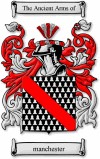
Manchester coat of arms
My 8th great grandfather was part of an unusual settlement in New Haven, Connecticut. He probably arrived in 1638 with a group of Puritans from England:
On April 24, 1638, a company of five-hundred English Puritans led by the Reverend John Davenport and Theophilus Eaton, a wealthy London merchant, sailed into the harbor. They soon discovered that the Quinnipiacks and other local tribes were much distressed by raiding bands of Pequots and Mohawks from surrounding areas. It was for this reason that Momauguin, the sachem of the Quinnipiacks, and other tribe members agreed to sell the tribe’s land to the Puritans. In return, the settlers pledged to protect the natives and to allow them the use of the lands on the east side of the harborNew Haven’s founders not only hoped to create a Christian utopia, they also saw in New Haven’s spacious harbor an opportunity to establish a commercial empire that would control Long Island Sound and possibly the coastline as far south as Delaware Bay. By 1640 a complete government had been established and the settlement, originally called Quinnipiac, was renamed Newhaven. The town plan was based on a grid of nine squares. In accordance with old English custom, the central square, now the Green, was designated a public common. By 1641 New Haven had grown into a community of approximately 800.
Over the next few years, however, the flow of newcomers began to weaken and trade with the outside world shifted more and more to Boston. In an attempt to establish direct trade with England, the settlers managed to assemble enough produce to fill a vessel which would become known as the “Great Shippe.” However, after setting sail in January, 1646, the ship and its crew were never heard from again. This disaster ended the dream of creating an economic empire and over the years New Haven became overshadowed by New Amsterdam and Boston.
from: http://www.cityofnewhaven.com/Mayor/History_New_Haven.asp
Thomas Manchester, the Manchester immigrant ancestor, was born in England, and was a resident of New Haven, Connecticut, in 1639, in the year following the planting of the colony. Afterward, however, he settled at Portsmouth, Rhode Island, where he is first mentioned in the land records, January 25, 1655, when he and his wife sold to Thomas Wood twelve acres of land. He married Margaret, daughter of John Wood.
In the settlement of her father’s estate, it was ordered March 17, 1655, that the son John pay his sister, Margaret Manchester, eight pounds. Eight acres of land were granted at Portsmouth to Thomas Manchester, December 10, 1657, and he sold to Richard Sisson one-three-hundredth right in Canonicut and Dutch Islands. In 1680 he was taxed four shillings. He and his wife testified, June 7, 1686, that they heard and saw Ichabod Sheffield married by William Paulstone. He deeded to his son John. July 9, 1691, his mansion house and lands at Portsmouth, except the place at the lower end of the ground, in possession of his son Thomas, one-half to be his at the death of grantor and the other after the death of grantor’s wife,mother of grantee, provided he pay to the sons Thomas, William and Stephen, ten shillings each, to Job twenty shillings and daughters Mary and Elizabeth ten shillings each. He also gave to John his personal property, including cattle, tools, etc.
Thomas Manchester died in 1691; his wife in 1693. Children: Thomas, born about 1650; William, 1654; John, died in 1708; George, admitted freeman in 1680; Stephen, mentioned in his own biography; Job, died 1713; Mary; Elizabeth.
Source:
New England families, genealogical and memorial
By William Richard Cutter (pgs. 853-854)
Thomas Manchester (1620 – 1691)
is my 8th great grandfather
Elizabeth Manchester (1667 – 1727)
daughter of Thomas Manchester
Dr. James Sweet (1686 – 1751)
son of Elizabeth Manchester
Thomas Sweet (1732 – 1813)
son of Dr. James Sweet
Thomas Sweet (1759 – 1844)
son of Thomas Sweet
Valentine Sweet (1791 – 1858)
son of Thomas Sweet
Sarah LaVina Sweet (1840 – 1923)
daughter of Valentine Sweet
Jason A Morse (1862 – 1932)
son of Sarah LaVina Sweet
Ernest Abner Morse (1890 – 1965)
son of Jason A Morse
Richard Arden Morse (1920 – 2004)
son of Ernest Abner Morse
Pamela Morse
I am the daughter of Richard Arden Morse
Thomas Manchester was born in England about 1620, and died at Portsmouth, R.I., about 1691. He was an early pioneer of Quinnipiac, called New Haven after 1640, in the Plantation of Connecticut: since he is found there in 1639, it would seem probable that he was of the company of Yorkshire settlers who in 1638 came to America with Ezekiel Rogers, the famous non-conformist minister, with the view of joining the Quinnipiac Plantation, although many of them eventually settled elsewhere.
The New Haven colony differed very much from other colonies. Many of the colonists put up large houses. As an explanation why this style of building was so general, it may be said that the founders of New Haven were mainly gentlemen and merchants, used to living in superior houses in London and other parts of England. For a period,Thomas continued at Quinnipiac, but removed to Portsmouth, R.I, before 1642.
On February 25/1642 he was appointed to serve on the next jury. From 1674 till his death, he was Town Sergeant. He became a considerable landed proprietor. Prior to 1655 he acquired land on the island of Aquidneck, and on January 25/1655, he made a deed of a tract of 12 acres there to Thomas Wood.
On December 10/1657, he shared in the land division and received eight acres at Portsmouth. He also had sharein Dutch Island and Quononoquet Island, and conveyed his interest in 1/300th right therein to Richard Sisson on July 6/1658. His mansion and homestead was built on his Portsmouth land.
On July 9/1691, Thomas deeded to his son John, his mansion house and all lands at Portsmouth, except the piece at the lower end, which had been theretofore deeded to his son Thomas. According to the deed, half was to be John’s on hisbrother Thomas’ death, and the remaining half upon the death of his Mother, conditioned always that pay to his brothers Thomas, William and Stephen, 10 shillings each, to Job 20/-, and to his sisters Mary and Elizabeth, ten shillings each. John also received from his father his personal property, cattle, chattels, implements, bonds, sums of money, and whatever belonged to him at the time of his death.
Thomas Manchester married, prior to 1650, Margaret Wood, who died about 1693, daughter of John Wood of Portsmouth, R.I., who bequeathed to his daughter Margaret the sum of œ8.
Ryan Redcorn, an Osage entrepreneur, has produced this video of smiling Indians. It is dedicated to Edward Curtis whose Native American images dominate the web and the memory. Just yesterday I was at the Arizona State Museum viewing some Curtis photos shot in Arizona, and all were new to me. His seemingly endless portfolio was shot in the first decades of the 20th century. The work has become controversial. Mr. Redcorn believes in producing yourself, which inspired him to create this video as a counterpoint to Curtis.
I was in Pawhuska, Oklahoma a few years ago on an ancestry hunt. My cousin and I were trying to sort out a story that our great-grandmother as Cherokee. We never found any evidence pro or con, but we went to the tribal headquarters of both the Osage and Cherokee tribes to seek answers. My cousin (like many Americans) was stuck on the romantic notion that we are Cherokee. When I saw the tiny museum in Pawhuska and talked to the curators I wanted to be Osage. They were always distinct among the 5 civilized tribes. They got rich from oil and spent much of their wealth buying products from France, especially elaborate fashion items. My father told me when he was a kid the Osage used to drive around in Cadillacs with goats in the back seat. I am probably not descended from the Osage tribe, but I do really admire the way they are. I loved the art, the history, and their sense of humor on my visit with them. Now I also love Ryan Redcorn who has a sense of humor and a bigger sense of justice.
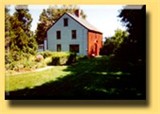
Philip Sherman’s house
My 8th great grandfather moved to Rhode Island as many of my ancestors did. He became a Quaker and the first secretary of Rhode Island Colony.
Philip Sherman (1610 – 1687)
is my 8th great grandfather
Eber Sherman (1634 – 1706)
son of Philip Sherman
Mary Sherman (1688 – 1751)
daughter of Eber Sherman
Thomas Sweet (1732 – 1813)
son of Mary Sherman
Thomas Sweet (1759 – 1844)
son of Thomas Sweet
Valentine Sweet (1791 – 1858)
son of Thomas Sweet
Sarah LaVina Sweet (1840 – 1923)
daughter of Valentine Sweet
Jason A Morse (1862 – 1932)
son of Sarah LaVina Sweet
Ernest Abner Morse (1890 – 1965)
son of Jason A Morse
Richard Arden Morse (1920 – 2004)
son of Ernest Abner Morse
Pamela Morse
I am the daughter of Richard Arden Morse
THE HON. PHILIP SHERMAN, WAS THE SON OF SAMUEL SHERMAN AND PHILIPPA WARD. HE MARRIED SARAH ODDING; THE DAUGHTER OF WILLIAM GEORGE ODDING AND MARGARET POTTER OF BRAINTREE, ESSEX CT, ENGLAND IN (1633/XX/XX),HE WAS A MAN OF MELANCOLY TEMPER WHO CAME TO BOSTON IN (1633/XX/XX) AND UPON A JUST CALLING HE WENT BACK TO ENGLAND AND RETURNED BETWEEN (1636-1637) WITH A BLESSING, IN (1637) BECAUSE OF HIS RELIGIOUS FEELINGS HE WAS BANISHED ALONG WITH JOHN COGGESHALL AND HENRY BULL FROM THE ROXBURY BAY COLONY, BOSTON, MASS, USA. LEAVING FOR RHODES ISLANDS WERE ALL BECAME RULING OFFICIALS CHOSEN TWONE CLERKE (JUNE 1649-1656), TOWNE MAGISTRATE (1656-1679), LAYER OUT OF HIGHWAYS (1683), MEMBER OF COMM. ADJUICATION (1684-1687), AND WAS THE FIRST SECRETARY AND RECORDER OF THE COLONY OF RHODES ISLANDS.
In Bertha L. Stratton’s book, “Sherman and Other Families,” she made the statement that Philip Sherman intended to settle in New Hampshre, but the climate proved too severe and so the lands there were abandoned. Upon discussion with Roger Williams at Providence, Rhode Island, the other people from Massachusetts bought Aquidneck Island in Narraganset Bay. Nineteen men signed the compact for the town in 1638. Upon leaving the church in Roxbury, Philip joined with the Friends. The Massachusetts Court ordered Philip to appear before them on 12 Mar 1638, he did not go. But he continued as a prominent figure in Rhode Island; he was the General Recorder in 1648-1652 & the Deputy to the Assembly in 1665-1667. Tradition says he was a “devout and determined man, and he was also a “neat and expert penman & an educated man,” and his Last Will & Testament “shows that he was wealthy for those times.”
Philip Sherman immigrated to Roxbury, MA and married Sarah Odding shortly after his arrival. He might have felt pressured to marry quickly, because bachelors especially of such an advanced age as 23 were looked upon with suspicion, and their single state could even effect business opportunities and social acceptance.
According to Representative Men of Old Families of Southeastern Massachussets, by J. H. Beers & Company, in a biographical entry of one of Philip’s descendants, Philip Sherman “took the side of Anne Hutchinson,” a brave woman in Salem, MA who maintained that women should be allowed to hold prayer meetings as well as men, and proceeded to hold such meetings in her home in defiance of the rules of the time and demands that she quit. She, with some members of her family including young grandchildren, were driven out of Salem into the wilderness of Rhode Island. Families in sympathy for her or in fear of retaliation for their past support and/or defense of her beliefs soon followed to Rhode Island, and Philip Sherman and his family were among the group that left Salem following her ouster.
In Providence, Philip met Roger Williams, founder of Rhode Island promising religious freedom to it’s citizens. Williams advised Philip andthe members of his party to purchase Aquidneck from the Indians, which they did on 1 Jul 1639. They created their own government with Coddington chosen to be the first governor of Rhode Island, and Philip chosen to be secretary.
Some historians believe that the death of Anne Hutchinson with most of her family during an attack of native Americans was the first act in several that led to the end of the Puritan Church. Members of the communities in all the colonies were horrified that she was banished for her beliefs and suffered so. Many felt banished themselves from England when their Puritan faith had been banned, and her treatment forced them to recognize their own harshness.
Philip left what is now called “the Congressional Church” and joined the Society of Friends, or Quakers.
He was the father of 13 children, and many of his descendants served America as congressmen and soldiers.
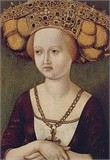
Cymburgis Masovia
My 16th great grandmother was Polish, and was the mother of a Holy Roman Emperor. My ancestor, her daughter, Katharina, was Archduchess of Austria:
Cymburgis Masovia (1391 – 1429)
is my 16th great grandmother
Katharina Archduchess Austria Von Habsburg (1420 – 1493)
daughter of Cymburgis Masovia
Christof I VanBaden (1453 – 1527)
son of Katharina Archduchess Austria Von Habsburg
Beatrix Zahringen (1492 – 1535)
daughter of Christof I VanBaden
Sabine Grafin VonSimmern (1528 – 1578)
daughter of Beatrix Zahringen
Marie L Egmond (1564 – 1584)
daughter of Sabine Grafin VonSimmern
Richard Sears (1590 – 1676)
son of Marie L Egmond
Silas Sears (1638 – 1697)
son of Richard Sears
Silas Sears (1661 – 1732)
son of Silas Sears
Sarah Sears (1697 – 1785)
daughter of Silas Sears
Sarah Hamblin (1721 – 1814)
daughter of Sarah Sears
Mercy Hazen (1747 – 1819)
daughter of Sarah Hamblin
Martha Mead (1784 – 1860)
daughter of Mercy Hazen
Abner Morse (1808 – 1838)
son of Martha Mead
Daniel Rowland Morse (1838 – 1910)
son of Abner Morse
Jason A Morse (1862 – 1932)
son of Daniel Rowland Morse
Ernest Abner Morse (1890 – 1965)
son of Jason A Morse
Richard Arden Morse (1920 – 2004)
son of Ernest Abner Morse
Pamela Morse
I am the daughter of Richard Arden Morse

Cymburgis Masovia
She was born in Warsaw and died in Lower Austria at an Abbey. It is said she contributed the protruding lower lip of the Habsburgs.
Cymburgis (also Cimburgis, Zimburgis or Cimburga) of Masovia (Polish: Cymbarka mazowiecka) (1394 or 1397 – September 28, 1429) in January 1412 became the second wife of the Habsburg Duke Ernest the Iron of Austria (since 1414 Archduke) and thus a Duchess/Archduchess of the Inner Austrian line in Styria, Carinthia and Carniola.
Cimburgis was born at Warsaw in the Duchy of Masovia to Duke Siemovit IV of the Masovian Piast dynasty and his wife Alexandra of Lithuania, daughter of Grand Duke Algirdas, a scion of the Gediminid dynasty, and sister of Władysław II Jagiełło, King of Poland.
Though his elder brother William’s engagement with the Polish princess Jadwiga had mortifyingly failed, Ernest after the death of his first wife Margaret of Pomerania proceeded to Kraków to court Cymburgis. Though not approved by the Habsburg family, the marriage turned out to be a happy one. As the mother of the later Emperor Frederick III, Cymburgis, after Gertrude of Hohenburg, became the second female ancestor of all later Habsburgs, as only his branch of the family survived in the male line. Although controversial, it has been claimed (since at least by Robert Burton in 1621) that she brought the distinctive protruding lower lip (progenism) into the family, a particular physical characteristic of most members of the family for many generations until the 18th century.[2] It can even be recognized in some of her distant descendants today (though not as markedly). Cymburgis’ statue in the Innsbruck Hofkirche church however does not show this feature.
Tradition has it that she was also known for her exceptional strength, which, for example, she showed by driving nails into the wall with her bare hands and cracking nuts between her fingers. Strength also distinguished one of her descendants, Augustus II the Strong, who allegedly broke a horseshoe bare fisted. Cymburgis outlived her husband and died at Türnitz in present-day Lower Austria. She is buried at Lilienfeld Abbey.
Descendants
5 children died at young age
Frederick III, Holy Roman Emperor (1415–1493)
Margaret, wife of Frederick II, Elector of Saxony
Albert VI, Archduke of Austria (1418–1463)
Catherine (1420–1493), wife of Charles I, Margrave of Baden-Baden
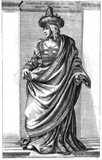
Cymburgis Masovia
 mermaidcamp