mermaidcamp
Keeping current in wellness, in and out of the water
You can scroll the shelf using ← and → keys
You can scroll the shelf using ← and → keys
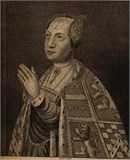
Maude
My 17th great-grandmother is buried in Nottinghamshire, England. She was a baroness. I can tell we are headed for confusion because my mother is also related to these de Nevilles. My mother’s ended up in Jamestown, Virginia, while these Nevilles on my dad’s side are all ancestors of the poet, Anne Dudley Bradstreet.
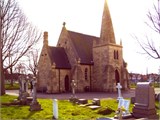
resting place
Maud NEVILLE , 6th Baroness Furnival Sex: F Birth: ABT 1392 in Worksop, Nottinghamshire, England Death: ABT 1423 in Worksop Priory, Nottinghamshire, England
Maud, Baroness Furnivall(e) in her own right according to later doctrine (d. c 1423), daughter and heiress of Thomas Neville, 5th Lord (Baron) Furnivall(e) in right of his 1st wife. [Burke’s Peerage]
Maud de Nevill(e), de jure Baroness Furinvall(e) in her own right; b. c 1392; m. by 12 Mar 1306/7, as his 1st wife, Sir John Talbot, 1st Earl of Shrewsbury and Waterford, who, however, before his creation as Earl in 1442 was called to Parliament as Lord (Baron) De Furnyvall or De Halomshire (sic.) in right of his wife 26 Oct 1409, and d. c 1423. [Burke’s Peerage, p. 2241]
————————-
Maud de Neville, Lady Furnivall, b. c 1392, d. c 1423, daughter of Thomas Nevill, Lord Furnivall, by his wife, Joan Furinvall, Lady Furnivall. [Magna Charta Sureties]
————————-
He [John Talbot] m. 1stly, bef. 12 Mar 1406/7, Maud, according to modern doctrine suo jure Baroness Furnivalle, elder daughter of Thomas (Neville), Lord Furnivalle, and only child and heir of (his 1st wife) Joan, according to modern doctrine suo jure Baroness Furnivalle, only daughter and heir of William (de Furnivalle), Lrod Furnivalle. She, who was b. c 1392 sat at Queen Katherine’s Coronation banquet in Westminster Hall, 21 Feb 1420/1. She d. about 1423 and was buried in Worksop Priory, Notts. [Complete Peerage XI:698-704]
————————-
BARONY of FURNIVALLE (VI)
MAUD NEVILLE, suo jure Baroness FURNIVALLE, elder daughter and heir of Thomas NEVILLE, LORD FURNIVALLE, and only child of her mother Joan, daughter and heir of William, LORD FURNIVALLE. She married, before 12 March 1406/7, as 1st wife, John TALBOT, 2nd son of Sir Richard TALBOT, of Goodrich [LORD TALBOT], by Ankarette, his wife. She was aged 15 and more at her father’s death. On 3 May 1407 the King took the fealty of John Talbot, and John and his wife, the said Maud, had livery of all the lands which her father had held by the courtesy after the death of Joan his wife, and also of Maud’s moiety of the tenements which her father had held in his demesne as of fee. [Complete Peerage V:591, (transcribed by Dave Utzinger)]
From jweber site
Maud Neville , 6th Baroness Furnival
The article on Maud in CP V reads (in full):
FURNIVALLE
BARONY BY WRIT.
VI. 1407. 1. Maude Neville, elder da. and h. of Thomas Neville, Lord Furnivalle, and only child of her mother, Joan, da. and h. of William, Lord Furnivalle, all above named. She m., before 12 Mar. 1406/7, as 1st wife, John Talbot, 2nd son of Sir Richard Talbot, of Goodrich [LORD TALBOT], by Ankarette, his wife, both above named. She was aged 15 and more at her father’s death. On 3 May 1407 the King took the fealty of John Talbot, and John and his wife, the said Maud, had livery of all the lands which her father had held by the courtesy after the death of Joan his wife,(d) and also of Maud’s moiety of the tenements which her father had held in his demesne as of fee.(e) John Talbot was sum. to Parl. from 26 Oct. (1409) 11 Hen. IV to 26 Feb. (1420/1) 8 Hen. V, by writs directed _Johanni Talbot_, with the additions, _domino de Furnyvall’, de Furnyvall’_, or _de Halomshire_. He was heir of his niece, Ankarette, da. of his elder br., Sir Gilbert Talbot, of Goodrich and Whitchurch [Lord Talbot]: she d. 13 Dec. 1421,(f) after which date the writs summoning him to Parl. were directed _Johanni Talbot_, with the addition of _militi_ or _chivaler_, only. His 1st wife, the said Maud, was bur. in Worksop Priory.(g) On 20 May 1442 he was cr. EARL OF SHROPSHIRE, but is commonly known as Earl of Shrewsbury. He was slain in battle at Castillon on the Dordogne, 17 July 1453, and was bur. at Whitchurch, Salop: M.I.* See Shrewsbury, Earldom.
(d) _Fine Roll_, 8 Hen. IV, m. 11.
(e) All Thomas Neville had thus held was three messuages and a virgate of land in Peaton and Diddlebury, in Corve, Dale, Salop. (_Close Roll_, 8 Hen. IV, m. 12).
(f) Ch. _Inq. p. m._ (on Ankarette, da. and h. of Gilbert Talbot chr.), Henry V, file 58, no. 44. See Talbot. [Ref: CP V:591]
(g) _Monasticon_, vol. vi, p. 123.
Maude de Neville (1392 – 1421)
is my 17th great grandmother
John Talbot (1413 – 1460)
son of Maude de Neville
Isabel Talbot (1444 – 1531)
daughter of John Talbot
Sir Richard Ashton (1460 – 1549)
son of Isabel Talbot
Sir Christopher Ashton (1493 – 1519)
son of Sir Richard Ashton
Lady Elizabeth Ashton (1524 – 1588)
daughter of Sir Christopher Ashton
Capt Roger Dudley (1535 – 1585)
son of Lady Elizabeth Ashton
Gov Thomas Dudley (1576 – 1653)
son of Capt Roger Dudley
Anne Dudley (1612 – 1672)
daughter of Gov Thomas Dudley
John Bradstreet (1652 – 1718)
son of Anne Dudley
Mercy Bradstreet (1689 – 1725)
daughter of John Bradstreet
Caleb Hazen (1720 – 1777)
son of Mercy Bradstreet
Mercy Hazen (1747 – 1819)
daughter of Caleb Hazen
Martha Mead (1784 – 1860)
daughter of Mercy Hazen
Abner Morse (1808 – 1838)
son of Martha Mead
Daniel Rowland Morse (1838 – 1910)
son of Abner Morse
Jason A Morse (1862 – 1932)
son of Daniel Rowland Morse
Ernest Abner Morse (1890 – 1965)
son of Jason A Morse
Richard Arden Morse (1920 – 2004)
son of Ernest Abner Morse
Pamela Morse
I am the daughter of Richard Arden Morse
pedigree

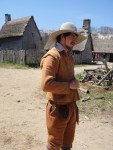



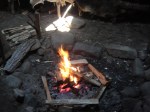

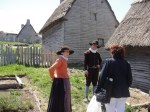
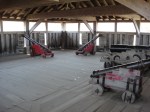

Since last November I have visited my ancestral homeland at Plimouth Colony in Massachusetts. The museum and displays helped me to more vividly picture what those Pilgrims were doing in the 1600s. I have many ancestors who arrived on the Mayflower, and I am not overly impressed with that fact. I am, however, truly grateful to learn that I am Wampanoag. I study history by learning about my family tree. Thanksgiving, as taught in elementary school, has very little to do with the real events that took place at the time. There was a feast and celebration, and there was a great deal of unease about these English people who built a fort around their town and put cannons on the second story of their church. These Pilgrims, who are depicted to children as seeking religious freedom, only believed in religious freedom for themselves. They had been repressed in Holland for their beliefs and wanted a place where their somewhat radical thinking would not clash with any royal Euros. They did not propose to extend religious freedom and tolerance to the native people they encountered in America. They proposed to convert them to Christianity, their own style of Christianity.

Thomas Dudley
Harvard was endowed and sustained in business by conversion of native people. The Indian College was used to educate and convert natives. If they had not come up with donations based on this premise, Harvard may never have become the institution it is today. My tenth great grandfather Thomas Dudley signed the charter for Harvard because he was the colonial governor when it opened. His daughter and my 9th great grandmother, Anne Bradstreet, was a poet and wife of Simon Bradstreet, also a colonial governor.

Harvard College Charter
I am not as proud of them as I am of Quadequina. I have taken sides in the Thanksgiving story. I think the Pilgrims were rude to say the least. We build it up as a story about peace and religion, but it was a story of imperialism. When I learned that all the historic wampum belts have gone to England to be kept in museums I became angry. A very cool Wampanoag elder who worked at Plimouth gave me some very wise advise about that. She told me there was no point in being angry about the past. She is obviously correct, but my feelings have changed about history, Massachusetts Colony and all that it meant, and the fable of Thanksgiving. There is more bitterness that the peach pie reveals. It makes me wonder exactly how my tribe feels when they celebrate this holiday. It looks like the tribe may open a casino on Martha’s Vineyard. It is fair to give them access to the wealth and the weakness of the white people on that island. There is plenty for everyone. Turn about is fair play, even if it comes hundreds of years later.

Coat of Arms
My 14th great grandfather was knighted by the first Duke of Suffolk. He is one of several Knights of the Bath in my family. He was involved with Henry VIII’s divorce, which is called his Great Matter:
Knighted by 1st Duke of Suffolk
Sir Edmund Bedingfield or Bedingfeld (1479/1480 – 1553), Knight of the Bath.
In 1523 Bedingfield was knighted by Charles Brandon, 1st Duke of Suffolk for demonstrating bravery in the French Wars. In 1539 he inherited from his brother Robert the great estate of Oxburgh Hall, King’s Lynn, Norfolk.
He married Grace Marney (d. in or after 1553), the daughter of Henry Marney, 1st Baron Marney.
Sir Edmund Bedingfield was entrusted with the care of Katherine of Aragon, at Kimbolton Castle, following the proceedings of 18 June 1529, concerning King Henry VIII’s Great Matter (divorce).
His first son Sir Henry Bedingfield (1510-1583), succeeded to his estate.
Edmund Bedingfield (1483 – 1552)
We can tell from his probate papers that Sir Edmund had worldly wealth.
In the name of God, Amen. The ninth day of August in the reign of our most dreadSovereign Lord Edward the Sixth by the grace of God of England, France and Ireland King, Defender of the Faith, and in earth of the Church of England and also of Ireland the Supreme Head, the fifth, I, Sir Edmund Bedingfield of Oxburgh in the county of Norfolk, knight, whole and perfect of mind and remembrance, thanked be God, fearing nevertheless the unstableness of this present world, do make my testament and last will in form as hereafter ensueth, that is to say:
I commend my soul to Almighty God, trusting by the merits of the passion of Christ, my Saviour and Redeemer, to have remission of my sins;
My body I will to be buried after the most laudable manner and custom of Christ’s church in such place and after such form as shall seem most convenient to mine executors;
And I give to the high altar of Oxburgh Church for my tithes negligently forgotten ten shillings;
Item, I bequeath to the reparation of the said church forty shillings;
And I bequeath to the like reparations of the churches of Redlingfield and Denham, to
each of them 20s;
Item, I bequeath unto my wife, Dame Grace Bedingfield, all such jewels as she hath beenused to wear upon her body, together with all my jewels and plate except a piece of silver parcel gilt engraven in the boton [sic] with ‘God’s blessing’ and the Bedingfields’ arms;
And also I give unto her all my right, interest and title which I have in and to the farm and lease of Skaleshoo in the parts of marshland in the county of Norfolk;
And I give also unto her all such sheep cattle as I shall have going there and depastured at the time of my death, and all my milch kine and other cattle being not above one year ofage the which at the same time of my death shall be remaining at Redlingfield & Denham in the county of Suffolk;
And I give and bequeath unto my son, Sir Henry Bedingfield, knight, all my harness, weapons and habiliments of war which shall remain at Oxburgh in the armoury there at the time of my said death, to th’ intent he may serve the King’s Majesty therewith at all times when he shall be commanded; And where by the last will and testament of Sir Henry Marney, knight, Lord Marney, it
was assigned, willed and bequeathed unto the said Sir Henry Bedingfield by the name of ‘Henry Bedingfield, son and heir apparent’ to me, the said Sir Edmund Bedingfield, one hundred pounds of plate then belonging to the said Lord Marney, to be delivered and disposed in such wise as in the same testament and last will is expressed & declared, considering now that I, the said Sir Edmund, before this time have divers and sundry ways issued and paid divers great and notable sums of money as well for th’ attaining of the inheritance of Sir Thomas Bedingfield, knight, mine eldest brother, lately departed, as also in obtaining of the King’s Majesty the manor of Bedlingfield [=Bedingfield] in the county of Suffolk, which both by the sufferance of Almighty God shall descend and come unto the said Sir Henry and his heirs, and also considering that at divers other times I have been beneficial unto him, as amongst other upon my departure from my late farm at Massingham the said Sir Henry had of my gift as well part of my plate and utensils of household as also divers cattle, as horses and kine, besides other necessaries and
implements of husbandry, I think myself by good reason and all conscience to bedischarged against the said Sir Henry and for the said sum of one hundred pounds;
Also I will that all such stuff of household remaining at Oxburgh which was agreed upon between Dame Alice Burgh, late wife of my said brother, Sir Thomas Bedingfield, knight, and me, the said Sir Edmund, by mediation of Sir John Spelman, Sir Roger
Townshend, knights, and Humphrey Carwell, esquire, shall be delivered by mineexecutors unto my said son, Sir Henry Bedingfield, knight, within one month nextensuing after my decease, that is to say:
First, in the chamber called the great chamber, a featherbed with a bolster; item, acovering of verdures with arms, and a tester of the same with curtains of green sarsenet; also a hanging of arras, two cushions with arms, a cupboard with a carpet thereon, a
coffer and a chair;
Item, in the chamber called the King’s chamber, a featherbed with a bolster, a mattress, a pair of fustians, a covering of red and green sarsenet twilted, a tester of tawny and black satin embroidered with unicorns and scallop shells, two cushions with arms, a cupboard with a green cloth thereon, two chairs, a carpet in the window, two cob-irons in the chimney;
I tem, in the chamber next the said King’s chamber, a featherbed with a bolster, a pair of blankets, a covering of tapestry, the hangings in the chamber of red and yellow canvas, and a form;
Item, in the inward chamber next unto the chamber called the Queen’s chamber, afeatherbed with a bolster, a blanket, a covering of russet cloth, a tester of stained cloth, and a form;
Item, in the said chamber called the Queen’s Chamber, a featherbed with a bolster, a pair of blankets, a covering of red say with arms and a tester of the same, the curtains of white linen cloth, a trundle-bed with a featherbed and a bolster, a blanket, a covering, a cupboard with the cloth thereupon, a cloth of red say in the window, a long chair with a cloth therein, another chair, and three cushions without arms;
Item, in the parlour, a hanging of red say stained, a cupboard, the long table, and a trussing bed in the chamber of the said parlour;
Item, in the chapel, a pair of chalice with the paten, the altar-cloths, the hangings of white sarsenet, and 4 cushions; item, a pall cloth of black velvet with a white cross; And I give unto the said Sir Henry one piece of silver parcel gilt where is engraven
‘God’s blessing’ and the Bedingfields’ arms, to remain to him as an heirloom in such wise as I received the same piece of my said brother, Sir Thomas Bedingfield;
And I bequeath unto the said Sir Henry my two stoned horses which be both ridden;
And over that, I do likewise assign, will and bequeath unto the said Sir Henry all and all manner of utensils belonging to my bakehouse at Oxburgh, together with other necessaries occupied and used for the purpose and intent of baking and brewing which at the time of my death shall remain at and within my said bakehouse there, and also all such utensils belonging to the kitchen there as was agreed upon by the said Dame Alice Burgh and me, the said Sir Edmund, by mediation of the said Sir John Spelman, Sir Roger Townshend, knights, and Humphrey Carvell, esquire;
And I give unto the said Sir Henry all mine eyries of swans called(?) swan-marks, except one couple of old eyries remaining at Redlingfield;
Item, I give and bequeath unto my said son, Sir Henry, all such coals, timber, boards and stone or other thing appertaining to reparations of the house of Oxburgh that shall remain at Oxburgh at the time of my death, all which said bequests and legacies I will shall enure and remain unto the said Sir Henry only upon condition that the same Sir Henry nor his executors shall not at any time hereafter claim of mine executors or th’ executors of them any parcel of the said sum of one hundred pounds before assigned, willed and bequeathed unto him by the testament and last will of the said Henry, Lord Marney;
And I give and bequeath unto my grandchild, Frances Sulyard, daughter of John Sulyard, Esquire, one hundred marks of good and lawful English money, to be paid to her at the day of her marriage or else at th’ age of 21 years, foreseen always that if the said Frances do die before marriage had and before she shall attain unto the age of 21 years, that then the said hundred marks to be divided by even portions between my youngest sons then living;
An d I give and bequeath unto my said wife, Dame Grace, all and all manner myhousehold stuff and other necessary implements together with my utensils of husbandry now remaining as well at Oxburgh as at Redlingfield not before assigned, willed or bequeathed to my said son, Sir Henry Bedingfield, to do therewith her will and pleasure;
And I heartily desire and require my said wife to give unto my servant, John Turner, forty shillings by year during his life, and if it shall happen my said wife to die, the said John then living, then I will mine executors shall from thenceforth yearly content and pay unto the said John Turner forty shillings during his natural life;
Also I will and bequeath to the children of my said son, Sir Henry Bedingfield, nowliving, one hundred pounds of good and lawful English money, to be equally divided amongst them, and to be paid to them at their several ages of 21 years or else at such days
as they and every of them shall happen to be married;
And I give to the children of my son, Francis Bedingfield, fourscore pounds of good and lawful English money, to be equally divided among them and to be paid to them in such sort and at such times as in the article last before-mentioned is declared and specified;
Also, I give and bequeath to the children of my son, Anthony Bedingfield, threescore pounds of good and lawful English money equally to be divided among them, and to be paid to them in like manner and time;
Provided always and my will is that if it shall happen any of the children of my said sons, Sir Henry, Francis and Anthony, to die before marriage had and before their several ages of 21 years, then I will that the portion and portions of such and as many of their said children as shall so happen to die shall be equally divided and given unto my children Anthony, Humphrey and Edmund, if they then do live, or else to as many of them as then shall be living, to their further advancement and relief;
And further I give and bequeath unto my said wife, Dame Grace, all my pullery and swine, together with all my corn and hay remaining as well at Redlingfield as at Oxburgh at the time of my death, and also all mine interest and term of years which I have in the parsonage and tithe corn of Hoxne in the said county of Suffolk;
Also I give unto my sons, Anthony, Humphrey & Edmund, to each of them forty pounds of good and lawful English money (my debts being first paid), provided always that if the said Anthony, Humphrey or Edmund do die within six years next after my decease, then I will that the portion or portions of such of them so dying shall be equally divided between my said younger sons then living;
And I give and bequeath to Margaret, the wife of Thomas Parke, otherwise calledThomas Tailor, my servant, to be delivered unto her within six weeks after my death, twenty ewe sheep going in Westhall flock in Cley;
And I give unto Adam Roberts, my servant, £6 13s 4d besides his quarter’s wages and livery;
An d I give and bequeath unto Edmund Grymston, William Shuldham, John Brooke, William Dey, Robert Nollothe, Robert Cooke, John Hewar, Thomas Spicer, Simon Bedall, Robert Clarke and Robert Barwicke, to every of them besides their quarter’s
wages and liveries forty shillings of good and lawful English money;
And in like manner I give and bequeath unto Edmund Grene, Robert Jerves, Thomas Caton, Thomas Parke, John Turnor, Henry Raydon, Thomas Stocke, Henry Jubye, Edmu{n}d Roberd{es}, Daniel Elstigoode(?), Thomas Laycocke, John Eyslingh{a}m,
William Skoldinge, Edward Hosteler, Robert Turnepenny, Humphrey Shulderham, Henry Spencer, John Cooke and Thomas Hewar, my servants, to every of them besides their quarter’s wages and their liveries, twenty shillings;
Item, I give to every one of mine other servants besides their quarter’s wages and their liveries, ten shillings;
And I give to Margaret Popper, forty shillings;
And I give unto the right worshipful and right so mine assured good brother and friend, Sir Roger Townshend, knight, (blank);
The residue of my goods, chattels and debts not before assigned, willed or bequeathed, I freely give them and every of them to mine executors, whom I ordain, constitute and make my well-beloved wife, Dame Grace Bedingfield, my son, Anthony Bedingfield, and Thomas Caton, my servant, to every of which I give, for their pains to be taken in and about th’ execution and performance of this my testament, ten pounds and their reasonable costs;
And furthermore I, the said Sir Edmund Bedingfield, do revoke, annul and annihilate all other wills and testaments by me made, devised or ordained before the day of the date of this my present last will and testament, these witnesses. Per Edmund Bedingfield.
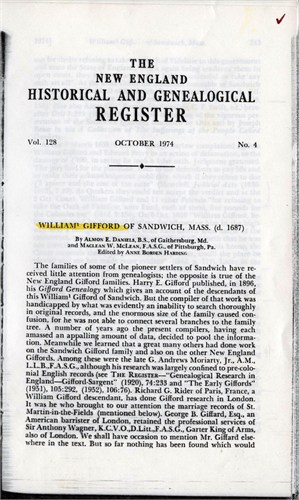
Gifford Genealogy
My 9th great grandfather was born in England and died in Sandwich, MA. He was a Quaker who was persecuted for his faith. He refused to sign the oath of fidelity to England, so he hd a hard time with the colonial authorities.
There is a record in England of a “Guilielm Gifford” (i.e., William Gifford) who married Elizabeth Grant on 11 February 1635 in St. Martin-in-the-Fields, London. Also, the London Merchant Taylors’ Guild shows a record: “William Gifford, son of Anthi (sic) Gifford of Dublin in the kingdom of Ireland, gentleman, apprenticed to Thomas Southerne of New Exchange, London, for a period of seven years from 7 December 1628.” Apprentices were forbidden to marry, so this would mean the apprenticed William Gifford would have been given his freedom 7 December 1635, in perfect time to be the one who married 11 February 1635/1636. Also, the records of St. Martin-in-the-Fields show that an Ananias Gifford married Maria Read on 18 November 1621. Ananias (also spelled Hananias, Hannaniah and Annaniah) is a relatively rare name. William named one of his sons Hannaniah, and the name has been carried down in the family. Also, the name occurs in the Giffords of Dry Drayton, county Cambridge, England. But it cannot be proven that these English records apply to the family of William Gifford of Sandwich.
Nor can the English ancestry of William Gifford of Sandwich be proven, according to Daniels & McLean. “English Giffords can be traced back to Normandy at the time of William the Conqueror when most branches usually spelled the name Giffard. Inevitably the temptation to connect the Sandwich Giffords with these celebrated families has produced a rash of printed accounts in which the connection is stated as fact but without solid references. (Cutter’s “Genealogical History of Western New York,” 2:901; “History of Bristol County, Mass.;” “Vineland (N.J.) Historical Magazine,” 3:32; “Seabury-Gifford Families,” Hartford (Conn.) 1941) In view of the fact that highly skilled professional genealogists have found no proof as yet of such connections, it can only be said that evidence has yet to be found to confirm these wishful thoughts.”
William Gifford of Sandwich was a Quaker, and as such, suffered persecution for his faith. “Little Compton Families” says “It is supposed that he was the William Gifford who in 1647 or earlier was ordered by the court at Stanford to be whipped and banished.” On 1 June 1658, he was one of a dozen men who “all of Sandwich were summoned, appeared to give a reason for theire refusing to take the Oath of Fidelitie to this government and unto the State of England, which again being tendered them in open court, they refused, saying they held it unlawful to take any oath att all.” At the court held 2 October 1658, they were fined L5 each. At the court held 1 March 1658/1659 George Barlow, Marshall for Sandwich, Barnstable and Yarmouth, complained against William Gifford and Edward Perry in an action of defamation, asking damages of L100, in saying he took a false oath. The defendants were ordered to pay 50s and make their acknowledgement publically, or else be fined L5 plus costs. As Quakers, they could not accept the verdict, and at the 2 October court William Gifford and 11 other Friends were fined L5 for refusing to take the Oath of Fidelitie. At the June 1660 court Gifford was again summoned to take the oath, again refused, and was again fined L5. In October 1660, for persisting in his refusal and for attending Quaker meeting, he was fined L57 — an enormous sum for those times. At this point he disappears from the records, and may have left Plymouth colony, but where he went is unknown. It has been suggested that he went to New Jersey which, like New Amsterdam, was then under the control of the Dutch. On 8 April 1665 William Gifford was one of the signers of the Monmouth (NJ) Patent, but there is no evidence he actually settled there; his sons Christopher and Hannaniah did, however. In a deed by his son Christopher William was described as a tailor.
On 10 November 1670 Mr. Gifford bought from mistress Sarah Warren of Plymouth, widow of Richard Warren, one half her share in the land at Dartmouth, which he gave equally to his sons Christopher and Robert by deed dated 6 May 1683. In 1673 William Gifford purchased land in Suckanesset (Falmouth) from the Indian Sachem, Job Noantico. Gifford continued to appear in Sandwich town records and in records of the Sandwich Friends meeting, and he married Mary Mills, also of Sandwich, at the Friends Meeting of 16 day 5 mo: 1683. Thirty witnesses signed the certificate, but none of William Gifford’s children signed the document, nor did James Mills, Mary’s brother.

Theobald at rest
My 21st heat-grandfather was the first butler in Ireland. This position granted him the prisage of wines. His father had been the hereditary butler of England before him. He lost his butler position for a couple of years because of irregularities as a sheriff. He seems to be descended from William the Conqueror, which brings us to the Doomsday book, but there is much to investigate to know if that is true conclusively. For one thing Henry II had so many oral bastards that he is the all time champ of British monarchs, I believe.
The ancestry of Theobald FitzWalter, the first Butler of Ireland, has been a fruitful theme for genealogists. No fewer than eight versions have been advanced at various times, including one that his mother was a sister of St. Thomas à Becket. This claim was put forward by the 4th Earl of Ormonde in 1444, when he procured an Act of Parliament declaring his descent from the martyred Archbishop. Despite this legislative authority, doubt has been cast on the claim by irreverent modern genealogists, who have pointed out that if the legend were true, the Butler ancestress would have been a grandmother at the age of eight! But while the descent from Agnes à Becket must be rejected, there is reason to believe that she was closely connected by marriage to Theobald FitzWalter, which may have given rise to the family tradition.
In 1937, the Hon. Patrick Butler (now lord Dunboyne) wrote a monograph in which he summarised the various versions of the early ancestry of the Butler family. This was followed in 1939 by Mr. T. Blake Butler’s Origin of the Butlers of Ireland. In this erudite and well-documented paper, Mr. Butler, showed that Theobald FitzWalter’s father, Hervey Walter (with whom the Ormonde pedigree commences in Burke’s Peerage) was grandson of Walter, who is mentioned in Doomsday Book as holding 27 manors in Norfolk and Suffolk, and who, Mr. Butler surmised, was connected with the Malet family. Further researchers made by him have confirmed this conjecture, and established that the above-mentioned Walter was in fact Walter de Caen, whom genealogists identify as a brother of William Malet, the great East Anglian landowner who fought at Hastings, and is said to have been the only companion of the Conqueror who was half English. It was perhaps for this reason that he was entrusted by William with the task of burying the body of King Harold on the seashore after the battle. As a result of Mr. Blake Butler’s researches, the house takes its place among the very few families in the Peerage who can trace their ancestry in the male line to the Norman Conquest.
L’envoi“The history of the illustrious house of Butler of Ormonde”, wrote Sir Bernard Burke, “is in point of fact, the history of Ireland from the time of the Anglo-Norman invasion. At the head of the great nobility of that country have ever stood the Butlers and the Geraldines, rivals in power and equals in renown.”
The families who are the subject of this memoir were cadet branches of that famous house, and they are not of course comparable in historical importance to the main line of the Ormonde earls. But the story unfolded in these pages shows that they too, played a part in historic events in Ireland which should not be lost in oblivion.
Theobald I FitzWalter, 1st Chief Butler of Eng & Ire, de Butler (Boteler) (1170 – 1206)
Theobald Walter or Theobald Butler or Theobald Walter le Boteler was the first Baron Butler and the first Chief Butler of Ireland. He also held the office of Butler of England and was the High Sheriff of Lancashire for 1194.[1] Theobald was the ancestor of the Butler family of Ireland. He was involved in the Irish campaigns of King Henry II of England and John of England. His eldest brother Hubert Walter became the Archbishop of Canterbury and justiciar and Lord Chancellor of England.
Family
Theobald was the son of Hervey Walter and his wife Maud de Valoignes, who was one of the daughters of Theobald de Valoignes.[2] Their children were Theobald, Hubert – future Chief Justiciar and Archbishop of Canterbury, Walter, Roger and Hamon. Theobald Walter and his brother Hubert were brought up their uncle Ranulf de Glanvill, the great justiciar of Henry II of England who had married his mother’s sister Bertha.
Career
On 25 April 1185, Prince John, in his new capacity as “Lord of Ireland” landed at Waterford and around this time granted the hereditory office of butler of Ireland to Theobald. Theobald’s father had been the hereditary holder of the office of butler of England. Some time after, King Henry II of England granted him the prisage of wines, to enable him, and his heirs, the better to support the dignity of that office. By this grant, he had two tons of wine out of every ship, which broke bulk in any trading port of Ireland, and was loaded with 20 tons of that commodity, and one ton from 9 to 20.[3] Theobald accompanied John on his progress through Munster and Leinster. At this time he was also granted a large section of the north-eastern part of the Kingdom of Limerick. The grant of five and a half cantreds was bounded by:
“…the borough of Killaloe and the half cantred of Trucheked Maleth in which it lay, and the cantreds of Elykarval, Elyochgardi, Euermond, Aros and Wedene, and Woedeneoccadelon and Wodeneoidernan.”
These are the modern baronies of Tullough (in County Clare), Clonlisk and Ballybritt (in County Offaly), Eliogarty, Ormond Upper, Ormond Lower, Owney and Arra (in North Tipperary), Owneybeg, Clanwilliam and Coonagh (in County Limerick).[
Theobald was active in the war that took place when Ruaidrí Ua Conchobair attempted to regain his throne after retiring to the monastery of Cong, as Theobald’s men were involved in the death of Donal Mór na Corra Mac Carthaigh during a parley in 1185 near Cork. In 1194 Theobald supported his brother during Hubert’s actions against Prince John, with Theobald receiving the surrender of John’s supporters in Lancaster. Theobald was rewarded with the office of sheriff of Lancaster, which he held until Christmas of 1198. He was again sheriff after John took the throne in 1199.
In early 1200, however, John deprived Theobald of all his offices and lands because of his irregularities as sheriff. His lands were not restored until January 1202.[9] A manuscript in the National Library of Ireland points to William de Braose, 4th Lord of Bramber as the agent of his restoration:
“Grant by William de Braosa, (senior) to Theobald Walter (le Botiller) the burgh of Kildelon (Killaloe) … the cantred of Elykaruel (the baronies of Clonlisk and Ballybrit, Co. Offaly), Eliogarty, Ormond, Ara and Oioney, etc. 1201.”
“Elykaruel” refers to the Gaelic tuath of “Ely O’Carroll”, which straddled the southern part of County Offaly and the northern part of Tipperary (at Ikerrin). The other cantreds named are probably the modern baronies of Eliogarty, Ormond Upper, Ormond Lower and Owney and Arra in North Tipperary.
Theobald founded the Abbey of Woney,[11] in the townland of Abington (Irish: Mainistir Uaithne, meaning “the monastery of Uaithne”), of which nothing now remains,[12] near the modern village of Murroe in County Limerick Ireland around 1200.[11] He also founded the Cockersand Abbey in Lancaster, Abbey of Nenagh in County Tipperary, and a monastic house at Arklow in County Wicklow.
Issue
Theobald married Maud le Vavasour, heiress of Robert le Vavasour, a baron of Yorkshire,[2] John Lodge in the Peerage of Ireland in 1789 gave the year as 1189, but on no apparent authority, as no other author follows him on this. He died between 4 August 1205 and 14 February 1206, and was buried at Owney abbey. Their children were Theobald le Botiller, 2nd Chief Butler of Ireland and a daughter Maud who married Gerard de Prendergast who had an only daughter who married John de Cogan.
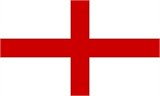
St George Cross
My 23rd great grandmother was the sister of Saint Thomas Becket, Archbishop of Canterbury. She is the ancestor of Margaret Tyndale, whose husband was burned at the stake for reading the bible in English. Although they spend several generations as the official bottlers to the royal Brits (a much more entertaining and lucrative employment), they revert to religion like salmon swimming upstream. They go on crusades and get crazy over the crown and religion. My own great grandfather Taylor was a preacher and a Confederate soldier. You might say it is in the blood.
Lady Gilberta Godiva le Becket (1100 – 1186)
my 23rd great grandmother
Hervey Butler (Boteler) (1130 – 1190)
son of Lady Gilberta Godiva le Becket
Theobald I FitzWalter, 1st Chief Butler of Eng & Ire, de Butler (Boteler) (1170 – 1206)
son of Hervey Butler (Boteler)
Theobald II le Boteler (1200 – 1230)
son of Theobald I FitzWalter, 1st Chief Butler of Eng & Ire, de Butler (Boteler)
Lady Maud Matilda DeVerdun Countess DeBoteler Countess Arundel (1225 – 1283)
daughter of Theobald II le Boteler
Matilda Tideshall FitzAlan Baroness Corbet De Arundel (1244 – 1309)
daughter of Lady Maud Matilda DeVerdun Countess DeBoteler Countess Arundel
Sir Thomas Corbet of Moreton, Knight of The Bath Corbet (1281 – 1310)
son of Matilda Tideshall FitzAlan Baroness Corbet De Arundel
Knight Sir Robert XII Corbet, Lord of Moreton Corbet (1304 – 1375)
son of Sir Thomas Corbet of Moreton, Knight of The Bath Corbet
Sir Roger XIII (Lord of Morton) Corbet (1330 – 1396)
son of Knight Sir Robert XII Corbet, Lord of Moreton Corbet
Robert Corbet (1383 – 1440)
son of Sir Roger XIII (Lord of Morton) Corbet
Blanche Corbet (1423 – 1458)
daughter of Robert Corbet
Humphrey Coningsby (1458 – 1535)
son of Blanche Corbet
Amphyllis Coningsby (1478 – 1533)
daughter of Humphrey Coningsby
Margaret Tyndale (1510 – 1555)
daughter of Amphyllis Coningsby
Thomas Taylor (1548 – 1588)
son of Margaret Tyndale
Thomas Taylor (1574 – 1618)
son of Thomas Taylor
James Taylor (1608 – 1698)
son of Thomas Taylor
John Taylor (1685 – 1776)
son of James Taylor
John Taylor (1727 – 1787)
son of John Taylor
John Taylor (1747 – 1781)
son of John Taylor
John Nimrod Taylor (1770 – 1816)
son of John Taylor
John Samuel Taylor (1798 – 1873)
son of John Nimrod Taylor
William Ellison Taylor (1839 – 1918)
son of John Samuel Taylor
George Harvey Taylor (1884 – 1941)
son of William Ellison Taylor
Ruby Lee Taylor (1922 – 2008)
daughter of George Harvey Taylor
Pamela Morse
I am the daughter of Ruby Lee Taylor

Order of the Bath
My 17th great grandfather, Sir Thomas Corbet, was a knight. His father was a sheriff in Shropshire, a job that would be passed down through the family. His roots could be traced to Normandy before the Doomesday survey, but I have not yet followed my branches back to that date. Shropshire was near Wales, where they had quite a bit of trouble with the Welch who did some nasty castle destruction.
01. Hugo Le Corbet, Cevalier of Pays de Caux, Normandy, flourished from 1040 and 1076, and was dead before the Domesday survey of 1086.
02. Roger Fitz Corbet, Domesday Baron of Cause, formerly Alretone, Shropshire, England, as it was called in Domesday, was born about 1050 to 1056, and died about 1134 as Pagan Fitz John, sheriff and governor of Shropshire, having succeeded Richard de Belmeis, held Cause in 1134, and would not have dared to take it during Roger’s lifetime; the castle was destroyed by the Welsh attacking Pagan Fitz John. It had been one of the strongholds along the Welsh border between the rivers Dee and Wye. He married the heiress of Talsey.
03. William Corbet, second Baron of Caus, lived in Wattlesborough as the Castle of Cause was destroyed by the Welsh attack on Pagan Fitz John.
04. Simon Corbet, of Pontesburie, close to the Welsh frontier, and probably died before his father, William.
05. Thomas Corbet, called the Pilgrim.
06. Sir Richard Corbet, of Wattlesborough flourished in 1217 and 1222. May be the same person as #7, Richard Corbet below.
07. Sir Richard Corbet of Wattlesborough died before 1255. He married probably by 1196 to Joanna Toret, coheir of Bartholomew Toret of Moreton Toret, Salop, who flourished in 1196-1229 and also had lands in Yorkshire.
08. Sir Richard Corbet, son of Richard, knight of Wattesborough, flourished 1225-1248, and was Lord of Morton at the Inquest of Bradfort Hundred taken in 1255. He married Petronilla, lady of Edge Baldenham and Booley, who was living in 1272, made a grant to Buildwas Abbey in 1223, succeeded his grandfather Bartholomew Toret, and was Jusiciar of Shropshire.
09. Sir Robert Corbet, son of Richard and Petronilla was born abt 1234 in Morton Corbet, Shropshire, England. He married 2nd, Mathilda De Arundel in about 1280. He was of full age in 1255, and apparently served as the Sheriff of Shropshire (1288-1289). He died in 1300 and was buried in the chapal at Alberbury which he had built.
10. Thomas Corbet, son of Robert and Matilda was born abt 1281. He married Amice, possibly Hussey, daughter of Ralph Hussey. Thomas died in 1310 at age 29.
11. Sir Robert Corbet, son of Thomas and Amice was born on Decmeber 25, 1304. He married Elizabeth Le Strange, daughter of Fulk le Strange and Eleanor Giffard before March 1323. He was noted as lord of the Vill of Moreton Corbet in 1316, but had not been granted knighthood by 1326. He purchased Shawbury from Giles de Erdington, which property was conveyed to Thomas Gery, vicar of Morton, and Thomas de Lee of Southbache. He went to some lengths to pass his lands to Roger Corbet’s heirs. Robert died on Decmeber 3, 1375.
12. Sir Thomas Corbet, son of Robert and and Elizabeth died about 1359. He married Elizabeth (Amice).
13. Sir Roger Corbet, son of Thomas and Elizabeth was born abt 1330 in Moreton Corbet. He married Margaret De Erdington, daughter of Giles De Erdington abt 1363. He died abt. 1394.
14. Sir Robert Corbet, son of Roger and Margaret was born on December 8, 1383. He married Margaret abt 1400 whose last name is not known. As his parents were both dead when he was eleven, his wardship and marriage were granted by King Richard II to Thomas Percy, Earl of Worcester, who was obliged at the beginning of the reign of Henry IV to hand over the wardship to John Burley I of Broncroft. Robert proved his age in 1405. He served as Justice of Shropshire from March 14, 1410 to February 1416, and served the county in Parliament in 1413 and 1419. In May 1413 he and Richard Lacon (who held office on the Fitz Alan estates) joined David Holbache and Urian St. Pierre (both of whom represented Shrewsbury) in acting sureties for a Matthew ap Maredudd. In 1413 problems with tax collections were blamed on the dislike of Robert Corbet and Richard Lacon for their nominees as tax collectors. As a result indictments were brought agains Robert and Roger Corbet, Richard Lacon, John Burley II and other esquires of the Earl of Arundel. In 1415 Robert and Roger Corbet served in King Henry V’s first expedition to France. Robert was Sheriff of Shropshire in from November 23, 1419 until he died.
15. Sir Roger Corbet, son of Robert and Margaret was born about 1415. He married Elizabeth Hopton in 1450, the daughter of Thomas Hopton and Eleanor Lucy. Roger died on June 8, 1467.
16. Sir Richard Corbet, son of Roger and Elizabeth was born in 1451 in Moreton Corbet. He married Elizabeth Devereux before 1478. Elizabeth is the daughter of Sir Walter Devereux and Agnes Ferrers. Richard died on Decmeber 6, 1493.
17. Sir Robert Corbet, son of Richard and Elizabeth was born in 1477. Robert married Elizabeth Vernon, daughter of Sir Henry Vernon and Anne Talbot. He died on April 11, 1513 and was buried in Moreton Corbet. His wife Elizabeth survived him by fifty years and was called the “old Lady Corbet of Shawbury.”
18. Dorothy Corbet, daughter of Robert and Elizabeth was born abt. 1511. She married Sir Richard Mainwaring of Ightfield.



My father read Tom Sawyer and Huck Finn aloud to me when I was very young. There were other books that followed, but he really loved those two stories, and made them come alive while reading them. He liked to sing and recite poetry. We sang at parities all the time. Since we had a player piano, talent was no barrier to musical contribution. I pumped happily away for hours singing with the piano rolls. I still know the words to most of those songs, or could with some prompting, remember the lyrics. I wrote songs myself as a teen, but do not remember them at all, which is funny. I do remember The Cremation of Sam McGee by Robert W Service, which my father knew by heart. As an Okie in Pennsylvania I know he identified heavily with Sam McGee because he frequently and randomly said “Since I left Plumtree, down in Tennessee, it’s the first time I’ve been warm.”
My dad was a funny troubadour of sorts who did not know that his 8th great grandmother was Mistress Bradstreet, Pilgrim poet. He did often say,” You’re a poet, your feet show it, they’re Longfellows.” Now that I have discovered the Bradstreet connection I am revising the rhyme:
Keep the beat,
Think on your feet,
You’re a Bradstreet.
Since I found Mistress Bradstreet at the Poetry Center I am wondering about my own relationship to words and poetry. Do I have any poetic DNA that I need to develop? Curious, I attended the inauguration of Arizona’s new poet laureate, Alberto, Tito, Rios of Nogales, AZ. He addressed the crowd, read some poems, then answered some questions from the audience. He is a professor so he found it easy to teach the group. His style includes plenty of comedy, which holds the attention. An audience question was, “What is the difference between writing poetry and writing prose?” His answer was perfect and memorable. He said, ” Each line in a poem should be able to stand by itself. If one of my poems shattered and all the lines were left alone, each should be strong enough to get a good job in another poem.” I love that. I also love the Poetry Center which is very near my home. I don’t really think the lines in my poem above could find work elsewhere, but if I work on it, perhaps the spirit of Mistress Bradstreet will guide me to achieve better outcomes.
The other fine advice Mr Rios gave, which he illustrated with a story from his youth, was that you observe events and happenings in your life that will die without a story if you do not tell them. His attitude is that all of us have the potential to use words in a poetic way, and the experience enhances our own lives when we do it. We also liberate objects and events that want their stories to be told. This magical reality view of the objects comes naturally from his bilingual and bicultural background. In Spanish reflexive verbs make the world a highly animated place in which things take action. I believe Tito Rios is the perfect artistic and cultural representative who could have been chosen as our official poet. I am pleased to have been in the special inaugural audience.
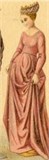
Maud
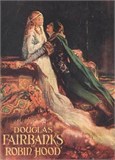
Maud as Maid Marian
My 21st grandmother married two husbands, the second of which (not my grandfather), was Robin Hood:
Maud le Vavasour, Baroness Butler
Following the death of Theobald in early February 1206, Maud returned to England into the custody of her father, who, having bought the right of marrying her at the price of 1200 marks and two palfrys, gave her in marriage, on 1 October 1207, to Fulk FitzWarin.[3] Fulk was the son of Fulk FitzWarin and Hawise de Dinan, who subsequent to a violent quarrel with King John of England, sought refuge in the woods and became an outlaw. Maud accompanied him. The legendary figures of Robin Hood and Maid Marian are said to be based on Fulk and Maud.
By FitzWarin, Maud had a son and a daughter:
DeathMaud le Vavasour died sometime before 1226. She had numerous descendants including the Earls of Ormond, the Earls of Arundel, Anne Boleyn, Mary Boleynand Elizabeth I.In fiction
Maud is the main protagonist in Elizabeth Chadwick’s The White Castle, which relates in highly fictional form, her life and adventures as the wife of Fulk FitzWarin.
References
Maud le Vavasour (1187 – 1282)
is my 21st great grandmother
Theobald II le Boteler (1200 – 1230)
son of Maud le Vavasour
Lady Maud Matilda DeVerdun Countess DeBoteler Countess Arundel (1225 – 1283)
daughter of Theobald II le Boteler
Matilda Tideshall FitzAlan Baroness Corbet De Arundel (1244 – 1309)
daughter of Lady Maud Matilda DeVerdun Countess DeBoteler Countess Arundel
Sir Thomas Corbet of Moreton, Knight of The Bath Corbet (1281 – 1310)
son of Matilda Tideshall FitzAlan Baroness Corbet De Arundel
Knight Sir Robert XII Corbet, Lord of Moreton Corbet (1304 – 1375)
son of Sir Thomas Corbet of Moreton, Knight of The Bath Corbet
Sir Roger XIII (Lord of Morton) Corbet (1330 – 1396)
son of Knight Sir Robert XII Corbet, Lord of Moreton Corbet
Robert Corbet (1383 – 1440)
son of Sir Roger XIII (Lord of Morton) Corbet
Blanche Corbet (1423 – 1458)
daughter of Robert Corbet
Humphrey Coningsby (1458 – 1535)
son of Blanche Corbet
Amphyllis Coningsby (1478 – 1533)
daughter of Humphrey Coningsby
Margaret Tyndale (1510 – 1555)
daughter of Amphyllis Coningsby
Thomas Taylor (1548 – 1588)
son of Margaret Tyndale
Thomas Taylor (1574 – 1618)
son of Thomas Taylor
James Taylor (1608 – 1698)
son of Thomas Taylor
John Taylor (1685 – 1776)
son of James Taylor
John Taylor (1727 – 1787)
son of John Taylor
John Taylor (1747 – 1781)
son of John Taylor
John Nimrod Taylor (1770 – 1816)
son of John Taylor
John Samuel Taylor (1798 – 1873)
son of John Nimrod Taylor
William Ellison Taylor (1839 – 1918)
son of John Samuel Taylor
George Harvey Taylor (1884 – 1941)
son of William Ellison Taylor
Ruby Lee Taylor (1922 – 2008)
daughter of George Harvey Taylor
Pamela Morse
I am the daughter of Ruby Lee Taylor
The Celtic holiday Samhain is still celebrated by some on October 31. The city of Dublin is embracing the ancient holiday in new ways. Poetry is a way to create connection with the future and also with the past. Some poems and songs survive from anonymous authors, while ancient Greeks are preserved in drama, ode and epic. Translation is a tricky thing, especially when translating Pagan rituals to Catholic practices. My ancestors, the O’Byrnes, came from County Meathe where Samhain was and is celebrated. I hope someday to visit Dublin to see these Irish in action with their ancient tradition.
Since I am in Tucson, with a strong and popular All Souls’ Day party I plan to add poetry this year by attending the reading on Friday night at the U of A Poetry Center by our new poet laureate. He is from the border, our own very specific and special place. This border has been directly responsible for plenty of death, and plenty of opportunity. In a spiritual sense our border has never been real, but artificial, setting a trap, catching little prey. It makes crime irresistible to the desperate. It works to incentivize illegal behavior. If the dead are visiting this week they will have no trouble crossing the border, even though they may have died trying. I look forward to the experience.
 mermaidcamp