mermaidcamp
Keeping current in wellness, in and out of the water
You can scroll the shelf using ← and → keys
You can scroll the shelf using ← and → keys
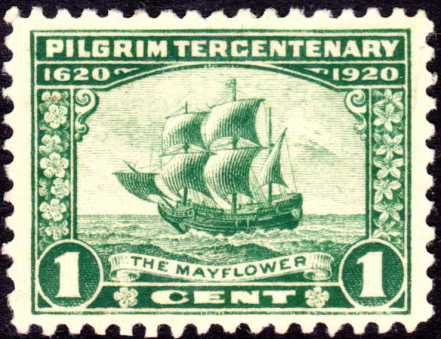
Mayflower
The ship was grounded on the shoals
The Pilgrims had not yet achieved their goals
The crowd was hungry, tired, depressed and sick
There was no welcoming party with a magic trick
To heal the suffering and recover moral fortitude
All the tribe had to offer was comfort and food
With great trepidation they approached the invaders
Dressed in high hats and collars of religious crusaders


You may wonder why I am making family history the theme of today’s self care post. Many of you know I am an avid fan of genealogy study. I have been involved since 2008 with ancestry.com. My parents were both dead when I began my quest. I am including this advice to you on self care because if your ancestors are still living you have an opportunity to excavate their memories before it is too late. The elders crave attention and are often neglected socially. Asking them questions about their youth and their ancestors is not only a great way to include them socially, but learn and grow in the process. Pictures, stories, and either video or audio interviews will become priceless tools for future generations. Once you know what your own family did in history, you have a much better sense of world events.
I was able to gather some photos and direct information form my uncle by marriage. His wife, my father’s sister, had left behind some old photos. His kids were adopted, so nobody really wanted the pictures. He gathered up some boxes and an overnight bag, and we hit the road in Kansas. I picked him and the photos up in Wichita at his apartment. We drove to Bartlesville, OK to spend the night at the Inn At Price Tower, in Frank Lloyd Wright’s only executed skyscraper. We rented a two story very swanky apartment with loads of copper furniture and accents. There is so much copper in the construction of the building, inside and out, that they cannot get wifi to work at all. We rode the tiny copper elevator up to the copper cocktail lounge for a drink. After dinner on the town we sat in our living room on the first floor of our suite to review the photos. He told stories about most of them, and I chose the ones I wanted to take. It was a fun time for both of us. After breakfast with a view we left the Tower before the tour of the gallery and building, which I am sure is excellent.
Uncle Paul and I were off next to Independence, KS, where my father was born. There was a library and courthouse in town with genealogical information. I found some good material, including my maternal great-grandmother’s entire probate file, which was at the courthouse. I chose the pages I wanted, and the clerk of the court made copies and mailed them to me for a small fee. I learned a lot from reading the entire file, but selected pages with important facts or handwriting of my great-grandmother. Uncle Paul and I visited Coffeyville, KS and the vicinity where my family had settled, right next to the Cherokee Nation. Since he had lived around there most of his life, my uncle had lots of stories to tell about the past. It was fascinating, even when it did not involve my direct ancestors. The Cherokee Strip, which is the name of this area on the border of Kansas and Oklahoma, was the wild wild west, and my ancestors were part of it.
After I dropped my uncle back in Wichita he was able to stay in his own apartment only a few months longer. His health deteriorated to the point that he needed constant care. His daughter is a nurse, lived nearby, and was able to handle his care with the best possible circumstances. She got a job as a supervisor at the facility where he lived. After he passed away she moved to Arkansas, where she was born and my grandparents both died. There was some kind of full circle there. I will always be happy I went on that adventure seeking my ancestors. You don’t need to take a road trip to interview somebody in your family. Pick up the phone and learn more about your heritage and history by asking your elders, before it is no longer possible. I wish I had done more of that.
The act of reaching out to your elders to learn about the history of your family can be healing as well as enlightening to all participants. I advise that you consider this because photos and stories will be lost forever if nobody collects them. Take care of family history to take care of yourself. You can do this on line with digital records, and if you are lucky you can also do it with living relatives. If you are super lucky you can go in person to the places your ancestors lived in the company of someone who knows a lot about the place.

Believe That
If we were having coffee this weekend I would offer you iced tea and some succotash I just made. I have been listening to a wonderful audio course about this culinary and cultural history of humanity. I heard the part about American colonists adopting crops from natives very quickly because many crops they brought from England did not grow over here. Succotash (a word borrowed from a native language) is a stew of corn, beans, onions, peppers, and tomatoes. It can be made with only corn and beans if need be. I realized I had those groceries on hand in the fridge so I whipped up a batch. It is a heavenly, and truly American dish. Help yourself. I am working on reminding myself of all the noble and beautiful parts of having been born in the US. Succotash is one of those.
If we were having coffee I know many of you live in other countries and are wondering what in the world is happening to the government in Washington, DC. As taxpaying citizens, believe me, we wonder even more than you do. Some people choose to stay away from news of current events, and honestly I am happy to be working with millennials who virtually never discuss anything current or political. I don’t think it is because they lack sympathy, but they really lack all the information. I am loathe to bring up any news at work because it is all so shockingly bad. Who am I to bum them out by letting them in on current events? I really like my colleagues at work. Maybe ignoring current events is the secret of their charm.
I wrote this week, but was still a little lame about production. I did a poem for Sue Vincent’s #writephoto on Thursday. I wrote a factual biography of my great-grandfather who fought for the Confederacy in the Civil War. I also have ancestors who fought for the Union and even worked on the underground railroad. I am not in any way attracted to these “historic monuments” causing all this dispute. I don’t think they were such a good idea in the first place, since Americans tend to be fairly ignorant of our own history. We just don’t need images to glorify people and events nobody even understands. I know this is not true for all of us, but I am frequently appalled at the total lack of knowledge about geography and history I encounter in Americans.
The one category in which we are still held in some esteem is comedy. SNL is the world leader that demonstrates that we do still live in a free country. Some of our freedom is being used to endanger and incarcerate part of the population. Thank God we still have Weekend Update. For any of you who have not seen #sheetcaking by Tina Fey, please enjoy this peek at our still thriving sense of humor. If we don’t laugh we will cry.
Please join us for the Weekend Coffee Share every week. Our hostess Diana brings us together from New Orleans her blog PartTimeMonster to share our feelings, our progress, and our digital beverages. Thanks for reading, writing, or commenting this week.

#WeekendCoffeeShare

William and Lucinda
My maternal great-grandfather fought for the Confederacy in the Civil War. I have a copy of the military records and pension applications for my maternal great-grandfather, William Ellison Taylor. He enlisted in the Civil War on April 26, 1861, Company C, 4th Regiment, Alabama Regiment of Volunteers, under the command of Captain N.H.R. Dawson. He was injured at the Battle of First Manassas, Virginia, on July 21, 1861. He was discharged October 22, 1861. His great-grandfather, Jonathan Aaron Taylor, fought in the Revolutionary War in South Carolina. After the Civil war William and his wife’s family moved to East Texas and bought land. He became a preacher.

William Ellison Taylor
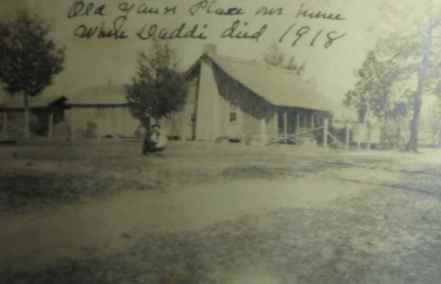
The following is from Gospel Preachers Who Blazed the Trail by C. R. Nichol, 1911.
William Ellyson Taylor was born in Alabama, November 22, 1839, and was reared in that state. His education was received in the common schools. When the war broke out between the states he enlisted in the 4th Alabama Regiment and went to Virginia. In the battle of Manassas. July 21, 1861, he was wounded, which made him a cripple for life.
Dec. 27. 1864, he was married to Lucinda Armer, who has been his faithful help-meet, and to the present shares his joys and sorrows. To this union six boys and two girl have been born.
November, 1869, he moved to Texas. In August, 1874, Dr. W. L. Harrison preached the first sermon he ever heard. Afterward and and David Pennington became a Christian. In 1877 he began preaching and though he works on the farm, he has preached as he found opportunity. Entering the firgin field he has established congregations in Montgomery, San Jacinto and Walker counties and is now preaching monthly for congregations at Willis, Bethan and Ne Bethel, Montgomery County. When confined for nearly two years through sickness his brethren administer to his every need. All who know Bro. Taylor love him for his intrinsic worth and work in the Lord.
Gospel Preachers Who Blazed the Trail by C. R. Nichol, 1911.
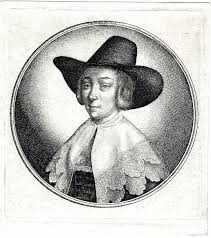
Colonist
My eleventh great-grandfather was born in England and died in Essex Massachusetts.
| Name: | Isaac Perkins |
|---|---|
| Birth Date: | 1571 |
| Birth Place: | Rugby Borough, Warwickshire, England |
| Death Date: | 1639 |
| Death Place: | Ipswich, Essex County, Massachusetts, United States of America |
| Cemetery: | Old Burying Ground |
| Burial or Cremation Place: | Ipswich, Essex County, Massachusetts, United States of America |
Isaac Perkins was baptized 20 December 1571 in Hillmorton, Warwick, England, the son of Thomas Perkins and Alice (possibly Kebble). Isaac married first Alice —. This Alice was buried in June of 1602 in Hillmorton, Warwick, England. Isaac married second Alice —. Isaac became a yeoman in Ipswich, Essex, Massachusetts. On 15 June 1639, his widow Alice sold the lot in Ipswich.
Isaac and the first Alice’s children are:
1. Sarah Perkins, baptized 3 Feb 1596 in Hillmorton, Warwick, England.
2. Elizabeth Perkins, baptized 19 May 1600 in Hillmorton, Warwick, England.
3. Thomas Perkins, baptized 27 May 1601 in Hillmorton, Warwick, England.
Isaac and the second Alice’s children are:
4. Abraham Perkins, baptized in 1603 in Hillmorton, Warwick, England, married Mary (Wyeth?), one of first settlers of Hampton, Rockingham, New Hampshire, miller, clerk of the market, constable, and tavern keeper.
5. Jacob Perkins, baptized 23 Mar 1605/6 in Hillmorton, Warwick, England, said to have settled in Holmes Hole, Martha’s Vineyard, Dukes, Massachusetts.
6. Abigail Perkins, baptized 8 Nov 1607 in Hillmorton, Warwick, England.
7. Isaac Perkins, baptized 26 Jan 1611/2 in Hillmorton, Warwick, England, married Susanna —, one of first settlers of Hampton, Rockingham, New Hampshire, constable.
8. Hannah Perkins, baptized 9 Oct 1614 in Hillmorton, Warwick, England.
9. Lydia Perkins, baptized 1 Jan 1617/8 in Hillmorton, Warwick, England.
10. Mary Perkins, baptized 16 Sep 1621 in Hillmorton, Warwick, England, may very likely have been the Mary who married Henry Green of Hampton, Rockingham, New Hampshire and died 26 Apr 1690.[1]
Sources:
1. Perkins in Hillmorton Parish Records (England), extracted by Jim Perkins.
2. Davis, Walter Goodwin, The Ancestry of Dudley Wildes, 1759–1820, of Topsfield, Massachusetts, Portland, ME: Anthoensen Press, 1959, p. 89.
3. Noyes, Sybil, Libby, Charles Thornton, and Davis, Walter Goodwin, Genealogical Dictionary of Maine and New Hampshire, Baltimore, MD: Genealogical Publishing Co., 1976, p. 541.
4. Savage, James, A Genealogical Dictionary of the First Settlers of New England, Vol. 3, Baltimore, MD: Genealogical Publishing Co., 1990 (originally published Boston, 1860-1862).
5. Holmes, Frank R., Directory of Heads of New England Families, 1620-1700, New York, 1923, p. 354.
Baptisms20 Dec 1571 Isaac son of Thomas
3 Feb 1596 Sarah dau of Isaac
19 May 1600 Elizabeth dau of Isaac
27 Mar 1601 Thomas son of Isaac
Burial[28?] June 1602 Alice wife of Isaac
Baptisms[4 July ?] 1603 Abraham son of Isaac & Alice
23 Mar 1605/6 Jacob son of Isaac
8 Nov 1607 Abigail dau of Isaac
26 Jan 1611/12 Isaac son of Isaac
9 Oct 1614 Hannah dau of Isaac
1 Jan 1617/18 Lydia dau of Isaac
16 Sep 1621 Mary dau of Isaac
Source: Perkins in Hillmorton Parish Records (England), extracted by Jim Perkins.
In 1637 there was an Isaac Perkins in Ipswich where he owned “land lying above the street called Brook street, six acres.” He was dead before 15 Jun 1639, when his widow Alice Perkins sold the lot to Joseph Morse. It is tempting to believe that he was also of the Hillmorton stock. John Perkins did not have a brother Isaac, but he had an uncle Isaac only eleven years older than he, while other Isaacs were baptized in Hillmorton in 1597/8 and 1611/2.
If Isaac Perkins of Ipswich was a man of middle age, which we have no means of knowing, he and Alice may have been the parents of Abraham and Isaac Perkins who turned up in Hampton, not far down the coast, where Abraham took the Freeman’s Oath in 1640 and Isaac in 1642. These men are presumed to have been brothers. Abraham named a son Luke, not a common name, and John Perkins of Hillmorton and Ipswich had an uncle Luke, a brother Luke, and a grandson Luke.
Source: Davis, Walter Goodwin, The Ancestry of Dudley Wildes, 1759–1820, of Topsfield, Massachusetts, Portland, ME: Anthoensen Press, 1959, p. 89.
Perkins/Perkeings/Perkus/Parkins, Isaac, yeoman, Ipswich, propr. 1637. His widow Alice sold land and house 15 (4) 1639. [Ips. Rec.] Ch. Isaac (rem. to Hampton); Jacob (sold land recd. from his father 23 (2) 1674, after removing to Holmes Hole.)
Source: Holmes, Frank R., Directory of Heads of New England Families, 1620-1700, New York, 1923, p. 354.

Dick on a family fishing trip
My father was a fisherman. This sport consumed his free time and a lot of his money. I think he inherited the love of fishing from his mom. It was mentioned in some early notes by my great-grandmother that Olga, my grandma, was an ace fisherwoman as a child. It was a family activity for multiple generations. We would go to lakes in Arkansas and Oklahoma when I was very young. After we moved to Pennsylvania I don’t really know where or if my dad went fishing. The Allegheny River near our home was way too polluted for fishing, and Lake Erie was on the way to completely ruined too. I think he just fished when he was down south visiting his parents.
Our family moved to Venezuela in 1963, to a rural part of the country. My father was the general manager for Mene Grande, aka Gulf Oil in the Eastern part of Venezuela. Maracaibo, in the west, had another operations manager. The companies built camps for their workers. Service companies like Halliburton had small camps, and sent their kids to school at the large camp, by agreement. My dad was the boss of all the people in my neighborhood and all the people we knew in other towns. I was a princess of petroleum. Inside the camp life was lavish. Outside life was primitive by the standards I knew in Pennsylvania.
One of the privileges my father enjoyed was being invited on fishing trips by service companies. We also had a yacht at our disposal in Puerto la Cruz, so my dad had his own deep sea fishing craft with a full crew. I liked the yacht part because I never had to fish. I was not really into it. I ate them, but that was about it. I got to water ski when my father was not trolling for fish in the Caribbean Sea. That was excellent.
We went into the jungle to a fishing camp owned by some service company on a jaunt to catch a fish called Pavón. It is large and free, and was very abundant in the Amazon Jungle. We flew in a WWII German plane with the owner/pilot. He was most certainly a Nazi who got out with his plane. It still had military style seating ..as in not much. You just get strapped to the side of the plane and bounce around in an open metal fuselage. I believe we were in Colombia, but there were no signs of statehood. There was a tiny trailer and an indigenous family of caretakers. It was the hottest place I had ever been in my life.
We set out in small boats, a couple of guys stood up in the boat and shot the crocodiles in the head when the approached our boats. The bloody and creepy memory is clear in my mind today..as is the amazing heat. Finally we landed and started casting lines from the shore. The Pavón were biting and we were catching them non-stop. A few Piranha were caught and set up on the bank, far from the water. They were snapping their awful jaws together rapidly an hour after they had been taken out of the river. They were scary as hell. I quit fishing after my first 15 fish or so. I walked back away from the shore. I spotted a black jaguar ahead of me walking perpendicular to my own path. I froze and was unable to scream for my adults who were close, but not visible. The majestic cat must have known I was there, but kept his eyes forward and walked on into the jungle. I quickly made it back to the guys with the guns and told them, but nobody thought it was a great idea to chase the cat.
Memory is an unreliable source of fact. I know I must have embellished this story in my mind a bit, but I am sure of the central elements. I remember the jaguar as a vivid spirit message that came to me because I had stopped fishing. I felt an odd blessing that came with the sheer fear of the moment. I am very glad I went fishing in the Amazon, but not because of the fishing. I had a destiny that included an exotic tropical wild animal crossing my path with no desire to harm me. I did some fishing as an adult, but always with a hand line. I am not a rod and reel person, nor am I greedy. I am pretty sure that the sport of fishing has something to do with feeling what is unseen. Do you fish, gentle reader? Literally or figuratively?

flight of fancy
Her troubled mind had conjured up some frightening scenarios. She sat for hours wringing the hands that had once been so productive and accomplished. Her memory played cruel tricks on her as she tried to survive without her husband. Ernie had taken care of certain aspects of life that had always been a mystery to her. Although my grandparents ran a farm together, sharing the heavy work load, my grandmother was in the dark about the family finances. When she became a widow and could no longer stay alone at her farm it had been sold. Her life of relative freedom came to an end. She lived in institutions or at her children’s homes, never really settling. She missed independence even though she could barely manage daily tasks without a great deal of assistance. She disliked the feeling of being a houseguest, or even a child, of her son’s family. She had lost her matriarch status, and had to defer to her daughter-in-law. This life in suburban Pittsburgh was foreign, and cold. She rarely went out, and when she did she was fearful, even with her family. She lost her ability to relax. Anxiety was her only companion.
When the sun set she sat in the back yard in silence. This time to herself was spent every day engaging in bird watching. She had little sensitivity to human emotions, but was tuned into nature like a trance. She could feel the spirits of each bird soaring. Their playful flight brought a rush of feelings from her youth, from her most sorrowful, as well as her brightest times. She could sense that her own spirit was close to a threshold. She sometimes thought her spirit left her body and explored the sky above her for a while. As darkness fell the caregiver arrived to guide her into the building. Her lightness of being vanished as the door closed behind her. Perhaps tomorrow will be the day she finally takes off for eternity. She feels as if she has already spent an eternity here.
#writephoto
This fiction is written in response to this week’s photo prompt from Sue Vincent’s Echo. Join us each week to read, write, or submit your own take on the Thursday prompt.

Dick 1945

Dick fishing
My father was a corny guy who had a unique way of expressing himself. He had a PHD in petroleum engineering, but he like to come off as a down home Okie, for reasons known only to himself. He had a few phrases that have stuck in my mind over the years and guided my decisions in his absence. I am sharing them with you today for Father’s Day in hopes that you will see the humor in them and perhaps the wisdom.
My dad was very tall and imposing. He was an excellent musician and dancer, who loved to throw parties and sing. He was socially a pretty charming man. He did not discuss his politics in public, and felt obligated to be friendly, if not close, to all the neighbors. He was born in 1920, raised in Kansas and Oklahoma, at a time when petroleum was booming all around him, to say the least. His father, my grandpa, was a “jar head”, meaning he drilled oil wells with his crew before the invention of the rotary bit (very primitive stuff). My father got his masters in petroleum engineering at Penn State in the 1940’s and his PHD at Texas A&M in 1966. He loved A&M because he was in his element. He became a professor and taught there until he finally retired in 1997. His specialty was numerical modeling of oil fields. Being an Aggie suited him to a T.
His favorite phrase was “Hurry every chance you get.” This is a great example of his personal style. It doesn’t really mean anything, but sends one out into the world with a sense of urgency. He would typically say that on parting to everyone. He would often include, “It’s been great being with you” in his concluding remarks, just before he told them to hurry. It was endearing, and all of his colleagues and friends had heard it hundreds of times. His work crew bought him a desk set and had it engraved with the word hurry. It was too small to hold the entire statement, but everyone knew to what it referred. I don’t have a catch phrase for parting, but sometimes use my dad’s,”It’s been great to be with you”. I only say it if it is true. I never tell people to hurry.
In his parenting he frequently said,”Do as I say, not as I do.” This proved to be the most valuable lesson he engrained in me. He told me never to gamble or speculate on anything that was not a sure thing, as in a fact that already existed, rather than a speculation on the future. He also was firmly opposed to borrowing money, in theory. He then proceeded to gamble and speculate on oil fields (with borrowed funds) because he thought he was so smart. He both made and lost money, but it was stressful for him beyond belief. I could not help but observe that those oil wells were NOT sure things. He made this point clearly by doing what he said I should never do. I have no attraction to gambling or heavy financial speculation, and for this I thank Richard Morse. I remember to do as he said, not as he did, and this has served me well.
What did you learn from your father that stays with you in your life, gentle reader?

London
Sarah Allerton was born in London in 1588, and died in Plymouth Colony in 1633. She arrived in the new world on the ship Anne with her third husband in 1632 after my 13th great-grandfather had sailed on the Mayflower then died shortly after arrival in the colony. Her brother Isaac was a signer of the Mayflower Compact as well, and assistant to Governor Bradford in America. Isaac later disgraced himself, moved to New Amsterdam, and became known as the first Yankee trader.
Sarah Allerton’s parents are not given but information is provided by unknown sources. Her parents would have been Edward Allerton, b. 1555 St. Dionis, Backchurch, London, England, died 1590 England, and Rose Davis, b. ca. 1559 in St. Peters, Corningshire, died June 1596 in England. Edward’s father was William Allerton, b. 1529. Sarah however certainly had at least two brothers. Isaac’s will also mentions a “brother Breuster”. The two siblings were:
1) Isaac Allerton, b. ca. 1586. He was one of the more famous of the Pilgrim Fathers. He was originally a tailor in London and was married in Leyden, the same day as his sister, 4 November 1611, to Mary Norris of Newbury, England, b. ca. 1588.
He came over on the Mayflower, with his wife and three children, and became First Assistant (1621 to ca. 1631) to Governor Bradford. Mary Norris died in childbirth, with a stillborn son, the first winter. She died 25 February 1620/1 on the Mayflower, while the first houses were still being built at Plymouth. In ca. 1626 he married Fear Brewster, b. 1606 at Scrooby, England , daughter of William and Mary Brewster, William being one of the most famous Pilgrims. Fear had arrived in Plymouth in July 1623, on the Anne, the same ship that brought Mary Priest and her two children.
Isaac was well known for his unscrupulous dealings with fellow Pilgrims and eventually left the colony in disgrace in the 1630’s when he lost the support of William Brewster. “A most enterprising man, he engaged in commercial pursuits at Marblehead and in Maine and later resided at New Amsterdam.” . He is often remembered as “the first Yankee trader”. Fear died in Plymouth before 12 December 1634. Isaac Allerton was probably married a third time to Joanna Swinnerton, before 1644, probably New Haven, CT. There were no known children from this marriage. He died insolvent between 1 and 12 February 1658/9 in New Haven, CT. Joanna was still living in 1684. Isaac’s children were (Sarah and Isaac were by his second wife):
Bartholomew, b. ca. 1612, in Leyden, Holland. Bartholomew returned to England. He first married Margaret _____ and then Sarah Fairfax, prob. in Rumbough, Suffolk, England. He died between 15 October 1658 and 19 February 1658/9, prob. at Bramfield, Suffolk, England. Four children are recorded.
Remember, b. ca. 1614 in Leyden. She m. Moses Maverick, before 6 May 1635 and died between 12 Sept. 1652 and 22 Oct. 1656. Moses lived in Lynn, Salem, and at Marblehead (all MA) in the time they were married. They had seven children, born at Lynn and Salem. Moses remarried in Boston to Eunice (Cole) Roberts by whom he had four children.
Mary, b. June 1616, m. Thomas Cushman, ca. 1636, in Plymouth, MA. Cushman came to Plymouth in 1621 on the Fortune. They had eight children. She died 28 November 1699, Plymouth, MA, the last survivor of those who came on the Mayflower. One of her grandchildren, Allerton Cushman, married in 1726 to Elizabeth Sampson, cousin of Benjamin Sprague.
Child, buried St. Peters, Leyden, 5 February 1620.
Stillborn son, b. 22 December 1620 on the Mayflower, Plymouth Harbor.
Sarah, b. ca. 1627 in Plymouth, died young before 1651.
Isaac Allerton, Jr., b. between 22 May 1627 and 1630, Plymouth, MA. He married first to Elizabeth _____, ca. 1652 (2 children) and then to Elizabeth Willoughby, a widow of Overzee and Colclough, ca. 1663, in Norfolk County, VA. Elizabeth was born in 1635 in England (12). They had three children, all born in Westmoreland Co, VA. Isaac became the first Plymouth student at Harvard (he graduated according to in 1650) and later went into business and made a fortune himself. He died Westmoreland Co., VA in 1702.
As is the case for Degory Priest, a General Society of Mayflower Descendents book is available on the first five generations of Isaac Allerton’s descendents. A somewhat earlier and shorter version, covering four generations, was published in 1996. Isaac Allerton has apparently a relatively small number of descendants compared to other Mayflower passengers, but is an ancestor to Presidents Zachary Taylor and Franklin D. Roosevelt (the latter also descended from Degory Priest through Sarah). The presidents are both thus our very remote (!) relatives: President Zachary Taylor (1784-1850), through Isaac Allerton Jr., was a 5th cousin to Mary (Scott) Wisdom; President Franklin D. Roosevelt (1882-1945), through Degory Priest, was an 8th cousin to Paul Graham.
2) Sarah Allerton, b. ca. 1588 at London . She was first married to John Vincent and then married to Degory Priest as noted above. Having received word of her husband’s death, she remarried on 13 November 1621 in Leyden, to Godbert Godbertson (name used in but also often called Cuthbert Cuthbertson). They arrived in July-August of 1623 on the Anne with their three children (two by Degory Priest). It is possible that there were two additional children with them by the first marriage of Godbertson (I think there is a reference to five children that arrived with them in and see also mention of three Cuthbertson below). Francis Sprague, another of my ancestors, was also a passenger. Godbert (ca. 1590-633), a Dutch Walloon, was a hat-maker in Leyden. He had been married previously in 1617 to Elizabeth Kendall. He became a “purchaser”, i.e., a shareholder in the Pilgrim Company when it was formed in 1626. He died seven years later, in Plymouth, of “infectious fever”. She died in Plymouth before 24 October 1633. On 11 November 1633 their son-in-law Phineas Pratt was appointed “to take possession of the personal property of Cuthbert Cuthbertson and his wife Sarah”.

Mayflower Compact
My 13th great-grandfather was a hatter who sailed to America on the Mayflower, but did not survive the first winter. His wife and children came to Plymouth in 1623 to take over his allotment in the colony.
Degory Priest was one of the Pilgrim passengers on the Mayflower in 1620. His wife, Sarah Allerton, and children Mary and Sarah stayed behind in Holland in Leiden where some of the Pilgrims had moved to escape religious persecution in England. He died during that first desperate winter in Plymouth. His wife and children came to North America on the Anne in 1623. At least one of his grandchildren was an early resident of Nantucket Island. Alternate spellings of his name are “Gregory”, “Degorie”, or “Digorie” Priest. Sarah Allerton’s brother Isaac Allerton and his family were also passengers on the Mayflower.
Degory and Sarah have many notable descendants including Franklin Delano Roosevelt, Maria Mitchell, Pete Seeger, Richard Gere, Dick Van Dyke, and Orson Scott Card.
Degory PRIEST (1579 – 1621)
13th great-grandfather
Mary Priest (1613 – 1689)
daughter of Degory PRIEST
Daniel Pratt (1640 – 1680)
son of Mary Priest
Henry Pratt (1658 – 1745)
son of Daniel Pratt
Esther Pratt (1680 – 1740)
daughter of Henry Pratt
Deborah Baynard (1720 – 1791)
daughter of Esther Pratt
Mary Horney (1741 – 1775)
daughter of Deborah Baynard
Esther Harris (1764 – 1838)
daughter of Mary Horney
John H Wright (1803 – 1850)
son of Esther Harris
Mary Wright (1816 – 1873)
daughter of John H Wright
Emiline P Nicholls (1837 – )
daughter of Mary Wright
Harriet Peterson (1856 – 1933)
daughter of Emiline P Nicholls
Sarah Helena Byrne (1878 – 1962)
daughter of Harriet Peterson
Olga Fern Scott (1897 – 1968)
daughter of Sarah Helena Byrne
Richard Arden Morse (1920 – 2004)
son of Olga Fern Scott
Pamela Morse
I am the daughter of Richard Arden Morse
Degory Priest deposed that he was 40 years old in a document signed in Leiden in April 1619; this would place his birth at about 1579 in England. On 4 November 1611, he was married to Sarah (Allerton) Vincent, the widow of John Vincent, and the sister of Mayflower passenger Isaac Allerton; Isaac Allerton was married to his wife Mary Norris on the same date.
It has been suggested that Degory Priest of the Mayflower may have been the Degorius Prust, baptized 11 August 1582 in Hartland, Devon, England, the son of Peter Prust. However, given that the baptism appears to be about 3 years too late, and the fact that none of the Leiden Separatists are known to have come from Devonshire, I doubt this baptism belongs to the Mayflower passenger. Degory Priest was one of the earliest to have arrived in Leiden, so it is more reasonable to suspect he is from the Nottinghamshire/Yorkshire region, the Sandwich/Canterbury region, the London/Middlesex region, or the Norfolk region: all of the early Separatists in Leiden appear to have come from one of these centers.
Degory and wife Sarah had two children, Mary and Sarah. Degory came alone on the Mayflower, planning to bring wife and children later after the colony was better established. His death the first winter ended those plans. His wife remarried to Godbert Godbertson in Leiden, and they had a son Samuel together. Godbert, his wife Sarah, their son Samuel, and his step-children Mary and Sarah Priest all came on the ship Anne to Plymouth in 1623.
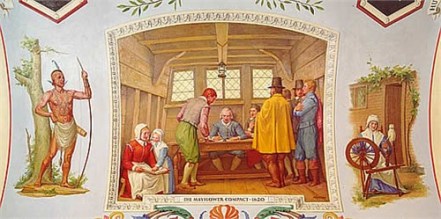
Mayflower Compact
 mermaidcamp