mermaidcamp
Keeping current in wellness, in and out of the water
You can scroll the shelf using ← and → keys
You can scroll the shelf using ← and → keys
It is thrilling to plan travel on various levels. I adore museums and classy architecture. Gardens, formal and botanical, please me greatly. The culinary delights of a new terroir and culture top my list. I am such a fan of farmer’s markets, known in most of the world as simply the market, that I literally plan to eat everything in season and local wherever I go. One of my favorite festivals in Europe is Spargelfest, the over the top celebration of asparagus harvest. I love the stuff, both white and green, although I can’t really see why they bother with the white. Do not express that feeling about white asparagus in a German speaking country unless you are ready to be lectured. After all, these are the Spargelfest people, and they know a thing or two about spargel. Restaurants feature special menus that highlight the seasonal star in all possible ways. I have not seen spargel desserts or beer, but I would not be surprised to find that they exist. Roadside and city corner stands are set up for the purpose of streaming spargel farm to table. These temporary businesses are swamped with asparagus fans getting festive with both green and white.
I am really excited to learn that when I visit Rhode Island there will be fresh asparagus!!! They promise kale all year. The wintertime farmers’ market in Providence will hook me up with what I need. There is also a slight chance of rhubarb in the harvest forecast for early May. Now that would just put the icing on the cake. I love alliteration as well as asparagus and rhubarb. I can really relish a Rhode Island Rhubarb extravaganza. Fiddlehead ferns, which I have never knowingly eaten, will be ready as well as alliterative all by themselves. Perhaps most intriguing is the fact that Anthony Bordain will perform live at the Providence Center for the Performing Arts, talking with Eric Rippert, another chef, about food. The name of this show is Good vs Evil. I believe I must see that performance. I have very few heroes in show biz, and Mr. Bordain is one of them. I just now became acquainted with Mr. Rippert, and think there is major potential. The theater itself just hit the national news for allowing producers to decide if tweeting is permitted during each show, and then strictly mandating that those in the tweet seats ( at the back) lower the lights of their phones. The folks in Providence have a long history of tolerance, but draw the line at performance tweeting. How very civilized!!
Wampum, or shell beads has been used for centuries in New England. After colonists arrived in America a currency exchange value was set to convert it European currency. This forever changed the meaning and trade value of what was a Native American tradition and source of historical pride. Once it was adopted by Dutch and English as currency it was manufactured in New York on Long Island as well as by Native tribes that dominated the newly created market for trading currency. Since both Native and Europeans could trade with it, it’s use thrived until the end of the 17th century. Counterfeiting was a problem during colonial times as it was more widely used. It was eventually phased out in favor of metal coins as the official currency of New England.
Before the colonists changed the meaning and tradition wampum was used in ceremonies and agreements.It is important as a covenant record and means of communication. Language was commonly understood in terms of wampum color. Messages and agreements were sealed by way of wampum belts created for the specific meaning. White shells had a brighter meaning and dark purple shells indicated heavier subjects. The tapestry woven into a wampum belt was a story. I am looking forward to seeing the new wampum being made today and perhaps some of the historical pieces. I will be visiting museums as well as living wampum artists. It is a fascinating subject.
Jeremiah Clarke, my 10th great grandfather, nickname Jeremy Clarke, b. 1605 in East Farleigh, Kent, England, d. Jan 1652 in Newport, Newport County, Rhode Island, buried in Newport, Newport County, Rhode Island, resided 1638 in Aquidneck and Portsmouth.

Jeremy Clarke president governor
Newport County, Rhode Island, resided 1640 in Newport, Newport County, Rhode Island, immigrated ABOUT 1637 in (Probably) Rhode Island, event in Member of Lincoln’s Inn ?, military Captain, occupation 1647 – 1649 Treasurer of Rhode Island, occupation 1648 Acting Governor of the colony. From the Plantagenet Ancestry book, it’s not clear whether it was Jeremiah Clarke or Thomas that was a member of Lincoln’s Inn. “Jeremy Clarke, baptised East Farleigh, Kent 1 Dec. 1605, emigrated about 1637, resided Newport, Rhode Island, freeman 16 Mar.1640/1, treasurer of Rhode Island; buried Newport 11 mo., [Jan.] 1651/2;married, in England, about 1637 to Frances (Lathaum) Dungan, baptised at Kepston, Co. Bedford, 15 Feb. 1609/10, died September 1677, buried Newport, widow of Thomas Dungan, Gent., of Lincoln’s Inn, Middlesex, and daughter of Lewis Latham, Gent., Sergeant Falconer to King Charles I, by his wife Elizabeth. She married, third, before 18 Jan. 1656 to Rev. William Vaughan, died on or before 2 Sep 1677.” Arms of Jeremy Clarke: Gold on a bend engrailed azure a cinqfoil of the field. Note: maybe the arms for father William.) East Farleigh has a fine medieval bridge over which General Fairfax marched in 1648 to the Battle of Maidstone. Jeremiah may have died 11 Jan 1651. He married Frances LATHAM, married ABOUT 1637 in England.
Space and time are the first two elements of fine festivity. A party, gentle reader, must have room to breathe and become what it wants to be. One can always have impeccable timing if one takes time to consider the elements and the goals. My party in Providence, RI is to celebrate with the living and the dead. I will visit some of my ancestors who lived there in the early 1600’s and discover people who live there now. For me , this is an excellent balance. I like both groups equally.
The city contains historic buildings and museums that will please me a great deal, but I have also perceived some excellent night life and party opportunities downtown. I will visit Plymouth Colony, Martha’s Vineyard, and the Wampanoag village before returning to Providence to party. I will probably need a day to myself in the Rhode Island School of Design Museum, after which I believe I will feel like painting Rhode Island red (a little rooster humor). I love nothing better than historic architecture put to modern artful uses. I am highly attracted to the whole state because it is so tiny and well preserved. It appears to have fabulous taste and a high fun factor, not to mention a history of wealth and power. I am looking forward to discovering what Providence has in store for me.

Mary Stewart
Lady Mary Stewart, my 18th great grandmother, was princess of Scotland. She was married either three or four times, the first time to fulfill a contract made by her father. This is an era during which my tree becomes very difficult to untangle and decipher. Many of these royals married a whole bunch of people. I ended up with ancestors from several different marriages combos. I may live long enough to get it all straight.
Lady Mary Stewartd. c 1458p10533.htm#i105322Robert III Stewart, King of Scotlandb. 1337\nd. 4 Apr 1406p10210.htm#i102099Annabel Drummondb. c 1350\nd. c Oct 1401p10211.htm#i102103Robert I. Stewart, King of Scotlandb. 2 Mar 1316\nd. 19 Apr 1390p10210.htm#i102097Elizabeth Mure of Rowalland. b 1355p10210.htm#i102098Sir John Drummond, 11th of Lennoxb. 1318\nd. 1373p10247.htm#i102467Mary Montifexb. 1325p10247.htm#i102464Last Edited=13 Jan 2010Consanguinity Index=0.12%
Lady Mary Stewart was the daughter of Robert III Stewart, King of Scotland and Annabel Drummond.2 She married by contract, firstly, George Douglas, 1st Earl of Angus, son of William Douglas, 1st Earl of Douglas and Margaret Stewart, Countess of Angus, on 24 May 1397.1 She married, secondly, Sir James Kennedy of Dunure, younger, son of Sir Gilbert Kennedy of Dunure, circa 1404.1 She and Sir William Cunningham were engaged in July 1409.1 She married, thirdly, Sir William Graham on 13 November 1413.1 She married, fourthly, Sir William Edmondstone of Culloden, son of Sir Archibald Edmonstone, in 1425.3 She died circa 1458.3 She was buried at Strathbane Church, Scotland.3 Lady Mary Stewart gained the title of Princess Mary of Scotland.4 As a result of her marriage, Lady Mary Stewart was styled as Countess of Angus after 24 May 1397. From after 24 May 1397, her married name became Douglas. From circa 1404, her married name became Kennedy. From 13 November 1413, her married name became Graham. From 1425, her married name became Edmonstone.
Children of Lady Mary Stewart and Sir William Graham
Robert Graham1
Patrick Graham1 d. 1478
Child of Lady Mary Stewart and Sir William Edmondstone of Culloden
Sir William Edmonstone of Duntreath+5
Children of Lady Mary Stewart and George Douglas, 1st Earl of Angus
Lady Elizabeth Douglas+1
William Douglas, 2nd Earl of Angus+1 b. c 1398, d. Oct 1437
Children of Lady Mary Stewart and Sir James Kennedy of Dunure, younger
Sir John Kennedy1 d. a 1434
Mary Kennedy+6
Gilbert Kennedy of Dunure, 1st Lord Kennedy+1 b. c 1406, d. a 6 Mar 1478/79
James Kennedy1 b. 1405/6, d. Jul 1465
Citations
Alison Weir, Britain’s Royal Family: A Complete Genealogy (London, U.K.: The Bodley Head, 1999), page 228. Hereinafter cited as Britain’s Royal Family.
G.E. Cokayne; with Vicary Gibbs, H.A. Doubleday, Geoffrey H. White, Duncan Warrand and Lord Howard de Walden, editors, The Complete Peerage of England, Scotland, Ireland, Great Britain and the United Kingdom, Extant, Extinct or Dormant, new ed., 13 volumes in 14 (1910-1959; reprint in 6 volumes, Gloucester, U.K.: Alan Sutton Publishing, 2000), volume I, page 154. Hereinafter cited as The Complete Peerage.
Alison Weir, Britain’s Royal Family, page 229.
Cokayne, and others, The Complete Peerage, volume VII, page 121.
Charles Mosley, editor, Burke’s Peerage, Baronetage & Knightage, 107th edition, 3 volumes (Wilmington, Delaware, U.S.A.: Burke’s Peerage (Genealogical Books) Ltd, 2003). Hereinafter cited as Burke’s Peerage and Baronetage, 107th edition.
Sir Andrew, of Lochnaw Agnew, The Hereditary Sheriffs of Galloway (n.n.: n.n., 1893), page 271. Hereinafter cited as The Hereditary Sheriffs of Galloway.
The Later Scottish Kings (1371 - 1603)

The Stewarts ruled Scotland for more than two centuries, and Great Britain for another century, yet their hold on the throne was often a tenuous one. Throughout the 15th and 16th centuries, each Scottish monarch succeeded to the throne whilst still a child or a minor, and the country was subjected to continuous faction fights amongst power-hungry nobles. That the dynasty survived at all was nothing short of a miracle. Even the abdication of Queen Mary I in 1567 did not ruin it, for her son James VI was guided by the magnates from his infancy along the path they wanted him to tread, and Elizabeth of England, of course, took care of the displaced Mary by first imprisoning and then executing here. Thus it was that the Stewarts - or Stuarts, as they had become when Mary had married into the French royal house - came to inherit also the throne of England. For Mary's grandfather. James IV, had married Margaret Tudor, daughter of Henry VII of England, and when Queen Elizabeth died without heirs in 1603, James VI of Scotland, the great-grandson of Margaret Tudor, was the English Queen's nearest surviving relative.

Robert II (1371-1390)
only child of Walter Stewart, 6th High Steward of Scotland, by his second wife and cousin the Princess Marjorie, half sister and heiress of line in her issue of David II, King of Scotland, and only dau. of Robert I, King of Scotland, by his first wife Lady Isabel of Mar
born
2 Mar 1315/6
mar. (1)
(dispensation dated 22 Nov 1347) Elizabeth Mure (d. bef. 1355), dau. of Sir Adam Mure of Rowallan
children by first wife
1. John, Earl of Carrick, later Robert III, King of Scotland
2. Walter Stewart, jure uxoris Earl of Fife (dsp. betw. 14 Aug 1362 and 10 Jan 1363), mar. bef. 1362 Lady Elizabeth Ramsay, suo jure Countess of Fife (b. bef. 1332; former wife of Sir William Ramsay of Colluthie, jure uxoris Earl of Fife; mar. (3) betw. 10 Jan 1363 and 8 Jun 1363 Sir Thomas Bisset of Upsetlington, jure uxoris Earl of Fife, and (4) John de Dunbar, jure uxoris Earl of Fife; d. after 12 Aug 1389), dau. of Duncan, 10th Earl of Fife, by his wife Lady Mary de Monthermer, dau. of Ralph [de Monthermer], 1st Baron Monthermer, by his wife the Princess Joan "of Acre", 5th dau. by his first wife of Edward I, King of England
3. Robert [Stewart], 1st Duke of Albany, Regent of Scotland 1388-1420, cr. 28 Feb 1361 Earl of Menteith and 28 Apr 1398 Duke of Albany (b. c. 1340/1; d. 3 Sep 1420), mar. (1) after 9 Sep 1361 Lady Margaret Drummond, suo jure Countess of Menteith (b. bef. 1334; former wife of (1) Sir John Murray of Bothwell (d. 1352), (2) Thomas, 9th Earl of Mar, and (3) Sir John Drummond of Concraig; d. betw. 20 Jul 1372 and 4 May 1380), dau. of Sir John Graham by his wife Lady Mary, suo jure Countess of Menteith, and had issue:
1a. Murdoch [Stewart], 2nd Duke of Albany (b. 1362; d. 25 May 1425), mar. betw. 17 Feb and 8 Nov 1392 Lady Elizabeth, suo jure Countess of Lennox (b. c. 1370; d. betw. 7 Oct 1456 and 4 May 1458), dau. of Duncan, 8th Earl of Lennox, by his wife Helen Campbell, dau. of Gillespie Campbell of Lochawe, and had issue:
1b. Robert Stewart, styled Master of Fife (dvp. betw. 1416 and Jul 1421)
2b. Sir Walter Stewart of Lennox, beheaded at Stirling (dvp. and sp. legit. 24 May 1425) - he had several mistresses and all his bastards were legitimated on 17 Apr 1479 - he was the ancestor of the Earls of Moray and of Castle Stewart
3b. Sir Alexander Stewart, beheaded at Stirling the day after his brother (d. 25 May 1425), mar. after 29 Apr 1422 his second cousin Egidia Sinclair (widow of Henry [Sinclair], 2nd Earl of Orkney; d. after 1438), sister and hrss. of Sir William Douglas of Nithsdale and only dau. of Sir William Douglas of Nithsdale (by his wife Lady Egidia Stewart, 2nd dau. by his second wife of Robert II, King of Scotland), illegit. son of Archibald [Douglas], 3rd Earl of Douglas
4b. Sir James Stewart of Baldorran (dsp. legit. bef. 18 May 1451), and had issue
1b. Lady Isabella Stewart, mar. Sir Walter Buchanan, 13th of Buchanan, and had issue
1a. Lady Janet Stewart
2a. Lady Mary Stewart, mar. Sir William Abernethy of Saltoun (d. 1420), and had issue
3a. Lady Margaret Stewart, mar. c. 1392 Sir John de Swinton of Swinton (d. 1402), and had issue
4a. Lady Joan Stewart, mar. after 27 Sep 1397 Robert Stewart of Lorne and Innermeath (d. 1449), and had issue
5a. Lady Beatrice Stewart (dsp. c. 1424), mar. James [Douglas], 7th Earl of Douglas and 1st Earl of Avonmore
6a. Lady Isabella Stewart, mar. (1) before 1398 Alexander [Leslie], 9th Earl of Ross, and (2) betw. 1402 and 2 Feb 1408 Walter Haliburton of Dirleton, and had issue by both husbands
The 1st Duke of Albany mar. (2) after 4 May 1380 Muriella Keith (d. bef. 1 Jun 1449), dau. of Sir William Keith by his wife Margaret Fraser, dau. of John Fraser, and had further issue:
2a. John [Stewart], 3rd Earl of Buchan (b. 1381; d. 17 Aug 1424), mar. Nov 1413 his first cousin once removed Lady Elizabeth Douglas (mar. (2) Sir Thomas Stewart, and (3) William [Sinclair], 3rd Earl of Orkney; d. bef. 1451), only dau. of Archibald [Douglas], 4th Earl of Douglas, by his wife the Lady Margaret Stewart, 1st dau. of Robert III, King of Scotland, and had issue:
1b. Lady Margaret Stewart, mar. bef. 1436 George [Seton], 1st Lord Seton, and had issue
3a. Andrew Stewart (d. bef. 1413)
4a. Sir Robert Stewart, de jure 4th Earl of Buchan (d. after 1431)
7a. Lady Marjorie Stewart, mar. as his first wife Duncan [Campbell], 1st Lord Campbell, and had issue
8a. Lady Elizabeth Stewart, mar. bef. 28 Jun 1413 Sir Malcolm Fleming of Biggar and Cumbernauld (d. 1440), and had issue
4. Alexander [Stewart], 1st Earl of Buchan, called "the Wolf of Badenoch", cr. 30 Mar 1371 Lord of Badenoch, 22 Jul 1382 Earl of Buchan and styled Earl of Ross jure uxoris from Jul 1382 (b. c. 1343 ; dsp. legit. before 25 Mar 1406), mar. 22 Jul 1382 Lady Euphemia Leslie, suo jure Countess of Ross (b. after 1342; widow of Sir Walter Leslie, jure uxoris Earl of Ross; d. betw. 5 Sep 1394 and 20 Feb 1395), dau. of William, 7th Earl of Ross, by his wife Mary of the Isles, dau. of Angus Og, Lord of the Isles
1. Elizabeth, mar. before 7 Nov 1372 Sir Thomas de la Haye of Erroll (d. 1406), and had issue
2. Isabella, mar. (1) after 24 Sep 1371 James [Douglas], 2nd Earl of Douglas, and (2) betw. 1358 and 1390 Sir John Edmondston of Duntreath, and had issue by both husbands
3. Jean (d. after 1404), mar. (1) 17 Jan 1373/4 Sir John Keith (d. 1375), (2) betw. 27 Jun 1376 and 4 Oct 1376 Sir John Lyon of Glamis (d. 1382), and (3) c. Nov 1384 Sir James Sandilands of Calder, and had issue by all three husbands
4. Katherine (d. after 1394), mar. Sir Robert Logan of Restalrig, and had issue
5. Margaret, mar. after 14 Jun 1350 John [Macdonald], Lord of the Isles, and had issue
6. Marjorie (d. after 6 May 1417), mar. (1) after 11 Jul 1370 John [de Dunbar], Earl of Moray, and (2) before 24 Apr 1403 Sir Alexander Keith of Grandown, and had issue by both husbands
mar. (2)
(dispensation dated 2 May 1355) Lady Euphemia Randolph (widow of John [Randolph], 3rd Earl of Moray; d. 1387), dau. of Hugh, 6th Earl of Ross, by his wife Margaret Graham
children by second wife
5. David [Stewart], 1st Earl of Strathearn and of Caithness, cr. 26 Mar 1371 Earl Palatine of Strathearn and betw. 21 Nov 1375 and 28 Dec 1377 Earl of Caithness (b. c. 1356; d. before 5 Mar 1389), mar. ..... Lindsay, dau. of Sir Alexander Lindsay of Glenesk by his wife Katherine Stirling, dau. of Sir John Stirling of Glenesk, and had issue:
1a. Lady Euphemia Stewart, suo jure Countess of Caithness and Strathearn (b. before 1375; d. 15 Oct 1434), mar. (1) bef. 24 Aug 1406 Sir Patrick Graham of Dundaff and Kilpont (d. 1413), and (2) Sir Patrick Dunbar of Bele (d. after 1438), and had issue by both husbands
6. Walter [Stewart], 1st Earl of Atholl, cr. 1378 Lord of Brechin, bef. Jul 1402 Earl of Caithness (resigned in favour of son 13 Dec 1429), c. 28 Apr 1404 Earl of Atholl, 22 Sep 1409 Lord of Cortachy and 22 Jul 1427 Earl Palatine of Strathearn (v. c. 1360; d. 26 Mar 1437), mar. before 19 Oct 1378 Margaret de Barclay (d. before 1 Aug 1404), dau. of Sir David de Barclay of Brechin, by his wife Janet Keith, dau. of Sir Edward Keith of Synton, and had issue:
1a. Alexander [Stewart], 2nd Earl of Caithness (dvp. 1431)
2a. David Stewart (dvp. after Feb 1433), mar., and had issue:
1b. Sir Robert Stewart, Master of Atholl (d. 26 Mar 1437)
7. Elizabeth, mar. c. 1384 David [Lindsay], 1st Earl of Crawford, and had issue
8. Egidia/Jill (d. after 1388), mar. c. 1387 Sir William Douglas of Nithsdale, and had issue
died
19 Apr 1390
created
16 Feb 1341/2 Earl of Atholl
bef. 1357/8 Earl of Strathearn
suc. by
son by first wife
note
suc. his father 9 Apr 1326/7 as 7th High Steward of Scotland; Regent of Scotland 1335-41 and 1346-57; suc. his uncle 22 Feb 1370/1 as King of Scotland

Robert III (1390-1406)
born
1337
mar.
c. 1367 Annabella Drummond (b. c. 1350; d. c. Oct 1401), dau. of Sir John Drummond of Stobhall, by his wife Mary Montifex, dau. of Sir William Montifex
children
1. David, cr. betw. 19 Apr 1390 and 2 Jan 1391 Earl of Carrick, 28 Apr 1398 Duke of Rothesay and 6 Sep 1398 Earl of Atholl (b. 24 Oct 1378; dvp. and sp. 26 Mar 1402), mar. Feb 1399/1400 Lady Marjorie Douglas (mar. (2) 1403 Sir Walter Haliburton of Dirleton; d. bef. 11 May 1421), only dau. of Archibald [Douglas]. 3rd Earl of Douglas, by his wife Lady Joan Moray, widow of Sir Thomas Moray, Lord of Bothwell, and only child and hrss. of Maurice [Moray], 1st Earl of Strathearn
2. James, Duke of Rothesay later James I, King of Scotland
3. Robert (d. unm.)
1. Margaret (d. betw. 26 Jan 1449 and Sep 1456), mar. bef. 1390 Alexander [Douglas], 4th Earl of Douglas later 1st Duke of Touraine, and had issue
2. Mary (d. c. 1458), mar. (1) after 24 May 1397 George [Douglas], 1st Earl of Angus, (2) 1404 Sir James Kennedy, Yr. of Dunure;  (3) 13 Nov 1413  Sir William Graham of Kincardine and Old Montrose; and (4) 1425 Sir William Edmondstone of Duntreath, and had issue by all four husbands
3. Egidia (d. unm.)
4. Elizabeth (d. bef. 1411), mar. bef. 10 Nov 1387 Sir James Douglas of Dalkeith (d. 1441), and had issue
died
4 Apr 1406
suc. by
son
note

James I (1406-1437)
born
Dec 1394
mar.
2 Feb 1423/4 Lady Joan Beaufort (mar. (2) 1439 Sir James Stewart of Lorne; d. 15 Jul 1445), 1st dau. of John [Beaufort], 1st Marquess of Somerset (by his wife Lady Margaret de Holand, 2nd dau. of Thomas [de Holand], 2nd or 5th Earl of Kent), 1st son of John "of Gaunt", 1st Duke of Lancaster (by his third wife and former mistress Katherine de Swynford, widow of Sir Hugh de Swynford, of Coleby and Kettlethorpe, co. Lincoln, and 2nd dau. and cohrss. of Sir Payn de Roët, Guienne King of Arms), 4th son of Edward III, King of England
children
1. Alexander, Duke of Rothesay (b. 16 Oct 1430; dvp. 1430)
2. James, Duke of Rothesay, later King James II
1. Margaret (b. Dec 1424; dsp. 16 Aug 1445), mar. 24 Jun 1436 Louis XI, King of France
2. Isabella (d. 1494), mar. 30 Oct 1442 Francis I, Duke of Britanny, and had issue
3. Eleanor (b. 26 Oct 1427; dsp. 1480), mar. 12 Feb 1449 Sigismund of Tyrol, Archduke of Austria
4. Joan (b. c. 1428; d. 16 Oct 1486), mar. bef. 15 May 1459 James [Douglas], 1st Earl of Morton, and had issue
5. Mary, suo jure Countess of Buchan (d. 20 Mar 1465), mar. 1444 Wolfert van Borssele, Count of Grandpré, and had issue
6. Annabel, mar. (1) 14 Dec 1447 (div. 1458) Louis of Savoy, Count of Geneva, and (2) bef. 10 Mar 1459/60 (div. 24 Jul 1471) as his second wife George [Gordon], 2nd Earl of Huntly, and had issue by her second husband
died
21 Feb 1436/7
suc. by
son
note

James II (1437-1460)
born
16 Oct 1430
mar.
3 Jul 1449 Mary of Guelders (b. 1433; d. 1 Dec 1463), dau. of Arnold, Duke of Guelders, by his wife Katherine of Cleves, dau. of Adolf, Duke of Cleves
children
1. James, Duke of Rothesay, later King James III
2. Alexander [Stewart], 1st Duke of Albany, cr. 8 Jul 1455 Baron of Annandale and Earl of March; 4 Jul 1457 Duke of Albany; titles declared forfeit 4 Oct 1479, restored 1482, cr. Sep 1482 Earl of Mar and Garioch, titles declared forfeit again 27 Jun 1483 (b. c. 1445/5; d. 1485), mar. (1) c. 1475 (div. 2 Mar 1478 and issue declared illegitimate) his second cousin Lady Katherine Sinclair, 1st dau. of William [Sinclair], 3rd Earl of Orkney later 1st Earl of Caithness, by his first wife and cousin Lady Elizabeth Douglas, only dau. of Archibald [Douglas], 4th Earl of Douglas, by his wife Lady Margaret Stewart, 1st dau. of Robert III, King of Scotland, and had issue:
1a. Andrew Stewart
2a. A son (b. 1477; d. bef. 1479)
3a. Alexander Stewart, Bishop of Moray 1528-37 (b. c. 1478; dsp. legit. 19 Dec 1537)
1a. Lady Margaret Stewart (d. after 5 Jul 1542), mar. Sir Patrick Hamilton of Kincavil (d. 1520)
The 1st Duke of Albany mar. (2) betw. 16 Jan 1479 and 4 Dec 1479 Anne de la Tour (mar. (2) 17 Feb 1487 Louis, Count of La Chambre; d. 13 Oct 1512), dau. of Bertrand de la Tour, Count of Auvergne, by his wife Louise de la Trémouille, dau. of George de la Trémouille, Seigneur de la Trémouille, and had further issue:
4a. John [Stewart], 2nd Duke of Albany, Regent of Scotland 1515-24 (b. c. 1483; dsp. legit. 2 Jun 1536), mar. 13 Jul 1505 his first cousin Anne de la Tour, suo jure Countess of Auvergne and Boulogne (b. after 1495; d. Jun 1524), dau. of John de la Tour, Count of Auvergne and Lauraguais, by his wife Joan of Vendôme, dau. of John of Bourbon, Count of Vendôme
3. David [Stewart], 1st Earl of Moray, cr. 12 Feb 1456 Earl of Moray (b. bef. 12 Feb 1456; d. bef. 16 Jul 1457)
4. John [Stewart], 1st Earl of Mar and Garioch, cr. betw. 21 Jun 1458 and 25 Jun 1459 Earl of Mar and Garioch (b. after Oct 1456; d. 9 Jul 1479)
1. Mary (b. bef. 16 May 1452; d. c. May 1488), mar. (1) bef. 26 Apr 1467 (div. Feb 1473/4) Thomas [Boyd], 1st Earl of Arran, and (2) bef. Apr 1474 James [Hamilton], 1st Lord Hamilton, and had issue by both husbands
2. Margaret
died
3 Aug 1460
suc. by
son
note

James III (1460-1488)
born
10 Jul 1452
mar.
13 Jul 1469 Margaret of Denmark (c. 1456/7; d. 14 Jul 1486), dau. of Christian I, King of Denmark, Norway and Sweden, by his wife Dorothy of Brandenburg, dau. of John III, Margrave and Elector of Brandenburg-Culmbach
children
1. James, Duke of Rothesay, later King James IV
2. James [Stewart], 1st Duke of Ross, cr. 1476 (sic?) Marquess of Ormonde, 23 Jan 1481 Duke of Ross and 29 Jan 1488 Earl of Ardmannach and Lord of Brechin and Nevar (b. Mar 1476; d. 12 Jan 1504)
3. John [Stewart], 1st Earl of Mar, cr. 2 Mar 1486 Earl of Mar (b. betw. 16 Jul 1479 and 12 Jul 1480; d. 11 Mar 1503)
died
11 Jun 1488
suc. by
son
note

James IV (1488-1513)
born
17 Mar 1472/3
mar.
8 Aug 1503 Princess Margaret of England (b. 28 Nov 1489; mar. (2) 6 Aug 1514 (div. 11 Mar 1527/8) as his second wife Archibald [Douglas], 6th Earl of Angus, and (3) Mar 1528 Henry [Stewart], 1st Lord Methven; d. 18 Oct 1541), 1st dau. of Henry VII, King of England, by his wife Lady Elizabeth Plantagenet, 1st dau. of Edward IV, King of England
children
1. James, Duke of Rothesay (b. 21 Feb 1507 ; dvp. 27 Feb 1508)
2. Arthur, Duke of Rothesay (b. 20 Oct 1509; dvp. 14 Jul 1510)
3. James, Duke of Rothesay, later James V, King of Scotland
4. Alexander [Stewart], 1st Duke of Ross (b. 12 Apr 1514; d. 18 Dec 1515)
1. a dau. (b. and d. 15 Jul 1508)
2. a dau. (b. and d. Nov 1512)
died
9 Sep 1513 (k. at the Battle of Flodden)
suc. by
son
note

James V (1513-1542)
born
10 Apr 1512
mar. (1)
1 Jan 1536/7 Madeline of France (b. 10 Aug 1520; dsp. 7 Jul 1537), dau. of Francis I, King of France, by his wife Claude of France, dau. of Louis XII, King of France
mar. (2)
May 1538 Marie of Guise, Regent of Scotland 1554-60 (b. 22 Nov 1515; widow of Louis II, Duke of Longueville; d. 10 Jun 1560), dau. of Claude I of Lorraine, Duke of Guise, by his wife Antoinette of La Marche, dau. of Francis I de Bourbon, Count of La Marche and Vendôme
children by second wife
1. James, Duke of Rothesay (b. 22 May 1540; dvp. Apr 1541)
2. Arthur, Duke of Albany (b. and dvp. Apr 1541)
1. Mary, later Mary I, Queen of Scotland
died
14 Dec 1542
suc. by
daughter by second wife
note

Mary I (1542-1567)
born
7 Dec 1542
mar. (1)
24 Apr 1558 Francis II, King of France
mar. (2)
29 Jul 1565 her half-cousin Hon Henry Stewart, styled Lord Darnley, cr. 15 May 1565 Lord Ardmanach, Earl of Ross and Duke of Albany (d. 10 Feb 1566/7), 1st son and heir of Matthew [Stewart], 4th or 13th Earl of Lennox, by his wife Lady Margaret Douglas, only child of Archibald [Douglas], 6th Earl of Angus, by his second wife Princess Margaret of England, widow of James IV, King of Scotland, and 1st dau. of Henry VII, King of England
only child by second husband
1. James, Duke of Rothesay, later James VI, King of Scotland
mar. (3)
15 May 1567 James [Hepburn], 4th Earl of Bothwell, cr. 12 May 1567 Duke of Orkney (dsp. 14 Apr 1578)
died
8 Feb 1586/7
suc. by
son by second husband
note
abdicated 24 Jul 1567

James VI (1567-1625)
note
suc. his cousin Elizabeth I, Queen of England, 24 Mar 1603 as James I, King of England

Providence RI
Making travel plans is a study in availability. As a seasoned professional I like planning trips almost as much as taking them. I can enjoy a spontaneous jaunt as well as the next person, but planning can make the difference between a mediocre and a memorable travel experience. It is good to have purpose, even if it is simply to change the scenery. It is also very smart to have all the essentials covered so you can virtually do whatever strikes your fancy while you are at your destination. I enjoy studying maps more than almost anything, so all kinds of maps inform my decisions. I like the freedom of a car but not the hassle of parking and driving in heavy traffic. Details of transportation and accommodation need to match the budget and the preferences of the traveler. Providence is foresight. Providence involves taking care of the details in advance. When you do your part, the divine Providence takes over and creates magic.
Details contain not only the devil, but also a great deal of delight if handled correctly. There are some basic outlines to create good vacations, but the key is to make the details cater to the taste of the traveler. That is where I excel. I have many years of experience in travel of all kinds. More importantly, I am specific, particular, and discriminating in my personal preferences. I do know what I like, and know how to procure it at the price I want to pay. I also know that many people would be uncomfortable in a museum all day, or in a hot spring all night, so I am happy to travel sometimes alone. This means I am free to linger or to cancel plans on my own whims. I have hit the road with various groups in the past. I believe I have done my penance in that regard, and can travel for my own purposes now. Often groups isolate themselves from the local culture, not intentionally, but because they are involved with each other all the time. It can be a huge turn off to find yourself anywhere with a large tourist group you had not planned to encounter.
Find great value by shopping for exactly what you want instead of seeking the cheapest trip. Using a credit card to pay for travel you can’t afford to take will almost inevitably end in heartache. Buyer’s remorse is debtor’s remorse when your holiday fun is digging a hole in your credit rating and peace of mind. Prepay for the hotel. You can get fabulous discounts for a non refundable prepayment. Better yet, when you take the trip it feels like the lodging is free. It is very liberating.
I am planning a trip to Plymouth Colony and the vicinity in April. I am finding so much to do in a very small area, that the research is really a blast for me. It looks like the right trip to discover Providence, RI. My ancestors are all over the place, and I have never been there. This is my kind of adventure.
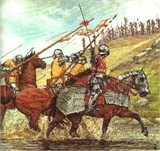
Battle of Blore Heath
My 15th great grandfather was a knight involved with Brit royalty. He lost his life defending it in a battle called Blore Heath. They were fighting about roses (red and white, although I am still not sure what the symbols meant) and the right to the throne. They were royals. They were angry. Things got bloody nasty:
The Battle of Blore Heath
September 23, 1459
After four years of uneasy peace the King presided over a wasting realm. No parliament had been summoned for three years, the country was sadly divided and distressed. The Yorkists were armed, armies were marching across all England. Lord Audley had recently raised a Lancastrian army centered round Market Drayton, and the Queen -through whom the King ruled- sent him orders to intercept Lord Salisbury, who was marching from Yorkshire to join the Duke of York at Ludlow. The two armies met head on two and a half miles east of Market Drayton at a place called Blore Heath. Salisbury, with 3,000 troops, was outnumbered by more than two to one, but could not avoid giving battle.
Audley took up a position just west of a little stream that crossed the Market Drayton-Newcastle-under-Lyme road, and Salisbury’s men were drawn up about 150 yards east of the present Audley Cross, which marks the spot where Lord Audley fell. The Yorkist left rested upon the boggy edge of a wood, but their right was in the air, and Salisbury made a laager of his wagons to protect this flank. Whether Salisbury feigned retreat in order to draw Audley on is not certain, but the Lancastrian commander was definitely the one to attack. Two cavalry charges were repulsed, the first with heavy loss to the Lancastrians, and then they mounted an infantry attack up the hill to the Yorkist position. But this too failed; there was no support from the cavalry, Lord Audley had already fallen and 500 Lancastrians chose this moment to desert to the enemy. Salisbury’s victory was complete and in the pursuit, which continued for two miles, the slaughter was very heavy. Possibly 2,000 Lancastrians perished in this battle, but fewer than 200 Yorkists fell.
For more information on the Battle of Blore Heath, contact Blore Heath 1459 online at http://www.bloreheath.org
YORKISTS LANCASTRIANS
Sir Christopher Conyers of Sokebourne, Durham
Sir Henry Bromflete, Wymington, Bedford
Sir John Conyers of Hornby, Yorkshire
Sir Robert del Booth of Wilmslow, Cheshire (killed in battle)
Sir Walter Devereux of Weobley, Herefordshire (killed in battle)
Sir John Bourchier of West Horsley, Surrey
Sir Richard Grey of Powis, Powis
Sir Hugh Calveley of the Lea, Cheshire (killed in battle)
Sir Richard Hamerton of Hamerton, Yorkshire
Sir William Catesby (Sr.) of Ashby St. Legers, Northamptonshire
Sir Thomas Harrington, Lancashire
Sir John Dawne of Cheshire
Sir Roger Kynaston of Hordley, Shropshire
Sir Jerkin Done of Wickington, Cheshire (killed in battle)
Sir Thomas Lumley of Lumley, Durham
Sir Robert Downes of Shrigley, (killed in battle)
Thomas Meering of Tong
Sir Thomas Dutton of Dutton, Cheshire (killed in battle)
Sir James Metcalfe of Nappa, Yorkshire
Sir John Dwnn of Cheshire, killed in battle
Sir John Middleton of Belsay Castle, Northumberland
Sir John Egerton of Egerton, Cheshire (killed in battle)
Sir Thomas Mountford of Hackforth, Yorkshire
Sir Nicholas of Eyton of Eyton, Shropshire
Sir Richard Neville (Earl of Salisbury) of Middleham, Yorkshire (fled to Calais)
Sir Richard Fitton of Gawsforth, Cheshire
Sir Richard Neville (Earl of Warwick) of Middleham, Yorkshire (fled to Calais)
Thomas Fitton, fate unknown
Sir Thomas Neville of Thornton Bridge, Durham
Sir John Haigh, killed in battle
Sir Robert Ogle of Ogle, Northumberland
Sir Edmund Hampden of Hampden, Buckinghamshire
Sir Thomas Parr of Kendal, Westmoreland
Sir Thomas Hesketh of Rufford, Lancashire
Richard Plantagenet, Duke of York, fled to Ireland
Sir Henry Holland of Darlington, Devon
Sir William Pudsey of Selaby, Durham
Sir John Legh of Booths, Cheshire (killed in battle)
Sir James Strangeways of Whorlton, Yorkshire
Sir Philip Maunsell of Scrurlage, Glamorgan
Sir Walter Strickland of Sizergh, Westmoreland
Sir Richard Molyneux of Sefton, Lancashire (killed in battle)
Sir John Wandesford of Kirklington, Yorkshire
Sir John Neville of Raby, Durham
Sir John Wenlock of Wenlock, Shropshire
Sir Ralph Shirley of Shirley, Sussex
Sir Walter Wrottesley of Wrottesley, Shropshire
Sir John Skidmore of Mochas, Herefordshire
Sir John Stanley of Pipe, Staffordshire
Sir Edmund Sutton of Dudley, Westmoreland
Sir John Sutton of Dudley, Westmoreland
Sir William Troutbeck of Dunham-on-the-Hill, killed in battle
James Touchet (Lord Audley) of Markeaton, Derbyshire (killed in battle)
Sir Hugh Venables of Kinderton (killed in battle)
©The Richard III Foundation, Inc.
Sir Richard Earl Sefton Molyneux (1422 – 1459)
is my 15th great grandfather
Thomas Sir 8th Earl of Sefton Molyneux (1445 – 1483)
Son of Sir Richard Earl Sefton
Lawrence Castellan of Liverpool Mollenaux (1490 – 1550)
Son of Thomas Sir 8th Earl of Sefton
John Mollenax (1542 – 1583)
Son of Lawrence Castellan of Liverpool
Mary Mollenax (1559 – 1575)
Daughter of John
Francis Gabriell Holland (1596 – 1660)
Son of Mary
John Holland (1628 – 1710)
Son of Francis Gabriell
Elizabeth Holland (1652 – 1737)
Daughter of John
Richard Dearden (1645 – 1747)
Son of Elizabeth
George Dearden (1705 – 1749)
Son of Richard
George Darden (1734 – 1807)
Son of George
David Darden (1770 – 1820)
Son of George
Minerva Truly Darden (1806 – )
Daughter of David
Sarah E Hughes (1829 – 1911)
Daughter of Minerva Truly
Lucinda Jane Armer (1847 – 1939)
Daughter of Sarah E
George Harvey Taylor (1884 – 1941)
Son of Lucinda Jane
Ruby Lee Taylor (1922 – 2008)
Daughter of George Harvey
Pamela Morse
I am the daughter of Ruby Lee

Elizabeth Darcy
My 19th great grandmother came from County Meath, Ireland, just like the O’Byrnes of the potato famine on my father’s side. She was a fancy lady with very famous ancestors herself. She was described by an historian as a wise and honorable lady.
Elizabeth Darcy (1331 – 1390)
is my 19th great grandmother
Johanna Hertforth (1345 – 1428)
Daughter of Elizabeth
Ellen Urswick (1364 – 1459)
Daughter of Johanna
Richard Molyneux (1386 – 1460)
Son of Ellen
Sir Richard Earl Sefton Molyneux (1422 – 1459)
Son of Richard
Thomas Sir 8th Earl of Sefton Molyneux (1445 – 1483)
Son of Sir Richard Earl Sefton
Lawrence Castellan of Liverpool Mollenaux (1490 – 1550)
Son of Thomas Sir 8th Earl of Sefton
John Mollenax (1542 – 1583)
Son of Lawrence Castellan of Liverpool
Mary Mollenax (1559 – 1575)
Daughter of John
Francis Gabriell Holland (1596 – 1660)
Son of Mary
John Holland (1628 – 1710)
Son of Francis Gabriell
Elizabeth Holland (1652 – 1737)
Daughter of John
Richard Dearden (1645 – 1747)
Son of Elizabeth
George Dearden (1705 – 1749)
Son of Richard
George Darden (1734 – 1807)
Son of George
David Darden (1770 – 1820)
Son of George
Minerva Truly Darden (1806 – )
Daughter of David
Sarah E Hughes (1829 – 1911)
Daughter of Minerva Truly
Lucinda Jane Armer (1847 – 1939)
Daughter of Sarah E
George Harvey Taylor (1884 – 1941)
Son of Lucinda Jane
Ruby Lee Taylor (1922 – 2008)
Daughter of George Harvey
Pamela Morse
I am the daughter of Ruby Lee
Elizabeth Darcy
Elizabeth Darcy, Countess of Ormond (3 April 1332- 24 March 1390), was the wife of James Butler, 2nd Earl of Ormond, and the mother of his six children, including James Butler, 3rd Earl of Ormond.
Family and lineageElizabeth Darcy was born on 3 April 1332 at Platten, County Meath, Ireland, the daughter of Sir John Darcy, 1st Baron Darcy of Knaith, Justiciar of Ireland, and his second wife Joan de Burgh. Sir John was a veteran of the Battle of Crecy. He held the offices of Constable of Nottingham Castle, Constable of the Tower of London, and Sheriff of Lancashire. From 1341- 1346, he was Chamberlain to King Edward III. Elizabeth had a brother Sir William Darcy, who married Catherine FitzGerald, by whom he had issue. She also had numerous half-siblings from her parents’ previous marriages. Her father’s first wife was Emeline Heron, by whom he had eight children, including his heir, John Darcy, 2nd Baron Darcy of Knaith. Elizabeth’s mother’s first husband had been Thomas FitzGerald, 2nd Earl of Kildare, by whom she had three sons, John FitzGerald, Richard FitzGerald, 3rd Earl of Kildare, and Maurice FitzGerald, 4th Earl of Kildare.Elizabeth’s paternal grandparents were Roger Darcy and Isabel d’Aton. Her maternal grandparents were Richard de Burgh, 2nd Earl of Ulster and Margaret de Burgh, daughter of Sir John de Burgh and Hawise of Lanvaley.One of her maternal aunts was Elizabeth de Burgh, wife of Robert the Bruce.Marriages and childrenOn 15 May 1346 in Ormond, Ireland, when Elizabeth was fourteen, she married her first husband James Butler, 2nd Earl of Ormond (4 October 1331- 18 October 1382), the son of James Butler, 1st Earl of Ormond and Lady Eleanor de Bohun. He was Lord Justice of Ireland in 1359, 1364, and 1376. He was also Constable of Dublin Castle in 1349. He was known as the Noble Earl, however, the Irish called him The Chaste.Upon her marriage to the Earl, Elizabeth assumed the title of Countess of Ormond.James and Elizabeth had six children: 1. Ralph Butler 2. Eleanor Butler (died 1392), married Gerald FitzMaurice FitzGerald, 3rd Earl of Desmond, by whom she had issue, including the 4th and 6th Earls of Desmond. 3. James Butler, 3rd Earl of Ormond (died 6 September 1405), before 17 June 1386, married firstly, Anne Welles, Countess of Ormond, daughter of John Welles, 4th Lord Welles and Maud de Ros, by whom he had issue, including James Butler, 4th Earl of Ormond. He married secondly, Katherine FitzGerald of Desmond, by whom he had further issue. In 1391, he purchased Kilkenny Castle. 4. Thomas Butler 5. Catherine Butler (born 1361), married firstly, Thomas Reade, by whom she had one son, Richard, and secondly, Thomas Fleming of Slane. 6. Joan Butler, married Tiege O’ Carroll
James Butler, 2nd Earl of Ormond, died on 18 October 1382 in Knocktopher and was buried in Gowran Church, Co. Kilkenny. Elizabeth married secondly, Sir Robert de Hereford, Seneschal of the Liberty of Tipperary, between 28 December 1383 and 30 March 1384.
DeathElizabeth Darcy died on 24 March 1390. She was not quite fifty-eight years old.
References 1. ^ Douglas Richardson, Kimball G. Everingham,Magna Carta Ancestry: A Study in Colonial and Medieval Families. p.161 2. ^ Charles Cawley, Medieval Lands, Earls of Ormond * http://www.Tudorplace.com.ar/DARCY.htm * http://www.Tudorplace.com.ar/BUTLER.htm * Charles Cawley, Medieval Lands, Earls of Ormond * Elizabeth Darcy at ThePeerage.com
The Romans had a pantheon similar to the Greeks. Fortuna represents wealth, commercial success, and abundance of all kinds. She is intimate with the infinite source of wealth, and acts as a conduit, bringing it to life on earth. Lakshmi is busy doing the same thing for the Hindu pantheon. In America, unfortunately, the Puritans have directly linked wealth to purity of behavior (as described by them). This narrow view of abundance is a vicious cycle of a bummer drag. They arrived in Plymouth Colony and were greeted by sophisticated and generous souls. Since the hospitable tribes did not read the Bible the Puritan fathers decided it would be fine to totally rip them off for everything they had. Things have gone downhill from that point.
As a priestess of Fortuna, you are required to make friends with money. She is the power behind all propitious events. It is possible to procure her guidance through meditation. You can ask questions with your dominant hand doing the writing, then pass the pen to Fortuna in your non dominant hand and let her answer. The handwriting may be very bad, but let it go. You are the only one who will read and interpret it. If you really wonder about your fate, your fortune, your lot in life, ask. Ask deeply, and you will find the answer. Oracles did some gas inhaling at you will not need in this exercise, but the concept is the same. Ask and you shall receive. Knock and the door will open. Same deal. Don’t allow some Puritan nerd from the past to rob you of your right to know. Be still, know. The truth will set you free….a whole lot freer than Salem during the witch trials, anyhow. Speak to Fortuna. She has something to tell you.
My Dead Peeps
I have traveled in person only once to visit my dead ancestors and look for local records of their lives. I went to Tulsa, where I was born, and my grandparents are buried, but I can not find their graves. After my cousin went back to Iowa I did more investigation in the town where my father was born, Independence, KS. I drove to the small rural town of Ladore, where many of my ancestors settled when they came from Ohio and New York. I found the grave of one of my 2nd great grandmother while looking for somebody else. It made the hair stand up on my neck even in sweltering humid July in Kansas. I have been all over the world on all kinds of journeys, but this is a whole new way to look at travel…visiting history by combining the ancestors and geography. Kinky, and very cool.
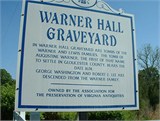
I have accumulated and am trying to geographically arrange data on ancestors around Plymouth Colony, MA and around Jamestown, VA. I will go to both destinations eventually, but have to choose one to be the first. The peeps are mostly very fancy in both places and we know how to find many of the graves, some homes, etc. I am not really into them for the royal blood and fame, I just like them because they survived. It is nothing like visiting living relatives. They are past judgement and are all very low maintenance. They are what you might call spooky. I just learned from a local that Virginia is a vortex for ticks, which makes graves in Massachusetts instantly sound so much more appealing. I am thinking now of flying to tick free, but cold Boston. Someday I will procure the right tick graveyard gear to safely visit my Virginians…like Mary, who is in the private and elite graveyard at Warner Hall with a lot of my other ancestors:
The walled family cemetery of the Warner and Lewis families is located on the Warner Hall property, southeast of Warner Hall. Access to the Graveyard is from the road North of Warner Hall and not from Warner Hall or the Driveway to Warner Hall located West of the Graveyard. The cemetery is the final resting place for many of the Warner and Lewis family members. The family cemetery, is also the resting place for such well known ancestors of George Washington, Robert E. Lee, The Queen Mother of England, and Queen Elizabeth II. Queen Elizabeth has visited Gloucester where she placed a wreath upon her ancestor’s grave. The cemetery has thirteen graves and plaques in memory of all the family. The cemetery is owned and maintained by the Association for Preservation of Virginia Antiquities (A.P.V.A.). The A.P.V.A. acquired the cemetery at Warner Hall in 1903, since which time the Association’s Gloucester Branch, now known as the Joseph Bryan Branch, has zealously maintained it.
There are thirteen graves in the Warner Hall Grave Yard. they are:1 Mary Warner (believed to be Mary Towneley Warner), 1614 – 16622 Augustine Warner I, 1611 – 16743 Augustine Warner II, 1642 – 16814 Mildred Reade Warner (wife of Augustine Warner II), 16945 Augustine Warner III, 1666 – 16866 Elizabeth Warner Lewis (d/o Augustine Warner II w/o Col John Lewis), 1672 – 17197 Col John Lewis (s/o John & Isabella Lewis h/o Elizabeth Warner), 1669 – 17258 Mary Chiswell Lewis (d/o John & Elizabeth Randolph Chiswell w/o Warner Lewis II, 1748 – 17769 Warner Lewis II (s/o Warner Lewis I & Eleanor Bowles Gooch Lewis & grandson of Col John Lewis & Elizabeth Warner Lewis), 1747 – 179110 Juliana Clayton (d/o Dr. Thomas & Isabella Lewis Clayton), 1731 – 173411 Isabella Lewis Clayton (d/o Col John Lewis & Elizabeth Warner w/o Dr. Thomas Clayton), 1706/7 – 1742 (the dates 1706/7 is exactly what is engraved on her stone)12 (Dr.) Thomas Clayton (h/o Isabella Lewis), 1701 – 173913 Caroline Lewis Barrett (d/o Warner Lewis II), 1783 – 1811

Private Graveyard at Warner Hall
 mermaidcamp