mermaidcamp
Keeping current in wellness, in and out of the water
You can scroll the shelf using ← and → keys
You can scroll the shelf using ← and → keys

#NaPoWriMo2017
Dear Gentle Readers,
In April I write 30 poems in 30 days to honor my famous ancestor who was an exceptional poet and a special kind of historian. Today I join folks from around the world to participate in this year’s #NaPoWriMo. Since it is a global initiative it is also known as #GloPoWriMo to make it clear that everyone is invited. You can follow both these hashtags on twitter or Facebook for more information. I invite you to partake as a fan or a poet. You my be surprised at the poet you find inside of yourself. There are many wonderful styles of writing to discover in this treasure trove of artistic expression. Don’t be shy. Write a poem.

#GloPoWriMo
Please sit down, relax, take a load off your feet
While I tell you the story of Ann Dudley Bradstreet
She published her poetry in the Puritan times
Her English is old school, her well crafted rhymes
Were concerned with religion and current events
She made poignant requests to her progeny to stay
On the right side of God’s will, never sit on the fence
She begged us to be ethical, honest, virtuous and bold
Her legacy is eloquent, the details of our family were told
In real time as America took unexpected turns toward liberty
Finding her voice as a woman was a rare privilege, an anomaly
As her descendant I call on her esteemed presence in April every year
I ask for her assistance to drop a few decent beats, to be pertinent and clear
And so, dear ancestor, now scattered into stardust and moonbeams
Visit me with your discipline, your wisdom, and all of your ancient dreams
To follow in your footsteps I am going to require a great deal of your love
Look down on your daughter here on earth, send inspiration from above
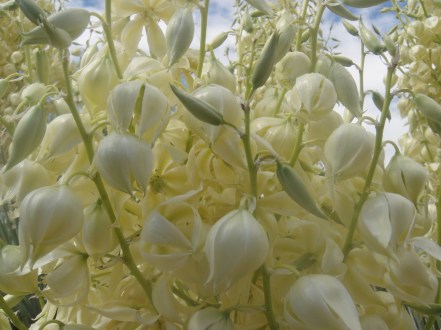
in bloom
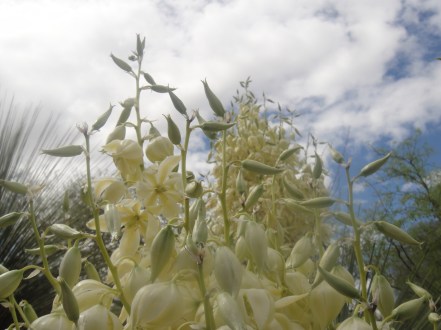
looking up
If we were having coffee this month I would ask my coffee friends around the table to ride the poetry train if you are able. I know it is corny and may turn perverse. I assure you than in May I will return to verse. The coffee share and the poetry train go well as a duo, in my opinion. Help yourself to coffee, tea, and poetry. For more digital beverages and prose, please visit Nerd in the Brain. The weekly party is always interesting and stimulating.

#WeekendCoffeeShare

horseshoes

horseshoes
If we were having coffee this weekend I would invite you to relax and take in the jasmine scent, still going strong in my front yard. I have ordered more tea (not that I was in need), so the selection has grown to epic proportion. The lazy Susan pantry literally groans under the weight of all the tea. I am digging a new blend called Hugs and Kisses, with a rose/caramel aftertaste that drives me wild. I also ordered a black passion fruit flavored tea that tastes delicious iced. We drink iced tea all year, but in summer I brew in the sun daily and we consume mass quantities. If you like, I can brew you a hot cup of roiboos jasmine to go with the flowers in the yard. It is one of my favorites, and there is a little chill this morning that will make a hot beverage feel just right. Please, make yourself at home while I fetch your drink of choice, and tell me how your life is. I want to hear what you have been doing, and how your writing is proceeding.
I have been trying to finish a non-fiction story that has unfolded over many years by creating a happy ending in real life. This is the nature of non-fiction, being just the truth. It limits one to facts. As I struggle to make my real life ending happen I am writing some fiction and poetry as a relief. I am a neophyte at both genres, and, if I do say so myself, pretty shitty at both. I like to practice to improve because I do find it liberating to just make up stories rather than try to influence hard reality in favor of a heroic outcome. It is so much easier to imagine an alternative vision than it is to bring one into being on the earth.
I spend a lot of time investigating my genealogy, discovering facts about my family tree. I have attempted some short historical fiction based on some factual data I know about my ancestors. I think this is a direction in which I could take my writing that would not only make use of the years of research I have done, but also allow me to create stories based on facts, but not limited strictly to them. All that has happened already, so there will be no changing the historical facts. Embellishing the truth, imagining the dialog and the settings, then bringing them to life seems like something I could really enjoy. I have a very famous poet ancestor, in whose honor I write 30 poems in 30 days in April as part of #NaPoWriMo. It is a challenge, but I think I owe it to her to give it a whirl for one month a year. She provided her DNA and poetry about her life and children (of which I am one). She was religious and wrote in olde English, so there is that. There are a couple other poets in the tree who lived in Tudor England. One was beheaded by Henry VIII. I tried to write a comedic ditty about his death a couple of years ago..it was one of my worst poems ever…but I published it. When I become an accomplished poet I will edit and spend much more time finishing each piece. Reaching a conclusion for a poem should be creative journey that has a universal ring. Someday I aspire to do that. My poetic muse has a short attention span that needs to be expanded. The fiction one is in the same boat. They are lazy, so they like to jump to conclusions rather than work it.
This year I am gearing up by writing some warm up poems and collecting some interesting images to use for illustration and inspiration. All I do is publish a poem each day. I only hope to improve over time and stir my genetic muse to awaken and say something profound and poetic. I keep the bar very low for quality, but do find lots of great ideas by reading the work of the other participants. I have finally finished my tax preparation and have returned to some written correspondence with a my new pen pals from February. I loaded up on stamps and plan to hand write and mail some of my shitty poems to my pen pals as a fusion of #NaPoWriMo and #InCoWriMo. They will be on great post cards, so even if the poems suck the presentation will be artful. This is the major lesson learned from the #InCoWriMo peeps, who tend to also be bullet journal, #BuJo, peeps…presentation counts, so don’t slack in that department.
Please join us on the weekend to sip and savor digital beverages with kindred spirits around the globe. Nerd in the Brain hosts this jolly group of writers. Please visit the party here to read, comment or submit your own post.
#WeekendCoffeeShare
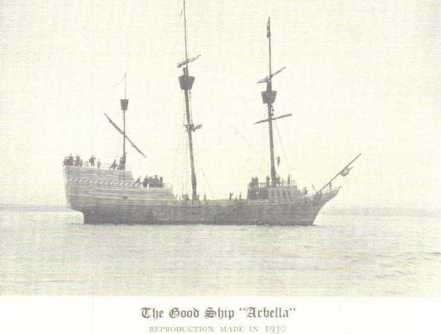
The Arabella
My eleventh great-grandfather was an early settler in Cambridge, Massachusetts. The records of the Massachusetts Bay Colony are extensive, so we know quite a bit about his life in America.
MIGRATION: 1630
FIRST RESIDENCE: Cambridge
FREEMAN: Requested 19 October 1630 (as “Mr. Edmond Lockwood”) and admitted 18 May 1631 (as “Mr. Edmond Lockewood”) [MBCR 1:79, 366].
OFFICES: Trial jury in case of Walter Palmer (as “Mr. Edmond Lockwood”), 9 November 1630 [MBCR 1:81]; “Mr. Lockwood” deputy to General Court for Cambridge, 9 May 1632 [MBCR 1:95]; “Mr. Edmond Lockwood” constable for Cambridge, 9 May 1632
ESTATE: 3 March 1634/5: “It is ordered, that Ruth Lockwood, widow, shall bring all the writings that her husband left in her hands to John Haynes, Esq., & Simon Bradstreete, on the third day of the next week, who shall detain the same in their hands till the next Court, when they shall be disposed of to those to whom they belong”
7 April 1635: “It is referred to the church of Waterton, with the consent of Rob[er]te Lockwood, executor of Edmond Lockwood, deceased, to dispose of the children & estate of the said Edmond Lockwood, given to them, to such persons as they think meet, which if they perform not within fourteen days, it shall be lawful for the Governor, John Hayne, Esq., & Simon Bradstreete, to dispose of the said children & estates as in their discretion, they shall think meet, as also to take an account of the said Rob[er]te Lockwood, & give him a full discharge”
2 June 1635: “In the cause of the children & widow of Edward Lockwood, (the elders & other of the church of Waterton being present,) and upon consideration of the order of Court in April last made in the case, which was found not to have been observed, because the estate was not computed & apportioned, it is now ordered, with consent of all parties, viz:, the church of Waterton, the widow of the said Edmond living, & the executor having consented to the former order, that the present Governor & the Secretary shall have power to call parties & witnesses for finding out the true estate, having consideration of the uncertainty of the will, & the debts, & other circumstances, to apportion the remainder of the estate to the wife & children, according to their best discretion; & then the church of Waterton is to dispose of the elder children & their portions as shall be best for their Christian education & the preservation of their estate” [MBCR 1:151].
BIRTH: By about 1600 based on estimated date of marriage (but see COMMENTS below).
DEATH: Cambridge between 9 May 1632 [MBCR 1:95, 96] and 3 March 1634/5 [MBCR1:134] (and probably closer to the earlier date, since Edmund Lockwood does not appear in any of the recorded Cambridge land grants beginning in August 1633).
MARRIAGE: (1) By about 1625 _____ _____; she may have died in England before 1630.
(2) By 1632 Elizabeth Masters, daughter of JOHN MASTERS; she married (2) Cary Latham of Cambridge.
CHILDREN:
With first wife
i EDMUND, b. England say 1625; m. Stamford 7 January 1655[/6] Hannah Scott, daughter of Thomas Scott [FOOF 1:381].
ii Child (one or more additional children by first wife implied by court order to the Watertown church “to dispose of the elder children” [MBCR 1:151]); no further record.
With second wife
iii JOHN, b. Cambridge November 1632 (“son of Edward Lockwood & Elisabeth his wife”) [NEHGR 4:181]; d. at New London in 1683, unmarried [Lockwood Gen 10].
ASSOCIATIONS: Although no record states the relationship explicitly, Edmund and Robert Lockwood were almost certainly brothers.
COMMENTS: The oft-stated origin of the Lockwood brothers in Combs, Suffolk, seems to be based on nothing more than finding the right names at about the right time. Further research is needed before this origin can be accepted.
In a discussion of financial transactions, John Winthrop wrote to his son John in Groton 23 July 1630 saying “If money be brought to you or your Uncle Downinge for Goodman Lockwood, let Mr. Peirce be paid his bill of provisions for him, and bring the rest with you” [WP 2:306].
“Mr. Edmond Lockwood” was the third in the list of eight “Newtowne Inhabitants” which is found at the beginning of the Cambridge town records, and probably dates from 1632 [CaTR2].
After NICHOLAS KNAPP was fined for quackery on 1 March 1630/1, “Mr. Will[ia]m Pelham and Mr. Edmond Lockewood hath promised to pay to the Court the sum of £5” [MBCR 1:83].
BIBLIOGRAPHIC NOTE: The 1889 Lockwood genealogy (Frederic A. Holden and E. Dunbar Lockwood, Descendants of Robert Lockwood, History of the Lockwood Family in America[Philadelphia 1889]) was deservedly described by Jacobus as “a genealogical atrocity” [TAG31:222]. By lumping all the descendants of the first Edmund under his brother Robert, the posterity of this family through eldest son Edmund was misplaced.
Donald Lines Jacobus began to sort the family out properly in 1930, with further contributions made in 1955 [FOOF 1:380-81; TAG 31:222-24]. In 1978 Harriet Woodbury Hodge published detailed arguments for a rearrangement of the Lockwood families that would restore to Edmund Lockwood his children [Some Descendants of Edmund Lockwood (1594-1635) of Cambridge, Massachusetts, and his son Edmund Lockwood (c. 1625-1693) of Stamford, Connecticut (New York 1978), cited above as Lockwood Gen].
Edmund Lockwood (1574 – 1634)
11th great-grandfather
Eliner Lockwood (1592 – 1658)
daughter of Edmund Lockwood
Caleb Knapp (1637 – 1684)
son of Eliner Lockwood
Sarah Knapp (1669 – 1750)
daughter of Caleb Knapp
Ebenezer Mead (1692 – 1775)
son of Sarah Knapp
Deacon Silas Meade (1730 – 1807)
son of Ebenezer Mead
Abner Mead (1749 – 1810)
son of Deacon Silas Meade
Martha Mead (1784 – 1860)
daughter of Abner Mead
Abner Morse (1808 – 1838)
son of Martha Mead
Daniel Rowland Morse (1838 – 1910)
son of Abner Morse
Jason A Morse (1862 – 1932)
son of Daniel Rowland Morse
Ernest Abner Morse (1890 – 1965)
son of Jason A Morse
Richard Arden Morse (1920 – 2004)
son of Ernest Abner Morse
Pamela Morse
I am the daughter of Richard Arden Morse

Entrance to Old Sound Cemetery, also known as the Tomac Burying Grounds
“William Mead, born in England, about 1600, probably sailed from Lydd, County Kent, England, in the ship, Elizabeth, Captain Stagg, April 1635, for the Massachusetts Bay Colony; first settled in Wethersfield, Connecticut; removed to Stamford, Connecticut, in 1641, where he died about 1663. His wife died at Stamford, Sept. 19, 1657. Their children were: Joseph, Martha, and John. Joseph and John settled in the town of Greenwich. See “History & Genealogy of the Mead Family”, Spencer Mead.”
THE MEAD FAMILY
The Mead Family of Greenwich, Fairfield Co., Conn. was originally from England, and came to this country shortly after the Mayflower had landed its load of Pilgrims on the shores of Massachusetts. It has generally been the tradition in the family that two brothers came over; that one stopped at the Eastward, while the other came to Horse-Neck. That two brothers or possibly three, came over is very probable, as it would not be natural for one to come alone, could he find a relative to join him in his adventures. In the “History of Lexington, Mass.” we find that Gabriel Mead was one of the earliest settlers of that place, as also David. The dates of their arrival, and of William of Horse-Neck (or rather Stamford) agree with one another, leading to the conclusion that all three were near relatives; furthermore the Coat-of -arms of both branches is identical, which is almost proof positive. It is not fully detemined from what part of England the Connecticut family came; but searches that have been made there seem to show a starting place somewhere near London, possibly Greenwich, Co. Kent.
The first record of any Mead in Fairfield Co. is the following in Stamford Town Records: “Dec. 7, 1641, William Mayd received from the town of Stamford, a homelot and 5 acres of land.” This William was undoubtedly the ancestor of the Fairfield Co. Meads. His wife died Sept. 19, 1657. We have record of three children. Joseph, born in 1630, the ancestor of the Ridgefield and North Fairfield Co. Meads; Martha, who married John Richardson, of Stamford, and John, the ancestor of the Horse-Neck Meads. The two sons, Joseph 2 and John 2, seem to have migrated (though if proved only a temporary sojourn) to Hempstead, L. I.
John 2 removed from Hempstead, L. I. to Greenwich (Horse-neck) in 1660. It was in this village that he purchased land; the date of the deed is Oct. 26, 1660, and is as follows, verbatim et literation.
These presents witnesseth an agreement made between Richard Crab of Grenwich, on ye one side & John Mead of Hemstead on Long Island on ye other side, viz: ye sd Richard Crab hath sould unto ye sd John Mead all his houses & Lands yt sd Richard Crab hath in Grenwich with all ye Apurtenances. Rights & Privileges & Conveniences yt doth belong unto ye sd houses & lands or shall here after belong unto them namely ye house yt Rechard Crab liveth in. Ye house yt Thomas Studwell liveth in with ye Barne yt is on ye other side of ye hyewaye; also ye home lott ye house stands on being bounded with a fence about them Lying on ye North west side against ye home lott also Eightene Acres of Land in Elizabeth neck more or less being bounded on ye sea on ye East ans south east and a fence on ye west norwest & ye north. Also ye Rig (ridge?) with five acres of Meadow Lying in it more or les. Ye rig being bounded by ye Sea on ye south east. Williamses Land on the east & a fence on ye northwest. Ye hye waye & hubert (Hubbard?) & angell Husted land on ye west; also three acres of meadow in ye Long meadow & one acre of Meadow by ferris bounded by Jeffere Ferris land on ye southwest and ye Cove on ye west and northwest: ye hyewaye on ye East & northeast & five acres of meadow in myanos neck. All these above spesiffied I do acknoledge to have sould unto ye above sd John Mead. His heaires & asignes fully & freely to be posses forever & for ye just & full performance hereof I have hereunto subscribed my hand Ann 1660 October 26 Daye.
Richerd Crabb
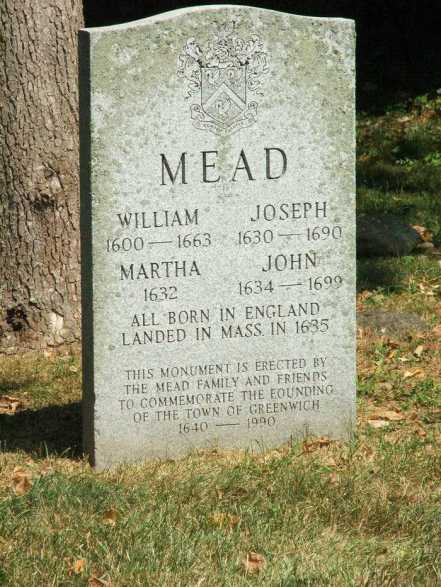
Tomac Burying Grounds
William Mead (1600 – 1659)
9th great-grandfather
John Mead (1634 – 1699)
son of William Mead
Benjamin Daniel Mead (1667 – 1746)
son of John Mead
Mary Mead (1724 – 1787)
daughter of Benjamin Daniel Mead
Abner Mead (1749 – 1810)
son of Mary Mead
Martha Mead (1784 – 1860)
daughter of Abner Mead
Abner Morse (1808 – 1838)
son of Martha Mead
Daniel Rowland Morse (1838 – 1910)
son of Abner Morse
Jason A Morse (1862 – 1932)
son of Daniel Rowland Morse
Ernest Abner Morse (1890 – 1965)
son of Jason A Morse
Richard Arden Morse (1920 – 2004)
son of Ernest Abner Morse
Pamela Morse
I am the daughter of Richard Arden Morse

enchanted spring
Before we leave on the long pilgrimage to our forefathers’ homeland we gather vessels to fill with the water from the magical spring. Although it is heavy to carry on the slippery mountain trails we consider the water to be lucky. It is pure and clear, arising form deep within the earth, filtered through the sandy aquifer, arriving crystal clear and delicious. In the old days there was a superstition about drinking the water to be invited to return. When visitors arrived in the town that were undesirable to the townspeople they were all given beer to drink. The locals believed that once a person drank water from their enchanted spring, they would never leave. They had discovered this the hard way, and wanted to keep their precious resource to themselves. They became isolationists just when the rest of the world was hooking up with transportation, commerce, trade, and immigration. The elders wanted to maintain the purity of the water as well as the people’s thoughts.
These purity campaigns rarely result in a better environment. Somehow the strict rules, the isolation and control of learning, social recreation, and dress customs, had the effect for freezing time. The population survived, but only through sacrifice and very hard labor. They freely allowed anyone to leave, but continued to tell strangers there was no water in town, only beer. After a while the visitors stopped and the population dwindled. The few old true believers still living in the area were now too feeble to climb up to fetch the water from the spring for themselves, and nobody was left to do it for them. The enchantment was now completely wasted on them because it was just out of their reach. It was still flowing copiously as it had done for centuries, but only a handful of people even knew where the spring was.
When the last surviving elder was on his last legs a young girl wandered into town and asked for a drink of water. The old man broke down in tears while asking her who she was. She replied that she was a descendent of someone who had lived in the village in the previous century. She had heard stories about the miracle cures and the enchantment of the spring water that was legendary. She came because she was curious. She had fought through some dense forrest to arrive, traveling alone. She carried with her a copper cup with some inscribed symbols and a name. This cup had once belonged to her ancestor who left the village to live in the modern world. Now her curiosity about the cup brought her to this undiscovered part of her inheritance. The old man saw the cup hanging from her belt and asked to see it. He recognized the clan symbols inscribed on the side, but when he drew the copper close to his eyes he was able to see the name. He overflowed with emotion as he read the name of his own maternal great-grandmother on the cup. This was the last miracle the spring delivered to him. He perished in tears of grief and relief after he showed this youthful distant relative how to find the trail to the spring. When she returned with her vessels full of water, his body had turned to a pile of colored dust. She realized he had been sustaining his own life with leftover magic from the time when he could still climb to the spring to wait for her arrival. He had fulfilled his duty, and spent all of his extra lives. Now the responsibility was hers to share the enchantment of the spring. Her hike back out of the forrest was somber indeed.
This short fiction is written based on the fabulous photo prompt from Sue Vincent. Please join us to read, comment, or submit your own take on this picture.
#writephoto
birthplace, Turnberry Castle


This is one of the ways I descend from the famous badass, Robert the Bruce:
Robert Bruce (1274 – 1329)
21st great-grandfather
Marjorie Bruce (1297 – 1316)
daughter of Robert Bruce
Robert II, King of Scotland, Stewart (1316 – 1390)
son of Marjorie Bruce
Robert Scotland Stewart (1337 – 1406)
son of Robert II, King of Scotland, Stewart
James I Scotland Stewart (1394 – 1434)
son of Robert Scotland Stewart
Joan Stewart (1428 – 1486)
daughter of James I Scotland Stewart
John Gordon (1450 – 1517)
son of Joan Stewart
Robert Lord Gordon (1475 – 1525)
son of John Gordon
Catherine Gordon (1497 – 1537)
daughter of Robert Lord Gordon
Lady Elizabeth Ashton (1524 – 1588)
daughter of Catherine Gordon
Capt Roger Dudley (1535 – 1585)
son of Lady Elizabeth Ashton
Gov Thomas Dudley (1576 – 1653)
son of Capt Roger Dudley
Anne Dudley (1612 – 1672)
daughter of Gov Thomas Dudley
John Bradstreet (1652 – 1718)
son of Anne Dudley
Mercy Bradstreet (1689 – 1725)
daughter of John Bradstreet
Caleb Hazen (1720 – 1777)
son of Mercy Bradstreet
Mercy Hazen (1747 – 1819)
daughter of Caleb Hazen
Martha Mead (1784 – 1860)
daughter of Mercy Hazen
Abner Morse (1808 – 1838)
son of Martha Mead
Daniel Rowland Morse (1838 – 1910)
son of Abner Morse
Jason A Morse (1862 – 1932)
son of Daniel Rowland Morse
Ernest Abner Morse (1890 – 1965)
son of Jason A Morse
Richard Arden Morse (1920 – 2004)
son of Ernest Abner Morse
Pamela Morse
I am the daughter of Richard Arden Morse
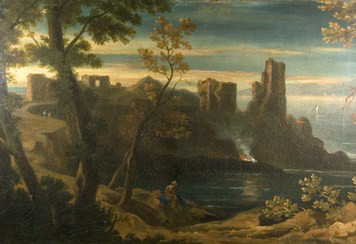
Robert The Bruce was born on 11 July 1274, probably in Turnberry Castle. He was descended from Scots, Gaelic and English nobility. His mother, Countess Marjorie of Carrick, was heir to a Gaelic earldom.
Robert’s grandfather, Robert Bruce ‘The Competitor’, was one of the claimants to the Scots throne. Bruce’s father, Robert de Brus of Annandale, fought in Wales for Edward I, was made governor of Carlisle Castle and fought on Edward’s side at the Battle of Dunbar in 1296. The Bruces refused to support John Balliol’s kingship and stayed close to Edward I. Balliol gave Bruce lands to the Comyns.
In 1298 Robert the Bruce became a guardian of Scotland alongside his great rival John ‘Red’ Comyn of Badenoch, and William Lamberton, Bishop of St Andrews. When Bruce and Comyn quarrelled Bruce resigned as guardian. In 1302 Bruce submitted to Edward I and returned ‘to the King’s peace’. Bruce married Elizabeth de Burgh.
Robert the Bruce’s father died in 1304. Bruce now had a viable claim to the throne. On 10 February 1306 Bruce met John Comyn of Badenoch at Greyfriars Kirk in Dumfries. A fight broke out, daggers were drawn and Bruce killed Red Comyn by the altar. The Pope excommunicated Bruce but Robert Wishart, Bishop of Glasgow, absolved him and made plans for Bruce to quickly take the throne. On 27 March 1306, Isobel of Fife, Countess of Buchan, crowned Bruce at Scone. His inauguration was small and hastily arranged but Robert Bruce was now King of Scots.
To Edward I the usurper King Robert was a rebel to be crushed. Edward’s reprisals were swift and brutal. Bruce was defeated at Methven. His wife, daughter and sisters were captured and imprisoned in England. Countess Isobel was locked in an iron cage at Berwick while Bruce’s brothers were hanged, drawn and beheaded. Bruce fled Edward’s wrath and spent a long winter hiding on the islands off the west coast and Ireland.
Bruce began a guerrilla war and struck at his enemies. His forces defeated Edward’s men at Glen Trool and Loudon Hill, then Edward I finally died in July 1307 – Bruce now faced Longshanks’ son, Edward II.
Bruce attacked his Scots enemies – destroying Comyn strongholds along the Great Glen and harrowing Buchan and the north east. His men cut a bloody swathe through Galloway and the south west.
One by one Scotland’s castles fell to Bruce and his supporters. Bruce had the castles ‘slighted’ – walls were torn down and defences were raised to the ground – the fortresses were made useless to an invading English army. As more castles fell more nobles pledged support to Bruce.
In 1314 Bruce watched Edward II’s army march toward Stirling Castle. Edward II had been given a year to relieve the besieged English force at Stirling or surrender the castle. Their forces met at the Battle of Bannockburn on 23 and 24 June 1314. Thousands died as the Scots defeated Edward’s army. The river was choked with the dead as Edward II fled the field and returned to England.
Bannockburn was not the end of Bruce’s struggle but it was a turning point. Captured English nobles were traded for his family and King Robert I gained international recognition. The Scots took the final English stronghold at Berwick in 1318 but Edward II still claimed overlordship of Scotland. Two years later the Scots sent a letter to the Pope – the Declaration of Arbroath – as part of an ongoing battle of words.
In 1327 Edward II was deposed by his Queen, Isabella. He was murdered in captivity. The English made peace with the Scots and renounced their claim of overlordship. The Black Rood, taken by Edward I, was returned to the Scots. It seemed that Bruce had finally won.
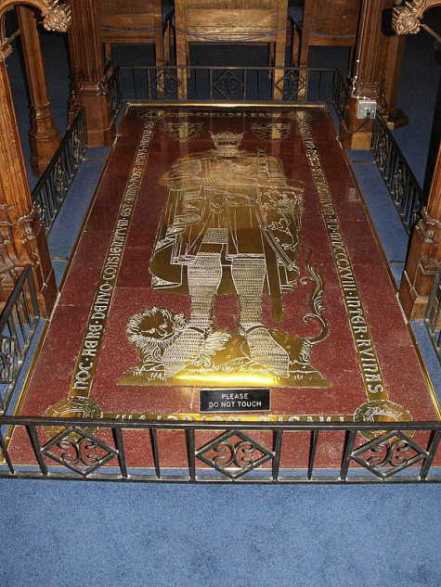
Robert the Bruce retired to Cardross near Dumbarton on the Firth of Clyde. He lived peacefully in a comfortable mansion house until his death on 7 June 1329. He asked that James Douglas take his heart on crusade. Bruce’s body was buried at Dunfermline Abbey, by his wife Elizabeth’s side, beneath an alabaster tomb. Bruce’s heart was finally buried at Melrose Abbey.
In the 1370s the Scots poet John Barbour wrote of Bruce, the hero-king, in ‘The Brus’.
Robert I, known as Robert the Bruce, was the king of the Scots who secured Scotland’s independence from England.
Here is another lineage:
Robert I “The Bruce” Bruce, King of Scotland (1274 – 1329)
21st great-grandfather
Margaret Bruce (1307 – 1346)
daughter of Robert I “The Bruce” Bruce, King of Scotland
John Glen (1349 – 1419)
son of Margaret Bruce
Isabel Glen (1380 – 1421)
daughter of John Glen
Isabel Ogilvie (1406 – 1484)
daughter of Isabel Glen
Elizabeth Kennedy (1434 – 1475)
daughter of Isabel Ogilvie
Isabella Vaus (1451 – 1510)
daughter of Elizabeth Kennedy
Marion Accarson (1478 – 1538)
daughter of Isabella Vaus
Catherine Gordon (1497 – 1537)
daughter of Marion Accarson
Lady Elizabeth Ashton (1524 – 1588)
daughter of Catherine Gordon
Capt Roger Dudley (1535 – 1585)
son of Lady Elizabeth Ashton
Gov Thomas Dudley (1576 – 1653)
son of Capt Roger Dudley
Anne Dudley (1612 – 1672)
daughter of Gov Thomas Dudley
John Bradstreet (1652 – 1718)
son of Anne Dudley
Mercy Bradstreet (1689 – 1725)
daughter of John Bradstreet
Caleb Hazen (1720 – 1777)
son of Mercy Bradstreet
Mercy Hazen (1747 – 1819)
daughter of Caleb Hazen
Martha Mead (1784 – 1860)
daughter of Mercy Hazen
Abner Morse (1808 – 1838)
son of Martha Mead
Daniel Rowland Morse (1838 – 1910)
son of Abner Morse
Jason A Morse (1862 – 1932)
son of Daniel Rowland Morse
Ernest Abner Morse (1890 – 1965)
son of Jason A Morse
Richard Arden Morse (1920 – 2004)
son of Ernest Abner Morse
Pamela Morse
I am the daughter of Richard Arden Morse
Both connect with Anne Dudley, my famous poet ancestor. One went through the Gordons for many generations, and the other went though the Kennedy family.
Robert’s grave
Robert was born on 11 July 1274 into an aristocratic Scottish family. Through his father he was distantly related to the Scottish royal family. His mother had Gaelic antecedents. Bruce’s grandfather was one of the claimants to the Scottish throne during a succession dispute in 1290 – 1292. The English king, Edward I, was asked to arbitrate and chose John Balliol to be king. Both Bruce and his father refused to back Balliol and supported Edward I’s invasion of Scotland in 1296 to force Balliol to abdicate. Edward then ruled Scotland as a province of England.
Bruce then supported William Wallace’s uprising against the English. After Wallace was defeated, Bruce’s lands were not confiscated and in 1298, Bruce became a guardian of Scotland, with John Comyn, Balliol’s nephew and Bruce’s greatest rival for the Scottish throne In 1306, Bruce quarrelled with Comyn and stabbed him in a church in Dumfries. He was outlawed by Edward and excommunicated by the pope. Bruce now proclaimed his right to the throne and on 27 March was crowned king at Scone. The following year, Bruce was deposed by Edward’s army and forced to flee. His wife and daughters were imprisoned and three of his brothers executed. Robert spent the winter on the island off the coast of Antrim (Northern Ireland).
Returning to Scotland, Robert waged a highly successful guerrilla war against the English. At the Battle of Bannockburn in June 1314, he defeated a much larger English army under Edward II, confirming the re-establishment of an independent Scottish monarchy. Two years later, his brother Edward Bruce was inaugurated as high king of Ireland but was killed in battle in 1318. Even after Bannockburn and the Scottish capture of Berwick in 1318, Edward II refused to give up his claim to the overlordship of Scotland. In 1320, the Scottish earls, barons and the ‘community of the realm’ sent a letter to Pope John XXII declaring that Robert was their rightful monarch. This was the ‘Declaration of Arbroath’ and it asserted the antiquity of the Scottish people and their monarchy.
Four years later, Robert received papal recognition as king of an independent Scotland. The Franco-Scottish alliance was renewed in the Treaty of Corbeil, by which the Scots were obliged to make war on England should hostilities break out between England and France. In 1327, the English deposed Edward II in favour of his son and peace was made with Scotland. This included a total renunciation of all English claims to superiority over Scotland. Robert died on 7 June 1329. He was buried at Dunfermline. He requested that his heart be taken to the Holy Land, but it only got as far as Spain. It was returned to Scotland and buried in Melrose Abbey.

President Donald Trump embraces several political stances important to his conservative evangelical base. This includes support for “religious liberty” legislation and exempting evangelicals from laws upholding lesbian, gay, transgender and bisexual rights. However, Trump does not demonstrate any of the beliefs that have historically characterized evangelicalism. Unlike the majority of American evangelicals, he does not…
via This 19th Century Movement Could Explain Donald Trump’s Faith — TIME


When Lawrence Washington and his twin brother Robert were born in 1568 in Sulgrave, Northamptonshire, England, their father, Robert, was 24, and their mother, Elizabeth, was 21. He married Lady Margaret Butler on August 3, 1588. Lady Margaret was heiress to a wool fortune. Her father helped Lawrence prosper in the wool trade and become a prominent citizen. He was mayor of Northhampton from 1532-1545, and acquired a manor house known as Sulgrave. Lawrence and Margaret has 17 children, 8 sons and 9 daughters. They married well and created an illustrious lineage, that includes George Washington, the first US president….and me. Lawrence died on December 13, 1616, at the age of 48. He is buried at St Mary the Virgin with St John Churchyard, Great Brington, Daventry District, Northamptonshire, England His plot: Grave is below a stone slab in the chancel of the church.
Lawrence Washington (1568 – 1616)
11th great-grandfather
Richard Washington (1592 – 1642)
son of Lawrence Washington
John Washington (1632 – 1677)
son of Richard Washington
Richard Washington (1660 – 1725)
son of John Washington
Elizabeth Washington (1689 – 1773)
daughter of Richard Washington
Elizabeth Lanier (1719 – 1795)
daughter of Elizabeth Washington
Martha Burch (1743 – 1803)
daughter of Elizabeth Lanier
David Darden (1770 – 1820)
son of Martha Burch
Minerva Truly Darden (1806 – 1837)
daughter of David Darden
Sarah E Hughes (1829 – 1911)
daughter of Minerva Truly Darden
Lucinda Jane Armer (1847 – 1939)
daughter of Sarah E Hughes
George Harvey Taylor (1884 – 1941)
son of Lucinda Jane Armer
Ruby Lee Taylor (1922 – 2008)
daughter of George Harvey Taylor
Pamela Morse
I am the daughter of Ruby Lee Taylor

Sulgrave Manor

waiting
Beneath the staircase of the palace, lurking silently in the dark
The master’s old Tudor dynasty armor stands guard as if alive
Little has changed in the basement rooms since jousting was the sport
The aristocrat concerns himself with wealth and status in the court
Royal drifters follow in the entourage of holy soldiers and servant slaves
In service of some magic majesty that never showed up when expected
We thought time would both heal wounds and protect us from the ravages of injustice
The clock of destiny has not been kind to the greedy crusaders
Marking time with the shattered bones of their broken glory
There are no knights left to tell the end of this frightening story
Their legacy has been buried, lost all meaning of chivalry and grace
The names fade fast in history’s book, vanishing without a trace
Don’t trust armor from an ancient time to protect you from the storm
It may be impenetrable and conductive, but it is anything but warm
The photo prompt comes from Sue Vincent’s blog and is used as inspiration for writing short fiction and poetry. Try your own hand if you like. Please visit Sue, or use the hashtag #writephoto on twitter to find other interpretations of this image. Thanks for visiting, gentle reader.
#writephoto
Virginia Colony
My seventh great-grandmother’s grandfather was John Washington of Surry Co, VA. (See the Washington information from Louise Ingersoll’s book.) She inherited 200 acres of Surry Co. land from her father. That land was sold 2/19/1734. After Sampson died, she went into NC to live with her son James. On 22 Nov 1757 Edward Goodrich, Isaac Rowe Walton and John Maclin, gentlemen, laid off and assigned to Elizabeth Lanier, widow of Sampson Lanier, deceased her dower of said Sampson’s estate.
She remarried after Sampson died. Marriage bond, dated 23 July 1758 on file Brunswick Co, VA, shows Elizabeth Lanier,widow, marrying Cuthbert Smith, and an order dated
27 Feb 1759 appointed Cuthbert Smith guardian of Rebecca Lanier,orphan of Sampson Lanier, and an order dated 5 Sept 1759 appointing Lemuel Lanier as guardian for Burwell Lanier, Buckner Lanier, Winifred Lanier, Martha Lanier and Anne Lanier.
My seventh great-grandfather, Sampson Lanier, was born in 1681 and died in 1743.
Third son of John Lanier, Jr. born Charles City County 1681 (by deposition made in Surry Co. March 21, 1738), first appears in contemporary records as a “Tithable” in the upper end of Surry County above Stony Run in 1701. Richard Washington’s will leaves 200 acres of land to his daughter, Elizabeth, and leaves to his son-in-law, 200 acres lying in the Isle of Wight. Sampson Lanier sold this land which is now a part of Southhampton County; in February of 1734, Sampson
and Elizabeth Lanier sold the 200 acres of land given her by her father. They moved to Brunswick County before 1740. Sampson Lanier was a Justice, a Vestryman of St. Andrews, and, at one time, on the School Board. His will, dated 8 Jan. 1743, was proved on 5 May 1743. It lists their children as Thomas, Lemuel, Sampson, Richard, Elizabeth, and James. He married about 1706 in Surry, Elizabeth, daughter of Richard Washington (1660 Virginia – 1725 Virginia) & Elizabeth Jordan of Surry County, VA, and granddaughter of Major John Washington (born England 1632) of Surry County, VA. (See pp 40-41, Ingersoll.) She died in Pitt County, NC. Major John Washington was first cousin to Colonel John Washington of Westmoreland County, VA and was the Great Grandfather of George Washington, first President of the United States.
Elizabeth Washington (1689 – 1773)
7th great-grandmother
Elizabeth Lanier (1719 – 1795)
daughter of Elizabeth Washington
Martha Burch (1743 – 1803)
daughter of Elizabeth Lanier
David Darden (1770 – 1820)
son of Martha Burch
Minerva Truly Darden (1806 – 1837)
daughter of David Darden
Sarah E Hughes (1829 – 1911)
daughter of Minerva Truly Darden
Lucinda Jane Armer (1847 – 1939)
daughter of Sarah E Hughes
George Harvey Taylor (1884 – 1941)
son of Lucinda Jane Armer
Ruby Lee Taylor (1922 – 2008)
daughter of George Harvey Taylor
Pamela Morse
I am the daughter of Ruby Lee Taylor
Richard Washington’s will, dated November 9, 1724, leaves 200 acres of land to his daughter Elizabeth Lanier, “land where she now lives”; he leaves to his son-in-law, Sampson Lanier, 200 acres lying in the Isle of Wight. On March 23, 1732, Sampson Lanier sold the above 200 acres to the Vestry of Nottingham Parish, now Southampton County. On February 19, 1734, Sampson and Elizabeth Lanier sold the 200 acres of land given her by her father, and before 1740 they had moved to Brunswick County, Virginia. Sampson was a Justice, a Vestryman of St. Andrews, and at one time he was on the school board.
Sampson Lanier died about May 15, 1743 in Brunswick County, Virginia. Elizabeth died about 1773 in Pitt County, North Carolina.
 mermaidcamp