mermaidcamp
Keeping current in wellness, in and out of the water
You can scroll the shelf using ← and → keys
You can scroll the shelf using ← and → keys
Ghost Swan
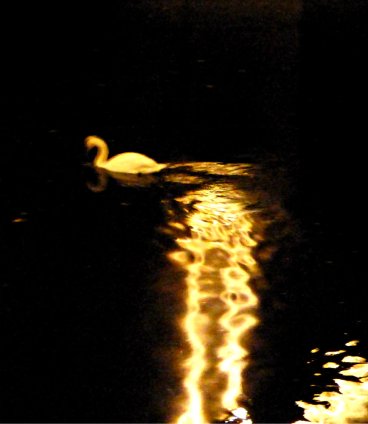
There is a ghost swan that appears on the eve of Robert Burn’s Day on the Loch above the ancient castle. The apparition sails across the water following the course of the boat that sailed from the shore in 1235 with a small band of rogue fighters. The land was under attack from the neighboring clan, and the family honor was in dire straights. Survival depended on their ability to take the foe in the middle of the night by stealth. They had little ammunition left to defend their home, and food supplies were dwindling. They were desperate and hungry for victory when they quietly shoved off from the muddy shore, rowing quietly through the night. They were in pitch black darkness, no light to guide their way. Cloudy moonless skies hung heavily with damp and deadly signs. They wished for a miracle.
As the clan gathered strength to cross the loch to meet their fate a white swan appeared before them. They perceived the bird as friendly, a guide and advisor for the battle to come. The glow from the swan created streams of light in the water in front of the rickety little boat. Reflecting in the light the vessel looked bigger than it was. The enemy was afraid of being outnumbered by the crew being lead by a magical swan. They were scared that the swan itself was a monster with powers to drown or burn them to death. They packed up quickly and ran for their lives, never to return. Peace was guaranteed by the fear of they had of the ghost swan.
People say when there is an appearance of the swan these days is a reminder to stand up for what is yours. It is a symbol of protection and self defense. Magic helps them that help themselves.

#writephoto
Please visit Sue Vincent’s blog to see more submissions, and maybe write one of your own. Thank you, Sue, for an excellent image with which to begin.
Ernie in Coffeeville
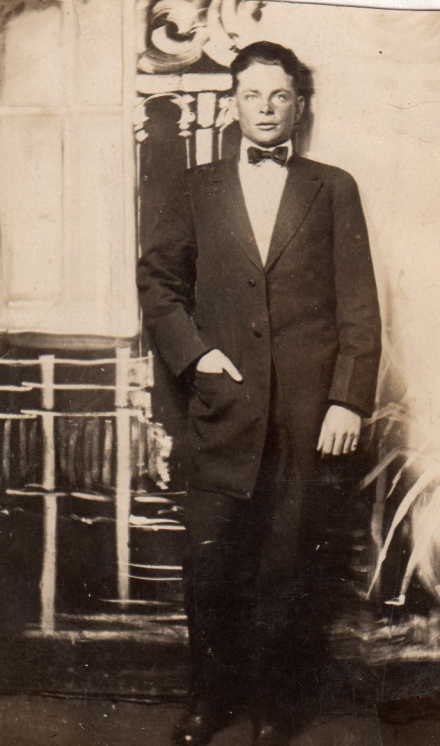
The perfectly manicured green grass shimmers in the bright morning sun as we take out the lawn bowling set that belonged to our great-grandfather. He was both a lawn perfectionist and a lawn bowler, a rare combination none of his children or grandchildren has encountered again in life. He took great pains to keep the crabgrass out and the healthy green grass trimmed evenly. His yard was his pride and joy. His children were enslaved in landscaping work during the time they lived in their father’s home. Like Claude Monet it appeared that Jason cared more about his garden than he did about his children’s happiness. Because of his particular love of lawn perfection and startling indifference to humans his children called him Crab Grass behind his back.
When my grandfather was young he left home with his brother because they were not fond of Crab Grass, and even less fond of his wife, their stepmother. She claimed to be a witch , but she was known as a con artist. She was a Cherokee woman who would arrive in a town saying she knew where Tecumseh had buried gold in the vicinity. She would then scam the townspeople to bankroll an expedition to find the hidden treasure, then leave. When she met our great-grandfather he was a snake oil salesman. He peddled patent medicine and introduced his second wife to his family as a witch capable of harming them. The boys’ birth mother had died young, leaving them with old Crab Grass and this con woman/witch, living on the Cherokee Nation. Ernie and his brother Ralph ran away to become migrant workers, picking corn and doing other agricultural work all over the Midwest. They worked in the season, then returned to their grandparents’ farm in Kansas during the winters. They rarely visited their father, who lived in a nearby town in Oklahoma.
When great-grandfather Jason died his wife wanted to get rid of the lawn bowling set because she said it was haunted. Nobody recalls which member of our family accepted the large burlap bag full of heavy balls that he had used almost every day of his life. The family did not give it a second thought until the spooky feeling that accompanied the bag became obvious. A family meeting had been called to decide what to do with this creepy inherited game set. It was decided that the bag would travel from home to home, staying for a period of a year each time. Since 1927 this lawn bowling set has brought tragedy, mystery, and wealth to our family. It has acted as a Ouija board, seeming to be directed by spooks, to foretell the future. It seems to be inhabited by the spirit of our ancestor. His restless soul still wants to play his favorite game. Since he is not longer incarnate we figure it can’t hurt to keep the game going for his amusement. As we play on our own lawns now we wonder exactly what we inherited from all our relations. It is far from clear.

In this inventory- Jeanette Armour gets a years support-Her son Andrew is the person who did the inventory.
My seventh great-grandfather was born in Surry, Virginia in 1685. His father, William Sr, was born in Massachusetts Colony and migrated to Virginia. There is a William Little in Surry County by 1687 when he and Edward Napkin are convicted of not going to church. Even earlier, in 1673, a William Little is listed in those who took part in the Lawne’s Creek Church uprising, the first tax strike. According to Elizabeth Wright, a William Little is found on the tax rolls as early as 1674. A John Little appears in 1688.
William Little Sr. was involved in the early colonial tax strike in Surry County, Virginia in 1674. Upon his death, he left his son, William Little II, his plantation and 200 acres upon which William II lived. He also set his slaves free (source: Michael C. Little, 2004).
William Little Jr. was born about 1685. He is listed in his father’s will as the oldest son. Thigpen Tribe lists his birth in 1685. He owned Bought land in 1738 in Surry Co. VA. He owned land that sold on 18 Feb 1755 in Surry Co. VA. William sold 100 acres to Buford Pleasant ” it being part of a tract of land granted by patent to Phillip Hunniford bearing date the 17 Day of May 1666 which was left to the said John Little by his Father in his last will and testament it is part of the tract of land which William Little the father of the sd John Little purchased of Edward Napkin junr” on 5 Jan 1709. He was living on 23 Jun 1755 in Surry Co. VA. 10 Jan 1755 William Little and wife Mourning of Surry Co. to Thomas Davis of Elizabeth City Count 300 acres (being the land William Hart sold him on 16 Mar 1738) bounded by the Mill Swamp, the Meadow Branch, Mile Branch, Benjamin Bell, and the Hog Pen Branch. Witnesses were Thomas Wilson, Benjamin Little, Jacob Little, Joseph Holleman.
On 23 Jun 1755 Mourning Little, wife of William Little, relinquished her Right of Dower in the 300 acres sold to Thomas Davis of Elizabeth City County
In the 1755 tax list for Beaufort; Wm. Little, Abraham Little, James Little, John Little, and Thomas Little were listed. William and Abraham were listed together with only 2 polls (themselves). Amos Atkinson was also listed.
In 1762; Isaac, James, John, Joseph, and Robert Little were listed. He moved before Sep 1755 to Beaufort Co. NC. September 1755, William Little of Surry Co. VA received 300a on Cheeks Mill Swamp to pay a 40 pound obligation from James Cheek in Halifax precinct NC. Deed was witnessed by Amos Atkinson and Abraham Little. He died in Mar 1756 in Beaufort Co. NC. Beaufort Co. NC March Court, 1756. Son Abraham 100 acres where he now dwells, Thos Sharp, Cheek’s Mill Creek, James Hearn; 12lb to survey the land I bought from James Cheek & then to make a title to his 2 brothers. Son William & James – the remainder of sd tract of land which I bought from James Cheek. Son Jacob – 100 acres where I now dwell joining the Dividing Branch. Son John – 100 acres on north side of sd Dividing Branch except my daughter Jane Moring to have the use of where she now dwells during her lifetime. Son Isaac – pot. Son Joseph 10L VA. Wife Morning – rest of my estate during her lifetime & then to my 5 youngest sons Jacob, William, James, Joseph & John. Wife: Morning. Executors sons Isaac and Jacob Little. Witnesses Amos Atkinson, Mary Judkins, Jane Atkinson
He was married to Morning Kimborough . It is likely that Morning is not the mother of Abraham, Isaac, and Jane. William’s will gives Abraham the land where he now lives, Isaac only a pot, and Jane the right to live where she is now living. He makes other specific requests to Jacob and John. He then gives the balance to Morning as long as she lives and then to be divided between his youngest 5 sons. I believe this indicates these are Morning’s children and the other three are not.
(Notes from Jane M. Lindsay 1/3/99 and updated 2002)
William II was involved as a North Carolina commissioner helping settle the Virginia/North Carolina border in 1728, resulting in North Carolina becoming a royal colony.
William Little Jr (1685 – 1756)
7th great-grandfather
Jane Jeanette Little (1713 – 1764)
daughter of William Little Jr
Andrew Armour (1740 – 1801)
son of Jeanette Little
William Armor (1775 – 1852)
son of Andrew Armour
William Armer (1790 – 1837)
son of William Armor
Thomas Armer (1825 – 1900)
son of William Armer
Lucinda Jane Armer (1847 – 1939)
daughter of Thomas Armer
George Harvey Taylor (1884 – 1941)
son of Lucinda Jane Armer
Ruby Lee Taylor (1922 – 2008)
daughter of George Harvey Taylor
Pamela Morse
I am the daughter of Ruby Lee Taylor


Glückschwien
The tradition of eating black eyed peas on New Year’s Day is common in the south. Strict traditionalists eat collard greens and pork with the peas (in a dish known as Hoppin’ John)to symbolize wealth, folding money and coins. The use of black eyed peas in a ceremonial meal to assure good fortune and fertility dates back to Sephardic Jews who have eaten them at Rosh Hashanah for centuries. The Sephardic tribes believe that eating symbolic foods like pomegranate, squash, and dates on the new year will usher in good fortune and abundance for the year. The black eyed pea has been cultivated for over 5,000 years. They arrived in America with African slaves and were grown in the new world as food for slaves and animals. Eventually they made it onto the master’s table.
Some say that the symbolic meal eaten on New Year’s Day is the one eaten by emancipated slaves on January 1, 1863. There are many variations on the proper way to serve and eat this fortune enhancing meal. Some say that the peas eaten without pork and greens will backfire and ruin your year. I hope this is not true because I am a nice vegetarian girl who will always skip the pig part. There are other cultures where pigs are symbols good luck and abundance. In Germany a traditional gift of a Glückschwein or marzipan pig is gifted and eaten on the new year to keep the money flowing. Some say this is because a pig roots forward. Some folks think the eating chicken or lobster on New Year’s Day will bring ill fortune due to the fact that these animals scratch or feed going backwards. Why take a chance? If you really feel like lobster or chicken you can wait for January 2nd. Lobsters aren’r kosher anyhow.
There are a few specific beliefs which may take the superstition too far:
I don’t eat the greens or count the beans, but I do like to make Texas caviar for the occasion. My mother was from Texas and this was the dish she used to make. I think she put bacon in it. It is served cold, and does go well with cornbread, another good luck food. Cornbread represents gold. You can choose the tradition that suits your tastebuds and your beliefs. Just skip the chicken and lobster for a day, gentle readers. You never know..

Texas Caviar

Bryshnikov speaks
I was at the Metropolitan Opera on the 4th of July, 1986, the day after Misha became an American citizen. He danced in the ballet Giselle, and leapt into the air with what appeared to be the greatest of ease, but was the result of a lifetime of training. He was young and stunningly talented. American Ballet Theater gave the people an outstanding show, starring the rock star, movie star, ballet star who came to us as a gift from Russia “with love”. The crowd went wild and threw hundreds of roses while giving a standing ovation after the performance. The audience showed how deeply his presence, and now his citizenship, was appreciated in New York. It was an exquisite moment in history to witness. He made his stage debut at the Mariinsky Theatre in 1967, featuring in a production of Giselle. He was born in Riga, present day Latvia. He was trained in ballet in Riga and St. Petersburg in his youth. He defected from the Soviet Union in 1974 after a performance of the Kirov Ballet in Toronto. He moved to New York and became the director of American Ballet Theater.
I was also lucky enough to see him on stage in Paris in the 1990’s when he was dancing to his own choreography in the White Oak Project. His leaping had been somewhat subdued, but he chose younger dancers for his company who could still hit the very high leaps. His own style had only mellowed and perfected itself then dancing his own creations. He has performed around the world with many different troupes. His talents and achievements are legendary. His training by and defection from the former Soviet Union made his gift even sweeter. Now his birth land of Latvia is voting to confer Latvian citizenship on their famous son. He has applied for it and the parliament is scheduled to take it under consideration. It would be ironic and odd if he were to need to defect to Latvia once his dual citizenship has been conferred.
Last week it was Prince Charles of the British monarchy warning us that he feels a 1930’s vibe. Now Misha tells us he is feeling a cold war. We should take heed, gentle readers. Experience and history are talking to us.
My 9th great-grandfather was a baker who arrived in Connecticut in 1638. He was an original settler in that colony. He landed in Massachusetts then moved to New Haven. He signed the New Haven Plantation Covenant on June 4, 1639.
“The Story of the Early Settlers of Stamford, Connecticut, 1641 – 1700” by Jeanne Majdalany (including genealogies comp. with Edith M. Wicks), page 152: “Peter Brown was born 1610, died 1658, married 1 Elizabeth Smith(d1657); m2 1658 Unice/Unica Buxton…Peter Brown was of Concord, MA in 1632 and of New Haven in 1639 where he was a baker. In 1647 he was in Stamford. He probably was a brother of Francis. He lived on the west side of “River Street”.

Brown Coat of Arms
Peter Brown (1610 – 1658)
9th great-grandfather
Deliverance Brown (1656 – 1727)
son of Peter Brown
Rachel Brown (1700 – 1716)
daughter of Deliverance Brown
Mary Mead (1724 – 1787)
daughter of Rachel Brown
Abner Mead (1749 – 1810)
son of Mary Mead
Martha Mead (1784 – 1860)
daughter of Abner Mead
Abner Morse (1808 – 1838)
son of Martha Mead
Daniel Rowland Morse (1838 – 1910)
son of Abner Morse
Jason A Morse (1862 – 1932)
son of Daniel Rowland Morse
Ernest Abner Morse (1890 – 1965)
son of Jason A Morse
Richard Arden Morse (1920 – 2004)
son of Ernest Abner Morse
Pamela Morse
You are the daughter of Richard Arden Morse
Peter Brown was one of the Governor Theophilus Eaton and Rev. John Davenport Company, that made a settlement at New Haven in the spring of 1638. This company was partly from the City of London, where Rev. John Davenport had been a celebrated minister, and partly from the counties of York, Hertford, Kent, Surry and Sussex, and sailed from London, England, in the ship Hector, which arrived at Boston on the twenty-sixth day of June, 1637. Peter Brown signed the compact appertaining to the government of the New Haven Colony, in 1639. He sold out in 1647, and removed to Stamford, Connecticut, where his wife, Elizabeth, died Sept. 21, 1657, and his son, Ebenezer, Aug. 19, 1658. He married again at Stamford, May 25, 1658, Unity, widow of Clement Buxton, and died there Aug. 22, 1658. His widow afterwards married, March 9, 1659, Nicholas Knapp.
From the book One Life at a Time: A New World Narrative by R. Thomas Collins, Joseph Wood
Peter Brown was born 1610 in Hastings, England. A baker, Peter was a member of the immigrant company organized by London merchant Theophilus Eaton and the Puritan divine, Rev. John Davenport. Peter Brown was one of the signatories of the New Haven Plantation Covenant on June 4, 1639.
Peter Brown was one of the many townsmen to seek opportunity elsewhere after the failure of the Great Shippe. In 1647, Peter moved to Stamford. Peter, who died in 1648, and his first wife had at least one son, Hackaliah (#51). Peter’s second wife, Unity, widowed, later married Nicholas Knapp (#2) in Stamford.

There are many more gastronomically interesting options available at Christmas time, but I’m still always drawn to the reassuringly traditional sage and onion stuffing. Nowadays, in addition to stuffing poultry, sage is most commonly used to flavour other meat dishes (particularly sausages in British cuisine). However, its scientific name, Salvia officinalis, shows its heritage as a […]
via #AdventBotany – Getting stuffed at Christmas: Sage — Herbology Manchester

Veridis Duchess Austria Visconti
My 17th great-grandmother was born into a noble family in trouble with the papacy. Veridis ( sometimes spelled Viridis) was born in Milan in 1352. Her father was excommunicated 1363 for opposing the Pope in Rome. She is buried at the Cistercian monastery in Sittich ,Obcina, Ljubljana, in modern and Slovenia. Her husband, the duke, died in Lucerne Switzerland, leaving her a widow at the age of 34.

Veridis Duchess Austria Visconti
Veridis Duchess Austria Visconti (1352 – 1414)
17th great-grandmother
Ernst I “Ironside” Archduke of Austria Habsburg (1377 – 1424)
son of Veridis Duchess Austria Visconti
Katharina Archduchess Austria Von Habsburg (1420 – 1493)
daughter of Ernst I “Ironside” Archduke of Austria Habsburg
Christof I VanBaden (1453 – 1527)
son of Katharina Archduchess Austria Von Habsburg
Beatrix Zahringen (1492 – 1535)
daughter of Christof I VanBaden
Sabine Grafin VonSimmern (1528 – 1578)
daughter of Beatrix Zahringen
Marie L Egmond (1564 – 1678)
daughter of Sabine Grafin VonSimmern
Richard Sears (1590 – 1676)
son of Marie L Egmond
Silas Sears (1638 – 1697)
son of Richard Sears
Silas Sears (1661 – 1732)
son of Silas Sears
Sarah Sears (1697 – 1785)
daughter of Silas Sears
Sarah Hamblin (1721 – 1814)
daughter of Sarah Sears
Mercy Hazen (1747 – 1819)
daughter of Sarah Hamblin
Martha Mead (1784 – 1860)
daughter of Mercy Hazen
Abner Morse (1808 – 1838)
son of Martha Mead
Daniel Rowland Morse (1838 – 1910)
son of Abner Morse
Jason A Morse (1862 – 1932)
son of Daniel Rowland Morse
Ernest Abner Morse (1890 – 1965)
son of Jason A Morse
Richard Arden Morse (1920 – 2004)
son of Ernest Abner Morse
Pamela Morse
You are the daughter of Richard Arden Morse
Viridis Visconti (1352–1414) was an Italian noblewoman, a daughter of Bernabò Visconti and his wife Beatrice Regina della Scala. By her marriage to Leopold III, Duke of Austria, Viridis was Duchess consort of Austria, Styria and Carinthia, she was also Countess consort of Tyrol.
Viridis was born in Milan, Italy and was the second of seventeen children.
Her sister, Taddea Visconti married Stephen III, Duke of Bavaria and was mother of Isabeau of Bavaria, wife of Charles VI of France. Viridis and the rest of her sisters secured politically-advantageous marriages.
Her maternal grandparents were Mastino II della Scala and his wife Taddea da Carrara. Her paternal grandparents were Stefano Visconti and his wife Valentina Doria.
Viridis’ father, Bernabò was described as a cruel and ruthless despot. He was also an implacable enemy of the Church. He seized the papal city of Bologna, rejected the Pope and his authority, confiscated ecclesiastical property, and forbade any of his subjects to have any dealings with the Curia. He was excommunicated as a heretic in 1363 by Pope Urban V, who preached crusade against him. When Bernabò was in one of his frequent rages, only the children’s mother, Beatrice Regina was able to approach him.
Viridis married Leopold III, Duke of Austria, son of Albert II, Duke of Austria and his wife Johanna of Pfirt. The couple had six children:
William
Leopold
Ernest the Iron
Frederick
Elisabeth (1378–1392)
Katharina (1385–?) Abbess of St. Klara in Vienna
Viridis was widowed in 1386 and so their eldest son, William became Duke of Austria.
William was engaged to Jadwiga of Hungary, youngest daughter of the neighboring king, was one of the first attempts of the House of Habsburg to extend their sphere of influence in Eastern Central Europe by marrying heiresses, a practice that gave rise to the phrase Bella gerant alii: tu felix Austria nube (Let others make war: thou happy Austria, marry). The wedding was broken off.
Viridis died in 1 March 1414 and out-lived at least three of six children, since her younger daughter, Katherine’s date of death is unknown. Viridis is buried in Sittich in Lower Carniola.
Source, Wikipedia

memorial
My 8th great-grandfather was born in Virginia Colony in 1643. His parents were both killed in the Jamestown Massacre when he was an infant.
Godfrey Ragsdale I was the first generation emigrant to America. He came sometime before 1641. He and his wife were killed in an Indian massacre on April 18, 1644. Their baby, Godfrey II, was spared. He evidently came at his own expense with intent to inhabit the land, for no grant has been found to him, but there is a record of a purchase of 300 acres of land by deed from John Butler, 25 Feb 1642. This land lay on the north side of the Appomatox River in Henrico Co. Virginia. Source: “Godfrey Ragsdale From England to Henrico Co. Virginia” by Caroline Nabors Skelton; 1969; and Henrico Co. Records; Bk. 6; p. 21.
Godfrey Ragsdale II (1643 – 1703)
8th great-grandfather
Ann Wragsdale (1659 – 1724)
daughter of Godfrey Ragsdale II
Benjamin Abraham Vesser (1740 – 1779)
son of Ann Wragsdale
Samuel Harris Vassar (1757 – 1846)
son of Benjamin Abraham Vesser
Mary Vessor (1801 – 1836)
daughter of Samuel Harris Vassar
Margaret Mathews (1831 – 1867)
daughter of Mary Vessor
Julia McConnell (1854 – 1879)
daughter of Margaret Mathews
Minnie M Smith (1872 – 1893)
daughter of Julia McConnell
Ernest Abner Morse (1890 – 1965)
son of Minnie M Smith
Richard Arden Morse (1920 – 2004)
son of Ernest Abner Morse
Pamela Morse
I am the daughter of Richard Arden Morse
The Ragsdale family name is said to come from Ragdale, England, meaning either “valley at the pass” or “dweller in the valley where the lichen grows.” Henry Ragsdale was born in Leicestershire, England about 1450, his son Robert was born about 1485 in Ragsdale, Leicestershire, England. He died about 1559 and some of his children were Henry, Thomas R. and John R. Henry was born about 1510; he married Elizabeth Oglethorpe about 1532 , and their children were William, Dorothy, Elizabeth, Margaret, Owen and Catherine. Henry died in 1559. William was born in 1575; he married a woman named Heathcote, about 1615; they had a son, Godfrey I, who married Lady Mary Cookney and they both came to America.
Godfrey Ragsdale I and his wife, Lady Mary Cookney arrived in Virginia some time late in the summer of 1638. They were some of the first Ragsdales to come to America. Godfrey Ragsdale I ands his wife, Lady Mary Cookney lived in Henrico County Virginia on a 300 acre plantation on February 25, 1642, upon the north side of the Appomattox River.
On April 18, 1644 afterwards known as “Opechancanough Day” the Pamunkee Indians and several tribes in the Indian Federation went on a rampage. There was a carnage that was greater than the one in the Norfolk area in 1622. The Indians slaughtered no less than 500 Englishman. This massacre fell almost entirely upon the frontier Counties at the head of the great rivers, and upon the plantations on the south side of the James River. Both Godfrey I and his wife Lady Mary were killed and scalped.
From documents we know that Godfrey and Lady Mary had a son named Godfrey Ragsdale II, who was born in 1644. Because his mother and father had been killed in the “Jamestown Massacre”, Godfrey II’s next door neighbors raised him and later became his in-laws. Historians say that most Ragsdales in America came from Godfrey II.

Ragsdales in Virginia

St. Martin-in-the-Fields Church
My eleventh great-grandfather was probably born in Sanderstead,Surrey, England in 1539. He died in Surrey May 10, 1586. He married Olive Harman at St. Martins, London on 30 Jan 1569. (Olive Harman was born in 1548 in Sanderstand, Surrey, England,81 died in 1603 in Elstree Church, Herefordshire, England 81 and was buried in 1603 in Elstree Church, Herefordshire, England.)
Nicholas was baptized at All Saints’ Sanderstead. His parents were John Hewson Attewood and Margaret Grenville.
Nicholas Atwood was assistant of the Queens Carriages. Due to the estate being left to Nicholas eldest son Harman, the younger brother John (Jonanem) sued Harman for the Estate but lost. (See Generation 10 for details of how the estate
passed to Harman)..
Here lyeth Nicholas Wood thirde sonne/ of John At wood of Sanderstead Corte who
served/ Queen Elizabeth sens the second year of her/ rayne & deceased the XIIIth
of May 1586 and left/ behind him a wife & children ix vii sonns HARMON/JOHN
NICHOLAS THOMS. JAMES JOHN RICHARD ALLIS & SUAN.
Olive Harman was born in 1548 in Sanderstead, Surrey, She was the daughter of James Harman. She also Married William Marleville and John Buck.
Nicholas Atwood (1539 – 1586)
11th great-grandfather
John Atwood (1582 – 1644)
son of Nicholas Atwood
John Thomas Wood (1614 – 1675)
son of John Atwood
Margaret Wood (1635 – 1693)
daughter of John Thomas Wood
Elizabeth Manchester (1667 – 1727)
daughter of Margaret Wood
Dr. James Sweet (1686 – 1751)
son of Elizabeth Manchester
Thomas Sweet (1732 – 1813)
son of Dr. James Sweet
Samuel Thomas Sweet (1765 – 1844)
son of Thomas Sweet
Valentine Sweet (1791 – 1858)
son of Samuel Thomas Sweet
Sarah LaVina Sweet (1840 – 1923)
daughter of Valentine Sweet
Jason A Morse (1862 – 1932)
son of Sarah LaVina Sweet
Ernest Abner Morse (1890 – 1965)
son of Jason A Morse
Richard Arden Morse (1920 – 2004)
son of Ernest Abner Morse
Pamela Morse
I am the daughter of Richard Arden Morse
A Chancery suit includes a statement that the Court Roll in 1547 show Nicholas Atwood to have then been the heir of Sanderstead Manor. Nicholas Atwood, was born before 1539, most likely at Sanderstead Court. He served Queen Elizabeth after the second year of her reign, as Assistant Sergeant of the Queen’s Carriages with his cousin, John Ownstead as Sergeant.
At St. Martin’s, 30 Jan 1569, he married Olive Harman (1548-1603), daughter and heiress of James Harman. Most of their children were baptized at St. Martin’s. When in the country, they resided at Court farm and here one night, when roads were especially bad, the Queen returning from one of her trips, spent the night at Court Farm.
Nicholas died 10 May 1586, in Sanderstead and was buried in St. Martin’s, 14 May 1586. His wife, Olive married for a second and third time. Her monument in Elstree Church names her Atwood children.
~Ye Ole Atte Wode Annals, pp. 3, 5
• Background Information. 179
~History of the Atwood Family, in England and the United States: To which is Appended a Short Account of the Tenney Family, p. 4, Nycholas Wood, died 1586, was the third son of John Atwoode, who died in 1520, and the father of Harman Attwood, also written Attwoodd. Harman Attwood is called Harman Woode until the entry of the baptism of his third child in the Saunderstead register. The Atte Woodes or Atwoods had many different spelling for their name in the records that can be found.
• Epitath. 110
“Here lyeth Nycholas Wood, the third son of John At Wood of Sanderstead corte, who served Queene Elizabeth seus the second yeare of her rayne, and deceased the 14 of may, 1586, leaving behind him a wyfe and children, – 7 sons, Harman, John, Nicholas, Thomas, James, John, Richard, Allis, Susan.”
~History of the Atwood Family, in England and the United States: To which is Appended a Short Account of the Tenney Family, p. 6
 mermaidcamp