mermaidcamp
Keeping current in wellness, in and out of the water
You can scroll the shelf using ← and → keys
You can scroll the shelf using ← and → keys
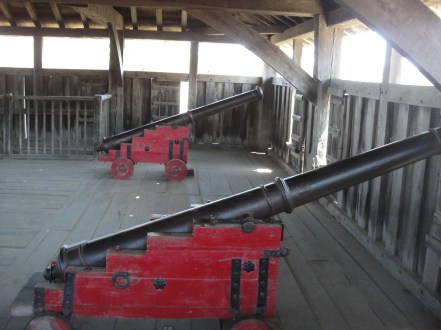
cannons above church Plymouth

Pilgrims

Pilgrim
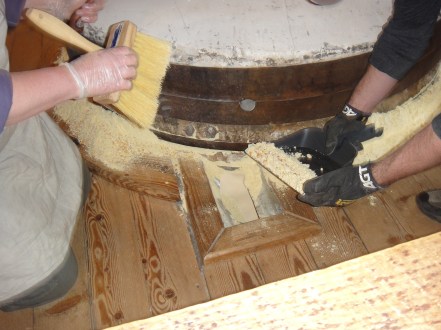
miller’s take
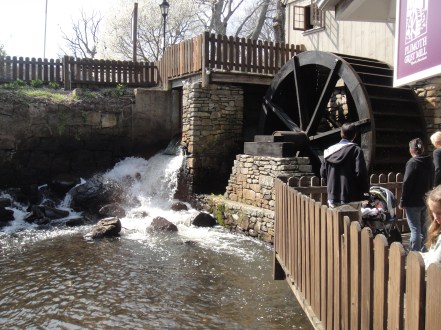
mill pond
When I visited Plymouth Plantation to see how my ancestors had lived the Mayflower was out of town being repaired. That did not bother me. I filled my day visiting at the museums of the living culture, including the grain mill extension in town. The details are fabulous and the actors doing the recreation are very knowledgeable and professional at their work. My personal ancestors were not on hand the day I went, but I did see the recreations of their homes. I also spent time in the cemetery and the church. The whole town is kind of preserved, with a definite Mayflower Pilgrim theme.
I was most interested in the Wampanoag section of the display. I thought for years I was a descendant of Quadequina, a member of the first Thanksgiving party. I was thrilled to be a Wamp, but later my first cousin discovered an error in my research. I had to cut that branch from the tree and begin again in the 1700s in South Carolina. I was super distressed at this news, which at first I was unwilling to accept. I was furious at my cousin, but had to face the reality that I had based my conclusions on specious data. I had mistaken one John Taylor in South Carolina for another, and that was all it took to lead me astray. It was a bummer. I was just a wanna be Wampanoag after all. It was a sad day when I had to admit that.
I stayed on Cape Cod where many of my ancestors moved after they had had it with the Plymouth bureaucracy and religious police. The whole area is filled with history. Even though my dreams of being a Wampanoag were dashed I enjoyed learning about the tribe and their struggle today. My relationship to them is purely intellectual, but I still love the People of The First Light. I love them more than I love the Pilgrims, who turned out to be pretty religious crazy. That whole story about religious freedom and Plymouth has been stilted quite a bit. They had no use for religious freedom other than their own specific brand of religious practice. They forced everyone to go to their church and obey their church’s rules. That is why many of my ancestors left for Cape Cod and later for Rhode Island. Those oppressive Pilgrims were just too intrusive to have as neighbors.
I hope to go back to Plymouth some day. I now have done more research and more people to find in the vicinity. I also hope I will revisit Williamsburg, VA because many of my ancestors were living down there in the 1600’s too. If you have a chance to go see the exhibits at Plimouth Plantation Thanksgiving will never be the same for you. You will see a clearer picture of what really happened in history.
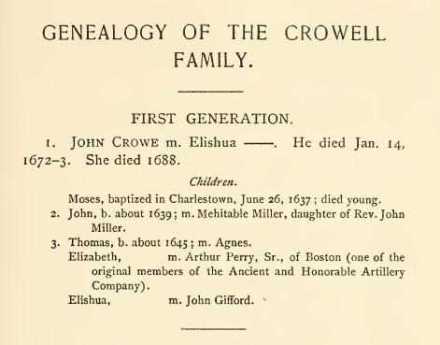
family history
My tenth great-grandfather was part of the Great Migration. He moved to Cape Cod in January of 1639. Many Pilgrims who moved out to Cape Cod got in trouble with the Plymouth church. In those days reaching villages on Cape Cod was a long hard journey from Plymouth. Some of my ancestors who lived on Cape Cod became (or already were) Quakers, and some moved to Rhode Island to escape the oppressive Pilgrim Fathers.
On January 7, 1639 the court record refers to the land grant to the first settlers John Crow, Thomas Howes, and Anthony Thacher as “the lands of Mattacheeset, now called Yarmouth”. This is considered the first usage of the name.
“Yarmouth” to represent the new township to the east of Barnstable.
Plymouth Colony: Its History and People 1620-1691 Part One: Chronological Histories Chapter 3: The Founding of Towns (1633-1643) Yarmouth On 7 January 1638/39, the Court of Assistants granted lands at “Mattacheeset, now called Yarmouth” to Mr. Anthony Thatcher, Mr. Thomas Howes, Mr. John Crow, and John Coite “to be enquired of.” Coite might have been the man of that name of Marblehead, but apparently he did not move to Plymouth Colony. Thatcher, Howes, and Crow were proposed [p.66] as freemen of Yarmouth, along with Mr. Marmaduke Mathews, Philip Tabor, William Palmer, Samuel Rider, William Lumpkin, and Thomas Hatch. It was also specifically noted that “Old Worden (dead),” Burnell, Wright, and Wat Deville were “Psons there excepted against,” probably meaning they were not eligible to be given freemen status, and showing that some form of settlement had already been in existence. In fact, on 4 September 1638 the General Court ordered the inhabitants of Sandwich and “Mattacheese or Yarmouth” to build a bridge over the Eel River (which was just a bit south of Plymouth town, and had to be crossed for travel between Plymouth and the Cape). On 5 March 1638/39 William Palmer was authorized by the General Court to be the one at Yarmouth who would exercise inhabitants in arms, and William Chase was elected constable there. It is apparent that earlier the Plymouth Court had granted land at Yarmouth to others also, for on 1 April 1639 it noted that lands at Mattacheese (another confusion of the names, for it should have been Mattacheeset) were granted to persons who should have inhabited there long ago, but did not, and the grantees “are not likely to come to inhabite there in their owne persons, and lest such as are there should receive in unto them unworthy persons, whereof the Court hath lamentable experience …, the Court doth order that onely such of them wch at present are there shall remayne & make use of some lands for their present necessity, but shall not divide any portions of lands there either to themselves or any others
American Genealogical-Biographical Index (AGBI)
John Sr Crowell (1590 – 1673)
10th great-grandfather
Yelverton Crowell (1621 – 1683)
son of John Sr Crowell
Elishua Crowell (1643 – 1708)
daughter of Yelverton Crowell
Yelverton Gifford (1676 – 1772)
son of Elishua Crowell
Ann Gifford (1715 – 1795)
daughter of Yelverton Gifford
Frances Congdon (1738 – 1755)
daughter of Ann Gifford
Samuel Thomas Sweet (1765 – 1844)
son of Frances Congdon
Valentine Sweet (1791 – 1858)
son of Samuel Thomas Sweet
Sarah LaVina Sweet (1840 – 1923)
daughter of Valentine Sweet
Jason A Morse (1862 – 1932)
son of Sarah LaVina Sweet
Ernest Abner Morse (1890 – 1965)
son of Jason A Morse
Richard Arden Morse (1920 – 2004)
son of Ernest Abner Morse
Pamela Morse
I am the daughter of Richard Arden Morse
The Crowell family in North Dennis is descended from John Crow, who came, it is said, from Wales in 1635, to Charlestown, where he and his wife, Elishua, joined the church. It is probable that they sojourned there until 1639, when Mr. Crow came with Anthony Thacher and Thomas Howes to Yarmouth, with a grant from the court, having previously taken the oath of allegiance. All the first settlers
selected spots for their homes adjacent to good springs of water. The brook that flows through the village of North Dennis had numerous fine flowing springs to supply the need of the first comers. John Crow built his home north of the center of the present village, near the spot where the late Philip Vincent lived. His land, much of which is still owned by his descendants, was east of Indian Fields, and extended from the shore to the top of the hills back of the settlement. John Crow was a man of character and influence in the infant town of Yarmouth, filling many important offices. He died in 1673. His sons were: John, Samuel and Thomas. John married Mehitable. daughter of Rev. John Miller of Yarmouth. A grandson of John Crow, sr., whose name was John, was the first person buried in the North Dennis cemetery. He died in 1727. The name about that time had developed into Crowell. The offspring of John Crow are now to be found in all parts of the country, occupying important positions, with honor and credit to the name. Those who have remained upon the hereditary acres have produced in every generation men of ability and distinction. The late Hon. Seth Crowell and his cousin, Capt. Prince S. Crowell, and Mr. William Crowell, the well-known cranberry grower and seller, are illustrations of the character of the Crowells in the seventh generation. The family has never been large in North Dennis. Two pews in the old church sufficed to accommodate their needs for sitting room. Many of the family, before the old meeting house was torn down in 1838, had become desciples of John Wesley and left the church of their fathers.
Mr. Jeremiah Crowell, a descendant in the fourth generation from the grantee, John Crow, was for two generations a village celebrity. He lived in what was called “Crow Town,” just outside the western limits of Indian Field. The public highway went no farther east than his house in his day. The county road went through the woods south of Scargo hill. Mr. Crowell constructed a globe with the four quarters of the earth marked upon it. This was received by the Nobscusset children with open-eyed wonder. It was to be seen only, however, upon payment of one cent per head. He had besides a mammoth kite with a string a mile long, with a tail of wondrous length. He kept a daily journal of passing events, such as the capture of a whale, the arrival home of the Cod fishermen, the state of the weather, and the direction of the wind. But his great effort was the building of a pair of wings and attempting to fly. This was an achievement beyond his power to accomplish. The flying he regarded as practical and easy, but the alighting was difficult. He died at an advanced age, about the close of the last century.
Blue laws in Plymouth Colony were created to keep Sabbath exactly the way the Puritans wanted it to be kept. The Puritans had no tolerance for other religious views, or for slacker Puritans. The criminal justice system was used to fine and persecute those found guilty of profaning the Lord’s day. It did not take much to arouse the ire of these founding fathers. The laws evolved very slowly over time, but still represent a will to control what happens on Sunday. In Plymouth you would be fined for walking anywhere but to church from Saturday at sundown until Sunday at sundown. This was a no laughing/no smiling kind of religious day and they were serious about preserving it. The Pilgrims of the Mayflower would freak right out about the televised football games, a tradition many associate with Thanksgiving.
My 11th great-grandfather was born in England in 1590, and died in Bridgewater, Massachusetts in 1667. He was active in service to the colony.
Descendants of John Peabody[From Ancestors and Anecdotes Genealogy Blog, posted 17 Jan 2007 by JEM]
JOHN1 PEABODY was born 1590 in St. Albans, Hertfordshire, England, and died 1667 in Bridgewater, Mass. He married ISABEL HARPER Bet. 1608 – 1638. She was born 1592 in St. Albans, England, and died Bet. 1624 – 1686. The name Peabody is said to have originated during the reign of Nero, when Queen Broadicia was located at Icena, Briton. This Brave Queen opposed the Romans in their invasion of the country and with her son Boadie, took refuge in the craggy heights of Wales. Among his Britain’s “Boadie” signified a man of great strength and Pea meant “hill or mountain”. Consequently the name Peabody was applied to a mountain man. This name became the name of a tribe and in some branches of the family, “Boadie” became anglicized to the name Mann and Pea into the well-known name of Hill.In later times the name was spelled in different ways; Pbodie,Paybody, and Peabody. One of the earliest settlers in America of this name was William Pabodie who was a member of Captain Miles Standish’s military company of Mass. in 1643. John Peabody was another early settler who was active colonist of the Bay State, serving as its ensign, captain and deputy to the general court. More About JOHN PEABODY:Came to America: 1635, Bridgewater, Mass Isabell married John Peabody in 1608 in Stafford Stafford England. (John Peabody was born in 1589-1590 in St Albans Hertfordshire England, christened about 1635 in St AlbansHertfordshire England, died in Apr 1667 in Bridgewater Plymouth MA and was buried on 27 Apr 1667 in Boston Suffolk MA.More
Note to Reader: This genealogical narrative is drawn from my many years of research on the Peabody family and related families. It is presented here, for what help it might be to other researchers, in the same format as it was first published on my website in about 1998. No effort has been made to update this material or to incorporate more recent genealogical discoveries published on Ancestry.com or elsewhere. The list of sources at the end may prove especially helpful. This narrative is archived at http://web.archive.org/web/20001018124830/www.pbdy.com/begin.html -Velton Peabody
JOHN PAYBODY1 was born about 1590 in England. He probably arrived in the Plymouth Colony in 1635 or 1636, for his name appears on the list of freemen of the colony dated March 7, 1636/37, and he was admitted and sworn with others whose names were on that list on Jan. 2, 1637/8. He married Isabel Harper, sister of Thomas Harper of London, England.John Peabody received a grant of 10 acres of land Jan. 1, 1637/8, “on Duxburrow side, lying betwixt the lands of William Tubs on the north side and those of Experience Mitchell on the south side, and from the sea in the west; and from Blew Fish River in the easte.” Another tract, granted him Nov. 2, 1640, was 30 acres “with meadow to it” at North River. He was a member of the jury that convicted three young Englishmen of the murder of an Indian on Sept. 4, 1638, and of the “Grand Inquest” at the court June 4, 1639. He was one of the sureties on a neighbor’s bond June 4, 1645.In 1645, John Paybody and his son, William, were among the original proprietors of Bridgewater, Mass. He was a witness with Thomas Winterton against Edward Richards when he was tried in court at Salem 4:9:1645, on a charge of making a false statement to them concerning shipboard killings. Richards was convicted and fined 10 shillings and ordered to acknowledge his sin before the congregation at Lynn.John’s will, dated July 16, 1649, at Duxbury, was proved Apr. 27, 1666/7 at Boston:“In and about the sixteenth of July in the yeare of our Lord 1649 I John Paybody of Duxbrook in the Collonie of New Plymoute planter being in prfect health and sound in memory God be blessed for it doe ordaine and make this my last Will and Testament In maner and forme as foloweth;“Imprimis I bequeath my soule to God that gave it hopeing to be saved by the Meritt of Christ my blessed Saviour and Redeemer; as for my worldly goods as followeth“Item I give and bequeath unto Thomas my eldest sonne one shilling“Item I give and bequeath unto ffrancis Paybody my second son one shilling.“Item I give and bequeath unto William Paybody my youngest son one shilling.“Item I give and bequeath unto Annis Rouse my daughter one shilling.“Item I give and bequeath unto John Rouse the son of John Rouse my lands att Carswell in Marshfield after my wifes decease;“Item I give unto John Pabodie the son of William my lott of Land att the new plantation,“Item I give and bequeath all the Rest of my goods that are my mine liveing and dead unto my wife Isabell Paybody whome I make my sole executrix of this my last Will and Testament; memorandum all these legasyes before sett downe are to yayed by William Paybody my youngest son when they shallbe demanded John PaybodyJohn ffernesyde Boston in New England the 27th of April, 1667“Mr John ffernesyde came before mee under written and deposed that by order of Paybody above written and mentioned: hee wrote what is above written and Read it to the said John Paybody on the day of the date thereof and declared the same to be his Last Will and that when hee soe did hee was of a sound disposing mind to his best knowlidg and alsoe subscribed his name thereunto John ffernesyde as a witness; As Attesteth Edward Rawson Recorder”Children, probably all born in England: i. Thomas,2 b. about 1612 #2 ii. Francis, b. about 1614#3 iii. William, b. 1619 iv. Annis or Annie, b. about 1620; m. Jan. 7, 1638/9, in Marshfield, John Rouse of Marshfield; John was a Quaker, he was a town officer in Marshfield in 1645; he d. Dec. 16, 1684, in Marshfield, and she d. before Sept. 12, 1688, when he will was proved; children: Mary Rouse, John Rouse, Simon Rouse, George Rouse, Elizabeth Rouse, Anna Rouse.Sources: Records and Files of the Quarterly Courts of Essex County, [Mass.], I, 1911; “Plymouth Colony Wills and Inventories,” Mayflower Descendant XVII:1 (January 1915); Justin Winsor, History of the Town of Duxbury, Massachusetts, 1849; Eugene Willard Montgomery, Willard Peabody Genealogy, 1915; Charles Henry Pope, Pioneers of Massachusetts, 1900; William Richard Cutter and William Frederick Adams, Genealogical and Personal Memoirs Relating to the Families of the State of Massachusetts, II, 1910; C.M. Endicott, Genealogy of the Peabody Family, 1867, revised and corrected by William S. Peabody with a partial record of the Rhode Island Branch by B. Frank Peabody, cited hereafter as Peabody Genealogy, 1867; Selim Hobart Peabody, Peabody (Paybody, Pabody, Pabodie) Genealogy, 1909, cited hereafter as Peabody Genealogy, 1909; Leon Clark Hills, History and Genealogy of the Mayflower Planters (Cape Cod Series), I, 1975 reprint of 1936 1941 ed.; Dorothy A. Sherman Lainson, John Paybodie (Peabody) English Immigrant to Plymouth Duxbury, 1635, 1972; Goldie Peabody Brownyard and Theodore Lucius Brownyard, Ancestors and Descendants of Charles Elmer Peabody, 1980; Richard Gentry, Gentry Family in America, 1909; Detroit Society for Genealogical Research Magazine XXX:3 (Spring 1967); Family History Library; William R. Marsh, Ancestors and Descendants of F.A. Marsh and Ivy Crites, 1990; Nahum Mitchell, History of the Early Settlement of Bridgewater, in Plymouth County, Massachusetts, 1840.
CaptainJohnPabodie
John Peabody and descendants
The PEABODY Family of St. Albans, Hertfordshire, Hampton, Rockingham, NH and Topsfield, Essex, MASend comments and corrections to anneb0704@yahoo.co.ukJOHN PAYBODY (d. by 1649) of St. Albans and Duxbury m. Isabel Harper|FRANCIS PEABODY (abt 1614 – 1698) of Hampton and Topsfield m. Lydia Unknown|WILLIAM PABODIE (c. 1620 – 1707) m. Elizabeth Alden|LYDIA PEABODY (bp. 1640 – 1715), wife of Thomas Howlett 2LYDIA PABODIE (1667 – 1748) m. Daniel Grinnell
History of the Town of Duxbury, Massachusetts with Genealogical Registers
Seventeenth Century Colonial Ancestors, Vol. I
Elizabeth (Alden) Pabodie and descendants
A genealogy of the Peabody family
John Capt Peabody Pabodie (1590 – 1667)
is my 11th great grandfather
Lieut Francis Peabody (1614 – 1697)
son of John Capt Peabody Pabodie
Lydia Peabody (1640 – 1715)
daughter of Lieut Francis Peabody
Mary Howlett (1664 – 1727)
daughter of Lydia Peabody
John Hazen (1687 – 1772)
son of Mary Howlett
Caleb Hazen (1720 – 1777)
son of John Hazen
Mercy Hazen (1747 – 1819)
daughter of Caleb Hazen
Martha Mead (1784 – 1860)
daughter of Mercy Hazen
Abner Morse (1808 – 1838)
son of Martha Mead
Daniel Rowland Morse (1838 – 1910)
son of Abner Morse
Jason A Morse (1862 – 1932)
son of Daniel Rowland Morse
Ernest Abner Morse (1890 – 1965)
son of Jason A Morse
Richard Arden Morse (1920 – 2004)
son of Ernest Abner Morse
Pamela Morse
I am the daughter of Richard Arden Morse

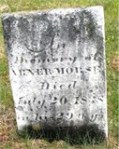
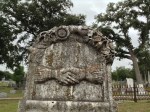
During the exciting and educational April #NaPoWriMo I managed to kick out 30 poems in 30 days. I will follow the poets I met because they make my days richer with only short bursts of time invested. I can read a poem for a minute or two and ponder it forever. I love the community that develops around the special poetry writing month and plan to keep my connection to it. I have learned that the process of writing poems is therapeutic . While engaged in poetic efforts I happened to digitally meet new people who are as interesting to me as the poets. Much to my surprise, my niche geek group, family history freaks, is alive and meeting regularly to share data and support.
This new group found me, or I found it on Facebook. New England Family Genealogy and History is a special interest group for those of us who study these subjects. I am delighted to find people as obsessed with history as I am. Some of them still carry the Mayflower pilgrim family names. There have been wonderful pictures and stories posted in which I have identified members as having common ancestors. This is a full time party of like minded genealogy freaks I can join on line any time. Be still my heart! People who have much more direct information and verification are there to help anyone with inquiries. The first ancestor I found I had in common with other members was my famous poet, Ann Dudley Bradstreet, who may be my favorite ancestor of all. In a few weeks I have met others with whom I share different progenitors. A recent discussion revealed that others share perhaps Native ancestry. Like me, few can definitively prove a connection to a tribe.
Some of the active participants are professional genealogists or family archivists of large collections. Plenty are DAR and Mayflower Society members. Many live in New England now and are connected to local societies for the preservation of everything under the sun. I enjoy learning about some of the old buildings that have stayed in family hands for hundreds of years. I feel a tinge of jealousy when they go off to Providence to a genealogy convention for the weekend. Then I remember that to live in New England one must endure snow and other unpleasantries. I may return to Cape Cod and Rhode Island on a history hunt one day. For now I am very pleased to be in touch with history fans who share interest, passion, and loads of information about New England and the people who have lived there. I can digitally visit every day. You can too if New England History is an interest of yours.

Howland home in Plymouth
Mayflower passengers John Howland and Elizabeth Tilley were married in 1623/4. John was about thirty-one and Elizabeth was about sixteen. They spent their entire lives in Plymouth, and between them participated in every aspect of the Pilgrim experience from its beginning in Leiden up to the merger of the Bay and Plymouth colonies. This article is a retrospective summary of their lives and their contribution to Plymouth.
John was born about 1592 to Henry and Margaret Howland of Fenstanton, nine miles northeast of Cambridge, England. Elizabeth Tilley was the youngest of several children born to John and Joan (Hurst) Tilley. She was baptized in 1607 in Henlow, Huntingdonshire, England. John Tilley and his family, and the family of his brother Edward Tilley and wife Ann (Cooper), were members of John Robinson’s congregation in Leiden.
John Howland, John and Joan and Elizabeth Tilley, and Edward and Ann Tilley were passengers on the Mayflower. John Howland had at least five siblings. Arthur (d. 1675), his older brother, arrived in Plymouth after 1627 while Henry (d. 1671), his younger brother, arrived as early as 1633. Arthur Howland soon moved to Marshfield where he became a major landholder. Henry Howland was one of the original settlers of Duxbury and was chosen constable in 1635.
At age twenty-eight John Howland was recruited in England by John Carver to join his household and be his assistant in moving the Leiden congregation to America. Also included in Carver’s household were a servant-girl Desire Minter (age fifteen), a servant-lad, William Lantham, and several other servants. During a storm in the crossing, John Howland was pitched overboard, but luckily was able to catch hold of a halliard and was hauled back aboard the Mayflower. John was the thirteenth signer of the Mayflower Compact. While in Cape Cod Harbor, John Howland, John and Edward Tilley and others explored the New England coast for several days and chose Plymouth to begin a settlement.
Elizabeth Tilley’s parents and aunt and uncle died in the winter of 1621. John Carver took Elizabeth in as one of his household. After John and Katherine Carver died in the spring of 1621, John Howland became the head of the household containing Elizabeth Tilley, Desire Minter, and William Lantham. The living arrangements for this household are unknown. After John married Elizabeth, he received four acres of land as the head of household in the 1623 Division of Land.
Desire Minter was the daughter of William and Sarah Minter, members of the Leiden congregation. Desire’s father died in 1618, and she joined John Carver’s family. Her mother remarried in 1622, and her new parents established an endowment that Desire would inherit at the age of twenty-one. After a few years in Plymouth, Desire returned to England to assume her inheritance. John and Elizabeth Howland were very fond of Desire and named their first child Desire in her honor. They had ten children: Desire, John, Hope, Elizabeth, Lydia, Hannah, Joseph, Jabez, Ruth and Isaac.
In 1625 John Howland accompanied Edward Winslow on an expedition of the Kennebec River in Maine to explore trading opportunities with the Indians. In 1626 John was asked to be one of the “Undertakers” to buy out the colony’s debt to the “Merchant Adventurers” who had invested in the venture to establish Plymouth Colony.
In the 1627 division of Cattle agreement, John Howland acquired twenty acres for each member of his household. In addition, the colonists were organized in “companies” of thirteen members each. The livestock of the colony was divided equally among the companies. Listed in John’s “company” were John and Elizabeth and their two children, John and Priscilla Alden and their two children, and five unattached men.
Isaac Allerton (1586-1658/9) negotiated a patent that granted Plymouth the exclusive right to trade with the Indians and to establish a trading station on the Kennebec River. In 1627 Governor Bradford placed John Howland in charge. In 1628 a trading station was built at Cushnoc (now called Augusta) on the east side of the Kennebec River. A year later, a permanent log-house was built, and Howland, then Assistant Governor, was asked to manage the trading station. For approximately seven years John Howland was in charge of the station. It is not known if Elizabeth and their family of three children lived at the station permanently or for short periods of time. During the time that John operated the station Elizabeth gave birth to three more children, but it is not known whether she gave birth while she was living at the trading station or in Plymouth.
The trading station in Cushnoc was very successful. The Pilgrims traded corn and manufactured goods with the Indians for beaver, otter and other furs. The proceeds of this trade enabled the Undertakers to settle their debts with the Merchant Adventurers. In 1643 a colony in Piscataqua at the mouth of the Kennebec River under the control of London investors attempted to trade with Indians on the Kennebec River. Howland and men from Plymouth told the Piscataqua men under the command of John Hocking to leave since they were trespassing and the patent granted Plymouth exclusive trading rights. The Piscataqua men refused to pull up anchor and leave, and John Hocking shot and killed one of Howland’s men. One of Howland’s men returned fire and killed John Hocking. A meeting called by the General Courts of Plymouth and Bay Colony established that the Piscataqua men were trespassers and that Hocking’s killing was justified. Following this, the two colonies agreed to honor each other’s patents and to curtail the activities of settlements poaching on these patents. It was feared that if the issue was not resolved satisfactorily, Parliament might appoint a single governor of all New England, which none of the colonies wanted.
In 1633 John (age forty-one) was admitted a freeman in Plymouth. John and Elizabeth acquired land and in time became major landholders in Plymouth and the surrounding towns. For nearly forty years, John Howland was actively involved in the governance of Plymouth through elected or appointed positions, viz. one of the seven Plymouth Assistant Governors—1632-35, 1638-39; one of the four Plymouth Deputies to the General Court for nearly thirty years—1641, 1645, 1647-56, 1658, 1659, 1661-68, 1670; one of the five selectmen of Plymouth—1665-66; one of the Plymouth Assessors—1641, 1644, 1647-51; committee on fur trading—1659; surveyor of highways—1650.
In 1637 John received forty acres of land, and in 1639 he was given a choice of additional land for himself or his heirs around Yarmouth, Dartmouth and Rehoboth. Part of the land he chose was in Yarmouth, which he gave to his son John and daughters Desire and hope and their respective families. In 1639 John purchased land and a house in Rocky Nook, where he spent the rest of his life. Also living in Rocky Nook were Thomas and Mary (Allerton) Cushman and their family.
Quaker missionaries arrived in Plymouth between 1655 and 1662 and attracted a considerable number of converts. Quakers opposed Puritan authority and religious beliefs and practices. They refused to attend church services, would not recognize ministers and magistrates or fidelity oaths, and would not support the church financially. They criticized Puritan beliefs and practices publicly and in such scathing terms as to anger the General Court. Governor Bradford had died in 1657 and was succeeded by Thomas Prence (1600-73), who would not tolerate Quaker criticism and took unusually strong measures to suppress Quaker activities, through fines, whipping, excommunication and expulsion from the colony. In the Bay Colony punishment was more severe, and included hangings.
Quakers wished to separate themselves from the prevailing religious beliefs and practices, just as the Pilgrims had done some fifty years earlier in England. Thus, the Quakers were to Plymouth what the Separatists were to England, except that now the Pilgrims were on the receiving end. Governor Prence and the General Court punished Plymouth residents who attended Quaker services or gave them support and protection.
The families of John Howland’s brothers, Arthur and Henry, were two Plymouth families most identified as practicing Quakers. The families ceased attending Plymouth religious services and allowed their homes for the conduct of Quaker meetings. Arthur, Henry and Henry’s son Zoeth were called before the General Court in 1657 and fined for using their homes for Quaker meetings. In 1660 Henry was again fined. In 1659 Arthur Jr.’s freeman status was revoked and in 1684 he was imprisoned in Plymouth. Throughout his life, John Howland remained faithful to Separatist belief and practice, but his compassion for Quakers is not known.
John and Elizabeth were highly respected citizens of Plymouth. In 1657 and again in 1664, serious issues concerning members of John Howland’s family came before the Court of Governor’s Assistants that resulted in judicial sanctions. John Howland was only a deputy for Plymouth to the General Court, and while he did not have to act on these cases personally, there is not way his standing in Plymouth could avoid being affected.
Governor Prence’s actions toward Quakers took an ironic twist that can be appreciated by parents today. In 1657 Arthur Howland Jr., an ardent Quaker, was brought before the court. Thomas Prince’s daughter and Arthur Howland Jr., fell in love. The relationship blossomed and matrimony seemed inevitable. However, it was illegal and punishable by court sanction for couples to marry without parental consent. Thomas Prence urged Elizabeth to break off the relationship, but to no avail. He then used powers available to him as Governor. Arthur Howland, Jr., was brought before the General Court and fined five pounds for “inveigling of Mistris Elizabeth Prence and making motion of marriage to her, and prosecuting the same contrary to her parents likeing, and without theire mind and will…[and] in speciall that hee desist from the use of any meanes to obtaine or retaine her affections as aforesaid.” On July 2, 1667 Arthur Howland, Jr., was brought before the General Court again where he “did sollemly and seriously engage before the Court, that he will wholly desist and never apply himself for the future as formerly he hath done, to Mistris Elizabeth Prence in reference unto marriage.” Guess what happened! They were married on December 9, 1667 and in time had a daughter and four sons. Thus a reluctant Thomas Prence acquired a Quaker son-in-law, Quaker grandchildren and innumerable Quaker in-laws of Henry Howland.
The second case involving John Howland’s family occurred in 1664 when Ruth Howland (b. 1646), his youngest daughter, was the subject of a morals case brought before the Court of Governor’s Assistants. Sexual mores, including chastity before marriage, were issues about which were strict codes of conduct. Ruth Howland fell in love with Thomas Cushman, Jr. (1637-1726), the first son of Plymouth’s Ruling Elder Thomas Cushman (1607-91), and Mary (Allerton) Cushman (1616-1699), a Mayflower passenger. In 1664/5 Thomas Jr. was fined five ponds by the Court for carnal behavior “before marriage, but after contract.” Once again John Howland was Deputy to the General Court for Plymouth and not involved personally in sentencing. Twenty-five years earlier punishment could have been severe, e.g. excommunication, fines, stocks for women and whipping for men. However, in 1664 harsh physical sentencing had been relaxed, and the social meeting of the parties became a factor in sentencing. In 1664 Thomas Jr. and Ruth were married. In addition to John Howland’s embarrassment, Thomas Cushman, Jr. squandered the opportunity to be considered to succeed his father as Ruling Elder. In 1694, Thomas’ younger brother Isaac was chosen to succeed his father as Ruling Elder. Thomas Jr. and Ruth remained in Plymouth. Ruth died as a young woman sometime after 1672, and Thomas Jr. married Abigail Fuller in 1679.
John Howland died either in his home at Rocky Nook or at his son Jabez’ house on February 23, 1672/3 at the age of eighty. He was buried in an unmarked grave in Burial Hill. In 1897, a headstone was erected on Burial Hill by the Howland Society. Elizabeth Howland spent her declining years and died on December 21, 1687 at the age of eighty in the home of her daughter Lydia Brown, in Swansea. Elizabeth is buried in East Providence, Rhode Island, with a memorial marker.
While not political leaders of Plymouth, John and Elizabeth were pillars of the community and played a major part in the colony’s governance and development. They lived through every aspect of the Pilgrim experience beginning in Leiden—the Mayflower, the harsh first winter, the Undertakers, the trading station in Maine, the Quakers, King Philip’s War—up to the merger of the Bay and Plymouth colonies. Descendants of John, Henry and Arthur Howland multiplied in number and influence to become one of New England’s famous pioneer families.–by Robert Jennings Heinsohn, PhD
John Howland (1601 – 1673)
is my 10th great grandfather
Joseph Howland (1640 – 1703)
son of John Howland
Elizabeth Howland (1673 – 1724)
daughter of Joseph Howland
Eleazer Hamblin (1699 – 1771)
son of Elizabeth Howland
Sarah Hamblin (1721 – 1814)
daughter of Eleazer Hamblin
Mercy Hazen (1747 – 1819)
daughter of Sarah Hamblin
Martha Mead (1784 – 1860)
daughter of Mercy Hazen
Abner Morse (1808 – 1838)
son of Martha Mead
Daniel Rowland Morse (1838 – 1910)
son of Abner Morse
Jason A Morse (1862 – 1932)
son of Daniel Rowland Morse
Ernest Abner Morse (1890 – 1965)
son of Jason A Morse
Richard Arden Morse (1920 – 2004)
son of Ernest Abner Morse
Pamela Morse
I am the daughter of Richard Arden Morse
Because John and Elizabeth were so well known they are also well documented. We have a copy of his last will and testament:
Last Will & Testament of John Howland, 1672
The Last Will and Testament of mr John howland of Plymouth late Deceased, exhibited to the Court held att Plymouth the fift Day of March Anno Dom 1672 on the oathes of mr Samuell ffuller and mr William Crow as followeth
Know all men to whom these prsents shall Come That I John howland senir of the Towne of New Plymouth in the Collonie of New Plymouth in New England in America, this twenty ninth Day of May one thousand six hundred seaventy and two being of whole mind, and in Good and prfect memory and Remembrance praised be God; being now Grown aged; haveing many Infeirmities of body upon mee; and not Knowing how soon God will call mee out of this world, Doe make and ordaine these prsents to be my Testament Containing herein my last Will in manor and forme following;
Imp I Will and bequeath my body to the Dust and my soule to God that Gave it in hopes of a Joyfull Resurrection unto Glory; and as Concerning my temporall estate, I Dispose thereof as followeth;
Item I Doe give and bequeath unto John howland my eldest sonne besides what lands I have alreddy given him, all my Right and Interest To that one hundred acres of land graunted mee by the Court lying on the eastern side of Tauton River; between Teticutt and Taunton bounds and all the appurtenances and privilidges Therunto belonging, T belonge to him and his heirs and assignes for ever; and if that Tract should faile, then to have all my Right title and Interest by and in that Last Court graunt to mee in any other place, To belonge to him his heires and assignes for ever;
Item I give and bequeath unto my son Jabez howland all those my upland and Meadow That I now posesse at Satuckett and Paomett, and places adjacent, with all the appurtenances and privilidges, belonging therunto, and all my right title and Interest therin, To belonge to him his heires and assignes for ever,
Item I Give and bequeath unto my son Jabez howland all that my one peece of land that I have lying on the southsyde of the Mill brooke, in the Towne of Plymouth aforsaid; be it more or lesse; and is on the Northsyde of a feild that is now Gyles Rickards senir To belonge to the said Jabez his heirs and assignes for ever;
Item I give and bequeath unto Isacke howland my youngest sonne all those my uplands and meddows Devided and undivided with all the appurtenances and priviliges unto them belonging, lying and being in the Towne of Middlebery, and in a tract of Land Called the Majors Purchase near Namassakett Ponds; which I have bought and purchased of William White of Marshfeild in the Collonie of New Plymouth; which may or shall appeer by any Deed or writinges Together with the aformentioned prticulares To belonge to the said Isacke his heirs and assignes for ever;
Item I give and bequeath unto my said son Isacke howland the one halfe of my twelve acree lott of Meddow That I now have att Winnatucsett River within the Towne of Plymouth aforsaid To belonge to him and said Isacke howland his heires and assignes for ever,
Item I Will and bequeath unto my Deare and loveing wife Elizabeth howland the use and benifitt of my now Dwelling house in Rockey nooke in the Township of Plymouth aforsaid, with the outhousing lands, That is uplands uplands [sic] and meddow lands and all appurtenances and privilidges therunto belonging in the Towne of Plymouth and all other Lands housing and meddowes that I have in the said Towne of Plymouth excepting what meddow and upland I have before given To my sonnes Jabez and Isacke howland During her naturall life to Injoy make use of and Improve for her benifitt and Comfort;
Item I give and bequeath unto my son Joseph howland after the Decease of my loveing wife Elizabeth howland my aforsaid Dwelling house att Rockey nooke together with all the outhousing uplands and Medowes appurtenances and privilidges belonging therunto; and all other housing uplands and meddowes appurtenances and privilidges That I have within the aforsaid Towne of New Plymouth excepting what lands and meadowes I have before Given To my two sonnes Jabez and Isacke; To belong to him the said Joseph howland To him and his heires and assignes for ever;
Item I give and bequeath unto my Daughter Desire Gorum twenty shillings
Item I give and bequeath To my Daughter hope Chipman twenty shillings
Item I give and bequeath unto my Daughter Elizabeth Dickenson twenty shillings
Item I give and bequeath unto my Daughter Lydia Browne twenty shillings
Item I give & bequeath to my Daughter hannah Bosworth twenty shillings
Item I give and bequeath unto my Daughter Ruth Cushman twenty shillings
Item I give to my Grandchild Elizabeth howland The Daughter of my son John howland twenty shillings
Item my will is That these legacyes Given to my Daughters, be payed by my exequitrix in such species as shee thinketh meet;
Item I will and bequeath unto my loveing wife Elizabeth howland, my Debts and legacyes being first payed my whole estate: vis: lands houses goods Chattles; or any thing else that belongeth or appertaineth unto mee, undisposed of be it either in Plymouth Duxburrow or Middlbery or any other place whatsoever; I Doe freely and absolutly give and bequeath it all to my Deare and loveing wife Elizabeth howland whom I Doe by these prsents, make ordaine and Constitute to be the sole exequitrix of this my Last will and Testament to see the same truely and faithfully prformed according to the tenour therof; In witness whereof I the said John howland senir have heerunto sett my hand and seale the aforsaid twenty ninth Day of May, one thousand six hundred seaventy and two 1672
Signed and sealed in the
prsence of Samuel ffuller John Howland
William Crow And a seale
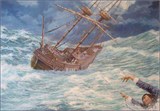
man overboard
John Howland survived falling off the Mayflower, and all the perils of colonial life to be the last of the Mayflower Pilgrim fathers to die. His headstone in Plymouth reads:
“Here was a godly man and an ancient professor in the ways of Christ. Hee was one of the first comers into this land and was the last man that was left of those that came over in the Shipp called the Mayflower that lived in Plymouth.”

headstone
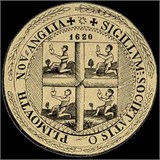
Mayflower seal
My 15th great-grandfather was a big adventurer in the New World. He sailed to Jamestown in 1609, and was on the ill fated voyage to Bermuda that inspired William Shakespeare to write the Tempest. His wife died while he was in Virginia, so he returned to England to care for his three children. He brought his family to Plymouth on the Mayflower. As an experienced colonist he was an important part of the Pilgrim’s diplomatic mission to the Wampanoag tribe. He fell from grace when he opened a shop selling alcohol. He went down a slippery slope from allowing drinking and shuffleboard playing on Sunday to selling beer for twice what it was worth. He managed to stay in town, but did some jail time for defying the court. I am thankful to you, Grandpa Stephen, for attempting so many grand adventures and defying your odds of survival.
Stephen Hopkins was from Hampshire, England. He married his first wife, Mary, and in the parish of Hursley, Hampshire; he and wife Mary had their children Elizabeth, Constance, and Giles all baptized there. It has long been claimed that the Hopkins family was from Wortley, Gloucester, but this was disproven in 1998. Stephen Hopkins went with the ship Sea Venture on a voyage to Jamestown, Virginia in 1609 as a minister’s clerk, but the ship wrecked in the “Isle of Devils” in the Bermudas. Stranded on an island for ten months, the passengers and crew survived on turtles, birds, and wild pigs. Six months into the castaway, Stephen Hopkins and several others organized a mutiny against the current governor. The mutiny was discovered and Stephen was sentenced to death. However, he pleaded with sorrow and tears. “So penitent he was, and made so much moan, alleging the ruin of his wife and children in this his trespass, as it wrought in the hearts of all the better sorts of the company”. He managed to get his sentence commuted. Eventually the castaways built a small ship and sailed themselves to Jamestown. How long Stephen remained in Jamestown is not known. However, while he was gone, his wife Mary died. She was buried in Hursley on 9 May 1613, and left behind a probate estate which mentions her children Elizabeth, Constance and Giles. Stephen was back in England by 1617, when he married Elizabeth Fisher, but apparently had every intention of bringing his family back to Virginia. Their first child, Damaris, was born about 1618. In 1620, Stephen Hopkins brought his wife, and children Constance, Giles, and Damaris on the Mayflower (child Elizabeth apparently had died). Stephen was a fairly active member of the Pilgrims shortly after arrival, perhaps a result of his being one of the few individuals who had been to Virginia previously. He was a part of all the early exploring missions, and was used almost as an “expert” on Native Americans for the first few contacts. While out exploring, Stephen recognized and identified an Indian deer trap. And when Samoset walked into Plymouth and welcomed the English, he was housed in Stephen Hopkins’ house for the night. Stephen was also sent on several of the ambassadorial missions to meet with the various Indian groups in the region. Stephen was an assistant to the governor through 1636, and volunteered for the Pequot War of 1637 but was never called to serve. By the late 1630s, however, Stephen began to occasionally run afoul of the Plymouth authorities, as he apparently opened up a shop and served alcohol. In 1636 he got into a fight with John Tisdale and seriously wounded him. In 1637, he was fined for allowing drinking and shuffleboard playing on Sunday. Early the next year he was fined for allowing people to drink excessively in his house: guest William Reynolds was fined, but the others were acquitted. In 1638 he was twice fined for selling beer at twice the actual value, and in 1639 he was fined for selling a looking glass for twice what it would cost if bought in the Bay Colony. Also in 1638, Stephen Hopkins’ maidservant got pregnant from Arthur Peach, who was subsequently executed for murdering an Indian. The Plymouth Court ruled he was financially responsible for her and her child for the next two years (the amount remaining on her term of service). Stephen, in contempt of court, threw Dorothy out of his household and refused to provide for her, so the court committed him to custody. John Holmes stepped in and purchased Dorothy’s remaining two years of service from him: agreeing to support her and child. Stephen died in 1644, and made out a will, asking to be buried near his wife, and naming his surviving children.
Pilgrim Stephen Hopkins (1581 – 1644)
is my 15th great grandfather
Constance HOPKINS (1600 – 1677)
daughter of Pilgrim Stephen Hopkins
Sarah Snow (1632 – 1704)
daughter of Constance HOPKINS
Sarah Walker (1622 – 1700)
daughter of Sarah Snow
Sarah Warren (1649 – 1692)
daughter of Sarah Walker
Elizabeth Blackwell (1662 – 1691)
daughter of Sarah Warren
Thomas Baynard (1678 – 1732)
son of Elizabeth Blackwell
Deborah Baynard (1720 – 1791)
daughter of Thomas Baynard
Mary Horney (1741 – 1775)
daughter of Deborah Baynard
Esther Harris (1764 – 1838)
daughter of Mary Horney
John H Wright (1803 – 1850)
son of Esther Harris
Mary Wright (1816 – 1873)
daughter of John H Wright
Emiline P Nicholls (1837 – )
daughter of Mary Wright
Harriet Peterson (1856 – 1933)
daughter of Emiline P Nicholls
Sarah Helena Byrne (1878 – 1962)
daughter of Harriet Peterson
Olga Fern Scott (1897 – 1968)
daughter of Sarah Helena Byrne
Richard Arden Morse (1920 – 2004)
son of Olga Fern Scott
Pamela Morse
I am the daughter of Richard Arden Morse
Richard and his second wife had a child born at sea on the Mayflower. They named her Oceanus.
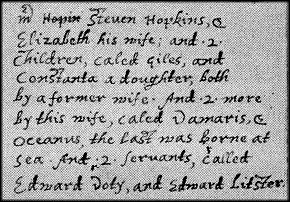
Mayflower record

descendants of Massasoit
The Thanksgiving story is told in November to commemorate the precarious situation in which the Pilgrims of Plymouth Colony found themselves. By the good graces of the local tribe these English people managed to survive very far from home. They were not ready for the harsh winter and new surroundings. They were able to negotiate a treaty for mutual protection with Massasoit, the leader in the area. The meal shared to celebrate the treaty has been told for centuries, but there are a few written words from the time documenting this meeting. Most of us have an image from our school days of happy well dressed Pilgrims entertaining Native Americans at an extensive potluck supper. There is some mention that the Wampanoags supplied all the vittles, but we tend to gloss that over while we celebrate our highly revised impression of history and the Pilgrims.
These Pilgrim heroes soon broke down into all kinds of crazy religious infighting and banished each other for infractions. My own ancestors were banished to Sandwich and other little settlements on Cape Cod. Some had to leave because they had been secret Quakers, and one was banished to Barnstable for marrying a Native woman. We imagine Plymouth as some pure attempt at religious freedom because we have not looked very closely at what happened. Many of my ancestors went to Rhode Island to look for religious freedom and fair dealings with the Native Americans. I had several ancestors who fought on both sides of King Philip’s War, which I am sure we did not study in school. We just move on quickly to Boston and tea party and America without stopping to think what became of those people who gave the Pilgrims dinner and protection.
The big news that has been edited is all about that treaty. The pact worked for a while, but as time passed the English population grew and the agreements became strained. The English proved to be less than honorable when it came to keeping their word. The Wampanoags who survived King Philip’s War were shown no mercy. I have extra interest in the Native version of this event because I went to Cape Cod expecting to find traces of my Wampanoag family tree. I found that records do not exist to trace it although my Mayflower ancestors are very well documented. Intermarriage was very common so I am not the only one with a mystery branch in my tree. There is a very small group of people who are members of the Wampanoag tribe today, and their last names came from England. Survival for them meant adapting. This year, for a change, imagine the entire Thanksgiving story from the perspective of the original people.

Netherlands
Mary Priest was born in the Netherlands. Her father Degory was a hatter who sailed to America on the Mayflower, and died in Plymouth Colony shortly after his arrival. His wife and children, including Mary, came later to Plymouth to inherit his allotment:
DEGORY PRIEST
ORIGIN: Leiden, Holland
MIGRATION: 1620 on Mayflower
FIRST RESIDENCE: Plymouth
OCCUPATION: Hatter (when admitted as a citizen of Leiden) [Leiden 216].
ESTATE: In the 1623 Plymouth land division “Cudbart Cudbartsone” received six acres as a passenger on the Anne in 1623 [ PCR 12:6]; four of these six shares would be for the deceased Degory Priest, his widow Sarah and his two daughters. In the 1627 Plymouth cattle division “Marra Priest” and “Sarah Priest” were the tenth and eleventh persons in the second company, just after their mother and stepfather [PCR 12:9].
BIRTH: About 1579 (aged about forty in 1619 [ Dexter 630]).
DEATH: Plymouth 1 January 1620/1 [ Prince 287].
MARRIAGE: Leiden 4 November 1611 [NS] “Sara Vincent, widow of Jan Vincent” [ MD 7:129-30; Leiden 216]; Priest is said to be of London. She was sister of ISAAC ALLERTON and married (3) Leiden November 1621 (betrothed 25 October 1621 [NS]) GODBERT GODBERTSON [Leiden 101].
CHILDREN:
i MARY, b. say 1612; m. by about 1630 PHINEAS PRATT.
ii SARAH, b. say 1614; m. by about 1632 JOHN COOMBS.
COMMENTS: Bradford includes “Digory Priest” in his list of those on the Mayflower, and in his accounting of 1651 says that Priest “died soon after … arrival in the general sickness,” but “had his wife and children sent hither afterwards, she being Mr. Allerton’s sister” [ Bradford 443, 447].
In 1957 John G. Hunt published the 1582 baptism for a “Digorius Prust” in Hartland, Devonshire [ NEHGR 111:320]; although there is nothing to connect this with Degory Priest of London, Leiden and Plymouth, it is a useful clue.
BIBLIOGRAPHIC NOTE: Degory Priest and his descendants have been given full and definitive treatment in the eighth volume of the Five Generations project of the General Society of Mayflower Descendants, compiled by Mrs. Charles Delmar Townsend, Robert S. Wakefield and Margaret Harris Stover, and edited by Robert S. Wakefield (Plymouth 1994). The Great Migration Begins
Sketches
PRESERVED PURITAN View Full Context

Mayflower increase
Mary Priest (1613 – 1689)
is my 12th great grandmother
Daniel Pratt (1640 – 1680)
son of Mary Priest
Henry Pratt (1658 – 1745)
son of Daniel Pratt
Esther Pratt (1680 – 1740)
daughter of Henry Pratt
Deborah Baynard (1720 – 1791)
daughter of Esther Pratt
Mary Horney (1741 – 1775)
daughter of Deborah Baynard
Esther Harris (1764 – 1838)
daughter of Mary Horney
John H Wright (1803 – 1850)
son of Esther Harris
Mary Wright (1816 – 1873)
daughter of John H Wright
Emiline P Nicholls (1837 – )
daughter of Mary Wright
Harriet Peterson (1856 – 1933)
daughter of Emiline P Nicholls
Sarah Helena Byrne (1878 – 1962)
daughter of Harriet Peterson
Olga Fern Scott (1897 – 1968)
daughter of Sarah Helena Byrne
Richard Arden Morse (1920 – 2004)
son of Olga Fern Scott
Pamela Morse
I am the daughter of Richard Arden Morse
She married Phineas Pratt, a joiner, who was part of a group that got into trouble with both Pilgrims and Natives:
Phineas Pratt was a member of a company of men sent from England by Thomas Weston. They arrived in New England in 1622 on three ships : the Sparrow, Charity and Swan (Pratt was a passenger on the Sparrow, the first to arrive). The approximately 67 men, many of them ailing, arrived with no provisions. The Pilgrims supported them throughout the summer of 1622.
In the fall of 1622, the Weston men left to colonize an area north of Plymouth called Wessagusset. They soon fell into difficulties through behaving, generally, in a very foolish and improvident fashion. They also severely angered the local Native Americans by stealing their corn.
Massasoit, sachem of the Wampanoags, informed the Plymouth colonists that there was a conspiracy among the Natives of the Wessagusset area to massacre the Weston men. Myles Standish prepared to head north with a small company of Plymouth men to rescue Weston’s men.
The same message was also delivered by one of Weston’s men, who came to Plymouth in March of 1623 “from the Massachusetts with a small pack at his back.”
Phineas Pratt was the man with the backpack. He had secretly snuck out of the Wessagusset settlement, traveling for several days without food through a snowy landscape on his 25-mile journey.
Myles Standish and a small contingent (minus Phineas, who was still recovering from his arduous journey) headed to Wessagusset to recognize Weston’s men. The Plymouth contingent killed several Native Americans in the process (for which, they were roundly scolded by their pastor, John Robinson). Soon afterwards, Weston’s group abandoned Wessagusset. Sometime in late 1623, Phineas joined the Plymouth settlement.
Sometime before May of 1648, when he purchased a house and garden in Charlestown (now a part of Boston), Pratt left Plymouth. In 1662, Pratt presented to the General Court of Massachusetts a narrative entitled “A declaration of the affairs of the English people that first inhabited New England” to support his request for financial assistance. The extraordinary document is Phineas Pratt’s own account of the Wessagusset settlement and its downfall.
Phineas Pratt was by profession a “joiner.” “Joining” was the principle method of furniture construction during the 17th century. “Joiners” were highly skilled craftsmen who specialized in this work; their skills were valued more highly than those of a carpenter.
Phineas Pratt married Mary Priest, daughter of Degory and Sarah Allerton Vincent Priest (the sister of Mayflower passenger Isaac Allerton, Sarah had been married to Jan Vincent and widowed before she married Degory Priest). Degory Priest journeyed to Plymouth on the Mayflower, his wife and two daughters intended to join him later. Priest died during the first winter. Before sailing for America, the widowed Sarah Allerton Vincent Priest married Godbert Godbertson, who became Mary Priest’s stepfather. The family (mother, stepfather and two daughters) were among the passengers of the Anne and Little James, arriving in Plymouth in 1623.
Phineas was probably born about 1593, Mary was probably born about 1612. It seems likely, given the probably age of their oldest child at the time of her death, that they married about 1631 or 1632. Phineas and Mary Pratt had 8 children.
According to his gravestone in the old Phipps Street Cemetery, in the Charlestown area of Boston, “Phinehas Pratt, agd about 90 yrs, decd April ye 19, 1680 & was one of ye first English inhabitants of ye Massachusetts Colony.” (Mayflower Descendant, Vol. 6, p. 1-2).

Priest and Pratt

coat of arms
My 9th great grandfather was born in Barnstable in 1648, the son of English immigrants. He fought in King Philip’s was against my Wampanoag ancestors. His parents were Pilgrims who settled in Barnstable. His father left England alone to come to America because of religious problems. He sent for his family to join him after arrival.
Eleazer Hamblen (1648 – 1698)
is my 9th great grandfather
Isaac Hamblin (1676 – 1710)
son of Eleazer Hamblen
Eleazer Hamblin (1699 – 1771)
son of Isaac Hamblin
Sarah Hamblin (1721 – 1814)
daughter of Eleazer Hamblin
Mercy Hazen (1747 – 1819)
daughter of Sarah Hamblin
Martha Mead (1784 – 1860)
daughter of Mercy Hazen
Abner Morse (1808 – 1838)
son of Martha Mead
Daniel Rowland Morse (1838 – 1910)
son of Abner Morse
Jason A Morse (1862 – 1932)
son of Daniel Rowland Morse
Ernest Abner Morse (1890 – 1965)
son of Jason A Morse
Richard Arden Morse (1920 – 2004)
son of Ernest Abner Morse
Pamela Morse
I am the daughter of Richard Arden Morse
Page 526 – Eleazer Hamblin, son of James, was a soldier in Capt. John Gorham’s company in King Philip’s war, and an original proprietor of the town of Gorham, in Maine. I have not carefully examined his record, and know but little of his history. His wife was an early member of the church, and he joined in 1686. I think he resided at Hamblen’s Plain. The Eleazer Hamblins patronized the lawyers more than all others of the name ; but I may be
GENEALOGICAL NOTES OP BAKNSTABLE FAMILIES. 527
doing injustice in making the remark in connection with the elder
Eleazer.
He married 15 Oct. 1675, Mehitabel, daughter of John Jenkins,
and had six children born in Barnstable :
The two last probably died young aud therefore their names do
not appear on the town record.
 mermaidcamp