mermaidcamp
Keeping current in wellness, in and out of the water
You can scroll the shelf using ← and → keys
You can scroll the shelf using ← and → keys
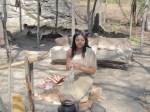
My visit to Cape Cod and Plymouth to uncover the history of my ancestors was an adventure and a surprise. When I learned that the Wampanoag tribe had lost almost 200 years of the data, graves, and details of the history of their people I was confused and upset. Next I visited the museum complex at Plimouth Plantation where the culture and historical way of life of the Wampanoag tribe is demonstrated. It is an attempt to redress and correct some misinformation that has been passed down for a long time. The young people who work there enjoy their jobs teaching people about their ancestors.



The 40th anniversary of the Watergate investigation is a national watershed moment. Credibility has been destroyed in all American political and religious institutions during those 40 years. The population forced to pay for the corrupt system has lost the belief that government works in their best interests. Religious institutions have been exposed and now have lower status and less respect. When I voted to end the war in Viet Nam the situation was known as “The Generation Gap”, as if this was the first, last ,and only generation so violently opposed to the politics and lifestyle of the previous. I suspect that each generation has a gap of various depth and breadth to be digested by the course of history. After my parents were dead I became interested in my ancestry. This study has shown me the drastic, religious and political beliefs of their ancestors. My father’s side is full of teachers, and my mother’s is full of preachers.
Tracing a spiritual and political timeline of my ancestors has shown me that rebellion was frequent and sometimes drastic. My ancestors rebelled against religious and political institutions by moving to America in the 1600’s. The entire protestant reformation was an act of rejecting an overly powerful Catholic church to become more pure. After crossing the Atlantic for religious freedom my ancestors founded and preserved institutions in the colonies. Other members of my family firmly rejected the Puritan way of life, setting out to live free in new territories rather than submit to the religious fascism of the Pilgrim fathers. The Wampanoag branch of my family tried hard to wipe out the British presence for good during King Philip’s War. I had family members in the military on both sides of the Civil War, when that happened. There may have been a few settled, stationary generations, but when I look at the ethical will of my ancestors they were generally busy rebelling and rejecting institutions as much as they were preserving them. A dynamic historical tension can be found in the cultural traditions of my ancestors. This explains why my parents were so crazy. It was imperative to reject the beliefs they embodied. It probably also explains why my own generation’s traditions and habits need a vigorous review. Generation gaps are forever. Barry Goldwater is fully dead, and only a faint glimmer of the military industrial complex as our worst internal nightmare has been superseded by the much freakier medical pharmaceutical complex. We have a new fall of civilization to manage now.
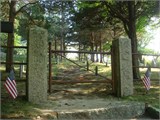
Anna Bursell at rest
Anna was born in Barnstable, Ma in 1640. She died a widow in Barnstable in 1724, living through some heavy times. She married Silas Sears:
Lieut. SILAS SEARS, son of Richard, died Yarmouth, Mass., 13 Jan, 1697/8; married ANNA ??(Bursell??) who died a widow in yarmouth, 4 Mar 1725/6. They had children:
SILAS, born Yarmouth c. 1661; RICHARD, born in Yarmouth; HANNAH, born Eastham(?) Dec 1672, m. 8 Feb 1692/3 Thomas SNOW(son of Mark and Jane(Prence)Snow) she died prior to 30 Sep 1706; JOSEPH, born Yarmouth, c. 1675; JOSIAH, born Yarmouth c. 1677; ELIZABETH, born Yarmouth, m. there 22 Nov 1705, John COOKE; DORRITY, born yarmouth c. 1687; m. there 8 Feb 1715/6 Joseph STAPLES she died 28 Feb 1753
Lt. Silas Sears lived in that part of Yarmouth known as the East precinct, now East Dennis; was “propounded to take up Freedom,” June 6, 1682; commissioned Ensign, 28 Oct 1681; Liet. 7 July 1682; chosen Representataive to the General Court at Plymouth, 1685-91; Selectman, 1680-94; Juryman, 1680-82.
25 Dec, 1689; “Silace Sears and other fined 20 shillings for not appearing and attending at Court, or disorderly departing therefrom;”–fines remitted latar, “it being first offense of the kind.”
1694; “Lt Silas Sears on Com. to seat men, women and others in the meetinghouse;” an onerous duty in those days.
1 Nov 1676, Emott Bursell and Silas Sears appointed administrators of the Estate of James Bursell of Yarmouth. It has been suggested that his wife may have been a daughter of James Bursell, based on the supposition of his being chosen one of the administrators.
Silas Sears left no will, and letters of administration were granted to his widow Anna, 1 May 1698. The “settlement” of his estate was made 5 May 1698 and mentions sons Silas, Richard, joseph and Josiah; and daughters, Hannah, Elizabeth and Dorrity
Anna Bursell (1640 – 1724)
is my 9th great grandmother
Silas Sears (1661 – 1732)
son of Anna Bursell
Sarah Sears (1697 – 1785)
daughter of Silas Sears
Sarah Hamblin (1721 – 1814)
daughter of Sarah Sears
Mercy Hazen (1747 – 1819)
daughter of Sarah Hamblin
Martha Mead (1784 – 1860)
daughter of Mercy Hazen
Abner Morse (1808 – 1838)
son of Martha Mead
Daniel Rowland Morse (1838 – 1910)
son of Abner Morse
Jason A Morse (1862 – 1932)
son of Daniel Rowland Morse
Ernest Abner Morse (1890 – 1965)
son of Jason A Morse
Richard Arden Morse (1920 – 2004)
son of Ernest Abner Morse
Pamela Morse
I am the daughter of Richard Arden Morse
If I learned one thing on my ancestry quest in Massachusetts it is that the record keeper is the author of history. I have realized this by finding census and other documents that conflict with each other while studying my ancestors. Never has it been so clear. I believed that the tribe would have the information on the tribe in Mashpee, so I went straight to the museum to inquire. Because they rely on records kept by the Europeans the family trees are reconstructed using English last names. They use what they have. The records looked like they started in the 1800’s.


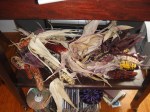


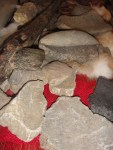
I was unhappy about the state of affairs. The tiny tribal museum has little funding, and can open only a few hours, a couple of days a week. I then traveled to the big well funded museum at Plimouth Plantation. Wow, what a difference!!!

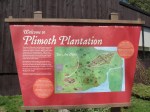



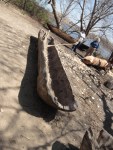


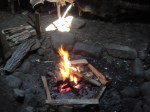

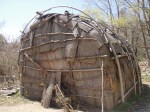

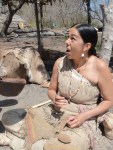


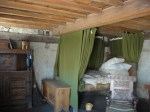


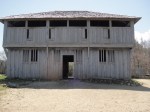

The museum at Plimouth Plantation is doing some revisionist history in order to correct many of the assumptions and erroneous stories that exist about the Mayflower and the native people. The Pilgrims play characters in period costume, expressing the beliefs of the time and place. The Pilgrims were religious prudes who considered themselves religiously superior to all other religions. They also felt entitled to take anything they wanted from the native people because they had permission from the King of England. Their church was fortified on top with cannons in all directions. I guess they felt that God and the King needed some back up. Although I had a few Pilgrims and only one ( I think) Wampanoag ancestor, I distinctly disliked the pretend Pilgrims when I met them. I am, however, glad they kept some records at the time.














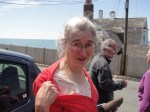


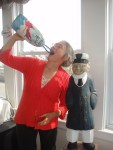
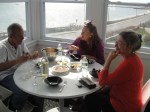





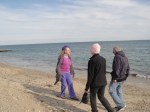
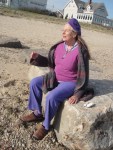







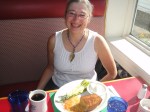





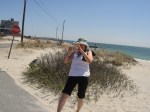
Four friends who have never met in person gathered yesterday in Falmouth, MA to meet, eat, party and fully enjoy each other. Our host, Chico, lives right next to the beach and is a really excellent chef. He prepared a seafood extravaganza that lasted all afternoon. Deborah Elizabeth lives in Boston. Christine lives in Australia. I live in Tucson. We planned this for months since Christine was in this hemisphere for a visit. The meal included bay scallops raw and scampi style, raw oysters, salad, bread and spicy dipping sauce, mussels, clams…and then…. we all had to take a break. We walked along the shore to do some digesting for an hour or so…and then there was lobster and NY cheesecake. The entire meal lasted, including the walk, about 6 hours. It was luxury that few ever experience.
Since Christine was basically on a drive by, she stayed in the hotel with me last night and we set out for breakfast and one last photo shoot and shopping trip in Falmouth village. We both love blooming trees, so there was much to shoot. One dip of her feet in the Atlantic, and she had to drive to Newark to return her car for a flight back tomorrow. I have rarely packed so much in to a 24 hour time frame. It was memorable. We found a perfect day, a perfect place, and a perfect meal to share with each other. Our extreme compliments to the chef and host for the best day.
Travel is an adventure. I like to take just the right amount of stuff from home to give me extra room in my suitcase. I typically find something I want to buy and bring back home with me. Since I am on a long trip this time I am including an extra duffel bag inside the suitcase for large finds. I have arranged my accommodations, except for the last 3 nights, which I can decide when I get to that. I am meeting friends at the beach, planning a party, and going to a performance. What do I need? What do I want to purchase in New England?
I always take:
I enjoy shopping for or finding:
I know Cape Cod will have all manner of souvenirs, but I typically like things that are out of the ordinary. My friend who lives there makes wampum out of shells, so I look forward to purchasing a special commemorative set of jewels to go with the setting. I doubt that Plymouth Rock, Colony, etc. will have the kind of item I like to buy. I expect the Wampanoag tribe may have some crafts or books at the museum in Mashpee that will interest me. I love to collect stories and history. Since I am visiting many of my ancestors I expect to find some facts I do not know now. I am excited and open for a new culture, new cuisine, new (old) cities and towns, and friends I have not yet met. I have been gardening, supervising a construction project in my home, and working in the office to clear the desk and put all business in order. One thing I never take with me when I travel is my day-to-day concerns. My work is finished here for a couple of weeks. I will bring you along for the fun, gentle reader, as I to discover what is special about Rhode Island and Massachusetts.

My 9th great-grandmother was a published poet. She was born in England and died in Massachusetts. Much is known about her because of her famous father and husband, but for a Pilgrim she was a feminist. Her poems were about cosmology and the elements. She was an intellectual in her own right. This is a good account from http://www.famouspoetsandpoems.com:
Anne Bradstreet
Anne Bradstreet was born in 1612 to a nonconformist former soldier of Queen Elizabeth, Thomas Dudley, who managed the affairs of the Earl of Lincoln. In 1630 he sailed with his family for America with the Massachusetts Bay Company. Also sailing was his associate and son-in-law, Simon Bradstreet. At 25, he had married Anne Dudley, 16, his childhood sweetheart. Anne had been well tutored in literature and history in Greek, Latin, French, Hebrew, as well as English.The voyage on the “Arbella” with John Winthrop took three months and was quite difficult, with several people dying from the experience. Life was rough and cold, quite a change from the beautiful estate with its well-stocked library where Anne spent many hours. As Anne tells her children in her memoirs, “I found a new world and new manners at which my heart rose [up in protest.]”a. However, she did decide to join the church at Boston. As White writes, “instead of looking outward and writing her observations on this unfamiliar scene with its rough and fearsome aspects, she let her homesick imagination turn inward, marshalled the images from her store of learning and dressed them in careful homespun garments.”Historically, Anne’s identity is primarily linked to her prominent father and husband, both governors of Massachusetts who left portraits and numerous records. Though she appreciated their love and protection, “any woman who sought to use her wit, charm, or intelligence in the community at large found herself ridiculed, banished, or executed by the Colony’s powerful group of male leaders.”Her domain was to be domestic, separated from the linked affairs of church and state, even “deriving her ideas of God from the contemplations of her husband’s excellencies,” according to one document.This situation was surely made painfully clear to her in the fate of her friend Anne Hutchinson, also intelligent, educated, of a prosperous family and deeply religious. The mother of 14 children and a dynamic speaker, Hutchinson held prayer meetings where women debated religious and ethical ideas. Her belief that the Holy Spirit dwells within a justified person and so is not based on the good works necessary for admission to the church was considered heretical; she was labelled a Jezebel and banished, eventually slain in an Indian attack in New York. No wonder Bradstreet was not anxious to publish her poetry and especially kept her more personal works private.Bradstreet wrote epitaphs for both her mother and father which not only show her love for them but shows them as models of male and female behavior in the Puritan culture.An Epitaph on my dear and ever honoured mother, Mrs. Dorothy Dudley, Who deceased December 27, 1643, and of her age, 61Here lies/ A worthy matron of unspotted life,/ A loving mother and obedient wife,/ A friendly neighbor, pitiful to poor,/ Whom oft she fed, and clothed with her store;/ To servants wisely aweful, but yet kind,/ And as they did, so they reward did find:/ A true instructor of her family,/ The which she ordered with dexterity,/ The public meetings ever did frequent,/ And in her closest constant hours she spent;/ Religious in all her words and ways,/ Preparing still for death, till end of days:/ Of all her children, children lived to see,/ Then dying, left a blessed memory.Compare this with the epitaph she wrote for her father:Within this tomb a patriot lies/ That was both pious, just and wise,/ To truth a shield, to right a wall,/ To sectaries a whip and maul,/ A magazine of history,/ A prizer of good company/ In manners pleasant and severe/ The good him loved, the bad did fear,/ And when his time with years was spent/ In some rejoiced, more did lament./ 1653, age 77There is little evidence about Anne’s life in Massachusetts beyond that given in her poetry–no portrait, no grave marker (though there is a house in Ipswich, MA). She and her family moved several times, always to more remote frontier areas where Simon could accumulate more property and political power. They would have been quite vulnerable to Indian attack there; families of powerful Puritans were often singled out for kidnapping and ransom. Her poems tell us that she loved her husband deeply and missed him greatly when he left frequently on colony business to England and other settlements (he was a competent administrator and eventually governor). However, her feelings about him, as well as about her Puritan faith and her position as a woman in the Puritan community, seem complex and perhaps mixed. They had 8 children within about 10 years, all of whom survived childhood. She was frequently ill and anticipated dying, especially in childbirth, but she lived to be 60 years old.Anne seems to have written poetry primarily for herself, her family, and her friends, many of whom were very well educated. Her early, more imitative poetry, taken to England by her brother-in-law (possibly without her permission), appeared as The Tenth Muse Lately Sprung Up in America in 1650 when she was 38 and sold well in England. Her later works, not published in her lifetime although shared with friends and family, were more private and personal–and far more original– than those published in The Tenth Muse. Her love poetry, of course, falls in this group which in style and subject matter was unique for her time, strikingly different from the poetry written by male contemporaries, even those in Massachusetts such as Edward Taylor and Michael Wigglesworth.Although she may have seemed to some a strange aberration of womanhood at the time, she evidently took herself very seriously as an intellectual and a poet. She read widely in history, science, and literature, especially the works of Guillame du Bartas, studying her craft and gradually developing a confident poetic voice. Her “apologies” were very likely more a ironic than sincere, responding to those Puritans who felt women should be silent, modest, living in the private rather than the public sphere. She could be humorous with her “feminist” views, as in a poem on Queen Elizabeth I:Now say, have women worth, or have they noneOr had they some, but with our Queen is’t gone?Nay, masculines, you have taxed us long;But she, though dead, will vindicate our wrong.Let such as say our sex is void of reason,Know ’tis a slander now, but once was treason.One must remember that she was a Puritan, although she often doubted, questioning the power of the male hierarchy, even questioning God (or the harsh Puritan concept of a judgmental God). Her love of nature and the physical world, as well as the spiritual, often caused creative conflict in her poetry. Though she finds great hope in the future promises of religion, she also finds great pleasures in the realities of the present, especially of her family, her home and nature (though she realized that perhaps she should not, according to the Puritan perspective).Although few other American women were to publish poetry for the next 200 years, her poetry was generally ignored until “rediscovered” by feminists in the 20th century. These critics have found many significant artistic qualities in her work.
Anne Dudley (1612 – 1672)
is my 9th great grandmother
John Bradstreet (1652 – 1718)
son of Anne Dudley
Mercy Bradstreet (1689 – 1725)
daughter of John Bradstreet
Caleb Hazen (1720 – 1777)
son of Mercy Bradstreet
Mercy Hazen (1747 – 1819)
daughter of Caleb Hazen
Martha Mead (1784 – 1860)
daughter of Mercy Hazen
Abner Morse (1808 – 1838)
son of Martha Mead
Daniel Rowland Morse (1838 – 1910)
son of Abner Morse
Jason A Morse (1862 – 1932)
son of Daniel Rowland Morse
Ernest Abner Morse (1890 – 1965)
son of Jason A Morse
Richard Arden Morse (1920 – 2004)
son of Ernest Abner Morse
Pamela Morse
I am the daughter of Richard Arden Morse
Here is an example her work:
Part of the poem “Contemplations” said to be the finest of Anne Dudley Bradstreet’s poems:
“Sometimes now past in the autumnal tide,
When Phoebus wanted but hour to bed,
The trees all richly clad, yet void of pride,
Were gilded O’er by his rich golden head.
Their leaves and fruits seemed painted, but was true
of green, of red, of yellow, mixed hue,
Rapt were my senses at this delectable view
I wist not what to wish, yet sure, thought I
If so much excellence abide below,
How excellent is He that dwells on high,
Whose power and beauty by His works we know,
Sure He is goodness, wisdom, glory, light,
That hath this underworld so rightly sight,
More Heaven than Earth was her, no winter & no night.”

grave of Elizabeth Henchman
Elizabeth Henchman has a birthplace on file of Plymouth, MA. I doubt this is true, since in 1612 the Mayflower had not yet landed. She came from England with her parents, I believe. She married my 10th great grandfather in Plymouth in 1634. Her second husband, Richard Hildreth, was prominent in Cambridge, MA. They married in Cambridge in 1645. Her grave can still be located in Malden, MA.
The origin of the name is really from being a royal henchmen in history:
ENGLISH ORIGINS
The origin, genealogy, history, and traditions of the Henchman, Hensman, Hinchman, and Hincksman families are known to many family members today, because of the research and dedication of Robert Hinchman, Jr. (1921-1996), of Dallas, Texas, the founder and first president of the Hinchman Heritage Society. It is from this beginning in England that we may someday find connections to The Hinchman Family in America. The following two paragraphs were written by Robert for the October 1992 Hinchman Heritage Week in England.
“Legend has it that Thomas Crosborough of Magna Doddington, Northamptonshire, saved the life of King Henry VII during a hunt. Upon being rescued from the tusks of a wild boar the King said to him: “Truly, thou art my veritable henchman.” Thomas thereupon, changed his name to Henchman, and thus, the family began. His great grandson, Thomas, was apprenticed at the age of 12 to William Cokayne, Master of the Skinners’ Guild, and subsequently became a prominent merchant and Freeman of the City of London during the latter part of the reign of Elizabeth I. Thomas was the father of Humfry who was instrumental in aiding Charles II escape to France during the English Civil War. Thus, two Henchmans have helped save the lives of two English kings.”
“The scions of Thomas Crosborough Henchman are the progenitors of the Henchman/Hinchman and Hensman Families of today. The variations in spellings began to stabilize during the reign of James I and by the time of the restoration of Charles II in 1660, the orthography had become almost set .. but as a Hinchman, you well know that confusion still exists. The family began its migration to New England in 1637, to Maryland in 1664, and to Australia in the 1860’s. And, of course, English members continued down to this day. Our generation, wherever we live, are descendants of Thomas Crosborough Henchman, his sons and grandsons. It is an adventure for each of us to discover our particular origins.”
Elizabeth Henchman (1612 – 1693)
is my 10th great grandmother
Mercy Vaughn (1630 – 1675)
daughter of Elizabeth Henchman
Sarah Carr (1682 – 1765)
daughter of Mercy Vaughn
John Hammett (1705 – 1752)
son of Sarah Carr
MARGARET HAMMETT (1721 – 1753)
daughter of John Hammett
Benjamin Sweet (1722 – 1789)
son of MARGARET HAMMETT
Paul Sweet (1762 – 1836)
son of Benjamin Sweet
Valentine Sweet (1791 – 1858)
son of Paul Sweet
Sarah LaVina Sweet (1840 – 1923)
daughter of Valentine Sweet
Jason A Morse (1862 – 1932)
son of Sarah LaVina Sweet
Ernest Abner Morse (1890 – 1965)
son of Jason A Morse
Richard Arden Morse (1920 – 2004)
son of Ernest Abner Morse
Pamela Morse
I am the daughter of Richard Arden Morse
I will soon have the opportunity to learn about the history of my ancestors in the museum at Plymouth, MA. This young man named Philip eloquently describes the first world war, which he believes happened on his homeland. I agree with him. The culture that introduced war rather than ball games for conflict resolution not only wiped out the Wampanoag population, but disrespected all aspects of the sovereignty of the nations who lived here. Forcing them from Eden is a pretty accurate way to describe what the Euro colonists did. They had everything (except yellow fever) before the colonists landed. Now a remnant of the culture is reenacted at Plymouth for tourists. There is also a small museum at Mashpee which I plan to visit. I am getting very excited about seeing it all in person.
 mermaidcamp